http://dx.doi.org/10.1590/1806-9061-2018-0737
Author(s)
Zakaria HAI
Shammout MWII
I The University of Jordan/School of
Agriculture/Animal production Department/ Amman-11942/Jordan. E-mail: zakariah@ ju.edu.jo
II The University of Jordan/Water Energy
and Environment Center/Amman-11942/ Jordan. E-mail: maisa_shammout@hotmail. com
Mail Address
Corresponding author e-mail address Dr. Hana A. Zakaria
The University of Jordan /School of Agriculture/Animal Production department/Amman-11942/Jordan. Phone: 00962798515389 Email: [email protected]
Keywords
Lemna Gibba, water quality, alternative protein source, egg production, yolk pigmentation.
Submitted: 16/January/2018 Approved: 23/April/2018
ABSTRACT
Water lentils (Duckweed [DW])(Lemna gibba), in irrigation ponds,
was evaluated by replacing two levels of soybean meal (SBM) on performance and egg quality of laying hens of 54 weeks of age. A total of 72 white Lohmann laying hens were randomly allocated into 3 treatments with 6 replicates/treatment, 4 hens/replicate in a randomized complete block design. Treatments were: control group (DW0%) with (SBM) as the main source of protein, T1 (DW10%) and T2 (DW20%), where duckweed replaced 10% and 20% of SBM for 9 weeks. No significant differences were observed among the dietary treatments in body weight change, feed conversion ratio, egg weight and mortality
rate. Replacement with (DW20%) decreased (p<0.05) feed intake,
egg laying rate and egg mass. The dry albuminin (DW10%) decreased
(p<0.05) from 7 to 9 weeks and in the total period. Yolk pigmentation
was highly (p<0.001) improved by the replacement. Blood spots were
increased (p<0.05) with (DW20%). Duckweed grown in good quality
irrigation water can replace up to 10% of the SBM as a source of protein without adverse effects on hen performance and egg quality in addition to profitability.
INTRODUCTION
Duckweed (Lemna gibba), also called water lentil, is one of four
species of plants that are monocotyledons belonging to the botanical
family
Lemnaceae
,
classified as higher plants, or macrophytes (Hilman& Culley, 1978). Shammout & Zakaria (2014) reported that these plants have an important role in purifying the irrigation water. Also it was used
in water treatment as a natural bioremediation agent (Shammout et al.,
2008). Goopy & Murray (2003) confirmed that duckweeds can absorb nutrients from the waste and drained water forming biomass rich in protein, carbohydrates and pigments suitable for feeding domestic animals and fish. The use of duckweed as poultry feed has been
recognized by many authors (Haustein
et al., 1990b, 1992 and 1994;
Islam
et al., 1997; Leng, 1999; Rodriguez
et al., 1999; and Samnang,
1999), even though the moisture content of duckweed can be the first
limiting factor. Haustein et al., (1990b) suggested that higher quality
duckweed (from 30% to 40 % protein, low ash, high carbohydrate) could substitute most of the soybean meal of up to 15% of the total intake and fish meal in diets of laying hens for good egg production, high yolk pigmentation and improved protein content of the egg,
when duckweed is dehydrated to a dry meal. O’Neil et al., (1996) also
makes it a valuable dietary supplement for chicken
(Haustein et al., 1990b, 1992 and 1994). The cost of
animal feed generally accounts for 60% or more of the total production cost of raising poultry (Ministry of Agriculture, 2014), which is generally associated with high cost of important protein sources, such as soybean meal. This has increased the demand for an alternative local protein source for feeding (Shammout & Zakaria, 2015b). Using local protein sources which have a similar quality level to that of soybean meal to replace the imported sources is one solution to reduce
production costs. Lemna gibba is the Lemna species
that has been recorded in water bodies in Jordan (Al-Eisawi, 1982). Other studies were conducted on this species in Jordan for the purpose of evaluation of the role of duckweed in purifying farm irrigation ponds as a natural water bioremediation agent (Shammout & Zakaria, 2014, 2015b). However, the use of this species to replace part of the SBM in poultry diets scarcely received any attention, and there is no information currently available in Jordan about the use of duckweed as a protein replacement in the diet of laying hens.
Therefore, the present study is the first in Jordan and it was aimed out to utilize water lentils grown in irrigation water ponds as a source of protein by repla-cing percentages of soybean meal, with the optimum level of unconventional water lentils (duckweed) on the performance, egg production and egg quality of laying hens based on water quality, nutritive value of duckweed and cost.
MATERIALS AND METHODS
Collection and preparation of duckweed samples and water quality analysis
Duckweed was manually collected from irrigation water ponds in the central Jordan Valley; in particular, the farms of Ghor Kabid, Tal Ramleh, and Wadi al-Abyad in Jordan by using pool skimmer nets. Collecting duckweed plants was an easy task since they form a floating mat with no structural unity. Fresh, wet duckweed was transported to the poultry laboratory in the School of Agriculture at the University of Jordan. Debris associated with the plants were removed, then the duckweed was air dried to approximately 40% moisture for 3 successive days; and then drying was completed in a forced air oven to around 6% moisture. The dried duckweed was stored at room temperature in porous knotted bags to be prepared for further analysis. Samples of the dried duckweed were analyzed for chemical composition AOAC(2005) prior to its
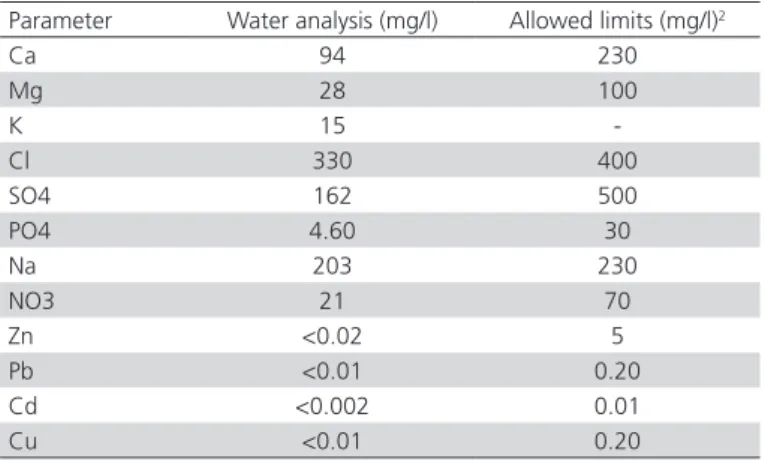
use as a feed ingredient for DM (dry matter), crude protein, crude fiber, crude fat and minerals (Table 1a). On time of plant sampling, twenty water samples were collected for analysis to detect water quality, such
as Ca, Mg, K, Cl, SO4, PO4, NO3, Zn, Pb, Cd and Cu
(Table 1b), (Shammout & Zakaria, 2015a). The study was conducted during the spring season, which is considered the vegetative period of the duckweed plant, and continued through the summer.
Table 1a – % Nutrient composition of duckweed (Lemna gibba) and soybean meal
Nutritive value Contents on dry matter (%) for duckweed1
Contents on dry matter (%) for soybean meal
Dry matter 6.00 88.00
Water content 94.00 12.00 Protein (%N× 6.25) 26.00 47.60
Crude fiber 5.20 4.05
Ether Extract 3.10 2.20 Energy (Kcal/Kg) 2913 2337
P 0.86 0.62
K 2.40 2.06
Ca 4.30 0.27
Mg 0.88 0.29
Fe 0.20 0.17
Cl 1.62 0.05
Na 0.16 0.01
Zn 0.008 0.006
Mn 0.070 0.043
Cu 0.002 0.002
1Shammout & Zakaria (2015b)
Table 1b – Average nutrients mg/l in water in the presence of Duckweed (Lemna gibba)1
Parameter Water analysis (mg/l) Allowed limits (mg/l)2
Ca 94 230
Mg 28 100
K 15
-Cl 330 400
SO4 162 500
PO4 4.60 30
Na 203 230
NO3 21 70
Zn <0.02 5
Pb <0.01 0.20
Cd <0.002 0.01
Cu <0.01 0.20
1Shammout & Zakaria (2014, 2015,a,b,), 2Jordan standards 893, 2006
Birds, experimental design and diets
each treatment consisted of 6 replicate cages as block design, with (4 birds/replicate cage), and fed three different diets in a randomized complete block design. Formulated diet was mainly based on corn and soybean
meal. Dietary treatments were DW0(control), where
soybean meal was used as the only source of protein (2716.6Kcal/Kg) ME, 47.6% protein, a layer diet
containing 10% duckweed (T1), and 20% duckweed
(T2) replacing the same percentage of soybean meal
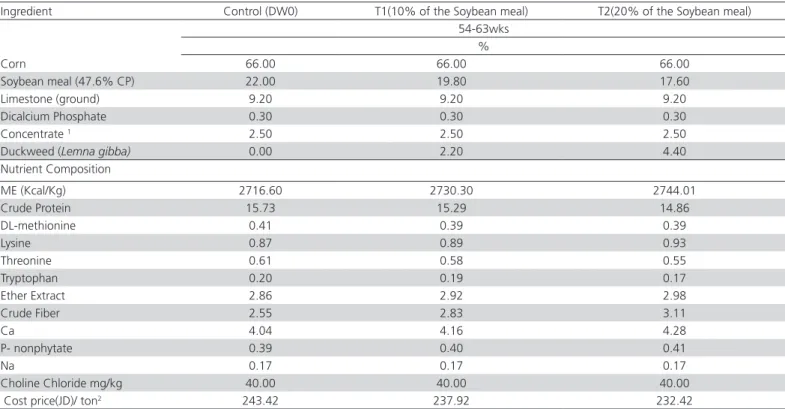
in the diet. The experimental diets were formulated in accordance with recommendations of the manual of the (Lohmann Management Guide, 2005) at the stage of production, taking into consideration the NRC (1994) requirements for laying hens as presented in (Table 2). The diet was fed in mash form and representative feed samples were ground for chemical analysis. Each cage (40×40 cm) was provided with a feeder and a nipple
drinker. Feed and water were supplied ad-libitum, and
feeders between the different cages were separated by a wooden sheet to avoid mixing of dietary treatments. Each hen was weighed at the beginning of the trial, and 4 hens with similar average weight were housed in one cage. Hens were placed in the cages for one week before the trial started to adapt them to the feed and the environment, and no experimental data was collected
at this stage. The experiment with data collection lasted for 9 weeks (54-63wks of age). The bird house was provided with a programmable lighting program with a day length of 10 hours, so an additional 6 hrs was provided during the experimental period. Inside house temperature was maintained at 20°C and 55%-60% relative humidity. The birds received identical care and management where sanitation and hygienic measures were followed during the experimental period. The experimental hens were treated according to standards for the humane treatment of animals following the guidelines of the Jordanian Society for the Protection of Animals (SPANA, issued in 2007).
Data collection for production and egg parameters
Feed consumption was recorded weekly by subtracting residual feed from the total feed provided and adjusted for mortality. Representative feed samples were collected and ground for chemical analysis AOAC(2005). Egg production was collected, weighed, classified and recorded daily with remarks on the cracked and blooded eggs. Calculations were based on a hen-day and hen-housed basis. Egg mass was determined by the equation (egg production ×
Table 2 – % Diet composition and content of dietary treatments
Ingredient Control (DW0) T1(10% of the Soybean meal) T2(20% of the Soybean meal) 54-63wks
%
Corn 66.00 66.00 66.00
Soybean meal (47.6% CP) 22.00 19.80 17.60
Limestone (ground) 9.20 9.20 9.20
Dicalcium Phosphate 0.30 0.30 0.30
Concentrate 1 2.50 2.50 2.50
Duckweed (Lemna gibba) 0.00 2.20 4.40
Nutrient Composition
ME (Kcal/Kg) 2716.60 2730.30 2744.01
Crude Protein 15.73 15.29 14.86
DL-methionine 0.41 0.39 0.39
Lysine 0.87 0.89 0.93
Threonine 0.61 0.58 0.55
Tryptophan 0.20 0.19 0.17
Ether Extract 2.86 2.92 2.98
Crude Fiber 2.55 2.83 3.11
Ca 4.04 4.16 4.28
P- nonphytate 0.39 0.40 0.41
Na 0.17 0.17 0.17
Choline Chloride mg/kg 40.00 40.00 40.00
Cost price(JD)/ ton2 243.42 237.92 232.42
12.5% Layers concentrate contains: 0.3%NaCl, 400,000IU vitamin A, 800,000 IU vitamin D3, 800 mg vitamin E, 140 mg, vitamin K, 24 mg vitamin B1, 200 mg vitamin B2, 280 mg
pantothenic acid, 1000 mg niacin, 72 mg vitamin B6, 800 mg B12, 20 mg folic acid, 2000 mg biotin 4000mgvitamin C, Fe as sulfate 1760 mg, 200mg Cu as sulfate, 2000 mg Zn as sulfate, 2480 mg Mn as oxide, 52 mg as potassium, 9 mg Se as Selenite, 260 mg antioxidant, 2000 mg enzyme.
egg weight). Layers were weighed individually every two weeks until the termination of the experimental period for estimation of body weight changes (Abudabos, 2011). Feed efficiency per dozen of eggs was determined by calculating the ratio between feed consumed (g) and total eggs produced (g) over a period of time. Hen mortality was recorded daily, and feed intake and egg production were corrected for mortalities.
Measurements of egg quality
Samples of 18 eggs/treatment (3/replicates) were randomly collected biweekly for external and internal quality parameters by separating, weighing and determining egg components (% wet and dry albumin, yolk and shell) after drying at 50°-55°C for 48hrs. Separation of egg components and their weight measurements were in accordance with Chowdhury (2000). Eggshell thickness was measured by shell thickness micrometer (Griffen & Goerge Ltd, Japan) as the mean value of three locations on the egg. Haugh unit score was determined using the methods of Haugh (1937), which measures the height of the albumin and calculates the Haugh unit based upon egg weight using tripod micrometer height gauge, following the equation:
Haugh units = 100log (albumin height (mm) +7.57-1.7 egg weight 0.37(g).
Egg yolk color score was determined by comparing with the 15-point Roche Yolk color fan (F, Hoffmann-La Roche and Co. Ltd. Basic, Switzerland).
Statistical Analysis
Data was analyzed as a randomized complete block design. There were 3 replicate pens (4birds/pen) with 3 dietary treatments. The treatment effects were evaluated as a one-way repeated measure (ANOVA) using the MIXED procedure in SAS (Version 9.4, 2013) with dietary treatments as the main source of variation among measured parameters. Pair wise comparisons were used to estimate significance of differences using PDIFF option of least square means (LSMEANS).
Differences were considered significant where (p<
0.05), unless otherwise specified. Pen means were used as the experimental units for all variables.
Economic Assessment
Economic assessment was carried out using price of feed ingredients at the time the trial was carried out to compare the cost of the different treatments when levels of soybean meal were replaced by the duckweed plant.
RESULTS
Duckweed (Lemna gibaa) and water
quality analysis
The nutritional values of the duckweed plants were determined according to the standard methods of AOAC (2005). Fresh duckweed samples contain approximately 94% water and 6% DM. The average nutritive values on a dry matter basis are shown in (Table 1a), (Shammout & Zakaria, 2015b). The analyzed water quality parameters were within the allowed limits set forth in the Jordanian Standard (JS 893/2006) for irrigation. The different minerals, such
as (Ca, Mg, K, Cl, SO4, and NO3), and the heavy metals
(Zn, Cd, Pb and Cu), were within the Ideal Detection Limits (Table1b). This applies also for water pH (8.1), EC
(Electrical conductivity) (1.62mS/cm), BOD3 (Biological
Oxygen Demand)(0mg/l), and COD (Chemical Oxygen Demand)(0mg/l) (Shammout & Zakaria, 2014, and 2015a,b).
Laying performance
The effect of replacing 10% and 20% of soybean meal with the same percentage of duckweed is shown
in (Table 3). Feed intake decreased highly (p=0.002)
through the intervals of the experiment and during the total period when replacing 20% of soybean meal
with the duckweed, while there was little impact on
body weight change. Egg laying rate% appeared to be reduced (p<0.05) in hens receiving the 20% duckweed; the 10% group was very close to the
control group, but it was highly evident (p=0.001) in
the 7-9 wk period and through the whole period of
the experiment (p<0.01). It is also evident that egg
production decreased with age throughout the total period of the trial, which is a normal trend in laying hens. Feeding at 20% duckweed caused a decrease in the daily egg-laying rate, while it was variable with egg weight, since it was noted that through the 7-9 weeks of the trial it was higher than the 10% and the control.
Feed conversion ratio was almost the same in all the dietary treatment groups, and the difference was
not significant. Egg mass was decreased (p<0.05) by
the 20% duckweed supplementation in each period of the trial. Control group and the 10% added group showed a higher egg mass than the 20% group.
Mortality rate showed a trend (p<0.05) in the (7-9
Egg quality parameters
The effect of duckweed supplementation on egg internal and external quality parameters are shown in (Table 4 and 5). No significant differences among the three different treatments were shown in the wet and dry shell %, wet and dry yolk % and wet albumin % contrary to dry albumin %, which showed
an effect (p<0.05) between 7 and 9 weeks and in
the whole period of the trial. It decreased with the 10% supplements of the duckweed (3.79, 3.77%) compared with the control (4.12, 4.02). Yolk Roche
color score was highly (p=0.0001) in each period of
the trial and through the total period with the different treatments (it increased from 5.71, 6.4 to 6.86). Yolk color increased with increasing the percentage of duckweed supplement in the diet. The blood spots %
(Table 5) had a significant effect in the 1-3 week period and throughout the total period (1-9 week), (6.13 vs. 0.75, 1.15), with the 20% supplement compared with the 10% and the control groups Grades of eggs were not affected by the dietary supplements, but there was a clear, slight shift in egg grades with the inclusion of the two levels of duckweed in the diet.
DISCUSSION
Duckweed analysis
Duckweed samples were analyzed and determined according to (AOAC, 2005) (Table1a), (Shammout & Zakaria, 2015b). Crude protein was 26% on 6% DM, although other researchers reported higher crude
protein content (Chowdhury et al., 2000; Akter et
Table 3 – Performance of laying hens fed diets containing 0%, 10%, or 20% duckweed
Period Parameter Measured Duckweed Inclusion Rate (%)
DW0%1 DW10%1 DW20%1 SEM2 p-Value
1 – 3 wk Feed Intake (g/hen/day) 124.24a 123.94a 96.63b 5.40 **
Feed Conversion (g/g)3 1.74 1.71 1.57 0.08 NS
Bodyweight (g/bird) 1767.12 1711.33 1677.67 48.72 NS
Egg Laying Rate (%) 87.76a 87.16a 75.46b 3.41 *
Egg Weight (g) 63.15 63.81 62.14 1.06 NS
Egg Mass (g)4 54.82a 56.18a 46.91b 2.49 *
Mortality Rate (%)5 1.39 1.39 1.39 1.35 NS
4 – 6 wk Feed Intake (g/hen/day) 123.57a 116.72a 101.66b 6.30 *
Feed Conversion (g/g) 1.88 1.78 1.42 0.14 NS
Bodyweight (g/bird) 1770.82 1711.68 1663.49 47.71 NS
Egg Laying Rate (%) 85.74a 82.93a 64.27b 5.83 *
Egg Weight (g) 64.82 63.43 63.02 0.84 NS
Egg Mass (g) 55.71a 52.92a 40.38b 4.01 *
Mortality Rate (%) 0.19 4.16 6.94 3.02 NS
7 – 9 wk Feed Intake (g/hen/day) 126.09a 117.02a 88.10b 6.48 **
Feed Conversion (g/g) 1.74 1.78 1.90 0.12 NS
Bodyweight (g/bird) 1761.20 1696.37 1645.37 49.15 NS
Egg Laying Rate (%) 83.69a 76.34a 55.25b 5.36 =0.001
Egg Weight (g) 64.15 62.77 66.14 1.32 NS
Egg Mass (g) 53.69a 47.96a 36.72b 3.78 *
Mortality Rate (%) 1.39b 2.77b 16.67a 3.53 *
1 – 9 wk Feed Intake (g/hen/day) 124.24a 119.30a 96.24b 4.97 *
Feed Conversion (g/g) 1.78 1.75 1.64 0.08 NS
Bodyweight (g/bird) 1765.34 1705.88 1664.25 46.44 NS
Egg Laying Rate (%) 85.63a 82.32a 64.91b 3.98 **
Egg Weight (g) 64.01 63.27 63.85 0.90 NS
Egg Mass (g) 54.75a 52.23a 41.46b 2.84 =0.01
Mortality Rate (%) 1.03 2.04 7.11 1.94 NS
NS: Not significant
a-b Means within rows with varying superscripts differ *(p<0.05, ** p<0.01)
1Dietary treatments used in the trial: DW0% (Control with 0% duckweed); DW10% (duckweed inclusion rate at 10%); DW20% (duckweed inclusion rate at 20%) 2SEM: standard error of the mean
3Feed Conversion Ratio (g feed intake: g dozen eggs) 4Egg Mass = Egg Laying Rate x Egg Weight (g)
al. 2011; Anderson et al., 2011). It is evident that CP content of duckweed is variable depending on the species, season, location, environment and nutrient
content of water (Khadaker et al., 2007; Chantiratikul
et al., 2010), mostly nitrogen concentration (Leng, 1999), water pH (Goopy & Murray, 2003), different management applied, and if it was collected from a waste lagoon or natural water source, as in this study. Results of crude protein levels indicated that duckweed has good protein % to complement with soybean meal in satisfying protein requirement of layers, since protein is very important for body tissue synthesis and egg production.
The crude fiber % in our study was 5.2%, which is considered desirable and suitable for hen feeding since it can be easily digested. Other results reported by different researchers were either lower or higher %
(Leng et al., (1995); Chara et al., (1999) (2.8%); (9.0%).
While Khanum et al., (2005) reported (12.3%) and
Men et al., (1995) reported more elevated crude fiber % (18.7%), Mbagwu & Adeniji (1988) demonstrated that duckweed grown under ideal conditions and harvested regularly may have fiber content from 5%
to 15%. Variations of results are due to conditions of growing, harvesting and different duckweed species.
Ether Extract content was 3.1%; the value found in the present study is higher than that of previous reports
(Khan et al., 2002a) that recorded 2.4% fat, while
Khandaker et al., (2007) reported a higher percentage
of (5.06%). Ether extract% tended to increase with increasing the level of duckweed in the diet (Table 2). It is possible that this could decrease feed intake and the degree of palatability (De Silva & Anderson, 1995), which leads to reduction in egg laying rate and less egg quality. So it is more important in future studies to determine the fatty acids profile of this species in order to include duckweed in the poultry rations.
Calcium content in duckweed was 4.3%, which is considered relatively a high percentage compared
to SBM (0.27). Becerra et al., (1997) reported 1.1%
compared with 0.4% SBM of DM. Variation in levels of nutrients is due to the medium in which the plant is grown, as well as the species of the duckweed plant present (Mwale & Gwaze, 2013). Phosphorus % of dry matter content was 0.86%, which is comparable
to 0.62 % DM for SBM, while Becerra et al., (1997)
Table 4 – Egg composition of laying hens fed diets containing 0%, 10%, or 20% duckweed
Period Parameter Measured Duckweed Inclusion Rate (%)
DW0%1 DW10%1 DW20%1 SEM2 p-Value
1 – 3 wk Wet Shell Percent (%) 14.22 14.14 14.08 0.310 NS
Dry Shell Percent (%) 9.73 9.70 9.68 0.132 NS
Wet Albumen Percent (%) 51.62 51.64 50.56 0.773 NS
Dry Albumen Percent (%) 4.02 3.91 3.86 0.085 NS
Wet Yolk Percent (%) 28.15 28.02 28.51 0.382 NS
Dry Yolk Percent (%) 14.73 14.77 14.69 0.239 NS
4 – 6 wk Wet Shell Percent (%) 14.03 14.30 13.76 0.289 NS
Dry Shell Percent (%) 9.76 9.87 9.60 0.146 NS
Wet Albumen Percent (%) 52.49 51.22 51.92 0.770 NS
Dry Albumen Percent (%) 3.89 3.70 3.83 0.089 NS
Wet Yolk Percent (%) 29.13 29.10 28.91 0.438 NS
Dry Yolk Percent (%) 15.75 15.42 15.47 0.299 NS
7 – 9 wk Wet Shell Percent (%) 14.54 14.36 14.30 0.337 NS
Dry Shell Percent (g) 9.55 9.52 9.43 0.135 NS
Wet Albumen Percent (%) 53.89 51.86 53.12 0.691 NS
Dry Albumen Percent (%) 4.12a 3.79b 3.96ab 0.091 *
Wet Yolk Percent (%) 28.37 29.26 28.99 0.410 NS
Dry Yolk Percent (%)) 14.98 15.54 15.24 0.326 NS
1 – 9 wk Wet Shell Percent (%) 14.26 14.26 14.06 0.250 NS
Dry Shell Percent (%) 9.69 9.69 9.57 0.101 NS
Wet Albumen Percent (%) 52.67 51.48 51.80 0.583 NS
Dry Albumen Percent (%) 4.02a 3.77b 3.89ab 0.063 *
Wet Yolk Percent (%) 28.61 28.68 28.88 0.270 NS
Dry Yolk Percent (%) 15.07 15.29 15.17 0.184 NS
a-cMeans within rows with varying superscripts differ * (p<0.05), NS: non significant
1 Dietary treatments used in the trial: DW0% (Control with 0% duckweed); DW10% (duckweed inclusion rate at 10%); DW20% (duckweed inclusion rate at 20%). 2SEM: standard
and Men et al., (1996) reported 0.5% P content in DM. Duckweed is able to accumulate up to 1.5% of its weight as phosphorus in nutrient-rich waters, which is considered normal (Leng, 1999). Chlorine % is higher than SBM; this is related to the quality of the water where this species is grown, which is within the permitted levels. The nutritional content of duckweed is probably more dependent on the mineral concentrations of the growth medium than on the species or their geographic location. It is important to evaluate the mineral profile of the plant before diet formulation because of the high mineral content which might lead to a detrimental effect.
Body performance and egg production
The effect of supplementing diet with duckweed to replace percentages of soybean meal is presented in
(Table 3). There were no significant differences in body weight and feed conversion ratio among treatments during the different phases. The non-significant results for change in body weight agreed well with Hamid
et al., (1993) who fed Lemna meal to ducklings and
observed minimum variations in weight gain; Aktler et
al., (2011) recorded same results when Lemna minor
meal was used in the diet of laying hen. However,
feed intake was decreased (p=0.002) by duckweed
supplementation up to 20% replacement of soybean meal, although the crude fiber content in the diet used in this trial was not high (3.11%). The highest feed intake was for the control and the 10% duckweed through the different periods of the trial. These results
are inconsistent with Haustein et al., (1990) who
reported significant differences in feed consumption
among the control, the Lemna 15% (p<0.02) group
Table 5 – Egg quality parameters of laying hens fed diets containing 0%, 10%, or 20% duckweed
Period Parameter Measured Duckweed Inclusion Rate (%)
DW0%1 DW10%1 DW20%1 SEM2 p-Value
1 – 3 wk Haugh Units 77.61 79.54 82.85 2.51 NS
Yolk Color 4.75c 5.39b 5.80a 0.138 = 0.0001
Shell Thickness (mm) 0.338 0.330 0.331 0.0051 NS
Blood Spots Percent (%) 1.03b 1.99b 12.10a 3.95 *
Cracked Egg Percent (%) 1.03 0.77 2.08 1.32 NS
Grade AA Egg Percent (%) 85.91 83.33 81.15 9.05 NS
Grade A Egg Percent (%) 8.23 14.34 16.32 7.92 NS
Grade B Egg Percent (%) 8.33 11.11 2.76 5.46 NS
4 – 6 wk Haugh Units 85.04 84.01 79.37 2.61 NS
Yolk Color 5.82b 6.70b 6.91a 0.175 = 0.0001
Shell Thickness (mm) 0.349 0.352 0.342 0.0047 NS
Blood Spots Percent (%) 1.18 0.65 2.57 0.861 NS
Cracked Egg Percent (%) 1.40 1.64 2.31 0.828 NS
Grade AA Egg Percent (%) 97.22 88.88 77.78 6.45 NS
Grade A Egg Percent (%) 2.78 5.56 11.11 4.63 NS
Grade B Egg Percent (%) 1.63 3.92 11.11 2.98 NS
7 – 9 wk Haugh Units 86.20 86.67 82.93 2.01 NS
Yolk Color 6.52c 7.20b 7.86a 0.160 =0.0001
Shell Thickness (mm) 0.342 0.344 0.343 0.0055 NS
Blood Spots Percent (%) 0.25 0.53 3.76 1.11 NS
Cracked Egg Percent (%) 0.96 1.32 1.74 0.693 NS
Grade AA Egg Percent (%) 88.89 91.66 83.33 6.46 NS
Grade A Egg Percent (%) 5.64 6.81 4.21 3.98 NS
Grade B Egg Percent (%) 6.34 4.04 11.84 4.59 NS
1 – 9 wk Haugh Units 82.60 83.83 81.72 1.47 NS
Yolk Color 5.71c 6.41b 6.86a 0.094 =0.0001
Shell Thickness (mm) 0.343 0.343 0.339 0.0032 NS
Blood Spots Percent (%) 0.75b 1.15b 6.13a 1.52 *
Cracked Egg Percent (%) 1.13 1.26 2.03 0.765 NS
Grade AA Egg Percent (%) 87.94 87.87 80.66 5.89 NS
Grade A Egg Percent (%) 5.49 8.67 10.85 3.21 NS
Grade B Egg Percent (%) 5.22 5.90 9.25 2.60 NS
a-cMeans within rows with varying superscripts differ *(P<0.05), (P=0.0001, NS: non significant)
and the Wolffia 15% (p<0.03) group, where the
Lemna group showed a slight decrease in feed intake.
Chantiratikul et al., (2010) also reported reduction of
feed intake (p<0.05) when CP was totally replaced
by CP from Wolffia meal or when using 12% dietary
Wolffia meal in the diet. Aktler et al., (2011) also reported no significant difference in feed intake when
Lemna minor meal was added to the laying diet. The higher percentage of duckweed in diets (20%) might have suppressed the appetite due to unspecified anti-nutritional factors or compounds which likely to be inhibiting digestion and metabolism (Goopy & Murray, 2003) or due to differences present in digestible protein content. Feed conversion was better numerically, with the higher concentration of the duckweed during the total period of the trial due to the decrease in feed intake and consequently lower body weight. The
results are congruent with (Haustein et al., 1990 and
Hamid et al., 1993). This result might be explained by
the presence of some type of anti-nutritional factors that limits intake and growth when fed at high levels (Goopy & Murray 2003).
Mortality was (p<0.01) between 7-9 weeks of
the study with the replacement of 20%, but it was corrected in the whole period without any effect between treatments; mortality within treatments ranged from 1.03%, 2.04%, 7.11% respectively. This implies that 20% replacement of SBM with duckweed had an adverse effect on layers since it increased the mortality percentage, although birds were reared in cages under good management conditions. The same results were recorded by Hassan and Edwards (1992), who cited mortality rates in excess of 80% at the
highest feeding rate when they included L. perpusilla
and S. polyrrhiza up to 30 g DMkg-1 in the diet of Nile tilapia, where these species have 23% CP, in contrast
with Faskin et al., (1999), who used (50% CP) and
recorded no significant increase in mortality, compared to the control group, even with 100% substitution.
Previous reports by Suppadit et al., (2012), who used
Wolffia arrhiza meal as a substitute for soybean meal showed no significant differences in the mortality of laying quails. It may be that as the protein component of plant material decreased the exposure to anti-nutritional elements in the feed increase and thus results in negative growth responses (Goopy and Murray, 2003). Inconsistencies among results were due to species differences of duckweed and birds used, or other environmental conditions of the different trials.
Egg laying rate% was (p<0.05) reduced in birds
that received the 20% duckweed, while those received
the 10% duckweed produced eggs at a rate close to the control birds (Table 3). During the 7-9weeks
(p=0.001), and during the whole period of the trial
(p< 0.01), laying rate decreased significantly in the
20% DW group. The low rate of egg production of this particular group might be due to decrease in feed intake, affecting body weight and leading to a
decrease in egg production (Aktler et al., 2011).
Egg mass output was comparable with the 10%
duckweed group, but it was reduced (p<0.05,
0.01) with the higher level, probably due to low rate of production. In turn, this is a reflection of feed consumption that decreased with the higher percentage of duckweed that might have some anti-nutritional factors that depress bioavailability and utilization of nutrients in the digestive tract and affect performance. The absence of a clear reduction in egg weight suggests that body reserves were mobilized to
maintain egg production (Paterson et al., 2000) since
there was a slight decrease in body weight.
Egg quality
External and internal egg quality characteristics are shown in Tables 4 and 5. Dry albumin % (Table
4) was (p<0.05) with the 10% duckweed compared
to control and 20%, in contrast to findings reported
by Aktler et al., (2011). Haugh unit score, the key
indicator of interior egg quality was not influenced by diets supplements, but it decreased numerically with increasing level of duckweed. Highly improvement
(p=0.0001) of yolk color with increasing level of
duckweed in the diet indicates that Lemna gibba
species contains a sufficient amount of pigments to
give attractive, darker yolks. This agrees with (O’Neil et
al., 1996; Nolan et al., 1997; Chantiratikul et al., 2010;
Aktler et al., 2011; Anderson et al., 2011; and Suppadit,
2012). Haustein et al., (1990) without referring to yolk
color score, reported increased pigmentation (p<0.01)
when Lemna gibba (150g/kg) and Wolffia (150 g/kg)
species were included in the diet. Duckweed has high concentrations of pigments, particularly beta carotene (120-627.2 mg/kg) and xanthophylls (261-1000mg/
kg) (Haustein et al., 1990; Skillcorn et al., 1993;
Hanczakowski et al., 1995). The high concentrations
are probably due to the anatomical structure of this plant and the high contribution of leaves to its total
biomass (Hanczakowski et al., 1995; Chantiratikul
et al., 2010b) Pigmentation is an important attribute that adds economic value of duckweed as dietary
ingredients since it is commercially desirable. Blood
through the total period (1-9 weeks), and it recorded high value with the 20% supplement compared to the other two groups (6.13 vs.0.75, 1.15). Blood spots are usually formed due to tissue irregularity in the hen causing a small amount of blood to be deposited in the egg. It usually occurs due to vitamin A or K deficiency, but since this was not present in the diet and not seen in other groups, then it might be due to stress as a result of high amount of the duckweed inclusion levels in the diet USDA (2000). Shell thickness and cracked egg % did not differ between treatments, since there was no difference in Ca% between diets, which affect the shell strength, and this reflects the insignificant results of egg weight within the different treatments.
As for the impact of feeding duckweed on USDA egg grades, there were no effects on the percentages of grade AA, A and B, contrary to results reported by
Anderson et al., (2011).
Economic assessments
The price of feed was highest for the control group (243.42 JD/ton feed) (Table 2), and it tended to decrease with increasing the level of duckweed substitution. Production cost calculation was based only on feed cost. Duckweed is not a conventional feed, and its price was only estimated for collection and drying. Since results indicated that 20% duckweed in the diet did not improve performance and it decreased egg production, therefore the comparison is between the control group and the 10% supplement with DW group, which gave 5JD/ton profit. If it is assumed that on the average a feed processing unit produces 200 metric tons of feed/day: 200×30days= 6000metric tons/month. This gives 6000×5 JD= 30.000JD. This indicates the profit that will be gained by using duckweed to replace certain percentages of expensive soybean meal.
CONCLUSIONS
Duckweed by knowing the quality of water where it grows in and its chemical analysis, can be used as a source of protein and pigment to replace 10% of SBM in the laying hens’ ration with no harmful effect on production performance and egg quality, while increasing the level up to 20% decreased the reproductive performance. The advantages from feeding duckweed to laying hens lies in its use as a source of pigment to make eggs more attractive to consumers; also a very good source for minerals besides decreasing feed cost. Duckweed can represent
an important dietary protein source to replace SBM, especially in countries like Jordan where imported SBM is expensive, and corn and soybean meal are the key ingredients in poultry feeds. Drying, especially to levels where it can be preserved, represents the only major cost in terms of labor and energy. Since this trial is the first in Jordan to use this species, further research is needed to evaluate other percentages of duckweed in diets of laying hens. Environment related to growth and quality investigation is very important to establish the economic value of this feed for use in future formulations.
CONFLICT OF INTEREST
No conflict of interest between authors.
ACKNOWLEDGEMENTS
The research was supported by Abdul-Hameed Shoman Foundation-Abdul Hameed Shoman Fund for Supporting Scientific Research, Amman-Jordan.
REFERENCES
Abudabos AM. Effect of enzymes supplementation and wheat middlings as an alternative to corn on laying hen performance. Italian Journal of Animal Science 2011;10(4):254-259.
Aktler M, Chowdhury SD, Akter Y, Khatun MA. Effect of duckweed (Lemna minor) meal in the diet of laying hen and their performance. Bangladesh Research Publication Journal 2011;5(3);252-261.
Al-Esawi DM. List of Jordan vascular plant. Mitteilungen der Botanischen Staatssammlung Munchen 1982;18:79-182.
Anderson KE, LowmanZ, Stomp A, ChangJ. Duckweed as a feed ingredient in laying hen diets and its effect on egg production and composition. International Journal of Poultry Science 2011;10(1):4-7.
AOAC - Association of Official Analytical Chemists. Official methods of analysis. 18th ed. Washington; 2006.
Becerra M, Ogle B, PrestonTR. Effect of replacing whole boiled soybeans with duckweed (Lemna sp) in the diets of growing ducks. Livestock Research for Rural Development 1995;7(3).
Chantiratikul A, Chinrasn O, Chantiratikul P, Sangdee A, Maneechote U, Bunchasak C. Effect of replacement of protein from soybean meal with protein from Wolffia meal (Wolffiaglobosa (L).Wimm), on performance and egg production in laying hens. Journal of Poultry Science 2010b;9(3):283-287.
Chara J, Pedraza G, Conde N. The productive water decontamination system: a tool for protecting water resources in the tropics. Livestock Research for Rural Development 1999;11(1) 25-35.
Faskin EA. Nutrient quality of leaf protein concentrates produced from water fern (Azolla Africana Desv) and duckweed (SpirodelaPolyrrhiza L. Scheiden). Bioresource Technology 1999;62:185-187.
Goopy JP, Murray PJ. A review on the role of duckweed in nutrient reclamation and as a source of animal feed. Asian Australasian Journal of Animal Science 2003;16:297-305.
Hamid MA, Chowdhury SD, RazzakMA, Roy CR. Effects of feeding an aquatic weed Lemnatrisulaca as partial replacement of fish meal on the performance of growing ducklings. Journal of Science of Food and Agriculture 1993;63:137-139.
Hanczakowski P, Szymczyk B, Wawrzynski M. Composition and nutritive value of sewage-grow duckweed (Lemna minor L.) for rats. Animal Feed Science and Technology 1995;52:339-343.
Hassan MS, Edwards P. Evaluation of duckweed (Lemna perpusilla and Spirodellapolyrrhiza) as feed for NileTilapia (Oreochromis niloticus). Aquaculture 1992;104:315-26.
Haustein AT, Gilman RH, Skilicorn PW, Haman H, GuevaraV, Verara,V, et al.
Performance of broiler chickens fed diets containing duckweed (Lemna gibba).). Journal of Agricultural Science 1994;122:285-289.
Haustein AT, Gilman RH, Skilicorn PW, Haman H, GuevaraV, VeraraV, et al.
Compensatory growth in broiler chicks fed on (Lemna gibba). British Journal of Nutrition 1992;68:329-335.
Haustein AT, Gilman RH, Skillicorn PW, Vergara V, Guevara V, Gastanaduy A. Duckweed, a useful strategy for feeding chickens: performance of layers fed with sewage- grown Lemnacea species. Poultry Science 1990;69(11):1835-1844.
Hillman WS, Cullay DD. The use of duckweed. American Scientists 1978;66:442-448
Islam KMS, Shahjalal M, Tareque AMM, Howlider MAR. Complete replacement of dietary fishmeal by duckweed and soya bean meal on the performance of broilers. Asian-Australasian Journal of Animal Science 1997;10:629-634.
Jordanian Standard. Jordanian reclaimed waste water standard [JS893/2006]. Amman; 2006.
Khan MJ, Steingass H, Drochner W. Evaluation of some aquatic plants from Bangladesh through mineral composition, In Vitro gas production and in situ degradation measurements. Asian-Australasian Journal of Animal Science 2002a;15(4):537-542.
Khandaker T, Khan MJ, Shahjalal M, Rahman MM. Use of duckweed (Lemnaperpusilla) as a protein source feed item in the diet of semi-scavenging Jinding layer ducks. Journal of Poultry Science 2007;44:314-321.
Khanum J, Chwalibog A, Huque KS. Study of digestibility and feeding systems of duckweed in growing ducks. Livestock Research for Rural Development 2005;17(10).
Leng RA, Stambolie JH, Bell R. Duckweed-a potential high-protein feed resource for domestic animals and fish. Livestock Research for Rural Development 1995;7(1):103-114.
Leng RA. Duckweed-A tiny aquatic plant with enormous potential for agriculture and environment. Phenom Penh: Animal Production and Health Division, University of Tropical Agriculture Foundation; 1999. p.108.
Mbagwu IG, Adeniji HA. The nutrient content of duckweed Lemna paucieostata Hegelm in the Kainji Lake area, Nigeria. Aquatic Botanical 1988;29:357-366.
Men BX, Ogle B, Lindberg JE. Use of duckweed as a protein supplement for growing ducks. Asian-Australasian Journal of Animal Science 2001;14:1741-1746.
Men BX, Olge B, Preston TR. Use of duckweed (Lemnaspp) as replacement for soybean meal in a basal diet of broken rice for fattening ducks. Livestock Research for Rural Development 1995;8:14-19
Ministry of Agriculture. The annual report of the animal production department. Amman (JOR): Ministry of Agriculture; 2016.
Mwale M, Gwaze FR. Characteristics of duckweed and its potential as feed source for chickens reared for meat production: A review. Scientific Research and Essays, Academic Journal 2013;8(18):689-697.
Nolan JV, Bell RE, Thomson E, Bremner D, Ball W. Duckweed (Spirodela punctata) as a protein and pigment source in diets for layers. Proceedings of theAustralian Poultry Science 1997;(9):166-170.
NRC-National Research Council. Nutrient requirements of poultry. 9thed.
Washington: National Academy Press;1994.
O’Neil PJ, Nolan JV, Thomson E. Duckweed as an alternative to soybean meal in diets for high producing layers. Proceedings Australian Poultry Science Symposium 1996;8:123-127
Paterson RT, Roothaert RL, Kiruiro E. The feeding of leaf meal of Callindra calothyrsus to laying hens.Tropical Animal Health and Production 2000;32:51-61.
Rodriguez L, Preston TR. Observations on scavenging local (Indigenous) and Tam Hoang (exotic) chickens given free access duckweed (Lemnacea) offered alone or mixed with rice bran. Livestock Research for Rural Development 1999;11(1).
Samnang H. Duckweed versus ground soya bean as supplement for scavenging native chickens in an integrated farming system. Livestock Research for Rural Development 1999;11(1).
SAS- Statistical Analysis System. User’s guide: statistics. Version 9.4 Cary; 2013.
Shammout MW, Oran S, FayyadM. The application of duckweed (Lemna Sp.) in wastewater treatment in Jordan. International Journal of Environmental Pollution 2008;33(1): 110-120.
Shammout MW, Zakaria H. Water lentils (duckweed) in Jordan irrigation ponds as a natural water bioremediation agent and protein source for broilers. Ecological Engineering 2015b;83:71- 77.
Shammout MW, Zakaria H. Water quality and growth trend of aquatic plant duckweed: management and benefits. Proceedings of the International Conference on Environment Engineering and Computer Application; 2014 Dec 25-26; Hong Kong; 2015a. p.85-87.
Shammout MW, Zakaria H. Wild water lentils plant (Duckweed, Lemna sp.). Nutrients removal of Jordan’s ponds. Section 3, Environmental science and technology. Witt Transactions on the Built Environment 2014;145: 525-529.
Silva SS, Anderson TA. Fish nutrition in aquaculture. London: Chapman and Hall; 1995. v.1.
Skillicorn P, Spira W, Journey W. Duckweed aquaculture a new aquatic farming system for developing countries. Washington: The World Bank; 1993. p.68.
Suppadit T, Jaturasitha S, Sunthorn N, Poungsuk P. Dietary Wolffia arrhiza
meal as a substitute for soybean meal: its effects on the productive performance and egg quality of laying Japanese quails. Tropical Animal Health and Production 2012;44(7):1479-1486.