WORKPLACE DIVERSITY IN THE NETHERLANDS,
ITS GOVERNING AND AN EXAMINATION OF THE
RELATION TO WORKPLACE CONFLICTS
Hilda Wijbenga
Dissertation submitted as partial requirement for the conferral of
Master of Science in Human Resources Management and Organisational Consulting
Supervisor:
Prof. Donatella Di Marco, PhD in Work and Organisational Psychology At the University of Seville, Spain
September 2019
W
O
R
K
PL
A
CE
D
IV
E
RSIT
Y
IN T
H
E
NE
T
H
E
RL
A
N
D
S,
IT
S
G
O
V
E
R
N
IN
G
A
N
D
AN
E
X
A
M
IN
A
T
IO
N
O
F
T
H
E
R
E
L
A
T
IO
N
T
O
W
O
R
K
PL
A
CE
CONFLICTS
Hi
ld
a
W
ijben
a
g
a
i Abstract
Title of dissertation Workplace diversity in the Netherlands, its governing and an examination of the relation to workplace conflicts.
Keywords Workplace Diversity, Inclusion, workplace conflicts, discrimination JEL Classifications J15: Economics of Minorities, Races, Indigenous Peoples, and
Immigrants, Non-labor Discrimination J7: Labour Discrimination
Abstract This study focuses on workplace diversity and inclusion in the Netherlands, and its possible relation to workplace conflicts. Semi-structured interviews were used. Gathered data was analysed by means of template analysis, including a priori and a posteriori themes and codes. Diversity and inclusion was explored within 14 medium and large sized organisations located in the Netherlands. Many researchers have proven that diversity initiatives are closely related to organisational performance and can enable recognisable competitive advantage. Other critics notice that outcomes of highly diverse workplaces are mixed. Results show that effective diverse workplaces are in need of the right diversity management, and creation of an inclusive environment. Unsuccessful diversity management can lead to a lack of understanding and acknowledgement of others’ differences. Interpersonal conflicts are seen between diverse groups. These relational conflicts are not always clearly related to diverse groups and discrimination. The way discrimination is expressed over the last years has changed in the Netherlands. A shift towards discrimination against ethnicity and religious beliefs is seen, influenced by the Dutch politics and the media. The most important long-term challenges are not related with workplace conflicts but do relate to diversity. Four generations in one workforce and the tightening labour market are expected to challenge organisations in the Netherlands.
ii Resumo
Título de dissertação Diversidade no local de trabalho na Holanda, seu governo e um exame da relação com conflitos no local de trabalho
Palavras-chave Diversidade no local de trabalho, inclusão, conflitos no local de trabalho, discriminação
Classificações JEL J15: Economia das Minorias, Raças, Povos Indígenas e Imigrantes, Discriminação Não Trabalhista
J7: Discriminação Trabalhista
Resumo Este estudo é focado em diversidade e inclusão no local de trabalho na Holanda, e sua possível relação com conflitos no local de trabalho. Entrevistas semi-estruturadas foram usadas. Os dados recolhidos foram analisados por meios de template analysis, incluindo a priori e a posteriori temas e codificação. Diversidade e inclusão foram explorados em 14 organizações de médio e grande porte na Holanda. Muitos pesquisadores provaram que iniciativas pró-diversidade são relacionadas à performance organizacional e podem aumentar sua vantagem competitiva. Outros críticos mostram que os resultados provenientes de locais de trabalho com algo grau de diversidade são mistos. Resultados mostram que locais de trabalho com diversidade necessitam de um correto gerenciamento de diversidade e criação de um ambiente inclusivo. Um gerenciamento mal-sucedido da diversidade pode levar a ausência de entendimento e reconhecimento das diferenças nos outros. Conflitos interpessoais existem entrem grupos diversos. Estes conflitos relacionais nem sempre são claramente relacionados a grupos diversos e discriminação. A maneira pela qual discriminação é descrita ao longo dos últimos anos tem mudado na Holanda. Uma tendência para discriminação contra etnicidades e crenças religiosas pode ser vista, influenciada pela mídia e política holandesa. Os desafios mais importantes a longo prazo não são relacionados com conflitos no local de trabalho, porém podem ser relacionados com diversidade. Quatro gerações em uma única força de trabalho e um mercado de trabalho mais estreito podem vir a desafiar as organizações na Holanda.
iii Index
List of tables
Table 1. Overview of Thomas and Ely’s Model ____________________________________ 4 Table 2. Diversity management system components ________________________________ 6 Table 3. Participant information and company sector _______________________________ 18 Table 4. A priori themes and sub themes ________________________________________ 20 Table 5. Modification between a priori codes and posteriori codes ___________________ 51 Table 6. Identified diverse groups ______________________________________________ 24 Table 7. Summary of types of conflicts and their management _______________________ 29
List of figures
Figure 1. Primary and Secondary dimensions of Loden & Rosener _____________________ 2 Figure 2. A circular two-stage process of diversity and inclusion ______________________ 8 Figure 3. Summary of findings ________________________________________________ 22 Figure 4. Actions taken to be diverse and incluse shown in timse of implementations _____ 25 Figure 5. Combined diversity and inclusion activities ______________________________ 27
Acknowledgement
A word of thanks goes out to my supervisor Donatella di Marco, who supported me during the process of the study and graduation project. It was a pleasure to implement this study in the Netherlands, which was developed by Di Marco and her team. Her feedback and view on the material helped me creating a structured literature review and a solid methodology, which enabled smooth implementation of the study. I would also like to thank all participants who provided me with their time and information during the interviews.
iv Table of Contents
Abstract ... i
Resumo ... ii
Index ... iii
List of tables ... iii
List of figures ... iii
Acknowledgement ... iii Introduction ... v 1. Literature review ... 1 1.1.Workplace Diversity ... 1 1.2.Diversity Management ... 5 1.3. Inclusion ... 7 1.4. Workplace conflicts ... 9 1.5. Workplace discrimination ... 10 1.6. Voice mechanisms ... 11
1.7. Diversity and inclusion in the Netherlands ... 12
2. Method ... 15 2.1. Research Question ... 15 2.1.1. Problem Statement ... 15 2.1.2. Purpose ... 15 2.1.3. Research question ... 16 2.2. Research Design ... 16 2.3. Participants ... 17 2.4. Data collections ... 18 2.5. Data Analysis ... 19 2.6. Quality Assurance ... 20 3. Results ... 22
3.1. Diversity and inclusion ... 23
3.2. Conflicts and complaints ... 29
3.3. Changes in discrimination ... 32
4. Discussion ... 33
4.1. Diversity and inclusion ... 33
4.2. Conflicts and complaints ... 35
4.3. Changes in discrimination ... 36
4.4. Limitations and future research ... 37
5. Conclusion ... 39
Bibliography ... 40
Appendices ... 46
Appendix I – Electronic Communication ... 46
Appendix II – Interview guide ... 47
Appendix III – A priori themes and codes ... 49
Appendix IV – A posteriori themes and codes ... 50
v Introduction
The Civil rights Act of 1964 is the landmark of labour law and civil rights within the United States of America (USA) which banned discrimination on the basis of race, colour, religion, sex and national origin. More specifically, it is illegal to expose discriminatory practices, also within organisations. Similar human rights were adopted by countries worldwide, and industry wide policies on diversity were created. The Constitution of the Kingdom of the Netherlands also includes anti-discrimination laws. Article 1 states that all people have to be treated the same in equal situations and that discrimination is forbidden (Rijksoverheid, 2008).
Attention to diversity within organisation has experienced a serious increase over the past decades. The term diversity quickly seeped into countries across the globe after it was found in the USA. The first approach to diversity was mainly to fight discrimination and to enable fair employment for everyone. Legislation picked up on the diversity topic creating rules on discrimination within organisations. Organisations experienced the positive impacts of creating a diverse workplace. Fostering workplace diversity changed from acting out of a legal perspective to acting out of the perspective of increased effectiveness. This brought a big increase in popularity in diversity and inclusion and their activities. Unfortunately, not all organisations manage to reach aimed success from a diverse workforce. It is essential to understand the full potential of diversity to enable increased effectiveness within an organisation (Kulik, 2014). Negative results of diverse workplaces are notices such as conflicts resulting from diversity within organisations (Jackson et al., 2003; Jayne & Dipboye, 2004; Kochan et al., 2003; Williams & O’Reilly, 1998).
During the late fifties, a continuous increase in migration was seen in the Netherlands. Changes in the demographic composition of the Dutch society were noticed, especially in urban areas. Overall gender equality rates of the Dutch labour market are satisfying (McKinsey&Company, 2018). However, women’s share is decreasing when moving higher up in organisations. Inclusion of disabled people is supported by the government and the Netherlands is one of the most tolerant countries worldwide regarding acceptance of LGBT members. As mentioned, immigration has increased diversification of the Dutch society. Different religious beliefs, backgrounds and ethnicities are mingled especially in urban areas.
vi This qualitative study focused on diversity and inclusion in Dutch organisations, and possible conflicts resulting from a diverse workplace. Organisations in the Netherlands are mostly aware of the moral reason to drive a diverse and inclusion. However, the right diversity management tools are needed to achieve an effective diverse workforce (Jehn & Bezrukova, 2004). It is only possible to reach desired results when diverse employees can work effectively together in an inclusive environment (Rawat & Basergekar, 2016). The opportunity for this study is to look into how diversity management is currently done, and how this is related to workplace conflicts.
Conflicts can possibly result from a diverse workforce, most likely caused by insufficient diversity management. This study is beneficial for HR specialists working on diversity and inclusion management. It is important to be aware of the disconnection between theory and practice as described by Kulik (2014). This disconnection can be caused by both a knowing-gap or a knowing-doing knowing-gap. The lack of knowing reflects on knowledge learnings coming from research findings. A knowing-doing gap is a lack of awareness in how to apply research finding into practice (Kulik, 2014). This study can contribute to closing the knowledge gap among HR specialists. Semi-structured interviews were done with 14 HR specialists to gather information about the situation at their workplace. The aims of this study were: (i) to examine how diversity and inclusion are managed at the work floor in the Netherlands, and which diverse groups are identified; and (ii) to explore conflicts and discrimination at the work floor in the Netherlands, and the possible relationship with diverse groups related to employee voice. Template analysis was implemented to ensure a structured approach to analysing the data and helped to answer the question: How do Human Resource specialists govern diversity at the workplace in the Netherlands, and do conflicts result from a diverse workplace?
An overview of previous executed research and accompanying results is provided in the literature review. The research method and its corresponding approaches are defined in the methodology. In the findings chapter, results are presented followed by the discussion where results are examined guided by literature and concluded in the final chapter.
1 1. Literature review
1.1. Workplace Diversity
Globalisation is confronting us with an increasingly shrinking world where differences between people emerge. The impact of movements against discrimination based on gender, ethnicity, disabilities and age in the 1960s have certainly stimulated the study into diversity (Palmer, 2003). American legislation picked up the topic of diversity and first required agencies to decrease under-representation of minorities in their workforces under the Civil Rights Act (1964). Eight years later, equal employment opportunities were enacted and in 1978 affirmative recruitment was taken up in the Civil Service Reform (Ashkanasy, Härtel & Daus, 2002). Today, industry wide policies on diversity have been created in the USA, followed by other countries worldwide (Rawat & Basergekar, 2016). Applying a closer eye to where this study was conducted, the Constitution of the Kingdom of the Netherlands also includes anti-discrimination laws. Article 1 holds that all people have to be treated the same in equal situations and discrimination is forbidden (Rijksoverheid, 2008). The European Union (EU) is also involved when it comes to management of diversity. The EU introduced the Charter Diversity, to enhance diversity and inclusion practices among organisations in Europe. Following the most recent updates, 24 EU countries joined the charter and over 10.000 EU organisation have signed, of which 189 Dutch organisations. By signing the diversity charter which is developed separately in each country, organisations commit to promoting diversity and equal opportunities for their staff. Motivation to conduct this study in the Netherlands, is primarily a lack of previous studies. Furthermore, there is a disconnection between the presence of the anti-discrimination legislation law and the few results from existing research on workplace discrimination. A more clear picture of the relation between workplace diversity and workplace conflicts can be drawn.
Loden and Rosener (1991) define diversity from an individual perspective where the human being is emphasized: “the vast, electric array of human physical and cultural differences – “otherness” – those human qualities that make us different” (p. 2). Cox and Smolinksi (1994) added a focus on the society which the individual is in, and have defined diversity as “the representation of people of different groups identities in the same social system” (p. 12). In line with that, Mor Barak, Cherin and Berkman (1998) emphasize that “diversity is not about anthropological differences among individuals that make them special or unique” (p. 84), but rather about belonging to a social group which is considered different from mainstream society because of individual differences (Mor Barak et al., 1998).
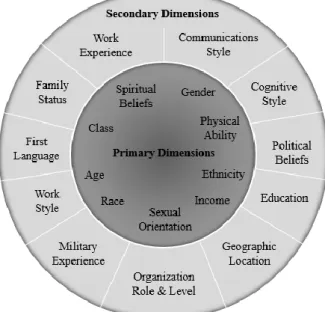
2 Identity-groups are formed based on different characteristics that constitute to a person. To explain different human characteristics and properties, Loden and Rosener (1991, 2012) raised awareness for the distinction between primary and secondary dimensions of diversity. The model was created in 1991 and has been extended with more and slightly adjusted dimensions in 2012 (Figure 1). Primary dimensions such as age and gender are core elements which a person is either born with or characteristics which continue throughout our lives. Primary dimensions are more likely to be visible and mostly unchangeable. Secondary dimensions such as geography and education are acquired throughout a person’s live. Secondary dimensions are not immutable (Anand & Winters, 2008). Furthermore, we can distinct visible and invisible
identities, which differentiates characteristics that can be seen from the ones that cannot be seen. Discussions about diversity refer to visible identities such as race, age and ethnicity, as well as invisible identities such as religion and sexual orientation.
In the past, diversity was often seen as a way to fight discrimination. From a legal and moral perspective, discrimination is perceived wrong. Focussing on diversity approaches is perceived as the right thing to do (Thomas & Ely, 1996). This has led to a serious increase in attention to diversity within organisations over the past decades. Alongside business disciplines such as leadership and ethics, diversity is one of the most popular disciplines for researchers to concentrate on. This can be explained by the fact that despite its popularity, it is also one of the least understood topics which on its turn provides opportunities for research.
Thomas and Ely (1996) state that workplace diversity is assumed by many people as “increasing racial, national, gender, or class representation – in other words, recruiting and
3 retaining more people from traditionally underrepresented identity groups” (p. 80). This interpretation does not fully explain the concept because it solely focusses on recruitment activities to foster workplace diversity, which is merely one step in creating a diverse workplace. Therefore, Thomas and Ely (1996) state that diversity management goes beyond rising the number of diverse identity-groups at the workplace, and they advise that it should instead be understood as “the varied perspectives and approaches to work that members of different identity groups bring“ (p. 80). Thomas (1990) has shifted the paradigm of diversity away from only fighting discrimination towards reasoning from business survival. This brought a big increase in popularity of the concept and its activities. Thomas (1990) argued that the problem was not within recruitment, but rather among retention. Research among organisations in the US, conducted by Thomas (1990), showed that only few minorities were getting on higher level positions. Many minorities plateau and lose their drive due to a lack of challenges. Reasoning to employ a more diverse workforce can be distinguished between self-interest business grounds and social, ethical grounds (Rhodes, 2017). When justified by self-interest, organisations attempt to move beyond legal compliance. The concept of the business case for diversity defines that in today’s global economy diverse thoughts and perspectives brought in by a diverse workforce, are recognised as delivering a more successful approach towards their increasingly diverse customers. Creating a better demographic reflection of society can result achieving increased business results. The extent to which business results are enhanced driven by a diverse workforce, depends on the group functioning. Organisational involvement from the concept of the business case can be scaled into three levels which explain to what extent people can manage and express diversity related tensions (Thomas & Elly, 2001). The initiatives range from actively discouraging diversity to fully embracing diversity (Kulik, 2014). Table 1 explains each organisational perspective by its characteristics. The discrimination and fairness paradigm as well as the access and legitimacy paradigm have guided most diversity initiatives to date. The learning and effectiveness paradigm includes aspects of the first two, but specifically connects diversity approaches to work (Thomas & Elly, 1996).
The other way of reasoning to enhance a more diverse workforce, is the moral case of diversity driven by ethics, social justice and human rights. The question of what is right, forms a crucial point of debate in the field of diversity and equality Reasoning out of social justice is also called the voluntary approach to diversity and argues that equality is desirable. Representation of a utilitarian foundation is not the driver for this way of reasoning, it is rather the moral behind it. (Tomlinson & Schwabenland, 2010). Maxwell (2004) argues that there is
4 a possibility to combine business and moral aspects in managing diversity initiatives within organisations. Economic arguments mostly the major driver behind diversity initiatives, with moral reasoning only as side benefits (Barmes & Ashtiany, 2003).
Many researchers have proven that diversity initiatives are closely related to organisational performance and can enable recognisable competitive advantage (Cox, 1993; Loden & Rosener, 1991; Mor Barak, 2015; Shore et al., 2011). It is essential to understand the full potential of diversity to enable increased effectiveness within an organisation because organisational benefits can be significantly impacted by workplace diversity (Kulik, 2014). Examples of macro-organisational level benefits of a diverse workforce are greater relative profit, increased sales and decreased turnover (Pitts & Wise, 2010). Micro-employee level benefits of a diverse workforce on the other hand, can impact the individual satisfaction level of employees. Examples of such individual benefits are job satisfaction, motivation and consequently higher performance (Kulik 2014). Jackson, Joshi, and Erhardt (2003) state that functional and educational diversity specifically result in improved team processes. Companies should apply a rather holistic approach to diversity, as contributing by delivering different and fresh approaches to existing rituals, routines and processes (Thomas & Ely, 1996). Ignorance of the need to manage a diversified workforce can lead to contradictive negative results due to a non-inclusive environment, resulting in low staff morale, decreased productivity, retention problems and increased absenteeism (Rawat & Basergekar, 2016).
Table 1
Overview of Thomas and Elly’s Model
Discrimination and Fairness Access and Legitimacy Learning and Effectiveness
Equal opportunity Acceptance and celebration of
differences
Different perspectives and approaches to work are valuable
Compliance with EEO regulations Market-based motivation for competitive advantage
Acknowledgement that learning and relearning are central to leveraging diversity
Fair Treatment Motivation is to attract multicultural
talent to understand and serve customers and gain legitimacy with them
Organisation fosters personal development that brings out people’s full range of skills Concern with creating mentoring
and career development programs of women and people of colour
Recognition that employees often make business choices that draw on their cultural backgrounds
Supports assimilation and colour and gender-blind conformism
“We are all on the same team, with our differences – not despite them”
5 Solely increasing demographic variation at the work floor does not in itself optimize organisational effectiveness. The belief that diversity simply relates to where a person comes from or how a person looks is a very basic representation of identity-groups. This assumption has even proven to prevent effectiveness because it implies a rather simplistic approach (Thomas & Ely, 1996). Other critics notice that outcomes of highly diverse workplaces are mixed (Jackson et al., 2003; Jayne & Dipboye, 2004; Kochan et al., 2003; Williams & O’Reilly, 1998). Workplace diversity might lead instead to higher turnover and greater employee dissatisfaction (Jackson, Brett, Sessa, Cooper, Julin & Peyronnin, 1991), lower employee commitment (Tsui, Egan & O’Reilly, 1992) and intergroup conflicts (Jehn, Northcraft & Neale, 1999). Also, cohesion, satisfaction and commitment appear to be affective reactions to diverse workplaces (Pfeffer, 1983), which can be clarified by the fact that employees tend to dislike dissimilar others (Jackson et al., 2003). “Increased diversity, especially in terms of age, tenure and, ethnicity, typically has negative effects on social integration, communication and conflict” (p. 121), as concluded by Williams and O’Reilly (1998). Jehn and Bezrukova (2004) argue that workplace diversity can surely deliver positive organisational results, but only when managed effectively.
1.2. Diversity Management
Growing levels of workplace diversity are part of today’s global business environment. The concept of diversity and its management have become imperative because diversity only leads to desired results when diverse employees can work effectively together in an inclusive environment (Rawat & Basergekar, 2016). Diversity Management is defined by Cox (1993) as “planning and implementing organisational systems and practices to manage people so that the potential advantages of diversity are maximised while its potential disadvantages are minimised” (p. 11). Diversity management commenced in the United States around 1940 and was quickly adopted by countries across the world (Rawat & Basergekar, 2016). Diversity management initiated as an approach to contribute to equal employment opportunities and transformed into regulations to ensure inclusion. Diversity management is about enabling the feeling of belonging to groups that are considered different from the mainstream (Mor Barak, 2015). Diversity management is rooted in liberation movements and social protests of the 1950s and 60 in the USA. Minorities were hired into entry-level positions but found the difficulty in moving up in the organisation. Concepts like revolving doors and the glass ceilings, which define the obstructs for minorities and women in organisations, started to appear. The importance of diversity management highly increased to fight such concepts (Bazzel, 2003).
6 To understand the variety of approaches and to enable a more strategical way of applying diversity in organisations, Kulik (2014) describes organisational diversity management as a system consisting out of five different components (Table 2). Each component has its own essential value to organisational diversity. The content of the first component, diversity
paradigms, is inspired by Thomas and Elly (1996) as shown earlier in Table 1. They supposed
three perspectives from which companies can approach diversity: the discrimination-and-fairness paradigm, the access-and-legitimacy paradigm and the learning-and-effectiveness paradigm. The variety of paradigms are representing expectations and beliefs about workforce diversity and its specific role in the organisation (Kulik, 2014).
The next component, Diversity policies, is driven by the organisation’s diversity paradigm. Organisational goals and objectives are set in policies, based on the level of involvement in the topic of diversity. Organisations who are in the discrimination-and-fairness paradigm develop different policies than organisations approaching diversity from the learning-and-effectiveness paradigm. The first two diversity management system components together, drive the diversity programmes within an organisation which are the formal diversity management activities. A diversity programme exists out of several activities to reach an organisations goals and objectives. An example of such an activity is unconscious bias training or inclusion awareness communications. Bowen and Ostroff (2004), argue the importance of implementing a strategic bundle of integrated diversity management activities. Simultaneous implementation ensures strong communication about the diversity philosophy that a company is adopting. Research on specific diversity programmes is very limited and each research only tests a small amount of diversity management activities (Kulik, 2014).
Table 2
Diversity management system components
Component Definition
Diversity paradigms Values, beliefs and norms about how diversity should be managed
Diversity policies Organisational goals or objectives for managing human resources
Diversity programmes The set of formal diversity activities used in the organisation
Diversity practices The implementation and experience of an organisation’s diversity
programmes by lower level managers and employees
Diversity climate Shared employee perceptions and interpretations of the meaning of
diversity paradigms, policies and programmes in the organisation Source: Kulik (2014)
7
Diversity practices evaluate the experiences of managers and employees regarding
diversity programmes. Consistency with organisation’s intention and perceived experience by employees, may differ. It is hard to evaluate direct benefits of effective diversity management in the short run (Kulik, 2014). The desired result of diversity management is the right diversity
climate at the work floor, which can also be defined as “the perception shared among
individuals that their organisation treats people fairly and integrates them in the work environment, regardless of background” (Hennekam & Ladge, 2017, p. 43).
Kulik (2014) has described a disconnection between theory and practice when it comes to diversity management. This disconnection can be caused by both a gap or a doing gap. The lack of knowing reflects knowledge taken from research findings. A knowing-doing gap is explained as a lack of awareness of how to apply research finding into practice (Kulik, 2014).
1.3.Inclusion
Shore et al. (2017) argue that creating an inclusive environment for all employees within an organisation, is as important to create a positive diversity climate. The term inclusion is based on dissimilarities between people, it focuses on acknowledgement and acceptance of these dissimilarities. Over the last decade, workplace diversity shifted and refocussed from diversity management to inclusion (Nishii, 2013). Mor Barak (2014) defines the concept of inclusion as “the individual’s sense of being a part of the organisational system in both formal processes and informal processes” (p. 155). Informal processes such as information exchange in an informal setting where not all team members are present, strongly influence the feeling of exclusion. Shore et al. (2011) argue that an individual must have satisfied two integrated needs to feel included in a team: belongingness and uniqueness. It is essential to foster a sense of belonging. However, if employees must give up a unique characteristic to enable the feeling of belongingness, true inclusion is not experienced. On the other hand, the sense of uniqueness can be satisfied without experiencing the feeling of belonging. For example, unique characteristics of an employee can be recognised during work activities, but if the person is not invited to meetings and social events, the feeling of belonging is lacking. It all refers to the employee perceptions of being included (Mor Barak, 2015). The combined influence of effective action programs implemented at organisations, and antidiscrimination laws helped to foster inclusion of diverse groups at the work floor (Mor Barak, 2015). Insensitivity to the needs of diverse groups within organisations, may lead to a feeling of not being able to express your true self at the work floor among employees. Such non-inclusive environments potentially
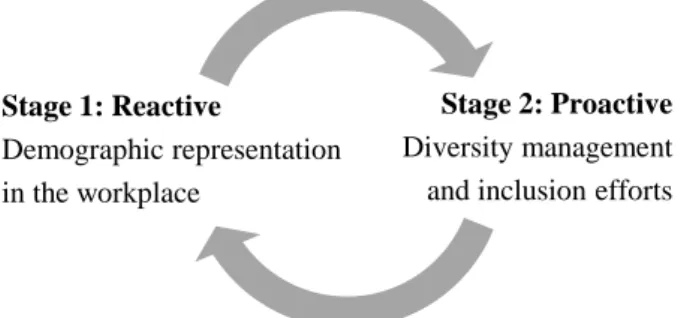
8 result in low staff morale, decreased productivity, retention problems and increased absenteeism (Rawat & Basergekar, 2016). Mor Barak and Travis (2009) introduced a two-stage, circular process to increase diversity representation and achieving workforce inclusion (figure 2). This model advises a proactive approach to inclusion. Stage one is reactive where organisations are challenged to recruit a more diverse workforce. The second stage is proactive, where organisations are expected to invest effort in diversity management. This circular process aims to enhance inclusion and foster organisational effectiveness (Mor Barak & Travis, 2009).
Organisations are challenged to create an inclusive environment which leverages diversity’s potential benefits (Holvino, Ferdman, & Merrill-Sands, 2004). As stated by Nishii (2013), “inclusion is hampered when employees perceive others in terms of oversimplified and negative stereotypes and interpersonal interactions are perverted by status dynamics”. An inclusive climate includes unbiased and equal treatment of employees, it supports individual differences and most importantly, it includes all employees in decision making (Cox, 1993). Inclusion policies and procedures should enable a fair behavioural standard, supportive workplace values and equal employment opportunities within organisations (Rawat & Basergekar, 2016).
Another challenge as described by de Moura, Leicht and Leite (2018), is the understanding of diversity and inclusion in leadership. The potential for social and organisational transformation is underestimated. Also, the interplay between psychological processes and dependent factors that support diversity in leadership is undervalued. Ethnic and racial minority members as well as women, remain underrepresented in leadership positions across the world. Unconscious bias, failure to manage diversity effectively and stereotyping are social processes which create barriers to leadership positions (de Moura et al., 2018).
Figure 2. A circular two-stage process of diversity and inclusion (Mor Barak & Travis, 2009)
Stage 2: Proactive Diversity management
and inclusion efforts Stage 1: Reactive
Demographic representation in the workplace
9 1.4. Workplace conflicts
The concept of workplace conflict is studied by Jehn (1997), and is distinguished into three different dimensions, namely relation conflict, task conflict and process conflict. The first occurs when two or more colleagues face a situation in a different way. Major part of such conflicts is mostly caused by disagreement about goals and objectives within an organisation, differences in perception are taken personally which makes relation conflicts especially hard to manage. Personality clashes are the most common cause of workplace conflicts (Hotepo, Asokere, Abdul-Azeez, & Ajemunigbohun, 2010). Task conflict is explained as a perceived disagreement among group members mostly regarding differences in ideas and opinions as well as content of their decisions. In this case, it is often a conflict between employee and manager. Process conflict arises when delegating and dividing responsibility. Often, process conflicts escalate into a relational conflict as a disagreement between two individuals can occur (Jehn, 1997). Conflicts between colleagues often occur and can be explained by informal power, or status. Where formal power includes the control of tangible resources, is informal power related to the control which is socially conferred by others. Team-level outcomes can negatively be affected by power (Greer, van Bunderen & Yu, 2017).
The relationship between workplace diversity and workplace conflicts is explained by the fact that the act of categorizing of employees based on demographics result mostly in biases that favour in-group members over out-group members (Bargh & Chartrand, 1999). This bias is often unconscious and therefore hard to control. The tendency to favour in-group members has a specifically high impact on a previous mentioned problem, minorities in leadership positions. More specifically, the in-group favour makes it difficult for women to access high-powered professional networks (Devnew, Janzen Le Ber, Torchia & Burke, 2018).
When looking into the effects of workplace conflicts regarding organisational performance, Hotepo et al. (2010) have revealed that both positive and negative effects have been seen. Once the conflict is managed well, positive effects can turn into building stronger corporations between employees as well as enhancement of organisational innovativeness. If not managed well, differences between individuals can result in decreased social integration at work, mutual understanding and building trust (Hotepo et al., 2010). These factors are associated with higher employee turnover and team performance losses (Guillaume et al., 2014). Negative outcomes of workplace diversity are primary explained by the fact that heterogeneous teams tend to experience higher levels of workplace conflict (Jackson, Joshi, & Erhardt, 2003; Williams & O’Reilly, 1998). Well set-up channels for feedback and effective communication optimize
10 chances to talk about conflicts regarding inclusion and discrimination within organisations (Rawat & Basergekar, 2016).
Workplace conflicts in the Netherlands are reported by the CBS (Central Bureau for Statistics) and published in an annual report about labour circumstances in the Netherlands. This is done in cooperation with the TNO (Dutch organisation of applied natural sciences research). In 2018, over 30% of respondents (N=62.567) were involved in a workplace conflict. In case of a conflict with one or more direct colleagues, this is mostly a short-term conflict (19.5%, N=62.393). However, 86% states not to be involved in such a conflict at all. Over 10% of respondents (N=62.326) were in a short-term conflict with their direct supervisor and only about 7% (N=62.201) have been in a short-term conflict with their employer. Long-term conflicts with colleagues, supervisors or employers are very rare (TNO & CBS, 2018).
1.5. Workplace discrimination
Discrimination is a worldwide issue which reduces physical and psychological health (Mor Borak, 2015). Workplace discrimination can also result in reduced self-esteem, increased job tension, and decreased satisfaction (Ensher, Grant-Vallone, & Donaldson, 2001; McGonagle & Hamblin, 2014). In some countries, legislative frameworks have been developed to protect people who belong to a vulnerable group. The Constitution of the Kingdom of the Netherlands includes that discrimination is forbidden (Rijksoverheid, 2008), which specifically resulted in increased employment chances for women and non-western people. A continuous increase is noticed in the number and types of diverse groups that are discriminated against, influenced by global economy and population movement (Mor Borak, 2015).
Being susceptible to discrimination and other negative consequences is mainly the result of being considered outside certain social groups (Mor Barak et al., 1998). Victims of discrimination are mostly minority groups. A minority group can be explained as a category of people who are involved in comparable disadvantages to members of a majority or dominant social category (Healey, Stephnick & O’Brien, 2019). Observable characteristics are typically the binding factor within a minority group, such as primary dimensions (Anand & Winters, 2008). Di Marco, et al. (2016) argue that discrimination can also be a stressor for non-minority employees who perceive a discriminatory workplace environment.
Several decades of legislation development around discriminatory behaviour has unfortunately still not changed everyone’s attitude regarding minorities (Cortina, 2008). In fact, prejudice and negative stereotypes might be present even at an unconscious level (Di Marco,
11 Arenas, Giorgi, Arcangeli & Mucci, 2018). Among others, Jones et al. (2013) have distinguished two forms of discrimination: overt and covert discrimination. Overt discrimination is explained as the old-fashioned acts of prejudice. Beliefs of being inferior over pejorative stereotypes drive this type of discrimination. Targets of overt discrimination can more easily relate negative experiences to discrimination because of its more explicit roots. Diversity initiatives within organisations are often targeting overt discrimination, since it has a more easily recognisable character (Jones, et al., 2013). Prejudices are seen in covert forms of discrimination within organisations and are explained as negative attitudes towards specific minorities. Cortina (2008) argues that incivility is the modern way of discrimination seen in organisations. It does not have a clear intent to harm, but even with the low-intensity it can injure employees. Incivility is a nonphysical way of interpersonal mistreatment happening in organisations (Cortina, 2008).
Covert, or subtle discrimination on the other hand, intents to harm but mostly unintentionally and is difficult to detect (Cortina, 2008; Jones et al., 2013). Jones et al. (2013) argues that actions with ambiguous intentions are perceived more stressful and confusing by targets compared to overt discrimination. Subtle discrimination is overlooked in organisations because it is not easily recognisable but might be even more harmful for targets because of the chronic nature of its consequences due to its higher frequency (Jones et al., 2013). This might lead to relational workplace conflicts. Cortina (2008) recognizes an additional form of discrimination, masked discrimination. This can be without realizing it, within everyday acts of incivility while maintaining an unbiased image. The natural tendency of stereotyping is the mind’s way to categorise the world around, particularly focussed on the people in that world (Healey, Stephnick & O’Brien, 2019). Unconscious stereotyping of unfamiliar ideas or people, cannot be prevented and is referred to as subtle stereotyping. On the other hand, blatant stereotyping is conscious and controlled, and can thus be recognised and managed more easily (Cortina, 2008).
1.6.Voice mechanisms
When doing qualitative research into Organisational Behaviour (OB), informal voice mechanisms play an important role in the study. Employee voice is widely studied across a diverse range of disciplines, generating rich literature on the topic (Van Dyne & LePine, 1998; Armstrong, 2006; Kaufman, 2015). It is essential to first understand participative management to enable better understanding of employee voice. Stueart and Moran (2007) argue that participative management of employees emphasises employee empowerment of lower level
12 employees by implementing and executing participative methods to increase involvement of employees in organisational decision making. Employee voice is one of the key characteristics of employee involvement. Excluding an employee from decision making, can be perceived as subtle discrimination. Van Dyne and LePine (1998) are credited as the founders of employee voice specifically within OB and have provided the following definition: “Promotive behaviour that emphasizes expression of constructive challenge needed to improve rather than merely criticize. Voice is making innovative suggestions for change and recommending modifications to standard procedures even when others disagree” (p. 109). Employee voice within OB can also be described as a mechanism that expresses the desire and choice of employees to communicate ideas and information to management as benefit for the organisation (Kaufman, 2015). Exclusion or ignorance of this desire and choice of employees, can be perceived as subtle discrimination.
Two main types of employee voice are defined by Armstrong (2006), namely: upward problem solving and representative participation. Upward problem solving can be explained from a teambuilding perspective where two-way communication is used between employees and managers. Representative participation involves collectiveness. The approach is rather from a partnership perspective between employee and employer. Problems and issues are solved in a cooperative way. These types of employee voice must be taken into account when developing integrated diversity management programmes. Empowerment by employees in terms of voice, can enhance the effectiveness of diversity management practices (Bowen & Ostroff, 2004). In addition, many other types of employee voice exist (Armstrong, 2006).
Four specific purposes for employee voice are defined by Armstrong (2006). The first purpose is that dissatisfaction is articulated within the organisation. Second, the expression of collective organisation towards management. Third, mutuality of the relationship between employer and employee is demonstrated. Last, management decision making is contributed to especially regarding quality, work organisation and productivity. By encouraging employee voice within organisations, ethical and political needs can be fulfilled while strengthen the bottom line to decrease high resignation rates (Kaufman, 2015).
1.7. Diversity and inclusion in the Netherlands
A continuous increase in migration to the Netherlands was seen during the late fifties which changed the demographic composition of the Dutch society. From origin, The Netherlands does not have an ethically and racially diverse society (Hennekam & Ladge, 2017). Other changes
13 are increases in participation of women in the labour market as well as an increase in retirement age, resulting in more generations at the work floor. It is important to highlight the differences in diversity between urban and rural areas. The central and urban part of the Netherlands, called the Randstad, is significantly more diverse than more rural areas.
McKinsey&Company (2018) has performed research on gender balance at the Dutch labour market. Female participation almost equals men with a share of 46%. However, there is an uneven gender spread across sectors and a low contribution by women to GDP (Gross Domestic Product) (33%). This can be related to the fact that women occupy only have 25% of management positions and only 6% of leadership positions in the Netherlands (McKinsey&Company, 2018). Mothers in the Netherlands have the right to take 16 weeks of pregnancy leave, and their partner (male or female) has the right to take up five days (Dutch Authorities, 2016). Same-sex couples living in the Netherlands, prefer to live in one of the four bigger cities which can be explained by their more welcoming environment (Kuyper, 2013).
People with disabilities have more problems finding an employer because they often need extra supervision and adjustments to their work place. In 2013, the Dutch government has developed regulation in to enable better opportunities for disabled people. Goals are set per company sector to create a specific amount of jobs for disabled people. Each organisation counting 25 or more employees, must participate (Rijksoverheid, 2019).
According to the most recent report written on Discrimination in the Netherlands (European Commission, 2015), discrimination based on ethnicity is widespread in the country. Discrimination based on religion or beliefs and sexual orientation are ranked second highest in types of discrimination. The economic position of non-western migrants living in the Netherlands is poor due to low numbers of educated and employed people (Heijes, 2011). Coverage of the media on ethnic minorities focuses mainly on negative issues and we see a movement towards hardening of positions in Dutch politics (Heijes, 2011).
Kuyper (2013) argues that the Netherlands is the most tolerant country worldwide regarding acceptance of homosexuality explained by the fact that negative attitudes towards homosexuality has been below 10% for many years now. Research has shown that a supportive diversity climate leads to fewer negative experiences regarding sexual orientation in organisations in the Netherlands.
Strategies used to enhance diversity and inclusion in the Netherlands are: creation of awareness and adjusting personnel policies (Regioplan, 2018). Raising awareness is done by
14 supporting employee networks, introducing a diversity board and appointing role models. Most effective way to increase awareness is to implement several strategies at once. Adjustments to personnel policies foster inflow of more diverse employees and improvement of recruitment practices. Results seen at Dutch organisations are increased support from the leadership, increased D&I goals by managers and increased awareness at the work floor (Regioplan, 2018).
15 2. Method
2.1.Research Question
The growing acknowledged relevance of workplace diversity, both from the business case perspective as well as from a moral perspective, makes that research in this field is suitable for direct application. An important delivery of different studies into workplace diversity is that it yields potentially greater productivity and competitive advantages in the long run (Cox, 1993; Loden & Rosener, 1991; Mor Barak, 2015; Shore et al., 2011) when managed effectively (Jackson et al., 1991).
2.1.1. Problem Statement
Apart from desired satisfying outcomes of diverse workplaces, critics note that it is tough to create the optimal effective diverse workplace (Jackson et al., 2003; Jayne & Dipboye, 2004; Kochan et al., 2003; Williams & O’Reilly, 1998). Diversity solely leads to desired positive results when employees are enabled to work effectively together in an inclusive environment (Rawat & Basergekar, 2016). Diversification within organisations can result in decreased team performance if the diverse workforce is not managed effectively (Jackson et al., 1991). Non-existing or ineffective diversity management can be caused by a knowledge-gap or a knowledge-doing gap among HR managers (Kulik, 2014). Workplace conflicts can arise interpersonally or within teams, and when related to diversity, protected groups can be found in discriminatory positions. Organisations are challenged to encourage diversity while protecting minorities, to enable optimal effectiveness of diversification.
Workplace diversity and its relation to workplace conflicts is a topic which is researched by Williams and O’Reilly (1998), through a review of 40 years of research into demography and diversity and the effects on groups and individuals. Workplace diversity is extensively studied in the Netherlands by for example Heijes (2011), Ter Berg and Schothorst (2018), and Hennekam and Ladge (2017). Looking into workplace diversity and workplace conflicts specifically, is not yet done in the Netherlands. Therefore, this study is very value adding in the field of workplace diversity in the Netherlands.
2.1.2. Purpose
Human Resource specialists employed in the Netherlands are highly aware of the importance of diversity and inclusion at the workplace. Enhancing a diverse workforce is
encouraged by the Dutch government by creating awareness among organisations (Ter Berg &
Schothorst, 2018). Proactive approaches are developed when it comes to managing diversity or planning to do so, mostly driven by the aim for positive consequences based on the business
16 workforce. This leads to the fact that visible, primary dimensions of diversity are used in this research, rather than demographic information about employees (Anand & Winters, 2008). Dimensions taken into account are: gender, disabilities, ethnicity, race, sexual orientation, religious beliefs and age.
It is clear that diversity is given great attention, but workplace conflicts related to
diversity are not so much addressed. The main research aims were: (i) to examine how diversity
and inclusion are managed at the work floor in the Netherlands, and which diverse groups are identified; and (ii) to explore conflicts and discrimination at the work floor in the Netherlands, and the possible relationship with diverse groups related to employee voice.
2.1.3. Research question
This study aims to provide an answer to the following research question:
How do Human Resource specialists govern diversity at the workplace in the Netherlands, and do conflicts result from a diverse workplace?
Sub questions are designed to split the major query into smaller sizable investigations:
1. Which protected groups are present in organisations in the Netherlands, and how is the diverse workplace managed?
2. Do HR specialists identify discriminatory behaviours, conflicts and complaints related to diverse groups (from the point of view of victims or colleagues and in relation to employee voice)?
3. Which protected groups are new and how has discriminatory behaviour changed in the last years?
2.2. Research Design
This study works from particular data gathered among HR specialists towards the exploration of patterns. The mono method approach, which solely focusses on qualitative research, was focussed on gathering qualitative data. No quantitative approach was applied because this study tries to understand underlying motivations, reasons and opinions rather than administering a statistical analysis. Explorative open-ended studies use a qualitative approach especially well to enlarge the richness of generated insight given that it enables more information including examples, attitudes and feelings (Rubin & Rubin, 2011). Exploratory research is often applied when a problem requires deeper investigation into clear results, therefore it applies well to this study. The fact that template analysis is a technique rather than
17 a methodology, makes that it is applicable to qualitative studies based on different epistemological perspectives, including constructivism (Rubin & Rubin, 2011).
A social constructivist perspective was considered the most appropriate way to understand and explain reality, clarified by the fact that conclusions have been drawn through social processes and interaction with others, where human development is socially situated. “What is known does not simply mirror the real world; rather, the meanings ascribed to the real world are created by individuals as they experience it” (Chism, Douglas, & Hilson, 2008, p. 3). Conclusions are constructed based on semi-structured interviews with 14 HR specialists in the Netherlands. Following this learning method, researchers have to develop their own understanding and knowledge of the world in which conclusions are constructed. Reflecting on gathered meanings, which are in this study shaped by experiences of HR specialists in the Netherlands, helps to understand the conclusions.
A philosophical paradigm describes the advancement of knowledge and the nature of that knowledge (Saunders, Lewis, & Thornhill, 2012). The social constructivist perspective falls under the umbrella of the interpretivism perspective which specifies that “truth is contextual, depending on the situation, the people being observed, and even the person doing the observation” (Chism et al., 2008, p. 2). The qualitative, interpretivist approach focuses on context-dependent descriptions which helps the researcher in this particular study to understand differences between individuals dealing with diversity and inclusion at the work floor as well as possible discriminatory behaviour (Schwandt, 2007). It is crucial to adopt a reflexive stance and understand the world from the participants’ point of view. This enabled the author to objectively conduct interviews.
2.3. Participants
As per ease of access, convenience sampling was used to recruit participants (Saunders et al., 2012). This non-probability sampling technique was applied by search on LinkedIn. Human Resource professionals employed at medium and large sized companies in the Netherlands were approached by using the InMail function through LinkedIn as well as through email if available. Electronic communication was used to consider interest and willingness in participation. A template email (appendix I) was used to ensure consistency between invites. This approach was followed by Snowball sampling, another non-probability sampling procedure (Saunders et al., 2012). The snowball sampling method was used to increase the number of participants. Furthermore, bias in sourcing was decreased by adding snowball
18 sampling in addition to sourcing from LinkedIn. The snowballing approach enabled subsequent respondents that were obtained through the network of initial respondents.
A group of 14 participants have joined the study. The mean age of participants was 44 years old, with an average tenure of 15 years and a majority of 10 female HR professionals were interviewed (71%). Participants were all Human Resources professionals employed at large sized organisations in the Netherlands, each counting over 251 employees. Participants (N=14) were people employed as Human Resources Manager/Director (N=10), Human Resources Business Partner (N=1) or Diversity & Inclusion Manager/Director (N=3). Food industry (N=1), Installation Technology (N=1), Manufacturing (N=1), Healthcare (N=3), Hospitality (N=1), Accounting (N=1), Telecommunication (N=1), Information Services (N=1), Financial Services and Banking (N=2), E-commerce (N=1) and Emergency Services (N=1). All details can be found in table 3.
Table 3
Participant information and company sector
Nr. Gender
Age in years
Tenure in
years Job Function Company sector
Number of employees
1 Male 36 7 HR Manager Food industry 38.000
2 Female 42 4.5 HR director Installation Technology 1500
3 Male 53 2.5 Head of HR Manufacturing 3500
4 Female 45 5 Head of HR Healthcare 6500
5 Female 37 18 HR Manager Hospitality 22.000
6 Female 52 30 Head of D&I Accounting 270.000
7 Male 35 12 HR Manager Telecommunication 13.000
8 Female 36 12 HR Manager Information Services 1700
9 Female 50 18 Head of D&I Financial Services and Banking 17.000
10 Female 28 1.5 HR Business Partner Financial Services and Banking 1600
11 Female 60 13 HR Manager Healthcare 1.100
12 Female 48 8 HR Manager E-commerce 250
13 Female 42 12 Head of D&I Emergency services 1.200
14 Male 58 9 Head of HR Healthcare 4.000
2.4. Data collections
Data was collected among 14 Human Resources Specialists employed at large organisations operating in different industries in the Netherlands. The study was completed by a single interviewer between April and August 2019. Saturation was reached before the end of the data collection, after 12 interviews. Data collection continued to ensure saturation. Data obtained during interview 13 and 14 confirmed the findings from the previous 12 interviews. Thus, no additional insights or understandings were found after saturation. Semi-structured
19 interviews were elected to provide rich qualitative information to better understand the meanings described by participants. The use of semi-structured interviews decreased interviewer’s bias and increases consistency, comparability execution time (Arksey & Knight, 1999), while still providing the opportunity to probe answers which enables explaining and building on responses (Saunders et al., 2012). The interview guideline was professionally developed and applied in a previous Portuguese study (Di Marco, Sílva, & Passos, 2018) (appendix II & III).
Face-to-face interviews were completed in an office setting; either in a meeting room, personal office or open office space, depending on the participants’ preference. The interviews were completed in common agreement on confidential grounds, which helped building trust and open conversations. The time needed to complete the interview with each individual was 60 minutes and was done during working hours. All participants were asked to respond to questions from an organisational context. The broad scope of the questions guided HR specialists to give examples about diversity and inclusion among employees within the organisation, as well as occurred conflicts, possibly related to diverse groups. Each interview was audio-recorded, transcribed and if needed translated from Dutch to English by the interviewer.
2.5. Data Analysis
Inductive reasoning starts at the data existing out of observations and measures, to work towards broader generalizations and theories by applying labels to explore patterns and regularities. The process of collecting data and preparing results were completed simultaneously following the template analysis approach (King, 2004). Template analysis utilizes a central focus on the development of a coding template (Brooks, McCluskey, Turley, & King, 2015). This approach was adopted because it enables a well-structured and systematic way of handling data. Furthermore, the principles of the template analysis are easily grasped and applied.
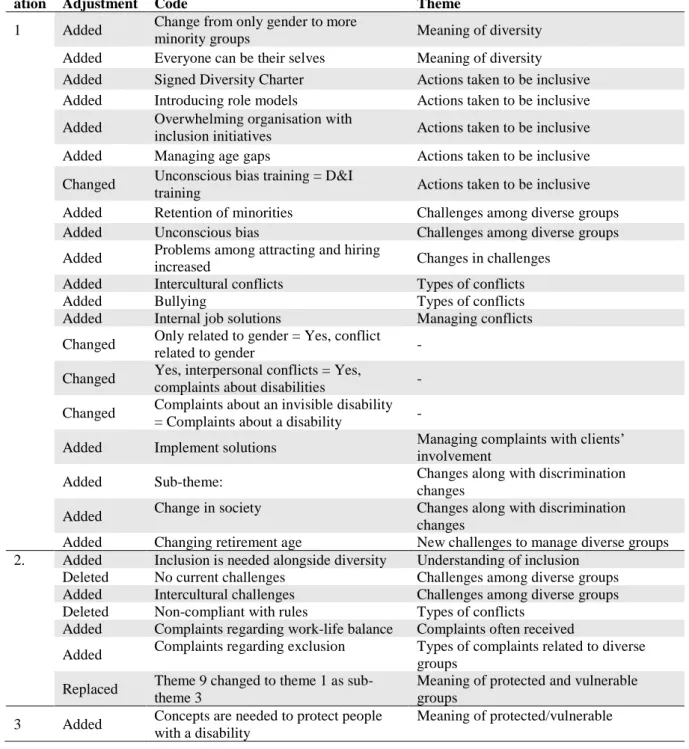
A set of a priori themes were identified in advance (King, 2004), based on relevance prior to the analysis, then sub-themes were developed. Table 4 presents the three a priori themes: diversity & inclusion, conflicts & complaints and change in discriminatory behaviour. After developing the a priori themes, a priori codes were created (appendix III). The a priori codes were adjustedbased on a subset of the data consisting out of the first five interviews. The codes were applied to further data and modified as necessary (Brooks et al., 2015). An example of a modification is that the code Change from only gender to more minority groups was added to
20 the sub-theme Meaning of diversity. All modifications can be found in detail in table 5 (appendix V). The author performed the coding solely and the code analysis was carried out
using Atlas.ti to enable structured and clear coding. Modification of the template was applied continuously after being applied to three added interview transcripts. A total number of 3 iterations on de coding template were constructed resulting in the a posteriori codes and themes (Appendix IV). Iteration 1 involved a higher number of modifications, than iteration 3. This can be explained by the fact of approaching saturation where the amount of new understandings decreases at the end of the data analysis.
2.6. Quality Assurance
Qualitative research is based on human understanding of one another. Validity of the
data is highly important, it ensures the extent to which the data and the interpretation of the data are credible. Therefore, several actions have been taken to ensure validity of the research.
Firstly, the interview guideline was professionally constructed and previously applied in a
Portuguese study (Di Marco et al., 2018) (appendix II), which ensures validity in terms of
interview questions. Carefully administering of the questions by the author and main researcher,
ensured full awareness of items. The interview guideline was adapted to Dutch, for the participants who could not fully express themselves in English. The translation from English to Dutch was done by the author and the translation was tested during a pilot interview. After reflecting on the successful pilot interview, no adjustments to the interview guide were needed.
Secondly, as the researcher is obtaining a master’s degree in Human Resources
Management, an opinion about the research topic was formulated unconsciously. The ability to recognise, accept and writing openly about personal perspectives is essential to analysing
Table 4
A priori themes and sub-themes
A priori themes Sub-themes
1. Diversity & Inclusion 1. Understanding of diversity and inclusion
2. Diverse groups
3. Meaning of protected and vulnerable groups
4. Actions taken and main challenges among diversity and inclusion
2. Conflicts & Complaints 5. Conflicts and how they are managed
6. Formal complaint systems
7. Complaints related to diversity/discrimination
8. Clients’ involvement in complaints and discrimination
21
qualitative findings effectively (Chism et al., 2008). The researcher a is a woman, striving for
equality at the work floor which might have affected the data analysis. The researcher is aged 25 years old and is born in the Netherlands. With an average participant age of 44, the researcher has experienced sometimes an age gap during the interviews. Personal bias and expectations of the interviewer were considered regarding the level of reflexivity.
Furthermore, an external auditor was elected to review the studies overall logic, coherence and consistency (Creswell, 2007). The external auditor (PharmD PhD S.P. van Rijn) is highly familiar with research in the field of pharmacy, and unfamiliar with this particular research topic. Lastly, the size of the sample had to be taken into account to ensure the reliability
of the analysis. The quality of the sample size was ensured by the fact that saturation was
reached before the coding of all transcripts was completed. The saturation point was reached after 12 interviews and secured that the gathered data could be sufficient to the analysis of the
study. After 3 iterations of the initial coding scheme, no adjustments were needed anymore, and
22 3. Results
The study among 14 HR specialists completed in the Netherlands aimed to (i) examine how diversity and inclusion are managed at the work floor in the Netherlands, and which diverse groups are identified; and to (ii) explore conflicts and discrimination at the work floor, and the possible relationship with diverse groups related to employee voice. With the aim in mind, the author tried to answer the following research question: How do Human Resource specialists govern diversity at the workplace in the Netherlands, and do conflicts result from a diverse workplace?
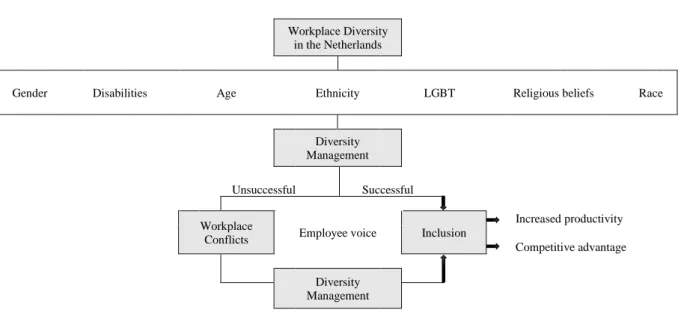
Before discussing the main findings in detail, a brief summary is visualized in figure 3. Diversity at the workplace in the Netherlands is structured by seven identified diverse groups. When diversity management is done successfully, inclusion can be reached which maximizes the outcome of a diverse workforce in terms of greater productivity and competitive advantages in the long run (Cox, 1993; Loden & Rosener, 1991; Mor Barak, 2015; Shore et al., 2011) when managed effectively (Jackson et al., 1991). Unsuccessful management of diverse groups does in not reach inclusion but can escalate in workplace conflicts. Employee voice is an important influencer when it comes to diversity management, workplace conflicts and inclusion. Employee empowerment by voice is key to employee involvement.
The findings are discussed following the order of the three themes: Diversity & inclusion, conflicts & complaints and changes in discriminatory behaviours. All three themes
Workplace Diversity in the Netherlands
Gender Disabilities Age Ethnicity LGBT Religious beliefs Race
Diversity Management Unsuccessful Successful Workplace
Conflicts Employee voice Inclusion
Increased productivity Competitive advantage Diversity
Management
23 aim to answer a sub question. Findings that have emerged from the collected data are described and clarified with quotes from interview participants. Quotes are cited by HR function and company sector.
3.1. Diversity and inclusion
The understanding of the concepts diversity and inclusion differ to the extent of which both concepts have been implemented in companies. HR specialists agree on the fact that diversity includes something like creating a mix of people, where background does not matter, where everyone is welcome and where individuals are valued. “Diversity is to me the fact that everyone is welcome, your background does not matter” (participant 7). “Making sure that your organisation is a good mix of different kinds of people” (participant 5). “Involve everybody and value their individual capacities […] a non-homogeneous working group with diverse people who look at cases from a diverse perspective” (participant 6). One out of three HR specialists highlights the fact that diversity can improve an organisation’s competitiveness. Only 10% of HR specialists showed their fear for negative consequences of diversity, “if you can bring as many as possible together, it works inspiring and challenging. In practice this can also work contradictive […] there is a need for understanding of things like why is that person actually different” (participant 4). Research has shown that outcomes of highly diverse workplaces are indeed mixed (Jackson et al., 2003; Jayne & Dipboye, 2004; Kochan et al., 2003; Williams & O’Reilly, 1998). Higher turnover and greater employee dissatisfaction are contradictive results (Jackson, Brett, Sessa, Cooper, Julin & Peyronnin, 1991). Moreover, lower employee commitment (Tsui, Egan & O’Reilly, 1992) and intergroup conflicts (Jehn, Northcraft & Neale, 1999) can also result from a diverse workforce. Workplace diversity can surely deliver positive organisational results, but only when managed effectively (Jehn & Bezrukova, 2004). One out of three HR specialists state that inclusion to them is similar to diversity, “for me it is almost the same” (participant 3). Others note that it is about accepting people and the majority agrees on realizing the added value of others “Different competencies which reinforce each other” (participant 8), “what can someone bring to the team” (participant 14) and “then we go to the strength of differences (participant 9).
Table 6 shows the presence of diverse groups as identified by participating HR specialists reflecting on their work floor. Gender diversity and people with disabilities are on the radar of each participating organisation, “diversity used to be only about men and women, but that is almost old-fashioned” (participant 2). Age and ethnicity are also point of attention to most companies. People with different sexual orientations and religious beliefs are also