Mini Review
Corresponding author: Drª Juliana Pavan Zuliani.
e-mail:zuliani@fi ocruz.br; [email protected];
Received 22 August 2016
Accepted 14 October 2016
An overview of
Bothrops erythromelas
venom
Neriane Monteiro Nery
[1], Karla Patrícia Luna
[2], Carla Freire Celedônio Fernandes
[1],[3]and Juliana Pavan Zuliani
[1],[4][1]. Laboratório de Imunologia Celular Aplicada à Saúde, Fundação Oswaldo Cruz, Porto Velho, Rondônia, Brasil. [2]. Departamento de Biologia, Universidade Estadual da Paraíba, Campina Grande, Paraíba, Brasil.
[3]. Centro de Pesquisa em Medicina Tropical, Porto Velho, Rondônia, Brasil. [4]. Departamento de Medicina, Universidade Federal de Rondônia, Porto Velho, Rondônia, Brasil.
Abstract
This review discusses studies on the venom of Bothrops erythromelas published over the past 36 years. During this period, many
contributions have been made to understand the venomous snake, its venom, and its experimental and clinical effects better. The following chronological overview is based on 29 articles that were published between 1979 and 2015, with emphasis on diverse areas. The complexity of this task demands an integration of multidisciplinary research tools to study toxinology. This science is in need of renewed conceptual and experimental platforms aimed at obtaining a profound understanding of the highly complex pathophysiology of snakebite envenoming and toxins isolated from snakes.
Key-words: Bothrops erythromelas. Snake. Venom.
INTRODUCTION
Venomous and non-venomous snakes are distributed worldwide, especially in tropical and subtropical areas(1).
Envenoming is neglected in many countries, which makes it a public health concern(2) (3) (4). Snake venoms are fascinating
models for drug design(1) and their antidotes are still under
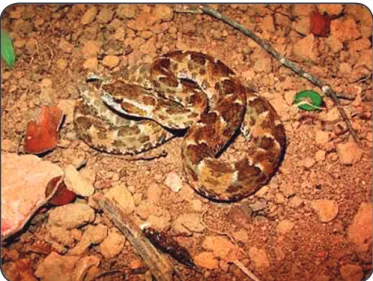
development. As a result, research in this area has been in existence since the 19th century(5). Three hundred and eighty-six species of snakes have been identifi ed in Brazil, of which 62 are venomous, 32 belong to the family Elapidae, and 30 belong to the family Viperidae(6). Bothrops erythromelas,which belongs
to the family Viperidae (Figure 1), is responsible for most of
the snakebite accidents in Northeast Brazil(7).
The species is found in the Caatinga ecoregion, an exclusive Brazilian biome that covers an area of about 850,000km2 and
includes part of the Brazilian States of Piauí, Ceará, Rio Grande do Norte, Paraíba, Pernambuco, Alagoas, Sergipe, Bahia, Maranhão, and Minas Gerais(7).
OVERVIEW ON
BOTHROPS ERYTHROMELAS VENOM
To date, 29 studies have been published on Bothrops erythromelas.The fi rst study on this snake dates back to 1979.
Nahas et al.(8), compared the coagulating activity of 26 different
Bothrops snake venoms. Using a specifi c clotting system, they
showed that B. erythromelas venom presents no thrombin-like
activity, because it was not able to directly clot fi brinogen. Furthermore, it is speculated that the absence of the thrombin-like activity is due to a fi brinogenolytic effect of the venom.
In 1990, Moura-da-Silva et al.(9) evaluated the differences in the distribution of myotoxins from different Bothrops
species. Briefl y, antigens with high myotoxic activities were isolated from Bothrops jararacussu venom and their cross
reactivities were analyzed by western blotting and enzyme-linked immunosorbent assay using Bothrops antivenoms. Bothrops jararacussu, Bothrops moojeni, Bothrops neuwiedi,
and Bothrops pradoi antivenoms were found to be active against
the isolated myotoxins; however, B. erythromelas antivenom
showed no activity against the antigens. Moreover, in vivo
myotoxicity studies confi rmed the absence of related myotoxins
in B. erythromelas venom.
In 1991, two related studies were conducted. The fi rst one compared 9 snake venoms from adult B. erythromelas females
and their offspring(10); this study found that caseinolytic and
fi brinolytic activities were lower in venoms from the newborn snakes than in those from their mothers. Although variations were observed in the amidolytic activities of the venoms from most Bothrops snakes and their offspring, the venom of B. erythromelas showed no amidolytic activity. In a comparative
analysis of the coagulating activities of Bothrops venoms, B. erythromelas venom presented the highest levels of factor X
FIGURE 1. Snake: Bothrops erythromelas, popularly known as Caatinga
lancehead, jararaca-da-seca, or jararaca malha de cascavel.
Source: http:www.luar.dcc.ufmg.br.
prothrombin and FX. However, this procoagulating activity seems to decrease as the newborn snakes grow. Moreover, these researchers demonstrated that the venom of an adult
B. erythromelas has a higher protein content than that from a
newborn snake does.
The second study isolated and compared myotoxins from different species of Bothrops by fast protein liquid
chromatography and isoelectrofocalization(11). No basic
proteins with phospholipase and/or myotoxic activity in the
B. erythromelas venom was detected in this study. This
confi rmed the data obtained by Moura-da-Silva et al.(9). In 1992, Maruyama et al.(12) complemented Nahas et al.’s
work(8) by investigating the enzymatic properties of factor II (FII) and FX activators from B. erythromelas venom.
They demonstrated that both activators are inhibited by ethylenediaminetetraacetate and 1,10-phenanthroline. They also hypothesized that metalloproteinases with molecular weights of 70-90kDa were present in the venom. These researchers observed that FII activator activity of B. erythromelas was
approximately 30 times greater than that of Oxyuranus scutellatus venom but similar to that of Daboia russelli venom.
Furthermore, they found that FX activator activity was calcium-dependent and that the venom of B. erythromelas contains two
hemorrhagic factors and two fi brinolytic enzymes.
Flores et al.(13) were the fi rst to study the proinfl ammatory
effects of B. erythromelas venom; they demonstrated that Bothrops erythromelas and Bothrops alternatus venoms
induced the migration of neutrophils into the peritoneal cavities of rats. When injected into the peritoneal cavity of rats and into the air pouch, the venom induced migration of the cells to the injection site. This migratory response was thought to occur due to the phospholipase activity of the venom. Moreover, B. alternatus venom showed a phospholipase
activity that was two times higher than that exhibited by B.
erythromelas venom. Additionally, B. erythromelas venom
induced neutrophil recruitment 2-3 times more than that induced
B. alternatus venom. Moreover, treatment with dexamethasone
or nordihydroguaiaretic acid, followed by stimulation with
Bothrops venom, resulted in a signifi cant reduction in neutrophil
migration. This suggests that leukotriene B4, which is a lipoxygenase metabolite of an arachidonic acid derivative, acts as a chemotactic mediator. Macrophages are the main source of leukotriene B4. They are also the predominantly resident cells
in the rat air pouch; therefore, rats injected with thioglycolate and then with B. erythromelas or B. alternatus venom had more
neutrophils in their peritoneal cavities than the control rats had. The reproductive aspects of some viviparous species from Bahia (Brazil), including B. erythromelas, was investigated
by Lira-da-Silva et al.(14). The researchers observed that the
gestation period of B. erythromelas was about 123 days and
that parturition occurred preferably in the summer season. Furthermore, the female snakes produced an average of 11 hatchlings/gestation with 16.80-19.20cm.
In 1998, Vasconcelos et al.(15) studied the in vivo distribution of B. erythromelas venom. In that study, the venom was labeled
with 131I and administered subcutaneously to mice. The results
showed a higher amount of venom in subcutaneous tissues than in the heart, bladder, brain or diaphragm. This indicates that
B. erythromelas venom does not target most internal organs;
hence, systemic effects of envenomation from B. erythromelas
would be related to an indirect action of the venom.
In some regions in Brazil, heparin is used for treating bothropic accidents associated with antibothropic serum (ABS). In 2001, Boechat et al.(16) verifi ed the action of heparin
(Liquemine, Roche, Brazil) on the main biological activities (hemorrhagic, in vitro and in vivo coagulating, edematogenic,
phospholipasic, and lethal) of Bothrops atrox and Bothrops erythromelas venoms. This study verifi ed that heparin (3 and
6IU) was not effective in neutralizing the hemorrhagic and coagulating activities of both venoms. However, heparin, at dose of 6 IU, was capable of neutralizing the edematogenic activity of B. erythromelas venom. It also increased the effectiveness
of ABS. Moreover, heparin neutralized the phospholipase A2
(PLA2) activity of B. erythromelas venom by 28%. Furthermore,
heparin was more effective in neutralizing the venom’s lethal activity when it was administered with ABS.
Camey et al.(17) compared the toxic effects of the venoms from fi ve Bothrops snakes (Bothrops alternatus, Bothrops moojeni, Bothrops neuwiedi, Bothrops jararacussu, and Bothrops jararaca) and a combination of these venoms (AgB).
They investigated the ability of polyvalent ABS, produced by Ezequiel Dias Foundation, to recognize and neutralize toxic compounds in the venoms. The results showed that ABS inhibited the toxic effects of each of the fi ve venoms, as well as thoseof Bothrops erythromelas, Bothrops atrox,and Bothrops leucurus venoms.
Silva et al.(18) were thefi rst to conduct a study involving the molecular cloning, purifi cation, and characterization of a prothrombin activator of B. erythromelas. Their fi ndings
successfully purifi ed the prothrombin activator berythrativase, by single cation-exchange chromatography. They demonstrated that berythrativase makes up approximately 5% of the venom. Additionally, berythrativase presented as a single band protein with a molecular weight of 78kDa under reducing conditions in sodium dodecyl sulfate polyacrylamide gel electrophoresis. This study showed that prothrombin hydrolysis by berythrativase resulted in a fragment pattern similar to that generated by Group A prothrombin activators. The latter convert prothrombin into meizothrombin; however, this occurs independent of the prothrombinase complex but is typical of a metalloproteinase. Furthermore, the enzymatic activity of berythrativase was rapidly inhibited by chelators, such as ethylenediaminetetraacetic acid and o-phenanthroline. It was also observed that after prolonged incubation with berythrativase, the Aα-chain of human fi brinogen was slowly digested; however, no effects on the β- or γ-chains were observed. Additionally, the enzyme triggered procoagulating and proinfl ammatory responses. It also positively regulated the surface expressions of intracellular adhesion molecule-1 and E-selectin on human umbilical vein endothelial cells (HUVECs). Berythrativase is functionally similar to Group A prothrombin activators and its primary structure is related to that of hemorrhagic metalloproteinases from snake venoms. As a result, it does not show a hemorrhagic activity, which is characteristic of other snake venom metalloproteinases.
In 2004, Zamuner et al.(19) compared the myotoxic and neurotoxic effects of Bothrops venoms (B. erythromelas, B. jararaca, B. jararacussu, B. moojeni, and B. neuwiedi) and
evaluated their neutralization using a commercial antivenom produced by the Institute Vital Brazil (Rio de Janeiro, RJ, Brazil). Although all the venoms were myotoxic when they were assessed by their release of creatine kinase, the B. erythromelas
venom seemed less active than the other venoms. This was in agreement with the data obtained by Moura-da-Silva et al. (9) and Moura-da-Silva et al.(11). However, Zamuner et al.(19)
indicated that the B. erythromelas venom was more lethal than
the others were. In vitro neurotoxicity studies showed that the
venoms were neurotoxic to chick nerve-muscle preparations. A commercial antivenom was used to neutralize the myotoxic effect of the venoms; however, its neuroprotective effect was variable, indicating that the neurotoxic venom component(s) differ among the venoms.
Junqueira-de-Azevedo et al.(20) have investigated the B. erythromelas snake venom vascular endothelial growth
factor (svVEGF), which is an angiogenic protein. The protein seems to be responsible for many of the features of Viperidae envenomation, such as hypotension and increase in vascular permeability, which results in spreading of the venom. In the work by Junqueira-de-Azevedo et al.(20), western blot assays
were conducted using mice antisera against svVEGF isolated from Bothrops insularis. The results indicated the presence of
svVEGFs in B. erythromelas venom. The complete sequence
of B. erythromelas svVEGF cDNA was found to contain 1213
nucleotides. The deduced protein showed an open reading frame of 146 amino acid residues, with an initiation codon (ATG) at
position 205 and a stop codon (TGA) at position 643, which are similar to the respective codons in the B. insularis svVEGF
sequence.
In 2004, the chromatographic behavior of an acidic PLA2 isolated from B. erythromelas snake venom by size-exclusion
chromatography was studied by Aird(21), whoobserved that the
PLA2 interacted hydrophobically with the matrix resin, which
was constituted of agarose and dextran, thereby retaining the protein on the matrix. Additionally, it was highlighted that different buffers at various pHs, as well as organic solvents, such as acetonitrile (30%), could be used to improve chromatographic resolution.
Schattner et al.(22) complemented the results reported by
Silva et al.(18) by evaluating the effects of two P-III snake venom metalloproteinases (SVMPs), berythrativase and jararhagin, isolated from B. erythromelas and B. jararaca, respectively, on
HUVECs. Both SVMPs were capable of stimulating the releases of interleukin-8 (IL-8), nitric oxide, and prostacyclin (PGI2) by the HUVECs. Berythrativase also increased the expression of decay-accelerating factor; however, it did not affect the viability of the HUVECs even when it was used at high concentrations. The former effect may be the reason for the hemorrhagic activity of berythrativase.
Grazziotin and Echeverrigaray(23) performed a random
amplifi ed polymorphic DNA analysis to study the genetic relationships among 11 Bothrops species and found that B. erythromelas showed genetic relations with B. moojeni.
Some animals have a natural resistance to the effects of snake venoms, which in many cases can be explained by the presence of neutralizing factors in the animal’s serum(24) (25).
Moreover, resistance to the effects of snake venom has been studied in the serum of Didelphis marsupialis, a very common
opossum in South America(26)(27)(28)(29). In 2005, Martins et al.(30)
investigated the action of an antibothropic factor isolated from
D. marsupialis serum on the renal effects of B. erythromelas
venom without systemic interference. Their study showed that
B. erythromelas venom reduced renal perfusion pressure (PP)
and renal vascular resistance (RVR). Additionally, the venom decreased glomerular fi ltration rate (GFR) at 60 minutes and then increased it at 120 minutes after perfusion. Furthermore, the urinary fl ow (UF) was increased signifi cantly, whereas the tubular transport percentages of sodium (%TNa+) and potassium
(%K+) decreased. They observed that the isolated antibothropic
factor at 10μg/mL blocked the effects of the venom on PP, RVR, %TNa+, and %TK+. However, it was not effective in reversing the
effects of the venom on UF and GFR. At higher concentrations (30μg/mL), the antibothropic factor was able to reverse all the renal effects induced by the B. erythromelas venom. Finally,
they concluded that the B. erythromelas venom altered all the
renal functional parameters that were evaluated. Additionally, the antibothropic factor inhibited all the renal effects induced by the venom on isolated kidneys from Wistar rats.
In 2006, Pereira et al.(31) studied berythrativase and
jararhagin to complement the studies conducted by Schattner et al.(22) and Silva et al.(18). Pereira et al.(31) studied the differences
hemostatic properties. Next, they characterized the biological effects of the proteins and compared their effects on HUVECs. They evaluated the release and modulation of coagulation and fi brinolytic factors by the cells, as well as the expressions of their related genes. The results showed that berythrativase and jararhagin induced the release of von Willebrand factor but did not modulate its gene expression level. Additionally, berythrativase increased the expression of the tissue factor in the HUVECs. This study concluded that each SVMP acts in a specifi c manner. Specifi cally, jararhagin has a preferential local action, while berythrativase is a systemic procoagulating protein that acts on the surfaces of HUVECs.
De Albuquerque Modesto et al.(32) isolated a novel acidic
phospholipase A2 with an aspartate at position 49 (PLA2 Asp-49) from B. erythromelas venom, named BE-I-PLA2, characterized
it, and described its complete sequencing. BE-I-PLA2 has a molecular weight of 13,649.57Da and a cDNA sequence of 457 base pairs (bp). They incubated BE-I-PLA2 with platelet-rich plasma and showed that the former has a potent inhibitory effect on aggregation induced by arachidonic acid and collagen but not that by adenosine diphosphate. Moreover, BE-I-PLA2 showed no binding to/interference with principal platelet receptors. BE-I-PLA2 was shown to stimulate endothelial cells to release PGI2 but not nitric oxide, which suggests that BE-I-PLA2 has a potential antiplatelet activity in vivo.
These data are interesting because they highlight that berythrativase, a P-III snake venom metalloproteinases (SVMPs) from B. erythromelas, can stimulate endothelial cells to release
nitric oxide and PGI2(22). Therefore, the effects of both toxins
contribute to the effects observed after B. erythromelas bites.
Moura da Silva et al.(33) published another study on
metalloproteinases. In that study, the effects of jararhagin, which is a hemorrhagic P-III SVMP, and berythrativase, which is a procoagulant and non-hemorrhagic P-III SVMP, were compared. The results showed that both SVMPs inhibited collagen-induced platelet aggregation. Moreover, the monoclonal antibody MAJar 3, which neutralizes the hemorrhagic effect of Bothrops
venoms and inhibits the binding of jararhagin to collagen, did not react with berythrativase. Furthermore, the jararhagin-collagen complex retained the catalytic activity of the toxin, as was evidenced by the hydrolysis of fi brin. Moreover, the three-dimensional structures of the metalloproteinases were studied to clarify why the two SVMPs exhibited different effects. The authors pointed out that the subdomain disintegrin located in front of the catalytic domain found in jararhagin is able to mediate the binding of the latter to collagen and react with the monoclonal antibody. The study therefore revealed a novel function of the disintegrin domain during hemorrhage.
Souza et al.(34) studied the peptide profi les of Bothrops
venoms (B. alternatus, B. erythromelas, B. insularis, B. jararaca, B. jararacussu, B. leucurus, and B. moojeni) by
direct infusion nanoelectrospray ionization mass spectrometry (nano-ESI-MS). The data obtained were then subjected to principal component analysis (PCA). The results showed the presence of common peptides among the venoms. However, each venom contained unique taxonomic marker peptides.
Furthermore, this study describes that a bradykinin-potentiating peptide, QGGWPRPGPEIPP, is common to the seven Bothrops
venoms. QGGWPRPGPEIPP is a specific marker because it is not present in the venom of Crotalus durissus terrifi cus
(rattlesnake). The PCA of the peptides showed that the venom of B. erythromelas is phylogenetically close to those of B. jararaca and B. insularis. Additionally, its peptide profi le was
similar to that of B. jararaca. B. alternatus is phylogenetically
different from the other Bothrops species examined in the study,
with the order of decreasing proximity being B. erythromelas, B. jararaca/B. insularis, B. jararacussu, B. moojeni, and B. leucurus. This relationship is the same as the one observed in
the PCAs of the peptides in the various venoms, which showed that B. erythromelas venom is the closest to B. alternatus
venom but the most different from B. leucurus venom. These
researchers concluded that fi ngerprinting using direct infusion nano-ESI-MS in positive ion mode, followed by chemometric analysis provides a rapid means to analyze low-molar-mass peptides in snake venom samples. This provides a reliable mass fi ngerprinting spectra for venom classifi cation and quality control.
Rocha et al.(35) continued the studies conducted by Vasconcelos et al.(15) by investigating the plasma pharmacokinetics of B.
erythromelas venom labeled with 131I in the presence and absence
of an antivenom in mice. In the presence of the antivenom, the percentage radioactivity of B. erythromelas in plasma was higher
and its elimination half-life was longer than the respective values were in the absence of the antivenom. Thus, the data indicated a redistribution of the venom from the tissues to the vascular compartment associated with the treatment of envenomed mice with anti-venom 15 min after venom injection. The researchers concluded that the pharmacokinetics of B. erythromelas venom
in the presence of an antivenom follows a modifi ed profi le and is likely the result of redistribution of the venom from the peripheral compartment to the central compartment. This may contribute to the understanding and optimization of treatment against envenoming in humans.
Estevão-Costa et al.(36) studied phospholipase A
2 inhibitors
(PLIs) present in snake serum. Three different structural classes of PLIs (α, β, and γ) were noted from the study. The γ class members are potent inhibitors of PLA2 and are from the venoms of Viperidae snakes. They further documented the γPLIs in the venoms of six Bothrops snakes (B. erythromelas, B. neuwiedi, B. leucurus, B. jararacussu, B. moojeni, B. alternatus, and B. jararaca). The mature proteins possessed 181 amino acid
residues following a 19-residue signal peptide, similar to the γPLIs in the venom of Crotalus durissus terrifi cus. Two of the deduced proteins from B. erythromelas and B. neuwiedi
venoms were considered as exceptions. They showed consistent insertions of 4-amino acid residues in their structures. However, further studies should be conducted on γPLIs because this class of proteins may be useful in the development of selective inhibitors of secretory PLA2 from several sources.
Studies on the clinical and epidemiological profi les of snakebites caused by Bothrops and Bothropoides snakes,
including Bothrops erythromelas, which are responsible for
reported only after 2010.Oliveira et al.(37) evaluated victims of snakebites who were admitted to the Paraiba Information Centre for Toxicological Assistance and found that, the annual incidence of snakebite accidents was 5.5 for every 100,000 inhabitants. They also found that the lethality rate following such accidents was 0.2%. The accidents were considered mild and the patients were examined about 6 hours after the bite. Most of the patients were rural male workers aged between 11 and 20 years old. The study also showed that the feet and toes were the most affected body parts.
Another research in this area was conducted by Luna et al.(38), who collected blood samples from patients bitten by
B. erythromelas before and after the patients were administered
an antivenom. Humoral response [immunoglobulin M (IgM) production] was analyzed to ascertain the effectiveness of the treatment. In all the blood samples, a protein with a molecular weight of 38kDa was found before and after serum therapy. The results suggested that this protein could be used as a marker to indicate envenomation by B. erythromelas.
A study performed by Luna et al.(39) showed that, Bothrops
erythromelas and Crotalus durissus cascavella venoms
induced high interferon-gamma and IL-6 production in mouse splenocytes. Nitric oxide was signifi cantly produced in the splenocytes only by B. erythromelas venom, which also induced
a higher rate of cell death than C. durissus cascavella venom
did. The results of the study showed that B. erythromelas and C. durissus cascavella venoms induce distinct in vitro responses
through cytokine and nitric oxide productions. This study complemented the data obtained by Flores et al.(13), whichfi rst
showed the proinfl ammatory effects of B. erythromelas venom.
In a study by Machado et al.(40), 140 venom samples were
collected from 93 different localities and used to investigate specie boundaries. The study aimed to hypothesize the phylogenetic relationships among the venoms based on 1,122bp of cyt b and ND4 from mitochondrial DNA. Additionally, they investigated the
patterns and processes involved in the evolutionary history of the group of venoms. The results indicated that B. neuwiedi venom
is highly monophyletic. However, Bothrops diporus, Bothrops lutzi, Bothrops erythromelas, Bothrops mattogrossensis, Bothrops neuwiedi, Bothrops marmoratus, and Bothrops pauloensis were
polyphyletic based on their morphologies.
Two recent studies by Jorge et al.(41) applied a venomics
approach to defi ne the proteome and geographic variability of venoms of adult B. erythromelas from fi ve geographic
regions. They found that the fi ve venoms exhibited highly conserved venom proteomes. The overall toxin profi le of a snake venom explains the local and systemic effects observed in envenomation. The five venoms showed qualitatively and quantitatively overlapping antivenomic profi les against the antivenoms [antibothropic-crotalic-laquetic, produced by the Instituto Clodomiro Picado (San José, Costa Rica);
antibothropic, produced by Instituto Vital Brazil (Niterói,
Brazil)] generated using different bothropic venoms in immunization mixtures. The large immunoreactive epitope conservation across the Bothrops genus offers promise for the
generation of broad-spectrum bothropic antivenoms.
Another study by Santoro et al.(42) investigated the
thrombin-like activity of venoms from hybrids born in captivity from the mating of a female B. erythromelas and a male B. neuwiedi,
whichare two species whose venoms are known to display ontogenetic variations. They found that the features of venoms from hybrid snakes are genetically controlled during ontogenetic development. Despite the presence of thrombin-like enzyme genes in hybrid snakes, they are silenced during the fi rst six months of life.
CONCLUSIONS
This overview discusses articles on the venom of Bothrops erythromelas that have been published over the past 36 years.
During this period (1979-2015), many contributions have enabled a better understanding of the venomous snake, its venom, and its experimental and clinical effects. However, because
B. erythromelas is the cause of most snakebite accidents in Northeast
Brazil, the number of available publications is not suffi cient to elucidate the venom’s variations and mechanism of action. Further studies must be conducted to improve the knowledge on the venom’s components, which can be used in basic science and clinical applications to enhance the effectiveness of treatments. Moreover, the introduction of new methods in proteomics and genomics can lead to the discovery of new compounds. These can serve as research tools or templates for the development of drugs. The application of these sensitive and comprehensive methods allows studying any venom and/or its components possible. As such, the complexities of these tasks demand the integration of multidisciplinary research tools to study toxinology.
Acknowledgments
We offer our deepest thanks to the institutions (FIOCRUZ-RO and UNIR) that provided us with technical support during the preparation of this manuscript.
Confl icts of interest
The authors declare that there are no confl icts of interest.
The funding organizations were not involved in the design of the study, the writing of the manuscript, or the decision to publish the review.
Financial Support
Financial support was received from Conselho Nacional de Desenvolvimento
Científi co e Tecnológico (CNPq), grants 482562/2010-2 and 479316/2013-9;
Coordenação de Aperfeiçoamento de Pessoal de Nível Superior (CAPES)
(Toxinology 063/2011), Instituto Nacional de Ciência e Tecnologia em Toxinas, and Fundação de Amparo à Pesquisa do Estado de Rondônia.
Juliana Pavan Zuliani received a CNPq productivity grant (301809/2011-9 and 306672/2014-6). Neriane Monteiro Nery was a benefi ciary of CAPES through a master’s degree felowship.
REFERENCES
1. Lima ME, Pimenta AMC, Martin-Eauclaire MF, Zingali RB,
2. Gutiérrez JM. Current challenges for confronting the public health
problem of snakebite envenoming in Central America. J Venom Anim Toxins Incl Trop Dis 2014; 20:7. doi: 10.1186/1678-9199-20-7.
3. Bochner R. The international view of envenoming in Brazil: myths
and realities. J Venom Anim Toxins Incl Trop Dis 2013; 19:29. doi: 10.1186/1678-9199-19-29.
4. Habib GA. Public health aspects of snakebite care in West Africa:
perspectives from Nigeria. J Venom Anim Toxins Incl Trop Dis 2013; 19:27. doi: 10.1186/1678-9199-19-27.
5. Bochner R. Paths to the discovery of antivenom serotherapy in France. J Venom Anim Toxins Incl Trop Dis 2016; 22:20. doi: 10.1186/s40409-016-0074-7.
6. Costa HC, Bérnils RS (orgs). Brazilian reptiles: List of species.
South American Journal of Herpetology. Brazilian Society of Herpetology: 2014. Cited 2016 Mar 28. Available from: http://www. sbherpetologia.org.br/index.php/repteis.
7. Ministério da Saúde. Sistema de Informação de Agravos de
Notifi cação – SINAN. Ministério da Saúde do Brasil. Brasília: 2010. Acesso: 03/09/2016. Disponível em: http://dtr2004.saude.gov. br/sinanweb/index.php.
8. Nahas L, Kamiguti AS, Barros MA. Thrombin-like and factor
X-activator components of Bothrops snake venoms. Thromb
Haemost 1979; 41:314-328.
9. Moura-da-Silva AM, Cardoso DF, Tanizaki MM. Differences in distribution of myotoxic proteins in venoms from different Bothrops
species. Toxicon 1990; 28:1293-1301.
10. Furtado MFD, Maruyama M, Kamiguti AS, Antonio LC.
Comparative study of nine Bothrops snake venoms from adult
female snakes and their offspring. Toxicon 1991; 29:219-226
11. Moura-da-Silva AM, Desmond H, Laing G, Theakston RDG.
Isolation and comparison of myotoxins isolated from venoms of different species of Bothrops snakes. Toxicon 1991; 29:713-723.
12. Maruyama M, Kamiguti AS, Tomy SC, Antonio LC, Sugiki
M, Mihara H. Prothrombin and factor X activating properties of
Bothrops erythromelas venom. Ann Trop Med Parasitol 1992;
86:549-556.
13. Flores CA, Zappellini A, Prado-Franceschi J. Lipoxygenase-derived
mediators may be involved in in vivo neutrophil migration induced
by Bothrops erythromelas and Bothrops alternatus venoms.
Toxicon 1993; 31:1551-1559.
14. Lira-da-Silva RM, Casais-e-Silva LL, Queiroz IB, Nunes TB.
Contribuição à biologia de serpents da Bahia, Brasil. I. Vivíparas. Rev Bras Zool 1994; 11:187-193.
15. Vasconcelos CML, Valença RC, Araújo EA, Modesto JCA, Pontes MM, Brazil TK, et al. Distribution of 131I-labeled Bothrops
erythromelas venom in mice. Braz J Med Biol Res 1998;
31:439-443.
16. Boechat ALR, Paiva CS, França FO, Dos-Santos MC.
Heparin-antivenom association: differential neutralization effectiveness in
Bothrops atrox and Bothrops erythromelas envenoming. Rev Inst
Med Trop Sao Paulo 2001; 43:7-14.
17. Camey KU, Velarde DT, Sanchez EF. Pharmacological characterization and neutralization of the venoms used in the production of Bothropic antivenom in Brazil. Toxicon 2002; 40:501-509.
18. Silva MB, Schattner M, Ramos CRR, Junqueira-de-Azevedo ILM, Guarnieri MC, Lazzari MA, et al. A prothrombin activator
from Bothrops erythromelas (jararaca-da-seca) snake venom:
characterization and molecular cloning. Biochem J 2003; 369: 129-139.
19. Zamunér SR, da Cruz-Höfl ing MA, Corrado AP, Hyslop S, Rodrigues-Simioni L. Comparison of the neurotoxic and myotoxic effects of Brazilian Bothrops venoms and their neutralization by
commercial antivenom. Toxicon 2004; 44:259-271.
20. Junqueira-de-Azevedo ILM, da Silva MB, Chudzinski-Tavassi
AM, Ho PL. Identifi cation and cloning of snake venom vascular
endothelial growth factor (svVEGF) from Bothrops erythromelas
pitviper. Toxicon 2004; 44:571-575.
21. Aird SD. Chromatographic behavior of Bothrops erythromelas
phospholipase and other venom constituents on Superdex 75. Prep Biochem Biotechnol 2004; 34:345-364.
22. Schattner M, Fritzen M, Ventura JS, de Albuquerque Modesto
JC, Pozner RG, Moura-da-Silva AM, et al. The snake venom metalloproteases berythractivase and jararhagin activate endothelial cells. Biol Chem 2005; 386:369-374.
23. Grazziotin F, Echeverrigaray S. Genetic relationships among
species of the genus Bothrops based on RAPD markers. Braz Arch
Biol Technol 2005; 48:359-365.
24. Domont GB, Perales J, Moussatché H. Natural anti-snake venom
proteins. Toxicon 1991; 29:1183-1194.
25. Pérez JC, Sánchez EE. Natural protease inhibitors to hemorrhagins in snake venoms and their potential use in medicine. Toxicon 1999; 37:703-728.
26. Melo PA, Suarez-Kurtz. Release of sarcoplasmic enzymes from
skeletal muscle by Bothrops jararacussu venom: antagonism by
heparin and the serum of South American marsupials. Toxicon 1988; 26:87-95.
27. Perales J, Amorim CZ, Rocha SL, Domont GB, Moussatché H.
Neutralization of the oedematogenic activity of Bothrops jararaca
venom on the mouse paw by an antibothropic fraction isolated from opossum (Didelphis marsupialis) serum. Agents Actions 1992;
37:250-259.
28. Neves-Ferreira AGC, Perales J, Ovadia M, Moussatché H, Domont GB. Inhibitory properties of the antibothropic complex from the
South American opossum (Didelphis marsupialis) serum. Toxicon
1997; 35:849-863.
29. Rocha SLG, Frutuoso VS, Dumont GB, Martins M, Moussatché H, Perales J. Inhibition of the hyperalgesic activity of Bothrops jararaca venom by the antibothropic fraction isolated from opossum
(Didelphis marsupialis) serum. Toxicon 2000; 38:875-880.
30. Martins AMC, Sousa FCM, Barbosa PSF, Toyama MH, Toyama
DO, Aprígio CC, et al. Action of anti-bothropic factor isolated from
Didelphis marsupialis on renal effects of Bothrops erythromelas
venom. Toxicon 2005; 46:595-599.
31. Pereira ALM, Fritzen M, Faria F, Motta G. Da, Chudzinski-Tavassi
AM. Releasing or expression modulating mediator involved in hemostasis by Berythractivase and Jararhagin (SVMPs). Toxicon 2006; 47:788-796.
32. de Albuquerque Modesto JC, Spencer PJ, Fritzen M, Valença RC, Oliva
MLV, da Silva MB, et al. BE-I-PLA2, a novel acidic phospholipase
A2 from Bothrops erythromelas venom: isolation, cloning and characterization as potent anti-platelet and inductor of prostaglandin I2 release by endothelial cells. Biochem Pharmacol 2006; 72:377-384.
33. Moura-da-Silva AM, Ramos OHP, Baldo C, Niland S, Hansen
U, Ventura JS, et al. Collagen binding is a key factor for the hemorrhagic activity of snake venom metalloproteinases. Biochimie 2008; 90:484-492.
34. Souza GHMF, Catharino RR, Ifa DR, Eberlin MN, Hyslop S.
35. Rocha ML, Valença RC, Maia MBS, Guarnieri MC, Araujo
IC, Araujo DAM. Pharmacokinetics of the venom of Bothrops
erythromelas labeled with 131I in mice. Toxicon 2008; 52:526-529.
36. Estevão-Costa MI, Rocha BC, de Alvarenga Mudado M, Redondo
R, Franco GR, Fortes-Dias CL. Prospection, structural analysis and phylogenetic relationships of endogenous gamma-phospholipase A(2) inhibitors in Brazilian Bothrops snakes (Viperidae, Crotalinae).
Toxicon 2008; 52:122-129.
37. Oliveira FN, Brito MT, Morais ICO, Fook SML, Albuquerque HN. Accidents caused by Bothrops and Bothropoides in the State
of Paraiba: epidemiological and clinical aspects. Rev Soc Bras Med Trop 2010; 43:662-667.
38. Luna KPO, Xavier EM, Pascoal VPM, Martins-Filho OA, Pereira VRA. Humoral immune response of patients bitten by the snake
Bothrops erythromelas. Rev Soc Bras Med Trop 2010; 43:731-732.
39. Luna KPO, Melo CML, Pascoal VPM, Martins-Filho AO,
Pereira VRA. Bothrops erythromelas snake venom induces a
proinfl ammatory response in mice splenocytes. Int J Interf Cytok Mediator Res 2011; 3:9-18.
40. Machado T, Silva VX, Silva MJJ. Phylogenetic relationships within
Bothrops neuwiedi group (Serpentes, Squamata): Geographically
highly-structured lineages, evidence of introgressive hybridization and Neogene/Quaternary diversifi cation. Mol Phylogenet Evol 2014; 71:1-14.
41. Jorge RJB, Monteiro HSA, Gonçalves-Machado L, Guarnieri MC,
Ximenes RM, Borges-Nojosa DM, et al. Venomics and antivenomics of Bothrops erythromelas from fi ve geographic populations within
the Caatinga ecoregion of northeastern Brazil. J Proteomics 2015; 114:93-114.
42. Santoro ML, Carmo T, Cunha BHL, Alves AF, Zelanis A, Serrano
SMT, et al. Ontogenetic variation in biological activities of venoms
from hybrids between Bothrops erythromelas and Bothrops
neuwiedi snakes. Plos One 2015; 10:e0145516. doi: 10.1371/journal.