Drugs used in bone marrow transplantation:
a study about combinations of potentially
interactive antimicrobials
** Extracted from the thesis “Interações medicamentosas potenciais: um estudo dos antimicrobianos utilizados em pacientes submetidos ao transplante de medula óssea”, School of Nursing, University of São Paulo, 2006. 1 Nurse, Specialist in Oncology Nursing. Master’s student in the Graduate Program in Adult Health at School of Nursing, University of São Paulo. São Paulo, SP, Brazil. [email protected] 2 Nurse, PhD. Professor of the Medical-Surgical Nursing
O
RIGINAL
A
R
TICLE
MEDICAMENTOS UTILIZADOS EM TRANSPLANTE DE MEDULA ÓSSEA: UM ESTUDO SOBRE COMBINAÇÕES DOS ANTIMICROBIANOS POTENCIALMENTE INTERATIVOS
MEDICAMENTOS UTILIZADOS EN CASOS DE TRASPLANTE DE MÉDULA ÓSEA:UN ESTUDIO SOBRE COMBINACIONES ANTIMICROBIANAS POTENCIALMENTE INTERACTIVAS
RESUMO
O objetivo do estudo foi caracterizar o per-fil dos medicamentos e identificar combi-nações decorrentes da co-administração de antimicrobianos potencialmente interati-vos e outros agentes. 70 prescrições médi-cas de pacientes submetidos a transplante de medula óssea (TMO), todos internados no Instituto do Coração, São Paulo, Brasil, foram analisadas. Os medicamentos foram classificados de acordo com o sistema Alfa, e o potencial de interação e as característi-cas farmacológicaracterísti-cas foram listados a partir da literatura. Na analise dos dados utilizou-se estatística descritiva. Verificou-utilizou-se que 72,7% dos medicamentos apresentaram potencial interativo, destacando-se os pre-cipitadores (79,2%) e o fluconazol (85,7%) como o antimicrobiano mais envolvido nas combinações, associado ao omeprazol em 40% da amostra. Nos pacientes de TMO, a co-administração de medicamentos potenci-almente interativos foi freqüente, condição que, associada à polifarmácia e ao apraza-mento simultâneo de horários na adminis-tração desses agentes, poderia predispor o paciente a eventos indesejados, afetando, deste modo, a segurança da terapia.
DESCRITORES
Transplante de medula óssea. Interações de medicamentos. Enfermagem oncológica.
Rosimeire Barbosa Fonseca1, Silvia Regina Secoli2
ABSTRACT
The study aimed at characterizing the pro-file of the drugs and identify combinations between potentially interactive anti-micro-bial drugs used in patients who underwent bone marrow transplantation (BMT). The analysis covered 70 prescription medica-tions for BMT patients hospitalized at Instituto do Coração, São Paulo, Brazil. Medications were classified according to the Alpha system, listing their interactive potential and pharmacological characte-ristics according to literature. Data were analyzed through descriptive statistics. Re-sults showed that 72.7% of drugs presented an interactive potential, with precipitators (79.2%) and fluconazole (85.7%), high-lighted as the most involved anti-microbial in the combinations, associated to ome-prazole in 40% of the samples. BMT pa-tients were frequently administered combi-nations of potentially interactive drugs. This condition, when associated with simulta-neous schedules, could predispose patients to undesirable events, thus affecting the security of the therapy.
KEY WORDS
Bone marrow transplantation. Drug interactions.
Oncologic nursing.
RESUMEN
El objetivo del estudio fue determinar el perfil de medicamentos e identificar com-binaciones por administración conjunta de antimicrobianos potencialmente interac-tivos y otros agentes. Fueron analizadas 70 prescripciones médicas de pacientes some-tidos a trasplante de médula ósea (TMO), todos internados en el Instituto del Cora-zón, São Paulo, Brasil. Los medicamentos fueron clasificados según el sistema Alfa. El potencial de interacción y las caracterís-ticas farmacológicas fueron establecidas según la bibliografía. El análisis de datos a través de estadística descriptiva. El 72,7% de los medicamentos mostró potencial interactivo, destacándose los precipitado-res (79,2%) y como antimicrobiano más utilizado en las combinaciones el fluconazol (85,7%), siendo asociado al omeprazol en 40% de la muestra. La combinación de me-dicamentos potencialmente interactivos fue frecuente en estos pacientes, condición que asociada a la polifarmacia y a la distri-bución simultánea de horarios en su admi-nistración podría predisponer al paciente a efectos adversos, afectando la seguridad en el tratamiento.
INTRODUCTION
Bone marrow transplantation (BMT) represents one of the main therapeutic modalities for patients with oncologic, hematologic and congenital diseases, offering the possibil-ity to lengthen their lifetime. In this type of therapy, ini-tially, marrow aplasia is performed in the receptor and, later, a venous infusion of cells is done in the hematopoietic tis-sue, previously treated or from a compatible donor, aiming
at reestablishing hematopoiesis(1-2).
Nowadays, the BMT procedure has grown noticeably, especially in developed countries. It is estimated that be-tween 30 and 50 thousand transplants are performed ev-ery year all over the world, and this number increases from 10 to 15% per year. The European BMT registries show that 5000 autologous BMT were performed from 2000 to 2001,
increasing to 7000 in 2002(3).
The BMT procedure is divided in pre-transplantation and
transplantation stages (conditioning and infusion)(1). In the
pre-transplantation stage, the patient is evaluated and the type of transplantation and the donor are
defined, orienting both about the procedure.
The transplantation stage is subdivided in two phases: conditioning and infusion of the bone marrow. Conditioning consists in the administration of high antineoplastic chemo-therapy drugs and/or total body irradiation, aiming to induce marrow aplasia. In this phase, pharmacological therapy is also started, with antiemetic, analgesic, immuno-suppressive and antimicrobial drugs, among others. The purpose of these agents is to avoid, reduce or soften undesirable effects, or even prevent complications due to
anti-neoplastic chemotherapy(2,4-6). Bone marrow infusion is
per-formed with a central venous catheter and, in this phase, medication, such as corticosteroid, anti-histaminic and anxiolytic drugs, is administered intravenously, aiming to prevent transfusional intercurrences.
Hence, transplanted patients are exposed to prolonged treatment protocols, with several types of medication, es-pecially antimicrobials - and several of these have
poten-tial for interaction(4). It is verified that, regarding these
agents, the issue of interactions is insufficiently discussed by professional teams, although all patients use this thera-peutic class.
In BMT, antimicrobial therapy is used to avoid and treat infectious situations, a frequent complication responsible for
serious morbidity and high death rates in this specialty(2,5-6).
Antimicrobials are prescribed in combination, i.e., they are associated agents with different modes of action. In addi-tion, they are often administered simultaneously with drugs that act on different organic systems. This strategy, which several services invariably adopt, increases the therapeutic
actions. However, the concomitant administration of agents with potentials for interaction can trigger problems related to interactions, especially in patients exposed to polypharmacy.
Drug interaction (DI) occurs when one drug
(precipita-tor) interferes in the action of another (object)(7-9). The
oc-currence of DI depends on several factors, but mainly on the characteristics of the drugs that have a potential for interaction, which are named precipitators and objects,
depending on their pharmacokinetic properties(8-10).
Agents named precipitators are those with high bond-ing properties with plasmatic proteins (PP), which displace the object drugs from the PP linking sites. The displace-ment of an agent from its PP-linking site by another creases its serum level. Precipitators modify (induce or in-hibit) the metabolism of others. The metabolism induction of an object agent by a precipitator can decrease the se-rum level of the former, while the inhibition of an object agent by a precipitator can increase the serum level of the former; they alter kidney function and the depuration of object drugs(9).
Drugs named object are those presenting a dose-response curve with an abrupt incli-nation, whose change in dose, no matter how small, causes an expressive change in the
pharmacological effect(9).
The present study was conceived by con-sidering that, for patients submitted to BMT, pharmacological therapy, in particular anti-microbial type, represents one of the main points for a successful procedure; that sched-uling the intake of several drugs at a single time is a common practice of nurses; and that, despite medication combination being used as an important therapeutic strategy, it can result in DI, impacting the therapy and exposing the indi-vidual to risk.
OBJECTIVES
Characterize the profile of the drugs regarding the ad-ministration schedule and the potential for interaction, and identify the existing combinations between potentially in-teractive antimicrobials and other drugs, consequences of co-administering them to patients submitted to BMT.
METHOD
This was a descriptive exploratory research, performed at the bone marrow transplantation sector of Instituto do Coração, at Hospital das Clínicas, Faculty of Medicine of University of São Paulo.
The cases comprised 70 drug prescriptions of patients admitted from January to June, 2005, on the day before the
Transplanted patients are exposed to prolonged treatment protocols, with several
marrow infusion (-1), regardless of ethnicity, diagnosis, age or gender, hospitalized from January to July, 2005. The choice of day -1 happened because the introduction of pro-phylactic antimicrobials is initiated on this specific day. Pa-tients transferred to the intensive care unit (ICU) were ex-cluded, as well as those who died on the day of the study. It should be noted that each patient had only one daily medical prescription.
Regarding the clinical-demographic characteristics of the cases, male patients were predominant (52.9%), with a lymphoma diagnosis (38.6%) and submitted to autologous BMT (65.7%). Average age was 37.31 (SD 15.95) and the average number of administered drugs in the 24h was 7.97 (SD 2.34). The number of agents used per patient varied from 4 to 16, with 35.7% (n=25) of the patients receiving between 6 and 7 drugs.
The study was approved by the Review Board of the target hospital. A sheet containing variables related to pa-tient identification (gender, age, diagnosis and BMT type), as well as data on medication (generic name, administra-tion route and time) prescribed on day -1 was used for data collection. This instrument was previously tested and ad-justed according to the study goals.
GUIAMED’s Alpha classification(11) was used to define
the therapeutic profile of the drugs, observing their
alpha-betic, therapeutic and mnemonic aspects. The drugs were classified in categories. The potential of interaction was
analyzed according to authors(9) who classified the
medica-tion in precipitators and objects. The pharmacological char-acteristics were listed from pharmacokinetic data existing
in articles present in the Micromedex(12) database, which
was consulted through the CAPES portal for journals, with restricted online access. In this base, made up of several
specific volumes on pharmacology, the Martindale – The
complete drug reference and the USP DI Drug informa-tion for the health care professional were used.
The obtained data were stored in an electronic spread-sheet – Microsoft Excel XP, and SPSS software v. 13.0 was used for descriptive analysis.
RESULTS
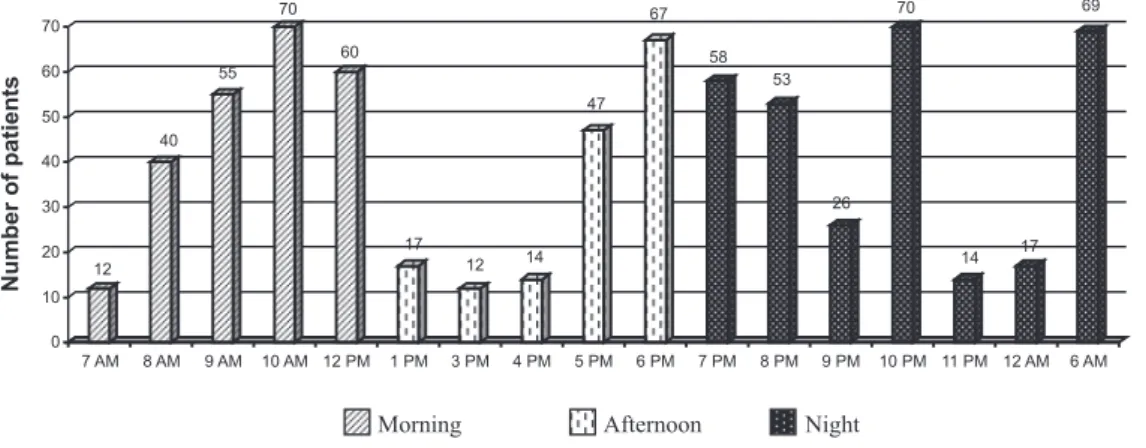
As for the drug scheduling profile, it was observed that the whole sample (N=70) was medicated at 10 AM and 10 PM. In the afternoon, 95.7% (N=67) had their drugs sched-uled for intake at 6 PM (Figure 1).
In spite of medication schedules for all the times in the 24-hour period, Figures 1 and 2 and Chart 1 illustrate only those in which an average amount of 0.10 scheduled drugs occurred.
12 40
55 70
60
17
12 14
47 67
58
53
26 70
14 17
69
0 10 20 30 40 50 60 70
Numberofpatients
7 AM 8 AM 9 AM 10 AM 12 PM 1 PM 3 PM 4 PM 5 PM 6 PM 7 PM 8 PM 9 PM 10 PM 11 PM 12 AM 6 AM
Morning Afternoon Night
Figure 1 – Distribution of patients according to medication schedules – São Paulo, 2005.
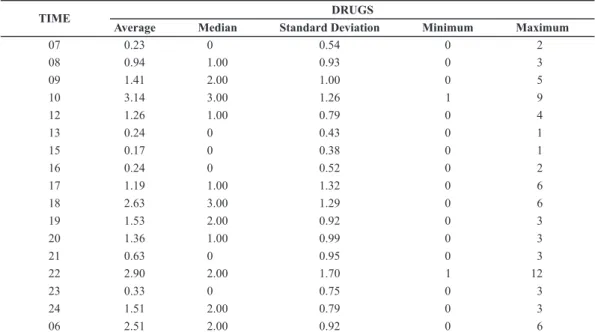
The average of scheduled drugs at 10 AM (3.14) and 10 PM (2.90) was higher than at other times, with the highest
DRUGS TIME 07 08 09 10 12 13 15 16 17 18 19 20 21 22 23 24 06 Average 0.23 0.94 1.41 3.14 1.26 0.24 0.17 0.24 1.19 2.63 1.53 1.36 0.63 2.90 0.33 1.51 2.51 Median 0 1.00 2.00 3.00 1.00 0 0 0 1.00 3.00 2.00 1.00 0 2.00 0 2.00 2.00 Standard Deviation 0.54 0.93 1.00 1.26 0.79 0.43 0.38 0.52 1.32 1.29 0.92 0.99 0.95 1.70 0.75 0.79 0.92 Minimum 0 0 0 1 0 0 0 0 0 0 0 0 0 1 0 0 0 Maximum 2 3 5 9 4 1 1 2 6 6 3 3 3 12 3 3 6
Table 1 – Descriptive analysis of the drugs used by patients submitted to bone marrow transplantation, according to their respective
schedules – São Paulo, 2005.
6 AM 12 AM 11 PM 10 PM 9 PM 8 PM 7 PM 6 PM 5 PM 4 PM 3 PM 2 PM 12 PM 10 AM 9 AM 8 AM 7 AM 4 1 0 ConfidenceInterval95%
Figure 2 – Average number of scheduled drugs at the administration times – São Paulo, 2005.
In the profile of the pharmacological therapy the pa-tients used in the BMT conditioning stage, 33 distinct drugs were identified, belonging to 8 therapeutic classes.
21%
6%
15%
6% 9%
3% 6% 34%
Anesthesia Cardiovascular Digestive Hormones
Immunology Neurology Psychiatry Chemotherapy
72.7% (n=24) of the agents used by the sample had potential for interaction, i.e. characteristics that favored the occurrence of DI (Table 2).
Figure 3 – Drugs used by patients submitted to bone marrow transplantation according to Alpha therapeutic classification – São Paulo, 2005.
Drugs Potential interaction
N %
Yes
Allopurinol, naproxen, morphine, fentanyl, furosemide, omeprazole, atenolol, ondansetron, metoclopramide, ranitidine, hydrocortisone, dexamethasone, cyclosporine, phenytoin, diazepam, sertraline, fluconazole, levofloxacin,
sulphametoxazole + trimethoprim, teicoplanin, vancomycin, ciprofloxacin, cyclophosphamide and melphalan.
24 72.7
No
Metamizole, paracetamol, diphenhydramine, dimenhydrinate, cefepime, hydroxyzine, acyclovir, meropenem
9 27.3
Total 33 100.0
Table 2 – Distribution of the drugs used by patients submitted to bone marrow transplantation according to their potential interaction –
São Paulo, 2005.
Among the drugs with potential of interaction (N=24), 79.2% (n=19) were classified as precipitators (allopurinol, antiemetic drugs, corticosteroids, diazepam, durosemide, phenytoin, naproxen, antineoplasic chemotherapy drugs and antimicrobials, ranitidine, omeprazole and sertraline) and 20.8% (n=5) as objects (morphine, fentanyl, atenolol, cyclosporine and melphalan). Among these, 16.7% (n=4)
presented characteristics of both precipitators and objects (vancomycin, cyclophosphamide, metoclopramide and phenytoin).
In the analysis of potentially interactive drugs (N=24), 66.8% (N=16) had characteristics that affected the hepatic metabo-lism, either inhibiting (46.0%) or stimulating (20.8%) (Table 3).
Table 3 - Distribution of potentially interactive drugs used by patients submitted to bone marrow transplantation, according to
pharmacological characteristics – São Paulo, 2005
Pharmacological characteristics
Enzymatic inhibitors
Allopurinol, omeprazole, ciprofloxacin, diazepam, fluconazole, sertraline, levofloxacin, metoclopramide, ondansetron, ranitidine and sulphametoxazole + trimethoprim.
Enzymatic inductors
dexamethasone, hydrocortisone, omeprazole, phenytoin and cyclophosphamide
Close connection with plasmatic proteins
naproxen, teicoplanin
Affects kidney clearance
furosemide, vancomycin
Central Nerve System Action
morphine, fentanyl
Narrow therapeutic index
atenolol, cyclosporine
Total
Drugs
N %
11 46.0
5 20.8
2 8.3
2 8.3
2 8.3
2 8.3
Among the antimicrobial chemotherapy drugs, 66.7% (n=6) presented potentially interactive characteristics (sul-phametoxazole + trimethoprim, teicoplanin, vancomycin, levofloxacin, ciprofloxacin), while 33.3% (n=3) did not (cefepime, acyclovir, meropenem).
As for the pharmacological characteristics of the anti-microbials that could trigger DI, 66.6% were enzymatic in-hibitors (ciprofloxacin, fluconazole, levofloxacin, sulphame-toxazole + trimethoprim).
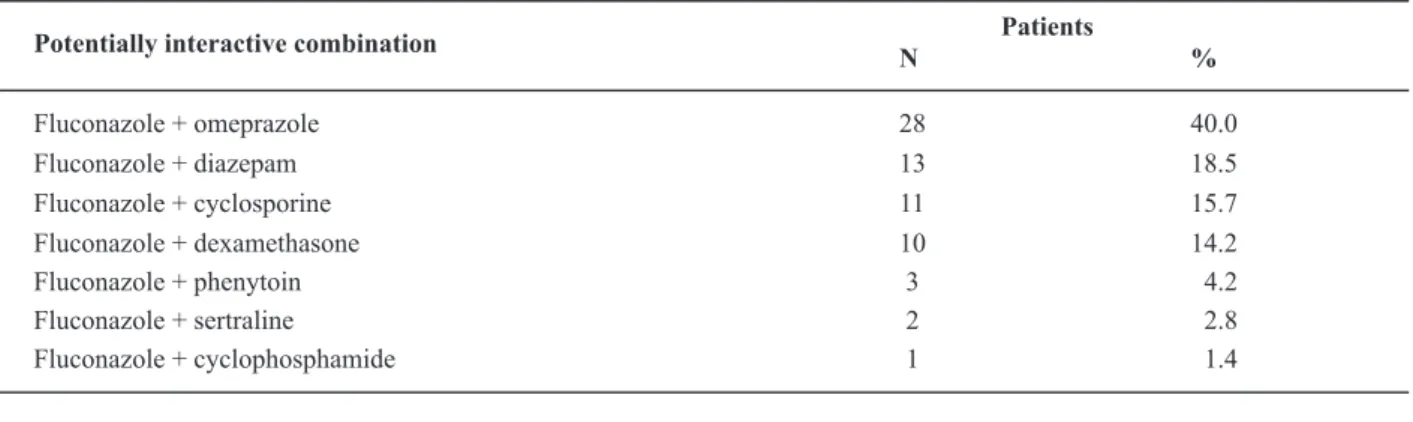
Among the antimicrobials, fluconazole was highlighted as the drug with the highest amount of combinations (85.7%), capable of combining with five distinct drugs. Ciprofloxacin combined with three different drugs, although it occurred in a single patient. As for fluconazole, of the total number of patients (n=32) using it, 93.7% (n=30) pre-sented DI-resulting combinations. It was also observed that half of the sample (n=35) was exposed to potentially inter-active combinations (Table 4).
Table 4 – Distribution of patients submitted to bone marrow transplantation, according to exposure to existing combinations between
potentially interactive antimicrobials and other drugs – São Paulo, 2005.
Patients (n=35) Antimicrobial drug combinations
N %
Fluconazole + diazepam + omeprazole 8 22.9
Fluconazole + dexamethasone + omeprazole 4 11.4
Fluconazole + cyclosporine + omeprazole 4 11.4
Fluconazole + cyclosporine + phenytoin + dexamethasone + omeprazole 3 8.5
Fluconazole + omeprazole 3 8.5
Fluconazole + diazepam + cyclosporine + omeprazole 2 5.7
Fluconazole + diazepam + dexamethasone + omeprazole 2 5.7
Fluconazole + diazepam + cyclosporine + dexamethasone + sertraline + omeprazole 1 2.9
Fluconazole + dexamethasone + omeprazole + cyclosporine 1 2.9
Fluconazole + cyclophosphamide 1 2.9
Fluconazole + sertraline 1 2.9
Subtotal 1 (Fluconazole) 30
Sulphametoxazole + trimethoprim + cyclosporine 2 5.7
Sulphametoxazole + trimethoprim + phenytoin 2 5.7
Subtotal 2 (Sulphametoxazole + trimethoprim) 4
Ciprofloxacin + dexamethasone + diazepam + cyclophosphamide 1 2.9
Subtotal 3 (Ciprofloxacin) 1
Total (1+2+3) 35 100.0
Fluconazole presented 7 distinct combinations (fluconazole + omeprazole, fluconazole+diazepam, fluconazole + cyclospo-rine, fluconazole + dexamethasone, fluconazole + phenytoin,
fluconazole + sertraline, e fluconazole + cyclophosphamide), with 40.0% of the sample receiving fluconazole + omeprazole and 18.5% receiving fluconazole + diazepam (Table 5).
Table 5 – Distribution of patients submitted to bone marrow transplantation according to exposure to potentially interactive combinations
of fluconazole – São Paulo, 2005
Patients Potentially interactive combination
N %
Fluconazole + omeprazole 28 40.0
Fluconazole + diazepam 13 18.5
Fluconazole + cyclosporine 11 15.7 Fluconazole + dexamethasone 10 14.2
Fluconazole + phenytoin 3 4.2
Fluconazole + sertraline 2 2.8
For ciprofloxacin, the following combinations were iden-tified: ciprofloxacin + cyclosporine (1.4%), ciprofloxacin + ciclophosphamide (1.4%), ciprofloxacin + diazepam (1.4%) and ciprofloxacin + dexamethasone (1.4%).
For sulphametoxazole + trimethoprim, 2 potentially in-teractive combinations were verified: sulphametoxazole + trimethoprim + cyclosporine (2.9%) and sulphametoxazole + trimethoprim + phenytoin (2.9%).
DISCUSSION
As for the scheduling profile of the drug administration times, the results obtained in the present study were simi-lar to another study involving onco-hematologic patients, where it was observed that 74.4% of the administered doses
were concentrated at 10 AM and 10 PM(13). This
concentra-tion of several drugs at certain times is often related to the norms of the institution, as well as to nursing teams’ work habits, which do not schedule medication at specific times so as to avoid forgetfulness or interference in the drug ad-ministration activity.
The average amount of drugs administered at 7 AM (0.23), 1 PM (0.24) and 7 PM (1.53), which correspond to the moment when shifts are changed, was lower, as well as at 3 PM (0.17) and 4 PM (0.24) (Table 3), which represent visiting times by family members. This allows us to infer that the nursing team avoided using certain times in this study, repeating a practice that is common in several ser-vices, aiming to meet institutional routines instead of
pa-tients’ needs(13). Besides, it is worth noting that
simulta-neous drug scheduling represents a risk factor of harmful DI for the patient, especially when these agents present a potential for interaction(10).
Regarding the pharmacologic profile, despite the occur-rence of polypharmacy (7.97 drugs per patient, on the av-erage) the identified classes were compatible with the thera-peutic necessities of the patients, since the drugs introduced in the conditioning phase were aimed at avoiding, reduc-ing or relievreduc-ing frequent problems, such as nausea, vomit-ing, pain, bleeding and mucositis, consequences of
antine-oplastic chemotherapy(1-2,4).
The agents working on the digestive system are consid-ered essential and administconsid-ered in high dosages for the prevention and relief of nausea, vomiting and epigastric pain. The analgesic class, despite its low frequency, is im-portant for controlling pain related to mucositis and fever control, commonly associated to neutropenia or tumor-re-lated fevers. Besides, when the patients feel no pain, they present better food acceptance and higher tolerance to orally-administered drugs.
The broad utilization of the chemotherapy class is justi-fied by the need to prevent and treat viral, bacterial, fungal and helmintic infections, frequent in patients submitted to BMT. Antimicrobials with higher frequencies were
recom-mended by specialists, in accordance with the protocols from the Centers for Disease Control and Prevention (2000)(5,14). Therefore, aciclovir, used by all patients (N=70) is the first antiviral choice for the prophylaxis of opportunist infections (simple herpes and varicella-zoster viruses), typical of the
BMT conditioning phase(2,5,14).
At the clinic, fungal infections in patients submitted to BMT
are mainly caused by Cândida spp and Aspergillus spp(2,6,15),
and are related to factors like prolonged use and pancy-topenia, use of wide-spectrum antibiotics, central venous access, chemotherapy, radiotherapy and immunosuppres-sant protocols for prevention of graft versus host disease. For these cases, fluconazole has been shown to significantly prevent and treat infections, besides being the antifungal drug of choice for BMT patients and the only one used in
the present study(16). One study that investigated
candi-demia related to the central catheter in patients submitted to allogenic BMT showed that several types of fungi were
susceptible to fluconazole(17).
Despite clinical indications being adequate and fully jus-tified by the patients’ needs, an expressive share of the drugs (72.7%) presented potentially interactive character-istics, a factor that favored the occurrence of DI and could jeopardize the therapeutic success, depending on the com-bination adopted.
Among the drugs with interactive potentials, most (79.2%) were classified as precipitators, i.e. acting mainly through processes of enzymatic inhibition and induction and capable of affecting the pharmacological responses to
the object drugs(7-8). Among the precipitators, enzymatic
in-hibitors stood out (45.8%).
When the antimicrobial chemotherapy drugs were ana-lyzed, 66.7% of them also presented precipitator charac-teristics and, except for vancomycin and teicoplanin, all others were enzymatic inhibitors, which could inhibit the metabolism of an object agent, increasing its serum level as well as its toxicity(7-9,12).
Therefore, the analysis of potentially interactive com-binations of this therapeutic class included fluconazole, ciprofloxacin, levofloxacin and sulphametoxazole + trime-thoprim, since vancomycin and teicoplanin, although po-tentially interactive, did not present combinations that could result in DI.
For fluconazole, some of the potentially interactive com-binations (fluconazole + omeprazole, fluconazole + cyclophos-phamide) could alter the absorption pattern, affecting the bioavailability of the azolic antimicrobial. In these cases, the simultaneous scheduling of medication should be avoided, since fluconazole dissolution may be reduced in the
pres-ence of a higher gastric pH(7-8).The potential clinical
implica-tions, in a situation where azolics are chronically co-admin-istered with agents that affect their absorption include the decrease of effective serum levels and, consequently, reduced therapeutic efficiency. In BMT patients, due to the high risk of fungal infections, this alteration in bioavailability would certainly increase morbidity and mortality rate.
The other identified combinations could affect the metabo-lization standard of the object agent. Fluconazole is an
enzy-matic inhibitor (CYP450) of the isoenzymes CYP2C8/9, CYP2C19
and CYP3A4, responsible for the biotransformation of several drugs. Co-administering this inhibitor with drugs used by the sample in this study, from the perspective of clinical implica-tions, could result in increased serum levels of the combined agent with fluconazol, increasing the toxicity potential(7-8).
In daily practice, patients submitted to BMT used sulpha-metoxazole + trimethoprim since the start of their
condi-tioning as prophylaxis for Pneumocistis carinii, with the
therapy being interrupted on day -1 (the day before the in-fusion of bone marrow). However, cyclosporine is also intro-duced on day -1, a situation that certainly predisposes to the occurrence of DI among these agents. This combination can affect metabolism and result in increased nephrotoxicity and reduced serum levels of cyclosporine, increasing the risk of rejecting the graft(12). The process of enzymatic inhibition trig-gered by sulphametoxazole + trimethoprim is slow and, even with its suspension on day -1, the consequent effects of this combination should be carefully monitored, especially in patients with risk factors for nephrotoxicity. In practice, it is necessary to establish the dose adjustment according to the serum levels of cyclosporine in order to assure therapeutic
success, whenever there is a combined regimen(8-9, 12).
CONCLUSIONS
The present study allowed for the following conclusions: patients, in general, had their medication scheduled at “standard” times, i.e 10 AM (100%), 6 PM (95.7%) and 10 PM (100%) in the different work shifts of the nursing team; most drugs (72.7%) used by the patients presented poten-tial for interaction, with the precipitators (79.2%) being worth noting, since they are able to affect the hepatic me-tabolism (66.8%); half the sample was exposed to co-ad-ministering potentially interactive antimicrobials, with flu-conazole being the most commonly involved agent (85.7%), responsible for the exposure of 40% of the patients to the combination fluconazole+omeprazole.
Therefore, co-administering potentially interactive medication was frequent for BMT patients, a condition that, associated to complex polypharmacy and the simultaneous scheduling of administration times for these agents, could predispose the patient to undesirable events, affecting the safety of the therapy.
The authors believe that the nurse plays a fundamental role in the prevention of problems related to the necessary therapeutic combinations, like those verified in the present study. The nurse can: seek out detailed information (phar-macokinetic characteristic, adverse effects and interactions) about the drugs, avoid simultaneous scheduling of poten-tially interactive drugs and monitor the patients’ response to the therapy, communicating each and every alteration to the clinician.
In BMT patients, whose clinical condition is critical, es-pecially in the conditioning stage, and whose alteration of medication bioavailability, often caused by co-admin-istering agents, can represent therapeutic success or fail-ure, it is indispensable for nurses to acknowledge the im-portance of including, in the patients’ daily prescription, nursing interventions directed at the pharmacological therapy.
REFERENCES
1. Thomas ED, Blume KG, Forman SJ. Hematopoietic cell trans-plantation. Oxford: Blackwell Science; 2000.
2. Wingard JR, Vogelsang GB, Deeg HJ. Stem cell transplantation: supportive care and long-term complications. Hematology Am Soc Hematol Educ Program [serial on the Internet]. 2002. [cited 2005 Sept. 15]. Available from: http://asheducationbook. hematologylibrary.org/cgi/reprint/2002/1/422
3. Goldman JM, Horowitz MM. The international bone marrow transplant registry. Int J Hematol. 2002;76 Suppl 1:393-7.
4. Fonseca RB, Secoli SR. Terapia farmacológica em transplante de medula óssea: contribuição para a prática de enfermagem. Rev Bras Oncol Clín. 2006;3(8):13-8.
5. Sullivan KM, Dykewicz CA, Longworth DL, Boeckh M, Baden LR, Rubin RH, et al. Preventing opportunistic infections after hematopoietic stem cell transplantation: the Centers for Disease Control and Prevention, Infectious Diseases Society of America, and American Society for Blood and Marrow Transplantation Practice Guidelines and beyond. Hematology Am Soc Hematol Educ Program [serial on the Internet]. 2001 [cited 2005 Sept. 15]. Available from: http://asheducationbook. hematology library.org/cgi/reprint/2001/1/392
6. Barros JC. Transplante de células hematopoiéticas. In: Guima-rães JRQ, organizador. Manual de oncologia. 2ª ed. São Paulo: BBS; 2006. p. 219-35.
8. Bachmann KA. Drug interactions handbook. Hudson: Lexi-Comp; 2003.
9. Grahame-Smith DG, Aronson JK. Interações medicamentosas. In: Grahame-Smith DG, editor. Tratado de farmacologia clínica e farmacoterapia. 3ª ed. Rio de Janeiro: Guanabara Koogan; 2004. p. 98-109.
10. Secoli SR. Interações medicamentosas: fundamentos para a prática clínica da enfermagem. Rev Esc Enferm USP. 2001;35(1):20-6.
11. Zanini AC, Basile AC, Follador W, Oga S. Guia de medicamen-tos. 2ª ed. São Roque: IPEX; 1997.
12. MICROMEDEX® Healthcare Series [database on the Internet]. Greenwood Village; 2007. [cited 2005 Sept. 5] Available from: https://www.thomsonhc.com/hcs/librarian/PFDefault ActionId/pf.LoginAction/ssl/true?login.username_index_0= capes77hcs&login.password_index_0=jlmzvazhipju&ND_CPR=Login
13. Secoli SR, Padilha KG. Polifarmácia em leucemia mielóide agu-da: administração e interação de medicamentos. Prat Hosp. 2005;7(17):78-85.
14. Centers for Disease Control and Prevention. Infectious Disease Society of America. American Society of Blood and Marrow Transplantation. Guidelines for preventing opportunistic infections among hematopoietic stem cell transplant recipients. MMWR Recomm Rep. 2000;49(RR-10):1-125, CE1-7.
15. Rocha IFD. Infecção no local da saída e túnel subcutâneo de cateteres tipo Hickman em pacientes de TMO alogênico, re-lacionado aos anti-sépticos a base de polivinilpirrolidona-iodo e gluconato de clorohexidina [dissertação]. São Paulo: Escola de Enfermagem, Universidade de São Paulo; 2000.
16. Oliveira JSR, Kerbauy FR, Colombo AL, Bahia DMM, Pinheiro GS, Silva MRR, et al. Fungal infections in marrow transplant recipients under antifungal prophylaxis with fluconazole. Braz J Med Biol Res. 2002;35(7):789-98.