1
Assessing the efficacy of the Mental Health Gap Action Programme
(mhGAP) training for non-specialized health workers in Ethiopia
Master’ Project Work in Mental Health Policy and Services
Submitted by: Dr. Andrea Bruni
Supervisor: Professor Benedetto Saraceno
3 Acknowledgments
I would like to gratefully and sincerely thank my supervisor, Prof. Benedetto Saraceno, for his guidance during my studies. His mentorship was paramount in guiding my efforts and orienting my research. I would also like to express my gratitude to Prof. Graça Cardoso for her precious support in helping me to review and finalize this thesis.
4 Executive Summary
In 2008, WHO launched the Mental Health Gap Action Programme (mhGAP) to address the lack of care, especially in low- and middle- income countries, for people living with mental, neurological and substance use (MNS) disorders. A crucial component of mhGAP is represented by the endeavor towards integration of mental health into primary health care.
In Ethiopia, mhGAP has been piloted for 3 years thanks to a demonstration project implemented in selected clinics in 4 regions of the country.
The demonstration phase of mhGAP in Ethiopia has mainly translated into training of non-specialized health workers, providing them with mentorship and supportive supervision, availing essential psychotropic medications and coordinating with the Ethiopian Federal Ministry of Health, Amanuel Mental Health Hospital and the Regional Health Bureaus (RHBs).
The present paper investigated the efficacy of the mhGAP training package through an analysis of the participants’ scores at pre-test and post-test. The statistical analysis showed - with one exception - that the improvement of trainees is statistically significant, therefore suggesting that the knowledge of participants is improved in the post-test phase.
The efficacy of the mhGAP training package on non-specialized health workers is promising evidence that non-specialized health-care providers can be successfully trained to deliver a basic package of interventions for providing care and treatment for people with mental, neurological and substance use disorders.
However, this paper also highlights several limitations, which are not only inherent to the research itself, such as the limited number of scores that was analyzed, or the lack of data from one of the four regions where mhGAP has been piloted in Ethiopia; major limitations occur in fact in the overall approach of confining mental health interventions to training and supervising primary health care workers. This process will only be successful if coupled with other interventions – ranging from curricula development to development of a mental health legislation - and if it is included in a more comprehensive strategy to reform mental health and challenge the status quo.
5 Resumo
A OMS lançou em 2008, o Programa de Acção do Gap em Saúde Mental (mhGAP) para suprir a falta de cuidados, especialmente em países de rendimento baixo e médio, para as pessoas que sofrem de perturbações mentais, neurológicas e de uso de substâncias (MNS). Um componente crucial do mhGAP é representado pelo esforço no sentido da integração da saúde mental nos cuidados de saúde primários. Na Etiópia, o mhGAP foi monitorizado durante 3 anos, graças a um projeto de demonstração implementado em clínicas selecionadas em quatro regiões do país.
A fase de demonstração de mhGAP na Etiópia traduziu-se principalmente na formação de profissionais de saúde não especializados, fornecendo-lhes orientação e supervisão apoiada para a utilização de medicamentos psicotrópicos essenciais e na coordenação com o Ministério Etíope Federal da Saúde, Hospital Amanuel de Saúde Mental e as Secretarias Regionais de Saúde ( RHBs ).
O presente trabalho investigou a eficácia do pacote de formação mhGAP através de uma análise das pontuações dos participantes no pré- e pós-testes. A análise estatística mostrou - com uma exceção - que a melhoria dos formandos é estatisticamente significativa, o que sugere que os conhecimentos dos participantes é melhorada na fase de pós-teste.
A eficácia do pacote de formação mhGAP para profissionais de saúde não especializados é uma evidência promissora de que os mesmos podem ser treinados com sucesso para realizar um pacote básico de intervenções para a prestação de cuidados e tratamento para pessoas com perturbações mentais, neurológicas e de uso de substâncias.
Este trabalho destaca, também, várias limitações não apenas inerentes ao próprio projecto de investigação tais como o número limitado de respostas que foram analisadas e a falta de dados de uma das quatro regiões onde mhGAP foi testado na Etiópia. As principais limitações decorrem de facto da abordagem global limitar as intervenções de saúde mental ao programa de formação e supervisão dos trabalhadores de cuidados de saúde primários . Este processo só será bem sucedido se, juntamente com outras intervenções - que vão desde o desenvolvimento de currículos para o desenvolvimento de uma legislação de saúde mental -, fôr incluído numa estratégia mais abrangente para a reforma da saúde mental e desafiar o status quo.
6 Resumen
En 2008, la OMS puso en marcha el Programa de Acción del Gap en Salud Mental (mhGAP) para hacer frente a la falta de atención, sobre todo en países de bajos y medianos ingresos, de las personas que viven con trastornos mentales, neurológicos y por uso de sustancias (MNS) trastornos. Un componente crucial de mhGAP es representado por el esfuerzo hacia la integración de la salud mental en la atención primaria de salud.
En Etiopía, mhGAP ha sido puesto a prueba durante 3 años, gracias a un proyecto de demostración en práctica en clínicas seleccionadas en 4 regiones del país.
La fase de demostración del mhGAP en Etiopía se ha traducido principalmente en la formación de los trabajadores no especializados de salud, brindándoles tutoría y supervisión, que haga uso de medicamentos psicotrópicos esenciales y la coordinación con el Ministerio Federal de Salud de Etiopía, Hospital Amanuel de Salud Mental y las Oficinas Regionales de Salud ( RHBs ) .
El presente trabajo investigó la eficacia del programa de formación mhGAP através de un análisis de las puntuaciones de los participantes en el pre- y post-test. El análisis estadístico mostró - con una excepción - que la mejora de los alumnos es estadísticamente significativa, lo que sugiere que el conocimiento de los participantes se ha mejorado en la fase post-test.
La eficacia del programa de capacitación mhGAP para los trabajadores no especializados de salud promete pruebas de que los proveedores de salud no especializados pueden ser entrenados con éxito para entregar un paquete básico de intervenciones para la atención y el tratamiento para las personas con trastornos mentales , neurológicos y por uso de sustancias .
Sin embargo, este documento también pone de relieve varias limitaciones , que no son sólamente inherentes a la propia investigación , tales como el número limitado de los resultados que se analizan, o la falta de datos de una de las cuatro regiones en las que mhGAP ha pilotado en Etiopía. Las principales limitaciones se producen de hecho en el enfoque general de limitar las intervenciones de salud mental para el entrenamiento y la supervisión de los trabajadores de atención primaria de la salud. Este proceso sólo tendrá éxito si se combina con otras intervenciones - que van desde el desarrollo de planes de estudio para el desarrollo de una legislación sobre salud mental - y si está incluido en una estrategia más amplia para reformar la salud mental y desafiar el status quo.
7 Table of contents
Index Item Page N.
Abbreviations 8
Project title 9
Background 9
Importance of mental health in the African region 9
Current resources 10
Mental health in Ethiopia 10
The primary healthcare system in Ethiopia 13
The new mental health strategy 13
The Mental Health Gap Action Programme (mhGAP) in Ethiopia 14
mhGAP training 15
Methodology 16
Statistical analysis 16
Results 17
Discussion 18
Training, skills and motivation 18
Training vs. Capacity Building 19
Policy, Plans and Programmes 19
Sensitization of partners and donors 20
Mental health legislation 20
Protected jobs for persons suffering from MNS disorders 22
Conclusions 23
Appendix 29
8 Abbreviations
DPC Disease Prevention and Control
ECT Electroconvulsive Therapy
ETB Ethiopian Birr
GP General Practitioner
HMIS Health Management Information System
mhGAP Mental Health Gap Action Programme
mhGAP-IG mhGAP Intervention Guide
MNS Mental, neurological and substance abuse
NCDs Non Communicable Diseases
NGOs Non-Governmental Organizations
OPD Outpatient Department
FMoH Federal Ministry of Health
PHC Primary Health Care
RHB Regional Health Bureau
SNNPR Southern Nations, Nationalities and People Region
USD United States Dollar
WHO World Health Organization
9 Project Title
Assessing the efficacy of the Mental Health Gap Action Programme (mhGAP) training for non-specialized health workers in Ethiopia.
Background
Importance of mental health in the African region
Mental and neurological disorders (MNS) place a heavy burden on the person suffering from the disorder, their families and the community. They are universal, affecting all social groups and all ages. Despite this substantial burden, more than 75% of people suffering from mental disorders in low and middle-income countries receive no treatment or carei. Nine out ten people suffering from epilepsy in Africa receive no medical treatmentii.
In addition, the burden of mental disorders is frequently felt not through the disorders themselves but through their high level of comorbidity with other health conditions. Mental disorders increase risk for communicable and non-communicable diseases (NCDs), and contribute to unintentional and intentional injuryiii. Conversely, many illnesses increase the risk for mental disorder, and the comorbidity of mental disorder and other illnesses complicates help-seeking, diagnosis, and treatment, as well as influencing prognosis.
Mental health has been neglected for too long on Africa’s health policy agenda. In recent years, new evidence has emerged regarding the enormous burden of mental, neurological and substance use (MNS) disorders in Africa, and of the lack of policy commitment and resources to address this burden. In many countries this area is still not treated as a priority.
Mental health features prominently in the WHO definition of health as “a state of complete physical, mental and social wellbeing, and not merely the absence of disease or infirmity.” Mental health is a state of well-being in which the individual realizes his or her own abilities, can cope with the normal stresses of life, can work productively and fruitfully, and is able to make a contribution to his or her community.
Mental health or psychological well-being makes up an integral part of an individual's capacity to lead a fulfilling life, including the ability to form and maintain relationships, to study, work or pursue leisure interests, and to make day-to-day decisions about education, employment, housing or other choices. Improving mental health is important to everyone, as it enhances social cohesion and stability, engages people more productively in their relationships and work, and so contributes to social capital and economic development. Disturbances to an individual's mental well-being, on the other hand, can adversely compromise these capacities and choices, leading not only to diminished functioning at the individual level but also broader welfare losses at the household and societal level.
10
The stigma-driven barrier to care is well documented also in the Ethiopian contextvi. Current resources in mental health
Mental health budgets are severely constricted or non-existent in most AFRO countries. The median percentage of health budgets allocated to mental health in AFRO is 0.62%. Of all countries, 67% listed budgets that were less than 2% of total health expenditure, and many were not able to report the percentage of the health budget allocated to mental health. Furthermore, these meager mental health budgets are consumed largely by outdated mental hospitals, with 77% of AFRO mental health budgets spent on such facilitiesvii.
There remains a critical shortage of mental health professionals in the African region. Key human resources challenges in mental health in the African region include:
Lack of psychiatrists, MDs, nurses, psychologists, social workers and occupational therapists (OTs) (see table below)
Brain drain and poor retention, especially among the essential mid-level professionals (e.g.: psychiatric nurses), who are often the backbone of services
Other paraprofessionals are frequently missing (OTs, social workers, psychologists)
Imbalanced geographical distribution of expertise, and inappropriate placement of trained personnel, for example location of psychologists in psychiatric hospitals when they should be providing services in primary care and community settings
Poor supervision and support mean that trained general health personnel are not motivated to focus on mental health in the context of many competing priorities
The table below captures the median human resources for mental health per 100,000 population in the AFRO region.
Table 1. Median human resources for mental health per 100,000 population in the AFRO region (WHO. Mental Health Atlas 2011. Geneva: World Health Organization; 2011).
Psychiatrists Other Medical doctors
Nurses Psychologists Social Workers
Occupational therapists
Other health workers
0.05 0.06 0.61 0.04 0.03 0.01 0.31
Mental health in Ethiopia
11
Dawa)1. It is one of the world’s poorest countries, with a per capita income of USD 200 ranking 169 out of 177 countries measured on the current United Nations Human Development Index (2007/08)viii. Mental Health services in Ethiopia are primarily centralized around Amanuel Mental Specialized Hospital, in the capital city. Amanuel Hospital is the only mental health hospital in the whole country, with a capacity of less than 300 beds2.
The hospital has several wings including acute and chronic wards, male and female, OPD, three pharmacies, two laboratories, ECT room, etc.
The hospital also has a forensic psychiatric team, consisting of one psychiatrist, two psychiatric nurses, two clinical nurses and one coordinator. The recruitment of a lawyer is in the pipeline.
Child psychiatry services are not available, and children are referred to Yekatit 12 Hospital (general hospital) or St Paul Hospital (general hospital with psychiatric wing).
A private section with inpatient facility is devoted to patients that are in a position to afford private treatment and to pay for their stay at the hospital; the income generated from this is conveyed into the hospital budget.
Equally, a private pharmacy - open 24 hours a day, 7 days a week - contributes to generate income at hospital level.
Additional information on the facility and the visits is contained in the table below.
Table 2. Overview of services available at Amanuel Mental Health Specialized Hospital Name and region of facility: Amanuel Mental Specialized Hospital, Addis Ababa
Type of facility: Psychiatric Hospital
Facility provides services for: Adults
The elderly
Alcohol use disorders
Substance use disorders
Mental disorders
Neurological disorders
Intellectual disabilities
Other
Electroconvulsive therapy (ECT)
General Medical Services
Maternal and Child Health (MCH)
Antiretroviral Therapy (ART) Facility does not provide services for: Children
1
For a map of Ethiopia, see Annex I.
2
12
Amanuel Hospital also plays a pivotal role in training, being a teaching hospital actively involved in the training of psychiatric nurses.
However over the last 20 years, there have been encouraging attempts to decentralize the service through a psychiatric nurse training programix.
The high number of people affected by mental, neurological and substance abuse disorders – in addition to the severe stigma and discrimination on different levels of the society – emphasizes the importance of integrating mental health into the general health system of the country.
Table 3. Prevalence of specific mental disorders in Ethiopia
Disorder Prevalence (%) Reference
Schizophrenia 0.5 Kebede et al, 2003x
Bipolar 0.5 Negash et al, 2005 xi
Major Depression 5 Awas et al, 1999xii
Suicide Attempt 3.2 Alem et al, 1999xiii
Alcohol Dependence 1.5 Fekadu et al, 2007xiv
Cannabis Abuse 1.5 Fekadu et al, 2007xv
Childhood Disorders 12 – 25 Mulatu, 1995xvi; Tadesse et al, 1999xvii
Epilepsy 1 Teklehaimanot, 1997xviii
Dementia No data No data
The importance of increasing mental health coverage in Ethiopia is widely recognized.
The number of mental health professionals in very limited (see table below) and unfortunately they are also inequitably distributed in the country with the bulk working in the capital city.
Table 4. Number and distribution of beds and mental health professionals in Ethiopia
Psychiatric facility Number of beds in Ethiopia
Number of psychiatric professionals in
Ethiopia
Remarks
Federal hospitals 350 113 270 beds are at Amanuel
mental Specialized Hospital in Addis Ababa
Addis Ababa city Administration
Nil 24 None
Outside Addis Ababa (10 regions)
624 162 540 beds are at rehabilitation
centers in three regions
Total 974 299 Includes all types of mental
13 Table 5. Number of mental health professionals by category
Type of Professionals Number Remark
Psychiatrists 37 None
Psychiatry practitioners 65 MSc Psychiatry Graduates
Psychiatry professionals 60 BSc Psychiatry Graduates
Psychiatric Nurses 137 Post Basic Diploma Graduates
Total 299
The primary health care system in Ethiopia
The public healthcare system in Ethiopia is not sufficiently developed. It is estimated that only 64% of the total population is served by the public healthcare system. In terms of primary care, there are 3,167 primary health care clinics in the countryxix.
The new mental health strategy
The Federal Ministry of Health of Ethiopia has recently issued the National Mental Health Strategy 2012/13 – 2015/16xx.
The strategy acknowledges the importance of decentralization of mental health services and is fully aligned with the Mental Health Gap Action Programme (mhGAP).
Among others, one main feature of the strategy is to reflect the organization of mental health services as devised by WHO and re-elaborated in: “Integrating mental health into primary care. A global perspective” (WHO, Wonca)xxi
.
In addition the WHO mhGAP costing tool was used to draft the budget for the scale up of the integration of mental health services into the primary level of care.
A key component of the Ethiopian National Mental Health Strategy is the decentralization process which is envisaged in it. The process of decentralization began in the industrialized countries and has proceeded to influence the shape of systems in developing countries, including in the mental health sector. “The decentralization of public health services to the local government level has been rapidly adopted by developing countries for a number of reasons, including changes in internal economic and political systems in response to economic globalization pressures, the perception that services planned to local needs can more appropriately address those needs, and, in some instances, system disruptions caused by disturbances…”xxii
.
14
The Mental Health Gap Action Programme (mhGAP) in Ethiopia
Despite the lack of resources, there is robust evidence for a range of cost-effective interventions that can be delivered in low resource settings for mental, neurological and substance use disordersxxiii. Much of the recent evidence for treatment and recovery in low and middle-income countries has been for interventions delivered through primary care and community-based settings. These offer opportunities for the mobilizing of existing health care resources, through a task sharing approach, rather than relying on specialists or tertiary mental hospitals to deliver care. Much of the evidence for these interventions has been distilled in packages of care for MNS disordersxxiv.
The mental health Gap Action Programme (mhGAP) was developed by the WHO for an urgent scaling-up of services for people suffering from mental, neurological and substance use (MNS) disorders.
The programme was launched in 2008 by WHO, and has a special focus on mental health systems in low- and middle-income countries. The logic behind mhGAP programme is that – despite what is commonly believed – improvements in mental health does not require sophisticated and expensive technologies, but many mental, neurological and substance use disorders can be managed by non-specialists health— care providers.
Therefore, one key mhGAP strategy is to increase the capacity of the primary health care system for delivering of an integrated package of care by training, support and supervision.
In Ethiopia, the demonstration project - started in 2010 - focuses on integration of health services for mental, neurological and substance use (MNS) disorders into the pre-existing Primary Health Care (PHC) system.
The Federal Ministry of Health (FMoH) is implementing the mhGAP programme in close collaboration with WHO Country Office Ethiopia and Amanuel Hospital.
So far, in Ethiopia, the project has focused on four demonstration areas in four regions: Tigray, Amhara, SNNPR and Oromia. In the four regions, 19 health centers and referral centers have been identified for piloting mhGAP.
Out of the eleven priority conditions which are included in the mhGAP Intervention Guide3, five are being implemented in Ethiopia, and namely: psychosis, epilepsy, alcohol use and alcohol use disorders, depression and other significant emotional or medical unexplained complaints (OTH).
3
15 mhGAP training
In the selected clinics general health workers have been trained on mhGAP training package, which consists of two separate cycles of training, called: mhGAP Base Course and mhGAP Standard Course. The mhGAP Base Course represents the first contact of primary health care (PHC) workers with mhGAP. It consists of a five-day training and is taught over five days sequentially. Afterwards, participants are expected to be able to identify and manage persons with MNS disorders, under appropriate supervision. The same PHC workers are re-trained (on average after about six months of supervision) on the mhGAP Standard Course. The Standard Course is an expansion of the mhGAP Base Course; it revisits all of the material taught in the Base Course and adds the remainder of the material that is in the mhGAP-IG. Compared with the Base Course, the Standard Course has more focus on building skills through role-play and other participatory techniques. This method is meant to reinforce the knowledge gained in the Base Course through re-training and to introduce new knowledge in a dynamic way.
Between Base and Standard Course, trainees receive monthly supportive supervision and mentorship. More specifically, mhGAP in Ethiopia has made use of the “task-shifting” approach, where non-mental health specialists (eg: general nurses and health officers) deployed at PHC level deliver a basic intervention package, while mental health professionals are mainly involved with training, supervision and referrals.
In Ethiopia, selected non specialized health workers received the full package of training, and, today, they represent a valuable workforce that is able to detect persons with MNS disorders, provide appropriate treatment according to mhGAP guidelines and refer cases when needed.
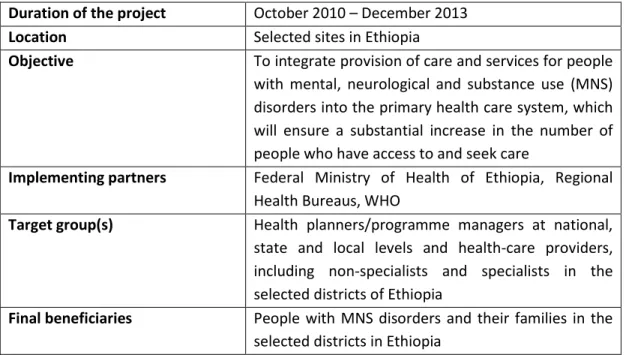
Table 6. Summary of the demonstration phase of mhGAP in Ethiopia Duration of the project October 2010 – December 2013
Location Selected sites in Ethiopia
Objective To integrate provision of care and services for people with mental, neurological and substance use (MNS) disorders into the primary health care system, which will ensure a substantial increase in the number of people who have access to and seek care
Implementing partners Federal Ministry of Health of Ethiopia, Regional Health Bureaus, WHO
Target group(s) Health planners/programme managers at national, state and local levels and health-care providers, including non-specialists and specialists in the selected districts of Ethiopia
16 Methodology
This study is conducted assessing the knowledge of trained health workers through pre-test and post-test.
All PHC workers that are trained on mhGAP from Jun 2013 to Nov 2013 from all selected regions are taken into consideration. Each training session involves on average 15 participants.
The knowledge of mhGAP trained health workers is assessed through pre-training and post-training test. The test provides a final score for each participant. The scores from pre-tests and post-tests are compared.
Standardized mhGAP pre- and post-test have been produced by WHO and are available in the mhGAP Monitoring and Evaluation Toolkit.
The mhGAP Intervention Guide (mhGAP-IG) and related training materials are implemented in English. Accordingly, the pre-test and post-test are also delivered in English.
After long negotiations with the Federal Ministry of Health, it was agreed that translation into local languages was not required. Therefore, translation and back-translation of the pre- and post-test are not required.
Statistical analysis
Pre-test and post-test scores have been analyzed using STATISTICA.
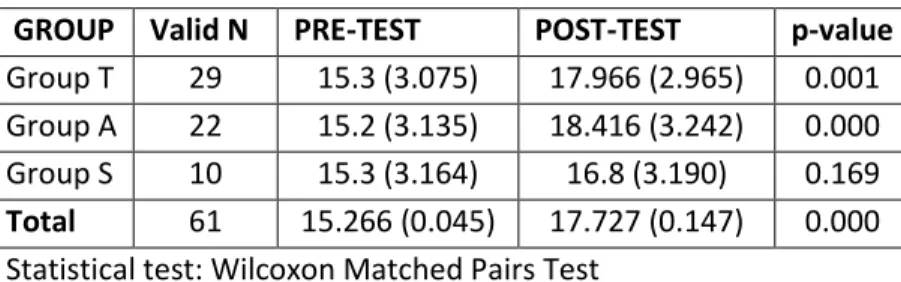
Pre-tests and post-tests scores from three regions were analyzed (T: Tigray Region; A: Amhara Region; S: SNNP Region). Data from the fourth region where mhGAP is implemented (Oromia) are not available. Table 7. Descriptive statistics of pretests and posttests in each region and the results of the statistical analysis conducted
GROUP Valid N PRE-TEST POST-TEST p-value
17 Table 8. Statistical differences by region
TEST Valid N Group T Group A Group S Total p-value
Pre-test 65 15.3
(3.075)
15.2 (3.135) 15.3 (3.164) 15.266 (0.045) 0.933
Post-test 64 17.966
(2.965)
18.416 (3.242)
16.8 (3.190) 17.727 (0.147) 0.321 Statistical test: Kruskal-Wallis ANOVA by Ranks
The statistical analysis revealed that in all cases a statistically significant improvement was observed from pre-test scores to post-test scores, with the only exception of the training conducted in SNNPR (mhGAP Standard Course).
Results
The results of the analysis show how mhGAP related trainings are generally effective, with one exception in the present study. The exception is represented by the mhGAP Standard Course in SNNP Region.
The reason for poorer outcomes in this training compare to the others might be attributed to several reasons such as difficulties in conducting the training or in features inherent to the participants. However, the most likely explanation for the lower outcomes concerns the role of the facilitators, or Master Trainers. This will be discussed in a more detailed fashion below (see “Discussion”).
In the other cases, the improvement of trained health workers on the post-test was statistically significant.
The non-specialized health workers have normally a limited knowledge about mental health. Mental health is usually neglected in the curricula of several health workers, such as general nurses and health workers. As a consequence, their skills in detecting and managing and/or referring people affected by mental, neurological and substance use disorders are normally poor.
Despite the limited knowledge of non-specialized health workers in mental health, the mhGAP training package proved effective in enhancing the skills in detection, management and referral of cases of people with mental, neurological and substance use disorders.
The following tablesxxv summarize some of the main achievements of the demonstration period in Ethiopia in terms of number of people who received help in the frame of mhGAP.
18
Table 9. Number of MNS cases detected and treated or referred during a six-month period (March-August 2013) under mhGAP by region and diagnoses.
REGION Depression Psychosis Epilepsy Others TOTAL
Tigray 38 19 26 8 91
Amhara 4 19 121 9 153
Oromia 39 8 159 84 290
SNNPR 8 4 43 4 59
All 89 50 348 105 592
Table 10. Percentage of cases detected and treated or referred during the last six months (March–August 2013) under mhGAP by diagnosis.
Depression Psychosis Epilepsy Others
All regions 15% 8.6% 58.9% 17.5%
Table 11. Proportion of cases by gender and age (<18 and >18 years).
Male Female
All regions 52.6% 47.4%
<18 >18
All regions 15.7% 84.3%
Discussion
The results of this study confirm the hypothesis that the mhGAP training package improves the knowledge of trained non-specialized health workers.
The demonstration phase of mhGAP in Ethiopia has mainly focused on training.
Training represents an essential component of mhGAP and, broadly speaking, of any process of integration of mental health into Primary Health Care.
However, despite the fact that trainings were central during the demonstration phase, there are many other components that need to be addressed when scaling up mental health services and reforming the organization of services in mental health.
Training, skills and motivation
19
In the case of participants, motivation seems to be closely associated with the per-diem paid to them to attend the training. In Ethiopia, the governmental rate of per-diem is very low, amounting to 208 Ethiopian Birr (ETB) per day (about 10 USD); participants are supposed to cover all personal daily expenses with this amount of money (including lunch and accommodation). This is not a good incentive for them for attending the training workshop.
Master trainers who deliver the training receive a much stronger remuneration (per-diem plus “professional fee”). However, master trainers don’t receive any formal training themselves. On the assumption that master trainers are experienced senior psychiatrists, they are simply called upon cascading the mhGAP training without formal preparation.
A formal introduction to familiarize with mhGAP Intervention Guide and the mhGAP training formula might turn instrumental to improve the quality and outcomes of trainings.
Training vs Capacity Building
Training of health workers plays a pivotal role in the integration process. However, a broader capacity building approach would be beneficial.
In this sense, trainings would be only one component of capacity building: capacity building should not only address technical training for health workers, but also building capacity at other levels including the federal level as well as the regional level.
At federal level, the capacity building should target decision makers, but also representatives from the planning unit, the finance department, the human resource section and all departments that have to do with mental health, such as Disease Prevention and Control (DPC) and Non-communicable Diseases (NCDs).
At regional level, the capacity building should be carried out at Regional Health Bureau (RHB) level and include the RHB head, the DPC and/or NCD focal person and – if available – the mental health focal persons. Also representatives from the RHB in charge of procurement of medications should receive adequate training.
A broader approach in capacity building is expected to be followed by a higher priority of mental health in the overall health agenda. This should translate in several concrete actions, including the allocation of an adequate budget for mental health.
Policy, Plans and Programmes
As mentioned earlier, Ethiopia has recently developed a National Mental Health Strategy. However, there is no mental health policy and no specific programs.
In the general health policy a very scanty section is dedicated to mental health.
20
plans and programmes, a policy can have a significant impact on the mental health of the population concerned. The outcomes described in the literature include improvements in the organization and quality of service delivery, accessibility, community care, the engagement of people with mental disorders and their carers, and in several indicators of mental health”.
In any event, what also seems of capital importance while developing policy, plans and programmes, is not only the product itself, meaning the issuing of the document, but the process undertaken to achieve the final product. An active involvement of all relevant stakeholders, including consumers groups, is extremely important.
In Ethiopia, it would be advantageous to develop the full package as per WHO recommendationsxxvi. Sensitization of partners and donors
In Ethiopia Mental health is still a neglected chapter in health.
More advocacy and sensitization are required for potential partners and donors in mental health. This might be done starting with a concise publication that summarizes the main achievements of the demonstration phase of the project for the consideration of the partners.
The proof of concept offered by this publication may turn instrumental in catalyzing the attention of the partners on mental health.
Dedicated events, such as workshops or meeting, may further explore which organization are willing to invest in mental health.
The Federal Ministry of Health of Ethiopia, in collaboration with WHO, has already drafted an mhGAP Proof of Concept paper which is expected to be published soonxxvii.
Mental health legislation
In Ethiopia there is a general Health Policy that includes Mental Health.
Policies devoted to for specific and specialist areas, such as mental health, do not exist.
There is no mental health legislation; on the contrary, there are pieces of legislation related to mental health:
Proclamation to Provide for the Right to Employment of Persons with Disability (Proclamation NO. 568/2008)
This proclamation aiming for establishing equal employment opportunities for persons with disabilities was done in March 2008 and supersedes the previous “quota based” piece of legislation.
Major topics included in this document are: Protection of the Right of Persons with Disability to Employment and Prohibition of Discrimination.
With regards to discrimination, the absence of a reasonable accommodation “shall be regarded as discrimination”. Besides, “affirmative actions taken to create equal employment opportunity” may not be regarded as discrimination.
21
Ethiopian Building Proclamation (Proclamation No. 624/2009)
According to the Ethiopian Building Proclamation “any public building shall have a means of access suitable for use by physically impaired persons, including those who are obliged to use wheelchair and those who are able to walk but unable to negotiate steps”.
Furthermore, “where toilet facilities are required in any building, as adequate number of such facilities shall be made suitable for use by physically impaired persons and shall be assessable to them”.
Tax Exemption for Imported Physical Appliances except Cars (Ethiopian Revenues and Custom Authority: Directive 36/2006)
In 2006 was approved a directive for the tax exemption for imported physical appliances. None of the above mentioned pieces of legislation seem to have a concrete impact on the rights of people with mental disabilities.
The Convention on the Rights of People with Disabilities (CRPD) has been signed and ratified by the Government of Ethiopia.
However, still little attention is given from the Government of Ethiopia to human rights related issues, including human rights of people with mental disabilities. Human rights are in fact a sensitive topic in Ethiopia and Non-Governmental Organizations (NGOs) are prohibited to work on human rights unless 90% or more of their annual budget comes from the Government. This clearly gives little autonomy to organizations working in this field.
Human rights in mental health are commonly infringedxxviii. This is mainly due to the lack of legislation and regulations in mental health.
As an example, in the mental health hospital Electroconvulsive Therapy (ECT) is commonly administered without informed consent and in its unmodified form (without muscle relaxant and general anesthesia). According to the Interim report of the Special Rapporteur on torture and other cruel, inhuman or degrading treatment or punishment, unmodified ECT can amount to torture, while its modified form should only be administered prior obtaining free and informed consent: “The Special Rapporteur notes that unmodified ECT may inflict severe pain and suffering and often leads to medical consequences, including bone, ligament and spinal fractures, cognitive deficits and possible loss of memory. It cannot be considered as an acceptable medical practice, and may constitute torture or ill-treatment. In its modified form, it is of vital importance that ECT be administered only with the free and informed consent of the person concerned, including on the basis of information on the secondary effects and related risks such as heart complications, confusion, loss of memory and even death”.
Another example is about restraining patients with mental disorders at hospital level. Despite the fact that the hospital does not allow users to be restrained, health workers still restrain them. In the forensic ward chains are frequently used.
There is no written policy on seclusion and restraint.
22 Protected jobs for persons suffering from MNS disorders
In Ethiopia, out of the 33,088,792 economically active population, 1,653,686 are unemployed. The unemployment rate for urban areas is estimated at 20.6%, which is about ten times higher than in rural areas (2.6%).
23 Conclusions
As highlighted in the discussion of this paper, training non-specialized health workers on the mhGAP training package improves the knowledge of the trainees.
However, major limitations are self-evident in this study. Some limitations are inherent to the study itself.
The number of individuals whom were trained and – therefore whose pre-test and post-test scores – were analyzed is not huge and additional data should be gathered with time and with further training workshops.
Some regions of the country are not represented.
The demonstration phase of mhGAP in Ethiopia has actually focused on 4 regions (see above) and data are available only from 3 regions out of 4. In addition to this, more information is required from the remaining 9 regions of the country and, most especially, from the so called “emerging regions” (eg: Afar, Somali, Gambella, Beni-Shangul Gumuz). The emerging regions are areas that have lower developmental indicators compare to the rest of the country and the health care system (including the PHC system) is weaker and, at times, severely disrupted. The process of integration of mental health into Primary Health Care obviously relies on a functional PHC system. The presence of a well-functioning PHC system is a precondition of a successful integration process.
This study only proves that the knowledge of PHC workers is increased in the post-test.
However, no information is provided on other crucial areas of mental health care delivery, such as improved practice. In our study we point out that a small but substantial number of persons with mental, neurological and substance use disorders have been seen at PHC level. However, we don’t have any follow up in terms of course of their disorder, relapses, re-hospitalizations, etc.
In addition, some major limitations go beyond those of the study itself, but concern the entire process of integration of mental health into PHC.
From the mental health service delivery point of view, the implementation of mhGAP in Ethiopia has chiefly translated into pharmacological interventions at PHC level.
After receiving the training, the health workers that are mhGAP trained go back to their facilities to perform their duties with the additional task of taking care of mental conditions. PHC clinics can be dramatically congested. During one field trip visit, we visited at her facility one nurse whom was trained on mhGAP. She showed us that, routinely, she visits around 60 patients in one day. This gives her very little time with each service user. All she can afford to do is to detect MNS disorders and provide pharmacological treatment and possibly some few notions of psycho-education.
All psychological interventions are not realistic interventions for overwhelmed primary care workers and should be performed by other cadres, such as health extension workers (HEWs).
24
One of the 11 modules of the mhGAP IG (and one of the 5 priority conditions implemented in Ethiopia) is “Other Significant Emotional or Medically Unexplained Complaints” (OTH, page 80 of the mhGAP IG). OTH is a very relevant condition in Ethiopia, mainly because many persons seem to present with somatic symptoms at PHC level.
However, this module has inherent limitations. The OTH module implies that the clinics where it is delivered have major medical facilities, which is not the case of PHC clinics in Ethiopia. For example if a patient complains for backache, the practitioner has no clues to discriminate between a physical or psychological condition. According to the OTH module, the practitioner is invited to “conduct a general medical examination and essential investigations”. Unfortunately, this cannot be done in comprehensive fashion at PHC level.
In addition to what mentioned above, mhGAP seems to have another intrinsic limitation. This has to do with issues related to detection with regards to specific modules. For example, as mentioned above, in Ethiopia, the following conditions are being implemented: psychosis, epilepsy, alcohol use and alcohol use disorders, depression and other significant emotional or medical unexplained complaints (OTH). Such conditions present very diverse detection challenges, which seem not to be fully addresses in the mhGAP Intervention Guide.
For example, a PHC health worker who is trained on the mhGAP training package delivered in Ethiopia will probably have limited skills in detection; however, we would expect him or her to be more proficient in detecting epilepsy. As a matter of fact, PHC non-specialized health workers in Ethiopia are used to identify cases of epilepsy because they are previously adequately trained to do so, and because the demand among the population is high. Psychosis may pose different problems, but in terms of detection it is often an obvious diagnosis. In both cases, epilepsy and psychosis, the mhGAP training package seems to be adequate in providing health workers with technical skills to properly detect cases as expected.
On the other hand, conditions such as alcohol use and alcohol use disorders, depression and OTH are very different. Such conditions normally tent to be “hidden” and diagnoses are not obviously done as the previous two conditions.
An individual who abuses alcohol will tend to hide the problem; a person with depression will hardly bring such complaint at PHC level, while will visit the facility for other reasons – normally for physical reasons. The case of OTH is even more complicated as explained above.
In such cases, there are two main options left to the health workers: first, he or she might screen for depression all clients that are visited. This might be impossible or hardly achievable given the workload encountered in some facilities. Second, rule out the mhGAP module when that condition is suspected (eg: depression), with the risk that many patients are missed.
An integrated approach t PHC level seems much more appropriate to address the needs of persons with MNS disorders in comorbidity with physical illness.
25
adherence to treatment is compromised and stigma and discrimination represent a further barrier to receive appropriate care.
On the other hand, people suffering from physical conditions have a heightened probability of developing mental disorders, including depression and suicide.
The interplay existing between physical and mental disorders have been pointed out very clearly in the case of HIV/AIDS.
HIV/AIDS is highly prevalent in the African region and it would be very beneficial if mental health programmes in Africa contemplate integrating mental health care also in clinics providing treatment and care for people living with HIV/AIDS (PLWHA).
Another area that was not sufficiently covered in the demonstration phase of mhGAP, was to pair curricula development in mental health with the integration process.
From an mhGAP perspective, the integration process consists basically in mental health in-service training of non-specialized health workers. However, this approach has two major disadvantages. First of all, this is a costly process. There are several cost implications attached to it, including per-diem to be paid to trainees, professional fees for facilitators, renting training venues, etc.
Secondly, health workers to be trained need to be absent from work for several days in a row in order for them to attend the training. This may negatively affect the health services routinely offered in their facilities, especially when more than one health worker in the clinic is identified for training.
A less disruptive and much cheaper way to train non-specialized health workers in mental health (including on mhGAP training package) would be to give more emphasis to the pre-service training. This can be achieved through curricula development and revision. The current status, in Ethiopia, is that very little is addressed in terms of mental health in the curricula of health professionals, including the curricula of general nurses and general practitioners (GPs). Furthermore, the clinical attachments also seem to be problematic and unsatisfactory, not only because they are not taken very seriously by students that have a tendency not to attend them; but also because when the attachments are properly conducted, still they are based at Amanuel Mental Specialized Hospital. For health workers that will be subsequently deployed at PHC clinics, it would be more meaningful to learn at a PHC level facility rather than a tertiary level hospital.
The revision of curricula may fully address the gap currently existing in the training of health professionals in Ethiopia. Curricula development and revision would avoid both, the burden of cost implications attached to in-service training, and the disruption resulting from the absence of health workers from their respective clinics.
However, this approach might be also problematic. Curricula development is not an easy task and for agency and organizations that are specialized in the health sector, it might be complicated to deal with those institutions that are responsible for curricula, that are normally beyond the health sector. For example, in Ethiopia the authority to review the curricula of health workers is with the Ministry of Education, and therefore the Ministry of Health has no authority on it.
26
best available evidence for a particular practice or intervention, such as the use of the most cost-effective medications and psychosocial interventions, and the development of community-based care. The integration approach seems to be a more short term approach while that curricula revision is more on the long term (however, as specified afterward in this paper, in a huge country like Ethiopia the full integration process is expected to last about 12 years, making it not a short term strategy).
In conclusion, the best approach to achieve that non-specialized health workers receive a basic training in mental health seems to be to follow both paths, integration of mental health into primary health care and curricula development and revision.
Another critical area is decentralization. Decentralization is a key component of the process of integration of mental health into primary health care. The pilot project of mhGAP in Ethiopia definitely goes toward this direction. However, some limitations are self-evident. First of all, activities related to mental health are introduced or reinforced in the PHC setting; but the budget is basically disconnected from the activities. For example, not a single portion of the funds available for mhGAP have been transferred to the Regional Health Bureaus. The budget has been fully administrated at central level, and – more specifically – at Amanuel Mental Specialized Hospital.
In addition to this, and in connection with what highlighted by the WHO service organization pyramid for an optimal mix of services for mental health (see below and annex F), the investment in a decentralization process has been done by external donors and has run on very limited resources; meanwhile, the Government is investing several millions of US dollars in building a new mental health hospital. Therefore, the interest of the Government is still shifted towards the tertiary level of care while at primary level the existing services are – in many instances – practically nonexistent at all. A more coherent approach, possibly aligned with the WHO recommendations, would be desirable.
Finally, mental health programs in countries should take into account the traditional ways of dealing with mental disorders.
In the African region this ranges from possession cults to religious believesxxix. In Ethiopia, the main traditional healing system for mental disorders is mediated by the Ethiopian Orthodox Church, through the so called “holy waters”. Natural springs are believed to have supernatural powers, and orthodox priests administer the “holy water” to clients in a very often inhuman way, where patients are chained and beaten up.
A mental health national programme might benefit on many levels from establishing a positive collaboration with the Orthodox Church, including:
- Inhuman and degrading treatment may be reduced
- People with MNS disorders, in a country with a very poor education system, tend to seek help to religious leader rather than health professionals
- Priests might be able to refer cases of people with MNS disorders to health professionals4
4
27
Training of PHC workers remains a fixed point in developing, reforming and bettering mental health services – especially in low and middle income countries.
However it seems clear that it represents only a limited component of a much broader strategy that has to involve all levels of care from the community, to the primary, secondary and tertiary level of care, as explained in the WHO pyramid of services5.
Additionally, the WHO pyramid of services includes two layers below the primary health care level, and nominally “Informal Community Care” and “Self-Care”, which are both encompassed in the definition “Informal services”. This area is completely neglected in the implementation of mhGAP in Ethiopia and yet, as stated in the WHO Human Resources Module, non-professional workers often provide effective care because they have better knowledge of the community, language and customs. Often, service users also more readily identify with them and form therapeutic alliances. It is important to ensure that non-professional workers are appropriately competent, and that non-professional staff can be drawn upon, when necessary, to deal with complex cases, provide supervision and consultation-liaison. If non-professional staff are to be trained and employed, consultation with professional staff is needed, to avoid the perception that non-professional staff are undermining professional staff, lowering standards of care, and providing service managers with a less costly workforce.
The demonstration project in Ethiopia has been considered a successful project by the Ethiopian Ministry of Health that has decided to invest in the process of integration.
The demonstration phase was in fact funded by external donors (co-funded by the European Union and the Geneva-based foundation Fondation d’Harcourt). The Ministry is now ready to invest its own resources in the scale-up phase.
This will be a costly and lengthy process which underlines the commitment in mental health of the Federal Ministry of Health. The lessons learnt during the demonstration phase will be integrated in the scale up phase. Lessons learnt during the demonstration phase and recommendation for the scale up phase can be summarized as follows:
Training and supervising non-mental health professionals has proved to be effective in delivering a basic package of services for people with MNS disorders.
Under the leadership and guidance of the Federal Ministry of Health and the Amanuel Mental Specialized Hospital, the decentralization process has been promoted with a gradual involvement of regional health bureaus and specialists in the regions to engage them on administrative and technical levels.
Data is being collected through mhGAP supervision forms that have been produced for the implementation of mhGAP in Ethiopia.
5
28
Currently, efforts are being directed towards the integration of mhGAP into the Health Management Information System.
The availability of psychotropic medications varies from region to region and from facility to facility. As a result of the project, most clinics now have continuous availability of medications, though some still have difficulties in making all medications available. Negotiations with the Pharmaceuticals Fund and Supply Agency to bridge the gap are helpful and ongoing in some of the regions.
The scale up phase will be coordinated by the Federal Ministry of Health with technical support from the WHO Country Office in Ethiopia. The process is estimated to last 12 years. The current plan is articulated in 4 phases of 3 years each.
Table 12. Federal Ministry of Health Scale Up Plan for the integration of mental health into Primary Health Care
Phases Year Duration N of health
facilities
Coverage N of trained health workers
Phase 1 2014 – 2016 3 years 633 20% 1,266
Phase 2 2017 – 2019 3 years 700 22% 1,400
Phase 3 2020 – 2022 3 years 800 25% 1,600
Phase 4 2023 – 2025 3 years 1,034 33% 2,068
Total 12 years 3,167 100% 6,334
29 APPENDIX
Annex A Map of Ethiopia
Ethiopia is a country located in the Horn of Africa. It is bordered by Eritrea to the north and northeast, Djibouti and Somalia to the east, Sudan and South Sudan to the west, and Kenya to the south. With over 93,000,000 inhabitants, Ethiopia is the most populous landlocked country in the world, and the second-most populated nation on the African continent. It occupies a total area of 1,100,000 square kilometers (420,000 s/m), and its capital and largest city is Addis Ababa.
30
Annex B Professional Staff at Amanuel Mental Health Specialized Hospital
Psychiatrist 11
Internist 1
Senior GP 2
Junior GP 8
Senior BSC Nurse 23
Junior BSC Nurse 5
Senior Health Officer 1
Junior Health Officer 19
Junior Psychologist 10
Junior Sociologist 2
Junior Health Education Professional 1
Junior Occupational Health Professional 2
Junior Environmental Health Professional 1 Junior Environmental Health Professional (diploma) 1
Senior Pharmacist 1
Junior Pharmacist 8
Junior Druggist 8
Junior Laboratory Technician 8
Junior Laboratory Technician (diploma) 2
Junior Anesthetist 1
Junior Physiotherapist 1
Neurologic Nurse 1
Psychiatric Nurse (diploma) 66
Senior Clinical Nurse (diploma) 2
Junior Clinical Nurse (diploma) 25
Health Assistant (certificate) 3
Social Worker (diploma) 1
31 Annex C Suggested Schedules for the training courses
1) Suggested Schedules for the Base course training a. 35hours in 6 days
32 Annex D Pre- and Post-Test
Duration of the test: 30 min.
Same test is conducted before and after the mhGAP base course training.
A. Put in the correct column. True False
1. People with mental disorder usually cannot make decisions concerning their health 2. People with mental disorder are best cared for in mental hospitals
3. All people with depression should be treated by antidepressants 4. Dementia is a normal part of ageing
5. Providing brief advice to people who have alcohol problems is effective 6. Mental disorders are common in children and adolescents
7. To stop acute seizures, diazepam by intramuscular route is the routine treatment of choice
8. Severe chronic depression in a mother may lead to developmental delay in her children
9. If the child shows over-activity and inattention, then medication is usually needed 10. Vitamin injections should be routinely used for somatic complaints with no organic
cause
11. Asking people about suicidal thoughts increases the likelihood of suicide
B. Put for the correct answer. There is only one correct answer for each question. 12. Which one of the following statements concerning depression is correct
____ a. Depression often presents with vague physical pain and fatigue ____ b. Depression often presents with delusions and hallucinations ____ c. Depression often presents with confusion
13. Concerning antidepressants which of the following is correct
33
____ c. The treatment should usually only be offered if the depression affects the person’s daily functioning
14. Which of the following messages should be given to a person with depression ____ a. Try to reduce your physical activity as much as possible ____ b. Try to participate in social activities as much as possible ____ c. Try to sleep as much as possible
15. A 22 years old girl says that she hears voices that no one else can hear and is convinced that someone wants to hurt her, which of the following disorders is most likely present
____ a. Psychosis ____ b. Depression ____ c. Mania
16. Concerning the management of acute psychosis
____ a. Medicines by injection will be required for most cases ____ b. The person needs to be followed up at frequent interval ____ c. The person should always be restrained (e.g. chained) 17. Concerning epilepsy, which of the following is correct
____ a. For making diagnosis of epilepsy, first step is to do electroencephalography (EEG)
____ b. Two seizures in last year are reason enough to start antiepileptic medicine ____ c. Once the diagnosis of epilepsy is made in a women with epilepsy, she should not
marry or have a children
18. Concerning antiepileptic medications, which of the following is correct
____ a. Antiepileptic medication should be started at a maximum dose and then decreased
____ b. Antiepileptic medications should be combined for faster treatment
____ c. Antiepileptic medication can be stopped two years after the last epileptic seizure 19. After a suicide attempt
____ a. Leave the person alone resting in a quiet room ____ b. Restrain visits from family and friends
____ c. Remove means of self-harm
20. Which of the following statement is correct concerning alcohol use
____ a. If people drink alcohol every day of the week, they are alcohol dependent ____ b. Alcohol use cannot cause seizures
34
21. Concerning people with dementia, which of the following is correct
____ a. People with dementia should be admitted to an institution as early as possible ____ b. It is critical to assess the carer’s (e.g. family member’s) strain and to support
them.
____ c. There is not much you can do to improve the symptoms and the living situation 22. Concerning the management of a child with developmental delay which of the following is
correct
____ a. The child should not be allowed to attend a normal school ____ b. Medication can reverse the condition
____ c. Explain to the family that the child can learn new skills
23. Concerning the management of an adolescent with persistent aggressive and disobedient behavior, which of the following is correct
____ a. Provide advice to family and teacher
____ b. Punishment for unwanted behaviors is the best method to improve behaviour ____ c. Medication should be considered as soon as possible
24. Concerning drug use disorder which of the following is correct ____ a. Imprisonment is the most effective intervention ____ b. Mothers who use drugs should not breastfeed
____ c. Discussing with the person their ideas about perceived benefits and potential harms of drug use is useful
25. Which of the following statements concerning pharmacological treatment for people with mental disorder is correct
____ a. You usually do not need to obtain consent since the person does not understand ____ b. Antidepressants should only be given to adolescents after trying psychosocial
treatment
35 Annex E Pre- and Post-Test Answer Key
36 Annex F Optimal mix of services in mental health
This model –from “Integrating mental health into Primary Care, A global perspective. WHO/WONCA” - is based on the principle that no single service setting can meet all population mental health needs. Support, supervision, collaboration, information-sharing and education across the different levels of care are essential to any system. The model also assumes that people with mental disorders need to be involved, to differing degrees, in their own recovery. It promotes good use of resources, the involvement of individuals in their own mental health care, and a human rights and community-based orientation.
The model presented above is the pyramid reviewed by WHO and WONCA to emphasize the dimension of self-care that is required at each service level. Self-care is reflected at the bottom of the pyramid, and at this level refers to care without individual professional input. At all levels of the system, self-care is essential and occurs simultaneously with other services. This is reflected by the three dimensional nature of the pyramid. At each higher level of the pyramid, individuals become more engaged with professional assistance. However, self-care continues at all levels, which in turn promotes and encourages recovery and better mental health.
The main distinction is between formal and informal health system.
37
38 REFERENCES
i
Demyttenaere K, Bruffaerts R, Posada-Villa J, et al. Prevalence, severity, and unmet need for treatment of mental disorders in the World Health Organization World Mental Health Surveys. JAMA 2004; 291(21): 2581-90
ii
WHO. Mental Health Gap Action Programme: scaling up care for mental, neurological and substance use disorders. Geneva: WHO; 2008
iii
Prince M, Patel V, Saxena S, et al. No health without mental health. Lancet 2007; 370: 859-77
iv Kapungwe A, Cooper S, Mwanza J, et al. Mental illness - stigma and discrimination in Zambia. African Journal of
Psychiatry 2010; 13: 192-203.
v Ssebunnya J, Kigozi F, Lund C, Kizza D, Okello E. Stakeholder perceptions of mental health stigma and poverty in
Uganda. BMC International Health and Human Rights 2009; doi: 10.1186/1472-698X-9-5.
vi Shibre T, Negash A, Kullgren G, et al. Perception of stigma among family members of individuals with
schizophrenia and major affective disorders in rural Ethiopia. Soc Psychiatry Psychiatr Epidemiol 2001; 36(6): 299-303.
vii
WHO. Mental Health Atlas 2011. Geneva: World Health Organization; 2011.
viii
International Labour Organization (ILO); Ethiopia Country Profile:
http://www.ilo.org/public/english/employment/ent/coop/africa/countries/eastafrica/ethiopia.htm
ix
Mental Health Gap Action Programme in Ethiopia. mhGAP Ethipia working group. Final document 2010
x
Kebede D, Alem A, Shibre T, Negash A, Fekadu A, Fekadu D, Deyassa N, Jacobsson L, Kullgren G. Onset and clinical course of schizophrenia in Butajira-Ethiopia – a community-based study. Social Psychiatry and Psychiatric
Epidemiology 2003; 38: 625-631
xi
Negash A, Alem A, Kebede D, Deyessa N, Shibre T, Kullgren G. Prevalence and clinical characteristics of bipolar I disorder in Butajira, Ethiopia: a community-based study. Journal of Affective Disorder 2005; 87: 193-201
xii
Awas M, Kebede D, Alem A. Major mental disorders in Butajira, Southern Ethiopia. Acta Psychiatrica Scandinavica 1999; (Suppl. 397): 56-64
xiii
Alem A, Kebede D, Jacobsson L, Kullgren G. Suicide attempts among adults in Butajira, Ethiopia. Acta Psychiatrica Scandinavica 1999; (Suppl. 397): 70-76
xiv
Fekadu A, Alem A, Hanlon C. Alcohol and drug abuse in Ethiopia: past, present and future. African Journal of Drug and Alcohol Studies 2007; 6: 39-53
xv Fekadu A, Alem A, Hanlon C. Alcohol and drug abuse in Ethiopia: past, present and future. African Journal of Drug
and Alcohol Studies 2007; 6: 39-53
xvi
39
xvii
Tadesse B, Kebede D, Tegegne T et al. Childhood behavioural disorders in Ambo district, Western Ethiopia 1: Prevalence estimates. Acta Psychiatrica Scandinavica 1999; (Suppl. 397): 92-97
xviii
Teklehaimanot R, Forsgren L, Ekstedt J. Incidence of epilepsy in rural central Ethiopia. Eplilepsia 1997; 38: 541-6
xix This figure includes hospitals and health centers. Despite the fact that the primary health care level is not
enough developed, the number of primary health care clinics lately has dramatically increased. In 2010 the number of clinics was about half.
xx The document is available in the web at:
http://www.globalmentalhealth.org/sites/default/files/Ethiopia%20MH%20Strategy.pdf
xxiLike many countries in the region, mental health services in Ethiopia are presently structured as an “upside pyramid”, where the bulk of the governmental investments are directed to the tertiary level of care. For more information on the ideal organization of services, see the WHO service organization pyramid for an optimal mix of
services for mental health, at page 16 of “Integrating Mental Health into primary Care. A global perspective”,
WHO – Wonca, available at:
http://www.who.int/mental_health/policy/Integratingmhintoprimarycare2008_lastversion.pdf
xxii
Mental Health Policy and Service Guidance Package: The mental health context, WHO, 2003
xxiii
Patel V, Araya R, Chatterjee S, et al. Treatment and prevention of mental disorders in low-income and middle-income countries. The Lancet 2007; 370: 991-1005.
xxiv
Patel V, Thornicroft G. Packages of Care for Mental, Neurological, and Substance Use Disorders in Low- and Middle-Income Countries: <italic>PLoS Medicine</italic> Series. PLoS medicine 2009; 6(10): e1000160.
xxv
mhGAP in Ethiopia: Proof of Concept 2013 (unpublished)
xxviFor more information on this, see the module “Mental Health Policy and Service Guidance Package; Mental
Health Policy, Plans and Programmes”, available at:
http://www.who.int/mental_health/policy/en/policy_plans_revision.pdf
xxvii
mhGAP in Ethiopia: Proof of Concept 2013. The document is available upon request but not for dissemination.
xxviii
Survey on human rights based on WHO tool for assessing quality and human rights conditions in mental health facilities in Ethiopia. Bruni A, 2011 (unpublished).
xxix