T
echnic
a
l
Washington, Do Co
SeptemberoOctober 1966
|
, Provisional Agenda Item 28 CSP17/DT/1 EN
31 August 1966
ORIGINAL: ENGLISH-SPANISH
MEANS FOR PROMOTING AND MAKING EFFECTIVE THE COORDINATION BETWEEN THE
SERVICES AND PROGRAMS OF MINISTRIES OF HEALTH SOCIAL SECURITYINSTITUTE_ ,
AND OTHER INSTITUTIONS THAT CONDUCT ACTIVITIES R_T,ATED TO HEALTH
COORDINATION BETWEEN THE MEDICAL CARE SERVICES OF THE
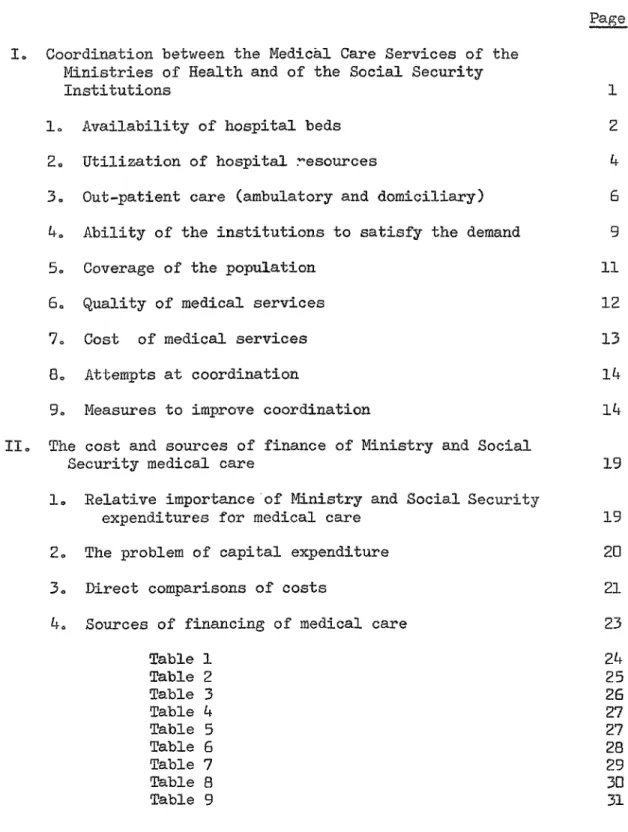
INDEX
Page
Io Coordination between the Medical Care Services of the
Ministries of Health and of the Social Security
Institutions 1
io Availabilityof hospitalbeds 2
2o Utilizationof hospital_esources 4
3o Out-patient care (ambulatory and domiciliary) 6
4o Ability of the institutions to satisfy the demand 9
5° Coverageof the population ll
6° Qualityof medicalservices 12
7o Cost of medicalservices 13
8o Attemptsat coordination 14
9o Measures to improve coordination 14
IIo The cost and sources of finance of Ministry and Social
Securitymedicalcare 19
lo Relative importance_of Ministry and Social Security
expendituresfor medical care 19
2° The problem of capital expenditure 20
3o Directcomparisonsof costs 21
4o Sourcesof financingof medicalcare 23 ,
Table1 24 _
Table2 25
Table3 26
Table4 27
Table5 27
Table6 28
Table7 29
Table8 30
CSPI7/DT/I (Engo)
CHAPTER I
COORDINATICN BE%'_EN THE MEDICAL CARE SERVICES OF THE MINISTRIES
OF _ALTH I_<D OF THE SCCIAL SECURITY INSTITUTIONS
In preparing the Technical Discussions on the above theme, two
• resolutions of the XVI Meeting of the Directing Council have been taken
into account° In Resolution XIX, The Council invited Governments to
progressively apply recommendations concerning machinery for coordination
• between ministries of health and social security institutions, "especially
that which refers to the need for a survey to measure the real magnitude
of the problem and to ascertain its characteristics"° In Resolution XXIX,
the Directing Council resolved to select the topic: "Means for Promoting
and Making Effective the Coordination between the Services and Programs of
Ministries of Health_ Social Security Institutes, and other Institutions
that Conduct Activities related to Health" for the Technical Discussions
to be held during the XVII Pan American Sanitary Conference, XVIII Meeting
of the Regional Committee of WHO for the Americas°
The Director decided that the best way to implement both resolutions
would be through a preliminary survey for the collection of basic data,
which would be made available to the participants in the Technical Discussions
in order to provide them with realistic information on the present situation°
Continuing its policy of collaboration with other organs of the
Inter-American System, PAHO requested the cooperation of OAS in order to
carry out the survey recommended by the Directing Council° It is gratifying
to note that OAS responded in a very effective manner to this request and
agreed to sponsor the survey jointly with PAHO in those countries which
volunteered to participate° It was made quite clear from the outset that
this was a national survey with the assistance of international
organiza-tions_ and that its aim was solely to make an objective,preliminary analysis
of the present situation so as to obtain basic information in order to
undertake at a later date,a thorough economic, demographic, and sociological
study, the results of which would enable each country to evaluate its own
problem and adopt its own solutions in accordance with its historic
tradi-,_ tions, legal system, and financial ability to provide medical services°
v Ten countries complied with the request of PAHO and OASo They were:
Brazil, Chile, Colombia, Costa Rica, E1 Salvador, Honduras, Panama, Peru,
Mexico and Venezuela° Each country was asked to designate one investigator
from the ministry of health and another from the social security agencies°
These investigators received detailed instructions from officials of PAHO
and OAS, as well as advisory services throughout the period data were
collected°
The present study is intended primarily to measure the "quantity" of
CSPI7/DT/I (Engo)
Page 2
must be taken into account, particularly in analyzing costs, because it is
obvious that the higher cost of certain services often results from their
higher quality° In addition_ an attempt has been made to investigate the
way in which the services are utilized, their accessibility to the users,
the population covered by the social security systems, and the cost of
the services provided by the different institutions° In addition, an
attempt has been made to analyze the human and material resources available
for the operation of medical care services°
The general orientation of the study corresponds to the principles
supported by PAHO, which have been ratified on many occasions by its
Governing Bodies and its expert groups° In brief_ these principles lay
down that the preventive, curative and rehabilitative functions of medicine
constitute an integral whole, medical care being recognized as one of the
basic health services which should be provided to the community°
From the administrative point of view, the basic principle followed
in considering this problem is that health services should have a
region-alized structure, and that within each region there should be a network or
system of establishments providing services, the sum total of which should
be sufficient to ensure integral health care, avoiding duplication among
related services°
When the problem is tackled in this manner it is possible to establish
general technical principles from which measures applicable to any health
service can be derived° In this way, discriminations or comparisons which
could lead to further lack of coordination are avoided, and a basis is
es-tablished in order that, by means of operational research at the local
level, uniformity of health activities can be achieved_ thus facilitating
their progressive coordination°
The following comments stress the most outstanding characteristics
of the problem and might serve as a gmide for the Technical Discussions°
lo Availability of hospital beds°
It is extraordinarily difficult to obtain satisfactory indexes or
rates for determining the ideal number of beds in relation to population°
There are numerous variables which modify the need for beds, and many of
these variables, unfortunately, cannot be measured easily° Another factor
which complicates the calculation is that in the organization of medical
services we are rarely working with a known universe° The population served
by the beds of a given hospital can, in fact, vary within a rather wide range,
depending on the means of communication and on whether or not there is a
network of peripheral services to relieve the pressure on the regional
hospital services°
The ministries of he<h, in replying to the questionnaire, had
CSPI7/DT/I (Engo)
Page 3
population of the city or region where the hospital was located, without
mak-ing bhe corrections rendered necessary by the existence of other hospitals
(maternity hospitals_ children's hospitals, private clinics) which serve
different sectors of the same population_ This is unfavourable to the
Ministry hospitals, because, when this exaggerated population figure is '
used as denominator, the rates per 1o000 inhabitants obtained are much
, lower than the true rates as well as much lower than the social security
hospital rates°
A more accurate but also more complicated way of determining the beds
required by a population is to study the demand for medical care° In its
simplest form, this demand can be measured by the percentage of the
popula-tion which requests admission to hospitals, and by the percentage of the
same population which attends out-patient clinics° This however, only
represents the part of the demand known as "effective demand", and to it
should be added the "potential demand", based on that part of the
popula-tion which, even though it needs medical care, does not ask for it, either
because it does not have access to services or because it is not covered
by the social security system°
In addition to this potential demand, which might be called demand
of social origin, there is another kind of potential demand which
origi-nates in public health activities themselves. Thus, a preventive program
for the control or eradication of communicable diseases, even though it
may increase demand during its initial phase, tends in the long run to
reduce demand by bringing about the reduction or possibly the disappearance
of a certain group of diseases. On the other hand, a search for cases of
chronic illness? particularly cardiovascular disease or cancer, will reveal
a series of cases previously unknown, which generally require more or less
lengthy hospitalization, and which in any case cause an increased demand
for services.
On applying modern procedures of market research, it is possible to
assess the total demand for medical care, making all the necessary
correc-tions in order to add to the effective demand, the potential demand
deter-" mined by the factors mentioned above, and deduct the additional or unnecessary
demand caused by the persistence of diseases which can be.eradicated or
reduced in importance.
Once the total demand is known, it is still necessary to correct
the figures on the basis of the real needs and also the aspirations of the
community° There are a series of factors, such as a rising level of health
education of the population, population growth or internal migration, and,
finally, the advance of medical science, which create a constant growth
in the demand for services° Unfortunately_ often the resources necessary to
provide the services do not grow equally rapidly and this gives rise to
another factor which should be taken into account in planning health
services, since this lack of sufficient resources to satisfy the demand is
CSP17/DT/1 (Engo)
Page 4
for providing the services and also with the users of the service° These
social or "trade-union" conflicts may provoke tensions which harm the
prestige of the medical services and which,in any case, should be avoided°
Furthermore, when the availability of beds is not uniform for the
different social groups, social discrimination arises and has repercussions
on public health, inasmuch as the less favoured groups, which are usually o
those most exposed to the risk of sickness and death, will not have access
to even minimal medical care° This is what occurs frequently in the
countries covered by the present survey, which have a more or less
satis-factory number of beds for a minority group, namely that part of the
population covered by insurance, but have rates below the acceptable
minimum for the majority consisting of the economically weaker groups of
the population which are still without social security protection (Table 1)o
In the survey, an analysis was made of the data concerning discharges
per 1,00O inhabitants° These figures are very variable and reveal no definite
tendency, but they are generally very lowo This would seem to show that
services are being provided only for a minority of the population supposed
to be covered° Only the social security hospitals of E1 Salvador, Costa
Rica, Honduras, Panama and Peru indicate averages of more than 100
dis-charges per 1,O00 inhabitants, which may be regarded as a satisfactory
figure° In the case of the rates for ministry hospitals, the source of
error already mentioned must be considered, ioeo the use of an exaggerated
theoretical population in making the calculations°
If we accept as adequate the rate of lOS discharges per 1,OOO then,
taking into account the fact that l0 days is a reasonable average stay,
the conclusion is that there should be a rate of about 1,000 patient-days
per year per 1,000 inhabitants° In the survey, only the Social Security
Fund of Costa Rica and the Workers' Social Security Fund of Peru exceed
this figure, while it is approached by the hospitals coming under the
Ministries of Public Health of Costa Rica and of E1 Salvador, as well as
by the social security hospitals of E1 Salvador, Panama and Peru (Seguro
Social del Empleado)o
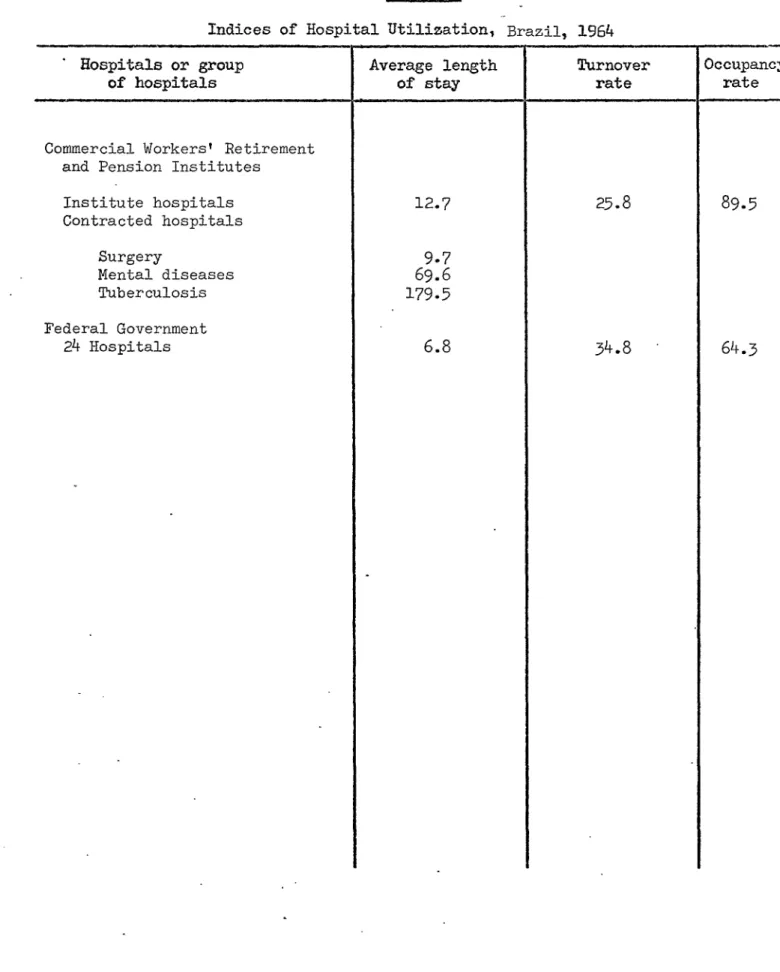
2o Utilization of hospital resources°
The poor utilization of hospital resources creates an artificial
shortage of beds which could easily be corrected by simple administrative
measures designed to improve the medical care system° There are countries
which complain of a lack of beds but whose statistics demonstrate that the
average stay of patients in hospital is 25 days or more,and that because
of this low turnover only 12 to 14 patients can be treated per bed per
year° A better utilization of these beds, reducing the average stay to
not more than 15 days (which is an acceptable figure and by no means
exaggeratedly.low) would permit 25 patients per year to be treated per bed°
It is not easy, however, to improve the utilization of hospital beds as
CSPI7/DT/I (Engo)
Page 5
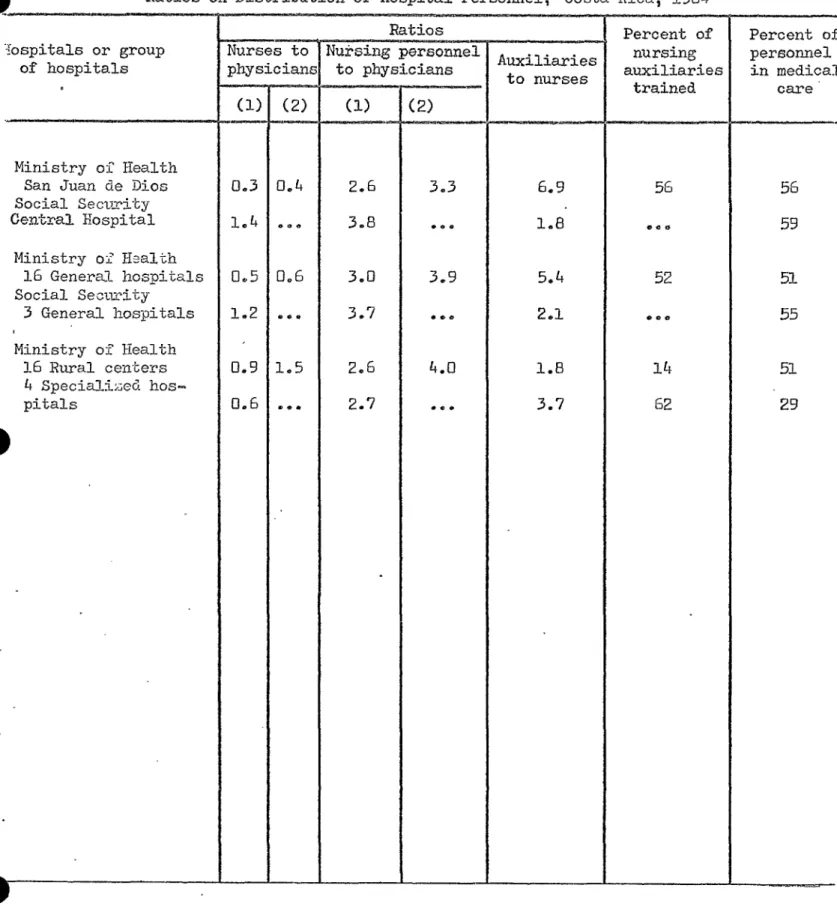
The utilization of the beds is affected by:
a) The hospitalization requirements of the population as compared
with the number of beds available°
b) The duplication of parallel services°
@
c) The existence of sufficient professional personnel to provide
for an adequate rate of bed turnover°
d) The existence of timely diagnostic and treatment services°
e) The need to satisfy the demand of the population for care to the
maximum extent possible°
When the demand for care is very heavy and there is an attempt to
increase the percentage of utilization beyond the limits permitted by the
existing human and material resources, this increase is generally made by
sacrificing the quality of the service and at the expense of the personnel°
It should also be remembered that small hospitals habitually have a low
utilization rate, so that, for this reason, it is better in countries which
have limited resources to concentrate the latter in large medical centers
where maximum use can be made of them°
As in so many other aspects of social phenomena, the rates of
utilization of medical services are determined by many variables, some of
them objective and measurable, and others subjective, depending on the
cultural and emotional state of the population and not measurable or easy
to overcome°
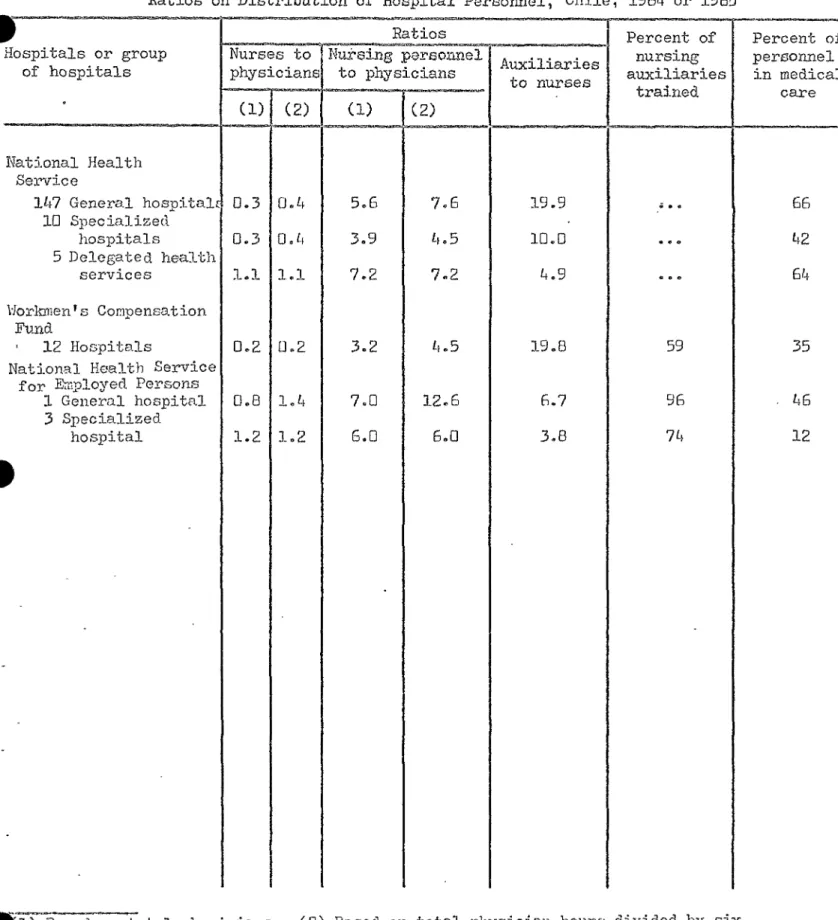
The objective factors that interfere with good utilization include,
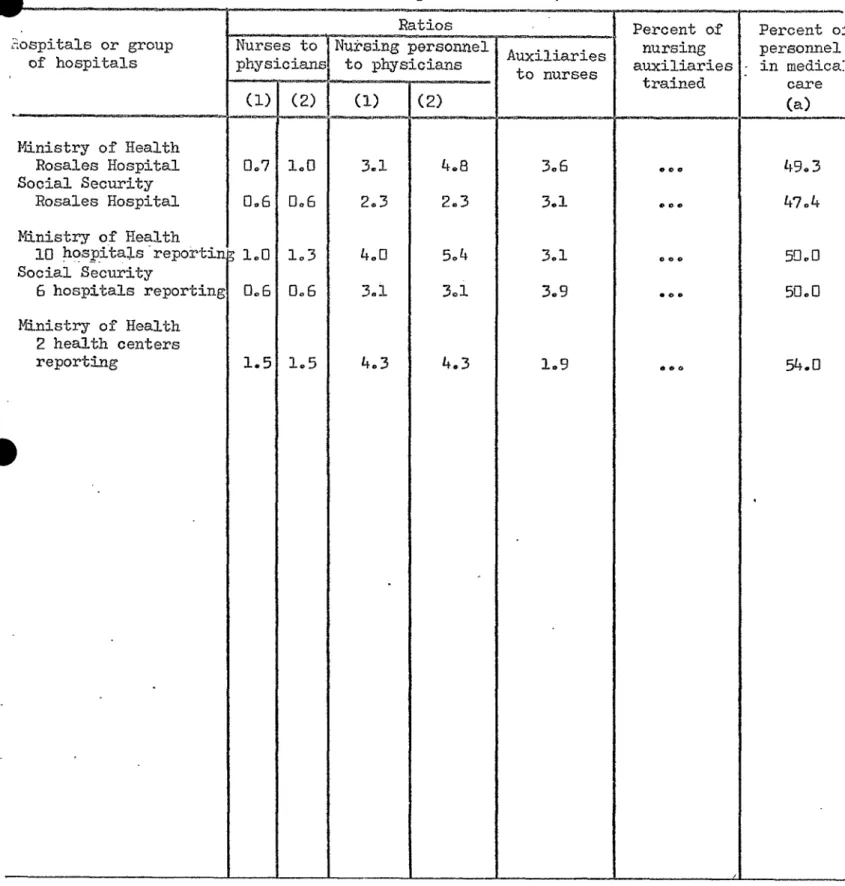
for example, low output per physician-hour or work, inadequate ratio of
nurses to physicians,of auxiliaries to nurses, and of administrative to
professional personnel, which may oblige the latter to devote a large
proportion of their time to work that is not properly speaking the care
of the sick, thus seriously decreasing their "output"° Another factor
which must be considered is the inadecuacy of certain installations such
as X-ray, laboratory or electrotherapy services, which can create
bottle-, necks and interrupt the continuity of the process of diagnosis and
treat-ment and is reflected in an undue length of hospitalization°
It follows, therefore, that in order to analyze the utilization of
medical resources the causal factors must be known° Care should be taken
to avoid any over-simple conclusions, indicting a given professional group
or a given administrative system or a given institution for defects in the
utilization of the resources which may be governed by factors completely
external to the individuals or institutions providing the services°
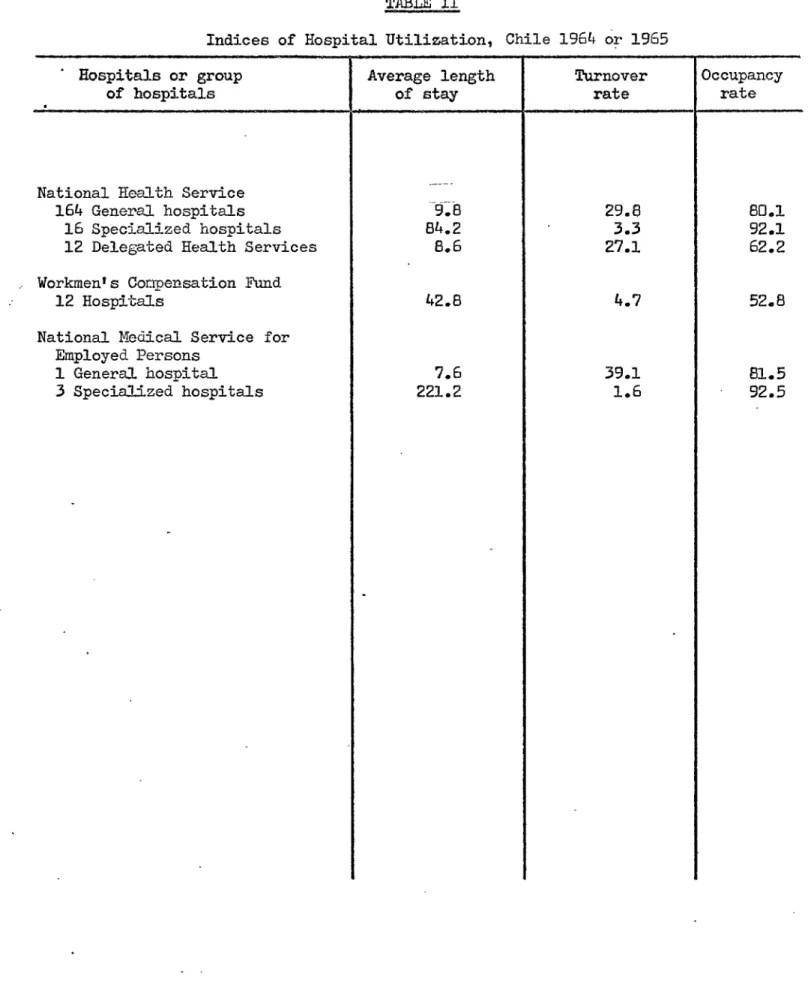
To asses utilization, the following series of indexes has been
CSPI7/DT/I (Engo)
Page 6
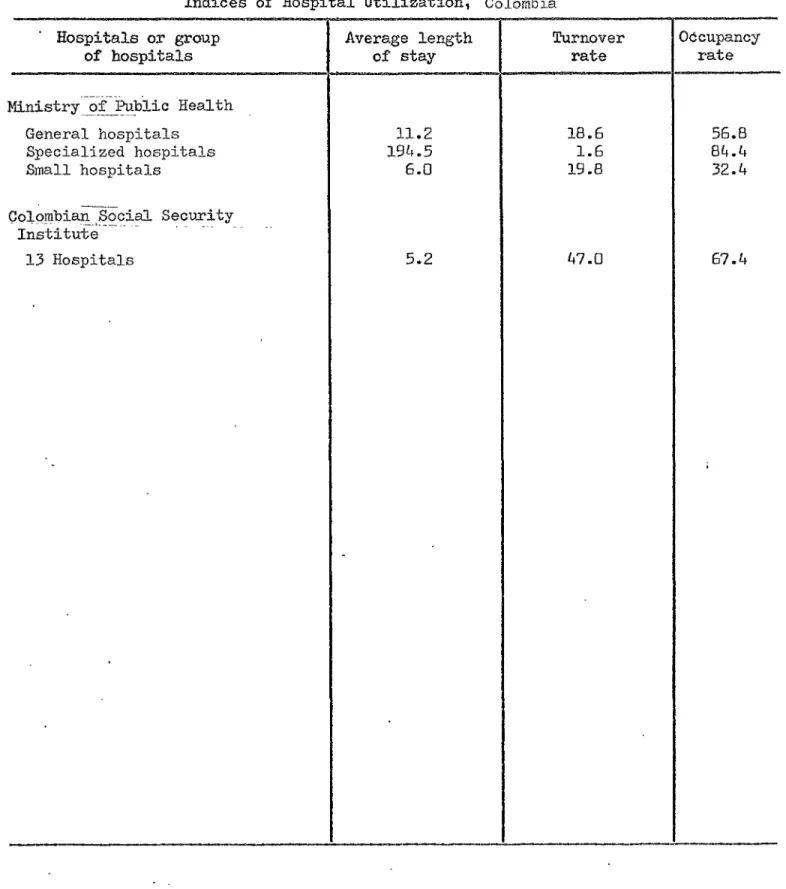
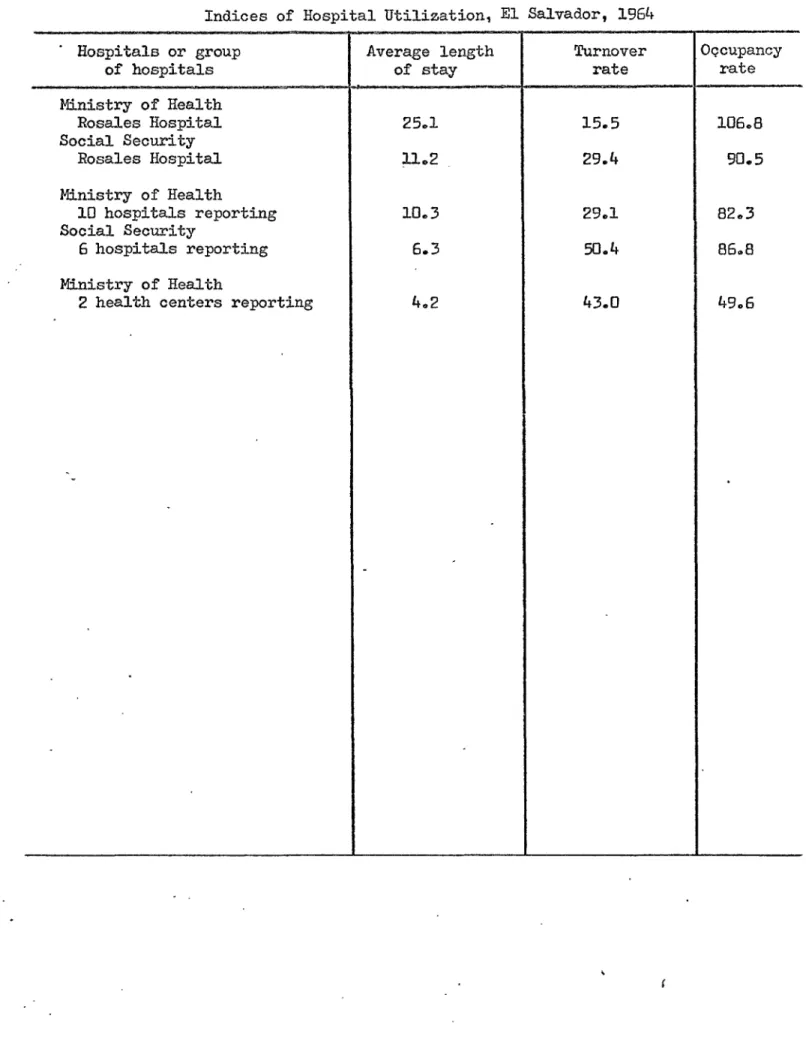
a) Index of hospital bed occupancy, which is considered adequate
when it is between 80 and 85 per cent° Excessive occupancy indexes are
the rule in all the specialized hospitals covered by the survey°
Further-more, certain general hospitals also show unduly high occupancy indexes,
particularly in those countries where the shortage of beds is most serious°
b) Average length of stay of patients, which should not be more than
15 days in the case of acute illness° Evidently, this average will vary
greatly depending on the particular specialty° For example, in maternity
cases 3 or 4 days are considered adequate while in chronic disease services,
such as psychiatry and tuberculosis services, stays of 90 to 100 days may
be common°
c) Bed turnover, which depends on the foregoing and which, in the
case of general hospitals for acute illnesses, should be 25 or more patients
per year° In the hospitals studied in the survey, it can be seen that those
with the longest average lengths of stay are at the same time those with
the lowest bed turnover indexes (see in Table 2: the Rosales Hospital, San
Salvador; Ministry of Health hospitals, Honduras; and the Hospital Obrero,
de Lima, Peru)°
d) The percentage of admissions relative to the population served
by the hospital° This index is rather difficult to determine and was not
investigated in the survey° As mentioned above, the population assigned
to the hospital can vary greatly, depending on a series of factors quite
apart from morbidity and related rather to the economical and social
develop-ment of the region where the hospital is located° Furthermore, this index
calls for individual statistics$ which are rarely available in our hospitals°
In the countries participating in the inquiry these indexes show
great variability but tend, in generals to be better in social security
hospitals, very probably owing to the fact that administrative and financial
control in these institutions is stricter than in establishments coming
under ministries of public health° In the great majority of cases_ however,
the indexes of the hospitals considered show room for considerable
improve-mento As noted above, it would be necessary to study each individual case
in order to determine and overcome the causes behind the unsatisfactory
level of these indexes so as to improve utilization of the available
resources° This is the preliminary step necessary to justify a request
for new resources demanding a financial effort on the part of the
govern-ments and the communities concerned°
3° Out-patient care (ambulatory and domiciliary)o
It is a well-known fact that 90 to 95% of the morbid conditions
which lead to the demand for medical care can be treated in an ambulatory
manner in out-patient departments° This is the policy which has been
adopted by most of the social security institutions in Latin America (see
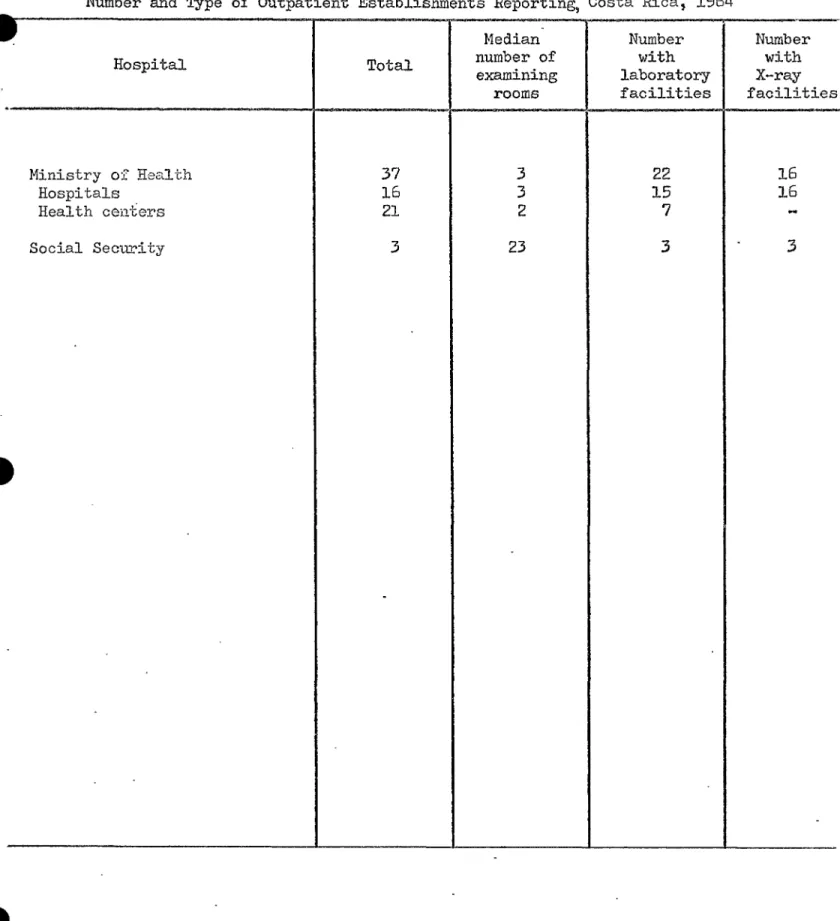
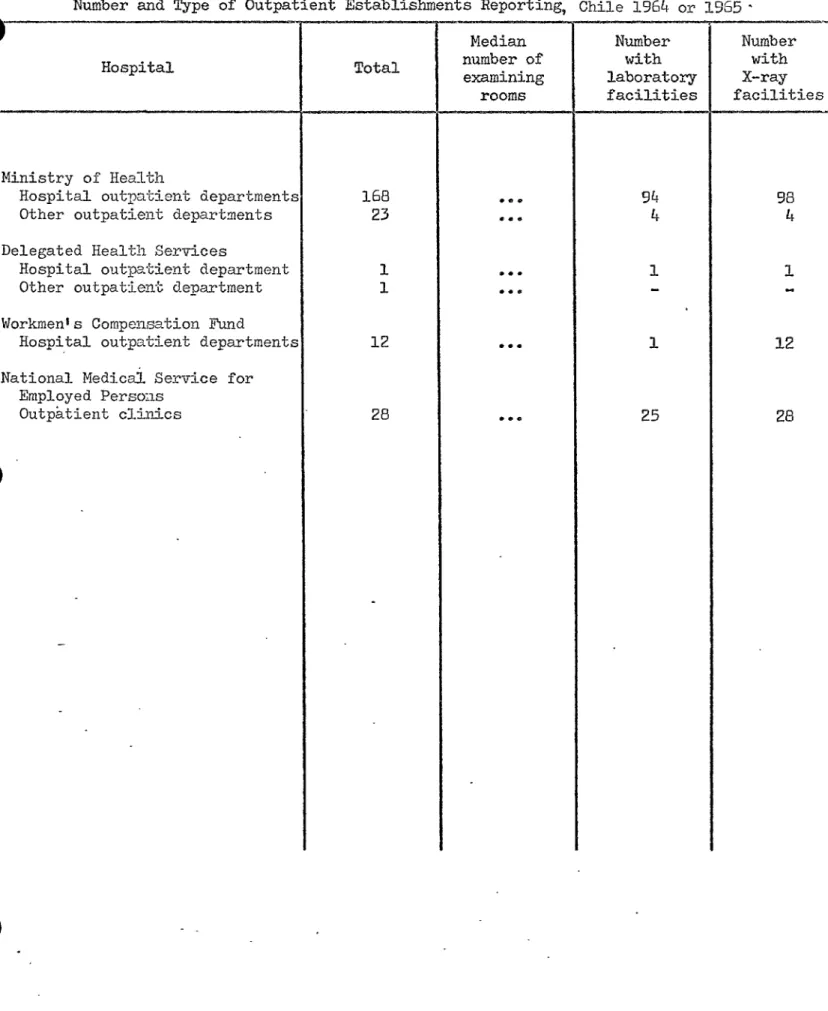
Costa Rica, Peru and Honduras, Table 1)o The data in Table 7 for the different
countries taking part in the survey indicate that, in general, the out-patient
clinics attached to social security institutions are better provided with
laboratory and X-ray installations° It can be deduced indirectly from this
CSPi7/DT/I (Eng.)
Page 7
The modern concept of the structuration of medical care services is
that they should form part of a network or system of services in which a
general hospital, covering all the specialties, is the base of the
opera-tions for a network of small hospitals, peripheral out-patient departments,
. and health centers bringing medical care to every corner of a given
geographical region and carrying on integrated -ioe° preventive, curative,
and social- b_ealth activities° These peripheral services are, so to speak,
the "antennae" of the health service which at the same time as taking
health care to every part of the region, "pick up" health problems and
diagnose cases which require more complicated treatment, before referring
them to the specialized centers which should be located in the regional
hospital° All these services should act as a whole, in a coordinated manner,
and should plan their activities and evaluate the results obtained jointly°
Even though the countries participating in the survey show an unmistakable
tendency towards this type of organization, the truth is that there is
still a long way to go before the system becomes generalized° It is still
common for ministries and social security institutions to organize local
health services which are complete]@ independent of each other°
Only an analysis of the combined output of the different
establish-ments which make up the network of medical services for a region can reveal
errors in the functioning of the syatem, superfluous institutions,
unnec-essary duplication, lack of proportion between the services provided and
real needs, and the importance of applying certain indexes and their effect
on demand°
The output of an out-patient clinic can be measured by the number of
contacts made per year between the medical team and the community it serves°
This relationship, of a collective character, is often expressed in a
simplified manner by the number of patient-doctor contacts, a ratio which is
usually a good representation of the activity of the out-patient clinic,
since medical work is the most complicated part of its action and the one
most needed by the population, while at the same time it is the one that
' gives rise to other health welfare or social contacts be%ween the family
group and other members of the health team°
, The ability of the out-patient clinic to satisfy the demand for its
services is determined by various parameters_ among which the following
should be taken into account:
a) The number of hours of work per day assigned to the out-patient
clinic and their distribution around the clock° This should take into
account the free time of the industrial worker_ family habits, and the
CSPI7/DT/I (Engo)
Page 8
b) The number of working days per year° It is advisable for
out-patient clinics to work at weekends and on holidays, when their
clien-tele can more easily attend°
c) The average number of consultations per physician-hour in the
different specialties, it being emphasized that this figure should be
fixed by agreement between the health service authorities and the medical
profession,and will be an average and not a maximum°
d) The location of the cut-patient clinic, which, as far as possible,
should be in a frequented locality near places where its clientele live
or work°
e) The existence of domiciliary services°
The effort made by health institutions to encourage the
develop-ment of out-patient clinics and the repercussions of this effort as concerns
satisfying the demand of the community for medical care can be measured by
studying the number of out-patient consultations in a given period of
time in relation to the population served by the hospital and bythe
out-patient clinic°
In out-patient clinics where the comparison has been made, it can
be seen that the percentage of the population covered which uses the services
is greater in social security out-patient clinics (see Table 8 for Honduras
and Peru)° The opposite is the case in Costa Ricao In the remainder of
the countries, this study could not be made°
The health centers and social security out-patient clinics clearly
attach greater importance to domiciliary medical care, as can be seen
from the results of the survey in Costa Rica, Panama, Peru and Venezuela
(Table 8)°
In Chile, where, as a result of the integration of the medical services
coming under the ministry with those of the social security system, the
hospitals have been practically transformed into health centers, it can
be seen that these establishments make a large number of domiciliary
visits°
f
The same Table 8 gives, for the various countries, the immunization
rate per 1O0 inhabitants served by out-patient clinics° It can be seen
that immunization is frequently not carried out in the social security
clinics and, even in those where it is, concerns a very low proportion of
the population covered°
The time spent by the physician per consultation can also be used
as an indirect index of the quality of the care given in out-patient
clinics° All the countries show a similar tendency to use more
csP17/OTA (Engo)
Pageat the expense of the out-patient clinics of general hospitals coming under
the _ninistry of health, where the time per consultation is frequently very
small°
The cost of ambulatory care is analyzed in Table I0, where it can
be seen that the most expensive medical care is that given by mobile units
(Honduras and Panama)° Care given by health centers is generally more
expensive than consultations in hospital out-patient clinics (Chile, Costa
Rica, Panama, Peru and Venezuela)° Apart from Venezuela, the social
security out-patient clinics tend to be more expensive than the health
@
ministry ones° The case of social security for employees in Chile and
Peru calls for special attention, since their costs are several times
higher than those of the ministries in the same countries°
4o Abilit_f the institutions to satisf._the demand
There are three basic elements which govern the ability of an
institution to provide medical services° These are: the buildings, the
equipment and installations, and the human resources°
As regards buildings, not only are their actual existence and size
important, but their architectural design should also be suited to the
functions for which they are intended° In the countries of Latin America,
none of these conditions are satisfied: there are not enough buildings,
those that do exist are old and their size is inadequate to satisfy the
increasing demand of the peoples for medical care° To aggravate the
prob-lem still further, relatively new facilities have been built from an
insti-tutionalist viewpoints without bearing in mind the need to integrate
pre-ventive and curative services and to take health care to the community
which the hospital serves° Finally_ either an erroneous policy or the
shortage of financial means has resulted in the fact that, to all intents
and purposes, there is no maintenance budget, so that relatively new
buildings deteriorate too fast°
The effort which the countries are making through various sources
° of financing to build hospitals and other health establishments is
extraor-dinary, and it may be estimated that large sums of money will be involvedo •
Unfortunately, there is rarely a preestablished plan aiming at the
progres-sive satisfying of the health needs of the population° Owing to the
financial difficulties of the governments, it is not uncommon to see the
construction of a hospital prolonged for many years, and when it finally
starts operations it is already inadequate for the needs of a growing
population which is becoming ever more conscious of the importance of health°
In contrast to this premature saturation of some hospitals, others do not
use their full capacity because of lack of personnel or financial resources,
Chile invested 29,000,000 escudos in the construction of 3D hospitals,
as well as 5,000,000 on the enlarging and remodeling of 7 others and almost
2,000,000 in the construction of 8 health establishments without beds,
CSPI7/DT/I (Engo)
Page i0
and at times (which is worse) lack of clientele° The paradox arises,
that while some hospitals are operating beyond their tolerable maximum
capacity, others are half empty, and this occurs -at times
simultaneously-in the same region and even inside the same city° All this results from
lack of planning which brings to nought the financial efforts made by the
countries and causes dissatisfaction among all interested parties, ioeo
the users of the service, the medical and related professions, and the
governmental executive and political authorities°
The problem of providing equipment is no less grave than that of @
buildings° A good part of the installations and equipment necessary for
the diagnosis and modern treatment of disease is not manufactured in the
Latin American countries and therefore has to be imported° This involves
the additional problem of the availability of foreign exchange in hard
currencies and of internal competition with other requirements for the
import of industrial and agricultural machinery, etco, to which the
govern-ments often give preference°
As in the case of buildings, the financial efforts made by the
government to obtain equipment are frustrated by lack of planning° As a
result, purchases are made in a arbitrary manner, so that in the same city
there may be one hospital lacking the most basic equipment for X-ray or
laboratory tests, while another has an electron microscope and a cobalt
bomb° In addition to this, there is a competition among the different
medical services to acquire expensive installations (for example heart-lung
machines for open heart surgery) which once installed can hardly be used
because of the absence of the specialized personnel required°
The human resources situation is another of the factors which
limits the capacity of institutions to provide medical service° Since the
physician is the irreplaceable element in providing medical care, a brief
analysis of the availability and utilization of medical work will give an
idea of the medical care capacity of the countries° In Latin America, there
are at present some 134,000 physicians in professional practice_ which is
a ratio of 5°5 physicians per 10,O00 inhabitants for the estimated
244,000,000 population of Latin America° In other words, there is one
doctor to every 1,800 inhabitants, including those doctors who are engaged
in administrative or public health functions_ and therefore, cannot be
regarded as providing direct medical care° The ratio varies widely from
0°9 to lqo9 physicians per lO,000 inhabitants, which shows that there are
countries with a more than sufficient physicians to meet their needs while
others are in a real emergency situation, since the ratio is below the
acceptable minimum for giving even minimal medical care to all the
in-habitants°
The basic scarcity of physicians in most of the countries of Latin
America is made more serious by their poor geographical distribution, since
the great majority of them are concentrated in the large cities° As regards
CSP17/OT/1(Engo)
Page Ii
habits of professional practice, which in many countries result in the
physician working not more than two hours per day in the hospital° It is
only fair to recognize, however, that the majority of the countries are making
an effort to promote full-time work by hospital doctors, but they encounter
serious financial difficulties in providing a satisfactory income compatible
with the status of medical work°
Apart from the Honduras social security system, the percentage of
full-time doctors in all the other countries is greater than that of those
working part time (Table 3)° On analyzing the medical work time (doctor-hcurs)
in relation to the beds occupied in general hospitals, great variability
is found ranging from 5' per bed in the "beneficencia" hospitals of Peru to
ll41 per bed in the Panama social security hospital° In the great majority
of hospitals, the figure lies between 25' and 34'° Outside this group
are numerous hospitals belonging to social security institutions, such as
those of Rosales in E1 Salvador (79'); Honduras (54')_ Panama (i14')_ the
Employees' Social Security Institute of Peru (106') and the Venezuelan
Social Security Institute (661)o
The same position is found in regard to nursing time° The great
majority of hospitals utilize between 15' and 35' daily of nursing time
(nurse-hours) per occupied bed, while in the social security hospitals
the figures are as follows: San Jose de Costa P/ca, 5D_; other Costa
Rican social security hospitals, 68'; Employees' National Medical Service
of Chile, 41'; Rosales Social Security Hospital, 59'; Honduras, 72'; Panama,
149'; Panama-Santo Tom&s-Ministry of Health, 80'; other Ministry of Health
hospitals, Panama, 67'; Peru - Workers I Social Security, 55'; Peru - Employees
Social Security, 146t; Venezuelan Social Security Institute, 821o
5o Coverage of the poDulation
From the social and public-health points of view, the ideal would
be to have total coverage --ioeo to ensure all the members of the community - _
should enjoy the benefits of medical care from the instant of birth to the
moment of death, applying the principle of continuity which recognizes that
. sickness, health, and invalidity are merely different phases of a single
biological and social process°
The concept of coverage varies, depending on whether services operated
by ministries or sccial s@curity institutions are concerned° The latter
employ a financial concept of coverage-- in other words_ persons who
contribute financially to the maintenance of the services, and certain
members of their families recognized as beneficiaries by law, are those
that have a right to the benefits° These services consequently work for
a known population, which can be determined with a certain degree of
precision° Services coming under the ministries of public health, on the
other hand, theoretically apply the concept of the universality of medical
care, recognizing the right to health of all members of society° In
CSP17/DT/1 (Engo)
Page 12
security institutions, those who can pay for private medical care, those
who belong to mutual cooperatives and other systems which provide medical
care, members of the armed forces and the police, which generally have
their own services_ and those who, because they live in remote and isolated
regions, have no access to the existing services, do not come to ministry
of public health establishments° The majority of the latter establishments
claimed in the survey a theoretical universe which was greater than the
real one, leading to a factor of error -sometimes a large one- in the
calculation of the rates and the indexes of output°
The low percentage coverage of the social security institutions
greatly limits the effects of their action on the state of health of the
community as a whole° It is known that for a health action to produce
significant results and to reduce the risks of sickness and death, it must
be applied to what in epidemiology is called a "useful level" of the
popu-lationo This useful level varies with the activities planned and the risks
covered_ but must always be over 50_ of the total population, as a minimum°
As a result_ health activities undertaken by the social security
institu-tions for a lower percentage of the population cannot have any measurable
effect on the health of the community until their coverage is increased to
reach a higher level or the work is coordinated with that of other health
services so as to attain such a level°
The trend apparent in all recent international meetings on the
subject has been to extend the benefits of social security to new
popula-tion groups before increasing the benefits of the groups already protected°
If this orientation becomes translated into practice in the years to come,
a significant increase in social security coverage in the field of medical
care can be expected° It is possible to foresee_ however_ serious
diffi-culties in the fulfillment of this program,since, as has already been noted,
the right to services in the social security system_ is acquired by the
paying of contributions° It is evident that in the countries of Latin
America there are still large numbers of the urban inhabitants who are
unable to pay such contributions° Moreover, all the indigenous population
groups and a good part of the rural inhabitants have money incomes so low
that any attempt to demand a contribution from them to finance the medical
services would be illusory° These indigent groups are the ones which have
obliged the ministries gradually to develop medical care services,
partic-ularly in rural areas° The present and future needs of these population
groups will continue to have a strong influence on government decisions,
since the governments feel obliged to satisfy this demand for medical
services in order to avoid social tension and unrest°
If we recognize that the conditions of our social and economic
development oblige the two types of services to coexist_ namely those of the
ministries and those of the social security systems, then the need to reach
a certain understanding so as to facilitate joint work appears obvious°
6o _.uality of medical services
A precise evaluation of the quality of the medical care extended
CSP17/DT/1(Engo>
Page 13
means of medical audit studies, but this procedure cannot be used in an
international survey such as the present one° Nevertheless, information
has been sought on certain more or less simple elements which can provide
an indirect measure of the quality of the services provided°
The need to engage in joint curative and preventive activities, for
. example, is today universally accepted° We have therefore made a simple
study to determine whether the hospitals participating in the survey carry
out immunizations against communicable disease in their out-patient
depart-merits, and have regarded this preventive action, which can be measured
objectively and which may be recorded in the statistics, as an indication
of the intention of the corresponding establishment to undertake work of
a preventive nature° In the hospitals, in addition, we investigated the
extent and development of the ambulatory and domiciliary medical services
and determined whether there were X-ray and clinical laboratory services
at the disposal of the out-patient department, since all these elements
help to improve clinical work and to extend its influence to the home of
the patient and consequently, to the community°
The place where all these combined activities are undertaken
con-jointly is the health center° The out-patient departments of the hospitals
carry them on to a limited extent_ while the social security out-patient
clinics, even those with the most extensive and developed facilities for
curative work, have, with rare exception, the drawback of not providing
preventive care for their clientele° Domiciliary medical services hardly
exist at all, whether under the ministries or under the social security
system°
7o Cost of medical services
Table 6 shows that all the costs of medical care are higher in
establishments run by social security institutions° It might sometimes
be supposed that the shorter average stay in social security hospitals
could partly make up for the greater cost per patient day° However, it
can be seen from Table 6 that this is not the case, since the difference
" in the average stays is not sufficient to compensate for the difference
in cost, often 2 to 6 times greater in social security establishments than
in ministry ones°
It is very difficult, and would perhaps be injust, to make comparisons
without a precise knowledge of the quality of the medical care given by
the two institutions concerned° Nevertheless, the enormous differences
encountered would not seem to be explainable satisfactorily solely on the
basis of the quality of the care given_
We should like to call attention to a correlation which has been
fairly constant in the hospitals where it could be studied° This is the
correlation which exists between greater amount of medical time worked,
CSPI7/DT/I (Engo)
Page 14
hypothesis might be put forward that the more time the physician spends
per bed or per out-patient consultation, the more rapid the treatment of
the case, but that this more intensive care makes the cost of each case
higher° This is especially so in hospital work, where the average stay is
long and the costs very low when the physician spends only a few minutes
per day at each bed in his charge° On the other hand, short average stay
and l_gh costs coincide in those establishments which allow the physician
to devote a more or less lengthy period to each bed in his charge°
This curious fact, which is evident from analysis of the statistical L
data collected, suggests that it is the high cost of the doctor-hour, and
its repercussions on requests for X-ray and laboratory examinations and drug
prescriptions_ that make hospital care expensive° It would be necessary,
however, to make a much deeper study in order to establish and verify what
for the moment is merely a working hypothesis°
8o Attempts at coordination
In all countries there have been some limited attempts at
coordina-tion between the medical care services of the ministries of health and of
the social security institutions° In at least one of the participating
countries, legal provisions have been approved which establish a single
administrative structure for the services° Even in that country, however,
there still exist a number of small autonomous services which are unconnected
with the national health service° In other countries, coordination has
been sought at the local level° In still others, the services are using the
same buildings,even though it is common practice in such cases, to hire the
physical facilities while maintaining a totally separate administration°
Finally, in some countries_ the Ministry of Public Health has
standard-setting and technical supervisory functions with regard to other medical
services, which are rarely exercised because of lack of personnel or of
economic resources for doing SOo
In almost no country, however, is there coordination in the field
where it is most important_ ioeo, in national health planning° The majority
of the known health plans are only programs designed to improve the services
of the ministries of health and completely ignore the services financed by
social security institutions, which are often as great as and sometimes
greater than those financed by ministries of public health° In other words, J
what is being planned is the public subsector of the health sector° It is
not possible to have true health planning until this attitude is corrected_
for the planners must determine all available resources and organize the
best integral utilization of present and future resources, regardless of
their origin°
9° Measures to improve coordination
The measures which are suggested below are simply intended to
encourage the progressive coordination of services which are at present
CSP17
/
O
/
1(Engo)
Page 15
rapidly or that they are going to give immediate results° The coordination
of preventive and curative medicine can only be the result of a lengthy
process of education of all the professional workers participating in the
health team as well as the users of the present services° As a Scottish
author has said, coordination cannot be imposed by decree but must rather
be the product of an appropriate state of mind on the part of all the
members of the health team°
P
a) Integral planning of development°- One of the fundamental
con-ditions of planning as a scientific method is that it must incorporate
J all the elements of the sector being studied°
The health sector comprises programs directed towards the
protec-tion, the promotion and the restoration of health, and for this it is
necessary to organize and develop resources in order to provide services
covering environmental sanitation, preventive and curative medicine, and
rehabilitation° These services are provided by local health agencies, which
should have a regional and sectoral structure in order to concentrate
highly specialized equi;ment and decentralize the basic services through
an infrastructure making them available to the whole population°
The foregoing implies planning for the maximum utilization of the
available resources, organizing health activities to avoid duplication,
and assessing the present and future demand for service while progressively
developing the ability to satisfy that demand°
In this complex process of planning, the participation of all the
organizations and institutions that maintain health services and make
investments for the development of health facilities is indispensable°
Hygiene and _reventive medicine are habitually and traditionally the
responsibility of the ministries of health° As concerns curative medicine
and rehabilitation, on the other hand, in addition to the ministries of health
other central government agencies participate such as ministries of national
defense_ police and security services_ as well as, social security agencies,
and organizations of a private character, such as charitable agencies
("beneficencias"), foundations_ the Red Cross_ etco In an integral health
plan it is essential for the human,material, and financial resources of
all these organizations and institutions interested in health to coordinate
their action so as to achieve maximum utilization_ and essential for them
to follow a technically directed plan so as to ensure the enjoyment of the
highest possible standard of health by all the members of the community°
In practice, what is required is that the authorized representatives
of all these organizations which provide health services should form part
of planning committees and that all their resources should be incorporated
in the national health plans, the programs being governed by a single series
of technical directives issued by a single competent authority°
b) Uniformity of the various social security systems°- Social security
CSP17/DT/1 (Engo)
Page 16
of application, are governed by the varying degrees of pressure which the
various groups of workers benefitting have been able to exercise in favour
of a given system° One of the countries participating in the survey states
that it has 7 separate systems of social security for different groups of
the working population, with varying medical benefits for each group° Two
or three different systems are common, and it is quite usual, for example,
to have one social security system for wage earners and another for
salaried employees, with completely different benefits°
The uniformity of all these systems of social security is one of
the objectives which many governments have included in their immediate
action plans,but only exceptionally has it been achieved, owing to the
defense of their interests by the groups enjoying the most generous benefits°
Coordination would be much simpler if, as a first step uniformity
of the social security systems could be brought about in the following
respects:
lo A single system for collecting contributions, base on uniform
percentages of wages depending on family responsibilities°
2o Equal medical and social benefits for all groups of workers°
3o A single scale of wages, salaries and social benefits for all
employees of social security institutions°
These measures would avoid competition between different groups of
the working population and the discrimination resulting therefrom, thus
simplifying coordination of benefits, at the local level, for once these
were similar they could be administered in a coordinated ma_hUero
c) Extension of social security coverage°- There is, as already
noted, a tendency to include new groups of the community in the social
security system, establishing a minimum level of benefits which should be
available to all members of the community°
Basically, this is an economic and financial problem: full coverage
depends in the first place on the ability of the national product to absorb
the financing of the social security benefits, and, in the second place, on
the ability of each member of the community to pay the social security
contributions° It is very probable that neither one nor the other will
be able to finance universal coverage, which would be the ideal, but it
is very likely, as is being done in many countries, that social security
could extend its benefits to groups yet not covered° In this way, the
field of action of the security institutions would be extended, and better
financing of medical services would be brought about°
d) Coordination of local activities°- This is the simplest way to
promote coordination, by creating in the infrastructures a suitable
environ-ment for the progressive coordination of health protection, promotion, and
CSPI7/DT/I (Engo)
Page 17
It is necessary to take into account, however, that this
coordina-tion of local activities can only be successful if it meets with the
support, the understanding, and the encouragement of the central
author-ities of the corresponding services° It cannot be expected that the
officials working in a small rural village will coordinate their work if,
at the central level, the higher executive authorities do not know one
° another_ thus fostering lack of coordination at all levels°
There are several ways of putting such coordination at the local
J level into practice° One of them is the use of the same buildings for the
services of different institutions° This is a system that is being
uti-lize in many countries, but which frequently suffers from a serious defect,
namely the maintenance of two administrations for the services although
they work under the same roof° In practice, the result is that one part
of the building is rented to an institution which_ on occupying it, instals
a complete administrative machinery, from the director down to the doorman,
and operates in complete independence_ even in ignorance_ of the other
administrative structure belonging to the institution owning the building°
The truth is that such a system does not coordinate anything; on the
contrary, it sometimes renders the defects and differences even more
apparent_ and this_ in turn, leads to still less coordination°
The joint use of X-ray or clinical laboratory apparatus is another
way in which coordination can be promoted°
Differences in administrative organization, as well as in the wages
and the social benefits of the personnel of the different institutions, are
generally a serious obstacle in the way of such coordination at the local
level° When there is a group that is well paid, with stable career
posi-tions and good social benefits, working side by side with another group
that receives insufficient wages_ has no social protection, and at the
mercy of political changes, the inevitable result is a feeling of
resent-ment on the part of the underprivileged group°
Perhaps the most fruitful terrain for coordination is that of
technical health activities in the field° When, by means of planning at
the local level, the health needs and the demand for medical services of
a community are determined, then the local authorities (of ministry of
health services, social security institutions and other agencies concerned)
can agree to carry out health protection, promotion and restoration
program at the local level_ using all available resources in the most
rational possible manner in an attempt to satisfy the demand for medical
services up to the maximum which these resources permit° A program of
this kind calls for the appointment of a coordinator to whom, by agreement
between the parties, is given sufficient authority to organize the
resources with the sole aim of satisfying health needs° There are many
programs of this kind under way in different countries of Latin America°
CSP17/D_/1(Engo)
Page 18
other programs of the"vertical type" for the eradication or control of
specific communicable diseases or the sanitation of certain local areas°
It is to be hoped_ however, that this limitation will disappear when
it is accepted that, once the attack phase of an eradication campaign
terminates, it is esseutial for the integrated local health services to
assume responsibility for continuing the maintenance phase°
I
e) Joint training of personnel°- As was stated at the outset,
the process of coordination should be based, preferably, on a thorough
understanding of its advantages by each and every member of the health
team°
Training should begin in schools of medicine, nursing, midwifery,
social work, dietetics, etco, in such a way that every member of these
professions should, on starting work, be imbued with the concept of
coordination acquired in student days in the respective university schools°
The post-graduate education of the specialist in public health,
of the sanitary engineer, the hospital administrator, etco, should also
lay appropriate stress on the concept of coordination° It is probable
that this subject should be dealt with in the curriculum at even greater
length than during undergraduate training° For these post-graduate courses
will provide the high executives who will take charge of the health and
medical care services at the national_ intermediate and local levels, and
because of this will be the key persons deciding the orientation of the
integrated health programs° It is also desirable for the training of
health service administrators to be undertaken in conjunction with that
of hospital, and social and rehabilitation service administrators, since
the administrative principles are always the same and only their practical
application to different programs varies°
Finally, paramedical schools, for the training of auxiliary and
supporting personnel should also incorporate the basic principles of
coordination in their teaching programs, so that all the members of the
health team, no matter how modest their position, may collaborate in an
intelligent manner in achieving the objectives of integrated health
programs°
As regards personnel already in service, they too should be trained
in these disciplines by means of short csurses and practical field
exper-iments which will familiarize them with the general principles of
CSP17
/
OT
/
( go>
I
Page Ig
CHAPTER II
THE COST AND SOURCES OF FINANCE OF MINISTRY
_'I_?DSOCIAL SECt_RITY MEDICAL CARE
° Io Relative importance of Ministry and Social Securit_ expenditures for
ms_dical care
A simple, if rough, index of the relative importance of Ministries
of Health and Social Security agencies in the provision of medical care is
the relative amount of money each agency spends for the purpose° The
per-centage distribution of expenditure on medical care between the two types
of agency is shown in Table lo This money index is only approximate, since
it is clear that the agency with the lower costs is serving a greater number
of people per unit of money spent°
There appears to be no consistent pattern in the distribution of
expenditure, except that the countries in which medical care under Social
Security is a relatively recent development still of limited scope, such
as E1 Salvador and Honduras, reflect this in relatively low medical care
expenditure under Social Security, while this class of expenditure represents
more than half the total in Peru, Mexico and Brazil°
It should be noted that the data for Chile are subject to the
reserva-tion that Social Security is represented only by the Employees' Medical
Ser-vice, and that, as shown in Table 8 below, slightly more than 18 per cent
of the expenditure of the National Health Service (Yinistry) is derived from
worker and employer contributions to social insurance.
Even in countries where the information is complete, the sum of
Min-istry of Health and Social Security expenditure for medical care by no means
completes the picture for the public sector° Data prepared by the Sectoral
Health Planning Office of Peru are shown in Table 2 to illustrate how
com-plicated the public provision of health services can beo While the Ministry
of Health and the two Social Sec1_rity agencies did account for three-fourths
of the recorded public expenditure on health in 1964 the health services of
the armed forces, the other agencies of national government, and the
Benefi-• cencia system all represented considerable expenditure.
The mere fact that Social Security agencies account for a
consider-able part of medical care expenditure does not by any means imply that such
agencies provide medical care solely by operating their own services. In
some countries there are agreements whereby Ministry of Health hospitals
and health centers provide medical care for persons covered by Social Security
and are reimbursed by the Social Security funds, and in a few cases, the
situation is reversed and Ministries of Health purchase services from Social
Security facilities° In Chile the present National Health Service was built
CSplT
//
l (Engo)
Page 20
insurance agencies are decreasingly involved in the direct provision of
medical care° In Peru, an important fraction of expenditure by the Employees
Social Security represents reimbursement to covered persons for medical care
expenditure in the private sector°
These variations are reflected in Table 5, which shows the percentage
of Social Security expenditure on medical care devoted to the operation of
their own facilities° The figure ranges from 1O0 per cent in Brazil and
Mexico to 74 per cent in Peru and 60 per cent in Panama° While the health
expenditures in Social Security agencies are almost completely devoted to
the provision of medical care, this does not hold true for Ministries of
Health which also have responsibility for a variety of preventive activities
directed to individuals, such as vaccination, and for health measures
direct-ed to the community as a whole such as market inspection, health education,
and the likeo The percentage distribution of Ministry of Health expenditures
among o_t-patient services, in-patient services, and community activities,
is given in Table 4°
The extremely low figure for in-patient services in Costa Rica arises
from the fact that the hospital care of the kind provided by Ministries of
Health in most Latin American countries is largely financed in Costa Rica by
local councils. If local financing were to be included with _Luistry expenses,
the per cent of total expenditure devoted to the community in Costa Rica
would be correspondingly lower°
It will be observed, in addition to the wide variation in the relative
importance of health services directed to the community as a whole, that the
relative emphasis accorded to in-patient and out-patient care in Ministry
ex-penditure also varies considerably° While a comparison for Ministries of
Health and Social Security agencies for all ten countries is not available,
6 of the countries that provided Ministry data in Table 4 also provided
in-formation for Social Security medical care in Table 5o Even taking into
account the many possibilities of error and non-comparability of data_ a
comparison for the countries appearing in both Tables 4 and Table 5 suggests
that some sort of compensatory mechanism may be at work° With the exception
of Honduras, Social Security agencies tended to give more emphasis to
out-patient services in countries where the Ministry of Health gave relatively
more to in-patient services, and vice-versao
2o The problem of capital expenditure
Although it is important to distinguish between expenditures destined
for the current operation of health services and investments in buildings,
heavy equipment, and other items classified as "capital goods" in national
accounts, the present study has emphasized current expenditure° One of the
CSPlV
/
DT
/
1 (mgo)
Page 21
accounting practices vary widely; it is seldom possible to ensure that no
expeuditure on capital items is included in data on current operations, while
in some cases information on capital investment is not available.
The high cost and long life of hospitals and other major health
facil-ities means -particularly in the case of the smaller countries- that a
num-. ber of years may pass without significant capital expenditure while for
years in which contracts for new construction are left the amounts will be
extremely high° Data for the single year 1964, comparable with the
informa-, tion on operating expenditure, would therefore lack significance°
Informa-tion was requested for the 1960-64 period instead, but even this proved
extremely difficult to interpret for purposes of comparing Ministries of
Health with Social Security agencies because other agencies of government
were often importantly involved in the financing process° In Chile, for
example, an autonomous public enterprise builds hospitals for the National
Health Service and in Peru the National Health and Welfare Fund builds
facil-ities which in other countries would fall in the Ministry of Health budget_
while in Venezuela some Ministry of Health facilities are built with
Min-istry funds while others are financed by the Ministry of Public Works°
Countries where the annual average capital expenditure in 1960-64 exceeded
10% of current operating expenditures for medical care were Mexico (37%),
Venezuela (18%), and Honduras (12%) the figures relating to the Ministry
of Health in all three° Although important construction programs were
under-taken by Social Security Agencies, they generally fell outside the five-year
period covered by the study except for Mexico where capital expenditure at
an annual rate was 3_% of operating expenditure on medical care by the IMSSo
In addition, in countries such as Brazil which have undergone severe
price inflation, it is difficult to assess the current value of facilities
built only a few years ago in the 1960-6& period°
Finally, as will be seen in the detailed country tables at the end
of this document (in Appendixes 1-10) the investment required to put a bed
into service is substantially different in the cases of new construction_
remodeling of existing facilities, or acquisition by purchase°
The principal significance of capital data in the present instance
is for the identification of items that should be excluded from current
• operating expenditure rather than for the separate analysis of capital
accounts for a four-year or any other short period°
3o Direct comparisons of costs
One of the most difficult problems in the direct comparison of costs
between Ministries of Health and Social Security agencies is the _%it of
_easureo Obviously, since different populations are being served, the total
expenditure does not necessarily correspond to the cost per unit of service
delivered° Populations theoretically eligible for service do not provide an
CSPI7/DT/I (Engo)
Page 22
actual access to service do not necessarily correspond° For purpose of a
first approximation to direct comparison, therefore, Table 6 was based on
the cost per patient-day in general hospitals operated by Ministries of
Health and by Social Security agencies°
The first column on Table 6 shows ratios of costs per patient-dayo
While the cost was invariably higher in Social Security than in Ministry of
Health institutions, the ratios varied from a low of 1o4 in Brazil to 5°8
in E1 Salvador and 6ol in Honduras° The footnotes explaining limits to
coverage are particularly important, since the relatively low ratio for Peru
is based on data for the Workers' Social Security only, and it is known that
costs per bed-day in the two large hospitals operated by the Employees I
Social Security are considerably higher° Similarly_ the substantially higher
ratio for Chile reflects the costs of the Employees Medical Service while
data for industrial accident insurance _uggest that costs per patient-day in
other social insurance funds may be far lower°
Columns 2 and 3 of Table 6 are designed to show costs per patient-day
as related to an index of the level of prosperity of the different countries°
The unit chosen (as being most commonly available) was gross domestic product
at market prices, though it should be noted that gross national product at
factor cost or any of the other general measures of national income would
give roughly similar results° Gross product per capita was divided by 366
(1964 having been a leap year) to provide an estimate of product per person
per day° Relating this measure to the cost per patient-day permits
inter-country comparisons without the need for reference to exchange rates or
money units°
Referring to the Ministry of Health data in column 2 of the table,
the interpretation is as follows: Chile, E1 Salvador_ and Venezuela have
the lowest costs per patient-day in terms of national product° Regardless
of whether the cost in escudos, colones, or bolivares is considered high
or low, this means that relative to the countryl 9 ability to pay the cost
was lowo By contrast, the highest cost in terms of national product if
found in Brazil and Peru, indicating that in these countries, where the
cost is high relative to ability to pay_ a greater sacrifice is involved in
meeting the cost of a patient-day of medical care° The higher figures
re-lating to the cost per patient-day in Social Security general hospitals in
column 3 can be compared from country to country in the same way_ though
it should be noted that persons eligible for Social Security coverage
usual-ly have higher incomes than the national average and have contributed
direct-ly out of their incomes through the worker's share of Social Security
fi-nancing as shown in table 9 below°
In analyzing the differences of cost_ it is also important to identify
the principal components of total cost° Table 7 shows the percentage
dis-tribution of costs in general hospitals among wages and salaries_ medicines
CSPI7/DT/I (Engo)
Page 25
of Table 7 is not the universal importance of wages and salaries in total
eost_ nor the range of variation recorded, but rather the indication that
differences in relative share between countries are often more important
than differences between Ministry of Health and Social Security hospitals
within countries°
4o Sources of fin__ancing of medical care
Tables 8 and 9 show the percentage composition of total revenue for
Ministries of Health and Social Security medical care° As might be expected,
Ministries of Health obtain most of their resources from the national
trea-sury while Social Security agencies rely most heavily on worker and employer
contributions° A number of Ministries of Health_ however, also receive
substantial amounts from other sources° Further inquiry will be necessary
before certain questions about the exact nature of "worker and employer
con-tributions" and "transfer payments" can be resolved, but it is believed that
in the main these items of Ministry revenue represent payments for services
performed (eogo, medical care provided to persons covered by social security)°
Some countries have included contributions of international agencies such
as PASB/WHO and UNICEF in the "other" category° Fees for service are
negli-gible in half the countries covered, and range up to more than 7 per cent
of tobal Ministry revenue in Peru° In most countries collecting fees,
how-ever, the revenues thus obtained are not at the disposal of the Ministry of
Health but are required by law to be paid back to the national treasury°
In the case of Social Security agencies, legal dispositions vary_ with
some countries making explicit provision for contributions by national
govern-ment while others rely almost exclusively on worker and employer payments°
With the exceptions of Chile and Venezuela, fees for service are not a
sig-nificant source of income° The large and variable "other" column reflects
the autonomous financial management of social security agencies_ which can
obtain money from investments, from selling-off obsolete equipment_ etco,
and use the proceeds as operating income to supplement their revenue from