JOANA CANADA GOMES, 1996
A project carried out on the CEMS Business Project, under the supervision of: Professor Luís Filipe Lages
2
Abstract
The present work project aims to drive consumer engagement with MasterCard while simultaneously increasing acceptance for its technology. By applying the Value Creation Wheel (VCW), we attempt to tap into MasterCard’s main challenges and separate idea generation phase from the endless reasons for which those ideas could not work (filters) by seeking feedback from diverse stakeholders. In this work project, three recommendations are discussed, as well as the methodological and theoretical context, as an extension to the CEMS Business Project report.
Keywords:
3
Table of Contents
1. Context ... 5
1.1. MasterCard ... 5
1.2. Market Overview & Current Client Situation ... 6
1.3. The Business Project Challenge ... 7
2. Reflection on the work done & Individual contribution ... 8
2.1. Methodology & Analysis ... 8
VCW Phase 1, Discover Value (Tap): Defining the problem ... 9
VCW Phase 2, Create Value (Induce): Looking for New Marketing Initiatives & Filters ... 11
VCW Phase 3, Validate Value (Analyze): Feedback from MasterCard’s Managers ... 12
VCW Phase 4, Capture Value (Ground): Selecting the Final Marketing Initiatives ... 13
2.2. VCW Phase 5, Consolidate Value (Operate): Recommendations to the Company... 14
Mercado da Ribeira’s Partnership ... 15
EMEL’s Partnership ... 17
Introducing MasterPass ... 18
2.3. Concerns ... 21
2.4. Individual Contribution... 22
3. Academic Discussion ... 22
3.1. Possible links with Management ... 22
3.4. Relevant theories and empirical studies ... 24
3.5. Implications for theory and future research ... 26
4. Personal Reflection ... 27
4.1. Personal Experience ... 27
4.2. Benefit of hindsight ... 29
5. References ... 30
6. Appendixes ... 31
Appendix 1 – MasterCard’s Business Model ... 31
Appendix 2 – MasterCard’s Ecosystem ... 31
Appendix 3 – MasterCard’s Switching Process ... 31
Appendix 4 – Main Challenges MasterCard faces ... 32
Appendix 5 – Turning MasterCard’s Challenges into Opportunities ... 32
Appendix 6 – Streamed Solutions Cardholders & Issuers ... 33
Appendix 7 – Streamed Filters Cardholders & Issuers ... 35
4 Appendix 9 – Filters’ Validation and Ranking ... 36 Appendix 10 – Top 10 Solutions after applying the funnel ... 36 Appendix 11 – Feedback on top 10 proposed solutions ... 37 Appendix 12 – Integrated Marketing Communications Plan for the Partnership with Mercado da Ribeira ... 38 Appendix 13– Integrated Marketing Communications Plan for the Partnership with EMEL ... 39 Appendix 14– Integrated Marketing Communications Plan to Introduce MasterPass in the
Portuguese Market ... 40 Appendix 15 – Main Insights from online survey to Cardholders (sample of 169 respondents) ... 40
5
1. Context
1.1. MasterCard
MasterCard Worldwide is a technology company, founded in 1966 (as the Interbank Card Association, ICA) and currently present in more than 210 countries and territories. The company brings value to commerce worldwide by providing secure, convenient and valuable payment solutions, by enabling global transactions, and by delivering relevant insights for business (MasterCard, 2016).
Through its three-tiered business model, MasterCard enables a faster, safer and more valuable payment process (Franchising), it processes billions of payments seamlessly across the globe (Processing), and builds pertinent insights from data gathered in their network (Advisory). Please refer to Appendix 1 for further details on the company’s business model.
MasterCard’s operations can be seen as a part of an ecosystem, where issuers, cardholders, acquirers and merchants interact with each other (please refer to Appendix 2 for the depicted ecosystem). In Portugal, issuers are financial institutions such as Caixa Geral de Depósitos (CGD), Millennium bcp, Santander Totta, BPI, Novo Banco, among others, which provide cardholders with debit, credit or pre-paid cards. Cardholders are consumers that hold debit, credit or pre-paid cards to pay for goods or services. Acquirers are also financial institutions, namely Unicre, Novo Banco, Millennium bcp, that provide the infrastructure for electronic payments. Finally, merchants are companies and institutions that provide services or sell goods to consumers, for instance Continente, Zara, Mc Donald’s, among others. The interaction between these stakeholders can be seen in detail in Appendix 3. If we care to deeply understand the interactions between this ecosystem, an analogy may be made regarding a speed-way, where the driver is the Cardholder, who drives a car manufactured by the Issuer, and in order to fuel up at the gas station (Merchant) they need to pay a toll fee to the Acquirer. In this scenario, MasterCard is the road connecting all these stakeholders.
6 1.2. Market Overview & Current Client Situation
MasterCard Portugal (MasterCard) is inserted in a very competitive landscape which partially justifies the company’s low market share (26% of total issued cards). In one side, there is SIBS, the interbank organization managing the MultiBanco (MB) network, holding a near monopoly on national debit card transactions and ATM cash withdrawals (97,4%) (MasterCard Portugal, 2016). When SIBS processes these payments they keep MasterCard out of the relevant system, meaning that MasterCard only receives a symbolic “brand fee” when a co-badged debit card (Maestro) is used, and is kept away from the payment data which stifles all other sources of revenue (e.g. Advisory Services). Additionally, SIBS is owned by the majority of the Portuguese Banking community, acting upon a cost recovery philosophy. As a consequence, SIBS’s services are cheaper than those offered by MasterCard but also less sophisticated. Finally, a deeply embedded cultural aspect defining the Portuguese market is that debit payments are colloquially known as “MultiBanco”, which deeply affects the brand awareness and engagement for MasterCard.
On the other side, there is VISA, which was the first electronic payments company to enter the Portuguese market and is now the icon for credit card transactions. VISA is issued by every major domestic issuer while co-branded MasterCard cards, on the other hand, are only issued by 5 out of the 13 major card issuers (MasterCard Portugal, 2016). Since VISA benefits from great brand awareness, acquirers have no incentive to push for other brands (payment by “Multibanco or VISA” at the POS). Additionally, since VISA is cheaper than MasterCard, Issuers will have few incentives to choose MasterCard unless value is recognized. Finally, merchants’ choice is driven by satisfying customer needs and minimizing costs, which justifies the high penetration rate of only MultiBanco Points of Sale (55% only MultiBanco, 44% co-badged (with Maestro or Electron, for MasterCard and VISA, respectively), 1% other) (MasterCard Portugal, 2016).
7 Additionally, a legislative change will take place on the 7th of June which will make MultiBanco a new-established threat at Point of Sale-systems (PoS), offering the choice to cardholders between the domestic (MB) and the international schemes (VISA/MasterCard). Currently, when a cardholder uses a co-badged debit card (e.g. MB and Maestro) in a multi-brand PoS, the international multi-brand has priority, meaning in this case MasterCard would receive a brand fee for its Maestro brand. However, after June 7th 2016, the legislative change will empower the cardholder to choose which scheme they want to use at the PoS (MB or VISA/MasterCard). Diverging views remain in how choice at the Point of Sale will be implemented, and how it will be displayed (e.g. pre-selected option by merchant and option to see other brands, or display of all options available), however none of the scenarios is optimistic for MasterCard unless cardholder engagement is fostered.
Nonetheless, there are several trends affecting the market which can be used as opportunities for MasterCard to outperform their competitors. Firstly, it is possible to observe an increase in card usage, being Portugal above EU card adoption rates; where both number of card payments (CAGR: 5,47%) and card payment values (CAGR: 9,64%) continue to increase (Payments Cards & Mobile, 2015-16). Secondly, although cash is still the dominant payment method in Portugal, cash transactions decreased from 73% in 2010 to 66% in 2015, while card transactions increased from 25% in 2010 to 33% in 2015. Portugal presents favorable trends regarding the “war on cash”, being the euro zone country with the highest use of cards in relation to other means of payment, according to ECB and SIBS.
1.3. The Business Project Challenge
Being MasterCard inserted in such highly interdependent ecosystem, where several stakeholders interact with each other, the purpose of the Business Project is twofold. In one hand, MasterCard intends to increase consumer engagement by leveraging the upcoming legislation that empowers the cardholder. Given this, one of the goals of this project is to
8 drive brand preference by cardholders without changing issuers’ fees. Meanwhile, the company needs to ensure the acceptance side of the ecosystem, thus the second goal of this project is to drive preference for MasterCard’s technology by merchants and acquirers.
2. Reflection on the work done & Individual contribution
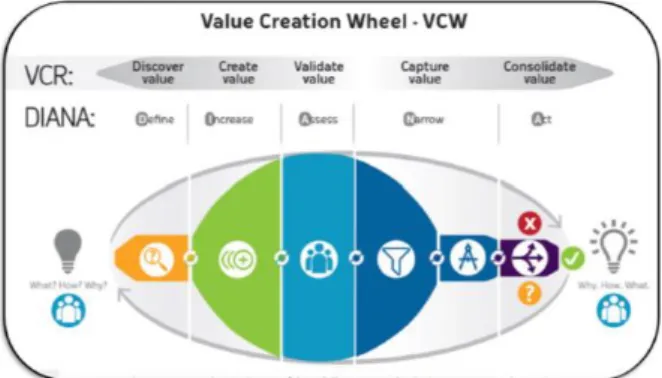
2.1. Methodology & AnalysisThe project consisted on applying the Value Creation Wheel (VCW) to generate creative solutions that would tackle both problems at hand. This framework is meant to be a problem-solving tool that fits the 21st century’s business environments characterized by dynamic markets that require experimentation, iteration, improvisational change, and managing the paradoxical tension between strategic focus and flexibility (Bingham, Furr, & Eisenhardt, 2014). It conveys that the involvement of different kinds of internal and external stakeholders in the problem-solving process is essential to achieve the best possible outcome (Lages, 2016). Additionally, the framework is built in such a way that it fosters creativity and maximizes the efficiency of the brainstorming process, helping to overcome traditional limitations such as frequent judgement, fear of judgement and that the talkative participants tend to dominate the sessions (McCaffrey & Pearson, 2015). Various theoretical rationales provide the foundations for DIANA (Fig. 1), namely that the VCW provides the guidance to select among a variety of complex options, dealing with the paradox of choice; it empowers the involvement of diverse stakeholders in the generation, selection and operationalization of ideas; and it attains a balance for tech-push and market-pull solutions (Lages, 2016).
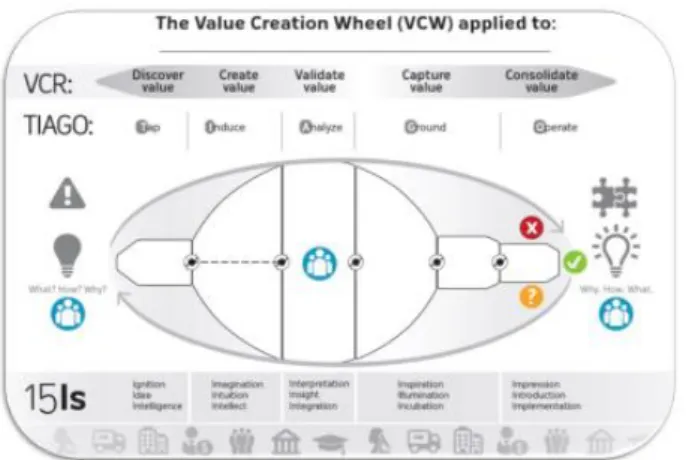
9 DIANA theory inspires TIAGO (Fig. 2), a totally customizable tool that adjusts to the problem and context of implementation (Lages, 2016).
Fig. 2. TIAGO: VCW’s Practical Tool
TIAGO’s practical tool consists of five phases:
1. Tap: gain knowledge about the topic at hand to define the space and clarify the problem/challenge to address
2. Induce: achieve as many ideas for solutions and filters as possible
3. Analyze: meet with the decision makers to validate, refine, multiply, and/or eliminate some of the solutions and filters
4. Ground: apply the ranked filters to all the assembled ideas, leading to one or more solutions
5. Operate: implement the final(s) solution(s)
Before the first phase several analyses needed to be conducted in order to get a better understanding of the company’s business model and ecosystem it operates in, the industry and the competitive landscape, and the external setting in which MasterCard Portugal operates – regarding political, economic, social, technological, environmental, and legal aspects. This knowledge set the ground for a more effective approach to the company’s problem as we proceeded in the VCW.
VCW Phase 1, Discover Value (Tap): Defining the problem
The first phase of the VCW challenge us gain knowledge about the topic at hand to define the problem to be tackled. Given the previous research conducted by the Nova team and constant
10 interaction with the MasterCard team, it was possible to recognize the main challenges the company faced. The major challenge regards the strong competitive landscape MasterCard faces, given the deeply embedded brand awareness and brand recognition MultiBanco and VISA as method of payment of debit and credit card, respectively. Additionally, in light of the new legislation, MB will become a new-established threat at POS-systems offering the choice between MB and VISA/MasterCard. Please refer to Appendix 4 for detailed challenges.
Once the challenges affecting MasterCard were outlined, it was possible to leverage market trends and the company’s capabilities to turn such challenges into opportunities. Regarding the competitive landscape, it was understood that SIBS did not partake in Contactless Technology and that its online solutions (e.g. MBNet, MBWay) were less advanced than those of MasterCard. As so, MasterCard would gain market share by driving its advanced technological solutions to the market and offering convenience to cardholders. Additionally, it could also be observed that VISA’s deep association with credit card payments is limitative, and so MasterCard could associate its brand to something more than simply paying by credit card and increase its brand awareness and consumer loyalty. Furthermore, with the upcoming legislation giving consumers the possibility of choice, creates an opportunity to successfully drive preference for cardholders to pay with MasterCard, and for merchants to prefer to receive payment with MasterCard. Please refer to Appendix 5 for further details on how can MasterCard turn their challenges into opportunities.
In order to conclude Phase 1 and since MasterCard is inserted in a very interconnected ecosystem, and given the strong ambition of the MasterCard team to declare “war on cash” (mentioned in one of the meetings), Nova’s team initially wanted to increase brand awareness and engagement using the four stakeholders, by driving:
Issuer preference for promoting MasterCard products without changing fees; Cardholder preference for having and using MasterCard products;
11 Acquirer implementation of MasterCard technology;
Merchant increased adoption of, and preference for, MasterCard technology.
However, several synergies surfaced between issuers and cardholders (B2C approach), and acquirers and merchants (B2B approach). Given the overlaps and the deep interconnection in such four-party model, the final two research questions of the Business Project were identified, by both the MasterCard and the Nova teams, as follows: Issuers & Cardholders (B2C approach): How can we increase revenues by driving preference for MasterCard without changing issuers’ fees?; Acquirers & Merchants (B2B approach): How can we increase acceptance and preference for MasterCard technology?.
When proceeding, a clear distinction was made and the group started working in pairs in order to tackle the two problems at hand separately. In the following report the process and findings of the cardholders & issuers problem will be presented.
VCW Phase 2, Create Value (Induce): Looking for New Marketing Initiatives & Filters
In the second phase, the main goal is to generate “one million ideas” to tackle the problem at hand. Given this, there was the need to start by having group sessions of unconstrained brainstorming to enumerate every possible solution that would increase revenues by driving preference for MasterCard without changing issuers’ fees. At this stage, it was important to create truly unfiltered solutions, meaning that “out of the box” thinking was key. The following step to generate ideas involved seeking feedback from relevant stakeholders, including the MasterCard team (during the two training sessions and via several skype calls), bank front office representatives, and cardholders (via an online survey with 169 respondents and in person in occasional interactions). Finally, additionally ideas were generated after benchmarking practices from MasterCard in other countries, the company’s competitors, and other companies with effective engagement campaigns. By the end of this phase 28 solutions
12 had been gathered, along with 23 filters. The solutions and filters streamed from these brainstorming and feedback sessions can be seen in detail in Appendix 6 and 7, respectively. VCW Phase 3, Validate Value (Analyze): Feedback from MasterCard’s Managers Once all the solutions and filters were gathered, the Nova team was ready to move on to the third phase (Analyze). In this phase it is necessary to meet with the decision makers to validate refine, multiply and/or eliminate some of the solutions and filters. In this sense, it was crucial to plan the interactive activity beforehand so as to maximize the efficiency of the meeting and the needed insights and take-outs. When applying the Poker Method to validate the solutions, MasterCard’s decision makers (Country Manager for Portugal, Marketing Manager for Portugal and Spain, and Sales Expert) were briefly introduced to all the solutions for the Cardholders & Issuers’ problem and asked to individually apply the poker method and classify each solution as Kill, Keep, Multiply, or Review. In this phase it is instrumental that decision makers do not pre-filter ideas based on feasibility, efficiency or any other filter, but simply kill the ideas they did not like, keep the ones they like, multiply the ones they see additional potential implementations, and review those that need to be slightly changed or tweaked. Once this individually classification was completed, the three decision makers were asked to discuss their reasoning behind each individual classification and reach a definite consensus for each solution (e.g. MasterCard’s top three priorities are MasterPass,
MasterPass and MasterPass, this one we definitely need to Multiply! – Country Manager for
Portugal about a proposed solution regarding making the technology available to cardholders through issuers’ promotion). During this stage it was critical to coach the decision makers on how to separate solutions from filters when they were pre-filtering ideas and killing them before they were “born”. After discussing, debating and compromising, a final cluster for all solutions was achieved, which may be seen in detail in Appendix 8.
13 The final step within this phase is to validate and rank the filters. In order to do so, after learning about the Nova’s teams proposed filters, the three representatives of MasterCard were asked, as a group, to validate the proposed filters and add new ones, and subsequently to rank them. The MasterCard team chose to eliminate three of the proposed filters and did not feel the need to create new ones. When proceeding, five levels of filters were placed in the table and the decision makers had to assign each filter to one of the levels (being level one the most important filters and level 5 the least important ones). Although the validation of the filters happened quickly and efficiently, ranking the filters was a more complex task where the MasterCard team initially struggled to create priorities. However, after being coached about the process, the team started to present a more critical thinking approach to the challenge at hand (please refer to Appendix 9 for the final clusters of filters based on their importance).
VCW Phase 4, Capture Value (Ground): Selecting the Final Marketing Initiatives In the fourth phase it becomes necessary to apply the filters to each idea generated and understand which solutions should be pursued further. Given this, each cluster of filters was attributed a certain amount of points, as presented below:
Level 1 2 3 4 5
Points 10 8 5 3 1
This distribution of points was meant to provide a weighted average to each filter, giving more relevance to solutions that passed the first clusters in relation to the least important ones. Additionally, it was crucial to approach the “funneling” process in this matter since the MasterCard team showed flexibility regarding the filters (e.g. “We [MasterCard Portugal]
have a tight budget but we don’t want you to rule out an amazing idea on the basis of that because if the solution is costly but will have a substantial impact in solving our problem we can argue that to the headquarters and increase the budget”, MasterCard’s Country Manager
14 above mentioned approach allowed for it, by giving more importance to the ideas that really brought most value to issuers and cardholders. Subsequently, each solution needed to be critically analyzed by the Nova team in order to objectively assess if the solution passed or not each of the filters within the different clusters. At the end of this assessment it was possible to reach a final amount of points for each solution. The top 10 filtered solutions can be seen in Appendix 10, where three of them regard the cardholders & issuers’ problem and seven address the acquirers & merchants’ problem.
These ten solutions were then presented to the MasterCard team which commented that
“These ideas are aligned with what MasterCard wants, so I guess the filtering process worked” (Marketing Manager for Portugal and Spain). Presenting the top 10 filtered solutions
to the decision makers allowed for a deeper understanding of the synergies, conflicts and tangible value behind each idea. Additionally, this feedback also allowed to recognize that some solutions had incorrectly passed some filters due to of asymmetries of information between the Nova and the MasterCard teams (please refer to Appendix 11 for the detailed feedback on each proposed solution). Nonetheless, after going over every solution, some were rejected for financial reasons, others because it was out of scope and some were bundled together. By the end of this process, three winning solutions were found: partner with Mercado da Ribeira to increase merchant’s efficiency and customer satisfaction; partner with EMEL to increase customer convenience; introduce MasterPass in the Portuguese market. 2.2. VCW Phase 5, Consolidate Value (Operate): Recommendations to the Company In this stage of the framework it is required to implement the final solutions. In order to keep a balance between the goals of the Academic and the MasterCard team, this phase needed to be presented in the form of an actionable marketing plan. With the main objective to increase cardholder engagement with MasterCard and drive acceptance of new payment technologies,
15 three solutions were built that involve the four stakeholders of the ecosystem and leverage the existing resources the company has at their disposal.
The initiatives developed aim target educated, socially active, tech savvy young professionals (between 25 and 40 years old), with middle to middle-high income, and show a deep interest in experiencing life through culture, food and travel. Most importantly, these initiatives aim to address the need for convenience and time-efficient solutions that this target group presents by leveraging MasterCard technological solutions. Given this, it was observed that the unique selling point that should be communicated to the defined target group was “technology driven, convenience-enhancing solutions”, by partnering with Mercado da Ribeira and with EMEL (the parking authority for Lisbon), and by slowly introducing MasterPass in the Portuguese market.
Mercado da Ribeira’s Partnership
The first initiative involves enabling Mercado da Ribeira’s merchants with Contactless payment terminals and to offer benefits to cardholders using this technology to purchase goods in the venue (Fig. 3). Mercado da Ribeira is a food market located in Cais do Sodré, Lisbon, with modern stalls offering food and traditional products. It is managed by Time Out Lisbon magazine since 2014 and is considered one of the trendiest places for food gatherings by (and not limited to) students and young professionals.
16 This partnership would affect different stakeholders and it is intended to create value for all of them as follows:
1. Cardholders would enjoy several benefits when using MasterCard contactless.
2. Mercado da Ribeira (Time Out Lisbon) would improve customer experience by implementing contactless payment solutions in the venue and by being on the verge of innovation and new trends.
3. Merchants would smooth the purchasing process for cardholders, and increase efficiency and number of customers (leading to higher revenues).
This initiative would involve promotion activities via several channels and building customer relationships. Regarding the promotion channels, cardholders would learn about the partnership via both online and offline channels. Offline channels include Tourist Information Centers and advertisements placed in Mercado da Ribeira itself. Online channels include advertisements in MasterCard Portugal’s website and Facebook page, as well as in Mercado da Ribeira’s profiles on Facebook, Zomato, Time Out Lisbon and Trip Advisor which benefit from a wide audience that perfectly fit our target group.
In regards to customer relationships, the initiative is built is such a way that cardholders are engaged by bonuses received when paying with a Contactless MasterCard card (e.g. free expresso coffee, 10% discount off next purchase in Mercado da Ribeira, or customized offerings related to the merchant’s offering). Additionally, given the perceived lack of awareness Portuguese customers show regarding Contactless Technology, there is the need to create educational content for cardholders and Mercado da Ribeira merchant’s staff, stressing the convenience and safety of such payment method (please refer to Appendix 12 for the detailed Integrated Marketing Communications Plan).
17 EMEL’s Partnership
The second initiative involves partnering with EMEL, the entity managing public parking in Lisbon, by making payment by MasterCard available in EMEL’s mobile application (E-Park), while also making Contactless payment available in physical parking meters (Fig. 4).
Fig. 4. Concept behind EMEL’s Partnership
This partnership would affect different stakeholders and it is intended to create value for all of them as follows:
1. Cardholders would enjoy several benefits when using Contactless MasterCard or topping-up EMEL’s app with a MasterCard card.
2. Issuers would be declaring “war on cash” alongside MasterCard and benefiting from the information electronic payments convey.
3. EMEL would generate additional revenues by engaging current users and expanding customer base.
This initiative would require the placement of advertisements in Issuer’s channels (e.g. bank branches) and in parking meters, featuring a QR code that enables the download of the EMEL app when scanned by the customer on their smartphone. Additionally, online advertisement via MasterCard’s website, Facebook Ads and YouTube banners, as well as within the EMEL app would be used.
18 Initially, customer relationships would be built via campaigns that foster MasterCard payments within the EMEL app (e.g. 1€ given to E-Park users that top-up the app with 10€); promotional and educational videos on YouTube and Facebook, with an embedded link for users to download E-Park and receive 1€ worth of parking time; and a referral system that rewards users who successfully drive their network to download the EMEL app (e.g. 2€ worth of parking time per referral activation). The following step would be to reward users of the contactless infrastructure placed in the parking meters with a 20% discount in the final amount of the parking ticket they desire to acquire (please refer to Appendix 13 for the detailed Integrated Marketing Communications Plan).
Introducing MasterPass
The third initiative involves slowly introducing MasterPass – MasterCard’s digital wallet already present in other markets, which allows for convenient, safe and fast payment via the user’s smartphone. MasterPass is an “agnostic” wallet, meaning it can support many cards from different brands (e.g. VISA, MasterCard, and MultiBanco, etc.). This partnership would affect different stakeholders and it is intended to create value for all of them as follows:
1. Cardholders would have their lives simplified.
2. Issuers would be on the verge of innovation, offering added-value solutions to their customers that improve their day-to-day lives.
3. Merchants would increase their revenues online by driving traffic to their website and making the payment process smoother.
Introducing MasterPass digital wallet in Portugal would involve three “pilot projects” that leverage existing partnerships and reach out to the target group that is most prone to engage with the technology.
The first pilot project involves extending the existing partnership with SONAE of Universo Card – a card that gives 1% discount on all purchases made at any commercial establishment
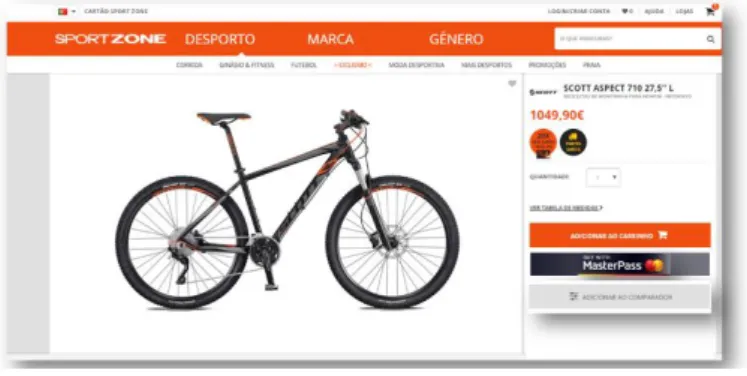
19 part of the MasterCard network in Portugal or abroad. Extending such partnership to SONAE brand’s online stores (e.g. Continente, Worten, Sport Zone), would allow the retailer to create a homogeneous omnichannel presence and retrieve all relevant data from both channels. As so the extended partnership would require SONAE to promote MasterPass to current and new
Universo cardholders (Fig. 5).
Fig. 5. Concept behind the Introduction of MasterPass
The second pilot project involves leveraging the established relationships with Issuers and together “declare war on cash” by promoting MasterPass to cardholders that make online purchases. Traditionally, purchases online may only be done via pre-paid or credit cards, and Issuers have at their disposal this type of information and are thus equipped to segment their current clients. As so, this initiative requires MasterCard to create promotional and educational content that Issuers would make available to the target group MasterPass is most suited for.
Finally, the third pilot project requires MasterCard to partner with PayShop, a company of CTT (Correios de Portugal) which manages a network of more than 4000 agents that pay bills, tolls, taxes and top-up a user’s mobile phone. As of now, these agents are traditionally small merchants located in “proximity zones” (e.g. malls, residential areas) and they are meant for non-tech-savvy users that prefer the convenience of having a third party performing such services for them. By establishing this partnership, MasterPass would empower PayShop to expand their customer base and to be on the verge of innovation.
20 This initiative would involve placing promotional and educational content on MasterCard’s Facebook page and YouTube channel, SONAE brand’s websites and physical stores (e.g. Continente, Worten, Sport Zone), and PayShop’s website and agents’ stores.
Regarding the customer relationships, customer delights (e.g. birthday gift) would be offered to MasterPass active users, as well as 10% voucher for users spending more than 75€ with a MasterCard card (credit, debit, pre-paid). In addition, MasterCard could also cross sell advisory services to the partners in (SONAE, Issuers and Payshop (CTT)) (please refer to Appendix 14 for the detailed Integrated Marketing Communications Plan).
The final step within the fifth phase is to get the company’s decision makers to assess if the presented recommendations are to be implemented or not (Go/No Go), or if they need to go through the VCW again (Check). After meeting with the company’s decision makers once again and to showcase the above mentioned solutions and the corresponding marketing plan, the feedback was very positive as the MasterCard Team unanimously thought the solutions were “actionable and scalable”. MasterCard’s Country Manager for Portugal said both the Mercado da Ribeira and EMEL partnerships will be implemented – “I really like these ideas,
they go along with MasterCard’s goals and leverage our technological solutions, furthermore I can implement this in Mercado or with EMEL and then replicate it all around the country, it’s amazing” (MasterCard’s Country Manager for Portugal). In regards to the the introduction
of MasterPass, the board decided that it needed further development and a possibility would be to pass it through the VCW once again given the complexity of the product and the unique characteristics of the Portuguese market – “we have a lot of names for MasterPass, because
we really don’t know what to do with it… and even though you’re in the right path and these three pilot projects are good, further research and factors need to be considered and included for its successful implementation (MasterCard’s Country Manager for Portugal).
21 2.3. Concerns
Despite careful consideration when drafting these previously mentioned recommendations, there are some shortcomings and foreseen obstacles for implementation.
The insights achieved when interacting and reaching out to different stakeholders (cardholders, issuers, merchants) are meaningful and relevant, however, the small sample they represent out of the overall Portuguese population may over-represent some specific clusters and allow for misrepresentation of the whole population.
During the third phase, when analyzing the different solutions and filters, having hierarchically distinct participants (two managers and one sales’ expert) may have inhibited the validation of farfetched ideas that a more “senior corporate” mindset would unconsciously pre-filter whereas a “younger unconstrained” mind would have validated. Meanwhile, the potential for innovation may have been hurt in both generation and validation of solutions since natural biases and judgment most often unable stakeholders to separate filters from solutions.
Additionally, during the fourth phase, the asymmetry in information between the Nova and the MasterCard Team may have led to the incorrect filtering of the solutions, meaning that potentially better ideas received a lower rank than they ought to. Despite this, such concern may be addressed by revisiting the VCW together with the company’s representatives and passing every solution once again through the ranked filters.
The three recommended initiatives are deeply dependent on third parties (partners), which may require thoughtful efforts to build the relationship, to communicate all the relevant aspects of the partnership in an efficient way and to ensure implementation.
22 2.4. Individual Contribution
Despite being a project where all group members had to work together to produce the final outcome, it was needed to assign some specific responsibilities. As so, one of my personal contributions to this work was to elaborate the TOWS and VRIO analysis of MasterCard Portugal after deeply understanding the company’s business model, the industry and external environment it operated in, and the competitive forces affecting its performance. Additionally, when initially we were meant to address one problem for each stakeholder, I was responsible for tackling the Issuer’s problem, and so I researched and sought information from relevant stakeholders (e.g. front office representatives of BPI and Millennium bcp). Furthermore, during the second phase, after we decided to group cardholders with issuers and acquirers with merchants, I kept focusing on solutions and filters for issuers while working together with my colleague which was addressing the Cardholder’s perspective and assisted her in the process given the deep synergies between both stakeholders. Furthermore, we understood how important it would be to retrieve insights from diverse stakeholders and given my deeper understanding of the Portuguese payment habits, I built the online survey for cardholders meant to gain insights about MasterCard brand awareness and consumer behavior. In addition, I had an active role in the development of the marketing plans for the three final solutions given my background in Marketing and my deeper understanding of the Portuguese market, channels and best practices. Finally, throughout the project I was responsible for designing the PowerPoint deck slides that would support the presentations for the company and for most of the final report in the same format.
3. Academic Discussion
3.1. Possible links with Management
A Masters in Management is a very comprehensive program, where both personal and academic development is a constant. During the development of the Business Project I believe the courses whose learnings were most relevant were Marketing and Strategy.
23 Draining from the Strategy course, performing the necessary company analysis regarding its strengths, weaknesses, opportunities and threats; along with market analysis of the industry was essential to understand internal and external forces shaping the environment where MasterCard competes in. However, both the PESTL (Political, Economic, Social, Technological and Legal) and SWOT analysis present limitations when trying to assess a firm’s competitive advantage (Barney, Looking inside for competitive advantage, 1995). Given these limitations, performing a VRIO analysis on the company allowed for important insights on which resources and capabilities should be leveraged to increase customer engagement with MasterCard, while creating sustainable competitive advantage. Since sustained competitive advantage depends on the unique resources and capabilities a firm controls that are Valuable, Rare, Inimitable, and Organizationally embedded (Barney, Looking inside for competitive advantage, 1995), it was observed that only the innovation coming from the MasterCard’s headquarters fit all the requirements. Furthermore, since it was clearly stated by the company’s management team that they would prefer to leverage existing resources (e.g. technology and marketing assets) in order to overcome the problem at hand, understanding that innovation would be a key factor to include in the solutions’ generation phase was very important, and it revealed to be crucial since the three recommendations developed in the Business Project are strongly technology-based.
Also relevant, when approaching the VCW’s fifth phase (Operate), was the necessity to elaborate a marketing plan. Since an effective marketing requires an integrated communications plan, the implementation of the 6M’s model (Dolan, 2000) was of extreme relevance. This model entails the six dimensions to address when crafting a communications plan:
1. Market: to whom is the communication to be addressed? 2. Mission: what is the objective of the communication? 3. Message: what are the specific points to be communicated
24 4. Media: which vehicles will be used to convey the message?
5. Money: how much will be spent in the effort?
6. Measurement: how will impact be assessed after the campaign?
Since early on in the project it was understood that customers were unaware of the MasterCard’s benefits and technologies (please refer to Appendix 15 for the detailed insights retrieved from the online survey), the first four M’s were of extreme relevance as they refer to the message being conveyed, to whom and through which channels. Having a clearly defined target group (Market) based on demographic traits (20-45 years old, highly educated, employed, middle to middle-high income, living in Lisbon area), and on psychographic ones (tech-savvy, socially oriented, interested in culture, travel and food) was instrumental to develop solutions that would fully satisfy their needs and maximize engagement. Additionally, when selecting the Mission, Message and the Media, both online and offline channels where selected to convey different content about the recommended marketing initiatives. Leveraging the tech-savviness of our target group was critical and Google AdWords, Facebook Ads and YouTube banners were chosen as the ideal online channels to inform the customer about the benefits (e.g. discounts, monetary rewards) they would be receiving by engaging with MasterCard Contactless or MasterPass. Meanwhile, in the offline channels we intended to further educate the customers about Contactless Technology and Digital Wallets, providing specific information about how they worked, why it was safer and convenient, along with mentioning the benefits for cardholders for each initiative.
3.4. Relevant theories and empirical studies
In order to solve the present paradox MasterCard faces regarding balancing technology-push with market-pull strategies it becomes important to bridge different mindsets (Hortinha, Lages, & Lages, 2011). This may be achieved by developing a stakeholder-approach to problem-solving. As previously mentioned, the VCW promotes stakeholder/partner
25 orientation and has the capacity to involve key decision makers in filtering the solutions with the greatest potential at an advanced stage of the process (Lages, 2016). As so, when applying the VCW framework, it was essential to foster the involvement of the company’s employees in the process so as to set up a culture of innovation and to retrieve as many inputs as possible from different stakeholders representing different viewpoints, needs, concerns and opinions. This process allowed for a richer understanding of the problem at hand and how it could be solved. In this sense, and being social capital the set of social resources embedded in relationships (Burt, 1992), it is possible to observe that it has the ability to contribute to a firm’s ability to create value in the form of innovation as long as the right conditions exist. In fact, social capital facilitates value creation by the means of informal social relations and tacit social arrangements as it encourages productive resource exchange and combination and thereby promote product innovation (Tsai & Ghoshal, 1998). In this sense, MasterCard should further promote social interaction, trustworthiness and a shared vision within their employees and relevant stakeholders so as to establish a culture of innovation that effectively approaches brainstorming and implementation of solutions.
Additionally, while the three recommendations are tailored to a specific segment of the population, which maximizes the efficacy of the initiatives (Tybout & Grayson, 2010), several consumer segments within the diverse Portuguese market remain to be addressed. Given this, MasterCard can benefit largely from expanding their customer base by reaching out to users placed further down the diffusion of innovation curve (late majority and laggards). To do so, involving the input of people who “think differently,” “think outside the box,” and “think with no box” is of extreme value, and may be achieved by implementing other methodologies complementary to the VCW framework, for instance the Lag-user method (Jahanmir & Lages, 2015). This method challenges companies to seek feedback from non-users and technology-averse consumers to provide insights over possible solutions that fit
26 their particular needs. Knowing the reasons for late adoption enables firms to improve their products building on late-adopters insights, address late adopters in a different way, reduce their innovation adoption time, accelerate the adoption of innovations and thereby squeeze the diffusion of innovation curve (Jahanmir & Lages, 2015).
Furthermore, MasterCard’s perceived inability to effectively promote the advantages of MasterCard’s technologies, as observed from the online survey conducted to cardholders, may be tackled by developing and communicating a real value proposition that builds on customer experience advantages. Accurate understanding of consumers’ preferences and purchase behavior contributes to innovation’s diffusion and success (Shi, Fernandes, & Chumnumpan, 2014). Consequently, fully grasping the pains and gains of a diverse set of customers empowers companies to develop better solutions that fully address their needs. When developing the value proposition of their existing and upcoming technologies, MasterCard should consider insights gathered from both early and late adopters, and recognize that laggards, by focusing more on core attributes of the product (Jahanmir & Lages, 2015), will be the ones shedding light over critical market needs that, if addressed, will empower the company to outperform their competitors (Moore, 2006).
Experience-driven innovations that consider the functional features of the commercial offer and that provide a venue for an integrated customer experience, have better chances to get a positive market response as they seem more likely and more capable of meeting new customers’ needs (Gentile, Spiller, & Noci, 2007). Such approach will empower MasterCard to leverage their existing technologies to deeply engage consumers and increase customer loyalty.
3.5. Implications for theory and future research
After this project’s completion, it is possible to conclude that companies operating in the current fast-changing environment need to establish a culture of innovation so as to overcome
27 the deep paradoxes arising from such dynamic external environment and increasingly complex customer demands (e.g. technology-push versus market-pull strategies). From the presented case-study, it is possible to assess that its fully engaged board of directors and employees was key to maximize the value of the process and output of the VCW. However, when trying to build a culture of innovation within an organization several factors become relevant, namely the company’s culture and structure, the methodologies in place regarding problem-solving, the capabilities of the team responsible for implementing the VCW, the communication channels used internally, and the management commitment to innovation, for instance. Given this, it becomes of extreme relevance to understand to what extent these factors affect the level of success of the VCW’s implementation (being success the decision to implement the final solution(s) presented in Phase 5: Operate).
Additionally, when applying the VCW it is important to further understand if creativity is not being constrained along the process. Creativity is fostered in the second phase by having a wide diversity of stakeholders sharing their insights and brainstorming; but when we look and subsequent phases there is still limited processes to impede creativity to be “killed”. In the third phase having a fully supporting and engaged panel of decision makers is key to ensure “open mindedness” when validating the solutions generated. However, hierarchies, chains of influence, rigid corporate mindset and information asymmetries may prevent good ideas to be validated. The way to tackle these biases and rationale requires additional research so as to ensure a smooth process of value creation within companies.
4. Personal Reflection
4.1. Personal ExperienceRegarding my personal experience from this project, and self-assessing my work, I believe I was I developed certain skills and I became aware of some areas of development that I am committed to improve in the future.
28
Team work capabilities: I believe I succeeded to work well in our multicultural team. Having 4 nationalities represented, cultural differences were bound to happen, however, I believe I was able to become somewhat of a mediator and leverage this diversity of experiences, interests and ways of thinking to create an output of superior quality.
Motivation and commitment: Even though I was passionate about this project since the beginning, I soon realized the high complexity of the electronic payments’ industry. As so, the learning process was intense but it never compromised my commitment to give my best contribution to the project, and to keep being motivated to deeply understand all relevant information that would empower me to produce a project of high academic and business quality.
Communication skills: I believe this project proved my ability to communicate effectively and clearly, not only between our group members where it was constantly needed to communicate effectively between each other, but especially when dealing directly with the MasterCard team, where it was extremely important to convey messages and information in a clear way.
Micro management: I believe that in the beginning of the project I got too focused on small details that weren’t so significant for the project’s main goal. This is definitely an area to improve because it negatively affected my time management. However, as the project proceeded and I got aware of this weakness I thrived to improve, by establishing priorities and asking for feedback from my peers.
Independence: Another aspect that I recognize as being a weakness but that this project helped me improve regards my inability to ask for help. I have always been proactive and showed my availability to help my colleagues when they were struggling with a certain task or overloaded, but I still felt reluctant to ask for their help when I was the one in that situation.
29 However, I noticed that as we developed a stronger relationship I was more comfortable asking for their help. This is something I want to improve moving forward because I see the benefits in collaboration and the time efficiency gains deriving from that.
4.2. Benefit of hindsight
When looking back at the experience there are several aspects I see as having added more value and others that should have happened differently. The diversity of backgrounds, experiences and skills of my group member was key to improve my learning experience throughout the project and to build a high quality output. I truly value the complementarities that surfaced with and between my peers during the project. Additionally, the commitment of every group member to work towards a common goal and the resources available defined the success of the project. Furthermore, the collaboration and engagement of the company was essential to keep me motivated and confident in the project as I felt my opinions were being taken into consideration and valued. Even though I believe the project was extremely well designed and I still think there are areas for improvement. As so, if I were to start the project again I would take the time to speak with other students and companies that had already implemented the framework as early as possible. I only understood how valuable this first-hand feedback was when preparing the third phase of the project and we reached out to other students that were also using the framework. Additionally, I would have been more assertive in establishing meetings and mile-stones with the company representatives right in the beginning of the project, in order to adjust expectations and ensure a smooth project development.
30
5. References
Barney, J. (1995). Looking inside for competitive advantage. The Academy of Management Executive, 49-61.
Barney, J., Wright, M., & Ketchen, D. (2001). The recourse-based view of the firm: ten years after 1991. Journal of Management, 625-641.
Bingham, C., Furr, N., & Eisenhardt, K. (2014). The opportunity paradox. MIT Sloan Management
Review, 29-35.
Burt, R. (1992). Structural holes: The social structure of competition. Cambridge, MA:Harvard
University Press.
Dolan, R. (2000). Integrated Marketing Communications. Harvard Business, 1-14.
Gentile, C., Spiller, N., & Noci, G. (2007). How to Sustain the Customer Experience: An overview of the Experience Components that Co-Create Value with the Customer. European Management
Journal, 395-410.
Hortinha, P., Lages, C., & Lages, L. F. (2011). The trade-off between customer and technology orientations: Impact on innovation capabilities and export performance. Journal of
International Marketing, 36-58.
Jahanmir, S., & Lages, L. F. (2015). The late-adopter scale: Ameasure of late adopters of technological innovations. Journal of Business Research.
Lages, L. F. (2016). VCW - Value Creation Wheel: Innovation, technology, business and society.
Journal of Business Research, 1-7.
MasterCard. (2016, April). MasterCard About Us. Retrieved from MasterCard Website: https://www.mastercard.com/pt/sobre_nosotros/index.html
MasterCard Portugal. (2016, March). Payments & Market Overview. Payments & Market Overview
Presentation.
McCaffrey, T., & Pearson, J. (2015). Find innovation where you least expect it. Harvard Business
Review, 82-89.
Moore, G. A. (2006). Crossing the chasm. New York: Collins Business. Payments Cards & Mobile. (2015-16). Portugal, Payment Statistics.
Shi, X., Fernandes, K., & Chumnumpan, P. (2014). Diffusion of Multi-Generational High-Technology Products. Technovation, 162-176.
Tsai, W., & Ghoshal, S. (1998). Social Capital and Value Creation: The Role of Intrafirm Netwroks.
Academy of Management Journal, 464-476.
Tybout, A., & Grayson, K. (2010). Identifying Markt Segments and Selecting Targets. In A. Tybout, & K. Grayson, Kellogg on Marketing (pp. 26-55). New York: John Wiley & Sons, Inc. Yankelovich, D., & Meer, D. (2006). Rediscovering Market Segmentation. Harvard Business Review,
31
6. Appendixes
Appendix 1 – MasterCard’s Business Model
Appendix 2 – MasterCard’s Ecosystem
32 Appendix 4 – Main Challenges MasterCard faces
Debit card transactions
Debit payments are colloquially known as “Multibanco” (owned by SIBS) in Portugal
SIBS holds a near monopoly on national debit card transactions
This payment data is invisible to MasterCard, which stifles all other sources of revenue, such as advisory (data warehouse)
Main issuers are co-owners/shareholders of SIBS which potentiates a conflict of interests and may undermine MasterCard’s efforts to gain market share in the debit card transactions sphere
Credit card transactions
Credit card payments are colloquially known as “Visa” in Portugal
As Visa is easier to sell (no need to further educate consumers), issuers are more likely to issue Visa cards without additional unique selling point Acquirers are less likely to push preference for the MasterCard brand
(payment by “MultiBanco or Visa”)
Merchants are indifferent, main decision factor is satisfying clients’ needs and minimizing costs.
Cardholders are subject to limited brand recognition, affecting awareness and engagement.
MasterCard charges higher fees
MasterCard charges higher fees, which are absorbed by Issuers
Leads to competitor preference (primarily VISA) dealing with Acquirers and Issuers unless value is recognized
Upcoming Legislation
Incentivize acquirers and merchants to make MasterCard visible or preferred on payment terminals
Not all aspects of legislation are yet clear
Post-Recession Symptoms
Consumers became sensitive towards “over-indebtedness”
Number of credit cards issued and volume of credit card payments has been decreasing substantially in Portugal
Appendix 5 – Turning MasterCard’s Challenges into Opportunities Debit card transactions
SIBS does not partake in contactless technology transactions. By driving this payment standard, MasterCard can shut Multi Banco out of transactions
MasterCard possesses more advanced and convenient online solutions (I.e. MasterPass vs MBNET/MB Way)
SIBS has a cost recovery philosophy, and often does not follow the rationale of a normal company
33 Credit card transactions
Visa has brand recognition, but it is “bland”. Consumers equate it simply to paying by credit card. MasterCard can associate its brand to something more than paying by credit card Market trends: Payments going beyond the physical domain - MasterCard can be the face of digital convergence
MasterCard charges higher fees
Establish itself as a premium service, associating better service and security to the brand Higher fees allow MasterCard to re-invest in technology and stay a step ahead of competitors, creating competitive advantages
Upcoming Legislation
“We prefer MasterCard”: Giving consumers the possibility of choice, creates an opportunity to successfully drive preference for cardholders to pay with MasterCard, and for merchants to prefer to receive payment with MasterCard
If we establish consumer awareness for the option to pay with MasterCard, and drive preference, habit will be transferred to Multi Banco-only terminals.
Upcoming Post-Recession Symptoms
Following market trends and moving into the digital space where MasterCard is relatively strong. Legacy credit cards may be going out of fashion, but more innovative technologies are growing.
Appendix 6 – Streamed Solutions Cardholders & Issuers Technology
Masterpass Provide Issuers with MasterCard’s Digital Wallet to be offered to
cardholders
Hybrid Card Launch an “hybrid” card that can be used worldwide in every scheme
App MasterDo Users can transfer money free of charge between each other, pay for
utilities, pay for rent (e.g. partnership with Uniplaces) etc.
MasterChip Develop a chip to attach to important items with location-tracking
MasterCard Ticket
Develop a card for transports (to replace Viva card), for gym entrance, among other.
MasterCard Alive App
App where cardholders can book and buy experiences (features Priceless Experiences and others, such as sport games’ tickets, discounts in partners’ shops, Restaurants, Gym Membership, Cinema, Petrol stations, Hotels)
34 Marketing Assets
"Surpreenda Campaign"
Cardholders collect points depending on the frequency, volume and technology (e.g. contactless) used in their transactions which can then be used to buy 2 items for the price of 1
Partnerships
Create more partnerships to provide discounts to Cardholders (e.g. Restaurants, Hotels, Car Rental, Airlines, Clubs, Medical Centers, petrol Stations, etc.)
Priceless Cities Communicate via social media & website and include cross-country
benefits (e.g. tickets for MasterCard Balaton Sound festival)
MasterTaxi Subsidize Uber Discounts for users connecting their MasterCard account
(allow for log-in with debit and credit cards)
Customer Delights Spontaneous marketing campaigns (e.g. Christmas/birthday gifts)
Extended Services/Products
MasterCard Club Premium club for Issuers’ Business clientes, perks include access to industry insights from MasterCard’s Advisory Services
MasterCard Assistant
Provide monthly reports on expenses by category and other relevant information to Cardholders
"Pocket Money" Card for children (in-control cards with feature to receive a notification
for every purchase) "Father&Son"
Card
Bundled cards, credit card for parente and in-control debit card for children which share the same MasterCard advantages
MasterCard
Magazine Launch magazine featuring key-industry insights
Events MasterCard
Business Challenge
Organize/Sponsor an entrepreneurship competition for students/young entrepreneurs
MasterCard Hub for Innovation
Organize/Sponsor conferences/seminar with fintech startups and relevant industry stakeholders
MasterCard Music/Sport Festival
Organize/Sponsor an event related to music or sports where cardholders have a dedicated queue line only with contactless/MasterCard
MasterCard Gourmet Festival
Organize/Sponsor a food festival where Merchants need to accept MasterCard cards & Cardholders need to use them
"Master Popular
Fair" Sponsor Lisbon’s “Feira Popular” re-opening
35 For Students
Master Student Pack
Free ebooks, Harvard Business Review, special discounts for PCs/books, etc.
Easy Renting Partner with Uniplaces to automatize payments (plus access to their
database for international Exchange students) MasterCard
Academy Create video content about several topics
MasterTrip Give an allowance to students in their MasterCard and they win points by
sharing content on social media, meeting other contestants, etc.
Exclusive Premium Services for MasterCard Cardholders
Master Express Express check-out lanes at restaurants and food courts for MasterCard
holders
Master Book It Reserve a table and special “aperitif” offer at select restaurants/bars for
MasterCard holders only
Master Travel
Preferred Check-In lines at airports/ other travel hubs for MasterCard holders, lounge access at airports/other travel hubs for MasterCard holders, and/or 1st class train tickets on selected non-peak times for MasterCard holders
Appendix 7 – Streamed Filters Cardholders & Issuers Proposed Filters Does it change consumer payment
habits? Does it fit our budget?
Does it have long term impact? Is it the best use of limited resources?
Does it increase cardholder brand awareness?
Is it compatible with competitive landscape (Visa, SIBS)?
Does it increase cardholder
engagement? Is it imitable?
Is it in line with regulations? Is it valuable for cardholders? Is it in line with technological
developments/ standards? Is it innovative/ non-existent? Does it fit the Portuguese culture? Is it aligned with market
(technological readiness)? Is it relevant for the Portuguese market? Is it financially sustainable? Extend of and time to assess results/
effectiveness?
Does it leverage existing initiatives/resources?
36 Can it be implemented it before the
regulation changes?
Do we have sufficient non-financial resources for implementation? (people/network)
Is it effective for Issuers? Is it scalable? Do we have cross-border capabilities?
Appendix 8 – Solutions Validation (after Poker Method)
Appendix 9 – Filters’ Validation and Ranking
Appendix 10 – Top 10 Solutions after applying the funnel Total
Points Solution Description Association
150 MasterPass Provide Issuers with MasterCard's Digital Wallet to be offered to cardholders
Cardholders & Issuers 142 Partnerships Create Partnerships to offer relevant
discounts to Cardholders
Cardholders & Issuers
37 133 EMEL Partnership Partner up with EMEL to activate their
contactless-enabled payment terminals
Acquirers & Merchants 129 Mercado da Ribeira
Partnership
Sponsor Mercado da Ribeira’s payment infrastructure
Acquirers & Merchants 128 Recreational
Activity Promotion
Promote event, high-end bars and restaurants to cardholders
Acquirers & Merchants 124 MasterCard
"Alive"App
MasterCard “Alive” App where cardholders can book and buy experiences
Cardholders & Issuers 120 Acquier
co-promotion
MasterPass co-promotion campaign with acquirers
Acquirers & Merchants 120 Other retail services
provision/subsidy
Location-based communication, marketing, or other relevant data collection
Acquirers & Merchants 118 Queue Management Speed up POS transactions Acquirers &
Merchants
117 Scale Universo Card
Further applications of Universo Card concept (existing partnership with SONAE)
Acquirers & Merchants
Appendix 11 – Feedback on top 10 proposed solutions
Solutions Feedback
MasterPass & Acquirer Co-Promotion
MasterPass has many uncertainties, it is a chicken-egg problem… Where do we start with it’s implementation?
Solution 7 (Acquirer Co-Promotion) fits in with Solution 1 (MasterPass), they must happen simultaneously and the message should be consistent to both merchants and acquirers.
We need to approach both the merchant and the cardholder sides.
It is NOT of short term implementation but it definitely needs to be addressed as of now. Partnerships, EMEL Partnership and Mercado da Ribeira Partnership
Solution 3 (EMEL Partnership) and 4 (Mercado da Ribeira Partnership) can be included in the umbrella solution 2 (Partnerships).
Recreational Activity Promotion
This is the type of initiatives that are very costly and would only make sense of we were launching priceless cities Lisbon, which we won’t in the near future. It is better to focus resources in specific initiatives, such as the Mercado da Ribeira one.
38 MasterCard
"Alive"App
We used to develop apps for everything you can think of... It’s too much work and resources.
Unfortunately the investment would get diluted because MasterCard already has so many apps.
We want fewer and more “glocal” apps”.
Priceless cities is already developing a global app that can then be used by every cardholders around the world.
Other retail services
provision/subsidy
This should be embedded in every initiative, not a solution by itself.
It is an element that fits EMEL solution, for instance, you can map their areas of activity
It’s also important to understand how relevant it is to geo-locate specific messages.
Queue Management
Great value but costly, there are other things more actionable in the short term. From a marketing perspective, making fast-lanes happen it’s very, very
expensive.
Scale Universo Card
It a strategic decision rather than a marketing problem, falls to business development and sales.
This is great, but it’s a “sales-oriented” type of activity”.
It’s complex and it depends on the partner we are dealing with, so I wouldn’t focus too much on this one.
Appendix 12 – Integrated Marketing Communications Plan for the Partnership with Mercado da Ribeira
Partnership with Mercado da Ribeira
Mar
ke
t Young professionals with the income and time to spend on good food new experiences “Foodies” of refined interest in food and beverages (seeking food as a hobby)
Educated, interested in culture and travel, well-connected on social media channels
Mi
ssi
on
Reaching a target audience that is coherent with MasterCard’s existing marketing assets and platforms, exploiting synergies from future initiatives
Engaging our audience with the brand and the advantages, convenience, and positively surprising experiences that it brings
Communicating the advantages of contactless payments and associating the technology with MasterCard cards first, and simultaneously displacing the volume of MultiBanco payments
Me
ss
age
Cardholders: Use MasterCard Contactless for paying, and enjoy its speed, convenience, and bonuses
TimeOut: Improve customer experience by implementing Contactless technology, being a step ahead, drawing in more customers
Merchants: Promote Contactless and increase your transaction efficiency and number of customers