UNIVERSIDADE DE ÉVORA
ESCOLA DE CIÊNCIAS E TECNOLOGIA
DEPARTAMENTO DE MEDICINA VETERINÁRIACognitive Bias and Welfare in Shelter Cats
Viés Cognitivo e Bem-estar em Gatos de Gatil
Ana Ribeiro Pereira
Orientação:
Doutor Alfredo Manuel Franco Pereira
Mestre Sara Raquel Fragoso Sousa
Mestrado Integrado em Medicina Veterinária Dissertação Évora, 2017
UNIVERSIDADE DE ÉVORA
ESCOLA DE CIÊNCIAS E TECNOLOGIA
DEPARTAMENTO DE MEDICINA VETERINÁRIACognitive Bias and Welfare in Shelter Cats
Viés Cognitivo e Bem-estar em Gatos de Gatil
Ana Ribeiro Pereira
Orientação:
Doutor Alfredo Manuel Franco Pereira
Mestre Sara Raquel Fragoso Sousa
Mestrado Integrado em Medicina Veterinária Dissertação Évora, 2017
ii
iii
Acknowledgments
When writing these final words I can hardly believe that my journey through the degree in Veterinary Medicine is coming to an end. It has been filled with learning and many enriching experiences, and there is a group of people I could not leave unmentioned, as they have contributed so much to the success of this endeavour:
Sara Fragoso, for taking me on a walk on the feline wild side – I learnt so much about these fascinating creatures and will never look at them in the same way. Thank you for your support at all matters, for accepting without knowing me, and for making me speak in conferences when I thought I didn’t want to!
Professor Alfredo, for being the most versatile teacher I could wish for, from hearding over training to statistic and behaviour! I am lucky to have met you!
The amazing crew at the Centro de Recolha Animal (CRO) in Sintra: Drª Alexandra, Drª Vanessa, and all others. Thank you for the time you spent teaching me, for letting me be part of the team, and for making my traineeship an even better experience!
My mom and dad for unwavering support in all areas, for never getting mad at me, even when it took a bit longer for me to get this done! To my siblings, who always believed in me. The four of you have my unconditional love.
To my big, noisy family! Your happiness when I got into Med.Vet says it all! I love you guys!
Luisa and family, without which the degree would not have been the same. Beyond all expectations, I will never forget that first day, me, in the back row, discreetly, you in the front row, always less than discreet. A brunette and a blonde, it had to be a match made in heaven… and it was: Mommie Uschi and the brothers, finding a second home at Horta da Valada, tea with milk and home-made bread, toasted with pickles. Thank you for teaching me the importance of smiling and being nice, for the emotional support, my wonderful Formiga…for…well, this Dissertation!!
Jess – my little cockatiel! Without your organizational skills it would have been indescribably harder! A breath of fresh air with all your youth (not that we’re old, Lu!) but with some very mature advice.
iv
Carlos (and family) – the day I first met you, even before I saw you I was sitting at a table with loads of food around me, which could only be a good sign! You are the one person we can always count on, to an extent that we have to be careful with what we ask! Your wonderful family which always made me feel so at home that I didn’t even get a table cloth on day one! Words are not enough.
Sara Peres – a safe port when we’re drowning in doubt, one of the kindest people I know, and the reason I went to Évora. I remember the day we met at the door of the Social Security Building and you said: “forget Lisbon, try Évora!”. And so it was. It was so nice living with you those three years… so nice! With Puf and Patinhas, those two darlings… Raquel Matos and Carla – thank you for all the support and for working those results, Carla, even without having met me!
My classmates from Évora: António, Ani, Rui, Tomás, Tiago, Inês Pinto, Paulinha, Diogo… study-groups, non-study groups, I dunno… :-P
João – you were, without a doubt, important for the conclusion of this degree… you supported me during my study marathons (sometimes), the pre-exam fury, when I had to get up early and grouchy (reasonably), you helped me through tables, figures and CDs. But, above all, I have to thank Veterinary Medicine (and Luisa and Carlos once again) for meeting you. It has been amazing, and together we have the best in the world – our sweet baby C! Love you.
v
Abstract
Cognitive Bias and Welfare in Shelter Cats
Welfare has traditionally focused on assessing physiological parameters, but over the last decades there has been growing interest in finding scientific and objective methods to evaluate emotional states and mental health of animals. Cognitive bias measures have emerged as tools to assess animal emotion. This preliminary study was undertaken at the Municipal Animal Shelter (MAS) of Sintra and aimed at evaluating if cats subject to environmental enrichment showed more optimistic responses towards ambiguous stimuli in a cognitive bias test. Of an initial group of twenty-four cats, divided into three groups (Enrichment using Training (EuT), Enrichment using Play (EuP) and not Enriched (nE)), eight completed the test (three EuT, two EuP and three nE) as the other were excluded primarily because they were adopted (nine). Latency to reach the unrewarded-near position was similar in the three groups. More differences were found in the latency to reach rewarded-near position, where trained cats showed a shorter latency, which could be indicative of more optimism.
vi
Resumo
Viés Cognitivo e Bem-estar em Gatos de Gatil
Tradicionalmente a avaliação de bem-estar tem-se focado em parâmetros fisiológicos, mas ao longo das últimas décadas tem surgido interesse crescente em encontrar métodos científicos e objetivos para avaliar estados emocionais e saúde mental animal. Medidas de viés cognitivo têm se assumido como ferramentas de avaliação de emoções animais. Este estudo preliminar foi efetuado no Centro de Recolha Oficial (CRO) de Sintra e teve como objetivo avaliar se gatos sujeitos a enriquecimento ambiental teriam respostas mais otimistas perante estímulos ambíguos num teste de viés cognitivo. De um grupo inicial de vinte e quatro gatos, divididos em três grupos (Enriquecidos com Treino (EuT), Enriquecidos com Brincadeira (EuP) e Não Enriquecidos (nE)), oito completaram o teste (três EuT, dois EuP e três nE) tendo os restantes sido excluidos predominantemente devido a adopção (nove). A latência de chegada à posição próxima da não-recompensada foi semelhante nos três grupos. Na latência de chegada à posição próxima da recompensada foram encontradas mais diferenças, com os gatos treinados a mostrarem latências menores o que poderá ser indicativo de maior otimismo.
Palavras Chave: Abrigo, Gato, Viés cognitivo, Bem-estar, Enriquecimento
vii
Table of Contents
Chapter 1 – Introduction ... 1
1.1.The Myth about Solitude ... 1
1.2. Developmental Stages ... 2
1.3. Human and Parental Effect on Socialization ... 2
1.4. Welfare in Shelter Cats ... 3
1.4.1. Definitions and Historical Overview of Welfare ... 3
1.4.2. Stress and its Effect on the Welfare of Shelter Cats ... 5
1.5. Environmental Enrichment ... 8
1.5.1. Definitions and Goals ... 8
1.5.2. Types of Environmental Enrichment ... 9
1.6 Training Cats as Environmental Enrichment ... 13
1.6.1. Are Cats Trainable? ... 13
1.6.2 How do Cats Learn? ... 16
1.6.3. A Short Word on Clicker Training ... 20
1.7. How to Assess Affective State in Animals ... 20
1.7.1. Evaluation of Affective State through Cognitive Bias Tests ... 22
1.7.2. Advantages of Cognitive Bias Tests and the use of Judgement Bias Tasks .. 23
1.7.3. Types of Judgement Bias Tasks ... 24
1.7.4. Other Cognitive Bias Methods ... 25
1.7.5. Published Studies on Judgement Bias Tasks ... 26
1.8. Aim and Hypothesis of the Study ... 32
Chapter 2 - Material and Methods ... 34
2.1. Subjects ... 34
2.2. Inclusion and Exclusion Criteria ... 35
2.3. Study Design ... 36
2.3.1. First Phase – Habituation to the Carrier and to the Experimental Room ... 39
2.3.2. Pre-Test Phase ... 40
2.3.3. Second Phase – Habituation to the Test Apparatus ... 43
2.3.4. Resource Motivation Test ... 45
2.3.5. Third Phase – Training for the Test ... 46
2.3.6. Forth Phase – The Test ... 47
3. Results ... 48
viii 4. Discussion ... 52 5. Conclusion ... 57 Bibliography ... 59 List of Figures
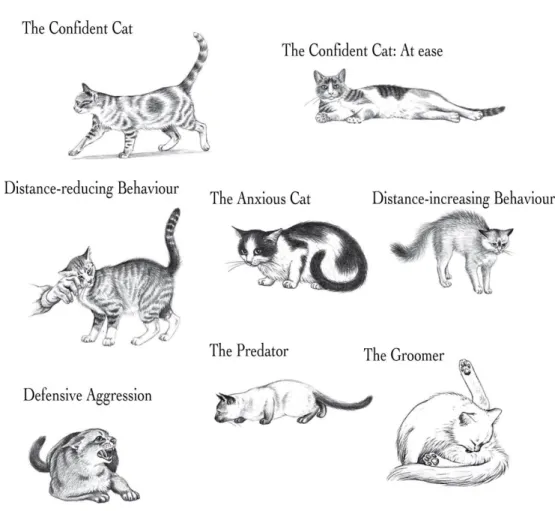
Figure 1 - Feline Body Language by Weiss et al. (2015): some examples of cat body language. ... 15
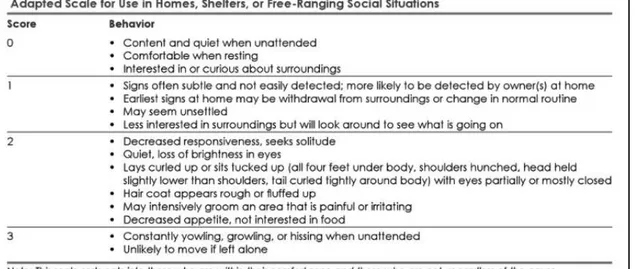
Figure 2 - Adapted Scale for use in Homes, Shelters, or Free-Ranging Social Situations. Allows sorting cats according to their comfort or stress level, regardless of the cause (Overall, 2013). ... 16
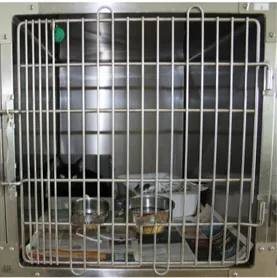
Figure 3 - One of the cages used at the MAS in Sintra, including food and water bowl, bed and litter tray (original). ... 34
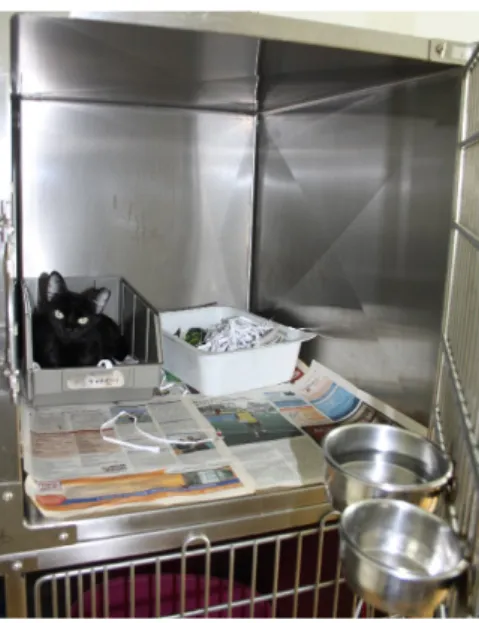
Figure 4 - The same cage with the door open, for better notion of size (original). ... 35
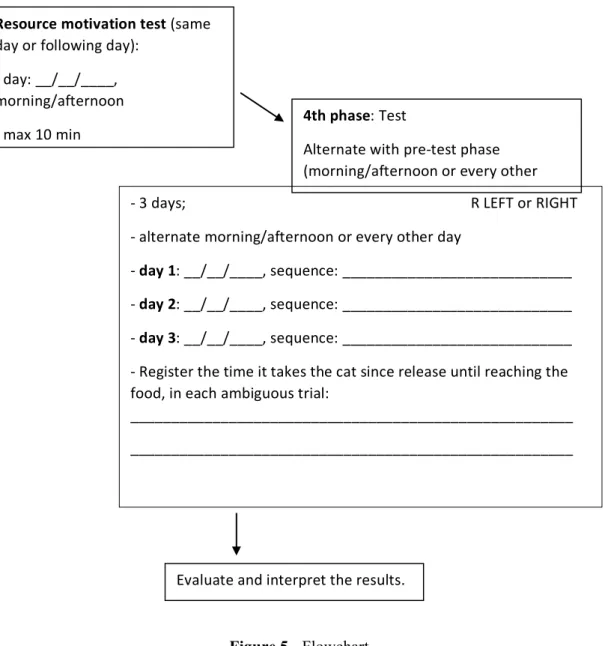
Figure 5 - Flowchart. ... 39
Figure 6 - Training “sit” (original). ... 41
Figure 7 - Training “look” (original). ... 42
Figure 8 - Training “sit pretty” (original). ... 42
Figure 9 - Training “slalom through legs” (original). ... 42
Figure 10 - Cat playing (original). ... 43
Figure 11 - Experimental Arena.. ... 44
Figure 12 - Carrier to which a manually operated guillotine door, made of opaque acrylic, had been adapted (original). ... 44
Figure 13 - The three bowls for the resource motivation test (original). ... 46
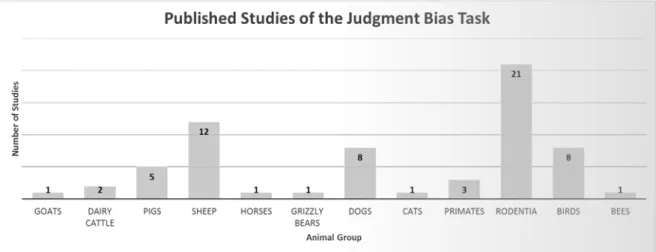
List of Graphs Graphic 1 - Published Studies of Judgment Bias Tasks on various species, available for download in April 2015, according to Bethell (2015). ... 26
ix
List of Tables
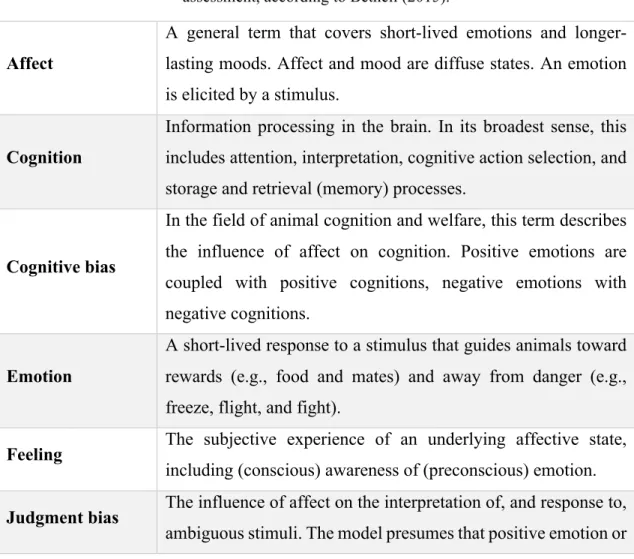
Table 1 - Glossary of relevant terms and concepts when referring to animal emotion
and his assessment, according to Bethell (2015). ... 21
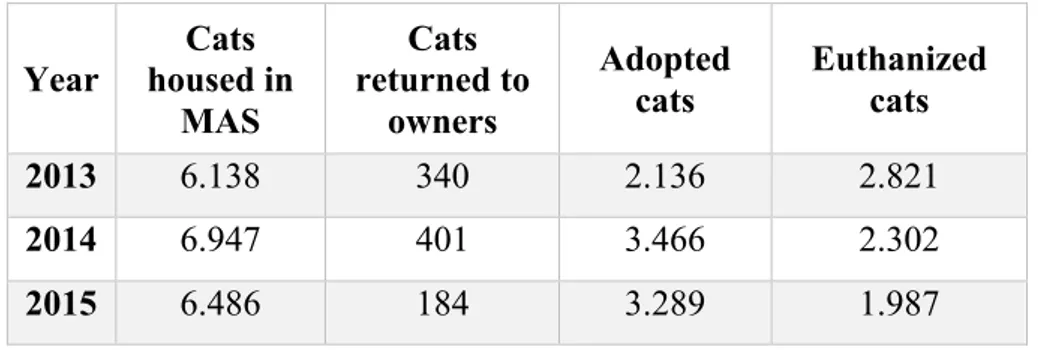
Table 2 - Data regarding animals housed in MAS and respective outcomes. (With kind
permission of Professor Yolanda Vaz, Portuguese National Autority for Animal Health) ... 33
Table 3 - Cats that participated in the study. Animals organized by numbers in
chronologic order; gender; phase of study reached; group attributed; reason of exclusion if excluded. ... 48
Table 4 - Number of days it took each cat to distinguish between R and U. Organized
by group the cat belongs to. ... 51
x
List of abbreviations and symbols APPA - American Pet Products Association B – Box
c – Video Camera
CRO – Centro de Recolha Oficial
e. g. – Latin “Exempli gratia”, it stands for “for example” EuP – Enriched using Play
EuT – Enriched using Training F – Female
HPA – Hypothalamus-Pituitary-Adrenal M – Male
Mnn test – Mann Whitney u test MAS – Municipal Animal Shelter nE – Not enriched
NR – Negative reinforcement pCPA – Chlorophenylalamine PR – Positive reinforcement QoL – Quality of Life R – Rewarded Position R-n – near Rewarded Position
R/U – Rewarded/Unrewarded, equidistant position SS – Stress Score
U – Unrewarded Position U-n – near Unrewarded Position
1
Chapter 1 – Introduction
In our modern, often city-based lives that include long hours away from home, cats have assumed themselves as the companion animal par excellence, even surpassing dogs in numbers and popularity. According to the 2015-2016 American Pet Products Association (APPA) National Pet Owners Survey, 85.8 million pet cats live in the United States, in comparison to 77.8 million pet dogs (APPA National Pet Owners Survey, 2016). While millions of people realize that a cat could be the companion animal best adapted to their lifestyle, requiring less space and attention, no walks, and probably less costly veterinary care (Stephens & Yamazaki, 2001; Overall, 2013), there are still many myths to be dispelled: they are not solitary animals whose behaviour can’t be moulded, and they most certainly do not fare well in impoverished, barren environments (Gourkow & Fraser, 2006). More studies are needed relating environmental conditions to welfare, allowing us to get deeper insight into the fascinating world of cats.
1.1.The Myth about Solitude
Although historically cats were considered solitary species, and some members of the felidae family, such as tigers, are mostly solitary animals which need large territories (Gour et al., 2013) our domestic cat, Felis catus, is in fact a social animal (Kessler & Turner, 1997). They build social groups whose core is the queen and her litter, and which usually only disperse if the food resources are sparse. The formation of groups of related and familiar individuals around food resources is the first step in the development and organization of social behaviour, and larger colonies are composed of several queens, often related, who cooperate in ways to facilitate the survival of their young (Cromwell-Davis, 2006). Individual members of a colony recognize each other, and acceptance and integration of strangers is gradual and likely to be resisted (Alger & Alger, 2002). Within a colony, affiliative and antagonistic relationships are formed. Affiliated cats greet each other by rubbing heads and bodies and sometimes entwining tails. They also groom each other what may contribute to a general group odour which may help with the identification of members. These associated cats will often be found sleeping together and sharing space and food. Antagonistic encounters are preferably avoided within a group, using time sharing to access common areas (Alger & Alger, 2002; Curtis et al., 2003). Integration of kittens abandoned near a colony seems to be easier than the
2
integration of adult cats which might cause great disruption of the social order (Cromwell-Davis, 2006).
1.2. Developmental Stages
The individual development of the kitten can be influenced by various factors, such as genetic factors, maternal factors, environmental factors and sexual differences (Landsberg et al., 2013). Kittens are born after around 63 days but even before birth the health conditions of the queen (physically as well as mentally) play an important role: e.g. maternal malnutrition may lead to deficits in brain development (Vilanova, 2002; Landsberg et al., 2013), reduced social attachment capacities and fearful and aggressive behaviour, effects which may be permanent (Cromwell-Davis, 2006). Stress affecting the mother during pregnancy besides increasing the rate of newborn deaths also has been known to lead to learning impaired adults, with memory problems in delayed alternation task in rats (Lordi et al., 1997). The neonatal period extends from birth until around one week of age, and is a period of sleep and nursing during which the kitten is exclusively dependent on the mother. Sensory development and locomotion emerge around the second week, and characterize the so called transitional period. This transitional period is then followed by the socialization period, in the third week, which is the beginning of a very important phase that extends up to seven to nine weeks of age and will assume great weight in the modelling of the adult cat’s behaviour. The juvenile stage ends with sexual maturity, between six to twelve months, even though social maturity is not reached before two and a half years (Landsberg et al., 2013).
1.3. Human and Parental Effect on Socialization
As early as 1961, studies found that early handling has important effects on the social capacities of kittens, influencing the physical and central nervous system development. Kittens that were held and gently stroked daily during the first weeks opened their eyes earlier, began to explore earlier and were less fearful of humans (Meier, 1961). Kittens handled during five minutes daily for the first 45 days of their life are less fearful, approach strange humans and strange toys more readily and are slower to learn avoidance (Wilson et al., 1965). Besides early pleasant interactions with humans, which predispose
3
to friendlier adult cats, kittens may also be influenced by the behaviour of the mother: if the queen is shy, reserved or fearful, her offspring may learn these behaviours. Ideally, the mother should at least not be overly fearful of humans and ideally the sire should be outgoing and confident (Landsberg et al., 2013). According to some studies, paternity has an adding effect to socialization, influencing the tendency a kitten shows to approach and explore new stimuli (Vilanova, 2002; McCune, 2016), similar findings were found in an experiment which evaluated the response of a cat to a novel box, and which showed that cats with friendly-fathers were quicker to approach, investigate and enter the box (McCune, 2016) . This father-based response suggested boldness in approaching people or objects might be inherited (Cromwell-Davis, 2006; McCune, 2016). Despite their socialization, adult cats will still show a great variability in their friendliness towards other animals, according to their personality types (Overall, 2013).
1.4. Welfare in Shelter Cats
1.4.1. Definitions and Historical Overview of Welfare
Broadly speaking, defining animal welfare is not an easy task, as the concept can be understood differently depending on whether it is explained by producers, consumers, veterinarians or politicians (Velde et al., 2002). Up to recent years, veterinarians and farmers have seen animal welfare chiefly in terms of the body and the physical environment (shelter, feed, among others) focusing on the premise that if an animal is in good physical health and producing (or reproducing) well, his welfare must be adequate (Broom, 1991; Hewson, 2003). The most utilized tools for welfare evaluation focused on the body, using physiological measures to examine how the animal is coping with his environment (Broom, 1991). Nowadays the limitations of this physical approach to welfare are being challenged, based on the argument that genetics and the environment can produce desirable physical outcomes, even though the animal's mental state is compromised. Studies have traditionally focused on plasma, salivary and urinary cortisol as a measure of stress (Beerda et al., 1998), but the quantification of these parameters is considered increasingly non-specific, and may not reflect an emotional state (Gourkow et al., 2014), as it is unclear if eventual reduction in glucocorticoid levels represents actual adjustment by the animal to his new environment or a dysregulation of the hypothalamus– pituitary–adrenal (HPA) axis to the continued stress (Hennessy, 2013). Some behavioural
4
patterns have also been used, correlating them to poor welfare, such as excessive auto-grooming and persistent vocalisations e.g. in dogs (Dalla Villa et al., 2013). When matching behaviour with physiological parameters, results are confusing and not consistent (Hiby et al., 2006), which may be due to the fact that cortisol is dependent on temporal context, being used as an acute stress indicator (Hennessy, 2013). Measuring oxidative stress has been suggested as a physiological indicator for chronic stress (Passantino et al., 2014), even though there is scarce information relating behaviour and oxidative status. Caffazo et al. (2014) related however, the improvement of shelter dog’s welfare through daily interaction with humans and daily walks, including lower frequencies of displacement behaviours and stereotyped behaviour.
Conversely to the all-physical approach is another one that proposes that animal welfare consists entirely of feelings and that these serve the purpose of protecting the animal's primary needs and that consequently an animal that feels well is living in good welfare (Duncan, 2002). The feeling-based approach to welfare research cannot quantify physiological parameters but resorts to measuring behavioural outcomes, such as willingness to perform specific tasks to gain access to food, and behavioural signs of fear and/or frustration. Research on this subject led to the conclusion that there are fundamental behavioural needs that must be satisfied if welfare is to be assured (Petherick & Rushen, 1997). But even if the definition varies, common elements in it are, transversally, the physical and psychological well-being of animals (Hewson, 2003). Other terms have been suggested, such as Quality of life (QoL), happiness or well-being, but they all can be simplified to the concept that “the animals feels good and enjoys life” (McMillan, 2002).
Measuring welfare and QoL is a great challenge and even though there has been a lot of research describing welfare indicators in the last years, mainly based on physiological and behavioural parameters (Dalla Villa et al., 2013), but more studies are needed so formerly subjective parameters such as “mental state” can also be evaluated scientifically. A list of nine signs has been suggested as a welfare assessment for shelter animals, assessing the QoL through the evaluation of: alertness; range of the specie’s appropriate context and age behaviour; low range or absence of unpleasant or abnormal behaviour; sleeping and eating patterns and physical health (McMillan, 2013).
Another different approach has been the assessment of positive emotions in animals to improve their welfare (Mendl et al., 2009; Hotzel & Martendal, 2010). It is suggested that
5
by promoting positive experiences, such, as physical, social and cognitive enrichment, animal health and QoL can be improved (Boissy et al., 2007; Matheson et al., 2008; Brydges et al., 2011; Richter et al., 2012; Douglas et al., 2012).
1.4.2. Stress and its Effect on the Welfare of Shelter Cats
The interplay between behavioural and physical health becomes very clear when looking at the role that stress plays on every aspect of health. Stress can be defined as a change to homeostasis or psychological well-being which will lead to physiological and behavioural responses to re-achieve this homeostasis (Kessler & Turner, 1997; Hennessy, 2013). It can be adaptative (eustress), leading to a re-establishment of homeostasis, or mal-adaptative (distress) if homeostasis is not re-established (Zawistowski, 2015). If homeostasis is not achieved, acute stress may turn into distress and chronic stress (Moberg, 2000).
Stress responses are mediated by an individual’s behaviour, the sympathetic nervous system, the HPA axis, and the immune system: when faced with an unfamiliar and/or startling situation, the sympathetic nervous system is activated to facilitate the flight-or-fight response. Epinephrine is secreted into the bloodstream as the nervous system stimulates the adrenal cortex, this leading to an increase of blood glucose and increased blood flow to the voluntary muscles to prepare for high activity. The adrenal cortex will also secrete cortisol (hydrocortisone) to increase the presence of glucose and the metabolism of fats to produce energy (Zawistowski, 2015). The heart rate increases and the pupils dilate so the animal is in full alert mode (Rodan, 2010). These physiological responses get the animal ready for either flight (which a cat, provided the opportunity, will most often choose) or fight to defend itself. If either of these mechanisms are successful in eliminating the perceived threat and thus resolving the situation, the cat will go back to homeostasis. If not, the stress becomes chronic, and a continued release of cortisol will suppress the immune system which leads to a significant reduction in the cat’s welfare and even physical health (Zawistowski, 2015).
Thus, in the long term, the stress response can be maladaptive and if the stress response continues, for whatever reason, cardiovascular, metabolic, reproductive, digestive, immune, and anabolic processes can all be pathologically affected (McEwen, 2000;
6
Tynes et al., 2015). The results can include myopathy, fatigue, hypertension, decreased growth rates, gastrointestinal distress, and suppressed immune function with subsequent impaired disease resistance. Chronic stress can even lead to structural and functional changes in the brain, and when extreme conditions persist, permanent damage can result (McEwen, 2000). Stress can arise from a variety of different sources, both physiological and psychological. Physical stress can be caused by hunger, thirst, pain, exposure to extreme temperatures, illness, and sleep deprivation and is more easily quantifiable and fixable. Psychological stressors can assume various forms, from exposure to novelty over unpredictable environments, social conflict, constant exposure to fear or anxiety provoking stimuli and situations leading to frustration or conflict (Tynes et al., 2015). A lack or loss of control is another important psychological stressor which assumes paramount importance in animal husbandry in general, as we shall see further on (McEwen, 2000; Tynes et al., 2015).
According to McEwan (2000), the most powerful stressors seem to be: 1) novelty, 2) withholding of anticipated rewards and 3) anticipation of punishment. The response to stress is also highly variable between individuals, depending on such factors as genetics, temperament, experience, environment and learning. For example, cats not socialized to people have been shown to be more likely to experience high levels of stress when exposed to people in a shelter setting (Kessler & Turner, 1997). Studies have shown that the experiences during the first weeks have a great impact on the future ability to cope with stress (Foyer et al., 2013).
As the individual’s perception of stress is largely based on experience, this is the area where we can do the most prevention work through socialization and promoting positive experiences in order to achieve more confident, calmer, less stress-prone adults (Overall, 2013). Cats have shown to react with stress when they were subject to unpredictable handling and husbandry routines (Carlstead et al., 1993). Increased density of group-housed cats has been shown to be positively correlated with stress levels (Kessler & Turner, 1997). Stressed shelter cats have shown to be at higher risk of upper respiratory tract infections, besides eating less than their unstressed counterparts and consequently loosing weight (Tanaka et al., 2012). When stressed, cats substitute normal exploratory and play behaviours for more time alert but hiding or attempting to hide – if hiding is not possible, stress increases (Carlstead et al., 1993). Confined, stressed cats also tend to
7
resort to apathy or escape behaviours (often alternate, depending on the presence or not of people), vocalization and aggressive behaviours (Kessler & Turner, 1997).
It has been suggested that both humans and stressed animals require greater amounts of sleep, which leads us to conclude that even cats which appear relaxed and “sleepy”, may indeed be suffering from high levels of stress, so it should be taken into consideration that decrease in activity and increase in hiding and sleeping may be indicative of stress (Rushen, 2000). Overgrooming, decreased grooming, panting and excessive drooling may also be signs of distress, as can failure to eat or use the litter box during daytime hours. Some distressed cats refuse to eat or drink, while others will urinate or defecate where they lay rather than move from their hiding spot or bed to use the litter box (Miller & Watts, 2015).
In a shelter environment without adequate enrichment young cats and very active cats are the two classes that most rapidly suffer the effects of under stimulation, resorting to their own enrichment using cat litter, bedding, the food bowls or whatever may be available to play, paw and tear, besides quite often extending these behaviours to people who are passing by. Playful at first, reaching their paws through the bars in boredom can escalate to biting or scratching caretakers’ hands or legs as though toys or prey, making it difficult or even dangerous to clean the cage or handle the cat (McCune, 1994; Arhant et al., 2015; Miller & Watts, 2015). The study of Kessler et al. (1997) gave a two week stretch of time for notable stress reduction in 2/3 of kennelled cats, but also showed that 4% of the cats never reduced their stress scores during the study period, which suggests that some cats may in fact be unfit for shelter housing during an extended period. When choosing a pet adopters are most likely looking for a friendly, sociable, playful animal and therefore those cats displaying fearful, avoidant, defensive, destructive, or aggressive play behaviours are probably less adoptable (Gourkow & Fraser, 2006; Weiss et al., 2012).
Therefore, effects of enrichment extends as far as the chances of adoptability, as studies have shown that adopters show a preference for more active cats and cats housed in more interesting environments (Fantuzzi et al., 2010). In addition to this more appellative presentation of the animal, enrichment can facilitate positive interactions between cats and adopters (e.g., through play with interactive toys), helping adopters to bond with a cat while encouraging the cats to approach, important factors in the choice to adopt (Weiss et al., 2012).
8
So how can we use enrichment to improve the welfare of cats in general and shelter cats in specific?
1.5. Environmental Enrichment 1.5.1. Definitions and Goals
Having mentioned the term “enrichment” several times throughout this study, it seems important to define what is meant by it, in the specific context of welfare or QoL improvement. Environmental enrichment may be defined as the provision of a captive animal with the ability to maintain or improve his physical, behavioural and psychological functioning via modifications to the housing environment (Young, 2003) or as a “concept which describes how the environment of captive animals can be changed in order to benefit its inhabitants” (Carlstead & Shepherdson, 1994). The focus of environmental enrichment must always lie on what it wants to achieve, otherwise it does not deserve to be called enrichment at all: if a toy or other element is added but it does not alter the animal’s QoL in a positive way, it has failed its purpose (McMillan, 2013). Furthermore, even though effective enrichment can alleviate the effects of current (and even future) stressors, it should not be implemented only when the animal displays problematic behaviour, but it should be a mandatory part of the animals daily care plan (Miller & Watts, 2015). But let us summarize the goals of a successful environmental enrichment, to begin with. They are, according to Young (2003):
1- Increase behavioural diversity;
2- Reduce the frequency of abnormal behaviours;
3- Increase the range or frequency of normal behaviours; 4- Increase a positive utilization of the environment;
5- Increase the ability to cope with challenges in a normal way.
These challenges can be of a broad range, and for a cat entering a shelter, many are unavoidable stressors. Morgan & Tromborg (2007) proposed the following comprehensive list:
9
• Change of daily routine;
• Disruption of social bonds and isolation; • Reduced positive social contact with people;
• Increased negative social contact with people (restraint, medical procedures, e.g.); • Reduced physical and mental exercise;
• Aversive, inescapable thermal or sensory stimulation including drafts, loud and sudden noise, and unfamiliar and aversive odours;
• Exposure to conspecifics especially if not previously socialized with other cats; • Exposure to unfriendly conspecifics and unfamiliar humans;
• Reduced ability to retreat or hide; • Boredom;
• Unpredictability;
• Lack of choices and control over interactions with the environment.
1.5.2. Types of Environmental Enrichment
While most cats have similar basic behavioural needs, effective enrichment programs should permit for individualization, monitoring and flexibility. Broadly speaking, Bloomsmith et al. (1991) have divided environmental enrichment into five major types:
1- Social
2- Occupational 3- Physical 4- Sensory 5- Nutritional
10
Those categories can be further subdivided and although most environmental enrichment can be organized into these types, of course these categories are not mutually exclusive, but quite often an item of enrichment can assume various functions at the same time. The social type of environmental enrichment can be divided into a) No Contact, when the social counterpart is not in direct contact with the cat, but present in an adjacent space that allows for visual and or auditory contact, or if there is the odour of another cat or other animal/human; and b) Contact, when the social counterpart is in direct contact with the cat, either temporarily (playgroups, training/play session) or permanently. Both can be inter- or intraspecific.
Not only is human contact important, but also the quality of this contact: it should be positive, consistent, and avoid excessive restraint. This contact is especially important for kittens in the socialization phase, around two to seven weeks of age (Meier, 1961; Wilson et al., 1965). Consistent and gentle handling by a familiar person, particularly with slow petting and soothing tone of voice, can help cats to become more accepting of unfamiliar people, such as adopters, and it is useful for the shelter staff to include small treats into their day-to-day routines (Gourkow & Fraser, 2006).
Cats have a flexible social structure, whereby they can live independently or in groups, depending on availability of food and other resources (Cromwell-Davis, 2006) and group-housing can have benefits in terms of social companionship and motivation to move and play while allowing monitoring of the health and behaviour of individuals (Kessler & Turner, 1997). Groups should not exceed four to eight individuals and care should be taken in order to avoid incompatible matchings, otherwise stress becomes a problem (Alger & Alger, 2002). Well socialized juveniles and kittens may adapt most quickly to new social groupings and can greatly benefit from the socialization and exercise that cohousing provides (Landsberg et al., 2013; Miller & Watts, 2015). Care has to be taken to assure two exits from perches and hiding areas and a sufficient number of soft beds, food bowls, water bowls and litter boxes dispersed in space to minimize fighting and monopolization (Newbury et al., 2010).
Occupational enrichment includes psychological enrichments such as puzzles or elements that promote control over the environment, but also exercise which can be motivated by giving the animal access to a run or engaging it in other activity stimulation behaviours
11
such as training or play (also referred to in the point on social and physical enrichment) (Bloomsmith et al., 1991; Young, 2003). Control is a factor in occupational enrichment of the psychological kind and may be the single most important factor in maintaining quality of life. An animal has control when it can help itself by expressing a behaviour that satisfies a need. Animals without control develop unresponsiveness termed learned helplessness (Isaacowitz & Seligman, 2007). If enrichment is done adequately, it allows cats to control exposure to humans, animals, light, temperature, and drafts; the view; and expression of locomotory behaviour, overlapping once more with physical enrichment.
Physical enrichment includes the size of the enclosure but also its complexity, the accessories used, the furniture, toys, among others.
All cats should be provided with enough space to stand and sit fully upright, lie down, turn around, walk, stretch out, and retreat to a hiding area. The available space should make separation of functional areas (sleeping, eating/drinking and elimination) possible, as many animals refrain from using the area designated as a toilet should it be too close to the food area (and vice-versa). Studies suggest areas of at least 1,70m2 per cat and enough space to allow for an inter-cat distance of 1-3m (Barry & Crowell-Davis, 1999; Gouveia et al., 2011). If possible, “Office fostering” or a “real-life room” are systems that work very well for cats that are either very used to human contact, or are not and need to become used to a “home like” environment, as it uses furnished rooms (that may even be used otherwise by staff) at the facility to home selected cats or groups of cats. It is important to point out that it is the quality of the space, not simply the quantity, which is important for mitigating stress, so a mere increase of cage size would not have the desired effect (Miller & Watts, 2015).
The way in which a cage or enclosure is furnished and decorated can be motivating for the animal to move around and engage in exploratory behaviour. It should include retreat areas, high vantage points and separate functional areas. An area which can be visually assessed in its whole from just one point is an area that leaves little to the imagination and does not encourage exploration or allow for retreat and hiding. A retreat area that is partially or even fully hidden from view is a very important element when it comes to behaviourally cope with a stressor, as it gives the animal a choice of either facing the stressor, or not facing it that moment (McCune, 1994). Creating visual separations and
12
distinct areas within the cage is not difficult neither does it need to be expensive: curtains, partial cage dividers, interconnected cages, hiding boxes and draping towels or blankets over parts of a cage will give animals the option of retreating to a more protected area. A plastic carrier that stays with the cat during his entire stay and can go home with the cat is ideal as it provides hiding and perching place at the same time and is easily cleanable (Miller & Watts, 2015).
Elevated perches are all time favourites, as any cat owner can relate to: besides providing a vantage point for observation while stimulating the cat to engage in further activities such as stretching, jumping, and climbing. To build these areas inside the enclosure, besides plastic carriers sturdy cardboard or plastic boxes can be used, but also shelves, hammocks or small tables (Miller & Watts, 2015).
Soft bedding is an important addition as cats have longer periods of deep sleep on soft bedding and seem to prefer sleeping on materials that are not subject to great temperature changes (McCune, 1994)
As scratching is a natural and necessary behaviour for cats, scratch post is an indispensable requisite. Besides stretching all leg and foot muscles, the outer sheath of the nail is removed and scent marks are left behind, which are communicative elements. If the space does not allow for standard scratchers, cardboard scratchers can be adapted, as well as bricks, blocks of rough wood or logs, carpet remnants, or sisal rope wound around a block of wood (Miller & Watts, 2015).
Toys are commonly provided in shelters, but they are not necessarily enriching. Whether the animal plays and with which toys depends on various factors, such as age of the animal and previous experience with toys. Toys should be matched to the specific animal intended to use them and rotated often to maintain interest (Young, 2003).
Sensory enrichment includes visual enrichment, such as the presence of windows or at least the opportunity to observe the environment; auditory enrichment such as music or, in a shelter environment the reduction of noise which is omnipresent; olfactive enrichment can be achieved through various scent-impregnated objects or the use of catnip; and tactile enrichment includes different materials used in the enclosure and various textures in toys and furniture (Newbury et al., 2010; Miller & Watts, 2015).
13
In the wild, animals spend a great amount of their time foraging and hunting, not only to find the food they need to survive, but also as a way of gathering information about the environment (Cromwell-Davis, 2006). Confined animals, such as shelter cats, cannot engage in these activities naturally, and an always full food bowl leads to frustration, lethargy, and weight gain. Nutritional enrichment, whether in the way the food is delivered or in the type of food used, can offer opportunities for mental and physical activity and can be part of an enhanced activity program for overweight cats (Miller & Watts, 2015). The cats natural feeding strategy would include a sequence of preying, hunting, chasing, grabbing and killing to obtain various small meals along the day (Young, 2003). To mimic this kind of feeding behaviour it is best to substitute regular food bowls for food dispensing devices or by self-made means such as scattering food in bedding or shredded paper, hiding it in nooks and crannies, creating a scent trail with tuna juice to a hidden meal, tucking food into wads of paper or empty paper towel rolls, or freezing canned food inside empty plastic bottle caps or halves of plastic Easter eggs (Miller & Watts, 2015).
1.6 Training Cats as Environmental Enrichment 1.6.1. Are Cats Trainable?
While there is a substantial history and industry associated with training dogs, there has been much less attention devoted to training cats (Zawistowski, 2015). Probably this has its roots in the domestication form of the cat, which has developed a rather unique relationship with humans, a commensal living together, which did not require much modification of feline behaviour, or even in any other traits (e.g. size and coat colour), especially when compared to dogs (Price, 2002). Dogs have always fulfilled functions and met goals in human cohabitation, being selected for specific tasks in which training probably came naturally as some degree of control was needed (Bradley, 2011; Bradshaw, 2011). Much of we expected cats to do, since earliest days (if we ever expected anything) was already patent in the natural behavioural repertoire of this species: predation of vermin, and even more specific skills such as cleanliness and the use of a litterbox (Driscoll et al., 2009; Zawistowski, 2015). As a result of this peaceful cohabitation without formal training, their different response to the highly aversive training dogs have been subject to for millennia, cats have earned a reputation of being “untrainable”, which
14
is most untrue (Hiby et al., 2004; Zawistowski, 2015). In reality, as early as 1913 scientists such as Edward Thorndike had used cats in the early development of the learning theory, discovering that they could rapidly learn how to pull looped cords or press paddled to escape from a cage. The behaviours leading to success and escape (which was also food rewarded) would be shown more and more rapidly over successive trials and those behaviours that did not lead to escape reduced in frequency. Thorndike called this the “Law of Effect” and it established the fundamental basis for the development of reinforcement theory (Thorndike, 1913). In the years since, cats have been subjects in a wide range of studies that have addressed the neurophysiology of learning, memory, sensory systems, and sleep. More recently, greater attention has been paid to the concept of training cats, and Karen Pryor and others have since demonstrated that clicker training can be used successfully with cats and this has been incorporated into a range of enrichment programs for cats in laboratories and animal shelters (Seksel, 2001; Pryor, 2003; Case, 2010; Overall, 2013).
As training is inherently a communicational exercise between two species, the way an animal communicates naturally needs to be taken into account when attempting to train it. As most other species, cats rely on four modes of communication: auditory signals, olfactory signals, tactile signals, and most importantly for communication with humans, visual signals (Overall, 2013). Auditory signals include vocalizations and are longer distance signals, working best in the present. According to Landsberg (2013) more than 23 vocalizations have been described, and the most important ones from a practical perspective are meowing, purring, growling and hissing. Olfactory signals are passible of being used beyond the present and even if the animals are separated by distance. Cats use the flehmen response to conduct pheromones to their well-developed vomero-nasal organ (Salazar et al., 2011). They also give up scent to their environment through sebaceous glands in tail, lips, chin and pads, as, for example, during hunting. Feces and urine are also used for communication purposes in different ways (Overall, 2013). Tactile signals are an essential part of social signalling and may serve as an assay for risk or comfort. Hairs on the plantar side of the carpus connected to receptors and vibration detecting corpuscles allow for sensory acuity important for predatory behaviour and play (Overall, 2013). Also, the somatosensory area of the cat is larger than that of the dog and sensory hairs (vibrissae) are found on cheeks, above the eyes and on the side of the face. All vibrissae are supplied with mechanoreceptors allowing for very precise adjustments of
15
position which is extremely important in predation (Bradshaw, 1992; Overall, 2013) Visual signals are used when the intervenient parties are at a close distance and usually is acted upon immediately, in domestic cats they involve the use of eyes, ears, mouth, tail and coat in an interplay of expressions, body postures and movements (Landsberg et al., 2013; Overall, 2013). The facial signs are the swiftest in changing giving the most up to date information about the state of the animal. The ears are fluid and move very quickly, and pupillary changes can be very informative (Overall, 2013). A detailed analysis would exceed the scope of this study, but figure 1 gives a comprehensive overview of the various expressions. Body posture also communicates a lot of information, with special attention to overall resting body posture, head carriage, back position (arched or level), leg and tail positioning and activity.
16
A thorough understanding of feline body language is very important in a shelter environment in order to aid in assessing the animal’s state of mind as best possible, and, most importantly, to recognize abnormal behaviours which could be indicative of illness or injury and acute and/or chronic stress which impairs welfare (Arhant et al., 2015; Nibblett et al., 2015; Arhant & Troxler, 2016). To make these evaluations easier and less subjective, usually predefined scores are used, such as the Adapted Scale for Use in Homes, Shelters, or Free-Ranging Social Situations (henceforward referred to as Stress Score (SS)) of Overall (2013) (Figure 2) based on the Cat Stress Score of Kessler et al (1997), which in its turn is based on the Cat Assessment Score of McCune (1994).
Figure 2 - Adapted Scale for use in Homes, Shelters, or Free-Ranging Social Situations. Allows
sorting cats according to their comfort or stress level, regardless of the cause (Overall, 2013).
1.6.2 How do Cats Learn?
Learning is a complex process which can be divided in several types. This is not the primordial focus of this study, therefore the enumeration that follows aims only at a summary description of those learning types, processes and tools which assume greater importance and applicability in animal training.
Learning, per definition, is basically the long-term acquisition of information or of a behaviour in response to a repeated exposure to a stimulus (Overall, 2013). Even though
17
the biological structures for learning are defined in the animal's genes, his individual aptitude for it is the result not only of genetic make-up but also of early experiences (Immelmann et al., 1996). The ability of altering behaviour and adapting to ever changing and new environments has great advantage over the hard-wired heritable traits that are much less flexible: through learning new information the animal does get better chances of survival and reproductive success, and this is why it is a survival tool of higher organisms (Schöning, 2006).
1.6.2.1 Associative Learning
Classical Conditioning – The most typical example of this way of learning is the Pavlovian reflex, which is the association of a neutral stimulus like the ringing of a bell to the presence of food – which naturally cues a given response - for as many times as it took to get the natural response (in this case salivation) at the mere sound of the neutral stimulus (bell), even in the absence of food (Pavlov, 1927). Animals learn through this mechanism in various day-to-day situations, some associations being positive, such as the sound of the can opener standing for food, or the fridge door signifying the possibility of treats, but others are uncomfortable or frightening such as the sight of a small bottle signifying the use of eye or ear medication or the presence of a specific carrier signifying a hated trip to the vet. The occurrence of classical conditioning depends on different factors, such as: a) contiguity – both stimuli, the neutral one and the non-conditioned one must closely follow each other, in space and time; b) continuity – this sequence of stimuli must occur unconditionally; c) relevancy – the value of the non-conditioned stimuli to the animal influences the rate of conditioning: the more important it is, the faster it happens (Case, 2010).
Operant Conditioning – This form of conditioned learning is based on the consequences of exhibited behaviour. It can also be called “instrumental learning” or “trial and error learning” and includes three events – the stimulus, the behavioural response and the consequence. The probability of repeating the behaviour is dependent on the perceived consequences of this behaviour (Laser, 2008; Case, 2010). So basically, behaviour is
18
determined by its consequences (Laser, 2008) and therefore we have to manipulate the consequences of the animal’s action if we want it to learn what we want to teach him. Behaviour is always to be seen as any action a living being might perform, as opposed to a non-living being, and not only as activity – e.g. sleeping or standing motionless are also behaviours, even though they do not include motion (Laser, 2008). Also, it is important to recall that learning occurs permanently, and not only when we define to be “training” (Laser, 2008).
The consequences of a behaviour can be divided into:
1 – Reinforcement: which lead to an increased behaviour, in frequency as well as in intensity and duration, and which can be:
a) Positive – the addition of something pleasant to the animal, such as a food treat every time the animal approaches a stranger; or
b) Negative – the cessation of something unpleasant to the animal, such as the frightening stimulus (e.g. person) taking some steps back when the cat moves to the front of the cage instead of crouching and hiding.
2 – Punishment: which lead to a decreased behaviour, in frequency as well as in intensity and duration, and which can be:
a) Positive – the addition of something unpleasant to the animal, such as spraying the cat with water when it is scratching the couch; or
b) Negative – the cessation of something pleasant to the animal, such as closing the door that gives access to the tinned cat food which the animal likes, when he is meowing, or removing the toys when the cat is careless with his claws.
These are the four quadrants of operant conditioning, and they cannot be seen as independent and impervious, because negative reinforcement/positive punishment and positive reinforcement/negative punishment are closely related, as every reinforcement also involves a punishment and vice-versa: when the positive punishment ceases it is at the same time a negative reinforcement (Bowen & Heath, 2005; Case, 2010). Learning is a continuous and cumulative process and operant conditioning occurs as a result of all experiences in the animal’s life, not only those the owner/trainer/staff is trying to
19
manipulate consciously and this has to be brought into awareness to heighten the chances of success in using these tools.
When talking about associative learning there are three techniques that cannot go unmentioned when speaking about how to train an animal to perform a specific behaviour: we can employ to train —luring, shaping, and capturing (Pryor, 2003; Laser, 2008; Bollen, 2015).
Luring involves using something the cat wants and will follow to get the cat into a desired position which we can then reward. For example, if we want the cat to turn in a circle, we have her follow a food treat or a toy that you move around her body and then reinforce that action (Bollen, 2015).
Shaping involves reinforcing successive approximations of the behaviour until you get the final desired response. To shape a cat to turn in a circle, you would reinforce the cat for turning her body slightly to the right and then you would require her to turn her body farther and farther to the right each trial in order to earn the reinforcement until you have shaped her to turn all the way around in a circle (Bollen, 2015).
Capturing consists in reinforcing a behaviour that the animal is casually performing in that moment. If the cat should happen to turn her body in a circle in agitated expectancy of the food bowl, we could capture this behaviour when it is occurring by reinforcing it, and later put it on cue (Bollen, 2015).
1.6.2.2 Non-Associative Learning
In the category of non-associative learning we have habituation, flooding and desensitization. Habituation is the reduction of the response to a given stimulus after a continuous and prolonged exposition to this said stimulus, with no adverse or pleasurable consequences for the animal (Leussis & Bolivar, 2006; Overall, 2013) and it is the normal way for a kitten to integrate diverse non-threatening environmental stimuli into his repertoire of normality (Landsberg et al., 2013). Flooding is one of the subcategories of habituation, and it consists in exposing the animal to the full force stimulus in the hope that it might get used to the stimulus when noting that no physical harm follows – this most often does not work and may lead to increased problems (Wright & Rozier, 2008;
20
Yin, 2009). The other subcategory is desensitization, and in this approach the animal is exposed to the fear evoking stimulus in a weakened form (lower intensity, farther away) in a manner that does not elicit fear, the intensity or proximity slowly increasing while the animal gets used to it (Yin, 2009).
Though more efficient than flooding, desensitization is a rather weak form of behaviour modification and works best when the stimulus or object only induces a weak fear response, but it can and should be coupled with more powerful behaviour modification tools: the classical and operant counterconditioning (Wright & Rozier, 2008; Yin, 2009).
1.6.3. A Short Word on Clicker Training
Having briefly summarized learning theory, and the basics of training and behaviour modification, a short mention must be made of the powerful tool that is clicker training. Clicker training is a type of so called marker-based training which involves using a clicking signal to indicate the exact behaviour that has earned reinforcement.
This training methodology is the most effective way to train animals to perform behaviour because it involves precise and fast communication to the animal. It is based on both classical conditioning and operant conditioning and is therefore presented at this point of the text. The method involves first pairing the sound of the clicker with the delivery of a reinforcement (classical conditioning), and once the animal learns that the sound of the clicker predicts the reinforcement, the click sound is used to “mark” the exact behaviour to be reinforced, thus the clicker becomes what is called a “conditioned reinforcer.” Essentially, the clicker marks the behaviour that earns the reinforcement and tells the animal that the reinforcement is on its way, even if it takes a few seconds to produce it (Pryor, 2003; Laser, 2008; Bollen, 2015).
1.7. How to Assess Affective State in Animals
Traditionally, as has been mentioned earlier, when introducing welfare and stress, the focus of welfare evaluations has been on assessing more objective parameters such as stressors that cause pain, fear, anxiety and frustration which we know to induce poor welfare, assuming that the absence of stressors inducing these negative states will
21
presume good welfare. Recently, it has been suggested that the focus should not only lie on avoiding harm and discomfort, but also on place value on positive experiences, resources and pleasurable activities (Starling et al., 2014). Therefore, over the last decades there has been a growing interest in finding scientific and objective methods to evaluate emotional states and mental health of animals, which is not easy, as animals do not use spoken language to communicate their sensations to humans and therefore we have to rely on other types of measures to quantify and characterize feelings and sensations and thus evaluate welfare (Hotzel & Martendal, 2010). Cognitive bias measures such as the judgement bias task have recently emerged as promising tools to assess animal emotion, but before going into further detail, some terms need clarification, here as defined by Bethell (2015) (Table 1).
Table 1 - Glossary of relevant terms and concepts when referring to animal emotion and his
assessment, according to Bethell (2015).
Affect
A general term that covers short-lived emotions and longer-lasting moods. Affect and mood are diffuse states. An emotion is elicited by a stimulus.
Cognition
Information processing in the brain. In its broadest sense, this includes attention, interpretation, cognitive action selection, and storage and retrieval (memory) processes.
Cognitive bias
In the field of animal cognition and welfare, this term describes the influence of affect on cognition. Positive emotions are coupled with positive cognitions, negative emotions with negative cognitions.
Emotion
A short-lived response to a stimulus that guides animals toward rewards (e.g., food and mates) and away from danger (e.g., freeze, flight, and fight).
Feeling The subjective experience of an underlying affective state,
including (conscious) awareness of (preconscious) emotion.
Judgment bias The influence of affect on the interpretation of, and response to,
22
mood is reflected in more positive judgments about ambiguous stimuli (“glass half full”), whereas negative emotion or mood is reflected in more negative judgments about ambiguous stimuli (“glass half empty”).
Judgment bias task
A task in which an animal is trained to discriminate between two stimuli that differ along one dimension (e.g., size, color, and location). One cue (e.g., “left location”) is rewarded, and the other cue (e.g., “right” location) is not rewarded. During a judgment bias task, an ambiguous cue is presented (i.e., an intermediate location). Speed and frequency of response reflect whether the animal judges the intermediate cue to be more positive or negative.
1.7.1. Evaluation of Affective State through Cognitive Bias Tests
Per definition, “cognitive bias” is a term that has been used in human health related literature to describe how an affective state can influence a range of cognitive processes such as the way decisions are made and how information is processed (Ehrlinger et al., 2016).
In non-human animals it has also been tested with the conclusion that the current affective state of the animal influences the way in which it judges how to interpret ambiguous signals (Harding et al., 2004). This interpretation can be more inclined to expecting positive outcomes in case of doubt, or, on the other hand, more inclined to expect negative outcomes. This specific form of cognitive bias is called judgement bias (Harding et al., 2004). A negative affective or emotional state leads to a higher expectation of negative outcomes such as negative bias when faced with an ambiguous signal, which has been referred to as “pessimism” in animal literature (Bateson & Matheson, 2007; Burman et al., 2009). Conversely, a positive affective or emotional state leads to higher expectation of positive outcomes, a positive bias, when faced with the same ambiguous signal, therefore representing “optimism” (Matheson et al., 2008; Brydges et al., 2011).
23
The evaluation of this emotional state is essential when evaluating welfare (Harding et al., 2004) and studies on cognitive bias can contribute in several areas of animal husbandry, such as shelters, farm animal or even privately owned pets because it can give us the necessary tools to assess if we are in the presence of optimistic (“content”) animals, or pessimistic (“depressed”) ones.
Therefore it becomes possible to evaluate when, if and how stress, an empoverished environment and the impossibility of adapting to the environment or changing their living conditions can affect the cognitive state of an animal (Harding et al., 2004; Paul et al., 2005; Bateson & Matheson, 2007) and if altering these factors leads to differences in the way these animals perceive their environment.
Chronic stress can be described as a long-term negative affective state induced by an accumulation of negative emotional experiences that alters an individual's interactions with the environment. In humans, chronic stress induces both persistent judgment biases and learning deficits (Destrez et al., 2013). As mentioned above, depressed or anxious animals show an increase in the probability of showing pessimist responses when confronted with a novel situation (Bateson & Matheson, 2007), in opposition to content animals in good welfare conditions which tend to overestimate their chance of success (Matheson et al., 2008).
By changing the environmental conditions the animals are subject to, in a way that is thought to induce either a positive or negative emotional state and then evaluating if the judgmental bias changes accordingly, this concept can be tested, as has been done with several different species (Bethell, 2015).
1.7.2. Advantages of Cognitive Bias Tests and the use of Judgement Bias Tasks
There are several advantages of this method over physiological measures, such as the possibility of distinguishing emotion from arousal. Physiological measures such as corticosteroids measure arousal, but they do not distinguish arousal associated with positive emotions (e.g., excitement and exploratory behaviour associated with foraging and mating activity or an enriched environment) (Mendl et al., 2010) from arousal associated with negative emotions (e.g., distress in fight or flight) (Hemsworth et al., 2015). As cognitive bias tasks are tasks in which the animal or person has to choose
24
between response that are grouped positive and negative, and these choices should be independent of the level of arousal (Bethell, 2015).
Another advantage is that the measurements are dependent on the underlying emotions, which in the case of measurements relying on observable behaviours only, is not always representative. Some behaviours are coincident in distinct affective states: e.g. it would be difficult to distinguish an animal that is contented and sleeping from one who is depressed, feigning sleep as some stressed cats do, or suffering from learned helplessness. Judgment bias may detect more subtle shifts in emotions that lack distinguishable behavioural indexes.
The measurements are also useful when it comes to test predictions about responses following affect manipulation, which could provide a useful means of assessing the effectiveness of husbandry interventions to improve mood state. (For example, as is the focus of this study, improved environmental enrichment through training should lead to more optimistic judgment bias). A positive shift in judgment bias, confirmed by these tests (i.e., more positive responses to one or more ambiguous probes) would allow the assessment, in a non-subjective way, of improvements (or, by contrast, deterioration) in emotional or psychological state (Bethell, 2015).
1.7.3. Types of Judgement Bias Tasks
Several studies have been made over the last couple of decades to assess the importance of the mental state of animals, using different species and different methods to measure judgment bias.
Well-designed operant tasks can be used to measure an animal’s judgment bias by “asking” them whether they expect positive or negative outcomes following certain behaviours. Three types of judgment bias tasks have been developed:
a) The Go/No-Go task, using tone cues has been used in dogs (Starling et al., 2014) and pigs (Douglas et al., 2012). The Go/No-Go task, using spatial cues has been more widely adopted. Animals are trained to approach one location for food and to avoid approaching another location that has no food, unpalatable food, or some other mildly aversive reinforcer. Tendency and speed to approach the intermediate
25
probe locations are then tested. The Go/No-Go task with spatial cues has been developed for use with goats, pigs, sheep, horses, dogs, cats, mice, hamsters, rats and chickens (Bethell, 2015) and in some cases location cues were combined with colour cues or substituted by visual cues. The main criticism of this task is that a “no go” must not necessarily represent a pessimistic judgement, but may also simply stand for lack of motivation, arousal, distraction or confusion (Mendl et al., 2009).
b) The second type of judgment bias task, the active choice task with positive reinforcement, was developed to address problems of interpretation in the Go/No-Go task. In this case, the animal does not have a go-no go option, but is rather trained to distinguish between a cue that signifies a high value reward and a second cue that signifies a low value reward. Then they are tested on their responses to intermediate cues. Variables like lack of motivation, arousal, between others, are annulled because both responses imply an equivalently active performance of the animal, the third option being non-compliance with the task. Potential problems with the active choice task with positive reinforcement are that it may be more difficult to train animals to discriminate between the cues as both are rewarded, and although the test may be suitable for detecting shifts in judgments about possible future rewards, it may not be suitable for detecting shifts in judgments about possible future neutral or negative events (Mendl et al., 2009).
c) A third type of judgment bias task is the active choice task with negative reinforcement (e.g., electric shock) in which the animals are rewarded for responses to the positively conditioned stimulus, but responses to the negatively conditioned stimulus are now negatively reinforced so that animals “go” to the location to stop the onset of a negative reinforcer. Negative reinforcement is generally not suitable for welfare studies, but the results from this third approach, so far conducted with rats undergoing pharmacological manipulations concur with data from the Go/No-Go and active choice (reward–reward) tasks (Bethell, 2015).
1.7.4. Other Cognitive Bias Methods
The judgment bias task is not the only cognitive bias method, but it is the most explored one in terms of scientific studies (Bethell, 2015). Besides judgement bias, other cognitive
26
bias methods that should not go unmentioned are a) attention biases, or innate biases in attention to biologically relevant stimuli (Brilot et al., 2009; Bethell et al., 2012; Cussen & Mench, 2014), b) expectancy biases, akin to optimism and pessimism regarding future events (van der Harst et al., 2003) and c) reward sensitivity, or susceptibility to despondency following loss or failure (Burman et al., 2008). These processes are closely related to, judgment biases, probably even influencing them, and they represent interesting areas of further study (Bethell, 2015).
1.7.5. Published Studies on Judgement Bias Tasks
The aim of this study is not to attempt an exhaustive analysis of all published studies on this subject, but in this section we aim to summarize important scientific information that has already been yielded by studies in this area of cognition in order to frame the undertaken experiment with the according academic overview. A review by Bethell (2015) counted 64 published studies on the subject, distributed over various animals as can be seen in Graphic 1:
Graphic 1 - Published Studies of Judgment Bias Tasks on various species, available for
download in April 2015, according to Bethell (2015).
Harding (2004) did a sequence of cognitive bias tests using rats training them to respond by pressing a lever when they heard a tone associated with a positive event (food reward) and to refrain from pressing the lever as a way to avoid a negative event (loud noise)