M
ASTER
A
CTUARIAL
S
CIENCE
M
ASTER
´
S
F
INAL
W
ORK
INTERNSHIP
REPORT
I
NTRODUCING A NEW RETIREMENT SAVINGS SCHEME IN THE UK
HALIYAH SAGAY
-
YUSUF
M
ASTER
A
CTUARIAL
S
CIENCE
M
ASTER
´
S
F
INAL
W
ORK
INTERNSHIP
REPORT
I
NTRODUCING A NEW RETIREMENT SAVINGS SCHEME IN THE UK
HALIYAH SAGAY
-
YUSUF
S
UPERVISION
DANIELA DINIS PATEIRO
ONOFRE ALVES SIMOES
Abstract
During recent times, sponsors of the UK pension scheme have been more concerned with the ever-increasing liabilities of Defined Benefit (DB) schemes and low level of acceptance from members with bearing the risk associated with the Defined Contribution (DC) schemes.
To deal with this, one large UK pension scheme, in collaboration with their Workers Union and the Department of Works and Pension, suggested the implementation of a new type of risk–sharing scheme. The concept of risk- sharing is a hot topic in the world of pensions, as it aims to be the midpoint between DC and DB schemes.
The main idea for this topic came about during my internship at Willis Towers Watson, where I got the opportunity to work directly with different DB schemes. While carrying out actuarial valuation on various schemes, I realized that the number of active members were on a decline when compared to previous valuations, and in some cases there were no active members in the scheme, as they have closed to new members, which exacerbates the problems associated with DB schemes for the sponsor.
Using the Royal Mail experience as a case study, I was able to understand the need for a new pension scheme and legislation, thus presenting a model that tested the proposed pension schemes/plans against unfavorable economic and demographic assumptions.
This report would help to better understand the pension market, especially in the UK, and to see the benefits of the proposed scheme.
Key words: Pensions, Collective Defined Contribution (CDC), Defined Benefits (DB), Defined Contribution (DC), Risk-sharing.
Resumo
Nos últimos tempos, as empresas patrocinadoras de pensões do Reino Unido têm mostrado preocupações acrescidas com o passivo cada vez mais elevado dos esquemas de benefícios definidos (BD), e com o baixo nível de aceitação dos membros em suportar o risco associado aos esquemas de contribuição definida (CD).
Para lidar com esta situação, um fundo de pensões britânico de grande dimensão, em colaboração com o sindicato dos trabalhadores e o Department of Works and Pensions (departamento do trabalho e pensões britânico) sugeriram a implementação de um novo tipo de esquema de risco compartilhado, já que este conceito é um tópico importante no mundo das pensões, pois pretende ser uma solução intermédia entre os esquemas CD e BC.
A principal razão para a escolha deste tópico surgiu durante o meu estágio na Willis Towers Watson, onde tive a oportunidade de trabalhar diretamente com diferentes esquemas de BD. Ao realizar a avaliação atuarial nesses diferentes casos, percebi que o número de membros ativos estava em declínio, quando comparado com avaliações anteriores, e que até em alguns deles não havia membros ativos, pois os planos tinham sido fechados à entrada de novos membros, o que potencia os problemas associados com estes esquemas de BD para os seus patrocinadores.
Usando o caso do Royal Mail como exemplo de estudo, pude entender a necessidade de um novo esquema e legislação para fundos de pensões no Reino Unido, apresentando assim um modelo que visa testar o funcionamento dos esquemas/planos de pensão propostos, face a pressupostos económicos e demográficos desfavoráveis.
Este relatório procura contribuir para uma melhor compreensão do mercado de pensões, especialmente do mercado de pensões do Reino Unido, e para uma perceção mais completa do esquema de benefícios proposto.
Palavras-Chave: Pensões, Contribuição Definida Coletiva (CDC), Benefício Definido (BD), Contribuição Definida (DC), Risco Partilhado.
Acknowledgment
I want to thank God for his grace and mercies through my Masters. My Mum and Grandma for always being my light.
My supervisor Daniela Pateiro at Willis Towers Watson, thank you for supporting me and guiding me through the process of this report.
Finally, I would like to express my appreciation to the supervisor Professor Onofre Alves Simões, for his guidance and review of my work.
CONTENTS
ABSTRACT
I
RESUMO
II
ACKNOWLEDGMENT
III
1
INTRODUCTION
1
2
COLLECTIVE DEFINED CONTRIBUTION SCHEMES IN THE UK
2
2.1 Background Information 2
2.2 Journey Towards a Risk-Sharing Arrangement 2
2.2.1 Department of Work and Pensions Consultations – Initial Discussions 3
2.2.2 The Need to Regulate – Royal Mail and the 2018 Consultation 4
3
COLLECTIVE DEFINED CONTRIBUTIONS SCHEMES: IN-DEPTH
8
3.1 Introduction 8
3.2 The Concept of Collective Defined Contribution Scheme 8
3.2.1 The Defined Benefit Scheme 8
3.2.2 The Defined Contribution Scheme 10
3.2.3 The Collective Defined Contribution Scheme 12
3.2.4 Design of the Collective Defined Contribution Schemes 14
3.2.5 Risk Sharing 15
3.3 The Benefits and Shortfalls of a CDC when compared to a DC and a DB scheme 15
3.4 Risk of an Employer in providing a CDC scheme 17
3.5 CDC in Other Countries 17
3.5.1 Netherlands 17
3.5.2 Canada 19
4
ROYAL MAIL; A PIONEER CASE OF THE COLLECTIVE DEFINED CONTRIBUTIONS
PLAN IN THE UK
21
4.1 Royal Mail and CWU Objectives/ Goals of the CDC 21
4.2 The structure of the CDC Benefits 21
4.3.1 Increases 22
4.3.2 Annual Valuation 22
4.3.3 Best Estimate Assumption 22
4.3.4 Pension Adjustment Mechanism 23
4.3.5 Investment Strategy 24
4.4 Modelling Results 24
4.4.1 Summary of the Stochastic Modelling Results 25
4.4.2 Summary of Back Testing 26
4.5 Members Communication 28
5
CONCLUSION
30
TABLE OF FIGURES
Figure 1: Pension Adjustment Mechanism ... 23
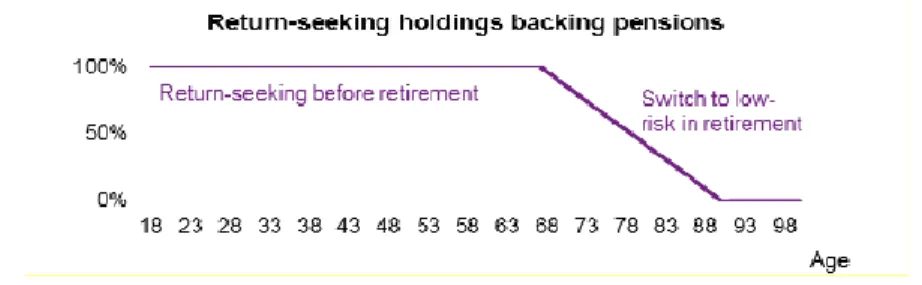
Figure 2: Return- seeking holding backing pension ... 24
Figure 3: Pension cut ... 26
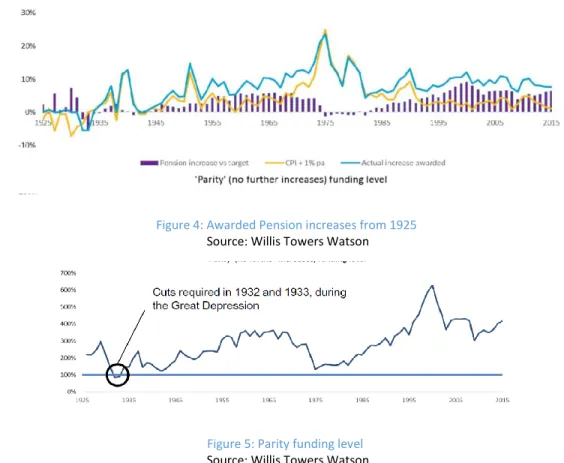
Figure 4: Awarded Pension increases from 1925 ... 27
Figure 5: Parity funding level ... 27
1 Introduction
This work is a report on a 5- month internship carried out at the Willis Towers Watson company, in the Lisbon Service Centre (LSC). The LSC performs actuarial valuations for UK pension schemes and other Western European pension schemes. During my internship, I was assigned to work with the UK pension schemes, performing valuation calculations specifically under the Defined Benefit (DB) scheme. The calculations, by UK laws, are expected to be performed and re-evaluated every three years.
The opportunity to work on the DB schemes increased my understanding of this type of schemes and of the underlying principles, and provided me access to statistics on the usage of this scheme, especially in the UK. This led to the observation of the decline in the use of DB schemes, due to the difficulty for companies to keep them open, because of the ever increasing liability, resulting from the longevity of the members, falling interest rates etc. (Boelaars & Broeders, 2019) These difficulties have led company sponsors to start searching for various alternatives that would be helpful in the reduction of liabilities, which in turn led to the rise of the Defined Contribution (DC) schemes, which characteristically shift risks from the sponsors to the members of the scheme instead. This then means the scheme’s risk lies on the members. This makes the DC arrangement unattractive and a cause for concern for most members, considering a lack of investment knowledge on their part.
This situation was the driver to a push for a new type of scheme that can help take care of the issues that plague both the DB and DC schemes. In recent years, a new scheme, the Collective Defined Contribution (CDC) scheme, has been developed and has been introduced with success in some countries around the world (First Actuarial, 2019). More recently CDC was also successfully brought to the UK Government’s attention by Royal Mail in conjunction with the Communication Workers Union (First Actuarial, 2019). An analysis of CDC schemes, that are a new risk sharing arrangement between the sponsor and the scheme members, is the crux of the matter of this report. The CDC scheme will be introduced in-depth, citing examples from other countries and more specifically studying the Royal Mail example, done in conjunction with Willis Towers Watson.
This report has been structured such that Chapter 2 provides brief introduction on Defined Benefits and Defined Contribution schemes, the journey towards a risk sharing arrangement, the proposed legislative structure, and the decisions reached from consultations by the UK Department of Works and Pension’s consultations.
Chapter 3 presents detailed material on how pensions under the different schemes are calculated, with a progression into a comprehensive study of the CDC schemes, appropriate comparisons of the schemes and examples of CDC cases in other countries.
Chapter 4 describes the analysis of the proposed CDC scheme design by Royal Mail, verifying how the scheme was able to meet the objectives set initially. The report ends with Chapter 5, which summarizes the work carried out and provides some personal conclusions based on the work done and the written report.
2 Collective Defined Contribution Schemes in the UK
2.1
Background Information
The new pension scheme that is presently being introduced to the UK pension market, and is the subject of his report, is of the Collective Defined Contribution type and would be under the UK private pension system. This system is home to other schemes like the Defined Benefit and the Defined Contribution, already established and in use in the UK. The reason for the introduction of this new scheme is to try to satisfy members of the already closing DB schemes and the ongoing DC schemes.
The Defined Benefit is a type of scheme with a fixed or guaranteed income in retirement, providing benefits based on the length of pensionable service, pensionable salary, the agreed accrual rate and the decrements under which benefits are taken (ill-health retirement, death). In a DB arrangement, members’ benefits are known in advance while the contributions are calculated from the expected benefit to be paid out. Usually contributions are shared between the employer and the employee. (My company pension, 2007)
Most DB schemes have closed and members are being automatically enrolled into Defined Contribution schemes, also known as a money purchase scheme (“Types of private pension”, n.d.) In this arrangement both the employer and employee contributions are invested and the returns on the investments are used to either buy annuities, take a lump sum, or any other benefit at retirement. Members’ retirement funds are based on the investment performance of each member’s individual pot. DC schemes may have various options of contributions for both the employer and employee, with the underlying assumption that the contribution rate remains fixed (or changes by age groups). As an example, employees may contribute 3% of their salaries, but it depends on the scheme, as some may allow the employee to decide his/her contribution rate and the company may decide to match the 3% or go higher.
Further details on the DB and DC schemes can be found in Chapter 3. The already established private pension schemes don’t sit down well with sponsors and members as we will show later.
2.2
Journey Towards a Risk-Sharing Arrangement
The decline of the DB schemes since the 1970s (Department of Works and Pensions, [DWP] 2008) was as a result of them being too dependent on the performance of the financial market as such, when the market was favorable it meant the scheme had enough assets to cover the cost of the DB benefits to be provided, and when the market was down (2000-2003, for instance), the scheme did not have enough assets to provide the benefits. The market was not the only factor that lead to the ultimate close of the DB schemes, the fact that members where living longer also did not make it better for the sponsors, as they had to pay pensions for longer periods. These factors, along with the ever changing rules and accounting standards (House of Commons Work and Pensions Committee, 2018), made companies close DB schemes and switch their members to a DC schemes, because sponsors/employers no longer wanted to bear the longevity risk, investment risk, and ultimately the risk of not having enough assets to meet their obligation.
The move to the DC schemes saw sponsors more relieved, but this joy was not felt by members, as they now had to shoulder the responsibility of all the risk (investment, lifespan etc.). Moreover, having to make their own investment discussions was even harder for people with no experience in investment.
This led to companies and members looking for an alternative to the failing system that would benefit both parties. To remedy this the United Kingdom’s Department of Works and Pension (DWP) opened various consultations relating to risk sharing and proposed legislation.
2.2.1 Department of Work and Pensions Consultations – Initial Discussions
As a response to the crisis, over the last decade, the UK Government commissioned a number of reviews of the private pension’s regulatory framework. The main purpose of these reviews and subsequent public consultations would be to encourage an appropriate pension provision and promote confidence in the market (DWP, 2008).
As mentioned above, in recent years, many employers began closing their DB schemes and shifted towards a DC approach. In the Risk Sharing Consultation: Government response (DWP, 2008), this decline is mentioned and some reasons for the employer’s decision to make this change were also detailed. The impact of a change from a DB to a DC approach was also under discussion, in particular the question of who – the employer or the employee – would be better placed to bear the different types of risks. This consultation also included one of the first “risk sharing arrangement” discussions and, in particular, it explored the potential of implementing a Collective Defined Contribution scheme in the UK, by taking other countries’ arrangements as examples - additional information on CDC schemes in other countries can be found in Chapter 4 of this report.
Whilst the first discussions around CDC started in 2008, there were no further developments on the topic until 2012, when the working group that launched the “Reshaping workplace pensions for future generations” consultation for the DWP was formed to give a boost to the UK’s pension strategy (PPI, 2018).
In 2014, DWP published a response (DWP, 2014a) to a consultation held in the previous year that comprised proposals for more innovative options for private pension provision. There were three main areas examined by this consultation;
More flexible Defined Benefit schemes (including ideas such as ability to pay fluctuating benefits, ability to convert the scheme to a Defined Contribution scheme upon leaving employment or changing the scheme’s pension payment date).
Greater certainty and guarantees to Defined Contribution schemes via models such as:
a) Money-back guarantee – this model proposes that that the accumulated savings available when a member decides to retire is not below the nominal value of the contributions made over the years to the scheme (DWP 2014);
b) Capital and Investment return guarantee – this is intended to offer guarantees when a member decides to shift their investment strategy from protecting their contributions to preventing loss of capital while growing the fund (DWP 2014);
c) Retirement income insurance – this model seeks to give some certainty about income in retirement to members before they retire, by using a portion of the fund to insure a minimum level of income (DWP 2014).
A new arrangement, known as Collective Defined Contribution scheme, which involves sharing the risk between the members of the scheme.
Further details on these areas can be found on DWP’s response to the consultation (DWP, 2014).
2.2.2 The Need to Regulate – Royal Mail and the 2018 Consultation
In 2014 the Pension Schemes Bill was introduced to Parliament, and on 26 June 2014, the bill was approved and became what is known as the Pension Schemes Act 2015. This Act was passed to encourage shared risk pension schemes and collective benefits among members and sponsors. It includes three main categories ("Collection: Pension Schemes Act 2015", 2014):
Defined Benefits.
Shared Risk (or Defined Ambition). Defined Contribution.
Focusing on the shared risk category, the Act allowed for schemes to pool contributions and risk, within the pension framework, which would be decided once the right regulations had been conveyed. Unfortunately this was put on hold after the elections of 2015 due to the low level of interest shown by employers, schemes and industries.
Two years later, in April 2017, Royal Mail decided to close their pension scheme - the RMPP, a DB scheme – and the proposed alternative was to replace it with a DC scheme. This decision didn’t go down well with the employees and scheme members, as the Communication Workers Union (CWU) of the Royal Mail thought that the proposed scheme would not be favorable to them, especially considering what their previous benefits were in a DB scheme, and under the new arrangement they would not be entitled to a guaranteed/known income after retirement. In fact, by switching from a DB to a DC scheme, as seen earlier in this chapter, the majority of the risks would be faced by the employees.
Royal Mail came up with a better solution – the aforementioned Collective Defined Contribution scheme, a pension arrangement that would aim to be beneficial to both parties, by increasing the certainty about the member’s potential retirement pension (when compared to a pure DC arrangement) whilst reducing the volatility of costs for Royal Mail (when compared to a DB solution) (PPI, 2018).
The collaboration between Royal Mail and CWU to establish a CDC scheme, has sparked some level of interest amongst other employers, employees and industry, and has given the government a reason to consult on the issues that need to be addressed before the scheme can be established.
Even though the concept of a CDC plan had been discussed and considered by the Government before, this idea was still relatively new and the major problem was that the existing regulation was not appropriate for this arrangement (Pension Schemes Act 2015). It was concluded that a new legislation would be needed for an appropriate regulation of the CDC.
There were some other concerns about the consistency of the CDC plans with the current UK pension system and its legislation, their actual benefits for both parties and the overall fear of adding too much complexity to a market that is already complex by nature (ABI, 2018).
The Government launched a consultation in November 2018 and a large number of responses given by organizations and individuals were received and subsequently published by the DWP in the Delivering Collective Defined Contribution Pension Schemes: Government response to consultation paper published in March 2019 (DWP 2019).
Some of the questions asked were:
Should the CDC benefits be classified as a type of money purchase benefit? What additional issue may arise from using the best estimate basis for valuation?
In this report we will discuss these two questions and the responses given by different organizations and individuals.
For the first question, most organizations felt it was right to classify the CDC as a form of money purchase as this would help to reduce the risk of the plan being reclassified and, most importantly, it would exempt sponsors from any future funding and debt provision the CDC might incur (future liabilities), hence reassuring sponsors of the scheme.
The DWP response to the consultation was; “It is the Government’s believe that the benefits should be classified as “money purchase” in order to give an assurance to the employers that this scheme will not allow for any additional unexpected costs for the employers.” (DWP, 2019, p. 43).
To answer the second question, many companies and industries believe the best estimate basis (details in the next chapter) is the right approach to take in managing the funding of the scheme, but there were also some concerns regarding the definition of the best estimate and it would be helpful to include the actual intent of the Best Estimate. Actuarial bodies believe that the concept “best estimate” might mean completely different things to different people (DWP, 2019, p. 43), and they suggested it be called the central estimate or neutral estimate. Others (DWP, 2019, p. 43).were more concerned with the model, since the best estimate depends solely on the accuracy of the model.
The DWP response to this question was “the DWP remains fully committed to using the best estimate approach as it is the most reliable way of understanding the scheme’s funding. In other for this to work they expect scheme trustees to provide adequate evidence, proving that they have taken enough actuarial advice with appropriate certification and intensive modelling to support the view that the underlying assumptions are within tolerance, in other to put to rest the worries about the best estimate been too optimistic or too prudent.” (DWP, 2019, pg.136).
The consultation also included the approval for the CDC. Even though more research and enquires are still being done, this decision was agreed upon after the November 2018 consultation which was backed by pension industry, insurance companies and other related bodies (DWP, 2018). Some of the decisions reach
for the new legislation for the structure of CDC scheme. As part of the 2018 consultation, a number of points were discussed – the result of the discussions will now be presented.
Members of CDC schemes would have access to pension freedom
, m
eaning it is up to the members from age 55 to make sure their pension last as long as it is needed. With that being said, members can pick and choose what to do with their savings once they reach retirement i.e. it is not mandatory that members buy an annuity with their pension funds instead they may take the fund as a lump sum or leave all/part of the fund invested and draw down income as required. Since the pension freedom benefits are being enjoyed by both DC and DB: DC members have the option to buy an annuity, take a lump sum or enroll in an income draw down;
DB members have more limited options, but are still able to request for a quotation of their fund value at retirement and transferring into a DC scheme or buy an annuity with an insurance company if they feel they would get a better or more secure pension.
There is no reason for members of the CDC scheme not to enjoy the same.
The legislative structure would allow for an easy move to other forms of CDC benefits provision; this structure would be done after the initial trial of the Royal Mail scheme and work will proceed with interested parties to develop a legislative framework for various models that have been suggested like the DC Master Trusts which is an investment vehicle that collectively manages pooled investment. The focus would be on managing risk adequately and not so much concerned with the size of the scheme. Limiting the scheme’s benefit provision to schemes set up by a single employer will therefore inevitably act as a check on minimum scheme size, but it’s not expected that a small company will want to take on the cost of setting up a CDC scheme. The DWP believes that current provisions and general trust law are sufficient for the single employer CDC model being proposed; it would be inappropriate to prescribe a professional trustee as a requirement for a CDC. A good trustee board should be selected based on collective expertise, systems and processes that would be suitable for the scheme, and not to propose an unreasonable risk of member detriment.
The consultation document made it clear that the scheme would operate a “targeted benefit”. The Government emphasized that because the benefit is not guaranteed (i.e. there will be a target benefit but in reality the actual pension may be higher or lower than the target), the scheme would need to submit the underlying calculation and assumptions which will be verified by an external actuary. This benefit would be reviewed annually, as part of an actuarial valuation, and adjustment would be made were needed. It will also need sufficient gauge to allow for the pooled longevity risk across its membership. In particular, the Government decided that it would be best to introduce CDC schemes gradually, where the initial scheme design would be just like the one proposed by Royal Mail and the CWU, but with room for future designs from other schemes and interested parties.
The consultation paper also highlighted some other key issues: The uncertainty around benefit levels;
The risk sharing and intergenerational issues; Tax.
The first point requires proper communication to the members, to help them understand that the benefit level can only be an estimate and not guaranteed, i.e. the estimate benefits payable might go down - while the increase rates are updated annually.
The second point refers intergenerational fairness - that is how the risk would be shared between generations. The Works and Pensions Committee raised some concerns on how the trustees would try to avoid pension cuts to pensioners at the detriment of younger members, adding a note on the fact that a similar situation occurred in the Netherlands where some schemes decided not to cut pensions thereby transferring the risk to younger generations as a response to post-recession funding difficulties (House of Commons Work and Pensions Committee, 2018). This has made employers and employees in the UK more concerned, that the CDC scheme would be treated in the same way.
Learning from the Dutch experience, the DWP as made it clear that intergenerational risk transfers are not part of the proposed CDC design, to avoid the issue of intergenerational risk from arising in the CDC, the scheme has the option to:
Link accrual rate to age: in this situation a younger members would have a higher accrual rate; Share risk amongst members of the same age range;
Adjust the investment strategy to take into account demographic changes.
With regards to the tax treatment, opportunities to register and benefit from tax relief, similar to that of the DC and DB, would be available. The scheme would have to pay income tax the normal way, a few changes are being made to the tax legislation to ensure that the scheme receives the same tax treatment (DWP 2019).
3 Collective Defined Contributions Schemes: In-depth
3.1
Introduction
This chapter gives an in-depth view of the CDC scheme with regards to the UK pension market and how this new scheme will be better for the UK workforce as, from what we saw in the second chapter, the Government is willing and has given the go-ahead to the setup of this scheme. This chapter also discusses the concept and design of the CDC; the modelling structure and scheme valuation; the level of returns for members; predictability of income in retirement, stability and (of course) the potential demand for the scheme.
The structure of the CDC has a few powerful and positive aspects that should improve retirement outcomes, when compared to the Defined Contribution scheme, and aims to produce a benefit similar to that of the Defined Benefit scheme. It also has shortfalls that will be discussed as well.
3.2
The Concept of Collective Defined Contribution Scheme
In order to introduce the details and motivation of the CDC scheme, it is important to give details on how pension and benefits are calculated in other types of private pension arrangements (the Defined Benefit and Defined Contribution schemes).
3.2.1 The Defined Benefit Scheme
Continuing from the discussion in the previous chapter, we will now present how pensions are calculated in this scheme. (WTW, 2019)
A member’s pension is calculated using a formula depending on the type of rule the scheme operates on. The two most common rules of a DB scheme are the Final Salary and the Career Average Revalued Earning schemes (CARE schemes). These rules or forms both make use of the member’s pensionable salary as a component in its formula. A Final Salary scheme, calculates the promised pension taking into account the member’s salary at retirement.
The promised pension of a member under the scheme is calculated as Pension =𝑆𝑎𝑙𝑎𝑟𝑦∗𝑆𝑒𝑟𝑣𝑖𝑐𝑒 (𝑡𝑜 𝑡ℎ𝑒 𝑣𝑎𝑙𝑢𝑎𝑡𝑖𝑜𝑛 𝑑𝑎𝑡𝑒)𝐴𝑐𝑐𝑟𝑢𝑎𝑙 .
A CARE Scheme calculates the promised pension taking into account the salary at each year; each year’s pension is then revalued to the date of decrement, usually in line with RPI (Retail Price Index) or CPI (Consumer Price Index), two of the UK’s inflation measures. Then
Pension =∑ 𝑆𝑎𝑙𝑎𝑟𝑦 𝑎𝑡 𝐶𝑎𝑟𝑒 𝑦𝑒𝑎𝑟 𝑖
𝐴𝑐𝑐𝑟𝑢𝑎𝑙 (1 + 𝑅𝑃𝐼) 𝑛−𝑖 𝑛
𝑖=1 ,
The accrual is the rate at which you build up pension benefits whilst still a member of the pension scheme; it could be 301 ,601 ,801 the lower the denominator the better the pension benefit you will receive.
Example Final Salary
Let’s assume a member has 4 years of service and is about to retire at the end of 2019, with the accrual rate of 1/60th. The member’s salary for the last 4 years are as follows. Furthermore, the member’s pensionable salary is the average of the two best consecutive years of service.
Year Salary
2016 $21000
2017 $24000
2018 $30000
2019 $31200
Based on the above, the member’s pensionable salary will be (31200+30000)2 = £30,600. According to the Final Salary scheme, the member’s monthly pension at retirement will therefore be
30600 ∗ 4 ∗601 = £2,040.
In the CARE scheme the calculations are a little more complex. Using the same example, the CARE revaluation is in line with inflation and revaluation happens 1 year after accrual.
We will obtain
Year Salary Accrual Pension Inflation
2016 21000 1/60th 350
2017 24000 1/60th 400 3%
2018 30000 1/60th 500 2.5%
The DB schemes can also provide different benefits depending on the decrements a member may fall into. These benefits may include a reduction in the member’s pension, if the member retires earlier than the normal agreed retirement age (NRA), or an increase in the benefits, if the member retires later than the NRA. Sometimes, the member is also entitled to the ill-health benefits i.e. benefits may be reduced or increased depending on the scheme. A member’s dependent may also receive benefits of no less than 50% of the accrued pension on the death of the member. These decrements may alter the way the above calculations are done.
Advantages of the Defined Benefit scheme
The most important benefit of the scheme is that it provides a fixed, pre-established, benefit for its members at retirement. The benefits are not dependent on asset returns.
Employers can use this to promote various business strategies by providing reduced early retirement options.
Employers have more access to more loyal staff, since the members know their retirement is secure.
Disadvantages of the Defined Benefit scheme
The major problem with this scheme is that members have no say in how the money is invested. On the employers’ side, business varies from year to year; this makes the plan complex and more
expensive to establish and maintain.
The Scheme pays an exercise tax when there is an excess contribution and when minimum contribution requirements are not met.
3.2.2 The Defined Contribution Scheme
Continuing from the discussion in the previous chapter, we will now discuss the options available to a member in this scheme during retirement and the people involved in managing the scheme (The Pension Authority, n.d.).
There are two main types of DC schemes:
Year Pension Inflation Inflation Inflation PENSION
2016 350 *1.03 *1.025 *1.02 390.09
2017 400 *1.025 *1.02 432.84
2018 500 *1.02 510
2019 520 520
The trust-based scheme, ran by a board of trustees who make the day to day decision regarding the scheme;
The contract-based scheme, in which the members have appointed a pension provider to help manage the scheme.
The member’s pension is dependent on the contributions made to the scheme, the duration of the contributions, return on the investment, the charges from the investment and how much a person takes as a lump sum. On reaching retirement, members have a number of different choices, when deciding on how they want to receive their own income: to take a tax free lump sum, buy an annuity or, depending on the scheme, enroll for an income draw down – these benefits are a result of the introduction of the pension’s freedoms, as mentioned in the previous chapter.
A lump sum is an amount you can chose to take from your pension pot. In the UK, a member can take up to 25% of the amount tax free, and the rest will then be subject to income tax. The remaining amount might be moved down into a flexible income product (income drawdown, capped drawdown, etc.) or used to purchase an annuity.
Income draw down was introduced in April 2015 as part of the pension freedom; in this system there is no limit on the amount the member can take from the drawdown funds. Under the option called ‘capped drawdown’, as the name implies, the amount allowed to be withdrawn is capped; this system was also introduced in April 2015.
An annuity is a fixed sum of yearly payment made to a person, this could be yearly or otherwise stated by the annuity agreement a member has. A DC member can take this option, in order to receive an income during retirement.
Advantages of the DC schemes
These plans may not look so interesting to members who grew up seeing their parents receive defined benefits, but this does not take away from its usefulness.
Keeping track of benefits – since the DC operates an individual fund value system, members have the option of knowing their benefits as this is simply the number of units a member holds multiplied by the value to those units.
Investment choice - employees are provided with the option to participate in investment decisions.
Choices around types of retirement - members have the right to choose what type of retirement product they want to buy.
Tax exemptions - some of them are contributions obtained from the member’s payroll deductions and are tax deductible.
Disadvantages of DC schemes
The major downfall of these plans is that members do not receive a guaranteed pension at retirement.
The Investment duration is a major factor in determining the benefits of older employees. Benefits of older members may be lower this could be as result of older members joining the DC
scheme without any starting capital. Thus the contributions made into the scheme and the short time of investing in low risk asset will not be enough to yield high investment returns.
3.2.3 The Collective Defined Contribution Scheme
These type of schemes has two defining features: The collective nature – the sharing of risk.
The defined contribution with regards to the employer and employee contribution.
In these schemes, instead of workers paying into individual pots, like in the DC scheme, members and their employers would make contributions into a single investment pot - this pot can be made up of members and sponsors from similar industries, for example. This fund is then invested as a whole in shares, bonds, mortgages, and other long and short term investments. The return on investments is shared between the members and so is any potential loss.
Benefits provided by the CDC scheme are based on the level of contribution and investment returns i.e. Targeted benefits. These are received in pension terms similar to what occurs for DB schemes, (where a pension is paid from the scheme’s assets) rather than in capital value as done in the DC arrangement. The DWP (DWP, 2018) suggested a valuation approach to derive a member’s retirement income within a CDC arrangement. As mentioned above, benefits would be a target and not a guarantee, so there needs to be a mechanism that balances out the scheme’s assets and the target level of benefits.
This can be done by (PPI, 2018):
Calculating the total amount of money needed to provide a targeted benefit to every member; Summing up the expected contributions for each member, to determine the total assets available
to provide benefits to all members;
Adjusting current benefit payments at retirement and the future benefits payable to actives and deferred members - these adjustments would depend on the increase or decrease rate of the expected assets required to make benefits payments;
Ensuring that the total value of benefits is equal to the total value of assets by adjusting the future target level of benefits.
The goal of this is to allow for yearly adjustment of the pension amounts in line with inflation.
The target benefits, as the name implies, are subject to change, which depends on the investment returns. If the returns are better than expected then we would expect a higher increase in form of bonuses and vice versa.
The required age for retirement income is usually from the age 65, this may change depending on the scheme and to reflect the future life expectancy.
This scheme would be treated in a similar way to a defined contribution for the purpose of accessing the company balance sheet, profit and loss statement, cash funding obligation and solvency requirements. The investment decisions would be made on an aggregate level, since the scheme operates on polling of assets rather than individual investment.
Advantages of the CDC
One of the biggest advantages would be that, from the perspective of the employer, this scheme would be treated as a DC in terms of associated risk, whilst for members, they would expect to receive a higher and more stable income when compared to the DC plans, because they are sharing risk with other members of the scheme.
The scheme offers investment decision made by professionals on behalf of the members of the scheme. This would be good for members as investigations show that members are not willing to make complex financial decisions. Also, given the risk sharing nature of this arrangement, it makes sense to have an overall investment strategy instead of a different strategy per member.
The pooling of the investment means that the scheme cannot change the investment strategy of any member and as such cannot invest in less risker assets when the member is approaching retirement because of this the members contributions would still produce a return above the inflation rate, this return would be higher when compared with the return from the DC investment strategy.
This plan can also have long term investments on a well-diversified portfolio, which may include stocks and real estate. This is difficult for the DC scheme to incorporate into its design, as the size of each member’s pot and the fact that investment can be different for each member of the scheme might cause a problem.
Disadvantages of the CDC
Employers fear that the Government might come up with new polices that may allow sponsors to make a form of contribution into the scheme when target benefits are not met.
Communicating benefits: there is a difficulty in communicating the benefits clearly in respect of the scheme - it is a thin line between letting the member know how much pension to expect and messaging that these benefits are not guaranteed. Also transparency may be an issue, as members would like to understand how the risks are shared and how the risk would directly affect them and specifying who is in charge over the benefits and contributions.
Benefit cuts: this may be a last resort for this scheme when in time of financial crisis. Under this arrangement, it is possible that a member receives a pension that is lower than the one he/she received in the previous year. All things considered, this is still better than the DC offerings because, unlike in the DC schemes, these cuts are not permanent and the scheme can prevent them if a buffer is used (funds used to reduce the effect of a shock). But this poses a worry for young savers, because they would be asked to pay more into the scheme during bad years, to help funding the buffer.
There is also a lack of investment choice similar to what we have in the DB and DC section; That is, members would not be allowed to make any investment decision similar to what we have in a
DB scheme. While the trustees investment decisions may be limited to a variety of assets like bonds, stocks, real estate, infrastructure and securities similar to what is done in the DC.
3.2.4 Design of the Collective Defined Contribution Schemes
The CDC is a blessing and a curse when it comes to scheme design, as there are several possibilities in which this scheme can be designed, but in order to gain public approval, this scheme would have to adhere to some flowing restrictions.
The contributions would be fixed and payable to the plan by both the members and employers, or one of the two. The benefits would be presented to the members in a similar way as it is in the DB scheme, i.e. a benefit formula would be used to communicate the target benefit the members would get. Two examples of potential CDC scheme designs will now be presented.
Points-based system
As an example, the points are illustrated below using the Point based system suggested by Ray Martin, Winner of the Defined Ambition competition June 2013(The case for collective DC, 2013).
Martin proposed a CDC plan with the following features:
Contributions made to the scheme by the members, or on their behalf, are applied to buy pension points. Pension points are earned by workers for contributions made each year, based on their individual earnings; at retirement the accumulated pension points are multiplied by a pension point value, which converts them into pension payments; “A pension point would secure a pension from pension maturity age 67 of 1pound per month or 12 pounds per annum” (AON, 2013);
The pension points purchase terms vary, depending on the age of the member, and would be set each year by the government’s actuary;
The investment goal of the trustees would be to achieve a 3% return above CPI over 10-20 years. From his proposed plan, we observed that this point based system enables the cost of the basis benefit to vary by age, this allows it to take on board expected return. This is achievable at the cost of being less clear to members as it would make it almost impossible for members to plan for their retirement because they would not be able to figure out their expected number of points for the duration of their entire careers. This issue can be easily fixed with a workaround that uses modern technology that provides an automated point calculator accessible from the schemes website.
CARE-type design
Another example is the illustrative Career Average plan design (AON 2013).
In this plan, the contribution would be a fixed 10% of the member’s salary. Unlike the other designs, this 10% is totally paid by the sponsor, with the aim of providing a target benefit plan at 1% of the career average salary in line with CPI (floor of 0% that is in situations where CPI is negative, 0 would be assumed) and payable when the member gets to 65, for clarity a member joining the plan 30 years to retirement would expect his targeted pension to be 30% of his revalued career average pay. The pension would be
paid out from the schemes assets and on death in retirement 50% of the member’s pension would be given to their spouse.
This plan would measure its funding level yearly using the CARE-style benefits which have accrued up to that point in time, assessment of the funding level is done using a market value of assets and a set of best-estimate market-consistent assumptions.
The scheme would try to keep its funding level between 90%-110%, in situation where the funding levels falls outside this range then the following adjustment are carried out:
1) Revaluation target for both current and future would be changed, this change is done using uniform percentage adjustment, with the resulting evaluation subject to a floor of 0; 2) One-off benefit reduction, this would be applied uniformly as a fixed percentage to all
members.
From these possible designs, we have observed that this plan has a lot of similarity with a DB design with a little difference in accrual rate, pension ages, the size of the funding gate, to mention a few.
One issue with this is around protection with regards to pension cuts. As we have seen before, the CDC scheme offers target benefits and not guaranteed pensions. This could generate confusion among members if they are told that they are entering a “CARE-type” scheme which would be associated with a DB offer.
Regarding the pension decreases, one way to reduce the effects of these cuts is by making the bonus for actives and deferred members more variable. (AON, 2013).
3.2.5 Risk Sharing
The CDC intends to provide a risk-sharing arrangement obtained using cross subsidies between memberships. Subsides occurs when one section of the schemes helps improve the outcome of another section.
Some of the risk-sharing goals of the CDC design are:
Providing equal pension level, regardless of age – this can be obtained by giving younger members a higher accrual rate;
Allowing for potential decreasing adjustment made to the pension level to be spread over a period of time;
Providing members who live longer than expected with higher total pension payments, similar to the DB schemes and insured annuities.
3.3
The Benefits and Shortfalls of a CDC when compared to a DC and a DB
scheme
The CDC scheme provides a savings and retirement income for its members. This is attractive to people who don’t want to make complex financial decisions during their retirement and is similar to what is done in the DB schemes, as in these pension plans the scheme’s trustees make all the investment decisions. On the other hand, members who are part of a DC scheme have to choose where their investment pot would
be invested, or opt for a so-called lifestyle strategy – this is an investment strategy which automatically switches members savings into another fund or funds that generally have lower risk profile as the member approaches retirement and is usually defined by the scheme’s sponsor.
As mentioned before, a CDC arrangement provides its members with a form of shelter from risk, because the investments are pooled together, this strategy can accommodate a situation where a member or group of members live longer than expected. This security is not available in a DC scheme, as members have to bear that risk all on their own, and in a DB scheme the trustees and the scheme are left to bear the burden of the members living longer than expected.
CDC schemes also have the possibility of obtaining a greater return for its members at a lower cost, by pooling of risk and not having to switch to less risker assets when a member approaches retirement. This is similar to what is obtainable in the other risk sharing scheme like Defined Ambition schemes and Master Trust schemes as it is not a totally new idea. The scheme is expected to have a smoother initial pension amount when compared to an annuity - this will be verified later on in this report. Even though we expect to have a smooth pension we cannot say the pension would be fixed or guaranteed, as it solely depends on the investment returns and market conditions and as such the actual income may increase or decrease at any point in time. A decrease is very unlikely as we will discuss in Chapter 4.
A CDC scheme provides retirement income to its members directly from the scheme’s assets. Due to leaving their assets in the scheme, critics would claim that members may lose their pension freedoms. Effectively, if the majority of the CDC members exercised their freedom it would make the scheme unrealistic or implausible.
The scheme offers little or no flexibility around the retirement age, the aim of this is prevent members form transferring out of the scheme whenever they like, as the structure of the investment strategy depends on the retirement age. But in an event when all members retire and decide to transfer out or during a change in legislation, that is a termination event, the plan would convert to a DC, thus giving members the option to transfer out. (Anticipated Collective Defined Contribution Pension Design, 2018) Since the CDC is a collective pool, each member doesn’t have his/her own independent pot, and this makes the valuation of liabilities as difficult as it is in the DB scheme. Members who choose to transfer out of a CDC scheme may have to deal with a reduced value through a market value adjustment (MVA), if the scheme has an implicit deficit.
Being fair can be a problem with the scheme - if the risk sharing is not fair it could lead to the scheme closing, with older members taking out more than their fair share from the scheme at the expense of new joiners or younger members. This could also happen in the case where the scheme uses a buffer, the older members would be protected from a cut but young members would have to refill the buffer with their contribution and thus receive a lower pension.
The scheme also deals with the demographic risk – this occurs because as the scheme matures the number of pensioners can become larger than the number of people entering the scheme (active members), which in turn may lead to a case where the working population is quite small, hence the scheme will be forced
to invest in liquid investment (investment that can easily be converted to cash) to pay the pension to the retirees.
In conclusion, through the pooling of risk, CDC schemes offer members the chance of getting a pension greater than what they would get from the DB and DC scheme and can be more suitable for people who are interested in a steady flow of income in retirement (risk adverse members) when compared to the DC arrangement. For employers who want to offer their members a reasonable pension amount, but don’t want to shoulder the responsibility of the liabilities, the CDC is a reasonable alternative to the DB plan. The CDC would offer choices that are consistent with pension freedom and therefore be a good alternative to the DB and DC also for this type of members.
3.4
Risk of an Employer in providing a CDC scheme
For the CDC scheme to be appealing to employers, there must be no chance of it ever been treated as a DB scheme, where the employer bears all the risk. Due to this, the CDC should represent a fixed cost scheme for the employer. This does not imply that the employers contributions are completely fixed because the employer has the right to increase or decrease its contribution, but in this scheme the employer has no obligation to top up the scheme in other to meet up with the promises of the pension (the CDC operated on a targeted benefit so there are no fixed promises to begin with).
We would expect the CDC scheme to be treated as a DC scheme under IAS19, “The Profit and Loss account would show pension costs at the fixed employer contributions, and the CDC scheme would not feature on the employer's balance sheet” (WTW, 2019). If the scheme suffers serious adverse investment it may not only be unable to apply pension increases but also have to cut the pension level - that’s why proper communication is key in this scheme, as employees have to understand that this is a real possibility and it is featured in the scheme design.
In cases of poor investments, the employer may be under pressure to top-up the scheme to prevent pension cuts, but in no case is there an obligation to do so – it may be willing to do so if the top-up is affordable and does not represent a serious cost.
This might be risky to the employers, because the auditors might see it as an obligation and may lead to the scheme been treated as a DB scheme, most especially after a repeat top-up. But if the scheme is operated in the intended way there would be no funding or accounting risk.
3.5
CDC in Other Countries
As seen before, even though this type of arrangement is not yet available in the UK, it did not originate in this country and already exists in other parts of the world.
3.5.1 Netherlands
One of the countries with the most successful Collective Defined Contribution scheme is the Netherlands. In recent years, the Netherlands have seen members moving away from the Defined Benefit plan for similar reasons as those discussed in this report for the UK.
Two main aspects differentiate the Dutch design from the one that is being proposed in the UK. The first is the level of contribution – members make a contribution of around 20% of the pensionable salary, which is high when compared to that of the UK.
The second difference is that the Dutch pension system operates the CDC using 3 different types of funds (The Dutch pension system, n.d.):
Industry-wide pension fund – this funds are from a whole sector e.g. civil service, construction industry, hotel and catering industry etc.;
Corporate pension funds – this funds are from various single companies;
Pension funds from independent professionals e.g. medical specialist, professors, etc.
But in recent times the regulatory board has reduce the number of corporate pension funds and independent funds, merging them into the industry-wide pension fund because the Dutch system believes it’s better to operate in smaller working industry-wide funds than in large potentially problematic corporate pension funds. (AON, 2013).
A deeper understanding of the Dutch pension scheme can be found in Van Rooij et al. (2007) and Ponds and Riel (2009).
Some instances where the proposed CDC in the UK differs from the Netherlands
UK pension provision differs from the Netherlands prior to its implementation, that is, the way the scheme is viewed in both countries differ.
o In the UK, the CDC is viewed as the middle ground between the DB and the DC, while in the Netherlands all DB schemes are essentially CDC. Although they share features with the DC schemes, like the fixed contribution rates (which can be adjusted every 5 years), the Dutch DB schemes can adjust the benefit promises, making these more of a targeted benefit than a guarantee.
o In the UK, CDC schemes will be treated entirely as DC schemes with regards any future responsibility from the sponsor to provide increased contributions to improve the schemes funding. CDC schemes in the UK would not be allowed to convert existing DB benefits to a CDC scheme, similar to what is done in the Netherlands.
The behavior towards pension provision differs between both countries.
o Until the long period where Dutch savers experienced non-indexation and nominal cuts, they generally believed that “pension was synonymous with security” (PP1, 2018), while in the UK trust in the pension scheme has been on a steady decline.
o Due to these trust issues experience in the UK pensions, young savers are developing a greater interest in risk-sharing pension, as these schemes can provide them with a better return than when they invest alone, and it is believed that these schemes would be able to rectify the issue of unfairness in the current pension system.
3.5.2 Canada
The Netherlands is not the only country operating a risk-sharing scheme. Canada is another example, more specifically, the New Brunswick province. This province adopted this risk-sharing scheme as a part of its public sector pension reform. To deal with issue similar to what is occurring in the UK, the cost of more traditional retirement options such as the DB plans started increasing at a rapid pace, causing financial constraints.
The Canadian plan includes some rules that specify from the outset how members’ pensions would be adjusted (either increases or decreases in their benefit entitlements). This is an important characteristic of the New Brunswick plan, as it helps members to understand and be prepared for potential changes in their level of pension. If members’ expectations are well managed, there is good communication regarding different possible scenarios and their impact in the member’s contributions and benefits. (PPI, 2018) Below, we give the example of the New Brunwicks Hospitals’ plan (Mann, 2013) – which includes an adjustment mechanism as a pre-set rule to handle the impact of changes in the scheme’s funding level, i.e. assets over liabilities (Munnell & Sass, 2013).
The example gives the sequence of actions to be taken by the New Brunswick hospitals plan, in response to changes in financial conditions.
The assumed changes where:
The scheme funding ratios fall below 100% for 2 years in a row and the plan fails to meet its risk management goals.
When this happens the plan would increase its contribution by 1% split evenly between employers and employees - this is done in order to keep the liabilities and assets balanced. Then the benefits would be recalculated using a full actuarial reduction - the base benefits accrual rate for future services would be reduced up to 5% and benefits would be uniformly reduced throughout the scheme based on past and future service, until the plan meets the risk management goals. Keeping in mind that the reduction would be done gradually and not at once, so that the member´s do not have to deal with a drastic cut;
The funded ratio rises above 105%.
When this happens, given that its risk management goals can still be met, the plan uses a portion of the surplus as follows:
a) Reverse previous deficit.
i) Reverse any increase in contributions - that is if the contributions were increased by 5% to accommodate for asset loss, this increase would be stopped.
ii) Reverse any reduction in base benefits - that is stop any reduction in the members benefits when there was a loss in the plans assets.
iii) Reverse any reduction in early retirement benefits.
b) Index pensions and base benefits accruals up to a full consumer price index (CPI).
c) Increase individual benefits, as needed - this would allow retirees to receive a benefit based on their final five-year average salary.
d) Provide lump-sum payments to offset past shortfalls relative to a benefit based on final five-year average salary, indexed to the CPI.
Some features that can be adopted from the New Brunswick risk sharing plan (AON 2013) into the UK market:
Purposed pension plan should be subject to risk management, annual checks including stress testing;
The plan should be able to show that it will be sustainable on the long run;
The plan must be transparent, that is, the goals and risks must be clearly-stated and in reasonable time.
In conclusion, the CDC in the UK does not have to be modelled after the CDC schemes in other countries, given the differences in legislation, culture and behavior towards pension provision, but these overseas schemes may offer valuable lessons for the UK to watch out for. What is most important is that the UK CDC plan comes under the umbrella of risk-sharing schemes by involving in fixed contributions and risk sharing between members (PP1, 2018).
4 Royal Mail; a Pioneer Case of the Collective Defined Contributions
Plan in the UK
In this chapter, we will present the Royal Mail’s proposed scheme design. We will also introduce some details on the operation, investment strategy and risk sharing. Finally, we will present some results obtained from modelling this design.
4.1
Royal Mail and CWU Objectives/ Goals of the CDC
We have seen before the reasoning why the Royal Mail and the CWU pushed for this risk sharing scheme. Now we will discuss the expectations they have for the scheme (Royal Mail 2019):
Providing suggested increases at an average rate of CPI +1% pa, Royal Mail and CWU hoped for a better benefit outcome when compared to the DC annuity purchase;
Providing intergenerational fair benefits - this is obtained by providing an equal pension level to all members, adjusted for increases depending on the level of assets available in the fund; Preventing increases from being materially affected by population changes in the scheme, as an
example by closing the scheme to new members;
Providing relatively low risk of pension cut and, in cases where it does happen, limit the annual impact of said cut to 5% by using a mechanism that would spread the cut across a period of time; Most importantly, making this design one that can be easily communicated to members and that
can properly manage their expectations.
At the end of this chapter, we will see if all these expectations have been met.
4.2
The structure of the CDC Benefits
This structure is formulated having the Royal Mail proposed scheme in mind, but it can change to suit various pension schemes.
For a member to be eligible to enroll into this scheme, he/she must have at least 12 months of service in Royal Mail. A member’s pension would be based on a fixed contributions. This approach is in line with the Money Purchase scheme, as indicated by the DWP for regulatory purposes and discussed in Chapter 2 of this report.
The overall contribution to the CDC scheme was defined as a fixed 15.2% of pensionable pay (The Society of Pension Professionals, 2019). Members would not have to give up 15.2% of their salary to make this contribution. Instead Royal Mail would pay 11.2% of each member’s pensionable pay and the member would be left to contribute only 4%, which would be deducted from the members’ salary. The pension amounts would be determined based on the assets available in the scheme.
The CDC will provide pension to its members payable for life, calculated using an accrual rate of 1/80th of the pensionable pay in each year of service, plus increases and minus cuts. Simplified it is an aggregate to a career average type pension, payable at the retirement age of 67. For members still in the scheme after
age 67, they continue to accumulate benefits including increases and cuts, just like any other member of the scheme.
The scheme would also provide a DB lump sum payment to its members, calculated using an accrual rate of 3/80th of the pensionable pay, plus accumulated increases. This is an additional benefit (independent from the CDC arrangement) that was used in Royal Mail DB scheme and that was retained in the new arrangement.
In the situation where the member decides to transfer out of the scheme, the transfer value would be the member’s share of the scheme’s total assets, where the share would be derived using the same basis as determining the increases and cuts, but improved to allow returns on the scheme’s assets. It is important to note that the rules for transferring out of the scheme are still under discussion. (DWP, 2018)
The increases and cuts are shared uniformly by all members, in accordance with the pension increase legislation. On the death of any member a 50% member’s pension would be paid to their dependent, less state benefits, and it is payable for 3 years plus a lump sum at the end of the 3 years. The amount of the lump sum on death during service would be 4 times the member’s pensionable salary.
4.3
Process of a CDC
4.3.1 IncreasesThe first concern of the scheme is how the pension increase would be determined, as the pensioners will want to know what they will receive at the end of the day (targeted benefits). The pension increases would be based on a form of the Pension Adjustment Mechanism set in the rules during the scheme design stage; in this adjustment mechanism there are sustainable level of increases applied to all members under the annual valuation exercise, to be funded by the scheme.
4.3.2 Annual Valuation
This would be done on an accrued basis, comparing the assets held with the value of pensions already earned.
The reason for the valuation is to compare the current assets to the parity level. The parity level can be seen as the cost of funding payments of the accumulated pensions over the remaining life of the plan, if they were to receive no future increases.
The plan also allows for a headroom for future increases. The headroom can be seen as a safe spot; when the asset/fund levels are in this range the scheme can give out pension increases to its members. This can be seen in Figure 1 below.
4.3.3 Best Estimate Assumption
The Best estimate assumptions reflect the anticipated experience with no provision for risk of adverse deviation (Actuarial Standard Board, n.d.). Liabilities would be valued using the best/central estimate assumptions while assets would be valued at market price, the returns on future assets i.e. Discount rates, would allow the issuance of an investment strategy for future changes in the allocation of assets supporting the acquired pensions.
Figure 1: Pension Adjustment Mechanism
Source: Willis Towers Watson
4.3.4 Pension Adjustment Mechanism
This includes the annual valuation previously discussed, which helps the trustees to know the level of the funds in the scheme and if it is below or above parity.
In the situation where the funds are above parity, increases can then be applied to the pension amounts (i.e. there is headroom for increases to be applied). The rate of increase to be applied to the year’s pension amounts is calculated as the long-term margin that lies below or above the assumed CPI curve used in the valuation. When the funds are above parity, the increases are subject to a floor of 0%.
When the funds fall below parity, the scheme applies pension cuts, to help the plan recover. The cuts are up to 5% per year. If the loss requires a higher cut, it would be spread across a period of up to three years. Figure 1 shows an approximation of the cuts applied, as in reality the plan actuary’s calculations would allow for pension payments out of the plan during parity, which would result in slightly different funding ranges than shown. These adjustments are detailed in Figure 1 above.
As an example, and in order to clarify how the Pension Adjustment mechanism would work in a case where the scheme’s funding level is below the parity level, let us assume an asset value loss of 30% in a given year. For the scheme to remedy this it would have to reduce its liability by a similar percentage, so that the funding level at the end of the valuation exercise was again 100%. This can be done by reducing the long-term planned/target level of increases.
To understand this, let us also assume the scheme operated a target 3% pension increase per year, with an average term to payment of pensions of 20 years (i.e. they are expecting to pay, on average, 20 years’ worth of pensions to their members). The asset loss would be made good by a 1.5% pa reduction in increases, over the remaining life of the plan. With this reduction, the plan is now fully funded with an increase of 1.5% - provided that the remaining assumptions and market conditions remain the same. The headroom for future increases would be reduced, and if by next year the scheme is able to recover 10% of the assets of the pension then the plan would be funded for a 2% annual increase.