2 Network Self-Determination and
the Positive Externalities of
Community Networks
Luca Belli
Abstract
This paper argues that existing examples of Community Networks (CNs) provide a solid evidence-base on which a right to “network determination” can be constructed. Network self-determination should be seen as the right to freely associate in order to define, in a democratic fashion, the design, development and management of network infrastructure as a common good, so that all individuals can freely seek, impart and receive information and innovation.
The first section of this paper argues that the right to network determination finds its basis in the fundamental right to self-determination of peoples as well as in the right to “informational self-determination” that, since the 1980s, has been consecrated as an expression of the right to free development of the personality. The paper emphasises that, network self-determination plays a pivotal role allowing individuals to associate and join efforts to bridge digital divides in a bottom-up fashion, freely developing common infrastructure. In this perspective, the second section of this paper examines a selection of CNs, highlighting the positive externalities triggered by such initiatives, with regard to the establishment of new governance structures as well as the development of new content, applications and services that cater for the needs of the local communities, empowering previously unconnected individuals.
The paper offers evidence that the development of CNs can prompt several positive external-effects that considerably enhance the standards of living of individuals, creating learning opportunities, stimulating local entrepreneurship, fostering the creation of entirely new jobs, reviving social bounds amongst community members and fostering multistakeholder partnerships. For these reasons, policymakers should design national and international policy frameworks that recognise the importance of network self-determination and facilitate the establishment of CNs rather than hindering their development.
2.1
Introduction: Network Self-Determination as a
Bottom-up Answer to Market Failures
Community Networks (CNs) are crowdsourced networks developed in a bottom-up fashion to be utilised and managed as a common good. As stressed by the Declaration on Community Connectivity CNs are “structured to be open, free, and to respect network neutrality. Such networks rely on the active participation of local communities in the design, development, deployment, and management of shared infrastructure as a common resource, owned by the community, and operated in a democratic fashion.”4 Importantly, these
community-driven networks give rise not only to new infrastructure but also to new governance models and new business opportunities that complement and fill the gaps left by the classic Internet access provision paradigm.5 Indeed, this traditional paradigm, where
mainstream-network operators deploy infrastructure in a top-down fashion, presents some clear limitations that are tellingly exemplified by the almost-4-billion individuals6 that still lack Internet connectivity,
to date. Therefore, the emergence of CNs represents a direct reaction from the populations that are closely interested by the wide range of existing digital divides and do not want to give up what this paper defines as “right to network self-determination.”
The thesis of this paper is that groups of individuals experiencing digital divides, as well as any other community, have a right to free development of network infrastructure and that “network self-determination” is an instrumental condition to allow the full exercise of individuals’ human rights. Such network self-determination can be enjoyed when individuals can freely associate in order to define, in a democratic fashion, the design, development and management 4 See Declaration on Community Connectivity, at p. 236 of this book. The Declaration is also
available at https://comconnectivity.org/article/dc3-working-definitions-and-principles/
5 In this paper, the expression “traditional Internet access provision paradigm” refers to the Internet access model based on the existence of a mainstream-network operator and a plurality of subscribers. As clarified by RFC 7962, the expression “mainstream network” denotes those networks that are usually large and span wide areas; are controlled in a top-down fashion by the operator; require a substantial investment to be built and maintained; and do not allow user participation in the network design, deployment, operation, governance, and maintenance. See (Saldana et al. 2016).
6 For a precise estimation, compare the number of world Internet users and the current world population at http://www.internetlivestats.com/internet-users/ and http://www.worldometers. info/world-population/
of network infrastructure as a common good, so that they can freely seek, impart and receive information and innovation.
The first section of this paper will argue that the right to network determination finds its basis in the fundamental right to self-determination of peoples7 as well as in the right to “informational
self-determination”8 that, since the 1980s, has been consecrated as
an expression of the right to free development of the personality. This paper will emphasise that network self-determination plays a pivotal role allowing individuals to associate in collective entities, joining efforts to bridge digital divides in a participatory and bottom-up fashion. In this perspective, the second section of this paper will examine a selection of CNs, highlighting the positive externalities triggered by such initiatives, with regard to the establishment of new governance structures as well as the development of new content, applications and services that cater the needs of the local communities, empowering previously unconnected individuals.
CNs are a prime example of how individuals can enjoy the right to network self-determination. However, before analysing the conceptual bases of this right and entering the CN debate, it is important to stress that the populations affected by digital divides – which have a concrete interest in exercising network self-determination establishing CNs – may have quite diverse profiles. In fact, although digital dividends are particularly noticeable between urban and rural populations, they may also affect individuals residing in different areas of the same city, where inhabitants enjoy dissimilar standards of living.9 In many countryside areas and in the
peripheries and slums10 of many metropoles, the population is scarce 7 This fundamental right is prominently enshrined in Article 1 of the Charter of the United Nations as well as in Article 1 of both the International Covenant on Economic, Social and Cultural Rights, the International Covenant on Civil and Political Rights.
8 See the seminal “Census” decision of the German Constitutional Court. Judgment of 15 December 1983, BVerfGE 65, 1-71, Volkszählung.
9 For an analysis of existing digital dividends, see World Bank (2016); ITU (2016a).
10 UN-HABITAT defines slums as “urban areas lacking (i) durable housing of a permanent nature that protects against extreme climate conditions; (ii) sufficient living space which means not more than three people sharing the same room; (iii) easy access to safe water in sufficient amounts at an affordable price; (iv) access to adequate sanitation in the form of a private or public toilet shared by a reasonable number of people; (v) or security of tenure that prevents forced evictions.” See http://mirror.unhabitat.org/documents/media_centre/sowcr2006/ SOWCR%205.pdf
and individuals may enjoy significantly lower standards of living and, for these reasons, operators neglect the expansion of network infrastructure, due to the insufficient return on investment. Hence, the “traditional” model of Internet access provision, which is driven by investments of telecom operators, should not be considered as a one-size-fit-all solution because, although it may prove efficient to cater connectivity to urban and wealthy populations, it clearly needs to be complemented with different approaches to meet the needs of a more diversified – and less wealthy – public. Notably, the market approach may face two types of failure in both rural and peripheral areas:
¡
¡the prospect of a missed return on investment may lead to
no coverage or to such low quality of service that potential or existing users may be discouraged from subscribing to available Internet-access offerings;
¡
¡due to lack of competition, Internet-access offerings may be prohibitively expensive for most of the economic deprived areas, where inhabitants may need to sacrifice food to afford communication.11
Besides the aforementioned elements, many individuals may not realise the interest of Internet connectivity because the services and content they would need, such as local e-government services, local e-commerce, e-health and local content tailored on the linguistic exigencies of the local population, are not available online.
The emergence of CNs is therefore a concrete response to these situations, with the aim of truly empowering the unconnected, allowing individuals and communities to enjoy network self-determination, having access to all the opportunities that connectivity can provide, while becoming able to generate even more opportunities. As the second section of this paper will argue, the analysis of existing community-networking initiatives provides a solid factual base for the promotion of a collective right to network self-determination, which can be enjoyed through the establishment of community-led networks. Indeed, CNs have the 11 See Rey-Moreno et al. (2016).
potential to allow the creation of new socio-economic opportunities for the local communities that engage in the development of the networks, truly participating to the evolution of the Internet.
2.2
The Right to Network Self-Determination
It is important to reiterate that one of the primary features of CNs is to be tailored on the needs of the communities at the origin of such initiatives. This consideration is particularly relevant, if we think about connectivity in terms of self-determination and if we consider CNs as the reflex of local communities’ needs and will. The ultimate goal of CNs is to respond to the necessities of the communities who builds them and, in this perspective, the prominence of the community interest is so relevant that CN-members may decide not to be connected to the Internet but rather to build local intranets or to connect the CN to the Internet only sporadically.12 In some other cases, the community members
may even decide to structure the CNs as radio-based networks, like the Fonias Juruá network13 in the Brazilian Amazon, rather
than IP based networks.
The following subsection will argue that the right to develop network infrastructure stems from the fundamental rights to self-determination of peoples as well as to enjoy the benefits of scientific progress and its applications.
2.2.1 The Fundamental Right to Self-Determination of Peoples as a Foundation of Network Self-Determination The fundamental right to self-determination plays an instrumental role allowing individuals to enjoy all their inalienable human rights and, for this reason, it is enshrined as the first article of both the Charter of the United Nations and the International Covenants of Human Rights. According to these international-law instruments, states have agreed that “all peoples have a right to self-determination” and that “by virtue of that right they are free to determine their political status and to pursue their economic, 12 The description of a selection of CNs which have opted to primarily work as intranet and connect
only occasionally to the Internet can be found in Rey-Moreno (2017). 13 See Antunes Caminati et al. (2016).
social and cultural development.”14 Furthermore, Article 55 of the
UN Charter corroborates the aforementioned provisions enjoining UN member states to generate stability and well-being “based on respect for the principle of equal rights and self-determination of peoples” while both Articles 1(3) of the Covenants oblige the signatories “to promote the realisation of the right to self-determination.” Although such provisions have been interpreted, in a post-colonial context, as the right to territorial secession of each ethnic, linguistic or religious group, this is not the interpretation based on which this paper proposes to construct the right to network self-determination. On the contrary, this section argues that network self-determination should be associated to the interpretation of the right to self-determination as the collective right of a community to determine its own destiny, promoting socio-economic development and self-organisation.
I should reiterate that network self-determination shall not be associated with territorial separation, but rather to the essence of the right to self-determination as the right of choice and a right of process belonging to peoples, which is formally recognised through binding international-law instruments. When it comes to connectivity, this means, first, having the possibility to choose to design and organise in an independent and democratic fashion the shared network infrastructure that will allow individuals to interconnect and, second, having the possibility to implement such choice. In this perspective, we should look at CNs not only as a concrete strategy to expand connectivity but also as a laboratory for new governance structures allowing the transposition of the democratic organisations of local communities into the governance of the electronic networks that provide connectivity to such communities. For these reasons, public policies should facilitate and promote the establishment of CNs.
It is important to stress that network self-determination allows building a direct bridge between human rights and connectivity. Connectivity is instrumental to allow individuals to fully enjoy freedom of expression and, in the Internet environment, this 14 For a thorough overview of the right to self-determination, see Cristescu (1981).
fundamental right to seek, impart and receive information and ideas should be seen as every individual’s right to access, develop and share content, applications and services, without interference. Importantly, it should also be stressed that the right to communicate should be considered as a right rather than an obligation to connect with the rest of the world permanently or to use a specific type of technology or applications, imposed by an “external intervention.” As such, individuals should be able to self-determine how they wish to organise the network infrastructure allowing them to improve their political, economic and social status and independently decide which kind of technology, applications and content are best suited to meet the needs of their local community. Therefore, network self-determination should be considered in terms of cultural, economic and technological autonomy, which is essential to further human rights and dignity of every individual and group of individuals.
In this perspective, policymakers should consider these latter points carefully, when deliberating on how Universal Access Funds should be utilised. Indeed, these funds could have a significant impact if they were utilised – at least in part – to support the establishment of community networking initiatives, thus providing concrete opportunities for individual empowerment, rather than being used for inefficient subsidies or even for “unknown”15 purposes. National
governments should try to devote at least a fraction of the financial resources collected through Universal Access Funds to programmes providing seed funding to the organisations or individuals that propose solid plans for the development of CNs, which offer a wide range of positive externalities, as I will stress in section 2.3. The next subsection will explore the second conceptual basis of network self-determination that can be found into “informational self-determination”, a fundamental right that was first and foremost elucidated by the German Constitutional Court.
15 In Brazil, for instance, Universal Access Funds collected between 2001 and 2016 amounted to roughly $ 7billion but, according to the Brazilian Federal Court of Auditors, only 1% was utilised for universalisation programmes while 79% was utilised for “unknown” purposes. See http:// convergecom.com.br/wp-content/uploads/2017/04/Auditoria_TCU_fundos.pdf
2.2.2 Informational Self-Determination as a Foundation of Network Self-Determination
In 1983, the German Supreme Court recognised explicitly the individual right to “informational self-determination” as an expression of the fundamental right to have and develop a personality, enshrined in Article 2.1 of the German Federal Constitution. It is important to stress that this right is not a German peculiarity and is formally recognised under international law. Indeed, article 22 of the Universal Declaration of Human Rights affirms that “everyone is entitled to the realisation of the rights needed for one’s dignity and the free development of their personality,” while the International Covenant on Economic, Social and Cultural Rights consecrates this fundamental principle with regard to the human right to education and to participate in public life. Particularly, the Covenant’s signatories have agreed that the right to education “shall be directed to the full development of the human personality and the sense of its dignity [...] and enable all persons to participate effectively in society” (Article 13.1). Moreover, the free development of personality is explicitly considered as instrumental to exercise the fundamental right to “to take part in cultural life [and] to enjoy the benefits of scientific progress and its applications” (Article 15).
Importantly, since the eighties, the right to informational self-determination has become a cornerstone of personal-data protection. Indeed, the reasoning of the German Court stressed that the right to informational self-determination underpins “the capacity of the individual to determine the disclosure and use of his/her personal data,”16 thus ascribing to individuals
the right to choose what personal data about themselves can be disclosed, to whom, and for what purposes such data can be used. In this context, it must be noted that, over the past twenty years, the exercise of informational self-determination has been increasingly challenged by the transformation of the collection and processing of personal data into the main source of income of the majority of Internet services. Although Internet 16 See “Census” decision, BVerfGE, para. 65.1.
access and data collection have been traditionally treated as separated issues, it is increasingly evident that this is not the case anymore. To understand why these issues are increasingly intertwined and why informational self-determination is also a conceptual basis of network self-determination, it is important to clarify three major points.
First, the business models of most online services and mobile applications rely on the collection and monetisation of users’ data, rather than being based on the payment of a fee, which, on the contrary, is the core source of revenue in the subscription model, traditionally utilised by Internet access providers. Although the “zero price” business models of online services presents such services as “free,” it is widely recognised that users de facto pay the price with their personal data, which are collected and monetised for various purposes, such as user profiling for targeted advertising.17 This model is highly lucrative and, for this reason,
over the past decade, authors and institutions have incessantly stressed that “data is the new oil”18 and that personal data are “the
new currency of the digital world,”19 a “new asset class”20 and “the
world’s most valuable resource.”21
Second, it must be noted that many users do not realise the value of their personal data nor the fact that that these data represent the price of the online services they access “freely”. Furthermore, the strong majority of users are not aware of the implications of the collection and processing of their personal data, being submerged by unread22 contractual terms and
complex privacy notices to which they carelessly consent, in 17 For an extensive analysis of how Internet companies collect, combine, analyse and trade
individuals’ personal data, see Christl (2017).
18 The phrase was coined by the British mathematician Clive Humby, in 2006, and was subsequently made popular by the World Economic Forum 2011 report on personal data. See WEF (2011). 19 See Kuneva (2009).
20 See WEF (2011). 21 See The Economist (2017).
22 As noted by a study conducted by MacDonald and Cranor (2008) “individuals should spend 8 h a day for 76 days every year to read the privacy policies of the websites they visited on average.” It is worth noting that, since the popularisation of smartphones, the number of terms of services agreed upon by users has possibly doubled, considering that to the websites regularly accessed one has to add a conspicuous number of mobile applications.
order to enjoy the supposedly “free” services.23 For instance,
the majority of users ignore that their personal data are utilised to record and manage their behaviour in real-time and to take a wide spectrum of very sensitive decisions on themselves, such as assessing credit applications and determinations of creditworthiness based on their digital behavioural data.24 In his
context, it seems important to make a third consideration. Over the past years, the collection of personal data has become so relevant and strategic that several players have started applying the logic of the zero-price model to Internet access offerings, starting to sponsor limited access to specific applications, presented as “free” – because their data consumption is not counted against users’ monthly data-allowance – but de facto paid by users via the collection of their personal data. Indeed, individuals’ personal data have become such a valuable asset that business players are becoming ready to sponsor access to their applications to be able to collect and utilise the data produced by the (new) users of such applications.
The abovementioned offerings are generally categorised as “zero rating”25 plans and are presented by some stakeholders as
a potential solution to “connect the unconnected.”26 However, it
should be noted that, despite rhetoric, the purpose of most of these offerings is not philanthropic but rather to orientate user experience into predefined applications,27 the access to which
will be paid by users with their “free labour”28 as data producers,
rather than with money. Indeed, in light of the value of (personal) data, it may be worth for a corporation to sponsor access to its applications in order to concentrate the production of users’ data, which are the real price paid by users to access digital services. 23 For a critical perspective on the notice-and-consent model enabling the bulk collection of data online and a proposal of a user-centred data management model, see Belli, Schwartz and Louzada (2017).
24 These elements, amongst many others, are thoroughly analysed by Christl (2017). 25 For an analysis of zero rating models, see Belli (2016b).
26 This slogan is particularly utilised by the private sector (e.g. GSMA 2016) but has also been integrated by more institutional venues, such as the ITU. See, for instance, ITU (2017).
27 I define such phenomenon as “Minitelisation of the Internet.” See Belli 2016b and 2017.
28 For an analysis of the value produced by application users’ free labour, see Beverungen, Böhm and Land (2015).
Notably, users’ personal data may be particularly valuable when users are previously unconnected individuals, about which no data has ever been collected. In this sense, one of the reasons why zero-rating plans have been criticised as “digital colonialism”29 is
the way they intervene in developing markets, encouraging the use of specific – and usually foreign – applications, rather than encouraging connectivity. Fostering the use of a limited set of applications may be seen as a strategic move to create new loyal data-producers rather than new Internet users that may develop potentially competing applications. In this respect policymakers in developing countries should carefully considered that sponsored applications de facto drain “the most valuable resource” out of a country in exchange of access to few applications. Such model takes considerable advantage of the fact that individuals in developing countries cannot afford an alternative and that both individuals and policymakers seem to be completely unaware of the tremendous value that personal data generate and will keep on generating in the future for those who exploit them.
On the contrary, CNs foster network self-determination, for they allow individuals to decide autonomously how to pursue their economic, social and cultural development, without having to trade personal data for services. The goal of CNs is indeed to empower community members that will become new active participants of Internet, thus enjoying the benefits of connectivity while contributing to the Internet’s evolution in a bottom-up fashion. Numerous examples30 of different CN formats
demonstrate that CNs are not only feasible, but they can also be scalable and trigger a wide range of positive externalities for the local communities that build them. Importantly, such positive externalities include the creation of an ample range of new services. As I will stress in the next section, existing examples of CNs suggest that these initiatives are valuable for capacity-building purposes, improving digital literacy and access to knowledge, as well as for the production and circulation of local 29 See Chakravorti (2016); Shearlaw (2016).
content and applications, thus reviving local economies or even generating entirely new economies.
Therefore, CNs play a significant role in promoting individual rights, in general, and the right to self-determination of peoples and informational self-determination, in particular. First, CNs foster freedom of expression and of association. Second, they strengthen informational self-determination, since CN members are not obliged to trade personal data for access. Third, the establishment of CNs regularly entails the inclusion of local community members into ICT education experiences, which allow them to learn how to develop new services, tailored on the community necessities, thus maximising Internet generativity.31 This latter point crucially
explains the relevance of CNs, which can truly empower previously unconnected communities, triggering a virtuous circle of knowledge-and-innovation sharing, while furthering individuals’ freedom of expression and freedom to conduct a business.
The following section will offer evidence that the development of CNs can prompt several positive externalities that may considerably enhance the standards of living of individuals, creating learning opportunities, establishing efficient social organisations and stimulating local entrepreneurship.
2.3
Positive Externalities of Community Networking
There is widespread recognition amongst CN developers and scholars that CNs are positive contributors to the local socio-economic environments.32 Besides providing access to informationand knowledge, CNs specifically focus on the needs of local communities, providing community-tailored services while allowing community members to advertise and sell their products and services both locally and globally. Participants of many CNs have developed a variety of tools aimed at organising the community life in a more efficient way, for instance providing maps or shared planning tools, 31 The concept of generativity can be defined as “a system’s capacity to produce unanticipated change through unfiltered contributions from broad and varied audiences.” See Zittrain (2008: 70).
but also providing services spanning from messaging applications and social-networking platforms to music or video broadcasting applications and local e-commerce platforms.
Hence, CN initiatives have the potential to both revive local economies and reinvigorate community engagement in local politics, while making local administrations more efficient. These latter points become particularly relevant when we consider that the areas affected by lack of connectivity are frequently also the most affected by recession.33 In this perspective, it
becomes even more interesting to assess the potential benefits that CNs may deploy regarding local economy and governance, with particular regard to promoting employment opportunities for the local populations.
Even in developed countries such as the US, hundreds of communities and millions of individuals are disconnected or can only choose amongst a limited range of offerings, which are frequently too expensive, unreliable or include prohibitive data caps. Approximately 19 million Americans are in these conditions and, in rural areas, “nearly 20 percent lack access even to service at 4 Mbps/1 Mbps [and] 31 percent lack access to 10 Mbps/1 Mbps.”34 In this context, CNs become a very viable option to
avoid social and economic exclusion of those – especially rural – communities that would otherwise be condemned to lag far behind the rest of the connected country. This if one of the reasons why CNs are springing up in the US, driven by the belief that “if I can get people at home going to school online, I can raise up my education attainment level, which is only going to help me attracting employers in the long run [and] there are so many economic and social benefits of this.”35
33 As highlighted in figure 1, the U.S. example shows that rural unemployment is not only higher than urban unemployment but it is also accompanied by a decrease of population, which may further exacerbate the negative effects of unemployment. See USDA (2016). Similar considerations have been put forward by reports released in other countries hit by recession, as stressed by the UK Local Government Association (LGA), according to which “jobseekers in the countryside have been hit harder by the recession than their counterparts in towns and cities.” See LGA (2009).
34 See FCC (2016).
35 This perspective is shared by the vice-chair of the Letcher County Broadband Board. See Rogers (2017).
120 115 110 105 100 95 0 2000 01 02 03 04 05 06 07 08 09 10 11 12 13 14 15 Rural employment Rural population Urban employment Urban population
Figure 1: Population and unemployment rate in rural and urban America.36
CN debates and analyses frequently underappreciate the positive externalities generated by these networks, giving more prominence to the technology utilised to connect individuals or the governance model implemented to organise the CNs, rather than the concrete uses of connectivity and the benefits this may produce for the newly connected communities. The purpose of this section is to focus on the external effects of community networking and, to do so, I will scrutinise four examples of CN, established in four different countries presenting very diverse socio-economic environments. The examples have been chosen not only for their difference in size and technical features but also for the significant difference regarding industrialisation and average income amongst the countries where these CNs are established. Indeed, the CNs analysed in this section have been chosen to demonstrate that successful examples of community networking may be found and can be achievable in almost any kind of environment.
2.3.1 Guifi.net
Guifi.net is the biggest CN in the world and probably the most renowned and most studied example of community networking.37
Founded in 2004 as a telecommunications technology project in the Osona County, in Catalonia, Spain, the aim of Guifi.net has been, since the very beginning, to solve the broadband Internet access difficulties that rural areas frequently face, due to the reticence of traditional operators to deploy their networks in such regions.38
It should be noted that Catalonia is one of the wealthiest areas of Spain, which is categorised as an advanced economy39 and, in
2016, was ranked 26th amongst 174 ITU members, by the global ICT
Development Index.40 These elements are particularly important
to understand the context in which Guifi.net was developed but also to emphasise that deployments of CNs are not limited to developing countries. On the contrary, low levels of connectivity may be common in developed and developing countries alike and, for this reason, the CN approach has very concrete applications in virtually every type of country.
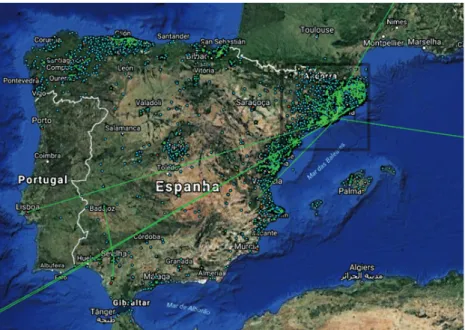
As emphasised in figure 2, Guifi.net currently covers a broad area and has reached roughly 85,000 users that may be grouped in 34.000 active nodes, which have typically 2.5 users per node.41
Indeed, as it happens in many CNs, every node corresponds to a household, which has usually 2.5 inhabitants in the areas spanned by Guifi.net. Besides being the biggest and the most populated CN in the world, Guifi.net is also particularly outstanding due to the great amount and variety of services42 that its members have
developed and use on a regular basis. Indeed, the Guifi.net original idea to deploy network infrastructure as common-pool resource, 37 For an in-depth analysis of Guifi.net, see Baig et al. (2015) and Baig et al. (2016).
38 See https://guifi.net/en/what_is_guifinet
39 See e.g. IMF (2017), according to which the Spanish GDP per capita in 2016 was $US 27,012. 40 See ITU (2016: 12).
41 In a communications network, a node is a connection point that can receive, create, store or send data along distributed network routes. Each network node – whether it is an endpoint for data transmissions or a redistribution point – has either a programmed or an engineered capability to recognise, process and forward transmissions to other network nodes. See http:// searchnetworking.techtarget.com/definition/node
42 A complete list of services developed by the Guifi.net community can be found at https://guifi. net/node/3671/view/services
to be exploited in a fair and sustainable way, has favoured the establishment of “a disruptive economic model based on the commons model and the collaborative economy.”43 In this sense,
it is interesting to note that the utilisation of a commons model to develop and manage network infrastructure has influenced other Internet layers, fostering collaborative application-and-content development. As Baig et al. (2015: 153) argue, the Guifi. net cooperative model is itself the reason why new, small, local entrants can easily develop new services, given the reduction of the entry costs and mutualisation of initial investments. Amongst the ample range of services developed by Guifi.net members, it is worth mentioning:
¡
¡8 direct Internet gateways and 306 proxies; ¡
¡48 Web servers;
¡
¡31 File Transfer Protocol or shared disk servers;
¡
¡13 Voice over IP servers; ¡
¡13 broadcast radios;
¡
¡6 instant messaging servers (jabbers) and 7 Internet Relay Chat servers;
¡
¡5 videoconference servers;
¡
¡4 mail servers.
In light of the above, an element that policymakers should consider carefully is the fact that, besides generating new content and services, CNs like Guifi.net can be net job creators. Indeed, Guifi. net demonstrates that, entrepreneurs and developers may be keen to develop and offer new services new services. Moreover, every CN needs to be maintained by a team of professionals, thus the mere establishment of a CN is likely to create jobs at least regarding the CN maintenance. In this perspective, Guifi.net has offered an employment to 37 certified professionals44 and 13
non-professionally registered (i.e. non-full time) installers.
43 See https://guifi.net/en/what_is_guifinet
44 The certified professionals may be individuals or small and medium enterprises, thus elevating the number of persons employed by Guifi.net to several dozens, because every certified enterprise may employ up to 10 individuals.
Figure 2: Guifi.net nodes localisation as of July 2016.45
It is therefore important to note that CNs have the potential not only to provide affordable connectivity to previously-unconnected communities but also to resuscitate local economies, foster the creation of entirely new jobs, services and business opportunities. Furthermore, the development of CNs frequently entails the cooperation between CN members and local institutions such as local administrations, libraries, schools or universities. The case of Guifi.net is also emblematic in this regard, having established multistakeholder partnerships and cooperation with several hundred local institutions. Such high number of partnerships and widespread support from local stakeholders seems to be one of the key ingredients for the success of CNs.
2.3.2 Nepal Wireless Networking Project
The Nepal Wireless Networking Project (NWNP) was established in 2002 with the original aim of providing Internet access and telephony services to the Himanchal Higher Secondary School, an education institute in the Nepali district of Myagdi. (Pun et al. 45 See https://guifi.net/en/node/2413/view/map
2006) Differently from the Guifi.net example, NWNP is located in one of the poorest and least developed countries in the world. In fact, Nepal presents very high unemployment rate46 and was
ranked 142nd amongst 174 ITU members by the 2016 global
ICT Development Index.47 In this context, initiatives aimed at
enhancing connectivity for the benefits of local populations are not only very welcome but they have the potential to enhance dramatically the life standards of the affected communities. Shortly after NWNP was created, the CN founder, Mahabir Pun, decided to set more ambitious goals, aiming at bridging digital divides “from a grassroots perspective”48 and, over the course
of the years, NWNP turned into a social enterprise dedicated to bringing the benefits of wireless connectivity and ICTs to the populations living in several mountainous areas of Nepal. Importantly, the visionary strategy of Mahabir Pun considered connectivity as propellant for socio-economic development of the local communities and combined the construction of network infrastructure with the organisation of capacity-building programmes and with the development of services that could respond to the needs of the local populations.
Figure 3: a NWNP tower is installed on a Nepali Himalayan peak.49
46 See the World Bank overview of Nepal, available at http://data.worldbank.org/country/ nepal#cp_wdi
47 See ITU (2016: 12). 48 See Pun et al. (2006:4).
Critically, the integrated approach consecrated by NWNP considered and stimulated the positive externalities of connectivity ab initio, thus establishing wireless infrastructure with the explicit purpose of going beyond selling Internet-access subscriptions. In this perspective, the aim of NWNP is the sustainable empowerment of the local community through the fulfilment of five different goals:50
¡
¡To allow reliable communications in the less accessible areas of Nepal through the provision of Voice over IP services, email applications and the organisation of a Nepali language bulletin boards, facilitating community discussions while simultaneously fostering e-governance;
¡
¡To increase educational opportunities for local community members through the establishment of e-learning programmes and trainings aimed at overcoming the shortage of qualified teachers in the rural areas, while creating local intranets allowing to access and share pedagogic material;
¡
¡To allow access to quality healthcare by providing telemedicine
programmes and remote medical assistance. Importantly, this point was implemented in partnership with several hospitals;51
¡
¡To foster e-commerce allowing villagers to trade their locally produced goods by creating an online version of local market-places, supported by local intranets;
¡
¡To generate jobs with a particular focus on the younger generations, thanks to the provision of capacity building programmes made available in local tele-centres.
It seems needless to state that this integrated approach is precisely what makes CNs or any other connectivity effort successful. Policymakers willing to design a sustainable connectivity agenda should simply copy and paste the bullet-points mentioned above. Notably, NWNP has proved to be particularly successful because of the great number of very diverse start-up initiatives it has generated over its 15 years of life. Several social enterprises including e-agriculture, medical-content-provision applications and smart environment services have been developed thanks to 50 See Pun et al. (2006:5-7).
NWNP, improving the standard of life of thousands of individuals in numerous ways. As an instance, villagers regularly explore the e-agriculture application Haatbazar to organise local farming activities such as yak raising and cheese production, while local farmers have been using NWNP to trade livestock, to receive veterinary advice and access up-to-date veterinary information. Furthermore, to stimulate usage of ICTs by women, the NWNP team started developing pregnancy-related content that could be easily shared via feature phones. Such strategy proved so successful in fostering acceptance and use of technology by women that an Android-based application called Amakomaya was recently developed to deliver medical information to pregnant women via smart phones. Lastly, several weather stations have been connected to NWNP, to provide instant meteorological information to local communities while helping to enhance the local anti-poacher surveillance system, developed by NWNP members to monitor the Chitwan National Park, thus protecting several endangered species.
2.3.3 Telecomunicaciones Indígenas Comunitarias A.C. Telecomunicaciones Indígenas Comunitarias Asociación Civil52
(TIC-AC) is an initiative run by the NGO Rhizomatica.53 The work
of Rhizomatica consists in creating and promoting open-source technology that helps people and communities build their own networks. Simultaneously, Rhizomatica develops and supports governance strategies aimed at implementing the sustainable development of CNs and the local communities. TIC-AC was founded in 2013 and its successful example of CN deploying GSM infrastructure played a pivotal role in demonstrating the interest of and need for a policy framework facilitating CNs in Mexico. Decision 73/201654 of the Federal Telecommunications Institute of Mexico
(FTI) institutionalised the possibility to establish CNs, creating the first telecommunication service license for “social indigenous use,” 52 See https://www.tic-ac.org/
53 Established in 2009, Rhizomatica aims at making alternative telecommunications infrastructure possible for people around the world dealing with oppressive regimes, the threat of natural disaster, or the reality of living in a place deemed too poor or isolated to cover. See https://www. rhizomatica.org
which allowed the installation of GSM-based CNs in the Mexican states of Oaxaca, Chiapas, Veracruz, Guerrero and Puebla. The FTI Decision has been hailed as an historic resolution, being the first formal act in the world to institutionalise a telecommunication license for social indigenous use.55
Figure 4: localisation of the communities connected by TIC-AC56
Although Mexico is considered an emerging market57 and is
currently ranked 92nd amongst 174 ITU members, by the global
ICT Development Index,58 it is important to note that the state
of Oaxaca, where TIC-AC is established, is amongst the least developed in the Mexican federation.59 The Oaxaca state is
in the south of Mexico and is renowned for its most rugged terrains, with mountain ranges, narrow valleys and canyons. Such orographic configuration, together with a low population density, have traditionally been considered as an obstacle to the deployment of telecom infrastructure. On the other hand, the same factors have helped preserving indigenous culture, making the state population one of the most diverse in the country, accounting for 53% of Mexico’s total indigenous language 55 Although Comunicado 73/2016 is the first regulatory act to officially adopt the term “social indigenous use” license, it must be noted that the development of CNs to connect indigenous communities has been pioneered by the Kuh-ke-nah Network (K-Net) that, since 2001, enables First Nations, peoples to communicate and build new skills in the Ontario province, Canada. See http://grandopening.knet.ca/
56 See https://wiki.rhizomatica.org/index.php/Main_Page/es 57 See, for instance, IMF (2017).
58 See ITU (2016: 12).
59 According to the Mexican Institute of Statistics and Geography, the GDP per capita of the Oaxaca state in 2015 was equal to $US 3,615. See INEGI (2015).
speaking population.60 In this context, the double purpose
of TIC-AC is to provide connectivity while letting the local populations self-determining how their network infrastructure should be organised and utilised to meet their needs, allowing a sustainable development and preserving their culture.
TIC-AC is a GSM-technology based CN that caters communication services to roughly 3000 users. Amongst the services developed by the TIC-AC community, Voice over IP applications are probably the ones having the greatest impact, allowing community members to communicate and organise themselves as well as to stay in contact with relatives migrated abroad for a small fraction of the price previously needed to afford domestic and international calls. The project is run by a team of nine and supported by 20 more individuals, which are employed as managers of the 20 networks composing TIC-AC. Hence, in addition to the provision of telecommunications services and Internet connectivity, TIC-AC has also created 29 direct jobs for the local community, while fostering the development of new services for the local communities. Importantly, the project has been so successful that other civil society actors have spontaneously replicated it, using the same strategy to empower communities in other areas.61
2.3.4 QuintanaLibre
QuintanaLibre is a CN developed by the NGO AlterMundi and situated in the area of José de la Quintana, in the Argentinian province of Córdoba. Argentina is categorised as a developing economy62 and, in 2016, was ranked 55th amongst 174 ITU
members, by the global ICT Development Index.63 In this
context, AlterMundi helps small communities building their own communications infrastructure, thus bridging the digital divides that are severely affecting rural areas. Particularly, the AlterMundi 60 For an overview of the indigenous languages spoken in Oaxaca and of the number of speakers, see http://cuentame.inegi.org.mx/monografias/informacion/oax/poblacion/ diversidad.aspx?tema=me&e=20
61 See, for instance, the SayCel cellular network Project, available at http://tinyurl.com/ycn3oksh
62 See, for instance, IMF (2017). 63 See ITU (2016: 12).
model64 aims at overcoming the challenges imposed by the rural
environment in which CNs are frequently established. Since its inception AlterMundi has worked to design an effective, easy to implement and cost-efficient technology allowing to overcome the scarcity of networking experts, the reduced income65 and the
lack of infrastructure that generally characterise rural areas, while developing a replicable network architecture that may be easily transposed to any realities.
The QuintanaLibre network is structured in 70 nodes that provide Internet access to circa 280 connected devices. Although the CN is maintained through voluntary work, a number of grants have been obtained over time to develop the AlterMundi model and experiment it through the QuintanaLibre network. The AlterMundi association currently employs 15 people and several individuals have been hired to develop software, hardware and elaborate documentation, thus creating numerous jobs, since QunitanaLibre’s creation, in 2012. Importantly, QuintanaLibre was established in the context of a collaboration between AlterMundi and the National University of Córdoba with the goal of sharing infrastructure and promoting research and development regarding CNs. The establishment of a 50-Km link allowing direct connection with the communications tower of the National University of Córdoba allows to freely exchange data, connecting the CN with the rest of the Internet. Particularly, this collaboration allows all AlterMundi-affiliated CNs to utilise the University’s bandwidth when the University network is not utilised by students and academic personnel, during night and weekends, thus making an optimal use of a resource paid by public funds.
Importantly, QuintanaLibre members have developed several applications tailored on the needs of the local community, including a local information portal, a chat service, a VoIP server, community radio streaming, a file sharing system and several gaming applications. Moreover, the AlterMundi-affiliated networks 64 For an analysis of the AlterMundi network model, see Belli, Echánz & Iribarren (2016).
65 According to the World Bank, Argentina’s GDP per capita was equal to $US 19,934, in 2016. However, data regarding rural Argentina may be significantly lower. See http://databank. worldbank.org/data/reports.aspx?source=2&series=NY.GDP.PCAP.PP.CD&country=
provide Internet access to three schools, which are connected through the regional network, as well as to public spaces such as squares, bus stops and local cultural centres.
Figure 5: the distribution of QuintanaLibre’s nodes, as of July 2016.66 AlterMundi’s main server, housed within the datacentre of the University of Córdoba, is utilised to facilitate QuintanaLibre’s services and to provide different services to other CNs, based both in Argentina and abroad. Such services have been developed in partnership with the Código Sur collective,67 with the aim of
providing infrastructure and development resources to local communities, prompting socialisation, organisation and knowledge-sharing amongst individuals. The partnership established in the context of Código Sur has been particularly fruitful, prompting the development of an ample range of free and open source applications, including hosting, streaming and mailing services as well as virtual private networking services.68
66 See http://bit.ly/2tmsutX
67 See https://www.codigosur.org/
2.4
Conclusions: Community Networks as
Implementation of Network Self-Determination
The examples analysed in the previous section demonstrate that community networking initiatives can be successfully established in very diverse contexts. CNs may be considered as a prime example of how network self-determination can be implemented, empowering individuals with the possibility to reap the benefits of connectivity and deploying many positive external effects, able to enhance the quality of life of entire communities. Importantly, the fact that CNs are crowd-sourced initiatives does not only mean that individuals and organisations pool their resources and coordinate their efforts to build network infrastructures. It also means that the individuals involved in the design, implementation and maintenance of the CNs can learn and experience first-hand how Internet technology functions. As such, local populations previously excluded from the information society have the possibility to develop the capacities necessary to concretely benefit from connectivity, by communicating, acquiring knowledge and, most importantly, creating and sharing innovative applications and e-services that are tailored to meet the necessities of the local communities. Such initiatives have, therefore, the potential to give rise to entirely new socio-economic ecosystems, built by the local communities for the local communities and beyond, in a quintessentially bottom-up fashion.However, it is also imperative to stress that the design, implementation and management of a CN should not be considered as trivial tasks and that the achievement of successful and sustainable CNs requires, first of all, vision and, secondly, the definition of a solid strategy and a reliable governance structure. These elements have allowed the analysed CNs to thrive in very dissimilar circumstances and should be considered as essential requisites for any community networking initiative. Furthermore, the analysed cases shown that the development of sustainable CNs frequently entails the cooperation with local institutions such as public administrations, hospitals, schools, universities or libraries. Multistakeholder partnerships with existing institutions can greatly reduce overhead while guaranteeing stability and, potentially, economic and organisational sustainability of the
CNs, mutualising costs and optimising resources. Moreover, this type of multistakeholder cooperation and engagement, involving public institutions, local civil society and local entrepreneurs, exemplifies meaningfully the positive externality that only CNs have been able to generate so far, reorganising local communities, creating business opportunities and strengthening social bounds amongst the locals.
It is worth highlighting that the latter elements are precisely what differentiates CNs from other “traditional” strategies, which have been proposed, to date, in order to “connect the unconnected.” Indeed, differently from strategies typically promoted by expansionist business players to connect individuals, the goal of CNs is to let the local population self-determine how to interconnect, by building new infrastructure and new services in a democratic and bottom-up fashion, rather than “being connected” in accordance to strategies defined by external agents, whose principal interest is obviously not the one of the local community. In this perspective, the infrastructure built by the local populations should not be considered as the “last-mile” of the network but rather rather as the “first mile,”69 which is autonomously developed and utilised by
the empowered communities, where individuals enjoy the right to network self-determination.
As famously argued by Norberto Bobbio, human rights emerge gradually, for they reflect historical evolutions, being the results of “the battles human beings fight for their own emancipation and the transformation in living conditions which these struggles produce.”70 In such perspective, it is not absurd to argue that,
just as individuals enjoy the fundamental rights to freedom of expression or to basic education, so they should also enjoy the right to network self-determination. There is indeed no reason why individuals should not be free to associate to define, in a democratic fashion, the design, development and management of network infrastructure as a common good, in order to freely seek, impart and receive information and innovation.
69 See Echániz (2015). 70 See Bobbio (1993:26).
Furthermore, as demonstrated by the examples analysed in this paper, the affirmation of a right to network self-determination is already happening de facto even before being consecrated de jure. Indeed, the proliferation of CNs offers a patent example of how individuals are willing and able to establish network infrastructure to improve their standards of life and to manage CN democratically, for the benefit of the community, when they are allowed to do so. Lastly, the analysed examples tellingly demonstrate that, when individuals with vision and a credible plan lead the efforts to expand connectivity, the result may be impressive. The magnitude of the positive externalities generated by CNs is particularly relevant when we consider connectivity as an essential means to empower people via education, communication, efficient organisation and new business opportunities. In this regard, the efforts of the UN IGF Dynamic Coalition on Community Connectivity71 (DC3) are
notable because they offer a shared understanding of what CNs are and how network self-determination can be enjoyed via the establishment of such networks.
More research and further cooperation are needed to unleash the potential of CNs but existing examples already demonstrate that CNs are a viable strategy to expand connectivity and empower people. Such examples also create a solid evidence-base on which the right to network self-determination can be constructed.
2.5
Acknowledgements
The author would like to express sincere gratitude to, in alphabetical order, Nicholas Echániz, Erick Huerta, Leandro Navarro and Mahabir Pun, for the precious information they were so kind to provide, regarding the CNs analysed in the second section of this paper. Sincere gratitude goes also to Carlos Rey-Moreno for the useful comments on the first draft of this paper as well as to Bruno Vianna and Ritu Srivastava for the complementary information they were so kind to provide.
2.6
References
Antunes Caminati, F., Diniz R., Orlova A., Vicentin D., Olivier P.J. and Lara M., Beyond the last mile: Fonias Juruá Project – an HF digital radio network experiment in Amazon (Acre/Brazil) in Belli, L. (Ed.) (2016a)
Baig, R. et al. (2015). Guifi.net, a Crowdsourced Network Infrastructure Held in Common. In Computer Networks. N° 90. http://dx.doi.org/10.1016/j. comnet.2015.07.009
Baig, R. et al. (2016). Making Community Networks economically sustainable, the guifi.net experience. GAIA ‘16 Proceedings of the 2016 workshop on Global Access to the Internet for All. http://dl.acm.org/citation. cfm?doid=2940157.2940163
Belli, L. (Ed.) (2016a) Community Connectivity: Building the Internet from Scratch Annual Report of the UN IGF Dynamic Coalition on Community Connectivity. http://tinyurl.com/comconnectivity
Belli, L. (Ed.) (2016b). Net Neutrality Reloaded: Zero Rating, Specialised Service, Ad Blocking and Traffic Management. Annual Report of the UN IGF Dynamic Coalition on Network Neutrality. Rio de Janeiro: FGV Direito Rio Edition.
http://tinyurl.com/zerorating
Belli, L. (2017). “Net Neutrality, Zero rating and the Minitelisation of the Internet.” Journal of Cyber Policy. Routledge. Vol. 2. N°1. http://dx.doi.org/10.1080/2 3738871.2016.1238954
Belli, L., Echánz N. and Iribarren G. (2016). Fostering Connectivity and Empowering People via Community Networks: the case of AlterMundi. In Belli L. (Ed.) 2016a
Belli, L. Schwartz M., Louzada L., (2017). Selling your Soul while Negotiating the Conditions: From Notice and Consent to Data Control by Design. In The Health and Technology Journal. Vol 5. N° 4. Springer-Nature. https://link. springer.com/article/10.1007/s12553-017-0185-3
Beverungen, A., Böhm S., Land C. (April 2015) Free Labour, Social Media, Management: Challenging Marxist Organisation Studies. Organisation Studies. Vol 36, Issue 4. https://doi.org/10.1177/0170840614561568
Bobbio, N. (1993). L’età dei diritti. Turin: Einaudi, 1993. Translated by Cameron A. (1996). The Age of Rights. Polity Press: Cambridge.
Chakravorti, B. (16 February 2016). Lessons from Facebook’s Fumble in India. Harvard Business Review. https://hbr.org/2016/02/lessons-from-facebooks-fumble-in-india
Christl, W. (June 2017). Corporate Surveillance in Everyday Life: How Companies Collect, Combine, Analyse, Trade, and Use Personal Data on Billions. A Report by Cracked Labs, Vienna. http://crackedlabs.org/dl/CrackedLabs_ Christl_CorporateSurveillance.pdf
Cristescu, A. (1981). The right to self-determination: historical and current development on the basis of United Nations instruments. Study prepared by Aureliu Cristescu, Special Rapporteur of the Sub-Commission on Prevention of Discrimination and Protection of Minorities. United Nations. New York.
http://www.cetim.ch/legacy/en/documents/cristescu-rap-ang.pdf
Echániz, N. (2015). Community networks: Internet from the first mile. In FRIDA: 10 years contributing to development in Latin America and the Caribbean.
http://lacnic.net/frida/FRIDA-book2015-en.pdf
FCC. (29 January 2016). 2016 Broadband Progress Report. https://www. fcc.gov/reports-research/reports/broadband-progress-reports/2016-broadband-progress-report
GSMA (9 February 2016). Connecting the Unconnected: Unlocking Human Potential through the Power of the Mobile Internet. https://www.gsma.com/ newsroom/blog/connecting-the-unconnected-unlocking-human-potential-through-the-power-of-the-mobile-internet/
IMF (2017). World Economic Outlook Database. Washington, D.C.: January 16, 2017.
https://www.imf.org/external/pubs/ft/weo/2016/01/weodata/index.aspx
INEGI. (2015). Producto Interno Bruto Per Cápita por Entidad Federativa. http:// www.inegi.org.mx/est/contenidos/proyectos/cn/pibe/tabulados.aspx
ITU. (2016a). ICT Facts and Figures 2016. http://www.itu.int/en/ITU-D/ Statistics/Documents/facts/ICTFactsFigures2016.pdf
ITU. (2016b). Measuring the Information Society Report 2016. http://www.itu.int/ en/ITU-D/Statistics/Documents/publications/misr2016/MISR2016-w4.pdf
ITU. (2017). Working together to achieve Connect 2020 Agenda Targets. A background paper to the special session of the Broadband Commission and the World Economic Forum at Davos Annual Meeting 2017. http:// broadbandcommission.org/Documents/ITU_discussion-paper_Davos2017.pdf
Kuneva, M. (31 March 2009). Keynote Speech. Rundtable on Online Data Collection, Targeting and Profiling. Brusseks, European Commission. http:// europa.eu/rapid/press-release_SPEECH-09-156_en.htm
LGA (10 July 2009). Impact of recession on countryside must not be overlooked.
http://tinyurl.com/y96bxmon
McDonald, A.M. and Cranor L.F. (2008). The Cost of Reading Privacy Policies. In I/S: A Journal of Law and Policy for the Information Society. 2008 Privacy Year in Review issue
Pun, M. et al. (September 2006). Nepal Wireless Networking Project. Case Study and Evaluation Report. http://lib.icimod.org/record/12552/files/4163.PDF
Rey-Moreno, C. (May 2017). “Supporting the Creation and Scalability of Affordable Access Solutions: Understanding Community Networks in Africa”. Internet Society.
Rey-Moreno, C., Blignaut, R., May, J., & Tucker, W. D. (2016). An in-depth study of the ICT ecosystem in a South African rural community: unveiling expenditure and communication patterns. Information Technology for Development, 22 (sup 1), 101–120. http://doi.org/10.1080/02681102.2016.1155145
Rogers, K. (29 August 2017). Rural America Is Building Its Own Internet Because No One Else Will. Motherboard. https://motherboard.vice.com/en_us/ article/paax9n/rural-america-is-building-its-own-internet-because-no-one-else-will
Saldana, J. et al. (Eds.) (August 2016). Alternative Network Deployments: Taxonomy, Characterisation, Technologies, and Architectures. Request for Comments: 7962. https://www.rfc-editor.org/rfc/rfc7962.txt
Shearlaw, M. (1 August 2016). Facebook lures Africa with free internet - but what is the hidden cost? The Guardian. https://www.theguardian.com/ world/2016/aug/01/facebook-free-basics-internet-africa-mark-zuckerberg
The Economist. (6 May 2017). The world’s most valuable resource is no longer oil, but data. https://www.economist.com/news/leaders/21721656-data- economy-demands-new-approach-antitrust-rules-worlds-most-valuable-resource
USDA. (November 2016). Rural America at a Glance. Economic Information Bulletin of the United States Department of Agriculture Economic Research Service. N° 162. https://www.ers.usda.gov/webdocs/publications/80894/ eib-162.pdf?v=42684
World Bank. (2016). Digital Dividends. World Development Report 2016. http:// documents.worldbank.org/curated/en/896971468194972881/pdf/102725-PUB-Replacement-PUBLIC.pdf
WEF. (January 2011). Personal Data: The Emergence of a New Asset Class.
http://www3.weforum.org/docs/WEF_ITTC_PersonalDataNewAsset_ Report_2011.pdf
Zittrain, J.L. (2008). The Future of the Internet - And How to Stop It. Yale University Press and Penguin UK. New Haven & London.