Universidade Nova de Lisboa
Instituto de Higiene e Medicina Tropical
Alcohol consumption in the African context:
Contributions to a public health approach to policy
decisions
Ana Carina Jorge dos Santos Ferreira Borges Bigot
DISSERTAÇÃO PARA A OBTENÇÃO DO GRAU DE DOUTOR EM SAÚDE INTERNACIONAL
ESPECIALIDADE DE POLÍTICAS DE SAÚDE E DESENVOLVIMENTO
i
Instituto de Higiene e Medicina Tropical
Alcohol consumption in the African context:
Contributions to a public health approach to
policy decisions
Autor: Ana Carina Jorge dos Santos Ferreira Borges Bigot
Orientador: Professora Doutora Sónia Dias
Coorientador: Professor Doutor Thomas Babor
Dissertação apresentada para cumprimento dos requisitos necessários à obtenção do grau de Doutor em Saúde Internacional, especialidade em Políticas de Saúde e Desenvolvimento, nos termos do artigo 11.º, n.º 1, alínea b), do Regulamento Geral do 3.º Ciclo de Estudos Superiores Conducentes à Obtenção do Grau de Doutor pelo IHMT/UNL, publicado no Diário da República, 2.ª série, n.º 223, de 19 de novembro de 2012.
iii
LIST OF PUBLICATIONS
This thesis is based on the four papers listed below, which will be referred to throughout the text by their Roman numerals.
I. Ferreira-Borges, C., Rehm, J, Parry, C.D.H., Dias, S. & Babor, T. The impact of alcohol on the people of Africa in 2012: an analysis of burden of disease. Manuscript (submitted).
II. Ferreira-Borges, C., Dias, S., Parry, C.D.H., Babor, T. & Esser, M.B. 2015. Alcohol and public health in Africa: can we prevent alcohol-related harm from increasing? Addiction, Doi: 10.1111/add.12916.
III. Ferreira-Borges, C., Esser, M.B., Dias, S., Babor, T. & Parry, C.D.H. 2015. Alcohol Control Policies in 46 African Countries: opportunities for Improvement. Alcohol and Alcoholism, Doi: 10.1093/alcalc/agv036.
IV. Ferreira-Borges, C., Endal, D., Babor, T., Dias, S., Kachiwiya, M. & Zakeyu, N. 2014. Alcohol policy process in Malawi: making it happen. International Journal
Alcohol and Drug Research, 3, 187 – 92.
CONTRIBUTORS
I conceptualised and defined the objectives for all the studies included in this thesis. I was also responsible for the literature review and for writing the first draft of all articles. I analysed qualitative data for studies II and IV and participated in the data analysis for study I and in the statistical data analysis for study III.
v must see to it they remain open, so that others can pass through.”
Rosemary Brown (1930–2003), the first Black woman to be elected to a
vii
ACKNOWLEDGMENTS
First of all, a very big “thank you” to my supervisors: Sonia Dias and Tom Babor for pushing me further, trusting in me and for providing me their precious time whenever I was “lost”. You did an excellent job! Tom, a special thanks for always being there for me and for the support in the work I developed in this thesis. Thank you also for the precious guidance in the years I worked as coordinator of the alcohol field at the Regional Office of the World Health Organisation (WHO) for the African Region. Thank you for sharing your immense knowledge with me. You have inspired me. Sonia you were a constant source of good ideas, encouragement, and stimulation. Thank you for bringing me this far. Paulo Ferrinho, thank you for having challenged me to do this thesis. I would have never taken this big step if it weren’t for you and with you.
This work would have never been possible without the support of my very good friend Charles Parry, Director: Alcohol, Tobacco & Other Drug Research Unit, South African Medical Research Council: Charles, you deserve a special thanks for tolerating all the hours I spent exchanging with you. Thanks for your support and for being a very good friend. Thanks for guiding me in this trip! Jürgen Rehm, from CAMH, thank you for your patience and endless opportunities to collaborate with you. You have been the primary leader in the measurement of alcohol’s role in the Global Burden of Disease analysis and your work has been a primary force in driving changes in alcohol epidemiology at global level.
There a number of people that deserve special mention: first my wonderful colleagues in WHO with whom I had the opportunity to work over the last seven years, specially Shekhar Saxena, Director of Department of Mental Health and Substance Abuse and to Vladimir Poznyak, coordinator of the Management of Substance Abuse Unit. Shekhar, thank you for being an inspiration for me; and Vladimir, thanks for your clear mind and excellent work in international public health arena. You provided the general tune and allowed me to find and develop my own path for the WHO African Region.
Sampaio Faria, Constantino Sakellarides: I have never told you this, but you were the ones that put me in this path. A very big thank you. Without you I would have never discovered public health nor the joy and privilege of being at the heart of many important policy health decisions such was the approval by Member States, at the World Health
viii
Assembly, of the WHO Global Strategy to Reduce Alcohol Consumption, in 2010. A landmark!
My thesis would of course never have been written without help from the different countries I have worked with. Therefore I would like to thank all those who have contributed to increase my knowledge on alcohol policies in Africa. Your help has been priceless! There are so many people that I have known over these last 7 years that have inspired me. To all of them, thank you.
To my parents, wherever you are now, thank you for always being with me. And finally, Marc, “ma passion”. You are my life. I will follow you anywhere!
ix
ABSTRACT
Alcohol-related problems and burden of disease in Africa has been largely neglected. Due to the rapidly changing context in several countries and new scientific evidences of alcohol-attributable diseases, such as HIV and TB incidence, alcohol-related problems and burden of disease in Africa might be higher than what has previously been estimated. At the same time there is little information on the extent to which African countries are addressing alcohol consumption and alcohol-related harm, which suggests that evaluations of national alcohol policies are needed in this region.
The overall aim of this thesis is to review evidence about alcohol consumption and analyse alcohol-related policies in Africa, thus contributing to the improvement of alcohol-related policy decisions in this region. In particular the thesis concentrates on following four objectives: I) estimate alcohol-attributable mortality and morbidity in Africa; II) identify factors that might affect magnitude and patterns of alcohol consumption in Africa; III) evaluate national alcohol policy responses in 46 countries and their effectiveness to reduce alcohol-related harm; IV) document the different stages and actors involved in the development of alcohol policy in one African country (Malawi).
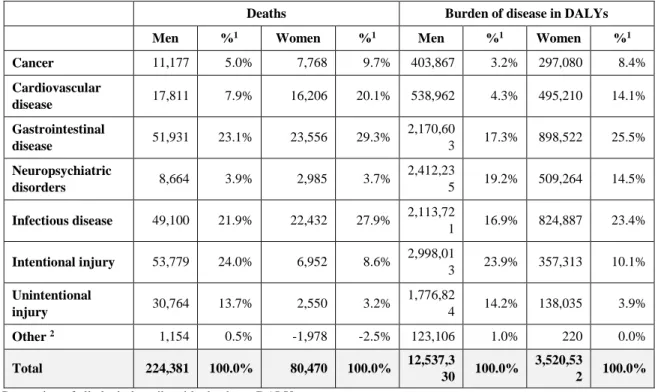
The research used different type of methods. Our results show that alcohol consumption has a large impact on burden of disease and mortality in African countries, with alcohol being responsible, in 2012, for 6.4% of all deaths and 4.7% of all DALYs in the Region (study I). Our analysis identified seven factors which are closely tied to potential changes in alcohol consumption in Africa. Driven largely by globalization, a potential convergence of these factors is likely to be associated with continued growth in alcohol consumption and alcohol-related morbidity and mortality across the continent (study II). Countries have been using different types of policy measures to control alcohol consumption. When evaluating current policy restrictiveness, countries attained a mean score of 44.1 of 100 points possible, ranging from 9.1 (Sao Tomé and Principe) to 75.0 (Algeria). According to our results, actual policy restrictiveness scores were negatively correlated with and APC among drinkers (rs = -.353, p = 0.005) (Study III). Study IV reflects the difficulties and complexity of alcohol policy development in Malawi. Despite the influence of the alcohol industry in the agenda-setting and consultative process, when adequately resourced and supported, civil society organizations were found to play an
x
important and decisive role in steering policy developments in a sound public-interest direction.
Alcohol-attributable fractions of mortality and morbidity in many African countries are considerable and therefore alcohol cannot be left out of countries health and development agendas. African governments need to take a more active role in protecting the public’s health. Although countries have adopted some type of policy measures to control alcohol consumption, our results show that there is a need for a stronger policy response to reduce alcohol-related burden in the continent. Finally, due to the inherent difficulties in alcohol policy development, governments should strongly consider increasing the involvement of civil society organisations to support sound public-interest direction.
Keywords: Alcohol consumption, alcohol policies, alcohol-related disease burden,
xi
RESUMO
A contribuição dos problemas ligados ao álcool para a carga de doenças em África tem sido amplamente negligenciada. Devido a rápidas mudanças no contexto de vários países e a novas evidências científicas relativas a doenças atribuíveis ao álcool, tais como HIV e a incidência de TB, os problemas e carga da doença em África relacionados com o consumo de álcool podem ser maiores do que o que foi previamente estimado. Ao mesmo tempo existe pouca informação sob a forma como os países estão a gerir o consumo de álcool e as consequências ligadas a esse consumo, o que sugere que uma avaliação das políticas nacionais é necessária nesta região.
O objetivo geral desta tese é o de rever as evidências relacionadas com o consumo de álcool em África e analisar as políticas do álcool existentes, contribuindo assim para a melhoria das decisões políticas relacionadas com esse consumo na região. Em particular, a tese concentra-se nos quatro objetivos específicos concentra-seguintes: I) estimar a mortalidade e morbilidade atribuídas ao álcool em África; II) identificar os fatores que podem afetar a magnitude e os padrões de consumo de álcool em África; III) avaliar as respostas políticas nacionais relacionadas com o consumo de álcool em 46 países e sua eficácia para reduzir os malefícios relacionados com esse consumo; IV) documentar as diferentes etapas e atores envolvidos no desenvolvimento de uma política relativa ao consumo de álcool num país Africano (Malawi).
A investigação utilizou diferentes tipos de métodos. Os resultados mostram que o consumo de álcool tem um grande impacto sobre a carga de doença e mortalidade nos países africanos, com o álcool sendo responsável, em 2012, por 6.4% de todas as mortes e 4.7% de todos os DALYs na Região (estudo I). A nossa análise identificou sete fatores que estão intimamente ligados a possíveis mudanças no consumo de álcool em África. Impulsionada em grande parte pela globalização, a convergência potencial desses fatores é suscetível de se associar a um crescimento contínuo no consumo de álcool bem como ao aumento da morbilidade e mortalidade relacionada ao álcool em todo o continente (estudo II). Os países têm vindo a utilizar diferentes tipos de medidas de política para controlar o consumo de álcool. A avaliação dos níveis atuais de restrição das políticas existentes, mostra que os países atingiram uma pontuação média de 44,1 de 100 pontos possíveis, variando entre 9,1 (São Tomé e Príncipe) e 75,0 pontos (Argélia). De acordo com nossos resultados, os níveis de restrição das políticas existentes estão negativamente correlacionados com o consumo de álcool em consumidores atuais (rs = -.353, p = 0,005) (Estudo III). O estudo IV reflete as dificuldades e complexidade dos processos políticos e sociais na elaboração de políticas de álcool no
xii Malawi. Apesar da influência da indústria do álcool no estabelecimento da agenda politica e no processo de consulta, o nosso estudo demonstra que as organizações da sociedade civil, quando devidamente financiadas e apoiadas, podem desempenhar um papel importante e decisivo na evolução da política do governo com vista a defesa do interesse público.
As frações de mortalidade e morbilidade atribuídas ao álcool em muitos países africanos são consideráveis e, portanto, o álcool não pode ser deixado de fora das agendas de saúde e desenvolvimento desses países. Os governos africanos precisam de ter um papel mais ativo na proteção da saúde da população. Embora os países tenham adotado algum tipo de medidas de políticas para controlar o consumo de álcool, os nossos resultados mostram que há uma necessidade de uma resposta política mais forte para reduzir a carga relacionada com o consumo de álcool no continente. Finalmente, devido às dificuldades inerentes ao desenvolvimento de políticas do álcool, os governos devem considerar fortemente o aumento da participação das organizações da sociedade civil para apoiar uma direção no sentido da defesa do interesse público.
Palavras-chave: Consumo de álcool, Políticas do álcool, Carga das doenças relacionadas
xiii
TABLE OF CONTENTS
LIST OF PUBLICATIONS ... iii
ACKNOWLEDGMENTS ... vii
ABSTRACT ... ix
RESUMO ... xi
LIST OF TABLES ... xv
LIST OF FIGURES ... xvi
LIST OF ABBREVIATIONS... xvii
... 1
1.1. Background ... 3
1.1.1. Alcohol consumption ... 4
1.1.2. Patterns of drinking ... 8
a) Abstention ... 8
b) Heavy episodic drinking and patterns of drinking score ... 9
1.1.3. Factors affecting alcohol consumption ... 10
a) Age ... 11
b) Gender ... 12
c) Economic development and socio-economic status ... 13
d) Alcohol production, distribution and regulation... 14
1.1.4. Relationship between alcohol consumption and health outcomes ... 16
1.1.5. Alcohol-related harms ... 19
1.1.6. Alcohol policies and public health ... 22
1.1.7. Effective alcohol policies ... 24
a) Pricing and taxation ... 25
b) Availability controls ... 25
c) Drinking and Driving Countermeasures ... 26
d) Education and Persuasion Strategies ... 26
e) Restrictions on Alcohol Marketing ... 27
f) Treatment and early intervention services ... 27
1.1.8. Establishment of an alcohol policy agenda in Africa ... 28
1.1.9. Relevance of the theme ... 29
1.2. References ... 31
xiv
... 57
Study I - The impact of alcohol in the people of Africa in 2012: an analysis of burden of disease ... 59
Study II - Alcohol and public health in Africa: can we prevent alcohol-related harm from increasing? ... 75
Study III - “Alcohol control policies in 46 African countries: Opportunities for improvement”. ... 87
Study IV - Alcohol policy process in Malawi: making it happen. ... 99
4. GENERAL DISCUSSION AND CONCLUSIONS ... 109
4.1. Main findings ... 112
4.2. Study implications and recommendations ... 119
4.3. Future research ... 120
4.4. Conclusions ... 122
xv
LIST OF TABLES
Table 1 – Alcohol use prevalence (%) among 13-15 year old students in WHO
xvi
LIST OF FIGURES
Figure 1 – Adult per capita consumption in 2010 ……….. 6 Figure 2 – Levels of abstention in 2010 ………. 9 Figure 3 – Conceptual model of alcohol consumption and health outcomes ………… 11 Figure 4 – Model of alcohol consumption, intermediate outcomes and long-term
consequences ………. 17 Figure 5 – Alcohol-attributable fractions (AAFs) for deaths from all causes,
xvii
LIST OF ABBREVIATIONS
15+ population of those aged 15 years and older
AAF alcohol-attributable fraction
AFR WHO African Region
AIDS Acquired Immunodeficiency Syndrome
APC alcohol per capita consumption
BAC blood alcohol concentration
BoD burden of disease
DALY disability-adjusted life year
FASD Fetal Alcohol Spectrum Disorder
GDP gross domestic product
GISAH WHO Global Information System on Alcohol and Health
GSHS Global School-based Student Health Surveys
HED heavy episodic drinking
HIV human immunodeficiency virus
MLPA minimum legal purchase age
NCD noncommunicable disease
PCA Adult per capita consumption
UN United Nations
WHA World Health Assembly
3
1 GENERAL INTRODUCTION
This thesis is focused on alcohol in Africa. It presents new evidence on alcohol consumption and related disease burden and also reviews existing policy responses to improve alcohol-related policy decisions in this region.
The research is organised under four main sections. In section one, I provide the background of the thesis conducting a state of the art review regarding alcohol consumption, patterns of drinking and alcohol-related harms in Africa. I also describe effective alcohol policies and present major policy developments that helped framing alcohol as a global and regional health issue. Finally, under this section, I discuss the relevance of this study to public health. In section two, I present the main purpose and objectives of the thesis and in section three, I present the results of the four papers produced. These papers focus on burden of disease in Africa, describe factors affecting alcohol consumption, provide an analysis of existing policy responses and present the development process of alcohol control policies in one African country. In section four, I discuss the main findings and limitations of this thesis and present recommendations that aim at improving alcohol-related policy decisions in Africa. To close, I identify new areas for research and provide a final conclusion of the work developed.
1.1. Background
Alcoholic beverages are an important, economically and culturally embedded commodity (Alcohol and Public Policy Group, 2010). However, from a public health perspective, alcohol plays a major role in the causation of disability, disease and death in the world (Rehm et al., 2003; Rehm et al., 2010a). Although alcohol consumption may vary from country to country, consumption has been rising and so has alcohol-related harm (WHO, 2014a).
As with tobacco, the growth of modern industrial production has contributed to tendency to replace change traditional patterns of drinking (Obot, 2000; Room et al., 2002). New drinks have been introduced as well as newmodes of production and distribution rendering alcohol available at any season and any time (Jernigan, 2000; Room et al., 2005). Increased industrialised alcohol supply and availability, together with the development of sophisticated
4
marketing and promotion techniques seem to be influencing the way that people drinkand reflect the changing context for alcohol use and alcohol-related harm (Casswell, 2009).
With the increasing evidence of the impact of harmful use of alcohol on global health, alcohol consumption in Africa has increasingly gained attention from researchers and policy makers. Attempts from the alcohol industry to influence national alcohol policies have been described (Bakke & Endal, 2010). However, even if interest in the topic has grown in the past decades, many questions remain unanswered, particularly with respect to trends in alcohol consumption, alcohol’s contribution to the burden of disease and the public health response.
1.1.1. Alcohol consumption
Alcohol has been consumed in human societies for thousands of years and has been a constant presence in different socio-cultural milieus (Smart, 2007). However, concerns about its misuse, especially after the introduction of certain forms of alcoholic beverages, such as spirits, have been raised ever since (Room et al., 2005). As industrialization progressed, drunkenness in many countries was seen as inconsistent with a reliable and efficient workforce and over time, more and more personal, economic, criminal, family, social, moral, and religious problems were attributed to alcohol. This lead to the rise of popular social groups in different parts of the world, namely in the US and Europe that aimed at limiting or even prohibiting drinking during the so-called Temperance Movement. After a period of experimentation in some countries with alcohol prohibition, this was replaced by alcohol control measures designed to limit consumption and minimize harm (Hanson, 2013).
In traditional African societies, alcohol consumption was gender and age based, being mainly consumed by adult males in social engagements such as religious rituals, marriage ceremonies, kingship enthronements, child naming and even funerals (Wills, 2006). Tradition regulated production and consumption of locally made alcoholic drinks and though young people in a few communities were permitted to drink, this was usually in the presence of adults who monitored the quantity they consumed (Obot, 2000). Alcohol was consumed immediately after production, or a few hours after production since there were no means of
5
preservation. Where trade in alcohol did exist, it was on a remarkably low scale (Willis, 2002). This trend was altered in Western Africa following the influx of European slave traders in the 15th century. New ways of trading and new organizational settings (towns) introduced important changes in the way alcohol was consumed (Wills, 2006). Alcohol became readily available to all, male and female, on a commercial basis. Moreover, alcohol became a revenue source for western traders and was often part of the payment for territorial concessions extracted from African chiefs by European envoys (Dumbili, 2013). Throughout the colonial period, missionaries and other observers noted the devastating effects of alcohol on African village life (Pan, 1975). Late in the 19th century, as part of the World Temperance Movement, Christian missionaries advocated for a cessation of the liquor trade. For large parts of Africa, the colonial powers agreed to refrain from the alcohol trade, primarily with regard to distilled spirits (Jernigan & Babor, 2015). However this was only temporary as, with the influx of western cultures and traders, industrialised alcoholic beverages became readily available on a commercial basis due to the importation, sale and distribution of trade spirits (Jernigan & Obot, 2006; Jernigan & Babor, 2015).
The distribution of alcohol consumption across countries in Africa1 is very heterogeneous and the type of drinks consumed differ geographically. Around one third of all the alcohol consumed is ‘unrecorded’2 (1.8 litres), often being home-brewed through artisanal production, either by fermenting malted grains, fruits, sugar cane, honey or palm trees or by distilling them (WHO, 2014a). These types of drinks are easily produced and have been present in most African societies in some form for centuries, being part of all major life transitions, linked to rituals and to special occasions (Obot, 2006). Despite the fact that tradition remains strong, changes in production have replaced traditional consumption and commercially produced drinks have penetrated into the habits of many Africans (Jernigan & Babor, 2015). In 2010, fermented beverages (made of sorghum, millet, maize, rice, wheat or
1 Africa is a diverse continent containing 54 countries.
2 Unrecorded alcohol refers to alcohol that is not taxed in the country where it is consumed because it is
usually produced, distributed and sold outside the formal channels under government control. Unrecorded alcohol consumption in a country includes consumption of home-made or informally produced alcohol (legal or illegal), smuggled alcohol, alcohol intended for industrial or medical uses, and alcohol obtained through cross-border shopping (which is recorded in a different jurisdiction).
6
fruits) accounted for 51,6% of all alcohol consumption in the WHO African Region3. The second most consumed beverage was beer which accounted for 33.7% of total recorded alcohol consumed in the Region (WHO, 2014a). Nigeria’s 160 million people are now the world's second largest consumer of Guinness, after Britain, and it has been estimated that between 1999 and 2000, the demand for beer grew by 143%, a demand that has been increasingly difficult to meet with current production capacity (Obot, 2007).
Several surveys provide insights into the total amount of alcohol consumed in Africa. According to the WHO Status Report on Alcohol and Health 2014 (WHO, 2014), the total adult per capita consumption (APC) of alcohol in this region (i.e. the volume of alcohol consumed by each individual aged 15 years or older on average) in 2010 was approximately 6.0 litres of pure alcohol, implying a slight decrease since 2004, when estimates pointed to about 6,2 litres of pure alcohol per person per year (Rehm et al., 2009a; WHO, 2013a). Substantial variations exist in adult per capita consumption in African countries as shown in Figure 1.
Figure 1 – Adult per capita consumption in 2010
Source: WHO, 2014a
3 World Health Organization (WHO) African Region (includes all countries on the African continent except for
7
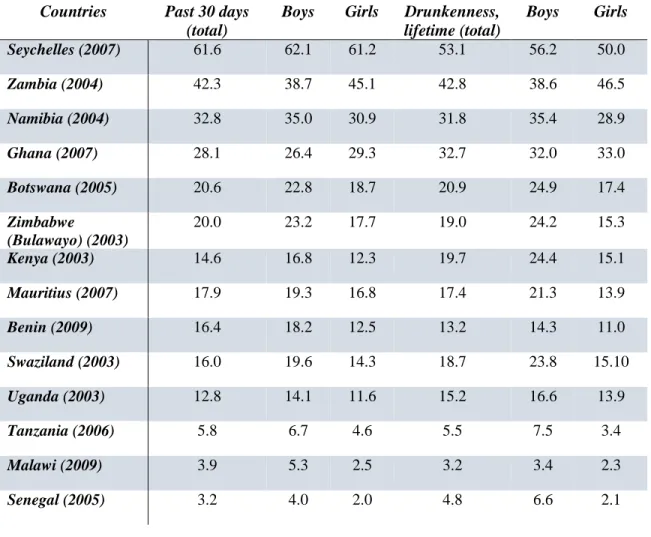
The highest consumption levels can be found in southern Africa, with Namibia and South Africa having the highest levels while low consumption levels can be found in the countries of North Africa and sub-Saharan Africa, like Niger, Senegal or Guinea (WHO, 2014a). These countries represent large populations of the Islamic faith, which have very high rates of abstention. Projections up to 2025 point to a relative stability on alcohol per capita consumption in this region (WHO, 2014a). Another survey, the global school-based health survey (GSHS), provides some specific data on alcohol consumption among youth in several African countries (WHO, 2014b). Table 1 shows the prevalence of alcohol use and drunkenness per country and by gender but also shows that many adolescents have already been drunk at least once in the lifetime.
Table 1 – Alcohol use prevalence (%) among 13-15 year old students in WHO African Region4
Countries Past 30 days
(total)
Boys Girls Drunkenness,
lifetime (total) Boys Girls Seychelles (2007) 61.6 62.1 61.2 53.1 56.2 50.0 Zambia (2004) 42.3 38.7 45.1 42.8 38.6 46.5 Namibia (2004) 32.8 35.0 30.9 31.8 35.4 28.9 Ghana (2007) 28.1 26.4 29.3 32.7 32.0 33.0 Botswana (2005) 20.6 22.8 18.7 20.9 24.9 17.4 Zimbabwe (Bulawayo) (2003) 20.0 23.2 17.7 19.0 24.2 15.3 Kenya (2003) 14.6 16.8 12.3 19.7 24.4 15.1 Mauritius (2007) 17.9 19.3 16.8 17.4 21.3 13.9 Benin (2009) 16.4 18.2 12.5 13.2 14.3 11.0 Swaziland (2003) 16.0 19.6 14.3 18.7 23.8 15.10 Uganda (2003) 12.8 14.1 11.6 15.2 16.6 13.9 Tanzania (2006) 5.8 6.7 4.6 5.5 7.5 3.4 Malawi (2009) 3.9 5.3 2.5 3.2 3.4 2.3 Senegal (2005) 3.2 4.0 2.0 4.8 6.6 2.1
8
Results from the survey show that alcohol consumption starts at an early age and that in some countries girls drink almost as much or even more than boys. Differences can be observed across countries with past month prevalence rates ranging from about 3.2% to 61.6%.
However, as pointed out in the WHO 2014 report (WHO, 2014a), simply assessing total alcohol per capita consumption may lead us to erroneous conclusions. As the population grows, the total APC will not reflect increases in the total alcohol consumed in the population. Due to its demographic characteristics (very young population), eventual increases in the total amount of alcohol consumed (even if not translated in increases in APC) are expected in the WHO African Region.
1.1.2. Patterns of drinking
Although per capita consumption matters in creating an accurate picture of the impact of alcohol consumption in health and social well-being of the population, the way people drink – pattern of drinking – can have a major influence on the extent of damage caused by alcohol consumption. The most influential indicators related to patterns of drinking include abstention and heavy episodic drinking.
a) Abstention
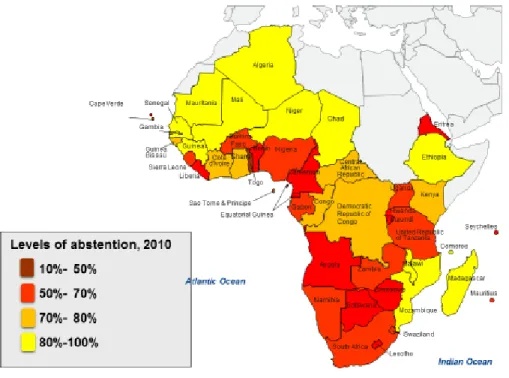
In 2010, a majority of Africa’s adult population had abstained from drinking alcohol in the past 12 months (WHO, 2014a). These individuals may be lifetime abstainers or former drinkers.Current data available shows that 70,2% of the African population (15+) had not drunk alcohol in the past 12 months, and 12.8% had ceased alcohol consumption (i.e. they have consumed alcohol earlier in life but not in the past 12 months). More than half of the adult population (57.4%) has never consumed alcohol (WHO, 2014a).
The overall proportion of abstainers in a group of people is essential in interpreting per capita consumption numbers. Figure 2 shows estimates of the proportion of people who abstain from alcohol use in different countries in the African Region. In some countries more than 80% of the adult population, that is those aged 15 years or older, do not consume alcohol.
9
A per capita consumption of 6,1 litres has to be judged differently in Africa, where the majority of people abstain from alcohol compared to a European country with such a consumption level, where only 10 percent may be abstainers. As presented above, approximately 58% of the African population are lifetime abstainers; therefore, the actual consumption per drinker in the African region is substantially greater than the estimated APC and can reach very high levels (i.e. more than 30 liters of pure alcohol per drinker) (WHO, 2014a). This has serious consequences for public health, as the risk for most disease and injury consequences increases with rising levels of consumption.
Figure 2 – Levels of abstention in 2010
Source: WHO, 2014a
b) Heavy episodic drinking and patterns of drinking score
Research shows that in recent years African countries have seen shifts in alcohol consumption, with increased alcohol consumption among women and adolescents as well as changes in the way they drink (Jernigan, 2001; Wills, 2006; Martinez et al., 2011). The tendency is to consume large quantities, and drink frequently, in short time and outside of
10
meals, especially among young people (Obot, 1993; Eide & Acuda, 1996; Ibanga et al., 2005; Tumwesigye & Rogers, 2005). Surveys focusing on behaviours of urban youth and students confirm early onset of drinking (ages 10-16), high levels of alcohol misuse among school students (Parry et al., 2004; Peltzer, 2009a) and important changes in patterns of consumption with alcohol deliberately used to get drunk and being perceived as modern and an essential component for having fun (Strijdom, 1992; Meursing & Morojele, 1989; Odejide, 2006).
How alcohol is consumed in a country is an important determinant of types and levels of problems associated with drinking. According to WHO, the prevalence of heavy episodic drinking (HED5) in African countries is relatively low (i.e. 16.4%); however, when looking at the WHO patterns of drinking score6 (that reflects how people drink instead of how much they drink in one occasion and is strongly associated with the alcohol-attributable burden of disease of a country), the figures show that most of the African countries have a score of 3 or even higher (WHO, 2014a).What this means is that though the per capita consumption of alcohol is generally low (compared with consumption in Europe for example), the most common pattern of drinking is one with high potential for causing health or social harm.
1.1.3. Factors affecting alcohol consumption
A variety of factors affect the magnitude and patterns of alcohol consumption, both at the individual and the societal levels (Figure 3). Individual factors, such as age, gender, family factors and socio-economic status, religious beliefs and cultural aspects, economic development, drinking context, alcohol production, distribution and regulation are all part
5 Episodic heavy drinking usually refers to a drinking occasion that includes consumption of 60 or more grams
of pure alcohol on at least one single occasion at least monthly, although other definitions such as the consumption of five or more standard drinks per occasion might be used. In common terms it is frequently called binge drinking
6 PDS is basically an estimation of the level of hazard that might result from drinking, following from the
underlying assumption that the consequences of alcohol consumption are related to volume consumed and how, when, and where consumption takes place. Some of the indicators used in determining drinking pattern are: the usual quantity of alcohol consumed per occasion; proportion of drinking events, when drinkers get drunk; proportion of drinkers, who drink daily or nearly daily; drinking with meals; drinking in public places.
11
of a complex causal chain that affect alcohol problem rates in different countries (Babor et al., 2010, WHO, 2014a).
Figure 3 - Conceptual model of alcohol consumption and health outcomes
Source: WHO, 2014a
These factors operate in complex ways to influence long-term trends in alcohol consumption as well as short-term epidemics. Some of them are of special relevance in the African context.
a) Age
Africa is the most youthful continent in the world. About 65% of the total population of Africa are below the age of 35 years, and over 35% are between the ages of 15 and 35 years (African Union Commission, 2014).Alcohol use by young people is an important policy-relevant dimension of drinking in African countries as elsewhere (Jernigan, 2006). Adolescents are more vulnerable to alcohol-related harm. From a behavioural point of view, they lack experience of drinking and its effects (Anderson et al., 2009a). They are also more vulnerable to alcohol–induced brain damage, which could contribute to poor performance at
12
school or work (Spear, 2002). In addition, youthful drinking is associated with an increased likelihood of developing alcohol abuse or dependence later in life (Grant et al., 1997; WHO 2004a). The consequences of alcohol use can be acute, and therefore immediate, such as automobile crash injury and death, blackouts, fighting, property damage, or they can be the accumulated, representing the cumulative effects of a chronic pattern of drinking(Aarons et al., 1999).
Evidence from different parts of the world shows that rapid increases in alcohol related social and health problems from either disorderly conduct or violence and injuries are often associated with drinking to intoxication by adolescents and young adults. In the African Region there has been longstanding interest by researchers in youth drinking behaviours (Flisher et al., 2001; Morojele et al., 2001; Obot et al., 2001; Obot, 2005; Mbona & Kasirye, 2005; Onya & Flisher, 2008; Francis et al., 2014). Underage drinking is associated with numerous negative consequences, such as accidental death and injury or engaging in other risky tasks after drinking, resulting in homicide and violence, suicide attempts, sexual assault, and risky sexual behaviour (Bonomo et al., 2001; Jernigan, 2001; Swahn & Donovan, 2005; WHO, 2009b). Several authors have noted that adolescents and young adults have become the specific target audience for alcohol marketers and therefore are at risk to further increase their alcohol consumption (Morojele et al., 2006a; Swahn et al., 2011).
b) Gender
Gender is a major determinant of drinking in Africa. Like in all regions in the world, more women than men abstained from drinking alcoholic beverages during the past year (WHO, 2014a). While the highest level of per capita alcohol consumption (4.4 to 6.2 litres of pure alcohol per person per year) among women occurs in Burundi, Gabon, Namibia, Nigeria, Rwanda, and Uganda, the lowest level of per capita alcohol consumption among women is observed in the countries of Northern Africa, which are predominantly comprised of people of the Islamic faith and therefore have very high abstention rates (WHO, 2014a).
Although overall rates of alcohol consumption among women in the African Region are generally still low and lifetime abstention is the most common pattern among women, some studies suggest changing patterns of consumption in this group (Martinez et al., 2011).
13
Research points to the fact that the gap between men and women in heavy alcohol consumption is narrowing and that more detrimental patterns of use are emerging among girls and women (Namagembe et al., 2010; Culley et al., 2013). This narrowing of the gender gap in heavy alcohol consumption among young women in some African countries is a phenomenon previously seen in several European nations and seems to be the result of increased availability of alcohol and other changes in the role of women in society (Wilsnack et al., 2005). When the focus is on drinkers only and when a pattern of regular consumption of large volumes of alcohol is considered, the difference between men and women seems to disappear (Ibanga et al., 2005; Tumwesigye & Rogers, 2005; Obot, 2006). In fact, among those women who drink alcohol, the highest level of alcohol consumption (17.7 to 24.5litres of pure alcohol per capita per year) is observed in Chad, Namibia, Uganda, and Ethiopia (WHO, 2014a). These per capita levels of alcohol consumption among women are amongst the highest recorded levels in the world. The incidence of fetal alcohol spectrum disorders and fetal alcohol syndrome is also a clear indicator that women are drinking. Studies from South Africa report the highest recorded foetal alcohol syndrome rate of 19-103 per 1000 births (May et al., 2007; WHO, 2006).
c) Economic development and socio-economic status
Over the last three decades, Africa has been experiencing its longest period of uninterrupted economic growth (AfDB, 2011). The anticipated economic development and strong population growth likely provide the most important backdrop for the future alcohol situation in Africa (Room et al., 2002). With an income per capita that has more than doubled in 23 African nations since 1990, and GDP growth rates that have averaged 5% per year over the last ten years(AfDB, 2011), certain goods, including alcohol, become more available and are affordable to more people. Research has shown that a greater economic wealth is broadly associated with higher levels of consumption and lower abstention rates (Rehm et al., 2009b).
Africa’s population is also expected to double in size by 2020, and the majority of this population will belong to the youth cohort. Living in an urban environment facilitates access to commercial alcohol and can influence alcohol consumption (Bryden et al., 2012). With a young population that offers the best possible age structure for marketing alcoholic
14
beverages taking the forefront of Africa’s advance towards cities, the absence of a supportive sociocultural context, housing difficulties, crime, poverty and unemployment tend to interact synergistically with alcohol consumption increasing the vulnerability of youth and of the poor to alcohol’s harms (Sommers, 2009; Kalichman et al., 2006; Esan et al., 2013).
d) Alcohol production, distribution and regulation
Recent considerations on the rising epidemic of non-communicable diseases (NCDs) at global level and in sub-Saharan Africa (SSA) has helped move the discussion away from individual choices to the role of the social environment and globalization in the development of these epidemics (Dalal et al., 2011; Moodie, 2013;Stuckler et al., 2012). More particularly, industrialization and globalization have introduced major shifts in the way people consume several types of products, including high sodium processed foods, artificially sweetened beverages and alcohol products.
Jernigan (2002; 2009), Hill (2008) and others (Jahiel & Babor, 2007; Casswell, 2009; Babor et al., 2010; 2015) have described the increasing globalization of the alcohol industry from a public health perspective and their role in increased alcohol consumption. Producers of branded alcoholic beverages, which account for approximately 38% of recorded alcohol consumption world-wide, tend to be large multi-national corporations whose size and profitability support integrated marketing on a global scale (Jernigan & Babor, 2015). Size also allows considerable resources to be devoted, directly or indirectly, to promoting the policy interests of the industry.
One of the most powerful tools to encourage consumption of products like tobacco and alcohol used by industries is marketing (Anderson et al., 2009a). Marketing in general contributes to social norms and shapes the social environment in which the positive aspects of drinking are dominant and its use is normalized (Smith & Foxcroft, 2009; Hastings et al., 2009; Anderson et al., 2009a; Casswell, 2012). The mix of technologies employed to accomplish this task include traditional advertising (i.e. television, magazine advertising, billboards) as well as sponsorships, product placement, promotions, distribution and sale of branded merchandise, and the use of new and emerging technologies such as mobile phones
15
and the internet, which are all tailored to the cultural, religious and regulatory context (Evans & Hastings, 2008; Jernigan, 2010).
As with tobacco, industrialization of production and globalization of marketing and promotion of alcohol will increase both the amount of consumption and the harms associated with it. These findings have been supported, especially in the past decade, by the accumulation of a substantial body of literature on alcohol leading to greater understanding of the emerging situation worldwide (Moodie, 2013; West & Marteau, 2013).
There are no reasons why this situation would be different in the African context. Africa is a market that has been attracting global interest of the alcohol industry and where the growth and investment from the global industries is particularly strong (Jernigan & Obot, 2006; Babor et al., 2015). Several factors contribute to this rising interest: on the one hand, the unrealized potential for market growth of alcoholic beverages that comes from the exceptional population growth and the high rates of abstention (WHO, 2011a). In a continent with a young population and high levels of abstention, especially among females, the expansion of the alcohol market will also be associated with the industry capacity to recruit new drinkers through the increased use of alcohol marketing. Recent studies in African countries seem to confirm the influence of exposure to alcohol marketing on young people’s drinking (Swahn et al., 2011; de Bruijn et al., 2013). Alcohol is widely and intensively advertised and promoted in TV commercials, billboards, newspapers, magazines, internet and (event) sponsoring. Drinking is portrayed as an emblem of success, and a symbol of heroism, courage and virility contributing to create a drinking culture (Jernigan & Obot, 2006; Jernigan, 2013; de Bruijn, 2011; Swahn et al., 2011; Obot 2013). At the same time, the weakness of the alcohol policy environment in most African countries, and poor enforcement measures, constitutes an opportunity to freely promote alcohol consumption in the continent (Bakke & Endal, 2010; Parry et al., 2012a; Jernigan, 2013).
While the impact of these factors has been also noted in other places where rapid economic changes are taking place such as China, India or Latin-America (Tang et al., 2013, Benegal, 2005; Monteiro, 2013), a comprehensive and systematic analysis is still missing for Africa.
16
1.1.4. Relationship between alcohol consumption and health outcomes
Although its social and health harms have been long identified, only recently has there been a scientific understanding of the relationship between alcohol and health, providing a basis for a public health approach to alcohol problems and for continuous epidemiological research. A central feature has been the shift from a focus on "alcoholism" to a focus on "alcohol-related problems" or "alcohol problems." (Room, 1984). Research contributed substantially to the understanding of the complexity of the relationship between alcohol consumption and health outcomes.
Alcohol is a psychoactive substance with dependence-producing properties (WHO, 2004a) and has been identified as one of the world’s leading risk factors for morbidity, disability and mortality (Rehm et al., 2003). Alcohol contributes to as many as 200 health conditions, including some malignant neoplasms, mental and behavioural disorders, cardiovascular diseases, gastrointestinal conditions, reproductive disorders and pre-natal harm (WHO, 2014a; Rehm et al., 2010a). In addition, alcohol is also responsible for injuries resulting from aggressive behaviour and violence and road clashes and collisionsthat kill or disable people at a relatively young age, resulting in the loss of many years of life to death and disability (Room et al., 2005; Rehm et al., 2010a). Even small amounts of alcohol impact on the central nervous system, slowing down reaction time and impairing co-ordination and alertness. Both drinkers and non-drinkers may suffer from the consequences of alcohol use. The overall effects extend beyond the individual and include the social and economic cost of harm to families, communities and the wider society. Alcohol-related violence, child abuse, problems in the performance of family and parental roles, problems in work roles and of lost productivity are current examples of major alcohol-related social harms (Room, 2000; WHO, 2002; Room et al., 2010). Impact on personal wellbeing and health status in people exposed to heavy drinkers in their lives has also been recently noted (Casswell et al., 2011).
Recent research suggests a strong epidemiological association between alcohol consumption, especially heavy drinking, and incidence and clinical course of selected infectious diseases. More specifically alcohol consumption is strongly associated with increased incidence of tuberculosis (Lönnroth et al., 2008), pneumonia (Rehm et al., 2009c; Samokhvalov et al., 2010) and unsafe sex, which leads to an increased probability of
17
acquiring HIV through sexual transmission (Rehm et al., 2012). In addition, there is sufficient causal evidence that alcohol worsens the disease course of HIV/AIDS and can subsequently increase the likelihood of mortality, especially by impacting adherence to antiretroviral treatment (ART) (Hendershot et al., 2009; Azar et al., 2010; Baliunas et al., 2010; Gmel et al., 2011). Including infectious diseases in the list of alcohol-attributable disease categories will certainly change the contribution of alcohol consumption to the burden of disease, specially for Africa.
Three important mechanisms explain alcohol’s ability to cause medical, psychological, and social harm (Babor et al., 2010). They are physical toxicity, intoxication, and dependence (Figure 4). In addition, the quality of alcoholic beverages may impact health outcomes and mortality, for instance via methanol or lead poisoning outbreaks.
Figure 4 - Model of alcohol consumption, intermediate outcomes and long-term consequences
Source: Babor et al. 2010
Alcohol is a toxic substance in terms of its direct and indirect biochemical effects on a wide range of body organs and systems. One such example are the direct toxic effects on acinar cells triggering pancreatic damage (Irving et al., 2009). Alcoholic beverages and the ethanol within them are classified as a carcinogen, increasing the risk of cancers of the oral cavity and pharynx, oesophagus, stomach, colon, rectum and female breast in a linear dose– response relationship (WHO, 2004a, IARC 1998; 2010). However, direct biochemical
18
effects of alcohol consumption may also have beneficial effects. These effects that disappear with heavy drinking occasions include the influence of low levels of drinking on ischaemic heart disease and ischaemic stroke by reducing plaque deposits in arteries and blood clotting formation (Zakhari, 1997; Rehm et al., 2004; 2010a) and in type 2 diabetes byan increase in insulin sensitivity (Hendriks, 2007; Klatsky, 2007).
Acute intoxication, resulting from the ingestion of substantial quantities of alcoholic beverages in a limited period of time, can lead to a wide range of adverse effects. At increasingly higher doses, alcohol leads to impaired coordination, reaction time, inhibition of movement, impaired balance, judgement, planning and thought processes, increasing the chances of accidents and injuries and interpersonal problems (Cherpitel et al., 2003; Room et al., 2005; WHO, 2007a). At very high doses, alcohol can cause impaired consciousness, coma, respiratory depression and death. Due to its disinhibiting effects that can affect decisions, alcohol consumption may result in unsafe sex and condom use accidents, with resulting transmission of HIV and other sexually-transmitted illnesses (STIs) (Kalichman et al., 2007; Baliunas et al., 2010; Woolf-King & Maisto, 2011). These effects place a significant burden on health care and emergency services, and cause harm to third parties.
With chronic drinking and repeated intoxication, a syndrome of interrelated behavioral, physical, and cognitive symptoms develops, called alcohol dependence (WHO, 2004a; Alcohol and Public Policy Group, 2010). Owing to its dependence-producing properties, alcohol influences behaviour just like any other addictive substance, including cocaine and heroin, both of which are under international control. Alcohol dependence develops primarily but not exclusively through the mechanisms of reinforcement or reward seeking, for example when the pleasure derived from drinking leads to continued need for alcohol. In fact, the direct actions of alcohol on the brain and repeated alcohol exposure lead to longer term molecular changes in the brain known as neuro-adaptation. This process occurs when repeated alcohol exposure provides the basis for tolerance and dependence by facilitating increased intake of alcohol by diminishing the aversive responses to alcohol (Babor et al., 2010, WHO, 2004a).
These three mechanisms are related to volume of alcohol consumed and to the ways in which people consume alcohol, called ‘patterns of drinking” (WHO, 2007a). Drinking patterns that
19
lead to elevated blood alcohol levels result in problems associated with acute intoxication, such as accidents, injuries, and violence. Drinking patterns that promote frequent and heavy alcohol consumption are associated with chronic health problems such as liver cirrhosis, cardiovascular disease, and depression. Sustained drinking may not lead to much evident intoxication but can also result in alcohol dependence, which impairs a person’s ability to control the frequency and amount of drinking.
Both the volume of lifetime alcohol use and a combination of frequency of drinking and amount drunk per drinking occasion increase the risk of alcohol-related harm, largely in a dose-dependent manner (Rehm et al., 2010a). Alcohol-related problems can sometimes be direct and immediate (like violence and accidents) or they can be the result of a complex process that may take years to become manifest (such as cancer and cirrhosis of the liver, which develop after years of sustained drinking). Alcohol consumption can have an impact not only on the incidence of diseases, injuries and other health conditions, but also on the course of disorders and their outcomes in individuals.
1.1.5. Alcohol-related harms
Alcohol is a recognized risk factor for morbidity and mortality globally, being responsible for one in every twenty deaths in the world.According to the World Health Organization, 5.1% of the global disease burden (measured as disability adjusted life years – DALYs) and 5.9% (or 3.3 million) of all deaths in 2012 were attributable to alcohol (WHO, 2014a).
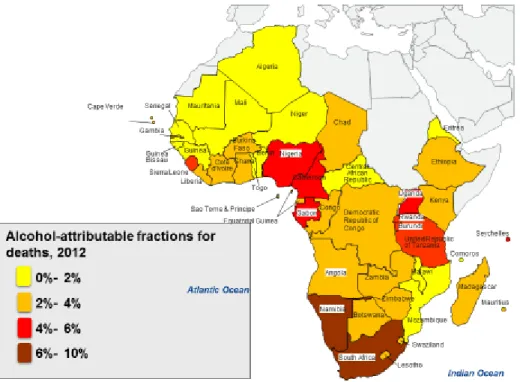
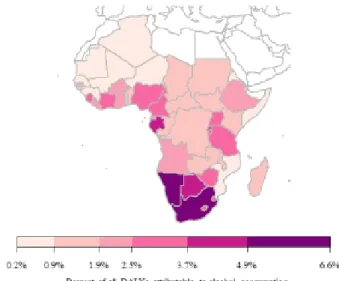
In Africa, most of the existing data on alcohol-related mortality and burden of disease comes from global analyses. Estimations on total of deaths attributable to harmful use of alcohol in the WHO African Region show a significant burden of 2.2% in 2002 (WHO, 2007a) and 2.4% in 2004 (Rehm et al., 2009a). In 2012, alcohol was responsible for 3.3% of all deaths and 2.4% of all disability-adjusted life years (DALYs) lost in the WHO African Region (WHO, 2014a). Figure 5 shows estimates of the proportion of alcohol-related deaths in different countries in the African Region (WHO, 2014a).
Data from other global studies have also introduced important information on specificities of alcohol burden in Africa, notably a study published by Gore and colleagues (2011) that
20
identified alcohol as the leading risk factor for disability-adjusted life-years (DALYs) among African male adolescents aged 15–24 years. A more recent comparative risk assessment identified alcohol as the largest risk factor for death and disability in sub-Saharan Africa being associated with an increased risk of new HIV infections, tuberculosis, non-communicable diseases such as liver cirrhosis, some cancers and cardiovascular diseases, motor-vehicle traffic crashes, violence and injuries (Lim et al., 2012).
Figure 5 – Alcohol-attributable fractions (AAFs) for deaths from all causes, 2012 (as a percentage of all deaths).
Source: WHO, 2014a
In 2006, two articles specifically called attention to drinking and alcohol-related problems and to alcohol policies in Africa. Both concluded that consumption of commercial beverages was expected to increase and that effective policies were needed to address health and social problems related to alcohol consumption (Obot, 2006; Odejide, 2006). This was followed by a study on alcohol consumption in Sub-Saharan Africa that reported on estimates of alcohol consumption and attributable harm in comparison to worldwide estimates for the
21
year 2002 (Roerecke et al., 2008). It showed a level of adult per capita consumption higher than the global consumption rate (7,4 L vs. 6,2 L) and a 42% higher rate of consumption per adult drinker, with 2.2% of all deaths and 2.5% of DALYs attributed to alcohol. But one of the most important findings of this study was that intentional and unintentional injuries, especially from road traffic accidents, played a significant role in alcohol-attributable mortality (53%) and burden of disease (57%), an expected situation owing to high prevalence of heavy episodic consumption in the adult population (Roerecke et al., 2008).
More recently, new evidence has also emerged on the links between harmful use of alcohol and developmental issues like poverty and health inequities (Saxena, 1997; Blas & Kurup, 2010). Socioeconomic consequences attributable to the harmful use of alcohol are mostly related to stigmatisation, family disruption, low educational outcomes, loss of earnings, unemployment, and ultimately to poverty (Babor et al., 2015). The economic consequences of alcohol consumption are particularly severe for the poor that often are subject to increased medical expenses and more exposed to stigmatisation that contributes toreduced access to health and welfare services.Basically, the lower the socioeconomic status of a person within a country, the higher the alcohol‐attributable disease burden (Rehm et al., 2009b).
The overall social and economic cost of alcohol consumption to society has been calculated for many developed countries showing substantial monetary costs. The costs associated with alcohol amount to more than 1% of the gross national product in high-income and middle-income countries, with the costs of social harm constituting a major proportion in addition to health costs (Rehm et al., 2009a). The greatest contributor to total alcohol-attributable costs in developed countries is the cost of productivity loss, followed by direct health-care costs. For the health sector, direct and indirect costs arise not only from the use of substance abuse treatment but also from the increased use of emergency services due to alcohol-related trauma, and the overuse of medical services due to alcohol-related medical complications (Xie et al., 1999; Parry et al., 2003; Møller & Matic, 2010). In South Africa, the first estimates from 2003 calculated social and economic costs at R8.7 billion, or 1% of the gross domestic product (Parry et al., 2003). More recently South Africa alcohol-attributable costs were estimated at 10 - 12% of the 2009 gross domestic product (GDP). The tangible financial cost of harmful alcohol use alone was estimated at R37.9 billion, or 1.6% of the 2009 GDP
22
(Matzopoulos et al., 2014). Other studies have also shown that in the African region, harmful use of alcohol leads to unemployment, increased admissions to health-care facilities, crime and violence, especially against women (Tumwesigye & Rogers, 2005; WHO, 2005a; Parry & Dewing, 2006).
1.1.6. Alcohol policies and public health
The work of several experts (Bruun et al., 1975; Babor et al 1993, 2003, 2010; Jernigan et al., 2000; Rehm et al., 2003; Bell et al. 2011; Room et al., 2005;Casswell & Tamarangsi, 2009;Beaglehole & Bonita, 2009; Room, 2011) and the resolutions at the World Health Organization on alcohol (e.g., WHO, 1983, 2005b; 2008b; 2010b) have contributed to the growing recognition of the role that alcohol plays in health and sickness in many countries across the world and have helped to frame alcohol consumption as a global public health issue.
This shift in frame, from a an individual to a population/public health perspective –started in 1975 with the publication of the monograph Alcohol control policies in public health
perspective (Bruun et al., 1975) that discussed the relationship between per capita alcohol
consumption and alcohol-related harm. In their conclusions, the authors claimed that “changes in the overall consumption of alcoholic beverages have a bearing on the health of the people in any society. Alcohol control measures can be used to limit consumption – thus alcohol control availability becomes a public health issue” (Bruun et al., 1975).
The 25 years that followed this publication allowed major policy developments that consolidated this position and continued the trend to frame alcohol as a global health issue. Several WHO resolutions and reports framed alcohol as a major public health concern and described the importance of policies and programmes (WHO, 1979; 1983; 2004b; 2005b; Moser, 1974; 1980), and reduction of alcohol-attributable burden became a priority area for international public health (Jernigan et al., 2000). In 2008, sustained by Africa’s involvement, namely Kenya and Rwanda (Grimm, 2008), WHO was requested to formulate a global strategy (WHO, 2008b) and in 2010 the Global Strategy to Reduce the Harmful Use
23
of Alcohol was finally adopted at the WHA (WHO, 2010b), contributing to finally portray alcohol as a global health issue.
Besides framing alcohol consumption as a global health issue, the publication by Bruun and colleagues (1975) set the tone for the first definition of alcohol policies. In this monograph alcohol policies were defined as relevant strategies employed by governments or local administrative authorities to influence “availability of alcohol to the individual” (Österberg & Karlsson, 2003). This definition was expanded in 1994 capturing the intersections between science and alcohol policy. Alcohol policies were then defined as public health responses to alcohol related problems dictated in part by national and historical concerns (Edwards et al., 1996), meaning that a wealth of policy responses such as alcohol taxation, media information campaigns and school-based education were considered in this definition (Babor et al., 2010).
The definition of alcohol policy used by Bruun and colleagues (1975) and Edwards and colleagues (1996) was further broadened to cover all public policies pertaining to the relation between alcohol, health, and social welfare and the effectiveness of commonly used alcohol-abuse prevention strategies was also evaluated (Babor et al., 2003). Four dimensions were used in the evaluation: (1) evidence of effectiveness or the quality of scientific information; (2) breadth of research support, that is the quantity and consistency of the evidence; (3) extent of testing across cultures, e.g. testing in different countries or regions and within subgroups; and (4) cost to implement and sustain the strategy in terms of time, money and resources. Thirty-two strategies were classified into seven categories: regulating physical availability, taxation and pricing, altering the drinking context, education and persuasion, regulating alcohol promotion, drinking and driving countermeasures and treatment and early intervention. Out of the 32 strategies, ten were rated highly by the researchers and involved basically regulating the physical availability of alcohol (changing the minimum legal age limits for alcohol purchase, instituting a government monopoly on retail alcohol sales, instituting restrictions on hours and days of alcohol sale, instituting restrictions on density of alcohol outlets, increasing alcohol taxes), applying various drink-driving countermeasures (lowering blood-alcohol count limits, administrative license suspension, graduated licensing for novice alcohol users) and implementing brief interventions for hazardous drinkers.
24
Further findings by Chisholm and colleagues (2004), Österberg (2004) and by Anderson and colleagues (2009b) on cost effectiveness and effectiveness of policy interventions lent strong support to these results.
Another important revision to the policy options, was led by WHO. “Alcohol policy” was defined as the set of measures in a jurisdiction or society aimed at minimizing or preventing the health and social harms from alcohol consumption (WHO, 2007a). This revision formed the basis for the WHO report in 2007 to the World Health Assembly on “Evidence-based strategies and interventions to reduce alcohol-related harm” (WHO, 2007d) and later on to the WHO Global Strategy to Reduce Harmful Use of Alcohol and different publications (WHO, 2009a; WHO 2010b) aimed at policy implementation in countries, where each of these effective policy measures are described and updated.
In this thesis, the definition of alcohol policy is similar to the one used by WHO (WHO, 2007a; WHO 2010b). Alcohol policy is defined as public policies and measures that relate to alcoholic beverages, and have a bearing on health and social welfare issues.In the analysis of alcohol policies in African countries, the focus is set on examining national strategies and policies that have an effect on the level of alcohol consumption and alcohol-related harm in the society.
1.1.7. Effective alcohol policies
Research monographs (Österberg, 2004; Babor et al., 2010; Stockwell et al., 2005; Chikritzhs et al., 2007) and integrative reviews (Room et al., 2005; Anderson et al., 2009b; Babor et al., 2011; Nelson et al., 2013) have focused on the most effective policy approaches to reduce alcohol-related harm, either through regulatory measures that target per capita alcohol consumption, or through interventions targeted at high risk drinkers. Pricing and taxation policies, availability controls (e.g., outlet density, and days and hours of sales), drink-driving countermeasures (e.g., maximum blood alcohol concentration (BAC) limits of <0.05 g/dl), restrictions on alcohol marketing, specialized treatment for alcohol dependence,
25
and brief interventions for hazardous drinking have the most evidence of effectiveness (Österberg, 2004; WHO 2011b).
a) Pricing and taxation
Research suggests that alcohol consumption and related harms will decrease as the price of alcoholic beverages increases (Chaloupka et al. 2002; Fogarty, 2006; Gallet, 2007; Wagenaar et al., 2009). It also suggests that price also influences heavy drinkers and that young drinkers are especially responsive to price (Parry et al., 2003; Nelson, 2015). Increased alcohol taxes and prices are related to reductions in alcohol-related problems and mortality rates while at the same time they can be an important source of government revenues (Elder et al., 2010; Wagenaar et al., 2010). They include excise taxes on the volume of alcohol sold, minimum prices, bans on happy hours and so-called smart taxation, which is designed to shift consumption towards weaker types of alcohol (Meier et al., 2008; Stockwell et al., 2011). However, while there is evidence that high prices can lead to reduced consumption, it could also result in changes in drinking pattern with negative health and social impact. For example, high prices for commercial beverages can also lead to smuggling and illicit production, especially in countries lacking effective means of enforcement, as is the case in many African countries. Therefore, the effectiveness of policy changes in this area depends strongly on government oversight and on the establishment of efficient mechanisms to control alcohol production and distribution (Parry, 2005a; Babor & Caetano, 2005; Babor et al, 2010; Pitso & Obot, 2011).
b) Availability controls
Evidence from a variety of countries demonstrates that restrictions on time, place, and density of alcohol outlets reduce the demand for alcoholic beverages by increasing the time and effort to obtain alcohol (Room et al., 2005; Babor et al., 2010; Rossow & Norström, 2012). However, as pointed out by some researchers, in many African countries reducing hours of sale and instituting restrictions on outlet density is unlikely to be effective if unregulated outlets are not brought into the regulated market (Parry, 2009; Charman et al., 2013). Another example of a successful alcohol policy based on restricting physical availability, with substantial effects on youth drinking, is the enforcement of age restrictions on drinking through laws that raise the minimum legal purchasing age of alcohol (Wagenaar