ABSTRACT The article corresponds to the assessment of the feasibility to evaluate the actions directed to the control of Diabetes Mellitus (DM) in Primary Health Care (PHC), and presents a proposal of an evaluation model. Documental analysis, literature review and meetings with experts guided the elaboration of the model. For its validation, the consensus conferencing technique was used. The matrix of analysis and judgment is composed of 19 indicators ag-gregated in two dimensions. Actions aimed at the control of DM in PHC are susceptible to evaluation. The application of the proposed evaluative model will increase the knowledge of the mechanisms and processes involved in the operationalization of the actions, contributing to its improvement.
KEYWORDS Health evaluation. Diabetes Mellitus. Primary Health Care.
RESUMO O artigo corresponde à apreciação da viabilidade para avaliação das ações voltadas ao controle do Diabetes Mellitus (DM) na Atenção Básica (AB) e apresenta uma proposta de modelo avaliativo. Análises documentais, revisão de literatura e reuniões com especialistas orientaram a elaboração do modelo. Para sua validação, utilizou-se a técnica de conferência de consenso. A matriz de análise e julgamento é composta por 19 indicadores agregados em duas dimensões. As ações voltadas ao controle do DM na AB são passíveis de avaliação. A aplicação do modelo avaliativo proposto permitirá ampliar o conhecimento dos mecanismos e processos implicados na operacionalização das ações, contribuindo para seu aperfeiçoamento.
PALAVRAS-CHAVE Avaliação em saúde. Diabetes Mellitus. Atenção Primária à Saúde.
Actions aimed at the
Diabetes Mellitus
control in Primary Health Care: a proposal of
evaluative model
Ações voltadas ao controle do Diabetes Mellitus na Atenção Básica:
proposta de modelo avaliativo
Daiani de Bem Borges1, Josimari Telino de Lacerda2
1 Universidade Federal
de Santa Catarina (UFSC), Programa de Pós-Graduação em Saúde Coletiva – Florianópolis (SC), Brasil. [email protected]
2 Universidade Federal
Introduction
Diabetes Mellitus (DM) is one of the most prevalent chronic diseases in the world and constitutes one of the greatest public health challenges of the 21st century. In the 2000s, there were 151 million people with DM worldwide. By 2015, the total number of people with diabetes has already reached 415 million, which corresponds to a preva-lence of 8.8%. In addition to increasing rates of mortality, DM is worrying because of the economic cost associated with the disease. If the global epidemic of DM continues to in-crease, there will be, most likely, a massive growth in health expenditures in the coming years. Currently, about 12% of global health expenditures are already attributed to the care of people with diabetes and their com-plications1. Several studies have shown that
diabetes imposes a great economic burden on individuals and families, national health systems and countries2,3.
Brazil already ranks fourth among the countries with the largest number of people living with DM, with approximately 14.3 million, behind only China, India and the USA4. In 2011, the prevalence of
self-reported DM among adults (over 18 years old) living in brazilian capitals was 6.3% (95% CI: 5.9-6.7), increasing significantly with age, overweight and obesity5. DM is
part of the group of Non-Transmissible Chronic Diseases (NTCD) and is respon-sible for the first cause of mortality in the Country, with 61.85% of all deaths, accord-ing to the Chapter of the ICD-10, in 20156. In
the last decades, a reduction in mortality by NTCD was observed, especially in relation to chronic cardiovascular and respiratory diseases. This reduction is attributed to the implementation of health policies that have led to the expansion of access to Primary Health Care (PHC) in health and the reduc-tion of smoking. However, the mortality rate from diabetes continues to increase7.
DM is a health problem considered to be a Sensible Condition to Primary Care. Evidences show that good management of this disease in PHC prevents hospitaliza-tions and deaths from cardiovascular and cerebrovascular complications8. In order
for actions aimed at DM control to develop effectively and efficiently, PHC should act as a gateway to the health system and care coordinator. Practices centered on the biomedical model; in the precarious func-tioning of the reference and counter-re-ferral mechanisms; the lack of knowledge of PHC professionals regarding the access flows to other points of attention; in defi-cits in the formation of the teams, the disengagement of the professionals with the fulfillment of the technical norms and with the expected results; in precarious working conditions, including instabil-ity of labor relations, precarious salaries, problems in the quantitative team/popu-lation ratio, and the lack of equipment and other inputs are some of the impediments to adequate health care9,10.
To understand how and to what extent actions aimed at DM control are imple-mented, to identify the contextual factors that influence the degree of implemen-tation and to recognize the facilitating factors and the main obstacles faced for the development of effective actions, relevant and timely evaluation processes should be developed. Given the importance of evalu-ation studies for decision-making and the responsibility of municipal management on the implementation of actions aimed at DM control, it is opportune to propose an evaluation model that can support planning, implementation of actions, or-ganization and the reorientation of this intervention in the municipalities.
The present article corresponds to the evaluation of the feasibility to evalu-ate the actions directed to the control of DM in PHC and aims to present a pro-posal of an evaluation model, consisting
of: theoretical model, logical model and a matrix of analysis and judgment, as well as recommendations for subsequent evalu-ative surveys.
Methodology
This study is based on the methodology proposed by Thurston and Ramaliu11, with a
qualitative approach, in a survey conducted between August 2014 and July 2015, which included: a review of the literature and of-ficial documents on the object evaluated; delimitation of the program through the
identification of its objectives and the ac-tivities to be carried out; modeling of the program with stakeholders, considering expected results, expected impacts and de-terminants; preliminary understanding of how the program operates; development of a matrix of analysis and judgment; identifi-cation of evaluation users; agreement on the procedure for an evaluation.
Initially, a documentary analysis and lit-erature review was carried out to delimit the program and identify its objectives. In chart 1, health policies, legislation and norms related to the research object used in docu-mentary analysis are presented.
Chart 1. Laws, ordinances, guidelines and protocols used in the elaboration of the theoretical and logical models of actions aimed at the control of DM in PHC
Year Legislation Deliberations/Objectives
2001 Ordinance nº 95, of January 26,
2001 Approves the Operational Rule for Health Care -Noas-SUS 01/2001. Plan for the Reorganization of
Attention to Hypertension and Diabetes Mellitus
It technically subsidizes the professionals of the Basic Attention ne-twork with the perspective of reorganizing the attention to arterial hypertension and to Diabetes Mellitus.
2002
Ordinance nº 371 / GM, March 4, 2002
Establishes the National Program of Pharmaceutical Assistance for Arterial Hypertension and Diabetes Mellitus, an integral part of the Na-tional Plan for Reorganization of Attention to Arterial Hypertension and Diabetes Mellitus.
2006 Law nº 11.347, of September 27, 2006
Provides for the free distribution of drugs and materials necessary for its application and monitoring of capillary glycemia for diabetic patients enrolled in diabetic education programs.
Basic Attention Notebook n ° 16 Protocol based on scientific evidence worldwide aimed at health profes-sionals, especially family health teams, to confront the DM.
2007 Ordinance nº 2,583, of October 10, 2007
Defines the list of drugs and supplies made available by the Unified Health System, pursuant to Law nº 11.347, of 2006, to users with Diabetes Mellitus.
2008 Guidelines and Recommendations for the Comprehensive Care of NTCD (Pact for Life Series, v.8)
It promotes reflection on the assistance model oriented to respond to the needs of people with NTCD.
2010 Ordinance nº 4.279, of December 30, 2010
Establishes guidelines for the organization of the Health Care Network within SUS.
2011 Ordinance nº 2.488, of October 21, 2011
Approves the National Policy of Basic Attention.
2012 Strategic actions plan for the confrontation of NTCD in Brazil 2011-2022
For the modeling of the program, a Theoretical Model (TM) and a Logical Model (LM) of the actions directed to the control of DM in PHC were elaborated. TM is a hypothetical-deductive system that rep-resents the model-object theory, explaining how the program ideally works. Its opera-tionalization is expressed through LM, a visual scheme that presents the functioning of the program and provides an objective basis regarding the causal relation between its elements12,13.
The preliminary theoretical and logical models were structured based on the theo-retical framework adopted, taking into account the social context in which the object is inserted. The initial proposals of the two models were presented and exten-sively discussed in workshops with the par-ticipation of the members of the Extension and Research Nucleus in Health Evaluation (Nepas), of the Postgraduate Program in Public Health of the Federal University of Santa Catarina (UFSC), composed of pro-fessors from the department, health profes-sionals from different areas, and masters and doctoral students from the area of health evaluation. In the light of the agreed theoretical and logical models, the Matrix of Analysis and Judgment (MAJ) was elabo-rated, containing indicators, measures, pa-rameters, the maximum expected score, as well as the respective sources of evidence. The review of the literature also helped to select the components of the analysis matrix
and to identify indicators used in previous studies14-16.
For the validation of the proposed evalu-ative model, consisting of the theoretical, logical models and the MAJ, and consider-ing the content and plausibility of the causal relationships established among its various components, two workshops were carried out with the participation of key informants, guided by the technique of consensus con-ference17. In order to compose the consensus
workshops, managers and health profes-sionals linked to the service within the scope of the PHC were invited, chosen by virtue of their area of expertise and experience in re-lation to the object of study, and researchers with experience in the field of: health assess-ment, diabetes/chronic non-communicable diseases and qualitative research. In all, they participated in the workshops, as key infor-mants: (02) family doctors and community; (03) dentists; (02) nurses; (01) pharmaceuti-cal; (01) nutritionist.
Key informants received the preliminary proposal for TM, LM and MAJ, via elec-tronic mail, and were asked to express their agreement or disagreement regarding the proposed evaluative model. After this stage, a physical meeting was schedule where the result of the first stage was presented with the aim of promoting open debate on each of the pre-established dimensions and sub-dimensions, together with the criteria, indicators and measures proposed. At that moment, from the reflection and the joint 2013 Ordinance nº 1,555, of July 30,
2013
Provides for the rules for financing and execution of the Basic Compo-nent of Pharmaceutical Assistance under the SUS.
Guidelines for care of people with chronic diseases in Health Care Networks and Priority Care Lines
Establishes guidelines for the care of people with chronic diseases in the Network of Care for People with Chronic Diseases.
debate, it was established that the evaluative model focused on municipal management and that the main users of the evaluation would be the professionals responsible for implementing the program, that is, PHC managers and health professionals. After the physical meeting, all contributions were analyzed and systematized, identifying the points of greatest agreement and disagree-ment found in the responses. Some sugges-tions were incorporated into the evaluation model initially proposed. There were also suppressions, additions or complements of criteria or indicators based on the argu-ments of the discussions and justifications presented. In the third and last stage, the participants received again, via electronic mail, the proposed models and MAJ, now with the changes/modifications resulting from previous steps. Here, the experts had the opportunity to express their opinion about whether or not their initial opinions were upheld. The items that presented greater consensus became part of the defini-tive evaluation model.
The elaborated MAJ allows the descrip-tive analysis of all its components. Each indicator received between one and four measurements, taking into account quantita-tive and qualitaquantita-tive data. The parameters of judgment were based on normative aspects, on the review of the literature and on the agreements reached with the specialists. The assignment of the points was discussed among the researchers involved, from LM and the reading of the primary and second-ary data obtained in the study.
All key informants agreed to par-ticipate in the research, expressing their consent through the signing of the Informed Consent Form (ICF). The research was
submitted and approved by the Ethics Committee in Research with Human Beings of the Federal University of Santa Catarina/ CCS, in accordance with the norms estab-lished by Resolution nº 466/2012, of the National Health Council, with Certificate of Presentation for Ethical Appreciation (CAAE) nº 45623615.3.0000.0121.
Results and discussion
Actions aimed at control of the DM are not structured as a specific program, such as the National Tuberculosis Control Program, for example. However, the documents analyzed made it possible to identify the objectives; of the target audience; of the activities to be carried out; resources and infrastructure needed to ensure the operationalization of these activities; and expected results. The goals to be achieved, however, depend on local characteristics and reality.
DM is considered one of the Care Lines (CL) of the Unified Health System (SUS). CLs can be understood as systematically de-veloped recommendations, guided by clini-cal guidelines, in order to guarantee health care. They define the actions and services that should be developed in the different points of attention (primary, secondary and tertiary) of a Health Care Network (RAS) and express the care flows that must be guar-anteed to the user, in order to health needs18.
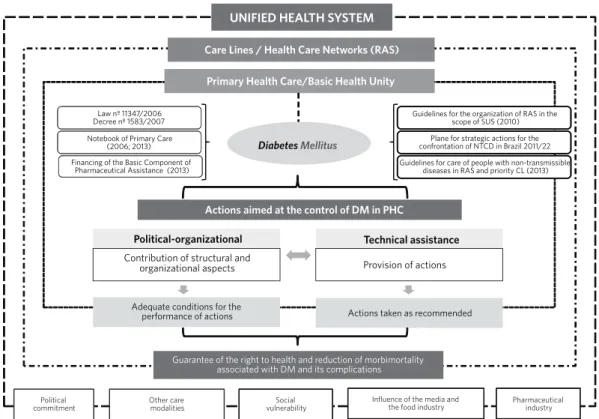
Figure 1. Theoretical model of actions aimed at the control of Diabetes Mellitus In Primary Care
This way, PHC plays a central role in this process as it is the point of attention with greater capillarity within RAS. In the TM, the various governmental initiatives are presented to standardize the actions di-rected to the control of DM in the sphere of PHC. Initially, through some strategies and measures that allowed the expansion of access and quality of the PHC, through the registration and the linking of the users to the BHU, allowing the systematic follow-up of cases, prevention of complications and updating of health professionals. More re-cently, the Strategic Action Plan for Coping with Non-Transmissible Chronic Diseases (NTCD) in Brazil, 2011-2022, has been pub-lished to promote the development and implementation of effective public policies and strengthen health services for preven-tion and the control of NTCDs and their risk factors, in addition to establishing guidelines for the care of people with chronic diseases
in health care networks and care lines19-21.
For the actions developed in the PHC to impact the health situation, in its determi-nants and constraints, it is fundamental that the service infrastructure, the work process of the health professionals and the diagnos-tic and therapeudiagnos-tic offer effectively respond to the health needs of the population and are articulated with the rest of the network21.
In the proposed TM, the actions aimed at the control of DM in PHC are divided into two dimensions: Political-Organizational (PO) and Technical Assistance (TA). The PO dimension addresses the areas in which health management must act to ensure the contribution of the structural and organi-zational aspects necessary for the proper implementation of actions. TA is related to the provision of actions by health profes-sionals working in the BHU. In order for actions aimed at DM control to achieve the expected results, in addition to adequate
UNIFIED HEALTH SYSTEM
Care Lines / Health Care Networks (RAS)
Political
commitment Other care modalities vulnerabilitySocial
Pharmaceutical industry
Guarantee of the right to health and reduction of morbimortality associated with DM and its complications Primary Health Care/Basic Health Unity
Actions aimed at the control of DM in PHC
Contribution of structural and organizational aspects
Adequate conditions for the performance of actions
Technical assistance
Provision of actions
Actions taken as recommended
DiabetesMellitus
Law nº 11347/2006 Decree nº 1583/2007
Notebook of Primary Care (2006; 2013)
Financing of the Basic Component of Pharmaceutical Assistance (2013)
Guidelines for the organization of RAS in the scope of SUS (2010)
Plane for strategic actions for the confrontation of NTCD in Brazil 2011/22
Guidelines for care of people with non-transmissible diseases in RAS and priority CL (2013)
Influence of the media and the food industry
conditions, it is necessary for the health teams to organize their work process and carry out the actions as recommended. The actions of the municipal health management and of the health professionals who work in the BHU are interrelated and are fundamen-tal for the attention to the people with DM to be resolutive. The set of actions aimed at the control of DM in PHC aims to guarantee the right to health for people with diabetes and the reduction of the morbimortality associ-ated with the disease and its complications.
The incidence and prevalence of DM, as well as the degree of implementation of actions aimed at the control of DM in PHC and the achievement of the expected results are conditioned by contextual factors. The brazilian scenario presents marked social, economic and cultural differences that have repercussions on the health needs of the population between the different regions and municipalities. This scenario is aggra-vated by the interests of private supply and by market pressures in the health area. Among the contextual factors that may influence the implementation of actions and their results, the following stand out: political commit-ment, existence of other care modalities, influence of the media, food and pharmaceu-tical industry and social vulnerabilities.
Political commitment is understood as the responsibility of municipal public management for the development of strategies that operationalize the poli-cies and programs considered to be pri-orities for the municipality. In order for the principles and guidelines of SUS to be met, the administrative and organiza-tional structures of the Municipal Health Secretariats should be understood as a primary and non-transferable responsi-bility of municipal managers and be con-sistent with the Municipal Health Plan and the Annual Health Program. Part of the problems faced in the health system, at the municipal level, is due to the lack of clarity regarding the competencies and
responsibilities of managers to guarantee the right to health in the governmental agenda22.
Segmentation of the health system and disbelief in it lead many people to seek private health insurers. The private sector offers health plans with different levels of care, being stratified according to the different socioeconomic situations of the users, which makes it highly fragmented and process-centered. These plans often offer services parallel to those offered by SUS, with overlapping consumption. With this, health insurers end up increasing total health spending without replacing public funding. In addition, health plan holders often use the SUS to receive vac-cines, drugs, cost services, and high-complexity procedures. The disorderly supply of outpatient medical care in the private sector makes it difficult to plan and schedule local health in the public service, since municipal health manage-ment is responsible not only for those who use public services but for the whole of society23,24.
The eating habits and practices of the contemporary world are constructed on the basis of sociocultural determinations on which the media and industry exert great influence. At the same time as they stimulate the consumption of so-called ‘light, healthy and rich foods in a huge variety of nutrients’, they sell the image of beautiful, lean and healthy people, incit-ing the consumption of fast-food snacks, rich in carbohydrates and fats saturated. Changes in dietary patterns, associated with sedentary lifestyle, can be considered as being responsible for the increased in-cidence and prevalence of diseases such as obesity and diabetes25,26.
the treatment of the main health problems of the population. However, the lobbying of the pharmaceutical industry and trade often causes users and prescribers to con-sider essential the use of the new products launched in the market, becoming frequent their claim through the judicial system. The request of insulin analogues and the new oral anti-diabetic agents (methyl glinides, gl-itazones, gliptins, cts.) is an example of such a situation. The judicialization of health has broken the logic of integrality of actions by withdrawing part of the resources destined to the purchase of drugs essential for the ful-fillment of judicial demands, affecting in a significant way the municipal public budgets throughout the Country27,28.
Inequality in living conditions in our society favors the emergence of people or populations in situations of greater social vulnerability, as they are excluded from the system and from basic social benefits, such as health, education, work and leisure, and lose the freedom of given the limited range of opportunities. The greater the number of people living in situations of vulnerabil-ity, the greater the morbidity and mortality. Thus, health actions should be planned by prioritizing individuals and families in situ-ations of greater need and vulnerability, in order to maximize available resources and
propose interventions that are in accordance with the identified needs29,30.
The economic impact of DM about the present society is enormous. It focuses not only on health systems, but, also, on indi-viduals and their families, and has generat-ed a loss of quality of life, with a high degree of limitation in work and leisure activities3.
It was a consensus among specialists that actions focused on the control of DM in PHC are the responsibility of the municipal health management. In order to be effec-tively and efficiently developed, the struc-tural and organizational aspects necessary for the operation of the BHUs, as well as the guarantee of adequate conditions for the provision of actions by health professionals should be considered as priorities for the prevention of this aggravation, to reduce morbidity and mortality and the costs asso-ciated with the disease.
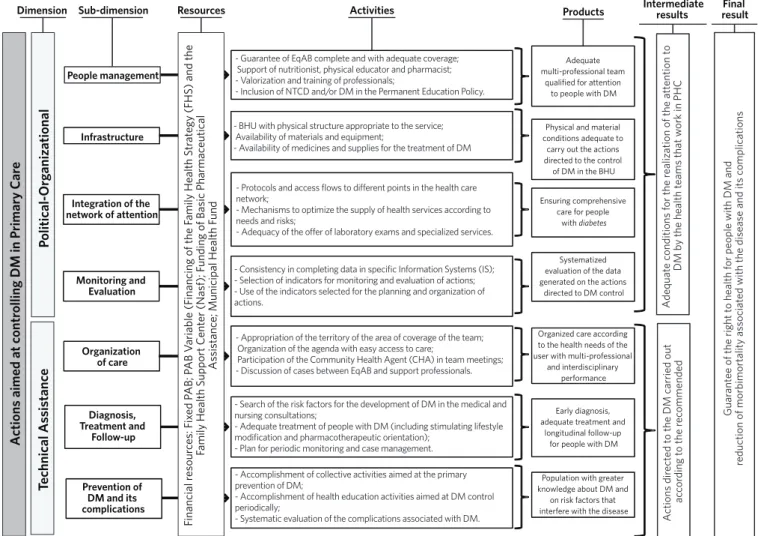
In the proposed ML, the PO dimen-sion has the sub-dimendimen-sions: ‘People Management’, ‘Infrastructure’, ‘Integration of the Network of Attention and Monitoring and Evaluation’. In order for actions aimed at DM control to be carried out in an adequate manner, municipal health management must have motivated and qualified professionals in sufficient quantity to ensure adequate coverage of existing demand. It should also ensure that the BHUs have adequate physi-cal structure, equipment and materials in sufficient quantity so that professionals can carry out their activities. It is hoped, also, that the management will organize the access flows to guarantee the integrality of the attention in all the points of the network
and to carry out the monitoring and the sys-tematic evaluation of the offered actions to reach established goals.
The TA dimension includes actions related to the work process of the Primary Care Referral Teams (EqAB) and the sub-dimensions: ‘Organization of Care’; ‘Diagnosis, Treatment and Monitoring’; ‘Prevention of DM and its complications’. In order to plan and execute actions aimed at DM control, the EqAB should take into account the territory of action and the characteristics of the population under its responsibility. The therapeutic approach employed and the accompaniment pro-vided are fundamental for the prevention of DM and its complications, as well as for Figure 2. Logical model of the actions directed to the control of Diabetes Mellitus in Primary Care
Dimension Sub-dimension Resources Activities Products Intermediateresults resultFinal
Guar
ant
ee of the right t
o health f
or people with DM and
reduction of morbimor
talit
y as
sociat
ed with the disease and its c
omplications
A
ctions dir
ect
ed t
o the DM carried out
ac
cor
ding t
o the r
ec ommended A dequat e c onditions f
or the r
ealiz
ation of the att
ention t
o
DM b
y the health t
eams that w
ork in PHC
Population with greater knowledge about DM and
on risk factors that interfere with the disease
Adequate multi-professional team
qualified for attention to people with DM
Physical and material conditions adequate to
carry out the actions directed to the control of DM in the BHU
Systematized evaluation of the data generated on the actions
directed to DM control Ensuring comprehensive
care for people with diabetes
Organized care according to the health needs of the user with multi-professional
and interdisciplinary performance
Early diagnosis, adequate treatment and
longitudinal follow-up for people with DM
- Guarantee of EqAB complete and with adequate coverage; Support of nutritionist, physical educator and pharmacist; - Valorization and training of professionals;
- Inclusion of NTCD and/or DM in the Permanent Education Policy. - BHU with physical structure appropriate to the service; Availability of materials and equipment;
- Availability of medicines and supplies for the treatment of DM
- Protocols and access flows to different points in the health care network;
- Mechanisms to optimize the supply of health services according to needs and risks;
- Adequacy of the offer of laboratory exams and specialized services.
- Consistency in completing data in specific Information Systems (IS); - Selection of indicators for monitoring and evaluation of actions; - Use of the indicators selected for the planning and organization of actions.
- Appropriation of the territory of the area of coverage of the team; Organization of the agenda with easy access to care;
Participation of the Community Health Agent (CHA) in team meetings; - Discussion of cases between EqAB and support professionals. - Search of the risk factors for the development of DM in the medical and nursing consultations;
- Adequate treatment of people with DM (including stimulating lifestyle modification and pharmacotherapeutic orientation);
- Plan for periodic monitoring and case management. - Accomplishment of collective activities aimed at the primary prevention of DM;
- Accomplishment of health education activities aimed at DM control periodically;
- Systematic evaluation of the complications associated with DM.
A
ctions aimed at c
ontr
olling DM in P
rimary Car e People management Infrastructure Monitoring and Evaluation Integration of the network of attention
Diagnosis, Treatment and
Follow-up
Prevention of DM and its complications Organization of care Technical As sis tanc e P olitical-Org aniz ational Financial r esour ces: F ix ed P AB; P AB V ariable (F
inancing of the F
amily Health Str
at
egy (FHS
) and the
F
amily Health Suppor
t C
ent
er (Nasf
); F
unding of Basic Pharmac
eutical
As
sistanc
e; Municipal Health F
the maintenance of the quality of life of people with the disease32.
In the LM, the activities considered essential in all the proposed subdimensions were listed and the expected products were presented for each of them. As intermediate and final results, it is expected that the municipal health man-agement guarantees adequate conditions for PHC teams to carry out actions aimed at DM control as recommended, in order to guarantee to the people with DM the right to health, with a view to reducing disease-related morbidity and mortality and its complications.
The matrix of analysis and judgment counts on 7 subdimensions and 19 indicators, listed in chart 2, with their respective measures, param-eters, the maximum expected score for each of its components and the sources of evidence.
In the sub-dimension ‘People Management’ it is highlighted that the expansion of public policies and the municipalization of health care have led to the need for an increase in the number of professionals with a specific profile for action in public health services. In order for health care to be adequately performed, there must be complete EqABs in sufficient quantity to meet the existing demand, following the rec-ommendations of the MH. In addition, support from other health professionals – such as nutri-tionists, physical educators and pharmacists – is essential for the EqAB, to broaden the scope and scope of actions aimed at DM control in PHC. The high turnover of PHC professionals interferes with the care process and makes it difficult to form the bond, which are consid-ered fundamental to longitudinal monitoring. In order to fix the professionals in the BHU, it is considered necessary to increase their value, in order to promote a balance between the needs and expectations of health professionals and those of the service.
Another important aspect in the attention to people with DM is the good management of the clinic. The qualification and updating of the professionals of PHC regarding the organi-zation and functioning of the care flows of the municipal network and the care necessary to
control DM or NTCDs regularly, are consid-ered fundamental32. The indicators listed in
this subdimension were: ‘coverage of PHC pro-fessionals’; ‘permanence of the propro-fessionals’; ‘professional qualification’.
The ‘Infrastructure’ of the BHU must be adequate to meet local demand according to the needs of the population. The ‘physical structure of the BHU’ should allow for acces-sibility and have adequate facilities for health actions for the entire population. In order for the attention to people with DM to be carried out properly, material conditions and specific technological contribution are necessary for the organization of the work process and the effectiveness of care. The supply and regular maintenance of the ‘materials and equipment’ necessary to carry out all the actions aimed at the control of DM, as well as the continuous supply of the list of ‘medicines and supplies’ necessary for the treatment of DM, the applica-tion of insulin and Self-monitoring of Capillary Blood Glycemia (AMGC) are considered essen-tial to ensure continuity of care and to achieve therapeutic results.
The majority of people with DM can and should be accompanied by the EqAB, however, cases that exceed the limit of action within the PHC should be referred to other levels of attention32. For the
Chart 2.Matrix of Analysis and Judgment of the actions directed to the control of DM in PHC, containing dimensions, sub-dimensions, indicators, measures, parameters and sources of evidence
Indicator Measures Parameter Source
Political-Or
ganiz
ational Dimension
People manag
ement
Coverage of pro-fessionals
Number of people residing in the area covered by the EqAB
Between 2500 and 3500 people without areas of social interest (10 pts);
Between 2500 and 3500 people with an area of social interest (5 pts);
More than 3500 peoples (0 pts)
DA Interview DO
Perception of EqAB regarding the number of people residing in the area of coverage
Appropriate and convergent (10 pts); Partially convergent (5pts); Inadequate or divergent (0 pts) Support from physical educator, nutritionist,
pharmacist to EqAB
Of the 3 professionals (10 pts); OF 2 professionals (5 pts); Of 1 or none (0 pts) Perception about the workload of support
professionals available to EqAB.
Appropriate and convergent (10 pts); Partially convergent (5pts); Inadequate or divergent (0 pts) Permanence of
professionals
Length of stay of the doctor in the EqAB Good: 2 years or more (20 pts); Regular: from 1 to 2 years (10 pts); Bad: <1 year (5 pts)
Interview
Perception of EqAB regarding its professional valuation
Appropriate and convergent (20 pts); Partially convergent (5pts);
Inadequate or divergent (0 pts) Qualification of
professionals
Training on the organization/operation of the municipal network
Yes (10 pts); No (0 pts)
Interview DO
Update on NTCD or DM Yes (10 pts);
No (0 pts)
Infr
astructur
e at BHU
Physical structure of BHU
% of items included in checklist ‘BHU with accessibility to users’
Transformation in score following the ratio (maximum 10 pts).
Interview DO Perception about user accessibility to BHU Appropriate and convergent (10 pts); Partially
conver-gent (5 pts); Inadequate or diverconver-gent (0 pts) % of items included in the checklist ‘BHU
with adequate physical structure’
Transformation in score following the ratio (maximum 10 pts).
Perception about the adequacy of the physical structure of the BHU
Appropriate and convergent (10 pts); Partially conver-gent (5 pts); Inadequate or diverconver-gent (0 pts) Materials and
equipment
% of items included in the checklist ‘Mate-rials and equipment for actions aimed at DM control’
Transformation in score following the ratio (maximum 10 pts)
Interview DO
Perception of the EqAB regarding the mate-rials and equipment available for the actions directed to the control of DM in BHU
Appropriate and convergent (10 pts); Partially conver-gent (5 pts); Inadequate or diverconver-gent (0 pts)
Periodic maintenance of materials and equip-ment at BHU
Yes (10 pts); Partial (5 pts); No (0 pts) Medications and
supplies
% of items included in the checklist ‘Provision of medicines for the treatment of DM in BHU’
Transformation in score following the ratio (maximum 7,5 pts)
Interview DO % of items included in the checklist ‘Supply
of inputs for the application of insulin and AMGC in BHU’
Transformation in score following the ratio (maximum 7,5 pts)
Perception regarding the supply of all medici-nes and supplies provided for the treatment of DM
Appropriate and convergent (7.5 pts); Partially conver-gent (3 pts); Inadequate or diverconver-gent (0 pts)
Strategies adopted to guarantee the supply of medications and supplies in case of absences
Chart 2. (cont.) Political-Or ganiz ational Dimension Int egr
ation of the net
w
ork of att
ention
Normatization of Attention
Use of protocol and guidelines aimed at the attention to the people with DM (doctor and nurse)
Yes (10 pts); Partial (5pts);
No (0pts) Interview
DO Use of protocol with access flows between
the different points of the care network (doc-tor and nurse)
Yes (10 pts); Partial (5pts); No (0pts) Regulation of
ac-cess to specialized services
Mechanisms for regulating access to specia-lized services
Yes (10 pts); No (0pts)
Interview DO Strategies to optimize the supply of
speciali-zed services
Yes (10 pts); Partial (5pts); No (0pts) Adequacy of
sup-ply to specialized services
Perception of waiting time for laboratory tests Appropriate (10 pts); Partially appropriate (5 pts); Inadequate (0 pts)
Interview DO Perception of waiting time for consultation
with endocrinologist
Appropriate (10 pts); Partially appropriate (5 pts); Inadequate (0 pts)
Perception about waiting time for consulta-tion with ophthalmology in the care network
Appropriate (10 pts); Partially appropriate (5 pts); Inadequate (0 pts)
Monit
oring and E
valuation
Availability of information
Systematic updating of the IS to register users/families
Yes (30 pts); Partial (15 pts); No (0 pts)
Interview DO
Monitoring of actions aimed at DM control
Indicators of monitoring of the actions di-rected to the control of DM in the municipal network
Yes (15 pts); Partial (7 pts);
No (0 pts) Interview
DO Planning and organization of actions aimed at
DM control based on the evaluation of selec-ted indicators
Yes (15 pts); Partial (7 pts); No (0 pts)
Technical-As sistanc e Dimension Or ganiz
ation of car
e
Appropriation of territory
% of micro areas covered by CHAs Transformation into score following the ratio (maxi-mum 20 pts)
Interview DO Prom Perception of the actions of CHAs in the
appropriation of the territory
Adequate and convergent (20 pts); Partially conver-gent (10 pts); Inadequate or diverconver-gent (0 pts) Updated mapping of PHC markers, including
people with DM
Yes (20 pts); No (0 pts) Organization of
the Agenda
Prioritizing care for people with DM Yes (20 pts); Partial (10 pts); No (0 pts)
Interview DO Prom Guarantee of follow-up visits for people with
DM
Yes (20 pts); No (0 pts) Emergency care for people with DM in the
event of an accident
Yes (20 pts); Partial (10 pts); No (0 pts) Interdisciplinary
action
Participation of CHAs in team meetings Always (20 pts); Sometimes (10 pts); Never (0 pts)
Interview DO Prom Discussion of cases between EqAB and
sup-port professionals.
Always (20 pts); Sometimes (10 pts); Never (0 pts) Interlocution of different professionals in the
organization of educational activities.
Always (20 pts); Sometimes (10 pts); Never (0 pts) Early diagnosis
of DM
Search of risk factors for the development of DM in medical and nursing care
Always (20 pts); Sometimes (10 pts); Never (0 pts)
Chart 2. (cont.)
Technical-As
sistanc
e Dimension
Diagnosis, T
reatment
/ F
ollo
w
-up
Early diagnosis of DM
Request for exams for early diagnosis of MD in people aged 45 years or older and/or with BMI> 25, associated with at least one more risk factor
Always (20 pts); Sometimes (10 pts); Never (0 pts)
Interview DO Prom
Request for exams for early diagnosis of DM in pregnant women
Always (20 pts); Sometimes (10 pts); Never (0 pts) Appropriate
treat-ment
Orientations about the Lifestyle Modification (LM) in writing
Always (20 pts); Sometimes (10 pts); Never (0 pts)
Interview DO Prom Dispensing with guidance for the appropriate
use of drugs for DM treatment
Adequada (20 pts: com orientação na maioria dos casos);
Parcialmente adequada (10 pts: orientação em parte dos casos);
Inadequada (0 pts: sem orientação) Prescriptions of R Insulin with guidance for
dose adjustment according to HGT
Adequado (20 pts: na maioria dos casos);
Parcialmente adequado (10 pts: em parte dos casos); Inadequado (0 pts: dose fixa na grande maioria dos casos)
Frequency of requesting laboratory tests (FG and/or Hb1Ac) for people with DM
Adequada (20 pts: a cada 6 meses, se compensado); Parcialmente adequada (10 pts: uma vez por ano, independentemente de se está compensado ou não); Inadequada (sem uma periodicidade definida) Systematic
follow--up
Use of a specific instrument to follow up people with DM
Yes (20 pts); Parcialmente (10 pts); No (0 pts)
Interview DO Prom Active Search for missing persons with DM Yes (20 pts);
Parcialmente (10 pts); No (0 pts)
AMGC among people who use insulin Adequada (20 pts: maioria sabe interpretar os resul-tados do HGT);
Inadequada (0 pts: maioria não sabe interpretar os resultados do HGT)
P
re
vention of DM and its c
omplications
Health education activities
Periodic activities aimed at the primary pre-vention of DM
Yes (20 pts); No (0 pts)
Interview Prom Periodic activities aimed at DM control Yes (20 pts);
No (0 pts) Prevention of
com-plications associa-ted with DM
Systematic assessment of diabetic foot in people with DM
Yes (20 pts); Parcialmente (10 pts); No (0 pts)
Interview Prom
Systematic evaluation of the oral cavity in people with DM
Yes (20 pts); Parcialmente (10 pts); No (0 pts)
Periodic referral of people with DM for eye fundus evaluation
Yes (20 pts); Parcialmente (10 pts); No (0 pts)
Source: Own elaboration.
CHA – Community Health Agent; DA – Documentary Analysis; AMGC – Self-monitoring of Capillary Blood Glycemia; NTCD – Non-Transmissible Chronic diseases; DM –
Monitoring and evaluation of actions aimed at DM control aim to support decision-making processes, subsidize the identification of problems and assist in the reorientation of the actions developed within PHC. The evaluation of the health situation of the popu-lation and the results of the interventions carried out is largely due to the monitoring of the activities carried out in the daily life of the services. For this purpose, it is considered necessary to record and qualify the informa-tion in the Informainforma-tion System (IS) of the PHC, as well as the definition of indicators to monitor the actions developed to control the DM and to plan and organize the care of ac-cording to the demographic, clinical and epi-demiological profiles of the community.
In the analysis of the ‘Organization of care’, the aspects related to the ‘appropriation of the territory’ by the EqAB and were consid-ered and to the characteristics of the popula-tion under their responsibility, necessary for the implementation of the actions directed to DM control. The ‘organization of the agenda’ of health professionals should ensure easy access to people with DM for treatment and follow-up and attendance to intercurrences, in order to promote the link and enable the continuity and longitudinality of care. It is also considered that the EqAB and the pro-fessionals of support must act with interdisci-plinary approach and in a multi-professional way in the planning and the development of the activities, in order to favor the interlocu-tion of knowledge and experiences to help in the resolution of the situations experienced in the daily life of the BHU.
In the sub-dimension ‘Diagnosis, Treatment and Monitoring’, it is expected that the EqAB are aware of the presence of risk factors for the development of the disease and the early detection of DM in the population assigned to the territory. The treatment of the person with DM aims at metabolic control and the prevention of complications associated with DM, taking into account the risk level of each person.
The basis of the treatment is the stimula-tion to adopt healthier life habits, almost always added pharmacological treatment. The implementation of a plan for periodic follow-up and case management is essen-tial to evaluate the evolution of the disease and adherence to the prescribed treatment. In this sub-dimension, the following indi-cators were listed: ‘early diagnosis of DM’; ‘adequate treatment of people with DM’; ‘monitoring and follow-up’.
For ‘Prevention of DM and its Complications’, ‘collective activities’ that stimulate the adoption of healthier life habits should be seen by EqAB as a low density technology effective to the primary preven-tion of DM, as well as other NTCDs. In addi-tion, due to the difficulty of those with DM in following the prescribed treatment, both the medical and the non-medical, the ‘health education activities aimed at the control of DM’ should be considered part of the inte-gral treatment. These activities are aimed at increasing the understanding of people about the disease, assisting them in devel-oping greater autonomy and overcoming the various obstacles that hamper disease control. It is also considered fundamental that the EqAB include in the routine of mon-itoring of the people with DM the ‘system-atic evaluation of the diabetic foot, buccal cavity and fundus of the eye’. The latter, in the impossibility of being performed in the BHU, should be referred to be performed at another level of attention. These actions are necessary to prevent the complications asso-ciated with the disease and to maintain the quality of life of people with DM.
will be calculated, considering the following cutoff points: (1) critical: <50.0%; (2) unsat-isfactory: ≥ 50.0 and <70.0%; (3) satisfactory:
≥70.0 and <85.0%; (4) appropriate ≥ 85.0%. Such percentages allow compliance with the proposed criteria of judgment for each of the components that make up the MAJ and allow the evaluation of the degree of implementation of the actions directed to the control of DM in PHC.
Final considerations
The methodology adopted for the construc-tion of an evaluative model of the acconstruc-tions aimed at the control of DM in PHC allowed a rich discussion among the participants about the object and the causal relation between its components, increasing the knowledge of all those involved regarding the operational-ization of the program. The results showed that the actions aimed at the control of DM in PHC are subject to evaluation, since the elements identified in LM are consistent with the conditions that the intervention has to achieve the expected results. In this sense, conducting a case study for the evaluation of
actions aimed at the control of DM in PHC is an interesting methodological option, since it allows to increase the knowledge of the mechanisms and processes involved in the operationalization of the program, in order to contribute to the improvement of this.
References
1. Zimmet P, Alberti GK, Magliano DJ, et al. Diabetes mellitus statistics on prevalence and mortali-ty: facts and fallacies. Nat. rev. endocrinol. 2016; 12(10):616-22.
2. Barquera S, Campos-Nonato I, Aguilar-Salinas C, et al. Diabetes in Mexico: cost and management of diabetes and its complications and challenges for
health policy. Global Health. 2013; 9:3.
3. Bertoldi AD, Kanavos P, França GV, et al. Epidemiology, management, complications and
costs associated with type 2 diabetes in Brazil: a comprehensive literature review. Global. health. 2013; 9(1):62.
4. Zimmet P, Alberti GK. Epidemiology of Diabetes: Status of a Pandemic and Issues Around Metabolic Surgery. Diabetes care. 2016; 39(6):878-83.
5. Malta DC, Stopa SR, Szwarcwald CL, et al. A vigi-lância e o monitoramento das principais doenças crônicas não transmissíveis no Brasil – Pesquisa Nacional de Saúde, 2013 Rev. bras. epidemiol.
2015;18:3-16.
6. DATASUS. Departamento de Informática do SUS. [acesso em 2016 jul. 10]. Disponível em:
http://ta- bnet.datasus.gov.br/cgi/tabcgi.exe?sim/cnv/pob-t10uf.def 2015.
7. Schmidt MI, Duncan BB, Silva GA, et al. Chronic
non-communicable diseases in Brazil: bur-den and current challenges. The Lancet. 2011; 377(9781):1949-61.
8. Alfradique ME, Bonolo PDF, Dourado I, et al. Internações por condições sensíveis à atenção pri-mária: a construção da lista brasileira como fer-ramenta para medir o desempenho do sistema de
saúde (Projeto ICSAP-Brasil). Cad. Saúde Pública. 2009; 25(6):1337-49.
9. Fertonani HP, Pires DEPD, Biff D, et al. Modelo
assistencial em saúde: conceitos e desafios para a atenção básica brasileira. Ciênc. Saúde Colet. 2015; 20:1869-78.
10. Gonçalves CR, Cruz MT, Oliveira MP, et al. Recursos humanos: fator crítico para as redes de atenção à saúde. Saúde debate. 2014; 38:26-34.
11. Thurston WE, Ramaliu A. Evaluability assessment of a survivors of torture program: lessons learned. Can J Program Eval. 2005; 20(2):1.
12. Bezerra LCDA, Cazarin G, Alves CKDA. Modelagem de Programas: da teoria à operacionalização. In: Samico I, Felisberto E, Figueiró AC, et al., organiza-dores. Avaliação em Sáude: bases conceituais e
ope-racionais. Rio de Janeiro: MedBook; 2010. p. 65-78.
13. Champagne F, Brousselle A, Hartz ZMA, et al. Modelizar as Intervenções. In: Brousselle A,
Champagne F, Contandriopoulos AP, et al., orga-nizadores. Avaliação: conceitos e métodos. Rio de Janeiro: Fiocruz; 2011. p. 292.
14. Bispo e Silva AS, Santos MAd, Teixeira CRS, et al. Avaliação da atenção em diabetes mellitus em uma unidade básica distrital de saúde. Texto Contexto Enferm. 2011; 20:512-8.
15. Tavares VSA, Vidal SA, Gusmão-filho FAR, et al. Avaliação da atenção ao diabetes mellitus em Unidades de Saúde da Família de Petrolina,
Pernambuco, 2011. Epidemiol. serv. saúde. 2014; 23:527-36.
16. Carvalho Filha FSS, Nogueira LT, Medina MG.
Avaliação do controle de hipertensão e diabetes na Atenção Básica: perspectiva de profissionais e usu-ários. Saúde debate. 2014; 38:265-78.
Saúde: dos modelos teóricos à prática na avaliação de programas e sistemas de saúde. Rio de Janeiro; Salvador: Fiocruz; Edufba; 2014. p. 276p.
18. Mendes EV. As redes de atenção à saúde. Brasília, DF: Organização Pan-Americana da Saúde; 2011.
19. Brasil. Ministério da Saúde, Secretaria de Políticas de Saúde, Departamento de Ações Programáticas Estratégicas. Plano de reorganização da atenção à hipertensão arterial e ao diabetes mellitus. Brasília,
DF: MS, 2001.
20. Brasil. Ministério da Saúde, Secretaria de Vigilância em Saúde, Departamento de Análise de
Situação de Saúde. Plano de Ações Estratégicas para o Enfrentamento das Doenças Crônicas Não Transmissíveis (DCNT) no Brasil 2011-2022. Brasília, DF: MS, 2011.
21. Brasil. Ministério da Saúde, Secretaria de Atenção à Saúde, Departamento de Atenção Básica. Diretrizes para o cuidado das pessoas com doenças crônicas
nas redes de atenção à saúde e nas linhas de cuidado prioritárias. Brasília, DF: MS. 2013.
22. Sousa MC, Lima PVPS, Khan AS. Mecanismos de
gestão municipal e a promoção dos direitos huma-nos. Rev. adm. pública. 2015; 49(4):985-1009.
23. Paim J, Travassos C, Almeida C, et al. The Brazilian
health system: history, advances, and challenges. The Lancet. 2011; 377(9779):1778-97.
24. Santos IS, Ugá MAD, Porto SM. O mix
público-pri-vado no Sistema de Saúde Brasileiro: financiamen-to, oferta e utilização de serviços de saúde. Ciênc. Saúde Colet. 2008;13:1431-40.
25. Claro RM, Santos MAS, Oliveira TP, et al. Consumo de alimentos não saudáveis relacionados a doenças
crônicas não transmissíveis no Brasil: Pesquisa Nacional de Saúde, 2013. Epidemiol. serv. saúde. 2015; 24:257-65.
26. Micha R, Peñalvo JL, Cudhea F, et al. Association between dietary factors and mortality from heart disease, stroke, and type 2 diabetes in the United
States. JAMA. 2017; 317(9):912-24.
27. Chieffi AL, Barata RB. Judicialização da política pú-blica de assistência farmacêutica e eqüidade. Cad.
saúde pública. 2009; 25:1839-49.
28. Vieira FS. Ações judiciais e direito à saúde: reflexão sobre a observância aos princípios do SUS. Rev.
saú-de pública. 2008; 42:365-9.
29. Morais IM. Vulnerabilidade do doente versus auto-nomia individual. Rev. bras. saúde matern. infant.
2010; 10:s331-s6.
30. Nakata PT, Koltermann LI, Vargas KR, et al. Classification of Family Risk in a Family Health
Center. Rev. latinoam. enferm. 2013; 21:1088-95.
31. Freitas LRS, Garcia LP. Evolução da prevalência do diabetes e deste associado à hipertensão arterial no
Brasil: análise da Pesquisa Nacional por Amostra de Domicílios, 1998, 2003 e 2008. Epidemiol. serv. saú-de. 2012; 21:07-19.
32. Brasil. Ministério da Saúde, Secretaria de Atenção à Saúde, Departamento de Atenção Básica. Estratégias para o cuidado das pessoa com dooen-ça crônica: diabetes mellitus. Caderno de Atenção
Básica n° 36. Brasília, DF: MS, 2013.