Rita de Cássia Félix Alvarez(1), Carlos Alexandre Costa Crusciol(2), Adriano Stephan Nascente(3), João Domingos Rodrigues(4) and Gustavo Habermann(5)
(1)Universidade Federal do Mato Grosso do Sul, Caixa Postal 112, CEP 79560‑000 Chapadão do Sul, MS, Brazil. E‑mail: [email protected] (2)Universidade Estadual Paulista (Unesp), Faculdade de Ciências Agronômicas, Departamento de Produção e Melhoramento Vegetal, Caixa Postal 237, CEP 18610‑307 Botucatu, SP, Brazil. E‑mail: [email protected] (3)Embrapa Arroz e Feijão, Caixa Postal 179, CEP 75375‑000 Santo Antônio de Goiás, GO, Brazil. E‑mail: [email protected] (4)Unesp, Instituto de Biociências (IB), Departamento de Botânica, Caixa Postal 510, CEP 18610‑307 Botucatu, SP, Brazil. E‑mail: [email protected]; (5)Unesp, IB, Departamento de Botânica, Avenida 24‑A, no 1515, Bela Vista, CEP 13506‑900 Rio Claro, SP, Brazil, E‑mail [email protected]
Abstract – The objective of this work was to evaluate gas exchange rates, plant height, yield components, and productivity of upland rice, as affected by type and application time of plant growth regulators. A randomized block design, in a 4x2 factorial arrangement, with four replicates was used. Treatments consisted of three growth regulators (mepiquat chloride, trinexapac-ethyl, and paclobutrazol), besides a control treatment applied at two different phenological stages: early tillering or panicle primordial differentiation. The experiment was performed under sprinkler‑irrigated field conditions. Net CO2 assimilation, stomatal conductance, plant transpiration, and water‑use efficiency were measured four times in Primavera upland rice cultivar, between booting and milky grain phenophases. Gas exchange rates were neither influenced by growth regulators nor by application time. There was, however, interaction between these factors on the other variables. Application of trinexapac-ethyl at both tillering and differentiation stages reduced plant height and negatively affected yield components and rice productivity. However, paclobutrazol and mepiquat chloride applied at tillering, reduced plant height without affecting rice yield. Mepiquat chloride acted as a growth stimulator when applied at the differentiation stage, and significantly increased plant height, panicle number, and grain yield of upland rice. Index terms: Oryza sativa, net photosynthesis, stomatal conductance, transpiration, water‑use efficiency.
Taxas de trocas gasosas, altura de planta, componentes de produção
e produtividade de arroz de terras altas afetados por reguladores vegetais
Resumo – O objetivo deste trabalho foi avaliar taxas de trocas gasosas, altura de plantas, componentes de produção e produtividade do arroz de terras altas, influenciados pelo tipo e pela época de aplicação de reguladores de crescimento vegetal. O delineamento experimental foi utilizado em blocos ao acaso, em arranjo fatorial 4x2, com quatro repetições. Os tratamentos consistiram de três reguladores vegetais (cloreto de mepiquat, trinexapac‑etil e paclobutrazol), além de um tratamento controle, aplicados em dois estádios fenológicos: início do perfilhamento ou primórdio da diferenciação da panícula. O experimento foi conduzido em campo com irrigação por aspersão. A assimilação líquida de CO2, a condutância estomática, a transpiração e a eficiência do uso da água foram avaliadas na cultivar de sequeiro Primavera, por quatro vezes, entre os estágios de emborrachamento e de grão leitoso. As trocas gasosas não foram influenciadas nem pelos reguladores, nem pelas épocas de aplicação. Houve interação entre os efeitos dos fatores sobre as demais variáveis. A aplicação de trinexapac‑etil, tanto no perfilhamento como na diferenciação, reduziu a altura de plantas e afetou negativamente os componentes de produção e a produtividade do arroz. No entanto, o paclobutrazol e o cloreto de mepiquat, aplicados no estágio de perfilhamento, reduziram a altura das plantas sem afetar a produção. O cloreto de mepiquat atuou como promotor de crescimento quando aplicado no estágio de diferenciação de panículas, e aumentou significativamente a altura das plantas, o número de panículas e a produtividade de grãos.
Termos para indexação: Oryza sativa, fotossíntese líquida, condutância estomática, transpiração, eficiência de uso da água.
Introduction
Upland rice is cultivated in Asia, Africa, and Americas, and its importance is increasing worldwide,
conditions. However, Brazilian rainfed rice cultivation system has not been performing well, with low-average
yields (Crusciol et al., 2012). This is mostly due
to uneven rain distribution, poor fertilization and inadequate liming (Santos et al., 2006).
Upland rice cultivation under irrigation has prompted the use of high-level technological practices, with a consequent increase in crop yield (Arf et al., 2001). In this sense, the use of sprinkler irrigation in upland rice crops is an important option to stabilize and increase
grain yield, and also to improve grain quality (Crusciol
et al., 2008). Therefore, proper water supply may allow high yield of upland rice (Guimarães et al., 2011). In addition, the use of central pivots is becoming frequent to irrigate upland rice plantations in the state of São Paulo, Brazil, in rotational systems with beans, corn,
wheat, potato or cotton (Arf et al., 2001, 2012; Crusciol
et al., 2012).
In order to yield, any crop depends on its photosynthetic capacity, and on how plants allocate
carbohydrates for growth and development (Ntanos & Koutroubas, 2002; Falqueto et al., 2009). Respiration rates are normally influenced by plant development
stage, air temperature, nitrogen leaf concentration, and soil water availability (Lee et al., 2005; Souza et al., 2008; Habermann et al., 2011). The balance between
respiration and photosynthesis has a direct influence
on plant yield. However, there is not much data available regarding the wide spectrum of possibilities that affect carbon balance in tropical plants (Wright
et al., 2005; Souza et al., 2008; Fagan et al., 2010).
Additionally, in major crops like cotton, sugarcane, wheat and soybeans, plant growth regulators (PGR) have been most commonly used to reduce plant height
and to provide greater plant uniformity (Nascimento et al., 2009; Espindula et al., 2011; Leite et al., 2011).
Some of these regulators are biosynthesis inhibitors of gibberellins, a plant hormone associated with stem
elongation (Buzetti et al., 2006; Nascimento et al., 2009). In rice, these PGR are used to reduce plant
height and, as a consequence, to reduce plant lodging.
Nevertheless, for upland rice cultivation, there is a
lack of information regarding the relationship between PGR and physiological aspects involved in plant production, such as carbon gain and gas exchange. Typical studies have only evaluated the effects of
PGR on plant height and crop yield (Nascimento et al., 2009), without analyzing photosynthetic
relationships. In this sense, mepiquat chloride (PIX), a gibberellins’ biosynthesis inhibitor, has been described to reduce photosynthetic capacity, leaf area, and Ribulose-1,5-carboxylase/oxygenase
(Rubisco) activity in cotton plants (Reddy et al., 1996). Nevertheless, soybean plants treated with strobilurin had photosynthesis rates and yield increased (Fagan
et al., 2010). Proper use of the correct type of PGR and its optimum application time could help reduce plant height without gas exchange loss, which would possibly have a direct effect on grain yield.
Therefore, we tested the hypothesis that gas exchange rates can be affected by the use of different types of PGR, applied at different phenological phases of upland rice plants.
The objective of this work was to evaluate gas exchange rates, plant height, yield components, and productivity of upland rice, as affected by type and application time of plant growth regulators.
Materials and Methods
The experiment was performed in the rainy season (January-June, 2004) in Botucatu, SP, Brazil (48°23'W, 22°51'S, at 765 m altitude), where climate
can be described as Cwa, according to the Köppen’s classification system. Average maximum and minimum
temperatures of 26.5 and 17°C were respectively
observed, as well as an annual rainfall of 1,455 mm
was measured in the year of the field experiment. The
soil type was an Ultisoil (international taxonomy). Soil fertility was determined (0–20 cm) according
to Raij et al. (2001), and the results were: pH (CaCl2),
5.5; organic matter, 21 g kg-1; P (resin), 35 mg dm-3;
exchangeable K, Ca, Mg, and potential acidity (H+Al)
as 2.5, 38, 17, and 43 mmolc dm-3, respectively; and
base saturation, 57%. Nutrient management was based
on the common practices prescribed for the upland rice
cultivation system (Raij et al., 1996). Nitrogen was
used as urea (20 kg ha-1 N), P as simple superphosphate
(120 kg ha-1 P
2O5), and K as potassium chloride
(60 kg ha-1 K
2O), which were added into the sowing
furrows.
Seeds were sown in the first week of December,
is one of the most important cultivars in this cropping system (Santos et al., 2006; Arf et al., 2012).
A randomized block design, in a 4x2 factorial arrangement, was used with four replicates. We studied the effect of PGR – 100 g ha-1 a.i. mepiquat chloride
(MC); 50 g ha-1 a.i. paclobutrazol (PBZ); 100 g ha-1 a.i.
trinexapac‑ethyl (TXE) – and of plant phenological
stages at PGR application – early tillering phase and panicle primordium differentiation phase – on gas exchange rates, plant height, yield components, and productivity of upland rice. A control treatment, with no PGR application, was also used.
The growth regulators were directly sprayed at 100 L ha-1, using a manual-spray-type backpack with a
constant pressure provided by a CO2–pressure source,
and a conical nozzle type (TX-VS2). Solutions contained regulatory non-ionic surfactant (50 mL 100 L-1) + urea
(1.0 %), for best PGR adhesion and absorption. The experimental area was irrigated, using a
fixed‑sprinkler conventional system, providing a flow
rate of 3.3 mm h-1. Three crop coefficients (Kc) were
used for water management. These Kcs were divided
into four periods between emergence and harvest. For
the vegetative phase, a 0.4 Kc value was used; for the reproductive phase, a 0.7 Kc value was used in the beginning, and a 1.0 Kc value for the end of this
phenological phase. For the mature phase, we used a
1.0 Kc value for the beginning and a 0.7 Kc value for the end of the mature phase, as suggested by Rodrigues et al. (2004).
Weeds, insects, and diseases were controlled to
avoid yield loss. Nitrogen top‑dressings (as urea) were
applied at 30 and 60 days after emergence, at doses of
40 + 40 kg ha-1 N.
Leaf gas exchange parameters, such as the CO2
assimilation (A) and transpiration (E) rates, and stomatal
conductance (gs) were measured throughout the cycle of the Primavera upland rice cultivar. A closed-gas
portable photosynthesis system LI‑6200 (LI‑COR, Lincoln, NE USA) with a 0.25 L leaf chamber was used. CO2 concentration in the leaf cuvette averaged
380 µmol mol-1. Four measurements were taken
on unclouded days, under natural fluctuation of the photosynthetic photon flux density (PPFD), which
oscillated between 700 and 1400 µmol m-2 s-1. Within
the leaf cuvette, air temperature varied between
30.9 and 31.9°C, and air humidity between 60.7 and
62.6%.
Because the evaluation of gas exchange performance
is best assessed during the highest PPFD and before air temperature reaches limiting values for C3
photosynthetic-mechanism plants (Souza et al., 2008; Habermann et al., 2008, 2011), plants were assessed
between 9:00 and 11:00 h. Two flag leaves per plant
were measured from booting to milk phase, randomly chosen in each plot. Additionally, the water-use
efficiency (A/E; WUE) was also computed, according
to Habermann et al. (2008).
Manual harvest was done when about 90% of
panicles had typical mature-color grains. Panicles were dried in the sun for two days and, then, subjected to mechanical threshing. The evaluations performed were: plant height from soil to tallest panicle, when grains were at the soft dough stage, by randomly selecting 20 plants in each plot; number of panicles per square meter, which was obtained by counting the number of panicles within 2.0 m plant row of two rows in the useful plot area; total number of spikelets per panicle, which was obtained by counting the number of spikelets in 20 panicles; spikelet fertility, determined as the percentage of grain-bearing spikelets. The 1,000-grain mass was evaluated by randomly collecting and weighing four samples of 1,000 grains from each plot (130 g kg-1 wet
basis), and grain yield (unhulled grains) was determined by the weight of harvested grains from the useful plot area, correcting the moisture content to 13 g kg-1 and
converting it to kilograms per hectare.
Mean values from leaf gas exchange parameters, number of panicles per square meter, number of spikelets per panicle, spikelet fertility, 1,000-grain weight, and grain yield were subjected to a two-way analysis of variance, and mean values were compared
by the LSD’s test, at 5% probability. Pearson’s
correlation analysis was conducted to investigate the relationship between upland rice yield and yield components, as well as between plant height and gas exchange parameters.
Results and Discussion
Plant growth regulators (PGR) and application time did not affect gas exchange rates of Primavera
(2010), who applied kresoxim-methyl on wheat, and pyraclostrobin on soybean, respectively. These authors
observed a significant increase in photosynthetic rates
(A) in plants treated with those PGR. According to them, many PGR can directly favor A, although temporarily
inhibiting plant respiration. Our results, however, agree with those by Neves et al. (2002), who did not observe
differences in gas exchange rates measured in banana crop treated with PGR.
PGR applied at early tillering significantly reduced
plant height, in comparison with the control treatment
(Table 2). Application of TXE caused the lowest
plant height (82 cm), followed by PBZ (105 cm) and
MC (112 cm). However, when applied at the panicle differentiation, MC induced plant height (128 cm),
which was even higher than that of the control
treatment. Notwithstanding, TXE and PBZ caused significant reductions in plant height (Table 2).
The expressive reduction in rice plant height (Table 2), obtained in most of the cases, were expected because PGR inhibit biosynthesis of gibberellins, preventing the formation of stem elongation promoters (Sun, 2004). However, the absence of response of
gas exchange rates to the PGR is a relevant finding,
since it indicates that these products can be used on rice crop, reducing plant height and preventing plant lodging, without harming the productivity. There is a big concern on whether the use of PGR can impair
plant development, and our results indicated that this does not occur in upland rice cultivation.
Probably, at higher doses, greater reductions in photosynthesis rates would have been noted, as Reddy
et al. (1996) observed them in cotton plants treated with high dosages of MC.
Some authors have obtained increased rates of gas exchange after PGR application (Grossmann
& Retzlaff, 1997; Fagan et al., 2010); however, the
product used by these researchers was different from
the ones tested in the present study. Nevertheless,
hormonal imbalance seems to be less related to carbon gain than with plant height.
Table 1. Analysis of variance and average values of net CO2 assimilation rate (A, μmol m-2 s-1), transpiration (E, mol m-2 s-1), stomatal conductance (gs, mmol m-2 s-1), and water use efficiency (WUE, μmol m-2 s-1 per mol m-2 s-1) in upland rice, as affected by the application of plant regulators at two growth stages: early tillering and panicle primordium differentiation stages.
Treatment A E gs WUE
F values
Regulator (R) 0.590ns 0.218ns 1.474ns 0.582ns Application time (T) 0.727ns 0.753ns 0.824ns 0.580ns R x T 1.439ns 0.590ns 0.280ns 1.156ns
CV (%) 4.36 5.72 5.78 4.54
Plant regulator
Control 26.28 0.0103 0.906 2,597 Mepiquat chloride 25.75 0.0103 0.867 2,547 Paclobutrazol 26.45 0.0105 0.959 2,618 Trinexapac-ethyl 25.99 0.0102 0.892 2,610
Application Time
Early tillering 22.53 0.0102 1.01 2,917 Panicle differentiation 29.70 0.0104 0.80 2,268
Table 2. Plant height, yield components, and productivity of upland rice as affected by plant regulators (mepiquat chloride – MC, paclobutrazol – PBZ, trinexapac‑ethil – TXE) and application time(1).
Application Control Plant regulators Average
time MC PBZ TXE
Plant height (cm)
Early tillering 115aA 112bB 105aC 82aD 103 Panicle differentiation 117aB 128aA 73bC 65bD 96
Mean 116 120 89 73
CV (%) 8.12
Number of panicles per m2
Early tillering 207aA 181bB 189aB 207aA 196 Panicle differentiation 199aAB 213aA 171bC 191aB 194
Mean 203 197 180 199
CV (%) 6.53
Number of spikelet per panicle Early tillering 105aB 113aA 105aB 79bC 100 Panicle differentiation 109aA 109aA 98bB 113aA 107
Mean 107 111 101 96
CV (%) 4.82
Spikelet fertility (%)
Early tillering 78aA 77aA 75aA 78aA 77 Panicle differentiation 74aA 79aA 65bB 30bC 61
Mean 76 78 70 54
CV (%) 5.33
Weight of 1,000 grains (g) Early tillering 30.0aA 31.1aA 30.2aA 27.0aB 29.6 Panicle differentiation 30.3aAB 32.3aA 28.9aB 26.0aC 29.4
Mean 30.1 31.7 29.6 26.5
CV (%) 7.31
Grain yield (kg ha-1)
Early tillering 4,678aA 4,502bA 4,183aA 3,206aB 4,142 Panicle differentiation 4,564aB 5,393aA 2,896bC 1,524bD 3,594 Mean 4,620 4,947 3,539 2,365
CV (%) 12.23
(1)Means followed by equal letters, lowercase in columns and uppercase in
The number of panicles was also affected by PGR, application timing and interaction between factors
(Table 2). At the early tillering, application of MC and
PBZ reduced the amount of panicles compared to the other treatments. However, when the application was
done at panicle differentiation phase, MC provided the highest amount of panicles, which was significantly higher than PBZ and TXE. Moreover, plant height reduction, observed with TXE at this stage, did not
occur at early tillering. Therefore, the effects of these PGR are closely related to application timing.
PGR did not affect grain yield when application was
done at early tillering, except for TXE, which resulted in a significantly lower yield than the other treatments
(Table 2). This result is consistent with the ones observed for yield components, specially grain weight and number of spikelets per panicle. However, when
the application was done at panicle differentiation, MC
provided the highest yield.
For application‑timing effects, MC was observed
as better used at panicle differentiation (Table 2),
while PBZ and TXE caused great reduction of yield,
when the application was done at this stage. However,
despite the good results with the use of MC at panicle
differentiation, this treatment provided the highest plant height. Therefore, further studies are needed, in order
to evaluate the effects of other PGR rates, and to find
possible combinations which could prevent high-plant heights and provide good yields.
As to MC, it was evident that it acted as a growth
stimulator, indicating a new line of research to be developed with modern-type cultivars, where this regulator could increase grain yield without causing
significant effect in lodging, since these plants have low heights. Nobrega et al. (1999) and Tavares & Lucchesi (1999) reported that the use of MC increased
crop yields of cotton and potato. Therefore, even though the physiological effect of mepiquat chloride in determining higher yields is not yet explained, our results were not entirely unexpected.
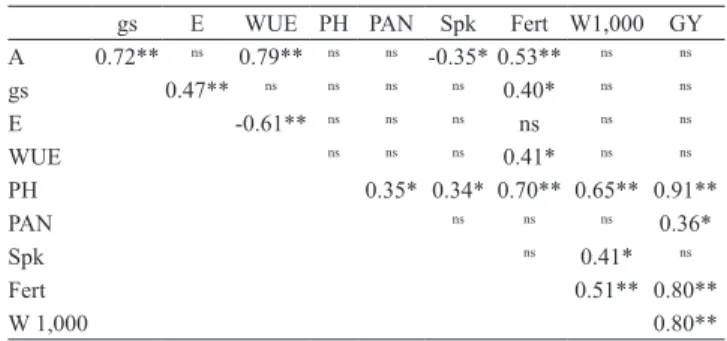
There was a very close relationship between yield components and grain yield; and between these and plant height (Table 3). Therefore, it was evident that the reduction of plant height, caused by plant
regulators, mainly by TXE (Table 2), also resulted
in negative consequences for yield components, with direct consequence on grain yield.
Although PGR did not affect gas exchange, their effects on plant height, yield components, and grain yield suggest that they can be acting in other physiological process. In addition to that, a physiological explanation for the growth promotion
by MC is still lacking. Therefore, researches must be
planned, in order to further elucidate the physiological effects of PGR on plants.
Conclusions
1. Leaf gas exchange rates of upland rice under
sprinkler irrigation conditions are influenced neither by
plant growth regulators nor by their application time. 2. Application of trinexapac-ethyl reduces rice plant height, but also has a drastic negative effect on yield components and productivity, either at early tillering or at the panicle primordium differentiation.
3. Paclobutrazol or mepiquat chloride applied during the tillering stage reduces plant height without affecting upland rice yield.
4. When applied at the panicle primordium differentiation stage, mepiquat chloride acts as a growth stimulator, increasing plant height, panicle number and grain yield.
Acknowledgments
To the Fundação de Amparo à Pesquisa do Estado de São Paulo, for the financial support; to Conselho Nacional de Desenvolvimento Científico e Tecnológico
for productivity grants.
Table 3. Pearson correlation coefficient for gas exchange
rates – net CO2 assimilation rate (A), stomatal conductance (gs), transpiration (E), water‑use efficiency (WUE) –, plant height (PH), and yield components of upland rice – number of panicles per square meter (PAN), number of spikelets per panicle (SPK), spikelet fertility (Fert), weight of 1,000 grains (W1,000) and grain yield (GY).
gs E WUE PH PAN Spk Fert W1,000 GY
A 0.72** ns 0.79** ns ns -0.35* 0.53** ns ns
gs 0.47** ns ns ns ns 0.40* ns ns
E -0.61** ns ns ns ns ns ns
WUE ns ns ns 0.41* ns ns
PH 0.35* 0.34* 0.70** 0.65** 0.91**
PAN ns ns ns 0.36*
Spk ns 0.41* ns
Fert 0.51** 0.80**
W 1,000 0.80**
References
ARF, O.; NASCIMENTO, V. do; RODRIGUES, R.A.F.; ALVAREZ, R. de C.F.; GITTI, D. de C.; SÁ, M.E. de. Uso de etil‑trinexapac
em cultivares de arroz de terras altas. Pesquisa Agropecuária
Tropical, v.42, p.150-158, 2012.
ARF, O.; RODRIGUES, R.A.F.; SÁ, M.E. de; CRUSCIOL, C.A.C. Resposta de cultivares de arroz de sequeiro ao preparo do solo e à
irrigação por aspersão. Pesquisa Agropecuária Brasileira, v.36,
p.871‑879, 2001.
BUZETTI, S.; BAZANINI, G.C.; FREITAS, J.G. de; ANDREOTTI, M.; ARF, O.; SÁ, M.E. de; MEIRA, F. de A. Resposta de cultivares de arroz a doses de nitrogênio e do regulador de crescimento
cloreto de clormequat. Pesquisa Agropecuária Brasileira, v.41, p.1731-1737, 2006.
CRUSCIOL, C.A.C.; ARF, O.; SORATTO, R.P.; MATEUS, G.P.
Grain quality of upland rice cultivars in response to cropping systems in the Brazilian tropical savanna. Scientia Agricola, v.65, p.468-473, 2008.
CRUSCIOL, C.A.C.; TOLEDO, M.Z.; ARF, O.; CAVARIANI, C.
Water supplied by sprinkler irrigation system for upland rice seed production. Bioscience Journal, v.28, p.34-42, 2012.
ESPINDULA, M.C.; ROCHA, V.S.; SOUZA, L.T. de; SOUZA, M.A.; CAMPANHARO, M.; GROSSI, J.A.S. Rates of nitrogen
and growth retardant trinexapac-ethyl on wheat. Ciência
Rural, v.41, p.2045-2052, 2011.
FAGAN, E.B.; DOURADO NETO, D.; VIVIAN, R.; FRANCO, R.B.; YEDA, M.P.; MASSIGNAM, L.F.; OLIVEIRA, R.F. de; MARTINS, K.V. Efeito da aplicação de piraclostrobina na taxa fotossintética, respiração, atividade da enzima nitrato redutase e
produtividade de grãos de soja. Bragantia, v.69, p.771‑777, 2010.
FALQUETO, A.R.; CASSOL, D.; MAGALHÃES JÚNIOR, A.M.; OLIVEIRA, A.C. de; BACARIN, M.A. Crescimento
e partição de assimilados em cultivares de arroz diferindo no potencial de produtividade de grãos. Bragantia, v.68, p.453-461,
2009.
GROSSMANN, K.; RETZLAFF, G. Bioregulatory effects of
the fungicidal strobilurin kresoxim methyl in wheat (Triticum aestivum L.). Pesticide Science, v.50, p.11‑20, 1997.
GUIMARÃES, C.M.; STONE, L.F.; OLIVEIRA, J.P.; RANGEL, P.H.N.; RODRIGUES, C.A.P. Sistema radicular do arroz de terras altas sob deficiência hídrica. Pesquisa Agropecuária
Tropical, v.41, p.126-134, 2011.
HABERMANN, G.; ELLSWORTH, P.F.V.; CAZOTO, J.L.; FEISTLER, A.M.; SILVA, L.; DONATTI, D.A.; MACHADO, S.R.
Leaf paraheliotropism in Styrax camporum confers increased light
use efficiency and advantageous photosynthetic responses rather
than photoprotection. Environmental and Experimental Botany, v.71, p.10-17, 2011.
HABERMANN, G.; MACHADO, S.R.; GUIMARÃES, V.F.; RODRIGUES, J.D. Leaf heliotropism in Styrax camporum Pohl
from the Brazilian Cerrado ‑ distinct gas exchange and leaf structure,
but similar leaf temperature and water relations. Brazilian Journal
of Plant Physiology, v.20, p.71-83, 2008.
KUMAR, V.; LADHA, J.K. Direct seeding of rice: recent
developments and future research needs. Advances in Agronomy,
v.111, p.297‑396, 2011.
LEE, T.D.; REICH, P.B.; BOLSTAD, P.V. Acclimation of leaf respiration to temperature is rapid and related to specific leaf
area, soluble sugars and leaf nitrogen across three temperate deciduous tree species. Functional Ecology, v.19, p.640‑647,
2005.
LEITE, G.H.P.; CRUSCIOL, C.A.C.; SILVA, M. de A.; LIMA, G.P.P. Atividade das enzimas invertases e acúmulo de sacarose em cana‑de‑açúcar sob efeito do nitrato de potássio, etefon e
etil-trinexapac. Ciência e Agrotecnologia, v.35, p.649‑656,
2011.
NASCIMENTO, V. do; ARF, O.; SILVA, M.G. da; BINOTTI, F.F. da S.; RODRIGUES, R.A.F.; ALVAREZ, R. de C.F. Uso do
regulador de crescimento etil-trinexapac em arroz de terras altas.
Bragantia, v.68, p.921‑929, 2009.
NEVES, L.L.M.; SIQUEIRA, D.L. de; CECON, P.R.; MARTINEZ, C.A.; SALOMÃO, L.C.C. Crescimento, trocas gasosas e potencial osmótico da bananeira‑’Prata’, submetida a diferentes doses de sódio e cálcio em solução nutritiva. Revista
Brasileira de Fruticultura, v.24, p.524‑529, 2002.
NOBREGA, L.B.; VIEIRA, D.J.; BELTRAO, N.E.M.; AZEVEDO, D.M.P. Efeito do regulador de crescimento – cloreto de mepiquat na cultura do algodoeiro herbáceo no sertão
paraibano. Revista Brasileira de Oleaginosa e Fibrosas, v.3,
p.89‑92, 1999.
NTANOS, D.A.; KOUTROUBAS, S.D. Dry matter and N
accumulation and translocation for Indica and Japonica rice under Mediterranean conditions. Field Crops Research, v.74,
p.93‑101, 2002.
RAIJ, B. van; ANDRADE, J.C. de; CANTARELLA, H.; QUAGGIO, J.A. (Ed.). Análise química para avaliação da
fertilidade de solos tropicais. Campinas: Instituto Agronômico
de Campinas, 2001. 284p.
RAIJ, B. van; CANTARELA, H.; QUAGGIO, J.A.; FURLANI, A.M.C. Recomendações de adubação e calagem para o
Estado de São Paulo. 2.ed. Campinas: Instituto Agronômico de
Campinas, 1996. 285p. (IAC. Boletim técnico, 100).
REDDY, A.R.; REDDY, K.R.; HODGES, H.F. Mepiquat choride
(PIX)-induced changes in photosynthesis and growth of cotton.
Plant Growth Regulation, v.20, p.179‑83, 1996.
RODRIGUES, R.A.F.; SORATTO, R.P.; ARF, O. Manejo de água
em arroz de terras altas no sistema de plantio direto, usando o tanque classe A. Engenharia Agrícola,v.24, p.546-556, 2004.
SANTOS, A.B. dos; STONE, L.F.; VIEIRA, N.R. de A. A cultura
do arroz no Brasil. 2.ed. Santo Antônio de Goiás: Embrapa Arroz
e Feijão, 2006. 1000p.
SOUZA, G.M.; RIBEIRO, R.V.; SATO, A.M.; OLIVEIRA, M.S. Diurnal and seasonal carbon balance of four tropical tree species
differing in successional status. Brazilian Journal of Biology,
v.68, p.781‑793, 2008.
signal transduction, action! Dordrecht: Kluwer Academic, 2004.
p.304-320.
TAVARES, S.; LUCCHESI, A.A. Reguladores vegetais na batata cv. Monalisa, após a tuberização. Scientia Agricola, v.56,
p.975‑980, 1999.
TUONG, T.P.; BOUMAN, B.A.M. Rice production in water‑scarce environments. In: KIJNE, J.W.; BARKER, R.; MOLDEN, D. (Ed.).
Water productivity in agriculture: limits and opportunities for
improvement. Wallingford: CABI International, 2003. p.53‑67. WRIGHT, I.J.; REICH, P.B.; ATKIN, O.K.; LUSK, C.H.; TJOELKER, M.G.; WESTOBY, M. Irradiance, temperature and rainfall influence leaf dark respiration in woody plants: evidence
from comparisons across 20 sites. New Phytologist, v.169,
p.309‑319, 2005.