J. res.: fundam. care. online 2015. jan./mar. 7(1):2137-2146
2137
INTEGRATIVE REVIEW OF THE LITERATURE
Complicações em pacientes renais durante sessões hemodialíticas e intervenções de enfermagem Complications in renal patients during hemodialysis sessions and nursing interventions
Las complicaciones en los pacientes renales durante sesiones hemodialíticas e intervenciones de enfermeira
Romanniny Hévillyn Silva Costa 1 , Anna Lívia de Medeiros Dantas 2 , Érida Maria Diniz Leite 3 ,Ana Luisa Brandão de Carvalho Lira 4 , Allyne Fortes Vitor 5 , Richardson Augusto Rosendo da Silva 6
Objective: To summarize the knowledge produced in the scientific literature of the main clinical complications during hemodialysis and describe nursing interventions according to the NIC. Method: an integrative literature review. For selection of four databases SCOPUS, CINAHL, PUBMED and LILACS were consulted, which included five articles. Studies fitted in the level 3 of scientific evidence, being an observational type. Results: the main clinical complications during hemodialysis sessions were: nausea, vomiting, cramps, itching, hypotension, hypertension and hypothermia. Nursing interventions were hydroelectrolytic monitoring, checking vital signs, administering medications and instructing the patient. Conclusion: the clinical complications are related to the rapid removal of fluid and accelerated electrolyte exchange during the hemodialysis session. Interventions raised showed the variety of possible behaviors before these complications. Descriptors: Nursing care, Complications, Renal dialysis.
Objetivo: Sintetizar o conhecimento produzido na literatura científica acerca das principais complicações clínicas durante as sessões de hemodiálise e descrever as intervenções de enfermagem conforme a NIC. Método: revisão integrativa de literatura. Para seleção dos artigos, quatro bases de dados – SCOPUS, CINAHL, PUBMED e LILACS foram consultadas, sendo incluídos cinco artigos. Os estudos se enquadraram no nível 3 de evidência científica, sendo do tipo observacional. Resultados: As principais complicações clínicas durante as sessões de hemodiálise foram: náuseas, vômitos, cãibras, prurido, hipotensão, hipertensão e hipotermia. As intervenções de enfermagem foram: monitoramento hidroeletrolítico, verificação de sinais vitais, administração de medicamentos e orientações ao paciente. Conclusão: as complicações clínicas estão relacionadas à rápida remoção de líquido e à troca de eletrólitos acelerada durante a sessão de hemodiálise. As intervenções levantadas apontaram a variedade de possíveis condutas diante dessas complicações. Descritores: Cuidados de enfermagem, Complicações, Diálise renal.
Objetivo: Resumir el conocimiento producido en la literatura científica de las principales complicaciones clínicas durante la hemodiálisis y describir las intervenciones de enfermería de acuerdo con la NIC. Método: revisión integradora de la literatura. Para la selección de cuatro bases de datos fueron consultados SCOPUS, CINAHL, PubMed y LILACS - que incluían cinco artículos. Los estudios disponen de la evidencia científica de nivel 3, al ser un estudio observacional. Resultados: las principales complicaciones clínicas durante las sesiones de hemodiálisis fueron: náuseas, vómitos, calambres, picazón, hipotensión, hipertensión e hipotermia. Intervenciones de enfermería eran monitoreo hidroelectrolítico, revisar los signos vitales, administración de medicamentos y dar instrucciones al paciente. Conclusión: complicaciones clínicas están relacionadas con la eliminación rápida de líquidos y la el acelerado intercambio de electrolitos durante la sesión de hemodiálisis. Las intervenciones mostraron la variedad de posibles comportamientos frente a estas complicaciones. Descriptores: Atención de enfermeira, Complicaciones, Diálisis renal.
1Nurse. Master degree in Nursing Graduate Program from the Federal University of Rio Grande do Norte. Natal/RN, Brazil.
E-mail: [email protected]. 2Nurse. Master degree in Nursing Graduate Program from the Federal University of Rio Grande
do Norte. Natal/RN, Brazil. E-mail: [email protected]. 3Nurse. Master degree in Nursing Graduate Program from the
Federal University of Rio Grande do Norte. Natal/RN, Brasil. E-mail: [email protected]. 4Nurse. Adjunct Professor of the
Nursing Course of the Graduate Program (Master and PhD) from the Federal University of Rio Grande do Norte. Natal/RN, Brazil. E-mail: [email protected]. 5Adjunct Professor of the Nursing Course of the Graduate Program (Master
and PhD) from the Federal University of Rio Grande do Norte. Natal/RN, Brazil. E-mail: [email protected] .6Nurse. PhD in
Health Science. Adjunct Professor of the Nursing Course of the Graduate Program (Master and PhD) from the Federal University of Rio Grande do Norte. Natal/RN, Brazil. E-mail: [email protected].
ABSTRACT
RESUMEN RESUMO
J. res.: fundam. care. online 2015. jan./mar. 7(1):2137-2146
2138
T
he loss of kidney function can occur gradually, what characterizes the chronic kidney disease (CKD), which is defined based on the presence of kidney damage or decrease of its function for three months or more, regardless of the etiology.1However, when such loss happens suddenly, acute renal injury occurs (ARI), which results in retention of urea and other waste products and on deregulation of the extracellular volume and electrolytes.2
In this sense, CKD treatment must include specific therapy, evaluation and care of comorbidities conditions, prevention and treatment of complications arising from decreased renal function.1.3
When the conservative treatment is no longer enough and there is presence of uremics signs and symptoms such as disorientation, decreased level of consciousness, nausea, vomiting, and other life-threatening complications, such as hyperkalemia, the recommended treatment is renal replacement therapy. Among these, the hemodialysis is highlighted, which can be either for the treatment of chronic kidney disease and the acute kidney disease.3.4
Hemodialysis (HD) is a dialysis modality through which the patient's blood is subjected to a cardiopulmonary bypass, to be filtered through a semipermeable membrane, removing the excess fluids, products of metabolism such as urea, creatinine and electrolytes. During this procedure, it may experience complications requiring hospitalization for possible clinical compensation.3.5
In Brazil, according to the latest census conducted in 2012, by the Brazilian Society of Nephrology (BSN), 651 dialysis units were registered and the estimated number of patients on dialysis program, this year, was 97.586.6
During this type of treatment, several complications may occur, inherent to the dialysis process, such as electrolytic imbalances, hypotension and cramps and due to individual patient responses to treatment and their contributing factors.3 Thus, the nurse
plays a key role in care and continuous observation of patients during hemodialysis session, being able to intervene, when necessary, in order to avoid complications through early detection of potential changes.5.7
Nursing care with the patient in hemodialysis seeks to maintain the quality of life, supported in this care plan based on evaluation and state of hydration, nutrition and psychological control, as well as vascular access care and drug delivery.8 Then, for the
provision of efficient care, it is necessary for the nurse to use his own knowledge of the profession, in order to improve the process of care, ensuring the resolution of health problems. Thus, the nurse should use existing technologies to build his practice, as the Nursing Interventions Classification (NIC).
NIC is a standardized language that describes the treatments carried out by nursing. Each intervention has a name, a definition, a list of activities that nursing can perform. Its
INTRODUCTION
J. res.: fundam. care. online 2015. jan./mar. 7(1):2137-2146
2139
METHOD
use to subsidize the practice allows comparing and evaluating the effectiveness of the assistance provided.9
The knowledge of the main complications and the identification of nursing interventions during the sessions of HD is fundamental to quality nursing care, safely and based not only on reducing the uremic symptoms, but in reducing complications and mortality risk.
Thus, the present study aims to synthesize the knowledge produced in the scientific literature about clinical complications during hemodialysis sessions and describe nursing interventions as the Nursing Interventions Classification (NIC).
It is an integrative review aiming to seek, critically evaluate and synthesize the available evidence on the topic researched, increasing the ability of data generalization about a phenomenon. This method of research follows five well-defined steps: identification of the research question, searching the literature, data evaluation, data analysis and presentation of results.10
Therefore, the construction of a search protocol was performed, including: objective, guiding question, search strategies (databases and the search order, keywords and intersections), selection of the study (inclusion and exclusion criteria), and strategies for data collection of the studies. An instrument adapted for data collection was used11,
which dealt with the following information: reference of the studies, year of publication, place and subject of research, evidence levels, method and objective of the study and principal clinical complications.
The guiding research questions were: what are the evidence produced, in the scientific literature about clinical complications in renal patients during the hemodialysis session and what are the nursing interventions, according to NIC, for the main complications found in literature review?
To answer this question, a search was performed in May and June 2013, in the following data bases, as consultation order: SCOPUS, CINAHL (Cumulative Index to Nursing and Allied Health Literature), PUBMED (National Library of Medicine and National Institutes of Health) and LILACS (Latin American Literature and Caribbean Center on Health Sciences). Each database was accessed and its verification was done in a single day by three researchers at the same time on different computers, in order to ensure blinding and the selection of the most relevant articles for research. It should be noted that one of the researchers acts as a nurse in the dialysis unit for five years and another researcher acts as nurse intensive care for four years.
J. res.: fundam. care. online 2015. jan./mar. 7(1):2137-2146
2140
RESULTS E DISCUSSION
The inclusion criteria of the publications were: complete original articles available electronically that address the topic under study, articles published in Portuguese, English and Spanish. In order to carry out a broad assessment of the objective of the study all publications available in each database until June 2013, were collected without previous limit.
Keywords identified in MeSH (Medical Subject Headings) using to search were: nursing care, complications, renal dialisys used in the following intersections: Nursing Care AND Complications AND Renal Dialisys, Nursind Care AND Renal Dialisys. During the research, through the applycation of the intersections of the keypwrods were found: Nursing Care AND Complications AND Renal Dialisys (SCOPUS=136; CINAHL=554; PUBMED= 518; LILACS= 17); Nursind Care AND Renal Dialisys (SCOPUS =403; CINAHL = 967; PUBMED= 3.048; LILACS= 60).
The researchers performed the reading of the articles in three stages and, depending on not assistance to answer the question and review guiding non-compliance with the criteria of inclusion, the articles were for the next step of the process of reading. At first reading, it was emphasized the title and abstract of the articles. At the second reading, the emphasis to the method, results and conclusions was carried out and, finally, in the last step, the reading in full of the articles occurred. After concluded the last stage of the process of reading, the sample found consisted of five articles, two were from SCOPUS, one from CINAHL and two from LILACS.
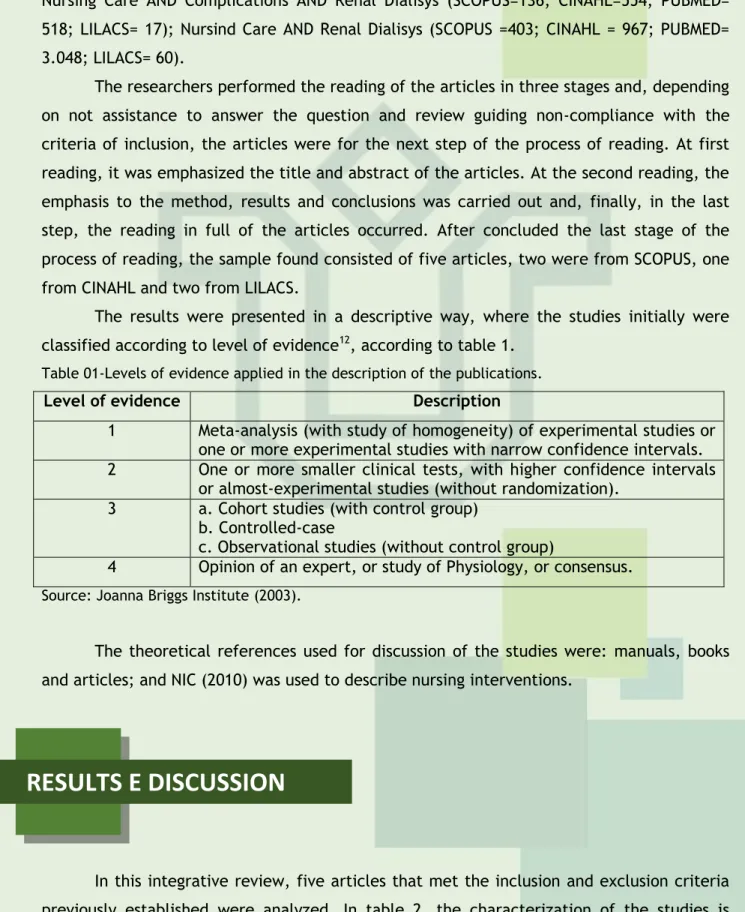
The results were presented in a descriptive way, where the studies initially were classified according to level of evidence12, according to table 1.
Table 01-Levels of evidence applied in the description of the publications.
Level of evidence Description
1 Meta-analysis (with study of homogeneity) of experimental studies or one or more experimental studies with narrow confidence intervals. 2 One or more smaller clinical tests, with higher confidence intervals
or almost-experimental studies (without randomization). 3 a. Cohort studies (with control group)
b. Controlled-case
c. Observational studies (without control group)
4 Opinion of an expert, or study of Physiology, or consensus. Source: Joanna Briggs Institute (2003).
The theoretical references used for discussion of the studies were: manuals, books and articles; and NIC (2010) was used to describe nursing interventions.
In this integrative review, five articles that met the inclusion and exclusion criteria previously established were analyzed. In table 2, the characterization of the studies is presented.
J. res.: fundam. care. online 2015. jan./mar. 7(1):2137-2146
2141
Table 2-Distribution of articles regarding the reference, year of publication, place of study andresearch subjects. Article
of review
Reference Year of
publication the study Place of Subjects of research
01
Rayment G., Chow J. (2010). The efficacy of short daily dialysis—a single-centre experience. Journal of Renal Care. 2010; 36(3), 118-25. 2010 Australia Patients with chronic renal failure 02
Dallé J, Lucena AF. Diagnósticos de enfermagem identificados em pacientes hospitalizados durante sessões de hemodiálise. Acta Paul Enferm. 2012; 25(4):504-10. 2012 Brazil Patients with chronic renal failure 03
Tanguay TA, Jensen L, Johnston C. Predicting episodes of hypotension by continuous blood volume monitoring among critically ill patients in acute renal failure on intermittent hemodialysis. Dynamics.2007; 18 (3): 19-24. 2007 Canada Patients with acute renal failure 04
Silva GLDF, Thomé EGR. Complicações do procedimento hemodialítico em pacientes com insufuciência renal aguda: intervenções de enfermagem.
Rev Gaúcha Enferm. 2009
mar;30(1):33-9. 2009 Brazil Patients with acute renal failure 05
Terra FS, Costa AMDD, Figueiredo ET, Morais AM, Costa MD, Costa RD. As principais complicações apresentadas pelos pacientes renais crônicos durante as sessões de hemodiálise. Rev Bras Clin Med 2010;8(3):187-92.
2010 Brazil
Patients with chronic renal failure
The authors of this review considered that the studies fit the level of evidence 3c – observational studies without control group because there was no control group (exposed and non-exposed groups).
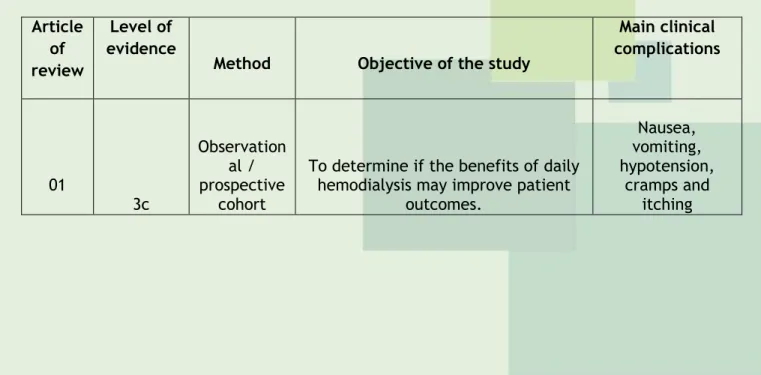
Table 3 – Characterization of the articles regarding the level of evidence, method and objective of the study and principal clinical complications found.
Article of review
Level of evidence
Method Objective of the study
Main clinical complications 01 3c Observation al / prospective cohort
To determine if the benefits of daily hemodialysis may improve patient
outcomes. Nausea, vomiting, hypotension, cramps and itching
J. res.: fundam. care. online 2015. jan./mar. 7(1):2137-2146
2142
02 3c Observation al / retrospectiv e cohortTo establish nursing diagnoses (ND) according to NANDA International in
hospitalized patients with chronic renal failure (CRF) undergoing hemodialysis, from risk factors and
signs and symptoms described in nursing developments. Hypotension and hypertension 03 3c Observation al / prospective cohort
To examine the relationship between blood volume and hypotension in patients with Acute Renal Failure undergoing intermittent hemodialysis
hospitalized in the Intensive Care Unit. Hypotension 04 3c Observation al / retrospectiv e Cross sectorial
To identify the prevalence of complications during hemodialysis in
patients with acute renal failure (ARF) in the intensive care unit of a
university hospital and nursing behaviors performed during these
episodes. Hypotension and hypothermia 05 3c Observation al / Cross sectorial
Knowing the main complications presented by CRF patients during
hemodialysis
Hypotension and vomiting
Most publications occurred in Brazil in the last 03 years, fact showing probably the largest impact of nursing care in Nephrology area, due to the increase of patients in dialysis treatment, in recent years in this country.6 In addition to the nursing involving Nephrology
research has been gaining greater prominence in the scientific field in Brazil. Possibly, this is related to the increase in in area of specialization courses, scientific events and research groups.13.14
In general, clinical complications during hemodialysis sessions showed the presence of hypotension similarly in different publications, especially in acute and chronic renal patients, probably due to the immune, cardiovascular and metabolic impairment in these patients.
The studies fit in 3c level of scientific evidence, observational type (100%). Observational studies showed low level of scientific evidence, which shows the need to conduct studies or new research using well-defined methodological designs and allowing greater levels of evidence to strengthen knowledge about the object of study proposed.
The main complications during the hemodialysis session identified by the articles were: nausea, vomiting, cramps, itching, hypotension, hypertension and hypothermia, as shown in table 3.
When removing liquid and the exchange of electrolytes are performed quickly during dialysis, a disequilibrium syndrome may occur, characterized by headache, nausea, vomiting, restlessness, hypertension, muscle cramps, backaches, and convulsion. And, if that removal of liquid is in excess can cause hypovolemia and hypotension.3 It was observed
J. res.: fundam. care. online 2015. jan./mar. 7(1):2137-2146
2143
in approximately 30% of hemodialysis sessions, the occurrence of some sort ofcomplication.15
Hypotension is a present complication during hemodialysis, evidenced by an index between 20% and 30%.16 The mechanism of this complication is by the large amount of
water that is removed from the intravascular space to the interstitial space and causing the blood volume reduction intracellular.3.5
The main causes of hypotension during hemodialysis are: ultrafiltration high speed, use of antihypertensive medications, overheating of the dialysis solution, food intake and diastolic dysfunction. The most common symptoms of hypotension are: sweating, dyspnea, confusion, skin paleness and tachycardia.17
With regard to nursing interventions to lower blood pressure, NIC9 guides monitoring
the hydric condition, levels of hemoglobin/hematocrit and vital signs, as well as the patient's response to fluid replacement. The nurse should start liquid prescribed replacement, guiding the patient to avoid sudden changes of position, monitor weight, observing the indicators of dehydration, encourage the intake of oral fluids and position the patient in the trendelenburg position.
Nausea and vomiting occur in approximately 5% to 15% of the dialytic treatments.16
Although these episodes have multifactorial causes, hypotension and imbalance syndrome were highlighted as predisposing factors.5
Nursing interventions before the emergence of nausea include the identification and control of contributing factors, antiemetic drug delivery, encouragement for the consumption of small amounts of food that are tolerated, monitoring of food intake, nutritional content and control amount of calories, demonstration of acceptance of nausea and cooperation with the patient to choose a strategy for its control.9
Regarding to nursing care related to episodes of vomiting the administration of antiemetic can be highlighted, with the identification of contributing factors, physical support during the episode of vomiting, nasal and oral hygiene, cleaning, in addition to the monitoring of the hydroelectrolytic balance.9
The muscle cramps during hemodialysis predominate in the lower limbs and occur preferentially in the second half of hemodialysis.15 As authors observed, the muscle cramps
were present in about 5% to 20% of the HD sessions.16
This complication is also related to the sudden loss of fluids and electrolytes from the extracellular space. The most important predisposing factors include hypovolemia and hypotension. Factors such as dehydration, that is, when the patient is dehydrated to lower levels to their dry weight or when dialytic solutions contains low levels of sodium, causes constriction of the blood vessels and isolated muscular contraction.5.17
In NIC, nursing interventions were not found related to cramps. However, it is known that the administration of glucose solution or hypertonic saline is very effective in the acute treatment of muscle cramps, and can also be used calcium gluconate. These solutions also act osmotically transferring water, toward the blood compartment, helping to maintain the blood volume.5.17
Itching, besides being a complication during the hemodialysis session, is also the most common manifestation in patients with CKD, and this has been assigned to the toxic
J. res.: fundam. care. online 2015. jan./mar. 7(1):2137-2146
2144
effect of uremia on skin and changes in the metabolism of calcium and phosphorus.15Authors highlight the occurrence of 5% of this complication during HD session.16
Uremic circulating toxins are responsible for the itching, which can disappear when starting hemodialysis treatment. However, the therapy does not always relieve, and may even intensify it. The itching can also be associated with allergy to heparin and the residues of ethylene oxide. In some patients can cause excoriation on the skin, bleeding, hemorrahagic crusts, pustules and nodules formation.5
Nursing interventions consist in the administration of medicines anti-itching, guidance to the use of neutral products for personal hygiene, keeping short nails, avoid scratching, indicate the use of the palm to rub the skin and cold application for irritation relief.9
Hypertension during dialysis is generally produced by sodium excess and fluid overload. This can be confirmed by comparing the weight of the patient before dialysis with the ideal or dry weight.18
Regarding to nursing interventions in patient with hypertension during hemodialysis, care should be directed to the correction of the cause, that is, hypervolemia. Given this, the main nursing care are the observation and control of the intake and disposal of peripheral edema, changes in patient's weight before and after dialysis, monitoring the patient's hemodynamic response during hemodialysis and observation of indicators of dehydration.9
Hypothermia is related to increased mortality in the intensive care unit. Nevertheless, few studies have addressed the heat loss that occurs during continuous renal replacement therapy and hypothermia developing.19
Patients with ARI submitted to continuous methods of hemodialysis, which involves the exchange of fluids more slowly along 24 hours, often experience hypothermia due to exposure of blood during extracorporeal circulation, in an environment and cold dialysis solution, which triggers blood temperature decrease.19
With regard to nursing interventions proposed by NIC9 in episodes of hypothermia
may be considered: monitoring of the patient´s body temperature and the appearance of symptoms such as fatigue, weakness, confusion, apathy, tremors and change in skin color, Using warm blankets, administering intravascular fluid heated, volume expanders of heated oxygen plasma, active external rewarming impose measures, such as the application of hot water bottles, central temperature rewarming techniques such as hemodialysis, extracorporeal reheating of blood, monitor occurrence of shock for reheating, monitor color and skin temperature, vital signs, respiratory state, electrolyte imbalance, acid-base, avoid intramuscular or subcutaneous medications, offer warm oral liquids if the client is alert or if the patient is able to swallow, monitor the nutritional status and guide to consume a sufficient caloric intake to maintain a normal body temperature.
J. res.: fundam. care. online 2015. jan./mar. 7(1):2137-2146
2145
REFERENCES
CONCLUSION
It is concluded that most studies have been published in the last 3 years and in Brazil. They showed a low level of evidence and that the main clinical complications during hemodialysis sessions were: nausea, vomiting, cramps, itching, hypotension, hypertension and hypothermia. Nursing interventions, in general, were: water-electrolyte monitoring, checking vital signs, administering medicines and guidance to the patient.
The role of the nurse involves the rapid detection of these events during treatment under hemodialysis and agility to intervene in order to ensure the effectiveness of this procedure and improved health status of the client. However, we must be cautious with the practice of standardized nursing interventions not making a restricted and automatic care and insufficient to meet the complexity and individuality of each client.
The limitations of this study were: the selection bias, because there was use of restricted keywords, not including words like hemodialysis and complications - since they are not part of the MeSH; and consulted only four databases. With regard to the difficulties found in this study, there was the small amount of original articles about the subject, both to compose the sample of the research and discussion of the findings.
Before the exposed above, it is important to carried out further studies with different methodological design, in order to allow production of stronger scientific evidence. In addition, these studies must be carried out in various contexts of practice of nurses in the process who are undergoing hemodialysis, but also must address the diagnoses and nursing interventions. In addition, it is defended the systematic assistance practice and based on the nursing process as a way to better guide the work of nurses and contribute to effectiveness of care.
1. Kidney Disease: Improving Global Outcomes (KDIGO). CKD Work Group. KDIGO clinical practice guideline for the evaluation and management of chronic kidney disease. Kidney Int Suppl. 2013;3:1-150.
2. Kidney Disease: Improving Global Outcomes (KDIGO). Acute Kidney Injury Work Group. KDIGO Clinical Practice Guideline for Acute Kidney Injury. Kidney inter, Suppl. 2012;2:1-138.
3. Riella MC. Princípios de nefrologia e distúrbios hidroeletrolíticos. 5 ed. Rio de Janeiro: Guanabara Koogan; 2010.
J. res.: fundam. care. online 2015. jan./mar. 7(1):2137-2146
2146
5. Fermi MRV. Manual de diálise para enfermagem. Rio de Janeiro (RJ): Medsi; 2010.6. Sociedade Brasileira de Nefrologia. Censo de diálise [internet]. 2012 [acesso 2013 set 17]. Disponível em: http://www.sbn.org.br/pdf/publico2012.pdf
7. Maniva SJCF, Freitas CHA. O Paciente em Hemodiálise: autocuidado com a Fístula Arteriovenosa. Rev RENE. 2010; 11(1):152-60.
8. Chamney M. Renal Care: Six Essentials For A Haemodialysis Patient. British Journal of Nursing. 2007;16(09):530-6.
9. Bulechek GM, Butcher HK, Dochterman JM. Classificação das intervenções de enfermagem - NIC. 5ª ed. Rio de Janeiro: Elsevier; 2010.
10. Whittemore R, Knafl K. The integrative review: updated methodology. Journal Advanced Nursing. 2005;52(5):546-53.
11. Ursi ES. Prevenção de lesões de pele no perioperatório: revisão integrativa da literatura. [dissertação]. Ribeirão Preto: Universidade de São Paulo, Escola de Enfermagem de Ribeirão Preto; 2005.
12. Joanna Briggs Institute. Levels of Evidence FAME [internet]. 2003 [acesso em 2013 jun 15]. Disponível em: http://joannabriggs.org/Levels%20of%20Evidence%20%20FAME
13. Pennafort VPS, Furtado AM, Fialho AVM, Moreira TMM, Freitas MC, Queiroz MVO. Produção do conhecimento científico de Enfermagem em Nefrologia. Rev bras enferm [periódico na internet].
2010 [acesso em 2013 set 23]; 63(5): 830-6. Disponível em:
http://www.scielo.br/pdf/reben/v63n5/22.pdf
14. Erdmann AL. Formação de especialistas, mestres e doutores em enfermagem: avanços e perspectivas. Acta paul enferm [periódico na internet]. 2009 [acesso em 2013 set 23]; 22:551-3. Disponível em: http://www.scielo.br/pdf/ape/v22nspe1/21.pdf
15. Castro MCM. Atualização em diálise: complicações agudas em hemodiálise. J Bras Nefrol 2001;23(2):108-13.
16. Daugirdas JT, Ing TS. Manual de diálise. 2 ed. Rio de Ja¬neiro: Medsi; 1999.
17. Kianfar C, Rothera C, Lindsay RM. On-line optical sensing of blood volume changes to prevent intradialytic hypovolemia. Can J. 1999; 9(4): 29-32.
18. Ligtenberg G. Regulation of blood pressure in chronic renal failure: determinants of hypertension and dialysis-related hypotension. Netherlands J Med. 1999; 55: 13-8.
19. Yagi N, Leblanc M, Sakai K, Wright EJ, Paganini EP. Cooling effect of continuous renal replacement therapy in critically ill patients. American Journal of Kidney Diseases.1998;32(6): 1023-30.
79.
Received on: 26/01/2014 Required for review: No Approved on: 03/09/2014 Published on: 01/01/2015
Contact of the corresponding author: Romanniny Hévillyn Silva Costa Campus Universitário, S/N - Departamento de Enfermagem Lagoa Nova, Natal (RN), 59072-970