UNIVERSIDADE DA BEIRA INTERIOR
Ciências
Lyophilization and a preliminary thermodynamic
characterization of recombinant SCOMT_His
6
Rúben Miguel Oliveira Coval
Dissertação para obtenção do Grau de Mestre em
Biotecnologia
(2º ciclo de estudos)
Orientador: Professor Doutor Luís António Paulino Passarinha
Co-orientador: Mestre Augusto Quaresma Henriques Pedro
“When we are no longer able to change a situation,
we are challenged to change ourselves”
Acknowledgments
First off all, I would like to express my sincere gratitude to my parents, brother and girlfriend for all their sacrifices, encouragement, support and unconditional love.
Furthermore, I would also like to give a special thanks to my supervisors Professor Doctor Luís Passarinha and Master Augusto Pedro for all their availability, guidance, expertise, patience and trust. Their help, efforts, vast knowledge, criticism and suggestions were crucial for the development of this project. It was a privilege to work and learn with them.
I would also like to acknowledge the University of Beira Interior, in particular the Health Sciences Research Center, where all the work was developed.
I am also grateful to all people involved in the Health Sciences Research Center of the University of Beira Interior, particularly to my colleagues in the Biotechnology and Biomolecular Sciences group whose advice and companionship made my work much more easy and pleasant. I could not fail to name a few people who were crucial in this process. I want to make a special thanks to Margarida Grilo and Guilherme Espírito Santo throughout the laboratory help and especially for all past knowledge that were the basis of all this work, and to Filipe Frias for the companionship and help. In the thesis writing course, I have to thank greatly to Andreia Brito and Filipa Ferreira which greatly helped me. A special thanks to all of them.
Finally, I am extremely thankful to all my friends (“Ovar friends” and “Covilhã friends”). Their constant availability, support, belief, motivation and love through all this time was crucial to surpass the most difficult times
Resumo
A proteína catecol-O-metiltransferase (COMT, CE 2.1.1.6) foi descrita pela primeira vez em 1958. A COMT é uma enzima monomérica, dependente de magnésio que está envolvida na inativação de substratos com estrutura catecólica como a dopamina, a epinefrina e a norepinefrina. A COMT é um alvo importante na engenharia de proteínas devido à sua função na atividade normal do cérebro e ao seu possível papel em desordens neurológicas humanas, como a doença de Parkinson, esquizofrenia, depressão e Alzheimer. Atualmente, o tratamento mais eficaz para a doença de Parkinson consiste numa tripla profilaxia que consiste na reposição de dopamina com levodopa, um inibidor da enzima descarboxilase dos aminoácidos aromáticos e um inibidor da COMT. Nos últimos anos têm vindo a ser desenvolvidos vários inibidores desta enzima para o tratamento da doença de Parkinson, e há um grande interesse em desenvolver novos inibidores mais eficazes. Para tal, dois pontos devem ser tidos em consideração. Em primeiro lugar, apesar de atualmente ser possível produzir grandes quantidades de COMT por processos biotecnológicos, ainda é difícil manter a proteína num estado estável e ativo, principalmente num estado mais puro, como aquele em que se encontra após um passo cromatográfico. Não há uma forma rápida de obter a proteína a menos que todo o processo desde a produção ou (no caso de células congeladas) desde a lise seja feito. Para ultrapassar essa limitação, neste trabalho, um processo de liofilização aplicado a uma fração purificada por cromatografia de afinidade com metal imobilizado (IMAC) de COMT foi estudado com o objetivo de armazenar ou transportar estas frações mais facilmente e por períodos de tempo maiores. O segundo aspeto a ter em conta diz respeito aos inibidores produzidos para a COMT. Com o número de novos inibidores a serem produzidos, é importante estudar as suas interações com a proteína. As técnicas de microcalorimetria surgem então como um bom meio para caracterizar cineticamente essas interações. Portanto, também neste trabalho, é discutida uma abordagem inicial para estabelecer um método de calorimetria de titulação isotérmica (ITC) para estudar as interações entre a enzima e o inibidor 3,5-dinitrocatecol (3,5-DNC).
Palavras-chave
Calorimetria de titulação isotérmica (ITC), catecol-O-metiltransferase, doença de Parkinson, liofilização, 3,5-dinitrocatecol
Abstract
Catechol-O-methyltransferase (COMT, EC 2.1.1.6) was first described in 1958. COMT is a monomeric enzyme magnesium dependent that is involved in the inactivation of catechol substrates such as dopamine, epinephrine and norepinephrine.COMT is an important target in protein engineering due to their role in normal brain and their possible role in human neurological disorders such as Parkinson's, schizophrenia, depression and Alzheimer's disease. Actually, the most effective treatment for Parkinson’s disease is a triple prophylaxis consisting of the dopamine replacement with levodopa together with an inhibitor of aromatic amino acid decarboxylase and an inhibitor of COMT. In recent years, several COMT inhibitors have been developed for Parkinson's disease treatment, and there is considerable interest in developing new and more effective inhibitors. To do so, two points should be taken into consideration. Firstly, although large quantities of COMT can nowadays be produced through biotechnological processes, is still difficult to maintain the protein in a stable and active state mainly in a more pure state, like that achieved after a chromatographic step. There is no fast way to get active protein unless all the process since the production or (in case of frozen cells) since the lyses was done. To overcome this limitation, in this work, a lyophilization process applied to a purified immobilized-metal affinity chromatograph (IMAC) COMT fraction was study with the objective to store or transporting this fractions more easily and for longer periods. The second aspect to take into account concerns the inhibitors of COMT produced. With the number of new inhibitors being produced, is important to study their interactions with the protein. The microcalorimetric technics appears as a good means to kinetically characterize these interactions. So, also in this work, is discussed an initially approach to establish an isothermal titration calorimetry (ITC) method to study interactions between the COMT enzyme and the 3,5-dinitrocatechol (3,5-DNC) inhibitor.
Keywords
Catechol-O-methyltransferase; Isothermal titration calorimetry; Lyophilization; Parkinson's disease; 3,5-dinitrocatechol.
Contents
Chapter I - Introduction ... 1
1.1.General characterization of catechol-O-methyltransferase ... 1
1.2.The catechol-O-methyltransferase valine108/158methionine polymorphism ... 1
1.3.Three-Dimensional Structure of catechol-O-methyltransferase ... 2
1.4.Catechol-O-methyltransferase in catecholamine metabolism ... 5
1.5.Catechol-O-methyltransferase and neurodegenerative diseases ... 6
1.6.Catechol-O-methyltransferase and Parkinson’s disease ... 7
1.6.1.Catechol-O-methyltransferase inhibitors in Parkinson’s disease ... 8
1.7.Human soluble catechol-O-methyltransferase biosynthesis and purification ... 10
1.8.Lyophilization ... 12
1.8.1.Lyophilization steps and cooling methods ... 13
1.8.2.Sugars and Surfactants in the lyophilization process ... 14
1.9.Isothermal microcalorimetry and isothermal titration calorimetry ... 16
1.9.1.Isothermal titration calorimetry and Enzyme Kinetics ... 20
1.9.2.Injections method and modes of operating ... 20
Chapter II - Aims ... 25
Chapter III - Material and Methods ... 27
3.1.Materials ... 27
3.2.Methods ... 27
3.2.1.Expression vector and host strain ... 27
3.2.2.Pichia pastoris pre-cultivation, batch and fed-batch conditions ... 28
3.2.3.Cell lysis ... 28
3.2.4.Quantification of total protein using BCA assay ... 29
3.2.5.Immobilized-metal affinity chromatography ... 29
3.2.6.Enzymatic activity assay ... 30
3.2.7.High-performance liquid chromatography analysis ... 31
3.2.8.Human soluble catechol-O-methyltransferase lyophilization experiments ... 32
3.2.9.Microcalorimetry assay ... 32
4.1.Recombinant human soluble catechol-O-methyltransferase biosynthesis by Pichia pastoris X33 cells 33
4.2.Epinephrine methylation by Pichia pastoris X33 endogenous proteins ... 34
4.3.Recombinant human soluble catechol-O-methyltransferase purification using Immobilized-Metal Affinity Chromatography ... 35
4.4. Human soluble catechol-O-methyltransferase lyophilization ... 36
4.5.Microcalorimetry tests ... 39
4.5.1.Multi Injection ... 39
4.5.2. Single Injection ... 41
4.5.2.1. Thermodynamic characterization of catechol-O-methyltransferase using the single injection method ... 43
4.5.2.2.Interaction of catechol-O-methyltransferase with the inhibitor 3,5-dinitrocatechol . 45 Chapter V - Conclusion ... 47
Chapter VII - Future perspectives ... 49
List of Figures
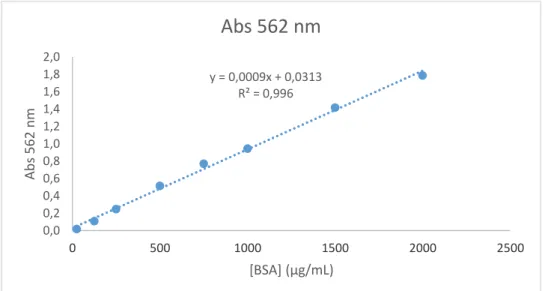
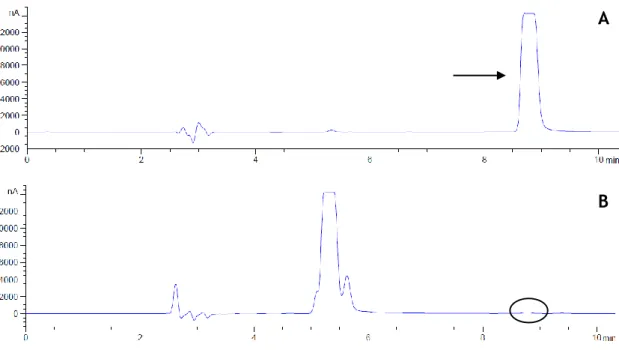
Figure 1 - The tertiary structure of the catechol-O methyl transferase enzyme, depicting the overall fold of a catechol-O methyl transferase structure (23). ... 3 Figure 2 - The substrate-binding and S-adenosylmethionine-binding sites in the catechol-O methyl transferase protein: molecular interactions of S-adenosylmethionine and 3,5-dinitrocatechol with the binding site residues. The dashed lines indicate hydrogen bonds (23). ... 4 Figure 3 - The synthesis and degradation of dopamine. AH, aldehyde dehydrogenase; COMT, catechol-O methyl transferase; DBH, dopamine β-hydroxylase; DDC dopamine decarboxylase; DHPA; 3,4 dihydrophenylacetaldehyde; MAO, monoamine oxidase; MHPA, 3-methoxy-4-hydroxyphenylacetaldehyde; 3-MT, 3-methoxytyramine; TH, tyrosine hydroxylase (39). ... 6 Figure 4 - Chemical structures of first, second and third generation of catechol-O methyl transferase inhibitors (2,55,57,62). ... 9 Figure 5 - Basic configuration of an isothermal titration calorimetry instrument (125). ... 18 Figure 6 - (A) Raw data captured an isothermal titration calorimetry experiment. (B) Binding isotherm of heat of formation against molar ratio of ligand/biomolecule (125). ... 19 Figure 7 - Example of raw isothermal titration calorimetry data for multiple injections method (132)... 22 Figure 8 - Example of raw isothermal titration calorimetric data for continuous assay. Presence and absence of inhibitor. The area under each curve was identical (132). ... 22 Figure 9 - Calibration curve for BSA solutions absorbance at 562 nm. ... 29 Figure 10 - Agilent high-performance liquid chromatography system chromatogram corresponding to a pattern of metanephrine. Metanephrine has an elution time of approximately 9 min (black arrow) (A) and Agilent high-performance liquid chromatography system chromatogram of one run (black ellipse shows the vestigial peak) (B). ... 35
Figure 11 - Typical chromatographic profile of human soluble catechol-O-methyltransferase purification onto HisTrap FF crude, an immobilized metal ion affinity chromatography matrix after injection of 10 mL sample of ressuspended pellet obtained after Pichia pastoris lysis (concentrations showed refered to imidazol). ... 36 Figure 12 - Waters high-performance liquid chromatography system chromatogram corresponding to a pattern of metanephrine. Metanephrine has an elution time of approximately 16,6 min (black arrow). ... 37 Figure 13 – Waters high-performance liquid chromatography system chromatogram of one run with the cell saturated (black arrow). ... 38 Figure 14 - Isothermal titration calorimetry data for measurement of reaction rate for methylation of epinephrine. 14 injections of 4 µL of epinephrine each for orange line (experiment 8) and 10 injections of 5 µL of epinephrine each for blue line (experiment 1). The interval between the injections is 3 minutes in both experiments. ... 41 Figure 15 - Example of a Michaelis-Menten curve (adapted from (132)). ... 42 Figure 16 - Example of a Lineweaver-Burk plot. ... 42 Figure 17 - Raw isothermal titration calorimetry data comparing the initial results and the results after the optimization of the reactional conditions (the first peak is due to the system calibration). ... 43 Figure 18 - Example of an experimental Michaelis-Menten curve. ... 44 Figure 19 - Example of an experimental Lineweaver-Burk plot. ... 44 Figure 20 - Isothermal titration calorimetry data comparing a blank run with a run were 3162,3 mM of 3,5-dinitrocatechol was applied leading to a total inhibition of the catechol-O-methyltransferase. ... 45
List of Tables
Table 1 - Examples of normally used excipients in lyophilization of pharmaceutical products (adapted from (84)). ... 15 Table 2 - Results of enzymatic activity for the lyophilized assay. ... 37 Table 3 - Combinations of conditions tested in the multi injection approach. ... 40 Table 4 - Comparison of Vmax and Km values when the concentration of inhibitor is increased.
List of Acronyms
AADC Aromatic L-amino acid decarboxylase COMT Catechol-O-methyltransferase DMSO Dimethylsulfoxide
3,5-DNC 3,5-Dinitrocatechol
E. coli Escherichia coli
EGTA Ethylene glycol tetraacetic acid ΔHapp Total molar enthalpy
hSCOMT Human soluble catechol-O-methyltransferase
hSCOMT_His6 human hexa-histidine tagged soluble catechol-O-methyltransferase
IMAC Immobilized-Metal Affinity Chromatograph IMC Isothermal microcalorimetry
ITC Isothermal titration calorimetry Km Michaelis constant
MWCO Molecular weight cutoff PD Parkinson’s disease
PMSF Phenylmethanesulfonyl fluoride
P. pastoris Pichia pastoris
SAM S-adenosyl-L-methionine
S. cerevisiae Saccharomyces cerevisiae
SCOMT Soluble catechol-O-methyltransferase TRIS 2-Amino-2-hydroxymethyl-propane-1,3-diol Vmax Maximum velocity
Chapter I – Introduction
1.1. General characterization of catechol-O-methyltransferase
Axelrod and coworkers [1] described catechol-O-methyltransferase (COMT; EC 2.1.1.6) for the first time in 1958. This is a magnesium-dependent enzyme that catalyzes the methylation of catechol substrates using S-adenosyl-L-methionine (SAM) as a methyl donor and yielding, as
reaction products, the O-methylated catechol and S-adenosyl-L-homocysteine [2–4].
COMT exists in two isoforms, one is the soluble protein (SCOMT) that contains 221 amino acid residues and 24.4 KDa and the other is a membrane-bound protein[4,5]
.
The membrane-bound isoform has an additional 50 hydrophobic residues at the N-terminus [4]. Both the isoforms are coded by the same gene (located in chromosome 22), from two promoters [5]. Nevertheless, in humans, whereas most of the peripheral tissues express both COMT mRNA transcripts, membrane-bound protein is the dominant isoforms in brain, with only low amounts of the SCOMT present [5].At a physiological level, the main role of COMT is the elimination of biologically active or toxic catechols and other metabolites [2]. Indeed, it acts as a detoxifying barrier between the blood and other tissues, being particularly active in the liver, kidneys and gastrointestinal tract [3].
1.2. The catechol-O-methyltransferase valine
108/158methionine
polymorphism
The COMT valine108/158methionine polymorphism involves a substitution of a valine to a
methionine in the polypeptide chain at position 108/158 (for soluble and membrane-bound COMT, respectively) [6]. Nevertheless, methionine homozygotes have decreased COMT levels that presents lower structural stability, being more susceptible to oxidation and unfolding [3,4,6–8]. Indeed, the valine/methionine genetic polymorphism has been the subject of intense molecular epidemiologic studies and has been reported to be a risk factor not only for a number of psychiatric disorders including schizophrenia [9–12], obsessive-compulsive disorder [13] and psychosis susceptibility in Alzheimer disease [12], but it has also been linked to increased risk for breast cancer [14], increased sensitivity to pain [15], and improved prefrontal cognitive function [16]. The functional effects of the polymorphism for neurotransmission in the brain have been previously documented, being suggested that the low enzyme activity allele (methionine) increases susceptibility to a range of psychiatric symptoms [17–19]. The valine
allele has been linked to poor prefrontal function and neuronal signal to noise ratio, having a compensatory advantage in terms of self-regulation and emotion processing, whereas methionine allele may contribute to poorer regulation and susceptibility to emotion related psychopathology [6,20–22].
Moreover, since this polymorphism hasn’t been found in any other species, the 108/158methionine
variant may be specific to humans. Nevertheless, the fact that COMT activity has decreased during evolution, could reflect the beneficial effect of lowered COMT activity on prefrontal function. However, the existence of only one COMT gene without any known tissue-specific variants, originates that the valine108/158methionine polymorphism leads to functional
alterations of COMT in all tissues, highlighting its importance when studying this enzyme [3].
1.3. Three-Dimensional
Structure
of
catechol-O-methyltransferase
A large number of crystal structures are available not only for human, but also for rat COMTs [23]. Actually, the rat and human COMTs share 81% sequence identity and both belong to the highly structurally conserved SAM-dependent methyltransferase fold family (class I) [24]. The crystal structures for COMT have provided rationales why this protein could accept a range of structurally variable substrates with the only strict requirement that the substrate must have a catechol structure. Indeed, this aspect is of great importance for the search and design of COMT inhibitors that would enhance the levodopa treatment of Parkinson’s disease (PD) [23]. The COMT enzyme is composed of a seven-stranded β-sheet core (arranged in an order of 3214576) sandwiched between two sets of α-helices (helices α1–α5 on one side and helices α6– α8 on the other side) (Figure 1). In the β-sheet, strand 7 is antiparallel to the others [4,23]. The crystal structures of the human 108valine COMT and 108methionine COMT with bound SAM
and 3,5-dinitrocatechol (3,5-DNC) were described by Rutherford and coworkers in 2008 [4]. In fact, the structure previously referred is characteristic of the SAM-dependent methyltransferase fold family [24]. The differences between the polymorphisms are only observed in the presence of an extended loop between β-strands 6 and 7, which forms part of the catechol-binding site [4].
Figure 1 - The tertiary structure of the catechol-O methyl transferase enzyme, depicting the overall fold of a catechol-O methyl transferase structure [23].
The cofactors SAM and the magnesium ion (Mg2+) as well as the inhibitor 3,5-DNC bind in shallow
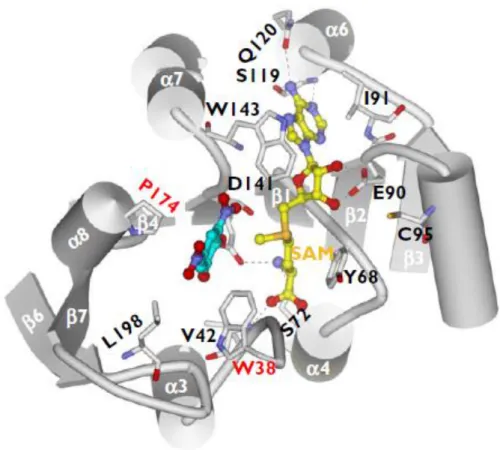
clefts on the protein surface. Additionally, the cofactor SAM interacts with conserved motifs along the first half of the core β-sheet (Figure1) [4,23]. There are described specific interactions: the E90 (β2) forms hydrogen bonds with the ribose hydroxyl groups of SAM; the adenine ring of SAM forms hydrogen bonds with S119 and Q120 (α6) and van der Waals interactions with residues I91 (β2), A118 (β3–α6 loop) and W143 (β4–α7 loop); the methionine portion of SAM is coordinated through the hydrogen bonds with residues V42 (α2-α3 loop), S72 (α4), D141 (β4) and the hydrophobic interactions with M40,V42, and Y68; and the methyl group (CH3) attached to the methionine sulfur atom in SAM is oriented toward the substrate binding
Figure 2 - The substrate-binding and S-adenosylmethionine-binding sites in the catechol-O methyl transferase protein: molecular interactions of S-adenosylmethionine and 3,5-dinitrocatechol with the binding site residues. The dashed lines indicate hydrogen bonds [23].
The substrate (catechol)-binding site is a shallow pocket defined by five residues, M40, L198, W143 and ‘gatekeeper’ residues W38 and P174, which hold the substrate in the correct orientation for methylation, according to Figure 2 . The van der Waals contacts are recognised as the main forces for ligand binding because all these residues are hydrophobic. The Mg2+, a
necessary cofactor for the methylation, is present in all the COMT crystals complexed with a ligand [4,24–33]. This ion is octahedrally coordinated in the active site by the side chains of three residues, the two hydroxyl groups of the catechol substrate, and a water molecule [4,23]. This fact evidences that the Mg2+ participates in the enzymatic reaction by assisting substrate
binding, explaining why the ion is required for COMT mediated catalysis [23].
Human SCOMT contains seven cysteine residues and three of these residues, namely is C95, C173, C188, are not conserved in the rat enzyme. Moreover, whereas C95 is located in the catechol binding site, theC173 is located next to the P174 “gatekeeper” residue. Additionally the crystal structure reveals that four of the seven residues are located in surface loops with their sulfur atoms exposed to solvent. This fact, make this residues potential sites for intermolecular disulfide bond formation [4].
1.4. Catechol-O-methyltransferase in catecholamine metabolism
COMT is, along with monoamine oxidase A, the major enzyme responsible for catecholamine catabolism, namely dopamine, norepinephrine and epinephrine, in the brain [34,35]. Dopamine, for example, is converted into 3-methoxytyramine (Figure 3) through the O-methylation of dopamine by COMT [5,12,35,36]. It has been recognized that COMT may be unexpectedly important for the breakdown of dopamine, particularly in prefrontal cortex [5]. Nevertheless, the dopamine O-methylation reaction was recognized to be a prominent pathway in this region due to the fact that this compound is the major metabolite of released dopamine in rat in prefrontal cortex [5]. Studies revealed that besides there are no changes in other brain regions or in noradrenaline levels, the COMT knockout mice revealed an almost 3-fold increase of dopamine levels in the frontal cortex of males [3,5,35]. In fact, those results were supported by the finding that the administration of the specific and brain-penetrant COMT inhibitor tolcapone greatly increases extracellular dopamine, but not noradrenaline, in rat prefrontal cortex [37].
Nevertheless, the exact mechanism by which COMT modulates dopamine but not noradrenaline remains unclear [5]. Moreover, residual homovanillic acid levels were detected in several brain areas, despite the complete lack of COMT gene and protein. This aspects point to the possibility that there is still an unidentified methylation pathway in the brain [5,37]. Additionally to prefrontal cortex, the striatum is the only other brain region in which the importance of COMT for modulating catecholamine function has been extensively studied, being demonstrated its minor role in the removal of dopamine. Actually, in spite of the COMT activity is highest in excretory organs such as liver and kidney, it is also present in the central nervous system where it is most abundant in microglia cells. This enzyme is less prevalent in neurons and astrocytes and was not at all detected in human dopaminergic nigro-striatal neurons [38]. It has been recognized that COMT activity is probably under hormonal control being identified a significantly lower COMT activity in females [35].
As previously referred, the human COMT gene polymorphism valine108/158methionine influences
the enzyme activity [39]. Accordingly, when this residue is a valine, an increase in COMT activity was observed, resulting in reduced prefrontal dopamine levels and leading to an increased regulation of striatal dopamine activity; on the other side, when the residue is a methionine, a significant reduction in COMT’s enzymatic activity was observed [3,5,8,12].
Figure 3 - The synthesis and degradation of dopamine. AH, aldehyde dehydrogenase; COMT, catechol-O methyl transferase; DBH, dopamine β-hydroxylase; DDC dopamine decarboxylase; DHPA; 3,4 dihydrophenylacetaldehyde; MAO, monoamine oxidase; MHPA, 3-methoxy-4-hydroxyphenylacetaldehyde; 3-MT, 3-methoxytyramine; TH, tyrosine hydroxylase [39].
1.5. Catechol-O-methyltransferase
and
neurodegenerative
diseases
Neurodegenerative diseases result from the gradual and progressive loss of neural cells, which leads to nervous system dysfunction [40]. Indeed, there is as a deterioration (often irreversible) in the intellectual and cognitive faculties [41]. There are recognized more than 600 neurologic disorders [40]. Pathologically, the accumulation and aggregation of abnormal or misfolded proteins is a frequent characteristic of these diseases, namely beta-amyloid in Alzheimer’s disease, huntingtin protein in Huntington’s disease, transactive response DNA-binding protein 43 in frontotemporal dementia and amyotrophic lateral sclerosis, and α-synuclein in PD [42]. It is known that the etiology of neurodegenerative diseases is multifactorial. Moreover, there is evidence that potential external factors including lifestyle and chemical exposures are linked with the risk of the onset of these diseases [43]. Nevertheless, some genetic polymorphisms, and also the increasing age are also primary risk factors [12,40,41,44].
1.6. Catechol-O-methyltransferase and Parkinson’s disease
PD is the second most common neurodegenerative disorder after Alzheimer’s disease [45–47], affecting 1% of the elderly population with a higher prevalence in men [46]. Although fragments of Parkinsonism can be found in earlier descriptions, this disease was first medically described as a neurological syndrome by James Parkinson 1817 [48].
The clinical characterization of PD includes severe and progressing motor symptoms, namely bradykinesia, resting tremor, rigidity, and postural instability [2,46,47]. Slowness, stiffness, and the inability to initiate movements are other primary symptoms [2]. Those features are mainly linked to the degeneration of dopaminergic neurons in the substantia nigra pars compacta, as well as the presence of Lewy body or Lewy neurite intracellular inclusions largely composed of the protein α-synuclein in surviving neurons [45–47]. Notwithstanding, and although the PD is incurable, there are some therapies that can improve quality of life for many years [49]. The treatment of PD has focused almost exclusively on the replacement of dopamine [50,51]. Accordingly, levodopa or dopamine agonists are usually the drugs of choice when a significant symptomatic effect needs to be achieved [50]. On one hand, levodopa is the metabolic precursor of dopamine and its administration leads to an increment in dopamine levels [50,51]. Clearly, this is the single most effective agent for treating PD [51] but other chemicals may also be applied such as, dopamine agonists that mimic dopamine action [50]. Levodopa, unlike dopamine has the capacity to cross the blood–brain barrier. Then, it is converted to dopamine by aromatic L-amino acid decarboxylase (AADC), which is responsible for the therapeutic effectiveness of the drug in PD [2,51]. However, if levodopa is administered alone, relatively little unchanged drug reaches the cerebral circulation and probably less than 1% penetrates the central nervous system. Consequently, in clinical practice, levodopa is mostly given in combination with a peripherally acting inhibitor of AADC, the inhibitor does not penetrate well into the central nervous system [2,51]. Thus, due to the limitations presented by levodopa in some cases, alternatively, many physicians actually use dopamine-receptor agonists [51]. Indeed, their symptomatic effect and because they have been shown to reduce the risk of motor complications when compared with levodopa, dopamine agonists are widely used as initial therapy. Nevertheless, clinical trials have shown that about 50% of patients initiated on dopamine agonist monotherapy required also supplementary levodopa in order to maintain the symptoms control. Additionally, these drugs could also increase the risk of develop disabling motor complications [50,52,53].
Finally, in addition to an AADC peripheral inhibitor, it was also demonstrated that COMT-inhibitors have a significant effect on the systemic availability and elimination of levodopa [50,51]. In fact, in patients with advanced PD, the use of these drugs or monoamine oxidase B
inhibitors plus levodopa was recognized to be superior at reducing PD symptoms, compared to using levodopa alone.
1.6.1. Catechol-O-methyltransferase inhibitors in Parkinson’s disease
COMT inhibitors act by extending the duration of action of levodopa, thus improving the amount of time a patient can experience benefit from levodopa, ameliorating the wearing-off symptoms [54]. The use of COMT inhibitors in PD as an adjunct therapy to levodopa has the purpose of increase levodopa and consequently dopamine levels in the brain [55]. The design of inhibitors has been in practice since the discovery of COMT in 1958 [56].
The first generation of COMT inhibitors contain a catechol structure or some related bioisosteric moiety, being typically competitive substrates of COMT [2,55] This generation includes not only derivatives of pyrogallol and catechols like gallic acid, but also caffeic acid, U-0521, 2-hydroxyoestrogens and flavonoids like quercetin or rutin. and other non-catecholic compounds such as ascorbic acid and tropolones (Figure 4)[2,3,55,57]. These compounds were tested in
vitro and in vivo and their activity in COMT inhibition was found to be weak or non-selective.
Additionally, and although their acute toxicity was not high, these compounds were found to induce convulsions in experimental animals at high doses and showed signs indicative of hepatotoxicity [55,58,59].
The interest in COMT as a therapeutic was triggered by the discovery of a new generation of potent and selective COMT inhibitors in the late 1980s [2,3,55]. [55]. In fact, these “second-generation” inhibitors (Figure 4) were selective and orally active and endowed with improved pharmacokinetic profiles compared with those of the first-generation predecessors [57]. Their enhanced potency was attributed to the substitution of electron-withdrawing groups at a position ortho to a hydroxyl group of the catechol moiety and the best results were obtained with the nitro group, giving rise to this new class of nitrocatecholic COMT inhibitors [55]. They are reversible tight-binding and although these inhibitors share the same nitrocatechol pharmacophore, subtle differences do exist in the mode of COMT inhibition, being these characteristic properties of relevance in terms of the downstream clinical efficacy and safety of PD treatment [57,60]. In fact, this generation of COMT inhibitors could be divided into three groups: 1) mainly peripherally acting compounds, 2) broad-spectrum compounds working in both the periphery and the brain, and 3) atypical compounds, probably acting preferably in the brain [3].
First generation
Pyrogallol
Gallic acid Ascorbic
acid
Caffeic acid 2-Hydroxyoestrogen
Quercetin Tropolone U-0521
BIA 3-335 Entacapone (OR-611)
Nebicapone (BIA 3-202) Nitecapone (OR-462) Tolcapone (RO 40-7592)
Third generation
Opicapone
Second generation
Figure 4 - Chemical structures of first, second and third generation of catechol-O methyl transferase inhibitors [2,55,57,62].
Entacapone action is mainly peripheral, being a short-acting selective inhibitor which is taken concomitantly with every dose of levodopa [55,60]. However, albeit it is most widely marketed COMT inhibitor, its clinical efficacy has been questioned [60]. On the other hand, tolcapone is a more potent, longer acting but non selective inhibitor of both cerebral and peripheral COMT, crossing the blood–brain barrier [55]. Nevertheless, unlike entacapone, its clinical use of is severely restricted due to its elevated hepatotoxicity risk [60,61]. Moreover, although other molecules such as nebicapone, BIA 3-335 or CGP 28014 were also developed and tested, all failed for diverse reasons, either to concerns regarding their safety or due their weak activity [2,55,57]. In fact, these inhibitors have been tested in clinical trials, but only entacapone and tolcapone are in clinical use [55].
The need for the development of further COMT inhibitors with novel and better pharmacodynamic profiles capable to deliver more sustained levodopa levels with lower frequency of drug administration in patients with PD led to the development of opicapone (Figure 4) [58]. This purely peripheral third-generation nitrocatechol COMT inhibitor is in the Phase III of development for the treatment of PD, and is a short lived and very long acting novel COMT inhibitor following multiple dose administration in healthy subjects [58,62].
1.7. Human soluble catechol-O-methyltransferase biosynthesis
and purification
In general, the development of improved COMT inhibitors with enhanced selectivity and potency depends may be based in structure-based drug design studies. Therefore, relatively high quantities of enzymatically active COMT is required not only for crystallization studies but also for in vitro studies that are usually performed in the first stage of drug development [23]. The need for considerable amounts of human proteins for structural, functional and pharmacological studies or crystallization lead to the necessity of using the recombinant technology.
For the production of recombinant human SCOMT (hSCOMT), several expressions systems were used based on eukaryotic cells such as transfected mammalian cells [63], insect cells (via baculovirus vectors) [64], vector-infected plants (via a potyvirus) [65] or prokaryotic like
Escherichia coli (E. coli) [66–69].
Tilgmann and coworkers, in 1992 produced active human recombinant soluble and membrane-bound COMT proteins in transfected mammalian cells as well as in recombinant baculovirus infected insect cells [64]. In transfected Spodoptera frugiperda (Sf9) cells the amount of
recombinant COMT produced is much higher than that obtained in human myelogenous leukemia (K-562) cells [64].
In 1996, Ulmanen and collaborators aiming to determinate the subcellular location of SCOMT and membrane-bound COMT overexpressed this proteins in mammalian (human HeLa and hamster BHK-21) cell cultures [63]. The principal drawback of this expression system for the application in large scale recombinant protein production is the high costs of the media components necessary for cell growth.
More recently, plant cells (N. benthamiana and N. tabacum cv. Samsun) infected with potato virus A (PVA) based vectors were applied for recombinant SCOMT production, achieving high amounts of active SCOMT in plant tissues [65]. The cost-effective, large-scale production of substantial amounts of plant biomass would allow large quantities of SCOMT to be achieved. However, the recombinant protein obtained with this expression system had a methylation activity substantively lower than that measured from E. coli lysates and the purification of SCOMT from plant extracts wasn’t an option and the necessity of use the leaf extracts appear as a drawback [65].
Throughout the years, the main expression system for hSCOMT production has been E. coli [67– 69]. The ability of this host system to grow rapidly at high cell density on inexpensive substrates, the well know genetics and the number of cloning vectors plus mutant host strains make them the most commonly used [66,70,71]. Yet, a disadvantage is the possibility presence of toxic cell walls pyrogens (endotoxins) [72].
However, due to the necessity of post-translational modifications, such as glycosylation, phosphorylation and disulfide bridges formation for the precise folding and correct activity of the proteins, more complex expression systems are required. In particular, as eukaryotic cells, yeasts like Pichia pastoris (P. pastoris) and Saccharomyces cerevisiae (S. cerevisiae), offer the ability of performing many of the aforementioned post-translational modifications in recombinant protein production. The use of yeasts shows some advantages when compared to conventional systems, like mammalian cells, once they are faster, easier and less expensive to use [73,74]. Also, fermentations can be readily scaled up to give answer to greater demands, and the production parameters such as pH, carbon source feed rate and aeration may be controlled [73]. These two yeasts show a propensity for homologous recombination between genomic and artificially introduced DNAs. The introduction can occur either via gene insertion or gene replacement [73]. When we compare these two yeasts, P. pastoris gain some advantage, by its capacity to perform a less extensive glycosylation, more similar to the native human form in which the oligosaccharide chains attached to the proteins are shorter [75]. Also,
P. pastoris does not need a defined culture media to grow like S. cerevisiae, thus becoming the
product yield and inefficient secretion with many proteins retained in the periplasmic space or associated with the cell wall rather than found free in in the culture medium [72]. Additionally,
P. pastoris is an organism that is easy to manipulate and secrete low levels of native proteins
making the subsequent purification process much simpler than in other systems [73].
In the pursuit to achieve better isolation and purification methodologies, several purifications procedures were applied to human SCOMT over the years, such as hydrophobic interaction chromatography [76–78], cation and anion exchange chromatography [79], bioaffinity chromatography with immobilized amino acids [80] or size exclusion chromatography [81]. However, it is necessary to take into account the protein activity, as well as the enzyme recovery, that some of these techniques present as downside.
One of the most diverse and powerful chromatographic methods for purification of a specific molecule or a group of molecules from complex mixtures is affinity chromatography. It is based on highly specific biological interactions between two molecules, namely interactions between enzyme and substrate, receptor and ligand, or antibody and antigen. These typically reversible interactions are used for purification by placing one of the interacting molecules, referred to as affinity ligand, onto a solid matrix to create a stationary phase while the target molecule is in the mobile phase. Specifically, Immobilized-Metal Ion Affinity chromatography (IMAC) is based on the specific coordinate covalent bond of amino acids, particularly histidine, to metals [82]. In fact, one of the most successful purification processes is accomplished by the fusion of poly-His tags to the C-terminal of the protein, with a special affinity to metal ions like Ni2+
making affinity chromatography the main tool to capture the tagged proteins [73].
1.8. Lyophilization
Lyophilization, also known as freeze-drying is commonly used to prepare proteins products for long term storage when the stability in aqueous solutions is insufficient or, for more appropriate transportation [83,84]. This technique appeared during the World War II when the demand for human blood plasma reached serious proportions and more recently was recognized as an important technique for the preservation of biological materials [85]. Actually, it is widely used to manufacture labile drugs such as enzymes and therapeutic proteins [86].
The lyophilization process consists in removing the water or other solvent from a frozen solution by sublimation and desorption, generally under reduced pressure, leaving the solutes in their anhydrous, or almost anhydrous state [85,87]. The resulting material usually acquires a porous and friable structure that can be easily rehydrated [88].
In aqueous solutions, substances like proteins, are exposed to a number of chemical reactions that can compromise their activity, quality, or safety [85]. Some of these reactions are hydrolysis, cross-linking, disulfide rearrangements, and the most problematic, aggregation [85,89]. The major problem with aggregation is that it can occur at almost any stage of production, processing and storage [89]. However, it’s well known that in the dry state these reactions can be substantially retarded enhancing the chemical stability [85]. Lyophilization is adavantageous over traditional drying processes since as it occurs at low temperatures, it is less likely to induce damages to the labile products than drying at ambient or higher temperatures [85,88].
Nevertheless, common limitations associated to lyophilization include the slow drying rate, very low temperatures, use of vacuum and, generally, the high investment and operation cost. Probably, the greater stress that a protein is potentially under during lyophilization, is the freeze concentration of solutes that can reach concentrations as high as 20-50 times their initial concentration, in the remaining liquid during the formation of pure ice [83,88]. The lyophilization experiments are time consuming and usually expensive to be carried out in every possible operating range. To overcome these disadvantages, efforts have been made to facilitate the lyophilization process optimization, such as computer modeling to predict the optimum freeze-drying conditions [87]. Nevertheless, computer modeling requires input real data collected from experiments and is dependent of the accuracy of the input data and the model chosen. Also, the confirmation requires a number of laboratory experiments [86,87].
1.8.1. Lyophilization steps and cooling methods
The lyophilization process can be divided in three stages: freezing, primary drying, and secondary drying [84,87].
In the first stage, the material is cooled down to a temperature below the solidification. All the porous characteristics like shape, size distribution and pore connectivity of the porous network of the dried layer formed during the primary drying depend on the ice crystals formed during the freezing stage. The product can be dried quickly if large dendritic ice crystals are formed in a homogeneous dispersion due to the high mass transfer rate of water vapor [87]. The solvent is removed by sublimation under vacuum and some heat addition in the primary drying. In this step heat is transferred from the shelf to the frozen solution, the ice sublimes and the water vapor formed passes through the dried portion of the product to the surface of the sample. Then the water vapor is transferred from the surface of the product through the chamber to the condenser where it will condensate. At the end of sublimation step a porous plug is formed. Its pores correspond to the spaces that were occupied by ice crystals [84,87,90,91].
The last step is the secondary drying, where the adsorbed water which did not separate out as ice during the freezing, and did not sublimate off is removed. The bound water is removed by slightly heating the product. Nevertheless, the temperature in this step can be as lower as -50°C and vacuum pumps are connected to the drying chamber to maintain pressures in the range of 4 to 40 Pa [84,87,92].
The samples for lyophilization can be cooled by a diversity of methods. Examples for each method will be mentioned below. In “Nucleated and frozen” method the samples are nucleated and frozen at −1°C subsequently dipped in liquid nitrogen just long enough to initiate ice crystallization. They are then transferred to a shelf precooled to −1°C and allowed to sit at −1°C for 15 min before being cooled slowly (~1°C/min) to −40°C. In the course of this ‘‘cooling’’ process the samples never melt completely. It is expected that ice crystals will be large and fairly localized, leaving large domains of concentrated liquid solution, once the removal of heat from the sample was slowly. In opposition, “Supercooled” samples are placed on an ambient temperature shelf without nucleation and are cooled slowly (~1°C/min) until approximately 10°C of supercooling before ice nucleation occurs. Nucleation and growth of ice crystals then happens extremely rapidly and nearly homogeneously throughout the sample. The result is an even distribution of small ice crystals and interstitial solution domains. “Quench frozen" involves dipping sample vials in either a dry ice and acetone slurry (ca. −80°C) or in liquid nitrogen (ca. −200°C) just the time needed for the sample to freeze completely and reach thermal equilibrium (1 min) and then placing the vials on a shelf precooled to −25°C. Both methods rapidly drop the sample temperature below expected glass transition temperatures after ice is formed. “Spray-frozen” method provide the fastest cooling rate by sprayed the samples as a fine mist directly into liquid nitrogen. In this method cooling rates are dependent on many factors and are thus difficult to estimate, [93] still the maximum cooling rates achievable with liquid nitrogen are of the order of 300 K s−1, which could be considered an upper bound for the cooling rate.
1.8.2. Sugars and Surfactants in the lyophilization process
Protein molecules are naturally constructed to be correctly folded and active in an aqueous ambient like the inner of the cell. Because of the deletion of these water molecules that surround the protein during the lyophilization process, frequently this results in the loss of the intact conformation of the protein, even in low temperatures [94]. The two major processes of the lyophilization, freezing and dehydration, can often cause irreversible damage to the protein seen as structural denaturation, aggregation upon rehydration, and loss of biological efficacy [95,96]. Moreover, the pathways responsible for protein denaturation are different for freezing and drying. The typical approach to protect a protein against these stresses are the addition of
excipients such as sugars, polyols, amino acids and polymers to the lyophilization formulation to act like stabilizers [83,84].
As the pathways for denaturation, also the excipient added to the formulation show different effectivenesses. In general, sugars exert protein stabilization effects during dehydration (lyoprotectant) but are ineffective in stabilization against the freezing-induced denaturation whereas the effectiveness of a polymer additive was limited to stabilization during freezing (cryoprotectant)[83,89,94,97]. In addition, the combination of a cryoprotectant with a lyoprotectant has been shown to be a good strategy in protecting some proteins during the lyophilization process [95,98]. However, depending on the type of the protein, the stabilization characteristics of individual surfactants may possible be altered, that is, different proteins may be sensitive to different denaturing factors [94].
In table 1 some examples of the excipients commonly applied in lyophilization process of pharmaceutical products are displayed with the reference to their purpose [84].
Table 1 - Examples of normally used excipients in lyophilization of pharmaceutical products (adapted from [84]).
Type Function Substance
Bulking agents
Provide bulk to the formulation especially when the concentration of product to freeze dry is
very low.
Hydroxyethyl starch, trehalose, mannitol, lactose, and glycine.
Buffers Adjust pH changes during freezing. Phosphate, TRIS-HCl, citrate, and histidine.
Stabilizers Protect the product during freeze-drying against the freezing and the drying stresses.
Sucrose, lactose, glucose, trehalose, glycerol, mannitol, sorbitol, glycine,
alanine, lysine, polyethylene glycol,
dextran, and polyvinylpyrrolidone.
Tonicity adjusters Yield an isotonic solution and control osmotic pressure.
Mannitol, sucrose, glycine, glycerol, and sodium
chloride. Collapse
temperature modifiers
Increase collapse temperature of the product to get higher drying temperatures.
Dextran, hydroxypropyl-β-cyclodextrin, polyethylene
glycol, and polyvinylpyrrolidone.
The most usual cryoprotectants described in literature to use in lyophilization are sugars such as trehalose, sucrose, glucose e mannitol. The trehalose seems to have some advantages when compared with the others sugars once is less hygroscopic, the absence of internal hydrogen bounds allows the formation of more flexible hydrogen bonds, it very low chemical reactivity and finally, the higher glass transition temperature [99]. Normally, the level of stabilization given by sugars, are directly related with their concentrations. However, increasing cryoprotectant concentration to a certain level may eventually reach a limit of stabilization or even destabilize proteins. During the dehydration steps the unfrozen water remains dissolved or adsorbed on the solid phase [84]. These conditions may destabilize unprotected proteins. To avoid that, some excipients are added to the formulation to function as lyoprotectants. A suggested stabilization mechanism by lyoprotectants during the drying steps is the water replacement hypothesis that assumes the formation of hydrogen bonds between a lyoprotectant and the protein [100,101].
1.9. Isothermal microcalorimetry and isothermal titration
calorimetry
Our current understanding of the mechanism of regulation and control of biological structures have been greatly improved by calorimetric techniques [102]. Indeed, several advances have been made not only in the development of highly sensitive microcalorimetric instrumentation, but also in the development of analytical procedures to extract thermodynamic information about biological systems [102].
Calorimetry is the science of measuring the heat changes of chemical or physical reactions in real time. The measurement of the heat variations is continuous (flow heat rate in µJ/sec=µW) and cumulative (given the total amount of heat consumed or produced (in Joules)) at a constant temperature, by a sample placed in an isothermal microcalorimetry (IMC) instrument. The heat flow is proportional to the aggregate rate of changes taking place at a given time. The aggregate heat produced during a given time interval is proportional to the cumulative amount of aggregate changes which have taken place. Calorimetry is performed with a calorimeter and the simplest use of IMC is detecting that one or more rate processes are taking place in a specimen because heat is being produced or consumed at a rate that is greater than the detection limit of the instrument used.
Isothermal titration calorimetry (ITC) is a technique used to measure the heat exchange associated with molecular interactions at constant temperature. Most often, ITC is used as a direct method to determine thermodynamic parameters associated with complex formation [103,104]. Indeed, ITC has emerged as a powerful tool for determining the thermodynamic
protein–DNA binding interactions [105], where the binding mechanism, forces involved in binding and strength of the interaction can be analyzed [106–108].ITC is becoming a major tool in drug discovery studies. Actually, ITC is one of the latest techniques to be used in characterizing the binding affinities of ligands to proteins, being typically used as a secondary screening technique in high throughput screening and valuable tool in the drug discovery [109– 111].
ITC could also be used to identify and isolate unknown target proteins including receptors and cell/tissue lysates when conjugated with chromatography [112,113]. Additionally, ITC could provide imperative information to the drug design and lead optimization, namely insights into the structure-activity relationship for ligand interaction with the target [114,115]. Actually, lead compounds can be further optimized with the use of structural and thermodynamic information of binding [116–118]. This technique is also gaining popularity as one of the methods for studying enzyme kinetics, providing invaluable data on the kinetics and thermodynamics of enzyme catalysis, the occurrence of inhibition and its corresponding mechanism [111,119,120]. Whereas calorimetry as a method for simultaneous determination of equilibrium constant and enthalpy was first described by Christensen and coworkers in 1965 [121], the first commercial titration calorimeters was only made available in 1989 [103,122].
An isothermal titration calorimeter (Figure 5) consists of a pair of identical cells, a sample cell and a reference cell, made up of efficient thermal conducting material, located within an adiabatic jacket. Both the cells contain identical buffer systems, and the latter also contains the protein of interest [123]. Moreover, a constant power is applied to the reference cell to maintain a specific temperature, being this the power applied to the sample cell (feedback power) variable and equal to the power needed to maintain a constant temperature difference between the reference and sample cell. A syringe is used to titrate the ligand into the sample cell containing the biomolecule. Indeed, when a precise amount of ligand is titrated to the sample cell via the syringe. Heat is released or absorbed owing to binding and is reflected as a change in the feedback power. Consequently, this differential power is proportional to the temperature differences between the reference and sample cell [124]. To the detection of temperature differences between the two cells are used sensitive thermopile or thermocouple circuits, while maintaining isothermal conditions between them (ΔT=0) (Figure 5). Exothermic and endothermic interactions are characterized by negative and positive change in feedback power, respectively [125].
Figure 5 - Basic configuration of an isothermal titration calorimetry instrument [125].
Additionally, heat exchange in the sample cell is observed during the titration process, being the power required to maintain isothermal conditions between the two cells measured by a calorimeter. Series of peaks of heat flow (power) are shown by a plot of power (μcals-1) against time (min) (Figure 6A) [125]. Indeed, the enthalpy (ΔH) of binding is given by the area under the peaks [104,126]. The information about the enthalpy (ΔH), the association constant (Ka) and the stoichiometry (n) of binding, which could be used to calculate changes in entropy (ΔS) and Gibbs Free Energy (ΔG) is given by a binding isotherm obtained from the plot of the formation of heat against the molar ratio of ligand to biomolecule (Figure 6B) [125,126]. The Ka values between molecules that could be measured by ITC ranges from millimolar to
Figure 6 - (A) Raw data captured an isothermal titration calorimetry experiment. (B) Binding isotherm of heat of formation against molar ratio of ligand/biomolecule [125].
Comparing to other techniques such as fluorescence assays, Nuclear Magnetic Resonance and Surface Plasmon Resonance, ITC has advantages for studying complex formation in terms of ease of use and cost. In fact, this technique does not require any fluorescent probes or radioactive tags for data analysis, as well as immobilization and chemical modification of protein [117,127]. Additionally, ITC does not have limitations associated with clarity of the solution, molecular weight, temperature or pH. Actually, ITC it is one of the best methods for determining the thermodynamic parameters of ligand binding and several improvements, namely in the sensitivity of the instrument, decrease in the sample quantity required for titration or increases in the high-throughput capacity, could greatly increase the value of this technique in drug discovery [106].
A
1.9.1. Isothermal titration calorimetry and Enzyme Kinetics
The right characterization of an enzyme that follows the Michaelis-Menten mechanism is accomplished by the determination of the Michaelis constant, Km, and the enzymatic
conversion rate constant, or turnover number (kcat). Moreover, the kcat/Km ratio is referred as
the catalytic efficiency of an enzyme [128]. The conventional approach to determine these kinetic parameters is to follow the enzyme-catalyzed reaction by optical or electrochemical measurements. Nevertheless, most substrates and/or products properties are not suitable to this kind of experiments. On the other hand, in these approaches, the product accumulation and inhibition are often a problem (making the data analyses more complicate or by masking the results), and can lead to experimental errors in the determination of Km an kcat [128,129].
In order to avoid these drawbacks, and as virtually all chemical reactions such as enzyme-catalyzed reactions, consume or produce heat, calorimetric techniques are suitable for following, in real time, such reactions. In particular, calorimetric techniques are specially applied to those reactions where no observable change by other probes can be detected, such as proteases and peptidases catalyst hydrolytic reactions, in which no obviously spectroscopic properties or pH changes occur [128,129]. The general principle in using ITC is to measure the heat-flow associated with a given chemical reaction. The rate of the enzymatic reaction is proportional to this heat-flow, and thus measured as the experimental data. Furthermore, the measurement by ITC is independent of the composition of the reaction solvent, and has also been used to measure enzyme activity in crude tissue extracts, non-ideal solutions and in insoluble substrates. This confirms the promising potential of calorimetry towards measurements of enzyme kinetics in complex solutions [130]. The main advantages of the ITC are their sensitivity (nanomolar range of material consumption for experiment), the stable work at various fixed temperatures and fast equilibration at reloading the sample and changing the temperature at which measurements are carried out [131].
1.9.2. Injections method and modes of operating
The determination of enzyme kinetic constants using isothermal titration microcalorimetry may be achieved using two methods. Both methods are based in the proportionality between the rate of a reaction and thermal power (heat/time) generated [119]. Indeed, an enzyme can be titrated with increasing amounts of substrate maintaining the pseudo-fist-order conditions. Alternatively, by following a single injection, the change in thermal power as substrate is depleted can be continuously monitored. Both methods allow highly precise kinetic characterizations in a single experiment and can be used to measure enzyme inhibition [119].
In the pseudo-first-order approach, multiple injections of substrate can be made providing multiple rates determinations on a single experiment. The amount of heat involved with converting n moles of substrate to product is given by the Equation 1.
𝑄 = 𝑛∆𝐻𝑎𝑝𝑝= (𝑃)𝑡𝑜𝑡𝑎𝑙𝑉∆𝐻𝑎𝑝𝑝 Equation 1
In this equation, ΔHapp is the total molar enthalpy for the reaction, determined experimentally,
P is the concentration of product generated while V is the volume of the reaction solution in the cell. It can be easily seen from Equation 2 that measuring the thermal power generated by the enzyme as it catalyzes conversion of substrate gives a measure of the reaction rate since:
𝑃𝑜𝑤𝑒𝑟 =𝑑𝑄𝑑𝑡 =𝑑(𝑃)𝑑𝑡 𝑉∆𝐻𝑎𝑝𝑝 Equation 2
d[P]/dt is equal to the rate of product formation, that is the rate of reaction, therefore Equation 2 can be rearranged to give:
𝑅𝑎𝑡𝑒 =𝑉∆𝐻1
𝑎𝑝𝑝×
𝑑𝑄
𝑑𝑡 Equation 3
By the analysis of Equation 2, in order to obtain a Michaelis-Menten plot, two parameters need to be measured using the calorimeter. The first one is the ΔHapp and the cell calorimeter should
contain sufficient enzyme to convert all the injected substrate into product in a given time period. As show in Figure 7, these experiments give rise to peaks where the baseline response returns to the same value after the substrate injection as it was before the injection. Integration of these peaks with respect to time yields, the total heat produced by the reaction and dividing this total heat by the amount of substrate converted gives the total enthalpy change. The second parameter to calculate is the power generated (dQ/dt). This must be determined at different substrate concentrations [119].
As an alternative strategy for obtaining enzyme kinetic parameters, a continuous rate measurement after a single injection of substrate could be done. The concentration in this approach must be higher than Km. In these experiments, thermal power is monitored as the
substrate is completely depleted (Figure 8) [119].
At any given time, the reaction rate can be determined using Equation 2 and the concentration of substrate at any given time can be determined from the integral of the heat evolved. ΔHapp
is determined by integration of area under peak. Therefore, by plotting the rate and substrate concentration, a continuous kinetic curve is obtained [119,132].
Figure 7 - Example of raw isothermal titration calorimetry data for multiple injections method [132].
Figure 8 - Example of raw isothermal titration calorimetric data for continuous assay. Presence and absence of inhibitor. The area under each curve was identical [132].
Commercial instruments can operate up to three different methods of calorimetric measurements. The three methods of measurement are, temperature change (either adiabatic or isoperibol), power compensation (regularly called isothermal), and heat conduction [105,133].
In a temperature change instrument, the heat variation occurred during the reaction results in a variation of the calorimeter measuring cell. The raw calorimetric signal is given by temperature of the calorimeter cell as function of the time. With appropriate electrical or chemical calibration, the energy equivalent of the adiabatic (or isoperibol) calorimeter measuring cell can be determined. The measured temperature change is then converted to a heat change. This value for heat change is obtain multiplying the energy of the calorimeter (EC,
in cal/°C) for the measured temperature change (ΔT, in °C) [103].
In a power compensation instrument, the calorimeter measurement cell is maintained at a constant temperature (isothermal). The temperature are controlled by applying constant cooling to the cell. Moreover, a temperature controller and a heater adjust the cooling applied to keep the cell temperature constant. As a chemical reaction occurs, any input from the chemical reaction is sensed and the power applied to the control heater reduced so that again the temperature remains constant. The heating power from the two sources, reaction and controlled heater, are kept at a constant level so that a heat input from the reaction is compensated by a drop in the heat input from the controlled heater. The raw signal in the power compensation calorimeter is the power (µcal/sec or µJ/sec) applied to the control heater that is required to keep the calorimeter cell from changing temperature as a function of time. The heat change is then simply calculated by integrating the heater power over the time (sec) of the measurement (specifically the time required for the control heater power to return to a baseline value) [103,128,129].
In a heat conduction calorimeter, the calorimeter measurement cell is passively maintained at a constant temperature by being coupled with heat flow sensors to a heat sink that is actively controlled at a constant temperature. The raw signal in the heat conduction calorimeter is typically a small voltage that is proportional to the very small ΔT that is temporarily developed across the heat flow sensors as a result of the heat produced by the chemical reaction [103].
Chapter II - Aims
COMT catalyzes the transfer of the methyl group from SAM to one of the methyl groups of a catechol substrate and, consequently, has an important role in the metabolism of dopamine. Thus, this enzyme is directly related with PD and is one of the therapeutic targets for the treatment of this disease. Indeed, there is a great interest in the development and study of COMT inhibitors for administration in patients with PD. Therefore, the main purpose of this work, is the formulation of a cryo/lyoprotectant solution capable of stabilizing COMT during the lyophilization process, and the implementation of a microcalorimetry-based technique for the determination of the kinetic parameters of COMT alone or with an inhibitor bound. In order to achieve the main objective of this work, intermediate aims were established:
1. hSCOMT biosynthesis and recuperation from P. pastoris methanol-induced cultures and purification using IMAC in an active and catalytically active state.
2. Implementation and development of a methodology based in lyophilization to ensure the stability of the target protein through transportation, or simple to increase the time that the protein may be stored without changes in their activity.
3. Implementation and development of an ITC methodology to determine the kinetic parameters of COMT in the absence or presence of commercially available inhibitors.
Chapter III - Material and Methods
3.1. Materials
Ultrapure reagent-grade water for high-performance liquid chromatography (HPLC) was obtained with a Mili-Q system from Milipore/Waters (Billerica, MA, USA). Zeocin was obtained from Invitrogen (Carlsbad, Ca, USA). Glass bleads, SAM, ethylene glycol tetraacetic acid (EGTA), epinephrine, 3,5-DNC, antifoam agent antifoam A, dimethylsulfoxide (DMSO), citric acid monohydrate, sodium octil sulfate (OSA), manose, glucose, cysteine (L-), sucrose and trehalose were obtained from Sigma (St. Louis, MO). Yeast nitrogen base and yeast extract were obtained from Himedia (Mumbai, India). Peptone was obtained from Becton, Dickinson and Company (Sparks, MD). Dipotassium phosphate (K2HPO4), perchloric acid and sodium acetate anhydrous
(NaH2PO4) were obtained from Panreac (Barcelona, Spain). Monopotassium phosphate (KH2PO4)
and magnesium chloride (MgCl2) were obtained from Chem-Lab (Zedelgem, Belgium). Biotin
was obtained from Roche (Basileia, Swiss). Vivaspin concentrators were provided by Vivaproducts, (Littleton, MA, USA). Methanol, glycerol and acetonitrile were obtained from VWR (Carnaxide, Portugal). Pierce BCA Protein Assay Kit and Phenylmethanesulfonyl fluoride (PMSF) were obtained from Thermo Scientific (Rockford, USA). Agar was obtained from Pronadisa (Basel, Switzerland). Imidazole and 2-Amino-2-hydroxymethyl-propane-1,3-diol (TRIS) were obtained from Fisher Chemicals (Zurich, Switzerland) and from Merk (Darmstadt, Germany), respectively.
All buffer solutions were filtered through a 0.20 μm pore size membrane (Schleicher Schuell, Dassel, Germany) and ultrasonically degassed. All chemicals used were of analytical grade, commercially available and used without further purification.
3.2. Methods
3.2.1. Expression vector and host strain
Easy select expression kit for expression of recombinant proteins using pPICZα in P. pastoris X33 cells (Invitrogen, Carlsbad, CA, USA) was used for the expression of human hexa-histidine tagged soluble COMT (SCOMT_His6) in its native form and the process was carried out according
![Figure 1 - The tertiary structure of the catechol-O methyl transferase enzyme, depicting the overall fold of a catechol-O methyl transferase structure [23].](https://thumb-eu.123doks.com/thumbv2/123dok_br/18691833.915236/21.892.151.783.116.509/tertiary-structure-catechol-transferase-depicting-catechol-transferase-structure.webp)

![Figure 4 - Chemical structures of first, second and third generation of catechol-O methyl transferase inhibitors [2,55,57,62].](https://thumb-eu.123doks.com/thumbv2/123dok_br/18691833.915236/27.892.147.786.125.982/figure-chemical-structures-second-generation-catechol-transferase-inhibitors.webp)
![Table 1 - Examples of normally used excipients in lyophilization of pharmaceutical products (adapted from [84])](https://thumb-eu.123doks.com/thumbv2/123dok_br/18691833.915236/33.892.151.802.595.1150/table-examples-normally-excipients-lyophilization-pharmaceutical-products-adapted.webp)
![Figure 5 - Basic configuration of an isothermal titration calorimetry instrument [125]](https://thumb-eu.123doks.com/thumbv2/123dok_br/18691833.915236/36.892.263.583.106.374/figure-basic-configuration-isothermal-titration-calorimetry-instrument.webp)
![Figure 7 - Example of raw isothermal titration calorimetry data for multiple injections method [132]](https://thumb-eu.123doks.com/thumbv2/123dok_br/18691833.915236/40.892.230.612.109.406/figure-example-isothermal-titration-calorimetry-multiple-injections-method.webp)