UNIVERSIDADE DE LISBOA
FACULDADE DE CIÊNCIAS DEPARTAMENTO DE INFORMÁTICAMESTRADO EM BIOINFORMÁTICA E BIOLOGIA COMPUTACIONAL
ESPECIALIZAÇÃO EM BIOINFORMÁTICA
Dissertação orientada por:
Francisco M. Couto
Identifying Human Phenotype Terms in Text Using a Machine
Learning Approach
Manuel Stapleton Garcia De Vasconcelos Lobo
I
Acknowledgements
I want to thank Francisco M. Couto, my teacher and supervisor, for bringing me into this project and giving me the support and the opportunity to work in such an interesting field.
I also want to thank André Lamúrias, the developer of IBEnt, who always offered a helping hand in the numerous times I needed help.
II
Resumo
Todos os dias, uma grande quantidade de informação biomédica está a ser criada sob a forma de artigos científicos, livros e imagens. Como a linguagem humana tem uma natureza não-estruturada (texto com baixo nível de organização), torna-se necessário a criação de métodos de extração de informação automáticos para que seja possível converter esta informação de modo a ser legível por uma máquina e para que seja possível automatizar este processo. Os sistemas de extração de informação têm melhorado ao longo dos anos, tornando-se cada vez mais eficazes. Esta informação extraída pode depois ser inserida em bases de dados para que seja facilmente acessível, pesquisável e para que seja possível criar ligações entre diferentes tipos de informação.
O Processamento de Linguagem Natural (PLN) é uma área da informática que lida com linguagem humana. O seu objetivo é extrair significado de texto não-estruturado, de forma automática, utilizando um computador. Utiliza um conjunto de técnicas como tokenization, stemming, lemmatization e part-of-speech tagging para desconstruir o texto e torna-lo legível para máquinas. O PLN tem várias aplicações, entre as quais podemos encontrar: coreference resolution, tradução automática, Reconhecimento de Entidades Mencionadas (REM) e part-of-speech tagging.
Os métodos de aprendizagem automática têm um papel muito importante na extração de informação, tendo sido desenvolvidos e melhorados ao longo dos anos, tornando-se cada vez mais poderosos. Estes métodos podem ser divididos em dois tipos: aprendizagem não-supervisionada e aprendizagem supervisionada. Os métodos de aprendizagem não-supervisionada como o Clustering, não necessitam de um conjunto de treino anotado, sendo isso vantajoso pois pode ser difícil de encontrar. Estes métodos podem ser usados para encontrar padrões nos dados, o que pode ser útil quando as características dos dados são desconhecidas. Por sua vez, os métodos de aprendizagem supervisionada utilizam um conjunto de treino anotado, que contém exemplos para os dados de input e de output, com o qual é possível criar um modelo capaz de classificar um conjunto de dados não anotado. Alguns dos métodos de aprendizagem supervisionada mais comuns são os Conditional Random Fields (CRFs), Support Vectors Machines (SVMs) e Decision Trees.
Os CRFs são utilizados nesta tese e são modelos probabilísticos geralmente usados em sistemas de REM. Estes modelos apresentam vantagens em relação a outros modelos, permitindo relaxar as hipóteses de independência que são postas aos Hidden Markov Models (HMM) e evitar os problemas de bias (preconceito) existentes nos SVMs.
O REM é um método que consiste na identificação de entidades em texto não-estruturado. Os sistemas REM podem ser divididos em três vertentes: métodos de aprendizagem automática, métodos baseados em dicionários e métodos baseados em regras escritas. Hoje em dia, a maioria dos sistemas de REM utilizam métodos de aprendizagem automática. As vertentes que utilizam apenas métodos de aprendizagem automática são flexíveis, mas precisam de grandes quantidades de dado, tendo a possibilidade de não produzir resultados precisos. Os métodos baseados em dicionários eliminam a necessidade de grandes quantidades de dados e conseguem obter bons resultados. No entanto, estes métodos são limitativos pois não conseguem identificar entidades que não estão dentro do dicionário. Finalmente, métodos que usam regras escritas podem produzir resultados de alta qualidade. Não tendo tantas limitações como os métodos baseados em dicionários, têm a desvantagem de ser necessário uma grande quantidade de tempo e trabalho manual para obter bons resultados.
O objetivo desta tese é o desenvolvimento de um sistema REM, o IHP (Identifying Human Phenotypes) para a identificação automática de entidades representadas na Human Phenotype Ontology (HPO). A
III
HPO é uma ontologia com o objetivo de fornecer um vocabulário standardizado para defeitos fenotípicos que podem ser encontrados em doenças humanas. O IHP utiliza métodos de aprendizagem automática para o processo de identificação de entidades e uma combinação de métodos baseados em dicionários e métodos baseados em regras escritas para o processo de validação das entidades identificadas.
O IHP utiliza duas ferramentas de benchmarking específicas para esta ontologia, apresentadas num trabalho anterior (Groza T, 2015): O Gold Standard Corpora (GSC), que consiste num conjunto de abstracts com as respetivas anotações de termos do HPO, e os Test Suites (TS), que consistem num conjunto de testes específicos divididos em categorias diferentes. Estas ferramentas têm o propósito de testar diferentes propriedades dos anotadores. Enquanto que o GSC testa os anotadores de uma forma geral, avaliando a capacidade de identificar entidades em texto livre, os TS são compostos por um conjunto de testes que avaliam as possíveis variações linguísticas que as entidades do HPO podem ter. Groza et al. também apresenta os resultados do anotador BioLark-CR, o qual é utilizado como baseline para os resultados do IHP.
O IHP utiliza o IBEnt (Identification of Biological Entities) como o sistema de REM base, tendo sido modificado para aceitar entidades do HPO. Este sistema usa o Stanford CoreNLP em conjunto com CRFs, sob a forma de StanfordNER e CRFSuite, de modo a criar um modelo a partir de um conjunto de treino. Este modelo pode depois ser avaliado por um conjunto de teste.
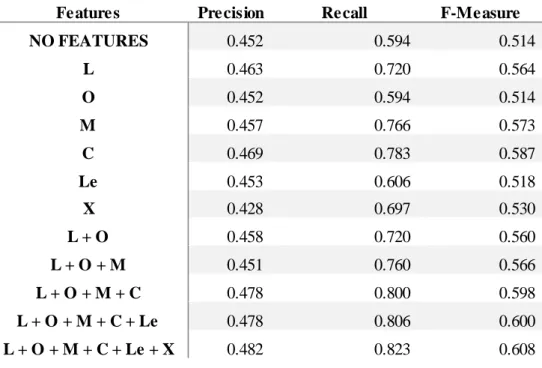
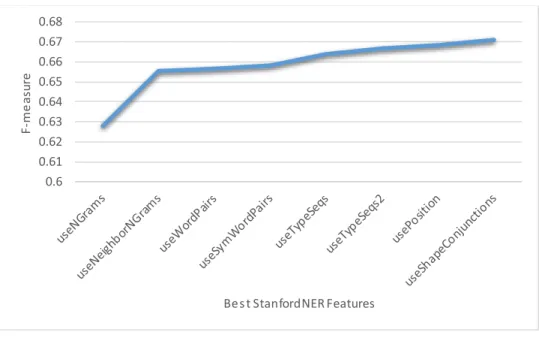
Para a criação de um modelo é necessário selecionar um conjunto de características (features) que se ajuste ao conjunto de dados utilizados. O StanfordNER e o CRFSuite apresentam conjuntos de features diferentes. Para o StanfordNER, uma lista de features existente foi utilizada, aplicando um algoritmo para selecionar as features que trazem maiores benefícios. Para o CRFSuite, foi criado um conjunto de features (linguísticas, morfológicas, ortográficas, léxicas, de contexto e outra) com base em trabalhos prévios na área do REM biomédico. Este conjunto de features foi testado e selecionado manualmente de acordo com o desempenho.
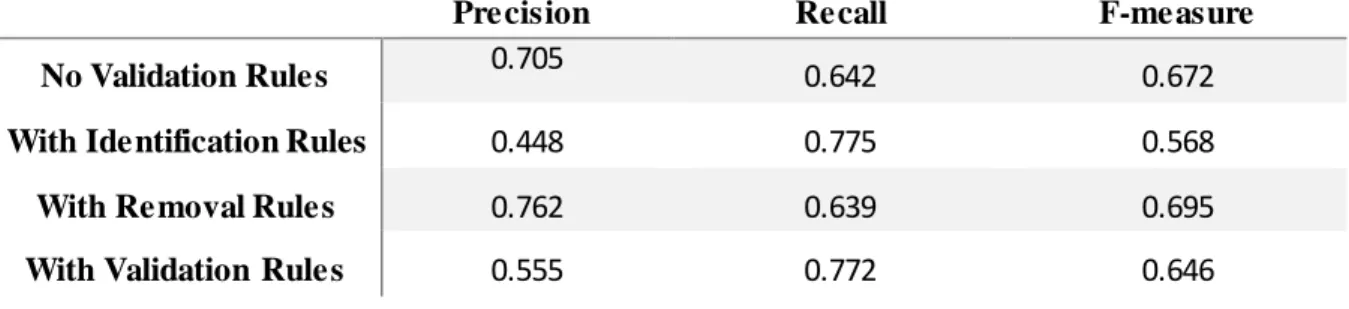
Além da utilização das features, um conjunto de regras de pós-processamento foi desenvolvido para pesquisar padrões linguísticos, utilizando também listas de palavras e stop words, com o propósito de remover entidades que tenham sido mal identificadas, identificar entidades que não tenham sido identificadas e combinar entidades adjacentes.
Os resultados para o IHP foram obtidos utilizando os classificadores StanfordNER e o CRFSuite. Para o StanfordNER, o IHP atinge um F-measure de 0.63498 no GSC e de 0.86916 nos TS. Para o CRFSuite, atinge um F-measure de 0.64009 no GSC e 0.89556 nos TS. Em relação ao anotador comparativo Bio-LarK CR, estes resultados mostram um aumento de desempenho no GSC, sugerindo que o IHP tem uma maior capacidade do que o BioLarK CR em lidar com situações reais. Apresenta, no entanto, um decréscimo nos TS, tendo uma menor capacidade em lidar com estruturas linguísticas complexas que possam ocorrer. No entanto, apesar de haver um decréscimo nos TS, as estruturas linguísticas avaliadas por estes testes ocorrem naturalmente em texto livre (como os abstracts do GSC), sugerindo que os resultados do GSC sejam mais significativos do que os resultados dos TS.
Durante o desenvolvimento da tese, alguns problemas foram identificados no GSC: anotação de entidades superclasse/subclasse, número de vezes que uma entidade é anotada erros comuns. Devido a estas inconsistências encontradas, o IHP tem o potencial de ter um desempenho melhor no GSC. Para testar esta possibilidade, foi efetuado um teste que consiste em remover Falsos Positivos que se encontram tanto nas anotações do GSC como também na base de dados do HPO. Estes Falsos Positivos, estando presentes no GSC e no HPO, provavelmente deveriam ser considerados como bem anotados, mas, no entanto, o GSC não identifica como uma entidade. Estes testes mostram que o IHP tem o
IV
potencial de atingir um desempenho de 0.816, que corresponde a um aumento considerável de cerca de 0.18 em relação aos resultados obtidos.
Com a análise destas inconsistências encontradas no GSC, uma nova versão, o GSC+, foi criada. GSC+ permite uma anotação dos documentos mais consistente, tentando anotar o máximo número de entidades nos documentos. Em relação ao GSC, ao GSC+ foram adicionadas 881 entidades e foram modificadas 4 entidades. O desempenho do IHP no GSC+ é consideravelmente mais alta do que no GSC, tendo atingindo um valor de F-measure de 0.863. Esta diferença no desempenho é devido ao facto do GSC+ tentar identificar o máximo número de entidades possível. Muitas entidades que eram consideradas como erradas, agora são consideradas corretas.
Palavras Chave: Reconhecimento de Entidades Mencionadas , Prospeção de texto, Aprendizagem
V
Abstract
Named-Entity Recognition (NER) is an important Natural Language Processing task that can be used in Information Extraction systems to automatically identify and extract entities in unstructured text. NER is commonly used to identify biological entities such as proteins, genes and chemical compounds found in scientific articles. The Human Phenotype Ontology (HPO) is an ontology that provides a standardized vocabulary for phenotypic abnormalities found in human diseases. This article presents the Identifying Human Phenotypes (IHP) system, tuned to recognize HPO entities in unstructured text. IHP uses IBEnt (Identification of Biological Entities) as the base NER system. It uses Stanford CoreNLPfor text processing and applies Conditional Random Fields (CRFs) for the identification of entities.
IHP uses of a rich feature set containing linguistic, orthographic, morphologic, lexical and context features created for the machine learning-based classifier. However, the main novelty of IHP is its validation step based on a set of carefully crafted hand-written rules, such as the negative connotation analysis, that combined with a dictionary are able to filter incorrectly identified entities, find missing entities and combine adjacent entities.
The performance of IHP was evaluated using the recently published HPO Gold Standardized Corpora (GSC) and Test Suites (TS), where the system Bio-LarK CR obtained the best F-measure of 0.56 and 0.95 in the GSC and TS, respectively. Using StanfordNER, IHP achieved an F-measure of 0.646 for the GSC and 0.869 for the TS. Using CRFSuite, it achieved an F-measure of 0.648 for the GSC and 0.895 for the TS.
Due to inconsistencies found in the GSC, an extended version of the GSC, the GSC+, was created, adding 881 entities and modifying 4 entities. IHP achieved an F-measure of 0.863 on GSC+. Both the GSC+ and the IHP system are publicly available at: https://github.com/lasigeBioTM/IHP.
VI
Contents
1 Introduction ... 1 1.1 Motivation... 1 1.2 Objective... 2 1.3 Thesis Organization ... 3 2 Related Work ... 42.1 Natural Language Processing... 4
2.2 Machine Learning ... 5
2.3 Named-Entity Recognition ... 6
2.3.1 Biomedical Named-Entity Recognition ... 7
2.3.2 Previous Machine Learning Systems and Feature Selection ... 7
2.3.3 Feature Selection for Named-Entity Recognition ... 9
2.3.4 Post-Processing ... 12
2.4 Human Phenotype Ontology ... 12
2.4.1 Benchmarking Tools ... 13
2.4.2 Results from other Annotators ... 14
2.5 IBEnt (Identification of Biological Entities)... 14
2.5.1 Stanford CoreNLP ... 14
2.5.2 StanfordNER... 15
2.5.3 CRFSuite ... 15
2.5.4 Evaluation Methods ... 15
3 Identifying Human Phenotypes... 17
3.1 Methods ... 17 3.1.1 Corpus Loading ... 18 3.1.2 Training ... 19 3.1.3 Testing... 23 3.1.4 Validation ... 23 3.1.5 Evaluation... 25 3.2 GSC+... 25
4 Results and Discussion ... 27
4.1 Overall Performance ... 27
4.1.1 Gold Standard Corpora Performance... 28
4.1.2 Test Suites Performance ... 28
VII
4.2.1 CRFSuite Features ... 29
4.2.2 StanfordNER Feature Selection ... 30
4.2.3 Overall feature performance ... 33
4.3 Validation Rules Performance ... 33
4.4 Problems Faced During the Annotation ... 35
4.4.1 Problems Faced with the Ontology ... 35
4.4.2 Inconsistencies in the Corpora ... 36
4.5 GSC+... 38
5 Conclusions ... 39
5.1 Limitations and Range of Validity... 39
5.2 Significance to the area ... 40
5.3 Contributions... 40
5.4 Future Work ... 40
VIII
List of Tables
Table 2.1 Benchmark Performance of External Annotators. Performance of NCBO Annotator, OBO Annotator and Bio-LarK CR with the benchmarking tools: Gold Standard Corpora and Test Suites. 14
Table 3.1: Linguistic features used in the annotator ... 20
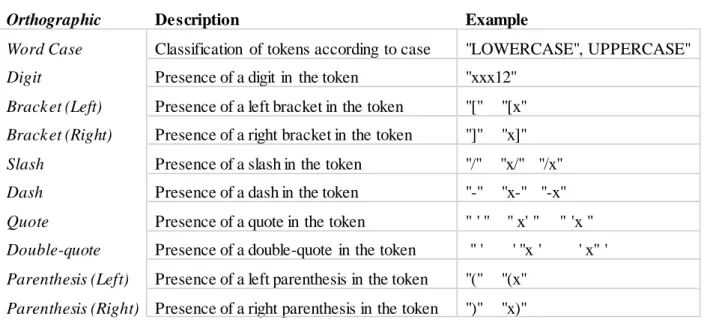
Table 3.2: Orthographic features used in the annotator ... 21
Table 3.3: Morphologic features used in the annotator... 21
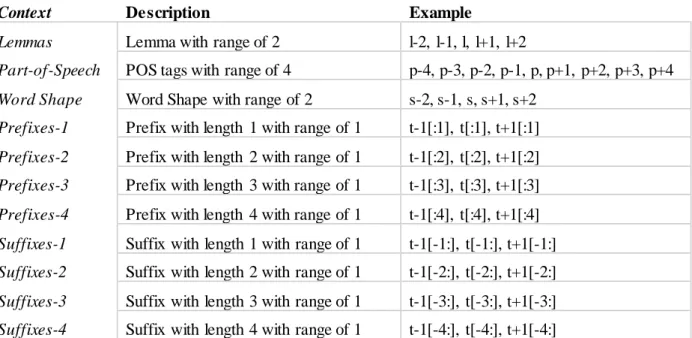
Table 3.4: Context features used in the annotator ... 22
Table 3.5: Lexical features used in the annotator ... 22
Table 3.6: Other type of features used in the annotator ... 22
Table 4.1: Comparative performance of IHP and Bio-LarK CR in the Gold Standard Corpora and Test Suites... 28
Table 4.2: The performance of the different types of used features for CRFSuite. ... 29
Table 4.3: Performance of IHP’s validation rules on the Gold Standard Corpora using CRFSuite.. ... 34
Table 4.4: Performance of IHP’s validation rules on the Gold Standard Corpora using StanfordNER. ... 34
Table 4.5: Potential Performance of IHP in the Gold Standard Corpus ... 38
IX
List of Figures
Figure 3.1: Layout of the annotation procedure ... 17
Figure 4.1 Iterative selection of StanfordNER’s Boolean Features... 31
Figure 4.2: StanfordNER’s Boolean Features... 31
1
1 Introduction
1 Introduction
1.1 Motivation
The quantity of scientific information that is created every day is enormous, and although some of this information can be found in the form of structured data, that can be easily read by computers, a great portion remains as unstructured text like scientific articles, which are only meant for human reading. This, of course, means that unless the information is analyzed by a human being, it would be meaningless. Due to the lack ability of a computer to understand texts written in a human language , Information Extraction (IE) is an area that has been developed to extract information from text. IE is capable of reducing the amount of human resources needed to extract that information, and, at the same time, automatize this process. This area has had considerable growth in the past years with the development of new technologies, techniques and approaches. One of the main aspects of this evolution is the increasing number of systems with the purpose of storing structured data. More and more databases and ontologies are being created for the purpose of organizing all the information that is created, making information more available and connected.
The Identification of Biological Entities (IBEnt)[1] (Lamurias A., 2015) is one of these information
extraction systems and it relies on Stanford CoreNLP (Manning, 2014), along with Conditional Random Fields (John D. Lafferty, 2001) in the form of StanfordNER (Jenny Rose Finkel, 2005) and CRFSuite
(Okazaki, 2007), to perform Named-Entity Recognition (NER) tasks, with the purpose of identification of biological entities.
The development of information extraction systems becomes increasingly important to automatically organize information, especially since there are a number of ways to analyze the same piece of information, depending on the perspective of the analysis. For example, from a single scientific text that focuses on the study of a single disease, it is possible to extract information on the causes, affected subjects, involved proteins and chemical compounds, symptoms, etc. All of these could be inserted into a particular database.
The Human Phenotype Ontology (HPO) (Sebastian Köhler, 2017) has the purpose of providing a standardized vocabulary for phenotypic abnormalities that can be found in human diseases. Each HPO entity can be described as a phenotypic abnormality. The information found on this ontology can be useful in a lot of medical areas and it could facilitate the understanding of medical texts such as scientific articles and patient reports, and could even bring different insight for certain observations.
For the purpose of creating a standard to evaluate the performance of HPO annotators, Groza et al.
(Groza T, 2015) created two benchmarking tools: the Gold Standard Corpora (GSC), which contains a group of abstracts with the respective exact matching annotation of HPO terms, and the Test Suites (TS), which consist of a group of tests to evaluate the linguistic portion of annotators. Groza et al. applied the benchmarking tools to several annotators, of which Bio-LarK CR, a NER system created by Bio-LarK, was the best performing annotator and is considered the baseline performance for this work.
2
1.2 Objective
It can be challenging to annotate free text with entities from the HPO because their nature. This ontology contains a variety of entities that span from simple to extremely complex entities, that range from 1 to 14 words and contain complex linguistic patterns. Since this ontology is relatively new, having been created in 2008[2], there is not a lot of work done around it, compared to other ontologies (like the Gene
Ontology created in 2000 (Ashburner, 2000)), which usually translates as a diminished ability to annotate entities from an ontology.
The objective of this work is to develop an automatic annotator for the HPO called IHP (Identifying Human Phenotypes), that achieves better results than the state-of-the-art HPO annotators (like the Bio-LarK CR annotator). In order to evaluate the IHP’s performance, IHP relies on GSC for both training and testing, using a 10-fold cross-validation method, as well as a group of TS that contain specific tests to determine an annotator’s strengths and weaknesses.
Although IHP uses IBEnt as the information extraction system, this thesis focuses on the selection of a particular feature set for the machine learning-based NER system and specific validation methods adapted for the identification of HPO entities. IHP uses a different feature set for StanfordNER and CRFSuite. StanfordNER has a list of existent features[3], which were selected by trial-and-error, using
a developed algorithm that selects the features that better fit the data. CRFSuite, on the other hand, uses IBEnt to create a set of handcrafted feature functions. A set of feature functions were created for the different types of features (linguistic, morphologic, orthographic, lexical, context and others) having all been manually tested. The validation stage uses a dictionary-based approach to filter out false positive entities, find missed entities and combine adjacent entities. Specific handwritten rules were used in combination with the dictionary-based approach in order to overcome the complex linguistic nature of HPO entities.
1.3 Results and contributions
IHP was evaluated using Bio-LarK’s benchmarking tools, using both StanfordNER and CRFSuite due to similarity in performance. Bio-LarK CR is the annotator used as a baseline, and it achieved an F-measure of 0.56 for the GSC, and an F-F-measure of 0.95 for the TS. Using StanfordNER, IHP achieved an measure of 0.63498 for the GSC and 0. 86916 for the TS. Using CRFSuite, it achieved an F-measure of 0.64009 for the GSC and 0.89556 for the TS. When compared to Bio-LarK CR, IHP shows an increase in performance in the GSC, which suggests that it performs better in real-world situations. IHP does, however, underperform in the TS which suggests that it cannot deal with complex linguist ic structures as well as the comparative annotator. However, since complex linguistic structure should occur normally in the GSC (since they are actual abstracts), it suggests that the GSC results are more relevant.
During the development of this thesis, some problems were identified in the GSC: annotation of superclass/subclass and nested entities, number of times an entity is annotated and common mistakes. Considering these issues, IHP has the potential of achieving a better performance in the GSC. To test this possibility, a test was created which consists of removing false positives that can be found in the GSC annotations and in the HPO database. These false positives, being present in the GSC and the HPO, should be considered as HPO entities, however, the GSC doesn’t consider them. These tests show
[2] The Human Phenotype Ontology started in 2008 at the Charité, Berlin, Germany. The major contributors were Peter Robinson and Sebastian Köhler
3
3 Introduction
that IHP has the potential of achieving an F-measure of 0.816, which corresponds to a considerable increase of around 0.18 in F-measure, compared to the obtained results.
With the analysis of these inconsistencies found in the GSC, a new version, the GSC+, was created, providing a more consistent annotation of the documents. GSC+ attempts to provide as many instances of HPO entities as possible, having added 881 new entities and modified 4 entities. IHP's performance on GSC+ is much higher than the performance on the previous GSC, having achieved an F-measure of 0.863. This difference in performance is due to IHP's attempt to identify as many entities as possible. Many entities that were considered false positives in the previous GSC are now considered as true positives in GSC+. Both the GSC+ and IHP source code are available at https://github.com/lasigeBioTM/IHP.
1.3 Thesis Organization
This thesis is organized as follows:Chapter 2 presents an overview of the field of Natural Language Processing and Machine Learning, as well as some of techniques and methods in text mining. It will explore biomedical Named-Entity Recognition and the Human Phenotype Ontology, along with Groza et al. work (Groza T, 2015), exploring benchmarking tools and some linguistic issues faced in this ontology. Finally, it will explore the particular Named-Entity Recognition system used in this thesis, IBEnt (Identification of Biological Entities).
Chapter 3 presents the developed HPO Named-Entity Recognition, exploring the methods, techniques and software that were used to achieve these results, focusing on the selected feature set and post-processing rules.
Chapter 4 provides the results obtained using the developed system in both the Gold Standard Corpora and Test Suites, as well as the results from the feature selection process and contribution of hand-written rules.
Chapter 5 will discuss the results obtained in Chapter 4, the problems faced, surpassed and those that could not be surpassed, as well as what can be done in the future to improve.
4
2 Related Work
This chapter will start by providing an overview of Natural Language Processing, some Machine Learning techniques and Named-Entity Recognition (NER), followed by an analysis of commonly used features in biomedical NER tasks. After this, the HPO and Groza et al. work with this ontology is presented. Finally, an overview of IBEnt, the used information extraction system, is presented focusing on the techniques and tools that it uses to give a better understanding of their roles. It is important to highlight the use of IBEnt (the NER system), a specific set of carefully chosen features and the two HPO benchmarking tools created by Groza et al.
2.1 Natural Language Processing
Natural Language Processing (NLP) is an area of computer science that deals with human languages, with the final objective of having a computer derive meaning from unstructured text written and understood by humans. It focuses on a number of tasks, each with a specific setting and evaluation method, as well as a standard corpus to be evaluated on. Common tasks found in NLP include coreference resolution, machine translation, NER, Part-of-Speech (POS) tagging and parsing.
Human language is extremely complex and, for that reason, special algorithms need to be devised in order to perform tasks involving the human language. The main problem found during these tasks is ambiguity. There are different types of ambiguities to consider such as morphologic, syntactical or semantical, which are a result of the multiple alternative linguistic structures of the human language
(Jurafsky, 2009).
Structured data (found in databases and ontologies) is information that has a high degree of organization that can be easily processed by data mining tools. Unstructured data (found in scientific articles and books), on the other hand, has a low degree of organization that does not allow it to be easily processed. Since text written in human languages is unstructured, there are several techniques that are applied to try to turn this text into structured data. Some of the important techniques that are commonly used include tokenization, stemming, lemmatization, POS tagging, parse trees and coreference resolution
(Lamurias, 2014).
Tokenization is one of the most important techniques and is one of the first ones that should be applied.
It is a process that consists in breaking down the input text into tokens so that they can be easily processed. There are different techniques depending on the type of text. For simple texts, the regular tokenization using whitespaces and punctuation can be enough. However, if the text contains uncommon entities like chemical entities or symbols, the tokenization process can become very difficult and specialized techniques need to be developed.
Stemming has the purpose of reducing the variability in natural language by normalizing the variations
of the same concept and it consists in reducing a word to its base form by chopping off the ends of the word and often removing derivational affixes (Christopher D. Manning, 2008). Lemmatization has a similar purpose as stemming but it uses the context of the word, along with a vocabulary and morphologic analysis, to determine the canonical/dictionary form of the word, also known as the lemma
(Christopher D. Manning, 2008).
Part-of-speech tagging is a classification task with the objective of categorizing each word according
to its grammatical context, resolving existing ambiguities in words. Identifying the class of a word provides information about likely neighbor words, according to a particular syntactic structure. POS tags are useful features in NER and information extraction tasks, and they can even help with stemming
5
5 Related Work
(Jurafsky, 2009). There are different POS tagsets available, being the Penn Treebank Tagset[4] one of
the most commonly used. Since words can have different meanings depending on the context, it is important to choose a tagset that works well in the specific field at hand.
Parse trees represent the syntactic structure of a sentence and similarly to POS tags, they can provide
additional information about a word in a sentence. Parse trees are a compact representation of derivations, where several derivations may come from the same parse tree. In a parse tree there are several nodes, each of those containing a label. The top node of the tree is the root, and the bottom nodes are the leaves. From the parse tree, we determine the yield which is defined as the concatenation of the labels found on the leaves, from left to right (Plaisted, 2016).
Coreference resolution is a task used to determine which referring expressions are meant for which
entities and avoid misclassification of an entity. A reference is defined as a linguistic expression used to denote an entity or an individual. Many times, we can use more than one referring expression for the same individual, and these expressions that refer to the same individual are said to corefer (Jurafsky, 2009).
These techniques and many more make natural language processing and information extraction possible.
2.2 Machine Learning
Machine learning consists in the development of algorithms that allow computers to perform automatic tasks. These can include a great variety of tasks such as classifying data after learning from a set of training data. There are different types of learning methods in machine learning and they can be divided into two main types: unsupervised learning and supervised learning.
Unsupervised learning has no need for labeled training data which can be very useful when it is difficult to come across enough data or when it requires too much manual work to generate the data. It does, however, require a large unlabeled training data for statistics. Unsupervised learning algorithms can be used to find patterns in data, which is especially useful when the characteristics of the data are unknown and need to be explored. An example of unsupervised learning is Clustering, where a set of feature functions define certain characteristics for each cluster, which allows the extraction of statistics from the unlabeled corpus.
Supervised learning requires the use of training sets that contain examples of the input data and expected output. The training process will generate a model that is able to classify new unlabeled data according to the generated model. There are different types of supervised learning algorithms used in the area of text mining, the same algorithms in which NER systems can rely on. Some of the most currently used supervised machine learning methods include Decision Trees, Support Vector Machines (SVMs) and CRFs (Jurafsky, 2009). Using these algorithms, models can be generated to be used in recognition systems.
Decision trees are popular inductive inference algorithms and they are used to represent learned
functions that approximate discrete-value target functions. These trees classify instances using the nodes of the tree, from the top node (the root) to the bottom nodes (the leaves). Between the nodes there are branches that represent the possible values for the attribute of a certain instance. Instances are
6
classified starting at the root where they are tested according to their attributes and descend down the tree to the branches where they pass the tests defined in each node (Mitchell, 1997). This automated group of tests allows a quick classification of instances and are a valuable algorithm in machine learning.
Support vector machines (SVMs) are one of the most successful classification methods in machine
learning because they are easy to optimize and interpret, and they have a low computation cost. SVMs are computer algorithms that can assign labels to objects after training on a data set. They are algorithms used for the maximization of particular mathematical functions, according to a given data set (Noble, 2006). One of the main attractions of SVMs is the fact that it works well with non-linearly separable data by applying non-linear transforms to the data.
Conditional Random Fields are a type of model that use the Markov property which states that
decisions about a certain state at a particular position in a sequence can depend only on a small local window
(Jenny Rose Finkel, 2005)
. Biomedical NER uses traditional machine learning approaches which many times involves the introduction of features into sequential CRFs, having the ability of producing an output of annotated named entities. Since CRFs are used in IHP, a more detailed overview will be provided.CRFs are a type of probabilistic model that is used for labeling sequential data, which can present advantages over Hidden Markov Models (HMMs) and SVMs. This is possible since CRFs can include a rich feature set that, given a sequence and the corresponding labels, can obtain the conditional probability and define a weight vector associated to a feature function (Hahn, 2016). CRFs have the advantage of being able to use any number of features functions to ask arbitrary questions about the input data (e.g. creating feature functions for suffixes and prefixes for the current word, as well as for the words around that word) (Li, 2003). CRFs can be used in situations like overlapping and non-independent features that HMMs cannot deal with. Due to the conditional nature of CRFs, they can relax the independence assumptions (unlike HMMs) and avoid label bias problems (unlike Maximum Entropy Markov Models) (Campos, 2012). Linear chain CRFs can be seen as an undirected graphical model version of HMMs (Zhu, 2007).
CRFs are used to calculate the conditional probabilities of values on designated output nodes, given the values on designated input nodes. CRFs, therefore, define the conditional probability of a state sequence (a label) given a certain input sequence. These models need to be trained on a training set. This training process consists on the adjustment of weights in order to maximize the conditional log-likelihood of a labeled sequence in the training set. After having created and trained a model, CRFs are able to label sequences of tokens with the most probable labels, according to that model (John D. Lafferty, 2001). These algorithms all have different parameters that can be modified to optimize the performance of the system, however, these parameters must be carefully chosen in order to avoid overfitting. Overfitting occurs when the classifier fits the data too well. This happens when the parameters are not correctly chosen and, therefore, instead of only fitting the data, it also fits the noise in the data, which then leads to unexpected results in different data sets.
2.3 Named-Entity Recognition
This section will provide an overview of NER, Biomedical NER and some of the previous works conducted in this area. It will provide a detailed view of features and post-processing techniques used in these works.
Named-Entity Recognition is an extremely important task in information extraction systems. NER
7
7 Related Work
categories. NER systems can be used in a lot of different fields, being common in the biomedical field, where it can be used to recognize proteins, genes, drugs, chemical compounds, and many other types of entities. In general, NER systems identify entities in the text and return their position (the absolute character position of the first letter in the input text) and their offset (the number of characters in the entity). However, in some cases, only the information about the presence of the entity in a document is necessary.
Most of the current approaches to NER systems use machine learning. Pure machine learning approaches are very flexible, having the ability of identifying a variable and dynamic vocabulary of entities like proteins and genes (Campos, 2012). However, these approaches do not use entities from curated sources (like a dictionary) and may not produce very precise results. Usually, a large quantity of labeled data is required to yield good results.
In order to eliminate the need for large quantities of data, dictionary-based approaches can be used and still maintain good results. Dictionaries can be created from all types of sources (e.g. Wikipedia ). Dictionary-based approaches are meant for strictly defined vocabulary entities like diseases or species
(Campos, 2012) and usually yield high quality results. However, these approaches have some limitations since they cannot recognize entities that are not in the dictionary.
The use of hand-written rules and regular expressions can also be used to obtain high quality results, and they are not as limited as the dictionary approach. They have the advantage of identifying strongly defined orthographic and morphologic structures like chemical compounds (Campos, 2012). The disadvantage of hand-written rules and regular expressions is the amount of time and manual effort needed to accomplish good results (Lamurias, 2014).
It is possible to improve the overall performance of a NER system by using a combined approach of machine learning, dictionaries and hand-written rules.
2.3.1 Biomedical Named-Entity Recognition
In a NER system, it’s important to know the type of entities that are being identified so that an appropriate feature set can be chosen in order to identify the correct patterns. Biomedical entities are difficult to identify in unstructured text because they don’t follow particular nomenclatures, having a lot of variations. These entities are usually long, descriptive and often contain pre-modifiers (e.g. “normal thymic epithelia cells”) (Campos, 2012), and can have several synonyms. They also have different capitalization, spelling, hyphenation and symbol patterns, as well as non-standard and highly ambiguous abbreviations (e.g. “TCF” may refer to “T cell factor” and “Tissue Culture Fluid”) (Zhou, 2004). Finally, two or more entities can share a single head noun, making it hard to identify the several entities.
2.3.2 Previous Machine Learning Systems and Feature Selection
This section provides an overview over some previous works in NER which shows the benefits of using machine learning techniques in NER, as well as the influence of specific feature sets. The actual performance of the specific features will be discussed in the next section.
Zhou et al. (Zhou, 2004) developed a HMM-based NER system (PowerBioNE) that doesn’t rely on the use of a dictionary but integrates a rich set of features which include word formation patterns, morphologic patterns (prefix and suffix), POS tagging, head noun triggers, special verb triggers and
8
name alias. The system was evaluated on GENIA[5] 3.0 and GENIA 1.1, achieving an F-measure of
66.2 and 62.2, respectively. It achieves an F-measure of 75.8% for the protein class with GENIA 3.0. Lee et al. (Lee, 2003) developed a two-phase (identification and classification) SVM-based NER system. A dictionary was constructed using the training corpus and is used in a post-processing step that follows the SVM classifier. The identification phase had an F-measure of 79.9% in the GENIA 3.0 corpus, using 10-fold cross-validation. The system used orthographic and context (range of 2) features, prefix, suffix and lexical of each token, POS tagging and “presence-in-dictionary” features.
Lin et al. (Lin, 2004) developed a Maximum Entropy-based machine learning system with dictionary-based and rule-dictionary-based methods for post-processing. The system was tested on the GENIA 3.01 corpus using a 10-fold cross-validation and achieved an F-measure of 0.525 and 0.72, before and after post-processing, respectively. The post-processing stage was applied to extend partially identified entities. The system uses orthographic and morphologic features, head nouns and POS tagging.
Tsai et al. (Tsai, 2014) developed a Maximum Entropy-based NER system that uses a set of features: orthographic, context, POS tags, word shape and prefix/suffix features. The system is evaluated on the GENIA 3.02 corpus, achieving and F-measure of 70.0% without using a dictionary and achieved and F-measure of 74.3% for proteins.
Hahn et al. (Hahn, 2016) developed a CRFs-based NER system using CRFSuite (L-BFGS method) with focus on sentence and token-level features. It uses a conjunction of orthographic and contextual features, affixes, n-grams, POS tagging and word normalization. This system was evaluated on the NCBI Disease[6] corpus using a 10-fold cross-validation technique, achieving an F-measure of 88%.
The work focuses on the challenges of boundary detection and entity classification.
Campos et al. (Campos, 2012) developed two CRFs-based machine learning systems (BioEnEx and BANNER) that can identify disorder names, using linguistic, orthographic, morphologic, context and lexicon features. It used the Arizona Disease Corpus[7] and BioText[8] to train the system to identify
disorder names. It achieved and F-measure of 81.08% in the Arizona Disease Corpus and 54.84% in BioText.
Tkachenko et al. (Tkachenko, 2012) developed a feature-rich CRFs-based NER system. The system achieves an F-measure of 91.02% on the CoNLL 2003 dataset[9], 81.4% F-measure on the OntoNotes
version 4 CNN Dataset[10] and 74.27% on NLPBA 2004 dataset[11]. The system explores the use of local
knowledge features (features extracted from a single token), external knowledge features (POS tags, dictionarys), non-local dependencies of names entities and specific features that do not fall into previous categories. [5] http://www-tsujii.is.s.u-tokyo.ac.jp/~genia/ [6] https://www.ncbi.nlm.nih.gov/CBBresearch/Dogan/DISEASE/ [7] http://diego.asu.edu/downloads/AZDCAnnotationGuidelines_v013.pdf [8] http://biotext.berkeley.edu/ [9] http://www.cnts.ua.ac.be/conll2003/ner/ [10] http://www.aclweb.org/anthology/N09-4006 [11] http://www.nactem.ac.uk/tsujii/GENIA/ERtask/report.html
9
9 Related Work
2.3.3 Feature Selection for Named-Entity Recognition
Extraction of features from data is essential in machine learning, and selecting the best features is one of the great challenges in machine learning. These features represent properties in the data that make labels distinguishable from each other. The feature choice needs to be specific enough so that it fits the data but not too specific so that the features fit a large quantity of data (Lamurias, 2014). Careful feature selection is especially important in CRFs because these are extremely sensitive to the selected feature set.
Features are usually selected according to observational tests and then combined in certain user-defined patterns. Since the number of possible tests is enormous it can be computationally expensive, and, therefore, features that prove to be irrelevant should be removed (Li, 2003).
The next sections will present different types of features, along with their relevance in different NER systems. These features are divided into Linguistic, Orthographic, Morphologic, Context, Lexicon and other features, based on the feature classification of Campos et al. (Campos, 2012). Orthographic, morphologic and context features are used in almost every NER system.
2.3.3.1 Linguistic Features
These features represent the most basic feature, the token, and consider the variations found in that token due to the context. Linguistic features include normalization techniques like stemming and lemmatization, as well as POS tagging. Linguistic features can help in the recognition of highly variable and low standardized entity names (Campos, 2012). In the work of Hahn et al. (Hahn, 2016) the use of stemming features resulted in an F-measure increase of 0.21.
The quality of the used POS tagger is crucial for tasks such as NER and even high quality taggers can yield bad results. It is important to choose a tagger that works well in a particular field, because the same way languages have a different structure, different fields have different meanings for certain words. According to various authors (Hahn, 2016; Zhou, 2004; Tsai, 2014), POS tags are helpful for boundary detection and for this purpose, Tsai et al. uses POS tags with a window size of 5.
In the work of Zhou et al. (Zhou, 2004), the use of POS tags increased the F-measure by 0.228 (on top word formation and morphologic features); in the work of Hahn et al. (Hahn, 2016), increased by 0.12 (on top of orthographic and word normalization features); in the work of Lee et al. (Lee, 2003), increased by 0.028; and in the work of Tkachenko et al. (Tkachenko, 2012) it increased by 0.01.
2.3.3.2 Orthographic Features
Orthographic features capture knowledge about the word formation. These include the presence of uppercase/lowercase characters, presence of symbols and counting the number of digits (Campos, 2012). Orthographic features as well as POS tagging are strongly related to the identification of an entity
(Lee, 2003) and are generally used as the baseline features for NER systems, just like in the work of Zhou et al. (Zhou, 2004) and Hahn et al. (Hahn, 2016).
In the work of Lin et al. (Lin, 2004) and Tsai et al. (Tsai, 2014), the most useful orthographic features include ‘Full Capitalization’, ‘Mixed Capitalization’ and ‘Initial Capitalization’; In the work of Hahn et al. (Hahn, 2016) Orthographic Features were used for effective for boundary detection, and these included ‘Dash in the token’, ‘More than 2 dashes in the token’, ‘Full Capitalization’, ‘Mixed Capitalization’, ‘Initial Capitalization’, ‘No Capitalization’, ‘Both numeric and text characters’,
10
‘Parenthesis in a word’, ‘Brackets in a token’, ‘Greek letters in a token’ and ‘Slash in a Multi-word’.
2.3.3.3 Morphologic Features
Morphologic features reflect common structures found in different tokens. Three types of morphologic features are usually considered: Affixes (suffixes and prefixes), which can be used to distinguish between certain types of entities (e.g. the suffix “ases” for proteins); character n-grams, which represent sub-sequences of a token (unigrams, bigrams and trigrams); and word shape patterns, which generate character sequences that reflect the organization nature of letters, digits and symbols in a token
(Campos, 2012).
Since biomedical entities are long and descriptive, the use of different ranges may have a big impact on the NER system. Lin et al. (Lin, 2004) considered morphologic features with a range of at least three, while, Hahn et al. (Hahn, 2016) considers different possible prefixes and suffixes for a certain entity. To show this, an example given by Hahn et al. is provided: for the word “tumour”, the extracted prefixes are “t”, “tu”, “tum” and “tumo” and the extracted suffixes are “r”, “ur”, “our” and “mour”.
Affixes showed an increase in F-measure of 0.02 in the work of Hahn et al. (Hahn, 2016), 0.01 (0.004 for prefixes and 0.006 for suffixes) in the work of Lee et al. (Lee, 2003) and 0.027 In the work of Zhou et al. (Zhou, 2004). In the work of Tkachenko et al. (Tkachenko, 2012), the addition of affixes and word shape increases the F-measure by nearly 0.05 and 0.004 on the baseline performance (single token feature), respectively.
In the work of Hahn et al. (Hahn, 2016), unigrams and bigrams showed an increase of 0.05 in F-measure.
2.3.3.4 Context Features
CRFs-based systems tend to work poorly when using information only about the current token, and therefore, the tokens around the current token should be considered, using features that rely on the previous and next words, within a certain range (Tkachenko, 2012). Context features consist of grouping features of surrounding tokens, in order to reflect the local context of single tokens (Campos, 2012).
Tkachenko et al. (Tkachenko, 2012) shows the importance of a careful choice of context features, focusing on the range. The system was tested using only the previous and next tokens as well as the current token and there was an increase of about 0.04 in F-measure. However, the F-measure decreased by 0.005 when the range was increased by 1, showing the importance of taking the range into account. A sliding window of 3 tokens showed the best performance in the choice of range, increasing almost 0.05 over the baseline performance. Tkachenko et al. applied context features on top of morphologic features and also considered the word shape of neighboring tokens. This was able to increase the baseline performance by about 0.052.
Lin et al. (Lin, 2004) used the 960 most common unigram and bigram head nouns to improve the performance. Tsai et al. (Tsai, 2014) used with a window size of 5 for the context features which helped determine the category of the token.
Context features can have a positive impact on the performance of a NER system, having demonstrated an increase of 0.01 in F-measure in the work of Hahn et al. (Hahn, 2016) and an increase of 0.077 in
F-11
11 Related Work
measure in the work of Zhou et al. (Zhou, 2004) in the form of head noun triggers. Zhou et al. obtained negative results when applying special verb triggers.
2.3.3.5 Lexicon Features
Lexicon features represent dictionary knowledge that can be added to the set of features and potentially improve the performance (Campos, 2012). The chosen dictionary is matched against words, resulting in tags that can be used as features. There are two types of dictionaries: dictionaries containing target entity names, using exact matching and dictionaries containing trigger names that indicate the presence of specific names in surrounding tokens.
Encyclopedic knowledge like dictionarys is a simple method to recognize named entities in a phrase and it can greatly improve the performance. It is common to use these techniques in conjunction with machine learning approaches for better results. Look-up systems that use a large entity list work well when those entities are not ambiguous. This is shown by Tkachenko et al. (Tkachenko, 2012), in which using a dictionary without disambiguation caused a decrease of around 0.8 in F-measure while the use of the same dictionary with disambiguation increased the performance by around 0.16 in F-measure. These results are highly dependent on the quality of the dictionary that is used. Tkachenko et al. conducted a second test using a different dictionary which showed an increase in F-measure of 0.14 without disambiguation and even showed a decrease when the disambiguation was applied.
2.3.3.6 Other Types of Features
This section will present features that do not particularly fit in the division above. These features include document/corpus-level features, as well as Word Clustering in the form of Brown Clustering.
2.3.3.6.1 Document/Corpus-level Features
Zhang et al. (Li Zhang, 2004) explores a different approach to NER, which applies a “focused” NER approach where entities are defined as “focused” or not. Zhang et al. applies a different set of features that reflect the properties of individual important entities, either at document-level or corpus-level. These features include:
• Entity Type, considers a vector of existing classes;
• ‘In Title’, checks whether the entity appears in the title or not;
• Entity Frequency, corresponds to the number of times an entity occurs in the document. A higher frequency tends to mean that the entity has a greater importance;
• Entity Distribution, considers the appearance of the entity in sub-sections of a document. The more sections an entity appears in, the more likely it is to be important;
• Entity Neighbor, considers the context of the entity by counting the neighboring entity types. If there are several entities of the same type side-by-side, it is likely that it serves the purpose of enumeration and therefore the entities are irrelevant;
• First Sentence Occurrence, is the number of occurrences of the entity in the beginning of a paragraph;
• Total Entity Count, is the total number of entities in the document. It reflects the importance of an entity;
• Corpus-Level Document Frequency, considers the number of times an entity appears in a corpus. If the entity has low frequency in the corpus but high frequency in the document, then it is likely to be a focused entity.
12
2.3.3.6.2 Word Clustering
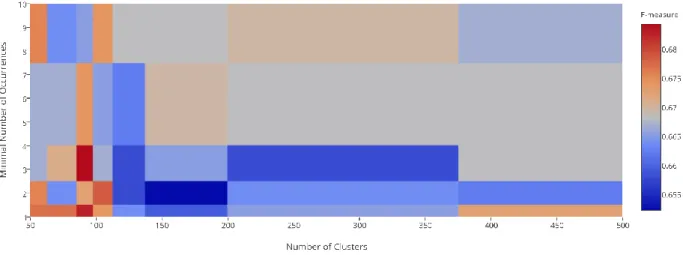
Word clustering can improve the quality of a NER system by including word representations as features. In this thesis, Brown Clustering is used since it is a common technique and, therefore, there are available algorithms to work with. Brown clustering has shown success in NER systems (Tkachenko, 2012). It relies on the fact that we can find similar words in similar contexts, although, to do this, a large unlabeled data set is necessary. There are two types of brown clustering algorithms: partition of the input into word clusters, in which similar words are clustered together (e.g. weekdays, months are in the same cluster), and hierarchical word clustering, in which words are clustered according to the mutual information of bigrams (Brown P.F., 1992).
Since bigram pairs have different levels of similarity, a distance can be defined. This distance is given by a bit string and it is assigned to each word on the vocabulary (words in the input text). These bit strings can then be used as features for a NER system to improve the performance. In the work of Tkachenko et al. (Tkachenko, 2012), brown clusters increased the baseline performance by 0.02.
2.3.4 Post-Processing
Post-processing is an important step in NER that can resolve some of the issues that the classifier could not face automatically. Post-processing rules can identify missed entities, remove misidentified entities, as well as combine adjacent entities. There are several post-processing techniques for achieving better results. Some of these techniques are discussed below.
Lin et al. (Lin, 2004) used a post-processing method that consisted on the detection of boundaries in partially recognized entities. For nested entities, a list was created for the leftmost context words of the entities in the training corpus and another list for the rightmost. The boundaries are extended depending if the entity is followed by another entity or if there is a valid POS tag. This boundary method showed an improvement of 0.177 in F-measure.
Zhou et al. (Zhou, 2004) presented a pattern based post-processing for cascaded entity name resolution which showed an increase of 0.039 in performance. This technique is based on six entity construction patterns:
• Entity + Head Noun (e.g. <PROTEIN> binding motif→ <DNA>); • Entity + Entity (e.g. <LIPID> <PROTEIN>→ <PROTEIN>); • Modifier + Entity (e.g. anti <Protein>→<Protein>);
• Entity + Word + Entity (e.g. <VIRUS> infected <MULTICELL>→ <MULTICELL>); • Modifier + entity + head noun;
• Entity + entity + head noun.
Campos et al. (Campos, 2012) uses parentheses processing and abbreviation resolution can be essential tasks and used independently of the entity type in hand.
2.4 Human Phenotype Ontology
This section will provide an overview of the HPO, presenting some of the issues in the NER process, as well as two benchmarking tools developed by Groza et al. (Groza T, 2015) that are used in this thesis
13
13 Related Work
and which are meant to test the performance of HPO annotators. The results from three annotators (NCBO Annotator, OBO Annotator and Bio-LarK CR) are presented from the work of Groza et al. The HPO has the purpose of providing a standardized vocabulary for phenotypic abnormalities that can be found in human diseases. Each HPO entity can be described as a phenotypic abnormality. The information found on this ontology can be useful in a lot of medical areas and it could facilitate the understanding of medical texts such as scientific articles.
Since HPO entities, like many biomedical entities, have specific characteristics which do not follow a particular nomenclature, they can be difficult to identify in free text. HPO entities:
• are long, ranging from 1 to 14 words; • are highly descriptive;
• contain pre-modifiers
• contain several synonyms for words in an entity
• contain specific capitalization, spelling, hyphenation and symbol patterns • contain ambiguous abbreviations
• share a single head noun with two or more entities
2.4.1 Benchmarking Tools
The two benchmarking tools developed by Groza et al. include the GSC and the TS.
The GSC is the first HPO-specific corpus, and was created with the purpose of being used as a standard for phenotype NER. It consists of 228 individually annotated abstracts with HPO entities, containing a total of 1933 annotations, which cover 460 unique HPO entities.
The TS consist of 32 different types of test cases, each type containing singular entity identification tests for that specific type, reaching a total of 2164 HPO entities. These tests are manually crafted by experts and cover a broad range of entity types, and are meant to be used as a standard manner to perform error analysis. The TS package offers a stratified approach to data sampling that is based on several different criteria, creating a framework that is able to characterize the strength of the linguist ic patterns used in each of the entity recognition systems. Each of these criteria is focused on a set of entities that have a particular property in common such as length in tokens, presence of punctuation and coordination. On average, for each criteria there are around 70 test cases and they can be grouped into different categories:
• Length-based tests, characterize the ability of a recognition system to identify entities of different word lengths. HPO terms range from 1 to 14 words.
• Tests accounting for the presence of certain types of tokens, include tests for punctuation, isolated numerals (Arabic, Roman) and stop words (IN, OF, TO, BY, FROM, WITH)
• Lexical variation tests, test the ability to deal with transformations from singular to plural or from nouns to adjectives and vice versa
• Token ordering tests, test the ability to deal with transformations that oppose canonical and transformed canonical ordering
• Synonym tests, include tests where ontology synonyms are replaced with the original entity labels
• Other specialized tests, include tests for non-English canonical structures, metaphoric constructs and composite terms created by the conjunction of several atomic entities.
14
2.4.2 Results from other Annotators
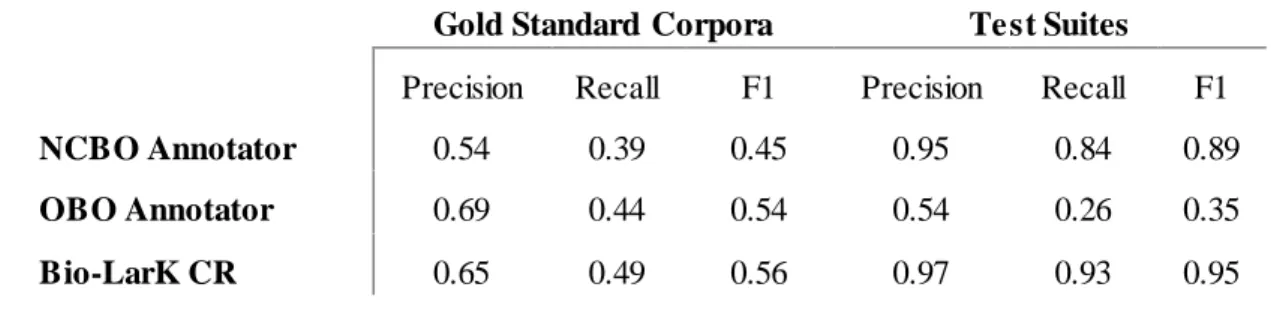
With these benchmarking tools, Groza et al. tested Bio-LarK’s annotator, Bio-LarK CR, as well as two other annotators: NCBO annotator and OBO annotator. For both the GSC and the TS, the alignment strategy used was exact matching, which is the default strategy. Each case in the TS were treated as free text, and were used as the input for the recognition systems. The used evaluation metrics are Precision, Recall and F-score. The performance of the three annotators in the work of Groza et al. are presented in Table 2.1:
Table 2.1 Benchmark Performance of External Annotators. Performance of NCBO Annotator, OBO Annotator and
Bio-LarK CR with the benchmarking tools: Gold Standard Corpora and Test Suites.
Gold Standard Corpora Test Suites
Precision Recall F1 Precision Recall F1
NCBO Annotator 0.54 0.39 0.45 0.95 0.84 0.89
OBO Annotator 0.69 0.44 0.54 0.54 0.26 0.35
Bio-LarK CR 0.65 0.49 0.56 0.97 0.93 0.95
As presented in Table 2.1, Bio-LarK CR is the best performing entity recognition system, using both the Gold Standard Corpora and the Test Suites, with an F-measure of 0.56 and 0.95, respectively.
2.5 IBEnt (Identification of Biological Entities)
This section will provide a look on the NER system used in this thesis, IBEnt, along with the tools and software incorporated into IBEnt.
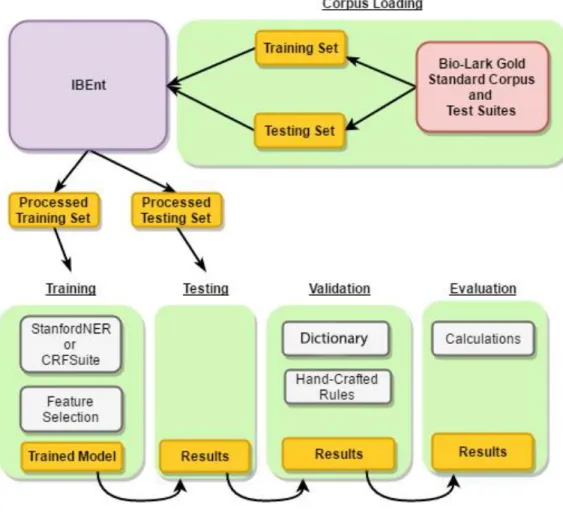
IBEnt is a NER system developed by André Lamúrias (Lamurias A., 2015). It relies on Stanford CoreNLP and CRFs in the form of StanfordNER or CRFSuite and has the purpose of identifying different types of biological entities. IBEnt’s functioning can be divided into 5 main stages: Corpus loading, Training, Testing, Validation and Evaluation.
The sections below will give an overview of Stanford CoreNLP, StanfordNER, CRFSuite and the used evaluation methods.
2.5.1 Stanford CoreNLP
Natural Language Processing is a field that is in constant development and certain groups have developed specialized software meant to perform NLP tasks. One of the most popular tools for NLP tasks is Stanford’s CoreNLP (Manning, 2014), which contains a set of packages that are able to perform different number of task such as POS tagging, NER, coreference resolution and many more.
Stanford’s CoreNLP tools come in the form of annotators which hold the analysis information for a particular text, stored as a heterogeneous map. Annotators can be used together in a pipeline and their
15
15 Related Work
behavior can be controlled by certain properties (Manning, 2014). The following annotators are used by IBEnt to process and enrich the text, in order to improve the quality of the recognition system:
• tokenize, tokenizes text into a sequence of tokens, recording their exact matching offset • ssplit, splits a sequence of tokens into sentences
• pos, labels tokens with their POS tag • lemma, generates lemmas for the tokens
• ner, recognizes named and numerical entities (makes NER possible using StanfordNER) • parse, provides full syntactic analysis
2.5.2 StanfordNER
StanfordNER is a NER that is able to label sequences of words in a text in specific classes. It provides a general implementation of linear chain CRFs sequence models, which allows training of a model using labeled data. It also provides a big quantity of developed features, making it easier to select the best features for a particular recognition system.
2.5.3 CRFSuite
CRFSuite[12], just like StanfordNER, implements CRFs for labeling sequential data (Okazaki, 2007).
CRFSuite offers different training methods like Gradient descent using L-BFG (default), stochastic gradient descent, average perceptron and others. According to Li et al. (Li, 2003), methods like L-BFGS are more efficient than traditional iterative gradient and it can be simply treated as a black-box optimization procedure that only requires the first-derivative of the function for optimization.
2.5.4 Evaluation Methods
A Gold Standard is a corpus that is annotated with every entity of interest and corresponding position. It is then used as an unlabeled corpus to evaluate a NER system, checking which entities were correctly identified. To evaluate a recognition system, the positive and negative results need to be de fined. A positive result, a True Positive (TP), is considered when an entity is correctly identified according to the Gold Standard, while a negative result is considered either as a False Positive (FP) when an entity is incorrectly identified, or as a False Negative (FN) when an entity in the Gold Standard is not found
.
Since data sets have different sizes and different number of entities, a relative measure has to be defined in order to compare results obtained in the different cases. In most systems, three measures are used to evaluate the system’s performance: Precision, Recall and F-measure.Precision is the fraction of positive results that were correctly classified: 𝑃𝑟𝑒𝑐𝑖𝑠𝑖𝑜𝑛 = 𝑇𝑃
𝑇𝑃+𝐹𝑃 (2.1)
16
Recall represents how often the results are correct, measuring how many positive results were identified relative to the total number of positive results in the Gold Standard:
𝑅𝑒𝑐𝑎𝑙𝑙 = 𝑇𝑃
𝑇𝑃+𝐹𝑁 (2.2) The F-measure is often used to express the performance of extraction systems with a single value, combining the results of the precision and recall. It is given by the harmonic mean between the precision and recall:
𝐹 − 𝑚𝑒𝑎𝑠𝑢𝑟𝑒 = 2 𝑥 𝑝𝑟𝑒𝑐𝑖𝑠𝑖𝑜𝑛 𝑥 𝑟𝑒𝑐𝑎𝑙𝑙
17
17 Identifying Human Phenotypes
3 Identifying Human Phenotypes
This chapter will focus on the HPO annotator I developed, Identifying Human Phenotypes (IHP). It will explore the incorporation of the HPO and benchmarking tools into IHP and will focus on the description of the selected feature set, as well as the validation techniques that were used to improve the performance.
IHP is a NER system tuned to recognize HPO entities in unstructured text. IHP uses Stanford CoreNLP for text processing and applies Conditional Random Fields trained with a rich feature set containing linguistic, orthographic, morphologic, lexical and context features created for the machine learning -based classifier. However, the main aspect of IHP is the validation step -based on a set of carefully crafted hand-written rules that combined with a dictionary can filter incorrectly identified entities, find missed entities and combine adjacent entities.
3.1 Methods
The figure below shows a diagram of IHP’s annotation process, using IBEnt as the base NER system.
Figure 3.1: Layout of the annotation procedure. The procedure consists of 5 stages: Loading corpus, Training, Testing,
18
As shown in Figure 3.1, the annotation process can be divided into five main stages: Corpus loading, Training, Testing, Validation (Post-processing) and Evaluation. During the corpus loading stage, a corpus needs to be loaded into IHP so that it can be used to create a model. A second corpus needs to be loaded as the testing set so that the model can be tested. After the training/testing stage, there is a validation stage, in which a combination of a dictionary and handwritten rules will remove false positives, identify missed entities and combine adjacent entities. In the final stage (evaluation stage), the results are calculated, returning the precision and recall of the annotation process.
In the following section, the five stages are going to be presented. In each of these sections I will show the work I have done in detail.
3.1.1 Corpus Loading
IBEnt has the ability to accept different types of corpora, however, a reader must be created in order to read a particular corpus. The created reader has to match the organization and format of the available files. I created a reader for both GSC[13] and TS[14].
3.1.1.1 Gold Standard Corpora
For each document file in the GSC, there is a corresponding annotation file. Each document file consists of one line without a title and each annotation file contains as many lines as the number of annotated entities. The annotation is given by three columns: the exact matching offset, the HPO accession number and the annotation text. An example of a few lines is presented below:
[27::42]
HP_0000110 | renal dysplasia
[171::183]
HP_0000365 | hearing loss
[353::368]
HP_0000110 | renal dysplasia
[375::393]
HP_0000006 | autosomal dominant
[442::459]
HP_0004467 | preauricular pits
Each of these documents is processed by IBEnt, being first divided into multiple lines using a specific algorithm for processing biomedical text, the GeniaSS (GENIA Sentence Splitter)[15] algorithm, and
then divided into tokens using Stanford CoreNLP Tokenizer annotator[16]. Since the annotations are
provided with the exact matching, the system can identify the tokens that correspond to the entities. In the end, the processed text and annotations are saved in a Stanford CoreNLP format to be used for training and testing.
[13] https://github.com/lasigeBioTM/IHP/tree/master/src/reader/hpo_corpus.py [14] https://github.com/lasigeBioTM/IHP/tree/master/src/reader/test_suite.py [15] http://www.nactem.ac.uk/y-matsu/geniass/