Faculdade de Farmácia
RISK MANAGEMENT SYSTEMS - EXAMPLES OF PRACTICAL
IMPLEMENTATION
Patrícia de Lurdes Douteiro Rodrigues
Dissertação orientada pelo Professor Doutor Helder Mota Filipe e coorientada
pela Doutora Margarida Viana de Ferraz Guimarães
Faculdade de Farmácia
RISK MANAGEMENT SYSTEMS - EXAMPLES OF PRACTICAL
IMPLEMENTATION
Patrícia de Lurdes Douteiro Rodrigues
Dissertação orientada pelo Professor Doutor Helder Mota Filipe e coorientada
pela Doutora Margarida Viana de Ferraz Guimarães
I dedicate this thesis to Francisco, my soul mate, for all the love,
encouragement, dedication and patience with me.
I would like to express my sincere gratitude to Dr Margarida Guimarães, for her support throughout this project. Her encouraging, guidance, and constructive support helped me in developing this thesis.
I would also like to express my gratitude to Dr Helder Filipe Mota, for his support, encouragement and assistance with this thesis.
Last but not least I would like to thank my friends and family for supporting me and being there for me when I needed them most.
Purpose
To demonstrate the impact of the new legislation of pharmacovigilance in the real-world context by the presentation of practical examples.
Methods
Critical analysis of the current pharmacovigilance legislation, as well as guidelines and recommendations from the European Medicines Agency (EMA).
Results
It will be presented a fictitious company risk management system, with its description of the risk management system through the Pharmacovigilance System Master File presentation and a concrete example of a Risk Management Plan of the medicinal product Isotretinoin with detailed implementation proposals of risk minimization measures, in line with the recommendations of the Pharmacovigilance Risk Assessment Committee (PRAC) for the recent referral procedure of retinoids.
Discussion/Conclusions
The new European Legislation in Pharmacovigilance and, consequently, the new regulatory requirements have increased the workload and complexity of pharmacovigilance. The focus of the pharmacovigilance system became a proactive, risk proportionate and patient-centered approach, with high level of transparency and engagement of civil society. This approach brings to fulfil previously unmet medical needs and reducing the burden of adverse drugs reactions by promoting the safeguard public health.
Keywords
: Pharmacovigilance; Legislation; Pharmacovigilance System Master File;Risk management plan; Risk minimization measures, PRAC, Referral Procedure; Isotretinoin.
Objetivo
Demonstrar o impacto da nova legislação de farmacovigilância no contexto do mundo real através da apresentação de exemplos práticos.
Métodos
Análise crítica da atual legislação de farmacovigilância, bem como guidelines e recomendações da Agência Europeia de Medicamentos (EMA).
Resultados
Irá ser apresentado um sistema de gestão de risco de uma empresa fictícia, com a sua descrição do sistema de gestão de riscos através da apresentação do dossier do Sistema de Farmacovigilância e de um exemplo concreto de um Plano de Gestão de Risco do medicamento Isotretinoína, com propostas detalhadas de implementação de medidas de minimização de riscos,.em consonância com as recomendações do Comité de Avaliação do Risco de Farmacovigilância (PRAC) em virtude do procedimento de arbitragem a acontecer com os retinóindes.
Discussão/Conclusões
A nova Legislação Europeia em Farmacovigilância e, consequentemente, os novos requisitos regulamentares aumentaram a carga de trabalho e a complexidade da farmacovigilância. O foco do sistema de farmacovigilância tornou-se uma abordagem pró-ativa, proporcional ao risco e centrada no paciente, com alto nível de transparência e envolvimento da sociedade civil. Esta abordagem permite satisfazer as necessidades médicas anteriormente não conhecidas e reduzir a carga de reações adversas a medicamentos, promovendo assim a salvaguarda da saúde pública.
Keywords:
Farmacovigilância, Legislação, Dossiê Principal de Farmacovigilância;Plano de Gestão de Risco, Medidas de Minimização do Risco, PRAC, Procedimento de Arbitragem, Isotretinoína.
ADR – Adverse drug reaction AE(s) – Adverse Event(s)
aRMMs – Additional Risk Minimisation Measures
CAPA plan – Corrective and preventive action plan CA – Competent Authority
DSUR – Development safety update report EC – European Commission
EMA – European Medicines Agency EU – European Union
EV– EudraVigilance
EVMPD – EudraVigilance Medicinal Products Dictionary GVP – Good Pharmacovigilance Practices
ICSR(s) – Individual Case Safety Report(s) MA – Marketing Authorization
MAA – Marketing Authorization Application MAH – Marketing Authorization Holder
MedDRA – Medical Dictionary for Drug Regulatory Affairs QA – Quality Assurance
QC – Quality Control
QMS – Quality management system
QPPV – Qualified person for Pharmacovigilance QRD – Quality Review of Documents
PASS – Post-authorization Safety Study PhV – Pharmacovigilance
PBRER – periodic benefit-risk evaluation reports PIL – Package insert leaflet
PMS – Post-Marketing Surveillance
PSUSA – Periodic Safety Update Single Assessment RMM(s) – Risk Minimization Measure(s)
RMP(s) – Risk Management Plan(s) RMS – Risk Management system RMR – Reaction Monitoring Report
SmPAR – Summary Pharmacovigilance Assessment Report SmPC – Summary of Product Characteristics
SOP – Standard Operating Procedure
Table 2 - Copy Control ... 37
Table 3 - Content of the PSMF ... 38
Table 4 - EEA QPPV... 43
Table 5- QPPV Users List ... 67
Table 6 - List of internal delegation ... 69
Table 7- List of external delegation ... 70
Table 8- Delegation activities to distributors ... 71
Table 9 - Function: Deputy - QPPV ... 72
Table 10 - Function: QPPV ... 74
Table 11 - List of delegation activities ... 76
Table 12 - List of contacts ... 77
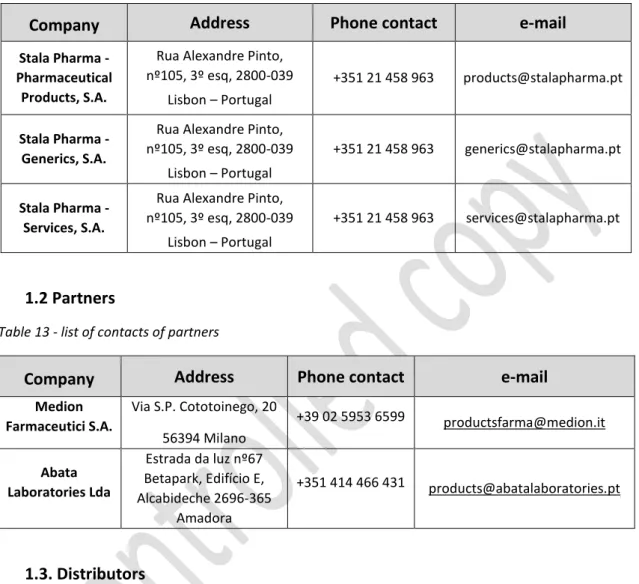
Table 13 - List of contacts of partners ... 77
Table 14 - List of contacts of distributors ... 77
Table 15 - Overview of Computerized systems ... 80
Table 16 - Overview of databases... 82
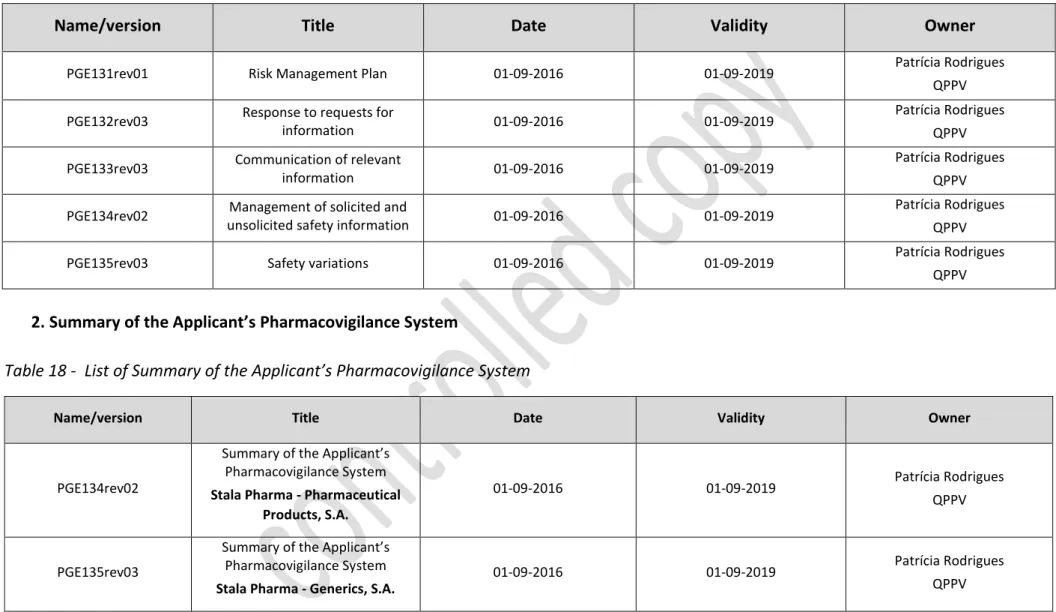
Table 17 - List of Standard operation Procedures ... 85
Table 18 - List of Summary of the Applicant’s Pharmacovigilance System ... 86
Table 19 - List of PSMF’documents ... 87
Table 20 - List of indicators ... 90
Table 21 - Data for measurement of the performance indicator ... 91
Table 22 - Data for measurement of the performance indicator ... 91
Table 23 -Data for measurement of the performance indicator ... 92
Table 24 - Data for measurement of the performance indicator ... 92
Table 25- Data for measurement of the performance indicator ... 93
Table 26 - Data for measurement of the performance indicator ... 93
Table 27 - Data for measurement of the performance indicator ... 94
Table 28 - Data for measurement of the performance indicator ... 94
Table 29 - Data for measurement of the performance indicator ... 95
Table 30 - Data for measurement of the performance indicator ... 95
Table 31 - Strategic Audit program ... 96
Table 32- Strategic Audit program ... 97
Table 33 - Tactical level audit planning ... 98
Table 34 - List of medicinal products ... 99
Table 35 - List of last changes in Annexes ... 100
Table 36 - Part I.1 – Product Overview ... 105
Table 37 - SVIII.1: Summary of safety concerns ... 110
Table 38 – Summary of additional PhV activities ... 112
Table 39 - Part V.1: Description of routine RMMs by safety concerns ... 115
Table 40 - Part V.3: Summary table of PhV activities and RMM by safety concern ... 129
Table 41 – List of important risks and missing information ... 134
Table 42 – Summary of important risks ... 135
Table 43 - Annex II: Planned and on-going studies ... 137
Table 44 - Changes to the current educational materials ... 147
Table 45 – Doctor’s check list ... 151
Table 46 – Pharmacist’s check list ... 153
1.1. Pharmacovigilance ... 2
1.2. The importance of monitoring the safe use of medicines ... 4
1.3. History/background of Pharmacovigilance ... 5
1.4. Regulatory Framework ... 7
1.5. Aims of the pharmacovigilance legislation ... 9
1.6. Pharmacovigilance Risk Assessment Committee ... 10
1.7. Quality management system ... 12
1.8. Pharmacovigilance System Master File ... 13
1.8.1. Definition ... 13
1.8.2. Location ... 13
1.8.3. Contents of the Pharmacovigilance System Master File ... 14
1.8.4. Contents of Annex of the Pharmacovigilance System Master File ... 15
1.9. Risk Management System ... 17
1.9.1. Definition ... 17
1.9.2. Risk Management Plan (RMP) ... 18
1.9.3. Objectives of RMP ... 19
1.9.4. Content of the RMP ... 20
1.9.5. Updated and Timelines to the RMPs ... 20
1.9.6. Risk Minimization Measures (RMMs) ... 21
1.10. Periodic safety updated report (PSUR) ... 22
1.10.1. Format and content of PSUR ... 22
1.10.2. Timelines and submission of PSUR... 23
1.10.3. List of European Union Reference dates ... 23
1.10.4. PSUR vs RMP ... 23
2. Methods ... 25
3. Results ... 26
Pharmacovigilance System Master File of Stala Pharma ... 27
Risk management plan (RMP) for Isotretinoin ... 102
Risk Minimization Measures of Isotretinoin Generics ... 142
Educational Materials for the patient, physician and pharmacist ... 149
4. Discussion/Conclusion ... 1588
1.
Introduction
Pharmacovigilance is the science and activities relating to the detection, assessment, understanding and prevention of adverse effects or any other medicine-related problem. The European Medicines Agency (EMA) coordinates the European Union (EU) pharmacovigilance system and operates services and processes to support pharmacovigilance in the EU [2].
Before a medicine is authorised for use, evidence of its safety and efficacy is limited to the results of clinical trials, where patients are selected carefully and followed up very closely under controlled conditions. This means that at the time of a medicine’s authorisation it has been tested in a relatively small number of selected patients for a limited length of time [2].
In the post-marketing period, the product can be subject of use in settings largely different from the clinical trials before approval. In other words, a much larger population with a different range of co-morbidities or polymedicated may be exposed in a relatively short timeframe [2].
The safety information about the product is likely to change over time through its expanded use, specifically in terms of patient pool variations and the number of exposed population. Thus, market vigilance systems must be implemented and maintained after a drug has been launched in the market to detect safety issues that were not evident prior to commercialization [3].
Furthermore, the pharmacovigilance systems to be effective require the participation and cooperation of the patients, healthcare professionals, the pharmaceutical industry as well as the regulators, on the way that critical safety information can be identified and rapidly acted. In some instances, this has resulted in the withdrawal or restriction of drugs due to safety concerns that only emerged post-marketing [1,2].
1.1.
Pharmacovigilance
According to the definition of World Health Organization (WHO), pharmacovigilance is the science that comprises activities relating to the detection, assessment, understanding and prevention of adverse effects or any other possible drug related problem [3].
The aforementioned definition comprehends the knowledge and all activities required for the safe and effective use of the medicinal products.
The European Medicines Agency (EMA) coordinates the European Union (EU) pharmacovigilance system and operates services and processes to support pharmacovigilance in the EU [2].
The specific aims of pharmacovigilance are to improve patient care and safety in relation to the use of medicines and all medical and paramedical interventions, improve public health and safety in relation to the use of medicines, contribute to the assessment of benefit, harm, effectiveness and risk of medicines, encouraging their safe, rational and more effective (including cost-effective) use, and promote understanding, education and clinical training in pharmacovigilance and its effective communication to the public [4].
There are several tools available for the monitoring of safety of medicinal products such as spontaneous reporting of Adverse Drug Reactions (ADRs), qualitative and quantitative signal detection, Periodic Safety Update Reports (PSURs), Risk Management Plans (RMPs) and also Post-authorisation Safety Studies (PASS) [5,6].
Spontaneous reporting of Adverse Drug Reactions (ADRs)
The spontaneous reports of adverse drug reactions are an important source for pharmacovigilance data, on which signal detection activities can be performed.
Signal detection may use both qualitative and quantitative approaches, such as manual review of individual cases and data mining tools. These tools are associated with several challenges and controversies [5,6]. Quantitative signal detection methods are based on statistical analysis and become more reliable when based on more data [7,8,9,10].
Qualitative signal detection methods based on the review of cases may be less impacted by lower numbers but is more time consuming and requires trained specialists ableto identify a trigger case, and maybe challenging in distinguishing an ADR from the disease being treated [10].
Periodic Safety Update Reports (PSURs)
PSURs are pharmacovigilance documents intended to provide a periodic evaluation of the risk-benefit balance of a medicinal product for submission by companies at defined time points during the post-authorisation phase [2].
Risk Management Plans (RMPs)
The RMP is the main planning instrument aimed to facilitate a more proactive approach in filling knowledge gaps through early planning of pharmacovigilance activities and it should ensure a feasible and risk-proportionate pharmacovigilance planning. Developing a RMP is a challenging task in view of the limited knowledge of the benefit risk profile at the time of marketing authorization. Nevertheless, it is a legal requirement and all companies must fulfil this obligation [11].
Post-Authorisation Safety Studies (PASS)
PASS are a tool to collect additional pharmacovigilance data [2]. These studies may have different approaches and designs. In order to overcome the related challenges, to implement these tools the European Commission has enhanced the importance of pharmacovigilance by developing a new legislation which includes a wide range of measures [12].
1.2.
The importance of monitoring the safe use of medicines
The goal of monitoring and collecting data on ADRs is the rationalization of pharmacotherapy in order to use the most effective medicine with the least ADR upon the establishment of the proper diagnosis [13].
ADRs may be observed both during preclinical and clinical trials. Information on ADRs collected during these phases of drug development cannot predict a possible adverse event that may take place only after the placing of the medicinal product on the market. Among the main reasons are the fact that animal studies are insufficient to predict the safety of medicines in humans, the fact that in clinical trials only a limited number of selected patients is included, the conditions of administration of the medicine are different from those in normal clinical practice, the duration of trials is limited, and that data on rare serious adverse events, toxic effects of chronic treatment, the use of a medicine in specific categories of patients (children, the elderly, pregnant women) or interactions with other medicines are often incomplete or not available [13].
The most important source of new information on the unknown effects of medicines before its registration represents the fourth phase of clinical testing or monitoring of medicines. It starts after the registration is obtained and indicates that the medicine is in widespread, general use. This phase lasts indefinitely. During this period both harmful and beneficial unknown aspects of the drug are revealed. After placing a medicine on the market, manufacturers are obliged to monitor its safety, although this does not necessarily imply the organization of prospective studies about its ADRs [13].
Monitoring the safety of medicines on the market is a valuable tool for detecting ADRs that are the result of counterfeiting or inadequate quality of a medicine [13].
An organized and permanent monitoring of the effects of medicines after obtaining marketing authorisation is necessary to recognize and prevent ADRs on time [13].
Decision of withdrawal of medicines from the market due to the unfavorable ratio of benefits and risks is based on data collected by spontaneous reporting of adverse reactions [13].
1.3.
History/background of Pharmacovigilance
Before 1950, the importance of post-marketing surveillance for new medicines was not considered as a commitment that should integrate each physician, patients and lawmakers as nowadays [14].
In 1962, the disaster of phocomelia associated with thalidomide was an eye-opening situation for the world about the importance of drug surveillance in clinical practice. Thalidomide was commercialized in several countries under many trade names and indicated for several therapeutic conditions. Phocomelia associated with thalidomide awoke the interest of all medical community and the governments around the world. For instance, the United Kingdom started a spontaneous reporting called the “yellow card” scheme. Similar activities were started in other countries such as Canada, Norway, Sweden, and Denmark in order to strengthen the patients’ safety and public health [14].
In 1968 the World Health Organization established an international Pharmacovigilance program “Program on International Drug Monitoring” that has been executed since 1978 by the international center for Pharmacovigilance that centralizes data about adverse effects collected by national Pharmacovigilance centers [14].
In the early 1970s another drug safety disaster occurred. This was the multi-system disorder known as the oculo-mucoctaneous syndrome caused by practolol (Eraldin) – a cardioselective betablocker used to treat angina and hypertension. The fundamental problem in this instance was a failure of timely identification despite having an early warning system in place [14].
The overriding message from Practolol was that spontaneous ADR reporting alone is insufficient as a means of studying pos-marketing safety. Thus, in the late 1970s various schemes designed to closely monitor the introduction of new drugs were suggested, but most of them were not implemented [14].
The Belgian Centre for Pharmacovigilance for medicines for Human use (BCPH) started its activities in 1976 after being recognized by the WHO. Since then the BCPH has been centralizing all reports of adverse effects concerning authorized medicines [14].
extended the system to allow commercial and non-commercial sponsors to report suspected unexpected serious adverse reactions (SUSARs) occurring during clinical trials electronically [15].
In 2002, more than 65 countries had their own Pharmacovigilance centers.
The International Conference on Harmonization (ICH) is a more formal group than Council for International Organizations of Medical Sciences (CIOMS) with a wider remit for harmonization across the drug development process. The main purpose is to harmonize existing guidelines from EU, USA and Japan, related to development and registration of medicines.
In relation to Pharmacovigilance, the key ICH guidelines and dates at which they were implemented are [16]:
- E2A: Definitions and Standards for Expedited Reporting (1994)
- E2B: Data elements for Electronic transmission of Individual Case Safety Reports (1997)
- E2C: Periodic Safety Update Reports for Marketed Drugs (1996) - E2D: Post-approval Safety Data Management (2003)
- E2E: Pharmacovigilance Planning (2005)
The new Pharmacovigilance legislation in 2010/2012 brought significant changes related to the existing Pharmacovigilance requirements. More post-authorization safety and efficacy studies, a new Pharmacovigilance Risk Assessment Committee (PRAC) - the committee at the European Medicines Agency that is responsible for assessing and monitoring safety issues for human medicines, at the European Medicines Agency (EMA) and a broader reporting of side-effects by patients are among the new measures [2,17,18].
1.4.
Regulatory Framework
The new Pharmacovigilance legislation, in force since July 2012, has brought one of the most significant changes to the regulation of human medicines in the European Union (EU). There were significant implications not only for applicants and holders of EU marketing authorisations, but also for patients, healthcare professionals (HCPs) and regulators [2,17,18].
The development of the pharmacovigilance legislation was based on the observation the adverse drug reactions (ADRs), ‘noxious and unintended’ responses to a medicine, being linked to around 197,000 deaths per year in the EU [2,17,18].
For this reason, in 2005, the European Commission began to review the safety monitoring European system. This included the sponsorship of an independent study, as well as a thorough public consultation throughout 2006 and 2007.
As a result of the these measures, in December 2010 a new Directive and Regulation was adopted by the European Parliament and Council of Ministers. This led to significant changes in the safety monitoring of medicines throughout the EU [2,17,18]:
- Directive 2010/84/EU
- Regulation (EU) No 1235/2010
This new legislation amended the existing pharmacovigilance laws contained in Directive 2001/83/EC and Regulation (EC) No. 726/2004. It was also accompanied by the Implementing Regulation, a legally binding act published by the European Commission in June 2012 that provides details on the operational aspects for the new legislation: Commission Implementing Regulation No 520/2012 of 19 June 2012 [2,17,18].
Additionally, practical measures to reinforce the new legislation are available for consultation in the guideline on Good Pharmacovigilance Practices (GVP). This guideline is applicable for MAHs, EMA and medicines regulatory in EU Members States (for all medicinal products: NAPs and CAPs) [2,17,18].
pharmacovigilance processes and are available on the EMA website [1]. In fact, the GVP modules replaced Volume 9A of The Rules Governing Medicinal Products in the European Union – Guidelines on Pharmacovigilance for Medicinal Products for Human Use [12].
EU law therefore requires each MAH, national competent authority and EMA to operate a pharmacovigilance system. The overall EU pharmacovigilance system operates through cooperation between the EU Member States, EMA and the European Commission. In some Member States, regional centers are in place under the coordination of the national competent authority [2].
1.5.
Aims of the pharmacovigilance legislation
The overall main purpose of the new pharmacovigilance legislation is to reduce the number of ADRs in the EU through [3,17]:
- the collection of quality data of medicines and their safety;
- rapid and robust assessment of issues related to the safety of medicines;
- effective regulatory action required to deliver safe and effective use of medicines; - empowerment of patients through the increase in reporting and participation; - increased levels of transparency and better communication.
The legislation made therefore an impact on marketing-authorisation holders and applicants. It aimed to make their roles and responsibilities clearer, minimize duplication of effort, release resources by rationalizing and simplifying reporting on safety issues, and establish a clear legal framework for post-authorisation monitoring [3,17].
1.6.
Pharmacovigilance Risk Assessment Committee
The Pharmacovigilance Risk Assessment Committee (PRAC) is the European Medicines Agency's (EMA) committee that is responsible for assessing all aspects of the risk management of medicines for human use across the European Economic Area, from signal management to periodic safety update reports (PSURs) and risk management plans (RMPs). It is also involved in the design and evaluation of some post-authorisation safety studies (PASS) and coordinates the European PV agency inspection programme [19,20].
The main responsibility of PRAC is to prepare recommendations on any questions relating to PhV activities of a medicine for human use, on signal management, and on risk-management systems, including monitoring of the effectiveness of such systems [19,20].
Where necessary, the PRAC can impose a PASS to the Marketing Authorisation Holder of a medicinal product as a condition of the marketing authorisation or a specific obligation under exceptional circumstances. PASS may be also be required by the PRAC to investigate a safety concern in the product risk management plan or to evaluate the effectiveness of risk minimisation activities [19,20].
A particular focus in 2017 was signal management, with the introduction of enhanced Eudravigilance functionality on 22nd November 2017 and associated requirements for the
industry to forward all validated signals to PRAC for evaluation [19].
A recently published document by EMA, on April 21, 2017, states that since its establishment in September 2012, PRAC has discussed and make the results public of its discussions on more than 600 signals [19].
The PRAC make available recommendations on issues on pharmacovigilance and risk management systems, including the monitoring of their effectiveness, to the [20]:
- Committee for Medicinal Products for Human Use (CHMP) for centrally authorized medicines and referral procedures;
Important safety Issues via Referrals
A referral is a procedure used to resolve issues such as concerns over the safety or benefit-risk balance of a medicine or a class of medicines [34].
In a referral, the European Medicines Agency is requested to conduct a scientific assessment of a specific medicine or class of medicines on behalf of the European Union (EU). The medicine, or the class of medicines, is ‘referred’ to the Agency so that it can make a recommendation for a harmonized position across the EU [34].
Relevant information from the literature, including pharmacoepidemiological studies and meta-analysis, from non-clinical studies, spontaneous reports and clinical trials, and any available academic research are fed into the assessment. Referrals offer opportunities for involving scientific advisory groups and for engaging patients and researchers, who can each contribute to the assessment from their specific angle. A referral can be triggered for products belonging to any therapeutic class, including both established and innovative medicines. Results of referral procedures contribute towards an optimised use of medicinal products. For instance, they have recently led to new recommendations to minimise the risk of teratogenicity in patients taking isotretinoin. Information on the commencement of the referral, the timetable, list of affected products and questions for the MAHs is promptly published on the EMA’s website [36], thus allowing real-time transparency. Relevant MAHs are notified and asked to contribute to the referral, including the provision of data and information for the PRAC’s assessment. The PRAC recommendation on the safety issue is then forwarded to the Committee for Medicinal Products for Human Use for opinion or, if no CAPs is involved, to the Coordination Group for Mutual Recognition and Decentralised Procedures—Human for its agreement. Once the evaluation is concluded, the PRAC assessment report outlining the outcome of the referral procedure is also published on the EMA website. Safety referrals are a very effective pharmacovigilance instrument to coordinate a thorough and timely review of the safety of products including those authorised via different procedures. Referrals result in a harmonised position across the EU, ratified by a decision that is immediately implementable and legally binding for all the MSs [22].
1.7.
Quality management system
To fulfill the requirements of the legislation, MAHs, NCAs and the EMA have to establish and use adequate and effective quality systems. A quality system comprehends the settling of structures and processes (quality planning), the carrying out of tasks and responsibilities in accordance with quality requirements (quality adherence), the monitoring and evaluation of effectiveness of structures and processes (quality control and assurance) and the correction and improvement when necessary (quality improvements). The overall quality objectives of a pharmacovigilance system are to comply with the task and responsibilities set up in the legislation, prevent ADRs and promote the safe and effective use of medicinal products, thus contributing to public health [22,23].
For every authorized medicinal product, MAHs are required to maintain a description of their pharmacovigilance system in the pharmacovigilance system master file, which includes information relating to the persons (e.g. qualified person responsible for pharmacovigilance in the EU), as well as of the procedures put in place to ensure the safety of medicines. A copy of the pharmacovigilance system master file may be requested at any time and is usually requested during pharmacovigilance inspections. The EMA and the MSs need to cooperate and maximise their resources to continuously develop pharmacovigilance systems capable of achieving high standards of public health protection for all medicinal products, regardless of the routes of marketing authorisation. Additionally, to facilitate interaction between NCAs, the EMA, the EC and MAHs, competent authorities have to keep accessible descriptions of their organisational structures, assignment of tasks and responsibilities, and contact points [22,23].
1.8.
Pharmacovigilance System Master File
1.8.1. Definition
The Pharmacovigilance system master file (PSMF) definition is provided in Article 1(28e) of Directive 2001/83/EC as “a detailed description of the pharmacovigilance system used by the marketing authorisation holder with respect to one or more authorized medicinal products”. The minimum requirements for its content and maintenance are detailed in the Commission Implementing Regulation (EU) No 520/2012.
The detailed requirements provided by the Commission Implementing Regulation are further supported by the guidance in GVP Module II of the Good Vigilance Practice(s) [21].
In summary, the PSMF comprehends all aspects of pharmacovigilance activities, including information on the tasks that are subcontracted. The marketing authorization holder retains ultimate responsibility for compliance with the legal arrangements [21].
Additionally, the PSMF is used as a basis to the appropriate arrangement and conducting of the marketing authorization holder’s audits as well as a tool for EU Qualified Person for Pharmacovigilance (QPPV) to maintain supervision over the PhV System. The PSMF must be permanently available for inspection by the relevant competent authorities to verify its compliance with all aspects of the pharmacovigilance system [21].
1.8.2. Location
The location of the PSMF should be either at the site in the EU where the major pharmacovigilance activities of the MAH are performed, or at the place in the EU where the qualified person responsible for pharmacovigilance operates. Its location or any changes are required to be entered and immediately updated both in the extended Eudravigilance Medicinal Product Dictionary (XEVMPD) and on the European medicines web portal [21].
When submitting a Marketing Authorisation request, the applicant shall include the location of the PSMF electronically and its reference number in the application [21].
The PSMF may be stored either in paper or in electronic form. It can be a digital document, existing either on different servers of the company or at suppliers of data services, but a clearly arranged printed copy must be directly available for inspection at the office address [21].
1.8.3. Contents of the Pharmacovigilance System Master File
Except for aspects covered by the article 8 of Directive 2001/83/EC related to changes to the summary of the pharmacovigilance system, including, for instance, changes to the location of PSMF or the QPPV’s name and his or her contact details, other changes of the content of PSMF do not have to be notified to the Competent Authority and are not expected to require a variation request [21].
In former cases, those changes should be immediately notified to the Agency as well as being accompanied by an update of the Eudravigilance database, and where necessary, an update of the European medicines web-portal [21].
It should be included in the summary of the applicant’s pharmacovigilance system [21]: Proof that the applicant has at his disposal a qualified person responsible for
pharmacovigilance (QPPV);
The Member States in which the qualified person has their residence and carries out his/her tasks;
The contact details of the qualified person;
A statement signed by the applicant referring that the applicant has the necessary means to fulfil the tasks and responsibilities listed in Title IX;
Reference to the location where the pharmacovigilance system master file is kept.
The minimum requirement for contents of the PSMF and its maintenance are set out in the Commission Implementing Regulation (IR) (EU) No 520/2012 on the performance of pharmacovigilance activities for in Regulation (EC) No 726/2004 and Directive 2001/83/EC.
The following elements should be included in the PSMF:
predestined tasks and responsibilities; contact details; Curriculum Vitae; proof of his registration in Eudravigilance database; a description of an alternative to be followed in the absence of the QPPV; and a contact person for the pharmacovigilance where such person is introduced at the national level in accordance with the Article 104(4) of Directive 2001/83/EC, including contact details;
The organizational structure of the MAH, which shall include the sites where different pharmacovigilance activities take place (individual case safety report collection, evaluation, safety database case entry, periodic safety update report production, signal detection and analysis, risk management plan management, pre- and post-authorization study management and management of safety variations to the terms of a MA);
The description of the computerized systems and databases used to handle the safety information, including an assessment of their capabilities and their fit for this purpose;
Description of how data is handled, recorded and the processes used for each of the pharmacovigilance activities: risk-benefit monitoring, operation of the RMP and monitoring of the results of RMM. Collection, evaluation and reporting of individual case safety reports, preparation and submission of periodic safety update report, procedures for communicating the safety concerns with healthcare professionals as well as general public, and implementation of safety variations to the summary of product characteristics and package leaflet; The content of the quality system, including the location of qualification records
of the personnel, a summary of the training concept with reference to the training files, instructions and critical processes. It must include the presentation of the record management system with reference to the site where the documents used in PhV activities are, and the description of the how the performance of the PhV System is monitored;
Lastly, a description of the activities and/or services subcontracted by the MAH, when applicable.
1.8.4. Contents of Annex of the Pharmacovigilance System Master File
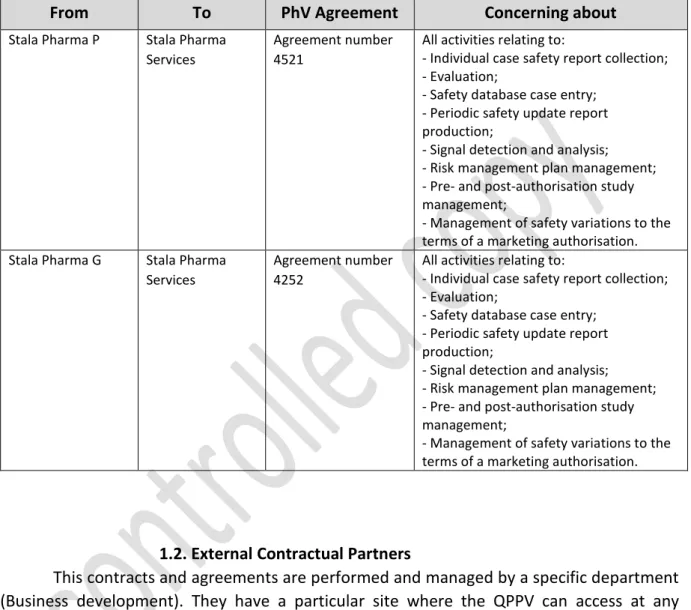
2. Annex B: A list of contracts and agreements, including the subcontractors;
3. Annex C: Lists of the safety data sources, including affiliates and third party contacts;
4. Annex D: A list of computerized systems and databases;
5. Annex E: Lists of written policies and procedures, for the specific quality system and processes to ensure:
a. the continuous monitoring of pharmacovigilance data and risk minimization activities of the MAH;
b. scientific evaluation of the risks of medicinal products by the MAH;
6. Annex F: Lists of performance indicators used by the MAH and the results of performance assessment to continuously assure the good performance of pharmacovigilance activities;
7. Annex G: scheduled and completed audits;
8. Annex H: A list of all medicinal products covered by the PSMF and the name of Member State(s), in which the medicinal product is authorized (this list should be organized in accordance with the Active Substances and shall refer to the type of procedure for authorization and procedure number and presence of medicinal product on the market in the EU and other (non-EU) territories);
9. Annex I: A logbook, which ensures that any changes in the contents of PSMF, made within the previous 5 years, will be recorded referring to the person responsible for the alteration and the reason for that change (where appropriate).
1.9. Risk Management System
1.9.1. Definition
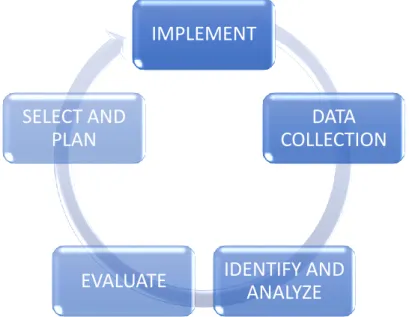
A Risk Management System (RMS) can be defined as a set of Pharmacovigilance activities and interventions designed to identify, characterize, prevent or minimize risks relating to medicinal products including the assessment of the effectiveness of those activities and interventions [9].
Figure 1: Risk Management cycle
A RMP is a detailed description of the RMS for a medicinal product and its requirement was firstly introduced in the EU legislation (the Regulation) in 2005.
A RMP summarizes the safety profile of a medicinal product, registers the safety concerns such as the important identified risks, important potential risks as well as the missing information, and lists the further studies that will be carried out after the marketing authorization as well as any applicable Risk minimization measures [24]. For MAs granted after 21 July 2012, MAHs must operate a RMS for each medicinal product. Holders of MAs granted before this time are not required to operate a RMS for those medicinal products unless either the regulator or the MAH are concerned about
IMPLEMENT
DATA
COLLECTION
IDENTIFY AND
ANALYZE
EVALUATE
SELECT AND
PLAN
- Ensures that the risks of their medicines are constantly being monitored in accordance to the legislation, as well as to report the results to the appropriate Competent Authority if applicable;
- Takes all necessary measures to minimize the risks of their products and maximizes the benefits, including ensuring that the information is accurately produced by the company, and actively updating and communicating it when new information becomes available [24].
1.9.2. Risk Management Plan (RMP)
The Risk Management Plan is a detailed description of the risk management system, and may contain the Safety Specifications, the Pharmacovigilance Plan, and the Risk Minimization Plan. The RMP is a dynamic document that should be updated throughout the life cycle of the medicinal product [24].
Guidance on format of the RMP in the European Union may be found in the related EMA guidance [27], and the content of the document is compiled according to the Guideline on good Pharmacovigilance Practices (GVP) Module V [26].
The RMP is a detailed description of the risk management system, and should contain three main sections (it will be described, further ahead, in more detail):
- Safety Specification - Pharmacovigilance Plan - Risk Minimisation Plan
The purpose of the Safety Specifications is to explicitly consider the level of safety that has been demonstrated so far. It should identify what is already known about safety and what is not yet known. The Safety Specifications are a set of important identified risks, important potential risks as well as missing information. These are not meant to describe all the identified ADRs for the product but to identify theimportant risks of the product as well the missing information (e.g. special populations) which might have a significant impact on the B/R balance of the product and are passive and in need of further characterization [24,26].
- Strategies to monitor recognized serious ADRs in order to ensure that their incidence is low;
- Strategies to address areas where safety knowledge is incomplete;
- Proposed milestones at which a greater level of safety experience is expected to have demonstrated.
Sometimes the Pharmacovigilance plan alone may not provide sufficient safeguards against known or serious potential hazards. In these cases, a Risk Minimization Plan is required.
A risk minimization plan includes a set of Risk Minimization Measures (RMMs) which are a set of activities that need to be implemented in order to prevent or at least reduce the risk of harm from the event associated with a particular safety concern [29].
Following the review of the RMP, the summary for the public is shared with the company prior to publication and published at the time as part of the European Public Assessment Report (EPAR) (at time of Commission decision; this activity started in 2014 at the level of the EMA for CAPs). Important to note is that this is linked to the product information, European Public Assessment Report summary and list of medicines under additional monitoring. It shall not be forgotten that the RMP shall be continuously updated during the lifecycle of the medicinal products and updates should be submitted when major variations occur such as new indications, restrictions of indication, new or updated contraindications, new important risks or important changes to known risks, and any ‘additional risk minimization measures’ are added or removed. This is within the concept of the continuous circle of collecting data, reporting and evaluating the B/R profile and confirming whether it remains favorable [24,26].
1.9.3. Objectives of RMP
The RMP must contain the following elements which:
Identify or characterize the safety profile of the medicinal product(s) including what is known and not known and, importantly, which risks need to be characterized or managed proactively (the “safe specification”);
Plan and implement risk minimization measures, including the evaluation of the effectiveness of these activities (the “Risk Minimization Plan).
1.9.4. Content of the RMP
The RMP is divided into several sections, organized into modules to increase flexibility [26]:
Part I Product(s) Overview Part II Safety Specification
- Module SI: Epidemiology of the indication(s) and target population(s) - Module SII: Non-clinical part of the Safety Specification
- Module SIII: Clinical trial exposure
- Module SIV: Populations not studied in clinical trials - Module SV: Post-Authorization Experience
- Module SVII: Identified and potential risks
- Module SVI: Additional EU requirements for the Safety Specification - Module SVIII: Summary of the safety concerns
Part III Pharmacovigilance Plan- Routine Pharmacovigilance activities Part IV Plans for post-authorization efficacy studies
Part V Risk minimization measures (including evaluation of the effectiveness of risk minimization measures)
Part VI Summary of the RMP Part VII Annexes
1.9.5. Updated and Timelines to the RMPs
At the time of application for a marketing authorization companies submit a risk management plan (RMP), although in some circumstances certain parts can be omitted (for instance in generics) [26].
As new data is available, RMPs are continually modified and updated throughout the lifecycle of the medicine. Companies need to submit an updated RMP:
- at the request of NCA or by the Agency;
submissions must be in the form of an update, unless requested otherwise. Each submission of the RMP will have an indicative version number and date [26].
1.9.6. Risk Minimization Measures (RMMs)
The objective of the Risk minimisation measures is to prevent or reduce the appearance of adverse reactions, or to reduce their severity and impact on life quality of the patient. It is vital that these RMMs be planned and implemented, and its effectiveness be evaluated [29].
Routine measures are applied to every medicinal product. In addition, further risk minimisation activities should only be addressed when they are deemed to be essential for the safe and effective use of the drug [29].
Therefore, RMMs typically are classified in two types [29]:
Routine risk minimization: comprehending product information updates, such as changes of the legal status, packing size, SmPC, Package leaflet and Labelling; or Additional Risk Minimization: consisting in the control or restriction of the product’s access or use, distribution of educational materials or providing training programs (e.g. prescription checklists, pregnancy prevention programs, patient alert cards, others), as well as the distribution of Direct Healthcare Professionals Communications (DHPC).
The Directive 2001/83/EC indicates that MAH should “Monitor the outcome of risk minimisation measures which are described in the RMP or which are laid down as conditions of the MA”. The Directive and the Regulation (EC) No 726/2004 also include provisions for the agency and NCA to monitor the outcome of the RMM.
Beyond studies and measures described in the risk management plan, the PRAC assess both protocol and results of imposed post-authorisation safety studies aiming the evaluation of the effectiveness of risk minimization measures [29].
1.10. Periodic safety updated report (PSUR)
The PSUR presents a comprehensive and critical analysis of the B/R balance of the medicine, submitted by the MAHs at defined time points throughout the post-authorisation phase. It considers new and emerging data in the context of cumulative information about risks and benefits [30].
The objective of the Periodic Safety Update Reports (PSURs) is to facilitate the regular and systematic review of the global safety data available to MAH. The goal of such review of the data in the PSUR may lead to new safety issues being identified [30].
The development of PSURs starts when a drug is first approved for marketing anywhere in the world and, initially, reports are produced on a six-monthly basis. The period covered becomes longer once the drug is established in the market [30].
PSUR reporting should be linked to the risk management plans (RMPs) of a medicinal product. The “modular approach” of the PSUR described in GVP Module VII intends not only to minimise the duplication but also to improve efficiency during the preparation and review of PSURs along with other regulatory documents such as the development safety update report (DSUR) or the safety specification in the RMP [30].
1.10.1. Format and content of PSUR
The new format is described in GVP Module VII. The GVP Module VII provides guidance on the preparation, submission and assessment of PSURs. The format and content of PSURs in the EU are based on those for the Periodic Benefit Risk Evaluation Report (PBRER) described in the ICH-E2C.
The PSUR should be based on all available data and shall focus on new information which has been obtained since the data lock point of the last PSUR. It should be taken into account cumulative information when performing the overall safety evaluation and integrated benefit-risk assessment [30].
The PSUR should present summaries of data that are relevant to the benefits and risks of the product, including results of all studies with a consideration of their potential impact
1.10.2. Timelines and submission of PSUR
Marketing authorisation holders for products authorised before 2nd July 2012, for centrally
authorised products, and 21st July 2012, for nationally authorised products, and for which
the frequency and dates of submission of PSURs are (a) not a condition to the marketing authorisation or (b) determined otherwise in the list of Union reference dates (EURD List) shall submit PSURs according to the submission schedule below:
- At 6 months intervals once the product is authorised, even if it is not marketed; - Once a product is marketed, a 6 monthly PSUR submission should be continued following initial placing on the market in the EU for 2 years, and afterwards once a year for the following 2 years, and thereafter at 3-yearly intervals.
1.10.3. List of European Union Reference dates
The list of Union reference dates, and frequency of submission of periodic safety update reports, is a list of active substances and its combinations for which Periodic Safety Update Reports should be submitted in accordance with the EU reference dates and frequencies determined by the Committee for Medicinal Products for Human Use (CHMP) and the Coordination Group for Mutual Recognition and Decentralized Procedures - Human (CMDh), following consultation with the Pharmacovigilance and Risk Assessment Committee (PRAC) [32].
The EU reference dates list has been compiled to facilitate the harmonization of Data Lock Points (DLPs) and frequency of submission of PSURs for medicinal products containing the same active substance, or a combination of these, subject to different marketing authorisations authorised in more than one Member State [32,32].
1.10.4. PSUR vs RMP
While PSUR is retrospective, with an integrated approach, and the assessment of the risk-benefit is performed during the post- authorisation period, the RMP is prospective and its risk-benefit management and planning are done either during the pre- and post-authorisation period. Thus, the two files are complementary [25,30].
If so, an updated and revised RMP including the new important safety concern should be submitted with the PSUR and assessed in parallel, following the timetable for the assessment of PSUR as described above [30].
If the important safety concern is identified by the national competent authority during the assessment of a PSUR and no updated RMP or no RMP had been submitted, the agency will typically recommend submitting an updated or a new RMP within a defined timeline [30].
2.
Methods
The main purpose of this work is to demonstrate the complexity of the pharmacovigilance system and its regulatory requirements by presenting practical examples in the real world. The methods used for the performance of this practical work was the public revision of the Current European Legislation, Guidelines and recommendations found in the EMA Website and European Commission.
Main ideas:
Pharmacovigilance is a dynamic and complex area. Understand how the processes work in practice is the focus of this work.
Creation of a fictional company and attempt to implement the main PhV requirements, namely the PSMF and the RMP.
The medicinal product chosen for this discussion was isotretinoin mainly due to: - The well know adverse reactions (mainly teratogenicity).
- Ongoing safety referral procedure triggered by the negative outcome of the evaluation of the effectiveness of the existing RMM in place (e.g. PPP).
- Understand all measures which need to be applied by the MAH
following the PRAC recommendations in order to increase the safety of isotretinoin and ultimately optimise the use of the product.
3.
Results
In the following pages it will be demonstrated practical examples of a Pharmacovigilance System Master File presentation, in the fictional company Stala Pharma, as well as the importance of the Risk Management Plan through a practical example of the medicinal product Isotretinoin Generic with detailed proposals of implementation of risk minimization measures.
Pharmacovigilance System Master
File of Stala Pharma
Content
Abbreviations... 32 Traceability Report ... Erro! Marcador não definido. Copy Control ... 37 Content of the Pharmacovigilance System Master file ... 38 Cover Page ... 39 Section I... 40 II.B.4.1. Qualified person responsible for pharmacovigilance (QPPV) ... 41 1. Summary of the CV and key information on the role of QPPV ... 43 2. Contact Details ... 43 3. Information relating to the contact person where such a person has been
nominated at national level ... 43 Section II ... 44
II.B.4.2. Organisational structure ... 45 1. Description of Stala Pharma Group ... 45 2. Qualified Person for Pharmacovigilance and Deputy QPPV ... 45 3. Conduct of the Pharmacovigilance Activities ... 46 3.1. Collection of ICSRs ... 47 3.2. All other Pharmacovigilance activities... 47 Section III ... 48
II.B.4.3 The sources of safety data ... 49 1. Sources of safety information ... 49 2. Overview of routes for collection of safety information ... 49 3. Sources of individual case safety reports ... 49 3.1. Unsolicited Reports ... 49 3.1.1 Spontaneous Reports ... 49 3.1.2 Literature ... 50 3.1.3. Internet ... 50 3.1.4. Other Sources ... 50 3.2. Solicited Sources ... 50 3.3 Contractual Agreements ... 50 3.4 Regulatory Authority Sources ... 50 4. Processing of safety information ... 50
1. Computerized Systems and their purpose... 52 1.1 Processing of safety information ... 52 1.2 Processing of other safety related information ... 52 1.3 Aggregate Reporting ... 52 1.4 Document Management ... 52 1.4 Product information ... 53 Section V ... 54
B.II.4.5. Pharmacovigilance Process ... 55 Section VI ... 56
B.II.4.6 Pharmacovigilance System performance ... 57 1. The evaluation system used to assess the correct reporting of ICSRs ... 57 2. The metrics used to monitor the quality of submissions and performance of
pharmacovigilance ... 57 3. How PSUR submission to authorities is monitored... 57 4. How variation submissions are monitored ... 57 Section VII ... 59
B.II.4.7 Quality system... 60 1. Document and Record control ... 60 2. Procedural documents ... 61 3. Training ... 61 4. Auditing ... 62 5. CAPA management ... 62 Annexes ... 63 Annex A ... 64 1. Curriculum Vitae of QPPV Person ... 64 2. Curriculum Vitae of Deputy-QPPV Person ... 66 3. Proof of registration with Eudravigilance ... 67 3.1. Proof of registration of the QPPV ... 67 3.2 Proof of registration of Stala Pharma ... 68 4. List of Delegated Tasks ... 69 4.1. Overview of delegated tasks by the QPPV ... 69 4.1.1. Internal delegation ... 69 4.1.2. External delegation ... 70
Annex B ... 76 1. List of Contracts and Agreements ... 76 1.1. Internal contracts within the Stala Pharma Group. ... 76 1.2. External Contractual Partners ... 76 Annex C ... 77 1. List of affiliates and third party contacts ... 77 1.1 Companies within the Stala Pharma Group ... 77 1.2 Partners ... 77 1.3. Distributors ... 77 2. Collection of information – websites ... 78 2.1. Scientific literature reports ... 78 2.1.1. National ... 78 2.1.2. International ... 78 2.1.3. Monitoring of medical literature (EMA) ... 78 2.2. Stala Pharma website ... 78 2. List of studies and programmes ... 79 Annex D ... 80 1. Overview of Computerized systems ... 80 2. Overview of Databases... 82 Annex E ... 84 Pharmacovigilance Process and Written Procedures ... 84 1. Standard operating procedures (SOPs)... 85 2. Summary of the Applicant’s Pharmacovigilance System ... 86 3. Pharmacovigilance System Master File ... 87 4. Models ... 89 Annex F ... 90 Performance Indicators used in Stala Pharma pharmacovigilance system ... 90 Compliance with submission timelines – past year ... 91 1. ADR/AE input management ... 91 2. Management of valid ADR ... 91 3. Submission of PSURs (PSURs reporting timelines) ... 92 4. Submission of RMPs (RMP reporting timelines) ... 93 5. Safety variations (safety variations submitted within the legal deadline) ... 94 6. Bibliographic Research (Bibliographic research performed within legal timelines) .... 95
1 Strategic Audit program ... 96 2. Tactical level audit planning – 1 year ... 98 Annex H - List of Products at Stala Pharma Group ... 99 Annex I ... 100 1. History of changes in Annex A-H ... 100 2. Logbook (Date, person, nature of the change) ... 101
Abbreviations
ADR – Adverse drug reaction AE(s) - Adverse Event(s)
CAPA plan - Corrective and preventive action plan CAs – Competent Authorities
CV – Curriculum Vitae
DSUR – Development safety update report EV - EudraVigilance
EVMPD - EudraVigilance Medicinal Products Dictionary GVP – Good Pharmacovigilance Practices
ICSR(s) - Individual Case Safety Report(s) MA - Marketing Authorization
MAA - Marketing Authorization Application MAH – Marketing Authorization Holder
MedDRA-Medical Dictionary for Drug Regulatory Affairs QA – Quality Assurance
QC – Quality Control
QMS- Quality management system
QPPV – Qualified person for Pharmacovigilance QRD - Quality Review of Documents
PASS- Post-authorization Safety Study PhV- Pharmacovigilance
PBRER- periodic benefit-risk evaluation reports PIL- Package insert leaflet
PMS - Post-Marketing Surveillance
PRAC - Pharmacovigilance Risk Assessment Committee PSMF – Pharmacovigilance system master file
PSUR – Periodic safety update report
RMR - Reaction Monitoring Report
SmPAR - Summary Pharmacovigilance Assessment Report SmPC – Summary of Product Characteristics
SOP - Standard Operating Procedure
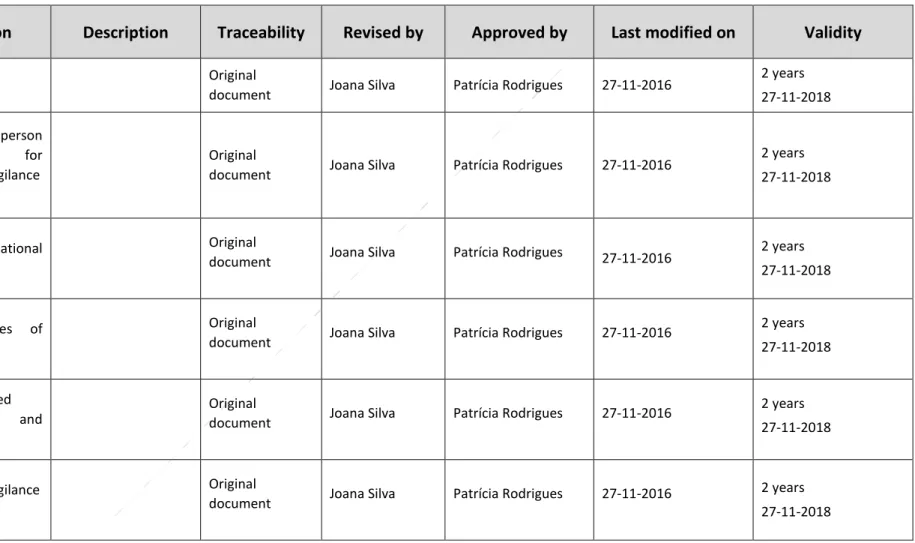
Table 1-Traceability Report
ID
Section
Description
Traceability
Revised by
Approved by
Last modified on
Validity
IIB4 rev00 Cover Page Original
document Joana Silva Patrícia Rodrigues 27-11-2016
2 years 27-11-2018 IIB41 rev00 Qualified person responsible for pharmacovigilance (QPPV) Original
document Joana Silva Patrícia Rodrigues 27-11-2016
2 years 27-11-2018
IIB42 rev00 The organisational structure
Original
document Joana Silva Patrícia Rodrigues 27-11-2016
2 years 27-11-2018
IIB43 rev00 The sources of safety data
Original
document Joana Silva Patrícia Rodrigues 27-11-2016
2 years 27-11-2018 IIB44 rev00 Computerised Systems and Databases Original
document Joana Silva Patrícia Rodrigues 27-11-2016
2 years 27-11-2018
IIB45 rev00 Pharmacovigilance Process
Original
document Joana Silva Patrícia Rodrigues 27-11-2016
2 years 27-11-2018
ID
Section
Description
Traceability
Revised by
Approved by
Last modified on
Validity
IIB46 rev00 Pharmacovigilance system performance Originaldocument Joana Silva Patrícia Rodrigues 27-11-2016
2 years 27-11-2018
IIB47 rev00 Quality system
Original
document Joana Silva Patrícia Rodrigues 27-11-2016
2 years 27-11-2018
IIB48.1 rev00 Annex A Original
document Joana Silva Patrícia Rodrigues 27-11-2016
2 years 27-11-2018
IIB48.2. rev01 Annex B List of contracts and agreements
Revised
document Joana Silva Patrícia Rodrigues 30-11-2016
2 years 30-11-2018
IIB48.3 rev01 Annex C
- List of affiliates and third party contacts
- List of studies and programs
Revised
document Joana Silva Patrícia Rodrigues 04-12-2016
2 years 04-12-2018
IIB48.4 rev00 Annex D List of computerized systems and Databases
Original
document Joana Silva Patrícia Rodrigues 27-11-2016
2 years 27-11-2018
ID
Section
Description
Traceability
Revised by
Approved by
Last modified on
Validity
IIB48.5 rev00 Annex E
List of procedural documents
Original
document Joana Silva Patrícia Rodrigues 27-11-2016
2 years 27-11-2018
IIB48.6 Rev00 Annex F
- List of performance indicators
- Performance assessment in relation to the indicators
Original
document Joana Silva Patrícia Rodrigues 27-11-2016
2 years 27-11-2018
IIB48.7 rev00 Annex G
- Audit schedules
- List of audits conducted and completed
Original
document Joana Silva Patrícia Rodrigues 27-11-2016
2 years 27-11-2018
IIB48.8 rev01 Annex H List of products
Revised
document Joana Silva Patrícia Rodrigues 7-12-2016
2 years 07-12-2018
IIB48.9 rev00 Annex I
- Logbook
- History of changes according to the annex A-H
Original
document Joana Silva Patrícia Rodrigues 27-11-2016
2 years 27-11-2018
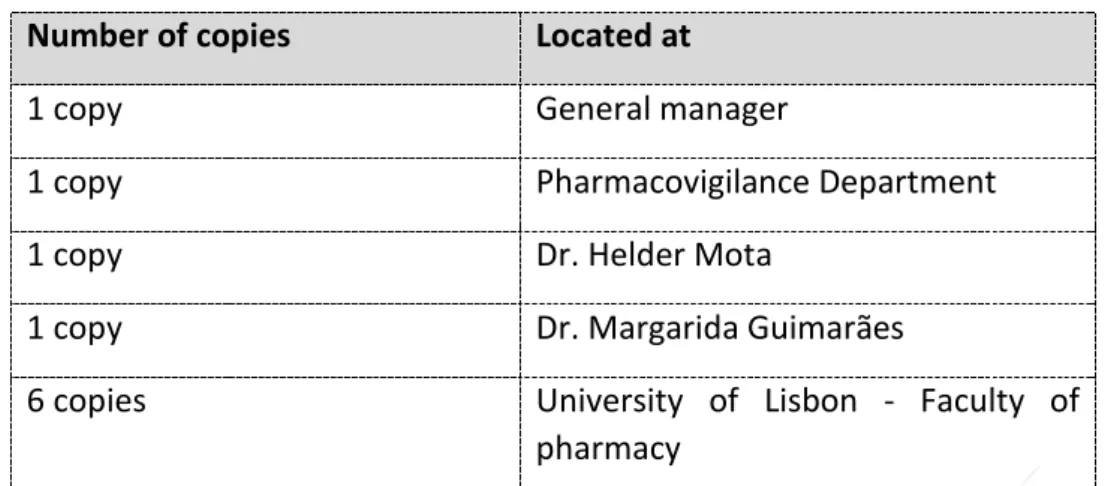
Table 2 - Copy Control
Number of copies
Located at
1 copy
General manager
1 copy
Pharmacovigilance Department
1 copy
Dr. Helder Mota
1 copy
Dr. Margarida Guimarães
6 copies
University of Lisbon - Faculty of
pharmacy
Table 3 - Content of the PSMF
Control Section Name
IIB4 rev00 - Cover page
IIB41 rev00 1 Quality Person for Pharmacovigilance IIB42 rev00 2 Organisation Structure
IIB43 rev00 3 The sources of Safety Data
IIB44 rev00 4 Computerised Systems and Databases IIB45 rev00 5 Pharmacovigilance Process
IIB46 rev00 6 Pharmacovigilance System Performance
IIB47 rev00 7 Quality system
IIB48.1 rev00 A
List of delegated tasks CV of QPPV
CV of Deputy QPPV Job description of QPPV Job Description of Deputy QPPV
Proof of registration with EudraVigilance IIB48.2 rev01 B List of contracts and agreements IIB48.3 rev01 C List of affiliates and third-party contacts
List of studies and programs
IIB48.4 rev00 D Overview of computerised systems and Databases Overview of Databases
IIB48.5 rev00 E List of procedural documents IIB48.6 rev00 F List of performance indicators
Performance assessment in relation to the indicators IIB48.7 rev00 G Audit schedules
List of audits conducted and completed IIB48.8 rev01 H List of products
IIB48.9 rev00 I Logbook