Página | 70
https://periodicos.utfpr.edu.br/rebrapa
Evaluation of yellow food coloring
consumption by infants and pre-school age
children
ABSTRACT
Jéssica Mayara Antônio [email protected] Departamento Acadêmico de Alimentos, Universidade Tecnológica Federal do Paraná, Campo Mourão, Paraná, Brasil. Isabela Verônica Freitas [email protected] Departamento Acadêmico de Alimentos, Universidade Tecnológica Federal do Paraná, Campo Mourão, Paraná, Brasil. Flávia Aparecida Reitz Cardoso [email protected]
Departamento de Matemática, Universidade Tecnológica Federal do Paraná, Campo Mourão, Paraná, Brasil.
Renata Hernandez Barros Fuchs [email protected]
Departamento Acadêmico de Alimentos, Universidade Tecnológica Federal do Paraná, Campo Mourão, Paraná, Brasil.
It is widely known that the sole function of food colorings is giving colors to food, without offering any nutritional value. Studies have been demonstrating the occurrence of adverse reactions in the short and long run, due to the consumption of food containing artificial colorings. Reactions vary from toxic reactions in metabolism causing allergies, to behavior changes, in general, and carcinogenicity, observed in the long term. The goal of this work was to evaluate the consumption of yellow artificial colorings contained in powdered drinks, sodas, candies, lollipops, jell-O and popsicles consumed by students between 0 and 1 year and 11 months old and children between 2 and 5 years and11 months old from the private education system in the city of Campo Mourão, Paraná. A survey about the consumption of these foods was elaborated and sent to parents/guardians, in order to be answered. Data were handled with the “Statistica 13” software. The reported consumption was quantified, and the quantity of colorings in these foods was considered as the maximum content permitted by legislation. The quantity of colorings consumed by children was compared to the acceptable daily intake for each age range, considering the average weight indicated by the 50 percentile on NCHS tables. 110 children were evaluated in the study, the majority being female. It has been found that on average males consume more dyes than female. The majority of the children evaluated began to consume the researched products before 2 years of age.It was verified that Sunset Yellow and Tartrazine Yellow dyes do not exceed the acceptable daily intake (ADI) in all age ranges.
KEYWORDS: yellow artificial colorings; consumption; students; powdered drink; soda; candy.
Página | 71
INTRODUCTION
Food quality, as well as its microbiological characteristics, is generally based on color, flavor, texture and nutritional value. Depending on certain foods, these factors have different influences on evaluating global quality (FRANCIS, 1993). Therefore, developing natural or processed products with an attractive look is extremely important for the food industry (BOBBIO e BOBBIO, 2003).
The application of colorings in food is a polemic issue in almost all countries, due to growing cases of health problems connected to it. Different countries or regions allow the use of different colorings in different quantities, due to higher or lower consumption of foods in the population’s diet (PRADO; GODOY, 2007). If used in higher levels than the ones allowed by legislations, they may be toxic and consequences vary from allergies and hyperactivity to cancer risks (JECFA,2016).
Two of the mostly used synthetic dyes are tartrazine and sunset yellow, which have a yellow color and are obtained through coal tar paint. These colorings are used in the food industry to dye candies, jell-O, powdered drinks and sodas. Of all colorings, tartrazine yellow is the most worrying one among researches, because it is responsible for the increased number of allergic reactions, asthma and hives (TANAKA, 2006; GAUTAM et al., 2010; KAMEL; EL-LETHEY, 2011; ROVINA et al., 2016BASTAKI et al., 2017).
As for these effects, it is important to highlight the ones related to child health, because children are among the greatest consumers of industrialized products and are also more susceptible to these adverse reactions. Moreover, adverse effects are related to consumption frequency and quantity for body weight and, since children have lower weight, their tolerance is lower, too (POLÔNIO; PERES, 2009).
Among the mostly used methods to evaluate children food consumption, it is important to highlight the Food Frequency Questionnaire (FFQ), widely used to assess individuals’ usual diet; it has become one of the predominant methods in nutritional epidemiology (JIMÉNEZ, 1995).
Worldwide evaluation of food additives is based on controlling the Acceptable Daily Intake (ADI), developed by the World Health Organization (WHO)/Food and Agriculture Organization of the United Nations (FAO) (Organización Mundial de lá Salud, 1995). According to JECFA (Joint Expert Committee on Food Additives), which is a committee of experts from FAO (Food and Agriculture Organization) and WHO (World Health Organization) for food additives, the acceptable daily intake (ADI) is the quantity of a food additive, based on body weight, that may be ingested daily during life, without presenting health risks (WHO, 1987; ROVINA et al., 2016).
All artificial colorings that are permitted by the Brazilian Law already have definite ADI values (ANVISA, 1999), although these values are subject to continuous changes, depending on results from toxicological studies. JECFA recommends that countries systematically verify the total consumption of permitted additives, through the study of their population’s diet, to make sure that the total intake does not exceed ADI’s determined values (REYS; PRADO, 2001).
In this sense, this research aimed at conducting a study on infants (0 to 1 year and 11 months old) and children from 2 to 5 years and 11 months old enrolled in two private pre-schools, quantifying the consumption of foods containing yellow
Página | 72
colorings and comparing this value to acceptable daily intake for each tested age range.
MATERIAL AND METHODS
PLACE WHERE THE STUDY WAS CONDUCTED
All private pre-schools in the city of Campo Mourão were invited to participate in the project. The researcher contacted school principals to present the project and check their interest in participating. In case of affirmative response, the school wrote a declaration informing the participation.
An informed consent (TCLE) was prepared and forwarded to parents/guardians by the children, in order to present the project and ask for participation permission. Children whose parents/guardians filled out the TCLE were considered suitable to participate in the project.
In order to conduct this study, a survey questionnaire about quantitative and qualitative consumption frequency of artificially dyed products usually consumed by children was prepared. This method was selected for its application easiness, low cost and for allowing the knowledge of usual consumption of these foods, in the studied group.
The survey aimed at identifying and quantifying the consumption of candies, powdered drinks, lollipops, sodas, jell-O and popsicles by children aged 0 to 6 years who attend private pre-schools in the city of Campo Mourão, Paraná state. In this research, parents/guardians provided information about identification, age, sex and consumption frequency of certain foods by the assessed children.
This work was evaluated and approved by the UTFPR Research Ethics Committee under CAAE n. 35439414.0.0000.5547.
DATA PROCESSING
In order to obtain results through the “Statistica 13” software, data provided by parents/guardians were computed according to age (months), food daily consumption (in g or mL, according to foods) and sex of each child.
Consumption information provided by parents/guardians in home measures were converted into weight (g) or volume (mL) using measure conversion charts. Thus, the child average daily consumption of each food was obtained.
Through specific legislations for each kind of analyzed product, the maximum dye limit permitted to be added in each food was identified (Table 1). This was the coloring quantity that was considered in each food, since it would be impossible to obtain the real quantity used in each product; these data are not provided by industry. Possible infractions to the current legislation by industries that use higher coloring quantities than the maximum permitted limit were also not considered. Starting from information on average food quantity and coloring quantity in the food, the average coloring quantity daily ingested by children was determined.
Página | 73
Table 1 - Maximum limit of yellow colorings used for foods.
Yellow
Colorings INS
Maximum limits (g/100g) or (g/100mL) Powdered
drink Soda Candy Lollipop Jell-O Popsicle Tartrazine 123 0.01 0.01 0.03 0.03 0.015 0.015
Sunset 127 0.01 0.01 0.01 0.01 0.01 0.01
ADI, presented in Table 2, is given in coloring g/kg body weight (OLIVEIRA et
al., 2010). Since no anthropometric data were collected, in order to calculate the
ADI from each studied age range we used the theoretical weight found in 50 percentile of the reference standard, according to NCHS chart (1977), in relation to the children age during assessment.
Table 2 - Coloring acceptable daily intake.
Name Code Color ADI (g/kg body weight)
Tartrazine 102 Lemon yellow 0.0075
Sunset 110 Orange 0.0025
SOURCE: Oliveira et al., 2010.
RESULTS AND DISCUSSION
Of all the schools that received an invitation to participate in the research, only 2 were voluntarily available; on a total of 350 sent questionnaires, 134 (38.28%) were returned, of which 20 were blank and 4 did not satisfy the criteria to be included in the research.
Therefore, the adherence to the study was 31.42% (110 questionnaires) of total sent questionnaires. This percentage refers to the number of returned questionnaires, correctly completed and with the informed consent signed by the child’s parents/guardians, according to data presented in Table 3.
Table 3. Report on sent and returned questionnaires in schools.
School Questionnaires Sent Questionnaires Returned Questionnaires within acceptance criteria Questionnaires (%) Used
1 250 89 77 30.8
2 100 45 33 33.0
Despite the reduced quantity of returned questionnaires, they satisfied the initially proposed acceptance criteria on the necessary sample to validate data.
As for interviewed children, 64 (58.18%) were females and 46 (41.81%) were males. Of this total, 3.6% was up to 1 year and 11 months old, 7.2% was up to 2 year 11 months old, 31.81% was up to 3 years 11 months old, 33.74% was up to 4
Página | 74
years 11 months old and 23.64% was up to 5 years 11 months, as presented in Figure 1.
Figure 1 - Percentage of interviewed children.
In Figure 2, it is also possible to check the relationship of interviewed children compared to their sex and respective age, as well as the average age of these children, detailed in Table 4.
Figure 2 - Number of interviewed children in relation to sex.
A higher number of interviewed females can be checked in Figure 2, as well as also having higher school enrollment frequency starting from 39 months of age.
Página | 75
Table 4. Number of female and male children participating in the research. Age (months) Children number Age (months) Children number
Female Male Female Male
17 0 1 51 1 0 18 1 1 52 0 1 23 1 0 53 3 2 25 0 1 54 2 2 31 0 2 55 1 3 33 1 0 56 3 2 34 1 1 57 3 1 35 2 0 58 2 2 36 1 1 60 2 0 37 0 2 61 2 2 38 0 2 62 0 1 39 4 0 63 1 2 41 0 1 64 1 0 42 2 0 65 3 1 43 5 1 66 1 1 44 5 3 67 2 1 45 2 2 68 2 0 46 1 2 69 1 0 47 0 1 70 1 1 48 3 3 71 1 0 49 1 0 Ʃ 64 46 50 2 0 FEMALE CHILDREN
The consumption (g or mL) of powdered drinks, sodas, candies, lollipops, Jell-O and popsicles by female children from private schools in the municipality of Campo Mourão is detailed in Table 5, together with ADI (g), daily intake – DI (g), and consumption percentage in relation to acceptable daily intake.
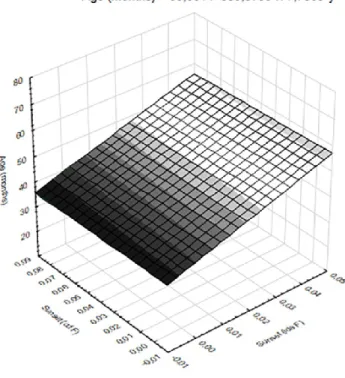
Analyzing the data presented in Table 5, it is possible to check that the quantity of yellow colorings ingested by female children is lower than the permitted maximum according to age and weight, calculated on data provided in Table 4. Thus, it is possible to support these data on the surface charts presented in Figures 3 and 4, where it is possible to find, respectively, the daily consumption of sunset and tartrazine colorings by the interviewed female children. It is also possible to check that the greatest consumption of both sunset and tartrazine colorings is by children aged between 48 and 59 months.
Moreover, the displayed equations represent yellow coloring consumption according to female children age.
Página | 76
Table 5. Coloring intake in female children.
Yellow coloring daily intake (DI) according to age (months)
Age S* (g) T** (g) Age S (g) T (g) Age S (g) T (g)
18 23 33
DI 0.005 0.0015 DI 0 0 DI 0.005 0.0015
ADI 0.027 0.081 ADI 0 0 ADI 0.0335 0.1005
% 18.51% 18.51% % 0% 0% % 14.92% 1.49%
34 35 36
DI 0.005 0.0015 DI 0.0025 0.00375 DI 0.02 0.02
ADI 0.034 0.102 ADI 0.0345 0.1035 ADI 0.03475 0.1042
% 14.7% 14.7% % 7.2% 3.6% % 57.55% 19.19%
39 42 43
DI 0.0114 0.0114 DI 0.005 0.0075 DI 0.003 0.004
ADI 0.0365 0.1095 ADI 0.03725 0.1117 ADI 0.03725 0.1117
% 32.23% 10.41% % 13.42% 6.71% % 8.05% 3.58%
44 45 46
DI 0.025 0.031 DI 0.0125 0.0375 DI 0 0
ADI 0.03775 0.11325 ADI 0.038 0.114 ADI 0 0
% 66.22% 27.37% % 31.89% 32.89% % 0% 0%
48 49 50
DI 0.0085 0.0161 DI 0 0 DI 0.0775 0.13625
ADI 0.04 0.12 ADI 0 0 ADI 0.04025 0.1207
% 21.25% 13.41% % 0% 0% % 192.54% 112.88%
51 53 55
DI 0 0 DI 0.0025 0.00375 DI 0.03 0.055
ADI 0 0 ADI 0.04125 0.1237 ADI 0.0334 0.1252
% 0% 0% % 6.06% 3.03% % 89.82% 43.92%
55 56 57
DI 0 0 DI 0.0387 0.07075 DI 0.0187 0.0391
ADI 0 0 ADI 0.042 0.126 ADI 0.0425 0.1275
% 0% 0% % 92.14% 56.15% % 44.00% 30.66%
58 60 61
DI 0.0025 0.0075 DI 0.005 0.005 DI 0.01 0.018750
ADI 0.04275 0.1282 ADI 0.04425 0.1337 ADI 0.04425 0.1327
% 5.8% 5.8% % 11.29% 3.7% % 22.59% 14.21%
63 64 65
DI 0.02 0.02 DI 0 0 DI 0.0202 0.03456
ADI 0.0445 0.1335 ADI 0 0 ADI 0.04575 0.1327
% 44.94% 14.98% % 0% 0% % 44.15% 26.10%
66 67 68
DI 0.05 0.015 DI 0.025 0.035 DI 0.005 0.005
ADI 0.046 0.138 ADI 0.046 0.138 ADI 0.0465 0.1395
% 10.86% 10.86% % 54.34% 26.92% % 10.86% 3.58%
69 70 71
DI 0.015 0.0275 DI 0.01 0.01 DI 0.005 0.005
ADI 0.04675 0.1402 ADI 0.04725 0.1417 ADI 0.0475 0.1425
% 32.08% 19.61% % 21.64% 7.00% % 10.52% 3.58%
Página | 77
Figure 3 - Response surface on sunset daily consumption and permitted consumption.
Página | 78
MALE CHILDREN
The same analysis was performed for male children, that is, the consumption (g or mL) of powdered drinks, sodas, candies, lollipops, Jell-O and popsicles and its relation to consumption compared to acceptable daily intake (ADI) was verified. Data are detailed in Table 6.
Table 6 - Coloring intake in male children. Yellow coloring daily intake (DI) according to age (months)
Age S* (g) T** (g) Age S (g) T (g) Age S (g) T (g)
17 18 25
DI 0 0 DI 0.005 0.005 DI 0.015 0.015
ADI 0 0 ADI 0.02875 0.08625 ADI 0.032 0.096
% 0% 0% % 17.39% 5.7% % 46.87% 14.62%
31 34 36
DI 0.0375 0.0425 DI 0.01 0.02 DI 0.005 0.015
ADI 0.0345 0.352 ADI 0.036 0.1065 ADI 0.03674 0.1102
% 108.69% 41.06% % 27.7% 18.77% % 13.6% 13.61%
37 38 42
DI 0.06 0.0825 DI 0.0175 0.0075 DI 0.035 0.045
ADI 0.0365 0.1095 ADI 0.037 0.111 ADI 0.03825 0.1162
% 164.38% 75.34% % 47.29% 24.77% % 90.32% 38.72%
43 44 45
DI 0.005 0.005 DI 0.0017 0.0017 DI 0.0125 0.01625
ADI 0.03875 0.1162 ADI 0.03925 0.1177 ADI 0.0395 0.1185
% 12.9% 4.3% % 4.3% 1.4% % 31.64% 12.71%
46 47 48
DI 0.025 0.035 DI 0 0 DI 0.0332 0.04925
ADI 0.04 0.12 ADI 0 0 ADI 0.04175 0.1252
% 62.5% 29.16% % 0% 0% % 79.52% 39.33%
52 53 54
DI 0.03 0.0325 DI 0.025 0.04 DI 0.04 0.0525
ADI 0.043 0.129 ADI 0.0435 0.1305 ADI 0.04375 0.1312
% 69.76% 25.19% % 57.47% 30.65% % 91.42% 40.01%
55 56 57
DI 0.0118 0.01945 DI 0.0075 0.01875 DI 0.015 0.035
ADI 0.04375 0.1312 ADI 0.04425 0.327 ADI 0.04475 0.1342
% 26.97% 14.82% % 16.90% 14.12% % 33.51% 26.08%
58 61 62
DI 0 0 DI 0.0175 0.0225 DI 0 0
ADI 0 0 ADI 0.04675 0.1402 ADI 0 0
% 0% 0% % 37.43% 16.04% % 0% 0%
63 65 66
DI 0.0075 0.01 DI 0.02 0.0425 DI 0.02 0.0225
ADI 0.0475 0.1425 ADI 0.04825 0.1447 ADI 0.048 0.144
% 15.78% 7.01% % 41.45% 29.37% % 41.66% 15.62%
67 70
DI 0.02 0.02 DI 0.01 0.01
ADI 0.04875 0.1425 ADI 0.05 0.15
% 41.02% 14.03% % 20.00% 6.60%
Página | 79
Analyzing the data presented in Table 6, it is also possible to check that the quantity of yellow colorings ingested by male children is lower than the permitted maximum, according to age and weight, calculated on data provided in Table 4. Figures 5 and 6 support these data through surface charts that present, respectively, the daily consumption of sunset and tartrazine colorings by the interviewed male children. In the age range between 24 and 35 months, males also consume a higher coloring quantity, according to the presented data.
Figure 5 - Response surface on sunset daily consumption and permitted consumption.
Página | 80
Moreover, the displayed equations represent yellow coloring consumption according to male children age. According to Polônio and Peres (2012), there are three factors contributing to children being more vulnerable to the adverse effects of food additives; the first one is additive quantity for kg of body weight, which is higher in children than in adults. This allows ADI to be exceeded with the consumption of one to two industrialized products. The second factor is that children present physiological immaturity, which may damage metabolism and additive excretion. And last, children do not have the ability to control the intake of food with additives, as an adult could do with no difficulties.
Based on the conducted study, it is possible to presume that the research aims at a favorable socioeconomic profile represented by medium/high family income, high educational level of parents/guardians and specialized occupation.
Through the study of Schumann, Polônio and Gonçales (2008) conducted on children that are attended at the Pediatric Clinic of Gafrée Guinle University Hospital, in Rio de Janeiro, it was verified that Jell-O powder, drink powder and sodas are frequently consumed foods and they are often introduced in the diet even before the child is one year old. Results indicated that 20% of the population may be exceeding sunset yellow coloring ADI, since it is the most used one in foods.
Starting from the demonstrated figures, it is possible to notice that most children started consuming the six studied products even before they were 2 years old. This finding is worrying, since the ADI established by JECFA cannot be applied to children younger than 12 months, due to the adaptation of metabolism and to the fact that their diet is complemented by breastfeeding. Therefore, it is forbidden to add additives to infant formulas (POLÔNIO, 2002; SHILS; OLSON; SHIKE, 2003).
CONSUMPTION COMPARISON BETWEEN FEMALES AND MALES
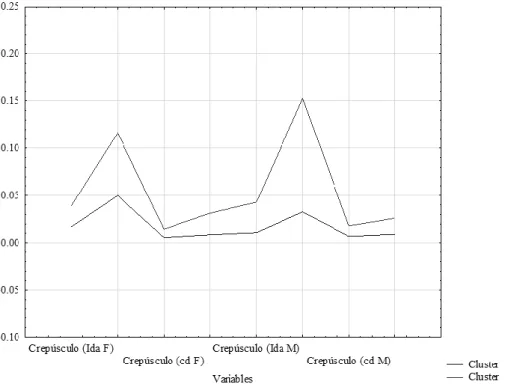
Figure 7 presents a graphic comparison of the average consumption of yellow colorings between females and males. Despite the fact that consumption is lower than ADI for both sexes, it is possible to observe that females have a higher intake than males. Tartrazine coloring is the mostly consumed one by both sexes, as it is highlighted by the averages presented in Figure 7 and supported by Figure 8.
Despite the scarce studies about additive consumption and effects on collective health, particularly to children health, the systematic review of the literature produced by Polônio and Peres (2009) indicated children as a potential consumer of food with additives, namely artificial colorings (GOMES, 2013).
Since children are potential consumers of these treats, higher attention over these products is crucial. Moreover, the colorings that were identified in these candies belong to the Azo group, a nitrous derivative recognized as a substance that is capable of causing allergic reactions such as asthma and hives; it has been the aim of mutagenesis and carcinogenesis studies because it produces aromatic amine and sulphanilic acid after being metabolized by the intestinal micro flora (PRADO; GODOY, 2007).
It is important to mention that this study evaluated only 6 (six) foods containing this dye in their composition, but a considerable number of treats that are parts of the daily life of children also contain colorings in their composition.
Página | 81
Therefore, we believe that it is very important that labels on these products not only mention the presence of the dyes, but also inform their content.
Figure 7 - Average of coloring use by female and male respondents.
Página | 82
Nogueira (2004) assessed the consumption of food with colorings by students of public and private pre-schools in the city of Rio de Janeiro.
The most consumed products were: candies, flavored Jell-O, sodas, yoghurts, cookies and soft drinks, respectively. Differences were observed among schools about consumed food types. In particular pre-schools, Jell-O, sodas, yoghurts and filled cookies were the foods that stood out most. In public schools, consumption was prevalent for powdered drinks, bottled juice and candies. The difference found in this study in relation to the consumption of foods with additives among pre-schools (Public and private) was based on economy class; in private pre-schools, the socioeconomic level and education of parents was probably higher, and maybe they had some notions about healthy food, giving therefore a limit to the consumption of treats by children.
Studies conducted on French schoolchildren demonstrate that their diet is controlled for what concerns coloring consumption. There were no ADHD (Attention Deficit Hyperactivity Disorder) diagnosis, having a lower than 0.5% limit, which is caused by the intake of food with colorings. This is because parents do not allow, for example, that children have a snack anytime they want to. Meals are in four specific moments of the day. French children learn to patiently wait for meals, instead of eating savory snacks every time they want to. French babies also accept the limits imposed by their parents (WEDGE, 2013).
In Brazil, for what concerns food additives, namely artificial colorings, we face two problems: one is related to the easiness in exceeding the ADI of colorings, since the maximum permitted limit expressed in mg/100g of finished product is high, and the number of dyed foods that are usually consumed by child population is also high. The other one is that food industry frequently disrespects the current legislation by adding dyes to products that should not contain these food additives and adding other dyes in higher quantities than the permitted ones (POLÔNIO e PERES, 2012).
The concern about child health is based on the guarantee of a healthy and safe diet. Innumerous studies have associated dyes from the azo group (tartrazine yellow, sunset yellow and bordeaux red) with cases of asthma, hives, dermatitis, hyperactivity and cancer. The presence of these additives in most food products increases the vulnerability of children to these diseases (DI LORENZO et al., 2002; JECFA, 2016; ROVINA et al., 2016; BASTAKI et al., 2017).
A study conducted in Rio de Janeiro with 51 students aged six to nine that attended private schools, evaluated the use of artificial colorings in candies and lollipops consumed by them. As for consumption, it was verified that 88% of the students presented weekly consumption of more than 35 candies and 45% consumed about 20 bubble-gums per week. The colorings in these treats were red 40, tartrazine and sunset yellow. Since the study only evaluated the consumption of two products, for the authors the possibility of exceeding ADI for these colorings could be higher, since most children consume other treats (OLIVEIRA et al.,2010). There is a case study about an eleven-year-old girl with skin rash history who, after hypersensitivity conditions ceased, was submitted to provocative food test with 7 mg of tartrazine coloring. Skin rash was observed two hours after the ingestion of the referred coloring. The authors consider additives, namely artificial colorings, as substances that unleash hypersensitivity (ORCHARD; VARIGOS, 1997).
Página | 83
It is known by regulatory agencies and health professionals that most people do not read the information contained in labels, because they do not understand the meaning of what is printed; the letters are small and illegible. And when they do, the main concern is about the date of expiry or the amount of calories in the product. The access to correct information about the content of industrialized food is a matter of food and nutritional safety; in fact, it is a matter of citizenship (VALENTE, 2002).
Based on the study by Prado and Godoy (2007), additives are not harmful to health, as long as they comply with the limits established by ANVISA and/or Codex Alimentarius. These institutions establish an acceptable daily intake (ADI) for additives. All artificial colorings that are permitted by the Brazilian Law have definite ADI values, although these values are subject to continuous changes, depending on results from toxicological studies.
CONCLUSIONS
Of the selected samples for questionnaires about daily consumption of sunset and tartrazine yellow colorings, only half of the schools that were invited to participate in the project accepted the invitation; of them, less than half the questionnaires were returned to the researchers.
With the analysis on the performed questionnaires, it was possible to check the consumption frequency of different foods with colorings, as well as the quantity of these additives in the products. It was also possible to identify that the assessed population consume less tartrazine and sunset yellow colorings than the daily permitted limit, which is extremely important for the health of the interviewed children.
Educational campaigns that stimulate the rational use of these products in child nutrition, as well as healthy nutritional habits, must be stimulated within the studied group, because it is during this age range that habits are created, and they will follow individuals for the rest of their lives.
Página | 84
Avaliação do consumo de corantes
alimentares amarelos por lactentes e
crianças em idade pré-escolar
RESUMO
Sabe-se que a única função dos corantes alimentares é conferir cor ao
alimento não oferecendo nenhum valor nutritivo a este. Estudos vêm
demonstrando a ocorrência de reações adversas a curto e longo prazo,
devido ao consumo de alimentos que apresentam corantes artificiais. As
reações variam desde reações tóxicas no metabolismo desencadeantes de
alergias, alterações no comportamento, em geral, e carcinogenicidade, esta
última observada em longo prazo. O objetivo do presente trabalho foi
avaliar o consumo de corantes artificiais presentes em refresco em pó,
refrigerante, balas, pirulito, gelatina e picolé de cor amarela, consumidos
por estudantes com idade entre (0 a 1 ano e 11 meses de idade) e crianças
com idade entre 2 a 5 anos e 11 meses da rede particular de ensino da
cidade de Campo Mourão. Um questionário sobre o consumo destes
alimentos foi elaborado e enviado aos responsáveis pela criança para ser
respondido. Os dados foram tratados no software Statistica 13. O consumo
relatado foi quantificado e considerou-se a quantidade de corantes
presentes nesses alimentos, como sendo o teor máximo permitido pela
legislação. A quantidade de corantes consumida pelas crianças foi
comparada com a ingestão diária aceitável para cada faixa etária,
considerando-se o peso médio fornecida pelo percentil 50, das tabelas
NCHS. Verificou-se que os corantes amarelo crepúsculo e tartrazina não
ultrapassam a ingestão diária aceitável (IDA) em todas as faixas etárias.
Palavras-chave: corantes artificiais amarelo; consumo; estudantes;
Página | 85
REFERENCES
ANVISA. Resolutions n. 382 to 388, dated August 5th, 1999. Technical Regulations
on Food Additive use. Available at
<http://www.anvisa.gov.br/legis/resol/index_99.htm> Access: 03/12/2016.
ANVISA. Health Surveillance Agency/Ministry of Health. Resolution CNNPA
(National Commission for Food Standards), n. 44 dated 1977. Available at:
<http://www.anvisa.gov.br>. Access: 03/23/2016.
BASTAKI, M.; FARRELL, T.; BHUSARI, S.; PANT, K.; KULKARNI, R. Lack of genotoxicity in vivo for food color additive Tartrazine. Food and Chemical
Toxicology, v. 105, p. 278-284, 2017.
BOBBIO, P. A.; BOBBIO, F. O. Introduction to food chemistry. 3rd ed. São Paulo: Livraria Varela, 2003.
BRASIL. ANVISA. Ordinance n. 540/97, dated October 27th, 1997 (10/28/97 DOU) Available at: http://www.anvisa.gov.br. 2002. Access: 05/23/2016.
DI LORENZO, O. G.; PACOR, M. L.; VIGNOLA, A. M.; PROFITA, M.; ESPÓSITO-PELLITTITERI, M.; BIASI, D.; CORRECHER, R.; CARUSO, C. Urinary metabolites of histamine and leukotrienes before and after placebo controlled challenge with ASA and food additives in chronic urticaria patients. Allergy, v. 57, n. 12, p.
1180-1186, 2002.
FRANCIS, F. J. Pigments and other colorings. In: Fenenna, Owen R. Food
chemistry. Zaragoza: Editorial Acribia S.A., 1993.
GAUTAM, D.; GUNJAN, S.; GOYAL, R. P. Evaluation of toxic impact of tartrazine on male Swiss albino mice. Pharmacology Online, v. 1, p. 133–40, 2010.
GOMES, K. M. S. Citotoxicity of food dyes Sunset Yellow 10), Bordeaux Red (E-123), and Tartrazine Yellow (E-102) on Alium cepa L. rot meristematic cells. Food
Science and Technology, v. 33, p. 218-223, 2013.
JIMÉNEZ, L. G.; MARTÍN-MORENO, J. M. Food frequency questionnaire. In: Serra Majem L. Nutrition and Public Health: methods, scientific bases and
applications. Spain: Masson, 1995.
JOINT EXPERT COMMITTEE ON FOOD AND ADDITIVES (JECFA). Evaluation of Certain Food Additives. Eighty-second Report of the Joint FAO/WHO Expert
Página | 86
Committee on Food Additives. World Health Organization, Geneva, Switzerland, 2016.
KAMEL, M. M.; EL-LETHEY, S. H. The Potential health hazard of tartrazine and levels of hyperactivity, anxiety-like symptoms, depression and anti-social behaviour in rats. The Journal of American Science, v. 7, n. 6, 2011.
NCHS – National center for Health Statistics. Growth curves for children birth: 18
years. Washington, DC: Print Office, 1977.
NOGUEIRA, R. S. Consumption of colorings in industrialized products by pre-school children: a risk for child health. Senior Thesis. Rio de Janeiro: Universidade Federal do Estado do Rio de Janeiro; 2004.
OLIVEIRA, A. P. S.; JACQUES, G. F.; NERY, V. V. C.; ABRANTES, S. M. P.
Consumption of artificial colorings in candies and bubble-gums by children aged six to nine. Revista Analytica, n. 44, p.79-85, 2010.
ORCHARD, D. C.; VARIGOS, G. A. Case Report – Fixed drug eruption to tartrazine
Australasian Journal of Dermatology, v. 38, p. 212-214, 1997.
POLÔNIO, M. L. T. Food additives and child health. In: ACCIOLY, E.; SAUNDERS, C.; LACERDA, E. M. Nutrition in Obstetrics and Pediatrics. Rio de Janeiro: Cultura Médica, 2002.
POLÔNIO, M. L. T.; PERES, F. Consumption of food additives and their effects on health: challenges for Brazilian public health. Cadernos de Saúde Pública, v. 25, n. 8, p. 1653-1666, 2009.
POLÔNIO, M. L. T; PERES, F. Consumption of artificial colorings by pre-school students from a city in the baixada fluminense. Cuidado é Fundamental Online, v. 4, n. 1, p. 2748-2757, 2012.
PRADO, M. A; GODOY, H. T. Teores de corantes artificiais em alimentos
determinados por cromatografia líquida de alta eficiência. Química Nova, v. 30, p. 268-273, 2007.
Página | 87
ROVINA, K.; PRABAKARAN, P. P.; SIDDIQUEE, S.; SHAARANI, S. M. Methods for the analysis of Sunset Yellow FCF (E110) in food and beverage products - a review.
Trends in Analytical Chemistry, v. 85, p. 47-56, 2016.
SCHUMANN, S. A.; POLÔNIO, M. T.; GONÇALVES, E. A. Evaluation of artificial coloring consumption by infants, pre-school students and students. Food Science
and Technology, v. 28 n. 3, 2008.
SHILS, M.; OLSON, J.; SHIKE, M. Modern nutrition in health and disease. São Paulo: Manole, 2003.
TANAKA, T. Reproductive and neurobehavioural toxicity study of tartrazine administered to mice in the diet. Food and Chemical Toxicology, v. 44, p. 179–87, 2006.
VALENTE, F. L. S. V. From hunger fighting to food and nutritional safety: the right to adequate eating. In: Human right to food: challenges and conquers. São Paulo: Cortez; 2002.
WEDGE, M. Why French children do not have Attention Deficit? Available at: http://equilibrando.me/2013/05/16/por-que-as-criancas-francesas-nao-tem-deficit-de-atencao/. Access: 05/05/2016.
World Health Organization (WHO). Principles for the Safety Assessment of Food
Additives and Contaminants in Food, 1987. Geneva,
<HTTP://www.inchem.org/documents/ehc/ehc/ehc70.htm> Access: 05/23/2016.
Recebido: 14 mar. 2017.
Aprovado: 29 jan. 2018.
DOI: 10.3895/rebrapa.v9n1.5690
Como citar:
ANTÔNIO, J. M. Evaluation of yellow food coloring consumption by infants and pre-school age children.
Brazilian Journal of Food Research, Campo Mourão, v. 9, n. 1, p. 70-87, jan./mar. 2018. Disponível em: https://periodicos.utfpr.edu.br/rebrapa
Correspondência:
Flávia Aparecida Reitz Cardoso
Departamento de Matemática, Universidade Tecnológica Federal do Paraná, Via Rosalina Maria dos Santos, 1233, CEP 87301-899, Caixa Postal 271, Campo Mourão, Paraná, Brasil.
Direito autoral: Este artigo está licenciado sob os termos da Licença Creative Commons-Atribuição 4.0 Internacional.