Universidade de Aveiro 2014
Secção Autónoma de Ciências da Saúde
Pedro Miguel Couto
Moreira e Silva
Relatório de Estágio como Coordenador de
Estudos na Blueclinical Lda.
Curricular Training Report as Study Coordinator in
Blueclinical Ltd.
Universidade de Aveiro 2014
Secção Autónoma de Ciências da Saúde
Pedro Miguel Couto
Moreira e Silva
Relatório de Estágio Curricular como Coordenador
de Estudos na Blueclinical Lda.
Curricular Training Report as Study Coordinator in
Blueclinical Ltd.
Tese apresentada à Universidade de Aveiro para cumprimento dos requisitos necessários à obtenção do grau de Mestre em Biomedicina Farmacêutica, realizada sob a orientação científica da Professora Doutora Alexandra Queirós, Professora Coordenadora da Escola Superior de Saúde da Universidade de Aveiro e da Doutora Cristina Lopes, Diretora de Operações Clínicas da Blueclinical Lda.
É com toda a gratidão que dedico este trabalho à minha avó e aos meus pais.
o júri
Presidente Professor Doutor Bruno Miguel Alves Fernandes do Gago
Professor Auxiliar Convidado, Universidade de Aveiro
Arguente
Orientadora
Professora Doutora Maria Joana da Costa Gomes da Silva Professora Adjunta, Universidade de Aveiro
Professora Doutora Alexandra Isabel Cardador de Queirós Professora Coordenadora S/ Agregação, Universidade de Aveiro
agradecimentos
À minha orientadora, Professora Alexandra Queirós, por todo o apoio e colaboração.
Ao Professor Luís Almeida e ao Professor Bruno Gago pelo excelente trabalho na implementação do Mestrado de Biomedicina Farmacêutica na Universidade de Aveiro, que me permitiu entrar no mercado de trabalho com uma excelente base teórica.
Ao Professor Luís Almeida e Doutora Cristina Lopes pela oportunidade que me deram.
À Doutora Cristina Lopes por toda a orientação durante o meu período de estágio na Blueclinical, e por me ajudar a crescer como profissional. A todos os meus colegas de trabalho por me ajudarem a ser melhor todos os dias. E em especial à Ema Órfão, Joana Bouça e Lucília Penteado por tudo o que me ensinaram, pelo profissionalismo e alegria que transmitiram todos os dias, e que, sem dúvida, me faziam encarar todos os dias de trabalho com um sorriso.
À Joana Simões, Lorrane Viana, Ana Salgueiro e Beatriz Parreira por todo o apoio, por estarem sempre presentes durante a minha estadia na Universidade de Aveiro, e por tornarem todos estes anos memoráveis.
Ao Tiago Marques, Márcio Costa, André Oliveira e André Cardoso por terem partilhado comigo estes anos e por todos os momentos.
A todos os meus colegas por me acompanharem durante esta jornada. À minha tia e aos meus tios, pelo apoio que me deram para chegar até aqui. Aos meus pais e aos meus irmãos, por me terem dado esta oportunidade e por estarem sempre ao meu lado.
À minha avó, a quem eu devo tudo o que sou hoje, por tudo o que me ensinou, pelo carinho, e por estar sempre presente.
A todos os que me apoiaram durante esta etapa.
Palavras-chave Estudo clínico, Coordenador de Investigação Clínica, Blueclinical, Estudos Observacionais
Resumo O presente relatório descreve com detalhe as atividades e aprendizagens adquiridas no âmbito do meu estágio curricular como coordenador de estudos na Blueclinical, Lda., para obtenção do grau de mestre de Biomedicina Farmacêutica.
De acordo com o tipo de serviços prestados, a Blueclinical pode ser dividida em três unidades de negócio: Blueclinical Clinical Research Partnership, Blueclinical Phase I e Blueclinical Research and Development. O facto de pertencer a esta companhia deu-me a oportunidade de estar em contacto com diferentes áreas do desenvolvimento farmacêutico e de contactar com diferentes equipas de investigação, o que para mim foi uma vantagem para a integração e consolidação de conhecimento, bem como para o desenvolvimento de hard e soft skills.
A principal atividade desenvolvida foi a coordenação de estudos clínicos, na Unidade Local de Saúde de Matosinhos, E.P.E., que se insere na rede de hospitais que estabeleceram parceria com a Blueclinical, Lda.
Durante o meu estágio pode contactar com diversas fases de coordenação e desenvolvimento de ensaios clínicos, que serão relatadas nesta dissertação.
keywords Clinical Trials,Clinical Research Coordinator, Blueclinical, Observational Studies
Abstract The present report describes in detail the activities and knowledge aquired during my internship as study coordinator in Blueclinical – Investigação e Desenvolvimento em Saúde, Ltd., in order to obtain the master degree in Pharmaceutical Biomedicine.
According to the type of services provided, Blueclinical is formed by three business units: Blueclinical Clinical Research Partnership, Blueclinical Phase I and Blueclinical Research and Development. The fact of belonging to such a company gave me the opportunity to be in touch with different areas of pharmaceutical development and to contact with different research teams, which for me was an added advantage to the integration and consolidation of knowledge, as well as in the development and improvement of soft and hard skills.
The main activity developed was the coordination of clinical studies, in Unidade Local de Saúde de Matosinhos, E.P.E., which was one of the institutions that established a partnership with Blueclinical, Ltd.
During my internship I was able to contact with various stages of development and coordination of clinical trials, which will be reported in this report.
i
T
ABLE OF CONTENTS1. Introduction ... 1
1.1. Host company overview ... 2
1.1.1. Blueclinical Phase I ... 2
1.1.2. Blueclinical R&D ... 3
1.1.3. Blueclinical Clinical Research Partnership ... 3
1.1.3.1. Unidade Local de Saúde de Matosinhos, E.P.E – Hospital Pedro Hispano ... 5
2. State-of-the-art ... 6
2.1. Introduction to the R&D model for pharmaceutical products ... 6
2.2. Regulatory framework ... 11
2.3. Clinical trials coordination ... 14
3. Experience as clinical study coordinator ... 19
3.1. Feasibilities and qualification visits ... 19
3.2. Study submission ... 20
3.3. Initiation visits ... 20
3.4. Patients recruitment ... 21
3.5. Clinical visits ... 21
3.6. Activities performed after the visits ... 23
3.7. Monitoring visits ... 23
3.8. General training ... 24
4. Discussion ... 25
5. Conclusion ... 26
ii
L
IST OF FIGURESFigure 1 - Blueclinical's business units ... 2
Figure 2 - Blueclinical CRP network ... 4
Figure 3 - Correlation between development phases and types of study ... 8
Figure 4 - Critical path of drug development ... 9
iii
L
IST OF TABLESiv
L
IST OF ABBREVIATIONS
AE Adverse Event
CEIC Comissão Ética para a Investigação Clínica CNPD Comissão Nacional de Proteção de Dados CPI Critical Path Initiative
CRA Clinical Research Associate
CRF Case Report Form
CRO Clinical Research Organisation CRP Clinical Research Partnership CS Candidate Selection
CV Curriculum Vitae
EC European Commission
EMA European Medicines Agency FDA Food and Drug Administration FED First Efficacy Dose
FHD First Human Dose
GACEC Gabinete de Apoio ao Centro de Ensaios Clínicos GCP Good Clinical Practice
HPH Hospital Pedro Hispano ICF Informed Consent Form IMI Innovative Medicines Initiative IMP Investigational Medicinal Product
INFARMED Instituto Nacional da Farmácia e do Medicamento IVRS Interactive Voice Response System
v
LTD Limited
MS Member State
PD Product Decision
PI Principal Investigator
PoC Proof of Concept
p(TS) Probability of Success R&D Research and development SAM Sistema de Apoio ao Médico SOP Standard Operation Procedure
1
1. I
NTRODUCTIONMy internship within the scope of the Pharmaceutical Biomedicine Master’s degree, at the University of Aveiro, took place at Blueclinical – Investigação e Desenvolvimento em Saúde, Ltd. The internship lasted 9 months and started on 1st August, 2013.
Blueclinical includes three business units – Blueclinical Clinical Research Partnership, Blueclinical Research and Development and Blueclinical Phase I. My internship took place at Blueclinical Clinical Research Partnership, in Unidade Local de Saúde de Matosinhos, E.P.E.
According with my expectations about the work, that I will describe later, and taking in to account the characteristics of the host company, I defined a set of primary and secondary objectives:
Develop a deep understanding about the regulatory framework of clinical trials and clinical studies;
Acquire skills, experience and know-how in clinical trials coordination; - Contact with the reality of a national research site;
- Establish networking with peers, investigators, monitors, other professionals and institutions;
Develop interpersonal and soft skills;
- Personal and professional development;
Consolidate the knowledge acquired throughout the academy.
Regarding the report’s structure and contents, this work is divided into six chapters, containing several subchapters. Chapter 1 – Introduction, presents my internship objectives and the summary of the report, and the overview of Blueclinical’s structure, mission and services. Chapter 2 – State of the Art, includes the state of the art of the pharmaceutical research and development and the applicable European regulatory framework concerning the clinical investigation process. Chapter 3 – Experience as clinical study coordinator, describes the activities developed and the different training sessions and meetings attending. Chapter 4 – Discussion, where I describe in general terms the main difficulties felt and the learning outcomes achieved. The last chapter corresponds to the conclusion.
2
1.1.
H
OST COMPANY OVERVIEWBlueclinical – Investigação e Desenvolvimento em Saúde, Ltd. is a company that was created in May 2012 and whose headquarters are located at Avenida Villagarcia de Arosa, 1919, 4460-439 Senhora da Hora, Matosinhos (1).
According to the type of services provided, Blueclinical is formed by three business units: Blueclinical Clinical Research Partnership (Blueclinical CRP), Blueclinical Phase I and Blueclinical Research and Development (Blueclinical R&D). As shown in Figure 1 the business units can provide a complete range of services and competencies that cover all phases of pharmaceutical research and development process, since preclinical development to commercialization (1).
Figure 1 - Blueclinical's business units [Adapted from: (12)].
1.1.1.
B
LUECLINICALP
HASEI
Blueclinical Phase I consists in a Human Pharmacology Unit located in Hospital da Prelada, Porto.
Blueclinical Phase I mission is the conduction of Phase I clinical trials, in healthy volunteers and in selected populations of patients (proof-of-concept studies). Its creation was based on the purpose of generating new opportunities at the clinical research level,
3
mainly in the early stages of the clinical development, and as a way of supporting other companies in the development of their programs (2,3).
The clinical team is composed by the clinical director, a group of medical investigators and their coordinator - the principal investigator (PI), and also a team of nurses and their coordinator. The phase I team also includes laboratory technicians, one pharmacist and the clinical research manager (2,3).
1.1.2. B
LUECLINICALR&D
Blueclinical R&D is focused on providing consulting services in pharmaceutical, non-clinical, clinical, regulatory and commercial development.
The R&D business unit pretends to fuel translation research in Portugal, supporting institutions and businesses, such as national and international start-ups, universities and other public or private institutions, in the development of their R&D projects with a view to the subsequent marketing (4).
Blueclinical R&D provides expert advice on the preparation and implementation of pharmaceutical, preclinical, clinical and regulatory development plans of new drugs, medical devices and other health products; preparation and monitoring of scientific and regulatory advice; planning and supervision of pharmaceutical development and analytical methods; preparation of the Investigator’s Brochure and the Investigational Medicinal Product Dossier; portfolio selection support; analysis and support in the preparation of the business plan and application for funding (4,5).
1.1.3.
B
LUECLINICALC
LINICALR
ESEARCHP
ARTNERSHIPBlueclinical CRP intends to support the clinical research centres in Portugal, establishing partnerships with target national hospitals, promoting their growth, efficiency and excellence in clinical research, with drugs and medical devices (6).
Blueclinical CRP mission is to support the activity of clinical research centres. It consists in the creation of Clinical Research Officers in the research centres, with professionals specialized in managing research sites. Therefore, it pretends to establish
4
partnerships with hospitals, enhancing their ability to carry out research of excellence through its operational management (6).
All clinical research related activities are performed under a quality management system. This system aims to document and standardize, by means of written standard operating procedures (SOPs), all critical clinical research activities, in order to maximize the efficiency of the processes and to assure full compliance with good clinical practices (GCPs) and the legal and ethical requirements (6).
Blueclinical CRP has a network of hospitals and primary care units, covering all therapeutic areas and a large population, which leads to fast study participants recruitment and a high number of patient referral from primary care units (6,7).
The ultimate goal is to develop a network of highly effective clinical research sites. The Blueclinical CRP network is presented below on Figure 2.
5
This network can introduce Portugal as a competitor country within Europe, with investigational site of excellence, with dedicated and trained teams, and with more attractive times of regulatory approvals.
1.1.3.1.
U
NIDADEL
OCAL DES
AÚDE DEM
ATOSINHOS,
E.P.E
–
H
OSPITALP
EDROH
ISPANOULSM was established in 1999, and integrates Hospital Pedro Hispano (HPH) and Health Centers in Matosinhos, Senhora da Hora, Leça da Palmeira and São Mamede Infesta. Since 2007 integrates also a Convalescence Unit short and the plane of Public Health, called Centro de Sanidade e Fronteiras. ULSM is a reference of integration of primary, tertiary and continuing care at a national level (8).
The ULSM, is governed by its statutes published on decree law 233/2005 of 29th December, amended and republished by amended by decree no. 244/2012, of 9th November, the legal regime applicable to E.P.E., as well as the special rules whose application result from its purposes and rules (8).
The Mission of ULSM is to identify the health needs of the population in its area of influence. Provide a comprehensive, integrated and personalized service, with timely access, technical and scientific of excellence throughout the life cycle, creating a sense of bonding and trust in employees and patients (8).
The Administration Board of ULSM assign to clinical research a high strategic importance. The objective of the collaboration between Blueclinical and ULSM is to implement an excellence clinical research office within the centre.
During the internship I acquire some knowledge about every business area of Blueclinical, however my internship was conducted on Blueclinical CRP, where I work as study coordinator at ULSM.
6
2. S
TATE-
OF-
THE-
ARTThis chapter describes the state of the pharmaceutical R&D. The present chapter pretends to provide the theoretical basis of this report, i.e. description of clinical research, clinical trials phases, and applicable legislation of pharmaceutical R&D. Although the law 21/2014 as been approved after the end of my internship in this chapter I will also present a brief review of this regulation and the main changes that it presents.
2.1. I
NTRODUCTION TO THER&D
MODEL FOR PHARMACEUTICALPRODUCTS
Is a fact that pharmaceutical products contributes to improve people’s quality of life and to extend life expectancy. The innovation in drug development is considered as central to increase quality, safety and efficacy of the healthcare (9,10).
Pharmaceutical R&D is defined as the process of discovering, developing and introducing in the market new medicinal products (11). Thus, it is a process organized in phases, since drug discovery until post launch activities. Earlier identification of the characteristics of the investigational product (IP) and planning its development according to the required profile is essential to an efficient development (11,12).
The R&D of pharmaceutical products begins with the understanding of the disease and their causes. After developing a deep understanding about the disease, the research team start looking for a lead target, which is some component involved in the biochemical pathways of pathophysiology of the disease that can be targeted and explored. The subsequent phase is the “target validation” which is done through the conduction of a series of experiments in living cells and animal models of disease. Then, with the target validation concluded, the research team starts to find/develop a series of molecules, called “lead compounds”, capable to interact with the selected target and cause the desired effect (12,13).
To determine which lead compounds present the necessary characteristics to proceed to the clinical development phase, they are submitted to a series of tests, e.g. pharmacokinetics and toxicology tests. After this initial screening, the remaining molecules’ structure are optimised in order to improve their properties (13).
7
Before entering in clinical development, the compounds that arrived to this stage are tested in vitro and in vivo (animal studies) – the non-clinical development. The information obtained is used to estimate a safe starting dose and dose range for clinical trials (13).
In order to bring the new drug to the market the sponsor has to prove its efficacy, safety and quality through a series of clinical trials. According to directive 2001/20/EC (14, p.23), clinical trials are “any investigation in human subjects intended to discover or verify the clinical, pharmacological and /or to identify any adverse reactions to one or more investigational medicinal product(s) and/or to study absorption, distribution, metabolism and excretion of one or more investigational medical product(s) with the object of ascertaining its (their) safety and/or efficacy.”.
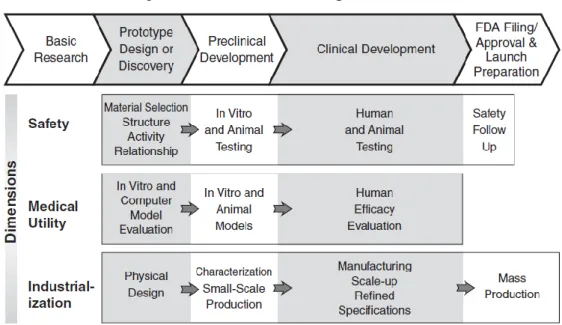
Traditionally the R&D model is described as a process divided in four sequential phases, based on “trial and error”. In practice, those phases are not sequential, in figure 1 it’s possible to see that the phase of a clinical trial it’s characterized by its purpose, i.e. the objectives of the trial, so one type of trial could occur at different time points of the drug development process, or studies from different phases could take place at the same time. Thus, a classification system based study objectives was developed (Figure 3). This classification system is described below (15):
Human Pharmacology Studies (Phase I studies): Studies designed in
order to estimate tolerability, characterize the pharmacokinetic and pharmacologic profile of the investigational medicinal product (IMP) and to identify drug interactions and the maximum tolerated dose. Usually these studies are conducted on healthy volunteers;
Therapeutic Exploratory studies (Phase II studies): Studies whose
primary objective is to explore the therapeutic efficiency of the drug candidate in target patient population; generally this is sub-divided in: the phase IIa trials, that often use dose escalation designs for estimating the dose response, and phase IIb trials, that evaluate the efficacy of the drug candidate at the prescribed dose regimen;
Therapeutic Confirmatory studies (Phase III studies): Studies performed
on larger patient population, which are designed to confirm that the drug is effective for use in the intended indication and population. The main selection criteria of these
8
studies are as similar as possible to the daily routine. The data generated will support the “prescribing information”;
Therapeutic Use studies (Phase IV studies): Studies conducted while the
drug is already on the market, in order to provide further information on the therapeutic effectiveness in real life conditions.
Figure 3 - Correlation between development phases and types of study (15)
The traditional and sequential model for drug development is slow, expensive and shortly predictive of the true clinical effectiveness of the study drug. In order to improve the drug development and promote better medicines, were developed two international initiatives, “Critical Path Initiative” (CPI) from United States of America and “Innovative
Medicines Initiative” (IMI) from Europe. IMI and CPI are mostly used by the countries
where they were developed, however this initiatives can be implemented by different countries as they introduce some guidances to obtain a better performance in pharmaceutical R&D. This two initiatives presents a new R&D strategy that is focused in the study of the pathophysiology allowing the development of better compounds, using better targets and new biomarkers (9,10,16).
CPI was developed by Food and Drug Administration (FDA), in 2004. This initiative combines efforts of the government, industry, academy and patients to increase efficiency and productivity of R&D processes, create an innovative science and reduce uncertainty, with the application of new scientific tools (Figure 4). CPI is based in 6 topics (16):
Better Evaluation Tools – Consists in the development and quantification of new biomarkers and disease models. The interest in the biomarkers lead to the development of “The Biomarker Consortium” at the Foundation for National Institutes of Health;
9
Streamlining Clinical Trials – This topic introduces innovative and efficient and improved clinical endpoints, to assess improvement of health or the occurrence of adverse drug reactions;
Harnessing Bioinformatics – Introduces the use of mathematics, statistics, computational data analyses and biological data to develop robust computer models of the human physiology and diseases;
Moving the Manufacturing into the 21st Century – Improve efficiency and quality of manufacturing, using tools to identify and analyse critical products attributes;
Developing Products to Address Urgent Public Health Needs – Consists in the use of antibiotics and countermeasures to combat emerging infections and bioterrorism;
At-risk Populations – Paediatrics – development of therapies for children and adolescents.
Figure 4 - Critical path of drug development (16)
The IMI was developed by European Medicines Agency (EMA). Similarly, this initiative aims topromote a faster R&D of better medicines and improve cooperation and competition among pharmaceutical companies. This initiative consists in 4 pillars (9,10):
10
Pillar I: Improve Predictivity of Drug Safety Evaluation; Pillar II: Improve Predictivity of Drug Efficacy Evaluation;
Pillar III: Knowledge Management: improve information and data utilization; Pillar IV: Education and Training: resolution of training gaps.
This initiative pretends to introduce a new R&D strategy based on a better knowledge of the pathophysiology and epidemiology of diseases prior to initiation of the expensive development phases (9,10).
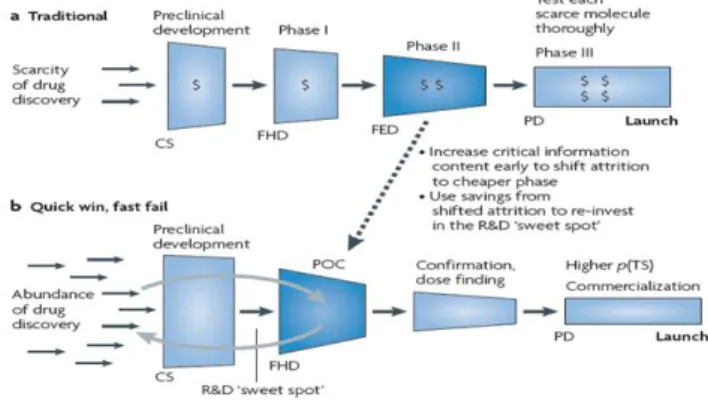
Several cases of big failures during the late stages of the clinical development process have led to the creation of a new development model (Figure 5): the “quick-win, fast fail” paradigm.
Figure 5 - The traditional paradigm vs. the “quick win, fast fail” paradigm (12)
This new approach aims to reduce uncertainty in the early stages (phase I/IIa) through the use of new tools and strategies, before the expensive later development stages. A good example is the conduction of proof-of-concept (PoC) trials that will have the capacity of providing evidence that the molecular target is being hit and causing the desired physiological response. These studies are performed earlier in drug development. This will result in a small number of new molecular entities entering in late stages phases. However, those that advance have a much higher probability of success and introduction in the market of those that progress in the development increases substantially (advance of the new chemical entity with established efficacy and safety). The savings gained from preventing costly failures can then be re-invested to further enhance R&D productivity (12).
CS: Candidate selection;
FED: First efficacy dose; FHD: First human dose; PD: Product decision; POC: Proof of concept;
p(TS): Probability of success.
11
2.2. R
EGULATORY FRAMEWORKClinical research is an extremely regulated area, with a series of laws and ethical standards in place. Their main purposes are to protect the rights and integrity of patients and study volunteers and to guarantee a high quality of the data produced/collected (17).
The first attempt to harmonise the clinical trials approval process occurred in May 2004 with the implementation of directive 2001/20/EC, which institutes the requirement of a prior approval of the clinical trial from the national competent authority and the central ethics committee of the country where the trial was submitted (14).
However, this directive did not provide the required level of harmonization. As consequence, the European Commission has classified the need for new legislation as a priority in order to re-establish Europe’s competitiveness in terms of clinical research. Thus, in July 2012 a legal proposal for Clinical Trial Regulation has been adopted (18).
The main purpose of this directive is to facilitate the conduction of multicentre trials by creating a new and simplified authorization procedure, through the creation of the Common Technical Document, the submission dossier, which contains a general part with scientific information identical for all member states (MS). Another innovation of this directive is the creation of the “EU portal” (18).
This regulation is expected to be effective in 2016, followed by a 3-year period during which both the directive 2001/20/EC and the regulation will be in place (18).
The Directive 2005/28/EC established the principles and guidelines for GCP as regards to IMP for human use, as well as the requirements for authorisation of the manufacturing or importation of such products (19).
The Portuguese regulatory framework for clinical research is composed by the law 46/2004, which established the obligation of favourable opinion from the Comissão de Ética para a Investigação Clínica (CEIC) and authorisation from Autoridade Nacional do Medicamento e Produtos de Saúde I.P. (INFARMED) and from Comissão Nacional de Proteção de Dados (CNPD) (20). This law is a transposition from directive 2001/20/EC.
12
As a transposition from directive 2005/28/EC, the law-decree 102/2007 presents information regarding GCPs and requirements for authorisation of the manufacturing and importation of IMPs (21).
The law-decree 67/98 regulates personal data protection. This law-decree provides information about protection of personal data on clinical trials and about personal data protection on non-interventional studies (22).
On 3rd April 2014 a new national law was approved. This law pretends to revoke the law 46/2004. This new law pretends to foster and streamline the clinical research and improve the competitiveness of Portugal in this area in the European and global context. Some of the improvements of this is law is the creation of a more comprehensive and harmonised legal framework, creation a national registry of clinical trials (Registo Nacional de Estudos Clínicos - RNEC), and the creation of a national network of ethics committees (Rede Nacional de Comissões de Ética para a Saúde – RNCES) and the establishment of more competitive deadlines (23).
Table 1 - European and national regulatory framework for clinical research
National and international regulations and policies have been developed to ensure that clinical research is conducted according with strict scientific and ethical principles. The main European and national laws and regulations are presented in Table 1.
14
2.3. C
LINICAL TRIALS COORDINATIONImplementation and conduction of clinical trials involve a wide range of tasks and processes. Previous to conduction of clinical trials, they must be submitted to regulatory authorities. After approval and preparation of the study documents, trial initiation visit can be performed.
The implementation of a clinical trial is a process that can be divided into three phases related to the regulatory authorities: before, during and after the submission of a clinical trial to the regulatory authorities.
Before the submission of a clinical trial to the regulatory authorities, sponsor should make a previous evaluation of the centre, the qualification visit. The qualification visit is performed after the feasibility questionnaire and the confidentiality agreement were fulfilled by the investigator. The feasibility questionnaires intend to determine the viability of a clinical trial at the site and the recruitment potential of the centre. In the qualification visit the sponsor evaluates some fundamental parameters that could influence the conduction of the clinical trial (24).
After the qualification visit the sponsor’s representative is responsible to send a report to the sponsor. The sponsor evaluates the centre according with the report and decides to select or not the centre to participate in the trial. If sponsor selects the centre the process of submission starts (24).
In Portugal, the regulatory authorities responsible to evaluate the submission process of a clinical trial are: INFARMED; CNPD; and CEIC. At this stage, during the submission, I was responsible to collect the necessary documents to the submission. Some documents were prepared by Blueclinical, according to the national laws and regulations, to help in the submission process. These documents should be adapted to each trial, and signed and dated for each responsible, before send to the sponsor. The sponsor is responsible for submit this documents to the regulatory authorities. The study approval by the site administration board is also required and is established by a Financial Agreement. This agreement between the sponsor the site administration board and the Principal Investigator (PI) establishes the responsibilities of each part, terms of collaboration, requirements for payment and reimbursement, publication and intellectual property terms, indemnification
15
and insurance, subject injury coverage, grounds for termination of contract and possibility of amending contract terms in the future (23).
After the centre had been approved by the regulatory authorities the sponsor can initiate the trial in the site. The trial is initiate by the initiation visit. This visit is performed by the sponsor’s representative, usually the clinical research associate (CRA) of the study, and it aims to leave the site totally able to initialize the recruitment for the clinical trial. During the initiation visit the CRA explains the study protocol, study procedures, case report form (CRF), adverse events (AEs) and serious adverse events (SAEs) notification procedure, investigation medicinal products that will be used in the trial, clinical reports and source documents, informed consent form (ICF) and biological samples to the research team. It is also important to fulfil the delegation log (document where the PI delegates some responsibilities of the trial to the other elements of the research team), and collect the
curriculum vitae and training certificates, necessary to perform the activities of the trial, of
all team members, this task can be done before this visit, during the submission process (24).
Pharmacists, who are responsible for the storage, dispensing and accounting for experimental medicine, are trained by the CRA on the place and conditions of storage of the investigational product and completing the registration waiver and receiving the experimental drug, whose specifications are described in the protocol (24).
To the research nurses, the CRA explain all clinical procedures described in the protocol applicable to the practice of nursing (24).
Where there is shipment of biological samples to a central laboratory1, the CRAs are responsible for training the research members responsible for the preparation of laboratory kits, for the collection of biological samples, and for sending the samples, according with the laboratory manual of the study. Research teams should stay with all necessary instructions and documents for the handling and shipping of these samples (24).
After the initiation visit the investigators can initiate the recruitment of participants to the trial. This period corresponds to the clinical phase of the clinical trial, where the
1 Central laboratories are chosen by the sponsor or their representatives, for the processing of biological
samples of the clinical study, which can be analysed and processed using the same equipment with the same calibrations and if possible analysed by the same technician, ensuring the homogeneity and integrity of the results.
16
investigators identify and enrol participants who meet the eligibility criteria. Once identified potential participants, the research physicians must obtain the informed consent form from potential participants, before any trial procedure is performed. After sign the informed consent the participant are screened in order to ensure that they meet all eligibility criteria, and so they can be randomized to the trial, or is a screen failure. The eligibility criteria are established in the protocol, according with the objectives of the trial, and determine the criteria for the selection of participants for the study (21,25).
If the subject fulfilled all the eligibility criteria, he/she can be randomized into the trial, the randomization is only applicable for randomized clinical trials. Randomization is the method of allocation of subjects to a treatment arm, randomly. This method allows to obtain comparable groups and to minimize possible bias. Randomization enables an equivalent distribution of subjects in the different treatment arms, thus producing a balance between the various factors that may influence the final results of clinical trials. Randomization is made using the interactive voice response (IVRS) or interactive web response system (IWRS). During the randomization call, an assignment of a subject identification number will be issued and the subject will be assigned to a treatment arm. In the case of non-randomized clinical trials the IVRS/IWRS is not used to assign the subject to the study drug (26,27).
Randomization marks the beginning of the clinical phase of the trial. At this stage the treatment study visits begins, this visits are performed according to the study flow-chart established in the study protocol. All procedures required for each visit are presented in the schedule of assessments, which is an annex of protocol, and are detailed described at the body text of the protocol.
In all visits it is necessary to use the IVRS or IWRS to assign the subsequent study drug kit numbers to the subject. IVRS/IWRS is also used to perform other procedures, such as: recording failures in the patient’s screening, obtaining subsequent drug assignment or a replacement kit, dose titration, discontinuing a patient, acknowledging study drug receipt, registration of an unscheduled visit, completion of a patient, resolution of temperature excursion and restarting a patient drug (26,27).
Other important stage of coordinating clinical trials is the data entry on the CRF. This forms should be completed at the end of each study visit. eCRF aims to transmit all
17
the relevant information collected during the study to the sponsor and to the regulatory authorities (28).
The close out visit of the study determines the end of the trial, and is performed after the completion of all the procedures of all subjects of the study, when the sponsor decides to finish the trial, or by request of investigator, CEIC/Local Ethics Committee or other regulatory authority. The end of the trial must be notified to INFARMED, CEIC, CNPD and to the administration board of the study site within ninety days. If the trial ends prematurely the notification to regulatory authorities and administration board should be made within fifteen days after completion (24).
This chapter gives the theoretical environment that supported my activities as study coordinator, which are described below in the next chapter.
19
3. E
XPERIENCE AS CLINICAL STUDY COORDINATORIn this chapter I will describe my experience during my internship in Blueclinical as Study Coordinator. During this period I was allocated to the Clinical Research Office of Unidade Local de Saúde de Matosinhos, E.P.E. (ULSM) where I carried out Study Coordinator activities, from assessment, initiation and conduction of studies to its completion.
The presentation of the Clinical Research Office (GACEC – Gabinete de Apoio ao Centro de Ensaios Clínicos) to the ULSM occurred on October 2014. In this meeting were presented the Blueclinical mission and objectives to the site personnel.
3.1. F
EASIBILITIES AND QUALIFICATION VISITSBlueclinical had a centralized process of feasibilities. Initially the feasibilities were sent to the Blueclinical headquarters and then they were distributed by the feasibilities specialist to the Blueclinical sites. Then the clinical research office, where I was inserted, was responsible to address the interest of the respective hospital service to conduct the study. Sometimes the sponsor or the Contract Research Organization (CRO) indicated the clinical research sites and investigators that appear to be the most suitable and interested for the conduction of the study.
During my internship almost 70 feasibilities were submitted to ULSM. I was responsible to contact the respective services and to ensure that the feasibility was correctly fulfilled by the investigator. If the feasibility had questions related to support services, as pharmacy or imaging service, I was also responsible for contacting these services in order to answer those questions.
After the feasibility some sponsors performed a qualification visit to verify the hospital facilities and if it was suitable to conduct the study. The qualification visits were scheduled by the clinical research office with every service involved in the study procedures.
As study coordinator, I had to schedule this visits with the sponsor’s representative and with the respective services that could be involved in the trial. In this visits were
20
assessed the study site feasibility to conduct and carry out the clinical study, such as the human resources and infrastructures of the centre.
I had participated in three qualification visits that resulted in the site selection.
3.2. S
TUDY SUBMISSIONBlueclinical had specific documents that were used in all submissions. At submission these documents were adapted to each trial and sent to the sponsor or sponsor’s representative, who prepared the submission file to submit the study to the administration board.
Before sending the submission documents to the administration board, I reviewed the submission file in order to verify if the necessary documents were present. A checklist of all of the required documents was filled out. The submission file must include: a cover letter; protocol updated version; protocol synopsis; site facilities; Portuguese or bilingual financial agreement signed and dated by the PI and the sponsor; sponsor declaration – proof that the trial was submitted to CEIC, INFARMED and CNPD. If all documents were present, I sent the submission file to the administration board for the final approval.
In the submission process, my specific functions were to obtain the signed and dated financial agreements; send the approval craft to the CRA; and send two originals of the financial agreement to the CRA.
3.3. I
NITIATION VISITSInitiation visits were always performed in-person. In these visits, I received adequate training on the protocol along with the research team (e.g. study objectives, ICF, AE/SAE reporting, GCP principles, study drug, CRF); some important documents were collected (e.g. subject pre-screening logs, delegation log); and the recruitment was discussed. In most cases, some documents were still missing, so I had to collect them and send them to the CRA (e.g. research team’s CV, delegation log, financial disclosure forms).
During the curricular training period, I had the opportunity to be present at two initiation visits.
21
3.4. P
ATIENTS RECRUITMENTThe recruitment period was established by the sponsor and was the time during which the investigators had the opportunity to recruit patients to the study. During this period, the investigators and I tried to select possible subjects to be included in the study. All weeks the pre-screening list, i.e. the list of potential participants was to be sent to the sponsor. The identification of potential participants was a fundamental task to ensure that the research team reached the number of proposed subjects. Depending of the study, potential participants were detected in the emergency service, inpatient, external consultations, or in patient’s databases.
My work in patient’s selection was performed mainly in patient’s databases and Medical Support System (SAM) application. Furthermore, I also analysed the eligibility criteria with the investigator and, if applicable, screen and enrol the patient in the study. Compliance with all eligibility criteria is essential and it should be respected by all investigators. These criteria were established based on safety parameters that should be considered when including subjects to ensure their safety and well-being.
3.5. C
LINICAL VISITSClinical visits period encompassed all activities related with patients, including preparation and conduction of the visits.
The study visits were scheduled according to the study protocol, and every procedure for each visit was completed. So, the preparation of clinical visits was essential to guarantee compliance with all required procedures.
Using the study flow-chart and visit plan, that resume the procedures involved in each visit, I prepared a worksheet to the investigator that schematized all visit procedures. The preparation of visits was performed taking into account specific procedures according to pathology, study phase, visit number and concomitant diseases and medications. However, generally some procedures were common to the most of the visits, and should be presented at the worksheet, such as:
22
Measurement of vital signs; Collection of biological samples; Report of AEs;
Verification of concomitant medication and procedures; IVRS/IWRS contact.
When performing the worksheet I had also to carefully specify the tasks order and timing to perform the specific procedures, in order to guarantee that these timings were strictly complied.
Additionally, I prepared all necessary forms (considered source documents) to register all clinical data, such as:
Pharmacy prescription form; Nurse form;
Study visit script;
Questionnaires required by protocol; Laboratory kits;
Materials for biological samples shipment (ambient temperature and/or dry ice).
In visits that involved the collection of biological samples, I identified the laboratory tubes and completed the requisition form with patient’s number, date of birth, visit date and number of the visit.
On the visit day, I was responsible to administer the study questionnaires to the patients in a reserved room, as this procedure should be performed before the consultation, and then to forward them to the medical office. During the consultation, the investigator evaluates the overall status of the patient and decided if the patient was able to continue in the study. If the patient continued in the trial, I called the IVRS/IWRS to request
medication to the patient. After the call I received an e-mail of the application with the medication number. This e-mail was attached to the prescription form, and I was
responsible to deliver these documents to the pharmaceutic of the study, and to ensure that they were achieved in the pharmacy file of the respective study.
23
At the end of the visit, I received patient´s bills and sent them by e-mail to the sponsor. The patient’s bills can’t have any identification. Before send the bills to the sponsor I had to identify them with the study number, patient’s study code and visit number.
Monthly, a schedule of the planned visits was prepared and sent to the research teams.
3.6. A
CTIVITIES PERFORMED AFTER THE VISITSAfter the visit, I was responsible to review the source documents to guarantee that no errors were registered or if there is any missing information. The information collected during the visit will be transcribed into the CRF. If some information was not totally clarified, that should be clarified with the investigator, in order to correctly fill the CRF.
Sometimes, I had to answer to queries generated by the CRA or data management of the study due to discrepancies in the data introduced. If necessary, these queries were clarified with the investigator.
To maintain all study materials updated, after the visit, I organized all study materials on the right places. The stock of materials and laboratory kits were checked periodically. To avoid missing study material, I filled a template of kits accountability.
3.7. M
ONITORING VISITSThe monitoring visits pretended to perform source data verification to ensure that all data collected were reliable and that reconstruction and evaluation of the study was possible.
I was responsible for schedule these visits with the research team, which involve different services, and prepare the materials needed to the visit, to make sure that the CRA had the necessary conditions to perform the visit.
During the visit, the CRA verify the consistency between the CRF and source documents. Then, I had to correct all the issues identified by the CRA and, if applicable, clarify those issues with the investigator.
24
3.8.
G
ENERAL TRAININGAt the beginning of my training, I had the opportunity to attend to a training session at Blueclinical Phase I facilities focused in all Blueclinical business areas. In this training was possible to talk with people with more experience, which help me to understand and know how to overcome some issues that could affect me during my training.
Before start my training, as study coordinator, I firstly researched and tried to understand the procedures involved in clinical research coordination. Since I was an intern at Blueclinical, but I was introduced in a place with different procedures, it was important to understand how to implement a new procedure at the hospital. So, I had a training session about all Blueclinical CRP SOPs that was to be implemented in the quality system of ULSM.
After the implementation of the clinical research office at ULSM, I started to study the protocols of active studies. At this stage, the site had 2 active trials, in the oncology service. The protocol training was complemented with the training of the CRA.
25
4. D
ISCUSSIONIf basic training is important for good performance on internship, there is however a set of skills that have been acquired during the internship and difficulties felt associated with the type of tasks performed.
During the nine months internship I developed technical and social skills that were crucial for entry into the work market. I developed technical skills at the level of coordination and conduction of clinical studies. In the submission of the studies was possible to contact with different services of the hospital and to know its facilities, and to different CRAs.
Within the coordination of studies I had the opportunity to perform such diverse tasks as coordination of visits to the assessment of the site feasibility and early explanation of the study to the research team. During the conduction of the study I was also responsible to support the research team in every task related to the study. Since I had to have a thorough knowledge about the study I learned about different diseases and different therapeutic areas, such as: oncology, neurology, nephrology, cardiology, gastroenterology, gynecology and obstetrics.
Finally, and still talking about acquired skills, I can emphasize social skills. I developed autonomy, confidence and ability to manage the time, since I need to establish priorities according with the various projects taking place in parallel with specific timelines. The interaction with various research teams, as well as contact with the various realities allowed me to acquire social skills that I consider an asset for my future as proactivity, versatility, strategic vision and the ability to resolve conflicts.
The ability to identify and apply the knowledge acquired throughout my learning experience as study coordinator was one of the biggest challenges.
26
5. C
ONCLUSIONThis report aimed to presenting the activities performed during my internship at Blueclinical, as well as learning outcomes and skills acquired during this period.
This experience was very useful, and allowed the application of the knowledge acquired during the Bachelor of Biomedical Science and MSc in Pharmaceutical Biomedicine in real-life and concrete situations in the area of clinical research.
I had the opportunity to perform various functions autonomously, which made the stage even more enriching. I learned how to coordinate and organize clinical trials since its initial stage to its completion. Thus, I consider that the originally proposed objectives were fully achieved.
I can conclude that my academic training contributed to a good performance in various activities performed during the internship. The flexibility and autonomy that I acquired during academic training were quite useful during this period.
27
6. B
IBLIOGRAPHY1. Blueclinical. [cited 2014 Oct 1]. Available from: http://www.blueclinical.pt/. 2. Blueclinical Phase I | Mission. Available from:
https://www.blueclinical.com/en/mission.php.
3. Blueclinical Phase I. Available from: https://www.blueclinical.com/en/. 4. Blueclinical R&D Consultancy | Mission. Available from:
http://www.blueclinical.pt/consultancy/en/mission.php.
5. Consultancy BR. Available from: http://www.blueclinical.pt/consultancy/en/. 6. Blueclinical Clinical Research Partnership. Available from:
http://www.blueclinical.pt/crp/en/.
7. Blueclinical CRP | Hospitals. Available from: http://blueclinical.pt/crp/en/hospitals.php.
8. Entidade Reguladora da Saúde. Estudo sobre a Organização e Desempenho das Unidades Locais de Saúde - Relatório Preliminar I. 2011.
9. Goldman M. The Innovative Medicines Initiative: A European Response to the Innovation Challenge. Clin Pharmacol Ther. American Society of Clinical Pharmacology and Therapeutics; 2012 Mar;91(3):418–25. Available from: http://dx.doi.org/10.1038/clpt.2011.321.
10. Innovative Medicines Initiative. The Innovative Medicines Initiative ( IMI ) Scientific Research Agenda Revision 2011. 2011;(June).
11. Hein T. Product Lifecycle Management for the Pharmaceutical Industry Author : Todd Hein ,Oracle Life Sciences Key Contributors : Arvindh Balakrishnan , Oracle Life Sciences Hardeep Gulati , Oracle Product Strategy Michael Winkler , Oracle Life Sciences Oracle Ph. :1–9.
12. Paul SM, Mytelka DS, Dunwiddie CT, Persinger CC, Munos BH, Lindborg SR, et al. How to improve R&D productivity: the pharmaceutical industry’s grand challenge. Nat Rev Drug Discov. 2010 Mar [cited 2014 Jul 9];9(3):203–14. Available from: http://www.ncbi.nlm.nih.gov/pubmed/20168317.
13. Pharmaceutical Research and Manufacturers of America. Drug Discovery and Development. Chorghade MS, editor. Hoboken, NJ, USA: John Wiley & Sons, Inc.; 2006 Apr 14; Available from: http://doi.wiley.com/10.1002/0471780103.
14. The European Parliament, The Council of the European Union. Directive 2001/20/EC. Off J Eur Communities; 2001;(6):34–44.
28
15. ICH. ICH E8 - General considerations for clinical trials. 1997;(July).
16. Woodcock J, Woosley R. The FDA critical path initiative and its influence on new drug development. Annu Rev Med. 2008 Jan [cited 2014 Oct 20];59:1–12. Available from: http://www.ncbi.nlm.nih.gov/pubmed/18186700.
17. Kane A, Williams J, Yeo L. Clinical Trials in Europe: an overview of quality requirements. 2008.
18. The European Parliament, The Council of the European Union. Proposal for a Regulation of the European Parliament and of the Council on Clinical Trials on Medicinal Products for Human Use, and Repealing Directive 2001/20/EC. 2012;0192.
19. The European Parliament, The Council of the European Union. Commission Directive 2005/28/EC of 8 April 2005 Laying Down Principles and Detailed Guidelines for Good Clinical Practice as Regards Investigational Medicinal Products for Human Use, as well as the Requirements for Authorisation of the Manufacturing or Im. 2005;13–9.
20. Parlamento Europeu. Lei no 46/2004, de 19 de Agosto. 2004.
21. Parlamento Europeu. Decreto-Lei n.o 102/2007, de 2 de Abril. 2007.
22. Parlamento Europeu. Lei n.o 67/98, de 26 de Outubro. 1998.
23. Parlamento Europeu. Lei n.o 21/2014. de 16 de Abril. 2014;2450–65.
24. The Ohio State University. SITE MONITOR VISITS. Available from:
https://ccts.osu.edu/education-and-training-programs/research-education-and-training-programs/clinical-research-coordinator-resources/site-monitor-visits.
25. William F. Rosenberger JML. Randomization in Clinical Trials: Theory and Practice. 2004. 26. Byrom B. Using IVRS in Clinical Trial Management. 2002;(October).
27. Byrom B, Dowlman N. Interactive Web Response. Eur Pharm Exec. 2003.
28. Moon KK. Techniques for Designing Case Report Forms in Clinical Trials Considerations for Efficient Data Management and Statistical Analysis. 2006;9(1):1–7.
![Figure 1 - Blueclinical's business units [Adapted from: (12)].](https://thumb-eu.123doks.com/thumbv2/123dok_br/16030014.1104654/21.892.138.784.475.788/figure-blueclinical-s-business-units-adapted.webp)