Submitted26 April 2016
Accepted 2 June 2016
Published13 July 2016
Corresponding author
Ciyong Lu, [email protected]
Academic editor
Lanjing Zhang
Additional Information and Declarations can be found on page 13
DOI10.7717/peerj.2169
Copyright
2016 Wu et al.
Distributed under
Creative Commons CC-BY 4.0
OPEN ACCESS
HIV/STIs risks between migrant MSM
and local MSM: a cross-sectional
comparison study in China
Jie Wu, Hong Wu, Pengsheng Li and Ciyong Lu
Department of Medical Statistics and Epidemiology, Sun Yat-Sen University, Guangzhou, China
ABSTRACT
Background. Internal migration plays a significant role in China’s HIV epidemic. However, few studies have directly compared migrant men who have sex with men (MSM) with local MSM with regard to HIV/sexually transmitted infections (STIs) risks.
Methods.We conducted a study in Guangzhou, China, with the aim of understanding the differences in HIV/STIs risks between migrant MSM and local MSM. A cross-sectional study was conducted among 273 migrant MSM and 249 local MSM in Guangzhou, China. Their behavioral and serologic data on HIV/syphilis were collected and compared between the two groups. A multivariate logistic regression was used to estimate the associations between HIV/STIs risks and migratory status.
Results. Migrant MSM, compared to local MSM, have higher odds of reporting unprotected anal intercourse (UAI) (OR=1.4; 95% CI [0.9–2.0]) and having multiple
homosexual partners (OR=1.2; 95% CI [0.8–1.8]). A lower rate of condom use at
homosexual debut was reported in migrant MSM than in local MSM (OR=0.7; 95% CI
[0.5–0.9]). Migrant MSM have less odds of reporting HIV/STIs testing in the previous 6 months relative to local MSM (OR=0.5; 95% CI [0.4–0.8]). In addition, migrant
MSM demonstrated a lower level of HIV knowledge than local MSM (OR=0.4; 95% CI [0.2–0.8]).
Conclusion.Migrant MSM are more likely to engage in sexual risk behaviors, report a lower level of HIV knowledge and have less access to HIV/STIs testing. Further comprehensive interventions targeting migrant MSM are urged.
SubjectsEpidemiology, HIV, Public Health
Keywords HIV/STIs risk, Migration, MSM, Comparison
INTRODUCTION
increasing from 2.5% in 2006 (2014). Moreover, the existing literature suggests that most MSM in China are migrants, with a proportion ranging from 55% to 88% (Berg et al.,2011;
Fan et al.,2012;Feng et al.,2009;Ruan et al.,2009) and approximately 6% of male migrants are MSM (Chen et al.,2015). However, the studies that compared migrant MSM and local MSM with respect to HIV/STIs risk profile were generally limited despite that several studies have been conducted to understand HIV/STIs risks in the migrant MSM population.
In the past decade, a growing body of research has been conducted among migrant MSM in China. For example,Mao et al.(2014) reported that an incidence rate of 7.83 per 100 person years for HIV infection and 11.11 per 100 person years for syphilis in a cohort of 511 migrant MSM in Beijing. Several other studies in China have been conducted to understand the HIV testing behaviors (Song et al.,2011), HIV/syphilis prevalence (Wang et al.,2013), bisexual behaviors (Guo et al.,2012), and same-sex disclosure (Guo et al.,2014) in migrant MSM. Two additional studies have been dedicated to exploring HIV/STIs risks in migrant ‘‘money boys’’ (also known as male sex workers) (Lau et al.,2009;Wong et al.,2008). All of these previous researches have contributed to our understanding of HIV/STIs risks among migrant MSM in China. Yet, the inclusion of exclusive migrant MSM did not add our knowledge on the relative HIV/STIs risks of migrant MSM to their local counterparts. Indeed, there were some other studies that recruit both migrant MSM and local MSM suggesting migrant MSM are more likely to be infected with HIV/STIs (He et al.,2006;Ruan et al.,2009;Wu et al.,2013) or engage in unprotected anal intercourse (UAI) (Ruan et al.,
2008). However, most of them mixed migrant MSM and local MSM in data analysis and only reported a migratory status-stratified analysis of primary outcome (e.g., HIV infection or UAI). The comprehensive differential contours of HIV/STIs risks between migrant MSM and local MSM are still largely unknown.
So far, few studies have been conducted to directly compare the HIV/STIs risks between migrant MSM and local MSM. Direct comparison may confer additional knowledge on the relation between migration and HIV/STIs risks in the MSM community, and provide information on tailored intervention development. To fill this gap in the literature, we conducted a study in Guangzhou, China, with the aim of understanding the differences of HIV/STIs risks between migrant MSM and local MSM.
MATERIALS AND METHODS
Participants and procedures
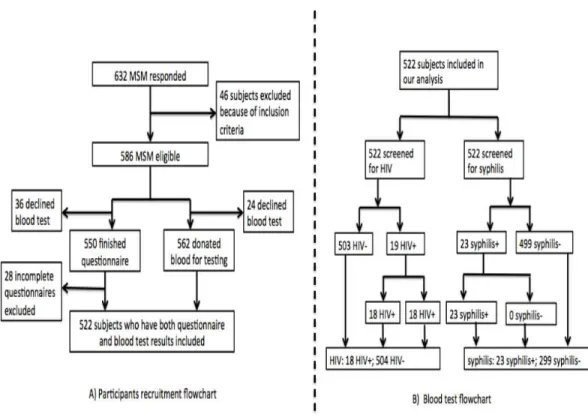
Figure 1 Flowchart of participants recuruitment and blood test.
deemed eligible if they were: (1) male, (2) aged 18 years or older, and (3) reported having oral or anal sex with men in the previous six months. However, our study did not intend to recruit those who stayed in Guangzhou for less than one month in order to exclude temporary visitors or tourists. Participants were compensated approximately $20 for their time.
The study was performed between March and August of 2010. A total of 522 participants completed a self-administered questionnaire and provided blood samples for HIV and syphilis testing.Figure 1provides a flowchart of participant recruitment and blood test. All the study activities took place in the LPSC.
Ethical approval
The study protocol was reviewed and approved by the ethics committees of Sun Yat-sen University (SYS IRB#M08-10-03A). Written informed consent was obtained from each participant.
Measures
Migratory status
In our study, we determined the respondents’ migratory status according to their self-reported official household registrations, also known as ‘‘Hukou.’’ For instance, if the subject reported a non-Guangzhou registered ‘‘Hukou,’’ he was defined as a migrant; otherwise he was regarded as a local resident. This measure has been widely used in the previous migration studies in HIV research (Berg et al.,2011;Li et al.,2004;Mao et al.,2014;
Ruan et al.,2009;Song et al.,2011). Under the ‘‘Hukou’’ system, each Chinese resident is assigned to a particular place of residence, which usually is the place where they were born. Without having a permanent household registration in the host cities, the migrants cannot access the social welfare benefits available to local residents, such as subsided housing, free education, long-term employment contracts and health care (Solinger,1999;Zhang,2001).
Socio-demographics and background characteristics
Participants were asked to report their age (continuous and categorized as 18–25 years old, 26–35 years old and 35 years old and above), ethnicity (Han VS. others), educational attainment (secondary school or less, high school and college or above), marital status (unmarried, married and divorced/widowed), monthly income and self-reported sexual orientation (gay, bisexual, heterosexual or uncertain). The other variables collected are described in details inTable 1.
The HIV/STIs risk information mainly comprised of two parts including (1) sexual risk behaviors and (2) illicit drug use.
Sexual risk behaviors
Participants were asked to recall their homosexual debut and sexual activities in the past 6 months. Information, collected in this section, included age of homosexual debut, condom use at homosexual debut, the number of same-sex sexual partners and condom use with different partners in the past 6 months. In addition, we asked the participants to indicate whether they purchased commercial sex in the past 6 months and condom use in the context of commercial sex. Heterosexual behaviors and condom use in the past 6 months were also collected. The category of multiple homosexual partners was coded positive for individuals who reported more than one receptive or insertive homosexual partner in the last 6 months. Frequency of condom use with a regular, casual and commercial sex partners was indicated as ‘‘never,’’ ‘‘sometimes,’’ ‘‘most of time,’’ or ‘‘every time.’’ In our study, we defined UAI as not using condom every time during anal intercourse with any homosexual partner in the past 6 months.
Illicit drug use
Illicit drug use was ascertained by posing a question that asked the participants to indicate whether they used a list of illicit drugs, including marijuana, cocaine, heroin, hallucinogens, amphetamines, methamphetamine, MDMA (‘‘ecstasy’’) and ketamine in the past 6 months.
HIV/STIs testing behaviors and HIV/STIs services utilization
Table 1 Socio-demographic characteristics of men who have sex with men (MSM), Guangzhou, China, 2010 (N=522).
Demographics Overall Migrant MSM Local MSM pvalue
N % N % N %
Participants 522 273 249
Age, mean±SD 29.7±6.6 29.9±6.6 29.5±6.6 0.445
Marital status 0.09
Single 440 84.3 221 81.0 219 88.0
Married 68 13.0 43 15.7 25 10.0
Divorced/widowed 14 2.7 9 3.3 5 2.0
Education <0.001
Below college 123 23.6 84 15.7 39 30.8
College and above 399 76.4 189 84.3 210 69.2
Monthly incomea 0.001
1,000 and less 87 16.7 31 11.4 56 22.5
1,001–3,000 309 59.3 178 65.4 131 52.6
Above 3,000 125 24.0 63 23.2 62 24.9
Self-reported sexual orientation 0.001
Homosexual or bisexual 378 72.4 181 66.3 197 79.1
Heterosexual or uncertain 144 27.6 92 33.7 52 20.9
Common venues for finding partners 0.541
Bar-based venues 17 3.3 9 3.3 8 3.2
Salon-based venues 29 5.6 12 4.4 17 6.8
Public facility-based venues 4 0.8 2 0.7 2 0.8
Internet 441 84.5 237 86.8 204 81.9
Others 31 5.9 13 4.8 18 7.2
Satisfaction with current living environment <0.001
No 258 49.4 157 57.5 101 40.6
Yes 264 50.6 116 42.5 148 59.4
Notes.
aMissing=1.
Abbreviation: SD, Standard Deviation; MSM, Men who have sex with men.
utilization was ascertained by summing individual responses to utilization of five HIV/STIs prevention services in the past 6 months, including free condom, free lubricant, counseling, peer education and free reading materials. Participants who have accessed at least one of the five HIV/STIs prevention services were deemed as participants who utilized HIV/STIs services.
HIV knowledge
We used an 8-item scale to assess HIV knowledge of participants. The knowledge scale incorporated 8 questions such as ‘‘Having dinner with HIV-infected person can transmit HIV,’’ ‘‘Mosquito bites can spread HIV,’’ etc., all of which required true/false, likely/unlikely, or uncertain responding. This instrument was adopted from a previous study in China (Choi et al.,2007), with a reliable internal consistency (α=0.87). A composite score was
about the transmission of HIV/AIDS. In addition, we defined that participants obtained a composite score≥6 were well informed of HIV knowledge.
Biological testing for HIV and syphilis
We screened participants for antibodies to HIV (HIV1.2.0, Murex antiHIV, Abbott Laboratories, Abbott Park, IL) and syphilis (ICE Syphilis Murex, Abbott Laboratories, Abbott Park, IL) in the Yuexiu District Center for Disease Control and Prevention Center (CDC) HIV laboratory, Guangzhou City. HIV-positive samples were confirmed using Western Blot (WB; Singapore MP Biomedical Asia Pacific Ltd) and syphilis-positive samples were confirmed by a treponemal antibody test (Serodia Treponema pallidum particle agglutination test; Fujirebio, Tokyo, Japan) in Guangdong CDC HIV confirmatory laboratory. We determined the HIV and syphilis infection status based on the results confirmatory tests that were sent back to us.
Statistical analysis
Descriptive analysis was performed to compare socio-demographic characteristics, sexual risk behaviors, illicit drug use, HIV/STIs testing, HIV/STIs prevention services utilization, HIV knowledge and HIV/syphilis infection between migrant MSM and local MSM. Chi-square analyses, Fisher exact tests, ort tests, whenever applicable, were used to test for the differences between migrant MSM and local MSM. For significant differences, difference of proportion or difference of mean were estimated with 95% Confidence Interval (CI). Because age may modify the prevalence of UAI and HIV/syphilis infection, we further estimated the age-and migratory status-specific prevalence of UAI and HIV/syphilis infection. A multivariate logistic regression model was used to estimate the associations between HIV/STIs risks and migratory status, using local MSM as the reference group. All statistical tests were 2-tailed, and probability values <0.05 were considered statistically significant. STATA, version 12.1, software (StataCorp LP, College Station, Texas) was used for all statistical analysis.
RESULTS
Socio-demographic characteristics
A total of 522 MSM, including 273 migrant MSM and 249 local MSM were recruited into our study. Socio-demographic characteristics of participants are presented inTable 1. The mean age of participants was 29.7 years old (SD=6.6), and migrant MSM and local MSM were comparable with regard to age. Marital status was also similar across the two groups with 84.3% of all participants reporting unmarried. Approximately three-quarters (76.4%) of participants have obtained at least a college degree, and the educational attainment was significantly higher for migrant MSM than local MSM (chi-square test p<0.001,
difference of proportions: 15.1%, 95% CI [8.0–22.2%]). In addition, migrant MSM were also less likely to report the lowest income category, compared with migrant MSM. With respective to reported sexual orientation, a smaller proportion of migrant MSM self-identified as homosexual or bisexual than local MSM (chi-square testp=0.001, difference
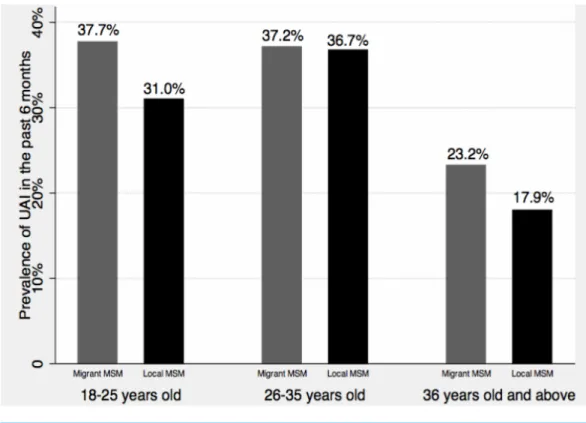
Figure 2 Age-and migratory status-specific prevalence of UAI.
Sexual risk behaviors
Sexual risk characteristics of participants are summarized inTable 2. Migrant MSM were less likely to report condom use at homosexual debut, compared with local MSM (chi-square testp=0.017, difference of proportions: –10.5%, 95% CI [–19–−1.9%]). Overall, the
prevalence of UAI in the previous 6 months was 33.3%, and no significant difference of UAI was found between migrant and local MSM.Figure 2provides age-and migratory status-specific prevalence of UAI. In general, older MSM were less likely to report UAI than younger MSM, and migrant MSM were more likely to report UAI relative to local MSM, although these differences were not statistically significant. Fifty-five percent of participants had multiple homosexual partners in the previous 6 months, but there was no significant difference of having multiple homosexual partners between migrant MSM and local MSM. Migrant MSM and local MSM were also similar with regard to commercial sex in the past 6 months and condom use in commercial sex. Compared with their local counterparts (10.8%), a larger proportion of migrant MSM reported having heterosexual sex in the previous 6 months (chi-square testp=0.009, difference of proportions: 8.2%, 95% CI
[2.2–14.3%]). However, there was no difference in terms of condom use in heterosexual sex in the past 6 months.
Other HIV/STIs-related risks and HIV/syphilis infection
Table 2 HIV/STIs risks of Men who have sex with men, Guangzhou, China, 2010 (N=522).
Characteristics Overall Migrant MSM Local MSM pvalue
N % N % N %
Participants 522 273 249
Condom use at first homosexual anal sex* 0.017
No 255 48.9 147 53.8 108 43.3
Yes 267 51.1 126 46.2 141 56.6
UAI in the previous 6 monthsb 0.577
No 348 66.7 179 65.6 169 67.9
Yes 174 33.3 94 34.4 80 32.1
Condom use at last homosexual anal sex 0.077
No 177 33.9 83 30.4 94 37.8
Yes 345 66.1 190 69.6 155 62.2
Multiple homosexual partners in the past 6 monthsa 0.103
No 238 45.5 115 42.1 123 49.4
Yes 283 54.5 157 57.9 126 50.6
Purchasing sex in the previous 6 months 0.938
No 488 93.5 255 93.4 233 93.6
Yes 34 6.5 18 6.6 16 6.4
Consistent condom use with commercial sex partners in the previous 6 months
0.744
No 18 52.9 9 50.0 9 56.3
Yes 16 47.1 9 50.0 7 43.7
Heterosexual vaginal sex in the previous 6 months* 0.009
No 443 84.9 221 81.0 222 89.2
Yes 79 15.1 52 19.0 27 10.8
Consistent condom use with female sex partners in the previous 6 months
1.000
No 68 86.1 45 86.5 23 85.2
Yes 11 13.9 7 13.5 4 14.8
Illicit drug use 0.824
No 502 96.2 262 96.0 240 96.4
Yes 20 3.8 11 4.0 9 3.6
HIV testing in the previous 6 months* 0.020
No 298 57.1 169 61.9 129 51.0
Yes 224 42.9 104 38.1 120 48.2
STIs testing in the previous 6 months (excluding HIV testing)
0.057
No 324 62.1 180 65.9 144 57.8
Yes 198 37.9 93 34.1 105 42.2
Utilization of HIV/STIs prevention services in the previous 6 months
0.715
No 195 37.4 104 38.1 91 36.5
Yes 327 62.6 169 61.9 158 63.5
Table 2(continued)
Characteristics Overall Migrant MSM Local MSM pvalue
N % N % N %
HIV knowledge level* 0.002
Not-informed 43 8.2 32 11.7 11 4.4
Informed 479 91.8 241 88.3 238 95.6
HIV infection 0.239
HIV-negative 504 96.6 261 95.6 243 97.6
HIV-positive 18 3.4 12 4.4 6 2.4
Syphilis infection 0.523
Syphilis-negative 499 95.6 259 94.9 240 96.4
Syphilis-positive 23 4.4 14 5.1 9 3.6
Notes.
aMissing=1.
bUAI with males only.
*p<0.05.
Abbreviation: MSM, Men who have sex with men; UAI, Unprotected anal intercourse; STIs, Sexually transmitted infections.
was less prevalent in migrant MSM than local MSM (chi-square testp=0.02, difference
of proportions: –9.6%, 95% CI [–16.5–−2.6%]). Less than 40% of participants had STIs testing (excluding HIV testing) in the previous 6 months, and no significant difference of having STIs testing was found between the two groups. Similar level of utilization of HIV/STIs prevention services was also reported in both groups. However, migrant MSM had a lower level of HIV knowledge than local MSM (chi-square testp=0.002, difference of
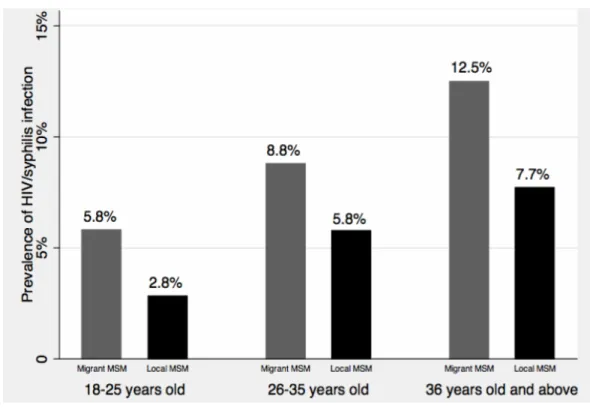
proportions:−7.3%, 95% CI [–11.9–−2.7%]). The prevalence of seropositive for HIV and syphilis was 3.4% and 4.4%, respectively, and no significant difference of HIV or syphilis infection was found between migrant MSM and non-migrant MSM. In addition, we combined HIV and syphilis infection data and presented age- and migratory status-specific prevalence of HIV/syphilis infection withFig. 3. The prevalence of HIV/syphilis infection increased along with the age categories, and the prevalence was higher in migrant MSM than in local MSM across all the age categories. However, all these differences were not statistically significant.
Multivariate associations between HIV/STIs risks and migratory status
Figure 3 Age-and migratory status-specific prevalence of HIV/syphilis infection.
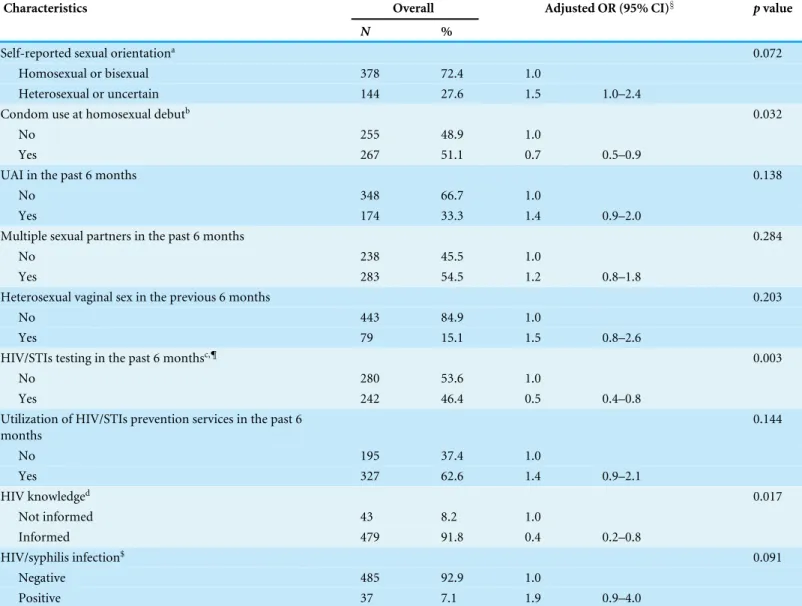
possible association if our sample size increases. We also did not find a significant association between migratory status and HIV/syphilis infection (OR=1.9; 95% CI [0.9–4.0]).
DISCUSSION
Our study identified several noteworthy differences of HIV/STIs risks between migrant MSM and local MSM, which included UAI, having multiple homosexual partners, condom use at homosexual debut, HIV/STIs testing behavior and HIV knowledge. Because there is a paucity of studies comparing migrant MSM to local MSM, findings from our study will not only provide critical insights for understanding the role of internal migration in spreading HIV in MSM community in China but also contribute to intervention development targeting migrant MSM.
Table 3 Multivariate logistic regression of HIV/STIs risks on migratory status, Guangzhou, China, 2010 (N=522).
Characteristics Overall Adjusted OR (95% CI)§ pvalue
N %
Self-reported sexual orientationa 0.072
Homosexual or bisexual 378 72.4 1.0
Heterosexual or uncertain 144 27.6 1.5 1.0–2.4
Condom use at homosexual debutb 0.032
No 255 48.9 1.0
Yes 267 51.1 0.7 0.5–0.9
UAI in the past 6 months 0.138
No 348 66.7 1.0
Yes 174 33.3 1.4 0.9–2.0
Multiple sexual partners in the past 6 months 0.284
No 238 45.5 1.0
Yes 283 54.5 1.2 0.8–1.8
Heterosexual vaginal sex in the previous 6 months 0.203
No 443 84.9 1.0
Yes 79 15.1 1.5 0.8–2.6
HIV/STIs testing in the past 6 monthsc,¶ 0.003
No 280 53.6 1.0
Yes 242 46.4 0.5 0.4–0.8
Utilization of HIV/STIs prevention services in the past 6 months
0.144
No 195 37.4 1.0
Yes 327 62.6 1.4 0.9–2.1
HIV knowledged 0.017
Not informed 43 8.2 1.0
Informed 479 91.8 0.4 0.2–0.8
HIV/syphilis infection$ 0.091
Negative 485 92.9 1.0
Positive 37 7.1 1.9 0.9–4.0
Notes.
§except for the characteristics presented in table, our model additionally adjusted for age, income and education Likelihood ratio test for interaction with age: a,
Chi-square=0.71p=0.3995; b, Chi-square=2.15,p=0.2419; c, Chi-square=0.29p=0.5928; d, Chi-square=2.62p=0.1056.¶, Combine HIV testing and other STIs
testing; $, Combine HIV infection and syphilis infection.
Abbreviation: UAI, Unprotected anal intercourse; STIs, Sexually transmitted infections.
hypothesized that the anonymity of living in a new city, often without social connections to home communities or the loss of close family relationships, might contribute to the increase of sexual risks in migrants (Bianchi et al.,2007;Egan et al.,2011). This finding underscores that migrant MSM, compared to local MSM, were more likely to have sexual risk behaviors, which calls for a targeted intervention approach to reduce sexual risk behaviors among migrant MSM.
services (Peng et al.,2010). Previous research has further indicated that migrants, compared to local residents, have less access to HIV testing. For example, a recent study, conducted in migrant women and local women, suggested that HIV testing was less common in migrant women than in local women (Song et al.,2015). Our results were similar with this study by indicating migrant MSM also have less access to HIV/STIs testing compared with local MSM. HIV testing is crucial and fundamental component of HIV prevention. HIV testing and diagnosis can lead to the initiation of antiretroviral treatment and can promote behavioral change, both of which can optimize clinical outcomes and reduce the risk of HIV transmission to others (National Center for HIV/AIDS, Viral Hepatitis, STD and TB Prevention,2011). Findings from our study underscore the specific need to promote HIV/STIs testing among the migrant MSM population.
Elevated prevalence of HIV and other STIs infections in migrants was consistently reported in international and domestic studies (Egan et al.,2011;Evans et al., 2011;
He et al.,2006;Ruan et al.,2009;Wang et al.,2010). Although our study failed to identify a significant association between migratory status and HIV/syphilis infection, the confidence interval of OR (OR=1.9; 95% CI [0.9–4.0]) implies that there might be an association if the sample size increases. Further large sample size studies are warranted to test our hypothesis. Our study also suggests that migrant MSM reported a lower level of HIV knowledge compared with local MSM. Previous studies have suggested that the lack of HIV knowledge is a risk factor of HIV/STIs infection in migrant MSM (Wang et al.,2013;Wong et al.,2008). Since the early 21st century, large-scale interventions have been conducted to tackle the dramatic increase of sexually transmitted HIV in China, however no wide-scale intervention targeting migrants was conducted (Rou et al.,2010). Furthermore, migrants are often neglected by the general health system in the host cities, which further reduces their opportunities to receive regular HIV prevention services, especially the HIV prevention knowledge. Our findings urge the specific intervention programs targeting migrant MSM or the integration of migrants’ HIV prevention services to the general health system in the host cities where migrants live.
Several limitations have to be recognized before interpreting our results. First, since our study was a cross-sectional study, temporal relations could not be assessed so that we cannot make any casual inference. The second limitation pertained to the sampling procedure; convenience sampling undermines our generalizability of findings. Finally, information bias is highly possible given self-reported data and relatively sensitive questions we asked.
CONCLUSION
have significant implications for China’s HIV prevention efforts. First, given migrant MSM reported higher level sexual risk behaviors than local migrant, behavioral interventions, such as condom promotion, peer education, etc., need to be enhanced in the migrant MSM population. Second, the significant lower level of HIV knowledge observed in migrant MSM urges the health professionals to improve the knowledge dissemination, either its content or its delivery, to make it more absorbable or accessible to migrant MSM. Third, a relatively lower HIV testing uptakes in migrant MSM may suggest possible structural barriers to having HIV test (Song et al.,2011), free and easily accessible HIV testing needs to be provided in migrant MSM.
ADDITIONAL INFORMATION AND DECLARATIONS
Funding
The study was funded by the Ministry of Science and Technology of the People’s Republic of China, grant number 2012ZX10004-902. The funders had no role in study design, data collection and analysis, decision to publish, or preparation of the manuscript.
Grant Disclosures
The following grant information was disclosed by the authors:
Ministry of Science and Technology of the People’s Republic of China: 2012ZX10004-902.
Competing Interests
The authors declare there are no competing interests.
Author Contributions
• Jie Wu conceived and designed the experiments, performed the experiments, analyzed
the data, wrote the paper.
• Hong Wu performed the experiments, contributed reagents/materials/analysis tools, wrote the paper, prepared figures and/or tables.
• Pengsheng Li contributed reagents/materials/analysis tools, prepared figures and/or
tables.
• Ciyong Lu conceived and designed the experiments, wrote the paper, reviewed drafts of the paper.
Human Ethics
The following information was supplied relating to ethical approvals (i.e., approving body and any reference numbers):
Ethics committee of Sun Yat-sen University—SYS IRB#M08-10-03A
Data Availability
The following information was supplied regarding data availability: The raw data has been supplied asSupplemental Information 2.
Supplemental Information
REFERENCES
Berg CJ, Nehl EJ, Wong FY, He N, Huang ZJ, Ahluwalia JS, Zheng T. 2011.Prevalence and correlates of tobacco use among a sample of MSM in Shanghai, China.Nicotine
& Tobacco Research13:22–28DOI 10.1093/ntr/ntq193.
Bianchi FT, Reisen CA, Zea MC, Poppen PJ, Shedlin MG, Penha MM. 2007.The sexual experiences of Latino men who have sex with men who migrated to a gay epicentre in the USA.Culture, Health & Sexuality9:505–518DOI 10.1080/13691050701243547.
Chen X, Yu B, Zhou D, Zhou W, Gong J, Li S, Stanton B. 2015.A comparison of the number of men who have sex with men among rural-to-urban migrants with non-migrant rural and urban residents in Wuhan, China: a GIS/GPS-assisted random sample survey study.PLoS ONE 10:e0134712DOI 10.1371/journal.pone.0134712.
Chinese Ministry of Health. 2014.Background of China’s HIV/AIDS prevention in 2013. Beijing: Chinese Ministry of Health.
Choi KH, Ning Z, Gregorich SE, Pan QC. 2007.The influence of social and sexual networks in the spread of HIV and syphilis among men who have sex with men in Shanghai, China.Journal of Acquired Immune Deficiency Syndromes45:77–84
DOI 10.1097/QAI.0b013e3180415dd7.
Department Services and Management of Migrant Population of National Population and Family Planning Commission of China. 2012.Report on China’s migrant
population development. Beijing: The Department Services and Management of
Migrant Population of National Population and Family Planning Commission of China.
Egan JE, Frye V, Kurtz SP, Latkin C, Chen M, Tobin K, Yang C, Koblin BA. 2011.
Migration, neighborhoods, and networks: approaches to understanding how urban environmental conditions affect syndemic adverse health outcomes among gay, bisexual and other men who have sex with men.AIDS Behaviour15(Suppl 1): S35–S50DOI 10.1007/s10461-011-9902-5.
Evans AR, Hart GJ, Mole R, Mercer CH, Parutis V, Gerry CJ, Imrie J, Burns FM. 2011.Central and east European migrant men who have sex with men: an ex-ploration of sexual risk in the UK.Sexually Transmitted Infectctions87:325–330
DOI 10.1136/sti.2010.046409.
Fan S, Lu H, Ma X, Sun Y, He X, Li C, Raymond HF, McFarland W, Sun J, Ma W, Jia Y, Xiao Y, Shao Y, Ruan Y. 2012.Behavioral and serologic survey of men who have sex with men in Beijing, China: implication for HIV intervention.AIDS Patient Care and STDs26:148–155DOI 10.1089/apc.2011.0277.
Feng L, Ding X, Lu R, Liu J, Sy A, Ouyang L, Pan C, Yi H, Liu H, Xu J, Zhao J. 2009.High HIV prevalence detected in 2006 and 2007 among men who have sex with men in China’s largest municipality: an alarming epidemic in Chongqing, China.Journal of Acquired Immune Deficiency Syndromes52:79–85
DOI 10.1097/QAI.0b013e3181a4f53e.
misinterpretations.European Journal of Epidemiology31:337–350
DOI 10.1007/s10654-016-0149-3.
Guo Y, Li X, Liu Y, Jiang S, Tu X. 2014.Disclosure of same-sex behavior by young Chinese migrant men: context and correlates.Psychology, Health & Medicine
19:190–200DOI 10.1080/13548506.2013.793367.
Guo Y, Li X, Song Y, Liu Y. 2012.Bisexual behavior among Chinese young migrant men who have sex with men: implications for HIV prevention and intervention.AIDS Care24:451–458 DOI 10.1080/09540121.2011.613914.
He Q, Wang Y, Lin P, Liu Y, Yang F, Fu X, Li Y, Sun B, Li J, Zhao X, Mandel J, Jain S, McFarland W. 2006.Potential bridges for HIV infection to men who have sex with men in Guangzhou, China.AIDS Behaviour10:S17–S23
DOI 10.1007/s10461-006-9125-3.
Hu Z, Liu H, Li X, Stanton B, Chen X. 2006.HIV-related sexual behaviour among mi-grants and non-mimi-grants in a rural area of China: role of rural-to-urban migration.
Public Health120:339–345DOI 10.1016/j.puhe.2005.10.016.
Jie W, Ciyong L, Xueqing D, Hui W, Lingyao H. 2012.A syndemic of psychosocial problems places the MSM (men who have sex with men) population at greater risk of HIV infection.PLoS ONE7:e32312DOI 10.1371/journal.pone.0032312.
Lau JT, Cai WD, Tsui HY, Chen L, Cheng JQ. 2009.Psychosocial factors in association with condom use during commercial sex among migrant male sex workers living in Shenzhen, mainland China who serve cross-border Hong Kong male clients.AIDS
Behaviour13:939–948DOI 10.1007/s10461-009-9591-5.
Li X, Fang X, Lin D, Mao R, Wang J, Cottrell L, Harris C, Stanton B. 2004.HIV/STD risk behaviors and perceptions among rural-to-urban migrants in China.AIDS
Education and Prevention16:538–556DOI 10.1521/aeap.16.6.538.53787.
Li X, Zhang L, Stanton B, Fang X, Xiong Q, Lin D. 2007.HIV/AIDS-related sexual risk behaviors among rural residents in China: potential role of rural-to-urban migration.
AIDS Education and Prevention19:396–407DOI 10.1521/aeap.2007.19.5.396.
Mantell JE, Kelvin EA, Sun X, Zhou J, Exner TM, Hoffman S, Zhou F, Sandfort TG, Leu CS. 2011.HIV/STI risk by migrant status among workers in an urban high-end entertainment centre in Eastern China.Health Education Research26:283–295
DOI 10.1093/her/cyr002.
Mao H, Ma W, Lu H, Wang L, Zheng H, Zhu Y, Peng Z, Yu R, Wang N. 2014.
High incidence of HIV and syphilis among migrant men who have sex with men in Beijing, China: a prospective cohort study.BMJ Open4:e005351
DOI 10.1136/bmjopen-2014-005351.
Mi G, Ma B, Kleinman N, Li Z, Fuller S, Bulterys M, Hladik W, Wu Z. 2016.Hidden and mobile: a web-based study of migration patterns of men who have sex with men in China.Clinical Infectious Diseases62:1443–1447DOI 10.1093/cid/ciw167.
National Center for HIV/AIDS, Viral Hepatitis, STD and TB Prevention. 2011. High-impact HIV prevention: CDC’s approach to reducing HIV infections in the United
States. Atlanta: National Center for HIV/AIDS, Viral Hepatitis, STD and TB
Peng Y, Chang W, Zhou H, Hu H, Liang W. 2010.Factors associated with health-seeking behavior among migrant workers in Beijing, China.BMC Health Services Research
10:69DOI 10.1186/1472-6963-10-69.
Rou K, Sullivan SG, Liu P, Wu Z. 2010.Scaling up prevention programmes to reduce the sexual transmission of HIV in China.International Journal of Epidemiology39(Suppl 2):ii38–ii46DOI 10.1093/ije/dyq211.
Ruan S, Yang H, Zhu Y, Ma Y, Li J, Zhao J, McFarland W, Raymond HF. 2008.HIV prevalence and correlates of unprotected anal intercourse among men who have sex with men, Jinan, China.AIDS Behaviour12:469–475DOI 10.1007/s10461-008-9361-9.
Ruan S, Yang H, Zhu Y, Wang M, Ma Y, Zhao J, McFarland W, Raymond HF. 2009. Ris-ing HIV prevalence among married and unmarried among men who have sex with men: Jinan, China.AIDS Behaviour13:671–676DOI 10.1007/s10461-009-9567-5.
Shi TX, Zhang BC, Li XF, Xu JX, Wang N, Yu ZZ, Wang YF. 2009.Study on the high risk behaviors related to AIDS among men who having sex with men in the floating population.Zhonghua Liu Xing Bing Xue Za Zhi30:668–671.
Solinger DJ. 1999.Contesting citizenship in urban China: peasant migrants, the state, and the logic of the market. Berkeley: University of California Press.
Song Y, Kang D, Wang G, Wei C, Tao X, Huang T, Qian Y, Zhu T, Yang S, Yu S, Wang H, Ma W. 2015.HIV/AIDS-related knowledge and behaviors among rural married migrant women in Shandong Province, China: a comparison study.Archives of
Sexual Behavior 44:367–374DOI 10.1007/s10508-014-0360-9.
Song Y, Li X, Zhang L, Fang X, Lin X, Liu Y, Stanton B. 2011.HIV-testing behavior among young migrant men who have sex with men (MSM) in Beijing, China.AIDS Care23:179–186 DOI 10.1080/09540121.2010.487088.
Wang B, Li X, Stanton B, Liu Y, Jiang S. 2013.Socio-demographic and behavioral correlates for HIV and syphilis infections among migrant men who have sex with men in Beijing, China.AIDS Care 25:249–257DOI 10.1080/09540121.2012.701714.
Wang W, Wei C, Buchholz ME, Martin MC, Smith BD, Huang ZJ, Wong FY. 2010.
Prevalence and risks for sexually transmitted infections among a national sample of migrants versus non-migrants in China.International Journal of STD and AIDS
21:410–415DOI 10.1258/ijsa.2009.008518.
Wong FY, Huang ZJ, He N, Smith BD, Ding Y, Fu C, Young D. 2008.HIV risks among gay- and non-gay-identified migrant money boys in Shanghai, China.AIDS Care
20:170–180DOI 10.1080/09540120701534707.
Wu Z, Xu J, Liu E, Mao Y, Xiao Y, Sun X, Liu Y, Jiang Y, McGoogan JM, Dou Z, Mi G, Wang N, Sun J, Liu Z, Wang L, Rou K, Pang L, Xing W, Xu J, Wang S, Cui Y, Li Z, Bulterys M, Lin W, Zhao J, Yip R, Wu Y, Hao Y, Wang Y. 2013.HIV and syphilis prevalence among men who have sex with men: a cross-sectional survey of 61 cities in China.Clinical Infectious Diseases57:298–309DOI 10.1093/cid/cit210.
Yang X, Derlega VJ, Luo H. 2007.Migration, behaviour change and HIV/STD risks in China.AIDS Care19:282–288DOI 10.1080/09540120600909414.
Zhang L. 2001.Migration and Privatization of Space and Power in Late Socialist China.