2019
Universidade de Lisboa
Faculdade de Farmácia
Stability studies of oral formulations based on
hydrochlorothiazide and cyclodextrins for paediatric
antihypertensive therapy
Margarida Goulão Bártolo
2019
Universidade de Lisboa
Faculdade de Farmácia
Stability studies of oral formulations based on
hydrochlorothiazide and cyclodextrins for paediatric
antihypertensive therapy
Margarida Goulão Bártolo
Monografia de Mestrado Integrado em Ciências Farmacêuticas
apresentada à Universidade de Lisboa através da Faculdade de Farmácia
Orientador: Doutora Marzia Cirri, Professora Associada
Co-Orientador: Doutor Paulo Salústio, Professor Auxiliar
1
Resumo
A formulação de medicamentos deve reger-se sempre pelo rigor e pelas boas práticas, para que se obtenha um produto de qualidade, com elevada segurança e comprovado efeito. Tal estende-se também aos medicamentos para a população pediátrica. Todavia, há ainda muitas barreiras à realização de ensaios clínicos nesta população. Assim, a falta de formulações terapêuticas desenvolvidas especificamente para esta faixa etária apresenta-se ainda hoje como uma reconhecida problemáticas em Saúde. As formulações prescritas e administradas a doentes pediátricos resultam, incontáveis vezes, de manipulações extemporâneas de medicamentos apenas disponíveis para adultos, não estando, portanto, devidamente estudados para pediatria (uso “off-label”), ou carecendo de uma autorização de introdução no mercado para uso pediátrico (“unlicensed”). A maioria das formulações são líquidas e baseadas em xaropes simples para administração oral, sendo produzidas a partir de comprimidos esmagados ou da substância ativa em pó, preferencialmente. No entanto, a estabilidade e segurança são limitadas. No caso da terapêutica para a hipertensão arterial pediátrica os problemas mencionados são também aplicáveis. A hidroclorotiazida (HCT) é um dos fármacos mais cumummente prescritos para esta patologia e não há ainda formulações pediátricas disponíveis no mercado. Tendo em conta a muito baixa solubilidade do fármaco em água, as preparações extemporâneas utilizadas são maioritariamente suspensões. Este tipo de formulações pode apresentar problemas de homogeneidade de dose, responsáveis pela falha terapêutica, no caso de doses insuficientes, ou pelo aparecimento de efeitos adversos, no caso de doses excessivas, bem como problemas de estabilidade microbiológica limitada.
No sentido de colmatar estas falhas, foi estudado o desenvolvimento de formulações orais líquidas (soluções e xaropes) e sólidas (gomas medicamentosas) adequadas à população pediátrica, tendo como substância ativa a HCT. Deste modo, e considerando a referida baixa solubilidade em água da HCT, recorreu-se à complexação com ciclodextrinas (CD) que têm propriedades solubilizantes e estabilizantes. De entre as várias CD, a Hidroxipropil-β-CD (HPβCD) e a Sulfobutiléter-β-CD (SBEβCD) foram as selecionadas, já que são as mais seguras para pediatria. Nas formulações líquidas, foi ainda empregue polivinilpirrolidona (PVP) como polímero hidrossolúvel, de forma a reduzir a concentração de CD a utilizar. Todas as formulações foram adequadamente estudadas para pacientes pediátricos, com especial atenção à sua estabilidade ao longo do tempo.
2
Abstract
The formulation of medicines should always follow the established good manufacturing practices, in order to obtain a high quality, high safety and highly effective product. This is also applicable for medicines formulated for the paediatric population. Yet, there are still many barriers when it comes to clinical trials in the mentioned population. Therefore, the lack of therapeutic formulations specifically developed for paediatric patients is still a well-recognized problematic in the healthcare sector.
The formulations prescribed and administrated to children are often prepared through extemporaneous manipulation operations of medicines only available for adults, which means either there are no reliable studies (off-label use) or there is no marketing authorization (unlicensed use). The majority of formulations are liquid and based on simple syrups for oral administration. However, they have very limited stability and safety.
For the pharmacological therapy of paediatric arterial hypertension, the abovementioned issues are also verified. Hydroclorothiazide (HCT) is one of the most commonly prescribed drugs for this disease and there are still no available paediatric formulations in the market. Given its low water solubility, the used extemporaneous preparations are mostly suspensions. This kind of formulations can represent dose homogeneity problems, responsible for therapeutic failure in case of a low dose, as well as for adverse effects in case of a high dose. There is also very limited microbiological stability.
In the present research it was studied the development of liquid oral formulations (solutions and syrups) and solid oral formulations (soft lozenges) adequate for the paediatric population, having HCT as the active substance. This way, and considering the low solubility of HCT in water, inclusion complexes of the drug with cyclodextrins (CD) were prepared. This excipients are enhancers of the drug’s solubility and stability. Amongst the different types of CD, Hydroxypropyl-β-CD (HPβCD) and Sulfobutylether-β-CD were selected because they are the most suitable for paediatric patients. In liquid formulations, it was also employed Polyvinylpyrrolidone (PVP) as a water-soluble polymer, aiming to reduce the quantity of CD used.
All the formulations were studied specifically for paediatric patients, with special attention given to their stability over time
3
Index
1. Introduction --- 9
1.1. Paediatric Therapy: Challenges and Progress --- 9
1.1.1. The Paediatric Regulation --- 9
1.1.1.1. The Paediatric Committee --- 9
1.1.1.2. Obligations vs. Incentives --- 10
1.2. Routes of administration and formulation considerations in paediatric patients -- 11
1.2.1. Oral drug delivery --- 11
1.1.2.1. Oral liquids preparations --- 11
1.1.2.2. Oral solid preparations --- 13
1.3. Hypertension in paediatric patients --- 14
1.3.1. Classification of hypertension --- 15
1.3.2. Prevalence --- 15
1.3.3. Management of hypertension --- 16
1.3.3.1. Approach to nonpharmacologic treatment --- 16
1.3.3.2. Approach to pharmacologic treatment --- 17
1.4. Cyclodextrins --- 20
1.4.1. The binary inclusion complexes --- 21
1.4.2. Preparation of the inclusion complexes --- 22
1.4.3. Ternary complexes with water-soluble polymers --- 25
1.4.4. Characterization of Systems --- 26
2. Materials and Methods --- 34
2.1. Materials --- 34
2.1.1. Hydrochlorothiazide --- 34
2.1.2. Cyclodextrins --- 35
2.1.3. Specific material for the Liquid Formulation --- 35
2.1.4. Specific material for the Solid Formulation (soft lozenges) --- 36
4
2.2.1. Standard curve of UV drug absorbance --- 37
2.2.2. Preparations of the solutions --- 39
2.2.3. Preparation of the syrups --- 40
2.2.4. Stability studies for liquid formulations --- 40
2.2.5. Preparation of the soft lozenges --- 41
2.2.6. Characterization of the solid formulation (soft lozenges) --- 42
2.2.7. Stability studies for the solid formulation (soft lozenges) --- 43
3. Results and discussion --- 45
3.1. Solutions --- 45 3.1.1. Stability studies --- 45 3.1.1.1. pH analysis --- 49 3.2. Syrups --- 51 3.2.1. Stability studies --- 51 3.2.1.1. pH analysis --- 53 3.3. Soft Lozenges --- 55 3.3.1. Characterization --- 56
3.3.1.1. Weight and Hardness --- 56
3.3.2. Stability Studies --- 56
4. Conclusion --- 58
5
Figure Index
Figure 1- A- Maltitol; B- Sodium Benzoate ... 12
Figure 2- Glycerol ... 14
Figure 3- Chemical stricture of cyclodextrins, adapted form (28) ... 21
Figure 4- Schematic representation of the inclusion complex formation process in the solid state, adapted from (30) ... 24
Figure 5- Chemical Structure of Hydrochlorothiazide ... 34
Figure 6- Chemical Structure of HPβ-CD ... 35
Figure 7- Chemical Structure of SBEβ-CD ... 35
Figure 8- UV-Vis 1601 Shimadzu Spectrophotometer ... 37
Figure 9- pH-meter Crison Basic 20+ ... 41
Figure 10- A-Monsanto Hardness tester; B- Mettler MX5 microbalance ... 43
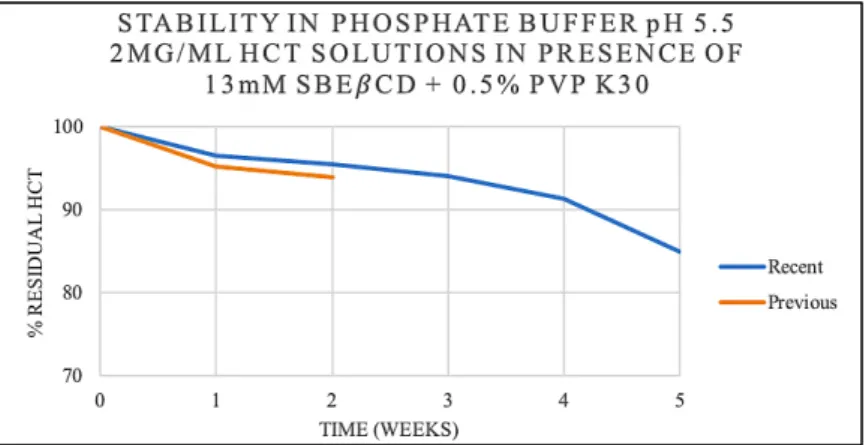
Figure 11- Residual percentage of HCT over time in a solution of 2 mg/mL HCT in the presence of 13 mM SBEβCD and 0.5% PVP K30 (w/v) in phosphate buffer pH 5.5 ... 46
Figure 12- Residual percentage of HCT over time in a solution of 2 mg/mL HCT in the presence of 25 mM SBEβCD in phosphate buffer pH 5.5 ... 47
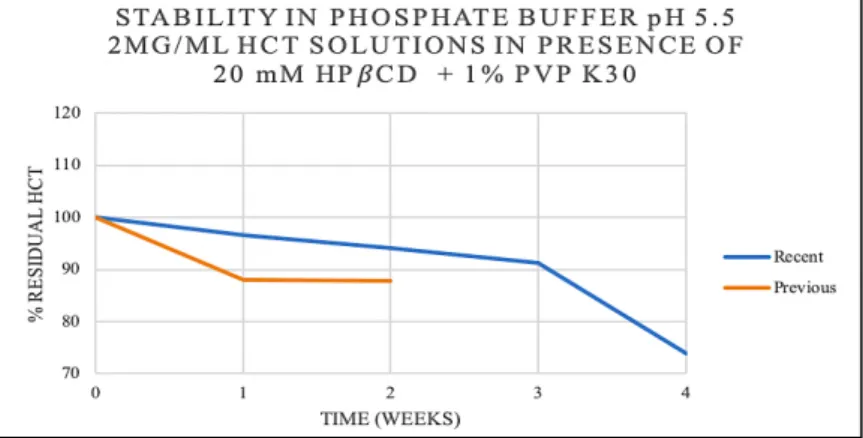
Figure 13- Residual percentage of HCT over time in a solution of 2 mg/mL HCT in the presence of 20 mM HPβCD and 1% PVP K30 (w/v) in phosphate buffer pH 5.5 ... 47
Figure 14- Residual percentage of HCT over time in a solution of 2 mg/mL HCT in the presence of 15 mM SBEβCD and 0.2% PVP K30 (w/v) in phosphate buffer pH 5.5 ... 48
Figure 15- Residual percentage of HCT over time in a solution of 2 mg/mL HCT in the presence of 25 mM HPβCD and 0.2% PVP K30 (w/v) in phosphate buffer pH 5. ... 48
Figure 16- pH studies in the solution of 2 mg/mL HCT in the presence of 13 mM SBEβCD and 0.5% PVP K30 (w/v) in phosphate buffer pH 5.5. ... 49
Figure 17- pH studies in the solution of 2 mg/mL HCT in the presence of 25 mM SBEβCD in phosphate buffer pH 5.5. ... 49
6 Figure 18- pH studies in the solution of 2 mg/mL HCT in the presence of 20 mM HPβCD and 1% PVP K30 (w/v) in phosphate buffer pH 5.5 ... 50 Figure 19 - pH studies in the solution of 2 mg/mL HCT in the presence of 15 mM SBEβCD and 0.2% PVP K30 (w/v) in phosphate buffer pH 5.5. ... 50 Figure 20- pH studies in the solution of 2 mg/mL HCT in the presence of 25 mM HPβCD and 0.2% PVP K30 (w/v) in phosphate buffer pH 5.5 ... 50 Figure 21- Residual percentage of HCT over time in a syrup of 2 mg/mL HCT in the presence of 13 mM SBEβCD and 0.5% PVP K30 (w/v) in phosphate buffer pH 5.5 ... 51 Figure 22- Residual percentage of HCT over time in a syrup of 2 mg/mL HCT in the presence of 25 mM SBEβCD in phosphate buffer pH 5.5 ... 52 Figure 23- Residual percentage of HCT over time in a syrup of 2 mg/mL HCT in the presence of 20 mM HPβCD and 0.5% PVP K30 (w/v) in phosphate buffer pH 5.5 ... 52 Figure 24- Residual percentage of HCT over time in a syrup of 2 mg/mL HCT in the presence of 20 mM SBEβCD and 0.2% PVP K30 (w/v) in phosphate buffer pH 5.5 ... 52 Figure 25- Residual percentage of HCT over time in a syrup of 2 mg/mL HCT in the presence of 25 mM HPβCD and 0.2% PVP K30 (w/v) in phosphate buffer pH 5.5 ... 53 Figure 26- pH studies in the syrup of 2 mg/mL HCT in the presence of 13 mM SBEβCD and 0.5% PVP K30 (w/v) in phosphate buffer pH 5.5 ... 54 Figure 27- pH studies in the syrup of 2 mg/mL HCT in the presence of 25 mM SBEβCD in phosphate buffer pH 5.5 ... 54 Figure 28- pH studies in the syrup of 2 mg/mL HCT in the presence of 20 mM HPβCD and 0.5% PVP K30 (w/v) in phosphate buffer pH 5.5 ... 54 Figure 29- pH studies in the syrup of 2 mg/mL HCT in the presence of 15 mM SBEβCD and 0.2% PVP K30 (w/v) in phosphate buffer pH 5.5 ... 55 Figure 30- pH studies in the syrup of 2 mg/mL HCT in the presence of 15 mM SBEβCD and 0.2% PVP K30 (w/v) in phosphate buffer pH 5.5 ... 55 Figure 31- Release of HCT in simulated saliva pH 6.75 for the soft lozenges. ... 57
7
Table Index
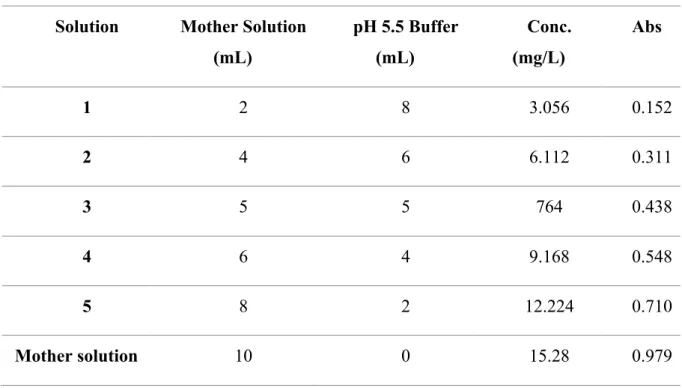
Table 1- Dosage of Hydrochlorothiazide in the Paediatric Population ... 19 Table 2- Dilutions for the construction of the standard curve of HCT in phosphate buffer pH 5.5 ... 38 Table 3- Dilutions for the construction of the standard curve of HCT in simulated saliva at pH 6.75 ... 39 Table 4– Quantity of excipients needed for the soft lozenges (teddy-bear) preparation .... 41 Table 5- Technological properties of teddy bear-shaped soft lozenges – Weight and Hardness values for samples of 10 lozenges over six weeks ... 56
8
List of abbreviations
i.e. – that is
PDCO – Paediatric Committee EMA – European Medicines Agency PIP – Paedriatic investigation plans
SPC – Supplementary protection certificate BP – Blood pressure
SBP – Systemic blood pressure DBP – Diastolic blood pressure
ACE – Angiotensin converting enzyme ARB – Angiotensin receptor blocker CKD – Chronic kidney disease N/A – Not applicable
BCS – Biopharmaceutics classification system CD – Cyclodextrin
9
1. Introduction
1.1.
Paediatric Therapy: Challenges and ProgressIn spite of being known that paediatric patients cannot be considered small adults when it comes to pharmacotherapy since there is very significant heterogeneity regarding their anatomic and metabolic characteristics, due to the lack of data mainly consequential from economic and ethical reasons, prescribing to fulfil paediatric patients’ treatment requirements is often based on extrapolation from trials in adults (1). Therefore, healthcare professionals are often left with no other choice than to prescribe drugs outside the approved conditions for age, indication, dose, dosing frequency and/or duration of use (i.e. off-label use); to recommend an unapproved modification of a drug product such as crumbling tablets and mixing these with food or drink (i.e. off-label use) or to compound a drug product in the pharmacy from a mixture of the drug substance and suitable excipients (i.e. unlicensed drug use) (2).
1.1.1. The Paediatric Regulation
To truly ensure the adequate treatment of all paediatric patients, different formulations, routes of administration, dosage forms, and strengths may be required (3). Supported by this premise, in 2006 the European Parliament and the respective Council created the Regulation No 1901/2006 on medicinal products for paediatric, which “aims to facilitate the development and accessibility of medicinal products for use in the paediatric population, to ensure that medicinal products used to treat the paediatric population are subject to ethical research of high quality and are appropriately authorised for use in the paediatric population, and to improve the information available on the use of medicinal products in the various paediatric populations” (4). It is additionally underlined that the achievement of the prementioned objectives should not result in putting the paediatric population through unnecessary clinical trials and/or the delay of the authorisation of medicinal products for other age populations.
A consultation and debate process that lasted many years was the basis of this legislation. Nonetheless it was also inspired by developments in the United States, which started legislative approaches to address paediatric product development in the late 1990s (5).
1.1.1.1. The Paediatric Committee
The Regulation established that a well-structured multidisciplinary committee, the Paediatric Committee (PDCO), would be created and, institutionally, integrated within the
10 European Medicines Agency (EMA), consisting only of members that have proven to not have any financial or other interests in the pharmaceutical industry which could affect their impartiality. Consequently, the inherent key responsibility of the PDCO is the scientific assessment and agreement of paediatric investigation plans (PIP) and the system of waivers and deferrals. Every PIP is a development plan that comprises a description of the measures to be carried out in paediatric treated with the medicine, describes the measures to adapt the medicine's formulation to make its use more acceptable in paediatric patients, covers the needs of all age groups of paediatric patients, from birth to adolescence, and defines the timing of measures in paediatric patients compared to adults. A PIP deferral allows an applicant to delay the development of the medicine in paediatric patients until, for example, there is sufficient information to validate its effectiveness and safety in adults. On the other hand, a waivers’ grant happens when the development of a medicine for paediatric patients is not needed or is not proper, such as for diseases that only affect the adult population (6).
Compliance with a PIP is checked when filing an application for a marketing authorisation, new indication, new pharmaceutical form or new route of administration. Ultimately, the completion of that PIP is necessary to obtain the rewards provided by the Paediatric Regulation (7).
1.1.1.2. Obligations vs. Incentives
The Regulation also passed a new weight on to the pharmaceutical companies by asking them to invest on paediatric research, which they might not have assumed otherwise. Nevertheless, that same weight is balanced with a reward system that allow companies to recuperate the additional upfront costs through extended protection periods (5).
For unauthorised medicinal products, once the authorisation is obtained in all Member States and study results are included in the product information, even if they fail to support a paediatric use of the compound, as it is meant to compensate for the research as such, not a particular outcome, the medicine is eligible for a six months' supplementary protection certificate (SPC) extension. In the specific case of a medicinal product being orphan-designated, the ten-year period of market exclusivity is extended to twelve years. The main reason for introducing an orphan’s alternative reward system was that, when the legal proposal for the Regulation was brought to the table for debate, most of the orphan-designated products were off-patent.
11 For already authorised medicinal products covered by an SPC or eligible for one, the above-mentioned requirements are identical when it comes to applications for adding a new indication (including paediatric), a new pharmaceutical form, or a new route of administration (5,7).
However, even with Europe differentiating itself from the United States by promoting this kind of rewarding measures, not all eligible companies were able to benefit from them. Up to 2017 only 55% of the completed PIPs received a reward and most of them took the form of a prolongation of the SPC. Though it is expected that over time the proportion of products that benefit from the reward will increase, as companies start to plan better and earlier their paediatric research, it is unlikely that the success rate will reach 100% (5).
1.2.
Routes of administration and formulation considerations in paediatric patientsAccording to EMA in its “Reflection paper: formulations of choice for the paediatric population” (8), there may be no single formulation or route of administration which is ideal for paediatric patients of all ages (preterm newborn infants, term newborn infants - 0 to 27 days, infants and toddlers - 1 to 23 months, children - 2 to 11 years , adolescents - 12 to 16/18 years). Yet, due to the given convenience and stability, some literature considers that oral administration is usually preferable, for both adult and paediatric patients, in its multiple dosage forms’ types. (9). Here we will be focusing on the liquid formulations, particularly syrups, and on the chewable dosage forms, especially lozenges.
1.2.1. Oral drug delivery
1.1.2.1. Oral liquids preparations
Liquid formulations include solutions (aqueous and non-aqueous), suspensions, colloids and emulsions. They are most suitable for younger paediatric patients who are not able to swallow other types of dosage forms.
The advantage of oral liquid preparations is that variable dose volumes can be measured and administered (10). Notwithstanding, there are determined dose volume target values that are considered important for the acceptability of the formulation. Those values are <5 ml for children with less than 5 years and <10 ml for children of 5 years and older. Hence, the more palatable the formulation, the higher the dose volume which will be tolerated, and more adherence will be verified (8). The qualitative and quantitative composition of any components
12 of the flavouring agent that are known to have a recognized action or effect should be provided. Safety concerns should be discussed, including the risk of allergies and sensitization (11).
Besides that, aqueous liquid dosage forms in multiple-dose containers will also generally need to be preserved, whereas oral solid dosage forms will normally not. This is a major drawback as is the potential chemical instability, which may require controlled storage conditions during distribution and use. In addition, the use of preservatives should not be the only aspect in deciding on the choice between oral liquid versus oral solid dosage forms. Also the preservation of oral liquid preparations will generally be considered acceptable for children from birth provided that the preservatives can be considered safe for children in the target age group (9,11).
Finally, it is relevant to point out that liquid preparations are also less transportable than solid-dose preparations because of the relative high bulk volume (10) .
A. Syrups
Syrups are highly concentrated aqueous solutions of sugar, or a sugar substitute. Therapeutic agents may either be directly incorporated into these systems or may be added as the syrup is being prepared.
Many products have been formulated as medicated sugar-free syrups due to the glycogenetic and cariogenic properties of sucrose. For the afore-mentioned reason, all medicinal products designed for administration to children and to diabetic patients must be sugar-free. Preservatives are not required in traditional syrups containing high concentrations of sucrose but in sugar-free syrups the addition of preservatives is required (12). One of the most popular non-sucrose bases is maltitol (Figure 1A) syrup. LYCASIN® 80/55 containing 55% of this sugar (80% as sweet as sucrose) was used in the current study as a reference liquid formulation.
13 The chosen preservative was sodium benzoate (Figure 1B) at 0.05%, because although undissociated benzoic acid is the more effective antimicrobial agent for preservation purposes, sodium benzoate is preferable, as it is more soluble. A concentration between 0.05-0.1% is usually sufficient to preserve a liquid medicine and it is most suitable in an acidic pH range. According to literature, sodium benzoate is not only suitable for preservation purposes in paediatric formulations (13), but also as a treatment for the orphan disease non-ketotic hyperglycinemia (NKH), a hereditary metabolic disease that affects the glycine metabolism, and for which new attempts to develop a paediatric liquid dosage form are taking place (14).
1.1.2.2. Oral solid preparations
Oral solid dosage forms incorporate a wide diversity of final forms: powders and multiparticulate preparations, immediate-release tablets, chewable dosage forms, effervescent dosage forms, dispersible and soluble tablets, sustained-release formulations, capsules and orodispersible dosage forms. The advantages over oral liquid preparations are enhanced stability, good dosage uniformity and convenient packaging and transportation. The ease of administration depends on the child and the particular dosage form (10) .
Lozenges are various-shaped, solid dosage forms usually containing an active pharmaceutical substance and a flavoring agent. They can be categorized based on two different criteria:
i. Site of action a. Local effect; b. Systemic effect. ii. Texture and composition
a. Hard lozenges; b. Soft lozenges; c. Chewable lozenges.
An advantage of the lozenge dosage form is that it is ideal for patients who cannot or prefer not to swallow other solid oral dosage forms, and therefore are usually easy to administrate to both paediatric and geriatric patients. Another advantage is that it prolongs the retention time in the oral cavity which increases bioavailability, reduces gastric irritation and bypasses first
14 pass metabolism. Besides, it has pleasant taste and can be prepared extemporaneously by pharmacists with a minimal amount of equipment and time (15,16).
One disadvantage of the lozenge dosage form is that it mistakenly could be used as candy by children (16).
A. Chewable lozenges
Chewable lozenges have become popular because of the ease of extemporaneous preparation and applicability to a wide range of drugs, ultimately being the most used lozenges for paediatric patients, particularly the “gummy-type” candy lozenges. The gelatin base for these chewable lozenges is similar to the former glycerine suppositories, or glycerinated gelatin suppositories, which consisted of 70% glycerine, 20% gelatin and 10% purified water (16). Given that glycerine (Figure 2) is a simple polyol compound, often used as a thickener and a humectant with a sweet taste, in the current study it was substituted by maltitol, another polyol that has the same kind of utility.
These lozenges are often highly fruit flavoured and a very effective mean of administering medications for gastrointestinal absorption and systemic use. They are usually prepared by pouring a melted mass into molds. Another method, dependent upon the ingredients, is to pour the mass out to form a sheet of uniform thickness. The lozenges can then be “punched out” with a punch of the desired shape and size. Regardless of the method, the lozenges are generally stored in a refrigerator, depending upon the active drug contents.
1.3. Hypertension in paediatric patients
Hypertension is acknowledged in the adult population as an epidemic and due to its contribution to cardiovascular damage it remains the leading cause of death and disability worldwide. This has led to a rising interest in paediatric hypertension, especially over the past few decades given that there is an emergent body of evidence that imply tracking of childhood blood pressure (BP) into adult life (17).
Numerous medical organizations, including the National High Blood Pressure Education Program, the American Academy of Pediatrics and the American Heart Association,
15 recommend routine measurement of BP in children and adolescents. However, these recommendations are not yet truly grounded, and controversy has been raised about the benefits and costs of routine screening. Nonetheless, the group responsible for the “2016 European Society of Hypertension guidelines for the management of high blood pressure in children and adolescents” (18) has considered that lack of evidence does not necessarily justify inaction; that opportunistic BP screening in children is associated with minimal cost and time inputs and does not include invasive and expensive tests; that it may also lead to further actions improving health outcomes. These group’s considerations were reflected in the following practical suggestions: BP should be monitored in children starting from the age of 3 years, and once that happens children considered normotensive would be reevaluated every 2 years, whereas those with high-normal BP and no organ damage should be seen again after 1 year.
1.3.1. Classification of hypertension
On quite the reverse to what happens for adults, the definition of hypertension in children is arbitrary and is based on the normal distribution of BP in healthy children and not on the cardiovascular morbidity and mortality associated with a certain level of BP. Diagnostic criteria for high BP in children are based on the concept that BP in children increases with age and body size, making it impossible to utilize a single-BP level to define hypertension, as done in adults (18) .
Normal BP is defined as Systemic Blood Pressure (SBP) and Diastolic Blood Pressure (DBP) that is less than the 90th percentile for sex, age, and height. Hypertension is defined as average SBP or DBP that is greater than or equal to the 95th percentile for sex, age, and height on at least three separate occasions. Average SBP or DBP levels that are greater than or equal to the 90th percentile, but less than the 95th percentile were considered to be an indication of heightened risk for developing hypertension. These levels are consistent with the concept of “prehypertension”. As with adults, adolescents with BP levels greater than or equal to 120/80 mmHg should also be considered prehypertensive (19).
1.3.2. Prevalence
The prevalence of paediatric hypertension worldwide is difficult to establish because of the distribution of reference BP data, the regional differences in the definition and the methods of BP measurement. Central-European studies showed the prevalence of hypertension in adolescents to be 2.2% in Switzerland, 2.5% in Hungary and 4.9% in Poland. The data from
16 Southern Europe identified superior prevalence; adolescent hypertension was estimated as 9% in Turkey, 12% in Greece and 13% in Portugal. After the age of 10, primary hypertension is the predominant form, and in the majority of the adolescent hypertensive patients, 81% had isolated systolic hypertension (SBP≥95th percentile and DBP<90th percentile for 0-15 years paediatric patients; ≥140/<90 mmHg for 16 years and older paediatric patients) (18), which is caused by underlying conditions such as artery stiffness, an overactive thyroid (hyperthyroidism), diabetes or, occasionally, by heart valve problems (20).
The obesity epidemic in children and adolescents makes it plausible that prevalence rates of hypertension are increasing overtime. Hypertension was found in 1.4% of normal weight, 7.1% of overweight and 25% of obese adolescents (18). A recent study reported the prevalence of hypertension in overweight or obese 6–18 year-old patients, to range between 27 and 47% (21).
1.3.3. Management of hypertension
Except for nonpharmacological measures, that have a very limited role in infants but not on older paediatric patients, the approach to management of hypertension is similar to children of all ages. Decisions are based on the severity of hypertension, the underlying cause, and other clinical factors that impact the well-being of the patient. Hereafter, treatment consists of identifying and correcting any curable cause of hypertension, and when indicated, initiating pharmacologic therapy to lower BP (22).
1.3.3.1. Approach to nonpharmacologic treatment
Some advances have been made in recent years in identifying conditions often associated with and considered responsible for high BP in children and adolescents, which can be used as the basis for recommendations. Still, evidence is limited that supports the efficacy of nonpharmacological interventions for BP reduction in the treatment of hypertension in children and adolescents.
Weight reduction is the primary therapy for obesity-related hypertension. Prevention of excess or abnormal weight gain restricts increases in BP. Regular physical activity and constraint of sedentary activity certainly improves efforts at weight management and may prevent an excess increase in BP overtime.
Despite the lack of strong evidence about dietary modification in children, it should be strongly encouraged, to the ones who have BP levels in the prehypertensive range, as well as
17 those with already diagnosed hypertension, an increase on the consumption of fresh vegetables, fresh fruits, fiber, and nonfat dairy, together with a reduction of sodium if the regular intake is superior to 1.2 g/day for 4-8 year-old children and 1.5 g/day for older children (18,19).
1.3.3.2. Approach to pharmacologic treatment
Although, as described, an increased emphasis on conducting clinical trials in children and adolescents has yielded important advances, there remains a general lack of high-quality long-term outcome data to guide choice of drug therapy for paediatricians managing hypertension.
The few trials that have been conducted have mainly investigated the BP-reducing effects of single agents in isolation, with very few comparing drugs to assess relative efficacy or safety. One exception is a study comparing valsartan with enalapril, which showed similar efficacy and adverse event rates for these two agents. Follow-up studies are generally limited in duration, and little is known about the long-term effects of antihypertensive agents on many outcomes, including growth and cognitive development.
Until such time that high-quality clinical trial data are available to compare one class of antihypertensive drug with another, several different agents may potentially be first-line agents. These include the five classes for which evidence of cardiovascular event reduction is available in adults: Angiotensin Converting Enzyme (ACE) inhibitors; Angiotensin Receptor Blockers (ARBs); Beta-blockers; Calcium Channel blockers; Diuretics.
It is logical to choose an agent which can be administered once daily because of the benefits that this provides in terms of simplicity of administration, avoiding having to take drugs during school hours, for instance. Besides that, it is recognized that this strategy improves adherence. Drug choice should be targeted to the child’s underlying pathophysiology and presence of concurrent disorders. For example, in a child with hypertension associated with diabetes mellitus and microalbuminuria, or with chronic kidney disease (CKD) and proteinuria, an ACE inhibitor or ARB is the most appropriate first line agent because of their antiproteinuric effect. Also, there is some evidence to suggest these pharmacologic agents as first line in the obesity-linked primary hypertension population, which is getting larger; in adults these agents appear to reduce the incidence of new-onset diabetes and may increase insulin sensitivity. Similarly, a beta-blocker or calcium channel blocker is the most appropriate agent in the child with hypertension and migraine or where hypertension has persisted after coarctation repair, and a
18 diuretic most appropriate in the child with corticosteroid-induced hypertension. Alternatively, there may be compelling reasons to avoid certain agents, for example beta-blockers in the hypertensive child with asthma or diabetes, and ACE inhibitors or ARBs in woman teenagers at high risk of pregnancy. Diuretics and beta-blockers should generally be avoided in competitive athletes because these may impair performance through decreased intravascular volume and decreased cardiac output, respectively. Besides, they are also listed among doping substances.
Once the appropriate agent has been selected, the child should commence on the lowest recommended dose. This dose should be up-titrated until the BP falls within the target range or until the maximum recommended dose is reached, at the same time carefully monitoring for the development of side effects.
Where the use of the maximum recommended or tolerated dose of any single agent does not successfully achieve target BP, then the use of combination therapy is recommended. There is no evidence in the current paediatric literature to support the use of one particular combination over another.
It is reasonable to combine agents from different drug classes and preferably those with complementary modes of action, for example an ACE inhibitor with a diuretic or a vasodilator with a diuretic or a beta-blocker.
The European Medicines Agency have formally recommended that no two drugs which act separately on the renin-angiotensin system should be used in combination because of risks of hyperkalemia, impaired kidney function and hypotension. Dual therapy with ACE inhibitors, ARBs and direct renin inhibitors should therefore be avoided, although it may be cautiously used in patients with heavy proteinuria under strict renal function and potassium levels monitoring (18).
A. Hydrochlorothiazide
Hydrochlorothiazide is a thiazide-type diuretic which has been used clinically for more than half a century. It is a white crystalline powder, odorless, with a somewhat bitter taste, slightly soluble in water, sparingly soluble in alcohol and soluble in acetone (pKa 7.0), being chemically described as 6-chloro-1,1-dioxo-3,4-dihydro-2H-1,2,4-benzothiadiazine-7-sulfonamide. Of the thiazide diuretics, this drug is the most frequently used for the treatment of hypertension and is
19 relatively very safe. It inhibits sodium chloride transport in the distal convoluted tubule. More sodium is then excreted in the kidney with accompanying fluid, reflecting the diuretic action of the drug. Pharmacological effects start in about 2 hours after an oral dose, peaks in 4 hours, and lasts for about 6 to 12 hours. Hydrochlorothiazide is not metabolized and most of it is excreted in the urine unchanged. It also causes a loss of potassium and bicarbonate (23).
In adults, the usual dosage of hydrochlorothiazide is initially 25 mg orally once a day and the maintenance dose may increase to 50 mg, as a single or two divided doses. On the other hand, the dose of hydrochlorothiazide for the paediatric population differs from age to age, as observed in Table 1:
Table 1- Dosage of Hydrochlorothiazide in the Paediatric Population
Given that hydrochlorothiazide is soluble up to 0.7 mg/ml in an aqueous environment, solutions with a 0.5 mg/ml concentration are the most often prepared ones. With this concentration, it is clear that any currently established paediatric dosage taken once a day, results in an undesired intake of a high volume by children.
Hydrochlorothiazide is ranked as a Biopharmaceutics Classification System (BCS) class IV drug. The BCS is a scientific framework for classifying a drug substance based on its aqueous solubility and intestinal permeability. It is used to predict of in vivo pharmacokinetics of oral immediate-release drug products by classifying drug compounds into four classes based on their solubility related to dose and intestinal permeability in combination with the dissolution properties of the dosage form.
Class boundary parameters (i.e., solubility, permeability, and dissolution) are for easy identification and determination of BCS class:
Age Recommended starting dose
(per day)
Maximal dose (per day)
Less than 6 months up to 3 mg/kg N/A
Less than 2 years 1 to 2 mg/kg 37.5 mg
20 a) Solubility: A drug substance is considered highly soluble when the highest dose
strength is soluble in 250 mL or less of water over a pH range of 1–7.5 at 37 °C. b) Permeability: A drug substance is considered highly permeable when the extent of
absorption in humans is greater than 90% of an administered dose, based on mass-balance or compared with an intravenous reference dose.
c) Dissolution: A drug product is considered rapidly dissolving when 85% or more of the labeled amount of drug substance dissolves within 30 min in a volume of 900 mL or less of buffer solutions.
Class IV drugs are the most problematic for effective oral administration. These compounds have poor bioavailability. They are usually not well absorbed through the intestinal mucosa, and a high variability is expected. Several Class IV drugs do exist, and examples include hydrochlorothiazide as mentioned, but also taxol and furosemide (24).
Theoretically, the best solution to improve the bioavailability of class IV drugs is to go back to the lead optimisation phase of drug discovery and modify their structures to obtain the appropriate physicochemical properties. However, discovering a novel therapeutic agent, itself is a challenging, time-consuming and highly costly process. Therefore, sending a drug molecule back to the lead optimisation phase is not usually a reasonable practical option. Consequently, proper formulation is of fundamental importance to establish a successful product for the administration of BCS class IV drugs.
There are various strategies which can be used for improving the bioavailability and successful delivery of BCS class IV drugs. These strategies include lipid-based delivery systems, polymeric nanoparticulate systems, crystal engineering (nanocrystals technology, co-crystal technology), liquisolid technology, self-emulsifying solid dispersions and P-efflux inhibition strategies (25). Here we’ll be focusing on a particular type of polymeric nanoparticles: cyclodextrins (CDs).
1.4. Cyclodextrins
CDs are cyclic oligosaccharides consisting of (α-1,4)-linked D-glucopyranose units, with a hydrophilic outer surface and a lipophilic central cavity (Figure 3). They are obtained from biotechnological processes involving the enzymatic degradation of corn starch and offer greater
21 yield with 6, 7 and 8 units of glucose, known as α-cyclodextrin (αCD), β-cyclodextrin (βCD), and γ-cyclodextrin (γCD), respectively.
Although the unsubstituted natural αCD, βCD, and γCD are hydrophilic, their solubility in aqueous solutions is somewhat limited. In reality, of all-natural CDs, βCD has the lowest solubility, due to the high number of intramolecular hydrogen bonds among secondary hydroxyl groups within the molecule. These characteristics make its structure rigid and prevent hydration by water molecules. As a follow-up, the industry transforms the CD crystalline structure into an amorphous isomeric derivative with enhanced solubility, such as 2-hydroxypropyl-βCD (HPβCD) or sulfobutylether βCD sodium salt (SBEβCD), which are both preferred for use in aqueous pharmaceutical solutions (26,27).
Due to the chair formation of the glucopyranose units, CD molecules display a torus-like or hollow-truncated cone shape. The hydroxyl moieties are located at the exterior of the cone, with the primary hydroxyl groups of the glucose residues at the narrow edge and the secondary hydroxyl groups at the wider edge. The central cavity is lined by skeletal carbons and ether linkages that provide a lipophilic character, enabling it to establish interactions through intermolecular forces with molecules, ions or radicals. The CD then acts like a host substance that modifies the physicochemical and biological characteristics of drugs in aqueous solutions. This process is designated as the formation of an inclusion complex (26,29).
1.4.1. The binary inclusion complexes
The formation of a binary complex in an aqueous solution takes place when water molecules are removed from the apolar cavity of CDs (which are in an energetically unfavorable environment due to the nature of the polar-polar interaction) and substituted for a guest molecule or lipophilic group with polarity, size and shape compatible with that of the CD
Figure 3- Chemical stricture of cyclodextrins, adapted form (28)
22 structure. This process (equation 1) is energetically favorable and contributes to an increase in complex stability, because it causes changes in enthalpy and a reduction in the total energy of the system (26).
𝐷 + 𝐶𝐷 ⇔ 𝐷 − 𝐶𝐷 (1) '(
For a variety of reasons, including toxicological considerations, formulation bulk, production cost and bioavailability, it is important to use as little CD as possible in pharmaceutical formulations. The following equilibrium is obtained when one drug molecule (D) forms a complex with one CD molecule (1:1), where Kc is the dissociation constant (equation 2):
The complexation efficiency is defined as the [D-CD]/[CD] molar ratio in an aqueous complexation medium or a solid complex. If a solution is saturated with the drug, the concentration of free drug ([D]) will be equal to the intrinsic solubility of the drug. Accordingly, increasing the apparent intrinsic solubility of the drug through, for instance, drug ionization can improve the complexation efficiency. Nevertheless, since:
𝐾𝑐 =[2] [42][2342] (2)
the complexation efficiency can also be compromised by poor solubility of the CD (low [CD]) in the aqueous complexation medium. This dissociation constant ranges from 0 to 105, where 0 indicates the drug is incapable of forming a complex with the CD and 105 indicates the upper limit of D-CD complexes. Essentially, the dissociation kinetics will be inversely proportional to the strength of the bond between the CD and the drug, i.e., the slower the dissociation kinetics, the stronger the D-CD bond. However, even in this situation, the dissociation velocity of the complexes is considered to be virtually instantaneous (26,29).
1.4.2. Preparation of the inclusion complexes
Through the years, extensive data was provided about the CD chemistry, toxicological and regulatory issues, mechanisms of the inclusion complex formation and changes of the included molecule solubility, chemical stability, permeability, bioavailability, and pharmacokinetics. Even the analytical techniques used for CD complex characterization in solution and in the solid state have been reviewed. Nonetheless, until very recently, a review of the available techniques for preparation of the inclusion complexes in the solid state was missing. Solid
23 pharmaceutical systems containing drug and CD are heterogeneous structures that may be constituted by their individual uncomplexed components, and/or by different types of associations between them, such as inclusion complexes of different stoichiometries and inclusion levels, or as aggregates of variable amorphous state. The complexation efficiency of these systems is completely dependent on the preparation process and, therefore, its selection can determine the overall properties and functionality of the developed formulation (30,31).
The main techniques available for the CD inclusion complexes preparation in the solid state can be grouped as follows:
A. Methods in the solid state • Grinding (GR)
Manual grinding, using mortar and pestle, or more efficient mechanical grinding, using ball mills, oscillating or vibratory mills, are the most common process able to induce mechanochemical transformations.
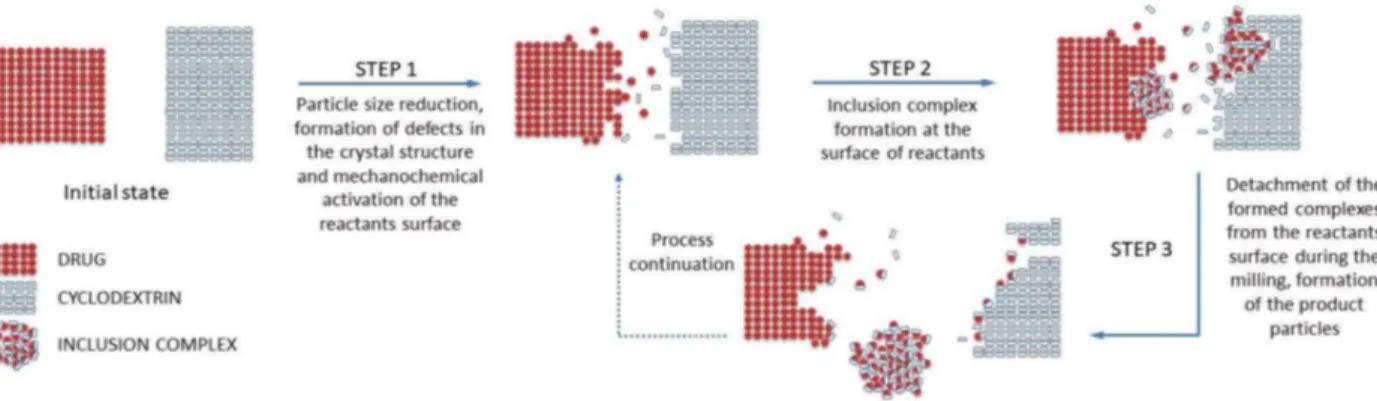
When the drug/CD mixture is subjected to grinding receives a mechanical energy pulse every time such material is being trapped between the colliding grinding media or between the mill wall and the grinding medium. If such an impact is of sufficient intensity, it results in a quasi-adiabatic local energy accumulation, giving origin to a metastable structure formation. From a macroscopic point of view, the main part of the supplied energy is released by conversion into heat, which could facilitate the solid-state interactions between drug and CD.
Furthermore, the concentration of the strain field in particular crystal zones causes the crystal breaking, resulting in particle size reduction. This increases the overall surface available for the drug/CD interaction in the solid state. Further, energy supply leads to amorphization of the crystalline materials present in the treated mixture, usually starting on a thin surface layer and then propagating into the bulk, giving origin to an activated material formation. It could be reasonably presumed that the inclusion complex formation takes place by reaction of activated materials at the surface of both drug and CD particles. As the grinding continues, the formed inclusion complex could be detached from the drug/cyclodextrin particles, forming separate particles, thus liberating the surfaces of drug/CD particles for the reaction continuation. Finally, grinding also provides an intense mixing and homogenization of the reactants, which further contribute to the drug/CD interaction in the solid state (30).
24
Figure 4- Schematic representation of the inclusion complex formation process in the solid state, adapted from (30)
B. Methods in semisolid state • Kneading
The kneading method is relatively simple and consists in adding a mixture of solvents (water and ethanol, for example) mixing the drug and the polymer, to form a slurry. After the formation of this paste, the solvents are evaporated at low temperature to obtain a dry product. It is a process widely used because it is simple, relatively fast and of large-scale. Due to the simplicity, the high efficiency and the scale transposition facility, this method is one of the most widely used in the pharmaceutical industry (32).
C. Methods in solution
The drug and the CD are dissolved in water or an organic solvent/water mixture, with pH and temperature adjusted to achieve maximum interaction between the components. The solvent is then removed by an adequate drying technique (30).
• Coevaporation
This process is to prepare a drug solution with the polymer in a mixture of appropriate solvents. After forming a homogeneous phase, the solution is evaporated under vacuum in evaporator route to dryness (32).
• Spray-drying
The solution is sprayed through an atomizer into a drying chamber. The resulting droplets are subjected to a jet of hot air which causes the solvent to evaporate, in order to obtain a very thin powder. This method is very effective for thermolabile substances, but it has a
25 disadvantage: the micronized powder has the tendency to form agglomerates of particles, due to the presence of electrostatic charges on their surface (32).
• Freeze-drying
Lyophilization or freeze-drying is one of the most important processes for drying biological and chemical agents. First, the drug and carrier are dissolved in aqueous solution and frozen, then the solvent is removed by sublimation during primary drying. The solvent not frozen is removed by diffusion and desorption during the secondary drying. This method presents high yield and can be used on an industrial scale, leading to obtaining an amorphous product. It is used for thermolabile substances; however it has the great disadvantage of high volumes of solvent needed (32).
1.4.3. Ternary complexes with water-soluble polymers
The mixing in solution of a water-soluble polymer, a CD and a drug aims to obtain ternary complexes, increasing drug solubilization when compared to the polymer and CD separately, which is a result of the synergistic effect between them.
Given that the use of CD in oral dosage forms is limited to low dose drugs with large stability constants due to the mass limitations of oral dosage units, in cases where the low complexation efficiency would require a larger amount of CD than that acceptable for solid or liquid dosage forms, the enhancement of the complexation capacity of the chosen CD is of great importance (33). Actually, formulations containing D-CD complexes with the addition of a water-soluble polymer have proven to increase the bioavailability of formulations while reducing the amount of CD by up to 80% (26).
The interaction of water-soluble polymers with drug molecules or CD may occur by means of ion-ion, ion-dipole and dipole-dipole electrostatic bonds, van-der-Waals forces, or 3-center, 2-electron bonds. Likewise, the interaction between polymers and D-CD complexes begins to occur on the external surface of the CD molecule. Valero et al. (34) have shown that in a ternary system consisting of naproxen, β-CD and polyvinylpyrrolidone (PVP) the polymer partly or totally coats the naproxen/β-CD inclusion complex interacting with both naproxen and β-CD through hydrogen bonds, showing more affinity for the inclusion complex than the free drug (26,29). PVP is the most widely used amorphous polymer, being capable of forming hydrogen bonds with other molecules that contain electrons donor groups. The aqueous solubility of this
26 polymer can enhance the dissolution rate and the wettability of various compounds and it is preferably used due to its high hydrophilicity and low toxicity (32).
1.4.4. Characterization of Systems
The assessment of the inclusion complexes’ formation and its full characterization often requires the use of different analytical methods, whose results have to be combined and examined together, since each method explores a particular feature. The simultaneous use of different techniques can allow a better understanding of host guest interactions and help in selection of the most appropriate CD for a given guest molecule (35).
Normally, the characterization of systems is performed in two ways: solid state and aqueous solutions.
A. Solid state
• Thermal analysis techniques
o Differential scanning calorimetry (DSC)
It provides detailed information about both physical and energetic properties, being the most used thermal method for the investigation of solid-state interactions between drugs and CDs.
The DSC curves of both natural or amorphous CDs are all characterized by a more or less intense endothermal effect with a peak around 90–130ºC, corresponding to their dehydration, followed by decomposition above 300ºC. If the guest molecule is in crystalline form, its thermal curve will be characterized by a well-defined endothermal peak, corresponding to its fusion.
The thermal curve of the physical mixture should be the simple sum of the curves of the pure components, presenting the CD dehydration band and the drug melting peak. The systematic comparison of the matching curves of physical mixture and putative complex can help to support or deny the complex formation (36).
Supporting or denying the formation of complexes is based on the analysis of the DSC curves, which can contemplate various types of modifications (size reduction or disappearance, shape changes, shifting to different temperatures, etc.) in both drug melting peak and peak of the CD dehydration band.
27 o Thermal gravimetric analysis (TGA)
TGA allows to determine the changes in the sample weight whilst temperature variation occurs. The analysis and comparison of the TG curves of pure components, their physical mixture and the “interacted mixture” can evidence changes in the weight loss profile of the presumed complex, characterizing the formation of a true inclusion complex. It is predictable that the drug included into the cavity of the CD has a TG behavior different from that of the free drug, because the inclusion complexation increases the drug thermal stability (36).
o Hot stage microscopy (HSM)
HSM is often used as a complementary thermal technique to DSC analysis, to corroborate the results and/or to help to explain the nature of the thermal effects observed in the DSC curves. It certifies a solid-state physical characterization of materials also as a function of the temperature.
• X-ray diffraction
o Single crystal X-ray diffraction (SCXRD)
This technique requires the availability of single stable crystals of dimensions between 80 and 250 µm, and therefore its applicability for studying the complexes is quite limited. There is a small number of inclusion complexes (D-CD) that have been obtained as crystalline compounds, with single crystals of the mentioned suitable proportions to be subjected to the technology.
Using SCXRD, detailed data allows to know the crystal structure of samples, including unit cell dimensions, positions of the atoms within the crystal lattice, bond-lengths and bond-angles. Thus, it is possible to build a three-dimensional structure of the whole molecule, envisioning information on molecular identity, conformation, and packing.
o Powder X-ray diffraction (PXRD)
PXRD can be performed on finely ground and homogenized samples, and therefore it is extensively used to rapidly identify unknown crystalline substances, as well as to determine the crystallinity degree or amorphization of the same samples. This analysis has been widely used in the characterization of CDs and their inclusion complexes in powder or microcrystalline states.
28 The comparison of PXRD patterns of the single components, their physical mixture and the presumed inclusion compound allows for evidencing changes of the solid state properties as a consequence of the interactions between the components, as explained for prior techniques. The presence of new diffraction peaks in the spectrum of the “interacted mixture”, as well as the shift of characteristic peaks of the guest molecule, together with changes in their relative intensity, support the actual inclusion complex formation.
If the complexes are obtained as an amorphous powder, as it frequently happens by using grinding, freeze-drying, or spray-drying preparation methods, PXRD is not appropriate for providing structural information, since the compound are not crystalline.
• Spectroscopic techniques
o Fourier-transform infra-red (FT-IR) spectroscopy
This technique is useful to identify which vibrational modes of the drug and the CD are being disturbed during the inclusion complex formation, hence suggesting the interactions between these molecules in solid state. Changes in the characteristic bands of the guest molecule, such as disappearance, broadening, variations in peak intensity and/or shifts in their wave number can be indicative of the process and usually represent a weakening of the inter-atomic bonds as a consequence of an altered environment around these bonds upon complexation.
The low cost and high sensibility of this technique along with the easy acquisition time of the spectra are among the main advantages of this technique. Nevertheless, a possible disadvantage is that the classic FTIR technique involves dispersing the sample in KBr powder and then pressing the mixture to form a transparent pellet, possibly leading to physical-chemical modifications of the sample. On the other hand, the overlapping or masking of the main representative peaks of the drug by the host bands is also frequent.
o Attenuated total reflectance (ATR)-FTIR spectroscopy
The technology used in ATR-FTIR is based on the principle that when an infrared radiation passes through a suitable prism, made of a high refractive index infrared transmitting material, it is completely reflected. This kind of spectroscopy can provide important advantages when compared the traditional FTIR technique, giving that no sample preparation is required and spectra are obtained avoiding all the problems related to the usual dispersion of the sample in KBr pellets.
29 The powder sample, put in contact with the totally reflecting surface of the ATR crystal, is pressed by a diamond piston, obtaining a well-defined sample layer. In such configuration, the evanescent wave will be attenuated in the IR spectrum regions where the sample absorbs energy. The wave intensity diminishes exponentially with the distance from the ATR crystal surface.
o Raman
Raman spectroscopy relies upon inelastic scattering of photons. A source of monochromatic light, usually from a laser in the visible, near infrared, or near ultraviolet range is used. The laser light interacts with molecular vibrations, resulting in the energy of the laser photons being shifted up or down. The shift in energy gives information about the vibrational modes in the system.
Raman has some advantages, because the effect manifests itself in the light scattered off of a sample as opposed to the light absorbed by a sample, as happens in FTIR. Consequently, Raman spectroscopy needs little or no sample preparation and it is insensitive to water absorption bands.
• Scanning electron microscopy (SEM)
Although this technique is inadequate to assess the true inclusion complex formation, it helps to evidence morphological changes which can be related to the interactions between the components.
Previously to examination with a conventional electron microscope, the samples have to be coated with gold or gold–palladium in vacuum, in order to make them electrically conductive. Such condition limits the possible applications of SEM, since the specimens could be compromised.
B. Aqueous solution
• Electroanalytical techniques
o Polarography and Voltammetry
These are techniques suitable for studying the inclusion complexation of CDs with electroactive guest molecules and may be a powerful tool for the understanding of the complexes’ nature. Furthermore, being extremely sensitive and poorly material-consuming
30 methods, they are particularly useful to evaluate the association constants of inclusion complexes at very low concentration levels of the electroactive guest.
o Potentiometry
Potentiometric measurements allow the determination of the association constants of CD complexes with acidic or basic drug molecules, by monitoring the pH variation as function of increasing CD concentrations, keeping constant the guest concentration.
Both ionized and unionized forms of the drug present in solution can be included into the CD cavity, and consequently different equilibrium complexes will be present together in solution, and they will have different stability constants, related to the different hydrophobicity of ionized and unionized forms.
o Conductimetry
Electrical conductivity measurements have been employed to determine equilibrium constants of complexes between CDs and a variety of ionic surfactants and other amphiphilic molecules.
• Separation techniques
o High performance liquid chromatography (HPLC)
HPLC relies on pumps to pass a pressurized liquid solvent containing the sample mixture through a column filled with a solid adsorbent material. Each component in the sample interacts slightly differently with the adsorbent material, causing different flow rates for the different components and leading to the separation of the components as they flow out of the column. It is a tool to study the interactions of CD and complexes with stationary phases, as well as to determine the stoichiometry and association constants of CD complexes in solutions. Still, it requires large amounts of materials, may need extensive sample preparation, and requires a strict control of experimental conditions to have good reproducibility. Additionally, the chromatographic methods often suffer from poor sensitivity and resolution in combination with long separation times.
o Capillary electrophoresis (CE)
The separation is built on the difference in the mobility of ionic species or in the affinity of charged or uncharged molecules toward charged electrolytes. Analyses of intermolecular
31 interactions based on affinity effects such as electrostatic interactions, van der Waals forces, hydrogen bonding, are more specifically designated as affinity capillary electrophoresis (ACE). CE offers significant advantages compared to other separation methods, such as high efficiency, high flexibility and high speed.
• Spectroscopic techniques
o Ultraviolet/visible (UV–vis)
UV–vis spectroscopy is a simple, economic and useful method to study the formation of complexes in solution, when the complexation gives rise to a significant modification of the absorption spectrum of the guest molecule. Changes in the UV spectrum of a drug in presence of CDs can then provide evidence of the formation of an inclusion complex. Conversely, the method is not specific and suffers from the presence of interfering substances and does not provide a direct evidence of the actual inclusion complex formation.
Hypsochromic or bathochromic shifts of the absorption maximum of the guest UV spectrum, and/or increase or decrease in its intensity can be observed as a consequence of the inclusion complex formation.
o Circular dichroism
In case of chiral guest molecules, changes in their circular dichroism spectra may be detected, attributed to the increased optical activity induced by the formation of inclusion complexes with CDs. The effect is only observed when the chromophore moiety of the guest molecule is actually included in the CD cavity.
o Fluorescence
Fluorescence spectroscopy is a simple, fast and very sensitive method, particularly useful for investigating the formation in solution of CD inclusion complexes of fluorescent guests. Usually there is an observed enhancement in fluorescence upon inclusion of a fluorescent guest molecule into the CD cavity. The preparation of samples for fluorimetry is time-consuming, because a very strict care is mandatory to avoid false interferences.
Both the stoichiometry and the stability constants of the complexes can be calculated from the analysis of fluorescence spectral changes of the guest molecule observed in the presence of different growing concentrations of the CD.
32 o Nuclear magnetic resonance (NMR)
NMR spectra allows revelation of the complexes’ structure, providing specific information on the orientation of the guest molecule inside the cavity, while the other spectroscopic techniques can only give indirect information on the molecular structure of the inclusion complexes. There are various types of NMR analysis, being the classic 1H NMR or 13C NMR experiments the most commonly used ones.
o Electron spin resonance (ESR)
ESR or electron paramagnetic resonance (EPR) is a technique used for characterizing chemical species containing unpaired electrons, including free radicals. Thus, even though its application is more limited than NMR, it can be a valuable method to investigate inclusion complexation of CDs with radical species in aqueous solutions.
As the coupling constant of radicals is very sensitive to the medium polarity, its variations due to its movement toward an environment less polar than water, such as the CD cavity, is indicative of the inclusion complex formation.
• Polarimetry
Polarimetry is a very simple technique, able to provide an easy, fast and accurate evaluation of the stability constants of inclusion complexes. It is based on the fact that the optical activity of CD, due to the presence of chiral glucose units in its structure, is strongly affected by the spatial arrangement. In fact, the molar optical activities of native CDs are significantly different from the sum of the contributions due to the single glucose units. Thus, a variation of the optical CD activity upon inclusion of a guest is expected, because of the conformational changes of the macrocycle and the local dipolar microenvironment effect of the guest itself. The estimation of stability constant values requires working at a fixed CD concentration and variable guest concentrations.
• Isotermal titration calorimetry (ITC)
ITC is based on the measurement of changes in the thermodynamic parameters of interacting molecules in aqueous solutions, being useful for determining the thermodynamic constants. Essentially, measuring the heat flow generated or absorbed when substances bind, provides in a single experiment a complete thermodynamic profile of the molecular interactions.
33 ITC is presently considered one of the most interesting methods for the characterization of the interaction mechanisms of CDs with drugs.
34
2. Materials and Methods
2.1. Materials
In this research, the following materials were employed for both solid and liquid formulations: hydrochlorothiazide (HCT), as the active substance; two different β-cyclodextrins derivatives suitable for paediatric use Hydroxypropil-β-Cyclodextrin, HPβCD, and Sulfobutylether-β-Cyclodextrin sodium salt, SBEβCD.
Besides the above-mentioned substances, in the liquid formulations were also used PVP as a water-soluble polymer; an 80/55 maltitol syrup (LYCASIN® 80/55), and a preservative, (sodium benzoate). Moreover, for the solid formulation, were additionally used an 75/75 maltitol syrup (LYCASIN® 75/75), biomaltodextrine, a red food coloring agent, a fruit concentrated essence, edible gelatin and cornstarch.
2.1.1. Hydrochlorothiazide
The used HCT (Figure 5) was kindly provided by Menarini. Molecular Formula: C7H8ClN3O4S2
Molecular Weight: 297.7 g/mol Melting Point: 270-274ºC UV spectra: λmax = 272.2 nm Chemical structure:
Figure 5- Chemical Structure of Hydrochlorothiazide
White crystalline powder, odorless, with a slightly bitter taste; very slightly soluble in water (722 mg/L at 25°C), soluble in ethanol at approximately 750 g/L, acetone and dilute ammonia; freely soluble in sodium hydroxide solution, n-butylamine and dimethylformamide; sparingly soluble in alcohol and insoluble in ether, chloroform, dilute mineral acids.
35 2.1.2. Cyclodextrins
Hydroxypropyl-β-Cyclodextrin (HPβCD) - KLEPTOSE® HP ORAL GRADE, of high molar substitution: MS = 0.81 - 0.99; Roquette, France. MW: 1443 g/mol (Figure 6).
Figure 6- Chemical Structure of HPβ-CD
Sulfobutylether-β-Cyclodextrin sodium salt (SBEβCD); CycloLab Cyclodextrin Research & Development Laboratory Ltd. MW: 2163 g/mol.
Figure 7- Chemical Structure of SBEβ-CD
2.1.3. Specific material for the Liquid Formulation • Water-Soluble polymer
PVP - Polyvinylpyrrolidone K30 (PVP K30) Fluka AG, Svizzera. MW ~ 40,000 g/mol. • Buffer solution
36 Phosphate Buffer pH 5,5
o Solution I: 13.61g KH2PO4 in 1L of H2O
o Solution II: 9.022g Na2HPO4.12H2O in 100 mL of H2O
By mixing 96,4 mL of solution I with 3.6 mL of solution II, 100 mL of buffer will be obtained. The pH is then adjusted with HCl 0.1N.
• 80/55 maltitol syrup (LYCASIN® 80/55) gently provided by Roquette. This syrup is 80% as sweet as sucrose and contains 55% maltitol, having properties of taste and sweetness ideal for the preparation of sugar-free syrups which are adequate, amongst other purposes, for paediatric use. It is also viscous (3000 mPa.s at 20°C), clear and colorless.
• Sodium benzoate employed as a preservative suitable for paediatric formulations. 2.1.4. Specific material for the Solid Formulation (soft lozenges)
• Edible gelatin, Galeno. It is one of the key components due to its gelling properties indispensable for the formulation of soft lozenges.
• Biomaltodextrine, Euphar Group Srl. It is a white powder with a thickening, solubilizing and sweetening purpose.
• Buffer solution, pH 5.5. It is identical to the one used for the liquid formulation’s preparation. Mainly it is fundamental to swell the gelatin.
• Simulated saliva is an aqueous solution that has a salt concentration and a pH similar to those of human saliva. However, it does not contemplate the enzymatic component.
For obtaining a 1000 mL solution, the following components should be mixed in that same volume of H2O:
o 2.38 g Na2HPO4 o 0.19 g NaH2PO4 o 8.00 g NaCl
The pH is then adjusted with H3PO4 to accomplish the 6.75 value.
• Red food coloring agent and a fruit concentrated essence, to improve smell, taste and appearance of the lozenges.