University of Porto
Causes and Consequences of Reactions to Deviance:
A Subjective Group Dynamics Approach
Rui Nuno Guedes Serôdio
Supervisor: José M. Marques
Doctoral thesis presented at the
Faculty of Psychology and Educational Sciences - University of Porto
The present work has the sponsorship of the Program PRODEP III/5.3, which is financially funded by the Portuguese Ministry of Education.
Part of the present research was conducted within the Project PRAXIS XXI/P/PSI/13192/98, which was funded by the Portuguese Foundation for Science and Technology. Financial support was also granted by the Faculty of Psychology and Educational Sciences and by the Centre of Psychology of the University of Porto.
I address these first lines to Prof. José M. Marques, my supervisor. My debt to him is so enormous that I can find the right words to appropriately phrase it. He was at the very beginning of this journey and the present work is but a pale reflection of the ideas he gave me the honor to embrace. In April 2000, he offered me a book by Mattei Dogan and Robert Pahre (1991) entitled: “L’innovation dans les sciences sociales: La marginalité créatrice”. These authors stress the idea that many of the most influential and innovative scientific ideas, namely in the social sciences, are “hybrids” of neighboring disciplines. His message, intended or not, passed on. The present work attempted to modestly follow this very same trail. But to put it in simple words, it suffices to say that without his friendship this work would have never seen the light of day.
To Prof. Gabrielle Poeschl I feel the need to thank all her support throughout these last ten years. Her teachings at many levels were always a reliable compass. Not only in the strict sense of the present research but also to my identity as a social psychologist.
To Isabel and Miguel, I thank them for sharing the same boat throughout these recent years. Their work was an important source of inspiration at different points of my own quest. Most important, thank you for your friendship and support.
I must point out two moments that were of great personal significance in the development of my work: my sojourns at the University of Kent and at the University of Pittsburgh. The former took place at an early stage of this thesis. The conversations with Prof. Dominic Abrams were a major incentive for me to pursue with the work I could envision ahead. The latter came at a more advanced stage of my work. With Prof. John Levine I had the chance to “feel the pulse” of my research. He offered me moments that
for their words of encouragement.
Although I had the opportunity to formally present my acknowledgments to the persons involved, I once again feel the need to thank two teaching institutions that provided conditions that we rarely find to conduct our research. Firstly, I’d like to thank to the “Escola Superior de Enfermagem São João”, namely to Dr. Paulo Gonçalves from the Directive Council. Most especially, I am indebt to my longtime friend Dr. Filipe Pereira who provided such an opportunity. Secondly, I must thank to the “Instituto Superior de Ciências da Saúde – Norte”, namely to Prof. Emília Areias, head of the Psychology Department. In this institute, the cooperation of Dr. Vera Almeida, Dr. José Carlos Caldas, Dr. Ernesto Paulo, Dr. Rui Ramos (Psychology Department), and Dr. Nuno Sampaio (Dentistry Department) was totally disarming. Finally, my thanks to Dr. Lurdes Veríssimo whose students were the participants in one of the experiments presented in this thesis.
To my family I thank their support in the worse moments.
To my wife Alexandra I thank for being my lighthouse. In the heavy mist there’s always your light.
CHAPTER 1. INTRODUCTION 1 CHAPTER 2. A THEORETICAL OUTLINE OF SUBJECTIVE GROUP
DYNAMICS 7
Durkheim’s Approach to Deviance, Social Control, and Social
Cohesiveness 8
Social Control and Social Organization 8
Forms of Social Control and of Social Solidarity 9
Anomie, Deviance, and Social Control: the Structuring Role of
Punishment 10
Deviance and Social Control as an Intergroup Process 13
Deviance as a Contribution to Social Cohesion within the Group 18
Threat and Dogmatism in Catholic Canons 18
The Puritan Community of New England 20
The Lynching Mobs in Nineteenth Century Louisiana 23
The Great Red Scare and the Stalinist Purge 24
The War of “Canudos” 25
An Experimental Study on Group’s Boundaries Definition 27
The Medieval Witch Hunting Crusades 28
Implications for the Study of Deviance in Social Psychology 29
Uniformity and Deviance in Small Groups 30
Social Reality and Group Locomotion 31
Informational and Normative Influences 33
Reactions to Deviance in Small Groups 34
Implications for the Study of Deviance in Contexts in which Social
Identity is Relevant 37
The Social Identification Approach 39
Self-Categorization Theory 42 Comparative Fit, the Metacontrast Principle, and Normative Fit 42 The Metacontrast Principle and Referent Information Influence 44 Implications for the Interplay between Self-Categorization and
Deviance 45
Subjective Group Dynamics 47
The Black Sheep Effect 48
Implications of the Black Sheep Effect for the Process of Intergroup
Differentiation 51
The Subjective Group Dynamics Model 53
Descriptive and Prescriptive Norms 57
Concluding Remarks: Guidelines for the Reported Research 64
Deviance and Social Control 64
Deviance in Face to Face Groups 65
Deviance and Social Identity 66
Deviance and Subjective Group Dynamics 67
Overview of Hypotheses 67
CHAPTER 3. EFFECTS OF INSIDE AND OUTSIDE THREATS TO THE
LEGITIMACY OF INGROUP STANDARDS 70
Hypotheses 70
Experiment 1 72
Pilot Study 73
Method 74
Participants and Design 74
Procedure 75
Endorsement of Student Ragging Practices 78
Personal Opinion and Rejection Threshold 79
Attractiveness of Normative and Deviant Members 80
Derogation of Deviants and Rejection Threshold 82
Image Conveyed by Normative and Deviant Members 83
Experiment 2 85
Method 87
Participants and Design 87
Procedure 87
Dependent Measures 90
Results and Discussion 92
Manipulation Checks 92
Group Attraction 92
Attractiveness of Normative and Deviant Members 93
Image Conveyed by the Normative and the Deviant Members 94
Willingness to Influence the Deviant Member 95
Experiment 3 96
Method 96
Participants and Design 96
Procedure 96
Dependent Measures 99
Results and Discussion 101
Manipulation Checks 101
Attraction to Ingroup and to the Outgroup 101
Attractiveness of Normative and Deviant Members 102
Experiment 4 106
Method 107
Participants 107
Procedure and Design 108
Dependent Measures 109
Results and Discussion 110
Attraction to the Ingroup 111
Emotional Reaction to Threat 111
Attractiveness of Normative and Deviant Members 112
Emotional Reaction to Threat and Intragroup Differentiation 114
General Discussion and Conclusions 115
CHAPTER 4. EFFECTS OF THREAT TO PRESCRIPTIVE NORMS, NORM ENDORSEMENT AND EMOTIONAL REACTION TO THREAT ON JUDGMENT OF INGROUP AND OUTGROUP MEMBERS
118
Experiment 5 121
Method 122
Participants 122
Procedure and Design 123
Dependent Measures 123
Results and Discussion 124
Attraction to the Ingroup 124
Endorsement of Student Ragging 124
Emotional Reaction to Threat 125
Experiment 6 130
Method 132
Participants 132
Procedure and Design 132
Dependent Measures 133
Results and Discussion 134
Manipulation Checks 134
Attraction to the Ingroup and to the Outgroup 134
Attractiveness of Normative and Deviant Members 135
Descriptive and Prescriptive Typicality 137
Experiment 7 138
Method 138
Participants 138
Procedure and Design 139
Dependent Measures 139
Results and Discussion 141
Manipulation Checks 141
Attraction to the Ingroup and to the Outgroup 141
Attractiveness of Normative and Deviant Members 141
Emotional Reaction and Perceived Threat 143
Mediators of Intragroup Differentiation: Emotional Reaction and
Perceived Threat 145
General Discussion and Conclusions 149
CHAPTER 5. CONCLUSION 152
REFERENCES
Table 3.1. Rejection Threshold as a Function of Group Opinion and Membership
(Experiment 1) 79
Table 3.2. Attractiveness of Normative and Deviant Members as a Function of
Group Opinion and Group Membership (Experiment 1) 82
Table 3.3. Image Conveyed of Own Group by Normative and Deviant Members as a Function of Group Opinion and Group Membership (Experiment
1) 84
Table 3.4. Attractiveness of Normative and Deviant Members as a Function of
Context and Group Membership (Experiment 2) 93
Table 3.5. Image Conveyed by Normative and Deviant Members as a Function
of Context and Group Membership (Experiment 2) 95
Table 3.6. Attractiveness of Normative and Deviant Members as a Function of
Context and Group Membership (Experiment 3) 102
Table 3.7. Perceived Impact of Normative and Deviant Members on the Group
as a Function of Context and Group Membership (Experiment 3) 103 Table 3.8. Image Conveyed by Normative and Deviant Members as a Function
of Context and Group Membership (Experiment 3) 105
Table 3.9. Willingness to Influence the Deviant Member as a Function of
Context and Group Membership (Experiment 3) 106
Table 3.10. Attractiveness of Normative and Deviant Members as a Function of
Context and Group Membership (Experiment 4) 112
Table 3.11. Correlations between Emotional Reaction and Intragroup
Differentiation in each Condition (Experiment 4). 114
Table 4.1. Attractiveness of Normative and Deviant Members as a Function of
Context and Group Membership (Experiment 5) 126
Table 4.2. Attractiveness of Normative and Deviant Members as a Function of
Group Membership and Typicality (Experiment 6) 135
Table 4.3. Attractiveness of Normative and Deviant Members as a Function of
Group Membership and Typicality (Experiment 7) 142
Table 4.4.Emotional Reaction to Targets Members and Members’ Threat to the Group as a Function of Group Membership and Typicality (Experiment 7)
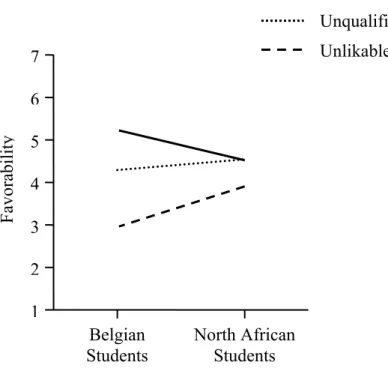
Figure 2.1. Attractiveness of Likable, Unlikable and Unqualified targets as a function of Group Membership (Adapted from Marques et al, 1988: Experiment 1).
48
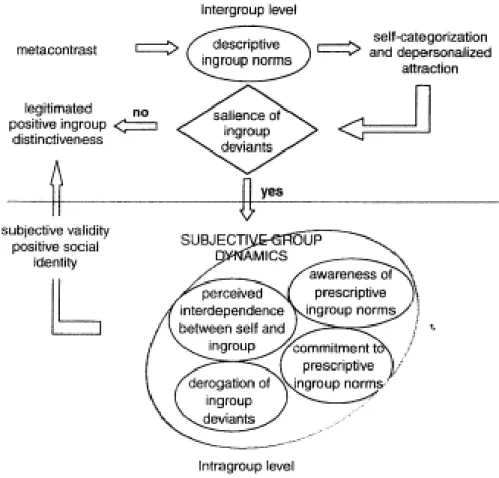
Figure 2.2. Subjective group dynamics. In Marques, Abrams, Páez & Hogg
(2001, p. 414). 54
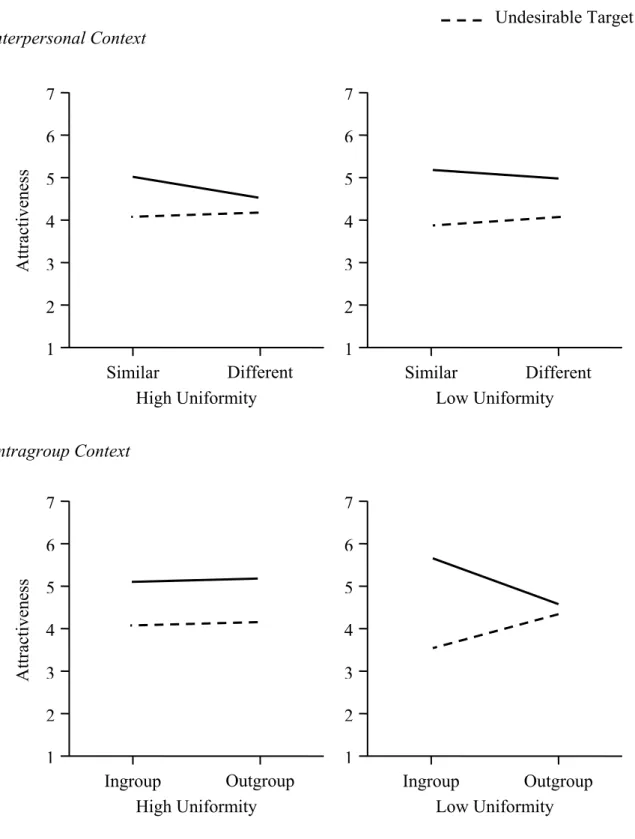
Figure 2.3. Evaluations of Normative and Deviant Targets as a function of Interpersonal or Intragroup Context, High or Low Uniformity and Stimulus Set (Ingroup vs. Outgroup or Similar vs. Different Set of Targets). Adapted from Marques, Abrams & Serôdio, 2001, Experiment 2, p. 442)
63
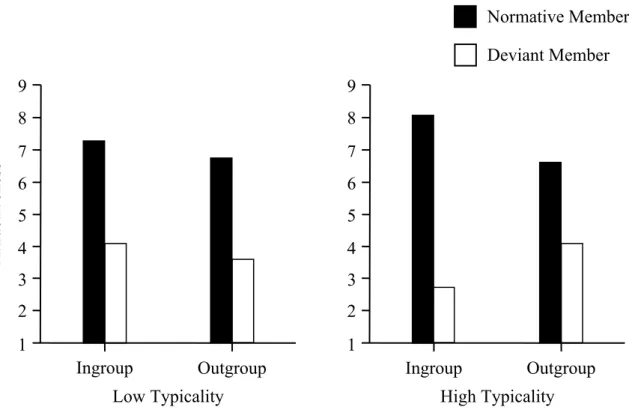
Figure 3.1. Attractiveness of Normative and Deviant Members as a function of
Context and Group Membership (Experiment 1). 83
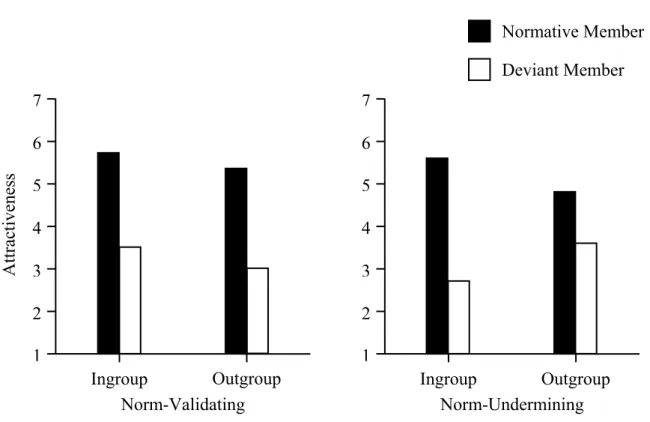
Figure 3.2. Attractiveness of normative and deviant members as a function of
context and group membership (Experiment 4) 113
Figure 4.1. Mediation analysis in the Ingroup/Norm-Undermining condition: Norm-Endorsement as predictor, Intragroup Differentiation as
outcome and Emotional Reaction to Threat as mediator. 129
Figure 4.2. Attractiveness of Normative and Deviant Members as a Function of
Group Membership and Typicality (Experiment 6) 136
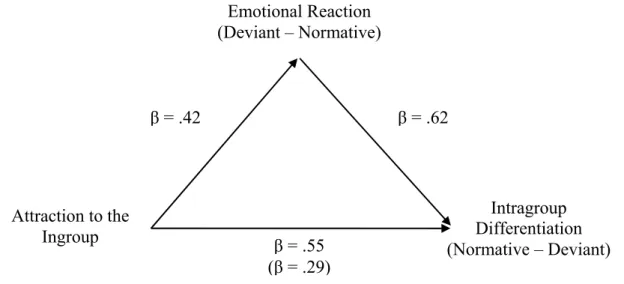
Figure 4.3. Mediation analysis in the Ingroup/High Typicality condition: Attraction to the Ingroup as predictor, Intragroup Differentiation as outcome and Emotional Reaction to Target Members as mediator.
146
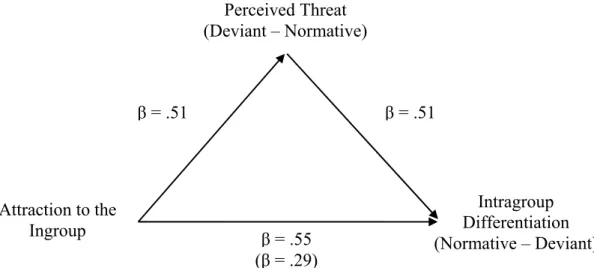
Figure 4.4. Mediation analysis in the Ingroup/High Typicality condition: Attraction to the Ingroup as predictor, Intragroup Differentiation as outcome and Members’ Threat to the Group’ Image as Mediator.
INTRODUCTION
The central topic of the present work is the relationship between deviance and social identity. Our goal is to analyze some situational and psychological factors involved in the emergence of negative reactions toward deviant individuals, and how such reactions help perceivers to maintain or to reinforce their sense of social self worth.
Deviance is a broad topic that encompasses sociological, psychological, and social psychological theory and research (e.g. Archer, 1985; Duyckaerts, 1966; Gibbs & Erikson, 1975; Levine, 1980; Levine & Thompson, 1996). It may be viewed as an important step towards adaptation, by confronting the majority with new, adaptive forms of behavior (e.g., Ben-Yehuda, 1985; Levine, 1980; Moscovici, 1976; Mugny, 1982), or it may be equated, for example, with “error”, “illness”, “crime”, or “sin”:
“In error, failure is due to ignorance or to the lack of control over the elements of action. Illness is also a lack of control […] over the body and the mind that renders the individual incapable of realizing his value commitments and of fulfilling his share of solidarity obligations […]. Crime and sin refer to failures to cooperate within the valued collectivities of the community or to demonstrate commitment to societal values. They are more severely punished than error or sin because the likelihood of their harming society is usually greater. […]” (Pitts, 1965, p. 702).
Deviance may also appear either as a more or less obvious deviation from common occurrences, or as a more or less intentional departure from conduct that a community or a group considers to be “desirable” or, at least, “adequate” (e.g. Axelrod, 1986; Cialdini & Trost, 1998; Hamilton & Rauma, 1995; Hawkes, 1975; Miller & Prentice, 1996). Obviously, the psychological concomitants of the perception of these distinct kinds of
deviance can be very different, let alone their material or social consequences, both for the deviants and for normative individuals.
Finally, the deviant label itself, may denote either a demarcation between individuals who are socialized in terms of conventional norms and individuals who are socialized in terms of other norms (e.g. DeLamater, 1968; Sutherland & Cressey, 1974), or the manifestation of a disruption or disagreement between individuals who share the same social definition (e.g. Durkheim, 1893; Levine & Moreland, 1998; Shaw, 1976). Clearly, a distinction between normal and deviant groups or social categories would entail more of a conflict between distinctive normative systems, possibly endowed with different power over the means to define what is deviant and what is normal (Hamilton & Rauma, 1995; Inverarity, 1980).
In the present work, we conceive of deviance as the perception of a disruptive process within a social group, rather than as the marginalization of ethnic or cultural groups in society, and we are concerned with individuals’ reactions to other members of their group who deviate from the standards that uphold that group’s positive image (cf. Marques, Abrams, Páez & Hogg, 2001). More specifically, we attempt to explore a set of assumptions which have been subsumed under the heading of subjective group dynamics (e.g. Marques & Páez, 1994; Marques, Páez & Abrams, 1998), deal with the conditions, internal and external to the group, under which individuals derogate in-group deviants.
Broadly, subjective group dynamics has a process stemming from individuals’ self-assimilation to a social category and application of internalized prescriptive norms to the construction and validation of beliefs in a positive social identity (Marques, 2004; Marques & Páez, 1994; Marques, Páez & Abrams, 1998). It has been defined as “a process by which people maximize and sustain descriptive intergroup differentiation whilst simultaneously
maximizing and sustaining the relative validity of prescriptive ingroup norms through intragroup differentiation” (Marques, Abrams, Páez & Hogg, 2001, pp. 401-402).
The simultaneous intergroup and intragroup differentiation process proposed by the subjective group dynamics model often arise in terms of hostile reactions towards those ingroup members who do not subscribe to valued ingroup standards. These reactions find parallel in two important instances of social life. On the one hand, they appear to be the psychological equivalent of interpersonal processes occurring in face to face groups (cf. Marques & Páez, 1994). On the other hand, they are comparable to the processes described by sociologists and historians when large communities have to deal with deviant individuals and subgroups (Marques, in preparation; Marques & Serôdio, 2000).
The foundations of our theoretical reasoning stem from classical sociology and more recent social psychological theory and research. From sociology, we borrow mainly from Durkheim’s (e.g. 1893) theory of social solidarity and social control. From social psychology, we borrow from the classic approach to social influence in face-to-face groups initiated by Festinger (1950), and from the social identification approach, including social identity theory (Tajfel, 1978; Tajfel & Turner, 1986; Turner, 1975), and self-categorization theory (Hogg, 1992; Oakes, Haslam & Turner, 1994; Turner, Hogg, Oakes, Reicher & Wetherell, 1987).
In Chapter 2, we present the above mentioned theoretical foundations. Durkheim’s (1893) theory of social solidarity is particularly relevant to our concerns. We attempt to describe how this theory’s account for the function of punishment of deviants in the promotion of social cohesiveness, and the reinvigoration of individuals’ adherence to the violated norms, especially when internal (e.g. anomie) or external (e.g. a threat to the group’s definition) require the group’s normative system to be reinforced (e.g. Erikson, 1966). We argue that social identity may be the equivalent of Durkheim’s (1893) notion of
mechanical solidarity as far as reactions to deviants and the reinforcement of social identification are concerned.
Based on Festinger’s (1950) informal social communication theory, we elaborate on the process through which members of face to face groups acquire a sense of subjective validation of reality by establishing intragroup uniformity, and how they deal with deviance of opinions from other members that may jeopardize this validation. We argue that, although the processes according to which large communities and small groups deal with deviance may certainly be quite different in nature, they are driven by similar types of occurrences and their aim is, in both cases, to maintain or reinforce uniformity.
In applying to the social identification framework, we attempt to draw relevant implications from the two above mentioned theoretical fields to the main theoretical issue of this thesis: the significance of ingroup deviance for the identity of group members, and the external conditions that amplify it. We review research on the so-called “black sheep effect” (Marques, 1986; Marques, Yzerbyt & Leyens, 1988), from which the model of subjective group dynamics evolved (Marques & Páez, 1994). In line with the subjective group dynamics model, we assume that, when individuals define themselves as members of a social category, the emergence of ingroup deviance prompts them to adopt a prescriptive focus towards the deviants (Marques, Abrams, Páez & Taboada, 1998; Marques, Abrams & Serôdio, 2001). We hypothesize that such prescriptive focus decreases individuals’ tolerance of ingroup deviance and intensifies hostile reactions towards ingroup deviants, specifically when the ingroup is perceived to lack solidarity in terms of the breached norms, when the norm’s validity is threatened by lack of societal support, or the group’s identity is threatened in the context of intergroup relations.
We devote Chapters 3-4 to our empirical research. In Chapter 3, we focus on the idea that reactions to intragroup deviance are tributary to the more general intergroup
context in which they occur. In this chapter, Experiments 1-4 examine how internal and external threats to the ingroup increase derogation of ingroup deviants. In all experiments, participants judged ingroup and outgroup deviant and normative individuals. In Experiment 1, participants evaluated the ingroup deviant more negatively and the ingroup normative member more favorably than their outgroup counterparts, when they perceived that a relevant majority of ingroup members did not support a valued norm. In experiments 2 and 3, we found a similar effect when the ingroup status relative to the outgroup was insecure. Experiment 4, complemented findings of Experiment 1, by showing that lack of societal support, instead of lack of ingroup support, to the norm generates upgrading of normative ingroup members and derogation of deviant ingroup members relative to outgroup members.
In Chapter 4, Experiments 5-7 are mainly aimed at exploring the relationship between cognitive and emotional processes involved in the derogation of ingroup deviants. Specifically, experiments 6 and 7 show that derogation of ingroup deviants is stronger when the deviants are good ingroup representatives. In Experiment 6, we found that ingroup members, deviant or normative, were, respectively, more strongly derogated or upgraded relative to similar outgroup members, when they were typical than when they were atypical of their group. Results of Experiment 7, replicate this finding. Experiments 5 and 7 further show that participants’ emotional reaction to the targets, and their perception of the extent to which these targets positively or negatively contribute to the ingroup’s image significantly mediate derogation of ingroup members.
Chapter 5 concludes this thesis. Based on the collected evidence, we contend that an account of the antecedents and functions of normative individuals’ punitive reactions toward ingroup deviants requires one to consider the implications of deviance for the identity of these individuals, and the external conditions that, amplify the psychological
impact of deviance by decreasing normative individuals’ threshold of tolerance and increasing their negative experience of the situation.
CHAPTER 2
A THEORETICAL OUTLINE OF SUBJECTIVE GROUP DYNAMICS
The social psychological study of group processes evolved mainly from two research traditions, the small group approach (e.g. Cartwright & Zander, 1968; Forsyth, 1990; Shaw, 1976) and the social identification approach, including social identity theory (Tajfel, 1978) and self-categorization theory (Turner, Hogg, Oakes, Reicher & Wetherell, 1987). However, in what regards the study of uniformity and deviance, the two traditions differ in their assumptions about the processes involved in group members’ perceptions of their groups and of other members.
Firstly, whereas the small group approach has explored in detail the reactions of members of face to face groups to internal disagreement about valued opinions, social identity research has centered on the process whereby individuals disregard intragroup differences in order to bolster clear-cut intergroup differentiation. Secondly, whereas the small group approach focused itself on the part played by interpersonal similarity, interdependence, and face-to-face interaction in the construction of the group (cf. Lott & Lott, 1965; Shaw, 1976), the social identification approach has traditionally focused on the group as a representation that mediates inter-individual relationships (Hogg, 1992; Tajfel, 1978; cf. also, Wilder & Simon, 1998; Prentice, Miller & Lightdale, 1994; for distinctions between the two kinds of groups). Thirdly, whereas research driven by the small group approach, has centered mainly on processes occurring within the group to the detriment of the intergroup context, research driven by the social identification framework has devoted attention to the relationships between groups while generally disregarding how social categories deal with emerging deviance. In the present chapter, we argue that, although these two perspectives have evolved largely through independent paths, they may be heuristically combined into a general perspective of the interplay between intergroup and
intragroup processes. Interestingly, one way in which such combination can be attempted is by reference to sociological work inspired by the seminal theory of Durkheim about social solidarity, anomie, and social control (Durkheim, 1893, 1895).
Durkheim’s Approach to Deviance, Social Control, and Social Cohesiveness
Durkheim’s functionalist approach to deviance has been recognized as one of the most influential accounts of the process whereby groups construct and reinforce internal cohesiveness (e.g. Jones, 1981; Marks, 1974; Turner, 1990). The core idea of Durkheim’s theory can be subsumed as follows:
“…Society is essentially a set of ideas shared by individuals. Social facts are things, but things that exist only in the minds of individuals. Society, like religion, is abstract, normative, and emotional […]. The maintenance of consensus ant the maintenance of order are the organizing principles of Durkheim’s society.” (Pitts, 1965, p. 686).
Social Control and Social Organization
A core aspect in Durkheim’s theory is the notion of social control. The term social control refers the set of mechanisms that society puts to work in order to insure individuals’ compliance with the principles that regulate the society, i.e., social norms, to the detriment of undisciplined individual impulses that, if unconstrained, would create a state of anomie, or social disorder. Similar notions were used by other classical authors, such as Mead (1925), Ross (1901), Thomas and Znaniecki (1927; cf. for example, Meier, 1982).
To Durkheim (1893, 1895), the organization of a community can be approached through the observation of how social control operates in that community. The characteristics of the social organization would be given by the observation of the predominant ways through which the society internally establishes social solidarity, i.e.,
the necessary uniformity of beliefs, rules for inter-individual cooperation, or latitudes of tolerable behavior to ensure its continuity over time.
Forms of Social Control and of Social Solidarity
In analyzing how different societies exert social control over their members, regardless of whether social control emerges in formal or informal ways1, Durkheim (1893) distinguished between two general orientations that he designated as repressive and restitutive. Repressive social control, on the one hand, would find its formal manifestation in the criminal law, in which the penalty applied upon lawbreakers aims to directly punishing them for the harm that, by breaking the link of social solidarity with other people, they would have caused to society. Restitutive social control, on the other hand, would correspond more to civil, commercial or constitutional law, whose ultimate goal is, more than punishing the harm doer, to repair the harm done by bringing society back to the state of affairs that pre-existed the norm violation.
Importantly, Durkheim equated repressive and restitutive social control with two different forms of social organization. These two forms correspond to mechanical solidarity and organic solidarity (Durkheim, 1893). Mechanical solidarity and organic solidarity would be two ways in which individuals represent both the social units to which they belong and their position as members of those units.
Mechanical solidarity would be a property of simple communities, in which social cohesiveness is a function of individuals’ belief similarity and behavioral uniformity. It stands for the automatically, and fully, sharing of the same values, motives, beliefs and behavior patterns by socialized individuals. Clearly, this form of social coordination would
1 From Durkheim’s (e.g. 1985) sociological standpoint, the formal social institutions to analyze, would thus
be the Law, Education, and Religion, that is, the three institutions that more aptly regulate the minds and behavior of individuals, by creating, imposing, and ensuring their abidance by social norms. However, Durkheim admitted, informal social control mechanisms may be very effective in establishing social uniformity (e.g. Durkheim, 1893).
be impossible in the simpler group, all the more because differentiation would there be largely unaccepted.
In turn, organic solidarity would emerge in more complex social organizations, in which the increasing division of roles and functions (which Durkheim designates as “social labor”) leads to a greater differentiation between individuals. In this case, social cohesiveness would correspond to the functional complementarity between individuals whose different perspectives, motivations, beliefs, and skills would contribute to the effective operation of intertwined and mutually interdependent spheres of the social organization (cf. Durkheim, 1893)2.
Anomie, Deviance, and Social Control: the Structuring Role of Punishment
Durkheim’s approach to social control and his conception of the social function of deviance and punishment cannot be dissociated. A core contention in Durkheim’s (e.g. 1893, 1895) theory is that deviance is a normal fact of social life, a functional aspect of every group that is vital for its common existence. In other words, groups create themselves their own deviance, without which they would not be able to maintain the required level of internal consensus that allow their continued existence. Although, at first glance, the theory appears to rest on the idea that groups need internal consensus, it argues, in fact, that the emergence of intragroup diversity is a necessary outcome of group life, whose crucial function is to bolster social uniformity. Durkheim (1895) exemplifies this idea by imagining a “community of saints” where
“…crime properly said, would there be unknown, but faults which would appear venial or current, would raise the same scandal as the ordinary offence does to the common mind. If, then, it had the power to judge and punish, such a society would qualify these acts as criminal and would treat
them as such […] Crime is, therefore, necessary; it is linked to the fundamental conditions of all social life and, for this very reason it is useful; because the conditions to which it is associated are themselves vital to the normal evolution of morality…” (pp. 68-70, our translation).3
Durkheim defines deviance with respect to the notion of collective mind (conscience collective). The collective mind refers to the set of beliefs and feelings that are shared by the members of a community. In this vein, an offence or deviant act is an act that offends the core aspects (the “strong states”, as Durkheim calls it) of the collective mind. The crucial implication of this fact is assumption, is that, to Durkheim (1893) an act becomes deviant to the extent it will be blamed by the collective mind, rather than the reverse. To put it in Inverarity’s (1980) words, “the social act of punishment has the primary consequence not of deterring potential troublemakers but rather of reaffirming commitment and solidarity among the virtuous” (p. 194). Deviance would thus be a product of punishment, rather than its instigator. Because punishment marks the threshold from which deviation from group norms is no longer accepted, punishment should increase as uniformity decreases within the group. As a result, deviance should be viewed as a collective construction that, by increasing punishment opportunities would force individuals to focus on the norm, and even to commit themselves more strongly to it by participating, actually, or tacitly, in the punishment of deviants (cf. also Marques & Serôdio, 2000). In other words, punishment primarily serves the function of reinforcing commitment and solidarity between normative individuals, rather than discouraging and
2 Interestingly, Durkheim (1893) initially conceived the two types of solidarity as the reflection of society’s
evolutionary transition – i.e., modernity entails a progressive shift from mechanical to organic solidarity. He later reviewed his position considering that the two types may coexist (Durkheim, 1895).
3 In the original version: “… les crimes proprement dits y seront inconnus; mais les fautes qui paraissent
vénielles ou vulgaires y soulèveront le même scandale que fait le délit ordinaire auprès des consciences ordinaires. Si donc cette société se trouve armée du pouvoir de juger et de punir, elle qualifiera ces actes de criminels et le traitera comme tells […] Le crime est donc nécessaire; il est lié aux conditions fondamentales de toute vie sociale, mais, par cela même, il est utile; car ces conditions dont il est solidaire sont elles-mêmes indispensables à l’évolution normale de la morale…”. (pp. 68-70).
preventing dissidence. In fulfilling these functions, deviance and punishment are vital for the maintenance of social cohesiveness. As Durkheim (1895) put it,
“If, as societies change from inferior types to higher ones, the rate of criminality […] tended to decrease, one might believe that, in spite of remaining a normal phenomenon, crime would nevertheless tend to loose this quality. But we have no reason to believe in the reality of this decrease. Many facts seem to rather demonstrate the reverse phenomenon […]. In France, the increase is about 300%. There is no other phenomenon that more cogently presents all the symptoms of normality, because it appears to be closely associated with the conditions of collective life.” (Durkheim, 1895, pp. 65-66).4
In short, deviance is created by the group in order to increase punishment. Punishment, in turn, provides individuals with the opportunity to express (or to simply feel) their hostility towards those other individuals whose behavior falls aside the limits constructed by the group on relevant norms. Participation in punishment will allow the former to reinforce their commitment to the breached norm and, by the same token, to increase their attachment to the group.
Deviance thus appears as a seemingly paradoxical phenomenon. It strengthens the very norms it challenges, by leading normative individuals to engage in reactions towards deviants. It “not only revives and maintains common sentiments, but creatively establishes moral rules and redefines ‘normal’ behavior” (Coser, 1962, p. 173). Deviance thus crucially provides the necessary contrast between behavior that is deemed moral or immoral by the community. In doing so, it allows individuals to assess and to govern their
4 In the original version: “Si, du moins à mesure que les sociétés passent des types inférieurs aux plus élevés,
le taux de criminalité […] tendait à baisser, on pourrait croire que, tout en restant un phénomène normal, le crime, cependant, tend à perdre ce caractère. Mais nous n’avons aucune raison qui nous permette de croire à la réalité de cette régression. Bien des faits sembleraient plutôt démontrer l’existence d’un phénomène en sens inverse […]. En France, l’augmentation est de près de 300%. Il n’est donc pas de phénomène qui présente de la manière la plus irrécusée tous les symptômes de la normalité puisqu’il apparaît comme étroitement lié aux conditions de toute vie collective.” (Durkheim, 1895, pp. 65-66).
own behavior and the behavior of others in light of the community’s standards, and, hence, to establish their attachment and altruistic orientation towards the group (Durkheim, 1909). If no opportunities to engage in deviance punishment existed, individuals would loose sight of the specific values that should, in their eyes, establish their membership to a unique, and positively valued, social unit. Such an ignorance of the group’s norms and therefore, ignorance of its boundaries (the well-known durkheimian notion of anomie), would ultimately lead the social identity of members to fade, and condemn the group to non-existence (e.g. Durkheim 1893, 1895; cf. also Akers, 1968).
Deviance and Social Control as an Intergroup Process
Maybe due to its richly heuristic contents, research directly or indirectly inspired by Durkheim’s theory evolved into, at least, two distinct lines. One such line of reasoning views deviance as a disruptive process occurring within the community, and conceives social control as a process that opposes normative to deviant groups. To some extent, deviance would be a structural property that distinguishes between non-conventional and normative groups.
To some authors, research on deviance ensues from the assumption of a distinction between, consistent and consensual, normative individuals and periodically emerging deviant groups (cf. Inverarity, 1980). According to this general view, deviance originates either from individuals’ socialization in deviant groups, or from individuals’ lack of socialization, and thus deviance is viewed as the direct outcome of individuals’ membership in a particular social category. As DeLamater (1968) puts it,
“If one analyzes the background of many deviants, it appears that they were not originally socialized into conventional society. In some cases, childhood socialization occurred in a deviant subculture, and was explicitly in deviant (i.e. contraconventional) norms and values […] More frequently, the potential deviant’s socialization as a child was simply inadequate or lacking.
Either the parents made no attempt to systematically train the child to any set of norms, or there were no parents or other adults available to serve as effective socializing agents […] This type of […] socialization prepares the individual for deviant behavior fairly directly; it removes the necessity for him to neutralize conventional norms or withdraw legitimacy attributions from them […].” (p. 447, emphasis in the original).
From a social psychological standpoint, then, we can say that, conceptualized in this way, deviance would be the manifestation of a conflict between “society” (a dominant or majority group), and a normative system (or the absence of such a system) adopted by a minority or dominated group (cf. Moscovici, 1976). Obviously, in this context, what is deemed as “normative”, as “effective” or “ineffective” socialization, or as “non-conventional”, strongly depends on the normative standards of the group that, at a particular historical moment, has access to the mechanisms of social control in society at large (cf. for instance, Chambliss, 1976; Hamilton & Rauma, 1995; Inverarity, 1980).
For example, according to Merton’s (1938, 1968) social disorganization theory, society imposes criteria of social success, mainly, material success, to individuals, but fails to endow certain groups with the means to achieve success by conventional, socially sanctioned, means. This contradiction would create a state of anomie by weakening the strength of social norms over these individuals, so that they would attempt to accomplish the socially valued goals by using non-conventional procedures. Akin to Merton’s theory is Parker and Stonequist’s (1937) account of deviance and marginality. To these authors, deviance (which they designate as marginality) would ensue from a contradiction between between broad role-commitments and incompatible social memberships. Thus, individuals who identify with a role that is not clearly spelt out may sooner or later discover that this role is in contradiction with previous commitments to incompatible other roles. This inconsistency would be solved either by strengthening their commitment with the present
role to the detriment of past commitments, or by deviating from their group, thus adopting a marginal position (cf. Pitts, 1965).
In a similar vein, with differential association theory, Sutherland and Cressey (1974) argue that the particular social organization that is found in urban areas weakens the more traditional, and more effective, mechanisms of social control that are found in primary groups and less complex forms of social organization. An outcome of this process is the emergence of deviant sub-cultures. Once individuals associate themselves to these cultures, individuals will assimilate their attitudes, motivations, and beliefs, while learning deviant techniques. Individuals will become deviant once the strength of attitudes, motivations and beliefs that favor the violation of social norms overpasses that of norm abiding attitudes, motivations and beliefs. Society would thus be composed by normative groups and by groups that differentiate themselves from the main stream in terms of their actions, goals, and representations of the world (e.g. Meier, 1982).
The other line of reasoning that emerged from Durkheim’s seminal ideas views deviance more as a process that, not only emerges within every social group, but also, and more importantly, as a process that is functional the groups’ very existence, and that becomes crucial exactly when the vicissitudes of group life require the reinforcement of social cohesiveness (e.g. Erikson, 1966). Authors in this line of reasoning have inquired into how individuals that were formerly normative, or considered as such, acquire a deviant status.
In this context, Becker’s (1963) societal reaction theory is a classical example. According to this author, society creates itself the very rules whose infraction is defined as deviance, following which it labels those who do not abide by those rules as deviant, prior to casting them off the group as outsiders. At the outset, then, these individuals are normative group members, in that their behavior has not yet been defined as deviant. They
become deviants only after their behavior is consensually viewed by others as deviant (primary deviance) and even more so when they accept that label themselves (secondary deviance). The representation of certain behavior as deviant is initiated through the action of “moral entrepreneurs”, that is, individuals or institutions who have the means to impose moral meaning upon these behaviors. When these “moral crusades” are effective in generating negative feelings about the target behavior in the remainder of society (societal reaction), deviants become to be viewed as outsiders and are subject to punitive treatment. Societal reaction thus corresponds to the creation of social consensus about which behavior is acceptable or unacceptable and, by the same token, about whose individuals are to be considered normative or deviant.
A classical example of this process is provided by Becker’s analysis of the criminalization of marijuana use in the United States. Whereas in the 1930s, the possession and use of marijuana was criminalized in only 16 North American states, and induced but generalized apathy on the part of public opinion and institutions (Becker, 1963), in 1937 it became criminalized in all 48 states. This seems to have been due to the action of mass-media, who started to refer to marijuana as “the killer weed”, “the burning weed from hell”, or “the sex-crazing drug menace”, and of the Federal Bureau of Narcotics, who acted as moral entrepreneurs that generated the labeling of a new social category of marijuana consumers (cf. also Archer, 1985).
Moral panic is a process similar to a moral crusade that occurs when the role of moral entrepreneurs cannot be directly assigned to a particular group or institution, but rather appears diluted across society (Goode & Ben-Yehuda, 1994). The term “moral panic” was coined by Cohen (1972) in his analysis of how minor social disorders can be amplified based on the exaggeration of the supposedly threatening character of a specific social category to society in general. According to this author, moral panics usually emerge
following an event that is considered as morally censurable. In being reported, namely by the mass-media, the event may be subject to a sensitization process, whereby “harm, wrongness, or deviance is attributed to the behavior, condition, or phenomenon that is routinely ignored when the same consequences are caused by or attributed to more conventional conditions” (Goode & Ben-Yehuda, 1994, p. 156). Moral panics thus stand for the amplification of social concerns that emerge following the exaggeration and the misplacement of a perceived threat to society’s values by a specific social category (Cohen, 1972) and the consequent increase in hostility towards this category that, as a result, moves from the status of relatively anodyne subculture to that of a dangerous deviant group.
In his classical illustration of this deviance amplification spiral, Cohen (1972) analyzed the emergence of a large social concern about the “Mod” and “Rocker” British youth movements, whose popular images involved, respectively, motor scooter-driving and sophisticated clothing wearing, or motor bike-driving and black leather jacket wearing. On Easter Sunday of 1964 members of the two groups gathered in a sea resort in southwest England and were involved in minor scuffles, following which a few windows and beach huts were broken and about one-hundred people were arrested and charged from abusive behavior or resistance to arrest. Following mass-media coverage of this event, youth gangs and vandalism emerged as a major news theme and as a source of social concern in England for at least three years (Cohen, 1972), and mods and rockers became to be viewed as potentially threatening deviant groups5.
The association between deviance and opposing normative systems, or subcultures, clearly endows it with an intergroup flavor. For example, Becker’s (1963) perspective interestingly overlaps with social identity theory’s idea that the creation and permanence of
5 Perhaps a more interesting example of moral panics is Ben-Yehuda’s (1980, 1985) analysis of witch
a social category requires the generation of social consensus about the category’s existence, both by those who categorize (external consensus), and by those who are categorized (internal consensus) as members of that social category (Tajfel, 1978). To a large extent, then, societal reaction theory subsumes deviance as a social categorization process (i.e. labeling) that is followed by a “downward” social mobility process (secondary deviance). That is, certain individuals who previously conceived of themselves as members of the normative majority, would, by the force of social pressures, be led to psychologically and behaviorally join a deviant, lower status, sub-category (cf. Marques, in preparation).
Deviance as a Contribution to Social Cohesion within the Group
In a previous section, we summarized theoretical perspectives that depict deviance in large communities as a process of social differentiation between normative and deviant groups. In the above section, we described evidence showing how members of face to face groups deal with other members who deviate from the group’s modal opinion, or fail to contribute to the achievement of material group goals. However, there is also evidence that large communities deal with deviance in a way analogous to that of small, or face-to-face, groups. This is illustrated in the following documental studies.
Threat and Dogmatism in Catholic Canons
Rokeach, Toch and Rottman (1960) content-analyzed 403 canons issued by the Roman Catholic Church in 12 councils that took place between the 4th and 16th centuries
(from the First Nicea Council, in the 4th century, to the Trent council, in the 16th century). These authors then had judges evaluate the degree of situational threat to the Church at the
time each council took place6 , the level of religious authority invoked by each cannon, and the intensity of punishment prescribed to violators of these cannons. For the 12 councils, Rockeach, Toch and Rottman (1968) created three indexes, respectively, for the intensity of the threatening character to the Roman Catholic Church of the events that precipitated or merely contributed to the councils, the amount of punishment prescribed for violators of the canon, and level of authority invoked by the cannon7 The rank-order correlations between the three indexes show a significant relationship between threat and punitiveness (r = .52) and between threat and absolutism ( r = .66), even though the correlation between punitiveness and absolutism was only r = .46. As Rockeach, Toch and Rottman (1968) stated,
“Undoubtedly, the continued existence of an institution depends upon appropriate responses by its leaders to new situations. An important change in circumstances calls for the corresponding changes in the institution. On the other hand, groups also have to protect themselves against too much change, because beyond a certain point, the group would change itself out of existence. With too much modification, an Anabaptist is transformed into a Mennonite, and a Mennonite into an Amish.” (Rockeach, Toch & Rottman, 1968, p. 386).
Although it appeared from a different tradition, Rockeach, Toch and Rottman’s (1968) study cogently illustrates the major contention of authors whose research was
6 For example, the Second Lateran Council, the Constance council, and the Basle council, were among those
rated as being held under the higher threat. The Second Lateran Council (1139), was held during the schism that opposed Pope Innocent II to Cardinal Pietro Pierlone’s election as anti-pope, and the Constance (1414-1418) and the Basle (1431-1449) councils accompanied the emergence of Jean Hus’ and Martin Luther’s Reformation. Among those rated to be held under the least threatening conditions was, for example, the First Council of Constantinople (381), that took place as Arianism came to an end, or the First Nicea Council (325), in which the proper date for Easter celebration was debated (Rockeach Toch & Rottman, 1968)
7 For example, a canon high in authority and punitiveness is “Desiring with the grace of God to protect the
recognized possessions of the Holy Roman Church, we forbid under penalty of anathema any military person to invade or forcibly hold Benevento, the city of St. Peter” (Rockeach, Toch & Rottman, 1968, p. 384), whereas another low in authority and punitiveness is “All the poor and those in need of help when travelling shall after an examination be provided with ecclesiastical letters of peace only and not with commendatory letters, because commendatory letters ought to be granted to those persons only who are in high estimation” (id., ib.)
directly inspired by the durkheimian theory of social control. Indeed, all differences considered (and in spite of methodological problems that were, besides, clearly recognized by the authors), Rockeach and colleagues’ findings suggest that group’s tolerance for deviation and tendency toprescribe their members’ behavior is a reverse direct function of the internal or external menaces to their existence.
The Puritan Community of New England
As a case in point, Erikson (1966), an author who is widely recognized as an adherent to the durkheimian tradition, contended that groups define themselves in terms of the norms they prescribe to their members (i.e. their moral boundaries), which distinguish themselves from other communities. Moral boundaries would thus define the identity of those that belong to the community, by prescribing their permissible actions and, hence, also those actions that are not to be tolerated. The normative or deviant quality of actions, or individuals would thus depend much less on their intrinsic attributes than on the current stand of the group regarding the threshold of tolerance for differences in its sphere:
“Deviance is not a property inherent in any particular kind of behavior; it is a property conferred upon that behavior by the people who come into direct or indirect contact with it. The only way an observer can tell whether or not a given style of behavior is deviant, then, is to learn something about the standards of the audience which responds to it.” (Erikson, 1966, p. 6)
The group would be led to narrowing or enlarging its tolerance for non-conformity, depending on whether or not it is at risk to loose its moral identity (Erikson, 1966). Conditions that would require narrowing moral boundaries would be, for example, the realignment of power, the maintenance of the status quo, or the increase of internal cohesiveness in the presence of an external threat.
Based on the above ideas, Erikson (1966) analyzed three cases that took place between 1630 and 1690 in the Puritan community of New England. The first case, known as the Antinomian controversy, dealt with Mrs. Anne Hutchinson’s campaign advocating the uselessness of the clergy as the mediator between God and the individual, in light of the Calvinist principle of the equality of all individuals in the eyes of God. Mrs. Hutchinson’s position was consistent with the Puritan emphasis on the private nature of the relationship between God and the individual, but as the Puritan community established itself as an autonomous colony, “the New England theorists [had begun] to argue that God had entered into a covenant with the people of the colony as a corporate group and was only ready to deal with them through the agencies they had built to govern themselves” (Erikson, 1966, p. 73). Mrs. Hutchinson’s position thus ran counter the new theology that forced the relationship of the individual with God to be mediated, and hence screened by the colony’s administration. Describing the long series of events that lead Mrs. Hutchinson and her husband to trial, and banishment from the colony, and their followers to be punished would be too space consuming and fall beyond our scope. But the way Erikson (1966) summarizes what was at stake in the whole process seems elucidative:
“Although it is convenient to place Mrs. Hutchinson in the center of the Antinomian controversy, […] it is far more important to understand the shifts of mood that made the settlers responsive to her arguments[…] In 1636 the townsfolk of Boston decided to join her […] and, in doing so placed her in the midst of a crucial historical crossroads. […] Massachusetts Bay was a community […] fashioned in the belief that each person was primarily responsible to the promptings of his new conscience […]. The verdict against her was a public statement of the new boundaries of Puritanism in Massachusetts Bay, for in passing sentence on Mrs. Hutchinson the magistrates were declaring […] that the historical stage she had come to represent was now past.” (pp. 106-107).
The second case analyzed by Erikson (1966) was the so-called “Quaker invasion” between 1656 and 1665, and the conflict between the progressive tendency of the Quaker movement (namely the refusal to defer to the religious and political authority) and the conservative Puritan position. The Quaker movement was composed by individuals recently arrived in New England who defended simplicity of life at all costs and who challenged authority in such ordinary acts as the refusal to display signs of respect to superiors or to the church itself. In doing so,
“…the Quakers had ignored a fundamental responsibility by failing to share […] that sense of firm ideological commitment, that willingness to participate fully in the rhythms of group life, the feeling of common heritage and common destiny which gives every society its underlying cohesion.” (Erikson, 1966, p. 130).
Such failure resulted in institutional outbursts of punishment. Besides ordering burning of any Quaker literature, the Puritan officials punished Quaker offences with fines, public beatings, banishment, imprisonment, and stigmatization such as cutting off the offenders’ ears or nose, or iron marking them in the forehead, and these punishments were often supported by the crowds.
The third case analyzed by Erikson (1966), known as the case of the witches of Salem, occurred in 1692, when, following the establishment of the Reformation as a relevant party in the international arena, and the new attitude of England towards the Puritan movement,
“[the settlers] were no longer […] members of that special revolutionary elite who were destined to bend the course of history according to God’s own word. They were only themselves, living alone in a remote corner of the world, and this seemed a modest end for a crusade which had begun with such light expectations […]” (p. 155).
Following an insignificant turn of events, a group of teenage girls began to convince people that they had seen witches and evil spirits. The issue acquired a disproportionate dimension, because the alleged sightings were reported almost everywhere in the village and directed to every person. Eventually, many people whose religious beliefs and allegiance to the community’s ways of life had never been questioned before were imprisoned. Some of these people suffered capital punishment.
According to Erikson (1966), the episode of the witches of Salem was, as were the former two cases, elicited by a threat to the founding beliefs and internal cohesiveness of the Puritan colony either from the inside or from outside the community. The laypeople’s insurgence against the increasing power of the clergy, and the spread of a progressive religious doctrine, found in the Antinomian controversy and the Quaker invasion, were paralleled, in the episode of the witches of Salem, by the political quarrels due to the war against the Indians, and the increasing administrative disorder.
All three cases suggest that, by devoting increased attention to certain issues and/or individuals, and by decreasing tolerance towards particular aspects of these issues and individuals, the group increases the opportunities for normative individuals to be confronted with deviance, and to directly or vicariously participate in punitive action that will strengthen their solidarity with, or commitment to, the group.
The Lynching Mobs in Nineteenth Century Louisiana
Inverarity (1976) describes a case with similar consonance, about the significant increase of lynching mobs in Louisiana between 1889 and 1896, after the American Civil War. Black and white small land owners and workers rallied together in the People’s Party, against the large industrial entrepreneurs, merchants and land owners of the southern states. The blurring of racial frontiers by the new focus on the conflict between the poor and the rich land owners, industrials and merchants, was a major breakdown in the
solidarity of white southerners that had been previously sustained by the threats posed to the Southern spirit by the occupation of Louisiana by the Union army, and by the newly established access of blacks to full citizenship.
According to Inverarity (1976), the community found a response to this new threat by increasing the number of informal ritual punishments, the lynching mob. Between 1889 and 1896, 80 blacks and 14 whites were summarily executed at the hands of mobs, with the tacit support of public opinion. Interestingly, these phenomena were more strongly correlated with events such as the proximity of elections, opposing the People’s party to the ruling Democratic party, or to the relationship between the punished act and the political struggle involving the two factions, than to any demographic factor, inclusing increases in the population (Inverarity, 1976).
The Great Red Scare and the Stalinist Purge
Other authors, for example Gibson (1988) or Sullivan and colleagues (Sullivan, Piereson, & Marcus, 1979) describe how the House of Un-American Activities Committee (HUAAC), controlled by the senator Joseph McCarthy at the time of the Great Red Scare of the 1940-1950’s in the United States of America, thousands of individuals suffered disqualification from public job careers, were denied the right to be run in any political election or from serving public duties even if elected for the position. In 22 of the 50 North-American states, 13 million workers – corresponding to about 20% of the country’s work force – were directly or indirectly affected by control measures by the HUACC. These measures resulted in the firing of eleven thousand workers, 100 convictions of anti-americanism, and 135 citations for contempt. Interestingly enough, McCarthyism emerged as an intragroup normative process exactly at the beginning of the Cold War, in which the United States faced, for the first time in history a potential dangerous enemy.
A similar process is suggested by the so-called “Stalinist Purge” in the years of 1936-1938. Conquest (1968) and Connor (1972) estimate that about four million lives were lost and seven million sent to prison. Whereas in the McCarthyism period the victims proceeded from all social status - from working class persons to scholars or movie directors – in the Stalinist purge, the victims were mainly members of the elite: high officials of the party, people with relationships with foreign countries, industrial engineers or even agents of the NKVD that were considered incompetent in their investigation. However, in both cases, their persecution served the purpose to reaffirm the principles according to which the group (in this case, the large social category) could remain positively differentiated from competing groups.
The War of “Canudos”
We may find yet another example in the “war of Canudos”, that occurred in 1896-1897 in the Brazilian state of Bahia (Levine, 1988). The village of Canudos, was a rural community founded in the late XIXth century by a religious leader known among his followers by the name of António Conselheiro. This leader is nowadays celebrated as “Santo Antônio da Bahia” (Saint Anthony of Bahia). The community of Canudos advocated an alternative way of life, independent from the central government, and from the power of the called “colonels”, a class of land owners that dominated the rural states of Brazil. The Canudos community upheld values such as free property and the religious independence from the dominant clergy laws. For these reasons, the community was increasingly considered as a threat, both to the Catholic Church, and to the newly proclaimed Brazilian Republic (1889), which could hardly subsist without the colonels’ support. The land that the community proclaimed as their own was mostly infertile and abandoned by others, and the influence of the “Canudos” life style over neighbouring communities was objectively irrelevant (Levine, 1988). Nevertheless, the central
government ordered four consecutive of military charges that lead to the killing of more than 20 thousand civilians and 5 thousand soldiers. After approximately one year of war, the community and its leaders were defeated and the “moral and religious righteousness” as well as the authority of the new republic were reinsured.
Case studies like the ones reviewed above are, obviously, susceptible to methodological and external validity criticism. Indeed, the documental studies about the structuring role of deviance in specific communities allow, at best, for correlational reasoning (cf. Gibbs & Erikson, 1975), or, as Inverarity (1980) contended,
“Although Erikson successfully translates Durkheim’s argument into researchable problems, he fails to consider the problem of scope. In particular, Erikson offers no explicit criteria for his choice of Puritan Massachusetts as a research site. Consequently, we are left uncertain about the external validity of his conclusion. Do boundary crises produce crime waves only in seventeenth-century Massachusetts, in theocracies in general or in all social systems?” (p. 197).
Indeed, Erikson’s case is supported by other relevant studies about social phenomena whose structural properties are quite different from those present in the cases analyzed by Erikson. Nevertheless, as Inverarity (1980) claims, after an analysis of capital punishment in the U.S.A., McCarthyism, and the Stalinist Soviet Purges, Inverarity (1980) concludes that:
“Other cases could be cited, but the above three should be sufficient to demonstrate the necessity of qualifying Durkheim’s theory, of distinguishing in general terms those kinds of social systems to which it is applicable from those to which it is not” (p. 198).
An Experimental Study on Group’s Boundaries Definition
This qualification certainly applies to the remainder of the above reviewed case studies. However, as far as we are concerned, we believe that the kind of process uncovered by these studies can be relevantly traced to individuals’ sense of membership to their social group and the consequent motivation to uphold a positive identity as group members. A step towards this goal can be found in a study conducted by Lauderdale (1976). In that study, a partial replication of Schachter’s (1951; cf. above) classical experiment, participants were asked to join a discussion group whose task was to recommend correctional treatment to juvenile delinquents. After reading the case of a Johnny Martin, participants were faced with a confederate who behaved in a way similar to the “deviant” confederate in Schachter’s (1951) study. The discussion group was observed by an alleged “criminal justice officer” who, depending on conditions, either blatantly stated to the Experimenter that the group had few chances to succeed in the task (Threat Condition), or, instead, made an irrelevant comment (Non-Threat Condition). Participants were then informed that it would be necessary to reduce the number of members in the group, and were asked to rank each other in terms of their preferences for those to remain in the group as well as to evaluate those members to whom they assigned the highest and the lowest preference ranking. Not surprisingly, Lauderdale (1976) found that, in general, participants gave the confederate the lowest ranking. However, this ranking was significantly lower in the Threat than in the Non-Threat condition. A similar result emerged from evaluations. Although the confederate was systematically evaluated in a less favorable manner than every other member, this evaluation was the least favorable in the Threat condition. These results are consistent with the assumption that deviants are more strongly rejected, and more negatively evaluated when the group is subject to an outside threat than when no threat is present. These results were replicated in a similar set of
experiments by Lauderdale, Smith-Cunnien and Inverarity (1984). Experiments 4 and 5 in this work (see chapters 3 and 4) deal with a very similar question from an intergroup perspective.
The Medieval Witch Hunting Crusades
A final illustration of the social function of deviance in reinforcing the moral boundaries of groups comes from Ben-Yehuda’s (1980, 1985; Goode & Ben-Yehuda, 1995) study of the witch-hunting moral panics that pervaded Europe in the end of the medieval period. Until the fourteenth century, the Catholic Church’s official position regarding magic and witchcraft was that it was an illusion. At that time, witchcraft was not part of the Church’s agenda, which was far more concerned with the struggle against the Cathari, Albigensian, and Waldense heresies. By the mid of the thirteenth century, the Roman Catholic Church was resolving the internal turmoil of its first centuries of life, and the outside threat that had been posed by the heresies came to an end with the defeat of the Cathari movement, in 1243 (cf. Ben-Yehuda, 1980). From that moment on, the Church started a process that ended with the burning of an estimated two-hundred to five-hundred thousand persons, charged of having consorted with the devil, with the support and applause of the general population (Delumeau, 1978).
In 1326, Pope John XXII issued a bull (Super illius specula) in which magicians and sorcerers were, for the first time, accused of consorting with the devil. Between 1428 and 1447, 110 people were executed in the Dauphiné, an event that was concomitant with the emergence of the first documented mass panic related to witches in the Swiss Valais. In 1484, Pope Innocent III elaborated on the art of sorcery (Summis desiderantis), and instigated the application of severe punishment measures against sorcerers in the Rhine Valley. Three years later, Dominicans Jacob Sprenger and Heinrich Kramer wrote the well-known Malleus maleficarum (“The sorcerers’ mallet”), in which they added to the
long list of heretics that had been draw by their precursor Nicholas Eymerich (“Handbook of the Inquisitors” – ca. 1376), the new category of sorcerers and witches.
In our view, Ben-Yehuda’s (1980) conclusion deserves to be read, because it clearly establishes the social antecedents, of the public participation in the medieval witch panic, as well as the social psychological functions of such participation:
“In the medieval tradition, the moral boundaries of society were clearly defined. There was Christendom, ruled spiritually by Rome and structured in a uniformly conceived feudal order, firmly embedded in a finite cosmic order ruled by God […]. In this sense, the witch craze could be called a ‘collective search for identity’[…] Witches were the only deviants who could be construed as attacking the very core of the social system, through antireligion. […] What could better explain the strain felt by the individual than the idea that he was part of a cataclysmic, cosmic struggle between the ‘sons of light’ and the ‘sons of darkness’? His personal acceptance of this particular explanation was further guaranteed by the fact that he could assist the ‘sons of light’ in helping to trap the ‘sons of darkness’ – the despised witches – and thus play a real role in ending the cosmic struggle in a way that would bring salvation nearer” (Ben-Yehuda, 1980, pp. 13-16)
Implications for the Study of Deviance in Social Psychology
How does the above reviewed theoretical field relates to research on deviance conducted in the realm of social psychology? One important feature of the above reviewed evidence is that it suggests that punishment of deviants emerges mainly when there is a need to reinforce individuals’ sense of cohesion and commitment to society’s norms. In this vein, this evidence is consistent with, and very clearly illustrates Durkheim’s (1893, 1998) ideas about mechanical solidarity. Specifically, it illustrates the processes according to which social groups increase the uniformity of their members’ behavior and beliefs, and their attachment to the group. Perhaps the citation below, issued from work by another