Bulk Is The New Black: Consumer
Attitudes, Perceptions and Purchase
Intentions Towards Bulk Food
Groceries in Portugal
Maria Salgueiro Costa
152116311
Dissertation written under the supervision of Miguel Fontes Rita
Dissertation submitted in partial fulfilment of requirements for the MSc in
Business, at the Universidade Católica Portuguesa, January 2018
Title: Bulk Is The New Black: Consumer Attitudes, Perceptions And Purchase Intentions
Towards Bulk Food Groceries in Portugal
Author: Maria Salgueiro Costa
Keywords: bulk; groceries; unpackaged food; zero-packaging; self-serve; dispensing system Abstract: Purchasing food in bulk has become a growing practise among grocery shoppers in
recent years. No longer a dated tradition from the 19th century, bulk is now seen as a modern
alternative to package-loaded products. Besides a more sustainable nature of transactions, bulk offers several advantages, from lower prices to the chance of portion customization and reduced food waste. However, literature identifies many setbacks for businesses invested in selling unpackaged food. Hygiene regulation in self-service systems is challenging and negatively perceived by many shoppers. Plus, a high rate of spillage, theft and losses undermines retailers' cash flows.
This study focused on the market of bulk food groceries in Portugal. Prices of bulk foods were analysed and compared with the corresponding packaged alternatives, in order to assert price competitiveness. Prior literature on the subject was consulted to conceive a framework for research methods. Six interviews to storeowners operating in the Portuguese bulk foods market served as valuable insights for the investigation. Finally, an online survey with a sample of 309 bulk consumers and non-consumers presented main barriers and advantages of bulk, as well as the attitudes and perceptions that have an influence on purchase intentions. Grocery shoppers in Portugal showed a favourable inclination towards purchasing bulk. Additionally, bulk consumers are concerned about sustainability, portion control and consider price the main driver for store choice.
Resumo: Comprar alimentos a granel está a tornar-se cada vez mais popular entre
consumidores de produtos de mercearia. Outrora considerado uma tradição do século XIX, o granel é agora uma alternativa moderna aos produtos empacotados. Para além de representar uma forma sustentável de comércio, o granel oferece várias vantagens, desde preços mais baixos à oportunidade de controlar o tamanho das porções e reduzir o desperdício alimentar. Contudo, artigos científicos identificam algumas das contrariedades encaradas pelos negócios a granel. A regulação de higiene nos dispensadores de produtos é desafiante e vista com desconfiança por parte dos consumidores. Ademais, um elevado nível de perdas e roubo impactam negativamente os rendimentos dos retalhistas.
Este estudo focou-se no mercado de venda a granel em Portugal. Produtos alimentares a granel foram comparados com as alternativas embaladas para estudar a competitividade dos preços. A literatura académica existente sobre o tema foi consultada para construir uma estrutura de pesquisa metodológica. Seis entrevistas a donos de lojas a granel a operar no mercado português serviram para complementar a investigação. Por fim, um survey online com uma amostra de 309 consumidores serviu para identificar as principais barreiras e vantagens do granel, bem como as atitudes e percepções que influenciam as decisões de compra. Os compradores de alimentos de mercearia em Portugal demonstraram intenções de compra favoráveis ao granel. Os consumidores de granel preocupam-se com a sustentabilidade, controlo de porções e consideram o preço a maior motivação para a escolha de loja.
Table of Contents
Abstract...3 Resumo...4 Table of Contents...5 Acknowledgements...7 List of Abbreviations...8 1. Introduction...9 Research Proposal...10 2. Literature Review...12 2.1. Packaging...12 2.2. Bulk...13 2.2.1. Bulk Category...132.2.2. Willingness to Purchase Bulk...15
2.2.3. Bulk Consumer Demographics and Characteristics...19
2.2.4. Implications for Retailers...20
2.3. Environmental Impacts in the Food Supply Chain...21
2.4. The Portuguese Market for Bulk Food Groceries...23
2.5. Conceptual Framework...24
3. Methodology...28
3.1. Research Method...28
3.2. Data Collection...28
3.2.1. Price Competitiveness of Bulk...28
3.2.2. Store Interviews...29
3.2.3. Online Survey...30
4. Results and Analysis...36
4.1. Descriptive Statistics...36
4.1.1. Bulk Consumers...36
4.1.2. Non-Consumers of Bulk...38
4.1. Inferential Statistics...39
4.2.1. The Impact of Demographics on Purchase Intentions...39
4.2.1. The Impact of Perceptions on Purchase Intentions...43
4.2.1. Additional Insights...45
5. Conclusions, Future Research and Limitations...48
5.1. Conclusions...48
5.2. Limitations and Future Research...50
Appendices...51
Acknowledgements
First of all, I would like to thank my father, who generously agreed to support yet another adventure for his ever-changing and deeply loving daughter. Without him, none of this would have been possible.
Thank you to my mother and sister, the kindest, loveliest and most patient people in the world, who showered me with words of encouragement whenever I reached a setback or found myself uninspired.
Furthermore, I would like to thank the Cordeiros, three very special people who took me in as one of their own from the day we met.
Last but not least, a big thank you to my advisor, Miguel Fontes Rita, for patiently answering every question, providing constructive criticism and supporting my journey throughout. If it weren't for his continual moral support, I wouldn't have made it past the Introduction.
List of Abbreviations
US: United Stated UK: United Kingdom NZ: New Zealand EU: European Union
OECD: Organisation for Economic Co-Operation and Development FSC: Food Supply Chain
SR: Store Respondent
1. Introduction
Selling food in bulk used to be a common way of doing business in traditional grocery stores between the end of the 18th century and the beginning of the 19th century (Johnson, 1984).
According to Johnson (1984), dry food was traditionally sold from large bins and served into a bag by a store clerk. The practice gradually lost popularity in retail - except for fresh produce - as health and sanitation practises became more strictly regulated, packaging technology evolved and customers started to look for a more convenient experience when shopping for groceries (Johnson, Sommer and Mayes, 1985).
Food packaging offers several benefits for both consumers and retailers. On one hand, it saves products from contamination, protects them from spoilage and contains nutritional information, increasing shopping and storage convenience for customers (Verghese, Lewis, Lockrey and Williams, 2015). On the seller's side, packaging represents a marketing tool, provides easier handling and shelf-display and makes the checkout faster by standardizing quantities (Johnson et al., 1985).
However, selling "loose" unpackaged products, has regained popularity in recent years (Rapp, Marino, Simeoni and Cena, 2017). Many large retailers have invested in self-serve dispenser areas inside their stores, where customers can buy food in bulk (Rapp et al., 2017). Unlike the earlier systems, when store employees served the products for customers, now bulk sales follow a self-service philosophy (Johnson, Sommer and Martino, 1985). In Portugal, Grupo Auchan and Sonae are examples of two companies who introduced bulk food sections in their stores, while still offering packaged alternatives to the products.
Smaller bulk businesses are also becoming a growing trend (Rapp et al., 2017). These stores sell most of their products in bulk bins or in gravity-fed dispensers, and customers can either carry their own containers to the store and fill them with the desired amount of product, or use a bag provided by the establishment (Johnson et al., 1985). Initially starting with co-ops1 and
healthy food stores, (Johnson et al., 1985) these groceries have now evolved into a more hip and modern way of shopping, popular for its competitive prices and eco-friendly nature (Rapp
1 A co-op is an "autonomous association of persons united voluntarily to meet their common economic, social and cultural
et al., 2017). Maria Granel, in Lisbon, is an example of a recent bulk business that attracted much media attention (e.g. Salvador, 2016; Oliveira 2015).
Studies attribute this recent trend to growing concerns from manufacturers, retailers and consumers regarding waste reduction and sustainability (Beitzen-Heineke et al., 2016). In fact, a shift into "zero-packaging" consumption would reduce the amount of packaging waste, cut down CO2 emissions produced by the global food supply chain and decrease the depletion
of natural resources (Minami et al., 2010) as well as promote better nutrition for customers (Beitzen-Heineke et al., 2016). Nonetheless, the prices of bulk foods are perhaps the main driver for this type of consumption. Unpackaged food has often been considered cheaper than the same product in a package not only due to the reduced costs in packaging materials, but also because bulk allows consumers to purchase smaller portions of food (WRAP, 2007).
However, bulk comes with its challenges. Sanitation in bulk systems is not only more arduous for retailers, but it is also perceived with mistrust from consumers (Doser, 1999) and is considered one of the main barriers to purchase (Johnson, 1984). Purchasing food in bulk is also more time consuming (Beitzen-Heineke et al., 2016) and researchers believe that younger shoppers prefer the convenience of packages (WRAP, 2007). Additionally, bulk products are generally unbranded and undifferentiated (Rapp et al., 2017) which means brand-sensitive shoppers are not as inclined to buy (Minami et al., 2010).
Research Proposal
The purpose of this paper is to identify the underlying motivations of Portuguese consumers when purchasing unpackaged groceries in bulk. These findings could help further develop theory regarding consumer behaviour towards the purchase of bulk foods and understand the main barriers between non-buyers and purchase.
Besides food, there is a variety of products sold in bulk, such as beverages, cleaning products, health and beauty products and DIY and garden products (WRAP, 2007). For the purpose of this paper, only bulk food groceries will be considered, for representing the largest bulk sector, with a wide range of fitting products. This sector includes dry foods such as: breakfast cereals, rice, pasta, grains, coffee beans, tealeaves, spices, nuts, dried fruit and dried pet food
and excludes fresh produce (i.e. fruits and vegetables), which is traditionally sold in bulk and therefore does not represent a new market segment.
Research Questions:
1. What are the main drivers for purchasing bulk food, instead of opting for the packaged version of the same product?
2. What are the main barriers for grocery shoppers to purchase food in bulk?
2. Literature Review
For this chapter, existing literature on the topic of packaging and bulk sales was consulted and used to outline the existing products in the bulk category, customer perceptions, types of stores and environmental implications in the food supply chain. Additionally, the paper establishes a general picture of the Portuguese bulk foods market.
2.1. Packaging
The Eurostat defines packaging as "any material which is used to contain, protect, handle, deliver or present goods" (Eurostat, 2017). Packaging offers protection from the surrounding environment; defends food from chemical and physical challenges and blocks the light in order to preserve the product's nutrients and colours (Risch, 2009). Existing literature describes several advantages of food packaging, such as a more convenient shopping experience, as food is offered portioned and sealed; product promotion (in the form of marketing and branding); providing information on the nutrients, ingredients, preparation and end-of-life management; waste reduction, as it helps retain the products' quality for longer, and easier handling, transportation and storage of the products (Verghese, Lewis, Lockrey and Williams, 2015). Packaging also makes it possible to consume year-round an extensive range of food products that would otherwise be spoiled without a conservative shelter (Risch, 2009). Additionally, there are several products (such as microwave popcorn) that come in special packages designed to perfectly cook them, resulting in a comfortable and beneficial consumer experience (Risch, 2009).
Despite the advantages of packaging, there is growing pressure for retailers to adopt more sustainable supply chains by, for instance, reducing the amount of generated waste (Minami et al., 2010). If the amount of packaging produced in the retail industry were to decrease, the need for recycling it - considered time consuming and expensive - would also decrease (Minami et al., 2010). The rapid proliferation of package-free stores and bulk sections in supermarkets (Rapp et al., 2017) is a "green" response to resource waste and can remarkably reduce CO2 emissions in the global food supply chain as well as reduce food waste
2.2. Bulk
In retail, the word "bulk" can indicate two different concepts. The first is to buy a large quantity of a product at once, as a way to reduce the unit price (e.g. when a bakery orders large amounts of flour) (Cambridge Dictionary, n.d.). The second definition indicates buying dry or liquid products that are not divided into packages, sold by volume or weight (Merriam-Webster, n.d.; BusinessDictionary, n.d.). For the purpose of this paper, the word "bulk" is used to refer to the latter definition.
2.2.1. Bulk Category
Types of Products in the Bulk Category
According to a report developed by WRAP (Waste & Resources Action Programme) in 2007 which studied the presence of bulk systems in the United States (US), New Zealand (NZ), the United Kingdom (UK) and Australia, there are three key identifiable bulk markets: grocery (food and non-food); health and beauty; and DIY2 and garden products (WRAP, 2007). The
WRAP report will be used in the present paper to illustrate the main product categories within the industry.
Grocery products are split into two groups: food and non-food. Within the food category there are dry foods (like cereals, rice, grains, oats, flour and spices), liquid foods (e.g. cooking oils, milk, water, sauces and juices) and general produce (e.g. nuts, dried fruit and dried pet food). Non-food grocery products can be solid (like cat litter and detergents), liquid (e.g. liquid soaps and household cleaners) and small items (e.g. pens, pencils and other stationary).
The three health and beauty categories identified by the report are solids (such as aromatherapy products), liquids (e.g. shampoo, skin care and moisturisers) and small items like soap bars.
Finally, DIY and garden products are splint into solids (e.g. grass seeds, compost and cement), liquids (such as paint and outdoor cleaning products) and small items (e.g. screws, nails, batteries and door handles).
Despite the variety of products offered in bulk, the study identifies the grocery sector as the biggest one, with the "widest range of suitable products". For the purpose of this paper, the grocery sector will be the one under analysis.
Types of Stores Selling Bulk Food Groceries
There is considerable heterogeneity when it comes to the types of stores that sell grocery goods in bulk. According to Johnson (1984), the modernized trend of selling bulk foods started in "small health food stores and food co-ops", after which it gradually started growing until reaching the whole retail industry. Nowadays, consumers can find bulk products in a variety of stores, from large chain supermarkets that offer bulk products as well as packaged alternatives to food Co-ops and smaller, family owned stores. Small grocery stores can also vary in style. For instance, they can be exclusively packaging free, where sustainability and waste reduction are the key concepts or have a more traditional style, focusing more on price. Lastly, they can focus on the sale of premium, organic or local products in bulk (Rapp et al., 2017; Beitzen-Heineke et al., 2016).
Positioning of Bulk Stores
Although there are many types of stores and supermarkets selling goods in bulk (Rapp et al., 2017), existing literature recognizes two main types of positioning: "traditional bulk stores" and "zero-packaging stores" (Rapp et al., 2017; Beitzen-Heineke et al., 2016). Traditional bulk stores follow the old traditions of street markets and spice bazaars, where customers choose the amount of product that meets their needs and take it home wrapped inside a bag provided by the store (Rapp et al., 2017). In these stores, customers primarily value saving money or reducing food waste and environmental concerns are not considered (Rapp et al., 2017). On the other hand, the main purpose in zero-packaging stores is to reduce the environmental footprint of customers' purchasing activities, as well as those of the retailer's operations by reducing packaging waste and educating people to reuse containers (Rapp et al., 2017). Moreover, these stores often include organic food, local sourcing and fair trade in order to improve social impacts in the food supply chain (Beitzen-Heineke et al., 2016). Organic food is generally certified by a certification authority and is produced following specific standards that aim to minimize the use of synthetic fertilizers and chemicals, therefore reducing pollution during the production process and optimizing health benefits for consumers (IFST, 2013).
Main Technologies for Self-dispensing Bulk Systems
According to WRAP (2007), there are two main types of systems used for selling groceries in bulk: bulk bins and gravity-fed dispensers. The study reports bulk bins to be the most
widespread technology in both the US and the UK (WRAP, 2007). The bins may either be open top or lidded and customers use a hand scoop to handle the desired amount of product into a bag or container (Johnson et al., 1985).
On the other hand, gravity-fed dispensers come with a top lid that is used by staff members only to refill each product (WRAP, 2007). Customers cannot actually touch the product before purchasing and need to use a hand crank - or other type of mechanism - for the food to be dispensed into a container (Johnson, 1984). Some dispensers can be adjusted to facilitate portion control, by disbursing a fixed quantity of product in each turn of the handle (WRAP, 2007). The WRAP study (2007) claims that the fixed-quantity system can simplify pricing for customers, but it may also result in a less flexible shopping experience. Literature on this topic points to a general consensus towards the preference of gravity-fed dispensers by bulk consumers (WRAP, 2007; Johnson et al., 1985), the main reason being a perception that the system is more sanitary (WRAP 2007). Bulk bins are more vulnerable to contamination because customers may use their hands to handle the food or drop things into the bins (Johnson et al., 1985).
2.2.2. Willingness to Purchase Bulk Products
Perceived Price
Price reductions are used in retail to provide greater value for money and originate an expansion in store traffic (Grewal, Krishnan, Baker and Born, 1998). Plus, reduced prices are considered one of the main reasons for customer approval of bulk shopping (Minami et al., 2010) and value for money a central benefit for customers of bulk dispensing systems (WRAP, 2007).
The WRAP study (2007) found that in US stores, bulk systems could reduce the price of goods between 30 to 60% in comparison to the same quantity of a pre-packed product (WRAP, 2007). Furthermore, the study claims consumers tend to buy smaller quantities in bulk then in packages, which further reinforces savings.
In Italy, a large food retailing cooperative called CRAI (Commissionaria Riunite Alta Italia) introduced a bulk section - "Eco Point" - in its stores in 2006. CRAI reported that package-free products were 10 to 20% cheaper in comparison to packaged ones, and in some situations
the savings could go up to 70% (Minami et al., 2010). Minami et al. (2010) claim one of the main reasons for price reductions comes from the cut in packaging costs for retailers, which are in turn echoed in retail prices. Price per unit is lower in bulk products, given that customers are not paying for added marketing and packaging costs (Beitzen-Heineke et al., 2016). Additionally, an in-house survey to 280 CRAI customers showed that price was the most cited benefit of bulk shopping (mentioned by 63.1% of respondents) before environment, customization and entertainment (Minami et al., 2010).
Portion Control
The possibility of purchasing customized amounts of product has been considered by customers the most important reason to buy in bulk (Johnson, 1984; Umesh and Prasad, 2016) and is especially appreciated by elderly people (Minami et al., 2010). Portion control also motivates customers to try out a higher range of different products and ingredients, because it allows them to purchase smaller quantities of each product at the same or lower expense in comparison to the packaged substitutes (Beitzen-Heineke et al., 2016; Andersson, 2017). Although conventional supermarkets may also offer smaller portions, the products come in packages, raising the unit price and resulting in higher expenditures (Beitzen-Heineke et al., 2016). A study developed in India also concluded that most shoppers prefer to purchase rice in bulk, as it allows them to choose the quantity they want to buy and at the same time see the quality of what they are buying (Umesh et al., 2016).
Health Benefits and Perception
In 2015, 19.5% of the adult population of the OECD (Organisation for Economic Co-Operation and Development) countries was obese, as well as one in every six children (OECD Obesity Update, 2017). This number has been growing since 1990 and was projected to continue increasing until at least 2030 (OECD Obesity Update, 2017). An unhealthy diet is full of sugar, salt and saturated fat, which can mostly be found in processed foods, which in turn are generally sold in packages (Beitzen-Heineke et al., 2016). In 2008, EU (European Union) Health Commissioner Markos Kyprianou described package labels as sometimes "confusing, overloaded or misleading" (BBC, 2008).
Food items sold in bulk tend to be less processed than packaged foods (Johnson, 1984), as well as fresher and more natural, often times organic (Heineke et al., 2016). Beitzen-Heineke et al. (2016) claim that according to experts on FSC (food supply chain)
management, the zero-packaging movement can actually help promote a healthier diet by offering healthy foods - often more expensive than fast food - at lower prices. Portion control also allows customers to reduce the amount of food they buy, reducing the risk of overconsumption (Beitzen-Heineke et al., 2016). Furthermore, consumers tend to perceive bulk food as healthier and more natural than packaged products (WRAP, 2007).
Perceived Hygiene
Sanitation is often considered in literature the primary concern when it comes to buying food in bulk (Johnson, 1984; Doser, 1999; WRAP, 2007). A consumer survey in 1983 involving 897 respondents in the US found that the barrier to purchase unpackaged food from bulk bins was "a feeling that the system was unsanitary" (Johnson, 1984). The study found the main causes for consumers' contamination worries to be children playing with the bins; improper use of tools to retrieve the goods from the bins and the possibility of "people coughing over open bins" (Johnson, 1984). Furthermore, the products' vulnerability to insects and limited protection from droplets and sneezes are also causes for concern (Doser, 1999). According to Doser (1999), the issue results from the exposure of easily reachable self-service food systems to a large number of people on a daily basis, with little monitoring from store staff. Serving tongs, spoons or scoops may also be dirty or mishandled (for instance, when consumers touch the serving ends) if not even missing from the designated place, which can lead customers to touch food with their hands (Doser, 1999). The low level of perceived hygiene in bulk bins results in a customer preference towards purchasing dry foods or non-food items altogether, over beverages and liquid food items (WRAP, 2007).
Existing literature recommends several standards to be followed by retailers and store owners in order to improve sanitation and customer perceptions. According to WRAP (2007), consumers largely favour gravity-fed dispensers over bulk bins, which is caused by the lower perceived risk of contamination. It is also recommended that the machines should be completely transparent and designed as to avoid accidental food spillage (WRAP, 2007). Doser (1999) claims the floor and area surrounding bulk dispensers should be kept clean and preferably overseen by store employees and that the equipment and utensils should be washed on a regular basis, as a way to avoid "vermin harbourage".
Convenience Issues
Buying products in bulk - rather than packaged - translates into a more time-consuming and less convenient shopping experience (Beitzen-Heineke et al., 2016). Many food packages increase convenience for consumers by allowing, for instance, ready-made products to be cooked or heated inside the package, easing the overall experience (Risch, 2009). The WRAP study (2007) and Minami et al. (2010) believe that younger shoppers prefer the convenience of purchasing packaged goods. When buying in bulk, customers need to handle the products, pack them and, in many situations, measure them before paying, rather than just grabbing a package and heading for the counter (Beitzen-Heineke et al., 2016). Additionally, owners of zero-packaging stores - where customers are invited to reuse their own containers as a way to prevent packaging waste - mentioned that shopping trips needed to be planned ahead of time, to know how much storage will be needed (Beitzen-Heineke et al., 2016). Furthermore Beitzen-Heineke et al. (2016) argue that there is a lower range of goods sold in bulk, as many food products need refrigeration in order to maintain quality, such as cheese and meat.
Information Availability
Consumers also report lack of information on nutritional components of food as a weakness in bulk systems (WRAP, 2007; Beitzen-Heineke et al., 2016). Even though most bins have labels instructing what the product inside is, many do not show information regarding where it came from or the "sell by" date (WRAP, 2007), as well as the amount of calories, distribution of nutrients and storage instructions (Beitzen-Heineke et al., 2016). Moreover, bulk foods do not generally come with preparation instructions (WRAP, 2007).
Unbranded Products
"Brand" is defined by the American Marketing Association as "a name, term, design, symbol or any other characteristic which makes a selling good or service different from goods and services of other sellers".
A product's brand plays a strong role towards purchase intentions (Vraneševic' and Stančec, 2003): It differentiates it from competitors; creates an association with quality; has the ability to build trust and loyalty and helps motivate purchases (Vraneševic' et al., 2003). Most people prefer to buy branded products (WRAP, 2007), which poses a limitation for bulk sales, as most containers are unbranded and undifferentiated (Rapp et al., 2017). Beitzen-Heineke et al. (2016) claim that most bulk sections only sell one brand of each product, limiting options for customers.
Additionally, CRAI has reported that despite their bulk sales registering a growth of 1.5 to 2.5%, this has had no effect on brand-sensitive consumers (Minami et al., 2010). According to Kapferer and Laurent (1992), brand-sensitivity is a psychological trait where brand has an important influence on the decision-making process of the buyer.
2.2.3. Bulk Consumer Demographics and Characteristics
Literature describing demographic characteristics of consumers' willingness to purchase bulk products is limited. Notwithstanding, previous studies identified age and gender as having significant effects on the motivation to purchase bulk products (Johnson, 1984; Sommer, Becker, Hohn and Warholic, 1983). Furthermore, attitudinal attributes such as environmental concerns and health perceptions are considered drivers for purchasing bulk foods, as well as for type of store choice (Rapp et al., 2017; Beitzen-Heineke et al., 2016; Minami et al., 2010).
Age
WRAP concluded that the main age group of bulk consumers in the US, UK, NZ and Australia were people over 35 years old. In Italy, CRAI found that older customers particularly enjoyed their bulk systems (Minami et al., 2010). In contrast, a study from 1983 found that the population in bulk natural food stores was generally younger than the one in supermarkets (Sommer et al., 1983).
Gender
Johnson (1984) concluded that women were more likely to buy bulk products than men after conducting a study with a sample of 897 shoppers in the US. Women were also more likely to be environmentally concerned, to place more importance in portion control and to appreciate being able to observe the quality of the product before purchase (Johnson, 1984).
Attitudes
According to Italian retailer CRAI, bulk shopping is also appealing to environmentally aware consumers (Minami et al., 2010) and studies claim that there is a niche of customers who place greatest importance in environmental performance (Beitzen-Heineke et al., 2016). These shoppers follow a particular lifestyle where they avoid packaging waste at all costs,
even by delaying shopping if they forget to carry their containers to the store (Rapp et al., 2017). However, clients who place highest importance in sustainability are a minority and most people find package-free sales and reusing containers "annoying, boring and burdensome" (Rapp et al., 2017). Customers in bulk grocery stores also tend to be concerned about health, looking for unprocessed and natural products, containing less chemicals and additives (Rapp et al., 2017).
2.2.4. Implications for Retailers
Reduced Costs
In the food industry, packaging accounts for 8.5% of the food dollar3 (USDA, 1997) and
represents a large proportion of the total cost of production (Minami et al., 2010). In some situations, packaging can even cost more than the product itself, as for instance in glass jars containing spices and herbs (Minami et al., 2010). In a survey conducted by Beitzen-Heineke et al. (2016) to seven package-free stores located across Germany, Austria and Italy, some storeowners mentioned a price reduction of up to 12 euros per kilogram for buying their products in big bags as opposed to pre-packaged. By selling products in bulk, retailers and manufacturers are able to reduce marketing, transportation and production costs, therefore reducing prices (Beitzen-Heineke et al., 2016), and at the same time attracting customers who are interested in cheaper products (Johnson et al., 1985). Moreover, the WRAP report (2007) found that all store managers interviewed across NZ, Australia and the US considered bulk systems to be "highly profitable".
Building a Competitive Advantage
Beitzen-Heineke et al. (2016) also found that storeowners considered bulk products to be more "honest" and to help reduce "food confusion", by removing brands and the false advertising present in some packages. Bulk sections give retailers the chance of creating a new brand identity - even if the products sold are unbranded (WRAP, 2007). Unpackaged goods can become an important part of the stores' brand image, as the pressure for the global FSC to turn greener is rising (Minami et al., 2010) and adopting a more sustainable behaviour can become a competitive advantage (Beitzen-Heineke et al., 2016). Additionally, bulk
3 According to USDA (United States Department of Agriculture) documentation, a food dollar is "a 1 dollar expenditure
customers are believed to have an increased store loyalty (Minami et al., 2010; Lofthouse and Bhamra, 2006). Minami et al. (2010) claim that customers in Italy who bought in a supermarket's bulk section showed a higher degree of loyalty to the store, a higher number of weekly visits and a higher average spending amount.
Investment
Inserting a bulk section in already existing supermarkets requires investment in weighing scales, bags, bins (or dispensers) and square meters to place them (Minami et al., 2010). From the producers' standpoint, removing packaging would require distributors to establish new handling and logistics operations (Beitzen-Heineke et al., 2016). In spite of the costs of investment, it is believed that bulk systems offer consistent turnaround and considerable savings in distribution and packaging costs (WRAP, 2007). Moreover, bulk systems are efficient and provide retailers a greater density of product by square meter, as well as easiness of shelf refill, by just filling containers or dispensers through bulk bags (WRAP, 2007).
Spillage and Losses
Some issues bulk retailers may have to deal with come from customers who take part in inappropriate snacking, spillage, contamination and wastage of food (Johnson et al., 1985; WRAP, 2007). Johnson et al. (1985) reported that customers often eat foods directly from bulk bins without paying and regularly use their hands to do so, which may cause contamination. Likewise, food spillage is a regular issue in self-dispensing systems, which in turn causes wastage (WRAP, 2007) and has a negative economic impact for stores (Johnson et al., 1985). Lastly, food contamination by droplets, sneezes, insects and hand manipulation should be reduced by regular monitoring of bulk areas, and could help prevent spoilage and a perception of bad sanitation among consumers (Doser, 1999).
2.3. Environmental Impacts in the Food Supply Chain
The food supply chain is composed by "the agricultural sector, the food processing industry and the distribution sectors (wholesale and retail)" (European Commission, 2009). In 2008, the European Waste Framework Directive 2008/98/EC was introduced to set waste prevention and the reduction of its impacts in the environment (European Union, 2008). Existing
literature presents the adoption of bulk sales by retailers as a way to create a more sustainable supply chain (WRAP, 2007; Beitzen-Heineke et al., 2016; Minami et al., 2010; Rapp et al., 2017).
Packaging Waste
According to Eurostat (2017), 82.5 million tonnes of waste were generated in packaging in 2014 among the 28 countries in the EU (European Union). Packaging waste includes glass bottles, food wrappers, aluminium cans and plastic containers (Eurostat, 2017). It is estimated that a third of packaging worldwide is produced to be used for around one year and then discarded; although it is still unknown exactly how many years the material needs to completely degrade (Koelmans, 2014). According to the Worldwatch Institute, 100 billion plastic bags are thrown out in the US each year (Halweil, 2004).
Although recycling rates have been steadily increasing since 2002 (Eurostat, 2017), many studies describe this practice as inefficient to combat packaging waste as it is costly, time-consuming and only treats the symptoms, rather than the problem (Minami et al., 2010; Beitzen-Heineke, 2016). Eurostat (2017) reports that in 2015, an average of 680 thousand tonnes of plastic was recycled. However, the EU office states that the average cost of sorting and treating plastic was an average of 301€ per tonne in September 2016 (Eurostat, 2017) and literature on the subject defends that "the easiest (and the cheapest) way to handle waste is not to create it" (Barata, 2002). The introduction of bulk sections in supermarkets and the rise of packaging-free practises in retail can help reduce resource waste (Rapp et al., 2017). For instance, after introducing "Eco Point" (a bulk food section), CRAI conducted a study across 25 stores and concluded that in one year they had reduced the number of packages distributed by 700 thousand units (Minami et al., 2010).
Reducing CO2 Emissions
In 2014, the total CO2 emissions produced in the European Union were 3 thousand million
tonnes (Eurostat, 2016). The increase in energy use and carbon dioxide emissions - as well as increasing concerns towards climate change - have made the reduction of greenhouse gases a priority (Fargione et al., 2008; Weber and Scott Matthews, 2009). Literature indicates the role of package-free purchases as a way to reduce carbon dioxide emissions (Rapp et al., 2017; Beitzen-Heineke et al., 2016). For instance, a zero-packaging store noted that by selling bulk
wine and detergent, 34 tonnes of CO2 emissions were reduced in the production of packaging
(Beitzen-Heineke et al., 2016). Additionally, an initiative to subsidize the sale of unpackaged detergent in Italy was joined by over 40 stores and and found emissions of carbon dioxide were reduced by more than 17 tonnes in a one-year period (Rapp et al., 2017).
Food Waste
Approximately 88 million tonnes of food are wasted in the European Union annually, which represents estimated costs of 143 billion euros (European Commission, n.d.). Moreover, the United Nations' Food and Agriculture Organization estimates that approximately one third of the food produced annually for human consumption is wasted - which represents 1.6 billion tonnes of food (FAO, 2013). Although some studies point to the role of packaging in reducing food waste (Verghese et al., 2015), others conclude that the product not being consumed in time is the main reason for food waste (Quested, Ingle and Parry, 2012), which could be avoided if more customers bought food in bulk, as it reduces the "risk of over purchasing" (Dolci, Nessi, Rigamonti and Grosso, 2015). Beitzen-Heineke et al. (2016) suggest that household food waste could be reduced if more people introduced bulk foods into their shopping routine, as the excessive product that comes in packages would be avoided, causing less spoilage. According to a WRAP report from 2009, 5.3 million tonnes of wasted food out of the yearly total of 8.3 million tonnes could be avoided in the UK (Quested and Johnson, 2009). Moreover, a significant proportion of greenhouse gas emissions in the UK comes from the production of food and drinks that are not consumed, which means that food waste reduction would also help reduce resource waste and environmental impacts of the global food supply chain (Quested et al., 2009).
2.4. The Portuguese Market for Bulk Food Groceries
To identify the existing market for bulk food groceries in Portugal, website www.agranel.pt was visited. As stated by Catherine Francisco (creator and launcher), the website identifies existing stores and supermarkets in Portugal selling food groceries in bulk and inserts their location into a digital map, with the goal of making it easier for shoppers to find places to purchase (A Granel, 2017). According to the website, there were 67 bulk stores across Portugal as of October 30th, 2017, 28 of which were located in Lisbon and 27 in Oporto.
Notwithstanding, the author of this paper identified at least one bulk store in Lisbon that was not included in the database, which insinuates there may be several others missing. Therefore,
agranel.pt merely served as a tool to estimate the number of players in the market. Moreover,
the website does not feature Portuguese large chain supermarkets with bulk food sections.
According to a report by Roland Berger (2009) the two major players in the food retail industry in Portugal were Jerónimo Martins and Sonae. Both these companies started introducing self-dispensing bulk systems in their stores in 2015. According to Sonae's website, the company held 259 Continente supermarkets in Portugal in October 2017. Although the total number was not available on the company's online documents, at least two
Continente stores had already introduced self-dispense areas, which were part of "Hiper do
Futuro" conversion, a new store concept inspired by traditional markets (Sonae, 2016). As reported by Jerónimo Martins' Knowledge Centre, the company held 404 Pingo Doce supermarkets across Portugal and it was possible to find bulk sections in six stores. French retailer Auchan also holds a strong position in the Portuguese market (Roland Berger, 2009) and the company first introduced self-dispense areas in 2012. According to Leonor Castro Caldas - a representative from Grupo Auchan who was interviewed for this study - in October 2017 there were bulk sections in 22 out of the 23 Jumbo supermarkets existing in Portugal. Furthermore, the company started introducing a close proximity project called MyAuchan in 2017, opening 3 neighbourhood grocery stores with a small area for gravity-fed dispensers until November.
2.5. Conceptual Framework
Although a few studies have investigated what were the main drivers to purchase food in bulk (e.g. Minami et al., 2010; WRAP, 2007) and demographic characteristics of bulk consumers (e.g. Johnson, 1984; Sommer, 1983), there is still a lot to know about the relationship between certain motivational factors and their influence on bulk purchases. Thus, this study aims to test if specific attitudes (price-sensitivity, brand-sensitivity, sustainability concerns and health concerns), demographics (age and gender) and perceptions of bulk (price, sustainability, health, convenience and hygiene perceptions) have an impact on Portuguese consumers'
purchasing behaviour towards bulk food on one side, and on non-consumers' willingness to purchase, on the other.
Hypotheses
Existing literature points towards the influence of certain demographic characteristics on purchasing intentions towards bulk (WRAP 2007; Minami et al., 2010; Johnson, 1984). Therefore, the first hypothesis is suggested:
H1 - Demographic characteristics have an impact on purchase intentions towards bulk food,
where:
H1 a) Age has a positive influence on purchase intentions towards bulk; H1 b) Women have higher purchase intentions towards bulk.
Furthermore, literature identifies attitudinal factors as having an influence on purchase intentions towards bulk food (Minami et al., 2010; Beitzen-Heineke et al., 2017; Rapp et al., 2017); therefore the second hypothesis is suggested:
H2 - Attitudes have an impact on purchase intentions towards bulk, where:
H2 a) Price-sensitivity has a positive relationship with purchase intentions towards bulk;
H2 b) Brand-sensitivity has a negative relationship with purchase intentions towards bulk;
H2 c) Sustainability concerns have a positive relationship with purchase intentions towards bulk;
H2 d) Health concerns have a positive relationship with purchase intentions towards bulk.
Additionally, perceptions of bulk have an impact on consumers' purchase intentions (WRAP, 2007; Beitzen-Heineke et al., 2016; Doser, 1999; Johnson, 1984). Thus, the following hypothesis is presented:
H3 - Bulk perceptions have an influence on purchase intentions towards bulk, where:
H3 a) Price perception has a positive influence on purchase intentions towards bulk; H3 b) Sustainability perception has a positive influence on purchase intentions towards bulk;
H3 c) Health perception has a positive influence on purchase intentions towards bulk; H3 d) Convenience perception has a positive influence on purchase intentions towards bulk;
H3 e) Hygiene perception has a positive influence on purchase intentions towards bulk.
Following the interviews carried out during the course of this research (see Chapter 3), additional insights, which were not included in the Conceptual Framework, were found to be relevant for hypotheses testing. These insights were in line with specific findings from previous literature and, therefore, the researcher considered them to be fit for analysis in order to produce added information. Thus, the following hypotheses are suggested:
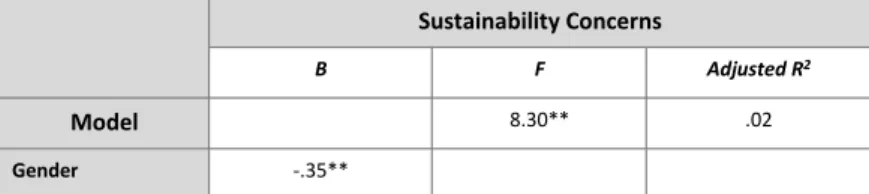
H4 - Gender has an impact on attitudes (Johnson, 1984; Interview Insights), where: Women
have a higher probability of being concerned about sustainability.
Due to the recurrent mention of health as an important factor for bulk food consumers (Rapp et al., 2017; Beitzen-Heineke et al., 2016; Interview Insights) and sustainability concerns being associated with health concerns (Interview Insights), a new hypothesis is suggested, where:
Additionally, Rapp et al. (2017) mentioned there is a niche of customers who place greatest importance in sustainability and these customers are more concerned about reducing packaging waste, which went along with insights from store interviews, therefore:
H6 - Sustainability concerns positively predict container usage.
3. Methodology
3.1. Research Method
The purpose of this study is to examine the main demographic characteristics, attitudes and perceptions of bulk consumers in Portugal. In order to do so, three different methods of data collection were used: observation, qualitative and quantitative research, resulting in a mixed methods approach. Using mixed research means the study is not restrained by a single method, and therefore a wider scope of findings can be generated (Johnson and Onwuegbuzie, 2004). First, price competitiveness of bulk products in Portugal was investigated by undertaking a field study; second, six semi-structured interviews were conducted to identify issues within the Portuguese context; finally an online survey was designed with the purpose of reaching a large number of bulk consumers and non-consumers.
3.2. Data Collection
3.2.1. Price Competitiveness of Bulk
In order to investigate the general belief that bulk products are cheaper than packaged goods (WRAP, 2007; Minami et al., 2010; Johnson et al., 1985), a price comparison between packaged and bulk products was conducted. To do so, four supermarkets were visited during October 2017. The selected stores sold both bulk products and packaged equivalents to the same products, enabling price comparability. Prices were compared using a value per weight unit approach - in this occasion euro per kilogram (€/kg) - in order to simplify observations between pre-packed products - which are sold in different volumes depending on manufacturers - and bulk products, which are sold by weight. In order to guarantee a fair evaluation, prices of bulk products were compared with the cheapest packaged alternative found in the same store4. The visited stores were located in Lisbon and were the following: Continente (Centro Colombo); Pingo Doce (Linda-a-Velha); Go Natural (Estoril) and Jumbo
(Alfragide). A small sample of products was randomly selected inside each store. Overall, a total of 35 products were examined.
Savings When Buying in Bulk
Out of the 35 products investigated, 26 were cheaper in bulk than packaged. Between those 26 products, an average of 35% of savings could be reached when buying a bulk product in comparison to the same amount of its packaged equivalent. The highest observed savings could be found when buying cinnamon at Jumbo, where the product was 68% cheaper in bulk than the corresponding packaged version.
Occasions Where Bulk Was More Expensive
There were 9 occasions in which bulk products were more expensive than their packaged alternatives. At Go Natural, three out of the eight examined products were more expensive in bulk than packaged. The most expensive bulk product compared to its packaged alternative was organic brown lentils at Go Natural, reaching a 77.85% higher price.
General Findings
Continente was the store where the overall savings were higher and Go Natural bulk prices
had the overall lowest competitiveness (see appendices 1 and 3). Prices were compared by kilogram, thus even when bulk products were more expensive, savings could still be attained for customers who were interested in buying smaller portions of food. Although 9 products were more expensive in bulk than packed, when all 35 products were considered a bulk consumer would still save 22% of money. Notwithstanding, in order to maximize savings, prices per kilogram should always be consulted and compared. Similar to findings in a 1985 study where "large sized packages" were cheaper than bulk (Johnson et al., 1985), there were occurrences where pre-packed products had lower prices per kilogram, so for a higher consumption level, buying packaged groceries sometimes pays off. Appendices 1 through 4 present detailed tables on the price observations.
3.2.2. Store Interviews
With the purpose of exploring insights from Portuguese bulk stores and to look for further findings, six semi-structured interviews were conducted in person to six respondents, each of them owning or working for a different bulk store in the area of Lisbon. The interviews lasted
between 6 and 36 minutes, depending on each respondent's willingness to explore questions in more depth. Although a structured questionnaire was developed prior to store visits, questions were occasionally adapted to grasp unexpected insights or to better fit with each store' characteristics. The six interviews ranged from small groceries where bulk products were the key element (e.g. Maria Granel) to nationwide supermarket chains selling thousands of different packaged products besides bulk (e.g. Jumbo).
Main Findings
In order to investigate a general profile of bulk consumers in Portugal, store respondents were asked to describe the main characteristics of their typical customers. Two store respondents mentioned older people as more adherent to the tradition of buying in bulk, similar to findings of Minami et al. (2010). Furthermore, one SR identified women as more prone to look for bulk foods and more concerned about sustainability - as Johnson had claimed in 1984. Leonor Castro Caldas, a representative from Grupo Auchan, added, "the type of person who is concerned about their health is also concerned about the Planet's health", drawing a link between bulk purchases and the common importance placed on the healthiness of food (Beitzen-Heineke et al., 2016). Additionally, four SRs claimed a small portion of customers reused their containers, and SR from Ánanda Bio added, "some customers won't buy packaged products", in line with findings from Rapp et al. (2017). Appendix 5 presents a detailed table on visited stores and appendix 6 shows additional insights from the interviews.
3.2.3. Online Survey
An online survey (see appendix 7) was designed with the purpose of collecting data from a large number of Portuguese grocery shoppers. The survey was developed using Qualtrics research software, a data collection platform that allows users to build a questionnaire to meet specific hypotheses testing needs. Furthermore, the system eases the export of the dataset into IBM SPSS Statistics 24, the statistical software program used in this paper to analyse the collected data.
Using Qualtrics, an anonymous reusable link to the survey was generated, making it possible to share via social media platforms. The survey was mainly shared on Facebook and posted
on the comment sections of various bulk stores' Facebook pages, as well as on a closed Facebook group focusing on waste reduction called "Lixo Zero Portugal", with approximately 2000 members. Additionally, SR from Mercearia da Mila agreed to post the survey on the store's Facebook page. The aforementioned pages were targeted so that a significant sample of bulk consumers could be contacted. Prior to being launched, the survey was pre-tested on a group of 9 people, in order to identify possible inaccuracies and correct them in time.
The survey was composed of 24 questions and divided into 2 sections: one for bulk consumers and another for non-consumers. This way, not only bulk consumption could be investigated, but main barriers for bulk purchases could also be identified. After answering the first question "Do you buy food groceries for your household?" (where answering "No" automatically ended the questionnaire), respondents were presented with the question "Do you have the custom of buying food groceries in bulk?" in order to discriminate between frequent buyers and non-buyers, after which respondents were redirected to their designated section. This item also presented a description of food groceries as "including: legumes, grains, dried nuts, breakfast cereal, spices, dehydrated fruit, pasta, seeds, dried berries and tealeaves" and "excluding fresh produce", which was added to the description after a pre-test showed one of the respondents thought fresh fruit and vegetables were also included.
The bulk consumer section was organized as follows: 8 questions were asked regarding shopping behaviour (e.g. how many purchases were made in bulk), main advantages of bulk (based on the main advantages of bulk found in literature), number of bulk stores visited, motivations behind store choice, barriers to making more purchases and container usage. The bulk non-consumer section asked questions regarding shopping behaviour, main barriers to bulk purchases (based on findings from literature regarding disadvantages of bulk) and a scale to test willingness to purchase bulk food, using a five-point scale where 1 - Definitely would not buy and 5 - Definitely would buy.
Afterwards, all respondents were directed to a section where 4 scales were used to measure specific attitudinal behaviours (price-sensitivity, brand-sensitivity, health concerns and
sustainability concerns) and perception of bulk products (hygiene perception, health perception, price perception, convenience perception and sustainability perception). These
characteristics of bulk consumers found in literature. The five-point scales asked respondents to rate their level of agreement with 23 statements, where 1 - Not at all and 5 - Completely.
Finally, respondents were asked 5 questions regarding demographic characteristics (age, gender, academic qualification, household dimension and professional occupation). Respondents were also presented with the opportunity to take part in a give-away, where a voucher of 25€ was drawn to be used at an organic store selling bulk products located in Lisbon.
Survey Scales
Price-sensitivity and brand-sensitivity (Q15)
In order to measure the level of price-sensitivity of respondents, a two-item scale was generated, based on the one developed by Lichtenstein, Netemeyer and Burton (1990). The purpose was to evaluate the overall price-sensitivity of shoppers using a five-point scale where respondents were asked to rate their level of agreement to each item, where: 1 - Not at all and 5 - Completely. Additionally, with the purpose of testing brand-sensitivity, a two-item scale was adapted from Kapferer and Laurent (1992), where shoppers were given the same five-point scale.
Sustainability and health concerns (Q16)
In the interest of evaluating respondents' sustainability concerns, a two-item scale was based on the one established by IISD (International Institute for Sustainable Development, 2009) measuring knowledge, attitudes and behaviours towards sustainable behaviour. Additionally, in order to measure respondents' food-related health concerns, a scale was adapted from Michaelidou and Hassan's (2008) measures of attitudes towards organic food, food safety concerns and health consciousness. Here, the same five-point scale asked respondents to determine their level of concordance to each statement.
Bulk Perceptions (Q16 and Q17)
With the purpose of measuring Portuguese shoppers' perceptions of bulk products, multi-items scales were developed. Both in Q16 and Q17, a five-point scale was used to evaluate the level of agreement with 14 statements regarding convenience perception, price perception, hygiene perception, health perception and sustainability perception. In order to measure
(2003) into the context of bulk shopping. To evaluate sustainability and health perceptions of bulk foods, items were adapted from Roitner-Schobesberger, Darnhofer, Somsook and Vogl (2007) scientific study on the perception of organic food, where the word "organic" was replaced by "bulk". To evaluate the hygiene perceptions of bulk food, two items were adapted from Fatimah, Boo, Sambasivan and Salleh (2011) study on consumer perceptions of foodservice hygiene.
Reliability of Scales
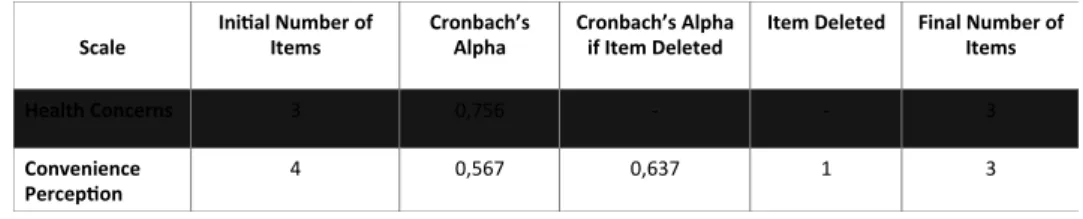
Cronbach's Alpha and Spearman-Brown tests were computed using SPSS, in order to examine if the scales adapted from previous studies still held reliability. The health concerns scale showed an alpha above 0.7, indicating high reliability. Convenience perception presented an alpha between 0.5 and 0.7, suggesting moderate reliability, which was improved after the item "I enjoy being able to customize the amount of product purchased" was eliminated from the scale.
Table 1 - Cronbach's Alpha output for health concerns and convenience perception scales.
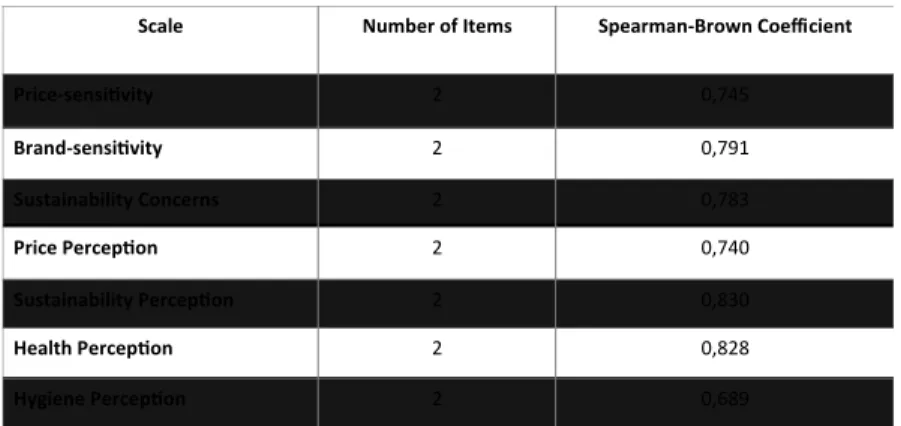
Spearman-Brown tests were used to evaluate the remaining scales (Table 2), as this is considered the most reliable coefficient to measure two-item scales (Eisinga, Grotenhuis and Pelzer, 2013). Excluding hygiene perception - which showed a moderate reliability between 0.5 and 0.7 - all scales presented coefficients above 0.7, indicating high reliability.
Scale Ini al Number of Items Cronbach’s Alpha Cronbach’s Alpha if Item Deleted
Item Deleted Final Number of Items
Health Concerns 3 0,756 - - 3
Convenience Percep on
Table 2 - Spearman-Brown output coefficients for price-sensitivity, brand-sensitivity, sustainability concerns,
price perception, sustainability perception, health perception and hygiene perception scales.
Survey Sample
The survey was active between November 27th and the December 4th, 2017. During that
period of time, a total of 359 answers were collected. Out of those answers, 47 were from respondents who started the questionnaire but did not finish it and another 3 were removed for belonging to people who did not make grocery purchases. Therefore, 309 respondents composed the total sample considered for data analysis. The sample was characterized by 227 respondents (73%) who were bulk consumers and 82 non-consumers (27%).
Image 1 - Data collected from the question "Do you have the custom of buying food groceries in bulk?"
Regarding gender, 265 respondents were female, which represents 86.3% of the total sample and only 12.4% of respondents were male. Concerning age, 36.2% of the sample was aged between 26 and 35, 22.2% were between 36 and 45 years old and 21.8% of respondents were between 18 and 25.
Scale Number of Items Spearman-Brown Coefficient
Price-sensi vity 2 0,745 Brand-sensi vity 2 0,791 Sustainability Concerns 2 0,783 Price Percep on 2 0,740 Sustainability Percep on 2 0,830 Health Percep on 2 0,828 Hygiene Percep on 2 0,689
Image 2 - Gender distribution and age distribution of the survey sample
The majority of respondents - or 80.8% - had completed a Bachelor's degree or higher, 17.6% of respondents had graduated High School and 1.9% had finished 9th or 4th grade. In terms of professional occupation, 56.5% of the sample was employed, 20.4% was composed by either students or student-workers and 10.4% worked from home.
Image 3 - Academic qualifications and professional occupations of the survey sample
Finally, in regards to household dimension, 34.1% of respondents lived in a home composed by two elements, 22.1% lived in a household of three elements, 20.4% with four elements, 17.9% lived alone and 5.5% lived in households of five or more people.
Women 86% Men 13% Prefer not to answer 1% Gender 21.8 36.2 22.2 14.3 3.9 1.6 18 - 25 26 - 35 36 - 45 46 - 55 56 - 65 Over 65 Age % of Respondents 0.3 1.3 17.6 50.2 29 1.6 4th grade 9th grade High School Bachelor's Degree Master's Degree PhD
Academic Qualifica- ons
% of Respondents 9.4% 11% 10.4% 56.5% 9.4% 3.3% Occupa&on Student Student-worker Working at home Employed Unemployed ReBred
4. Results and Analysis
4.1. Descriptive Statistics
4.1.1. Bulk Consumers
The following results were collected from the survey section dedicated to bulk consumers whom, as mentioned above, represented 73% of the total sample.
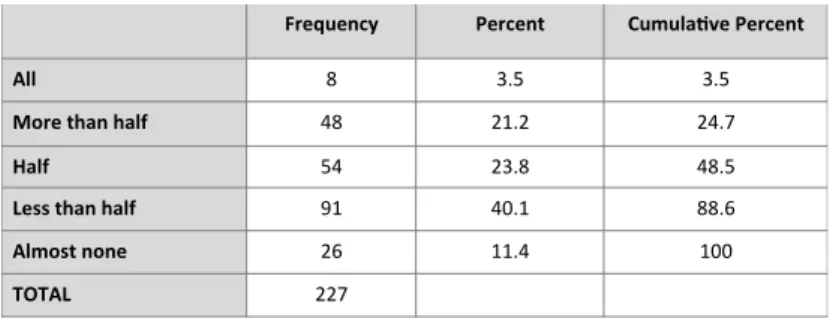
When asked how many of their grocery purchases were made in bulk, 24.7% of respondents declared "more than half" or "all". Still, the majority (51.4%) of bulk respondents answered either "less than half" or "almost none".
Table 3 - Frequency table for question "How many of your grocery purchases are made in bulk?"
A conditional question for the last two items revealed "It doesn't exist in certain stores" and "There is less variety of products" were the main reasons for not making more bulk purchases, followed by "Certain products are more expensive in bulk". Additionally, out of the 16 respondents who picked the option "Other", 12 mentioned store location as a barrier.
Image 4 - Bar chart presenting main barriers to make more bulk purchases for bulk consumers who selected
items "less than half" or "almost none"
Regarding choice of bulk store, a large portion of respondents claimed they either visited "Always the same store" (42.7%) or "One or two different stores" (40.9%). When asked to score from 1 to 6 (where 1 - Most important and 6 - Least important) the most important motives for store choice, "price" was mentioned by 24.2% of the sample. Following "price", "location" (23.1%), "availability of organic products" (22.5%) and "quality" (20.8%) were the highest rated motives. On the other hand, "service" was the item most frequently (36.7%) mentioned as least important.
When asked about the main advantage of purchasing in bulk, "Reducing packaging waste" was the most mentioned reason (30.6%), followed by "Choosing the amount of product" and "Avoiding food waste". Surprisingly, "Saving money" was only mentioned by 8.3% of the sample.
Image 5 - Bar chart presenting distribution of main advantages of purchasing bulk, according to bulk consumers
8.3 24.4 10.4 5.5 20.6 30.6 0.2 0 5 10 15 20 25 30 35 Saving money Choosing the amount of product Seeing the quality of what is being purchased Trying more things with lower risk Avoiding food waste Avoiding packaging waste Other
Main advantages of purchasing bulk
8.3 24.4 10.4 5.5 20.6 30.6 0.2 0 5 10 15 20 25 30 35 Saving money Choosing the amount of product Seeing the quality of what is being purchased Trying more things with lower risk Avoiding food waste Avoiding packaging waste Other
Main advantages of purchasing bulk
Lastly, when respondents were asked if they carried their own containers to bulk stores, 31.4% answered "always", a much higher percentage than expected. Additionally, 27.9% answered "sometimes", 13.3% responded "rarely" and 27.4% claimed they "never" carried their own containers.
4.1.2. Non-Consumers of Bulk
Non-consumers of bulk represented 27% of the total survey sample. According to data collected, the main reason for not making bulk purchases was "It isn't available at the store I go to" (44.3%), followed by "Less variety of products" (18%) and "It is burdensome" (8.2%).
Image 6 - Bar chart of main barriers to purchase bulk, according to non-consumers
Non-consumers were also invited to comment on their willingness to purchase bulk food. The majority of respondents answered either "definitively would buy" (36.6%) or "probably would buy" (30.4%), showing favourable purchasing intentions towards bulk. "Could buy" was selected by 28.1%, and "probably would not buy" and "definitively would not buy" were only marked by 4.9% of the sample.
I 44.3 4.1 4.1 6.6 8.2 3.3 0.8 18 10.6 0 5 10 15 20 25 30 35 40 45 50
It isn't available at the store I go to It isn't sanitary Doub= ul quality It is more @me consuming It is burdensome Low availability of product informa@on I didn't know the concept Less variety of products Other
Barriers to buying bulk products
44.3 4.1 4.1 6.6 8.2 3.3 0.8 18 10.6 0 5 10 15 20 25 30 35 40 45 50
It isn't available at the store I go to It isn't sanitary Doub= ul quality It is more @me consuming It is burdensome Low availability of product informa@on I didn't know the concept Less variety of products Other
Barriers to buying bulk products
4.2. Inferential Statistics
The hypotheses suggested in Chapter 2 aimed at testing if demographic characteristics, attitudes and perceptions of bulk had an impact not only on the consumption of grocery food in bulk, but also on non-consumers' willingness to purchase bulk. Therefore, all hypotheses were tested first using bulk consumption5 as the dependent variable and second, using
non-consumers'6 willingness to purchase bulk as the dependent variable. Willingness to purchase
was measured using data collected from the question "Please, rate your willingness to purchase bulk food" using a five-point scale where 1 - Definitely would not buy and 5 - Definitely would buy.
4.2.1. The Impact of Demographics on Purchase Intentions
In order to test hypothesis 1, "Demographic characteristics have an impact on purchase intentions towards bulk", several statistics tests were undertaken using SPSS.
Bulk Consumption and Demographics
Point-biserial correlations between bulk consumption (where 0 = No and 1 = Yes) and demographic characteristics (age and gender) of respondents were tested. Neither of the variables presented a statistically significant relationship with the consumption of food in bulk (p > .05) and, therefore, there is no correlation between bulk consumption and respondents' gender or age. Hypotheses 1 a) and 1 b) are both rejected for this variable.
Willingness to Purchase and Demographics
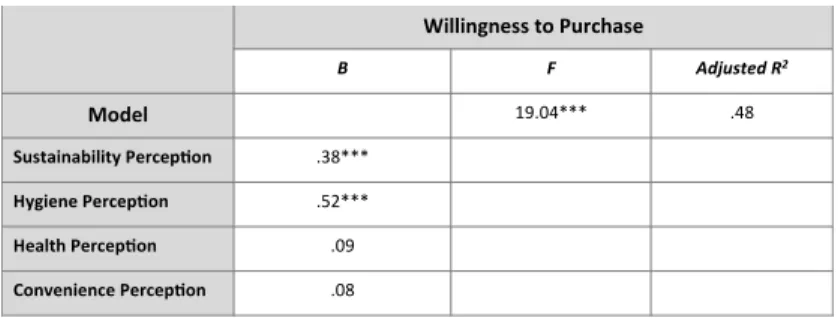
Correlations between non-consumers' (N = 82) willingness to purchase (WTP) bulk and demographic characteristics were tested (Table 4) using one-tailed, point-biserial correlation coefficients. It was hypothesized that age had a positive impact on purchase intentions towards bulk. The correlation between age of respondents and WTP is negative and statistically significant (r = -.34, p < .01), although the strength of the relationship is low. Therefore, we can conclude that age has a negative impact on WTP, rather than positive: the
5 Here, "bulk consumption" refers to grouping the sample in two, between respondents who answered "No" and
respondents who answered "Yes" to the question "Do you have the custom of purchasing grocery food in bulk?". Non-consumers were considered all who answered "No" to the question "Do you have the custom of purchasing