UNLOCKING THE HYPE: AN ANALYSIS ON HOW BLOCKCHAIN
TECHNOLOGY COULD AFFECT HOSPITALITY CULTURE
Dissertation submitted to Universidade Católica Portuguesa
to obtain a Master
’s Degree in
Culture Studies
– Management of the Arts and Culture
By
Elia Tonellotto
Universidade Católica Portuguesa
UNLOCKING THE HYPE: AN ANALYSIS ON HOW BLOCKCHAIN
TECHNOLOGY COULD AFFECT HOSPITALITY CULTURE
Dissertation submitted to Universidade Católica Portuguesa
to obtain Master
’s Degree in
Culture Studies
– Management of the Arts and Culture
By
Elia Tonellotto
Universidade Católica Portuguesa
Under the supervision of Prof. Paulo Campos Pinto
And co-supervision of Prof. Álvaro Barbosa
Abstract
The aim of my thesis is to find the right “key” to unlock the hype surrounding blockchain technology and to find effective applications in the hospitality industry that could change its cultural framework. To do so, hospitality culture and how technology shapes it will be discussed. Blockchain technology is just one of the various innovations that is determining
the “liquid” society we live in. For this reason, a general panoramic of the technological and managerial framework will be further discussed. Furthermore, the specificities of the blockchain will be described, considering both its positive and negative aspects. Through the analysis of qualitative and quantitative secondary source data and a comparison with interviews of experts of these sectors, evidence and opinions will be presented in order to
discuss this innovative technology from a culture studies perspective.
Keywords: Liquid Modernity; Management; Organizational Culture; Hospitality Industry; Hospitality Culture; Emerging Technologies; Technology and Culture; Hacker Culture;
Blockchain Technology; Gartner Hype Cycle for Emerging Technologies; Blockchain Applications; “Dynamic” and “Static” Definitions of Culture.
Dedication
I would like to dedicate this dissertation to a very special friend of mine from my childhood: Naty.
Acknowledgments
First of all, I would like to thank my family - my mother Nori, my father Claudio and my sister Giorgia, who supported me during my upbringing and my academic development. They have always believed in my choices and they allowed me to have the most incredible experiences. Another huge thank goes to my wonderful grandmother Cecilia who took care of me during my childhood and to the other grandparents who are no longer with us. My aunts and uncles, my fantastic cousins - a fundamental part of my life. I would really like to thank Giorgio, Lillis, Renata, Miro, Laura and Sergio and all of their children who I grew up with and have been very kind to me.
A very special thank goes to a fundamental person in my life, who helped me with this dissertation: Lucy. She critiqued my ideas in order to give them the right shape and reviewed the most critical points. Lucy deserves my best thanks as well as her very supportive family.
I would not been here without the support of my friends. In particular I would like to thank my friend Marco, whose Blockchain's related opinions helped me to discover and develop this topic. I would like to thank my secondary school friends Shai, Nick, Tzio, Alberto Vaccari, Liam, Battush, Vala, Icol, Dario, Signora Mari, Signora Angie, il Bbeo, Fede, Silvia, Giulia, Phil, Valti, Jubba, Jaco, Bibe, Ele, Dana, Ginni and Beas. My primary school friends Teo, Paolo, Umbe, Frank, Pippo, Dodo, Marra, Checco, Albi, Pietro. Furthermore, I would like to take this opportunity to thank my friends Raab, Lodfi, Ile, Albi and Alemat who have always been part of my life. I would also like to include my international friends Anna, Tarim and Emmelie. But also, my Brazilian family Nito and Benedita, as well as my Portuguese friends João and Xedas. My Lisbon Master's friends Rob, Baptiste, Isa, Linda, Mattia as well as those from the Macau’s internship Clara, Paolo, Federico and Rita.
Of course, prof. Pinto e prof. Barbosa have been the two keys point of reference for this academic research. They allowed me to find the right analytical approach, sources as well
as people to interview. I would also like to thank the other professors of the Lisbon Consortium, who have been part of this interesting experience.
Table of Contents
Introduction………..…pp. 10
I. Background………..…….….….pp. 10
II. Research Question and Objectives………..…….….…pp. 11 III. Methodology……….…...pp. 12 IV. Why it is set in the Cultural Studies framework……….……….pp. 14
V. State of the Art……….….…....pp. 16
1. Technology, Management, Hospitality and their Links to Culture
1.1. Technology, Management and Hackers in Liquid Modernity………pp. 21 1.2. Hospitality Industry, Hospitality Culture(s) and Emerging Technologies………..pp. 23 1.2.1. Hospitality Industry………..pp. 23 1.2.2. Hospitality Culture(s)………...pp. 24 1.2.3. Emerging Technologies and their Applications in the Hospitality Industry…....pp. 27 1.3 Relationship between Technology and Culture in the Hospitality Industry………pp. 31 2. Current Technological Weaknesses of the Hospitality Sector
2.1. Data Privacy and Information Security………...pp. 32 2.2. Intermediaries and Double Payments………..pp. 33 2.3. Waste and Lack of Traceability………..pp. 34 3. Blockchain Technology
3.1. What is Blockchain Technology?...pp. 40 3.2. Public, Consortium, Private: Different Degrees of Decentralisation………..pp. 44 3.3. The Bond between Blockchain and Internet of Things (IoT): Smart Contracts….pp. 45 4.How Blockchain Technology Could (or Could not) Strengthen Weaknesses and Bring Innovation within the Hospitality Industry
4.1 Disadvantages and Advantages of Blockchain Applications in the Hospitality
Sector………..pp. 47
4.1.1. Disadvantages
4.1.1.1. The Hyper-Hype………….………..……….pp. 49
4.1.1.2. Misused………..…………pp. 53
4.1.1.3. Data Privacy and Security……….….……..pp. 53 4.1.1.4. Initial Investment Costs………..….………..pp. 54
4.1.1.5. Hackings, Thefts and Breaches……….…pp. 55 4.1.1.6. Environmental, Storage and Economic Costs (?).………...pp. 55 4.1.1.7. Scalability and Latency……….pp. 57 4.1.1.8. Early Stage for Prime Use ………...pp. 57 4.1.2. Advantages
4.1.2.1. New Innovative Form of Payment………pp. 60 4.1.2.2. Encryption and Security………...pp. 60 4.1.2.3. Social Security through Automatization………...pp. 60 4.1.2.4. Time and Cost………...pp. 61
4.1.2.5. Traceability………...pp. 61
4.1.2.6. Disintermediation and Profit Optimisation………..pp. 63 4.1.2.7. Solving the Double-Spending Problem……….pp. 67
4.1.2.8. Decentralisation………pp. 67
4.1.2.9. Encryption and Data Privacy………pp. 67 4.1.2.10. Profitability (In the Long-term)………...pp. 67 4.1.2.11. Combatting Scams and Fraud……….pp. 68
4.1.2.12. Trust-Free………pp. 68
5. Repercussions of Blockchain Technology on Hospitality Culture
5.1. Technology with Human Capital ………...pp. 69 5.2. Human Capital and Hospitality Culture(s)………..pp. 70 5.2. Changes in the “Dynamic” Hospitality Culture………..pp. 71 5.3. Changes in the “Static” Hospitality Culture ………...pp. 72
Conclusion……….pp. 76
Bibliography and Videography..……….pp. 79
List of Abbreviations
AI – Artificial Intelligence B2B – Business to Business
DAO – Decentralized Autonomous Organization HR – Human Resources
ICO – Initial Coin Offering
ICT/IT - Information and Communication Technology / Information Technology IoT - Internet of Things
MaaS – Mobility as a Service OC – Organisational Culture OTA – Online Travel Agency P2P - Peer to Peer
PoS - Proof of Stake PoW - Proof of Work
‘Blockchain technology is a new tool in our toolbox. We need to use it when it is the right tool for the job at hand’ (McLean and Deane-Johns, 2016: 5)
Introduction
I. Background
In 2008 a mysterious unknown character called Satoshi Nakamoto (probably just a nickname for a group of hackers) published a paper which outlined a new ‘peer-to-peer electronic cash system’ (Nakamoto, 2008: 1) named Bitcoin. This digital asset was the first example of what has since been labelled a “cryptocurrency” which allows anyone to carry out encrypted transactions without the need of a third party, such as banks, intermediaries or governments (cf. Nakamoto, 2008). This new technology quickly gained attention, by 2017, due to its financial hyper-evaluation, (from 1 BTC corresponding to US$ 1 in 2008, it reached the value of more than US$ 19.000,00 in December 2017). Something that captured the interest of relevant stakeholders was its apparent versatility across multiple sectors: the distributed ledger technology, alias the public transaction database, which permits this currency to work (cf. Underwood, 2016) (cf. Dogru, Mody and Leonardi, 2018). This is better known as ‘Blockchain technology’, a term that has gained lots of popularity in the last few years (cf. Huckle and White, 2016) (cf. Iansiti and Lakhani, 2017) (cf. McLean and Deane-Johns, 2016) (cf. Michelman, 2017). Various articles have described this technology as ‘disruptive’ and able to revolutionize different sectors of our society (cf. Dogru, Mody and Leonardi, 2018) (cf. McLean and Deane-Johns, 2016) (cf. Michelman, 2017) (cf. Perlman, 2017). It is not surprising to discover that some people in the world of academia argue that this technology reached the “peak of inflated
expectation” in 2017 regarding the ‘Gartner Hype Cycle for Emerging Technologies’ (Notheisen and Hawlitschek and Weinhardt, 2017: 1063). However, the “plateau of productivity” could be around the corner. For this reason, a careful, unbiased and cross-subject analysis of this topic is needed with the purpose of finding the right ‘key’ to
could affect the hospitality culture, going on to explore different applications of the blockchain technology in the hospitality industry.
This dissertation is aiming to open a new academic field of research about the biunivocal relationship between the universal concept of “culture” and “technology”, using the particular cases of “hospitality” (in the case of “culture”) and “blockchain” (in the case of “technology”), as shown in Figure 1.
Figure 1 - Culture, Technology / Hospitality, Blockchain
Through the development and the analysis that concern the relationship between hospitality and blockchain, a new “way of seeing” the relationship between culture and technology will be given. For this reason, it is expected that this dissertation will have a real impact on the world of academia, creating a fertile soil for further developments and discussions.
II. Research Questions and Objectives
This thesis will follow a line of argumentation that touches on different topics and can open different debates. Two principle research questions will be raised and discussed in the analysis of this thesis:
1. To analyse the hospitality industry through a culture studies perspective (chapter one and five). To do so, it will be necessary:
- to understand how the hospitality industry is represented from a theoretical point of view; - to understand in which context hospitality and culture are captured;
- to find the right match between the existing definitions of “culture” and “hospitality”; - given the previous elements, to understand which different definitions of “hospitality culture” can be given.
2. To analyse the repercussions that blockchain technology might have on hospitality culture (chapter three, four and five). To do so, it will be necessary:
- to understand the current technological framework of the hospitality sector;
- to explore the advantageous and disadvantageous aspects of blockchain technology related to the hospitality industry;
- to show the relationship between technology and culture;
- to define which cultural repercussions this technology might have on the hospitality industry, based on the various definitions of “hospitality culture” previously given. Therefore, the objectives of this dissertation are to find adequate answers to these two research questions through the quantitative and qualitative data collected during the research process.
III. Methodology
As regarding the research framework, four open interviews to experts related to hospitality industry and/or blockchain technology have been carried out. “Open” rather than “closed” interviews have been opted for due to the new nature of this technology. In this way it has been possible to gain more knowledge about this recent topic and to better address the research questions. These interviews have been then compared to the data collected through the literature review process: both qualitative and quantitative data has been used for this dissertation. For this reason, even though the research is using a cultural studies perspective, sociological, anthropological, philosophical and economic aspects have been essential for the outcome of this dissertation, which is divided into five chapters.
In the first chapter the current relationship between technology and management in “liquid modernity” will be described (cf. Bauman, 2000) (cf. Klenk, 2015). Bauman’s definition of modernity has been chosen because it allows the reader to picture through a powerful metaphor the relationship between individuals and the society (s)he lives in. Also, the author used this concept to describe different aspects of everyday life, characterizing its versatility, thus allowing the definition to be applied to various contexts. Furthermore, Klenk’s analysis sets “liquid modernity” in the technological framework (cf. Klenk, 2015), which is one of the central topics of this dissertation. In the second paragraph of the first chapter, hospitality industry and hospitality culture(s) will be explained (cf. Kunwar, 2017) (cf. Dawson, Abbott and Shoemaker) (cf. Dawson and Abbott, 2011) (cf. Canavan, 2015) as well as the relationship with emerging technologies (cf. Zsarnoczky, 2018). In this way, after having set the dissertation in the cultural studies’ framework, the main concept of “hospitality”, “culture” and “technology” are presented here. The third paragraph of this first chapter presents the repercussions that a technological change in a company can have on its organisational culture (cf. Gallivan and Srite, 2005). This is an essential step that leads to the heart of the topic: the cultural repercussions of technology. A few examples of this phenomenon in relationship to the hospitality sector have been given, in order to show what the specific case analysis is.
The second chapter will discuss some current weaknesses regarding the inefficient use of technology within the hospitality sector - such as: data privacy and social security, double payments and the presence of intermediaries, food waste and lack of traceability. The reason why this chapter is important is because the technological problems presented in this chapter could be solved through the technology described in the following chapter. For this reason, it will be shown how the technology in question (blockchain) might propose a solution to improve these weaknesses.
In order to do that, the third chapter will explain more in depth how blockchain works, discussing some key topics related to it, such as degrees of decentralisation, the Internet of Things (IoT) and smart contracts. In this way, the reader will have the tools to understand
the following analysis, which will explain how this technology could be applied to the hospitality industry and the benefits and problems it could bring.
The fourth chapter will focus on the potential disadvantages and advantages that the adoption of this technology might bring to the hospitality industry. The disadvantages will be firstly presented, with a particular focus on the inflated expectations surrounding the blockchain “boom” that happened at the end of 2017 as well as the economic and
environmental challenges that this technology is causing (cf. Coleman, 2016) (cf. Huckle and White, 2016) (cf. Huckle, Bhattacharya, White and Beloff, 2016) (cf. Kshetri, 2017) (cf. Vranken, 2017). This chapter will be followed by the advantages this innovation might have in hospitality, supported by both of qualitative and quantitative data collected through secondary sources (cf. Dogru and Mody and Leonardi, 2018) (cf. Ahmed and ten Broek, 2017) (cf. Kwok and Koh, 2018) (cf. Miraz and Donald, 2018) (cf. Önder and Treiblmaier, 2018) (cf. Tian, 2016). It is extremely important to underline that in this chapter interviews has been used, made during the making of this dissertation, to argue both the disadvantages and the advantages of this technology for the hospitality sector.
In the fifth (and the final) chapter the repercussions that this technology might have on the two definitions of hospitality culture – dynamic and static, given in chapter one - will be described and compared to the interviewees’ opinions. In order to do so, firstly an analysis regarding the relationship between technology and human capital and secondly, between technology and hospitality culture, will be given. In this way, there will be the right tools to show the dual cultural repercussions that this technology might have on the hospitality industry.
IV. Why it is set in the Cultural Studies Framework
From a Cultural Studies point of view, different milestones of this academic field have been taken into account for this research. Bauman’s idea of “Liquid Modernity” (2001) has been utilised to set the current condition of individuals in the today’s fluid world, where the boundaries of human relations are blurred due to the technological framework that surround the post-modern society. Furthermore, the repercussions of “Liquid Modernity”
in managerial practices (‘Management in a Liquid Modern World’ [cf. Bauman, 2015]) have been stipulated in order to describe the new technological concepts of “open source” and “crowd funding”, essential to introduce the Blockchain topic.
The second theoretical point of reference to cultural studies in this dissertation is
Himanen’s ‘The Hacker Culture and the Spirit of the Information Age’ (2001). The book itself aims to be a socio-philosophical description of the disrupting nature of the hacker (not to be confused with cracker – its negative connotation) in the era of the Information Society. On the other hand, the epilogue of the book - written by Manuel Castells – has very interesting insights for the cultural studies field. Through his analysis of the cultural and historical roots of the “Network Society” and the “Information Age” he presents an unavoidable link between technology and culture that might be synthetized in this phrase: ‘there are no technological revolutions without cultural transformation’ (Castells, 2001: 177).
Another fundamental book for the cultural conceptualisation of this book is Capeloa Gil ‘The Cultural Life of Money’. In the first pages of her book, Capeloa Gil underlines the relationship between culture and money, focusing specifically on the capitalistic society. In fact, Gil’s analysis targets money as a material iconic representation of the cultural and economic structure of capitalism (cf. Gil, 2015). Moreover, she mentions the problem of trust that arose with the introduction of paper money – a topic that will be debated several times in this research. She compares this economic development to the introduction of new currencies like Bitcoin – which is the electronic currency that gave birth to Blockchain. Capeloa Gil defines this economic innovation as “virtualisation of value” (Gil, 2017: 7), a terminology that will be used several times in chapter three.
In the last chapter, Grossberg’s ‘Cultural Studies in the Future Tense’ will help to explain how this research, which aims to find the repercussions of Blockchain technology in the hospitality culture, is set in the cultural studies perspective. In fact, as the author argues, cultural studies aim to describe how people’s everyday lives are related to culture - which is a complex term composed by economic, social and political structures. More
specifically, Grossberg argues that the object of culture studies is ‘an effort to find an intellectual practice that is responsible to the changing context in which it works’ (Grossberg, 2010: 9), which Castells would argue is technological, thus cultural in this case.
V. State of the Art
This thesis is composed of interdisciplinary and multi-faceted subjects. The definition of hospitality and hospitality culture has been taken from the tourist and hospitality
management studies (cf. Kunwar, 2017) (cf. Meyer, 2017) (cf. Dawson and Abbott, 2011). The definition of culture and the current repercussions of technology in the modern world belongs to cultural studies and economic fields (cf. Bauman, 2000) (cf. Castells, 2001) (cf. Bernasconi, Harris and Moensted, 2006) (cf. Lewin, 1947), whereas the description of what blockchain technology is and how it works has been collected from Information Technologies studies (cf. Nakamoto, 2008) (cf. Huckle and White, 2016). On the other hand, the two main research questions of this dissertation are set in what academics
identify as a “gap in literature”: thus far, nobody has ever studied these specific themes. In fact, firstly, there none or few articles about hospitality industry analysed from a cultural studies perspective (based on the reachable sources available by this research). Secondly, although the cultural repercussions of a new technology on society is not a new topic in the academic debate (cf. Gallivan and Srite, 2005) (cf. Bauman, 2015) (cf. Himanen, 2001), it is the first time that the cultural repercussions of the specific blockchain technology in the restricted hospitality industry case-study has been investigated. For this reason, even though the research inherent to this dissertation’s topics has been very challenging (in terms of available material) and technical (to understand the mechanism of how blockchain works the study of IT related terminology has been required), it can be argued that this is a very innovative topic that can give a strong contribution to the scientific community.
Going into more details, the first fundamental definition that will be presented is the one of hospitality culture. As regarding this concept, two main articles have been written by Mary Dawson and Jeanna Abbott. One is called “Hospitality culture and climate: A proposed model for retaining employees and creating competitive advantage” (2011) and published by the International Journal of Hospitality and Tourism Administration. The other one, written by the previous two authors plus Stowe Shoemaker, is called “The hospitality culture scale: a measure organisational culture and personal attributes” (2011), published by the International Journal of Hospitality Management. From these definitions, it
emerges that the description of hospitality culture sounds very similar to the “static” definition of “culture”: (cf. Tylor, 1871)‘norms, rites, rituals, strategic beliefs and values that the workers of that sector share’ (Dawaon, Abbott and Shoemaker, 2011: 292).
Following to chapter two, where different technological weaknesses of the hospitality industry has been presented, various articles related to public news and online newspapers related to innovation in business have been taken into account (cf. Perlroth and Tsang and Satariano, 2018) (cf. Colendi, 2018). The former speaks about a cracking episode that has been launched to Marriott International (biggest hotel chain in the world), while the latter about how blockchain technology might have prevent it.
In the second paragraph of this chapter, institutional, academic and mass mediatic sources have been collected (cf. Competition and Markets Authority, 2019) (cf. Nakamoto, 2008) (cf. Triptease, 2016) (cf. King, 2017). The topic is the problematic intermediation in hospitality, where the first article shows that the British Government recognises that
Online Travel Agencies (OTA) are used to have an un-ethical behaviour in the market. The second academic source shows how blockchain technology might offer a solution for this problem. The third and the fourth ones show that big hospitality firms (Hilton and
Marriott) launched campaigns to encourage people to book directly and not through OTA. In the last paragraph of this chapter, just one single article has been used related to the tourism and hospitality management field (cf. Pirani and Arafat, 2014). This article speaks about the problem of waste and lack of traceability in the hospitality industry.
As regarding the topic of blockchain linked to the hospitality sector, given that the majority of academic articles linked to this technology are really recent (from 2014 to today), and the topic very specific, the amount of literature available is quite limited. On the other hand, due to the international and cross-boundaries essence of this technology, the sources and the institutions that published the articles found are extremely varied in terms of geographical presence. Blockchain technology is a type of data structure that enables the identification and tracking of transactions in a distributed network of computers. The most important articles that have been used for this research will be now presented.
The first is the article that propagated to blockchain technology, thus Bitcoin: “A peer-to-peer electronic cash system” by Satoshi Nakamoto (2008) published on bitcoin.org, which
gave an insight about what blockchain technology is from a technical point of view. It describes the mechanism of Bitcoin, the first cryptocurrency as well as the first real application of blockchain technology.
The second and the third are Martin Zsarnoczky’s “The Digital Future of the Tourism & Hospitality Industry” (2018) and Tarik Dogru, Makarand Mody and Christie Leonardi’s “Blockchain Technology & its Implications for the Hospitality Industry” (2018) both published on Boston Hospitality Review. The authors in both articles give a detailed description of different technological applications, with a specific focus on blockchain, in the tourism and hospitality industry.
The fourth fundamental article related to this chapter is Feng Tian’s “An agri-food supply chain traceability system for China based on RFID & blockchain technology” (2016), published by 13th International Conference on Service Systems and Service Management
(ICSSSM). Tian shows how blockchain technology might be applied in the Food and Drinks sector of the hospitality industry, increasing product traceability on the supply chain.
Following in the list, Irem Önder and Horst Treiblmaier‘s “Blockchain and tourism: Three research propositions” (2018), published on Annals of Tourism Research, and Andrei O.J.
Kwok and Sharon G. M. Koh’s “Is Blockchain Technology a Watershed for Tourism Development?” (2018), published by Current Issues in Tourism, delineate different aspects in which blockchain technology might disrupt the tourism and hospitality industries.
In the fourth chapter, the disadvantages and advantages of the application of blockchain technology in the hospitality industry are presented.
As regarding the disadvantages, the different articles that relate to the current moment of “hype” that blockchain technology is facing has been a central topic of debate for this dissertation. Jackie Fenn and Hung LeHong, “Hype Cycle for Emerging Technologies” (2011), published by Gartner, Sue McLean and Simon Deane-Johns’s “Demystifying Blockchain and Distributed Ledger Technology–Hype or Hero?” (2016), published by Computer Law Review International, Benedikt Notheisen, Florian Hawlitschek and Christof Weinhardt “Breaking down the blockchain hype–towards a blockchain market engineering approach” (2017), published by ECIS 2017 Proceedings, and Radia Perlman’s “Blockchain: hype or hope” (2017), published by Security, all point out this issue. The
first, simply identifies that emerging technologies go through different stages during their life: during the development of this dissertation, blockchain is facing a moment of
“hypeness”. Articles two, three and four analyse the positive and negative aspects regarding the application of this technology in business. Other articles have been used to point out other disadvantages that this technology possesses: potential data privacy thefts (cf. McLean and Deane-Johns, 2016), hacking of the code linked to blockchain (not to the blockchain itself) (cf. Underwood, 2016), environmental costs (cf. Vraken, 2017).
In relation to the advantages, different core articles could be identified. The first shows the possible repercussions of blockchain in nine different aspects of the hospitality industry (Kwoh and Koh, 2016). The second creates a real application of blockchain on the transportation side of the hospitality industry, displaying how this technology might increase social security (cf. Huckle, Bhattacharya, White, Beloff, 2016). The third and the fourth exhibit the benefits that this technology might have in terms of increased traceability in the supply chain (cf. Ahmed and ten Boek, 2017) (cf. Abeyratne and Monfared, 2016). Lastly, the first article ever written regarding blockchain will be used another time to show that, through the help of this technology, the problem of double payments can be solved (cf. Nakamoto, 2008). The previous article mentioned, as well as Önder and Treiblmaier’s ‘Blockchain and tourism: Three research propositions’ (2018) published on Annals of Tourism Research show how blockchain might lead to a process of disintermediation within the hospitality industry.
Lastly, in the fifth chapter, Grossberg’s ‘Cultural Studies in the Future Tense’ (2010) (a milestone of the Cultural Studies field), has been used to define what cultural studies is: ‘an effort to find an intellectual practice that is responsible to the changing context in which it works’ (Grossberg, 2010: 9), specifying that the changing context in this case is the technological one. The following article used regards the definition of human capital as: ‘the stock of skills that the labour force possesses and is regarded as a resource or asset’ (Goldin, 2014: 1). Furthermore, this topic has been related to the that of technology,
explaining that the level of productivity increases when human capital absorbs the notions related to the new technological adoption by the company (cf. Mincer, 1989). To conclude, two articles address the potential changes that the adoption of a technology might have on firm’s culture (cf. LockTrip Manifest, 2018) (cf. Gallivan and Srite, 2005).
In addition, most of the articles considered for this research are recent (from 2014 to today, 2019) and extremely varied in terms of geographical presence (U.S.A., China, U.K., Germany, Netherlands, Hong Kong, Singapore, Bulgaria, Italy, Macau, Portugal, Finland). No field studies have been accomplished due to the restricted time available.
1. Technology, Hospitality and their links to Culture
Keywords: Technology / Digitalisation / Liquefaction / Uncertainty / Management / Industry 4.0 / Smart Cities / ICT / IoT / Hospitality / Hospitality Culture
1.1. Technology, Management and Hackers in the Liquid Modernity
Technology and innovation are key factors for the efficiency and progress of our society. Since the dawn of man, these two concepts have demarcated different historical eras and have shaped people’s mentality. Technology can be defined as any kind of amalgamation of scientific and technical knowledge under the control of a firm (or firms), with
characteristics of uniqueness and protection (cf. Bernasconi, Harris and Moensted, 2006). This knowledge is then installed into an object, a service, an information system or a management model, with an economic aim. Technological change can take place for various reasons, such as: availability of an updated version, which brings obsolescence of the previous version; an increase in the dimension and complexity of a company;
internationalisation of the market; a change in the system of laws in which the organisation operates or a change in the economic context (cf. Dawson, 1994). Nowadays, one of the main technological processes that is characterising different aspects of our everyday lives is that of digitalisation. Digitalisation is defined as “the process of converting material or information into a digital form” (Hall, 2018: A1). This is due to the high dependence that our society has on computers and other informatic tools. From a conceptual point of view, this is the consequence of a condition that the world we live in has been experiencing for the last fifty years. In fact, the “solidity” of objects, ideas and social relationships has been replaced by “liquidated” forms of them (Bauman, 2000: 8). They are not structured, secured and consolidated anymore, instead they are becoming more flexible, subject to change and uncertainty.
It is specifically this last concept that characterises the relationship between technology and management. When starting the process of innovating their companies, entrepreneurs face risks and much uncertainty and so close evaluation of the various possible outcomes is necessary (cf. Bernasconi, Harris and Moensted, 2006). This gets even more complex in a situation where ‘individuals cannot any longer hold on to organisations or established societal structures for guidance and perspective’ (Klenk, 2015: 1). People, companies and
organisations are difficult to manage due to the lack of structure that characterise their thoughts, feelings and relationships. For this reason, one can argue that the processes of digitalisation and liquefaction have completely shaped the culture of the twenty-first century. Within the world of work, it has become apparent in the necessity for change in managerial practices (cf. Klenk, 2015). Lewin proposed a ‘three-phase model of change for organisational development’ (Lewin, 1947: 5) which aims to improve managerial practice by ‘unfreezing, changing and refreezing’ organisational culture. Even if this has been regarded as successful in the past, it might not be valid anymore in the context of ‘Liquid Modernity’ (cf. Bauman, 2000) due to the lack of solidity and stability in today’s society. Therefore, contingency theorists argue that to allow the development of organisational culture, that is in line with technological innovation, a contextual analysis of the
relationship between an organisation and its environment is needed (cf. Dawson, 1994). The challenge of our time is to earn consciousness of this phenomenon so that we can use it in the most profitable way. For example, the advent and spread of the internet might represent a new understanding of management, creating a shift from competition to mutual benefit and from individualism to interdependence (cf. Klenk, 2015). In practical terms, if nowadays a traditional company with a well-structured hierarchical management is facing a moment of crisis due to the lack of consciousness about the external changes that our society is living, it might consider overturning the managerial structure of the company through the application of new innovative tools. Companies nowadays are moving towards a more horizontal and open structure of leadership and management (cf. Frankfort, 2016) mainly due to technological development. These managerial shifts can be described by the idea of collaborative economy (cf. Klenk, 2015). Successful collaborative economic examples are represented by open source software and kernels (examples like Linux, Java, Mozilla Firefox or Google Chrome) and the crowdsourcing model such as that of
Wikipedia (cf. Klenk, 2015). All of the aforementioned provide examples of companies that have successfully adapted managerial practice to be more inclusive, in parallel with an increasingly technological society.
At this point, it is important to introduce those who are allowing innovation to happen in the era of “Liquid Modernity” (which corresponds to the “Information Age” described by Castells in the epilogue of Pekka Himanen’s The Hacker Ethic and the Spirit of
works with others. They believe that individuals can create great things by joining forces in imaginative ways, maintaining their existing ethical ideals, thus data privacy and freedom of information (cf. Himanen, 2001). The aforementioned is the definition of “Hacker Culture” which is considered the cultural source of technological innovation (cf. Castells, 2001).
In the next chapters, the focus will move towards a specific technology called blockchain, which is characterised by both a horizontalization of management through the use of an open source system and a specific crowd funding (a form of crowd sourcing) system called Initial Coin Offering (ICO). For this reason, one can argue that blockchain represents what Bauman was identifying as a solution to face the crisis that liquid modernity presents to the world of management. Furthermore, as this technology is encrypted and open source, it can be seen as an empiric continuation of the presence of the hacker’s values – as described by Himanen’s work - in our society.
Potential applications of this specific technology in the hospitality industry will be
discussed further. To do so, the hospitality industry will be described along with the main characteristics that shape its culture and its current relationship with technology.
1.2. Hospitality Industry, Hospitality Culture(s) and Hospitality Technologies
1.2.1. Hospitality Industry
The hospitality industry is one of the most important protagonists of the service and experience economies, and it is the second largest employer in the world (cf. Kunwar, 2017). It could be also described as ‘the commercial project of the tourist industry’ (Kunwar, 2017, pp. 56). The most ancient hypothetical Proto-Indo-European root of the different vocabularies connected with the concept of hospitality is *ghos-ti which could be translated as “stranger” or “guest” (Kunwar, 2017: 59). From the mix of the suffix of this word with the Proto-Indo-European root *poti (meaning ‘powerful’) the compound *gos-pot is created. This evolved to the Latin hospes (‘guests’, ‘visitor’, or ‘friend’, as well as origin of the word “hosts”) and hospitalitas which means ‘friendliness to guests’
from this expression that the etymology of “hospitality” is intended today (cf. Etymoline, 2018). A welcoming behaviour by hosts (locals, owners) towards guests (strangers, tourists) is what characterises this sector. The hospitality industry can be divided into four categories: lodging (hotels, hostels, or shared economy applications like Airbnb), food and beverages (restaurants, bars), travel and tourism (booking flights, trains, buses and other ways of travelling) and recreation (cinema, museums, attractions and spectator sports) (cf. Novak, 2017). Hospitality can be tangible (represented for example by the purchasing of food, cocktails or a night in a room) or intangible (composed by attitudes, skills and knowledge) (cf. Hanim, 2015). It is this second facet that yields the uniqueness of this industry. In fact, the value of service in hospitality represents a big part of overall customer satisfaction. For this reason, the employee plays a fundamental role in the outcome of the industry. Studies confirm that the characteristics of people working in hospitality can be divided as follows: 49% sector-specific skills (cooking, knowledge about wine, IT skills, etc.) and 51% emotional skills (such as kindness, optimism, work ethic, curious
intelligence, empathy, self-awareness and integrity) (cf. Rooz, 2017). Emotional skills are those that create the foundation of the hospitality culture. (cf. Rooz, 2017)
1.2.2. Hospitality Culture(s)
The word “culture” can be interpreted by a number of different definitions with different connotations. The first is more in line with its original etymology: from the Latin colere which means ‘to tend, to guard, to cultivate’ (cf. Barnhart, 1988). At that time, the word cultura was used exclusively with regard to agriculture until when the Roman philosopher and lawyer Cicero formulated the sentence cultura animi philosophia where for the first time “culture” obtained its current connotation (cf. Schoenmakers, 2012 9).
On the one hand, considering its origin, it is possible to give this first definition of culture: ‘that complex whole which includes knowledge, belief, art, morals, law, custom and any other capabilities and habits acquired by man as a member of society’ (Tylor, 1871: 1).
This definition of culture is related to the history and the development of a specific group of people. It is a static definition, defined by what already happened in the past, even though could be subjected to changes in the future. For this reason, it will be referred to
this as the “static” definition of culture. This is the most traditional one and it will be useful to analyse some specific aspects of what hospitality culture is.
On the other hand, another possible meaning of culture, taken from the natural science world, is: ‘to grow (microorganisms) in a specially prepared medium’ (cf. Collins, 2010). Paraphrasing this definition in social sciences’ terms, a new interpretation of “culture” might be seen as a: ‘fabrication of expressive-symbol elements of culture, such as art works, scientific research reports, popular culture, religious practices, legal judgments, journalism’ (Peterson and Anad, 2004: 311). In this definition, the “new-expressive
elements” are an allegory of the biological “microorganism” of the previous one. From this parallelism, it emerges a connotation of action and dynamism of the word “culture”, a verb instead of a noun. For this reason, it will be referred to this definition as the “dynamic” definition of culture. Once this definition would be applied into the society, the process of making culture, produced by individuals, would then lead to a change in the society in which they belong (cf. Bennett, 2007). This second definition will be more useful for the last part of this dissertation, where the relationship between hospitality culture and technology will be analysed.
The third definition of culture originated by an expression, coined by Raymond Williams, which states that culture is a ‘structure of feelings’ (1958). Despite the brevity of this definition, it is the most difficult one to analyse. This is due to the double presence of a static essence (represented by the world “structure”) and a more dynamic one (“feelings”). Moreover, this definition could be seen as the synthesis between the two previous ones. Nevertheless, this third interpretation of what the word “culture” represents will not be used for this research.
It is important to notice that the purpose of cultural studies - thus of this dissertation - could be described as ‘an effort to find an intellectual practice that is responsible to the changing context in which it works’ (Grossberg, 2010: 9). In the specific case of this research, the changing context in question is that of “hospitality culture” and the tool that might be responsible for this change is Blockchain technology, which will be further discussed.
Hospitality culture can be described as the ‘norms, rites, rituals, strategic beliefs and values that the workers of that sector share’ (Dawaon, Abbott and Shoemaker, 2011: 292). There are some strong similarities with the first definition previously presented. Hospitality culture is linked to the broader field of organisational culture and it is often used by human resources departments in order to evaluate the right employees to hire. In fact, it has been shown that finding the right people who fit the hospitality culture and climate of the firm create the right environment to increase the level of commitment to the company (cf. Dawson and Abbott, 2011). This is expected to cause an initial decrease if the staff
turnover rate of the company followed by a growth in customer satisfaction and loyalty (cf. Dawson and Abbott, 2011).
Each firm in this sector exhibits a different hospitality culture, thus a different structure of core beliefs and values shared between employees. In fact, as a study shows, Marriott, Brinker, Disney, ClubCorp, and Chinck-fil-A described their cultural traits using different core ideas (cf. Dawson and Abbott, 2011). For some of them the most important values are the pride of belonging to that specific firm or the importance of hiring the best people, while others focus more on honesty or having very ethical behaviour. For this reason, it should be more appropriate to use the plural form ‘hospitality cultures’ (Dawson, Abbott and Shoemaker, 2011: 292).
Figure 2 - Hospitality Cultures of Different Firms (Dawson and Abbott, 2011. Pp. 294)
The second definition of hospitality culture could be described as the interaction and exchange of creativity between host and guest, from which a change in values may be generated (cf. Canavan, 2016). There are several ways in which two people might
exchange their creativity: talking about different cultural perceptions as regarding food and customs, joking or sharing knowledge, etc. This is more related to the second definition of culture mentioned before due to its dynamic nature. In this definition different factors have to be considered. The relationship between guest and host and their exchange of creativity is highly influenced by the environment they stay in. The production and reproduction of meaning that can be transmitted by a local, traditional restaurant or hotel will be very different related to a modern and technologically advanced one. For this reason, it could be argued that the technological framework of a specific hospitality firm influences its
culture. Therefore, the application of a new innovation in the hospitality sector will affect the cultural framework of the industry.
1.2.3. Emerging Technologies and their Applications in the Hospitality Industry
The world we live in today is shaped by what we do with our technological devices, creating an environment structured into online and offline systems (cf. Zsarnoczky, 2018). This is causing a ‘smartification’ of the ecosystems that surround us, allowing
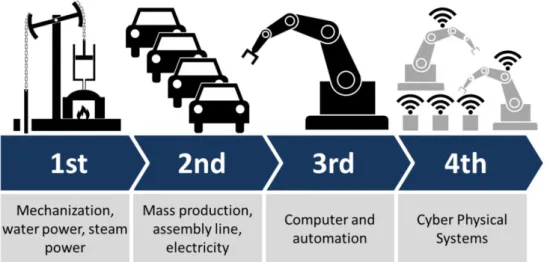
technological objects to enter in contact with humans. This is represented partly by the achievement of the Industry 4.0, which can be seen as the fourth step of the industrial revolution where ‘the combination of Internet technologies and future-oriented technologies in the field of “smart” objects’ gives birth to a new shift in industrial production (cf. Lasi, Fettke, Kemper, Feld and Hoffman, 2014).
A fundamental aspect of Industry 4.0 is the interaction between individuals and machines by means of the Internet of Things where the exchanged information is collected through the usage of sensors and decision making is done through computer systems (cf. Belusova, 2018).
Figure 3 - Industry 4.0 (Retrieved from Wikipedia ‘Industry 4.0’)
Another global phenomenon that is benefitting from the Internet of Things is that of Smart cities. Smart cities interconnect people with different technologies – such as Information and Communication Technologies, data synchronisation and the aforementioned IoT – with physical infrastructures in the urban context (cf. Gretzel, Sigala, Xiang and Koo, 2015). These forms of technology would provide an important development in service provision which could represent a shift in the way cities are managed. In fact, the term “smart city” is used ‘to describe efforts aimed at using technologies innovatively to achieve resource optimisation, effective and fair governance, sustainability and quality of life’ (Gretzel, Sigala, Xiang and Koo, 2015: 179). A principle group of users of smart cities are tourists, who are also fundamental stakeholders in the hospitality industry. Tourists can be highly attracted by smart destinations due to the higher service quality they can enjoy from the innovative applications involved. To make just a few examples, buses in
Barcelona offer USB ports for charging smartphones, Brisbane placed beacons (small tools that transmits radio signal to Bluetooth-equipped devices) to indicate point of interests of the city, and Amsterdam is testing sensors for better crowd management (cf. Gretzel, Sigala, Xiang and Koo, 2015). There are many aspects that distinguish the previous pattern of tourism (also called “e-tourism”) with the new smart version. One key differentiating factor is that while e-tourism is just presented in the digital form, Smart Tourism is represented by a coexistence between both digital and physical forms. Consequently, gadgets like sensors and smartphones play a central role, while previously just websites were involved. In Smart Tourism the visitor can enjoy the technology during the
experience; while earlier it was just possible to do it either before or after it. If in e-Tourism the essential aspect was sharing information, nowadays the focus on big data collection. The paradigm shifted from interactivity to technology-mediated co-creation, allowing the tourist to be a central actor in shaping the sector. The tourism sector has seen a shift from a value chain-based structure with the presence of different intermediaries, to an industry that integrates smart objects so that the whole ecosystem is included, and each traveller is at the centre. Lastly, the typology of goods and service exchange has been turned upside down between the parties, passing from a more direct and traditional kind of exchange (B2B, B2C and C2C) to a collaboration between the parties (public-private-consumer). Thus, in the smart tourism paradigm, a reorganisation of stakeholders has been affecting it.
Figure 4 – Comparison between e-Tourism and Smart Tourism, (Gretzel, Sigala, Xiang and Koo, 2015)
A disadvantage that has developed with the transformation of the tourism industry from “E” to Smart is the issue of security and privacy. In fact, the constant data-on capture through the usage of public Wi-Fi or some applications offered by Smart Cities, make tourists’ personal information vulnerable to be stolen by crackers. The problem is that in most of the cases the information provided by the open applications or services is greatly needed and the travellers may be easily persuaded to forego privacy management (cf. Gretzel, Sigala, Xiang and Koo, 2015). Blockchain – which will be presented and developed in the following chapters - could offer a helpful solution to these problems. Another link between the process of smartification and blockchain regards smart contracts
which, as the name deduces, are a computerised and automated kind of agreements between the different parties involved in the application that blockchain support.
The smartification process of both industries and cities is instigating to an obligation for companies to keep up with emerging technologies in order to be competitive. Most of the radical innovations in the hospitality sector come from outside the industry group.
Therefore, it is essential for hospitality managers to identify which emerging technologies are appropriate. For instance, due to the fact that nowadays most people have access to a smartphone, to put a highly technological phone in a hotel room may not be profitable (cf. Harrison and Enz, 2005). In addition, it is extremely important to make investments in cost-saving technology (as it could be the case of blockchain) because even though there would be an increase in the fixed cost, a consequential reduction of the variable costs would likely follow. In this way, the firm could achieve a cost advantage for their
investment on the new technological tool applied (cf. Harrison and Enz, 2005). Therefore, there are many innovations that have to be carefully monitored for the future development of the industry. For instance, the usage of P2P communication – which is a network created by two or more computers that researchers without passing through a different server (cf. Cope, 2002) - boosted the improvement of scheduling and gave rise to new strategies of marketing and sales (cf. Zsarnoczky, 2018). Another important disruptive innovation for the hospitality industry is the cloud-based Client Relationship Management database system. This technology allows hospitality market stakeholders to get information about their clients through data collection. The gathered material is useful to address personalised advertisements based on their tastes and individual preferences (cf. Zsarnoczky, 2018). All of these technological innovations that are moving towards the hospitality industry may be very beneficial for different firms. It is important to note that an analysis by the companies of both the innovative and contextual framework in which it would be applied are fundamental.
The development of sharing economy applications like Airbnb, Uber, Booking.com, Agoda (to mention just few) are revolutionising the hospitality sector. These particular platforms offer users the chance to share digital and physical space of their properties in order to ‘maximise the use of resources capacities for the purpose of social well-being’ (Zsarnoczky, 2018: 2). The main idea of sharing economy is that the seller is giving the
buyer what (s)he has in excess and the buyer in need responds through payment. The “sharing” of economy is leading to a new pattern of business model which could be described as “postmodern” (cf. Zsarnoczky, 2018). In fact, as with the smartification of cities, we are witnessing a process in which different hospitality stakeholders are involved. Therefore, business owners and consumers are considered partners in the sharing economy business model (cf. Zsarnoczky, 2018). Given sharing economy’s potential to easily unite business owners and consumers in a mutually beneficial way, such technology could be seen as a useful way to face the challenges brought by increasing individualism in today’s society (cf. Klenk, 2015).
As regarding the near future, the emerging technology that may have more impact in the tourism and hospitality industries is Artificial Intelligence. Examples of Artificial
Intelligence already used in the industry are facial recognitions and other digital services for user’s identification in order to optimise travellers’ personalised experiences. Virtual Reality and Augmented Reality will create a new imaginary touristic space where digital elements are integrated into authentic life locations. 3D printing is already able to
reproduce edible artificial food, through the employment of powders and oils in the printing process. In China and in Japan the presence of unmanned work force is already in the market, both in hotels and restaurants (cf. Zsarnoczky, 2018). Lastly, blockchain technology, in its all forms – from cryptocurrencies to booking platforms – is starting to spread like wildfire in the hospitality market, a development which will be further analysed.
1.3 Relationship between Technology and Culture in the Hospitality Industry
It is likely that most of the innovations mentioned above are going to change the way hospitality has been managed so far, causing an important shift in the cultural foundation of the industry. In fact, ‘IT exerts specific “impacts” on organisations, thus “causing” changes in Organisational Culture’ (Gallivan and Srite, 2005: 320). Others stated that some values embedded in an IT application may collide with the given firm’s culture (cf.
Gallivan and Srite, 2005). For this reason, one can argue that it is important to consider an IT-OC-fit analysis before applying a new technology into a company’s ecosystem. Those
who support this point of view are identified as “interactionist” and generally they consider culture as a fixed object. On the other hand, part of the academia states that OC is
constantly subjected to change - which is also the Management in a Liquid Modern World (cf. Baumann, 2015)’s prospective -, as well as divided into subcultures and subcategories within it (cf. Gallivan and Srite, 2005). Culture could then be seen as dynamic inside companies, due to the different workers, managers, departments and infrastructures that compose it. The perception of the adoption of new technology might be regarded in various ways by the different parties related to Organisational Culture. However, the fact that a significant technological shift will have a certain degree of influence on
Organisational Culture is unquestionable. For instance, some think that the introduction of cryptocurrencies as a recognised form of economic exchange by tourism institutions and other applications of its specific distributed ledger (blockchain) may cause a certain modification of the cultural background of the industry (cf. Kwok and Koh, 2018). These aspects will be further examined in chapter three. In order to get there, a panoramic of the current technological weaknesses within the hospitality sector follows in the next chapter.
2. Current Technological Weaknesses of the Hospitality Sector
Keywords: Security; Data Privacy; Intermediaries; Double Payment; Solid Waste Management; Traceability;
There are various weaknesses regarding the use of technology in the hospitality sector which are going to be underlined in this chapter. The aim of this dissertation is to examine which of them could be remedied by the usage of blockchain technology.
2.1. Data Privacy and Information Security
As previously mentioned, the process of smartification has raised problems with data privacy and information security due to the constant data-on capture that smartphone applications, social media and free-Wi-Fi apply. Furthermore, the recent hacking of the
Starwood reservation system of Marriott International showed the negative repercussions that the digitalisation process could bring to the hospitality industry. Five hundred million names, email and street addresses as well as a large number of credit card details and passport numbers were stolen on the 30th November 2018 (cf. Perlroth and Tsang and Satariano, 2018). This episode, the second biggest data breach after that of Yahoo in 2013, underlines an important problem with the technological framework of the hospitality industry that needs to be solved. On the one hand, one can argue that companies should be more careful about their cybersecurity measures in order to protect customers’ information. On the other hand, personal users should be more careful in the choice of their passwords for the login process or should be careful not to open spam they receive in their mailbox. However, it is a matter of fact that the more technology develops, the more attackers are adapting themselves to the challenges that the informatics world faces. It has been argued that one of the potential systematic solutions to this specific trouble could be the
application of blockchain technology (cf. Colendi, 2018). It is not by chance that nowadays this application has been embraced by major players of the stock market, such as
NASDAQ, in order to solve digital security concerns (cf. Miraz and Donald, 2018). The next chapter will further discuss how this innovative tool might increase online security and place hackers in a state of powerlessness (cf. Tackmann, 2017).
2.2. Intermediaries and Double Payments
In February 2016 the famous hotel chain Hilton Worldwide launched its largest campaign in 97 years of its history called “Stop Clicking Around” (cf. Triptease, 2016). The aim of this operation was to ‘re-educate consumers to book direct’ (Hospitality Awards, 2016). Furthermore, Marriott International, already mentioned in the previous paragraph, sharpen its attack on Online Travel Agencies (OTA) (cf. King, 2017). The reason why hospitality firms are moving in this direction is because the commission that booking platforms charge nowadays is between fifteen and twenty-five per cent of the whole price of the booking (LockTrip Whitepaper: 20). Moreover, the Competition and Markets Authority (a British independent and non-ministerial department) has recently taken action against the most important OTAs (Expedia, Booking.com, Agoda, Hotels.com, Ebookers and Trivago) due
to ‘pressure selling, misleading discount claims, the effect that commission has on how hotels are ordered on sites and hidden charges’ (cf. Competition and Markets Authority, 2019). For this reason, it is evident that OTAs problems do not concern just the
commission itself but also their marketing and selling techniques.
The problem of intermediation is obviously one that goes far beyond the hospitality industry, considering that our economic system is based on banks and financial
institutions. These intermediaries ensure that ‘payments over communications channel’ (Nakamoto, 2008: 1) to not be double spent. Indeed, it is the banks that operate as
guarantor of the right outcomes of the transactions. For this reason, it is really difficult in our capitalist society to imagine a world where economic transactions were not managed by a trusted third party. As the next chapter will argue, cryptocurrencies, through the use of blockchain technology might represent a way to do so (cf. Nakamoto, 2008). Due to the detachment from the current economic pattern, some analogies between blockchain and the socialism ideology have been identified and analysed (cf. Huckle and White, 2016). More specifically, blockchain’s characteristics of not having to rely on a central authority and the idea of public and cooperative ownership match with the core characteristics of the
socialism paradigm.
From the development of cryptocurrencies, LockTrip (one of the companies interviewed for this thesis) developed one of the first booking platforms for hotels and short-term rental with zero per cent commission fee (cf. LockTrip Whitepaper), a topic that will be
developed in the final chapter.
2.3. Solid Waste Management and Lack of Traceability
In the hospitality industry, especially on the “HoReCa” (denomination for “Hotel,
Restaurant, Cafés”) side, solid waste management can have a very strong influence on the economic revenue and environmental impact of a firm. Through proper strategies, hotels can reduce up to 25% the amount of waste produced compared to those that are not adopting any plan (cf. Pirani and Arafat, 2014). Around 50% of the total waste produced by the hospitality industry comprises that of food products, which is also up to one third of
the whole food served in this sector (cf. Pirani and Arafat, 2014). There are different strategies that can be applied in order to reduce this issue.
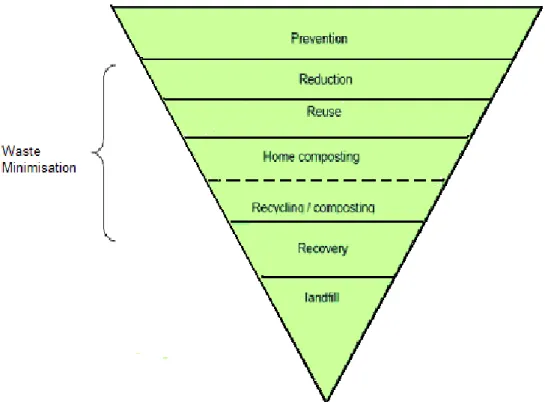
Figure 5 - Solid Waste Management (SWM): From Least to Most Favored Option, (Pirani and Arafat, 2014)
First of all, it is fundamental to establish a “waste hierarchy”, to understand which
behaviours and actions can be considered more or less favourable in relation to this topic. As shown in Figure 4, the most favourable opinion for solid waste management is that of “prevention”: education and creating awareness amongst customers and employees about the impact of food waste. For instance, notes could be added on food menus or staff could be trained in order to explain which products or dishes should be consumed as early as possible to avoid waste. The second option is to apply reductive techniques, which will be further explained. Reutilisation of products which would expire shortly thereafter is a relatively good option. Recycling, probably the aspect believed to be most effective, is placed exactly in the middle of this scale. The three least favoured options are composting, energy recovery and landfill.
As regarding the “reduce option” mentioned above, it is necessary to identify the different stages where waste might take place. From decreasing the quantity of food served to
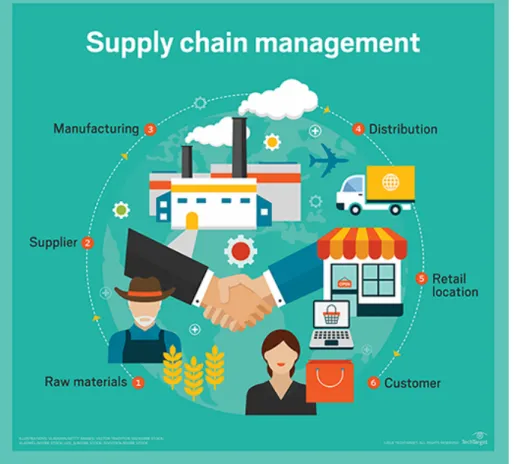
clients to prudent managerial strategies related to the supply chain. In relation to this last point, checking of hypothetical product contaminations or damages to the packing at the moment of delivery is the first starting point (cf. Pirani and Arafat, 2014). However, the aim of this dissertation is to analyse a solution from a broader perspective that would involve a managerial optimisation of the whole supply chain process. As mentioned previously, the solution consists in the application of the blockchain technology as a tool for tracking the itinerary of the products during the various steps of the supply chain.
Figure 6 - Supply Chain Management (SCM), (Rouse, 2010)
The next chapter will present how this technology can be applied to solve the lack of traceability of foodstuffs as well as how the specific application of this technological tool could bring about an important boost in food waste managerial optimisation. One start-up operating in this field will be presented and analysed through secondary analysis method and interviews.
3. Blockchain Technology
Keywords: Blockchain Technology; Bitcoin; Peer-to-peer; Smart contract; Transactions Degrees of Centralisation; Internet of Things; Smart Contracts; Positive and Negative Aspects
Since humankind established a communitarian way of living, it had to find a way to give value to goods and services in order to be exchanged. From the primitive system of bartering, to the more developed creation of the coin, the concept of “currency” has developed at the same pace as technology. One of the most relevant economic disruption that took place in the twentieth century - together with the introduction of the credit and debit card’s system - was the introduction of paper money, which represented the first ‘virtualisation of value’ (Capeloa Gil, 2014: 7).
Due to the “technologic boom” the modern society is experiencing today and the
digitalisation process expanding like wildfire, the largest amounts of money that are being transferred - in the first economy in the world (U.S.A.) – exchanged through transactions is happening online, as can be seen in Figure 6. (cf. Smith, 2018) (cf. Federal Reserve, 2016). Following Capeloa Gil The Cultural Life of Money’s terminology, this could be seen as the second phase of economic “virtualisation of value”.
Figure 7 - Number of Transactions and Their Value in U.S.A., (Federal Reserve, 2016)
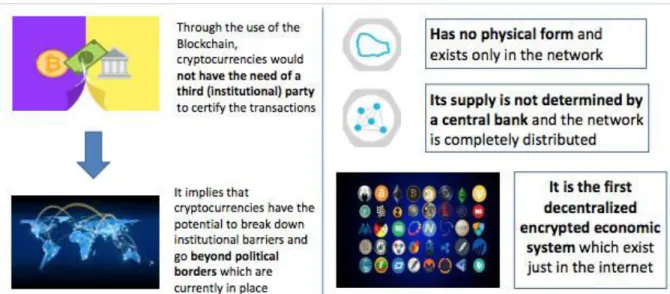
It is becoming evident that the place where most of the economic interactions will take place in the near future is that on the internet. In this framework, a new innovative currency that exists just on the web (thus it does not have a physical form), and whose supply is not determined by a central bank, has arisen: the cryptocurrency. As it will be shown, is a decentralized encrypted tool that it is working on a distributed network of computers through a specific kind of data structure called Blockchain. Cryptocurrencies are also mentioned in Capeloa Gil’s book. In fact, the author says that Bitcoin (the first cryptocurrency ever created) could be perceived by people in the same way as paper money was one century ago. Following this line of thoughts, cryptocurrencies might be considered the third economic step of “virtualization of value”.
At first glance (Figure 7), it could be considered just as a new financial bubble due to the high value that Bitcoin quickly reached related to the financial system. In fact, even though this phenomenon is recent – Bitcoin was born in 2009 – it is earning attention due to how quickly it is increasing in value (from the end of 2016 to the one of 2017, 1 Bitcoin passed from around € 730,00 to more than € 16.500,00) (cf. XE Currency, 2018).
Figure 8 - Bitcoin / Euro Currency Chart Exchange: 2 Years
However, having looked into it in more depth, it is clear that the repercussions that it may have from a cultural perspective are consistent. In fact, due to the fact that there is no need for a third party to certify the transactions, no banks are needed for this system to work. Banking and financial institutions would be replaced with an innovative, transnational and digitally reliable economic system, where the problem of trust would not subsist as a consequence of its distributed (thus not centralized) network, as explained by Figure 8.
Figure 9 - How Cryptocurrencies Works
The next paragraphs will be described more in details how of the aforementioned can be through the mechanism of blockchain technology.
3.1. What is Blockchain Technology?
Digital economy is a worldwide network of economic interactions based on digital computing technologies. Its medium of exchange is the “digital currency”. This can be centralized, when there is a central point of control over the money supply, or
decentralized, when the money supply comes from different sources. The most famous example of a decentralized economic system is that of cryptocurrencies, which uses cryptography to secure its transactions.
The decentralized control of each cryptocurrency works through a blockchain, which is a type of data structure that enables the identification and tracking of transactions in a distributed network of computers. As it could be identified in Figure 9, when each “block” (the most recent transaction) is completed, it is recorded and added to a “public ledger” in chronological order, creating a “chain” of “blocks”.
Figure 10 – How Blockchain Works, (Miraz and Donald, 2018)
This technology was developed through a paper by a still unidentified author (or group of authors) named him/her/them self/selves “Satoshi Nakamoto” (cf. Nakamoto, 2008). It is important to underline that in this paper – that achieved resounding success both in the world of academia and in the entrepreneurial environment –the word “blockchain” was never mentioned (cf. Nakamoto, 2008). It appeared for the first time in an e-mail exchange between Satoshi and Hal Finney (the individual who received the first-ever Bitcoin
transaction from Nakamoto) (cf. Satoshi Nakamoto Institute, 2008).
Following this clarification, it is now time to pass the discussion to the content of the paper that initiated this innovation. The aim of this work was to describe the functioning of a ‘peer-to-peer electronic cash system [that] would allow online payments to be sent directly from one party to another without going through a financial institution’ (Nakamoto, 2008: 1). In order to have a better understanding, it will now be discussed what a peer-to-peer (P2P) network is. To grasp the concept, it might be useful to start with those functions that made it more commonly known. Probably, its most famous applications – especially for younger generations - are those that have been used for piracy and music downloads such as μTorrent or eMule. In fact, a P2P network it is nothing more than a way to connect different computers to each other through the web. In this way, each single computer linked to this network becomes both a file server and a client (cf. TechTerms, 2018). In this way it is possible to search and download files on other people’s computers. It is argued that, through the reliance on a distributed network of computers, it is possible to create a system where electronic transactions using cryptographic proof take place. This