Ana Luísa
Neto Caetano
Derivação de Valores de Triagem para Metais
num Solo Natural Português
Derivation of Soil Screening Values for Metals in
Ana Luísa
Neto Caetano
Derivação de Valores de Triagem para Metais
num Solo Natural Português
Derivation of Soil Screening Values for metals in
Portuguese Natural Soil
Dissertação apresentada à Universidade de Aveiro para cumprimento dos requisitos necessários à obtenção do grau de Doutor em Biologia, realizada sob a orientação científica da Prof. Doutora Ruth Maria de Oliveira Pereira, Professora Auxiliar Departamento de Biologia da Faculdade de Ciências da Universidade do Porto, do Doutor Fernando José Mendes Gonçalves, Professor Associado com Agregação do Departamento de Biologia da Universidade de Aveiro, e do Prof. Doutor Eduardo Anselmo Ferreira da Silva, Professor Catedrático do Departamento de Geociências da Universidade de Aveiro
Apoio financeiro da FCT e do FSE no âmbito do III Quadro Comunitário de Apoio (Bolsa de Doutoramento SFRH/BD/48943/2008
o júri
presidente/president Doutor Helmut Robert Malonek
Professor Catedrático do Departamento de Matemática da Universidade de Aveiro
vogais/vogals Doutor Eduardo Anselmo Ferreira da Silve (co-orientador)
Professor Catedrático do Departamento de Geociêcnias da Universidade de Aveiro
Doutor Amadeu Mortágua Velho da Maia Soares
Professor Catedrático do Departamento de Biologia da Universidade de Aveiro
Doutor Fernando José Mendes Gonçalves (co-orientador)
Professor Associado com Agregação do Departamento de Biologia da Universidade de Aveiro
Doutora Maria da Natividade Ribeiro Vieira
Professora Associada com Agregação da Faculdade de Ciências da Universidade do Porto
Doutor José Paulo Filipe de Sousa
Professor Auxiliar da Faculdade de Ciências e Tecnologia da Universidade de Coimbra
Doutora Ruth Maria de Oliveira Pereira (orientadora)
Professora Auxiliar Convidada da Faculdade de Ciências da Universidade do Porto
Doutora Maria Manuela da Silva Inácio
Investigadora Auxiliar do Departamento de Geociêcnias da Universidade de Aveiro
Doutora Catarina Pires Ribeiro Ramos Marques
Investigador de Pos-Doutoramento do Departamento de Biologia da Universidade de Aveiro
Doutor Tiago Manuel Natal da Luz
Investigador de Pos-Doutoramento da Faculdade de Ciências e Tecnologia da Universidade de Coimbra
agradecimentos À Dra. Ruth pelo aconselhamento científico essencial para a elaboração desta dissertação. Por não ter deixado de acreditar nas minhas capacidades, pela compreensão dos meus erros e pela paciência que teve comigo. Obrigado por me ter ensinado que desistir é para os fracos. A ela o meu muito obrigado.
Ao Prof. Doutor Fernando por me ter dado a oportunidade de fazer parte do seu grupode investigação e pelo esforço em garantir sempre as melhores condições de trabalho. Agradeço acima de tudo a motivação, a amizade e a partilha de conhecimentos. Obrigado por me ter feito crescer.
Ao Prof. Doutor Eduardo, pelo apoio científico prestado ao longo do trabalho desenvolvido e por toda toda a disponibilidade manifestada no decorrer deste trabalho.
À Catarina, por muitas vezes ter sido o meu braço direito. Pelos momentos de discussão científica, pela incondicional apoio, durante todo o meu doutoramento. Sou-lhe eternamente grata por tudo o que me ensinou, pelos conselhos, pelo incentivo, pelo exemplo de pessoa que é, pela franqueza, pelas conversas, pela cumplicidade, pela amizade.
À minha Miss, pela amizade incondicional. Por ter estado sempre presente, nos tantos momentos difíceis durante a escrita desta tese. Pelas conversas longas, acerca de tudo e de nada. Pelo apoio que sempre me deu e por também ela não me ter deixado desistir. Obrigada Miss!
Um agradecimento muito especial à “Brigada do Almoço” Ana Cuco, Carina, Inês, Márcia. Não vou esquecer os momentos de pura descontracção da nossa hora de almoço. Obrigado pelas muitas gargalhadas, brincadeiras, conversas sérias e menos sérias, pela vossa amizade.
Ao Rui, por todo o apoio, pela motivação, pelas gargalhadas, pela amizade! Obrigado Ruizinho!
À minha pequenina Inês, à Tátá e ao César por ouvirem os meus desabafos, por estarem sempre presentes.
Ao João, por em momento algum ter deixado de acreditar nas minhas capacidades, pelo incondicional apoio, pela força, pela paciência, por ter sido meu pilar ao longo deste tempo todo. Por ouvir os meus desabafos e revoltas, mas também pelos momentos de felicidade que contribuíram para que as coisas se tornassem mais fáceis. Obrigado por tudo o que me ensinaste. Finalmente, as pessoas mais importantes da minha vida, a minha mãe, o meu pai e o meu irmão, porque são a base daquilo que sou e sem eles nada teria sido possível. Espero um dia poder retribuir-vos tudo o que fizeram por mim.
palavras-chave Valores de triagem do solo; urânio; cadmio; cobre; solos naturais; actividade enzimática do solo; testes de reprodução com invertebrados; germinação e crescimento de plantas; factores de avaliação; curvas de distribuição da sensibilidade de espécies.
resumo O aumento das atividades humanas tem sido responsável por mudanças
profundas e por uma degradação contínua do compartimento solo, em todo o território Europeu. Em resposta a este problema, algumas políticas Europeias estão agora a emergir orientadas especificamente para a proteção do solo e para a gestão das áreas contaminadas, a fim de recuperar os solos degradados para outros usos. Para regulamentar a avaliação de risco e a gestão de solos contaminados, muitos Estados-Membros Europeus adoptaram valores de qualidade do solo, como por exemplo os “valores de rastreio ou triagem” (do inglês: soil screening values ou SSVs). Estes valores são particularmente úteis para a primeira etapa dos processos de avaliação de risco ecológico (ARE) de locais contaminados, especialmente para um primeiro rastreio dos locais, destinado a separar aqueles em que os riscos são claramente reduzidos daqueles que exigem uma avaliação mais específica e aprofundada para o local. Assim, a definição de SSVs regionais terá impactos económicos relevantes na gestão dos locais contaminados. Portugal é um dos Estados-Membros Europeus que ainda não definiu SSVs. Neste contexto, este estudo dá uma notável contribuição na geração de dados ecotoxicológicos para parâmetros microbiológicos do solo, plantas terrestres e invertebrados necessários para a obtenção de SSVs para urânio (U), cádmio (Cd) e cobre (Cu), utilizando um solo natural Português, representante de um tipo dominante de solo existente no território nacional.
Assim, foram obtidos SSVs para os metais referidos com base em dois métodos propostos pelo Documento de Orientação Técnica para Avaliação de Riscos da Comissão Europeia, nomeadamente o método dos factores de avaliação (do inglês: assessment factors ou AF) e o método probabilístico da distribuição da sensibilidade espécies (do inglês: species sensitivity distributions ou SSDs) (com algumas adaptações). Os resultados dos dois métodos foram comparados e discutidos. Além disso, este estudo lançou as bases para uma reflexão mais profunda sobre o ponto de corte (concentração de risco para uma determinada percentagem de espécies) a ser estimado a partir das distribuições de sensibilidade das espécies (SSDs), e para ser selecionado para a obtenção de SSVs, com o nível adequado de proteção. Neste estudo foi comprovado que esta seleção pode variar para diferentes metais ou outros contaminantes, no entanto, uma justificação clara deve ser dada, em cada caso.
Os SSvs propostos neste estudo foram de: U (151,4 mg U kg- 1ms ), Cd (5,6 mg
Cd kg- 1ms ) e Cu ( 58,5 mg Cu kg - 1
ms) Estes valores devem agora ser testados
quanto à sua capacidade para descriminar solos com diferentes níveis de contaminação. No entanto, este estudo esclarece e sugere a abordagem que deve ser seguida para a derivação de SSVs para outros metais e contaminantes orgânicos, e para outros tipos dominantes de solos naturais portugueses.
Key words
abstract
Soil screening values; uranium; cadmium; copper; natural soil; soil enzymes activity; invertebrates reproduction tests; plants seed emergency and growth tests; assessment factors; species sensitivity distributions.
The increasing human activity has been responsible by profound changes and a constinuos degradation of the soil compartment in all the European territory. Some European policies are appearing focusing soil’s protection and the management of contaminated sites, in order to recover land for other uses.To regulate the risk assessment and the management of contaminated soils, many European member states adopted soil guideline values, as for example soil screnning values (SSV).These values are particularly useful for the the first tier of the Ecological Risk Assessment (ERA) processes of contaminated sites,especially for a first screening of sites requiring a more site-specific evaluation. Hence, the approriate definition of regional SSVs will have relevant economic impacts in the management of contaminated sites. Portugal is one of European Member States that still lack these soil guideline values. In this context, this study gaves a remarkable contribution in the generation of ecotoxicological data for soil microbiological parameters, terrestrial plants and invertebrates for the derivation of SSVs for uranium (U), cadmium (Cd) and copper (Cu), using a Portuguese natural soil, representative of a dominant type of soil in the Portuguese territory.
SSVs were derived based on two methods proposed by the the Technical Guidance Document for Risk Assessment of the European Commission; namely the assessment factor method (AF) and the species sensitivity distribution (SSD) method (with some adaptations). The outputs of both methods were compared and discussed. Further, this study laid the foundation for a deeper reflection about the cut-off (hazard concentration for a given percentage of species - HCps) to be estimated from the SSDs, and to be selected for the derivation of SSVs, with the adequate level of protection. It was proven that this selection may vary for different contaminants, however a clear justification should be given, in each case.
The SSvs proposed in this study were for: U (151.4 mg U kg-1dw), Cd (5.6 mg
Cd kg-1dw), and Cu (58.5 mg Cu kg -1
dw) These values should now be tested
for their descriminating power of soils with different levels of contamination. However, this studies clarifies the approach that should be followed for the derivation of SSVs for other metals and organic contaminants, and for other dominant types of Portuguese natural soils.
List of figures List of tables
1.1 The importance of soil and its protection at international and national level ... 17
1.2. Contaminated Sites and risk assessment frameworks ... 25
1.3. Soil screening values (SSV) in the assessment of contaminated soils ... 28
1.4. Use of natural reference soils in the ERA framework ... 29
1.5. Aim and scope of the thesis ... 32
1.6. References ... 34
CONTRIBUTION FOR THE DERIVATION OF A SOIL SCREENING VALUE (SSV) FOR URANIUM, USING A NATURAL REFERENCE SOIL ... 45
Abstract ... 45
2.1 Introduction ... 46
2.2 Material and methods... 49
2.2.4 Statistical Analysis ... 55
2.3 Results and Discussion ... 55
2.4 Conclusion ... 71
2.5 References ... 73
CONTRIBUTION FOR THE DERIVATION OF SOIL SCREENING VALUES (SSVS) FOR CADMIUM USING A NATURAL REFERENCE SOIL. ... 85
Abstract ... 85
3.1 Introduction ... 86
3.2 Material and methods... 89
3.2.4 Statistical Analysis ... 94
3.3 Results and discussion ... 95
COPPER TOXICITY IN A NATURAL REFERENCE SOIL – ECOTOXICOLOGICAL DATA
FOR THE FUTURE DERIVATION OF SOIL SCREENING LEVELS ... 123
Abstract ... 123
4.1 Introduction ... 124
4.2 Material and methods... 126
4.2.4 Statistical Analysis ... 132
4.3 Results and discussion ... 132
4.4 Conclusion ... 149
4.5 References ... 150
DERIVATION OF SOIL SCREENING VALUES (SSV) FOR U, CD AND CU, USING A NATURAL REFERENCE SOIL ... 161
Abstract ... 161
5.1 Introduction ... 162
5.2 Material and methods... 166
5.3 Results and discussion ... 168
5.4 Comparison of Portuguese SSVs with other European and International values ... 179
5.5 Conclusion ... 184
5.6 References ... 185
FINAL REMARKS ... 195
6.3 References ... 201
Figure II.1 Response of the arylsulphatase, dehydrogenase, cellulase urease, activity, N
mineralization and potential nitrification to soils spiked with a range of uranium concentrations. The error bars indicate the standard deviation. The asterisks sign out significant differences relatively to the control (0 mg U Kg-1
dw), (P < 0.05).
Figure II.2 Reproductive output of EisenIa andrei, Enchytraeus crypticus and Folsomia candida
exposed the natural soil PTRS1 spiked with different concentrations of Cu. Error bars indicate the standard error and asterisks sign out significant differences between the treatment and the control (0 mg U kg-1
dw), (p<0.05).
Figure II.3 Average number of emerged seeds in monocotyledonous, Avena sativa and Zea mays
and in dicotyledonous species, Lycopersicon esculentum and Lactuca sativa, grown in PTRS1 soil contaminated with U. Error bars indicate the standard error.
Figure II.4 Average values of fresh and dry mass measurements in monocotyledonous, Avena
sativa and Zea mays, and dicotyledonous species, Lycopersicon esculentum and Lactuca sativa
grown in PTRS1 soil artificially spiked with Cu. Error bars represent the standard error and the asterisks indicate significant differences between the treatments and the control (0 mg U kg-1
dw) (P<0.05).
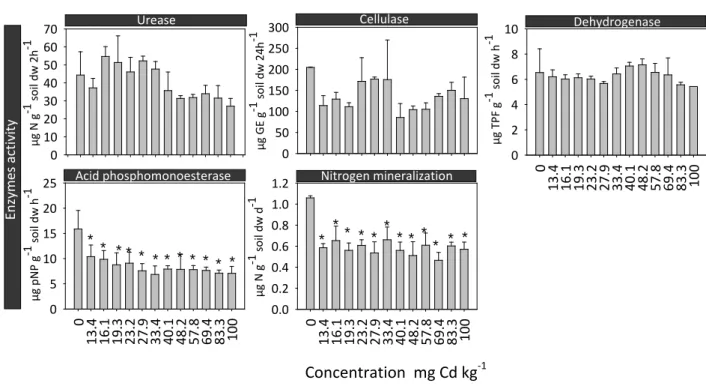
Figure III.1 Soil enzyme activities and N mineralization in PTRS1 soil spiked with a range of cooper
concentrations. The error bars indicate the standard deviation. The asterisks sign out significant differences relatively to the control (0 mg Cd Kg-1
dw), (P < 0.05).
Figure III.2 Reproductive output of EisenIa andrei, Enchytraeus crypticus and Folsomia candida
exposed the natural soil PTRS1 spiked with different concentrations of Cu. Error bars indicate the standard error and asterisks sign out significant differences between the treatment and the control (0 mg Cd kg-1
contaminated with Cu. Error bars indicate the standard error and asterisks represent significant differences between the treatments and the control (0 mg Cd kg-1
dw), (p <0.05).
Figure III.4 Average values of fresh and dry mass measurements in monocotyledonous, Avena
sativa and Zea mays, and dicotyledonous species, Lycopersicon esculentum and Lactuca sativa
grown in PTRS1 soil artificially spiked with Cu. Error bars represent the standard error and the asterisks indicate significant differences between the treatments and the control (0 mg Cd kg -1
dw) (P<0.05).
Figure IV.1 Soil enzyme activities and N mineralization in PTRS1 soil spiked with a range of cooper
concentrations. The error bars indicate the standard deviation. The asterisks sign out significant differences relatively to the control (0 mg Cu Kg-1
dw), (P < 0.05).
Figure IV.2- Reproductive output of EisenIa andrei, Enchytraeus crypticus and Folsomia candida
exposed the natural soil PTRS1 spiked with different concentrations of Cu. Error bars indicate the standard error and asterisks sign out significant differences between the treatment and the control (0 mg Cu kg-1
dw), (p<0.05).
Figure IV.3- Average number of emerged seeds in monocotyledonous, Avena sativa and Zea
mays, and dicotyledonous species, Lycopersicon esculentum and Lactuca sativa exposed to PTRS1
soil contaminated with Cu. Error bars indicate the standard error and asterisks represent significant differences between the treatments and the control (0 mg Cu kg-1
dw), (p <0.05).
Figure IV.4- Average values of fresh and dry mass measurements in monocotyledonous, Avena
sativa and Zea mays, and dicotyledonous species, Lycopersicon esculentum and Lactuca sativa
grown in PTRS1 soil artificially spiked with Cu. Error bars represent the standard error and the asterisks indicate significant differences between the treatments and the control (0 mg Cu kg -1
dw) (P<0.05).
Figure V.3 SSD for copper based on EC20 values (a,c) and5 EC50 values (b) for different microbial processes, invertebrates and plants and used to estimate HC5 (a,b) and HC50 values.
Figure V.1 SSD for uranium based on EC20 values (a,c) and5 EC50 values (b) for different microbial processes, invertebrates and plants and used to estimate HC5 (a,b) and HC50 values.
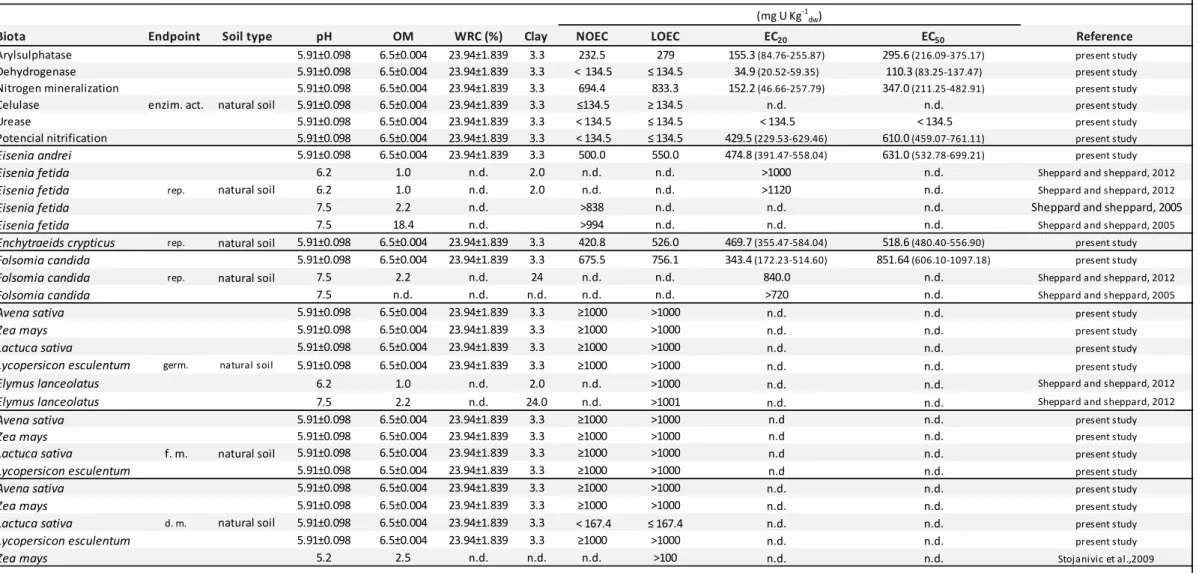
Table II.1 Toxicity data for microbial processes, soil invertebrates and plants with effect
concentrations as mg U kg-1
dw soil.
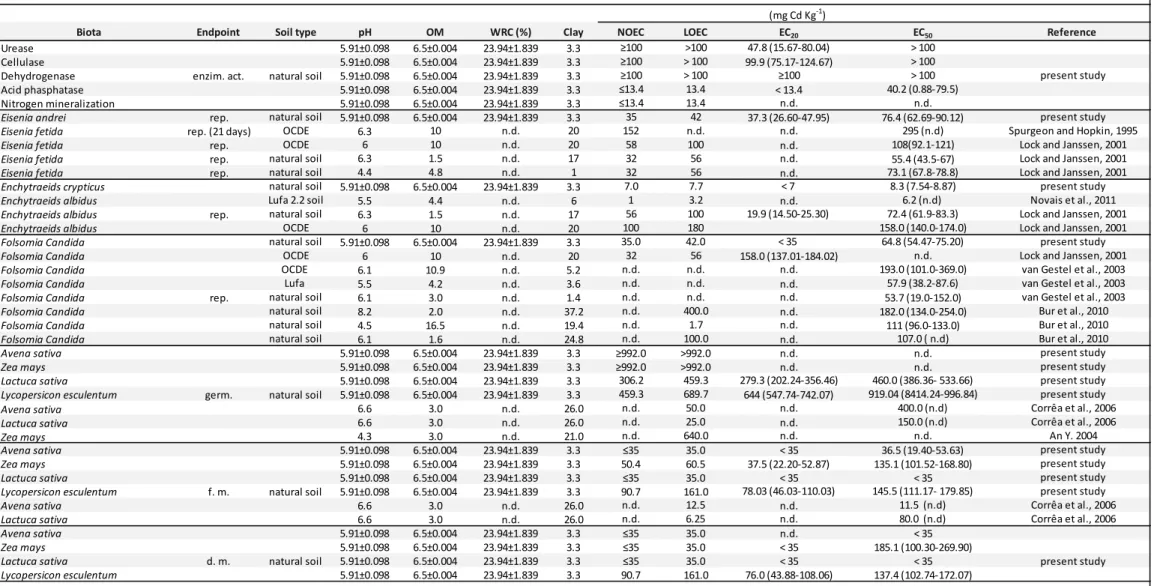
Table III.1 Toxicity data for microbial processes, soil invertebrates and plants with effect
concentrations as mg U kg-1
dw soil, with indication of the 95% confidence interval.
Table IV.1 Copper concentrations used in ecotoxicological tests (mg Cu Kg-1 dw).
Table IV.2 Toxicity data for microbial processes, soil invertebrates and plants with effect
concentrations as mg U kg-1
dw soil, with indication of the 95% confidence intervals.
Table V.1 Toxicity data for soil enzymes activity, reproduction of invertebrates, seed germination
and growth of terrestrial plants with effect concentrations of U, Cd and Cu (mg.kg-1
dw), (Caetano et al., a,b,c submited), with indication of the 95% confidence.
Table V.2 Summary table of the distribution of toxicity data, per throphic level; N = Total number
of species/microbial processes.
Table V.3 HCp values obtained from SSD method for U, Cd and Cu used EC20 and EC50 values (mg.kg-1
dw), 95% confidence intervals.
Table V.4 Summary table of SSV obtained for U, Cd and Cu using the SSD method and the AF
Chapter
I
General Introduction
General Introduction
1.1 The importance of soil and its protection at international and national level
Soil is the upper layer of the earth crust, with a highly variable thickness, composed of mineral components (mainly silica and several trace metals) resulting from the weathering of bedrock and other parent materials, organic matter , water, air and living organisms (Buyer et al., 2010; Gerrard, 2000), and occupies most of our planet’s continental areas. For Singer & Warkentin, (1996), soils are the excited skin of the earth where the atmosphere, hydrosphere, biosphere and pedosphere meet and interact, in an open system. Soil is the ecosystems life substrate, as one finds in it an ample quantity and diversity of living organisms (microorganisms, plants, animals), constituting an abundant biodiversity habitat, with unique genetic patterns. A piece of soil that could be held by our hand may contain hundreds of thousands or even millions of species living in, which benefit from the great number of ecological niches provided by the extremely heterogeneous structure of the soil (Buyer et al., 2010),These organisms are parts of the soil and their activity is vital for its own functioning, as they are responsible for the organic matter decay, nutrient cycling, help in the soil structure formation, thus contributing for the ecosystems stability (Lavelle et al., 2006; Park et al., 2011; Rutgers et al., 2009). The soil is for this reason considered, a living and dynamic medium and represents the main compartment for the global interchange of matter and energy. This compartment plays such necessary functions as the production of a wide range of nourishment and bioenergy (Sparks, 2000), is a physical and nutritive subtract for plants development due to its ability to store water, minerals, organic matter and several chemical substances necessary for the vegetal growth. In addition is an environmental regulator, since besides the storing capacity, it partially transforms compounds flowing between the atmosphere, the hydrosphere and the living organisms, being part of the biochemical and hydrologic cycles. All this characteristics grant it a high buffering capacity strictly related with its organic matter load, which limits the erosion and diffusion of soil contaminants to the water. The soil also performs social economic functions, since it is used by any known society as an important source of raw materials (sands, clays, coal and minerals), as substrate for biomass production, as support for
infrastructures (communication ways, buildings) and for almost all cultural activities (Lavelle et al., 2006; Sampaio, 2004; Swartjes et al., 2008).
However, and despite its importance as a natural resource, the soil keeps being neglected by several human activities (agriculture, industry, mining exploration), which cause deeply adverse effects on its chemical composition, physical structure and its organisms (Cortes et al., 2003; Vaalgamaa and Conley, 2008). Additionally, the soil is a particularly vulnerable medium to external aggressions both from anthropogenic and natural origin, as are the erosion, salinization, acidification, floods and landslides which assume a significant importance on its degradation (Bone et al., 2010; Fullen and Catt, 2004). The decreased fertility, decline in soil organic matter, biodiversity loss, smaller water retention capacity and the interruption of the gaseous cycle and nutrients, are some of the consequences which stems from natural or anthropogenic soil degradation processes. Nevertheless, in the public opinion, air and water are more important than soil, since these are directly used to breathe and drink, while soil only indirectly influences human life. In fact, the relationship between human health and soil quality stills unclear for the general public and the economic value of soil was never perceived even when the conflicts were related with available arable land (Bone et al., 2010). On the other hand, and unlike water and air, the majority of the soil is private property and belongs to people who have their own rights and private interests in the soil use (Römbke et al., 2005). Consequently, and till the nineteen decade, the soil was managed mainly by farmers for increasing fertility and subsequently crop production, without ecological concerns (Postma-Blaauw et al., 2012).
Mainly in the last three decades, the perception of: i) the treats to the soil; ii) the economic and environmental consequences of soil contamination on water and air quality; iii) the loss in biodiversity; iii) the potential impacts of climate change on arable lands and of iv) the non-renewable character of this resource has increasingly revealed its protection a global concern. Despite the efforts to obtain a global assessment of soil degradation, at the end the eighties a great uncertainty persist about the extent, severity and multiple impacts of soil degradation (Hurni et al., 2006). The international documents and agreements specifically dedicated to soil available till then, namely the European Soil
Charter (CE, 1972), the World Soil Charter (FAO, 1982) and the World Soil Policy (UNEP, 1982) did not promote any type of actions on soil protection mainly due to their non-binding nature (Hurni et al., 2006). In 1998, in the 16th World Congress of Soil Sciences
(WCSS) of the International Union of Soil Sciences (IUSS) held in Montpelier, specialists agreed on the need of global soil agenda, to the soil on the top of the table of decision-makers and to call the attention of the general public for soil related issues (Hurni et al., 2006). Four years later, a group of specialist was invited to pronounce about the subject, aimed in producing texts for a draft of the soil agenda during the 17th WCSS. The soils specialists agreed about the need of an international soil instrument dedicated exclusively to the soil, to raise awareness about the concerning level of soil degradation worldwide. Nevertheless, they were more confident on the efficiency of international guidelines for soil management rather than on enforceable legislation to protect this resource (Hurni and Meyer, 2002) In 2001, the Convention on Biological Diversity, under the program of work on agricultural biodiversity, recognized the value of the diverse soil biota and of their role in several soil services crucial for the maintenance of all the ecosystems, but especially agro-ecosystems and the maintenance of their production to sustain the growing demand for food (UNEP-CBD, 2000). Despite, highlighting the ecological attributes of soil whose importance go far beyond its production function, the CBD emphasized the benefits of managing soil biodiversity in agricultural systems, in terms of crop production, economic profits and food security (UNEP-CBD, 2000). Under a decision of the Convention of Parties (COP decision IV/6), the parties asked FAO (Food and Agriculture Organization of the United Nations) and other organizations to provide methodologies for the assessment of the biodiversity of agro-systems and tools for their monitorisation (UNEP-CBD, 2000).The CBD, have also highlighted knowledge gaps in terms of soil biodiversity and of the effects of agriculture practices in the soil biota and in their functions (UNEP-CBD, 2000). In 2004, the CBD published a new document describing the context and objectives of the “International Initiative for the Conservation and
Sustainable Use of Soil Biodiversity” coordinated by FAO, and corresponding strategies
and actions to attain these objectives (UNEP-CBD, 2004). Although still mainly focused in agricultural biodiversity, the Convention highlighted the role of soil biota in critical
ecosystem services and the importance of these services not only for a sustainable agricultural production but also for the functioning of natural ecosystems. In 2006-2007, FAO, had its first external evaluation, and one of the conclusions of the report was that FAO, the organization founded in 1945, was in crisis, mainly due to a shift of research interests to land and climate change research (Hartemink and McBratney, 2008). This report however, considered that land and soils should be a prior area for the allocation of resources, due to the global lack of data required for their management, and the recognition that the pressures on land resources caused by an increasing human population and corresponding demand for agricultural products, urbanization and climate change are expected to persist and to worsen (Hartemink and McBratney, 2008).
Previously to the CBD, only the United Nations Convention to Combat Desertification, established in 1994, focused on a specific soil related problem, the desertification in dry land areas, caused by the combined effect of the over-exploration of resources, inappropriate land use and paucity of rainfall (Fuchs, 2008; UNCCD, 2012)1. In fact desertification was the first soil related problem gaining international political attention, after the first United Nations Desertification Conference held in Nairobi, during the seventy decade. However, this convention focused again in the soil as a resource, and its main aim was to restore land and soil productivity to guarantee the sustainability of human populations from these vulnerable areas (UNCCD 2012)2. Under the scope of the convention, the parties were also obliged to report the status of land cover, and call the attention of policy makers for the importance of the topic. Despite the efforts the problem was not solved, and a ten year strategic plan (2008-2018) was adopted by the COP-8 (8th Convention of the Parties), to enhance the implementation of the convention
(CBD).
Other United Nations networks/organizations, like the UNDP (United Nations Development Program founded in 1965) and the UNEP (United Nations Environment Programme) only after the year 2000, started mentioning soils in their reports, calling the attention, inter alia, for the role of global climate changes in the exacerbation of biodiversity loss in this compartment (Hartemink and McBratney, 2008).
1 http://www.unccd.int/en/Pages/default.aspx 2 http://www.unccd.int/en/Pages/default.aspx
20
Some expectations were placed in the Millennium Ecosystem Assessment (MEA) called by the United Nations Secretary – General Kofi Annan in 2000 - aimed in having information about the consequences of ecosystem change on human well-being and to establish the scientific basis required by decision makers for actions needed to enhance the conservation and sustainable use of ecosystems (MEA, 2005). However, soils did not receive a particular attention, being conceptually considered as an ecosystem service, and once again no meaningful knowledge about the status of soils worldwide was obtained with MEA (Hurni et al., 2006). Meanwhile, countries like the USA, Japan, Canada, Australia and Brazil, have already started establishing soil protection policies (CEC, 2006a). In 2008, the US Congress has adopted a Senate resolution on Soil, which inter alia, emphasized the lack of legislation on soils in USA (Hartemink and McBratney, 2008).
Since 1970 the European Commission was very proliferous in the definition of policies and in the publication of different legal documents aimed in: protecting water resources; managing and reducing solid wastes; landfills management; assess and mitigate the risks of new chemicals produced by the industry, starting by phytopharmaceuticals and then extended to all the chemicals produced by the industry (CEC, 2006a; JRC, 2012). However, any legislation had specifically targeted the protection of soil. The protection of water resources for human consumption was the main focus. In fact this was the priority after the perception of the risks posed to these resources and to the human health (e.g. nitrates contamination of groundwater and eutrophication of surface waters) caused by the intensive application of fertilizers and pesticides by farmers in several European countries (Napier, 1998). Taxes on farm chemicals; the control of their application or even its ban in more sensitive areas, near groundwater resources; education and information programs for farmers; compensations for economic losses caused by the adoption of production systems with lower risks to soil and water resources were some of the measures adopted by some countries and by the Common Agricultural Policy (CAP) of the European Union, after 1992 (Napier, 1998). Several European Member states have also established Water Quality Standards. In 2002 the European Commission took the first step, for the protection of soils, publishing a Communication towards the development of a Thematic Strategy for Soil Protection (CEC, 2002), which was finally published in 2006
(CEC, 2006a), in parallel with a proposal for the Soil Framework Directive (CEC, 2006b). This marks the first central political approaches with the goal to establish a communitarian frame for soil protection and the preservation of its capacity for playing its ecological, economic, social and cultural functions. This Thematic Strategy was published under the scope of the Sixth Environment Action Program of the European Union (2001-2010), whose main priorities were climate change, nature and biodiversity health and quality of life, and natural resources and waste. The strategies are mechanisms for delivering the objectives of the Action Programme, and provide a broad analysis of the issue under consideration, focusing on the pressures and impacts and their link with sectorial policies and suggest a strategy to deal with such pressures and impacts combining market-based approaches, technology and innovation (CEC, 2006a). Each strategy is composed by a former communication (as mentioned above) that highlights the issues and proposes solutions, legislative proposals and an impact assessment.
In parallel with the a diagnose of the main threats to soils within the European Union (erosion, organic matter decline, compaction, salinization, landslides, sealing contamination), the soil thematic strategy established guideline principles to pursue the objectives of protection and sustainable use of soil, namely: readjust soil uses and management in order to prevent further soil degradation; ii) act directly on sources to reduce the emissions/impacts on soil and to restore degrade soils at least to a level compatible with current or intended uses. In 2012, the EU published a report about the implementation of the Soil Thematic Strategies and ongoing activities (EC, 2012). Since the adoption of the Strategy, the EU has made big efforts for the integration of soil protection on sectorial policies, like the common agricultural policy and the Industrial Emissions Directive (IED, 2010). Further the EU has allocated funds for the rehabilitation of industrial sites and contaminated land as part of the Cohesion Policy, between 2007-2013, as well as for research projects aimed in increasing background knowledge required for action (EC, 2012). However, six years after the adoption of the Soil Thematic Strategy, the main legal document that could arise, addressing systematic tools to monitor and to protect soils across Europe, still without approval (EC, 2012). Without this legal document the foundations to enforce member states to develop legislation on soil protection are
weak, and according to the last thematic report of the European Environment Agency, soil degradation processes have accelerated in many parts of Europe, since 2005, due to inappropriate human uses and due to the lack of harmonized approaches to tackle soil degradation (EEA-JRC, 2010). A number of EU Member States have legislation specific to soil protection. However the majority of this legislation is focused only on soil contamination. Countries like Netherlands, Germany and Belgium, have policies addressing broader soil protection issues. These states are some of the most advanced in questions for soil protection in EU, being the only states with a specific legally binding soil definition (Van Camp et al., 2004).
As previously described global efforts on soil protection have been mainly focused on the view of soil as resource for food production and sustainable development. Research efforts were mainly directed toward the maintenance of soil fertility and more recently on the impacts of climate change on such soil function. The soil as a source for carbon storage, with an important role in the climate control has also received a great attention in the last few years (Lal, 2010; Prechtel et al., 2009).
The UK had a historically dependence on soils for food and fiber production and as a physical support of all activities, especially those related with industrial manufacturing. After the Second World War land-use production was intensified through the use of industrially produced fertilizers and biocides to control pests, and by mechanically based land preparation practices (Haygarth and Ritz, 2009). More recently, one of the main concerns with soil protection in UK (as well as in other member states) is related with their intensive use for construction, since recovery from soil sealing is practically irreversible, representing a definitive loss for any other type of soil use (Haygarth and Ritz, 2009). A postnote document published by the Parliament, in 2006, made a description of the nature and extent of soil degradation in the UK, assuming that about 2.2 million of tons of topsoil were being lost annually, by erosion, in UK (POST, 2006). Despite the perception of the national authorities of the degree of soil degradation, there is no specific UK regulations related with soil protection. Similarly to other member states it is argued that soil has being indirectly protected by other legislation like those related with control of emissions of pollutants, land management and the cleanup of
contaminated sites. The Environment Protection Act from 1990, is an act of the Parliament of the United Kingdom, which establishes for England, Wales and Scotland the structure and the authority that regulates the managements of wastes and the emissions into the environment. The Part II of this act, was added in 1995, and is dedicated specifically to define policies for the identification and compulsory remedial actions of contaminated sites (USEPA, 2009)). According to the Contaminated Land (England) Regulations 2006 (UK Government, 2006), the local authorities are the primary responsible for the identification and management of contaminated lands. The Department of Environment, Food, and Rural Affairs (DEFRA) manages the capital projects program, aimed in assisting local authorities (USEPA, 2009). The work of remediation has been supported carried out by quasi-governmental and non-governmental authorities. Aimed in addressing other soil treats, in 2009 DEFRA published a Soil Strategy for England (DEFRA, 2009), where the main objectives to be attained and the actions previewed are described. With this strategy DEFRA intends to attain a sustainable management of UK soils in 2030, safeguarding their ability to provide essential services for future generations (DEFRA, 2009). According to Haygarth and Ritz, (2009) the challenge will be to optimize the utilization of soils with the variety of demands, identifying the areas more appropriate for specific uses. However, this will require great efforts to obtain detailed soil maps, combining soils data with several other attributes of this resource.
Germany and Netherlands, as stated above, are the most advanced countries in terms of soil protection policies. German government policy recognizes the importance of soils in agriculture, the role soil protection plays in safeguarding other environmental media, and the importance of soil in fighting climate change. Their policies include, the 1998 Federal Soil protection act (Federal Ministry for the Environment Nature Conservation and Nuclear Safety, 1998), and the 1999 Federal Soil Protection and Contaminated Sites Ordinance (Federal Ministry for the Environment Nature Conservation and Nuclear Safety, 1999) which address soil protection and soil remediation and provide the basis for soil policy in Germany. A number of government agencies that have been established for soil protection, like the Federal Institute for Geosciences and Natural Resources formally
established in 1975 and the Federal Environment Agency Soil Protection Commission (KBU) in 2004.The KBU’s work focuses on renewable organic resources and soil quality, pollutants and soils, and soil protection and soil awareness. The Federal Institute for Geosciences and Natural Resources conducts research on sustainable soil uses.
Dutch soil policy addresses the long-term protection, management, and sustainable use of soil in the Netherlands. The Dutch soil protection policy includes, The 1987 Dutch Soil Protection Act (revised in 2008), (VROM, 1986), that provides a basis for Dutch soil policy, The 2003 VROM Soil Policy Letter, that articulates an integrated and sustainable approach to soils that incorporates considerations related to land use planning, land conservation, water management, and agriculture and finally, in 2009, the soil remediation circular (VROM, 2009) which establishes remediation objectives and describes soil remediation requirements.
1.2. Contaminated Sites and risk assessment frameworks
Concerns with contaminated areas, started in the nineteen nineties and analyzed in several concerted actions and forums of the European Union (CARACAS, CLARINET and NICOLE), were particularly addressed by the Soil Thematic Strategy and by the proposal of the Soil Framework Directive (SFD), (Swartjes et al., 2008). During this decade several countries started to define risk-based soil quality standards, but mainly related with risks to human health, except for The Netherlands which at this time has already integrated ecological protection objectives (Swartjes et al., 2008). The text of the SFD requests all member states to identify the existing danger zones in their territories, based on common elements which call into question the soil stability, giving them, however, total freedom about how to do it. It is up to each member state the responsibility for the risk zones identification in their own territory and for the goals definition for its mitigation, as well as the measures program to reach. These obligations will allow a better knowledge of the dimension and localization of the soil threats, as well as an integrated adoption, by all member states of the most specific and efficient common measures (CEC, 2006a). For the identification of the threat zones, the commission encourages the usage of the already existent monitoring systems, as well as the development of new methodologies.
However, and according to the Environment European Agency stills difficult to quantify the real extent of soil contamination in Europe, due to the lack of European legislation to oblige member states to make such inventories. This agency estimated in 2007, the existence of about 3 million of contaminated sites in Europe, of which about 250 000 may need urgent remediation (EEA, 2007). The main contaminants are metals and mineral oils (EEA-JRC, 2010). Although progresses have been made in remediation, it also expected an increase in the previous number, as data collection increases.
There is no specific legislation for the soil protection at the national level, the one currently in effect, only contemplates some of its functions and threats to them. The protection of this compartments is dispersed by several strategies connected to the agriculture, to the rural development, territorial planning and to the environment (CEC, 2006a). The Law on Environment of 1987 (law nº 11/87, of April 7, modified by the law nº13/2002, of February 19) is one of the currently used strategies with a positive impact to the matter of soils. This law, which quite recently has undergone a deep revision due to being completely outdated, refers to the need to implement measures for the defense and valorization of the soils and frames itself on the needs and options of the European community in environmental matter. However, and considering this law as a cross-sectoral nature, being the protection of the environment as a whole, it is far from integrating all the problematic of the soil degradation, remediation and protection. It is therefore urgent to implement strategies specially aimed at soil protection, since few where the regulations specifically produced on the matter of soil, to answer these recommendations requested by the Soil Framework Directive. In this sense, the methodology of Ecological Risk Assessment (ERA), proposed by USEPA, (1989), has been recognized as powerful tool for the decision-making process in contaminated sites management, and therefore capable of meet the required framework directive on soil (Critto et al., 2007; O’Halloran, 2006; Solomon and Sibley, 2002; Suter et al., 2000). This methodology, quite flexible and multifunctional is based on the collection, organization and analysis of environmental data in order to determine the acceptable level of risk and to set priorities for action (Jensen and Mesman, 2006a). ERA has as goal to estimate the adverse effects that may occur or are already underway in natural communities, in sites
exposed to physical, chemical and biological agents (Solomon and Sibley, 2002; USEPA, 1989). The Ecological Risk assessments may be used to predict the likelihood of future adverse effects, the prospective risk, or may be used to evaluate environmental problems arising from historical and ongoing activities, the retrospective risk assessment (Gorsuch et al., 2006; Newman and Unger, 2003). The prospective risk analysis, allows the production of information for generic or hypothetical contamination scenarios. This method proceeds to the estimation of the foreseen effects, studying the behavior and the toxicological/ecological impacts which the chemical substances may have in the different ecological receptors. The prospective analysis has been assuming great importance in the soil contamination prevention, since it starts to become required for the notification of new chemical, dangerous, biocides substances [Directive 93/67/EEC (EEC, 1993) and the Regulation 1488/94 (EEC, 1994)]. On the other hand, the retrospective risk analysis, evaluates the chemical effects after they have been freed on the environment, allowing the acknowledgment of contaminated sites, with past origins, but with serious consequences in the present. This type of analysis is essential for the contaminated sites management, once given its diversity, it allows to define the true problem dimension, giving a more accurate evaluation of the real risks for the ecological receptors potentially affected by the contaminant.
Frequently, ERA is performed in phases or tiers, which may include the retrospective and prospective analyses. This European method of contaminated sites risk analysis designated by TRIAD, was proposed by Chapman, (1990) for the assessment of sediment quality and posterior adopted for the ecological risk analysis of contaminated soils (Rutgers et al., 2000). The TRIAD is based in an organization by steps, being therefore slightly different of the one proposed by (USEPA, 1989). With the adoption of this assessment model, the risks characterization mixes data received from three evidence lines: chemistry (chemical-physical properties and bioavailability of pollutants), ecotoxicology (laboratory-based toxicity testing) and ecology (indigenous biota community characterization), (Critto et al., 2007; Niemeyer et al., 2010; Swartjes, 2011). This multidisciplinary combination provides a reduction of uncertainty associated with risk assessment, since it allows a more detailed and accurate than an approach that relies
solely on one evidence line (Alvarenga et al., 2012; Fernández et al., 2005). ERA framework allows thus to get a more reliable evaluation of the contamination and its effects over the ecological receptors. Nevertheless, an ecological assessment based on this kind of methodology, as a rule of thumb, requires however more time, effort and money. In this sense, it is important an initial stage of screening, which allows screening the sites which do not need a more detailed analysis, reducing therefore the costs and simplifying the decision during the risk assessment.
1.3. Soil screening values (SSV) in the assessment of contaminated soils
In most European countries, the first step of European Risk Assessment frameworks for contaminated soils, characterized as screening phase, consists in a quite simplified first approach, which includes preliminary evaluation of risks based on the total concentration of contaminants. These concentrations are compared with soil screening values (SSVs), from dose–response relationships, to assess the likelihood of harm (Jensen and Mesman, 2006). SSVs are concentration thresholds of a given soil contaminant, which when exceeded, It is highly advisable to submit the site to a set of new risk evaluations more specific. These values should provide a level of protection for the terrestrial species and ecological soil functions and be practical in the contaminated soils evaluation, they should, however be reasonable and not so low that even at trivial concentrations no chemical is ever screened out from further risk assessment (Fishwick, 2004). SSVs, with the help of a decision support system, will allow the risk managers to identify contaminated sites, as well as decide about the necessity of an additional intervention in those same sites (Provoost et al., 2008). In the United States of America, the US Environmental Protection Agency (USEPA), has developed SSVs to be used in evaluation processes of ecological risk (USEPA, 1989). Similar work has been done in Europe, in which several countries like Denmark, Germany, Netherlands, Spain, have been deriving their own SSVs from natural soils, for the contaminants present in soil and using them to define environmental quality standards (Crommentuijn et al., 2000; Scott-Fordsmand and Pedersen, 1995; Vega et al., 1999; Wilke et al., 2004). Although the great work already done in other European countries, thresholds concentrations have never been
established for any metal in natural Portuguese soils, being that, in Portugal, these guidance values only exist for the application of sewage sludge in agricultural soils by the law by decree 118/2006. 37 (MAOTDR, 2006). As expected, these values are not appropriate to be used on site specific evaluations, being needed to use other countries values on the evaluation of contaminated sites (Pereira et al., 2008)). It is known, through several studies (Amorim et al., 2005; Criel et al., 2008; Kuperman et al., 2006; Peijnenburg and Jager T, 2003), that the soil physical and chemical properties combination influence the contaminants toxicity over the natural soils organisms, as well as their transport for other compartments. Amorim et al., (2005); Rooney et al., (2006) confirms the influence of soil proprieties in the toxicity of metals in plants and invertebrates of soil (respectively), when different soils were used. Thereby, if a great uncertainty associated with SSVs derivation, due to use of different soil types for their derivation, a multiplicity of SSVs be expected for a same species. Additionally, different countries, such the Netherlands, Germany, Canada, have derived these values based on scientific data for human and/or ecological receptors but also integrating societal values (O’Halloran, 2006). Assessment of contaminated sites using values indicatives of soil quality from other countries should therefore be discouraged. For these reasons, regulatory agencies both from the United Stated and European Union have been reinforcing the importance for each country using their own SSVs, so as to minimize, as much as possible, the variability sources. So, it is important that each country get their own SSVs from reference natural soils, representative of the main soil types from each region. The SSVs are usually determined through extrapolation methods from species sensitivity curves or by applying safety factors, using available published results from laboratory toxicity tests on single species or microbial mediated processes (Rooney et al., 2006; Vega et al., 1999).
1.4. Use of natural reference soils in the ERA framework
If from one hand, the use of reference natural soils become determining on obtaining the ecotoxicological data for the regional relevance SSV`s derivation, on the other hand, the use of this soil type in ecotoxicological essays with terrestrial organisms, has been gaining more and more relevance. The natural soils, when used in ecotoxicological tests, increase
the ecological importance of the ecotoxicological evaluations, leading to a reduction of the evaluation uncertainties, thus being highly recommended in this type of evaluation (Ardestani and van Gestel, 2013; Kuperman et al., 2006; Römbke et al., 2006; van Assche et al., 2002; Van Gestel and Weeks, 2004). Portugal, as well as in other European countries, where the characterization/use of natural soils is still quite premature, both the toxicity evaluation of chemical substances in the terrestrial compartment, as well as the contaminated soils evaluation, is often based in ecotoxicological tests made in OCDE artificial soil. This artificial soil consists of a mixture of sand (70%), kaolinite clay (20%) and ground peat (10%) with the addition of CaCO3 to maintain pH of 6±0.5. Organic matter
corresponds to 6.17% and total nitrogen to 0.11% (giving C:N of 32.6) with the water holding capacity (WHC) of about 56% (OCDE, 1984).
The use of this artificial soil is clearly advantageous for reasons of standardization and comparability of results throughout the world (Lokke et al., 2002), being commonly used in toxicity essays with a wide range of soil invertebrates (ISO, 2004, 1999) despite being developed for earthworms. There are however well known differences in terms of physical and chemical properties of these artificial soils and natural soils (Chelinho et al., 2011a; Criel et al., 2008a; Rooney et al., 2007; van Gestel et al., 2011). Some recent studies have indicated that the use of artificial soils may not yield the same results as natural soils in ecotoxicological essays which evaluate the toxicity of different chemicals (Amorim et al., 2005; Domene et al., 2011; Lock and Janssen, 2001; Rhodes et al., 2008; Römbke et al., 2006). The disparities between the artificial and natural soil are particularly accentuated in relation to organic matter content, which in artificial soil OECD presents a percentage too high, due to the excessive content (10%) of peat, when compared with natural soils. The existence of a greater organic matter in soil, generally results in a greater contaminants absorption capacity and, thus, in their lower mobility and bioavailability to exercise toxic effects, for instance, a lower toxicity has been reported for many test species in the OCDE artificial soil in relation to the natural soil (Lock and Janssen, 2001) which can lead to a under- or overestimation of the toxicity (Amorim et al., 2005). As a result, the data arising from studies using artificial soils may lead to wrong conclusions and mean that any risk assessment may be erroneous, and the data
extrapolation of chemical substances toxicity, obtained with artificial soils, for natural reference soils becomes difficult and not advisable (Hofman et. al., 2008). Additionally, several problematic issues relative to the OECD artificial soil have been recently revealed as a standard reference soil (Bielská et al., 2012; Hofman et al., 2009). A major criticism is related to inter-laboratory variability of toxicity results, even when the same chemical is tested, and the same standardized procedure is used (Bielská et al., 2012; Rombke and Moser, 2002). The absence of detailed specifications concerning the characteristics of the components constituting it leads to a great diversity of such soil, varying between manufacturers and countries (Bielská et al., 2012). A greater consistency should exist in the soil preparation between different laboratories concerning the properties of used compounds and the final mixture, possibly specified by international standards (range of the total organic carbon content, the peat particles size etc.), in order to bridge these gaps.
Thus, the use of natural soil continues to increasingly gain importance in ecotoxicological risk assessment of pollutants, being its integration into the ERA one of the major objectives of ecotoxicologists (Domene et al., 2010; Kuperman et al., 2009; Niemeyer et al., 2010; Rocheleau et al., 2010). Some attempts have emerged in order to increment the use of standardized natural soil, selected as German reference soil, the LUFA 2.2 natural soil (Agrarian Research center; Speyer / Germany), there are many studies, especially at European level, which has involved the use of this soil as reference soil in ecotoxicity tests (Gomes et al., 2011; Lourenço et al., 2012; Pereira et al., 2010; Vijver et al., 2001). Although widely used, this has not yet been recommended in international guidelines test, although it is a natural soil, is incapable of representing all natural European soils and therefore should not be considered exclusively a standard soil (Rombke and Amorim, 2004).
In this sense, various European initiatives have been promoting the selection and characterization of reference natural soils, representatives of different lithologies of each country, which act as control and substrate for the dilution of contaminated soils in ecotoxicological assays performed to evaluate the ecotoxicity of contaminated soils, in tier 2 risk assessment frameworks (Jensen and Mesman, 2006). A set of reference soils
known as EUROSOILS was introduced by the European Commission in 1990, where the selected soils intended to be representatives of different European soils, in order to create a common basis for better comparison and quality control of soil sorption data (Kuhnt and Muntau, 1992). Therefore, six regionally representative soils aimed to cover a wide range of pH, organic matter and cation exchange capacity values were identified and characterized as reference soils for chemical testing in the EU (Gawlik et al., 2004, 2001; Kuhnt and Muntau, 1992). However, the use of those soils appears to not have been successful, not only due to the limited available soil, since for ecotoxicological essays, a large substrate quantity is needed, as also the lack of knowledge relatively to the behavior of some of those soils test species. Besides, upon the EUROSOILS proposal, no Portuguese soil was included, making Portugal keeping struggling with the lack of natural soils. As a result, Rombke and Amorim, (2004) suggested a natural soil type called the SIM-SOILS, having main properties, texture, organic matter content and C : N, similar to EUROSOILS, aimed to reflect ecological condition for soil organisms and to control environmental availability of contaminants in soils. Other works have been developed with Portuguese soils, (Chelinho et al., 2011a) four soils from the Southern country region were tested to be validated as reference soils for the Mediterranean region, in a joint work with solid from Spain and Italy. Despite that work contribution in the identification of natural soils of reference for the national context, a gap exists between the northern and Southern country regions, which were not included in this characterization. Being Portugal a country with a wide lithological diversity and consequently high soil diversity, it makes perfect sense a characterization / validation of different natural soils representatives of the different country geological contexts, namely of the center zone, in which soils coming from granitic areas, the most abundant at a national level, prevails.
1.5. Aim and scope of the thesis
The final outcome of this thesis is to generate ecotoxicological data, for the derivation of Soil Screening Values (SSVs) with regional relevance, to be used in Ecological Risk Assessment frameworks aiming to protect the soil ecosystem, and ultimately the human health. For this purpose, natural reference soils will be used from the center of the
country, previously identified, characterized and shown in this paper, which can also to be used as substrate in future ecotoxicological evaluations.
At national level, this study may provide an important contribution with regards to the identification/characterization of natural soils for later usage as a reference soil in ecotoxicological essays, made on the second tier of ERA frameworks, over contaminated sites. The use of these soils, will contribute to an increase on the ecological relevance of the risk analysis in Portuguese territory. Besides, these soils will allow to define SSVs for some metals as Uranium, Copper and Cadmium, to be used in the first tier of ERA processes applied to contaminated sites, which will fill the gap of a serious lack of soil quality criteria that occurs at this level, in the national context.
Thus, this thesis is structured into seven chapters, the first and seven chapters concern the general introduction and final remarks of the thesis, respectively, while the other five are related with research work. Below is a brief description of each chapter:
[Chapter II] The natural soil PTRS1, representing one of the dominant types of soil from a granitic region, was been contaminated with different Uranium concentrations and used as substrate for ecotoxicological tests, to obtain NOEC, LOEC, EC20 and EC50 for uranium,
to be used in the derivation of SSVs for national assessments of contaminated sites. For this purpose, the reproduction ecotoxicological tests of invertebrate (Eisenia andrei,
Folsomia candida, Enchytraeus crypticus) and seed germination/grow of plants species
(Avena sativa, Lycopersicon esculentum, Zea mays, Lycopersicon esculentum) was assessed. The effect of uranium on soil enzymatic activity was also tested.
[Chapter III] In order to deriving SSVs cadmium, for national assessments of contaminated sites, and similarly to previous chapter, the performance of invertebrate and plant species commonly used in standard ecotoxicological assays, as well as the activity of soil enzymes was tested, used as substrate the PTRS1 soil, contaminated with a different copper concentrations.
[Chapter IV] This chapter intend to determine NOEC, LOEC, EC20 and EC50 values for
copper, to be used in the derivation of SSVs, using a natural reference soil from the centre of Portugal. The same ecotoxicological assays described in both previous chapters was
performed, used as substrate the PTRS1 soil contaminated with different cadmium concentrations.
[Chapter V] In this chapter, using toxicity data obtained in chapters II, III and IV applying appropriate extrapolation methods, SSV for Uranium, Copper and Cadmium, and for a dominant type of soil from a granitic region, the PTRS1, was derived taking into consideration the total and the bioavailable concentrations of metals.
1.6. References
Alvarenga, P., Palma, P., de Varennes, A., Cunha-Queda, A.C., 2012. A contribution towards the risk assessment of soils from the São Domingos Mine (Portugal): chemical, microbial and ecotoxicological indicators. Environ. Pollut. 161, 50–6.
Amorim, M., Rçmbke J, Scheffczyk A, Nogueira A, Soares, A., 2005. Effects of Different Soil Types on the Collembolans Folsomia candida and Hypogastrura assimilis Using the Herbicide Phenmedipham 352, 343–352.
Amorim, M., Römbke, J., Schallnass, H., Soares, A., 2005. Effect of soil properties and aging on the toxicity of copper for Enchytraeus albidus, Enchytraeus luxuriosus, and Folsomia candida. Environ. Toxicol. Chem. 24, 1875–85.
Ardestani, M.M., van Gestel, C. a M., 2013. Dynamic bioavailability of copper in soil estimated by uptake and elimination kinetics in the springtail Folsomia candida. Ecotoxicology 22, 308–18. Bielská, L., Hovorková, I., Komprdová, K., Hofman, J., 2012. Variability of standard artificial soils:
Physico-chemical properties and phenanthrene desorption measured by means of supercritical fluid extraction. Environmental Pollution 163: 1–7.
Bone, J., Head, M., Barraclough, D., Archer, M., Scheib, C., Flight, D., Voulvoulis, N., 2010. Soil quality assessment under emerging regulatory requirements. Environ. Int. 36, 609–22. Buyer, J., Teasdale, J., Roberts, D., Zasada, I., Maul, J., 2010. Factors affecting soil microbial
community structure in tomato cropping systems. Soil Biology & Biochemistry 4:831-841. CE, 1972. Council of Europe, Committee of ministers. European soil Charter, Res (72) 19E. CEC, 2002. Commission of the European communities. Communication from the commission to
the council, the European parliament, the economic and social committee and the committee of the regions. Towards a thematic strategy for soil protection. Brussels, COM (20.
CEC, 2006a. Commission of the European Communities. Thematic Strategy for Soil Protection plus Summary of the Impact Assessment. Communication from the Commission to the Council, the European Parliament, the Economic and Social Committee and the Committ.
CEC, 2006b. Commission of the European Communities. Proposal for a Directive of the European Parliament and of the Council Establishing a Framework for the Protection of Soil and Amending Directive 2004/35/EC. COM(2006) 232 final, 2006/0086 (COD), Brusse. Chapman, P.M., 1990. The Sediment Quality Triad approach to determining pollution-induced
degradation. Science of the Total Environment 97/98: 815–825.
Chelinho, S., Domene, X., Campana, P., Natal-da-Luz, T., Scheffczyk, A., Römbke, J., Andrés, P., Sousa, J.P., 2011. Improving ecological risk assessment in the Mediterranean area: selection of reference soils and evaluating the influence of soil properties on avoidance and
reproduction of two oligochaete species. Environ. Toxicol. Chem. 30, 1050–8.
Cortes, O., Barbosa, L., Kiperstok, A., 2003. Biological treatment of industrial liquid effluent in copper production industry. Tecbahia Rev. Baiana Tecnol. 18(1), 89–99.
Criel, P., Lock, K., Eeckhout, H. Van, Oorts, K., Smolders, E., Janssen, C.R., 2008. Influence of soil properties on copper toxicity for two soil invertebrates. Environ. Toxicol. Chem. 27, 1748– 55.
Critto, A., Torresan, S., Semenzin, E., Giove, S., Mesman, M., Schouten, A.J., Rutgers, M., Marcomini, A., 2007. Development of a site-specific ecological risk assessment for
contaminated sites: Part I. A multi-criteria based system for the selection of ecotoxicological tests and ecological observations. Science of the Total Environment 379 (1).
Crommentuijn, T., Sijm, D., Bruijn, J. De, Hoop, M. Van Den, Leeuwen, K. Van, Plassche, E. Van De, 2000. Maximum permissible and negligible concentrations for metals and metalloids in the Netherlands , taking into account background concentrations. J. Environ. Manage. 121–143. DEFRA, 2009. Department of Environment, Food and Rural Affairs, Safeguarding our soils. A
strategy for England. Nobel House, London. Online available at:
http://defraweb/environment/land/soil/index.htm, accessed in January 2013.
Domene, X., Chelinho, S., Campana, P., Natal-da-Luz, T., Alcañiz, J.M., Andrés, P., Römbke, J., Sousa, P., 2011. Influence of soil properties on the performance of Folsomia candida: implications for its use in soil ecotoxicology testing. Environ. Toxicol. Chem. 30, 1497–505. Domene, X., Colón, J., Uras, M.V., Izquierdo, R., Àvila, A., Alcañiz, J.M., 2010. Role of soil
properties in sewage sludge toxicity to soil collembolans. Soil Biol. Biochem. 42, 1982–1990. EC, 2012. European Commission. Report from the Commission to the European Parliament, the
Council, the European, Economic and Social Committee and the Committee of the Regions. The implementation of the Soil Thematic strategy and ongoing activities, Brussels.
EEA, 2007. European Environment Agency Environmental statement. Publication Office of the European Union, Luxembourg.
EEA-JRC, 2010. European Environment Agency and Joint Research Center of the European
Commisssion. The European Environment State and Outlook 2010. Soil. Publication Office of the European Union, Luxembourg.
FAO, 1982. Food and Agriculture Organization of the U.N. World Soil Charter. FAO, Rome (8 pp). Fernández, M.D., Cagigal, E., Vega, M.M., Urzelai, A., Babín, M., Pro, J., Tarazona, J.V., 2005.
Ecological risk assessment of contaminated soils through direct toxicity assessment. Ecotoxicol. Environ. Saf. 62, 174–84.
Fishwick, S., 2004. Soil screening values for use in UK ecological risk assessment. Soil Quality & Protection, Air Land and Water Group. Science Environment Agency’s Project Manager. Fullen, M.A., Catt, J.A., 2004. Soil Management: Problems and solutions. Arnold Publishers,
London.
Gawlik, B., Lamberty, A., Muntau, H., Pauwels, J., 2001. EUROSOILS-a set of CRMs for comparability of soil-measurements. Fresenius Environmental Bulletin 370:220-223.
Gawlik, B., Lamberty, A., Pauwels, J., Muntau, H., 2004. Certified reference materials to support a European thematic strategy for soil protection: the EUROSOILS (IRMM-443) experience. Anal Bioanal Chem 378(5):1284-7.
Gerrard, J., 2000. Fundamentals of Soils. Routledge Fundamentals of Physical Geography, Routledge, Taylor & Francis Group, London, Great Britain, 230 p. Gorsuch J. G. Merrington, G. Welp, R. Dwyer, M. Hennelly, I.
Gomes, S.I.L., Novais, S.C., Soares, A.M.V.M., Amorim, M.J.B., 2011. Effects of soil properties and time of exposure on gene expression of Enchytraeus albidus (Oligochaeta). Soil Biol. Biochem. 43, 2078–2084.
Gorsuch, J., Merrington, G., Welp, G., Dwyer, R., Schoeters, I., 2006. Assessing risks of metals added to soils in Europe and North America. Environ. Toxicol. Chem. 25, 631–4.
Hartemink, A.., McBratney, A., 2008. A soil renaissance. Geoderma 148: 123-129.
Haygarth, P.M., Ritz, K., 2009. The future of soils and land use in UK: soil systems for the provision of land based ecosystem services. Land and Policy 265: 5187-5197.
Hofman, J., Hovorková, I., Machát, J., 2009. Comparison and Characterization of OECD Artificial Soils. Ecotoxicological Characterization of Waste 2009, pp 223-229. [WWW Document]. URL http://www.rivm.nl/bibliotheek/rapporten/711701047.html
Hurni, H., Giger, M., Meyer, K., 2006. Soils on the global agenda. Developing international mechanisms for sustainable land management. Centre for Development and Environment, University of Berne.
Hurni, H., Meyer, K., 2002. A World Soils Agenda. Discussing International Actions for the Sustainable Use of Soils. Centre for Development and Environment, University of Berne.
IED, 2010. Industrial Emissions Directive. DIRECTIVE 2010/75/EU of the European parliament and of the council on industrial emissions (integrated pollution prevention and control).
ISO, 1999. International Organization for Standardization ISO 11267. Soil quality: inhibition of reproduction of Collembola (Folsomia candida) by soil pollutants. ISO 11267. Geneva, Switzerland: International Organization for Standardization. Geneva, Switz.
ISO, 2004. International Organization for Standardization ISO 16387. Soil quality: effects of
pollutants on Enchytraeidae (Enchytraeus sp.)- Determination of effects on reproduction and survival. ISO16387. Geneva, Switzerland: International Organization for Standard. Geneva, Switz.
Jensen, J., Mesman M, 2006. Ecological Risk Assessment of Contaminated Land Decision support for site specifi c investigations Ecological Risk Assessment of Contaminated Land Ecological Risk Assessment of Contaminated Land.
JRC, 2012. Joint Research Center of the European Commission. The State of Soil in Europe (A contribution of the JRC to the European Environment Agency`s Environment State and Outlook Report- SOER 2010. Luxemburg.
Kuhnt, G., Muntau, H., 1992. European reference soils for sorption testing. Fresenius Environmental Bulletin 1: 589–594.
Kuperman, R., Amorim, M., Römbke, J., Lanno, R., Checkai, R., SDodard, G., Sunahara, G., Scheffczyk, A., 2006. Adaptation of the enchytraeid toxicity test for use with natural soil types. Eur. J. Soil Biol. 42, S234–S243.
Kuperman, R.G., Checkai, R.T., Garcia, M.V.B., Römbke, J., Stephenson, G.L., Sousa, J.P., 2009. State of the science and the way forward for the ecotoxicological assessment of
contaminated land. Pesqui. Agropecuária Bras. 44, 811–824.
Lal, R., 2010. Beyond Copenhagen: mitigating climate change and achieving food security through soil carbon sequestration. Food Security 2 (2) 169-177.
Lavelle, P., Decaens, T., Aubert, M., Barot, S., Blouin, M., Bureau, F., Margerie, P., Mora, P., Rossi, J., 2006. Soil invertebrates and ecosystem services. Eur. J. Soil Biol. 42, S3–S15.
Lock, K., Janssen, C.R., 2001. Cadmium toxicity for terrestrial invertebrates: taking soil parameters affecting bioavailability into account. Ecotoxicology 10, 315–22.
Lokke, H., Janssen, C.R., Lanno, R.P., Rombke, J., Rundgren, S., VanStraalen, N.M., 2002. Soil toxicity tests—Invertebrates. In Fair-brother A, Glazebrock PW, Van Straalen NM, Tarazona JV, eds, Test Methods to Determine Hazards of Sparingly Soluble Metal. SETAC Press, Pensacola, USA, 128 pp.
Lourenço, J., Pereira, R., Silva, A., Carvalho, F., Oliveira, J., Malta, M., Paiva, A., Gonçalves, F., Mendo, S., 2012. Evaluation of the sensitivity of genotoxicity and cytotoxicity endpoints in earthworms exposed in situ to uranium mining wastes. Ecotoxicol. Environ. Saf. 75, 46–54.