Concept Mapping: Connecting Educators Proc. of the Third Int. Conference on Concept Mapping A. J. Cañas, P. Reiska, M. Åhlberg & J. D. Novak, Eds. Tallinn, Estonia & Helsinki, Finland 2008 CONCEPT MAPS AS A USEFUL INSTRUMENT IN THE TEACHING PRACTICES:
AN APPLIED RESEARCH IN THE BIOLOGICAL SCIENCES
Felipa P. R. de Assis Silveira, UNIFIG Centro Universitario Metropolitano de Sao Paulo, Brasil Celia Maria Soares Gomes de Sousa, Universidade de Brasilia, Brasil
Rogerio Fonseca Santovito, Escola Politecnica da Universidade de Sao Paulo, Brasil Email: [email protected]
Abstract. This paper presents the results of an applied research experience conducted with a group of undergraduate students in Biological Sciences at the Teaching Practice discipline. The research aimed to surpass pedagogical deficiencies, making use of the concept maps technique, through which it was possible to externalize and share meanings that arise from the reading of supporting texts. The concept maps were discussed, in this paper, through the literal translation of meanings. The results evidenced improvement in the ability of discussing ideas, in group working and in the rebuilding of knowledge.
1 Introduction
When teaching, we have the intention of making the students acquire some meanings that are accepted in the teaching subjects’ context, which must be shared among all. In this context, we try to analyze the interaction and the production of meanings in the classroom using a learning sequence, where, through a proposed problem, we explore the vision and the understanding that the students have of a certain idea. Subsequently, it acts as a guide giving the necessary support to the process of externalizing the produced meanings, consequently helping to understanding the whole connection among the biology syllabus looking for a potentially meaningful learning.
To promote meaningful learning, Novak (1997) and Moreira (2006), recommend the educator the use of concept maps as a didactic resource with the purpose of identifying pre-existent meanings in the cognitive structure of the learners that are necessary to the integrative reconciliation and progressive differentiation, processes that identify the learning. Teaching using concept maps becomes important to make a linking between those meanings; it can be useful to achieve this objective and to assess the way it is being achieved.
Another possibility is helping our students to get conscious of what they already know, and to observe the importance of using their knowledge in new shared meanings. This way, the knowledge connects the old to the new one, and according to Gowin and Alvarez (2005), the explicit expressions and the use of key concepts are the simplest and the most convincing ways of negotiating meanings and simplifying the complexity.
The concept maps allow catching the attention related to a group of ideas considered important on which it intends to concentrate in a specific learning task. Besides that, according to Moreira (2006), it is a creative activity, as for from the moment that it acts as a heuristic mechanism, it allows students to build new relations, and consequently, new meanings. The concept maps also favor the externalization of other thoughts present in our students, not easily observable by us teachers (Gowin and Alvarez, 2005).
Therefore, this investigation has as objective to offer moments of reflection from a planned action aiming to overcome the initial educational deficiencies presented by graduates using as resources the intervention, the elaboration of concept maps and discussions about the knowledge externalized and shared by the groups.
2 Research methodology
Understanding that the transformation of the educational practice is only effective from the moment that we extend our capacity of researching the practice itself, and that it occurs through our reflection, its different levels and in the collective in the classroom, (Eliott, 1993 and Moreira, 2002), were the biggest challenges of this research, that had as subject, students of a Biological Sciences undergraduate course. The research had two stages: a diagnosis and later an intervention, consisting of elaboration, discussion and presentation of concept maps by the students. Making use of the interpretation of text: “The Interdisciplinarity in Science: The Genetics Model” by Azevedo (1997), eight maps were elaborated, although in this paper only four are presented, as we intend only to emphasize the discussion around the externalized understanding and shared by the groups.
The maps were numbered by the presentation order and the speeches of the members from each group were recorded, literally written and separated in beginning and interventions, and the interventions were numbered according to the occurrence order. The sequential interventions, in the results’ systematization, not only
correspond to the number of presentations of each member but also as supplements, reinforcements and justifications that occurred throughout externalizing the meanings by the groups.
3 Results and Discussion
Here we present the results of the text interpretation, through four concept maps, elaborated by four different groups during the intervention period. The workgroup numbering was maintained as the original numbering, for tracking purposes.
3.1 Workgroup 01
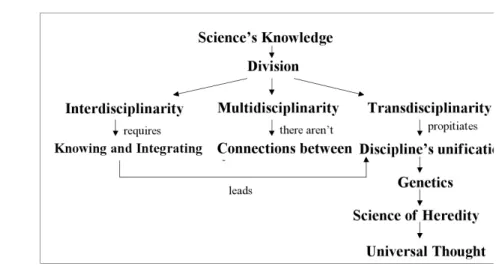
Figure 1. Concept map presented and discussed by group 1.
Beginning: (...) Teacher, I’m going to explain the map because the girls think we made it wrong, instead of
starting with genetics, we started with the Science’s knowledge.
Intervention 1: I said it isn’t wrong, it’ll depend on the explanation, isn’t it teacher? If we explain it right
everybody is going to understand it [...]
Intervention 2: We chose eight key words. The main one was the Science’s knowledge that we put in first place.
The Science can be divided in interdisciplinarity, multidisciplinarity, and transdisciplinarity. In multidisciplinarity there aren’t connections between the disciplines. Connections as we know it: geography, mathematics, science [...] The word ‘multi’ itself already asks: knowing and integrating. But this leads to discipline unification as it is shown here. The unification leads to transdisciplinarity. Here, there should be an arrow pointing there. But we forgot to put it.
Intervention 3: We put here beside it the most important one, transdisciplinarity, because it favors the
unification of the disciplines that can be seen in genetics. The genetics is the science of heredity, I mean, that thing of passing the characteristics from parents to their children, you know? And, today, it’s the most important thing, that’s why, we put that it requires universal thoughts. The scientists from all over the world only think about genetics nowadays [...].
With the presentation of this map, the group tried to explain the constitution of the scientific knowledge through the interdisciplinarity, multidisciplinarity and transdisciplinarity concepts, in the meantime, using a simplistic conceptual hierarchy. It is noticeable a certain difficulty to understanding the text, however, they prioritized the definitions and tried to relate interdisciplinarity to transdisciplinarity, however, without richness in the elaboration of the propositions. During the explanation, it is noticeable the anxiety of the group in demonstrating that the genetics’ knowledge can be considered transdisciplinary because through it occurs the unification of several disciplines, favoring a universal thought. In the explanation of the map, it is noticeable that these definitions were valued in the members’ speeches.
3.2 Workgroup 04
Figure 2. Concept map presented and discussed by group 04.
Beginning: We chose the seven most important words and put them on the map. But the girls think that the
interdisciplinarity is the most important one and it was placed here on the top [...].
Intervention 1: Now I’m going to explain it: The interdisciplinarity it is found in the genetic model. The genetic
model is also composed of experiments and it has practice. Well! Here this arrow indicates not only experiments but also practice; we showed that one leads to the other.
Intervention 2: I think nobody understood it right, I’m going to explain it again: The experiments lead to the
practical utilization of the genetic model.
Intervention 3: The practice and the experiments happen with methodological innovation. This arrow here
indicates that the methodological innovation was used by Mendel when he studied heredity. That thing of crossing (Aa), that we study in genetics.
Intervention 4: [...] The innovation also improves the heredity study. We understand that interdisciplinarity is
important to all of our studies and that we’ve learned a lot if it is this way [...].
Intervention 5: We only talked about interdisciplinarity because we didn’t understand the transdisciplinarity at
the beginning when we read the text. We only understood it when the other groups talked about it. But our map was already done and we didn’t want to change it, otherwise it would get ugly.
The group thought it would be more interesting to use few concepts, that is, only the most important ones, considered as an improvement. They demonstrated insecurity in the construction itself, and this construction was made of a permanent and dynamic movement, being possible to state that there was identification from the group with the developed activity. In the meantime, the relations between the established concepts weren’t evidenced by the absence of propositions between the indicative lines.
The map presents a hierarchy with very definite space levels, represented by the arrangement of the evidenced concepts. It is noticeable that the most comprehensive concept is the interdisciplinarity and the subordinates: genetic models, experiments, practice and methodological innovation that inter-relate demonstrating a progressive differentiation of the concepts, such as, the integrated reconciliation between the subordinated concepts.
Another aspect to be considered is the little comprehensiveness that the group worked on the text limiting the knowledge to only two paragraphs of it. When externalizing the learned meanings, all the members gave their contribution, however, in an extroverted way, that wasn’t observed on the first presentation.
3.3 Workgroup 05
Figure 3. Concept map presented and discussed by group 05.
Beginning: Reading the text, we reached the conclusion that the author wishes to explain the multidisciplinary,
disciplinary and interdisciplinary concepts, and from that on he proposed some questions and examples. The example was genetics, that has a wide necessity of statistics and it looks for an unification. The questions are: the transdisciplinarity and the knowledge where it intends to arrive at.
Intervention 1: [...] that’s why we make the map this way; we center what the author wanted to explain and
above we placed what gave origin to the discussion, which was the segmentation of Science. This contributes to the initiation of several disciplines and brings on losses at the knowledge interaction. From there, a solution was proposed, primarily, the terms pluridisciplinary and interdisciplinary but even so, there was no interaction. Therefore we explain the characteristics of each one of them. Afterward, from the union of the concepts of several disciplines we have the transdisciplinarity, which is very important in the development of Science […}.
Intervention 2: Our map can be read top-down or bottom-up. We believe that doing this way it makes easy to
understand and to explain. The arrows are indicating the same direction in the top part of the map. But, at the bottom part, where we speak about transdisciplinarity, the arrows come and go, because we thought that it was necessary and fits better […].
Intervention 3: [...] Coming back to the explanation, the disciplines have their own concepts that when linked
can transform the transdisciplinarity. And the transdisciplinarity is important to genetics. I understood that genetics is transdisciplinary, because it links knowledge from several disciplines, for example, the statistics. I think that’s it[...].
The group understood that it is not necessary to make the map in rectangle, round diagrams, etc. However, they didn’t make the top organization of the map clearly related to the identification of key concepts. It is noticeable a direct disposition of the proposition that inter-relate giving origin to two concepts represented as synonyms by the equal mathematical expression, included by the group’s decision. The central elements used to the structuralism of the proposition on which the new information interacts are: science, disciplines and knowledge, which can be considered super ordered concepts. The new information reflects on the solution to the explanation of the terms multidisciplinary, disciplinary and interdisciplinary (subordinate concept), converging on the transdisciplinarity, a not very inclusive concept.
On the top and the central parts of the map, the indications reflect the relations of cause and effect, while on the lowest part of the map, it is possible to notice the double-handed relations between genetics, transdisciplinarity, statistics and knowledge. Differently, the transdisciplinarity concepts stand out from the others. On the central plan they used the discipline concept that, according to the group, it is the beginning of the whole discussion. By sharing meanings acquired with their class, the different map organization can be justified in a clear and objective way.
3.4 Workgroup 06
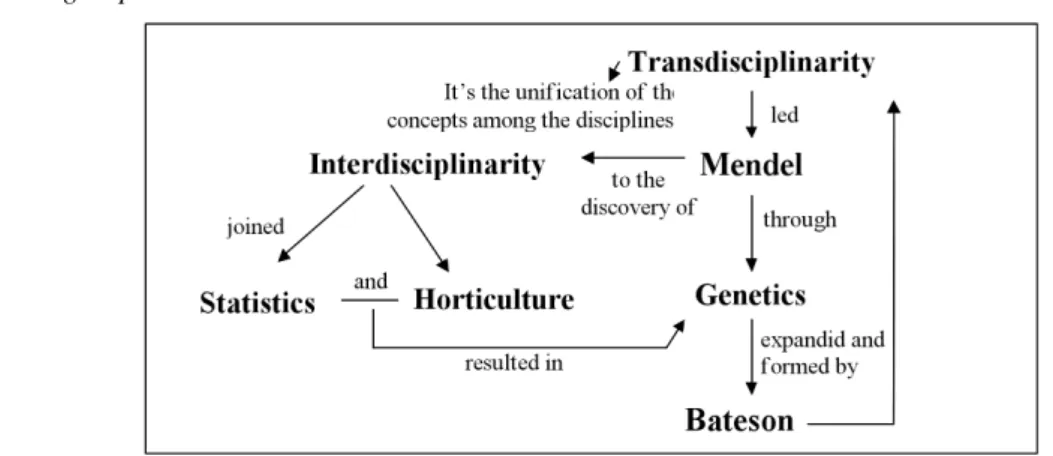
Figure 4. Concept map presented and discussed by group 06.
Beginning: The group thought the text was very nice, because when we study genetics, we think it’s a unique
thing and that we only have to know that peas’ crossing. Everybody knows what I’m talking about because everybody has already studied genetics at high school and at college. That’s why we thought it was nice; we’ve learned that things aren’t exactly like that.
Intervention 1: Well! Explaining the map..., we wrote the key word up here. Among the text terms, it’s at the
end of the text. But we put it first and over the transdisciplinarity that it, as we see it, the unification of concepts between the disciplines and also led Mendel and Bateson to the genetics discovery, it was expanded by Bateson. When Mendel studied the peas he already had the interdisciplinarity concept. He joined statistics and horticulture, which resulted in the study of genetics.
Intervention 2: Look! At the end of the map we placed Bateson, which our group had never heard of. Because
it was him that studied genetics through the transdisciplinarity. That’s why we connected Bateson with this arrow to transdisciplinarity. I think our map was the most correct up to now, wasn’t it teacher?
This group overcame the first difficulty: the elaboration of the map, demonstrating more ability in making diagrams and in the display of the words that resulted in propositions along the arrows. They chose seven key concepts to display and we notice that the chosen concepts are the ones that go through the whole text, suggesting a progressive differentiation, since, the most inclusive concept was displayed in first place and subsequently, it was differentiated in meaningful details. However, it offered few crossed relations, not exploring clearly the subordination and super ordered in all concepts. Nevertheless, making an evaluation, we can say that several implicit meanings were demonstrated and that surely there was learning, since that, new concepts were added to the cognitive structures of the members of this group.
4 Final Considerations
The work with concept maps, in the classroom, requires time and mastery of the elaboration process; therefore, it is up to the teacher to learn about teaching techniques and its usage. And, when teaching, the teacher not only acquires and but also develops several abilities that are shared throughout the educational practice, besides that, the work with maps needs to happen at the same time as the concepts’ learning, considering that, some groups demonstrated difficulties in recognition and distinction of the terms that identify a concept.
The greatest challenge to the Teaching Practice Teacher is helping the graduate to use, in a conscious, productive and rational way their potential thoughts, which is, leading the student to think, as well as, becoming conscious of the learning strategies that turn to building and rebuilding the most important concepts of its teaching subject. This way, the earlier this process begins, the most effective the result will be.
Besides that, the teacher must be aware of the development of attitudes and values, since that, the critics to the group work by the others, must be well grounded in ethics, which is, respecting, being sympathetic, through dialogues, and being fair in judgment. The social relationships among the groups, in this case, needs to be well established and not imposed, because the activity requires informality, being ready to present the paper and
receiving critics. Nevertheless, we can state that this teaching/learning strategy amplifies the capacity of interpretations and rebuilding texts.
The work with concept maps favors the learning process and stimulates the student to put the acquired knowledge into practice in other situations or in other disciplines. As well as, it can be misunderstood as a teacher’s escape not to give classes, when the student doesn’t understand the role of the teacher as helper on the teaching-learning process. Another question to be reconsidered is the fact that the students take, or not, into consideration the elaboration of the concept maps as an educational resource, because there isn’t right or wrong, “behaviorist dichotomy” to be overcome by the teacher and the student during the Teaching Practice.
As for the concept maps’ diagrams, the challenge is demystify the hierarchy question, seeing that, according to the student’s culture, hierarchy is always from the top to the lowest part and not inter-directional that favors thinking of the maps as a flow organization chart, making difficult the crossed relations among the definite concepts in its elaboration.
Another question the break of the paradigm that the map must get rid of beauty, because the beauty is always well done, outlined, divided in diagrams, colored, with well defined dimensions and it is the best and not the one that demonstrates relations with several dimensions, considered intelligent.
It is noticeable that even elaborating several maps, some group was loyal to the initial diagrams as it was a registered mark from the group and with their own characteristics. Another fact to be considered is the constant questioning about the necessity of inserting key words, that lead to the formation of propositions as, for example: ...If the map is self-explanatory why are we supposed to draw these arrows? Couldn’t we just mention
it? Reading the text, on this case, became superficial with the only objective of identifying the most important
concepts.
A deeper analysis of the presented concept maps requires a detailed evaluation from the several stages and elaboration, so that it can be stated with sure that during the intervention occurred progressive differentiation and the integrated reconciliation, processes that permit to identify the occurrence of a meaningful learning.
The continuation of this investigation, with the graduates in the Biological Sciences, depends on feedback sessions so that the groups can reanalyze the concepts placed in the center of the discussion and at the same time, the group (teacher and students) evaluate the instrument used and share new meanings, identifying mistakes and offering resources of mutual help.
5 Acknowledgements
This research was supported by the Biological Sciences course of the UNIFIG – Sao Paulo Metropolitan University Centre (Guarulhos). We would like to thank all the students from the teachers’ formation course in Biological Sciences, who participate in the activities. Finally it must be said that this research is part of a broader doctoral research conducted by the main author at the University of Burgos, under supervision of Prof. Dr. Marco Antônio Moreira, and that this applied research served as a pre-test of the methodologies used in the doctoral research.
References
Azevedo, E. S. A Interdisciplinaridade na Ciência: o modelo da genética. In: Anais da 49ª Reunião Anual da SBPC. v 1. Julho 1997.
Eliott, J. El cambio educativo desde la investigación acción. Madrid: Ediciones Morata, 1993.
Gowin, D. B.; Alvarez, M. C. The Art of Educating with V Diagrams. New York: Cambridge University Press, 2005.
Moreira, M. A. A teoria da aprendizagem significativa e sua implementação em sala de aula. Brasília: Universidade de Brasília, 2006.
______. Un mapa conceptual para investigación-accion. Programa Internacional de Doctorado en Enseñanza de las Ciencias. Burgos: Universidad de Burgos, 2002.
Novak, J. Retorno a clarificar con mapas conceptuales. In: Encuentro Internacional sobre el aprendizaje significativo. Burgos: Servicio de Publicaciones de la Universidad de Burgos, 1997.