hrombocytopenia in sepsis: an important
prognosis factor
Trombocitopenia na sepse: um importante marcador prognóstico
INTRODUCTION
Sepsis is currently a major concern. Within the last decade, several trials and protocols have focused on this condition, aiming to establish better measures for its management and prevention of potential complications. herapeutic measures with considerable positive impacts have been largely emphasized; however, assessing the prognosis of sepsis remains diicult. Assessing the prognosis of diseases and therapies is part of regular medical care.(1) Mastering this challenge is largely related to the art of medical practice
and leads to more objective care of the patient.(1)
Prognostic score variables have been shown to be efective for the assessment of septic patients, especially the sequential assessments provided by the Sequential Organ Failure Assessment (SOFA). Several physiological
Tiago de Oliveira Boechat1, Maria
Fernanda Baylão Bueno da Silveira2,
Wilian Faviere2, Gerson Luiz de
Macedo2
1. Instituto Estadual de Hematologia e Hemoterapia Arthur Siqueira Cavalcante - Hemorio – Rio de Janeiro (RJ), Brazil; Hospital Universitário Sul-Fluminense – Vassouras (RJ), Brazil.
2. Intensive Care Unit of Hospital Universitário Sul-Fluminense - Vassouras (RJ), Brazil.
ABSTRACT
Objective: To demonstrate an association between thrombocytopenia and platelet behavior in predicting mortality in septic patients.
Methods: Patients with criteria for sepsis at admission or at any time during hospitalization were selected; patients hospitalized for less than 24 hours were excluded. hrombocytopenia was deined as a platelet count lower than 150.000/
mm3, and recovery was deined as
returning to levels above 150.000/mm3
after showing thrombocytopenia. We assessed the admission prognosis variables (APACHE II), platelet counts during the hospitalization and outcomes.
Results: Of the 56 patients included, 34 developed thrombocytopenia during sepsis (Group 1) and had a 76.4% mortality rate. he mortality rate among patients not showing thrombocytopenia (Group 2) was 40.9% (RR 1.87; 95% CI 1.12 - 3.12; p =
0.0163). In 44.1% of Group 1 patients, the
platelet counts drops by >50% compared with the admission counts; 93.3% of these patients eventually died (RR 1.48; 95% CI 0.93 - 2.36; p = 0.0528). Among the Group 1 patients showing recovered platelet counts, 53.3% survived; 100% of the patients with unrecovered thrombocytopenia died (RR 2.14; 95% CI 1.35 - 3.39; p = 0.0003). Among the patients with APACHE II scores > 22, the thrombocytopenic patients had an 81.8% mortality rate (p = 0.25), while no deaths occurred among the non-thrombocytopenic patients. For the patients with APACHE II scores ≤ 22, the mortality rate of the thrombocytopenic patients was 74% (p = 0.0741), versus 42.8% for the non-thrombocytopenic patients.
Conclusion: For this sample of septic patients, thrombocytopenia and its progression, deined as a >50% drop or failure to recover platelet count, were shown to be markers of poor prognosis.
Keywords: hrombocytopenia; Sepsis; Prognosis
his study was conducted at Fundação Educacional Severino Sombra, Hospital Universitário Sul-Fluminense - Vassouras (RJ), Brazil.
Conlicts of interest: None.
Submitted on February 8, 2011 Accepted on November 18, 2011
Corresponding author:
Tiago de Oliveira Boechat
Rua Marquês de Abrantes, 64 - apto 1005 - Flamengo
Zip Code: 22230-061 - Rio de Janeiro (RJ), Brazil.
Phone: +55 21 3826-2143 / + 55 21 8754-3461
and blood chemistry parameters are used in daily practice in intensive care units. Simply observing the platelet counts may be very useful for assessing critical patients, especially those with sepsis. However, one single platelet count is not as valuable as sequential platelet counts throughout the course of sepsis.(2)
hrombocytopenia is common in severely ill patients, and several studies have reported its association with poor prognosis.(2-7) Considering the fundamental role of
platelets in hemostasis and as markers of disseminated intravascular coagulation, a signiicant drop in platelet count is alarming in the setting of septic patients, as it is an independent factor predicting death.(2,8-10) he
aim of this study was to show an association between thrombocytopenia and platelet behavior in relation to mortality in septic patients.
METHODS
his was an observational, retrospective cohort study conducted between August 14, 2009 and July 16, 2010 (11 months) in the general intensive care unit (ICU) of a reference university hospital. his hospital has 137 beds, including 8 ICU beds. his study was properly approved by the ethics committee of the Universidade Severino Sombra (USS) - CAEE under the number 0130.0.326.000-10. he requirement to obtain a signed informed consent was waived in consideration of the study’s observational and retrospective nature.
Patients with criteria for sepsis at admission or at any time during hospitalization were selected; patients hospitalized for less than 24 hours were excluded. Sepsis was diagnosed according to the International Sepsis Deinitions Conference(11) criteria. he patients were not
categorized according to sepsis severity (sepsis, severe sepsis and septic shock). We observed the admission prognosis variables (Acute Physiological and Chronic Health Evaluation II - APACHE II), platelet counts during hospitalization and outcomes. hrombocytopenia was deined as a platelet count lower than 150.000/mm3,
and recovery was deined as returning to levels above
150.000/mm3 after showing thrombocytopenia. he
thrombocytopenic patients were categorized according
to their nadir: 101.000 - 149.000/mm3; 51.000 -
100.000/mm3; 21.000 - 50.000/mm3 and < 20.000/
mm3.(6) he last platelet count was the count on the
day of discharge for surviving patients or on the day of death for nonsurviving patients. he platelet counts were determined using an automated counter (Kx21n, Sysmex®).
he data recorded for all patients were based on information retrieved from the medical charts. he data retrieved consisted of the medical chart number, date of admission, date of discharge or death, length of stay in days, name, age, gender, APACHE II score, ICU admission diagnosis, cause of sepsis, daily platelet counts, drops in platelet counts >50% compared with admission counts and recovery of platelet counts. he APACHE II score was completed at least 12 hours after admission, as recommended by Knaus et al.,(12) and the
variables were recorded in an appropriate form. When a given variable was not collected, zero was assigned for that variable. A boundary of 22 was deined(12) for the
APACHE II score to diferentiate patients more or less likely to die during the hospital stay. he most accurate cutof point was validated using an ROC curve.
he R statistical software was used for statistical analysis. he data were described using proportions and contingency tables for categorical variables and medians for continued variables. he chi-squared test or the Fisher’s exact test were used in contingency tables, according to Siegel’s criteria,(13) to assess associations
among the variables. Additionally, proportions and Wilcoxon tests were used to compare medians. he data were expressed as relative risks (RR) and respective 95% conidence intervals (CI). P values < 0.05 were considered statistically signiicant.
RESULTS
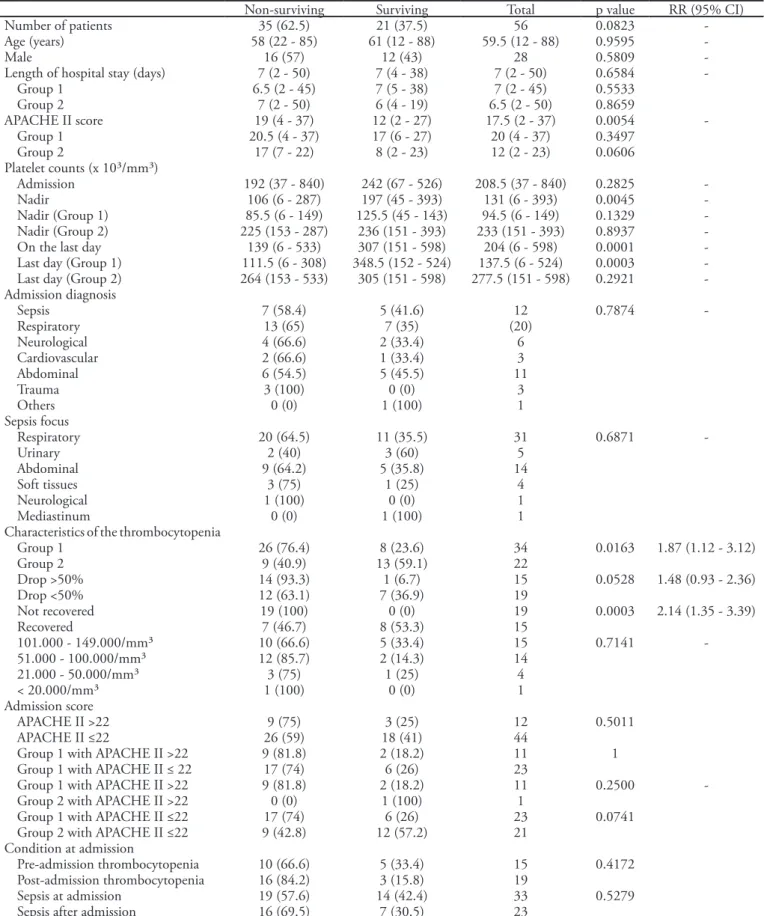
Table 1 - Population characteristics according to mortality
Non-surviving Surviving Total p value RR (95% CI)
Number of patients 35 (62.5) 21 (37.5) 56 0.0823
-Age (years) 58 (22 - 85) 61 (12 - 88) 59.5 (12 - 88) 0.9595
-Male 16 (57) 12 (43) 28 0.5809
-Length of hospital stay (days) 7 (2 - 50) 7 (4 - 38) 7 (2 - 50) 0.6584
-Group 1 6.5 (2 - 45) 7 (5 - 38) 7 (2 - 45) 0.5533
Group 2 7 (2 - 50) 6 (4 - 19) 6.5 (2 - 50) 0.8659
APACHE II score 19 (4 - 37) 12 (2 - 27) 17.5 (2 - 37) 0.0054
-Group 1 20.5 (4 - 37) 17 (6 - 27) 20 (4 - 37) 0.3497
Group 2 17 (7 - 22) 8 (2 - 23) 12 (2 - 23) 0.0606
Platelet counts (x 10³/mm³)
Admission 192 (37 - 840) 242 (67 - 526) 208.5 (37 - 840) 0.2825
-Nadir 106 (6 - 287) 197 (45 - 393) 131 (6 - 393) 0.0045
-Nadir (Group 1) 85.5 (6 - 149) 125.5 (45 - 143) 94.5 (6 - 149) 0.1329
-Nadir (Group 2) 225 (153 - 287) 236 (151 - 393) 233 (151 - 393) 0.8937
-On the last day 139 (6 - 533) 307 (151 - 598) 204 (6 - 598) 0.0001
-Last day (Group 1) 111.5 (6 - 308) 348.5 (152 - 524) 137.5 (6 - 524) 0.0003 -Last day (Group 2) 264 (153 - 533) 305 (151 - 598) 277.5 (151 - 598) 0.2921 -Admission diagnosis
Sepsis 7 (58.4) 5 (41.6) 12 0.7874
-Respiratory 13 (65) 7 (35) (20)
Neurological 4 (66.6) 2 (33.4) 6
Cardiovascular 2 (66.6) 1 (33.4) 3
Abdominal 6 (54.5) 5 (45.5) 11
Trauma 3 (100) 0 (0) 3
Others 0 (0) 1 (100) 1
Sepsis focus
Respiratory 20 (64.5) 11 (35.5) 31 0.6871
-Urinary 2 (40) 3 (60) 5
Abdominal 9 (64.2) 5 (35.8) 14
Soft tissues 3 (75) 1 (25) 4
Neurological 1 (100) 0 (0) 1
Mediastinum 0 (0) 1 (100) 1
Characteristics of the thrombocytopenia
Group 1 26 (76.4) 8 (23.6) 34 0.0163 1.87 (1.12 - 3.12)
Group 2 9 (40.9) 13 (59.1) 22
Drop >50% 14 (93.3) 1 (6.7) 15 0.0528 1.48 (0.93 - 2.36)
Drop <50% 12 (63.1) 7 (36.9) 19
Not recovered 19 (100) 0 (0) 19 0.0003 2.14 (1.35 - 3.39)
Recovered 7 (46.7) 8 (53.3) 15
101.000 - 149.000/mm³ 10 (66.6) 5 (33.4) 15 0.7141
-51.000 - 100.000/mm³ 12 (85.7) 2 (14.3) 14
21.000 - 50.000/mm³ 3 (75) 1 (25) 4
< 20.000/mm³ 1 (100) 0 (0) 1
Admission score
APACHE II >22 9 (75) 3 (25) 12 0.5011
APACHE II ≤22 26 (59) 18 (41) 44
Group 1 with APACHE II >22 9 (81.8) 2 (18.2) 11 1
Group 1 with APACHE II ≤ 22 17 (74) 6 (26) 23
Group 1 with APACHE II >22 9 (81.8) 2 (18.2) 11 0.2500
-Group 2 with APACHE II >22 0 (0) 1 (100) 1
Group 1 with APACHE II ≤22 17 (74) 6 (26) 23 0.0741
Group 2 with APACHE II ≤22 9 (42.8) 12 (57.2) 21
Condition at admission
Pre-admission thrombocytopenia 10 (66.6) 5 (33.4) 15 0.4172
Post-admission thrombocytopenia 16 (84.2) 3 (15.8) 19
Sepsis at admission 19 (57.6) 14 (42.4) 33 0.5279
Sepsis after admission 16 (69.5) 7 (30.5) 23
Figure 2 - Distribution of platelet counts.
Gr. 1 – thrombocytopenic patients; Gr. 2 – non-thrombocytopenic patients.
Figure 1 - Distribution of APACHE II scores by groups.
APACHE II - Acute Physiology and Chronic Health Evaluation.
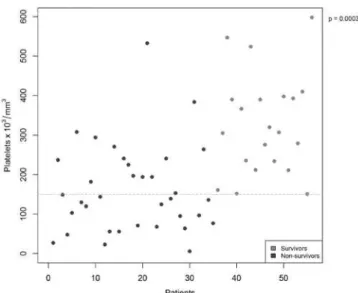
Figure 3 - Dispersion of platelet count nadirs.
76.4% mortality rate, while patients who did not develop thrombocytopenia (Group 2) had a 40.9% mortality rate (RR 1.87; 95% CI 1.12 - 3.12; p = 0.0163). he platelet counts were higher in surviving versus nonsurviving patients, especially when comparing their nadirs (Figures
the thrombocytopenic patients showing recovered platelet counts, 53.3% survived, while 100% of the patients with unrecovered thrombocytopenia died (RR 2.14; 95% CI 1.35 - 3.39; p = 0.0003).
When comparing thrombocytopenic patients with APACHE II scores >22 and ≤22, the mortality rates were not signiicantly diferent: 81.8% and 74% (p = 1), respectively. In addition, 91.6% of the patients with APACHE II scores >22 developed thrombocytopenia, while only 51.2% of the group with APACHE II
Figure 4 - Dispersion of the last platelet counts.
Table 2 - Population characteristics according to platelet counts
Group 1 Group 2 Total p value RR (95% CI)
Number of patients 34 (60.7) 22 (39.3) 56 (100) 0.1416
Age (years) 66.5 (22 - 88) 54.5 (12 - 82) 59.5 (12 - 88) 0.0234
Male 16 (57) 12 (43) 28 (50) 0.7844
Length of hospital stay (days) 7 (2 - 45) 6.5 (2 - 50) 7 (2 - 50) 0.7874
Mortality 26 (74.2) 9 (25.8) 35 (62.5) 0.0163
Sepsis focus
Pneumonia 20 (64.5) 11 (35.5) 31 (55.4) 0.7086
Abdominal 7 (50) 7 (50) 14 (25)
Others 7 (63.6) 4 (36.4) 11 (19.6)
Platelet count (x 10³/mm³) at admission
136 (37 - 840) 266.5 (195 - 526) 208.5 (37 - 840) <0.0001
Platelet count (x 10³/mm³) Nadir
94.5 (6 - 149) 233 (151 - 393) 131 (6 - 393) <0.0001
Admission score
APACHE II 20 (4 - 37) 12 (2 - 23) 17.5 (2 - 37) 0.0014
APACHE II >22 11 (91.6) 1 (8.4) 12 (21.4) 0.0320 1.75 (1.05 - 2.92)
APACHE II ≤22 23 (51.2) 21 (48.8) 44 (78.6)
APACHE II - Acute Physiology and Chronic Health Evaluation;CI - conidence interval; RR - relative risk. Results expressed as a number (%) or median (minimum-maximum).
scores ≤22 developed this condition (RR 1.75; 95% CI 1.05 - 2.92; p = 0.0320) (Table 2). Of the patients with APACHE II scores >22, Group 1 had an 81.8% mortality rate, while no deaths were observed in Group 2 (p = 0.25). Among the patients with APACHE II scores ≤22, the mortality rate of the thrombocytopenic patients was 74% versus 42.8% for the nonthrombocytopenic patients (p = 0.0741) (Table 1).
When the patients were categorized according to thrombocytopenia quartiles, the mortality and platelet counts were inversely proportional; however, these results were not statistically signiicant, likely due to the small number of patients with lower counts (Table 1).
Twenty Group 1 patients had pneumonia as their primary site of infection, and 80% of these patients died, versus 85.7% and 57.1% of those with abdominal or other primary infection sites, respectively (p = 0.5262). A total of 33 patients (58.9%) were admitted with sepsis, and among the thrombocytopenic patients, 15 (44.1%) already had platelet counts lower than 150.000/mm3 at
admission. Table 1 summarizes the data discussed above.
DISCUSSION
Most critically ill patients with a systemic inlammatory response have coagulation disorders,(14,15)
identiied as a marker of poor prognosis in critically ill patients overall and an important predictor of death in severe sepsis.(16)
he cause of thrombocytopenia in critically ill patients may be diicult to determine and is usually multifactorial. Basically, thrombocytopenia stems from reduced platelet production, increased platelet consumption and platelet destruction or sequestration. Platelet consumption is likely to be the main cause in septic patients, as the coagulation system activation is exacerbated, leading to systemic microcirculation deposition of macrothrombi, which consumes large amounts of platelets and coagulation factors.(2,8-10,14,17,18)
In this study, the overall mortality of septic patients was high, above the literature reported rates (35 - 55%).(19-21)
However, the mortality rate in septic shock may be as high as 70%.(20,21) American and European studies report
13.5% to 53.6% mortality rates,(22-25) while Brazilian
studies report rates between 21.8% and 46.4%.(22,26)
It was not possible to assess the progression of platelet counts for the six excluded patients. he mortality rate assessed in this study was related to patients hospitalized for more than 24 hours, but not earlier. he demographics regarding gender, median age and APACHE II scores are compatible with the reported literature.(21) A statistically
signiicant association between thrombocytopenia and death was observed in this study as well as poorer prognosis for patients with >50% drops in platelet counts and, in particular, in patients with sustained thrombocytopenia.
he relative risk of thrombocytopenia was 1.87, which is compatible with that reported in the literature (1.5 - 4.2).(9,10)
he progression of platelet counts was also efective for predicting death. he mortality among patients with >50% drops in platelet counts was signiicantly higher, which is also compatible with the reported literature.(2,9)
In this study, comparative data of patients who recovered normal platelet counts and those who remained thrombocytopenic showed the highest statistical signiicance. All of the thrombocytopenic patients who failed to recover their platelet counts died, and all of the surviving thrombocytopenic patients had recovered their counts. Akca et al.(10) have shown that thrombocytopenia, at any time,
is associated with increased mortality and that sustained thrombocytopenia, i.e., showing no recovery, is associated with an additionally increased risk of death. herefore, assessing one single platelet count is not as valuable for predicting death as the observation of progressively dropping platelet counts in sepsis.(10) Conversely, the normalization and
stabilization of platelet counts relect reduced generation of thrombin, meaning improved prognosis.(18)
Correlating thrombocytopenia and the admission prognosis score, it was evident that the higher a patient’s severity is at admission, independently of a sepsis diagnosis, the higher the incidence of thrombocytopenia is during the hospitalization. In both groups, i.e., patients with APACHE II scores >22 (p = 0.25) and patients with APACHE II scores ≤22 (p = 0.0741), the thrombocytopenic patients had higher mortality rates compared with the nonthrombocytopenic patients. However, this diference was not statistically signiicant. When the APACHE II score (either >22 or ≤22) was used as predictive factor of death among the thrombocytopenic patients, the mortality rates were not signiicantly diferent. Notwithstanding, this inding emphasizes that thrombocytopenia is a determinant of poorer prognosis, independent of the admission illness severity. Vanderschueren et al.(2) have
shown that, more than a cause of death in the ICU, thrombocytopenia is a risk factor relecting a homeostatic disorder, independent of the disease severity or number of organ dysfunctions.
Recent studies have shown increased incidences of thrombocytopenia in patients with pneumonia compared with patients with other infective sites and higher mortality rates.(27,28) However, the sepsis etiology had no
inluence on the development of thrombocytopenia or on the thrombocytopenic patients’ outcomes. hese data failed to show statistical signiicance, likely due to the small numbers of patients when categorized into diferent subgroups. A diagnosis of sepsis or thrombocytopenia at admission had no signiicant inluence on mortality compared with patients who developed sepsis or thrombocytopenia during the hospitalization. herefore, platelet counts should not be used as a single assessment for prognosis at admission.
An attempt to use 25 as the cutof level for the APACHE II scores resulted in too few patients above this level, rendering a statistical comparison unfeasible. herefore, a cutof point of 22 was elected, preserving the clinical relevance of a high APACHE II score. Although the statistical relevance was deined by the ROC curve of a cutof of 13, no signiicant divergence was found between the results for the 13 and 22 cutof points. herefore, the level 22 was chosen for this study, considering its higher clinical relevance.
in severe sepsis or septic shock patients. he severity of sepsis in this sample of patients is unknown, which limits our survival analysis. Using a larger sample size, more signiicant p values would be likely, especially for the comparison of the admission prognosis scores, which would allow the use of the 25 cutof level for the APACHE II score, acknowledged in the literature as the ideal cutof point for diferentiating patients more or less likely to die during the hospitalization. In addition, a prospective trial would be recommended to ensure that the necessary daily data are obtained. Missing data may prevent recognition of the actual nadir or recovery and the last platelet count, therefore afecting the results.
here is growing evidence that platelets play a complex role in sepsis. Interfering with platelet function could be a good way to treat sepsis.(8) When treating
thrombocytopenic septic patients, intensive care physicians should continuously attempt to identify and treat the causes of thrombocytopenia, with the aim of reducing mortality.(2,8) he need for considering a diferential
diagnosis in critically ill thrombocytopenic patients should be stressed, especially a diagnosis of disseminated intravascular coagulation (DIC), always taking into account the severity of thrombocytopenia, systemic signs of inlammation, activated prothrombin time, ibrinogen levels and bleeding events.
Considering the results of this study and that platelet counting is a simple and afordable method, thrombocytopenia should be assessed daily as an important prognostic factor in sepsis.
CONCLUSION
hrombocytopenia was shown to be an indicator of poor prognosis in this sample. In addition, drops of >50% and failure to recover the platelet counts were further determinants of unfavorable outcomes.
ACKNOWLEDGEMENTS
We would like to acknowledge the valuable cooperation of Dr. Emilia Matos do Nascimento for analyses of statistical data.
RESUMO
Objetivo: Demonstrar associação da trombocitopenia e do com-portamento das plaquetas, com a mortalidade em pacientes sépticos.
Métodos: Foram selecionados os pacientes que apresentaram critérios de sepse na admissão ou em qualquer momento no curso da internação e excluídos os que icaram menos de 24h internados. A trombocitopenia foi deinida como contagem plaquetária abaixo de 150.000/mm³ e a recuperação, deinida como retorno da con-tagem para níveis acima de 150.000/mm³ após trombocitopenia. Observaram-se variáveis de prognóstico na admissão (APACHE II), contagem plaquetária durante os dias de internação e desfecho.
Resultados: Dos 56 pacientes, 34 desenvolveram trombocitope-nia no curso da sepse (Grupo 1). A mortalidade nesse grupo foi de 76,4%, e entre os não trombocitopênicos (Grupo 2) de 40,9%, (RR 1,87; IC 95% 1,12 – 3,12; p = 0,0163). Em 44,1% dos pacientes do Grupo 1, houve queda > 50% das plaquetas em relação à admissão, e desses, 93,3% evoluíram para óbito (RR 1,48; IC 95% 0,93 – 2,36;
p = 0,0528). Entre os pacientes do Grupo 1 que apresentaram re-cuperação na contagem plaquetária, 53,3% sobreviveram, e dos que mantiveram trombocitopenia sem recuperação, 100% evoluíram para óbito (RR 2,14; IC 95% 1,35 – 3,39; p = 0,0003). Entre os pa-cientes com APACHE II > 22, os trombocitopênicos apresentaram mortalidade de 81,8% (p = 0,25) contra nenhuma morte entre os não trombocitopênicos, enquanto no grupo com APACHE II ≤ 22, a mortalidade dos trombocitopênicos foi de 74% (p = 0,0741) contra 42,8% dos não trombocitopênicos.
Conclusão: A trombocitopenia, bem como seu comportamento evolutivo com queda >50% ou não recuperação, mostraram-se fa-tores de mau prognóstico no grupo de pacientes sépticos estudado.
Descritores: Trombocitopenia; Sepse; Prognóstico
REFERÊNCIAS
1. Rocco JR, Rocco PRM, Noé RM, David CMN. Escore prognóstico para unidade semi-intensiva pós-operatória. Rev Bras Ter Intensiva. 2003;15(4):153-67.
2. Vanderschueren S, De Weerdt A, Malbrain M,
Vankersschaever D, Frans E, Wilmer A, Bobbaers H. hrombocytopenia and prognosis in intensive care. Crit Care Med. 2000;28(6):1871-6.
3. Sprung CL, Peduzzi PN, Shatney CH, Schein RM, Wilson
MF, Sheagren JN, Hinshaw LB. Impact of encephalopathy on mortality in the sepsis syndrome. he Veterans Administration Systemic Sepsis Cooperative Study Group. Crit Care Med. 1990;18(8):801-6.
4. Baughman RP, Lower EE, Flessa HC, Tollerud DJ.
hrombocytopenia in the intensive care unit. Chest. 1993;104(4):1243-7.
5. Housinger TA, Brinkerhof C, Warden GD. he relationship
6. Vincent JL, Moreno R, Takala J, Willatts S, De Mendonça A, Bruining H, et al. he SOFA (Sepsis-related Organ Failure Assessment) score to describe organ dysfunction/ failure. On behalf of the Working Group on Sepsis-Related Problems of the European Society of Intensive Care Medicine. Intensive Care Med. 1996;22(7):707-10.
7. Stéphan F, Hollande J, Richard O, Chei A,
Maier-Redelsperger M, Flahault A. hrombocytopenia in a surgical ICU. Chest. 1999;115(5):1363-70.
8. Vincent JL, Yagushi A, Pradier O. Platelet function in
sepsis. Crit Care Med. 2002;30(5 Suppl):S313-7.
9. Levi M. he coagulant response in sepsis. Clin Chest Med.
2008;29(4):627-42, viii. Review.
10. Akca S, Haji-Michael P, de Mendonça A, Suter P, Levi M, Vincent JL. Time course of platelet counts in critically ill patients. Crit Care Med. 2002;30(4):753-6.
11. Levy MM, Fink MP, Marshall JC, Abraham E, Angus D, Cook D, Cohen J, Opal SM, Vincent JL, Ramsay G; SCCM/ESICM/ACCP/ATS/SIS. 2001 SCCM/ ESICM/ACCP/ATS/SIS International Sepsis Deinitions Conference. Crit Care Med. 2003;31(4):1250-6.
12. Knaus WA, Draper EA, Wagner DP, Zimmerman JE. APACHE II: a severity of disease classiication system. Crit Care Med. 1985;13(10):818-29.
13. Siegel S. Estatística não-paramétrica para as ciências do comportamento. São Paulo: McGraw-Hill do Brasil; 1975. 14. Levi M, van der Poll T. Inlammation and coagulation.
Crit Care Med. 2010;38(2 Suppl):S26-34.
15. Levi M, Opal SM. Coagulation abnormalities in critically ill patients. Crit Care. 2006;10(4):222.
16. Brun-Buisson C, Doyon F, Carlet J, Dellamonica P, Gouin F, Lepoutre A, et al. Incidence, risk factors, and outcome of severe sepsis and septic shock in adults. A multicenter prospective study in intensive care units. French ICU Group for Severe Sepsis. JAMA. 1995;274(12):968-74. 17. Cinel I, Opal SM. Molecular biology of inlammation and
sepsis: a primer. Crit Care Med. 2009;37(1):291-304. 18. Levi M. Disseminated intravascular coagulation. Crit Care
Med. 2007;35(9):2191-5. Review.
19. Westphal GA, Feijó J, Andrade PS, Trindade L, Suchard C, Monteiro MAG, et al. Estratégia de detecção precoce e redução de mortalidade na sepse grave. Rev Bras Ter Intensiva. 2009;21(2):113-23.
20. Silva E, Pinheiro C, Michels Jr M. Consenso Brasileiro
de Sepse – Epidemiologia. [Internet]. Available from: http://www2.unoeste.br/~aulasmedicina/arquivos/09e10-termo%202007/clinica_medica/sepse.pdf.
21. Zanon F, Caovilla JJ, Michel RS, Cabeda EV, Ceretta DF, Luckemeyer GD, et al. Sepse na unidade de terapia intensiva: etiologias, fatores prognósticos e mortalidade. Rev Bras Ter Intensiva. 2008;20(2):128-34.
22. Engel C, Brunkhorst FM, Bone HG, Brunkhorst R, Gerlach H, Grond S, et al. Epidemiology of sepsis in Germany: results from a national prospective multicenter study. Intensive Care Med. 2007;33(4):606-18.
23. Vincent JL, Sakr Y, Sprung CL, Ranieri VM, Reinhart K, Gerlach H, Moreno R, Carlet J, Le Gall JR, Payen D; Sepsis Occurrence in Acutely Ill Patients Investigators. Sepsis in European intensive care units: results of the SOAP study. Crit Care Med. 2006;34(2):344-53.
24. Bernard GR, Vincent JL, Laterre PF, LaRosa SP, Dhainaut JF, Lopez-Rodriguez A, Steingrub JS, Garber GE, Helterbrand JD, Ely EW, Fisher CJ Jr; Recombinant human protein C Worldwide Evaluation in Severe Sepsis (PROWESS) study group. Eicacy and safety of recombinant human activated protein C for severe sepsis. N Engl J Med. 2001;344(10):699-709.
25. Rivers E, Nguyen B, Havstad S, Ressler J, Muzzin A, Knoblich B, Peterson E, Tomlanovich M; Early Goal-Directed herapy Collaborative Group. Early goal-directed therapy in the treatment of severe sepsis and septic shock. N Engl J Med. 2001;345(19):1368-77.
26. Silva E, Pedro Mde A, Sogayar AC, Mohovic T, Silva CL, Janiszewski M, Cal RG, de Sousa EF, Abe TP, de Andrade J, de Matos JD, Rezende E, Assunção M, Avezum A, Rocha PC, de Matos GF, Bento AM, Corrêa AD, Vieira PC, Knobel E; Brazilian Sepsis Epidemiological Study. Brazilian Sepsis Epidemiological Study (BASES study). Crit Care. 2004;8(4):R251-60.
27. Brogly N, Devos P, Boussekey N, Georges H, Chiche A, Leroy O. Impact of thrombocytopenia on outcome of patients admitted to ICU for severe community-acquired pneumonia. J Infect. 2007;55(2):136-40.