
Engaging sports fans in social media : a case study : SC Braga
109
0
0
Texto
(2) Engaging Sports Fans in Social Media A case study: SC Braga. Dissertação de Mestrado apresentada à Universidade Católica Portuguesa para obtenção do grau de mestre em Comunicação Digital. Mafalda Isabel de Santos Cadilhe. Sob a Orientação do Prof. Doutor Francisco José de Oliveira Restivo..
(3) FICHA DE IDENTIFICAÇÃO. Nome: Mafalda Isabel de Santos Cadilhe. Número de aluno: 227917003. Curso: Comunicação Digital. Nível: 2º Ciclo. Instituição: Faculdade de Filosofia e Ciências Sociais (FCCS) Universidade Católica Portuguesa (UCP) – Centro Regional de Braga. (FFCS): Professor Doutor Francisco José de Oliveira Restivo. iii.
(4) PREFACE My academic path has not been the most conventional one. Having been born in the United States, but to Portuguese parents, I learned the importance of communication from a very early age.. I ended up going to elementary school in Portugal but moved back to the USA to attend middle and high school. Growing up my dad’s job also allowed me to travel to a lot of different countries, get to know different cultures and meet people from all over the world. It may seem totally unrelated to digital communication or journalism (my current employment), but it is not. The need to get the message across during my travels and moving from city to city caused me to have to learn to adapt out of my comfort zone constantly and communication was the key to that adaption process. This sparked up in me the passion for communication.. Born in 1995, one can say that I grew up during the digital “boom”, going from tapes, to DVD’s, to online streams all way before the age of 18. Also witnessing the evolution of the web, going from the web 1.0, to web 2.0, to web 3.0 before reaching adulthood. Once again, I learned to adapt.. Put together a passion for communication and a knowledge over new technologies and what do you get? A master’s degree in Digital Communication.. iv.
(5) DEDICATION This thesis is entirely dedicated to my best friend and partner, José Ventura, who has seen the best and worst versions of myself and yet has never failed to support me in every step of the way.. ACKNOWLEDGEMNTS To walk this path successfully was only possible with the support, energy and strength of several people to whom I thank unconditionally.. My appreciation goes immediately to the Portuguese Catholic University in Braga and all the professors that taught me during the Master’s in Digital Communication, for their wisdom and quality with which they guided me throughout, which allowed me to enjoy a unique experience where I obtained personal, technical and professional abilities.. The sincerest thank you to Sporting Clube de Braga and to the communication department team for the guidance and availability during this time of learning.. I would also like to thank my adviser, professor Francisco José de Oliveira Restivo, for his constant interest in my work, for his critical and timely vision and for all the help he has given me during this final year.. Last but not least, my consideration and gratefulness go out to my family, friends and in particular to my other half, José Ventura, for encouraging me at all times and for all the affection and understanding in the most difficult moments.. Finally, I would like to express my gratitude to all those who, although not explicitly mentioned, have positively contributed to this work.. v.
(6) Summary The importance of the role of communication in society is unquestionably large. It has been evolving over many years. Nowadays, systems of communication include the telephone, the cellphone, radio, television and social media. Social media is an undeniably growing phenomenon. It is so, whether it be for individuals or companies/institutions alike. Social media platforms are those that gather individuals in online mediums where unregulated information can be shared by all with access to said platforms. This dissertation explores both the dangers and the advantages of such media use, especially how important it can be in a context as large as sports, more specifically soccer. A convenience sampling questionnaire corroborated already existing studies on the use of social media by sports fans, that proved that social media is a very efficient tool for maintain fan loyalty and most team sympathizers do actively use the platforms both to gather information and for personal entertainment. Data collected over a course of about ten months (soccer season 2018/2019) from the SC Braga’s Instagram account also came to some interesting conclusions about content with which people engaged the most and the least over the season. Topics that called out matters of compassion for other individuals proved to have a bigger impact on SC Braga’s Instagram followers and matters related to sponsorships/publicity were the least engaged with topics. Two interesting conclusions are the relative independence of fan reactions to sports results, and the fast reactions to posts significant to club success.. Keywords: Social Media; Instagram; Sports; Fan Loyalty; Engagement.. vi.
(7) Resumo A importância do papel da comunicação na sociedade é inquestionavelmente grande. Tem evoluído ao longo de muitos anos. Atualmente, os sistemas de comunicação incluem o telefone, o telemóvel, a rádio, a televisão e as redes sociais. As redes sociais são um fenômeno inegavelmente crescente. Assim o é, tanto para indivíduos como para empresas/instituições. As plataformas sociais são aquelas que reúnem indivíduos em meios on-line, onde informações não regulamentadas podem ser compartilhadas por todos com acesso às referidas plataformas. Esta dissertação explora os perigos e as vantagens do uso das redes sociais, especialmente a importância que ela pode ter num contexto tão grande como o desporto, mais especificamente o futebol. Um questionário de amostragem por conveniência corroborou estudos já existentes sobre o uso das redes sociais por fãs de desporto, que provaram que as redes sociais são uma ferramenta muito eficiente para manter a lealdade dos fãs e a maioria dos simpatizantes de uma equipa usa ativamente as plataformas para obter informações e para entretenimento pessoal. Os dados recolhidos ao longo de um período de cerca de dez meses (temporada de futebol 2018/2019) na conta do Instagram do SC Braga também chegaram a algumas conclusões interessantes sobre o conteúdo com o qual as pessoas se envolveram mais e menos durante a temporada. Os tópicos que destacaram questões de compaixão por outras pessoas provaram ter um impacto maior nos seguidores do SC Braga no Instagram e os assuntos relacionados a patrocínios/publicidade foram os que menos interação tiveram. Duas conclusões interessantes referem-se à independência das reações dos adeptos dos resultados desportivos e a forma como os adeptos reagem a publicações pontuais relativas a factos com elevado potencial de sucesso.. Palavras-chave: Redes Sociais; Instagram; Desporto; Lealdade dos Fãs; Interação.. vii.
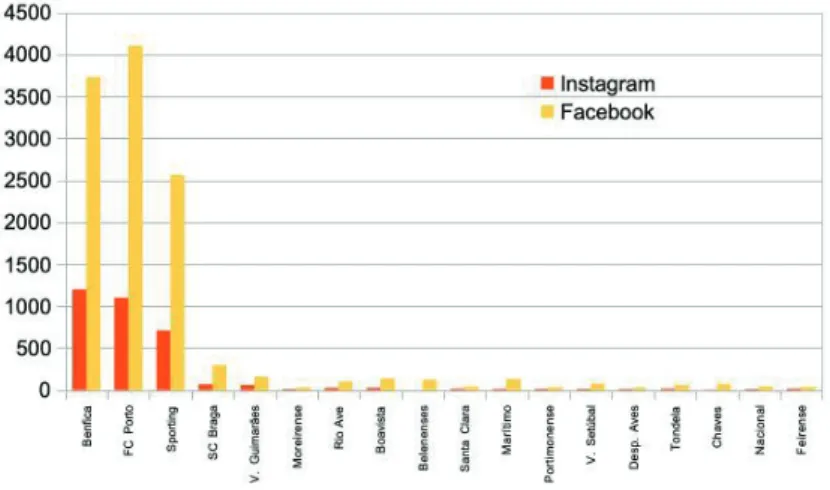
(8) Table of Contents FICHA DE IDENTIFICAÇÃO .......................................................................................... iii PREFACE ............................................................................................................................ iv DEDICATION ...................................................................................................................... v ACKNOWLEDGEMNTS ..................................................................................................... v Summary .............................................................................................................................. vi Resumo ................................................................................................................................ vii Chapter 1 - Introduction....................................................................................................... 1 1.1 Motivation ............................................................................................................................... 2 1.2 Research Question .................................................................................................................. 4 1.3 Expected Results ..................................................................................................................... 4. Chapter 2 - Literature Review .............................................................................................. 6 2.1 Historical Perspective ............................................................................................................. 6 2.2 The Shifts in the Communication Stratosphere ................................................................. 10 2.3 Defining Social Media .......................................................................................................... 13 2.4 The Advent of Social Media Marketing ............................................................................. 15 2.5 Behind Walls: The Dangers of Data Sharing and Storage ............................................... 17 2.6 Technology and Social Media in Sports Communication ................................................. 22 2.7 Transmedia Storytelling as a Communication Strategy ................................................... 23. Chapter 3 – Overviewing Already Conducted Research ................................................... 26 Chapter 4 - Understanding the Platform to Achieve Success ........................................... 30 4.1 Choosing the platform .......................................................................................................... 30 4.2 Instagram in depth ............................................................................................................... 31 4.3 Creating an Identity ............................................................................................................. 33 4.4 Management and Strategy ................................................................................................... 37 4.5 Rules of Engagement ............................................................................................................ 38 4.6 To Earn or to Purchase? ...................................................................................................... 42. Chapter 5 - Methodology .................................................................................................... 44 5.1 Case Study: SC Braga .......................................................................................................... 44 5.2 Qualitative vs Quantitative Techniques ............................................................................. 44 5.3 Research Process................................................................................................................... 45 5.4 Data Collection Methods and Tools .................................................................................... 45 5.5 Ethical Considerations ......................................................................................................... 46. viii.
(9) 5.6 Research Limitations ............................................................................................................ 47. Chapter 6 – Results and Data Analyses ............................................................................. 48 6.1 SC Braga’s Instagram Data Collection (2018/2019) .......................................................... 48 6.2 Questionnaire ........................................................................................................................ 52. Chapter 7 – Conclusion and Final Thoughts .................................................................... 54 REFERENCES ................................................................................................................... 55 ATTACHMENTS ............................................................................................................... 62. ix.
(10) Chapter 1 - Introduction Living beings communicate with each other, whether it be ants searching for food 1, birds in their organized flights2 […], dolphins through sound waves in the ocean 3, or humans in their everyday life. In fact, bio-inspired systems are an established area of research for computer and communication scientists 4, in their quest for deeper understanding of the way we think and solve problems. Communication between humans can be oral, written, visual, digital, etc., and the speed at which it is done has been rapidly increasing due to successive technological advances in speed, availability and costs of communicating. This globalization of communication interferes with all aspects of our lives, the economy, politics, tourism, culture, entertainment, and even sports, which is now a global industry. In this dissertation, we start by taking a look at the fast evolution of communication, from Marconi’s wireless telegraph to social networks, and at the way sports, especially soccer, have been reorganizing their communication strategies. Next, we present a short review of the most recent literature on these issues, with the aim of finding more thorough methodologies for the study and in search of the most accurate answers regarding communication strategies in major soccer teams and also in teams that compete with the team we took as focus of our study. Turning to the specific aim of this dissertation - the case study of Sporting Clube de Braga – we start by taking a look at the way communication is organized during the 2018/2019 season, which are the formal information channels with the fans, what are the main goals of the communication strategy, and what is the expected evolution. In the following chapter, we try to measure some impacts of using social networks by collecting reactions during the whole season and analyzing them. Finally, we advance with our conclusions and prospects for future developments.. 1 2 3 4. https://en.wikipedia.org/wiki/Ant_colony_optimization_algorithms https://en.wikipedia.org/wiki/Swarm_intelligence https://dolphins.org/communication https://en.wikipedia.org/wiki/Bio-inspired_computing. 1.
(11) 1.1 Motivation As it has already been stated, communication is a big part of everyday life. Nowadays, possibly more than newspapers, radio or TV, social media is quite important in that process, both for intake and outtake of information. Current research indicates that the average person will spend more than five years of their lives on social media (Mediakix, 2016), and thus, it has turned social media into an “attractive channel for marketing activities” (Seng & Keat, 2014, p. 66). The sports industry reaches millions of people every day and the need to utilize new tools, such as social media platforms, becomes crucial. This new phenomenon is something that is not completely fully understood, both because it is still recent and because of its rapidly progressing nature. Different countries have different cultural approaches to the use of social media, with some being more advanced than others. Portugal is not illiterate when it comes to the use of social media platforms, but improvement is always an option. Furthermore, the link between the use of social media in sports and its subsequent fan engagement is not a well-researched topic. Teams with smaller financial capacity may not be as queen to invest on their digital communication strategy. The question, however, starts to be whether or not these facts can be worked in reverse. Could it be that rather than having the number of social media followers be defined by the number of team supporters, the teams could rather define their number of supporters by using a strategic approach on their social media profiles? To have a better overview of the current situation in Portugal, the table and graph below show the number of Instagram and Facebook followers of each first league team during season 2018/2019.. 2.
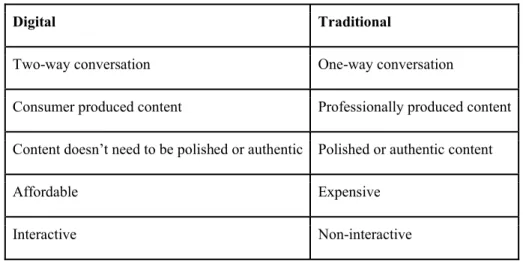
(12) Figure 1 Team's followers table by 2018/2019 placement (Source: Own elaboration). Figure 2 Team's followers graph by 2018/2019 placement (Source: Own elaboration). 3.
(13) This research can be useful for both other researchers of the topic and professionals of sports marketing and communication.. 1.2 Research Question Fundamentally, this research aims at understanding the role of social media platforms, specifically in the context of sports communication. Identifying whether or not joining the communication revolution is an important step to take for sports industries becomes the bottom-line question, followed by which platforms to use and how to measure impact.. 1.3 Expected Results One important objective of our research is to understand the mechanics of social media posting and the way it interferes with club results and achievements. Some posts and subjects are clearly expected to have a larger impact on the audience. Possibly, publications regarding the main team, especially those where positive outcomes are portrayed, will be the most interacted with by fans and sympathizers who follow or visit the Instagram page. The women’s team, because of its novelty and positive results along the season, is also a subject that may have a large percentage of engagement. Furthermore, on the days leading up to big games and on the actual day, the level of engagement is expected to be higher. In this specific case it would be expected to be games against SL Benfica, FC Porto, Sporting CP, qualifying games, final fours and finals. There is also a creativity factor, which the SC Braga communication team has explored very well, this has allowed their content to reach more people, even those who are not team sympathizers, through the curiosity factor and even other media outlets. According to the factors taken into account when calculating engagement rate (likes, comments and followers), it is expected that there will be more likes than comments on posts. Because of that, number of likes will have a bigger impact on the post than the number of comments. However, this does not necessarily mean that the post with most likes will also be the one with the most engagement.. 4.
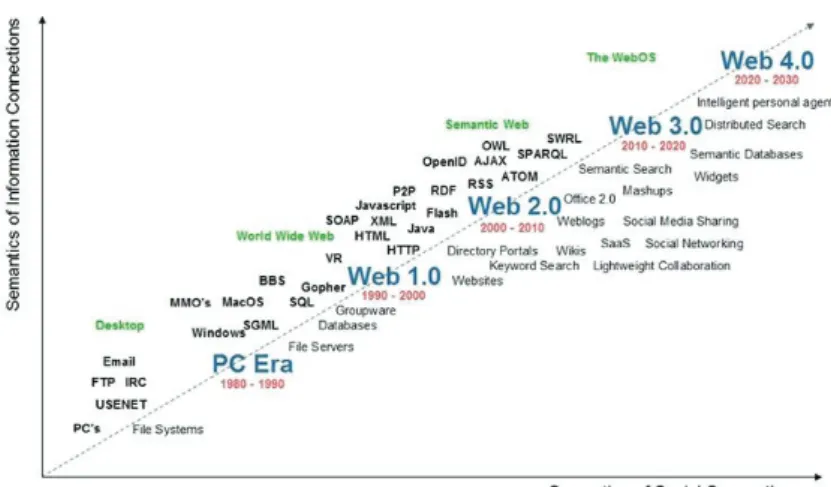
(14) There is also a possibility that the descriptions used in each post can play a role, although something more subjective to analyze. Hashtags are also part of descriptions and can be included in such analyses.. 5.
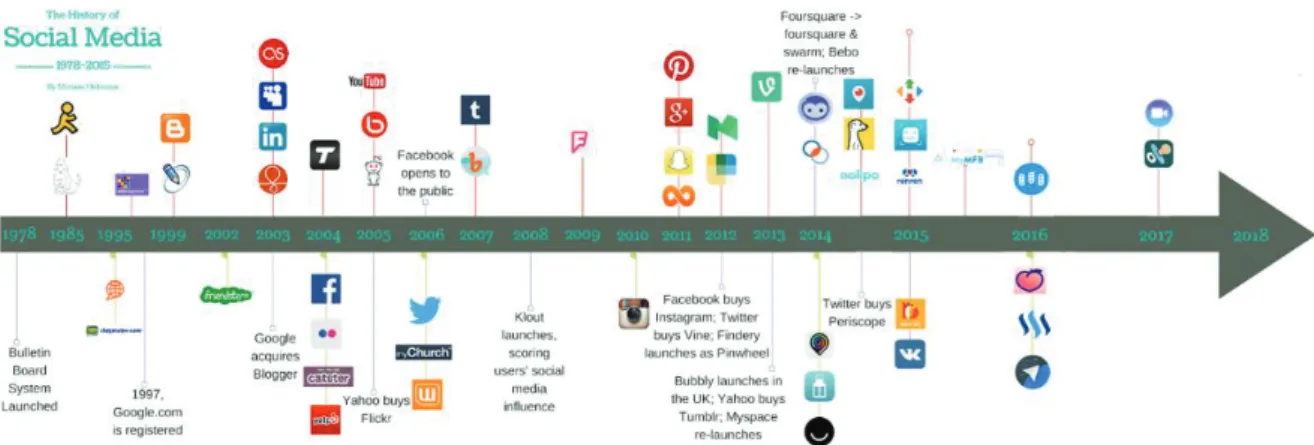
(15) Chapter 2 - Literature Review For the unfolding of this thesis it was crucial to understand and study literature on communication in general and then further that knowledge and go into more depth about digital communication itself. For this, an extensive literature review was done with some background on the history of communication starting from the very beginning up to the present-day digital era.. 2.1 Historical Perspective Traditional media, i.e. television, radio, newspapers and magazines, as well as digital media, can serve as both information distributors and marketing/advertising tools. New media or digital media refers to online platforms such as social networks. Table two compares the characteristics of digital media and traditional media.. Table 1 Digital vs. Traditional media5. Digital. Traditional. Two-way conversation. One-way conversation. Consumer produced content. Professionally produced content. Content doesn’t need to be polished or authentic. Polished or authentic content. Affordable. Expensive. Interactive. Non-interactive. Non-verbal or gestural communication between people remotes to a prehistoric era, where rock art was one of the earliest, non-direct, forms of communication. Rock art was a form of communication through drawings engraved on caves and stone in which it mostly reported hunting achievements.. 5. http://blog.rtown.ca/2015/05/digital_vs_traditional. 6.
(16) In 4000 a.c., arose the first forms of written communication, the hieroglyphs which were a simplified drawing to represent the meaning of something 6. Later, and with the representation of sound through symbols, these communication systems began gaining more complexity. It was then, that the first writing tools began to emerge. The first was the papyrus in 2500 a.c. in which paper sheets were produced from the papyrus plant7. Only centuries later came other tools such as parchments and books and along with them mass media communication and the press. As a means of interpersonal communication, mail is considered the oldest method, having been used by the Egyptians in 2400 a.c., in which messengers traveled long distances in order to send the letters to the recipients. Birds were also trained and used to send the correspondence. In the eighteenth century, the telegraph emerged, which used electromagnetic impulses to send messages, thus creating systems of codes like the Morse code 8. In the nineteenth century, the radio 9 and the telephone10 were invented and became the most used media platform. In A century later, television11 came to revolutionize communication and after that the advancements in technology allowed for the creation of the internet. From the beginning of the 21st century to the current year, the world has been experiencing one of the biggest technological advances in history in terms of its rapid growth. It has been witnessed the rapid evolution of the internet and the telephone, switching to mobile phones with capacity equal to or greater than the first existing computers. The first steps towards the invention of the Internet12 emerged in the 1960s as a "weapon of war". It was during the Cold War that the United States felt the need to create the tool for data exchange which in the event of an attack on the Pentagon, where all the crucial and highly relevant information was stored, such data would not be lost. For this. 6. https://www.significados.com.br/hieroglifo/. 7 https://sites.google.com/site/fctunlcomunicacao/evolucao 8 http://www.clickestudante.com/a-invencao-do-telegrafo.html 9 https://www.todamateria.com.br/historia-do-radio/ 10 https://www.infoescola.com/curiosidades/historia-do-telefone/ 11 https://www.infoescola.com/curiosidades/invencao-da-televisao/ 12 http://www.tipografos.net/internet/internet-evolucao.html. 7.
(17) reason, ARPANET was created, which aimed to interconnect a network of computers located in different research centers for the transmission of governmental information among them. The World Wide Web as we know today began with the pioneering efforts of Tim Berners-Lee at CERN to create protocols to link pages located in different computers worldwide and came into play in the late 90s bringing social networking along with it. The internet has been evolving from web 1.0 to web 4.0, currently. During the web 1.0 era, consumers were limited to the reading of information. There was no back and forth communication between consumers and marketeers. The internet was used to present publicity much like a brochure with static images and without facilitating any kind of interaction. Move forward to the web 2.0, this is where the possibility to create content began to emerge. With anyone being able to not only read but also write. Blogs, social media, and streaming of video started to emerge. The web 3.0 is not so different, it incorporates more abstract concepts such as the communication between humans and computer applications. This is the basis for such computer applications to understand the needs and wants of their human users i.e. deductive reasoning and personalized search.. Figure 3 The History of the Web (Source:13). https://www.researchgate.net/figure/Evolution-of-the-Web-source-Radar-Networks-Nova-Spivack2007_fig1_308400135 13. 8.
(18) When it comes to the web 4.0, it is the future. This is an adaption of the already existing web 3.0 attributes. Artificial intelligence is part of what defines this era which will be in action in the near future. It aims at shortening the gap between humans and machines. Since the beginning of the world wide web, it has been increasingly important for companies to join the new ways of communicating in order to reach their audience more effectively. Those who don’t, risk falling significantly behind. Between the 1990s and early 2000s the first social media platforms, similar to what we know today, started to emerge. My Space can possibly be considered the pioneer platform, having been funded in August of 2003, and was once the most popular social network. Facebook came along in February of 2004 and by October of 2012 reached 1 billion users, becoming the most popular social network to this day. Also, in February of 2004, Flickr was created and just a few years later, in 2007, Tumblr. The first decade of the new millennium witnessed a rapid increase in the creation of new social media platforms. However, success was not equally distributed. Most of the first social media platforms, already mentioned, have failed to continue to thrive, being safe to say that only Facebook has manage to maintain its stardom. In 2010, Instagram was created, and it came to further emphasize the concept of immediate content sharing. Its goal was that the user would be able to snap a photo and post it within seconds having the option to take, edit and post all from within the app. Funded in 2011, Snapchat also brought to the table a new and innovative concept to the social media world. This new phone application allowed for even quicker and more authentic content sharing.. Figure 4 The History of Social Media (Source:14). 14. http://www.booksaresocial.com/history-of-social-media-part-i/. 9.
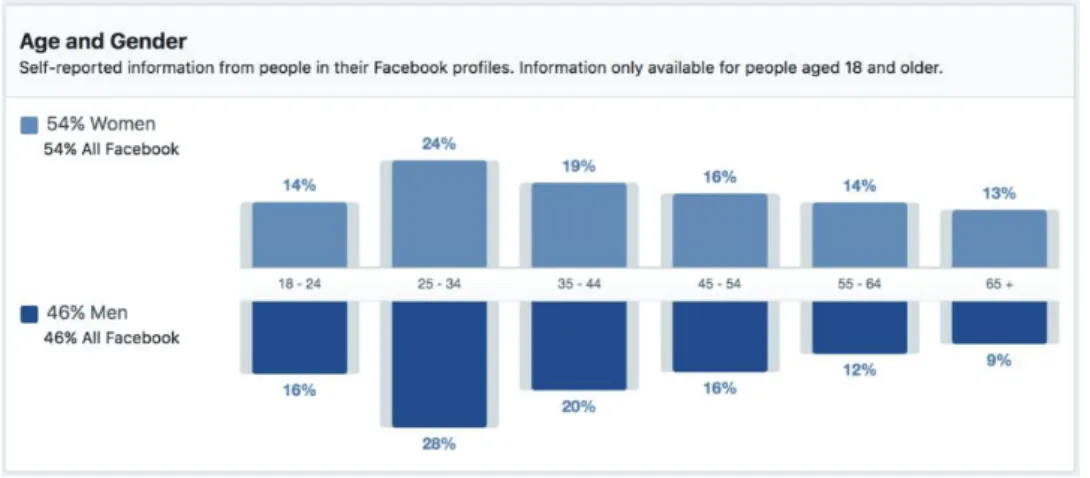
(19) Many other social media platforms exist or have existed. With this widespread popularity, platforms began being used in different ways than what they were possibly intended to at first. They quickly started being used as marketing tools, whether for personal branding or as corporative publicity. As a result, the platforms themselves worked in order to profit from this new advent in the marketing world. Ads, sponsorships and payed posts began being incorporated as options into the platforms. Algorithms were also written to put emphasis on those with the most successful social media presence.. 2.2 The Shifts in the Communication Stratosphere Most of us have grown with and understand analogue media. This type of media is linear, consisting of a schedule made up of programs, interstitial material and commercials. We understand these conventions of time where usually content is broadcast according to the likelihood of certain ages groups being in the audience, maintaining it age appropriate. Television broadcasting is regulated in most countries by either the government, independent statutory regulators, or self-regulatory processes. Such regulation is not only necessary but also simple to achieve. This is the case of platforms such as Netflix, Spotify, YouTube, among many others, which allow for the intake of video and audio content without any kind of regulation and where the spectator has the ability choose how much he/she wants to consume as well as when and where. Although still possible, linear transmissions are losing ground. Pay per view was the only nonlinear transmission possible in analogue media but in digital media that freedom is multiplied. Programs can be watched on computer screens, PSPs and mobile phones. The number of devices where content may be transmitted is growing. Programs that don’t require a linear contextualization are switching their transmissions to digital in order to not be required to comply with a schedule. Where in analogue media timing is an indicator of the likely content, in digital non-linear media that no longer is true. Furthermore, analogue media and broadcasting are not interactive, but the new media is or can be. The consumers can now too become the producers of content, having control over how it is received or used.. 10.
(20) There is a major difference in the way media content is presented from analogue to digital communication. While in analogue media there is little intersection of content, in the digital age it is possible to receive, interact, intersect and cross-over content, allowing the consumer to be the creator of the material and given the ability to have it shared across multiple platforms. The use of social networking sites and of user generated content, such as video captured on a mobile phone, is no longer seen as informal but integrates formal media structures. This type of content, already present in television, can now be instantaneously transmitted through the use of the internet. Such technological growth has been influencing communication, both mass communication and interpersonal communication. We can agree that some communication media such as the telegraph, the fax, the wire phone and even the use of birds to transport mail are already extinct. These extinctions are due mainly to the evolution of technology as it has been being discussed. Since 2009, we have observed a crisis mainly in the press. The British newspaper The Independent, founded in 1986, announced in February 2016 that it would stop providing printed versions and that in turn it would only make publications available online 15. Evgeny Lebedev, the newspaper's owner, justified this decision by saying: "The newspaper industry is changing, and that change is being driven by readers. They're showing us the future of digital. This decision preserves The Independent brand and allows us to continue to invest in the high-quality editorial content that is attracting more and more readers to our online platforms". The strategy of radically shifting from paper to online seems to be gaining popularity. Other strategic approach is to use both types of media, creating an online version equal to the print version or creating less detailed digital content to drive the acquisition of the larger print version. However, in the United States, many newspapers, such as the Seattle Post Intelligencer and the Tucson Citizen have failed to publish, and several chains such as the Tribune Company, the Journal Register Company and the Minneapolis Star Tribune have declared insolvency. In Portugal, the scenario is not so different, with a general crisis of the printed journals, while online journals like Observador or ECO seem to be in great health. However, http://www.independent.co.uk/news/media/press/the-independent-becomes-the-first-national-newspaperto-embrace-a-global-digital-only-future-a6869736.html 15. 11.
(21) with the emergence of fake news, people question the veracity and the quality of online written news. Television is still able to offer some flexibility and seems to have adjusted well to technological advances, namely with the offer of pay per view programs, recording programs and the concept of rewind. YouTube, Netflix and Amazon show the new way ahead. Radio and the press do not seem to have enough alternatives to withstand the pressure of new digital media. The new technology supports the possibility of downloading music and listening to podcasts over the internet where it is not necessary to comply with a predefined schedule. They also allow quick access to informative content such as news without any further effort. In addition to facilitating access to information, digital media allows the consumer to produce and share content, not only allows these actions but also allows them easily and at no cost. The sharing of information is or may also be multiplied in a short space of time spanning a larger audience. As an example, a video of a natural disaster recorded by mobile phone by an individual can be published in a social network, or another online tool and not only inform in a space of time closer to the real one, but can also cover a larger audience in a shorter period of time. In addition to the publication of pre-recorded videos, it is now also possible to publish live broadcasts by non-professionals on platforms such as Facebook, Instagram and others. With this, planning and professional production is no longer necessary, and it is now in the hands of the individual, even without training or the prior intention to do so, to disclose information. The same way, institutions can also transmit their own content/information quicker and in real time, while at the same time consumers can interact with the content being shared. This creates empathy and a sense of closeness with a brand or even a sports team. Costs, ownership of contents, and other economic issues are pushing, namely in Europe, towards new regulations that may limit the way we share contents we do not own. The controversial article 13 is the most recent example of this. The goal of such reform is to make sure that the authors are being rewarded for their content. However, the access to information will be limited, which would not only affect those who are looking for content, but also those who publish it. There are those who defend the importance of such reform,. 12.
(22) arguing that it protects and rewards the authors and those who are against it and believe that their content won’t be able to reach the masses.. 2.3 Defining Social Media Social media is defined by Safko and Brake as “activities, practices and behaviors among communities of people who meet online to share information, knowledge and opinions using conversational media” (2009, p.6) and by Robinson as “the tools used to the communication that have Web 2.0 attributes – that is, they are participatory, collaborative, knowledge sharing and user-empowering tools available on the Web (2007, p.11).” Social media empowers people to have a voice that they didn’t before. There is a significant change on how communication is perceived, especially because it is no longer a one-way stream but rather a two-way venue. This means that we are able to respond to news, commercials and to any other type of information released. Not only are we able to respond but also are able to do so in a matter of seconds. By using social media companies and consumers now are able to have a two-way type of communication. Ads and campaigns are no longer presented to the public as a see only type of transmission, but rather as see and respond type of communication. According to a 2015 study done by the Pew Research Center, there five factors that demographically demonstrate the trends of social media usage: age, gender, socio-economic status, racial and ethnic background and community differences. According to Sprout Social16, 54% of Facebook users are female and 46% are male. The age gap with largest percentage of users is from 25 to 34 years old, both for females and males alike.. 16. https://sproutsocial.com/insights/new-social-media-demographics/. 13.
(23) Figure 5 Facebook user's age and gender (Source: Sprout Social). The country with the largest percentage of all Facebook users is India (14%) followed by the United States in second place (10%). Portugal doesn’t show up in the top 10, but it becomes obvious that it is below the 2% line.. Figure 6 Top countries with Facebook usage (Source: Sprout Social). 14.
(24) Instagram has a younger audience with, according to the Pew Research Center 17, individuals between the ages of 18 to 24 being the most active users on the platform. Of all Instagram users 50.3% are female and 49.7 are male. Social Blade18 has an updated list of the top Instagram accounts with most followers:. 1. Instagram (314,062,810) 2. Cristiano Ronaldo (184,533,625) 3. The Rock (157,865,176) 4. Kim Kardashian West (148,690,112) 5. Beyoncé (133,855,861) 6. Leo Messi (131,406,132) 7. Neymar (126,174,764) 8. National Geographic (122,435,601) 9. Justin Bieber (119,293,648) 10. Kendall Jenner (116,265,752). 2.4 The Advent of Social Media Marketing Social media and its platforms have fundamentally altered consumer behavior and subsequently have had a profound impact on marketing communications (Hutter, Hautz, Dennhardt, & Füller, 2013). The emergence of such means has facilitated communication not only between individuals, but also between companies/brands and their consumers, and a new strategy of marketing, marketing of social media. Weinberg defines social media marketing as “the process that enables individuals to promote their own websites, products or services through online social media and reach a larger community that might not be available through traditional means”. It was predicted that social media advertising would reach nearly $36 billion worldwide in 2017 (eMarketer, 2015), but according to Morrison (2017) the social media advertising expenditures were up approximately 62% after the first quarter of 2017. https://www.pewresearch.org/fact-tank/2019/04/10/share-of-u-s-adults-using-social-media-includingfacebook-is-mostly-unchanged-since-2018/ 18 https://socialblade.com/instagram/top/50/followers 17. 15.
(25) Organizations are being encouraged to take advantage of this phenomenon by committing resources to building their social media presence and interacting with fans (Abeza, O'Reilly, & Reid, 2013) Social media marketing has a very distinct basis from that of traditional marketing which should be taken in particular attention. Social networking marketing relies on a foundation of proximity to the consumer that is not intended to sell as a primary goal, but rather to create relationships with consumers. According to Gordhamer (2009), media marketing is related to relationship marketing, where businesses need to change between trying to sell and building relationships with consumers. Companies also need to maintain a strategy of small short-term campaigns aimed at easily reaching the target audience. Baird and Parasnis (2011) emphasize that organizations can connect more deeply with customers if they determine the type of interaction customers want on a specific social media channel. Heinonen (2011) reported that consumers participated in social media for entertainment,. information, surveillance,. opinions,. inspiration. and. to. create. social connections. Individuals have more than one motivation for using social media. Social media is more useful if it meets user’s needs (Casalo, Flavián, & Guinalíu, 2010) Segmentation and analysis of the target audience should be taken into account when structuring the necessary communication strategy. Create a two-way form of communication where the consumer is not only the recipient of information but can also be the producer, having the opportunity to interact with the brand. Marketeers who use platforms such as Facebook and Instagram, are able to display their content in accordance to the members’ interests. These platforms are able to gather information about a user’s personal likings and provide it to companies. The case that generated most controversy is how, allegedly, in the 2016 presidential election Facebook was used to manipulate users to elect president Donald Trump as the supreme chief of the United States. Facebook harvested information of around 50 million user profiles that was then provided to Cambridge Analytica who used a team of psychologists to create specific content based on the user’s personality. This way they were able to unconsciously influence certain people to vote for this specific candidate.. 16.
(26) Questions relating to morality and lack of privacy arise in certain situations, but in others the correct use of these platforms by companies/brands becomes the biggest and most effective marketing tool.. 2.5 Behind Walls: The Dangers of Data Sharing and Storage With the new and facilitated forms of communication there are issues that arise. One of the dangers are the manipulation of public opinion through the use of social media. This is a healthy marketing strategy for companies and institutions to use if its use does not harm individuals. However inadequate use can be very dangerous. According to Zephoria Digital Marketing, there are 2.13 billion active Facebook users every month, as of April 2018, and five new profiles are created every second. Facebook has recently been under public scrutiny and has generated controversy on how it handles, uses, stores and protects user’s data. One of the most talked about topics of today, that relates to this issue, is the 2016 presidential election, in which it is known that Facebook, unintentionally, was responsible for interfering in the election process, that appointed Donald Trump president of the United States. This was done by providing user data to the company Cambridge Analytica which used an app called This is Your Digital Life to collect user information under the agreement that the information was being used for academic purposes. Not only was the company collecting users’ personal data but was also able to collect friends’ data and analyze relationships between users. Data from 50 million19 Facebook users was collected. Information about friends cannot, under Facebook’s Policy, be used for advertising, but that was not taken into consideration. All data collected was then used to manipulate users, once again, using the social network platform. This was done by, customizing ads for specific users and understanding which ones were more susceptible to a change of mind if given the right “push”. Algorithms are able to segregate people into groups by age, gender, political views, interests, likelihood to vote for a specific candidate, etc. They can even help determine which friends are the influencers and which are more easily influenced. Psychologists, data. 19. https://www.theguardian.com/news/2018/mar/17/cambridge-analytica-facebook-influence-us-election. 17.
(27) scientists, creators such as videographers, photographers and designers worked together in order to come up with the best solutions to influence a specific individual. Allegedly, over one million dollars was spent in order to harvest, analyze and treat the information. Ethical issues, such as the use of personal data to psychologically tamper with individuals’ mind, arise. Recently, Facebook announced that Cambridge Analytica as well as its creators and other people involved, would be banned from the social network following the ongoing investigation. However, the company still claims that there was no such misuse of user’s data and it is nothing more than false accusations. Cambridge Analytica is definitely not the only company that has access to our data. In fact, any app a user accepts to use through Facebook instantly receives permission to access their information and use it in accordance to the Facebook policy (discussed ahead). For example, applications as simple as games, which seem harmless, require permission to access our data in order for the user to enter the game. What is the need behind such requirement? Recently, a new game application on Facebook named “The Test” has been gaining popularity. The game consists of personal questions such as “what would you do in this situation?”, “do you prefer this or that?”, etc. The user responds to those questions which are sent to the playing partner who then has to guess your response. The goal of the game is to know the person you are playing with well enough so that they know what your response would be. This clearly begs the question, is it possible that the responses given by players are in fact being used with ulterior motives and not just as a gaming service? Another detail is probably the quickness and accuracy with which Facebook ads are displayed on a user’s feed. We have all probably noticed that right after searching a specific product on the web the same product pops up almost immediately on the social network’s feed. This, again, begs the question: How are companies being able to obtain such information about user’s so easily? Facebook has a policy 20 stating both the rights reserved to users and those reserved to the Facebook company when it comes to the content and information shared by an individual. Facebook specifically states that when something is shared it is being given a. 20. https://www.facebook.com/policies. 18.
(28) “non-exclusive, transferable, sub-licensable, royalty-free, and worldwide license to host, use, distribute, modify, run, copy, publicly perform or display, translate, and create derivative works of your content.” It is important that this statement is well understood and for that let’s break it down. First of all, the license is non-exclusive, transferable, sublicensable, royalty-free, and valid worldwide. In other words, this means that the user’s content and intellectual property can legally be sold/transferred and licensed to third parties without the need for further permission from the owner. Furthermore, the copyrighted content can be sold or shared with those third-party individuals without the need to compensate the creator or owner of the information. Second of all, both Facebook and third parties (as a consequence of the sub-licensing agreement) hold the right to not only replicate and share the data but also the right to modify it. This, however, is true for both individual users and companies. Although not commonly known, for some time now, Facebook has given users the option to download their personal file. This file contains everything ever shared or transmitted through the platform from the time an account was first created. This even includes previously deleted pictures, comments, likes or messages. It also downloads information about created friendships like the date and time a friend was added, and it even goes further as to provide the same information about unfriending as well. This means that even though information has been deleted from a user’s account, it is still being stored and backed up in the network’s servers. An Austrian man named Max Schrems, requested Facebook detailed information about his data archived by the network and received a CD-ROM with files containing 1222 pages. He claims to only have used the platform occasionally. He said that the company even holds information about pages read by the user and goes even further as to record the time he or she took to read it. The file he received contained information divided into 50 different categories. This also brings up the issue of data storage in the so-called Cloud. Storage in the Cloud is a method in which the physical storage is spread across multiple servers and locations and the physical locations are owned by companies. These host companies have the responsibility to grant quick access to those who request it and have the permission to do so.. 19.
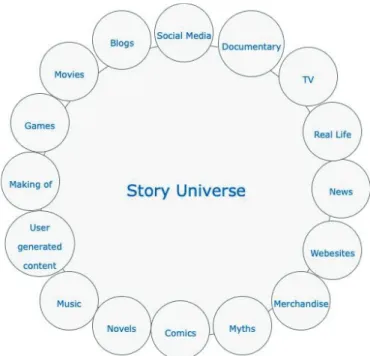
(29) According to Dave Svantesson, internet law specialist at Bond University in Australia, this is an issue because there is always the possibility that the level of data protection varies from country to country. If data is scattered and copies are stored in different countries it may mean that people could possibly not be fully protected under their nation’s own laws. Copies stored in different locations also make it almost impossible for data to ever be fully deleted and therefore it becomes safe to say that any information that ever enters the cloud will never disappear. These copies are mainly created for easy and quick access to data from all over the world. For example, when being used for advertisement purposes. However, copies also become a security hazard. According to Benjamin Caudill, cybersecurity consultant, the more copies available the easier it is for a hack to occur. According to him, many of the times companies are not even aware of where their copies are actually stored. There are obviously many concerns when providing our personal information to a platform such as Facebook. An overview of the main concerns goes as follows: x. When data is stored across various locations it increases the risk of unauthorized access to the data, as well as its replication;. x. Data and information posted will never be fully deleted;. x. Risk of misuse of data and information from third parties;. x. Legal aspects may vary from country to country depending on the location of the information.. It is important that people understand how data is managed and stored. It is important to understand that once information is uploaded that information could become available to anyone and it becomes very difficult for it to ever be fully deleted. Individuals need to be fully conscious that what is uploaded becomes public and possibly available to anyone who desires to have access. There are risks involved in this data storage process, but there are also benefits. Mainly, it allows companies to deliver personalized products and information. Another aspect to be cautious about is the propagation of fake news. Fake news is not a new concept. It goes as far back as the 19th century, according to the Merriam-Webster. 20.
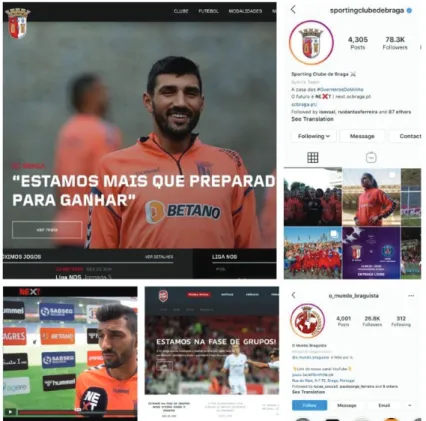
(30) dictionary, and is used to describe untrue information that is published in the form of news 21. The use of fake news has become more popular with the rise in popularity of social media platforms. One of the main reasons, among others, for this being is the ease with which individuals can profit from posts on such platforms, with pay per view ads. News that sound farfetched or shocking, even if fake, are used as bait click by their authors. This can become very dangerous, as the propagation of false information can have serious consequences. Let’s take on very well-known example, that of the “dangers” of vaccination. In 1998 a doctor by the name of Andrew Wakefield published a study that evoked the idea that some vaccines caused autism. However, it was later revealed that there was a conflict of interest and that Wakefield was trying to patent his own vaccines. The case was left behind but it resurfaced in 2016 with the release of a movie by the same doctor based on the same theories 22. With social media propagating these allegations much faster than in 1998, parents and others alike began questioning the safety of vaccines and began refusing to vaccinate their children putting them at risk and increasing the occurrences of deadly diseases that were no longer common. Measles, mumps, meningitis and polio being some of them.. Figure 7 Fake news example (Source:23). https://mundoeducacao.bol.uol.com.br/curiosidades/fake-news.htm https://www.sciencemag.org/news/2017/04/four-vaccine-myths-and-where-they-came 23 https://www.prnewswire.com/news-releases/83-cases-of-autism-associated-with-childhood-vaccine-injurycompensated-in-federal-vaccine-court-121570673.html 21 22. 21.
(31) It becomes important to learn how to distinguish fake news, which is part of internet literacy. Checking the source, questioning the information, checking to see if other outlets are telling the same story and using common knowledge/sense.. 2.6 Technology and Social Media in Sports Communication Sport’s communication is defined as ‘‘a process by which people in sport, in a sport setting, or through a sport endeavor, share symbols as they create meaning through interaction’’ (Pedersen, Miloch, & Laucella, 2007, p. 196). Communication in sports is highly important and is associated to the idea of empathy that it creates between the club and all that involves and the fans. Communication has also created an essential relationship with sport management. The Commission on Sport Management Accreditation (COSMA, 2016) states that sport communication is one of the four primary duties of sport management along with sport operations, sport marketing, and sport finance. Pedersen (2013) says that sport’s communication will continue to have a big influence on the sport itself, both in the general industry, as well as in its individual elements such as people, places, and events. He went as far as stating that ‘‘sport cannot exist without communication’’ (p. 57). Sports teams are no exception and have witnessed the need to adapt their communication strategies to the new digital platforms as well. Teams are increasingly adhering to social media as a communication/ marketing tool. As previously discussed, this happens mainly because of social media’s capacity to deliver real time content and receive real time feedback. Also, the costs associated are little to none when compared to traditional methods of communication. Through the use of social media platforms, sports teams are also able to share information more quickly and therefore generate a quicker response from the team’s supporters. Fans can use the different platforms to discuss issues such as players/transfers and results, search for ticket information (price and availability), watch the game through online streams and even form communities of team supporters. All of this information can be rapidly disclosed by both the team and by others who may wish to do so.. 22.
(32) The sports industry is very broad and composed of different sub-industries: players, teams, apparel, tourism, merchandising, memorabilia, digital games, etc. Nowadays, this industry is highly intertwined with technological advancements and digital platforms. Digital games (for the mobile phone, the PlayStation, the computer, among others), online fan-created content (blogs, websites), social media (whether institutionally created or fan created), streaming, audio and video content, etc. Technological advancements such, virtual reality and augmented reality, Google Glass or the Oculus Rift for instance, which allows an individual to experience exactly what their favorite player is seeing on the field in real time, are also very important tools that can also be paralleled with the social media experience.. 2.7 Transmedia Storytelling as a Communication Strategy Unsurprisingly, there is a growing tendency for the unfolding of narrative works by various media. This is called transmedia. This concept should not be confused with the concept of crossmedia. Transmedia is the art of transmitting different content across different media platforms, where both the content and the platforms are used to complement each other. A transmedia story builds up across different media platforms (Jenkins, 2006). It is the process by which the universe of a narrative work is transported to other works. Crossmedia is a concept that defines an adaptation of a narrative work for different media, such as the adaptation of books to movies, the adaptation of films to plays, etc. Often the concept of transmedia is used for business purposes such as a marketing and audience loyalty strategy. According to Henry Jenkins of the University of Massachusetts Technology Institute, transmedia storytelling, aims at broadening content, through various media supports, with each new medium contributing differently to the story. The universe can be explored through digital games, mobile applications, movies, television, radio, books, comics or blogs. The spreading of the universe can have economic and strategic purposes. To be considered transmedia storytelling the public must be able to understand the world through the consumption of only one transmedia product. However, the various transmedia products can complement each other by providing additional information to consumers.. 23.
(33) Different transmedia products can be used to retain audiences interested in learning more about the universe and should, therefore, have the power to persuade consumers to buying as many products as possible. Jenkins uses the term ‘convergence’ to define the “flow of content across multiple media platforms, the cooperation between multiple media industries, and the migratory behavior of media audiences who will go almost anywhere in search of the kinds of entertainment experiences they want” (p. 2).. Figure 8 Platforms for transmedia universe (Source: Own elaboration). Consumers no longer look forward to buying just a product but rather a story filled with feelings and emotion. This is true for any everyday product, such as a beverage or even a car. “Human memory is story-based” (Schank 1999, p. 12). This is the most important ground rule when it comes to storytelling and to human behavior. Humans store, categorize and retrieve information in the form of stories. Reliving and repeating stories gives humans pleasure and enables learning and experiencing archetypal myths (Holt, 2003). Sports teams, just as other companies or institutions recur to transmedia storytelling, even if unintentionally. In the case of SC Braga, one is able to pinpoint a few: x x x. Official Website; NEXT (online video content platform); Social media (Instagram, Facebook, YouTube and Twitter); 24.
(34) x x x. Fan generated content (pictures, videos, etc, mostly uploaded to social media); Fan created websites; Fan created social media accounts.. Figure 9 SC Braga Transmedia Universe (Source: SC Braga Instagram page). 25.
(35) Chapter 3 – Overviewing Already Conducted Research Daniel Wann, a psychology professor at Murray State University, said “when we look at motivation for following a sport team, group affiliation is one of the top ones. Identifying strongly with a salient local team where other fans are in the environment — that’s a benefit to social-psychological well-being.” He conducted various studies and surveyed a large number of undergraduate sports fans. He concluded that 95% of fans attend games with friends and that sports end up acting as a communication facilitator between people who share the same identity, i.e. between people who share the affection for the same team.24 In correlation to this study Wann states that “part of identifying with the sport team is not just with the team, but with the fan base.” The rise in popularity of social media has deeply impacted the way information is delivered and received by clubs. “Effective media relations and direct communication with customers are essential for all sports organizations. Instagram can be a highly targeted visual advertising channel for sports clubs” (Luis Ochoa Siguencia, Damian Herman, Gilberto Marzano & Piotr Rodak, 2016). According to Haugh and Watkins (2016), the four most used social media platforms in the sports industry are Facebook, Twitter, Instagram and Snapchat. Boehmer (2016) says that the job of social media when used in the context of sports is to support continuous debate. Haugh and Watkins (2016) examined how sports fans use social media to gather information about their favorite teams, finding that Facebook, Snapchat, Instagram, and Twitter were the four most popular platforms used by sports fans. As an overview of the use of Instagram, the study published by Elsevier B.V. studied the Polish first league teams for three years coming to the general conclusion that both teams became more active on the platform and users more interactive as well. As seen below, the average number of likes increased for most teams. For those that didn’t it stayed the same. Only one team had a significant decrease and three other teams were not on Instagram in the previous year.. 24 https://www.psychologicalscience.org/observer/sports-complex-the-science-behind-fanatic-behavior. 26.
(36) Figure 10 Average number of likes in August 2014 vs March 2015. The number of posts also witnessed a significant increase by all teams which suggests a higher interest in using the platform for communication by the clubs.. Figure 11 Number of posts by Poland's first league teams. A recent study conducted by Media Chain 25 explained in the article Navigating the Next Generation Fan: How Football is Social, which analyzed the way young sports fans in. 25 https://www.mediachain.co/wp-content/uploads/2019/01/Navigating-The-Next-Generation-Fan-How-. Football-Is-Social-Media-Chain-Sports-Insights-January-2019.pdf. 27.
(37) the United Kingdom approach their intake of soccer information, claims that the majority of these young fans, 64%, prefer to keep up with sports through social media platforms rather than through traditional media outlets. They defined the following as some of their “key findings”: x. “Instagram is the most popular platform for sports content among younger fans.”. x. “58% of fans check Facebook for sports content at least once a day.”. x. “41% are on Instagram whilst watching the match.”. x. “64% of fans check Instagram for sports content at least once a day.”. x. “28% of fans watch Instagram stories before they scroll down their newsfeed.”. x. “77% of younger fans follow fan channels on YouTube.”. Another article, The growing impact of social media on sports26, showed results concluding that 61% of sports fans follow sports through online platforms and close to 57% of those sports fans believe that social media has an impact on sports itself. As of 2017, according to the same study, the most popular club on Facebook and Twitter was Real Madrid CF, followed by FC Barcelona and Manchester United FC. Player Cristiano Ronaldo was deemed the most popular male sports figure across all social media platforms, with emphasis on Twitter, Instagram and Facebook. The most popular female was Serena Williams on Twitter, Ronda Rousey on Instagram and Maria Sharapova on Facebook. This online article also discusses the direct impact of social media on the return over investment (ROI). As examples they stated the following: x. “The NBA champions Golden State Warriors had an 89 times bigger ROI using Facebook.”. x. “TCU women’s volleyball team had 40% increase in revenue directly from social media.”. 26. http://www.netimperative.com/2017/11/growing-impact-social-media-sports/. 28.
(38) x. “Premier League club’s SM videos generated £88M for their kit supplier brands.”. x. “Revenue per social media follower for soccer clubs is 10€ on average.”. x. “TCU team increased game attendance by 24% within 7 weeks with social media.”. For the purposes of this thesis, measuring the impact of social media is difficult unless one has direct access to the club’s financial information, which was not the case. However, already conducted research consistently shows that it indeed does have a positive financial impact on sports’ institutions. It all seems to circle around the idea that individuals enjoy being connected to sports through social media, both because of its easy access to information and the approximation to other sympathizers it entails. Consequently, and simply put, the more the fans engage the bigger the return. If social media is nowadays the path that generates the most engagement than it is the tool that clubs should ultimately use.. 29.
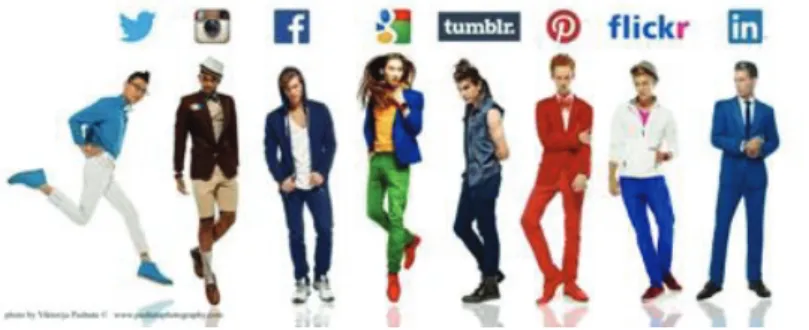
(39) Chapter 4 - Understanding the Platform to Achieve Success Famous fashion photographer Viktorija Pashuta, who has a somehow creative technical vision, once created a famous composition where she personifies social networks.. Figure 12 Different social media platforms for different purposes (Source:27). We include this here to demonstrate the importance of choosing the right network(s) for the right purpose(s). To cause impact, one has to choose the right platform and use the right language.. 4.1 Choosing the platform As stated, the main focus during this research was on the social media platform Instagram. The reason being that it is also the main focus and where most resources are placed upon by the communication team at SC Braga. Although, other networks were not discarded and were also analyzed for some comparison. The reasoning behind the choice is based mostly on the fact that the SC Braga communication team demonstrated that this is their preferred platform to publish content and where they notice the most relevant engagement from fans. In order conduct this study most carefully and accurately during the time span allotted (one soccer season coupled with the school year), it was felt the need to focus on a single platform rather than on all the social media platforms available. Instagram is mainly a mobile platform for photo-sharing that can be used as a marketing, publicity and communication tool. However, it is important to understand the network in order to use it successfully for the intended purpose.. https://thenextweb.com/creativity/2014/12/03/twitter-look-like-man-fashion-photographer-personifiessocial-networks/ 27. 30.
(40) Firstly, it is necessary to establish a goal, an identity and a target audience. Once that is determined, the network should be studied as well as the concept engagement rate. Engagement rate is one of the most important factors taken into account by the application’s algorithm when sorting out which posts will appear first on a user’s feed and the only one that can be controlled by the person posting. An Instagram account can be seen as an online resume that is constantly being updated, whether it is a brand’s resume or a personal resume. Like so, it should be structured and planned with thoroughness and strictness. Creating quality content that becomes captivating to the viewer is the logical way to go but it is not always so simple. It is necessary to make sure that the content is kept within one niche or related niches and that it stays up to date. Posting in a timely manner by analyzing which schedules are best for each account and knowing how often new content should be posted is also part of planning and strategic management. There are tools, such as bots, apps for buying followers, and analytics software that can be used to help or not an account reach the desired goal. It is equally necessary to learn about these tools, how they work and what are the pros and cons of each one. Social media and Instagram, specifically, are important tools in order to reach a high number of people and easily target specific groups, as long as the user knows how to use the network and how to maximize the use to its fullest potential.. 4.2 Instagram in depth Instagram can be used as a marketing, publicity and communication tool, whether it is used by a company, a brand, or for self-promotion. The question lies on how to use it in a successful manner and create engagement. Although there isn’t a plain and simple answer, there are variables and strategies that should be taken into consideration. Instagram, although it has a desktop version available, is a photo-sharing application intended for mobile use. This application allows users to publish and share pictures and videos either publicly or privately with the use of the internet. If the account is set to public the content can be seen by any other Instagram user, on the other hand, if the account is setup to private the content is only seen by the user’s followers which must be previously approved.. 31.
(41) The application was created by two software engineers, Kevin Systrom and Mike Krieger, who released it in October of 2010. Later, in April 2012 Instagram was acquired by Facebook for approximately US$1 billion. Two months in, Instagram had one million registered users, a year later it had registered 10 million users and as of September 2017 800 million28. When first released the application was only compatible with the iPhone operating system and only two years later an Android compatible version was introduced. Instagram offers a wide variety of filters that can be applied to the pictures before being uploaded, as well as other editing tools. The developers also incorporated a system of geotags where users can share their location if they wish to and a system of hashtags that can be added to the description linking the posts with similar content. Users can also connect their Instagram account to their other social media profiles allowing them to automatically share their posts not only to Instagram but also to other networks. At first Instagram only allowed for square photos to be uploaded but as of August 2015 an update started allowing users to upload media in rectangular formats as well without the need for cropping. A feature for exploring content was also added which allows users to search and look at different Instagram accounts, letting them look at the most post popular posts, giving them suggestions on who to follow, recommending which accounts they might like and giving them insight on what is trending at the moment. Video uploading on Instagram had originally a limit of 15 seconds per video but in the meantime that has been extended to 60 seconds. The Instagram Direct feature was also added, which is a messaging tool within the app that incorporates features like photo-sharing and "ghost" photos that disappear once opened. In August 2016, Instagram introduced a concept similar to that of Snapchat called Instagram Stories, which allows users to upload photos, with or without filters/animations, outside of the timeline and have the content disappear 24 hours later. Three months later Instagram also added a live-video broadcast feature.. 28. https://en.wikipedia.org/wiki/Instagram. 32.
(42) Figure 13 Anatomy of an Instagram post (Source:29). This picture shows the anatomy of an Instagram post and the main areas of interest. 4.3 Creating an Identity The first step, before creating an account, is to determine the target audience. Who is the content intended for and whether or not Instagram is the most appropriate platform? Depending on the intended purpose it is necessary to determine age, gender and niche of the desired target audience in order to adapt the posts and speech to it. According to an article on Inc30, 55% people aged of 18 to 29 are on Instagram and of all Instagram users 68% are female. Furthermore, the number of adult users doubled since 2012. With an established target audience and once determined that the platform is indeed appropriate for the intended purpose, the account can be created. When signing up to Instagram it is asked that an username/handle be created, which is also important as it will be the account’s signature in any comment posted, any message sent, any story shared and the signature by which other users can and will recognize the account. The main goal when creating an Instagram handle is to create a memorable one.. 29 http://www.likeavosssm.com/whats-in-an-image-the-anatomy-of-an-instagram-post/ 30. https://www.inc.com/melanie-curtin/21-things-every-brand-should-know-about-instagram.html. 33.
(43) Users will come back to a profile only if doing so doesn’t take too much of their time and effort, which means easily remembering what to search for. To achieve this, a username should be, first and foremost, short, concise and easy to spell. Potential visitors should not be required to find out or guess how the handle they are searching for is spelled. This means that the username has to be made of common, memorable and easy-to-spell words. As an example, a handle such as @dragonballlover should only be used if the account’s goal is to target viewers within a Dragon Ball niche. If it takes too much time and effort most users will give up on the search entirely. Another important aspect is not to use repetitive characters. An account whose username is, for instance, @carlyyyyyyyyyyybeauty is hard for someone to easily know how many ‘y’s’ are in the name, forcing people to count each one and to memorize the number for future searches. Unless otherwise essential to the username, it should be made up of only letters. Characters other than letters are harder to remember and take longer to find, especially on a mobile keyboard. In conclusion, the chosen handle should be as short, concise and easy to spell as possible in order to make it easy to search and remember. It should also represent the identity of the individual, brand, or product. This means that if the account is being created for a brand or product the username should be the same as the name of either one, if the account is personal than elements, other than the name, can be added that state what the individual and the account represent (beauty, cars, sports, fashion, etc). Instagram also has another section entitled name and, in this section, it should be written the person’s real name. This is an alternative way for users to search for an account if they don’t know the username but do know the person’s real name. These two variables are crucial because they are the only ones taken into account by Instagram when conducting a search. Furthermore, the handle picked for the Instagram account should be the same used on all other social media platforms, making it easier for people to find who they are looking for. The next step is writing the description of the account which will appear underneath the handle. This description should be made up of three main points. First of all, an explanation of who the user is and what the account stands for. It needs to describe his/her likes and/or hobbies and the niches in which the account can be placed under (if having more than one these should be related i.e. fashion and beauty, active lifestyle and healthy eating,. 34.
(44) etc). Included in the description should also be contact information, such as a business email, so that anyone interested in doing business or partnering up can reach the person easily. Another important part is to add a call to action. A call to action means including something that will lead to engagement from other users, for example, a link to a website, vlog, YouTube video, etc. Emojis are also a tool that can be used to make the description stand out and can be used to separate different content. These emojis should be related to what is written, for example include a lipstick emoji if beauty is written in the description, a controller if gaming is the account’s niche, a soccer ball if soccer or sports are involved, etc. Line breaks can also be used to keep different subjects separated. Lastly, there has to be created a visual identity as well. The very first aspect seen by a visitor when entering an Instagram account are the first posts that appear on the user’s feed and if the visitor is interested the next natural action is to scroll down to see more content. While taking this action the visitor will, just by the first visual impact, decide whether or not he/she wants to keep visiting the account. This visual impact takes place even before the visitor reads the descriptions, if he is not visually satisfied the chances are that he/she will not even take the time to read them. For the look of an account to make an impact on the viewers it must follow a general pattern and have quality content. The feed should be consistent. The posts should all be within a specific niche or interrelated sets of niches. Furthermore, the posts should all be visually alike and create a foundation theme. In fact, according to Hootsuite, 60% of brands use a consistent filter. Another visually attracting aspect are faces. Photos with faces will generate on average 38% more likes than those without. When promoting a product, it is best to have someone using, holding, and somehow interacting with such product then just posting the product by itself. SC Braga seems to correspond to most of these “requirements”. In the picture below is the information banner of its Instagram page. Both the username and the name on the account is the name of the club with no other characters or letters in between. Simple for any user to find. Also, a simple and appealing description, A casa dos #GverreirosDoMinho. This translates to Home of the #MinhoWarriors, which is allusive to the roman descendance of the region, something the club is known for. Furthermore, the hashtag will appear in the. 35.
(45) hashtag search tool of the platform. Bellow that, a call to action to the club’s own online content platform, NEXT, and to their website.. Figure 14 SC Braga Instagram header (Source: SC Braga Instagram page). In regard to the overall appearance of the page, it follows a very distinctive format that keeps a record of pictures and videos related to events in the club as seen in the picture bellow.. Figure 15 SC Braga Instagram feed (Source: SC Braga Instagram page). 36.
Imagem
+7


Documentos relacionados