(EMDB): From Concept to
Impact and Future Directions
Diogo António de Andrade Branco
Dissertação de Mestrado em Psicologia Clínica e da Saúde Orientação: Prof. Doutor Jorge Leite
Coorientação: Prof. Doutora Sandra Carvalho Outubro, 2018
Diogo António de Andrade Branco
Emotional Movie Database (EMDB): From Concept to Impact and Future Directions
Dissertation presented at University Portucalense Infante D.Henrique for Master Degree in Clinical and Health Psychology, under the guidance of Prof. Doctor Jorge Leite and Prof. Doctor Sandra Carvalho.
Department of Psychology and Education October, 2018
Acknowledgments
First of all I am thankful to Professor Jorge Leite and Professor Sandra Carvalho who allowed me not only make a master thesis that I am proud of but experience what is like to be a researcher, allowing me to grow as a person and a scientist.
I am very grateful to Dr. Alberto Lema and Dr. Augusto Mendes who helped me with every question that I had, their contribution to my thesis was indispensable, also their companionship was essential to make me feel integrated in the group.
Finally, I would like to thank my parents, my sister, my friends (specially my childhood friend Pedro Santos and his parents) and my uncles Alice and Neca who always supported me.
Abstract
The emotional movie database (EMBD) is a database that elicits emotions using 40s clips with no audio as stimuli. Since its creation in 2012 the EMDB has been cited 55 times, in 37 articles, 10 doctoral thesis, 5 conference papers, 1 review, 1 master thesis and 1 book chapter. An objective of this thesis is to evaluate the impact of the EMDB in the scientific community. Moreover, it will also be presented the data from the stage 1 assessment of the new categories that are going to be included in the EMDB, namely social pain, social inclusion, extreme sports and pollution. The results of the pre-validation of the experiment 2 suggests that the clips for the new categories are distributed, as expected, along the affective space.
Index
Introduction ... 8
Emotional movie database ... 8
Rationale for the use of these stimuli in psychophysiology research ... 10
Methodology ... 11
The impact measurement of the EMDB ... 11
Pre-Validation ... 12
Participants ... 12
Materials ... 12
Statistical analysis ... 13
Results ... 14
The impact measurement of the EMDB ... 14
Pre-Validation EMDB experiment 2 ... 29
Extreme Sports. ... 29 Social pain ... 30 Social Inclusion ... 30 Pollution ... 30 Friedman test ... 31 Valence effects. ... 31 Arousal effects... 31 Dominance effects. ... 31 Discussion ... 33 Conclusion ... 38 References ... 39
Figure Index
Figure 1. Type of Publication of EMDB citations………...14
Figure 2. Publication year of EMDB citations……….15
Figure 3. Experimental applicability of EMDB on publications………...15
Figure 4. Type of publication on EMDB citations that applied the database………15
Figure 5. Publications’ domain on EMDB citations that applied database…………...16
Figure 6. Type of experimental application of EMDB citations that applied database….16 Figure 7. Distribution of categories along the affective space………..29
Table Index
Table 1. Articles that used/cited the EMDB………....17
Table 2. Friedman test for each dimension………...32
Introduction Emotional movie database
The Emotional Movie Database (EMDB) is a tool that was created in order to provide researchers with emotion eliciting 40-s film clips, which were assessed using the Self-Assessment Mannequin (SAM) (Carvalho, Leite, Galdo-Álvarez & Gonçalves, 2012) in terms of arousal, valence and dominance.
The thematic categories of the film clips cover the four quadrant affective space, namely low arousal and negative valence (social negative), low arousal and positive valence(social positive), high arousal and negative valence (horror scenes) and high arousal and positive valence (erotic scenes). Additionally a neutral valence and low arousal category was created, mainly by the use of landscapes and object manipulation. Moreover, there was an additional effort of testing these films clips using peripheral nervous system measures like heart-rate (HR) and skin conductance level (SCL). (Carvalho et al, 2012).
Utility of emotional databases
Emotional databases allow us to study emotions in a standardized way, providing stimulus that modulate reality thus producing real emotions in a laboratory setting. The most used instrument to assess emotion is the International Affective Picture System (IAPS) that uses color photographs of a wide range of semantic categories as stimuli (Lang, Bradley, & Cuthbert, 2008). By using databases of
standardized stimuli, the emotion elicitation effects can be easily replicated, allowing a more easy and reliable comparison between studies (Horvat, 2017).
However the IAPS database has its own limitations, such as the habituation related reactions of presenting the same picture to the same subject. (Dan-Glauser,
Scherer, 2011; Marchewka, Żurawski, Jednoróg, & Grabowska, 2013) and as the exposure time increases occurs an attenuation of the emotional impact (Koukounas & Over, 2000). The EMDB tries to surpass these limitations, using film clips as stimuli. Film clips have the advantage of providing an optimal artificial model of reality, without the ethical and practical problems of real-life techniques (Rottenberg, Ray, & Gross, 2007; Schaefer, Nils, Sanchez, & Philippot, 2010). Consequently the catalogue of affective multimedia databases that use video as stimuli is growing: HUMAINE database (Douglas-Cowie, Cowie, Sneddon, Cox, Lowry, McRorie, Martin, Devillers, Abrilian, Batliner, Amir, & Karpouzis, 2007), Filmstim database (Schaefer et al, 2010), Database for emotion analysis (DEAP) (Koelstra, Muhl, Soleymani, Jong-Seok Lee, Yazdani, Ebrahimi, Pun, Nijholt & Patras, 2012), MAHNOB-HCI database (Soleymani, Lichtenauer, Pun, & Pantic, 2012), Violent Scenes Database (Demarty, Penet, Gravier,
& Soleymani, 2012) and LIRIS-ACCEDE (Jou, Bhattacharya, & Chang, 2014). Furthermore, film clips seem to be more efficient in sustaining affective
processing for longer periods of time at both subjective a physiological levels (Schaefer
et al, 2010) and seem to be the most potent inducers of both positive and negative mood
(Westermann, Spies, Stahl, & Hesse, 1996) compared to images, words or sounds. The importance of multimedia affective databases to the emotion study is expressed by the number of databases available with relevance at the moment: 6 video databases and 7 pictures databases.1
1 Video databases: EMDB database (Carvalho et al, 2011) HUMAINE database (Douglas-Cowie, Cowie, Sneddon, Cox, Lowry, McRorie, Martin, Devillers, Abrilian, Batliner, Amir, & Karpouzis, 2007), Filmstim database (Schaefer et al, 2010), DEAP database (Koelstra, Muhl, Soleymani, Jong-Seok Lee, Yazdani, Ebrahimi, Pun, Nijholt & Patras, 2012), MAHNOB-HCI database (Soleymani, Lichtenauer, Pun, & Pantic, 2012), Violent Scenes Database (Demarty, Penet, Gravier, & Soleymani, 2012) and LIRIS-ACCEDE (Jou, Bhattacharya, & Chang, 2014).
Picture databases: NAPS BE (Riegel, Żurawski, Wierzba, Moslehi, Klocek, Horvat, & Marchewka, 2016), NAPS ERO (Wierzba, Riegel, Pucz, Leśniewska, Dragan, Gola, & Marchewka, 2015), as well as DIsgust-RelaTed-Images(DIRTI) database(Haberkamp, Glombiewski, Schmidt, & Barke, 2017), Set of Fear Inducing Pictures (SFIP) (Michałowski, Droździel, Matuszewski, Koziejowski, Jednoróg, & Marchewka, 2017), MAPS (Goodman, Katz & Dretsch, 2016), Besançon Affective Picture Set-Adolescents (BAPS-Ado) (Szymanska, Monnin, Noiret, Tio, Galdon, Laurent, & Vulliez-Coady, 2015). The International Affective Picture System (IAPS) (Lang, Bradley & Cuthbert, 2008).
Rationale for the use of these stimuli in psychophysiology research
Our instinctive reactions like the fight or flight response are regulated by two motivational system: appetitive and defensive. The appetitive system is activated during survival of the species, pleasure and nurturance situations. The defensive system is activated during fight or flight situations. The activation of these systems is coupled with several psychobiological reactions that act directly to counter threats and escape punishment, or achieve rewards fulfillment (Lang & Bradley, 2010). Psychobiological responses techniques, like electromyogram (EMG), electroencephalography (EEG), functional magnetic resonance imaging (fMRI) and positron emission tomography (PET), are used to assess emotional processing reactions (Mauss & Robinson, 2009). However the most used Autonomic Nervous System (ANS) activation indices are based on electrodermal (measured primarily with Skin Conductance Level (SCL)) or
cardiovascular (measured primarily with Heart-Rate (HR)) responses. (Mauss &
Robinson, 2009). Variation in SCL and HR while seeing the clips has been reported in a wide array of studies (Campbell-Sills, Barlow, Brown, & Hofmann, 2006; Critchley, 2002; Hamm & Vaitl, 1996; Bradley, Codispoti, Cuthbert & Lang, 2001; Palomba, Sarlo, Angrilli, Mini & Stegagno, 2000; Steptoe & Wardle, 1988).
For instance, in the original EMDB study (Carvalho et al, 2012) horror and erotic clips were shown to significantly increase SCL when compared to the remaining categories. Similarly, erotic scenes and horror scenes significantly decreased HR in comparison with the other social positive, social negative and object manipulation scenes. This has been interpreted as the EMDB successfully activate the primary motive systems, producing action preparation reactions demonstrated by SCL and HR
heart rate decrease is an orienting reflex with the purpose of analyze the external environment. (Bradley, 2009).
Most of the available emotional laden stimuli are made available free to the scientific community, but one aspect that is lacking is to understand the impact of the database in the field, namely how was it used, by whom, and with which purpose. Therefore, the objective of this work is to analyze all the articles that cited the EMDB and measure its impact in research. Moreover, we will also present the data from the stage 1 assessment of the new categories that are going to be included in the EMDB, namely social discrimination, social inclusion, extreme sports and pollution.
Methodology The impact measurement of the EMDB
This review was performed consulting several databases that allow citation tracking, such as Google Scholar (https://scholar.google.com), Web of Science (https://apps.webofknowledge.com) and Scopus (https://www.scopus.com), until
December XXth, 2017. Google Scholar was the main consulted database, given that has been pointed as the database that retrieve more citations (Kulkarni, Aziz, Shams, & Busse, 2009). Furthermore, Google scholar allows a broader search in comparison with other database, because includes books, conference papers and non-US journals
(Harzing & van der Wal, 2008).
The citation analysis resulted in 55 publications that cited Emotional Movie Database (Carvalho et al., 2012). These data was analyzed only using descriptive statistics, 18.18% of these publications applied the EMBD (7 articles; 2 doctoral thesis; 1 conference paper). Furthermore a brief questionnaire with 5 questions was sent to the authors who applied the EMDB (“How useful was the EMDB in your study?”, “For
what purpose was the EMDB used (Objective of the study)?”, “Do you have any
suggestion that could help us improve the EMDB?”, “Would you use it again?”, and “In what domain did you use EMDB?”). With the feedback of these authors and the
analysis of the articles that cited the original EMDB study (Carvalho et al, 2012) an impact evaluation of the EMDB was made.
Pre-Validation Participants
Participants were recruited from Minho University; 25 volunteers (17 males and 8 females; mean age = 26.68; SD = 6.49) participated. Of these participants 15 were students and 10 were researchers.
Materials
Participants viewed 59 40-s film clips with a resolution of 720 x 576. The film clips were presented in 2 random blocks of 29 film clips and another with 30 film clips, in a pseudorandom trial order. The participants performed the task in a room under similar light conditions. The videos were displayed using a projector and a projector screen. The procedure of self-report occurred in one session.
At the start of the procedure, participants were told that they would watch several emotion-inducing film clips performed by professional actors. They were also informed that some film clips might portray potentially shocking scenes and were reminded that they were free to withdraw from the experiment at any time. After providing written informed consent, participants were given instructions for the rating scale used in the procedure. The scale was a paper and pencil version of the self-assessment manikin (SAM) (Lang 1980); ratings were made on a 9-point Likert scale
for ratings of valence, arousal and dominance. For each film clip participants were also required to answer 3 questions: (1) ‘‘Have you watched this movie before?’’; (2) ‘‘Have you closed your eyes or look away during the clip presentation?’’ and (3) “Have you ever experience a similar experience to the one depicted in the movie?” A list of 17 emotions was presented so that the participants could choose up to 3, namely the ones that described better what they felt while watching the movie.
Participants were told to report their emotional reactions to each film clip by completing the questionnaire immediately after watching each excerpt. A practice film clip was used to demonstrate how the rating should be performed. Instructions for the SAM procedure were adapted from Lang et al. (2008). Immediately after the practice clip, the film clips were presented in random blocks, in a pseudorandom trial order to ensure that identical categories were not presented consecutively. Each trial consisted of 40 s of viewing the film clip, followed by 20 s for the SAM ratings. Before presenting the next clip, a blue screen with the words ‘‘Get ready for the new trial’’ appeared on the screen for 1 s. Each 60-s trial was presented in a projector screen, controlled by a computer connected to a video projector.
Statistical analysis
The grand mean for each thematic category was then calculated. The data was analyzed using the non-parametric Friedman test for valence, arousal and dominance. Post hoc analysis with Wilcoxon were performed when the Friedman test yield significant results. The level of statistical significance was set at p<.05. Data analyses were performed using SPSS 24.0.1 (IBM, US).
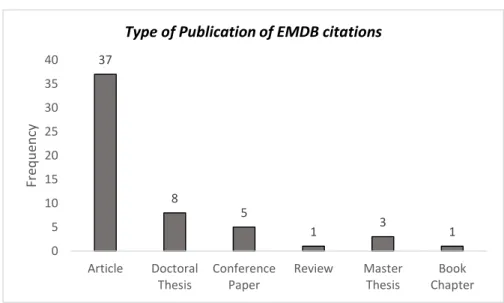
37 8 5 1 3 1 0 5 10 15 20 25 30 35 40 Article Doctoral Thesis Conference Paper Review Master Thesis Book Chapter Fre q u en cy
Type of Publication of EMDB citations
Figure 1. Type of Publication of EMDB citations.
Results The impact measurement of the EMDB
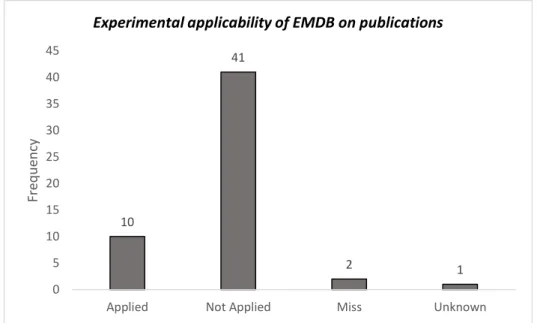
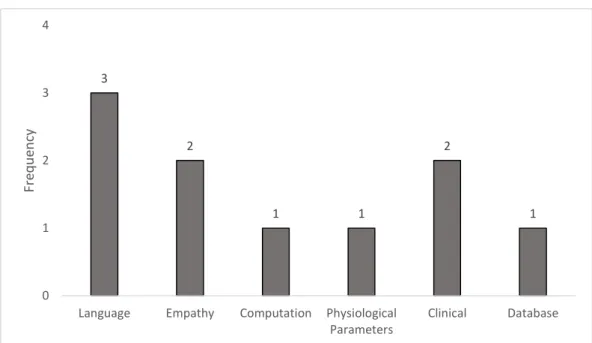
Between 2013 and 2017 the EMDB has been cited 55 times (figure 2), in 37 articles, 8 doctoral thesis, 5 conference papers, 1 review, 3 master thesis and 1 book chapter (figure 1). Only 18.18% of these publications applied the EMDB (7 articles; 2 doctoral thesis; 1 conference paper) (figure 3; figure 4). The domains of these
publications are: language (Fox , 2017; Miller, 2017; Miller, Fox, Moser, & Godfroid, 2017), empathy (Kuypers, 2017; Rêgo, Lapenta, Marques, Costa, Leite, Carvalho, Gonçalves, Brunoni, Fregni, & Boggio, 2017), computation (Gupta, Soundararajan, & Zachariah, 2017), physiological parameters (Iwasaki, Reynolds, & Ishikawa, 2014), Clinical (Lytle, 2014; Booth, Mackintosh, & Sharma, 2016) and creating databases (Happy, Patnaik, Routray, & Guha, 2017) (figure 5; figure 6). All of these studies utilized the EMDB to elicit emotional states.
10 41 2 1 0 5 10 15 20 25 30 35 40 45
Applied Not Applied Miss Unknown
Fre
q
u
en
cy
Experimental applicability of EMDB on publications
Figure 3. Experimental applicability of EMDB on publications.
1 9 9 9 26 0 5 10 15 20 25 30 2013 2014 2015 2016 2017 Fre q u en cy
Publication year of EMDB citations
Figure 2. Publication year of EMDB citations.
7 2 1 0 1 2 3 4 5 6 7 8
Article Doctoral Thesis Conference Paper
Fre
q
u
en
cy
Type of Publication on EMDB citations that applied database
8 1 1 Emotional Elicitation Video Analysis Filler Task
Figure 6. Type of experimental application of EMDB citations that applied database.
3 2 1 1 2 1 0 1 2 3 4
Language Empathy Computation Physiological
Parameters Clinical Database Fre q u en cy
Table 1. Articles that used/cited the EMDB
Type Title Applicability Description
Article Evaluative and Psychophysiological responses to short film clips of different emotional content.
Citation The study presents self-report and psychophysiological data obtained in response to short film clips representing scenes related to different emotions. This was done in order to obtain evidence on the structure of positive and negative affective states following a combined dimensional/categorical approach to emotion and based on responses to stimuli that are more realistic than the static pictures usually employed in the study of emotion.
Master Thesis
Physiological tremor and peripheral hemodynamics assessment of deception-related emotional reactions.
Unknown Studying the possibility of assessing the psycho-physiological characteristics of an emotional state of a person according to the parameters of peripheral hemodynamics and physiological hand tremor in a model psychophysiological experiment aimed at identifying hidden information. (translated from a Russian abstract)
Book Chapter
How emotional arousal enhances episodic memory.
Citation This chapter reviews some key aspects of the relationship between emotion and episodic memory, focusing on the cognitive and neural systems that underlie the relationship. We differentiate between effects of emotion on early and late long-term memory, review evidence for the selectivity of these effects, and discuss existing models that best account for them. We reflect on and evaluate current practices in emotional memory research.
Doctoral thesis
Automatic prediction of emotions induced by movies.
Citation Automatic prediction of emotions induced by movies based on the intrinsic properties of the audiovisual signal. So (1) creation of LIRIS-ACCEDE, (2) affective ratings, (3) physiological measurements.
Article A protocol for cross-validating large crowdsourced data: the case of the LIRIS-ACCEDE affective video dataset.
Citation Annotation protocol which enables the scoring of induced affective feelings for cross-validating the annotations of the LIRIS-ACCEDE dataset and identify a potential bias.
Article Affective video content analysis: A multidisciplinary insight.
Citation A multidisciplinary state-of-the-art for affective movie content analysis is given, in order to promote and encourage exchanges between researchers from a very wide range of fields. In contrast to other state-of-the-art papers on affective video content analysis, this work confronts the ideas and models of psychology, sociology, neuroscience, and computer science.
Article LIRIS-ACCEDE: A video database for affective content analysis.
Citation Proposal of a large video database (9800 good quality video), publicly available at
http://liris-accede.ec-lyon.fr
Article Virtual agent-mediated appraisal training: a single case series among Dutch firefighters.
Citation This study investigated the effects of repeated sessions of a digital reappraisal training among seven firefighters. The training consisted of four sessions supported by a virtual agent, conducted at home or at work, over a two-week period in a single case series
Article The effect of induced sadness and moderate depression on attention networks.
Citation This study investigates how sadness and minor/moderate depression influences the three functions of attention: alerting, orienting, and executive control using the Attention Network Test.
Article The Brussels Mood Inductive Audio Stories (MIAS) database.
Citation Five audio stories with sad, joyful, frightening, erotic, or neutral content were
presented to 60 participants (33 women, 27 men) in a within-subjects design, each for about 10 min. Participants were asked (1) to report their moods before and after listening to each story, (2) to assess the emotional content of the excerpts on various emotional scales, and (3) to rate their level of projection into the stories.
Article Working memory regulates trait anxiety-related threat processing biases.
Filler task participants asked to watch movie carefully because they would be asked about it later (they were not)
High trait anxious individuals tend to show biased processing of threat. Correlational evidence suggests that executive control could be used to regulate such threat-processing. On this basis, we hypothesized that trait anxiety-related cognitive biases regarding threat should be exaggerated when executive control is experimentally impaired by loading working memory.
Doctoral thesis
Challenging emotional memory. Citation This thesis addresses various topics related to the malleable nature of emotional memory in humans. We used different experimental paradigms to test the conditions under which memory can be altered. In the first two empirical chapters (Chapter 2 and 3) we used classical fear conditioning to study the malleable nature of fear memory and its reliance on noradrenergic signaling. In Chapter 4 we examined the differences between these physiological response systems (i.e., startle reflex and SCR) more thoroughly and focused on the question whether both response systems reflect a defensive, fearful state. In Chapter 5 we examined whether stress would differentially affect reconsolidation of emotional versus neutral declarative memory. In Chapter 6 we tested whether post-retrieval stress would affect the contextualization of emotional memory.
Article Psychophysiological response patterns to affective film stimuli.
Citation Test acoustic startle reflex (ASR), skin conductance response (SCR) and heart rate (HR) while participants viewed film clips with a positive, negative and neutral content.
Article Mindfulness dampens cardiac responses to motion scenes of violence.
Citation This study aims to expand of the current knowledge of the mechanisms of
mindfulness by relating the latter to cardiovascular processes. The paper describes two studies which investigated the relationship of trait mindfulness to self-report measures of emotions elicited during a violent video clip and cardiovascular responses to the clip.
Article Physiological responses to affective tele-touch during Induced emotional stimuli.
Citation Tele-touch device that transfer affective touch to another person through the Internet (vibration, warmth, and tickle), monitoring HR and GSR, evaluating the
physiological effect of tele-touch while participants watched na emotional movie. Article The influence of affective state on
exogenous attention to emotional distractors: behavioral and electrophysiological correlates.
Citation The interplay between exogenous attention to emotional distractors and the baseline affective state has not been well established yet. The present study aimed to explore this issue through behavioral measures and event-related potentials (ERPs).
Participants (N = 30) completed a digit categorization task depicted over negative, positive or neutral distractor background pictures, while they experienced negative, positive and neutral affective states elicited by movie scenes.
Article Enhancing emotional experiences to dance through music: the role of valence and arousal in the cross-modal bias.
Citation Test participant's subjective emotion ratings and theur Galvanic Skin Response (GSR) in a cross-modal affect perception paradigm employing videos of ballet dance movements and instrumental classical music as the stimuli.
Article Characterizing donation behavior from psychophysiological indices of narrative experience.
Citation Test if a narrative could persuade participants to donate to a charity, a prosocial behavioral decision, psychophysiological metrics can delineate the differences between donation/non-donation behaviors, and donation behavior can be correlated with measures of psychophysiology, self-reported reactions to the narrative, and intrinsic characteristics. EEG and ECG recordings while viewed two versions of a narrative.
Article Psychophysiological reactivity in couples during a marital interaction task.
Citation In this study we examined the physiological reactivity, as measured by skin
conductance level, heart rate and cortisol levels, from both partners during a couple’s interaction task consisting of a structured conversation about positive and negative aspects of their relationship.
Article Gender differences in emotional response: inconsistency between experience and expressivity.
Citation Study gender differences in both emotional experience and expressivity, measuring heart rate while participants watched 16 video clips that induced 8 types of emotion and report dimensional scales.
Article A new standardized emotional film database for asian culture.
Citation Development of a new standardized emotional film database for Asian culture. There were eight kinds of emotion: fear, disgust, anger, sadness, neutrality, surprise, amusement, and pleasure.
Article Emotion processing by ERP combined with development and plasticity.
Citation The ERP method, which possesses highly temporal resolution compared to fMRI, can be employed to investigate the time course of emotion processing. The emotional modulation of the ERP component has been verified across numerous researches. Emotions, described as dynamically developing along with the growing age, have the possibility to be enhanced through learning (or training) or to be damaged due to disturbances in growth, which is underlain by the neural plasticity of emotion-relevant nervous systems.
Conference Paper
Towards temporal saliency detection: Better video understanding for richer TV experiences.
Citation More and more popular, Smart TVs and set-top boxes open new ways for richer experiences in our living rooms. But to offer richer and novel functionalities, a better understanding of the multimedia content is crucial. If many works try to
automatically annotate videos at object level, or classify them, we think that investigating the emotions through the use of digital analysis and processing
techniques will allow great TV experience improvements. With our work, we propose a temporal saliency detection approach capable of defining the most exciting parts of a video that will be of the most interest to the users. To identify the most interesting events, without performing their classification (in order to be independent from the video domain), we compute a time series of arousal (excitement level of the content), based on audio-visual features. Our goal is to merge this preliminary work with user emotions analysis, in order to create a multimodal system, allowing to bridge the gap between users’ needs and multimedia contents
Article Effects of mediated social touch on affective experiences and trust.
Citation This study investigated whether communication via mediated hand pressure during a remotely shared experience (watching an amusing video, downloaded from Youtube) can (1) enhance recovery from sadness, (2) enhance the affective quality of the experience, and (3) increase trust towards the communication partner.
Doctoral thesis
The bridge: linking mood induction, self-report, and psychophysiology to vocabulary learning on a paired-associates learning task. Emotional induction (Expose positive/negati ve or neutral emotions)
Two groups of thirty-five adult language learners were placed in a negative
experimental group or a neutral comparison group and exposed to a series of mood-inducing video-only film clips EMDB after which they learned the forms and meanings of 24 Indonesian concrete nouns. Participant physiological response measures (heart rate, heart rate variability, and skin conductance levels) were
collected during baseline and film-viewing periods; additional data collected included periodic emotional self-reports, performance on immediate vocabulary learning posttests, and a battery of anxiety questionnaires.
Article HiMotion: a new research resource for the study of behavior, cognition, and emotion
Citation Multimodal database for the study of human behavior, cognition and emotion. Article A film set for the elicitation of emotion in
research: a comprehensive catalog derived from four decades of investigation.
Citation The purpose of this pilot study was to begin evaluating the effectiveness of newly developed and previously validated film clips for the discrete elicitation of anger, disgust, happiness, and amusement in current college-aged samples.
Doctoral thesis
Evaluación y uso del estado emocional en entornos educativos interactivos.
Citation Assuming the convenience of including in the interactive learning systems methods for the detection of the affective state of the student with the purpose of improving their learning, satisfaction and commitment to the didactic objectives proposed, this thesis addresses the problem of emotional detection from different perspectives. On one hand, through the use of computer visual techniques such as videos or static images. On the other hand, through the analysis of physiological signals. Finally, with a sensor-free approach based on the analysis of students' behavior patterns during their interaction with an STI for learning, arithmetic and linear algebra. Conference
Paper
Image-based sentiment analysis of videos. Video analysis The work presented in this paper addresses the challenge of performing sentiment analysis on the visual features of video content. We use the method of Visual Sentiment Ontology (VSO) to extract Adjective Noun Pairs (ANP) and identify the sentiment score of each of the video frames. It was used HMM and SVM regression to identify the sentiment label of the entire video.
Master Thesis
Implicit media tagging and affect prediction from video of spontaneous facial
expressions, recorded with depth camera.
Citation We present a method that automatically evaluates emotional response from
spontaneous facial activity recorded by a depth camera. (1) database construction of short videos clips, with 4 scales (valence, arousal, likability and rewatch), (2) two step prediction method, based on learning, trained and testes with this database. Conference
Paper
Implicit media tagging and affect predicition from RGB-D video of spontaneous facial expressions.
Citation It is presented a method that automatically evaluates emotional response from spontaneous facial activity. First, we constructed a database of publicly available short video clips, which elicit a strong emotional response in a consistent manner across different individuals. Each video was tagged by its characteristic emotional response along 4 scales: Valence, Arousal, Likability and Rewatch (the desire to watch again). The second contribution is a two-step prediction method, based on learning, which was trained and tested using this database of tagged video clips. Article Recognition of emotions in video clips: The
self-assessment manikin validation.
Citation The present study proposed a set of video-clip stimuli that embody four emotions under specific genres of movies, namely happiness, calmness, sadness and fear. Two experiments (a preliminary and a validation) were conducted in order to validate the video clips. Self-Assessment Manikin was used to rate the videos.
Article The Indian Spontaneous Expression Database for Emotion Recognition.
Elicit Emotions
Creation of an Indian Emotional Facial Expression Videoclips Database. Videos from EMDB and other databases were selected in order to elicit emotions to participants. Conference
Paper
A brief overview of affective multimedia databases.
Citation The aim of the paper is to help domain experts to find more easily the optimal database for their research, and others to quickly familiarize themselves with this area. The overview lists 24 most recent and frequently used affective multimedia databases, which jointly contain 126,805 emotionally-annotated multimedia documents, and describes their quintessential properties.
Article Film and music in laboratory experiments: emotion induction.
Citation This paper describes how the Niedenthal laboratory selected and tested emotion-eliciting movie clips, and presents data on the clips’ effectiveness. A summary of published databases of emotion-eliciting movies is presented and discussed. Article Toward augmenting emotion: Study on real
time ECG feedback.
Elicit discrete emotions
Design a system that augments emotion in real-time and daily-usable manner. It was studied the influence of physiological information feedback (electrocardiogram visualization) on user's emotion using standardized emotional movie clips. Article Emotional empathic responses to dynamic
negative affective stimuli is gender-dependent. Stimuli to assess empathy (nature documentaries videos, it was added sound)
Test the effect of stimulus dynamics and gender on empathic responses. Participants were 80 healthy volunteers (N = 40 males) aged 22.5 years on average. Behavioral empathy was tested with the multifaceted empathy test, including static emotional stimuli, and the multidimensional movie empathy test (MMET), including dynamic stimuli.
Article High trait cheerfulness individuals are more sensitive to the emotional environment.
Citation The aim of this paper was to study whether trait cheerfulness modulates changes in state cheerfulness as a result of exposing participants to affective stimuli. Two studies with a within-participant experimental design were carried out. Forty-eight (33 women) and sixty-four (45 women) undergraduate psychology students were selected as Sample 1 and Sample 2, respectively, for scoring high or low on the Trait Form of the State-Trait-Cheerfulness Inventory. Participants watched amusing, neutral, and sad film clips and reported their affective states before and after viewing them. In the second study, heart rate and skin conductance level were also recorded.
Article PTSD symptomology and relationship dysfunction: Is emotional reactivity the culprit? Elicit Emotions (related to relationships - Mystic River video)
This study sought to examine the links between PTSD symptoms, emotional numbing, and relationship dysfunction by presenting participants who have experienced a trauma with a priming video clip of a couple arguing as a cue. They were then shown IAPS images and asked to rate their emotional response to each image.
Article Sex differences in emotional evaluation of film clips: Interaction with Five High arousal emotional categories.
Citation The present study aimed to investigate gender differences in the emotional evaluation of 18 film clips divided into six categories: Erotic, Scenery, Neutral, Sadness,
Compassion, and Fear. Article Mood Glove: A haptic wearable prototype
system to enhance mood music in film.
Citation Exploratory study that pretends enhance mood music in film entertainment. It is presented the design and implementation of a haptic wearable prototype system which aims to amplify mood music in film through haptic sensations (vibrotactile feedback). EMDB was unsuitable to this project because no audio is provided. Master
Thesis
Plateform d'Evaluation des emotions a partir de signaux physiologiques:
Utilisation d'une methode de classification statistique pour definir des modeles.
Citation This work is part of the EMOTIBOX project. PACE (Platform for Behavioral and Emotional Analysis), which was developed by the laboratory LARIS during Hamza Hamdi's PhD. Several sensors are equipped to measure different physiological signals (EEG, skin conductivity, heart rate, etc.) in the interest of analyzing in real-time the emotional state of a human subject (joy, fear, anger, sadness, disgust, surprise) . This document gathers all the techniques used for building models based on the signals related to certain emotions. These models are defined using experimental methods. During the experiment, the participants were put under the influence of stimuli videos (extracts of films). The subjective data behaved like a
computer. Concerning the registered physiological signals, a Fourier transform was applied to the data before classifying it by support vector machines (SVM). The models that match the classes of emotions in the future.
Article Emociones, toma de decisiones y consumo de alcohol en jóvenes universitários.
Citation The aim of this study was to evaluate decision making in young people of both sexes who are moderate and binge alcohol consumers, according to the type of emotional induction to which they have been exposed. Using a cross-over design, decision making was assessed in 79 participants aged 18 to 29, before and after the positive or negative emotional induction. The Iowa Gambling Task and the Cognitive Bias Task were administered in order to evaluate decision making. Emotions were induced using film clips. Heart rate was also recorded during the procedure
Doctoral thesis
The interplay of incidental exposure, affect, and individual differences in L2
acquisition. Emotional induction (Expose positive/negati ve emotions)
We investigated the impact of emotions on learning vocabulary in an unfamiliar language to better understand affective influences in foreign language acquisition. English speakers learned new vocabulary in either a negative or a neutral emotional state. Participants also completed two sets of working memory tasks to examine the potential mediating role of working memory.
Article Playing with fire: effects of negative mood induction and working memory on
vocabulary acquisition. Emotional induction (Expose positive/negati ve emotions)
We investigated the impact of emotions on learning vocabulary in an unfamiliar language to better understand affective influences in foreign language acquisition. English speakers learned new vocabulary in either a negative or a neutral emotional state. Participants also completed two sets of working memory tasks to examine the potential mediating role of working memory.
Article Music enhances verbal episodic memory in Alzheimer's disease.
Citation Verbal learning is specific to music or whether an associative context binding items together led to similar benefits, regardless of the nature of the association.
Doctoral thesis
Emotion regulation capacity in older adults: effects on facial expression and memory.
Miss This thesis primarily investigated the extent to which the capacity for emotion regulation is preserved in older adults. In doing this, the current research explored possible contributors that might help explain how older adults regulate their emotions as well as young adults, and the limitations to emotion regulation ability in ageing. Subtle changes in muscle activity associated with positive and negative facial
expressions were measured with zygomaticus and corrugator facial electromyography (EMG) as a novel technique to determine age differences in specific emotion
Article Hemispheric dorsolateral prefrontal cortex lateralization in the regulation of empathy for pain.
Observe pain Assess emotional reactions elicited by pain observation while stimulated by bi-hemispheric tDCS over DLPFC. It was comprised 8 highly arousing pain video clips from EMDB. After watching all the clips and tDCS stimulation participants were asked to answer a subjective self-pain assessment and VAS with different mood domains.
Article Toward interactive context-aware affective educational recommendations in computer assisted language learning.
Citation Platform available to make more interactive recommendations in na emotionally challenging scenario. So AICARP was built in order to support the whole experience, e.g. change learners' affective state and deliver recommendations through different communication channels (e.g. sight, hearing, touch).
Doctoral thesis
Minding the gap between experience and expression: What contributes to the negative social perception of patients with Parkinson's disease.
Citation In this thesis, we sought to disentangle the experiential and expressive factors that contribute to social impressions in two studies; Study 1 details the process by which we created and validated a set of emotion elicitation film stimuli specifically for use in a target audience of older adults. The films were balanced in terms of number of positive and negative valence items, and were designed to elicit Happiness, Tenderness, Sadness, and Fear, in addition to a Neutral affective state. Study 2 explores the relationship between subjective emotional experience (Experiment 1), facial expressivity of emotion (Experiment 2), and resulting social impressions formed on the basis of facial and vocal expressivity (Experiment 3).
Article Unaltered emotional experience in Parkinson's disease: Pupillometry and behavioral evidence.
Citation Pupil measurements of PD patients and matched healthy controls (HC) were recorded while they watched short film clips. Participants’ task was to identify the emotion elicited by each clip and rate the intensity of their emotional response. We explored (a) how PD affects subjective emotional experience in response to dynamic, ecologically valid film stimuli, and (b) whether there are PD-related changes in pupillary response, which may contribute to the differences in emotion processing reported in the literature.
Conference Paper
Setting the parameters for an accurate EEG (Electroencephalography) - based emotion recognition system.
Miss The development of a suitable EEG-based emotion recognition system has become a target in the last decades for BCI (Brain Computer Interface) applications. However, there are scarce algorithms and procedures for real time classification of emotions. In this work we introduce a new approach to select the appropriate parameters in order to build up a real-time emotion recognition system. We recorded the EEG-neural activity of 5 participants while they were looking and listening to an audiovisual database composed by positive and negative emotional video clips. We tested 11 different temporal window sizes, 6 ranges of frequency bands and 5 areas of interest located mainly on prefrontal and frontal brain regions. The most accurate time window segment was selected for each participant, giving us probable positive and negative emotional characteristic patterns, in terms of the most informative
frequency-location pairs. Our preliminary results provide a reliable way to establish the more appropriate parameters to develop an accurate EEG-based emotion classifier in real-time.
Doctoral thesis
Survive or Thrive: Focusing on the forest (globa) or the trees (local) impacts meaning making.
Citation It is explored how different emotions serve as triggers for shifting between global and local attention using film clips and measuring responses to computerized attention tasks. We found that negative film clips localized attention, while positive films globalized attention,
concluding that emotions can impact whether we attend to the forest or the trees. Article Color and emotion: effects of hue,
saturation, and brightness.
Citation It is presented a three-dimensional space of chromatic colors by independently varying hue (blue, green, red), saturation (low, medium, high), and brightness (dark, medium, bright) in a factorial design. The 27 chromatic colors, plus 3 brightness-matched achromatic colors, were presented via an LED display. Participants (N = 62) viewed each color for 30 s and then rated their current emotional state (valence and arousal). Skin conductance and heart rate were measured continuously.
Article User-experience in design and use:
enhancing the experience of media content with programmable surround lighting.
Citation Building on existing work in user-experience and Kurosu’s framework for user- experience design and evaluation, we developed a method for testing people’s experience of video content with added programmable controlled surround lighting. We employed simple video content to evoke a response of positive or negative affect.
Pre-Validation EMDB experiment 2
Overall the results showed that the 59 videos selected for the pre validation stage were correctly distributed among the different categories, however as we only wanted 10 videos per category, the ones that presented the worst results in terms of arousal and/or valence for each category were removed. Also, the categorical data supports that a correct distribution of the clips in the 4 affective quadrants was achieved.
Figure 7. Distribution of categories along the affective space. Extreme Sports
Primarily there were 16 videos, results showed that the extreme sports videos scored in terms of valence (M = 5.56; SD = .48; Min = 4.96; Max = 6.87) and in terms of arousal (M = 5.99; SD = .63; Min = 5.00; Max = 7.33). 6 videos were removed due to low valence levels (i.e., 4.96; 5.08; 5.08; 5.13; 5.13 and 5.33). The 10 selected videos scored in terms of valence (M = 5.80; SD = .44; Min = 5.33; Max = 6.87) and arousal (M = 6.24; SD = .60; Min = 5.46; Max = 7.33). The participants described that watching these videos made them feel mostly “Fear”, “Neutral” and “Surprise”.
Social pain
Primarily there were 13 videos. Results showed that the social pain videos scored in terms of valence (M = 2.09; SD = .35; Min = 1.46; Max = 2.70) and in terms of arousal (M= 6.09; SD = .35; Min = 5.54; Max = 6.75). 3 videos were removed due to low valence levels (i.e., 1.44; 1.63 and 1.79). The 10 selected videos scored in terms of valence (M = 2.09; SD = .30; Min = 1.46; Max = 2.50) and arousal (M= 6.03; SD = .30; Min = 5.54; Max = 6.71). The participants described that watching these videos made them feel mostly “Rage”, “Sadness” and “Aversion”.
Social Inclusion
Primarily there were 15 videos. Results showed that the social inclusion videos scored in terms of valence (M = 6.92; SD = .68; Min = 5.41; Max =: 7.83) and in terms of arousal (M= 4.63; SD = .45; Min = 3.79; Max = 5.46). 5 videos were removed due to low arousal levels (i.e., 3.79; 3.87; 4.04; 4.41; 4.46). The 10 selected videos scored in terms of valence (M = 7.21; SD = .41; Min = 6.63; Max 7.83) and arousal (M= 4.83; SD
= .25; Min = 4.46; Max = 5.46). The participants described that watching these videos
made them feel mostly “Happiness”, “Love” and “Supportive”.
Pollution
Primarily there were 15 videos. Results showed that the pollution videos scored in terms of valence (M = 2.77; SD = .38; Min = 2.21; Max = 3.42) and in terms of arousal (M= 4.66; SD = .53; Min = 3.96; Max = 5.57). 5 videos were removed due to low valence levels (i.e., 2.21; 2.33; 2.46; 2.63 and 2.67). The 10 selected videos scored in terms of valence (M = 2.71; SD = .40; Min = 2.21; Max = 3.42) and arousal (M=
4.60; SD = .45; Min = 3.96; Max = 5.21). The participants described that watching these videos made them feel mostly “Sadness”, “Compassion” and “Pity”.
Friedman test
Valence effects.
There was a statistically significant difference in valence ratings between categories, χ2(3) = 28,920 p < .001. Post hoc analysis with Wilcoxon signed-rank tests, conducted with Bonferroni correction, resulted in a significance level set at p = .0008. Statistical differences were found (p-value <.05) between all categories (Table 2; Table 3).
Arousal effects.
There was a statistically significant difference in arousal ratings between
categories, χ2 (3) = 24.600, p < .001. Post hoc analysis with Wilcoxon signed-rank tests, conducted with Bonferroni correction applied, resulted in a significance level set at p = 0.0008. Statistical differences were found (p-value < 0.005) between all categories with the exclusion of extreme sports and social pain (Z = - 1.148, p = .139) and social
inclusion and pollution (Z = - 1.148, p = .139). (Table 2; Table 3). Dominance effects.
There was a statistically significant difference in valence ratings between
categories, χ2 (3) = 26.455, p < .001. Post hoc analysis with Wilcoxon signed-rank tests,
conducted with Bonferroni correction, resulted in a significance level set at p = 0.0008. Statistical differences were found (p-value <.05) between all categories with the
exclusion of pollution and social pain (Z = - 1.599, p = .110). (Table 2; Table 3).
Table 2.
Friedman test for each dimension.
Table 3.
Post hoc Wilcoxon tests (Bonferroni corrections for multiple comparisons: .05/6=.008)
Valence Arousal Dominance
N 10 10 10
X2 28,920 24,600 26,455
Df 3 3 3
Sig. .000 .000 .000
Categories
Valence Arousal Dominance Z Sig. (2-tailed) Z Sig. (2-tailed) Z Sig. (2-tailed) Pollution - Social Pain -2,397 ,017 -2,805 ,005 -1,599 ,110 Extreme Sports - Social Pain -2,803 ,005 -1,478 ,139 -2,803 ,005 Social Inclusion - Social Pain -2,803 ,005 -2,803 ,005 -2,805 ,005 Extreme Sports - Pollution -2,803 ,005 -2,803 ,005 -2,193 ,028 Social Inclusion - Pollution -2,803 ,005 -1,478 ,139 -2,803 ,005 Social Inclusion - Extreme Sports -2,803 ,005 -2,803 ,005 -2,803 ,005
Discussion
The present study shows the impact of the EMDB in the scientific community as well as the preliminary results from the pre validation phase of the new EMDB
categories.
Overall, the EMDB has been cited 55 times, in 37 articles, 10 doctoral thesis, 5 conference papers, 1 review, 1 master thesis and 1 book chapter.
The EMDB was actually used in 18.18% of these publications (7 articles; 2 doctoral thesis; 1 conference paper), with works on Language, Empathy, Physiological Parameters, Clinical and broader database creation.
More specifically, the EMDB was used as tool for inducing emotional states (either negative or positive) while participants learned new vocabulary (Fox, 2017; Miller, 2017; Miller et al, 2017) with the objective of measuring the impact of emotions in learning vocabulary. The results showed that emotions have an impact in lexical acquisition, namely that inducing negative emotions interfered with vocabulary learning and receptive form meaning mapping.
In 2017 Kuypers and colleagues investigated if empathic responses differ from static (Multifaceted Empathy Test (MET)) to dynamic stimuli (Multidimensional Movie Empathy Test (MMET)) and if there were gender differences in terms of empathic responses on subjective, behavioral and physiological measures. 29 clips of the EMDB were used in the MMET. The results showed that emotional negative stimuli elicit higher empathic responses in both MET and MNET, however a gender-dependent response was found, females reported feeling higher levels of arousal and more concern with people when confronted with negative emotional scenes while using dynamic stimuli (MNET), hence the MNET seems to be a is viable tool to study gender differences in emotional empathy.
Additionally, another study probing empathic responses to pain stimuli used the EMDB. In this study, participants watched 8 highly arousing pain videos while being stimulated in the dorsolateral prefrontal cortex (DLPFC) with transcranial direct current stimulation (tDCS) to assess emotional reactions elicited by pain observation. The study showed that active tDCS decreased hostility, sadness and self-pain perception when compared to sham condition. (Rego et al, 2017).
Moreover, the EMDB has been used to probe the psychophysiological response in terms of emotional processing. Namely, EMDB film clips were used to elicit discrete emotions of amusement, anger, sadness, contentment, and a relatively neutral state. Heart Rate Variation (HRV) was used as an index of emotion. Participants´
self-reported affect was assessed with an 18 item questionnaire, in which the words amused, fearful, angry, sad, disgusted, content, good, calm, unpleasant, passive, excited,
negative, relaxed, active, positive, agitated, bad and pleasant were rated upon a 7-point type Likert scale to assess the degree to which the word accurately described affective experience. The participants rated each clip after it ended. In order to study the influence of the Electrocardiogram (ECG) real time feedback in the participants’ self-reported emotional state, two groups were created: group 1 visualized the clips with ECG feedback and the group 2 visualized the clips without ECG feedback. Results showed that HRV was significantly lower in group 1 in comparison with group 2, moreover no significant differences were found between group 1 and 2 questionnaires. Overall the results showed that real time feedback could be used to augment emotion since it has an impact in physiological measures. (Iwasaki, Reynolds, & Ishikawa, 2014).
Furthermore, the EMDB has also been used for clinical purposes: In 2014 Lytle presented a clip from the EMDB (clip of a couple arguing) to participants who have
experienced a trauma to examine the links between PTSD symptoms, emotional numbing, and relationship dysfunction. Results showed that PTSD symptoms were associated with decreased arousal towards pleasant images and an increase in arousal to unpleasant images. Also relationship satisfaction was related to an increase in arousal towards unpleasant images as well as decreased arousal towards pleasant images.
Finally, the stimuli from EMDB were used to create another databases. In 2017 Happy et al used the clips from the EMDB together with clips from other sources to develop a facial expression database, which they conclude to be a reliable instrument.
As shown the EMDB can be a useful and reliable tool for research in a variety of domains such as language, computation, physiological parameters, clinical and database creation.
The second goal of this work was to expand the EMDB stimuli category, namely using 4 new categories (Social Pain, Extreme Sports, Pollution and Social Inclusion) that represent the affective space, based on the multidimensional models of emotion. (Russel, 1980).
The affective space can be described in a dimensional model in terms of valence, arousal and dominance. We have two motivational system: appetitive and defensive. When presented with a stimuli one of them is activated, resulting in approach or
avoidance behavior. The appetitive system is related to survival and pleasure behaviors the defensive system, on the other hand, is linked to contexts related to withdrawal, escape or attack behaviors and therefore promoting an avoidance reaction. The valence of the stimulus (i.e., positive or negative) will be determinant for the decision of which system will be activated.
In order to assess the distribution of the clips along the affective space the
valence and dominance for each clip, additionally a list of 17 emotions was presented so that the participants could choose up to 3, namely the ones that described better what they felt while watching the movie.
The categories extreme sports and social inclusion were rated as pleasant in terms of valence, however some of the extreme sports clips had low ratings (closer to the neutral value 5), producing a mean alongside the other clips of 5.80, whereas the social inclusion clips rating had undoubtable positive valence ratings (M = 7.21). The categories pollution and social pain were rated as unpleasant (M = 2.71; M = 2.09).
In terms of arousal the extreme sports (M = 6.24) and social pain (M = 6.03) are the highest, followed by social inclusion (M = 4.83) and then pollution (M = 4.60).
These results are in line with the most chosen words by the participants to describe what they felt while watching each clips. The participants described that watching extreme sports clips made them feel mostly “Fear”, “Neutral” and “Surprise”, which can explain the lower rating of the clips in terms of valence, also the high level of arousal is congruent with the fact that feeling threaten elevates the level of arousal and the need for mobilization to ensure survival (Lang & Bradley, 2010). Social inclusion had positive valence and low arousal, being described as making them feel mostly “Happiness”, “Love” and “Supportive”, once again these words are coherent with positive valence and low arousal that is associated to a sensation of being safe and relaxed. (Lang & Bradley, 2010)
The participants described that visualizing social pain clips made them feel mostly “Rage”, “Sadness” and “Aversion”, implicating that the sympathetic nervous system was activated, namely the fight mechanism was activated (Löw, Lang, Smith, & Bradley, 2008; Lang & Bradley, 2010), since the high arousal and negative valence were reported. Pollution clips made the participants feel mostly “Sadness”,
“Compassion” and “Pity” and reported low arousal and negative valence, clearly indicating the negative as well boring (low arousal) characteristics of the clips.
Finally, 10 clips that were subjectively rated with different levels of arousal, valence and dominance per category were chosen.
In the original EMDB study the negative categories had higher arousal scores than the positive ones (Carvalho et al, 2012) contrasting with this study in which a positive category has the higher arousal ratings (Extreme Sports). However the
categorical self-report of the participant’s extreme sports was mostly classified as made them feel, along with other emotions “Fear”. Probably this higher value of arousal can be attributed to “fear”, since the mean valence value was close to neutral. Previous studies indicate that negative emotional stimuli seems to produce higher arousal levels than positive ones. (Aguado, Fernández-Cahill, Román, Blaco & de Echegaray, 2016; Carvalho et al, 2012;)
Similarly to the original study an effort was made in choosing clips with similar complexity and continuous valence polarity during the entire 40-s clips. However not all the film clips had the same image quality. Moreover none of the clips should have words or letters that could distract the participant, however was decided to maintain a clip that contains words due to its high arousal value reported. In the original study was proposed that a measure of affect, like the Positive and Negative Affect Schedule (PANAS-X) (Watson and Clark 1999) could be used since just using a single self-report questionnaire (SAM) can represent a limitation of the study. This pre-validation had the same limitation, however as in the original article SAM is a reliable instrument and its choice is appropriated due the aim of the study. Finally, the main limitation of this study is the sample size, a bigger sample size would increase the population validity.
Despite the limitations of this study the clips for the new categories of the EMDB can be reliably used as an emotional stimuli to elicit emotions in the four quadrants of the affective space
Conclusion
In sum, the categories chosen to this validation successfully represent the 4 quadrants of the affective space: Social Pain (high arousal and low valence), Extreme Sports (high arousal and high valence), Social Positive (low arousal and high valence) and Pollution (low arousal and low valence) represent the 4 affective quadrant space.
The EMDB is a reliable instrument that can be used in a wide array of domains. The amount of requests as well the number of publications that cited and applied the EMDB reflect the pertinence of this instrument. The results of the pre-validation of the experiment 2 suggests that the clips for the new categories are distributed, as expected, along the affective space.
References
Ack Baraly, K., Hot, P., Davidson, P., & Talmi, D. (2016). How emotional arousal enhances episodic memory. In J. H. Byrne (Ed.), Learning and Memory: A
Comprehensive Reference (2nd ed.). Elselvier.
Aguado, L., Fernández-Cahill, M., Román, F. J., Blanco, I., & de Echegaray, J. (2016). Evaluative and psychophysiological responses to short film clips of different emotional content. Journal of Psychophysiology, 32, 1-19. doi:10.1027/0269-8803/a000180
Baveye, Y. (2015). Automatic prediction of emotions induced by movies (Doctoral dissertation). Retrieved from
https://tel.archives-ouvertes.fr/tel-01272240/document
Baveye, Y., Chamaret, C., Dellandréa, E., & Chen, L. (2014, November). A protocol for
cross-validating large crowdsourced data: The case of the liris-accede affective video dataset. Paper present at International ACM Workshop on Crowdsourcing for Multimedia, Orlando, United States.
Baveye, Y., Chamaret, C., Dellandrea, E., & Chen, L. (2017). Affective Video Content Analysis: A Multidisciplinary Insight. IEEE Transactions on Affective
Computing, 1–1. doi:10.1109/taffc.2017.2661284
Baveye, Y., Dellandrea, E., Chamaret, C., & Chen, L. (2015). Liris-accede: A video database for affective content analysis. IEEE Transactions on Affective
Computing, 6(1), 43-55. doi:10.1109/TAFFC.2015.2396531
Beer, U. M., Neerincx, M. A., Morina, N., & Brinkman, W. P. (2017). Virtual agent-mediated appraisal training: A single case series among Dutch
firefighters. European Journal of Psychotraumatology, 8(1), 1378053. doi:10.1080/20008198.2017.1378053
Bellaera, L., & von Mühlenen, A. (2017). The effect of induced sadness and moderate depression on attention networks. Cognition and Emotion, 31(6), 1140-1152. doi:10.1080/02699931.2016.1197101
Bertels, J., Deliens, G., Peigneux, P., & Destrebecqz, A. (2014). The Brussels Mood Inductive Audio Stories (MIAS) database. Behavior Research Methods, 46(4), 1098-1107. doi:10.3758/s13428-014-0445-3
Booth, R., Mackintosh, B., & Sharma, D. (2017). Working memory regulates trait anxiety-related threat processing biases. Emotion, 17(4), 616-627.
doi:10.1037/emo0000264
Bos, M. G. N. (2014). Challenging emotional memory. (Doctoral Dissertation). Retrieved from https://pure.uva.nl/ws/files/2056450/141081_thesis_excl.pdf Bos, M. G., Jentgens, P., Beckers, T., & Kindt, M. (2013). Psychophysiological
response patterns to affective film stimuli. PloS One, 8(4), e62661. doi:10.1371/journal.pone.0062661
Bradley, M. (2009). Natural selective attention: Orienting and
emotion. Psychophysiology, 46(1), 1-11. doi:10.1111/j.1469-8986.2008.00702.x Bradley, M., Codispoti, M., Cuthbert, B., & Lang, P. (2001). Emotion and motivation I:
Defensive and appetitive reactions in picture processing. Emotion, 1(3), 276-298. doi:10.1037//1528-3542.1.3.276
Brzozowski, A., Gillespie, S. M., Dixon, L., & Mitchell, I. J. (2018). Mindfulness dampens cardiac responses to motion scenes of violence. Mindfulness, 9(2), 575-584. doi:/10.1007/s12671-017-0799-6
Cabibihan, J. J., & Chauhan, S. S. (2017). Physiological responses to affective tele-touch during induced emotional stimuli. IEEE Transactions on Affective
Campbell-Sills, L., Barlow, D. H., Brown, T. A., & Hofmann, S. G. (2006). Effects of suppression and acceptance on emotional responses of individuals with anxiety and mood disorders. Behavior Research and Therapy, 44(9), 1251-1263. doi:10.1016/j.brat.2005.10.001
Carboni, A., Kessel, D., Capilla, A., & Carretié, L. (2017). The influence of affective state on exogenous attention to emotional distractors: Behavioral and
electrophysiological correlates. Scientific Reports, 7(1), 8068. doi:10.1038/s41598-017-07249-x
Carvalho, S., Leite, J., Galdo-Álvarez, S., & Gonçalves, Ó. (2012). The Emotional Movie Database (EMDB): A self-report and psychophysiological study. Applied
Psychophysiology and Biofeedback, 37(4), 279-294.
doi:10.1007/s10484-012-9201-6
Christensen, J. F., Gaigg, S. B., Gomila, A., Oke, P., & Calvo-Merino, B. (2014). Enhancing emotional experiences to dance through music: The role of valence and arousal in the cross-modal bias. Frontiers in Human Neuroscience, 8, 757. doi:10.3389%2Ffnhum.2014.00757
Correa, K. A., Stone, B. T., Stikic, M., Johnson, R. R., & Berka, C. (2015).
Characterizing donation behavior from psychophysiological indices of narrative experience. Frontiers in Neuroscience, 9, 301. doi:10.3389/fnins.2015.00301 Coutinho, J., Oliveira-Silva, P., Mesquita, A. R., Barbosa, M., Perrone-McGovern, K.
M., & Gonçalves, O. F. (2017). Psychophysiological reactivity in couples during a marital interaction task. Applied Psychophysiology and Biofeedback, 42(4), 335-346. doi:10.1007/s10484-017-9380-2
Critchley, H. (2002). Review: Electrodermal responses: What happens in the brain. The
Степанов, В., & Stepanov, A. (2017). Physiological tremor and peripheral
hemodynamics assessment of decetion-related emotional reactions. (Master Thesis) Retrieved from http://hdl.handle.net/11701/7416
Dan-Glauser, E., & Scherer, K. (2011). The Geneva affective picture database (GAPED): A new 730-picture database focusing on valence and normative significance. Behavior Research Methods, 43(2), 468-477. doi:10.3758/s13428-011-0064-1
Deng, Y., Chang, L., Yang, M., Huo, M., & Zhou, R. (2016). Gender differences in emotional response: Inconsistency between experience and expressivity. PloS
One, 11(6), e0158666. doi:10.1371/journal.pone.0158666
Deng, Y., Yang, M., & Zhou, R. (2017). A new standardized emotional film database for Asian culture. Frontiers in Psychology, 8, 1941.
doi:10.3389%2Ffpsyg.2017.01941
Demarty, C. H., Penet, C., Gravier, G., & Soleymani, M. (2012, October). A benchmarking campaign for the multimodal detection of violent scenes in movies. In European Conference on Computer Vision (pp. 416-425). Springer, Berlin, Heidelberg. doi:10.1007/978-3-642-33885-4_42
Ding, R., Li, P., Wang, W., & Luo, W. (2017). Emotion processing by ERP combined with development and plasticity. Neural Plasticity, 1–15.
doi:10.1155/2017/5282670
Douglas-Cowie, E., Cowie, R., Sneddon, I., Cox, C., Lowry, O., Mcrorie, M., ...Amir, N. (2007, September). The HUMAINE database: addressing the collection and
annotation of naturalistic and induced emotional data. Paper presented
in international conference on affective computing and intelligent interaction, Springer, Berlin, Heidelberg.
Dumoulin, J., Mugellini, E., Abou Khaled, O., Bertini, M., & Del Bimbo, A. (2014, March). Towards temporal saliency detection: Better video understanding for
richer TV experiences. Paper presented at The Eighth International Conference
on Digital Society, At Barcelona, Spain.
Erk, S. M., Toet, A., & Van Erp, J. B. (2015). Effects of mediated social touch on affective experiences and trust. PeerJ, 3, e1297. doi:10.7717%2Fpeerj.1297 Fox J. K. (2017). The bridge: Linking mood induction, self-report, and
psychophysiology to vocabulary learning on a paired-associates learning task.
(Doctoral Dissertation) Retrieved from https://d.lib.msu.edu/etd/4621
Gamboa, H., Silva, H., & Fred, A. (2014). HiMotion: A new research resource for the study of behavior, cognition, and emotion. Multimedia Tools and
Applications, 73(1), 345-375. doi:10.1007/s11042-013-1602-x
Gilman, T. L., Shaheen, R., Nylocks, K. M., Halachoff, D., Chapman, J., Flynn, J. J., ... & Coifman, K. G. (2017). A film set for the elicitation of emotion in research: A comprehensive catalog derived from four decades of investigation. Behavior
Research Methods, 49(6), 2061-2082. doi:10.3758/s13428-016-0842-x
Goodman, A. M., Katz, J. S., & Dretsch, M. N. (2016). Military Affective Picture System (MAPS): A new emotion-based stimuli set for assessing emotional processing in military populations. Journal of Behavior Therapy and
Experimental Psychiatry, 50, 152-161. doi:10.1016/j.jbtep.2015.07.006
Gupta P., Soundararajan B., & Zachariah T. (2017, December). Image-based sentiment
analysis of videos. Paper presented at The Thirtieth Annual Conference on
Neural Information Processing Systems (NIPS), Barcelona, Spain
Haberkamp, A., Glombiewski, J. A., Schmidt, F., & Barke, A. (2017). The DIsgust-RelaTed-Images (DIRTI) database: Validation of a novel standardized set of
disgust pictures. Behavior Research and Therapy, 89, 86-94. doi:10.1016/j.brat.2016.11.010
Hadar, D. (2017). Implicit media tagging and affect prediction from video of spontaneous facial expressions, recorded with depth camera. arXiv preprint
arXiv:1701.05248. (Master Thesis) Retrieved from
https://arxiv.org/abs/1701.05248
Hadar, D., Tron, T., & Weinshall, D. (2017, May). Implicit media tagging and affect prediction from RGB-D video of spontaneous facial expressions. Paper present in Automatic Face & Gesture Recognition (FG 2017), 12th IEEE International
Conference on (pp. 727-734). Washington, DC, USA
Hamm, A., & Vaitl, D. (1996). Affective learning: Awareness and aversion. Psychophysiology, 33(6), 698-710. doi:10.1111/j.1469-8986.1996.tb02366.x
Handayani, D., Wahab, A., & Yaacob, H. (2015). Recognition of emotions in video clips: The self-assessment manikin validation. TELKOMNIKA
(Telecommunication Computing Electronics and Control), 13(4), 1343-1351.
doi:10.12928/telkomnika.v13i4.2735
Horvat, M. (2017, September). A brief overview of affective multimedia databases. Paper presented at 28th Central European Conference on Information and Intelligent Systems (CECIIS 2017), Strahonja, Vjeran
Happy, S., Patnaik, P., Routray, A., & Guha, R. (2017). The Indian Spontaneous Expression Database for emotion recognition. IEEE Transactions On Affective