rev bras hematol hemoter. 2014;36(6):450–453
Revista
Brasileira
de
Hematologia
e
Hemoterapia
Brazilian
Journal
of
Hematology
and
Hemotherapy
w w w . r b h h . o r g
Special
article
Guidelines
on
the
treatment
of
anemia
of
chronic
renal
failure
using
recombinant
human
erythropoietin:
Associac¸ão
Brasileira
de
Hematologia,
Hemoterapia
e
Terapia
Celular
Guidelines
Project:
Associac¸ão
Médica
Brasileira
–
2014
Aderson
da
Silva
Araújo
a,
Clarisse
Lopes
de
Castro
Lobo
b,
Dimas
Tadeu
Covas
c,
Fernando
Ferreira
Costa
d,
Letícia
Medeiros
e,
Rodolfo
Delfini
Canc¸ado
f,∗,
Sandra
Fátima
Menosi
Gualandro
g,
Sara
Teresinha
Olalla
Saad
d aUniversidadeFederaldePernambuco(UFPE),Recife,PE,BrazilbInstitutoEstadualdeHematologiaArthurdeSiqueiraCavalcanti(HEMORIO),RiodeJaneiro,RJ,Brazil cFaculdadedeMedicinadeRibeirãoPreto(FMRP),UniversidadedeSãoPaulo(USP),RibeirãoPreto,SP,Brazil dUniversidadedeCampinas(UNICAMP),Campinas,SP,Brazil
eAssociac¸ãoMédicaBrasileira(AMB),SãoPaulo,SP,Brazil
fFaculdadedeCiênciasMédicasdaSantaCasadeSãoPaulo(FCMSCSP),SãoPaulo,SP,Brazil gUniversidadedeSãoPaulo(USP),SãoPaulo,SP,Brazil
a
r
t
i
c
l
e
i
n
f
o
Articlehistory:
Received11August2014 Accepted2September2014 Availableonline1October2014
Introduction
Theguidelines projectisa jointinitiative ofthe Associac¸ão MédicaBrasileiraandtheConselhoFederaldeMedicina.Itaimsto collectinformationtostandardizedecisionsandhelpcreate
∗ Correspondingauthorat:HemocentrodaSantaCasadeSãoPaulo,RuaMarquêsdeItu,579,3◦andar,01223-001SãoPaulo,SP,Brazil. E-mailaddress:[email protected](R.D.Canc¸ado).
strategiesduringdiagnosis andtreatment.Thesedatawere preparedand are recommended bytheAssociac¸ão Brasileira de Hematologia, Hemoterapia e Terapia Celular (ABHH). Even so, allpossibledecisionsshouldbeevaluatedbythe physi-cianresponsiblefordiagnosisandtreatmentaccordingtothe patient’ssettingandclinicalstatus.
http://dx.doi.org/10.1016/j.bjhh.2014.09.009
revbrashematolhemoter.2 0 1 4;36(6):450–453
451
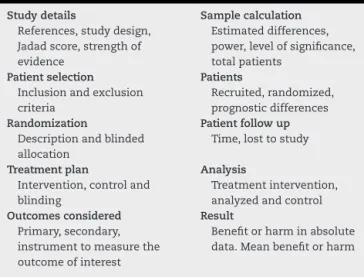
Table1–Checklistusedforcriticalanalysisofthe
evidence.
Studydetails
References,studydesign,
Jadadscore,strengthof
evidence
Samplecalculation
Estimateddifferences,
power,levelofsignificance,
totalpatients
Patientselection
Inclusionandexclusion
criteria
Patients
Recruited,randomized,
prognosticdifferences
Randomization
Descriptionandblinded
allocation
Patientfollowup
Time,losttostudy
Treatmentplan
Intervention,controland
blinding
Analysis
Treatmentintervention,
analyzedandcontrol
Outcomesconsidered
Primary,secondary,
instrumenttomeasurethe
outcomeofinterest
Result
Benefitorharminabsolute
data.Meanbenefitorharm
Descriptionoftheevidencecollectionmethod
ThemembersoftheABHHCommitteeresponsiblefor writ-ingtheguidelinesonthetreatmentofanemiaofchronicrenal failureusingrecombinanthumanerythropoietinpreparedthe mainquestionrelatedtoitstreatment.Theissuewas struc-turedusing the Patient/Problem, Intervention, Comparison andOutcome(PICO)system. Thesearchstrategy(Appendix 1)wasappliedtotheprimaryscientificdatabases(MEDLINE PubMed,Embase,SciELOand,Lilacs)andsecondaryscientific database(CochraneLibrary).
Methodological quality was assessed using the Jadad score,1butthiswasnotusedasanexclusioncriterion.The criticalassessmentofthestudiesconsidereditemswithJadad scores<3asinconsistent,and thosewithscores≥3
consis-tent.Thestrengthofevidencewasanalyzedaccordingtothe Oxfordclassification.2
Recommendationdegreeandevidencelevel(Oxford classification)
A:Experimentalor observationalstudiesofbetter consis-tency
B:Experimentalor observationalstudieswithless consis-tency
C:Casereports(uncontrolledstudies)
D:Opinionwithoutcriticalevaluationbasedonconsensus, physiologicalstudiesoranimalmodels
Background
Usually identified when the glomerular filtration rate falls below 30mL/min, normocytic normochromic anemia is present in most patients with chronic kidney disease. Althoughthistypeofanemiahasmanycauses,itismainly relatedtoreducedproductionoferythropoietin,a glycopro-teinhormoneof165aminoacidswithamolecularweightof 30.4kDa,responsiblefortheregulationoferythropoiesisand subsequentmaintenanceofoxygenhomeostasis.3
Erythropoietinisahematopoieticgrowthfactorprimarily producedinthekidneycortex,whichstimulatesthe prolifer-ationanddifferentiationoferythroidprogenitorcellsinthe bonemarrow; whenerythropoietinisabsentthese progen-itorcells arenotprotectedagainstapoptosis.Patientswith chronickidneydiseasegraduallydevelopaninabilityto pro-duceadequateamountsoferythropoietintomaintainnormal hemoglobinlevels.4
Recombinanthumanerythropoietin(epoetinalfaand epo-etinbeta)wasproducedtomeettheneedsofthesepatients byculturingtransformedcellsfromChinesehamsterovaries andthekidneysofyounghamsters.Withahalf-lifeof24h, epoetin carries complementary DNA that encodes human erythropoietin.4
Theshorthalf-lifeofepoetinwiththenecessityoffrequent doses,ledthepharmaceuticalindustrytoinvestigate strate-giestoprolongtheactionofthe molecule.Thisresultedin thedevelopmentofdarbepoetinalfawithahalf-lifeof72h, andcontinuouserythropoietinreceptoractivator(CERA)with ahalf-lifeofaround130h.4
Aims
Toevaluatethebenefitsandadverseeffectsofrecombinant humanerythropoietinandCERAtotreatanemiaindialysis andpredialysiskidneydiseasepatients.
Searchquestion
Whatarethemainbenefitsandadverseeffectsof recombi-nanterythropoietin,darbepoetinalfaandCERAusedtotreat anemiaindialysisandpredialysiskidneydiseasepatients?
Studiesselectioninclusioncriteria
All fulltext clinical randomized controlled trials produced between1981and 2014inPortuguese,Englishand Spanish wereconsideredforthecreationoftheseguidelines.
ThetypeIIerrorwasnotusedintheselectionofstudiesso asnottoimposeanevengreaterlimitationontheselection.
According tothe PICOsystem, all patients withchronic renal failure and anemia in dialysis or pre-dialysis were included without age restriction. Interventions included treatment with erythropoietin, CERA or darbepoetin alfa. Conventional treatment and placebo were compared and outcomes were defined withan assessmentoftherapeutic response,suchasthelevelofhemoglobinandtheneedfor transfusion.
Atotalof411studieswerechosenforanalysis (PubMed-Medline:396;Embase:13andScielo/LilacsandCochranevia theBibliotecaVirtualenSalud:2).Atotalof352articleswere selected after the first analysis,all were from the primary electronicdatabaseswithnootherarticlesbeingfoundina manualsearch.
Evidenceselectedinthecriticalevaluation
452
revbrashematolhemoter.2 0 1 4;36(6):450–453leavingtenarticlestocomprisetheguidelines.Noarticlewas excludedduetotheunavailabilityofthefulltext.Table1was usedinthecriticalanalysisofthearticles.
Erythropoietin
Stage5renal failure patientsinchronic peritonealdialysis with anemia (hematocrit <30%) who received erythropoi-etin(4000Uthreetimesweeklyifhematocritwas<32%,and twotimesweeklyif hematocritwasbetween32%and38%) haveimprovementsinanemiaaftersixto12weeksof treat-ment(numberneededtotreat[NNT]=2)whencomparedtoa placebo.Thereisnoincreaseintheincidenceortheseverityof adverseeventsrelatedtothedrug.Patientsintreatmentmay haveaworseningofbloodpressurecontrol(numberneeded toharm[NNH]=3)5(A).
Anemic patients with pre-dialysis chronic renal failure receivingerythropoietin(50–150U/kgthreetimesaweek)have abettertherapeuticresponse(6%increaseinhematocritfrom baseline)comparedtoplacebo(NNT=2).Thereisnoincrease intheincidenceofadverseeventssuchashighblood pres-sure,headache,jointpain, swelling,anddiscontinuationof treatment6(A).
Anemic patients (hemoglobin <9g/dL) on hemodialysis receiving erythropoietinhavereduced needfortransfusion (NNT=2),andanelevatedriskofincreasesindiastolic pres-surewiththeneedforantihypertensivedrugs(NNH=6)7–9(A).
Darbepoetinalfa
In adult patients with chronic renal failure (creatinine >4mg/dLand creatinine clearance<30mL/minper 1.73m2) and anemia (hematocrit <30%), treatment with darbepo-etinalfaatadoseof0.45mg/kgsubcutaneously,onceevery twoweeks,ortreatment witherythropoietinalfaatadose 90IU/kgsubcutaneously,onceperweek,comparedto treat-ment without drugs that modify the biological course of diseaseresultsinanaverage30%increaseintheconcentration ofhemoglobinandimprovementsinleftventricularejection fraction,althoughthereisnoimprovementinrenalfunction10 (B).
Oncomparingadultpatientsonperitonealdialysisforat leastthree monthswith hemoglobinlevels between 8and 12g/dLundertreatmentwithrecombinanterythropoietinto thosetreatedwithdarbepoetinalfaatadoseof0.45mg/kg sub-cutaneouslyonceeverytwoweeks,thelattergrouprequired fewerdosestoachievethesameincreasesinhemoglobinat 24weeksoffollow-up.Themostcommonadverseeventsare edemaandirondeficiency11(B).
Treatmentofdiabeticpatientswithchronicrenal insuffi-ciency(glomerular filtrationrate 20–60mL/minper 1.73m2) and anemia (hemoglobin level<11g/dL) using darbepoetin alfa,resultsinsignificantincreasesinhemoglobinlevels(20% onaverage)within24months.There wasa9.7%reduction inthenumberoftransfusions(NNT=10),buta2.4%increase intheoccurrenceofstrokes(NNH=40).Therewere no sig-nificantdifferencesinmortalityorworseningrenalfunction amongpatients undergoing and not undergoingtreatment withdarbepoetinalfa.Thetreatmentincreasesarterialand venousthromboemboliceventsby0.9%(NNH=100)and1.8%
(NNH=55),respectively.Inpatientswithahistoryofcancer, thereisanincreaseindisease-relatedmortality12(A).
Moreover,thereisa4%increaseincardiovascularevents (NNH=25) and 2.4% increase in mortality (NNH=40) in patients withminorresponses(increaseofless than2%in hemoglobinlevelsinthefirstmonthoftreatment)13(A).
Continuouserythropoietinreceptoractivator(CERA)
In adultpatients withchronicrenal failureand anemiaon hemodialysis or peritoneal dialysis, the use ofCERA (dose between 60 and 180mgfortwo weeks) comparedto treat-mentwithdarbepoetin,producesnodifferenceinbenefitsor adverseevents14(A).
Closingremarks
Recombinant humanerythropoietinhasbeen producedfor alongtimetoimproveerythropoiesis,orredbloodcell pro-ductioninpatientswithchronicrenalfailure.Syntheticforms withlongerhalf-liveshavebeendevelopedsuccessfullywith resultingimprovementsinanemia,qualityoflifeandneed fortransfusion,andtimebetweenapplications.Hemoglobin levels shouldbekeptbetween11 and12g/dLtoavoid pos-sibleincreasesincardiovasculareventsandthromboembolic phenomena15(A).
Summary
of
the
evidence
Theuseoferythropoietintotreatanemiaassociatedto chronicrenalfailure
Benefit
Treatment with erythropoietinincreaseshemoglobin levels andreducesthenumberoftransfusionsneeded.
Adverseeffects
Treatment with erythropoietinincreasesblood pressure,in particulardiastolicpressure,andtheneedofantihypertensive drugs.
Theuseofdarbepoetinalfatotreatanemiaassociatedto chronicrenalfailure
Benefit
Treatmentwithdarbepoetinalfaincreaseshemoglobinlevels, andreducesthenumberofdosesofmedicationtoobtainthe samelevelofhemoglobincomparedtoerythropoietin,thereby reducingthenumberoftransfusions.Itimprovestheleft ven-tricularejectionfraction.
Adverseeffects
revbrashematolhemoter.2 0 1 4;36(6):450–453
453
Theuseofcontinuouserythropoietinreceptoractivatorto treatanemiaassociatedtochronicrenalfailure
Inpatientswithchronicrenalinsufficiencyandanemia,there are nosignificant differences inbenefitsor adverseeffects comparingtheuseofcontinuouserythropoietinreceptor acti-vatortotreatmentwithdarbepoetin.
Conflicts
of
interest
Theauthorsdeclarenoconflictsofinterest.
Appendix
A.
Supplementary
data
Supplementarydataassociatedwiththisarticlecanbefound, intheonlineversion,atdoi:10.1016/j.bjhh.2014.09.009.
r
e
f
e
r
e
n
c
e
s
1. JadadAR,MooreRA,CarrollD,JenkinsonC,ReynoldsDJ, GavaghanDJ,etal.Assessingthequalityofreportsof randomizedclinicaltrials:isblindingnecessary?ControlClin Trials.1996;17(1):1–12.PubMedPMID:
8721797.
2. Associac¸ãoMédicaBrasileiraeConselhoFederaldeMedicina. ProjetoDiretrizes.NíveisdeEvidênciaeGraude
recomendac¸ão–OxfordCentreforEvidenceBasedMedicine. Availablefrom:http://www.projetodiretrizes.org.br/projeto diretrizes/textointrodutorio.pdf
3. PowellJ,Gurk-TurnerC.Darbepoetinalfa(Aranesp).Proc(Bayl UnivMedCent).2002;153:332–5.Erratumin:Proc(BaylUniv MedCent).2002;15(4):365.
4. MacdougallIC,AshendenM.Currentandupcoming erythropoiesis-stimulatingagents,ironproducts,andother novelanemiamedications.AdvChronicKidneyDis. 2009;16(2):117–30.
5. NissensonAR,KorbetS,FaberM,BurkartJ,GentileD, HamburgerR,etal.Multicentertrialoferythropoietinin
patientsonperitonealdialysis.JAmSocNephrol. 1995;5(7):1517–29.PubMedPMID:7703390.
6.TheUSRecombinantHumanErythropoietinPredialysisStudy Group.Double-blind,placebo-controlledstudyofthe therapeuticuseofrecombinanthumanerythropoietinfor anaemiaassociatedwithchronicrenalfailureinpredialysis patients.AmJKidneyDis.1991;18(1):50–9.Erratumin:AmJ KidneyDis1991;18(3):420.
7.LaupacisA,CanadianErythropoietinStudyGroup.A randomizeddouble-blindstudyofrecombinanthuman erythropoietininanaemichemodialysispatients.Transplant Proc.1991;23(2):1825–6.
8.CanadianErythropoietinStudyGroup.Associationbetween recombinanthumanerythropoietinandqualityoflifeand exercisecapacityofpatientsreceivinghaemodialysis.BrMed J.1990;300(6724):573–8.
9.CanadianErythropoietinStudyGroup.Effectofrecombinant humanerythropoietintherapyonbloodpressurein hemodialysispatients.AmJNephrol.1991;11(1):23–6. 10.ChenHH,TarngDC,LeeKF,WuCY,ChenYC.Epoetinalfaand
darbepoetinalfa:effectsonventricularhypertrophyin patientswithchronickidneydisease.JNephrol. 2008;21(4):543–9.
11.LiWY,ChuTS,HuangJW,WuMS,WuKD.Randomizedstudy ofdarbepoetinalfaandrecombinanthumanerythropoietin fortreatmentofrenalanemiainchronicrenalfailurepatients receivingperitonealdialysis.JFormosMedAssoc.
2008;107(11):843–50.
12.PfefferMA,BurdmannEA,ChenCY,CooperME,deZeeuwD, EckardtKU,etal.Atrialofdarbepoetinalfaintype2diabetes andchronickidneydisease.NEnglJMed.
2009;361(21):2019–32.
13.SolomonSD,UnoH,LewisEF,EckardtKU,LinJ,BurdmannEA, etal.Erythropoieticresponseandoutcomesinkidneydisease andtype2diabetes.NEnglJMed.2010;363(12):1146–55. 14.CanaudB,MingardiG,BraunJ,AljamaP,KerrPG,LocatelliF,
etal.IntravenousC.E.R.A.maintainsstablehaemoglobin levelsinpatientsondialysispreviouslytreatedwith darbepoetinalfa:resultsfromSTRIATA,arandomizedphase IIIstudy.NephrolDialTransplant.2008;23(11):3654–61. 15.SinghAK,SzczechL,TangKL,BarnhartH,SappS,WolfsonM,