CRANFIELD UNIVERSITY
RÚBEN MIGUEL TORCATO PEIXINHO
HOW DO ANALYSTS DEAL WITH BAD NEWS?
GOING-CONCERN OPINIONS AND ANALYST BEHAVIOUR
- A SYSTEMATIC REVIEW
SCHOOL OF MANAGEMENT
MRes DISSERTATION
CRANFIELD UNIVERSITY
SCHOOL OF MANAGEMENT
MRes DISSERTATION
ACADEMIC YEAR 2004-2005
RÚBEN MIGUEL TORCATO PEIXINHO
HOW DO ANALYSTS DEAL WITH BAD NEWS?
GOING-CONCERN OPINIONS AND ANALYST BEHAVIOUR
- A SYSTEMATIC REVIEW
SUPERVISOR: PROF. RICHARD TAFFLER
31 AUGUST 2005
This thesis is submitted in partial fulfilment of the requirements for the Degree of Master of Research in Management Research
© Cranfield University, 2005. All rights reserved. No part of this publication may be reproduced without the written permission of t he copyrighter holder.
ABSTRACT
This study systematically reviews the literature that can constitute the foundations for the connection of two areas that have hitherto been developed separately: analyst behaviour and going-concern opinions. Financial lit erature claims that analyst judgement is biased given their tendency to systematically underreact in the presence of bad news and their tendency to systematically overreact in the presence of good news. Considering that going-concern modifications constitute an unambiguous and acute case of bad news, this event presents a unique opportunity to explore analysts’ anticipation of and reaction to the presence of bad news. This analysis can provide further evidence on analysts’ optimism and their role in the apparent delayed impact of bad news to investors. A systematic review of the literature is developed in order to guarantee methodological rigour in the review process. The systematic search for studies in the refined scope finds 40 papers that are analysed and synthesised. These papers are discussed in order to justify the potential gap in the literature and the research opportunities available for a doctoral study. The results suggest that the connection between these areas can sustain a doctoral study and contribute for the development of the accounting and finance framework.
ACKNOWLEDGEMENTS
I would like to gratefully acknowledge the enthusiastic supervision of Professor Richard Taffler, who encouraged and supported me during this process. I also would like to thank Dr. Vineet Agarwal, Mr. Asad Kausar, Mrs. Thabang Mokoalelli-Mokoteli and Dr. David Denyer as panel members, for their stimulating discussions and general advice. I also would like to thank Mrs. Lisa Brooks for her assistance during some critical moments. A special word to Ms. Heather Woodfield for the review of my dissertation.
I am grateful to the institutions that have provided me with the opportunity to study in England, namely the Faculty of Economics, University of the Algarve and Fundação para a Ciência e a Tecnologia. I have to underline the importance of three persons in this process, not only for their support but also for their personal friendship: Professor Efigénio Rebelo, Professor Duarte Trigueiros and Professor Paulo Rodrigues.
Finally, a special word to my friend Luis Coelho. His friendship was essential in helping me spend this first year far away from my loved ones.
CONTENTS
ABSTRACT... I CONTENTS... IV
CHAPTER 1 - INTRODUCTION...1
CHAPTER 2 – KEY LITERATURE...5
2.1.THE CONCEPT OF RATIONALITY... 5
2.1.1. Rational choice theory ... 6
2.1.2. Bounded rationality... 7
2.1.3. Rationality implications in finance... 9
2.3.1.1. Traditional finance ...10
2.3.1.2. Behavioural finance...11
2.2.ANALYST BEHAVIOUR...12
2.2.1. Analysts’ role in the market ...12
2.2.2. Importance of analysts’ opinions to the market ...14
2.2.3. Analysts’ forecasts bias explanations ...15
2.2.3.1. Analyst cognitive-bias explanation ...15
2.2.3.1.1. Overoptimism and overconfidence ...16
2.2.3.1.2. Overreaction and underreaction ...17
2.2.3.1.3. Representativeness ...18
2.2.3.2. Economic incentives-based explanations ...19
2.2.3.3. Other explanations...21
2.3.THE GOING-CONCERN ASSUMPTION...22
2.3.1. Historical background ...22
2.3.2. The informational content of the GCM for the market place...24
2.3.2.1. No information content ...24
2.3.2.2. Information content ...25
2.4. DISCUSSION OF THE PROBLEM AND DELIMITATION OF BOUNDARIES...26
CHAPTER 3 - METHODOLOGY...29
3.1.THE RATIONALE OF SYSTEMATIC LITERATURE REVIEW...29
3.2. SYSTEMATIC REVIEW AIMS...30
3.3. SYSTEMATIC REVIEW PROCESS...31
3.3.1. Consultation group ...31
3.3.2. Description of search strategy ...32
3.3.2.1. Definition of keywords and search strings...33
3.3.2.2. Database search...35
3.3.2.3. Other information sources ...35
3.3.3. Selection criteria ...36
3.3.3.1. Elimination of duplications ...36
3.3.3.2. Exclusion criteria based on the reading of titles and abstracts ...37
3.3.3.3. Exclusion criteria based on the reading of full text papers ...38
3.3.3.4. Exclusion criteria based on quality criteria ...39
3.3.4. Data extraction process ...40
CHAPTER 4 - FINDINGS...43
4.1. DESCRIPTIVE ANALYSIS OF THE SELECTED PAPERS...43
4.1.1. Process description ...43
4.1.2. Descriptive statistics...45
4.2. REPORT OF THE FINDINGS...48
4.2.1. Analyst behaviour...48
4.2.1.1. Analysts’ forecast errors ...48
4.2.1.1.1. Optimism in general situations ...50
4.2.1.1.2. Optimism regarding distressed firms...52
4.2.1.1.3. Herding behaviour...54
4.2.1.2. Analysing analysts’ forecast errors ...55
4.2.1.2.1. Do analysts under or overreact in their forecasts? ...55
4.2.1.2.2. Do economic incentives influence analysts’ forecasts?...58
4.2.1.2.3. Cognitive or economic-based explanation?...59
4.2.1.2.4. Analysts’ preference to withhold unfavourable forecasts...60
4.2.1.2.5. Do forecast errors imply analysts’ non-rational behaviour?...61
4.2.1.3. Informational content of analysts’ reports...63
4.2.2. Going-concern opinions ...64
4.2.2.1. Do going-concern opinions have informational value? ...64
4.2.2.2. Different market reaction to going-concern opinions ...65
4.2.2.3. Expectations of a GCM...66 4.3. DISCUSSION...68 4.3.1. Optimism...68 4.3.2. Cognitive-bias explanation...70 4.3.3. Economic-based explanation ...71 4.3.4. Herding behaviour ...73 4.3.5. Analysts’ rationality...73
4.3.6. Going-concern opinion issues...74
CHAPTER 5 - CONCLUSION...76
5.1.IMPLICATIONS FOR FURTHER RESEARCH...76
5.2.METHODOLOGY APPRAISAL...78
5.3. LEARNING EXPERIENCE...79
5.4.CONCLUDING REMARKS...81
REFERENCE LIST...82
APPENDICES ...90
LIST OF TABLES
Table 3.1.: Consultation group composition...31
Table 3.2.: Keyword search ...33
Table 3.3.: Criteria and rationale for exclusion ...37
Table 3.4.: Numerical approach to quality assessment...39
Table 3.5.: Example of data extraction form...41
Table 4.1.: Number of documents by search string and database...43
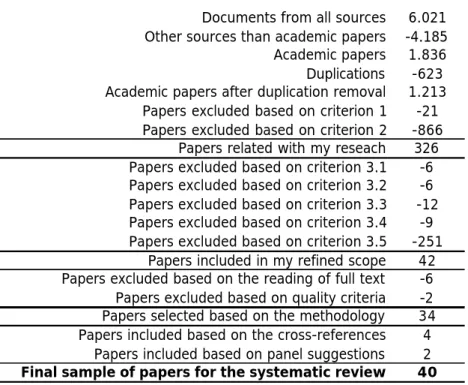
Table 4.2.: Selection of papers process ...44
Table 4.3.: List of papers included in the systematic review of the literature ...45
Table 4.4.: Distribution of studies by discipline, journal title and projected quality grading ...47
Table 4.5.: Summary of empirical evidence on analysts’ optimism ...69
Table 4.6.: Summary of empirical evidence on under and overreaction in analysts’ forecasts...71
Table 4.7.: Summary of empirical evidence on analysts’ agency conflict...72
Table 4.8.: Summary of empirical evidence on the predictability of going-concern opinions ...75
LIST OF FIGURES
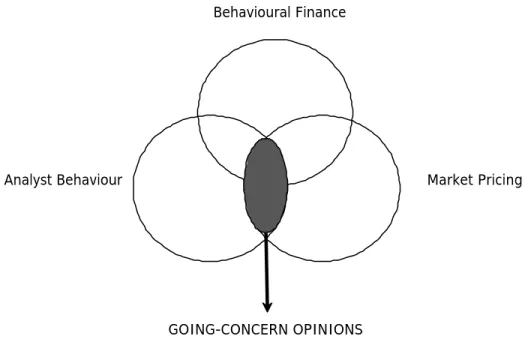
Figure 2.1.: Mapping the field ...28Figure 3.1.: Systematic review procedure ...30
Figure 4.1.: Age profile of the papers...46
Figure 4.2.: Percentage of empirical and non-empirical studies ...48
CHAPTER 1 - INTRODUCTION
The issue of rationality has been discussed in several areas of knowledge without consensus. In the course of this discussion, the different perspectives about the degree of human rationality are drawn from two different views about human behaviour. Rational choice theory proponents argue that human judgment can be modelled mathematically, suggesting that people optimize their decision processes in order to find the “one best
solution”. The alternative perspective, bounded rationality, states that the previous theory
is not realistic since people’s limited analytical capacities prevent anything near complete rationality.
In finance, there are two competing approaches to understanding financial markets. The traditional finance framework posits that agents satisfy the conditions of completeness and transitivity, and therefore, behave as fully rational Bayesians maximizers of their subjective utility functions. Behavioural finance constitutes the alternative approach, which is consistent with the arguments of the bounded rationality perspective. Behavioural finance states that some financial phenomena can be better understood using models that consider some agents as not being fully rational. Under this framework, agents use heuristics and rules of thumb when forming their beliefs, rather than the laws of probability (Sandroni, 2005).
Considering the nature of their work, security analysts are viewed as a sophisticated group of decision-makers acting in financial markets. Consequently, these market agents present a unique opportunity to analyse and test the two competing theories in finance and to provide further evidence in the debate between full and bounded rationality. Easterwood and Nutt (1999) present one of the clearest definitions of rationality in the security analyst context. They state that “a rational analysis of analyst behavior predicts that analysts
immediately and without bias incorporate information into their forecasts”. Under this
definition, evidence collected through empirical research suggests that analysts are, in fact, not rational in the sense that their forecasts are biased (e.g., de Bondt and Thaler, 1990; Trueman, 1994; Easterwood and Nutt, 1999; Ahmed et al., 2000; Beckers et al., 2004). One of the most important ideas extracted from this body of literature is that analyst forecasts are optimistic. This optimism is derived from the systematic positive difference between forecast and actual earnings per share (EPS) (e.g., Stickel, 1990; Abarbanell, 1991; Brown, 1997; Easterwood and Nutt, 1999) and the permanent higher number of buy
recommendations compared with the number of sell recommendations (e.g., Womack, 1996; Ho and Harris, 1998; Ryan and Taffler, 2004).
Two principal explanations for this non-rational behaviour are cognitive-bias explanations and economic incentives-based explanations (Kothari, 2001). Broadly speaking, cognitive-bias explanations argue that financial agents use heuristics and rules of thumb when they process information. Under this assumption, analysts are subject to the same biases as subjects in laboratory experiments. In fact, evidence of analysts’ systematic asymmetric reaction conditional on the nature of information (Amir and Ganzach, 1998; Easterwood and Nutt, 1999) is better understood under the cognitive-bias approach. On the other hand, economic incentive-based explanations advocate that agency problems underlie analysts’ optimism. In fact, the literature suggests that analysts’ working environment and incentives can lead to several distortions in their analyses. Easterwood and Nutt (1999) suggest two factors which help us to understand their optimism in this context: the economic incentives that analysts have to promote the purchase of stocks, and their work dependency on the access to the top executives of the firms they follow. One of the most frequently cited examples is the particular optimism regarding analysts who work for brokerage firms (Dugar and Nathan, 1995) or analysts working for brokerage houses with investment banking activities (Michael and Womack, 1999).
The discussion behind rationality in market agents is crucial since this issue constitutes the basis of several debates in accounting and finance. Despite the strong theoretical background underpinning the traditional finance framework, should we ignore empirical evidence showing that, in general, agents present biased behaviour? This question raises a critical issue in the development of finance theory: should we continue to develop research based on the premise that agents are fully rational or should we relax this strong assumption? Analyst behaviour constitutes a unique opportunity to clarify these issues, since they act as sophisticated agents in the market, which recognizes the importance of their opinions given the impact of their recommendations and earnings forecasts (e.g., Stickel, 1991; Womack, 1996; Ho and Harris, 1998; Park and Stice, 2000; Barber et al., 2001; Barber et al., 2003; Ryan and Taffler, 2004).
Although analyst optimism has been documented in general, there is lack of evidence regarding their specific behaviour in extreme situations. As Schipper (1991) points out, it makes sense to investigate decision strategies in extreme cases, because research suggests that optimism seems to be most pronounced in forecasts preceded by share price declines or earnings declines. One of the events that produce substantial declines in share
prices is the going-concern modification (GCM) audit report. Several papers document that audit qualifications in general, and the GCM in particular, have a significant negative impact on the stock market (Firth, 1978; Chow and Rice, 1982; Banks and Kinney, 1982; Dopuch et al., 1986; Frost, 1991; Taffler et al., 2004; Kausar et al., 2004). Given the market reaction to going-concern opinions, it makes sense to investigate how analysts deal with this particular event, which is perceived as a clear case of bad news by markets. In fact, by linking these two areas of the literature, it is possible to give a new insight to analyst optimism and thus, to make a contribution to the development of the accounting and finance disciplines.
The literature review undertaken in this dissertation regarding these two areas is based on the systematic review of the literature suggested by Tranfield et al. (2003). This process allows the definition of a transparent process in order to avoid the weaknesses of the traditional narrative review. Therefore, the connection between analyst behaviour and going-concern opinions is made with an explicit method to identify, select and review the relevant studies. The systematic review of the literature demonstrates that there is a sufficient gap in the literature and unclear issues that justify further research to be developed into a PhD. In fact, the review process shows that going-concern opinions and analysts’ behaviour represent two different topics that have been considered separately in the literature. No study has looked at these two domains together and explored their possible relation.
Although there is evidence that analysts underreact to negative information (e.g., Amir and Ganzach, 1998; Easterwood and Nutt, 1999), their reaction to a going-concern opinion has not been explored in the literature to date. Additionally, the fact that markets react asymmetrically to good and bad news in the going-concern context (Kausar et al., 2004), highlights the importance of the research regarding security analysts’ role in the whole process. This dissertation discusses several research opportunities extracted from the critical analysis of the papers selected using the systematic review approach. Therefore, the challenge of my doctoral project is to link together these two different areas of the literature that have been developed separately until now.
The dissertation is structured as follows:
Chapter two reviews the major literature relating to this study. Section one discusses the concept of rationality, describes two different approaches to human behaviour drawn from this concept and analyses their implications in two competing theories in finance: traditional finance and behavioural finance. Section two reviews the role of analysts in the
market and explores the nature of their rational (or non-rational) behaviour. Particular emphasis is given to analysts’ explanations of forecast bias. Section three explores the issues behind the going-concern assumption and their relevance to markets. Section four discusses the problem and delimits the boundaries of the study.
Chapter three describes the methodology approach based on the systematic review of the literature. Section one analyses the rationale behind this process, section two describes the review aims, and section three defines the systematic review process. This section contains the definition of the process that allows the selectio n of the papers that constitute the sample for my findings and final discussion.
Chapter four presents the findings of the systematic review process. Section one makes a descriptive analysis of the selected papers. Section two reports the findings with the form of a thematic analysis. Section three presents the discussion of the findings.
Chapter five concludes the dissertation. Section one discusses the implications for further research. Section two presents the methodology appraisal. Section three presents the author’s reflections on the learning experience and section four concludes the dissertation.
CHAPTER 2 – KEY LITERATURE
This chapter reviews the major literature of the two areas that I want to connect: analyst behaviour and going-concern opinions. The chapter begins with a discussion of rationality and the different views regarding human behaviour, considering their implications in the finance domain. In addition, it evaluates analyst behaviour highlighting the behavioural explanations justifying this phenomenon, although reviewing the economic -based explanations. The going-concern assumption is introduced with the objective of analysing the importance of this event for the understanding of analyst behaviour in extreme situations. A common issue in the two areas reviewed is the market impact of each output: analysts’ recommendations, earnings forecasts, and accompanying reports and going-concern reports. The delimitation of the systematic review boundaries is presented at the end of the chapter.
2.1. The concept of rationality
Classical economic theory is based on the concept of rationality (Arrow, 1986). Classical economists, like Smith and Ricardo, sustained the development of this discipline in notions that are closely related to this concept. Several examples of rational behaviour are present in the discourse of these classical economists: the preference for more rather than less, the investment in industries yielding the highest rate of return, the minimization of costs or profit maxim ization, among others (Arrow, 1986). Nowadays, economists’ definition of rationality is based on the concepts of completeness (choices can be ranked) and transitivity (if x>y and y>z, then x>z), which together represent the maximization of a function.1 This approach emerged only in the 1950s since before that time, economists
assumed that people were motivated by “self-interest” (Arrow, 1986).
Traditional finance draws on classical economics to develop models that explain financial markets based on the assumption that market participants are rational (Barberis and Thaler, 2003). According to Barberis and Thaler (2003), rationality has two meanings: 1) when agents receive new information they update their beliefs correctly , particularly in the manner described by Bayes’ law and 2) given their beliefs, agents make choices that are normatively acceptable, in the sense that they are consistent with Savage’s (1972) notion of Subjective Expected Utility (SEU).
The next two sections briefly illustrate the foundations of rational behaviour, namely the two main theories behind this issue: rational choice theory and bounded rationality.
2.1.1. Rational choice theory
Rational choice theory differs from other perspectives that see human action as involving both rational and non-rational elements. This perspective denies the existence of any other type of action than the purely rational and calculative one (Scott, 2000), suggesting full rationality in decision-makers.2 Turner (2002) presents five assumptions of rational choice
theory:
1. Humans are purposive and goal oriented;
2. Humans have sets of hierarchically ordered preferences, or utilities; 3. In choosing lines of behaviour, humans make rational calculations;
4. Emergent social phenomena - social structures, collective decisions, and collective behaviour - are ultimately the result of rational choices made by utility-maximizing individuals;
5. Emergent social phenomena that arise from rational choices constitute a set of parameters for subsequent rational choices of individuals.
These five points reveal that the rational process is very demanding, assuming that people are goal oriented and, conditional on their preferences, they can find the “one best
solution”. It is particularly noteworthy that rational choice theory suggests that individuals
are able to state their preferences by their wants or goals, and that these preferences motivate the actions taken by individuals. This framework also posits that individuals must anticipate the outcome of every alternative course of action, calculate which will be the best for them and choose the alternative that is likely to give them the greatest satisfaction (Coleman, 1973; Heath, 1976). This means that fully rational man knows the solution of all complex mathematical problems, regardless of their level of difficulty (Selten, 2001). For the defenders of this framework, the available mathematical tools, in particular the rules of Bayes and Bernoulli, are seen as descriptions of actual human judgement (Datson, 1981). The decision process is always associated with information, efficiency, optimization,
2 The apparent success of economics in explaining human behaviour as a function of money and by the possibility of
making a profit, leads other social sciences in this direction (Scott, 2000). According to Scott (2000), these social scientists have tried to build theories around the idea that all action is fundamentally rational in nature and that people do the cost / benefit analysis before making a decision.
implementation and design (Scott, 2003). The understanding of these complex assumptions leads us to conclude that people are required to have unlimited cognitive capabilities whenever taking fully rational decisions.
Hatch (1997) presents a model with five steps that defines a typical rational decision-making process in organizations, which can be generalized to decision-makers. The first step of the model is to define the problem and the collection of relevant information. The following step is the generation and evaluation of all the possible alternatives available, considering the likelihood of the positive and negative consequences of each one. After that, decision-makers should choose the best possible alternative, given their set of objectives. The last steps consist of the implementation of the selected alternative and monitoring the results. In a dynamic perspective, this last action will lead to the first step of the model and to another optimized decision.
The specific limitations of organizations and human capacities provide the arguments that some scholars have used to criticize the assumptions of rational models. Simon presents some limitations of rational decision-making models, which are inconsistent with full rationality (Hatch, 1997):
1. Imperfect and incomplete information; 2. The complexity of problems;
3. Human information-processing capacity;
4. The time available for decision-making processes;
5. The conflicting preferences decision-makers have for organizational goals.
These limitations represent the starting point for the development of an alternative to rational choice models: bounded rationality.
2.1.2. Bounded rationality
Bounded rationality theory emerged as a critique to rational choice theory. The empirical evidence and the observation of human behaviour suggest a fundamental role for limited cognition as an aspect of decision-making, something that is not captured by the neo-classical framework. Under this alternative, humans attempt to be rational but their limited capacities prevent anything near complete rationality (Perrow, 1993). The existence of such limitations restricts the usefulness of rational choice assumptions in understanding the
actual behaviour of decision-makers; people are simply unable to follow such demanding processes.
One of the main critiques to rational choice is that people cannot consider all their options in choosing their solutions to given problems. Put simply, decision-makers do not have complete knowledge of the alternative courses of action available to them or they cannot afford to attain that knowledge. Moreover, even if people knew all their alternatives, it would be almost impossible to rank them according with their preferences (Simon, 1997). As a result, people tend to simplify available alternatives and select the first acceptable one.
Several studies document many other restrictions to the optimal choice. Klein (2001) presents eleven boundary conditions for optimizing decisions that review the main assumptions presented in the literature:
1. The goals must be well defined, in quantitative terms (Koopman and Pool, 1991); 2. The decision-maker’s values must be stable (Fischhoff, 1991; Slovic, 1995; March,
1978);
3. The situation must be stable (Pitz, 1992);
4. The task is restricted to a selection between options (Berkeley and Humphreys, 1982);
5. The number of alternatives generated must be exhaustive (Janis and Mann, 1977; Koopman and Pool, 1991);
6. The optimal choice can be selected without disproportional time and effort (Gigerenzer and Todd, 1999; Minsky, 1986; von Winterfeldt and Edwards, 1986); 7. The options must be thoroughly compared to each other (Janis and Mann, 1977); 8. The decision-maker must use a compensatory strategy (Janis and Mann, 1977); 9. The probability estimates must be coherent and accurate (Beyth-Marom et al.,
1991);
10. The scenarios used to predict failures must be exhaustive and realistic (Pitz, 1992); 11. The evaluation of each scenario must be exhaustive (Pitz, 1992).
It is noteworthy that the existence of these restrictions to optimal choice does not mean that bounded rationality is the same as irrationality. Indeed, we cannot substitute rationality by irrationality just because people’s behaviour fails to conform the norms of full
rationality. A decision maker who is guided by aspiration adaptation mechanism rather than utility maximization may be perfectly rational (Selten, 2001), even if he or she does not choose the “one best decision”.3
Herbert Simon introduced the idea of bounded rationality, originally a psychological concept, into economics.4 Since then, bounded rationality has started to be viewed as the main alternative to neo-classic rationality. Optimization plays a central role in rational choice theory , and consequently , in the traditional finance approach. Simon (1956) defines optimization as the selection of the best choice, the one with the highest expected utility. However, considering that decision-makers do not have the unlimited cognitive capacities that are required to achieve optimal solutio ns, Simon developed an alternative theoretical framework. Under this alternative perspective, the satisfying agent takes the place of the rational agent and satisficing behaviour substitutes the model of global rationality. This
satisficing agent is not making a mistake when he chooses his non-optimal payoff, because satisficing involves choosing an alternative that exceeds some criterion or target (Simon,
1997). In fact, satisfice means selecting the first course of an action that appears to be successful, even if it is not the best (Klein, 2001).
2.1.3. Rationality implications in finance
Considering that rationality is a central issue in the development of finance, these two different views about rationality have implications in the finance domain. The next two sections describe the two alternative approaches in the finance world that are based on the previous discussion.
3 Simon (1956) develops two alternatives to utility maximization in order to explain decision-making processes:
adjusting the aspiration level and adjusting the set of behavioural alternatives. He described decision-making as a search process guided by aspiration levels. An aspiration level is a value of a goal variable that must be reached or surpassed by a satisfactory decision alternative. However, aspiration levels are not permanently fixed but are rather dynamically adjusted to the situation. Aspiration levels are raised if it is easy to find satisfactory alternatives and lowered if satisfactory alternatives are hard to obtain (Selten, 2001). Search for alternatives, satisficing and aspiration adaptation constitute three main concepts in Simon’s view of bounded rationality.
4 Conlisk (1996) presents in his survey four reasons that justify the incorporation of bounded rationality in economic
models: 1. There is abundant empirical evidence showing the importance of bounded rationality; 2. Models of bounded rationality have proved themselves in a wide range of impressive work; 3. The standard justifications for assuming unbounded rationality are unconvincing and 4. Deliberation about an economic decision is a costly activity, and good economics requires that we entertain all costs.
2.3.1.1. Traditional finance
Rational optimization of agents and equilibrium constitute the two pillars of traditional finance literature. The rational choice perspective supports the economic definition of rationality, which is embedded in two important concepts: completeness and transitivity. This approach is largely based on an unrealistic picture of human decision-making, which assumes that economic agents are fully rational Bayesian maximizers of subjective utility.5
One of the reasons that explains why Bayes’ theorem was used to build economic theory and financial modelling is their nonarbitrary characteristic, which is a useful discipline to modelling, although the evidence on heuristics and biases suggests that Bayesian updating is not fully descriptive of human behaviour (Hirshleifer, 2001).6 Bayesians assume that
agents have a coherent preference structure that is characterized axiomatically and defines a notion of a probabilistic mixture of outcomes. These rational agents care about utilitarian characteristics, do not commit cognitive errors, have perfect self-control, are always risk averse and are never averse to regret (Statman, 1999). The traditional finance framework is highly analytical and normative, assuming a world dominated by homo economicus, who is fully rational and focused on utility maximization.
Despite the strong theoretical background behind traditional finance perspective, several studies document price behaviour and decision-making processes inconsistent with rational expectations models.7 According to Sandroni (2005), there are two causes for the
documented anomalies: agents suffer from cognitive biases when forming beliefs (do not process information according to Bayes’ rule) or do not have sufficient information to hold correct beliefs.
Although finance is considered to be a social science that acknowledges the existence of mental models of choice, the academ ic study of finance involves little or no examination of individual decision-making (Olsen, 1998). One of the reasons is that finance and economics are primarily concerned with prediction rather than description or explanation (Olsen, 1998). In response to the difficulties faced by the traditional paradigm, behavioural finance
5 Bayes's theorem is a simple mathematical formula used for calculating conditional probabilities that figures
prominently in subjectivist or Bayesian approaches. Subjectivists, who maintain that rational belief is governed by the laws of probability, lean heavily on conditional probabilities in their theories of evidence and their models of empirical learning. Bayes’s theorem is used to calculate the formally optimal rule about how opinions, meaning probabilities, should be revised based on new information (Edwards, 1982). According to this approach, these probabilities are just numbers between zero and one that represent the extent to which a somewhat idealized person believes a statement to be true.
6 Several studies suggest that agents do not update their beliefs correctly since people seem to be influenced by
“irrelevant alternatives”. For more details, see Hirshleifer (2001).
has recently emerged in an attempt to understand financial markets. In contrast to traditional finance, behavioural finance states that some financial phenomena can be better understood using models that consider some agents as not being fully rational.
2.3.1.2. Behavioural finance
Behavioural finance relaxes the assumption that agents form beliefs according to the laws of probability and assumes that simpler heuristic rules are used (Sandroni, 2005). This new approach seeks to incorporate the implications of psychological decision processes in the decision-making process (Olsen, 1998). Behavioural finance draws on an extensive experimental literature on judgment under uncertainty that suggests that people do not behave consistently with the rules of probability and statistics (Griffin and Tversky, 2002). Given that time and cognitive resources are limited, natural selection has designed minds that implement rules-of-thumb8 selectively to a subset of cues (Hirshleifer, 2001). Olsen
(1998) presents two reasons for the current interest in behavioural finance: the empirical evidence that alternative financial theories seem to be deficient in fundamental ways, and the development of prospect theory .
There are several papers documenting empirical inconsistencies with the traditional finance paradigm.9 These inconsistencies constituted the starting point for the development of the
behavioural finance theory, which is seen as an emerging alternat ive to traditional finance. Behavioural finance is constituted by two building blocks: psychology and the limits to arbitrage (Barberis and Thaler, 2003).10
Given the experimental work showing that people systematically violate SEU theory when choosing among risky gambles (Barberis and Thaler, 2003), several non-SEU theories have been developed in the last few decades.11 One of the best-known non-SEU theories is
prospect theory. Kahneman and Tversky (1979) introduced prospect theory as a critique of expected utility theory . According to SEU theory, utility derives solely from the probability distribution of payoffs resulting from a choice, ignoring people’s regret aversion (Hirshleifer, 2001). Kahneman and Tversky (1979) contend that choices made among risky prospects are inconsistent with the basic tenets of the SEU theory. This alternative approach is based on more realistic behavioural assumptions to explain how people deal
8 The literature defines rules-of-thumb as “algorithms”, “heuristics”, or “mental models”.
9 For a first approach see the article compilations in Thaler (1993) and Thaler (2005).
10 For an introduction, see Barberis and Thaler (2003).
with loss in making choices in the face of risk and uncertainty, namely capturing the documented risk aversion.12
2.2. Analyst behaviour
Security analysts play a central role in financial markets. There are several reasons justifying academic research related to analysts’13 work and their behaviour in financial
markets. Additionally, there is empirical evidence showing that market prices move in the direction of analysts’ recommendations and earnings estimates (e.g., Stickel, 1991; Womack, 1996; Ho and Harris, 1998; Park and Stice, 2000; Barber et al., 2001; Barber et al., 2003; Ryan and Taffler, 2004). Considering that security analysts are sophisticated agents, can we expect rationality in analysts’ behaviour? This section discusses several biases that are inconsistent with rational behaviour and concludes with an overview of several empirical papers that document the biased behaviour of security analysts.
2.2.1. Analysts’ role in the market
Thousands of analysts follow a large population of companies and produce regular reports evaluating firms’ securities. Usually, each analyst follows ten to twenty stocks in a given industry or economic sector, which makes them industry specialists (Schipper, 1991). Analysts are considered sophisticated agents given their importance as intermediaries between firms and investors. These sophisticated agents collect, process and disseminate information to current and prospective investors. Their privileged access to information may lead us to believe that the stocks they recommend will experience superior performance.14
One important responsibility of analysts identified in the literature relates to their role in improving market efficiency by providing investors with the information necessary to make informed decisions (Moyer at al., 1989). Market prices do move in the direction of analysts’
12 According to the proponents of prospect theory, individuals maximize a weighted sum of “values” (analogous to
utilities) where the weights are not based on true probabilities, but in functions of probabilities (Hirshleifer, 2001). Another difference is that extremely low probabilities are treated as impossibilities, and extremely high probabilities as certainties. However, very (but not extremely) low probabilities are overestimated, and very (but not extremely) high probabilities are overestimated. For the intermediate probabilities, the weighting function increases with a slope less than one.
13 There are two different categories of analysts: “sell-side analysts” and “buy-side analysts”. Sell-side analysts are
security analysts employed by banks and brokerage firms, who release information to markets. “Buy-side analysts” are employed by institutional investment firms. Although both analyst categories make recommendations, sell-side analysts are the primary producers of earnings forecasts (Schipper, 1999).
14 Beckers et al. (2004) mention that individual and institutional investors use analysts’ reports when they make
portfolio selections or revision decisions. Additionally, they also state that analysts’ earnings forecasts are used in equity valuation models.
recommendations, but prices do not always adjust immediately. In certain cases, there is a drift that persists for several weeks or months (e.g., Womack, 1996) raising doubts about how efficient the market is at incorporating the value of changed stock recommendations. Security analyst power in influencing investors’ decisions and stock prices raise one of the most fundamental questions in finance: can analysts intentionally manipulate stock prices, even temporarily , from their equilibrium values? (Michaely and Womack, 2005).
The finance literature also suggests that analyst-monitoring activity is an important control element that helps to reduce agency costs associated with the separation of ownership and management (e.g., Jensen and Meckling, 1976; Doukas et al., 2000). By following firms, analysts contribute to the disciplining of corporate managers (Chung and Jo, 1996) since managers’ decisions will be closely monitored and publicized. Consequently, they are less likely to pursue activities that benefit themselves at the expense of shareholders. This situation gives an important social purpose to analysts’ work, which highlights the importance of analysts’ provision of objective and accurate information to the market and shareholders (Cote and Goodstein, 1999).
Analysts’ earnings forecasts are also used as a proxy for market earnings expectations. This method is used as an alternative to statistical models based on previous realizations of earnings since it is more accurate than mechanical models (Schipper, 1991). The literature, in fact, advocates a stronger association between market response to earnings and forecast errors based on analysts’ forecasts than those generated by mechanical models. This is not surprising since analysts have direct access to such statistical models and they are able to use more information to project future earnings. 15
De Bondt and Thaler (1990) set out three reasons justifying the interest in this particular group of market agents. Firstly, research suggests that earnings forecasts and forecasts revisions influence stock prices. Secondly, research advocates that analysts are rather good at what they do since their forecasts often outperform time-series models (e.g., Conroy and Harris, 1987). Thirdly, the precision of analyst expectations represents a natural upper boundary to the quality of the earnings forecasts of less sophisticated agents, since most investors cannot produce their own predictions.
15 Hirshleifer (2001) argues that it is expected that rational agents provide at least positive incremental value in their
2.2.2. Importance of analysts’ opinions to the market
A vast amount of literature suggests that analysts’ information releases influence stock prices. In fact, analysts’ outputs, such as earnings estimates and changes in recommendations, influence the evaluation of security prices (e.g., Stickel, 1991; Womack, 1996; Ho and Harris, 1998; Park and Stic e, 2000; Barber et al., 2001; Barber et al., 2003; Ryan and Taffler, 2004). Empirical research finds that, on average, the markets react favourably to positive changes in recommendations and have a negative reaction to a drop in recommendations.
For instance, Stickel (1991) finds that earnings revisions affect prices, and that their impact is greater when the percentage forecast change is in the top or bottom five percent of the distribution of all forecast revisions. Using a large database of individual analyst forecasts, he also notices that prices do not immediately assimilate such information since they continue to drift in the direction of the revision for about six months. In fact, when Stickel (1991) developed a trading strategy that predicted price reactions based on incomplete incorporation of such public ly available information, he found 6-month average abnormal returns of 8.22 percent and -5.44 percent respectively for his predicted best and worst performance portfolios.
In a subsequent paper, Stic kel (1992) claims a positive relation between analysts’ reputations and price impact of an earnings forecast revision announcement. Using a different measure of analysts’ reputations based on analysts’ forecast accuracy compared to a consensus forecast, Park and Stice (2000) conclude that market participants recognize differential analysts’ forecast ability. Forecast revisions by superior analysts have a greater impact on security prices than revisions by inferior analysts.
In one of the most frequently cited papers in this area, Womack (1996) finds strong evidence that stock prices are significantly influenced by analysts’ recommendation changes. Using US data, he finds significant initial price and volume reaction in the three-day event period around the recommendation change. However, in the case of new buy recommendations, most price impact occurs around the announcement date, while the new sell recommendations have a longer impact.16 In a parallel UK-based study, Ryan and
Taffler (2004) also find that the impact of new sell recommendations is greater than that of new buy recommendations, particularly in the case of small firms. The authors argue that
16 The post-recommendation drift associated with buy recommendations is significant and short lived (+2.4 percent for
the first post-event month), but the post-recommendation drift associated with sell recommendations is larger and longer (-9.1 percent for the first six -month post-event period).
this situation can be explained by the potential cost of disseminating new sell recommendations since such changes are less frequent, and consequently are more costly to analysts’ reputations.
2.2.3. Analysts’ forecasts bias explanations
Despite the studies included in the above section clearly pointing to the relevance of analysts’ opinions to the market, several papers present evidence of analysts’ biased behaviour. The presence of these biases is consistent with analysts’ non-rational behaviour according to Easterwood and Nutt’s (1999) definition of analyst rational behaviour. One of the strongest common denominators in these studies is the analysts’ optimism. However, Kothari (2001) states that estimates of analysts’ optimism vary across studies, in part because of the differences in research design, variable definitions, and periods examined. Additionally, Kothari (2001) presents three hypotheses for such decline in analyst optimism: 1) analysts are learning from the evidence of past bias; 2) analysts’ incentives have changed, and 3) the quality of data used in the research examining analysts’ forecast properties has improved. There are several reasons for analysts’ non-rational behaviour. Kothari (2001) identifies two main explanations for this non-rational behaviour: behavioural cognitive-bias explanations and economic incentives-based explanations. The next sections reflect this distinction, analysing the major papers regarding these two explanations.
2.2.3.1. Analyst cognitive-bias explanation
Cognitive biases that describe analysts’ judgement are drawn from the psychological literature that presents evidence of non-rational behaviour in several circumstances. Although some of these psychological effects have potential relevance to security markets, economists have traditionally been sceptical in accepting the relation between psychological effects and markets. The main argument to criticise this approach is that errors are independent across individuals and that they cancel out in equilibrium (Hirshleifer, 2001). However, the experimental psychology literature presents a vast number of studies documenting systematic biases in human behaviour.17 In a
comprehensive survey about investor psychology and asset pricing, Hirshleifer (2001) argues that heuristic simplification, self-deception, and emotional loss of control provide a unified explanation for most known judgment and decision biases. In finance, these
cognitive biases are used to explore how people form beliefs and preferences, and how they make decisio ns (Barberis and Thaler, 2003).
One interesting question that can be extracted from the first hypothesis defined by Kothari (2001) for the decline in analyst optimism is the reason why security analysts in particular, and people in general, do not learn their way out of biased judgment. According to Hirshleifer (2001), they do it to a certain extent, which is consistent with Kothari’s first hypotheses above. However, Hirshleifer (2001) presents two barriers that make impracticable the extinction of such biases: the hardness of the learning process and the self-deception bias. This last barrier, which is a tendency to adjust attitudes to match past actions, is a mechanism designed to persuade the individual that he or she is a skilful decision maker. The next three sections discuss some of the main heuristics presented in finance that are able to influence analy sts’ behaviour.
2.2.3.1.1. Overoptimism and overconfidence
The tendency to be overoptimistic is one of the best documented psychological errors. Montier (2002) states that such overoptimism results from a number of psychological biases, such as illusion of control and self-attribution. The first bias means that people feel themselves to be far more in control of a situation than they often actually are. The illusion of control, which has a positive correlation with the increase of information, manifests itself when people believe that they have influence over the outcome of uncontrollable events. This illusion of control, which influences the belief that a person can favourably influence unrelated chance events, is defined by Hirshleifer (2001) as a type of “magical thinking” given the belief in relations between causally unrelated actions or events.
The self-attribution bias means that people attribute favourable outcomes to skill while bad outcomes are attributed to bad luck, or else they blame external factors for failure (e.g., Fischhoff, 1982; Langer and Roth, 1975; Miller and Ross, 1975 or Taylor and Brown, 1988). The empirical psychology literature reports that as individuals observe the outcomes of their actions, they update their confidence in their own ability in a biased manner, leading to overconfidence (Daniel et al., 1998). This bias contrasts with the economists’ view that people learn from past mistakes.
Overconfidence has been documented in several contexts, including those of psychologists, engineers, entrepreneurs, managers, investment bankers, security analysts and others (Daniel et al., 1998). Daniel et al., (1998) and Odean (1998) mention several studies that model overconfidence in these heterogeneous contexts. A particularly interesting
contribution in this domain is that of Odean (1998). In this paper, the author summarizes previous research on overconfidence. Odean (1998) identifies some papers that present evidence consistent with overreaction: people tend to be overconfident in answering questions of moderate to extreme difficulty; people overestimate their ability to do well on tasks; people are unrealistically optimistic about future events; people expect good things to happen to them more often than to their peers; individuals see themselves as being better than the average person, and most individuals see themselves as being better than others see them, and people overestimate their own contributions to past positive outcomes. On the other hand, Griffin and Tversky (1992) suggest that experts tend to be more confident than relatively inexperienced individuals; something that applies to security analysts since they are seen as sophisticated agents in the market (Schipper, 1991).
2.2.3.1.2. Overreaction and underreaction
In a book of reference, Shleifer (2000) clarifies what under and overreaction means. According to his definition, underreaction to news announcements “occurs when the
average return of the company’s stock in the period following an announcement of good news is higher than the average return in the period following bad news”. Analogous to
this, he defines overreaction as occurring when “the average return following not one but a
series of announcements of good news is lower than the average return following a series of bad news announcements”. This means that after a series of announcements of good
news, the agent becomes overly optimistic that future news announcements will also be good and hence overreacts.
Behavioural finance relies on a vast body of literature documenting patterns of returns that cannot be understood in the context of classical pricing theory to criticize the efficient market hypothesis. One of the main critiques to this alternative framework is that some aspects of the anomalous returns patterns documented in the behavioural literature seem contradictory. A clear example of this situation is the apparent market underreaction and overreaction in different contexts (Daniel et al., 1998). In fact, behavioural opponents ask for an integrated theory to explain these phenomena in addition to explanations offered for particular anomalies.18
18 Fama (1998) criticizes this result from the behavioural finance approach. In his view, the overreaction and
underreaction phenomena cancel each other out and thus the market should, on average, converge to its fundamental value. He also argues that behavioural finance is unable to provide a proper framework to explain when over and underreaction should be expected.
Daniel et al. (1998) present one of the theories developed to fill this gap based on investor overconfidence about the precision of private information and variations in confidence arising from biased self-attribution. According to their theory, the difference between stock price overreaction and underreaction is the type of the information: stock prices overreact to private information and underreact to public signals. Their theory is based on experimental studies which find that individuals underestimate their error variance in making predictions, and overweight their own forecasts relative to those of others. This differentiation between over and underreaction has implications not only for investors, but also for security analysts since both generate information for trading such as interviewing management, verifying rumors, and analysing financial statements. In overestimating his ability to generate information, an investor or analyst will underestimate his forecast errors leading to overconfidence about his private information, but not to public signals received by all (Daniel et al., 1998). The theory presented by Daniel et al. (1998) to explain the over or underreaction assumes that, when the investor receives confirming public information, his confidence rises, but disconfirming information causes confidence to fall only moderately.
Another important theory explaining the over and underreaction phenomenon states that overreaction is related to good news and underreaction is related to bad news. These two connections are consistent with systematic optimism in response to information. Amir and Ganzach (1998), Easterwood and Nutt (1999) and Nutt et al. (1999) explore this phenomenon in an analyst context and find an explanation for the disparate conclusions presented by de Bondt and Thaler (1990) and Abarbanel and Bernard (1992)19. These three papers contend that security analysts tend to overreact when they are disseminating good news, but they tend to underreact in the presence of bad news.
2.2.3.1.3. Representativeness
Psychologists Daniel Kahneman and Amos Tversky introduced the representativeness heuristic in the literature.20 They state that intuitive judgment is often the only practical method for assessing uncertainty, because people do not normally have formal models for computing the probabilities of events. More specifically , their research finds that peoples’
19 By analysing the relation between actual and predicted changes in earnings, de Bondt and Thaler (1990) and
Abarbanell and Bernard (1992) find contrasting conclusions. De Bondt and Thaler (1990) argue that analysts systematically overreact to the release of information, but Abarbanell and Bernard (1992) conclude that overreaction to earnings cannot be found among analysts.
intuitive forecasts have a tendency to overweigh salient information in recent news, and underweigh less salient data such as long-term averages.
Tversky and Kahneman (1982) suggest that representativeness leads to the judgement of the probability of an event estimating probabilities by assessing similarity or cognitive distance. Other possible outcomes of representativeness presented by these authors is the estimation of probabilities by assessing availability, or associative distance. This means that items that are easier to recall are judged to be more common, which makes sense if we think that things that are more common are noticed or reported more often, making them easier to remember (Hirschleifer, 2001). In a recent work, Hirschleifer (2001) states that this heuristic “involves assessing the probability of a state of the world based on the
degree to which the evidence is perceived as similar to or typical of the state of the world”.
The perception of how representative a piece of evidence is of a state of the world may match its conditional probability poorly, and thus, lead to suboptimal decisions.
Representativeness is one of the most important principles affecting financial decisions. It is defined as the tendency to judge the probability of an event by finding a comparable known event and assuming that the probabilities will be similar.21 De Bondt (1992) also suggests that security analysts display representativeness behaviour. He finds that analysts tend to be biased in the direction of recent success when they release long-term earnings forecasts since they are much more optimistic about recent winners than recent losers. Amir and Ganzach (1998) argue that representativeness, as with optimism and anchoring, influences analysts’ forecasts and that this heuristic leads to extreme predictions or overreaction.
2.2.3.2. Economic incentives-based explanations
Economic incentives represent a major explanation for analysts’ optimism. According to Easterwood and Nutt (1999), the economic incentives can broadly be divided into two characteristics: the direct incentive to promote the purchase of stocks, and the indirect incentive of access to the top executives.
Cote and Goodstein (1999) argue that observers of the securities industry writing in the popular press, practitioner journals and academic journals have raised concerns related to
21 De Bondt et al. (1985) and de Bondt and Thaler (1987) present evidence of representativeness in finance, namely the
winner-loser effect. De Bondt et al. (1985) build a simple investment strategy based on cognitive psychology’s work on intuitive prediction. Even considering that their prior winner stocks portfolio is significantly riskier than their prior loser stocks portfolio, losing stocks earn about 25 percent more than winning stocks over the subsequent three years.
the pressure that some security analysts face to release positive recommendations. This pressure is related to analysts who work for firms that also have an investment banking function. In fact, analysts’ compensation from their corporate finance arm in investment banking firms is one of the main explanations in the literature for analysts’ optimistic behaviour. Analysts’ working environments and their incentives can lead to several distortions. According to Michaely and Womack (2005), investment banks traditionally have three income sources that may potentially create conflicts of interest within the bank and with its clients: 1) corporate financing, the issue of securities and merger advisory services; 2) brokerage services and 3) proprietary trading. Some of the main potential conflicts are between the two first sources. The first is responsible primarily for completing transactions for new and current clients, and the second for maximizing commissions and spreads by providing timely, high quality and presumably unbiased information to their clients.
Many security analysts who work for full-service brokerage firms are partly compensated based on the brokerage commissions they generate (Konrad and Greising, 1989). Therefore, this compensat ion works as an incentive to release favourable recommendations instead of unfavourable ones. As Espahbodi et al. (2001) argue, by issuing an optimistic forecast for a company, the firm’s brokers can call investors to buy that company’s stock and thus receive brokerage commissions. By issuing pessimistic forecasts, the commissions generated are lower for the firm due to restrictions on short sales and the limited availability and greater risk for options. In this context, Carleton et al. (1998) argue that brokerage firms tend to be significantly more optimistic in predicting future investment performance than non-brokerage houses. In fact, brokerage houses and investment banks employ most of the analysts.
Analysts’ need to maintain good relations with the management of the firms they follow is pointed to as another incentive to optimism. Lim (2001) and Das et al. (1998) argue that analysts’ optimism can be explained by their need to gain increased access to information from management. In fact, analysts depend on corporate management for accurate and timely information about the companies they follow. Companies use this dependency as a weapon against analysts who issue negative opinions on their stock (Espahbodi et al., 2001). On the other hand, optimism seems to be more pronounced for companies that have more uncertain information environments and for analysts who are more dependent on management access as a source of company information (Lim, 2001).
By issuing negative recommendations, analysts are not only potentially reducing their access to the firm but also reducing the possibility of their investment banking firm doing
business with that firm in the future. Dugar and Nathan (1995) state that earnings forecasts made by analysts working for brokerage firms that have an investment banking relationship with a company are significantly more optimistic than those made by other analysts working for firms without this relation. Since analysts’ reputations are also important in their financial compensation, and since this depends on the quality of their recommendations, analysts have to strike a balance between their helpfulness to corporate finance professionals and their external reputation.
2.2.3.3. Other explanations
The finance literature advocates that analysts tend to compare themselves with one another, exhibiting herding behaviour.22 Generally, herding behaviour can be defined as
individuals using a consensus opinion to modify their private beliefs (Cote and Sanders, 1997). In the earnings estimation context, herding refers to the tendency of forecasters to
“shade” or move their published earnings forecasts toward those of their colleagues (Olsen,
1996). Beckers et al. (2004) present a review of the academic research findings related to herding behaviour among security analysts:
1. The tendency to herd the consensus increases with the number of estimates close to the consensus and with the inaccuracy of one’s own past estimates (Stickel, 1990; Graham, 1999);
2. Older analysts are more likely to produce forecasts that deviate from the consensus, and conversely, younger analysts are typically less bold than their older counterparts (Hong et al., 2000);
3. The tendency to herd has no relationship to the accuracy of the consensus forecast (Welch, 2000);
4. Herding increases wit h earnings unpredictability (Olsen, 1996).
Shiller (1995) suggests that herding can be observed in several contexts, but it is more exposed when the decision-making is complex and limited by time, information and ability. Cote and Sanders (1997) argue that forecasters display those characteristics when producing corporate earnings forecasts. If these forecasts are affected by herding, estimates can become biased and can lead to suboptimal investment decisions. In
particular, herding can also create inaccuracy in published earnings estimates (Olsen, 1996).
In fact, one of most frequently mentioned scenarios for herding behaviour is the purchase recommendations for individual stocks by security analysts (Welch, 2000). Trueman (1994) and Olsen (1996) argue that the tendency to comparison can lead to risk aversion, and that such risk averse behaviour causes herding. One possible explanation for this situation is that analysts’ compensation may be determined by comparison with other analysts’ forecasts, rather than accuracy. Olsen (1996) justifies this possibility by the difficulty in measuring the quality of earnings estimates given the large random component in earnings.
2.3. The going-concern assumption
Financial statements are the privileged information vehicle between companies and their stakeholders. A non-standard audit report regarding the financial statements is not desirable and, in particular, a going-concern modified audit firm report is perceived by the market as a clear signal of bad news. If the auditor develops serious doubts about the continuity of the entity being audited in the foreseeable future, the going-concern assumption comes under question and his or her audit report suffers a GCM.23
2.3.1. Historical background
24SAP No.15,issued in 1942, represents the AICPA’s first formal effort to consider the effects of uncertainties on the audit report (Bell and Wright, 1995). That statement suggests that the cumulative effect of uncertainties may be so great as to create a situation either in which an auditor’s report might require an exception, or in which it might not be possible to render an opinion. After that, the Securities and Exchange Commission’s Accounting Series Release (ASR) No. 90 (1962), and the AICPA’s SAP No.33 (1963) required that the phrase “subject to” be used to introduce a qualification of opinion when the financial statements were materially affected by uncertainties. The need for going-concern disclosure was first recognized in SAS No. 2 (AICPA 1974), since the Auditing Standards Executive Committee concluded that uncertainty about the ability of an entity to continue should be reported in the same manner as any other uncertainty. Since then, SAS No. 34
23 The going-concern assumption is one of the most important in accounting, indicating that the accounts are drawn up
on the basis that the business will continue in existence for the foreseeable future.
24 This section benefits from the contents of the CPA’s journal site. For further details, see
(AICPA 1981) and SAS No. 59 (AICPA 1988) have provided guidelines for the independent auditor’s evaluation and disclosure of going-concern problems.
SAS No. 34 entitled “The Auditor’s Consideration When a Question Arises about an Entity’s
Continued Existence” accepts the premise that audit reports should be modified for
going-concern uncertainties and provides operational guidance to auditors on assessing a client’s likely continued existence. This statement states that while an audit does not include a search for evidential matter relating to an entity’s continued existence, when an auditor becomes aware of information contrary to its continued existence, modification of the audit report might become necessary. Under SAS No. 34, the auditor had a passive responsibility in assessing an entity’s continued existence. That is, the auditor was required to assess the firm’s going-concern status only when contrary information was discovered during the audit of the financial statements.
Through its long history, the requirement to disclose going-concern uncertainties has been controversial (Jones, 1996). For instance, in 1982, the AICPA proposed to eliminate this requirement, but public opposition led this proposal to fail. In fact, there were complaints about situations in which firms had gone bankrupt without any warning about going-concern problems in the independent audit report. Despite the public support, the AICPA opposes the requirement of disclosure with the argument that the auditor’s evaluation of uncertainties is not superior to evaluations which statement users can make. However, the auditors’ opinion may provide useful information given their intimate knowledge of the client’s activities and future plans (Mutchler, 1985).
In response to this public concern, AICPA issued the expectation gap standards, including SAS No. 59. Statement on Auditing Standards, “The Auditor's Consideration of an Entity's
Ability to Continue as a Going Concern”. This statement requires auditors to evaluate
whether substantial doubt exists about an audit client's ability to continue as a going-concern for a reasonable period. Generally, this period does not exceed one year beyond the date of the financial statements being audited. SAS No. 59 increased auditors’ responsibilities since it requires an explicit evaluation of a company’s continued viability in every audit. The first stage in making this going-concern evaluation requires the consideration of whether the results of the audit procedures performed related to the various audit objectives identify existing conditions and events that indicate substantial doubt about the client's ability to continue as a going-concern. Those conditions and events are divided into four categories: 1) negative trends, 2) other indications of possible financial difficulties, 3) internal matters, and 4) external matters.
When, after considering conditions and events in the aggregate, the auditors believe that substantial doubt may exist, they should consider management's plans for dealing with the effects of those conditions and events. If, after considering the conditions and events and management's plans, the auditors conclude that substantial doubt remains, the audit report should include an explanatory paragraph to reflect this uncertainty. Alternatively, the auditors may choose to issue a disclaimer of opinion upon the financial statements.
2.3.2. The informational content of the GCM for the market place
Employing the capital-market paradigm, several studies test whether going-concern reports have information value for the market. Asare (1990) sees the particular importance of going-concern audit reports in two ways: the option of this opinion allows the auditor to force disclosures that might not otherwise be forthcoming, and the superior information access auditors have that is restricted for financial statement users.2.3.2.1. No information content
Some studies question the audit qualifications and going-concern reports’ informational content to markets. Considering the case of audit qualifications in general, Ball et al. (1979) conclude that for the sample as a whole, there is an insignificant difference between the returns of qualified shares and the market. After dividing the sample in sub-groups considering the type of audit qualification, they find that only one sub-group presents statistically significant abnormal returns. Contrary to their expectations, their results suggest that audit qualifications, considered as a single group, are not associated with a significant reduction in share prices. Davis (1982), who analyses the informational value of “subject to” opinions to market, presents similar results. In fact, he does not find informational value in the “subject to” group since there is no significant difference in the average impact in the stock prices compared with the control group that received unqualified opinio ns. However, he speculates that the lack of investor response may be due to the information impounded by other non-accounting sources of information prior to the release of the annual report.
Elliott (1982) also fails to find a strong pattern of negative returns after the public announcement of the uncertainty, although some “subject to” opinions are associated with abnormal returns before the announcement. In addition, Dodd et al. (1984) analyse the association between stock price reaction and audit qualification announcements and conclude that there is little evidence of stock price effects after qualifications. However,