Braz. J. of Develop.,Curitiba, v. 6, n. 8, p. 57834-57851 aug. 2020. ISSN 2525-8761
Effect of high intensity interval training on reducing body fat: An integrative
review
Efeito do treinamento em intervalos de alta intensidade na redução da gordura
corporal: Uma revisão integrativa
DOI:10.34117/bjdv6n8-261
Recebimento dos originais: 08/07/2020 Aceitação para publicação: 17/08/2020
Diego da Costa dos Santos
Master student in biological sciences (physiology) Institution: Federal University of Rio de Janeiro
Address: Av. Pedro Calmon, 550 - University City of the Federal University of Rio de Janeiro, Rio de Janeiro - RJ, 21941-901
E-mail: [email protected]
Beatriz Kopke de Assis Dal-Cheri
Master student in sciences (biotechnology)
Institution: National Institute of Metrology, Quality and Technology (INMETRO)
Address: Av. Nossa Senhora das Graças, 50, 4th floor of building 20 - Xerém, Duque de Caxias - RJ, 25250-020
E-mail: [email protected]
ABSTRACT
According to data from the World Health Organization, the number of people classified as overweight or obese has been growing in recent years, promoting the increase in the number of individuals with chronic non-communicable diseases due to the increase in body fat. Several pharmacological treatments have been developed to minimize this situation and increase the quality of life of these people. However, physical activity performed in a structured way (physical exercise) is effective for reducing body fat and its associated comorbidities. Among the exercises performed are moderate intensity training (MIT) and high intensity intervals (HIIT), the latter promoting changes in body composition similar to MIT in a shorter period of time. Thus, the aim of this integrative literature review was to search for articles that evaluated the use of HIIT on reducing body fat. The search was conducted in the SciELO and PubMed databases between january 2000 and december 2019. In all, eight articles were selected for the final sample. According to the articles evaluated, HIIT training becomes an alternative to MIT training regarding body fat reduction. Among the eight studies evaluated, six (75%) demonstrated a reduction in body fat levels and two (25%) did not show significant differences after the insertion of the HIIT. Thus, HIIT can be an alternative for MIT training with regard to the reduction of total and visceral body fat, due to shorter exercise time.
Keywords: Exercise, high intensity training, body composition. RESUMO
Segundo dados da Organização Mundial da Saúde, o número de pessoas classificadas como acima do peso ou obesas vem crescendo nos últimos anos, promovendo o aumento do número de indivíduos com doenças crônicas não transmissíveis devido ao aumento da gordura corporal. Vários
Braz. J. of Develop.,Curitiba, v. 6, n. 8, p. 57834-57851 aug. 2020. ISSN 2525-8761
tratamentos farmacológicos têm sido desenvolvidos para minimizar esta situação e aumentar a qualidade de vida destas pessoas. Entretanto, a atividade física realizada de forma estruturada (exercício físico) é eficaz para reduzir a gordura corporal e suas comorbidades associadas. Entre os exercícios realizados estão o treinamento de intensidade moderada (MIT) e intervalos de alta intensidade (HIIT), estes últimos promovendo mudanças na composição corporal semelhantes ao MIT em um período de tempo mais curto. Assim, o objetivo desta revisão integrativa da literatura foi buscar artigos que avaliassem o uso do HIIT na redução da gordura corporal. A pesquisa foi realizada nas bases de dados SciELO e PubMed entre janeiro de 2000 e dezembro de 2019. No total, oito artigos foram selecionados para a amostra final. De acordo com os artigos avaliados, o treinamento HIIT se torna uma alternativa ao treinamento MIT em relação à redução da gordura corporal. Entre os oito estudos avaliados, seis (75%) demonstraram uma redução nos níveis de gordura corporal e dois (25%) não mostraram diferenças significativas após a inserção do HIIT. Assim, o HIIT pode ser uma alternativa para o treinamento MIT em relação à redução da gordura corporal total e visceral, devido ao menor tempo de exercício.
Palavras-chave: Exercício, treinamento de alta intensidade, composição corporal.
1 INTRODUCTION
According to information from the World Health Organization (WHO), obesity is one of the most common public health problems today. The organization projects that there will be approximately 2.3 billion overweight adults by 2025; and more than 700 million will be classified as obese. It is estimated that the number of overweight children will be around 75 million if no action is taken (World health organization, 2018). According to the organization, obesity and overweight are defined as an excessive accumulation of body fat that cause health problems. People with body mass index (BMI) greater than or equal to 25 kg/m2 are classified as overweight, while people with BMI greater than or equal to 30 kg/m2 are classified as obese (World health organization, 2018). It is noteworthy that BMI may not be an effective measure in the individual assessment of fat mass, considering that it has only two variables for the calculation: body mass (kg) and height (m), but becomes relevant and reliable when evaluated for populations in general with the aim of verifying the number of overweight and obese people (Nuttall, 2015).
Population-based studies have reported that the increase in the number of obese individuals in the Brazilian population may have a direct association with chronic non-communicable diseases; among them stand out hypertension (Teixeira, Pereira, Pereira, & Ribeiro, 2020), diabetes mellitus (Silva, Miranda, Chacra, & Dib, 2007), dyslipidemias (Vekic, Zeljkovic, Stefanovic, Jelic-Ivanovic, & Spasojevic-Kalimanovska, 2019) and cardiovascular diseases (Rahmati-Ahmadabad, Shirvani, Ghanbari-Niaki, & Rostamkhani, 2018). In addition, obesity is directly related to the age of the individual, being twice as high in people over 30 years old, and is also more prevalent in females (Souza et al., 2003). Thus, obesity is characterized as a chronic non-communicable disease
Braz. J. of Develop.,Curitiba, v. 6, n. 8, p. 57834-57851 aug. 2020. ISSN 2525-8761
associated with excess body fat with the potential to cause other diseases related to excess body fat (Hruby et al., 2016).
In Brazil, obesity and overweight have become objects of intervention through public health policies. The National Food and Nutrition Policy (PNAN) elaborated in the 1990s, together with the Ministry of Health guidelines to minimize obesity in the country, which were revised in 2012. In 2013, the Ministry of Health established obesity as part of the Health Care Network of People with Chronic Diseases (Dias, Henriques, Dos Anjos, & Burlandy, 2017). Thus, physical activity has been envisioned as a prophylactic way to reduce the number of obese individuals. Aerobic and resistance exercises are effective in reducing body fat in individuals who have morbid obesity, being an important component in the treatment of the disease (Fonseca-Junior, Sá, Rodrigues, Oliveira, & Fernandes-Filho, 2013).
It was also proved that both intermittent walking and continuous walking training have benefits in reducing fat mass in adolescents classified as "overweight", reducing fat mass and increasing lean mass. Thus, both aerobic and anaerobic physical activity promote improvements in body composition and increase in aerobic capacity in adolescents and adults (Alonso-Fernández, Fernández-Rodríguez, Taboada-Iglesias, & Gutiérrez-Sánchez, 2019; Sabia, Santos, & Ribeiro, 2004).
Among the categories of physical exercise most used for the reduction of body fat is high intensity interval training (HIIT). This training method aims to perform high intensity stimuli followed by another low intensity stimulus or total rest (Boutcher, 2011; Gibala, Little, MacDonald, & Hawley, 2012; Ross, Porter & Durstine, 2016). HIIT delivers the same results as continuous moderate intensity training. However, HIIT becomes more effective due to the shorter administration time to achieve the same results in reducing abdominal fat (Boudou, de Kerviler, Erlich, Vexiau, & Gautier, 2001; Zhang et al., 2017).
Considering that physical training provides beneficial effects on obesity and reduces the chances for the development of several chronic non-communicable diseases, the aim of this study was to verify, through a literature review, the effects of high intensity interval training (HIIT) on the reduction of body fat.
2 METHODS
The present study is an integrative review of the literature with a bibliometric character. The integrative review emerged as a methodology that has as main characteristic the production of
Braz. J. of Develop.,Curitiba, v. 6, n. 8, p. 57834-57851 aug. 2020. ISSN 2525-8761
knowledge and the use of the results of studies in practice (Souza, Silva, & Carvalho, 2010). According to the authors, the integrative review:
It is the broadest methodological approach related to reviews, allowing the inclusion of experimental and non-experimental studies for a complete understanding of the analyzed phenomenon. It also combines data from the theoretical and empirical literature, as well as incorporating a wide range of purposes: definition of concepts, review of theories and evidences and analysis of methodological problems of a particular topic (Souza, Silva & carvalho, 2010, p. 103).
For greater enrichment of the data analyzed here, we also opted for bibliometric analysis. The researches that address bibliometric analysis emerged in the twentieth century, and have as main characteristic to verify the production indexes of a given research theme (Marcelo & Hayashi, 2013). Thus, it is a mathematical analysis of the means of production, providing scientific trends in a given area in a given period.
For the realization and organization of this literature review, two databases were accessed: PubMed and Scientific Electronic Library Online (SciELO). The search for the articles included the period between January 2000 and December 2019. Articles published in English and Portuguese were included in this review. The keywords used to search for the articles were "interval training", "interval exercise", "high intensity training", "body fat" and "body composition". To perform the searches in the databases, the sentence was used: ("interval training" OR "interval exercise" OR "high intensity training") AND ("body fat" OR "body composition"). For inclusion of the articles in the current review, the following criteria were adopted: a) Original studies published in English and Portuguese; b) Measurement of body fat before and after the intervention period; c) Studies published between January 2000 and December 2019. To exclude the studies, the following criteria were adopted: a) Review studies, theses or dissertations; (b) Special populations; c) Studies that did not measure body fat before and after the intervention.
3 RESULTS AND DISCUSSIONS
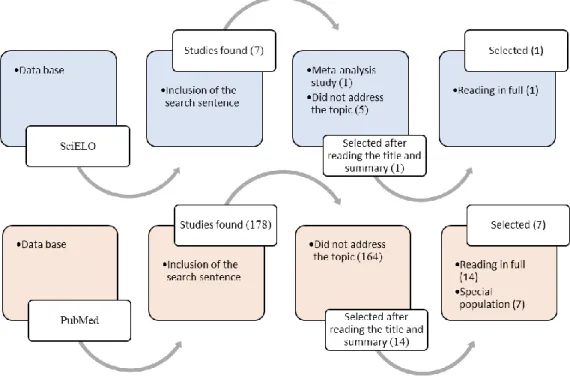
After including the search sentence in two databases (PubMed and SciELO) and adoption of the established search criteria, eight articles were selected that profiled all the criteria, one article being found in SciELO and seven found in the PubMed database. Figure 1 represents the flowchart of the manuscript selection process, as well as the eligibility criteria. In the first moment, the search sentence was included in both bases, the second stage consisted of reading the titles and abstracts of the manuscripts to be evaluated and, finally, the full reading of the articles was performed.
Braz. J. of Develop.,Curitiba, v. 6, n. 8, p. 57834-57851 aug. 2020. ISSN 2525-8761
Figure 1 . Flowchart of the article selection process. In first stage of search, the sentences were included in two databases (PubMed and SciELO), while second stage consisted of reading titles and abstracts. Finally, the articles selected in previous stages were read in full.
As shown in the flowchart in figure 1, seven articles were found in the SciELO database after inclusion of the search sentence. However, after reading the titles and abstracts only one article was within the criteria adopted in the present investigation, representing 33% of the articles initially found. It is worth mentioning that some articles used more than one group to conduct the research. However, only the groups that performed high intensity interval training (HIIT) were used in the present investigation, and the other groups were removed from the analysis
In the PubMed database, 178 articles were found after inclusion of the search sentence. However, only 14 articles met the established criteria, and after reading the articles in full it was identified that seven studies involved special groups, being population with cardiovascular diseases, prostate cancer and type 2 diabetes mellitus. Thus, only seven articles of the 178 initially found were included, making up a total of 4% of the articles recovered.
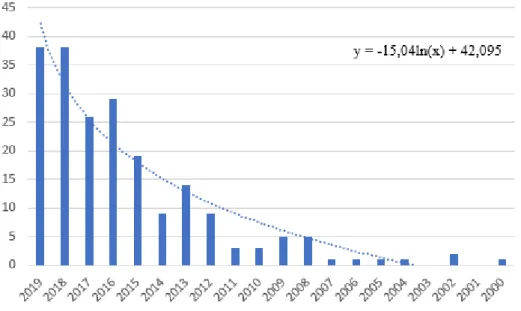
After insertion of the search sentence in the PubMed database, constant increase in the number of productions has been identified over the years. It was identified that of the 178 articles initially found, most of the productions were in greater number in the last two years (2018 and 2019), totaling 76 articles, which represents a total of 42.7% of the productions on the subject in the last two years, according to figure 2. This increase can be explained by the high number of obese individuals globally and the comorbidities associated with this disease. The lack of time to perform a longer physical activity may be one of the reasons for the inclusion of HIIT in your exercise
Braz. J. of Develop.,Curitiba, v. 6, n. 8, p. 57834-57851 aug. 2020. ISSN 2525-8761
routine, considering that it promotes the same effects of aerobic training and can also promote an increase in lean mass with less exercise time.
Figure 2. Number of articles found after inclusion of the search sentence in the PubMed database. It was verified that there has been an increasing number of studies involving interval training over the years in relation to body fat.
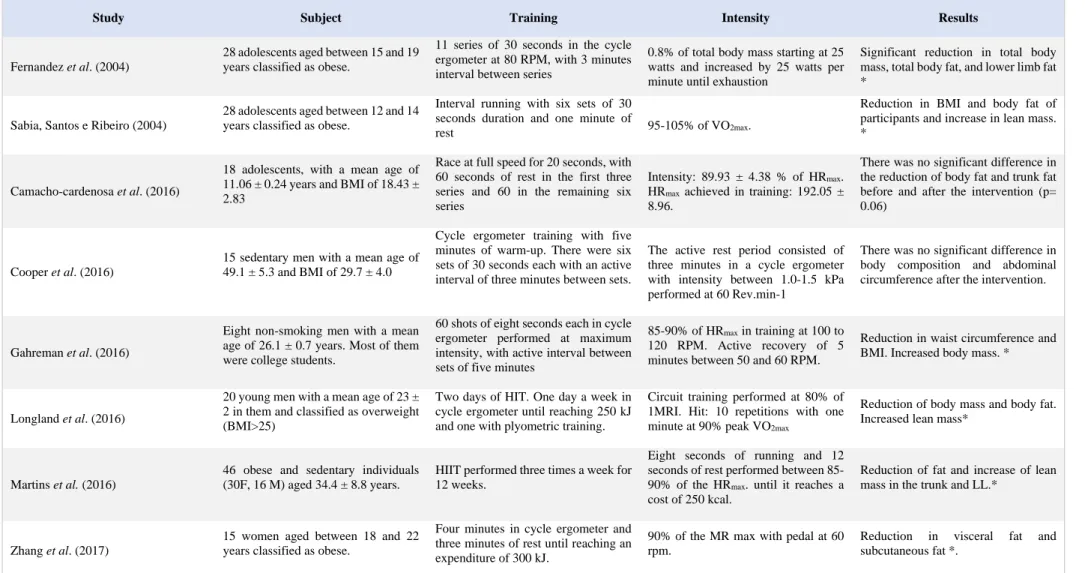
Among the articles recovered after inclusion of the search sentence in the PubMed database (figure 2), only seven met all the criteria of the present investigation. Table 1 presents the articles selected after inclusion and exclusion criteria that were part of the current investigation. It is represented the seven articles of the PubMed database and one of the SciELO database. In this table, the number of participants does not correspond to the total number of subjects in the article, but to the number of members who were part of the HIIT experimental group. Thus, it is more reliable and valid to analyze the data. A total of 178 subjects were analyzed who were included in the HIIT group of the selected studies.
Braz. J. of Develop.,Curitiba, v. 6, n. 8, p. 57834-57851 aug. 2020. ISSN 2525-8761
Table 1. Studies using high intensity interval training.
Study Subject Training Intensity Results
Fernandez et al. (2004)
28 adolescents aged between 15 and 19 years classified as obese.
11 series of 30 seconds in the cycle ergometer at 80 RPM, with 3 minutes interval between series
0.8% of total body mass starting at 25 watts and increased by 25 watts per minute until exhaustion
Significant reduction in total body mass, total body fat, and lower limb fat *
Sabia, Santos e Ribeiro (2004)
28 adolescents aged between 12 and 14 years classified as obese.
Interval running with six sets of 30 seconds duration and one minute of
rest 95-105% of VO2max.
Reduction in BMI and body fat of participants and increase in lean mass. *
Camacho-cardenosa et al. (2016)
18 adolescents, with a mean age of 11.06 ± 0.24 years and BMI of 18.43 ± 2.83
Race at full speed for 20 seconds, with 60 seconds of rest in the first three series and 60 in the remaining six series
Intensity: 89.93 ± 4.38 % of HRmax. HRmax achieved in training: 192.05 ± 8.96.
There was no significant difference in the reduction of body fat and trunk fat before and after the intervention (p= 0.06)
Cooper et al. (2016)
15 sedentary men with a mean age of 49.1 ± 5.3 and BMI of 29.7 ± 4.0
Cycle ergometer training with five minutes of warm-up. There were six sets of 30 seconds each with an active interval of three minutes between sets.
The active rest period consisted of three minutes in a cycle ergometer with intensity between 1.0-1.5 kPa performed at 60 Rev.min-1
There was no significant difference in body composition and abdominal circumference after the intervention.
Gahreman et al. (2016)
Eight non-smoking men with a mean age of 26.1 ± 0.7 years. Most of them were college students.
60 shots of eight seconds each in cycle ergometer performed at maximum intensity, with active interval between sets of five minutes
85-90% of HRmax in training at 100 to 120 RPM. Active recovery of 5 minutes between 50 and 60 RPM.
Reduction in waist circumference and BMI. Increased body mass. *
Longland et al. (2016)
20 young men with a mean age of 23 ± 2 in them and classified as overweight (BMI>25)
Two days of HIT. One day a week in cycle ergometer until reaching 250 kJ and one with plyometric training.
Circuit training performed at 80% of 1MRI. Hit: 10 repetitions with one minute at 90% peak VO2max
Reduction of body mass and body fat. Increased lean mass*
Martins et al. (2016)
46 obese and sedentary individuals (30F, 16 M) aged 34.4 ± 8.8 years.
HIIT performed three times a week for 12 weeks.
Eight seconds of running and 12 seconds of rest performed between 85-90% of the HRmax. until it reaches a cost of 250 kcal.
Reduction of fat and increase of lean mass in the trunk and LL.*
Zhang et al. (2017)
15 women aged between 18 and 22 years classified as obese.
Four minutes in cycle ergometer and three minutes of rest until reaching an expenditure of 300 kJ.
90% of the MR max with pedal at 60 rpm.
Reduction in visceral fat and subcutaneous fat *.
RPM= Revolutions per Minute; MRI = Maximum Repetition; HRmax= Maximum heart rate; VO2max= Maximum Volume of Oxygen captured by the body in one minute; Rev= Revolution (full back); kPa= Kilopascal (103 Pascal); kJ= Kilojoule (103 joule); min= minute; BMI= Body Mass Index, LL= Lower limbs, F= female, M= male, kcal= kilocalories (103 calories). * p =0.05; ** p=0.001.
Braz. J. of Develop.,Curitiba, v. 6, n. 8, p. 57834-57851 aug. 2020. ISSN 2525-8761
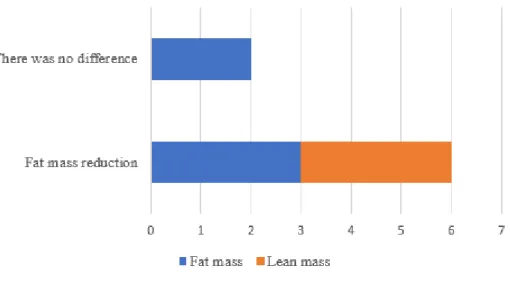
According to table 1, it can be seen that of the eight articles analyzed in full, only two studies did not demonstrate a significant reduction in the percentage of body fat, representing a total of 25% of the studies. In contrast, six investigations demonstrated a marked reduction in the percentage of body fat, representing 75% of the studies analyzed, when the participants were compared before and after the intervention period. It can also be seen that of the six articles that demonstrated a reduction in body fat, three (50%) demonstrated a significant increase in the participants lean mass, as shown in figure 3. These results represent a possible effect on the increase in basal metabolism, since that muscle tissue is metabolically active and represents 40% of body mass (Sebastián & Zorzano, 2020).
Figure 3. Graphical representation of data analysis. Here, the change in body composition of the participants included in the selected studies is represented. It is observed that six studies showed a reduction in body fat, three of which also showed an increase in lean mass. Only two studies found no significant differences in terms of body composition.
Regarding the number of participants included in the studies, it was found that of the 178 subjects analyzed in the present investigation, 145 demonstrated a reduction in body fat and 33 did not show a significant reduction, representing a total of 81.5% and 18.5%, respectively. These data demonstrate that HIIT training can be effective for reducing body fat in a shorter period of time, and can be performed by diabetic people or with other types of comorbidities, provided they are accompanied by a physical education professional.
High Intensity Interval Training and Body Composition
High intensity interval training (HIIT) has been envisioned as a treatment for obesity, considering that the practice of this modality significantly reduces the body and visceral fat of its practitioners. Thus, high intensity physical activity is seen as a substitute for traditional endurance
Braz. J. of Develop.,Curitiba, v. 6, n. 8, p. 57834-57851 aug. 2020. ISSN 2525-8761
training, since it promotes similar results in a reduced period of time, becoming an alternative to people who do not have time to perform prolonged activities (Cooper et al., 2016).
Gillen et al. (2013) conducted a study with the objective of investigating the effects of high intensity and low volume activities on body composition, muscle oxidative capacity and glycemic control. The sample consisted of 16 sedentary women with a mean age of 27± 8 years of age and classified as overweight. All participants performed 18 HIIT training sessions over a six-week period. The results indicated a significant loss in fat mass and an increase in fat-free mass after intervention with HIIT.
In a similar study, Kong et al. (2016) investigated the effects of five weeks of high intensity training on body composition in overweight people. The training consisted of 60 shots of eight seconds each in cycle ergometer performed at an intensity close to 90% of the maximum oxygen volume (VO2max), with 12 seconds of rest between sets. After the intervention with high intensity
training there were no significant changes in the body composition of the participants.
As previously reported, obesity is characterized as a public health problem and is associated with the emergence of chronic non-communicable diseases. The absence of physical activity has become one of the aggravating factors for this problem, including for the adolescent population. A survey conducted by Herget et al. (2016) in overweight adolescents, demonstrated that high intensity and low volume training can become an important tool for reducing abdominal and trunk fat.
In view of the inclusion of both traditional endurance training and HIIT aimed at reducing body fat, a study conducted by Zhang et al. (2017) sought to verify the effects of 12 weeks of endurance training with HIIT training in young obese women for 12 weeks on visceral fat. The study results indicated that there was no difference in body fat between both methods employed. Thus, HIIT becomes an effective strategy for the reduction of body fat, in view of the shorter time used for its realization.
Thus, it is observed that HIIT demonstrates, in most studies, beneficial effects on total and visceral body fat, in addition to the preservation and/or increase of lean mass due to high intensity during exercise. However, when high intensity interval training is associated with dietary orientation with high protein intake (2.4 g/kg/day) and low calorie intake the effects can be enhanced, intensifying the participants lean mass and reducing body fat (Longland et al., 2016).
Braz. J. of Develop.,Curitiba, v. 6, n. 8, p. 57834-57851 aug. 2020. ISSN 2525-8761
High Intensity Interval Training and Reduction of Comorbidities
High intensity interval training (HIIT) becomes effective in reducing body fat by promoting metabolic and molecular changes in skeletal muscle similar to endurance. HIIT promotes changes in both hormonal profile and glycemic profile, being especially interesting for people with comorbidities including type 2 diabetes mellitus (Jabardo-Camprubí, Donat-Roca, Sitjà-Rabert, Milà-Villarroel, & Bort-Roig, 2020). In addition, studies have described the role of HIIT in reducing inflammatory conditions (Tucker, Briskey, Scanlan, Coombes, & Dalbo, 2015) and cardiovascular diseases (Gjellesvik et al., 2020; Rahmati-Ahmadabad et al., 2018). This section discusses the effects of interval training on the reduction of these pathologies.
HIIT and cardiovascular diseases
Cardiovascular diseases (CVDs), according to data from the World Health Organization, represent the main cause of mortality worldwide. It is estimated that approximately 17.9 million people die due to cardiovascular disease each year, representing a total of 31% of all registered deaths, with stroke and heart attack being the main causes of death caused by cardiovascular accidents (World Health Organization, 2016).
One of the factors that act in the promotion of CVDs is in the increase of endogenous cholesterol production and also in the increase of exogenous cholesterol through processed foods. Thus, several types of pharmacological treatments have been envisioned for the improvement of lipid profile, such as the use of statins, such as rosuvastatin. Rosuvastatin acts to reduce endogenous cholesterol production by inhibiting the action of the enzyme 3-hydroxy-3-methylglutaril-coenzyme-A-reductase (HMG-CoA). Inhibition of its activity causes a reduction in the production of mevalonate, a precursor to the synthesis of endogenous cholesterol by the liver (Berg, Tymoczko, & Stryer, 2014; Nicholls, 2008).
However, it is currently known that physical activity is capable of promoting an improvement in lipid profile, both the predominantly aerobic and the predominantly anaerobic physical activity. In order to understand the mechanisms of HIIT exercise on the improvement in lipid profile, Rahmati-ahmadabad et al. (2018) investigated the effects of high intensity interval training on reverse cholesterol transport. For the research, the authors used 20 adult male Wistar rats and divided them into two groups: a control group (CG= 10) and an experimental group (EG= 10). The EG performed the HIIT with intensity of 90 to 95% of VO2max five days a week on a
treadmill, the intervention lasted 10 weeks. The study result pointed to an increase in messenger ribonucleic acids (mRNA) of ATP-dependent transmembrane proteins type 1 (ABCA1). Changes
Braz. J. of Develop.,Curitiba, v. 6, n. 8, p. 57834-57851 aug. 2020. ISSN 2525-8761
in the expression of genes related to these proteins were accompanied by changes in lecithin-cholesterol acyltransferase (LCAT) and high-density lipoproteins (HDL). Thus, HIIT was able to promote increased gene expression related to reverse cholesterol transport, which indicates an atheroprotective effect.
In addition, it is known that atherosclerosis is the main pathological mechanism for CVDs and that it is configured as a multifactorial disease of predominantly inflammatory character (Geovanini & Libby, 2018). Seeking to verify the antioxidant and anti-inflammatory effects of HIIT, a study conducted by Tucker et al. (2015) used animal model to perform the exercise with an intensity and 85% of VO2max four days a week for eight weeks. The study result showed an increase
in the expression of superoxide dismutase type 1 (SOD1) genes and catalase enzyme, demonstrating a general reduction in oxidative stress. Regarding inflammatory markers, it was verified that HIIT training promoted an increase in gene expression of tumor necrosis receptor factor superfamily member 1B (TNFRSF1B), indicating an anti-inflammatory effect.
Considering that cardiovascular diseases are associated with stroke, a study recruited 70 volunteers who had already had at least one case of stroke to participate in the HIIT training, with four sessions of four minutes each with intensity between 85 and 95% of the maximum heart rate (HRmax). The aim of the study was to verify whether eight weeks of HIIT together with standard
care could promote an increase in the peak VO2max of these patients. The study result showed that
the HIIT intervention was able to promote a significant improvement in peak VO2max when
compared to the group only with standard treatment (Gjellesvik et al., 2020) and the increase in VO2
acts as an atheroprotective factor (Chu et al., 2020)
According to the articles cited above, the performance of HIIT may be able to promote improvements in the cardiovascular system due to the increase in HDL, reduction of inflammatory factors and oxidative damage that, when analyzed together, suggest an atheroprotective mechanism. It was also found that even people who reported the first case of stroke when inserted into the practice of HIIT experienced improvements in their maximum level of oxygen consumption, indicating an atheroprotective effect.
HIIT and diabetes mellitus
Type 2 Diabetes Mellitus (DM2) is characterized by persistent insulin resistance with resultant hyperglycemia. In this regard, insulin is unable to promote glucose transport from the extracellular to intracellular environment, usually caused by changes in protein-activated adenosine 5'-monophosphate (AMP) by protein kinase (AMPK) (Zhang, Zhou, & Li, 2009). AMPK acts on
Braz. J. of Develop.,Curitiba, v. 6, n. 8, p. 57834-57851 aug. 2020. ISSN 2525-8761
protein kinase A (PKA) (Berg et al., 2014), which in turn acts on the translocation of type 4 glucose transporters (GLUT-4) to the cell membrane, allowing the internalization of glucose molecules. In view of the role of AMPK for DM2, some pharmacological treatments have been used, such as metformin, which acts in the translocation of GLUT-4 (Horsburgh, Barson, Zeng, Sharples & Parkin, 2019).
According to the Brazilian Diabetes Society (SBD) expenses related to DM2 range from 5 to 20% of total expenditures, which directly impacts on health systems (Guidelines of the Brazilian Diabetes Society, 2020). In 2017, Brazil occupied the sixth position in the ranking of countries that spent the most on diabetes treatments in health systems, making a total of approximately US$ 24 billion, second only to the USA, China, Germany, India and Japan. Among the total number of individuals affected by the disease, Brazil ranked fourth, representing a total of 12.5 million people diagnosed with DM2 (International Diabetes Federation, 2017).
According to the WHO, among the countries of the Americas, Brazil ranked second in the number of cases, second only to the USA. One of the worrying factors regarding diabetes is the projections made in the coming years. In 2000, the number of cases registered in Brazil was approximately 4.5 million, and approximately 11.5 million people with the disease were projected for 2030 ( World Health Organization, 2011) a growth of approximately 255%, as illustrated in
figure 4.
Figure 1. Number of people affected by diabetes. The image shows the 10 countries in the Americas with the highest number of diagnosed cases.
Braz. J. of Develop.,Curitiba, v. 6, n. 8, p. 57834-57851 aug. 2020. ISSN 2525-8761
Chronic hyperglycemia increases the risk of morbidity and mortality through the development of inflammatory, metabolic and even cardiovascular responses. Therefore, in addition to the traditional pharmacological methods indicated for glycemic control and the general health of patients with DM2, lifestyle changes are highly indicated, with emphasis on physical activity practices (Jiménez-Maldonado, García-Suárez, Rentería, Moncada-Jiménez, & Plaisance, 2020).
Muscle contraction during physical exercise does not significantly alter circulating insulin levels, however, it promotes increased AMP concentration and consequent AMPK activation, acting on GLUT-4 translocation to the sarcolemma membrane and t-tubule, facilitating glucose transport to the muscle in a similar way to insulin (Pereira et al., 2017; Richter & Hargreaves, 2013). HIIT is known as an alternative to conventional physical activities due to the reduced time period for its execution. Related specifically to DM2, HIIT is able to promote insulin sensitivity and glycemic control in adults (Jelleyman et al., 2015). Comparatively, high intensity training may be more effective in glycemic control for DM2 patients than traditional moderate intensity resistance training (MIT) (Winding et al., 2018).
In order to assess and compare over 11 weeks whether low volume HIIT can be as effective as resistance training in glycemic control, physical fitness and body composition in individuals with DM2, Winding et al. (2018) recruited a total of 29 individuals with DM2 for the research. The individuals were divided into control groups (without training; n = 7), HIIT groups (n = 13) or MIT (n = 12). Both training groups performed three cycling sessions per week for 11 weeks, 40 min/session at 50% of the workload (MIT) or 20 min/session at 95% of the workload, with one minute interval for recovery (20% of load) (HIIT). Compared to MIT resistance training, the results showed that despite the lower energy expenditure and training time, the HIIT showed similarities and improvements in physical conditioning, body composition and glycemic control, consisting of an efficient practice for patients with DM2.
4 CONCLUSION
It should be recalled that the objective of this research was to conduct an integrative review on HIIT on body fat reduction. According to the survey of the studies, it can be identified that of the eight studies analyzed only two (25%) have not demonstrated a significant reduction in body fat. In contrast, six studies (75%) showed a reduction in body fat with the implementation of HIIT, and of the six studies, three (50%) reported that in addition to the reduction in the total body fat of the participants, there was also an increase in lean mass. It was also found that the practice of HIIT, compared to low or medium intensity aerobic training, becomes more effective in relation to the
Braz. J. of Develop.,Curitiba, v. 6, n. 8, p. 57834-57851 aug. 2020. ISSN 2525-8761
loss of abdominal fat, the latter being considered a risk factor for the development of several chronic non-communicable diseases. In this way, HIIT training becomes interesting with regard to the reduction of fat mass in relation to traditional methods, medium intensity and long duration, in view of its shorter administration time and the promotion of the same benefits of aerobic physical activity, being a relevant supporting factor to traditional treatments for several chronic non-communicable diseases, such as CVDs and DM2.
REFERENCES
Alonso-Fernández, D., Fernández-Rodríguez, R., Taboada-Iglesias, Y., & Gutiérrez-Sánchez, Á. (2019). Impact of a HIIT protocol on body composition and VO2max in adolescents. Science & Sports, 34(5), 341–347. https://doi.org/10.1016/j.scispo.2019.04.001
Berg, J. M., Tymoczko, J. L., & Stryer, L. (2014). Bioquímica (7th ed.). Rio de janeiro: Guanabara Koogan.
Boudou, P., de Kerviler, E., Erlich, D., Vexiau, P., & Gautier, J.-F. (2001). Exercise training-induced triglyceride lowering negatively correlates with DHEA levels in men with type 2 diabetes. International Journal of Obesity, 25(8), 1108–1112. https://doi.org/10.1038/sj.ijo.0801637
Boutcher, S. H. (2011). High-Intensity Intermittent Exercise and Fat Loss. Journal of Obesity, 2011, 1–10. https://doi.org/10.1155/2011/868305
Camacho-Cardenosa, A., Brazo-Sayavera, J., Camacho-Cardenosa, M., Marcos-Serrano, M., Timón, R., & Olcina, G. (2016). Original Effects of High Intensity Interval Training on Fat Mass Parameters in Adolescents (*). Rev Esp Salud Pública, 90(21), 1–9. Retrieved from www.msc.es/resp
Chu, D. J., Al Rifai, M., Virani, S. S., Brawner, C. A., Nasir, K., & Al-Mallah, M. H. (2020). The relationship between cardiorespiratory fitness, cardiovascular risk factors and atherosclerosis. Atherosclerosis, 304(April), 44–52. https://doi.org/10.1016/j.atherosclerosis.2020.04.019
Cooper, J. H. F., Collins, B. E. G., Adams, D. R., Robergs, R. A., & Donges, C. E. (2016). Limited Effects of Endurance or Interval Training on Visceral Adipose Tissue and Systemic Inflammation
in Sedentary Middle-Aged Men. Journal of Obesity, 2016, 1–10.
https://doi.org/10.1155/2016/2479597
Dias, P. C., Henriques, P., Dos Anjos, L. A., & Burlandy, L. (2017). Obesity and public policies: The Brazilian government’s definitions and strategies. Cadernos de Saude Publica, 33(7), 1–12. https://doi.org/10.1590/0102-311X00006016
Epidemiologia e impacto global do diabetes mellitus. (2020). In Guidelines of the Brazilian Diabetes
Society 2019-2020 (pp. 12–18). Retrieved from
Braz. J. of Develop.,Curitiba, v. 6, n. 8, p. 57834-57851 aug. 2020. ISSN 2525-8761
Fernandez, A. C., Mello, M. T. de, Tufik, S., Castro, P. M. de, & Fisberg, M. (2004). Influência do treinamento aeróbio e anaeróbio na massa de gordura corporal de adolescentes obesos. Revista Brasileira de Medicina Do Esporte, 10(3), 152–158. https://doi.org/10.1590/S1517-86922004000300004
Fonseca-Junior, S. J., Sá, C. G. A. de B., Rodrigues, P. A. F., Oliveira, A. J., & Fernandes-Filho, J. (2013). Exercício físico e obesidade mórbida: uma revisão sistemática. ABCD. Arquivos Brasileiros de Cirurgia Digestiva (São Paulo), 26(suppl 1), 67–73. https://doi.org/10.1590/S0102-67202013000600015
Gahreman, D., Heydari, M., Boutcher, Y., Freund, J., & Boutcher, S. (2016). The Effect of Green Tea Ingestion and Interval Sprinting Exercise on the Body Composition of Overweight Males: A Randomized Trial. Nutrients, 8(8), 510. https://doi.org/10.3390/nu8080510
Geovanini, G. R., & Libby, P. (2018). Atherosclerosis and inflammation: overview and updates. Clinical Science, 132(12), 1243–1252. https://doi.org/10.1042/CS20180306
Gibala, M. J., Little, J. P., MacDonald, M. J., & Hawley, J. A. (2012). Physiological adaptations to low-volume, high-intensity interval training in health and disease. The Journal of Physiology, 590(5), 1077–1084. https://doi.org/10.1113/jphysiol.2011.224725
Gillen, J. B., Percival, M. E., Ludzki, A., Tarnopolsky, M. A., & Gibala, M. J. (2013). Interval training in the fed or fasted state improves body composition and muscle oxidative capacity in overweight women. Obesity, 21(11), 2249–2255. https://doi.org/10.1002/oby.20379
Gjellesvik, T. I., Becker, F., Tjønna, A. E., Indredavik, B., Nilsen, H., Brurok, B., Askim, T. (2020). Effects of High-Intensity Interval Training After Stroke (the HIIT-Stroke Study): A Multicenter Randomized Controlled Trial. Archives of Physical Medicine and Rehabilitation, 101(6), 939–947. https://doi.org/10.1016/j.apmr.2020.02.006
Herget, S., Reichardt, S., Grimm, A., Petroff, D., Käpplinger, J., Haase, M., Blüher, S. (2016). High-intensity interval training for overweight adolescents: Program acceptance of a media supported intervention and changes in body composition. International Journal of Environmental Research and Public Health, 13(11), 1099. https://doi.org/10.3390/ijerph13111099
Horsburgh, S., Barson, D., Zeng, J., Sharples, K., & Parkin, L. (2019). Adherence to metformin monotherapy in people with type 2 diabetes mellitus in New Zealand. Diabetes Research and Clinical Practice, 158, 107902. https://doi.org/10.1016/j.diabres.2019.107902
Hruby, A., Manson, J. E., Qi, L., Malik, V. S., Rimm, E. B., Sun, Q., Hu, F. B. (2016). Determinants and Consequences of Obesity. American Journal of Public Health, 106(9), 1656–1662. https://doi.org/10.2105/AJPH.2016.303326
Jabardo-Camprubí, G., Donat-Roca, R., Sitjà-Rabert, M., Milà-Villarroel, R., & Bort-Roig, J. (2020). Drop-out ratio between moderate to high-intensity physical exercise treatment by patients with, or at risk of, type 2 diabetes mellitus: A systematic review and meta-analysis. Physiology & Behavior, 215(June 2019), 112786. https://doi.org/10.1016/j.physbeh.2019.112786
Braz. J. of Develop.,Curitiba, v. 6, n. 8, p. 57834-57851 aug. 2020. ISSN 2525-8761
Jelleyman, C., Yates, T., O’Donovan, G., Gray, L. J., King, J. A., Khunti, K., & Davies, M. J. (2015). The effects of high-intensity interval training on glucose regulation and insulin resistance: a meta-analysis. Obesity Reviews, 16(11), 942–961. https://doi.org/10.1111/obr.12317
Jiménez-Maldonado, A., García-Suárez, P. C., Rentería, I., Moncada-Jiménez, J., & Plaisance, E. P. (2020). Impact of high-intensity interval training and sprint interval training on peripheral markers of glycemic control in metabolic syndrome and type 2 diabetes. Biochimica et Biophysica
Acta (BBA) - Molecular Basis of Disease, 1866(8), 165820.
https://doi.org/10.1016/j.bbadis.2020.165820
Kong, Z., Sun, S., Liu, M., & Shi, Q. (2016). Short-Term High-Intensity Interval Training on Body Composition and Blood Glucose in Overweight and Obese Young Women. Journal of Diabetes Research, 2016, 1–9. https://doi.org/10.1155/2016/4073618
Longland, T. M., Oikawa, S. Y., Mitchell, C. J., Devries, M. C., & Phillips, S. M. (2016). Higher compared with lower dietary protein during an energy deficit combined with intense exercise promotes greater lean mass gain and fat mass loss: a randomized trial. The American Journal of Clinical Nutrition, 103(3), 738–746. https://doi.org/10.3945/ajcn.115.119339
Marcelo, J. F., & Hayashi, M. C. P. I. (2013). Estudo bibliométrico sobre a produção científica da área da sociologia da ciência. Informação & Informação, 18(3), 138–153. https://doi.org/10.5433/1981-8920.2013v18n3p138
Martins, C., Kazakova, I., Ludviksen, M., Mehus, I., Wisloff, U., Kulseng, B., King, N. (2016). High-intensity interval training and Isocaloric moderate-intensity continuous training result in similar improvements in body composition and fitness in obese individuals. International Journal of Sport Nutrition and Exercise Metabolism, 26(3), 197–204. https://doi.org/10.1123/ijsnem.2015-0078
Nicholls, S. J. (2008). Rosuvastatin and progression of atherosclerosis. Expert Review of Cardiovascular Therapy, 6(7), 925–933. https://doi.org/10.1586/14779072.6.7.925
Nuttall, F. Q. (2015). Body Mass Index. Nutrition Today, 50(3), 117–128. https://doi.org/10.1097/NT.0000000000000092
Pereira, R. M., Moura, L. P. de, Muñoz, V. R., Silva, A. S. R. da, Gaspar, R. S., Ropelle, E. R., & Pauli, J. R. (2017). Molecular mechanisms of glucose uptake in skeletal muscle at rest and in response to exercise. Motriz: Revista de Educação Física, 23(spe), 1–8. https://doi.org/10.1590/s1980-6574201700si0004
Rahmati-Ahmadabad, S., Shirvani, H., Ghanbari-Niaki, A., & Rostamkhani, F. (2018). The effects of high-intensity interval training on reverse cholesterol transport elements: A way of cardiovascular
protection against atherosclerosis. Life Sciences, 209(August), 377–382.
https://doi.org/10.1016/j.lfs.2018.08.036
Richter, E. A., & Hargreaves, M. (2013). Exercise, GLUT4, and Skeletal Muscle Glucose Uptake. Physiological Reviews, 93(3), 993–1017. https://doi.org/10.1152/physrev.00038.2012
Braz. J. of Develop.,Curitiba, v. 6, n. 8, p. 57834-57851 aug. 2020. ISSN 2525-8761
Ross, L. M., Porter, R. R., & Durstine, J. L. (2016). High-intensity interval training (HIIT) for patients with chronic diseases. Journal of Sport and Health Science, 5(2), 139–144. https://doi.org/10.1016/j.jshs.2016.04.005
Sabia, R. V., Santos, J. E. dos, & Ribeiro, R. P. P. (2004). Efeito da atividade física associada à orientação alimentar em adolescentes obesos: comparação entre o exercício aeróbio e anaeróbio. Revista Brasileira de Medicina Do Esporte, 10(5), 349–355. https://doi.org/10.1590/S1517-
86922004000500002
Sadikot, S., & Cho, N. H. (2017). IDF DIABETES ATLAS (8th ed.; International Diabetes Federation, Ed.). Retrieved from www.diabetesatlas.org
Sebastián, D., & Zorzano, A. (2020). Self-Eating for Muscle Fitness: Autophagy in the Control of
Energy Metabolism. Developmental Cell, 54(2), 268–281.
https://doi.org/10.1016/j.devcel.2020.06.030
Silva, R. C. Q., Miranda, W. L., Chacra, A. R., & Dib, S. A. (2007). Insulin resistance, β-cell function, and glucose tolerance in Brazilian adolescents with obesity or risk factors for type 2 diabetes mellitus. Journal of Diabetes and Its Complications, 21(2), 84–92. https://doi.org/10.1016/j.jdiacomp.2005.11.006
Souza, L. J. de, Neto, C. G., Chalita, F. E. B., Reis, A. F. F., Bastos, D. A., Filho, J. T. D. S., … Côrtes, V. A. (2003). Prevalência de obesidade e fatores de risco cardiovascular em Campos, Rio de Janeiro. Arquivos Brasileiros de Endocrinologia & Metabologia, 47(6), 669–676. https://doi.org/10.1590/S0004-27302003000600008
Souza, M. T., Silva, M. D., & Carvalho, R. (2010). Integrative review: what is it? How to do it? Einstein (São Paulo), 8(1), 102–106. https://doi.org/10.1590/s1679-45082010rw1134
Teixeira, F. da C., Pereira, F. E. F., Pereira, A. F., & Ribeiro, B. G. (2020). Overweight or obesity and abdominal obesity and their association with cardiometabolic risk factors in Brazilian
schoolchildren: A cross-sectional study. Nutrition, 78, 1–6.
https://doi.org/10.1016/j.nut.2020.110780
Tucker, P. S., Briskey, D. R., Scanlan, A. T., Coombes, J. S., & Dalbo, V. J. (2015). High intensity interval training favourably affects antioxidant and inflammation mRNA expression in early-stage chronic kidney disease. Free Radical Biology and Medicine, 89, 466–472. https://doi.org/10.1016/j.freeradbiomed.2015.07.162
Vekic, J., Zeljkovic, A., Stefanovic, A., Jelic-Ivanovic, Z., & Spasojevic-Kalimanovska, V. (2019). Obesity and dyslipidemia. Metabolism, 92, 71–81. https://doi.org/10.1016/j.metabol.2018.11.005 Winding, K. M., Munch, G. W., Iepsen, U. W., Van Hall, G., Pedersen, B. K., & Mortensen, S. P. (2018). The effect on glycaemic control of low‐volume high‐intensity interval training versus endurance training in individuals with type 2 diabetes. Diabetes, Obesity and Metabolism, 20(5), 1131–1139. https://doi.org/10.1111/dom.13198
World health organization. (2018). Obesity and overweight. Retrieved March 23, 2019, from https://www.who.int/en/news-room/fact-sheets/detail/obesity-and-overweight
Braz. J. of Develop.,Curitiba, v. 6, n. 8, p. 57834-57851 aug. 2020. ISSN 2525-8761
World Health Organization. (2011). Country and regional data on diabetes. Retrieved July 25, 2020,
from Country and regional data on diabetes website:
http://www.who.int/diabetes/facts/world_figures/en/
World Health Organization. (2016). World Heart Day: Scale up prevention of heart attack and stroke. Retrieved December 5, 2018, from http://www.who.int/cardiovascular_diseases/world-heart-day/en/
Zhang, B. B., Zhou, G., & Li, C. (2009). AMPK: An Emerging Drug Target for Diabetes and the Metabolic Syndrome. Cell Metabolism, 9(5), 407–416. https://doi.org/10.1016/j.cmet.2009.03.012 Zhang, H., Tong, T. K., Qiu, W., Zhang, X., Zhou, S., Liu, Y., & He, Y. (2017). Comparable Effects of High-Intensity Interval Training and Prolonged Continuous Exercise Training on Abdominal Visceral Fat Reduction in Obese Young Women. Journal of Diabetes Research, 2017, 1–9. https://doi.org/10.1155/2017/5071740