Universidade de Lisboa
Faculdade de Ciências
Departamento de Biologia Animal
F
OREST
C
ERTIFICATION AS A PROMOTION TOOL FOR
S
USTAINABLE
F
OREST
M
ANAGEMENT IN
P
ORTUGAL
Joana Alexandra Gomes Marques
Mestrado em Ecologia e Gestão Ambiental
Universidade de Lisboa
Faculdade de Ciências
Departamento de Biologia Animal
F
OREST
C
ERTIFICATION AS A PROMOTION TOOL FOR
S
USTAINABLE
F
OREST
M
ANAGEMENT IN
P
ORTUGAL
Joana Alexandra Gomes Marques
Mestrado em Ecologia e Gestão Ambiental
Dissertação orientada pelo Prof. Doutor Henrique Cabral
Com co-orientação da Dra. Filipa de Jesus Gouveia
Abstract
i
A
BSTRACT
Sustainable Forest Management (SFM) intends to balance all interests pending on forests, whether they are social, economic or environmental. SFM can be implemented and verified through certification schemes, with a set of Principles, Criteria and Indicators. The Forest Stewardship Council (FSC) and the Program for Endorsement of Forest Certification (PEFC) schemes have been implemented in Portugal since 2003 and still hasn‘t been done an evaluation of its progress in Portuguese forestry.
With this study were assessed what type of companies have joined certification, and their perceptions on the process. For this, surveys were applied to 71 certified companies in Portugal. Relationships were sought between the opinions presented and the standards adopted. Additionally, through the analysis of surveillance reports, was verified if certification had real impacts on forest practices, and which were the most common causes for non-compliance with standards. At last, the hypothesis of developing a new national forestry certification standard in compliance with several international schemes was evaluated, and four standards were compared and analysed for similarities. Surveys were sent to five auditing companies and an A‘WOT was performed based on their response.
Groups of companies were found with distinctive features, reasoning and benefits from certification. These groups were associated with a different type of certification according with its characteristics. Also related with the companies‘ characteristics were the types of non-compliances addressed in audits. Most non-non-compliances concerned social and system issues and these persisted even post certification. However certification has contributed to enhance forest management and environmental practices. The impacts found were similar to both the FSC and the PEFC standards. The strategic analysis has shown that positive aspects weight more than negatives, and therefore the development of a national standard would be desirable to the Portuguese forestry sector.
Keywords: Forest Certification, Forest Stewardship Council, Program for the Endorsement of
Resumo
iii
R
ESUMO
As florestas têm um papel essencial nos ecossistemas, além dos múltiplos recursos fornecidos à comunidade. A forma como são geridos e conciliados os diversos interesses incidentes nas florestas tem levantado diversas questões, desde a primeira Conferência das Nações Unidas sobre Ambiente e Desenvolvimento em 1992. Para atingir uma gestão florestal sustentável e conseguir gerir todos os valores sociais, ambientais e económicos foram desenvolvidos Critérios e Indicadores por várias iniciativas internacionais. Estes mecanismos podem ser implementados e verificados através de sistemas de certificação florestal. Actualmente existe uma multiplicidade de sistemas de certificação com âmbito nacional ou regional, mas apenas dois com âmbito internacional: o Forest Stewardship Council (FSC) e o Program for the Endorsement of Forest Certification (PEFC).
Em Portugal a certificação florestal surgiu em 2003, através de ambos sistemas, tendo obtido rapidamente valores de área florestal certificada na ordem dos 8%. Considerando a importância económica, ambiental e social que as florestas representam para o país, a certificação pode potenciar o valor dos produtos comercializados e melhorar a gestão efectuada, reduzindo as ameaças incidentes. De acordo com a Estratégia Nacional para as Florestas, até 2013 pretende-se que existam cerca de 500 000 hectares de floresta certificada e 20% dos produtos de madeira e cortiça certificados. Existe no entanto bastante desconhecimento por parte do consumidor, e do público em geral, desta forma de valorização dos produtos, tornando a iniciativa pouco apelativa a proprietários com menor capacidade de investimento. Para contrabalançar estes factores, existem algumas propostas de formas de redução de custos e de recursos, através da criação de normas adaptadas ao contexto nacional.
Considerando as falhas de conhecimento existentes, com este estudo pretende-se investigar a forma como a certificação florestal está a ser conduzida e implementada em Portugal, assim como possíveis alternativas para tornar este processo acessível e apelativo a todos os interessados. Como primeiro trabalho sobre o assunto em Portugal, este estudo pretende também contextualizar o tema na actualidade e ser um possível ponto de partida para futuras questões.
A presente dissertação é constituída por um primeiro capítulo introdutório, seguido de três outros escritos sob a forma de publicação científica de forma a responder directamente às questões colocadas. For fim, estes são procedidos de um capítulo final com as considerações gerais da investigação.
Na introdução geral é abordado o conceito de gestão florestal sustentável e a forma como esta pode ser potenciada e avaliada através de sistemas de certificação florestal. É explicitada também a forma como os sistemas de gestão ambiental podem ser aplicados ao sector
Resumo
iv
florestal e a caracterização geral do sector em Portugal. Por fim são indicados os objectivos do presente trabalho.
No segundo capítulo procurou-se avaliar a forma como os proprietários florestais estão a reagir à certificação florestal. Para isso, investigou-se a hipótese de haver preferência na escolha do sistema de certificação adoptado, dependendo das características da exploração florestal. Assim, foi realizado um questionário dirigido a todos os proprietários florestais certificados procurando apurar quais os benefícios, desvantagens e motivos percepcionados, para aderir à certificação. Para aferir relações entre o tipo de exploração florestal e as respostas dadas ao questionário foram realizadas análises de tabelas de contingência, e análises multivariadas para verificar padrões nas respostas, através de análises de escalamento multidimensional e análise de clusters. Foram encontradas diferenças significativas no que diz respeito aos benefícios percepcionados e motivos de adesão, suportadas pelos agrupamentos detectados nas análises multivariadas. O sector florestal que procura certificação dos seus produtos e das suas práticas pode ser dividido em três grupos com características distintas, de acordo com os resultados obtidos. Um primeiro grupo diz respeito a proprietários industriais, geralmente de cadeia de custódia, que aderiram devido a pressões de compradores e que esperam obter ou já obtiveram benefícios económicos da certificação. No segundo grupo os proprietários não são industriais e têm certificados de gestão florestal FSC. Geralmente esperam melhorar as suas práticas ambientais e aderem devido a pressões dos seus fornecedores. Por último existem proprietários que têm certificação de gestão florestal por ambos os sistemas, FSC e PEFC, embora em menor número do que nos grupos anteriores. Esta diferenciação é confirmada por estudos anteriores, mostrando que diversos sectores da indústria florestal estão a aderir à certificação considerando-a uma mais valia. Foi ainda possível percepcionar a existência de um grupo emergente de proprietários, ainda em número reduzido, que procuram a certificação dupla, talvez em busca de benefícios adicionais, ou por pressões de mercado.
Seguidamente, procedeu-se à análise do impacto do processo de certificação nas práticas florestais implementadas. Procurou-se também relacionar os tipos de não-conformidades encontradas com a capacidade de adaptação dos proprietários às exigências das normas de certificação. Para isso foram utilizados relatórios de auditorias realizadas a todas as empresas certificadas pelo FSC e PEFC, registando-se o número de não-conformidades identificadas por critério e por tipo de não-conformidade. A análise dos relatórios demonstrou que existem alterações em todos os aspectos da gestão florestal, uma vez que foi pedido aos proprietários que alterassem práticas ambientais, sociais, de gestão, económicas e legais e de sistema. Não-conformidades sociais e de sistema foram as mais frequentes, e não foram resolvidas com sucesso em auditorias de seguimento. No entanto, as não-conformidades ambientais, de gestão e económicas e legais demonstraram algumas melhorias após a certificação. Os resultados também indicaram que maiores áreas certificadas apresentam um maior número de não-conformidades ambientais, no entanto o número de unidades de gestão florestal não parece influenciar o tipo de não-conformidades detectada. A monitorização dos resultados
Resumo
v globais das auditorias poderão contribuir para a melhoraria dos requisitos das normas em futuras revisões e ajudar os proprietários a saber em que áreas devem alocar mais esforços no cumprimento das normas de certificação.
No capítulo 4, foi feita uma avaliação estratégica da hipótese de elaboração de uma norma nacional, adaptada à realidade territorial, mas em conformidade com o FSC, o PEFC e com outros dois sistemas de gestão ambiental, o EMAS e a ISO 14001:2004. Com esse objectivo, foi feita uma comparação dos requisitos das quatro normas e uma análise A‘WOT. Esta última considerou as opiniões de entidades certificadoras, consultadas através de um inquérito. A comparação das normas demonstrou que a combinação destes diferentes tipos de certificação pode trazer benefícios para a manutenção e implementação de práticas florestais sustentáveis, nomeadamente colmatando problemas identificados em auditorias, explicitados no capítulo anterior. Através da análise estratégica comprovou-se que as entidas certificadoras são da opinião de que as vantagens de criar esta norma superariam as desvantagens, devendo no entanto de se acautelar eventuais contrapartidas relacionados com o desconhecimento das normas de certificação florestal por parte dos consumidores.
No último capítulo, é feita uma compilação das principais evidências deste estudo, assim como falhas no conhecimento que ficaram por esclarecer. A implementação deste tipo de normas que permitem certificar a boa gestão do local de origem dos produtos, é uma mais valia e deve continuar a ser promovida como forma de protecção dos recursos naturais. O desenvolvimento de novos caminhos para o futuro da certificação em Portugal é fundamental para que estas formas de gestão e conciliação de interesses possa expandir-se e proliferar. Assim sendo, este tipo de estudos deve continuar para melhorar a forma como a certificação é percepcionada e como forma de monitorizar o seu impacto nas práticas florestais.
Palavras-chave: Certificação Florestal, FSC, PEFC, Sistemas de Gestão Ambiental, Gestão
Resumo
Table of Contents
vii
T
ABLE OF CONTENTS
ABSTRACT
... IRESUMO
... IIILIST OF FIGURES
... VIIILIST OF TABLES
... IXLIST OF ABBREVIATIONS
... XCHAPTER I
... 1I.
General Introduction
... 2CHAPTER II
... 9II.
Trends in the adoption of forest certification in Portugal
... 10CHAPTER III
... 23III.
An Analysis of the impacts of forest certification standards in management
practices
... 24CHAPTER IV
... 37IV.
Development of a national forestry standard for Portugal in compliance with the
major Environmental Certification Schemes
... 38CHAPTER V
... 47V.
General Conclusions
... 48REFERENCES
... 50APPENDIXES
... 57Annex 1
... 58Annex 2
... 63Annex 3
... 65Annex 4
... 66Annex 5
... 68Annex 6
... 70Annex 7
... 72Annex 8
... 76List of Figures
viii
L
IST OF
F
IGURES
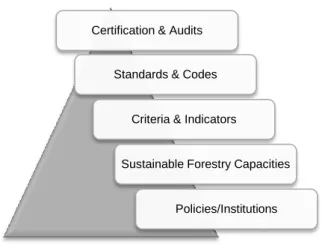
Figure I-1 - Pyramid of requirements for good forest practices. (Source: Thornber et al. 1999) .. 3
Figure II-1 - Proportion of respondents with individual, group, SLIMF and regional certification. ... 15
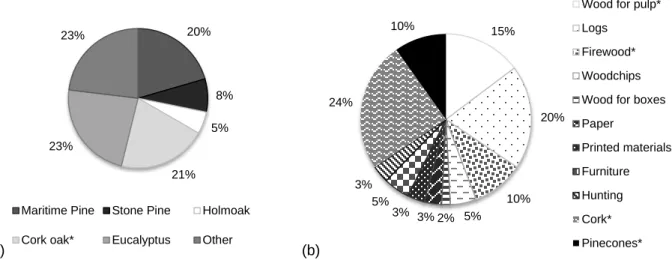
Figure II-2 - (a) Proportion of respondents, whose operation involves exploring species as presented. (b) Proportion of respondents that commercialize the products presented above. * significant for p<0.05 ... 16
Figure II-3 - Percentage of respondents who reported the listed motives as the primary drive for adopting forest certification. * significant for p<0.05 ... 16
Figure II-4 - Percentage of respondents who reported the listed benefits as resulting from certification. * significant for p<0.05 ... 17
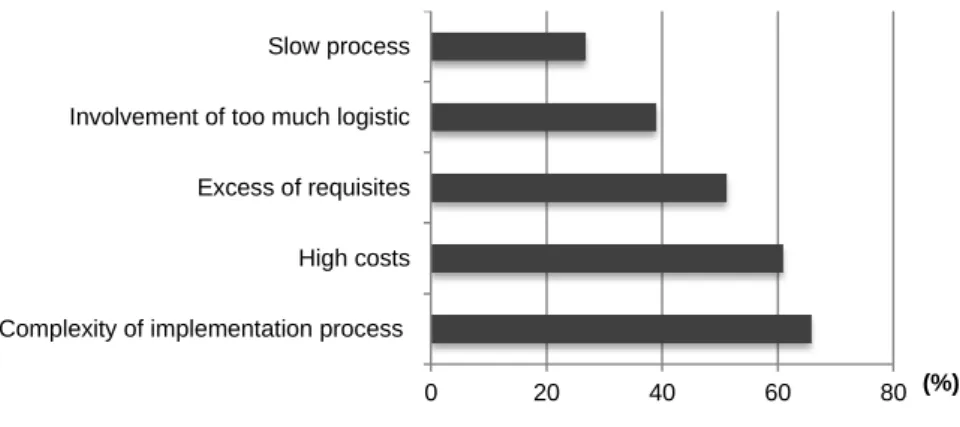
Figure II-5 - Percentage of respondents who pointed the listed factors as the disadvantages of the certification process. ... 18
Figure II-6 - Average result of the opinion question towards several aspects of forest
certification. Ratings based in a five point scale where 5=Strongly agree and 1=Strongly disagree. ... 18
Figure II-7 - Non-metric MDS ordination plot of the 41 companies based on a S1 Simple matching matrix of dissimilarities between all variables. ... 19
Figure III-1- Percentage of non-compliances identified pre-emission (PE) and post-emission (PO) of certificate findings for the FSC certification related to environmental, social, economic and legal, forest management and system issues. ... 30
Figure III-2 - Percentage of the top five issues identified for pre-emission of certificate findings. ... 30
Figure III-3 - Percentage of the top five issues identified for post-emission of certificate findings. ... 31
Figure III-4 - Mean number (+SE) of NC‘s issues identified for each year of certificate. Year 0 corresponds to pre-assessments or main-assessments; the following years correspond to surveillance assessments. ... 32
List of Tables
ix
L
IST OF
T
ABLES
Table II-1 - Area and number of companies certified by standard and type of certificate in Portugal (until December 2010). ... 13
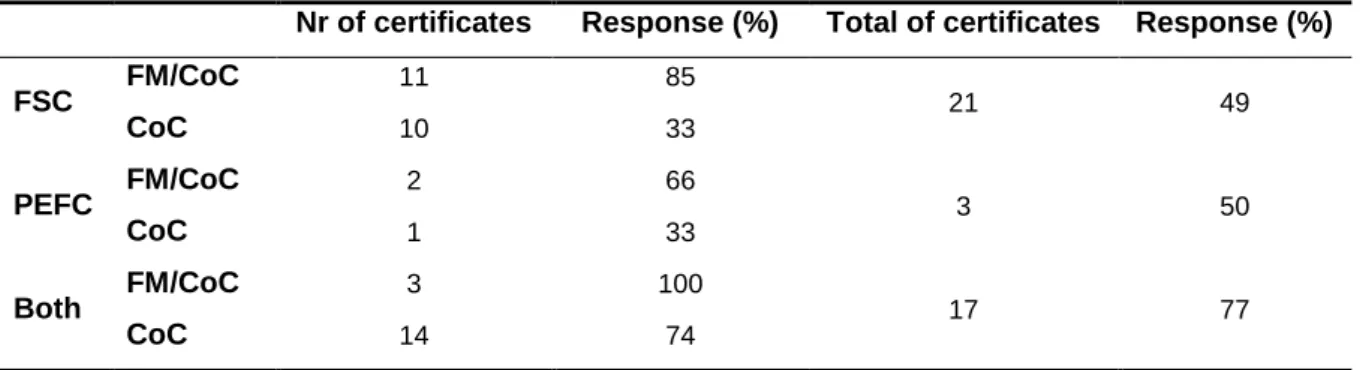
Table II-2 – Number and rate of responses, distributed by standard and certificate. ... 14
Table II-3 – Percentage of the respondents within each group with the diagnosing characteristics identified. ... 20
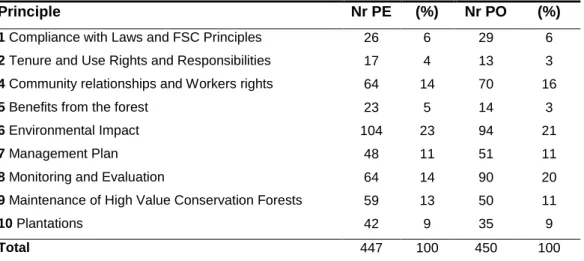
Table III-1 - Environmental, social, economic and legal, forest management and systems issues examined in the non-compliances analysis, (Source: Newsom and Hewitt, 2005). 27
Table III-2 - Number of pre-emission (PE) and post-emission (PO) of certificate findings found in the 37 reports analyzed. ... 28
Table III-3 – Partial correlations between companies characteristics and non-compliance‘s issues. (FMU: number of forest management units; AREA: area; ENV: environmental issues; SOC: social issues; ECL: economic and legal issues; FMG: forest management issues; SYS: system issues) * Significant correlations (p<0.05) ... 31
Table III-4 - List of non-compliances identified for each requirement and sub-requirement of the PEFC standard for Portugal (NP4406:2005). ... 32
Table IV-1 - Priorities and consistency ratios of comparisons of the SWOT groups and factors (factors with priorities above 0.4 are underlined). ... 42
List of Abbreviations
x
L
IST OF
A
BBREVIATIONS
AHP: Analytic Hierarchical Process
C&I: Criteria and Indicators
CAR: Corrective Action Request
EMS: Environmental Management System
FM: Forest Management
CoC: Chain-of-Custody
FMU: Forest Management Unit
FSC: Forest Stewardship Council
HCVF: High Conservation Value Forests
ISO: International Standard Organization
ITTO: International Tropical Timber Organization
MDS: Multidimensional Scaling
NC: Non-compliance
NGO: Nongovernmental Organization
P&C: Principles and Criteria
PEFC: Program for the Endorsement of Forest Certification
PE: Pre-emission of certificate
PO: Post-emission of certificate
SFM: Sustainable Forest Management
SWOT: Strengths, Weaknesses, Opportunities and Threats
UKWAS: UK Woodland Assurance Standard
Agradecimentos
xi
Agradecimentos
Este trabalho não teria sido possível sem a contribuição de diversos intervenientes aos quais quero prestar os meus agradecimentos:
- Ao Dr. Henrique Cabral, pelo apoio e disponibilidade no esclarecimento de dúvidas, e por toda a orientação do trabalho;
- À Dra. Filipa Gouveia, pelo interesse de demonstrou desde o início na ideia por detrás da formulação deste estudo, pelos recursos e apoios disponibilizados, e pela disponibilidade sempre infinita para responder a todas as minhas questões;
- Às entidades que anonimamente se prestaram a responder aos inquéritos enviados, sem elas o trabalho não teria sido possível de todo. Obrigado a todas as entidades de além de contribuíram com a sua resposta aos questionários, quiseram saber mais sobre o trabalho e se interessaram sobre o tema;
- Um agradecimento especial à SATIVA, pelo interesse demonstrado nesta investigação e pela crítica construtiva dos vários elementos do estudo. Muito obrigado pela disponibilidade e pela contribuição;
- Aos ―revisores‖, por ajudarem a tornar este trabalho mais ―correcto‖ e pelo tempo que dispensaram nas férias para ajudarem;
- Por fim, à minha família e amigos, pela paciência nos momentos em que as coisas correm menos bem, e pelo apoio quando as coisas correm mesmo bem.
xii
Author’s Declaration
Relevant early results of this work were presented at:
V Jornadas Florestais da Macaronésia
08/02/2011-11/02/2011 Funchal, Madeira
Oral presentation: A certificação florestal responsável. Marques, J., Tavares, M.C. & de Jesus Gouveia, F.
C
HAPTER
I
Chapter I
2
I. G
ENERAL
I
NTRODUCTION
I.1. Sustainable Forest Management
Poor forest management practices can affect species, ecosystems or other forest services, like clean air and water (Rametsteiner and Simula, 2003; FAO, 2009). As a way to prevent the decrease of forest‘s service several solutions have been developed, such as the creation of protected areas, sustainable forest management or green public procurement (FAO, 2009). About 13.5% of world‘s forests are in some kind of protection, but countries dependent from land or other natural resources, cannot have this sort of restriction. Therefore it‘s important to develop strategies that will allow the production of wood and other resources together with forest service‘s maintenance. The implementation of Sustainable Forest Management (SFM) can help to ensure the balance between production and conservation (FAO, 2009).
The definition of SFM itself has raised several questions, ever since the first negotiations in the United Nations Conference on Environment and Development in 1992 (Brand, 1997). Though authors have different opinions for its definition, SFM includes all forest values, from a social and environmental dimension to a more cultural and spiritual one (Rametsteiner and Simula, 2003). It‘s a balance between social, economic and ecological value of forests (McDonald and Lane, 2004), even when these interests are extremely different (Rametsteiner and Simula, 2003).
SFM can be included in policies of conservation and management of forests, through a set of ―principles‖, ―criteria‖, ―indicators‖ and ―verifiers‖ have been refined through the years (Brand, 1997; Lammerts van Bueren and Blom, 1997; Rametsteiner and Simula, 2003). Principles are defined as the base for further reasoning towards a goal to achieve sustainable forest management. A Criterion represents a condition or process that has to be implemented to achieve of SFM, usually derived from principles (Lammerts van Bueren and Blom, 1997). It has a number of indicators associated. An Indicator is a measure, quantitative or qualitative, of some aspect of the criterion, to assess its implementation (Lammerts van Bueren and Blom, 1997; McDonald and Lane, 2004).
Several international initiatives have been taking place to define ways to promote, implement and achieve a more precise definition of SFM. These include the development of SFM policies and manuals for application in developing countries by International Tropical Timber Organization (ITTO); the development of Criteria and Indicators (C&I) for SFM by the European Nations at the Ministerial Congress (1993); and the Montreal Process to develop principles of SFM for temperate and boreal-forests of non-European countries (1993). All these three major initiatives developed C&I which are very similar, but slightly different according with their socioeconomic context (McDonald and Lane, 2004).
Chapter I
3 Forest certification can be faced as a tool to implement P,C&I and verify on the ground if forest management meets defined standards. We can picture the requirements for SFM as a ―pyramid‖, with a sound foundation of policies and laws and with forest certification and audits on top (Figure I-1) (Thornber et al., 1999). This allows the consumer to purchase products that have been produced in an environmentally and socially responsible manner (Bass and Simula, 1999; Thornber et al., 1999; Sample, 2000; Rametsteiner and Simula, 2003). Certification can serve multiple purposes: marketing instruments for traders, industries and owners; information for consumers; SFM promoting policy‘s for governments; and a way to influence the management of forests for environmental movements (Rametsteiner and Simula, 2003). In 2008, almost 8% of the world‘s forests were certified (3.9 billion hectares) by independent third-parties, an increase of 5.2% since 2002, and nine years after forest certification creation. (ITTO, 2008; FAO, 2009).
Figure I-1 - Pyramid of requirements for good forest practices. (Source: Thornber et al. 1999)
I.2. Forest Certification Schemes
Forest certification schemes were born due to the increasing concern over the years about forestry practices and its sustainability (Fischer et al., 2005). As the governments and public entities were not able to give response to the situation and did not support the development of such initiatives, environmental nongovernmental organizations (NGO) and private stakeholders formed their own forest certification schemes (Bass et al., 2001; Auld et al., 2008). The initial focus was on distinguishing between tropical deforestation and good tropical forest management, however certification eventually extended to temperate and boreal forests and now most certified forests are in the northern hemisphere (Bass et al., 2001; PEFC, 2010c; FSC, 2011).
The first certification scheme created was the Forest Stewardship Council (FSC), in 1993, in Toronto by the Word Wild Fund for nature (WWF), environmental NGO and other stakeholders with interest in promoting responsible development and management of the world forests
Certification & Audits Standards & Codes
Criteria & Indicators
Sustainable Forestry Capacities Policies/Institutions
Chapter I
4
(Sample, 2000; Auld et al., 2008). FSC usually refers to responsible rather than sustainable forest management, though the meaning is the same. FSC‘s General Assembly, its highest decision-making body, contemplates three chambers: the environmental, the economic and the social chamber. Each one has one-third of the votes so that no specific interests can weight more than others (Sample, 2000; Auld et al., 2008).
The FSC‘s standard includes 10 principles and 56 criteria, with the objective of covering all important issues in forests management activities (FSC, 2010b). These principles and criteria (P&C) are developed at international level and adjusted to national or regional reality through newly developed standards, proved by the FSC board of directors (Auld et al., 2008). Each criterion is accompanied by a set of indicators that specify thresholds of performance required, evaluated later in auditing processes (ITTO, 2008).This standard adopts a ―performance-based‖ process (Sample, 2000), which means that has requirements for specific actions, practices or outcomes (Fischer et al., 2005).
After the creation of the FSC standard, forest-producers and other stakeholders who did not approved it, tried to produce other competitive certification standards. As result, in 1999 was born the Pan-European Forest Certification scheme, created by European forest owners associations (Auld et al., 2008). Later, in 2003, it was restructured, becoming international and being now called Program for the Endorsement of Forest Certification (PEFC). The PEFC is a ―system-based‖ standard, meaning that unlike FSC, it certifies that the processes and procedures used result in a quality product, but do not certify the performance of the procedures. This standard offers a framework for the development and recognition of national and sub-national forest certification schemes (Fischer et al., 2005). However the distinction between performance-based systems and process-based types of certification is not clearly defined, as they have some features in common (Bass and Simula, 1999).
Almost two-thirds (65%) of world‘s certified forest are under PEFC certificate; the FSC have 28%, while the remainder are under national schemes (ITTO, 2008). Both systems certify for Forest Management (FM) and Chain-of-Custody (CoC) procedures. FM certification verifies that management is made accordingly with standards; CoC certification enables tracking of materials through the supply chain, so that the forest of origin can be identified (Crow and Danks, 2010).
I.3. Environmental Management Systems and Forestry
Environmental Management Systems (EMS) are formal procedures and policies that define how an organization will manage its potential impact in the environment, through the optimization‘s use of natural resources (Pinto, 2005; Viegas et al., 2005). The International Standard Organization (ISO) is the worldwide most important organization for evaluating environmental management systems. The ISO EMS is based in five steps: policy and planning,
Chapter I
5 implementation and operation, monitoring and evaluation, management review, and continuous improvement (Germain et al., 2002).
In 1996, the ISO developed standards and guidelines for sustainable forest management. In 1998, the ISO/TR 14061 was approved, as a set of guidelines to adapt ISO 14001 to the forestry sector (Sample, 2000; Fischer et al., 2005). However, this standard has been withdrawn since 2006 (ISO, 2011). Nevertheless the ISO 14001:2004 is seen as complementary of forest certification standards, such as the FSC, and both are implemented together by many companies (Bass et al., 2001).
Eco-management Audit Scheme (EMAS) is also a voluntary certification scheme for companies that wish to implement an EMS, similar to ISO 14001:2004. It‘s a European Commission regulation, adopted for the first time in June 1993 (Regulation CEE nr 1836/93) and revoked by Regulation CE nr 761/2000, known as EMAS II. Actually it is third version (Regulation CE nr 1221/2009), facing a new direction to support the market potential of the certification schemes (Iraldo et al., 2009).
EMAS scheme is more demanding than ISO 14001:2004, having additional requirements, such as worker‘s active participation, identification of indirect environmental aspects (besides the direct ones), identification of products life cycle and contemplation of supplier‘s environmental behavior (Viegas et al., 2005). The implementation of EMAS may lead to an improvement of competitive performance of registered companies. However the sole implementation of an EMS isn´t a guaranty of competitive advantage, the EMS implemented must be well-designed and implemented accordingly with the organizational structure of the company, to provide competitive benefits (Iraldo et al., 2009). When these requirements are met, an increase of productivity is almost assured, and consequently companies‘ competitiveness is enhanced, as demonstrated by Viegas et al. 2005 in Portuguese furniture companies.
I.4. The Forestry Sector: Portugal and the World
The concept of forest has been defined as ―land with tree crown cover (or equivalent stocking level) of more than 10 percent and area of more than 0.5 ha. The trees should be able to reach a minimum height of 5 m at maturity in situ‖ (EC, 2010). World‘s forests have been diminished through deforestation, among other factors, but on the contrary forests in the European Union space have expanded for over 60 years, containing 5% of the world‘s forests (EC, 2010). In Europe are produced one quarter of the world‘s forest resources (FAO, 2009).
In most European countries, like in Portugal, the distinction between natural forest and plantation is not consensual since native forests were replaced hundreds of years ago. It resulted in a variety of semi-natural forests, classified generally as natural forests (Thornber et al., 1999). The verified increase in forest area is due to the expansion of forests into previous agricultural land and the establishment of semi-natural forests planted with native species (FAO, 2009).
Chapter I
6
The management of these forests is strongly influenced by its ownership. In Western Europe, where Portugal is included, 70% of forests are privately owned by companies, individuals or families, resulting in a greater complexity and costs of management (Santos et al., 2005). However these forests have a competitive advantage in the production of highly processed products and due to environmental concerns, has become one of the major consumers and producers of certified products (FAO, 2009).
In Portugal the forestland and woodland have increased significantly until 1970‘s, due to the growing interest in exploring its resources. Portugal forestry sector‘ economic value exceeds by area unit the value of other Mediterranean countries in forest products, as well as environmental ones. In addition, in forests are employed 2% of the active population, produced 10% of exports and 3% of Gross Value Added (DGRF, 2007). Besides, it‘s expected that Portugal continues to be one of Europe‘s largest forest wood producers until 2020. This success is promoted by the country‘s ecological conditions and because 84.2% of national forest is privately-owned, of which only 6.5% belongs to industries (DGRF, 2007).
Despite its apparent well-being, many threats impend on Portuguese forests, such as climate change, forest fires, pests, diseases, invasive plants and others (DGRF, 2007). To prevent and answer these threats strategic lines were defined in the National Forestry Strategy for Portugal, in 2007. In this document was recognized that sustainable forest management criteria and indicators are needed to obtain a good forest management. In order to enhance the competitiveness of products and diminish market risks it‘s also necessary to adopt some instruments to increase products‘ value. Forest management certification can solve these needs, since it allows customers to favor products that come from well-managed forests in their purchases. In 2013, Portugal‘s objective is to have more than 20% of wood products and cork certified, as well as 500 000 hectares of forest area certified, and until 2030, the aim is to achieve 75% of certified forest land.
I.5. Goals
With the awareness of forests as finite natural resources with environmental, economic and social importance, is necessary to adopt new measures to prevent its degradation and increase the market competitiveness of forest products. Certification may be an adequate instrument to fulfill this purpose, and since it‘s a process still in the beginning of implementation, now is the correct time to assess its performance and the companies‘ reaction to this management evaluation system. Therefore, the first objective of this work is to assess the characteristics of companies that join forest certification in Portugal, and their perception on the certification systems. Additionally, this study aims to understand how different sectors of forest industry respond to the variety of certification schemes.
Both forest management certification schemes operating in Portugal are derived from international standards, and adapted to our national reality. In order to verify if this adaptation to
Chapter I
7 our forests is accurate, this study evaluates the way forest certification has been implemented in Portugal, identifying the present weaknesses and opportunities of improvement in future standards‘ revision.
Due to the variety of forest certification schemes, some countries have developed their own national standards to allow their companies to comply with the international standards with fewer costs and less paperwork. This study intends to evaluate the benefits and constraints of developing a similar Portuguese national standard and indicate the necessary requirements for its development.
Chapter I
C
HAPTER
II
Chapter II
10
II. T
RENDS IN THE ADOPTION OF FOREST CERTIFICATION IN
P
ORTUGAL
II.1. Abstract
Forest management certification is operational in Portugal since 2003, with the representation of the Forest Stewardship Council (FSC) and the Program for the Endorsement of Forest Certification (PEFC). Since the implementation of these standards, no work has been developed to evaluate the choices of adherent companies. Here we intend to investigate the hypothesis of preference for a certification scheme, based in the companies‘ characteristics. A nationwide survey was conducted to all certified companies in order to determine motives, benefits, disadvantages and opinions on forests certification. Chi-square analysis was performed to detect significant differences between the forest certification schemes, concerning companies‘ characteristics. In order to identify groups of companies with similar characteristics a non-metric multidimensional scaling (NMDS) was performed and complemented with a cluster analysis. Three groups of companies with different characteristics were identified. The two larger groups suggest a fragmentation between industrial and non-industrial owners. Industrial companies join certification due to market pressures, and economic benefits while non-industrial companies expect the improvement of their forest management practices and compliance with their suppliers‘ demands. Though a differentiation and significant differences were found between the types of certificate, it was not possible to detect a preference for a certification scheme over the other.
Keywords: Sustainable Forest Management, Certification Standards, Survey, Portugal, Clusters
II.2. Introduction
Sustainable forest management certification is a recent subject in Portugal and was introduced through individual initiatives largely due to market pressures. Operating in the country exist two voluntary forest certification schemes, the Forest Stewardship Council (FSC) and Program for the Endorsement of Forest Certification (PEFC), which aim for the same purpose, though with different methods. PEFC was the first scheme to develop a standard, in 2003, and to form a representative entity in Portugal, the Portuguese Forestry Sector Council (Conselho da Fileira Florestal Portuguesa) (PEFC, 2010b). Only in 2006 was started the adoption of the FSC Principles & Criteria (P&C) to the national context, through the creation of the National Initiative. However several private companies decided to obtain FSC certification before the creation of this platform, so in fact FSC certificates exists since 2003 (FSCPortugal, 2010).
Portuguese forests are influenced by the climate and geography, among other factors, being significantly different in the North and in the South. The North is mostly mountainous and
Chapter II
11 influenced by the Atlantic climate. Here are present oak forests of Quercus pyrenaica, with settlements of Cytisus sp. and several pockets of invasive species, such as Acacia sp. In the South, with more plains and less relief, Portugal‘s endemic Mediterranean forests are characterized by oak forests (Quercus robur and Quercus rotundifolia) with several types of understorey vegetation. Pine trees (Pinus pinaster and Pinus pinus) and Eucalyptus (Eucalyptus globulus) occur in all territory, as well as abundant bushes of rockrose orlabdanum (Cystus ladanifer) and strawberry tree (Arbutus unedo) in all territory (Godinho-Ferreira et al., 2005). These biotopes give shelter to several wildlife species, many of them with some kind of conservation status. Forests in Portugal have always played an important role in economy and society. Several of the above mentioned species have commercial interest, for wood, cork, pulp, pines or other items, that needs to be counterbalanced with the recreational and cultural values. Management and planning of the resources is a fundamental task, often challenged by forests intrinsic characteristics. The small property size, high forest fire risks and lack of national incentives can be a constraint to proper management of forest and a severe limitation to the expansion of forest certification to all types of forests (Guimarães et al., 2009; PEFC, 2010b).
Forest certification has become increasingly more important, and most of studies concerning this subject have been developed in the United States where a great variety of certification schemes exists. Some of these previous works noticed that there are specific motives for the adoption of forest certification schemes. Some patterns seem to influence the choice of the certification standard, such as the size, the ownership of a forest operation – public-owned forests versus private owned-forest –, the kind of forest product, the type of enterprise, the land-use types and type of forest – natural forest versus plantation (Thornber et al., 1999; Auld et al., 2008). Other studies claim that the supposed difference between the certification schemes, the PEFC and the FSC, may result in preference for a scheme over another, depending on the characteristics and field of business of the company (Fletcher and Hansen, 1999; Brígido, 2009).
With the adoption of forest certification, whatever the system chosen, there are some advantages and disadvantages associated (Auld et al., 2003). Among the advantages we may find securing public confidence, responding to public pressures or securing market for products (Thornber et al., 1999; Leslie, 2004). In fact, most of the perceived and expected benefits are not tangible, and do not contemplate economic returns (Crow and Danks, 2010). On the other hand, the disadvantages can be more paperwork, more expenses and insufficient price premium (Auld et al., 2003; Leslie, 2004). In the expenses, the costs of certification can be quite high (Thornber et al., 1999). These can be categorized in costs for preparation for certification, auditing and compliance (Thornber and Markopoulos, 2000; Fischer et al., 2005).
With such scenario, companies shouldn‘t want to certificate, but on the contrary we see a raising number of certification requests. The reasons why companies adopt certification have been studied. In North-America companies seek certification due to external stakeholders
Chapter II
12
pressures but not from the final consumer (Fletcher and Hansen, 1999; Auld et al., 2003). When the certification programs started, forest producers wanted to certificate their products expecting that it would stop timber boycotts and offer marketing tools, as well as access to price premiums, reduced market risks, maintain or increase market share and access further markets through ―green‖ products (Bass et al., 2001; ITTO, 2008; Chen et al., 2010). However, economic returns and market incentives are not always the main concern to pursue certification (Araujo et al., 2009). Community-based forestry initiatives and non-industrial forest owners have social and environmental objectives and usually don‘t anticipate economic returns (Hayward and Vertinsky, 1999; Crow and Danks, 2010).
The present paper intends to evaluate the implementation of forest certification schemes in Portugal, determining the motives for certification, benefits and disadvantages for producers and retailers, therefore characterizing this emerging sector. It was hypothesised that the adoption of different certification standards can be related with the companies‘ characteristics and that exists, as well, an influence of that choice on the post-certification perception of the certification process.
II.3. Methods
To determine whether the characteristics of companies influence or not the choice of forest certification standards, a survey was conducted to all companies who had been certified by the FSC or the PEFC in Portugal. This method has been used by several other studies aiming for similar purposes (Auld et al., 2003; Cashore et al., 2005; Owari et al., 2006; Tikina et al., 2009).
Information about companies was available online from FSC international and PEFC Portugal websites. There were 43 companies certified by FSC alone, 6 certified by PEFC only and 22 certified against both standards, a total of 71 owners/companies (Table II-1). So that forest managers can sell products from forests with Forest Management (FM) certificate, they must also have a Chain-of-custody (CoC) certificate, resulting in a combined certificate of FM/CoC (Guimarães et al., 2009). From these 71 owners, 19 had FM/CoC certificates and were estimated to own approximately 266,474 ha, representing about 8.4% of Portugal forest stands (AFN, 2010). In the survey were included companies with FM/CoC and CoC certificate.
The questionnaire had fifteen questions (Annex 1), and was sent through electronic mail to all referred companies, to the addresses found in the FSC or the companies‘ websites. Anonymous responses were received from August to November 2010, through an online platform (KwikSurveys.com, 2008-2010).
The questionnaire had three parts: the first one explained the purpose of the survey, its objectives and composition; the second part contained questions about the companies‘ characteristics that were object of assessment; the final part was a set of opinion questions
Chapter II
13 concerned the forest certification standard, its benefits, disadvantages, motives for adoption and a set of opinion questions. There was also room for open comments in the end of the questionnaire. All questions were single or multiple choices, without open answers, and the last question used a Lykert-type scale, for the assessment of participants‘ opinion.
The questions were based on previous studies (Auld et al., 2003; Cashore et al., 2005; Tikina et al., 2008) that also conducted surveys to assess several aspects related to forest certification, being the hypothesis adapted to the Portuguese reality.
Table II-1 - Area and number of companies certified by standard and type of certificate in Portugal (until
December 2010).
Nr of certificates Area certified (ha) Total of certificates
FSC FM/CoC 13 59,872 43 CoC 30 PEFC FM/CoC 3 2,952 6 CoC 3 Both FM/CoC 3 203,650 22 CoC 19 71
In order to perceive some trends in our data, a descriptive analysis was performed, assessing the proportion of respondents by the characteristics evaluated in the questionnaire. To evaluate if the companies characteristics influence the choice of the forest certification scheme to adopt, two types of analysis were performed: frequency analysis and multivariate analysis. Three-dimensional contingency tables and chi-square tests (Zar, 1996; Quinn and Keough, 2002) were performed to assess whether or not existed differences among companies, considering the certification adopted. In order to verify the existence of groups of companies with similar characteristics, was used cluster analysis and non-metric multidimensional scaling (NMDS) (Quinn and Keough, 2002). The research hypothesis and the variables considered for the analysis are listed in Annex 2.
Due to insufficient number of PEFC certified companies the chi-square analysis only searched for differences between companies with the FSC and Both certificates. Therefore were removed from the sample companies only certified by the PEFC.
The chi-square statistics tested for mutual independence between the companies characteristics and the certificate adopted, so that the relation between all the variables and the forest certification scheme could be assessed (FSC, PEFC and Both) and type of certificate (FM/CoC and CoC) was tested with Chi-square statistic. The type of certificate was included as an important variable for testing in this analysis because companies with FM/CoC certificates have different activities and scopes than those with only CoC, resulting in large differences in
Chapter II
14
their characteristics from the start. For this analysis, the variables included in the category Plantation were grouped and considered one single variable. All variables included were left in their original forms (none was transformed), and were simply adapted to binary form to perform NMDS. There weren‘t any missing values.
In order to form groups of companies with similar characteristics, PRIMER software was used to perform multivariate analysis (v6.1.13; PRIMER-E Ltd. 2006). The variables (companies characteristics) were included to compute a similarity matrix between samples, with a measure of resemblance adequate to presence/absence data, S1 Simple matching. This type of measure only rely in the data being zero and non zero (Clarke and Gorley, 2006). A cluster analysis was then performed, with group average method, commonly called unweighted pair-groups method (UPGMA), (Quinn and Keough, 2002; Clarke and Gorley, 2006). The NMDS was computed with version one of Kruskal fit scheme and minimum stress of 0.01. This analysis had the purpose of grouping companies according to similarities in its characteristics.
II.4. Results
From the 71 sent questionnaires, 41 usable answers were returned, which corresponded to a global response rate of 58% (Table II-2). However, there were a greater proportion of responses from companies with FM/CoC certificates than those with CoC certificates. This may point to an inadequate formulation of the questionnaire towards these addressees, or to a lack of interest of this sector for investigation in this area of knowledge.
Table II-2 – Number and rate of responses, distributed by standard and certificate.
Nr of certificates Response (%) Total of certificates Response (%)
FSC FM/CoC 11 85 21 49 CoC 10 33 PEFC FM/CoC 2 66 3 50 CoC 1 33 Both FM/CoC 3 100 17 77 CoC 14 74
From the three types of plantations considered in the analysis, 24% of respondents explored pure plantation, 37% had mixed plantations and 15% semi-natural plantations. Significant differences were found between the types of certificates and standards of the companies, concerning the type of plantation (χ2
=30.38; df=10; p<0.05). Only companies with FSC FM/CoC certificates had semi-natural plantations, though this certificate also included the other types of plantation. Mixed plantations were present in all types of certificates, but had more expression
Chapter II
15 in companies certified against both certificates and with FM. As expected, companies with CoC certificates don‘t have plantations and so this question was not applicable to them.
The majority of participants carried an individual certificate, with the remaining proportion divided between group and Small and Low Intensity Managed Forests (SLIMF) (Figure II-1). This is a certificate that involves forest with reduced areas and/or low rates of harvesting or that explore mainly Non Wood Forest Products. Only five percent of respondents had regional certification, corresponding to the only two certificates of this kind issued by PEFC in 2010. There were no significant statistical differences among the choice of the standard for the type of certification (χ2
=12.07; df=10; p>0.05).
Figure II-1 - Proportion of respondents with individual, group, SLIMF and regional certification.
Companies explored mainly three species: Eucalyptus, Cork oak and Maritime Pine (Figure II-3a). Dependence between the exploitation of Cork Oak and the standard/type of certificate was identified (χ2
=13.26; df=4; p<0.05), with companies with FM/CoC certificate being responsible by this difference (χ2=8.20; df=1; p<0.05). There were also a considerable percentage of companies that explored other species or that didn‘t operate directly with forests, corresponding to those with CoC certificate mostly. The products commercialized through forest certification are several, but the most common among the participants were Cork, Logs, Wood for pulp, Pinecones and Firewood (Figure II-3b). Among these products, relations existed with the type of certificate and the standard adopted. Wood for pulp (χ2=7.93; df=4; p<0.05), firewood (χ2
=13.56; df=4; p<0.05) and pinecones (χ2
=11.06; df=4; p<0.05) were commercialized mostly by companies with FM/CoC certificates. Cork also revealed a relation with the type of certificate and the standard, being commercialized mostly by companies with FM/CoC certificates with the FSC Scheme (χ2 =13.96; df=4; p<0.05). 51% 32% 20% 5% Individual Group SLIMF Regional
Chapter II
16
(a) (b)
Figure II-2 - (a) Proportion of respondents, whose operation involves exploring species as presented. (b) Proportion of
respondents that commercialize the products presented above. * significant for p<0.05
When asked about which reasons had lead them towards certification, companies pointed ―Buyers request‖ (68%) and ―Marketing and enhancement of public image‖ (68%) as their primary drive (Figure II-3). The first one was related significantly with the type of certificate, being mostly present in CoC certificates (χ2=10.55; df=4; p<0.05). Participants also referred their ―Concern with sustainability‖ (54%) as a factor of importance for their decision to certificate. ―Access to other markets‖ proved to have the same type of association verified previously with the CoC certificates (χ2=9.76; df=4; p<0.05). On the other hand the less common reasons presented for certification were the increase of company‘s credibility (17%), pressure from suppliers (12%) or concern with biodiversity (5%). Only companies with FM/CoC certificates claimed their suppliers requested the adoption of forest management certification (χ2
=10.69; df=4; p<0.05). The respondents with the FSC certificate also wanted to improve their forest practices by adopting certification (χ2
=10.01; df=4; p<0.05).
Figure II-3 - Percentage of respondents who reported the listed motives as the primary drive for adopting
forest certification. * significant for p<0.05
20% 8% 5% 21% 23% 23%
Maritime Pine Stone Pine Holmoak Cork oak* Eucalyptus Other
15% 20% 10% 5% 2% 3% 3% 5% 3% 24% 10%
Wood for pulp* Logs
Firewood* Woodchips Wood for boxes Paper Printed materials Furniture Hunting Cork* Pinecones* * * * * 0 20 40 60 80 Buyers request Marketing and enhancement of public image Concern with sustainability Access to other markets Improvement of forestry practices Credibility increase Suppliers request Concern with biodiversity
Chapter II
17 Some of the presented motives anticipate the existence of related benefits. ―Access to new markets‖ (51%), ―Improvement of environmental sustainability‖ of their operations (44%), ―Contribute to business promotion‖ (44%) and ―Economic benefits‖ (41%) were some of the most frequent responses. However, not all the benefits presented were important since ―Improvement of relations with population‖ wasn‘t selected by any of the respondents (0%) (Figure II-4). ―Improvement of environmental sustainability‖ and ―Promotion of working groups‖ (7%) were perceived differently. The first was a benefit mostly recorded by companies that had an FSC certificate (χ2
=10.56; df=4; p<0.05), while promotion of working groups was only acknowledge by respondents with CoC certificates from both standards (χ2
=11.35; df=4; p<0.05).
Figure II-4 - Percentage of respondents who reported the listed benefits as resulting from certification. *
significant for p<0.05
Nonetheless, disadvantages were mostly related with the implementation process, and maintenance of certificate. The major ones identified by the participants were the ―Complexity of the implementation process‖ (66%) and the ―High costs‖ (61%). Twenty-seven percent of participants thought that the process of certification was slow and 39% that it involved too much logistic (Figure II-5). In spite of the reduced amount of disadvantages, participants were quite consensual in the importance these problems have for certification since all factors had more than 25% of responses. None of the disadvantages presented significant differences between the certification schemes.
* *
0 20 40 60
Access to markets Improvement of environmental sustainability Contribution to business promotion Economic benefits Enhancement of public image Learning of new techniques Enhancement of partnerships Identification of inefficiencies in forestry process Identification of improvement areas Promotion of working groups Transfer of knowledge between partners Improvement of relations with population
Chapter II
18
Figure II-5 - Percentage of respondents who pointed the listed factors as the disadvantages of the
certification process.
Respondents‘ opinion about the questions posed about forest certification was quite similar, and the average opinion was 4.26 (Agree). As presented in Figure II-6, the analysis was made separating the responses by certification scheme, and no significant differences were detected between the groups. However, not all respondents think that the adoption of certification translates in gains for efficiency and performance, as well as acts as a contribution to the recognition of worker‘s and civil rights, since these two statements were the ones with less agreement.
Figure II-6 - Average result of the opinion question towards several aspects of forest certification. Ratings
based in a five point scale where 5=Strongly agree and 1=Strongly disagree.
0 20 40 60 80 Complexity of implementation process
High costs Excess of requisites Involvement of too much logistic Slow process
(%)
0 1 2 3 4 5
Certification contributes to recognize civil and worker's rights
Its always necessary to have audits to comprove compliance with standards
Consumers request certified products Policy of chemical use promotes conservation Adoption of certification leads to alteration in management, records and monitoring Critera are relevant to transversal areas of forests Gains accesss to markets with diferenciated prices The adoption of certification translates in gains of efficiency and performance
The objective of certification is to promote SFM Certification requirements assure SFM
Average Opinion result
Both PEFC FSC
Chapter II
19 Some of the respondents had an EMS implemented besides the forest certification scheme (27%), and from the ones that didn‘t have one, 30% intended to implement one in the future. These choices weren‘t significantly related with the certification scheme (χ2
=6.62; df=4; p>0.05).
The performance of NMDS resulted in a ordination plot (Figure II-7), showing a clustered pattern of companies. Distance between companies in the diagram represents a high or low degree of similarity. The further companies are from each other, the less similar they are. The Shepard diagram (Annex 3 – Figure 1) shows the relationship between similarity and distances at the point configuration (Wickelmaier, 2003). The obtained diagram confirms the adequacy of the results but with some deviation of the perfect fit, due to variation of values at low distances/similarity. However this level of fit was considered adequate and the analysis proceeded.
To complement the NMDS, a clustering analysis was applied. The dendogram is presented in Annex3 – Figure 2. Was decided, as per conventional criteria, to divide the cluster‘s dendogram at the level necessary to incorporate most of the atypical cells, in this case at 65% of similarity where we could identify the most uniform groupings in the NMDS.
With this clustering were identified three divisions: two smaller groups, with some variation among themselves and one other group, with smaller variation between points, and also with more companies. Group 1 has 8 companies (20% of total) group 2 contains 6 companies (15%) and the remaining 27 fall in group 3 (65%).
Figure II-7 - Non-metric MDS ordination plot of the 41 companies based on a S1 Simple matching matrix
of dissimilarities between all variables.
Table II-3 shows the percentage of companies included in each group and their diagnosing characteristics. Group 1 was composed by companies with a large variability of characteristics,
1
2
Chapter II
20
as expected from the great distances verified among this group in the ordination plot. However it is possible to say that some characteristics are more distinct than others and so, this group had mostly FSC FM/CoC certificates, with Group certification, and explored Cork Oak and Stone Pine, from which they commercialized Cork and Pinecones. Though these may be considered the diagnosing characteristics, other important features were observed in this group exclusively, such as the presence of Semi-natural plantations and Hunting activities, and Holm Oak, Firewood and Woodchip present in smaller percentages in the other groups.
Group 2 integrated companies with a smaller number of characteristics than first group. These companies had both the FSC and the PEFC certificates, though with FM/CoC certification. Mostly were mixed plantations and a smaller percentage of Pure plantations, with Maritime Pine and Eucalyptus that sold Wood for Pulp or Logs. Only in this group were present companies with Regional certificate and had the largest percentage of Small and Low Intensity Managed Forests (SLIMF) certificates.
The third group was very distinct from the previous two, both in type of characteristics present as well as the number of diagnosing characteristics. This group revealed companies that had Individual certification and FSC CoC certificates. They didn´t manage plantations, or managed other species than those specified in this questionnaire. Some worked with Cork Oak, Maritime Pine or Eucalyptus and commercialized Cork, but were a minority.
Table II-3 – Percentage of the respondents within each group with the diagnosing characteristics
identified.
Group 1 – Non-industrial Group 2 – Miscellaneous Group 3 – Industrial Characteristics (%) Characteristics (%) Characteristics (%)
Semi natural plantation 100 Regional 100 Individual 100
Pinecones 100 Wood for Boxes 100 Paper 100
Hunting 100 SLIMF 50 Printed Material 100
Stone Pine 100 Wood for Pulp 66,6 Without Plantation 95
Holm Oak 75 CoC 95
Woodchips 66,6 Other species 66,6
Cork 53,3 Group 53
Firewood 66,6 PEFC 65
SLIMF 50 FSC 68
Furniture 66,6
II.5. Discussion
There were differences in the way that forest management certificates are applied and perceived by companies. With this we can identify some clusters of activity that have dissimilar reasoning for pursuing certification, mostly associated to companies‘ characteristics. In this way certified companies in Portugal can be divided into two main groups and a smaller intermediate
Chapter II
21 group. The first group is associated with the FSC standard and FM/CoC certificates due to the nature of its economical activities, predominantly non-industrial companies. These companies obtain forest products little or unprocessed, such as pinecones, cork and firewood, and comply with certification not only to obtain economic returns, but in order to answer suppliers requests and to improve their forest practices and environmental sustainability. The opposite group is the group of industrial companies more dedicated to transformation of raw materials, not directly involved in forest management, leading to the adoption of CoC certificates. These companies join forest certification aiming for markets for their products and to comply with their buyers‘ requests. In this group we can find the first companies to obtain certification in Portugal. The third, smaller group may be faced as a combination of the previous two, since it meets several of their characteristics, with the particularity of having more companies that are certified by both FSC and PEFC schemes. This may reveal a new cluster that aims to comply with both schemes in order to obtain more benefits.
Despite the differences found in this study, our question was not completely answered since no clear distinction between certification schemes was found. The results point to a distinction between the types of certificates accordingly with companies‘ characteristics. However this differentiation was already expected seeing that companies that manage forests have FM/CoC certificates and companies that only sell products have CoC certificates having very different characteristics associated (Silva et al., 2009). The fact that no differences were found may be also due to the dominance of the FSC, since the majority of companies that have PEFC certificate also are certified by FSC, and do not have to chose one over the other.
Other studies verified a similar division, observing differences in companies that seek to answer market pressures, mostly from buyers, and in companies that want to show a ―green‖ image to consumers, be it for genuine concern with the environment or economic reasons (Owari et al., 2006; Tikina et al., 2008; Guimarães et al., 2009). Also the benefits resulting from certification observed in this study were also recorded in other studies, where industries mostly search for a price premium or new markets for certified wood, and if those were not accomplished certification remained a positive asset for allowing improvement of forest practices (Hayward and Vertinsky, 1999; Humphries and Kaiser, 2006; Araujo et al., 2009; Chen et al., 2010). In the American forest sector the benefits perceived are similar to those recognized by our first group of companies mentioned above. In previous studies American companies showed a greater concern with maintaining public confidence, ability to answer to environmental groups or supply benefits for biodiversity (Auld et al., 2003; Owari et al., 2006). Concerning the disadvantages identified in the present study, those can be resumed to matters of economic resources and time (Auld et al., 2003; Humphries and Kaiser, 2006).
These finding have implications for our understanding of the course of forest certification in Portugal. It indicates that stratification in the forest sector exists, showing companies with different objectives and capabilities to achieve them. The disadvantages indentified suggest that
Chapter II
22
some Portuguese companies may not be able to easily comply with forest certification since the costs of certification, both direct and indirect can be very heavy on small forest owners that don‘t find the benefits attractive enough. However is very important to promote actions that would decrease these difficulties, given that forest certification is a very useful tool to incorporate environmental and social concerns in management planning (Silva et al., 2009). Companies often pointed that national legislation is misfit for the reality of the sector, and complicated the attribution of premium prices to certified wood. Still the national forest strategy recommends the adoption of forest certification in order to add value to our products in international market. The reason underlying this discrepancy can be related with the difficulty of interpretation of our legislation, and consequent inability to resolve conflicts with standards requirements.
Other important remark lays in the small importance given to the final consumer by Portuguese companies. In fact there is little awareness of forest certification, which means that regular consumers don‘t purposely chose one certified product over a non-certified. Considering that certified forests only account for 8.4% of Portuguese forest stands, a lot of work is still required so that a significant percentage of forests are sustainably managed, and for that forest certification needs to be an appealing and competitive resource for the remaining forest stands owners.
Further work is still required to evaluate whether the pointed disadvantages in this study are in fact an obstacle for the pursuit of forest certification to small forest owners. Also it would be important to understand whether or not national legislation is adequate to the forest sector reality, and if it is prepared for this new tool of sustainable management. Since this work couldn‘t properly evaluate the factor of choice of forest certification schemes as was intended, future research on this subject would be necessary, especially if the proportion of PEFC certificates increase.
Forest certification in Portugal is still in its early steps, being clear that some factors need to be improved for the success of sustainable practices certification. It is clear that there is a differentiation among certified companies. With this knowledge, combined with the difficulties pointed by certified companies it is possible to improve the way certification is being conducted and help develop forest management practices throughout Portuguese forests, enlarging the scope of companies interested in adopt forest management certification.