Mar
isa da Conceição Gomes Lopes
Outubro de 2013 UMinho | 20 13
Universidade do Minho
Escola de Engenharia
Candida albicans
Candida albicansOutubro de 2013
Universidade do Minho
Escola de Engenharia
Marisa da Conceição Gomes Lopes
Optimization of
Candida albicans
Biofilms
Inactivation by Benzophenoxazine Compounds
for Photodynamic Therapy
Dissertação de Mestrado
Mestrado Integrado em Engenharia Biomédica
Trabalho efetuado sob a orientação da
Professora Doutora Isabel Maria Pires Belo
Professora Doutora Mariana Contente Rangel
Henriques
ii
DECLARAÇÃO
Nome: Marisa da Conceição Gomes Lopes
Endereço eletrónico: [email protected] Telefone: 91 285 63 07
Número do Bilhete de Identidade: 13790943
Título dissertação/tese: Optimization of Candida albicans biofilms inactivation by benzophenoxazine compounds for photodynamic therapy
Ano de conclusão: 2013
Orientador(es): Professora Doutora Isabel Maria Pires Belo
Professora Doutora Mariana Contente Rangel Henriques
Designação do Mestrado: Mestrado Integrado em Engenharia Biomédica Área de Especialização: Engenharia Clínica
Escola: de Engenharia
Departamento: de Engenharia Biológica
DE ACORDO COM A LEGISLAÇÃO EM VIGOR, NÃO É PERMITIDA A REPRODUÇÃO DE QUALQUER PARTE DESTA TESE/TRABALHO
Universidade do Minho, ___ /___ /_____
iii
AKNOWLEDGEMENTS
First of all, I want to express my gratitude to my supervisors Dr. Isabel Belo and Dr. Mariana Henriques. This work would not have been possible without them. To Dr. Isabel Belo I want especially to thank the availability of guidance, the knowledge, sympathy and the encouragement which were essential to my self-confidence, autonomy and organization. To Dr. Mariana Henriques, I want especially express my gratefulness for the knowledge, dedication and time spent put on my dissertation. All the advices, suggestions and encouragement that she gave me during the experimental work and dissertation-writing period were very important.
I have to express my gratefulness to Dr. Maria Sameiro Gonçalves for her availability and for gently provide the benzophenoxazine compounds, as well as to thank to Dr. Paulo Coutinho for the permission to use the irradiation systems, for all the support, knowledge and suggestions.
To Carlos Tiago Alves I want to express my gratefulness for all the time he spent with me and the support in the lab, as well as all the teaching, the encouragement, the friendship and the advices he devoted to me during all stages of this work. I have no words to express how his support was important to me.
To Dr. Sónia Silva I want to thank for all the teaching, support, availability, patience and hospitality in the lab which were essential for me to learn and develop my experimental work. Additionally, I have to recognize all the members of the lab for the hospitality and the sharing of experiences. They made me feel a part of the group.
I am also grateful to my closest friends and course colleagues for the friendship, affection, sharing of experiences and good moments during all these years. I learned and grew very much at their side and I am glad for being with them during this long walk.
To Elson Pina I want to thank all the affection, love, encouragement and patience that has always held for me, particularly in the most difficult days. He was my safe haven and his emotional support was very important to keep me motivated during the development of this work. Finally, the last words are addressed to my beloved family, my parents and my sister. I am deeply grateful to them for all the education, values, love, affection, as well as their emotional support and continuous encouragement to get through difficult times and to achieve my goals.
Optimization of Candida albicans Biofilms Inactivation by Benzophenoxazine Compounds v for Photodynamic Therapy
ABSTRACT
The incidence of fungal infections has increased in the last decades, being Candida albicans the most common etiologic agent of fungal-related biofilm infections. In the last years, Candida strains have shown high levels of drug resistance, so the interest in new antifungal therapeutic options has increased. The antimicrobial photodynamic therapy (APDT) has been shown to be an emerging and promising approach to treat localized infections. The present dissertation aimed to optimize the antifungal photodynamic efficacy of two new benzophenoxazine-type fluorescent dyes against C. albicans biofilms by APDT, as well as to understand the different APDT outcomes achieved.
The antifungal susceptibility of C. albicans planktonic cells to dyes N-[5-(3-hydroxypropylamino)-10-methyl-9H-benzo[a]phenoxazin-9-ylidene]ethanaminium chloride (FSc) and N-(5-(11-hydroxyundecylamino)-10-methyl-9H-benzo[a]phenoxazin-9-ylidene)ethanaminium chloride (FSd) with concentrations in the range of 0-100 μM during 48 h was firstly determined. The potential photodynamic activity of dyes against C. albicans biofilms was then evaluated and optimized by incubation of biofilms with dyes in the range of 100-300 μM for 3 or 18 h followed by illumination at fluences of 12 or 36 J cm-2 through the use of a xenon arc lamp (600 ± 2
nm). In order to understand the APDT outcomes achieved, dye uptake by the biofilm matrix and cells during dark incubation was also evaluated by spectrofluorimetric analysis (ex=590 nm;
em=645 nm) and fluorescence microscopy.
On antifungal susceptibility assays, FSc dye showed no growth inhibition of C. albicans cells, while FSd produced a very poor growth inhibition when used at 50 and 100 μM. Regarding to APDT outcomes, only FSc dye showed to have photosensitizing activity against C. albicans biofilms. Using FSc at 300 μM for 18 h followed by illumination with 36 J cm-2of fluence, a total
photoinactivation of C. albicans biofilm cells was achieved. The notorious uptake of FSc over FSd dye by biofilms may explain its higher photodynamic effectiveness.
In summary, data suggests that FSc-mediated APDT might be successfully used to treat C. albicans infections.
Otimização da Inativação de Biofilmes de Candida albicans por Ação de Compostos do Tipo vii Benzofenoxazinas para Fototerapia Dinâmica
RESUMO
A incidência de infeções fúngicas tem aumentado nas últimas décadas, sendo a espécie C. albicans o agente etiológico mais comum nas infeções causadas por biofilmes. Nos últimos anos, as estirpes do género Candida têm demonstrado elevados níveis de resistência aos agentes antifúngicos convencionais, impulsionando o interesse por novas terapias antifúngicas. A fototerapia dinâmica antimicrobiana é uma nova abordagem terapêutica que se tem demonstrado bastante promissora no tratamento de infeções localizadas. A presente dissertação teve como objetivo otimizar a inativação de biofilmes de C. albicans pela ação fotodinâmica antifúngica de dois novos corantes fluorescentes do tipo benzofenoxazina, assim como analisar as diferentes eficácias fotodinâmicas encontradas.
Inicialmente determinou-se a suscetibilidade antifúngica aos corantes cloreto de ((3-hidroxipropil)amino)-10-metil-9H-benzo[a]fenoxazina-9-ilidene)etanamínio (FSc) e cloreto de N-(5-((11-hidroxiundecil)amino)-10-metil-9H-benzo[a]fenoxazina-9-ilidene)etanamínio (FSd) - utilizando concentrações de 0-100 μM durante 48 h em células planctónicas de C. albicans. A potencial atividade fotodinâmica dos corantes em biofilmes de C. albicans foi posteriormente avaliada e otimizada incubando os biofilmes de C. albicans com os corantes com concentrações de 100-300 μM durante 3 ou 18 h, seguido de irradiação com uma lâmpada de arco de xénon (600 ± 2 nm) com fluência de 12 ou 36 J cm-2. Com o intuito de entender as diferentes eficácias
fotodinâmicas observadas, foi também avaliada a absorção dos corantes por espetrofluorimetria (ex=590 nm; em=645 nm) e microscopia de fluorescência.
Os ensaios de suscetibilidade antifúngica revelaram que o corante FSc não apresenta efeito de inibição de crescimento, enquanto o corante FSd produz um pequeno efeito de inibição do crescimento quanto utlizado a 50 ou 100 μM. Relativamente à ação fotodinâmica antimicrobiana apenas o corante FSc demonstrou ter atividade fotossensibilizante nos biofilmes de C. albicans. Da incubação dos biofilmes com corante FSc a 300 μM durante 18 h, seguido de irradiação com 36 J cm-2de fluência, obteve-se uma total inativação celular. A notória absorção
do corante FSc em relação ao FSd pelos biofilmes poderá explicar a sua maior eficácia fotodinâmica. Em suma, os resultados indicam que o corante FSc poderá ser um potencial agente fotossensibilizante para a fototerapia dinâmica antifúngica de infeções provocadas por C. albicans.
ix TABLE OF CONTENTS AKNOWLEDGEMENTS ... iii ABSTRACT ... v RESUMO ... vii TABLE OF CONTENTS ... ix
LIST OF FIGURES ... xiii
LIST OF TABLES ... xvii
ABBREVIATIONS ... xix
SYMBOLS ... xxi
PREAMBLE ... xxiii
1. CHAPTER I - INTRODUCTION ... 1
1.1. Candida albicans ... 3
1.1.1. The Role of C. albicans Cell Wall ... 4
1.1.2. Virulence Factors of C. albicans ... 4
1.1.3. The Role of Biofilm in Antifungal Agents Resistance ... 8
1.2. ANTIMICROBIAL PHOTODYNAMIC THERAPY (APDT) ... 11
1.2.1. Photophysical processes of PDT ... 12
1.2.2. The Photobleaching Process ... 14
1.2.3. Mechanism of Action of APDT ... 14
1.2.4. Biofilms eradication by APDT ... 16
1.2.5. Cellular Resistance Mechanisms to APDT ... 17
1.2.6. Applications of APDT ... 18
1.3. PHOTOSENSITIZERS ... 19
1.3.1. Properties of Photosensitizers ... 19
1.3.2. Most Common Photosensitizers in APDT ... 22
x
1.3.4. Formulation of New Concepts ... 26
1.4. LIGHT SOURCES AND DELIVERY ... 26
1.4.1. The concept of Light Fluence and Source Irradiance ... 26
1.4.2. Light Penetration ... 27
1.4.3. Most Common Light Sources in PDT ... 27
2.CHAPTER II - MATERIALS AND METHODS ... 29
2.1. Benzophenoxazines Origin ... 31
2.2. Benzophenoxazines Stock Solutions ... 31
2.3. Organism, Culture Media and Growth Conditions ... 32
2.4. Antifungal Susceptibility Testing ... 33
2.5. Biofilm Formation ... 33
2.6. Quantification of Cultivable Biofilm Cells ... 33
2.7. Antifungal Photodynamic Therapy ... 34
2.7.1. Dark Toxicity ... 34
2.7.2 Photodynamic Inactivation ... 34
2.7.3. Absorption Spectra of Biofilms ... 35
2.8. Dye Uptake ... 35
2.9. Fluorescence Microscopy ... 36
2.9.1. Fluorescence Microscopy of Planktonic Cells ... 36
2.9.2. Fluorescence Microscopy of Biofilm Resuspended Cells ... 37
2.10. Statistical Analysis ... 37
3. CHAPTER III - RESULTS AND DISCUSSION ... 39
3.1. Antifungal Susceptibility Testing ... 41
3.2. Antifungal Photodynamic Therapy ... 42
xi
4. CHAPTER IV - CONCLUSIONS AND FUTURE PERSPECTIVES... 54
5. REFERENCES ... 59
6. APPENDICES ... 71
Appendix A - Absorption Spectra of Biofilms ... 73
xiii
LIST OF FIGURES
CHAPTER I - INTRODUCTION
Figure 1. Illustration of steps in Candida albicans biofilm formation. 1 and 2. Formation begins with adhesion of yeast cells to a surface by nonspecific interactions, such as hydrophobic and electrostatic forces, as well as specific adhesin-ligand bonds. 3. Attached cells proliferate to form microcolonies and start to deposit the ECM.4. The biofilm grow into a thick layer where ECM involves a complex network of yeast cells, hyphae and pseudohyphae. 5. Cells released or detached from the biofilm spread into the environment, dispersing infections and forming new biofilms. ... 7 Figure 2. Schematic illustration of photodynamic therapy mechanism of action.. ... 12 Figure 3. Illustrative scheme of essential steps involved on antifungal photodynamic therapy.. . 15 Figure 4. Chemical structures of the main photosensitizers used on PDT. ... 22 Figure 5. (A) Chemical structure of phenoxazines and benzophenoxazines; (B) Structures of the three best known benzo[a]phenoxazines.. ... 25 CHAPTER II - MATERIALS AND METHODS
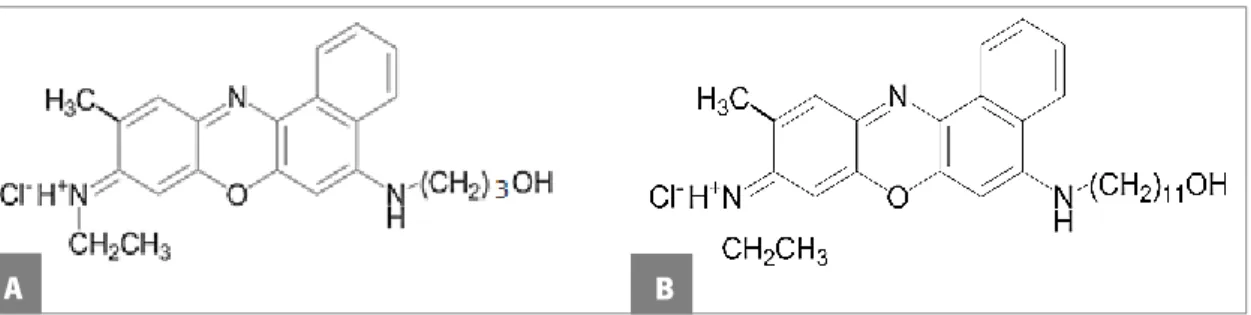
Figure 6. Chemical structure of FSc (A) and FSd (B) dyes. ... 31 CHAPTER III - RESULTS AND DISCUSSION
Figure 7. Susceptibility of C. albicans ATCC 90028 planktonic cells exposed for 48 h to FSc (A) and FSd (B) dye in RPMI. Error bars represent standard deviation. *Statistically different from the respective control, 0 μM (P <0.05)... 41 Figure 8. Logarithm of number of C. albicans ATCC 90028 biofilm cells per cm2 after 3 h of dark
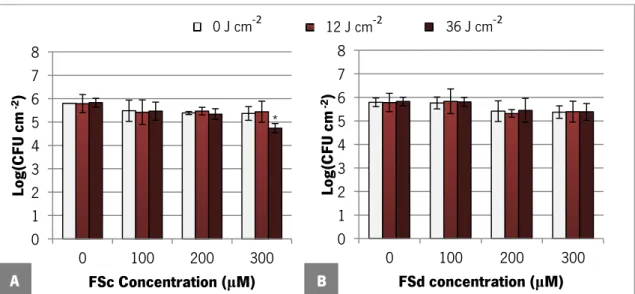
incubation with FSc (A) and FSd (B) dye at different concentrations in PBS. Error bars represent standard deviation. *Statistically different from the control, 0 μM (P <0.05). ... 43 Figure 9. Logarithm of number of C. albicans ATCC 90028 biofilm cells per cm2 after 3 h of dark
incubation with FSc (A) and FSd (B) dye at different concentrations in PBS followed of exposure to various light doses. Error bars represent standard deviation. *Statistically different from the control, 0 μM (P <0.05). ... 44
xiv
Figure 10. Logarithm of number of C. albicans ATCC 90028 biofilm cells per cm2 after 18 h of
dark incubation with both FSc and FSd dyes at different concentrations in PBS. Error bars represent standard deviation. * Statistically different from the control, 0 μM (P <0.05). ... 44 Figure 11. Logarithm of number of C. albicans ATCC 90028 biofilm cells per cm2 after 18 h of
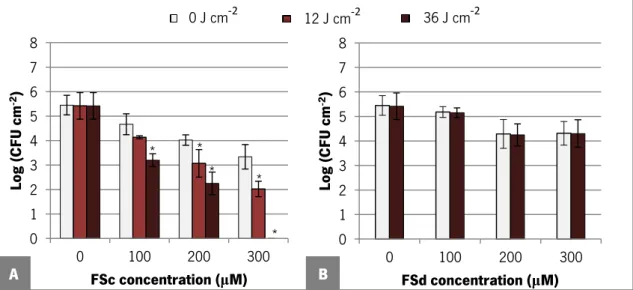
dark incubation with FSc (A) and FSd (B) dye at different concentrations in PBS followed of exposure to various light doses. Error bars represent standard deviation.*Statistically different from the control, 0 μM (P <0.05). ... 45 Figure 12. Fluorescence microscopy micrographs obtained for C. albicans ATCC 90028 planktonic cells after 3 h of incubation (A1-A3) and 18 h of incubation (B1-B3) with PBS only, as well as with FSc and FSd dye at 300 μM in PBS. ... 50 Figure 13. Fluorescence microscopy micrographs obtained for C. albicans ATCC 90028 biofilm resuspended cells after 3 h of dark incubation (A1-A3) and 18 h of dark incubation (B1-B3) with PBS only, as well as with FSc and FSd dye at 300 μM in PBS. ... 51 APPENDICES – APPENDIX A
Figure A 1. Absorption spectra of biofilms of Candida albicans ATCC 90028 before and after exposure to a light fluence of 12 J cm-2following 3 h of incubation with FSc dye at 100 μM (A),
200 μM (B) and 300 μM (C) in PBS. ... 73 Figure A 2. Absorption spectra of biofilms of Candida albicans ATCC 90028 before and after exposure to a light fluence of 12 J cm-2following 3 h of incubation with FSd dye at a 100 μM (A),
200 μM (B) and 300 μM (C) in PBS. ... 73 Figure A 3. Absorption spectra of biofilms of Candida albicans ATCC 90028 before and after exposure to a light fluence of 36 J cm-2following 3 h of incubation with FSc dye at 100 μM (A),
200 μM (B) and 300 μM (C) in PBS. ... 74 Figure A 4. Absorption spectra of biofilms of Candida albicans ATCC 90028 before and after exposure to a light fluence of 36 J cm-2following 3 h of incubation with FSd dye at 100 μM (A),
200 μM (B) and 300 μM (C) in PBS. ... 74 Figure A 5. Absorption spectra of biofilms of Candida albicans ATCC 90028 before and after exposure to a light fluence of 12 J cm-2following 18 h of incubation with FSc dye at 100 μM (A),
xv
Figure A 6. Absorption spectra of biofilms of Candida albicans ATCC 90028 before and after exposure to a light fluence of 36 J cm-2 following 18 h of incubation with FSc dye at 100 μM (A),
200 μM (B) and 300 μM (C) in PBS. ... 75
Figure A 7. Absorption spectra of biofilms of Candida albicans ATCC 90028 before and after exposure to a light fluence of 36 J cm-2following 18 h of incubation with FSd dye at 100 μM (A), 200 μM (B) and 300 μM (C) in PBS. ... 76
APPENDICES – APPENDIX B Figure B 1. Calibration curve of absorbance versus FSc dye concentration. ... 77
Figure B 2. Calibration curve of absorbance versus FSd dye concentration... 77
Figure B 3. Calibration curve of fluorescence intensity versus FSc dye concentration. ... 78
xvii
LIST OF TABLES
CHAPTER I - INTRODUCTION
Table 1. Profile of an ideal photosensitizer for APDT use in the clinical field. ... 21 Table 2. Lamps and lasers more frequent used on PDT applications. ... 28 CHAPTER II - MATERIALS AND METHODS
Table 3. Photophysical properties of pertinent dyes. ... 31 CHAPTER III - RESULTS AND DISCUSSION
Table 4. Uptake of FSc and FSd by biofilms of C. albicans ATCC 90028 after dark incubation with both dyes at 100 and 300 μM in PBS for 3 h or 18 h. The values are means ± Standard deviations ... 48
xix
ABBREVIATIONS
ABC ATP-binding Cassette Abs Absorbance
ALA 5-Aminolevulinic acid
Als
Agglutinnin-like sequence ANOVA Analysis of VarianceAPDT Antimicrobial Photodynamic Therapy ATCC American Type Culture Collection ATP Adenosine Triphosphate
cAMP Cyclic Adenosine Monophosphate CDR Complementarity-determining regions CFU Colony forming units
CLSI Clinical and Laboratory Standards Institute DNA Deoxyribonucleic acid
FDA Food and Drug Administration HIV Human Immunodeficiency Virus HP Hematoporphyrin
HPD Hematoporphyrin Derivative HSP Heat Shock Proteins
MAPK Mitogen-activated Protein Kinase MB Methylene Blue
MDR Multidrug Resistance
MFS Major Facilitator Superfamily
MOPS 3-(N-Morpholino)propanesulfonic acid, 4-Morpholinepropanesulfonic acid NCCLS National Committee for Clinical Laboratory Standards
xx
PBS Phosphate Buffered Saline PKA Protein Kinase A
Pp Protoporphyrin RNA Ribonucleic acid rpm Revolutions per minute Ras Rat Sarcoma
RPMI Roswell Park Memorial Institute SAP Stress Associated Protein Saps Secreted Aspartyl Proteinases SDA Sabouraud Dextrose Agar SDB Sabouraud Dextrose Broth TBO Toluidine Blue
xxi
SYMBOLS
λmax Wavelength of maximum absorption
ε Extinction coefficient τt Triplet-state life time
Φt Triplet-state quantum yield
ΔEt Triplet-state energy
ΦΔ Singlet oxygen quantum yield
λex Excitation wavelength
λem Emissionwavelength
Φ
F Absolute fluorescence quantum yieldɡ Gravity constant P Significance value
xxiii
PREAMBLE
In the last decades, the incidence of superficial and systemic fungal infections has increased due to several factors, including the more frequent use of invasive procedures, prosthetic devices, immunosupressive medication and broad-spectrum antibiotics, as well as the increased incidence of neutropenia and HIV infections [1]. Yeasts from the genus Candida are responsible for 70-90% of the fungal infections cases, with Candida albicans representing about 50% of all yeasts isolated in clinical samples [2, 3]. In fact, C. albicans is the most virulent Candida species and represents an important public health challenge with a high economic and medical relevance due to the increased costs of care, time of hospitalization and high morbidity and mortality rates, especially on immunocompromised patients [4]. In this context, conventional approaches of antifungal therapies can be time consuming, expensive and in the last years they have been largely associated with the emergence of resistant strains [5]. Thus, nowadays there is an increased necessity to discover alternative, more effective and localized antifungal therapeutic options to treat fungal infections [3].
The photodynamic therapy (PDT), originally developed for the treatment of skin tumors, has been shown as an effective therapy to eliminate bacteria and fungi, even resistant strains, that cause localized infections of the skin and oral cavity [3, 6-8]. This approach combines a photoative molecule (a non-toxic dye), termed photosensitizer, with visible light and oxygen to produce cytotoxic oxygen species that are able to react with cellular components leading to cell dead [3, 9, 10]. Several studies have been shown that the use of the antimicrobial photodynamic therapy (APDT) as a therapeutic approach to treat localized infections is an emerging and promising field [3, 6-8]. Therefore, this dissertation aimed to contribute for the development of an APDT approach against candidosis. The principal aim of this work was to optimize the inactivation of C. albicans biofilms by APDT through the action of two new photosensitizers (benzophenoxazinium chlorides of different molecular size) that were synthetized by the Chemistry Department of University of Minho. A set of parameters that guarantees the inactivation of C. albicans biofilm cells by APDT was optimized in this work. These parameters include the photosensitizer concentration, the contact time with C. albicans biofilms that ensures dye uptake and the light dose that promotes the cytotoxic oxygen species production.
xxiv
Additionally, it was evaluated the dye uptake during the incubation conditions with the intent to verify if there is a correlation between the APDT outcomes achieved and the levels of dye uptake.
The present dissertation is divided into four chapters. Chapter 1 is an introduction to the theme, where the C. albicans characteristics, pathogenicity, virulence factors and its mechanisms of drug resistance, as well as the principles of APDT are described. Additionally, this chapter also shows a short review of the main photosensitizers and light sources used, as well as the potential antifungal applications of APDT. The second chapter includes the materials and methods used during all experimental work. On chapter 3 the results obtained and their discussion are presented. The last part (chapter 4) reveals the main conclusions and presents some suggestions for future works.
Part of the results obtained in this dissertation were presented in the form of Poster in the “2nd Fungal Biofilms Meeting” Conference on May 20th and 21st of 2013 with the following reference: Lopes, Marisa, Alves, Carlos, Rama Raju, B., Gonçalves, S., Coutinho, P., Henriques,
M., Belo, I. Antifungal Photodynamic Efficacy of Benzo[a]phenoxazinium Chlorides against
1. CHAPTER I
INTRODUCTION|3
1.1. Candida albicans
In nature there is a wide diversity of microorganisms, however only a small part is able to act like opportunistic pathogens and cause infections on human host. C. albicans is the most virulent among all the well-known clinically relevant Candida species and the species most predominant found on superficial fungal infections of the skin, oral cavity, esopaghus, intestinal and genital tract (candidosis), as well as in invasive blood stream infections (candidemia) [3].
C. albicans is a commensal microorganism present in the normal flora of the human body that has an optimal growth at the body temperature (37ºC) [11]. Although they are commensals on the majority of healthy individuals, whenever the opportunity arises, i.e, whenever the body is immunocompromised or debilitated in some other way, C. albicans becomes a serious pathogenic and opportunist microorganism, causing serious fungal infections. For these reasons, C. albicans is not only the main species related with oral mycoses but also the most common fungus affecting HIV infected patients and those with haematologic and oncologic malignancies during the immunosuppression period. In these patients, oropharyngeal candidosis episodes are the most cause of morbidity, which are of special concern, once oral candidosis can lead to esophageal candidosis and even more serious complications [3].
The cell wall of C. albicans is an essential component of its success as a pathogen [4]. It is required for growth, provides strength and protection against osmotic insult and establishes the contact between C. albicans cells and host tissues, through some associated cell surface macromolecules, leading to tissue invasion and colonization [12]. However, the pathogenicity of C. albicans may be attributed to several virulence factors including host defenses evasion, production of some tissue-damaging hydrolytic enzymes, as well as adherence and biofilm formation on host tissues and medical devices [4]. The biofilm formation ability is indeed the main virulence factor of C. albicans to the extent that it is the main responsible for its drug resistance against a wide range of conventional antifungal agents, including amphotericin B and fluconazole [4, 13]. Next will be reviewed each of these elements that contribute for C. albicans pathogenicity.
4|INTRODUCTION
1.1.1. The Role of C. albicans Cell Wall
The fungal cell wall is a dynamic and highly organized organelle that determines both cell shape and its viability, as well as acts like a permeability barrier and determines the interaction between the microorganism and its environment [14, 15]. Because the fungal cell wall is a dynamic structure, it is continuously biosynthesized and extended during cell proliferation and growth phase. So, although the fungal cell wall has a protective function for cells, it is also responsible for the cell susceptibility to some antifungal agents that have the ability to disturb the processes by which the cell wall is synthesized [16].
C. albicans cell wall is mostly composed by polysaccharides, representing around 80% of the cell wall dry weight. This structure consists in β-(1,3)-glucan covalently linked to β-(1,6)-glucan and chitin and is designed to work as a robust external skeleton, as well as a scaffold for the external glycoprotein layer that represents the other 20% of cell wall constituents. This layer includes not only lipids and various inorganic salts, but also many proteins that are involved in permeability control, interaction with hosts, recognition of other fungi and regulation of several processes [17, 18]. Besides the fungal cell wall being a crucial factor to host tissue evasion and colonization, it is also the first point of contact with innate immune system of the host and thus it also plays an important role in recognition and phagocytosis by host immune cells [15].
1.1.2. Virulence Factors of C. albicans
It was believed, decades ago, that yeasts were passive participants of the pathogenesis process and the organic weakness and immunocompromised patients was the only mechanism that triggers the establishment of opportunistic infection. Nowadays, it is known that these microorganisms are active participants in the infection process, using mechanisms of host cells aggression termed virulence factors [4].
C. albicans virulence factors include the ability to express specific host recognition and adhesion biomolecules, secretion of hydrolytic enzymes, morphologic transition between unicellular yeast cells and filamentous phase (hyphae and pseudo-hyphae) and the ability of biofilm formation on several surfaces [4, 11].
The primary factor that contributes to the C. albicans virulence is the host recognition and adhesion [4]. These two phenomena are conferred by specialized cell wall proteins termed
INTRODUCTION|5
adhesins that bind specifically to peptides or sugar residues of other cells and/or increase the cell surface hydrophobicity, promoting the binding to abiotic surfaces through hydrophobic interactions [19]. The mechanisms of adhesion can be divided into two groups: lectin-like adhesion and sugar-insensitive adhesion [19]. The first one refers to lectin-like binding of adhesins to cell surface sugars residues, because these adhesins have a lectin-like carbohydrate binding domain. On the other hand, on sugar-insensitive adhesion, adhesins bind to peptides or raises the hydrophobicity of cell surface promoting the binding to certain abiotic surfaces [20]. One example of the later one in C. albicans is the Agglutinnin-like sequence (Als) proteins that specifically bind to peptides [21].
One of the most remarkable features of yeast adhesion is the ability to adapt the adhesion properties to new environments [19]. Several signaling pathways are involved in adhesins synthesis in response to stress, nutrient limitation or molecules produced by hosts. These include the Ras/cAMP/PKA, the Mitogen-activated Protein Kinase (MAPK) – dependent filamentous growth and the main glucose repression pathways [22]. Additionally, adhesins are submitted to stochastic expression patterns [23]. These cell wall proteins have a common structure of three domains: the C-terminal that links the adhesin to the cell wall, the N-terminal projected from the cell surface and the middle domain rich in threonine and serine-rich repeats [19]. Because of their similarity and repetitive occurrence, these repeats trigger recombination events and/or splippage during the DNA replication, offering an endless reservoir of adhesion properties to cells that gives them a great opportunity to quickly adapt to stressful environments [23].
The production and release of hydrolytic enzymes, most of them resultant from extracellular secretion, are also a key factor on C. albicans virulence [4, 24]. These enzymes help on host adhesion, tissue invasion and destruction, as well as they are also thought to be responsible for changes on host immunity response [4]. The most discussed hydrolytic enzymes released during the pathogenic process are aspartic proteinases (Saps), but phospholipases and lipases are also hydrolytic enzymes that are involved in C. albicans virulence [24]. The proteolytic activity of Saps is attributed to a multigene SAP family of, at least, ten members that are differentially regulated and expressed on C. albicans infections, suggesting that different Saps have distinct roles during the infectious process [24]. These enzymes are responsible for the digestion or destruction of host cells membrane and degradation of host surface molecules, contributing to host tissue invasion [24]. Additionally, recent evidences have suggested that Saps are also involved in the
6|INTRODUCTION
activation and maintenance of the inflammatory response in epithelial surfaces [25]. On the other hand, phospholipases are enzymes with the ability to hydrolyse ester bonds in glycerophospholipids [24]. Seven phospholipases have been identified [26] being the difference between their the mode of action and the target within the phospholipid molecule, which is the major component of cell membrane [24]. The functions of phospholipases on C. albicans virulence are not yet clear but they have showed to be involved in adhesion to epithelial cells and cell penetration [24] as well as in epithelium invasion [27] and may be in interaction with host signal transduction pathways [27]. Regarding to lipases, they have the ability to catalyse the hydrolysis of the ester bonds of phospholipids and mono- di- and triacylglycerols, but almost nothing is known about their role as C. albicans virulence factor. The potential roles of lipases that have been suggested include the digestion of lipids for nutrient acquisition, lyses of competitive microflora, adhesion to host tissues, as well as changes in immune cells [28, 29]. In addition, the production and release of haemolysins may also play a key role in C. albicans virulence [4]. C. albicans expresses haemolysins that allows the destruction of red blood cells and the acquisition of iron from host erythrocytes, an essential element for the development of microorganisms and a consequent establishment of infection [30].
The ability to go under a reversible morphologic transition between unicellular yeast cells and filamentous phase (hyphae and pseudo-hyphae) is another important virulence factor of C. albicans, with the extent that this ability provides cells with a flexibility of adaptation to hostile conditions imposed by the human body [4]. The filamentous phase raises resistance to phagocytosis and it has a cell wall containing three times more chitin that gives it more mechanical strength and makes epithelium penetration easier, allowing the invasion of more deep tissues [4, 31]. Although the parameters that triggers morphologic transition are not yet well understood, in vitro studies show that this behavior is influenced by temperature and pH: unicellular phase are stimulated at 25ºC and acid pH, whereas filamentous phase is favored at 37ºC with pH around neutrality [11].
The most important virulence factor of C. albicans is the capacity to form biofilm on several surfaces [4]. Recent evidence suggests that the majority of C. albicans infections are associated with biofilm formation [13]. In fact, Candida species, most notably C. albicans, are the main fungal species associated with biofilm formation causing superficial and deep-seated infections. This microorganism can colonize not only epithelial surfaces, but also numerous medical devices
INTRODUCTION|7
(e.g. catheters and prosthetic devices, like voice prostheses, heart valves, denture surfaces and etc.) [3, 32].
Biofilms are defined as highly well structured, coordinated and functionalized communities of microorganisms that are surface associated or attached to one another and embedded in a self-produced protective extracellular matrix (ECM) composed by diverse polymeric substances such as cell wall glycoproteins and polysaccharides (e.g. β-glucan) [4, 13, 33]. Fungal biofilms have defined key phases of development that were elucidated through the use of model systems. These key phases include the arrival to the substratum, adhesion, colonization, ECM production and deposition, biofilm maturation and cell dispersal [13]. Figure 1 shows the steps in C. albicans biofilm formation.
Figure 1. Illustration of steps in Candida albicans biofilm formation. 1 and 2. Formation begins with
adhesion of yeast cells to a surface by nonspecific interactions, such as hydrophobic and electrostatic forces, as well as specific adhesin-ligand bonds. 3. Attached cells proliferate to form microcolonies and start to deposit the ECM.4. The biofilm grow into a thick layer where ECM involves a complex network of yeast cells, hyphae and pseudohyphae. 5. Cells released or detached from the biofilm spread into the environment, dispersing infections and forming new biofilms. Adapted from [3].
The advantages to an organism of forming biofilms include the protection from the environment, resistance to chemical and physical stress, regulation of gene expression and metabolic cooperation [13]. Usually, the metabolic activity of biofilms is lower than planktonic cells due to existent nutritional restrictions, environmental physical stress and high cell population. These communities also show unique phenotype characteristics compared to their planktonic counterparts that confer them an increased resistance to antifungal agents [13, 34-36]. In the clinical scenario, the problematic of drug resistance is very important since it enables biofilms to act as persistent sources of infection [13].
8|INTRODUCTION
1.1.3. The Role of Biofilm in Antifungal Agents Resistance
The increased resistance to antifungal agents is one of the defining characteristics of biofilms [13]. Nowadays, C. albicans biofilms show an increased resistance to a wide range of conventional antifungal agents, such as amphotericin B and fluconazole. This phenotype can be about twenty times more resistant to amphotericin B and one hundred times more resistant to fluconazole than the planktonically growth form [3, 37].
Antifungal resistance is both complex and multifaceted. The resistant phenotype of planktonic cells is generally due to irreversible genetic changes, but biofilms are able to be resistant through their physical presence and cell density, which turns it into an almost inducible resistant phenotype independent from the genetic alterations [13]. Understanding the processes mentioned above enabled the science to unravel the mechanisms that are involved in drug resistance. Over the last few years, several factors that play a role in fungal biofilm resistance have been described, including the physiological state, cell density, extracellular matrix, efflux pump-mediated resistance, overexpression of drug targets and the presence of persister cells [4, 13, 38].
The general physiological state of cells in sessile populations are implicated on the susceptibility profiles of fungal biofilms [13]. Nutrient and oxygen limitation, particularly in the deeper cell layers of the biofilm, are responsible for slowing down the growth rate of these cells leading to cell’s surface alterations that consequently would result on a slower or inefficient drug uptake [34, 35, 39]. However, other factors like pH, temperature, changes in osmolarity, oxidative and ionic stress can also cause stress responses through conserved signaling pathways and perhaps alter their antifungal susceptibility, which suggests that more complex factors may be involved on drug resistance of biofilms [40, 41]. Some of the most tolerance responses triggered by these physiological stress factors is the activation of MAPK signal transduction network that is involved on biofilm development [22, 40], the activation of the Calcineurin via that plays among other things an important role on antifungal drug responses [42, 43] and finally the activation of the heat shock protein (HSP) Hsp90 that regulates complex cellular circuitry and potentiates the resistance to azoles and echinocandins in C. albicans, at least through the calcineurin via [44].
Cell density is also an important resistance factor of biofilm populations [13]. A previous investigation showed a phase-dependent increased antifungal resistance on the biofilm
INTRODUCTION|9
development, supporting the belief that the physical density of cells within biofilms plays a role in drug resistance [45]. Within these highly dense communities there is a cooperation between cells through the quorum sensing systems, which enables them to promote communication and collective behaviors via the secretion of signaling molecules in a population-dependent manner [46]. This process allows communities to improve nutrient and niches accesses, as well as, collective defense against other competitive microorganisms and antifungal agents [3, 4]. However, some previous work have shown that both planktonic and biofilm resuspended cells shows similar resistant phenotype to the Clinical and Laboratory Standards Institute (CLSI) methodology, suggesting alternative mechanisms of resistance [47].
The ECM is an important feature of biofilms with the extent that this component provides to cells protection from host immunity and antifungal agents [48]. Its principal role in the antifungal resistance is the diffusion barrier effect that restricts drug diffusion throughout the biofilm structure, particularly to the deeper cell layers, and therefore, only the most superficial layers are exposed to lethal doses of antibiotics [35]. Recently, it was also been shown that the ECM composition of C. albicans biofilms have also a central role in drug resistance. In this respect, some recent results have shown that β-1,3 glucans are responsible to sequestering azoles and thus conferring resistance on C. albicans biofilms [49]. Additionally, the regulation of ECM production may also be a key resistance factor [13]. It is thought that some glucoamylases and alcohol dehydrogenases may have positive roles on the matrix production and maturation phase of biofilms, respectively [50].
The fungistatic effect of the azoles against C. albicans induces a strong response of the biofilm population, allowing the development of some drug resistance mechanisms [13, 51]. The principal molecular mechanism of azole-resistance in C. albicans is the increased efflux of antifungal agents principally mediated by the Adenosine Triphosphate (ATP)-binding cassette and major facilitator superfamily (MFS) transporters [4, 45, 52]. The increased drug efflux by ATP-binding cassette (ABC) transporters is due to the overexpression of the genes encoding drug efflux pumps CDR1 and CDR2, whereas the contribute of members of the MFS on azole-resistance is mostly due to the overexpression of the MDR1 gene, a gene that encodes drug efflux pumps of MFS [45, 52, 53]. In fact, efflux pumps are an important determinant of fungal biofilm resistance. Their primary role may be the protection of cell to acute toxicity, but a clinical
10|INTRODUCTION
exposure to azoles may triggers the levels of efflux pump expression and thus contributing for drug resistance [54].
Ergosterol alterations in biofilm cell membranes may also be the reason for C. albicans resistance to both azole and polyene-derived antifungal agents [45, 52]. Azoles actively bind to ERG11p enzyme (lanosterol 14-a-demethylase) encoded by ERG11 gene and block ergosterol biosynthesis, leading to a depletion of cell membrane ergosterol and the accumulation of toxic sterol pathways intermediates capable to inhibit cell growth [40, 55]. On the other hand, polyenes use the binding to cell membrane ergosterol to promote the formation of cell membrane pores and consequently cause the loss of intracellular substances, leading to cell dead [56]. Thus, amino acid substitutions in the enzyme ERG11p due to missense mutations on ERG11 gene or the overexpression of this enzyme may cause ergosterol alterations that elicit azole and polyenes resistance on C. albicans [55, 56]. It has been reported that mature C. albicans biofilms show an overexpression of the enzyme Erg11p, as well as a significant content of altered membrane ergosterol [3, 45].
The presence of persistent cells (0.1-1% of biofilm population) is also one important mechanism of resistance in chronic infections that has gathered some recent attention in fungal biofilms [13, 57]. Persister cells are “dormant variants of regular cells that form stochastically in microbial populations and are highly tolerant to antibiotics” [58]. In particular for C. albicans biofilms, it has been described the presence of a small subpopulation of yeast cells that are highly resistant to amphotericin B, independently of efflux pumps upregulation or cell membrane composition [4, 13, 59]. It is thought that phenotypic adaptive changes arising from the prolonged and ineffectual antifungal treatment may be the responsible for the extraordinary survival ability of persister cells and thus for the antimicrobial drug failure [13]. However, the exactly mechanisms that enable these subpopulations to persist still remain unclear.
The antifungal biofilm resistance seems to be a multifactorial and complex process, where antifungal agents with a single mechanism of action are likely to be poorly effective. Thus, other antifungal strategies with more effective mechanisms of action are needed [3, 34].
INTRODUCTION|11
1.2. ANTIMICROBIAL PHOTODYNAMIC THERAPY (APDT)
The deadly effect of visible light when combined with chemical compounds was described for the first time by Oscar Rabb and his professor Herman Von Tappeiner in 1900. They found that visible light combined with acridine was able to inactivate cultures of Paramecium caudatum [14]. Shortly later, the essential role of the oxygen and light in the process was demonstrated by Von Tappeiner, who created the term “Photodynamic” [6]. However, the potential of PDT against pathogens was not explored over several years for two principal reasons: some pathogens, especially gram-negative bacteria and protozoa, are poorly inactivated by PDT and the discovery of antibiotics, particularly the penicillin in 1928, raised the belief that every microbiological diseases would have been reduce to a level that nevermore would have impact on human health [14]. Such expectations were disappointed in the end of 50 decade with the emergence of resistant strains and then, the researches on the PDT approach were retaken [6, 14].
In the 70s, it was discovered that porphyrins dyes localized selectively in tumors and so, PDT was initially developed as a cancer therapy. Since then, PDT has been clinically used for therapy of various diseases. So far, PDT is approved by FDA (Food and Drug Administration) for treatment of non-melanoma skin cancer (basocelullar carcinoma and Actinic Keratosis), choroidal neovascularization in age-related macular degeneration, as well as in treating lung and Barrett's
esophagus cancer [10, 60, 61]. On the other hand, PDT investigations has included a wide range of applications, such as arterial restenosis prevention, therapy of another malignancies (prostate, neck, mesothelioma and brain) and autoimmune diseases, such as psoriasis [60, 61].
Recently, antimicrobial PDT (APDT) has been proposed as an alternative approach to kill pathogens. APDT combines a non-toxic and light sensitive dye, termed photosensitizer, with oxygen and harmless visible light with appropriate wavelength, which matches with the absorption spectrum of photosensitizer [61-63].
Initially, this therapy requires a localized administration of the photosensitizer. Then, the photosensitizer taken up by cells or attached to them is excited with the visible light source, by photon absorption. On this state, the photosensitizer can undergo reaction with ambient oxygen and could originate cytotoxic oxygen species that may kill pathogens by oxidative modifications of the cellular constituents [14, 62, 64, 65].
12|INTRODUCTION
1.2.1. Photophysical processes of PDT
The photosensitizers used on this therapy are molecular structures characterized by conjugated double bounds containing a system of –electrons. In the photosensitizer ground (singlet) state these electrons are spin paired at the low energy orbitals. Upon application of the light with wavelength corresponding to the absorption peak of the photosensitizer, the electron in the highest occupied molecular orbital (HOMO) is excited to the lowest unoccupied molecular orbital (LUMO) and keeps its spin, leaving the photosensitizer in the excited singlet state, which is highly unstable and short lived (in the range of nanoseconds) [62, 66]. At this phase, the photosensitizer can rapidly return to the ground state, releasing the energy absorbed as fluorescence or suffering internal conversion, releasing heat. However, the most important event to the photodynamic therapy is the reversal of the excited electron’s spin, known as intersystem crossing, which leads the photosensitizers to the triplet state. This state is less energetic than the previous state, but has a longer life time (in the range of microseconds) [64, 65].
In the triplet state, the photosensitizer may return to the ground state once again, by a newly change in the excited electron’s spin orientation followed by energy emission as phosphorescence or, alternatively, the photosensitizer may interact with molecules in its immediate environment (essentially with molecular oxygen, O2) according two type of
mechanisms: type I and type II reactions (Figure 2)[62, 64, 65].
INTRODUCTION|13
Type I Reaction
On the type I reaction, the triplet photosensitizer can transfer an electron and sometimes a simultaneous proton to O2, resulting on superoxide anion 2
- formation, which may undergo
reaction and originate other reactive oxygen species (ROS), including the hydroxil radical ( OH) and hydrogen peroxide (H2O2) [62, 64].
The ROS formed have a range of different reactivities. OH, a strong electrophile that has the ability to chemically cause damage to a wide range of molecules, is undoubtedly the most reactive. H2O2 shows a less reactivity and 2
- is the least reactive [67]. However, 2
- may be
converted to H2O2 and O2 by the superoxide dismutase enzyme. H2O2 is really reactive in the
presence of ferrous irons and so, it may undergo reaction leading to OH formation, through the well-known Fenton reaction (equation 1) [62, 66].
H2O2 + Fe2+→ OH
-+ OH + Fe 3+ [Equation 1]
More specifically, in the Fenton reaction occurs the homolytic fission of the oxygen-oxygen bond in H2O2 molecule, resulting in OH
- and OH formation, through the oxidation of ion
Fe2+ to Fe3+ [68].
Type II Reaction
The electronic structure of O2 in the ground stateis a triplet. In other words, in the ground
state, the O2 moleculehas two outermost orbitals unpaired but spin parallel [64]. As the O2 ground
state and the photosensitizer excited state is the same (triplet state), the collision between these two molecules can undergo energy transfer, transforming O2 in a more oxidant specie. In a
detailed way, type II reaction involves energy transfer to O2, resulting in a spin reversion of its
outermost electron and its shifting into the orbital containing the other electron, leaving one orbital completely unoccupied. As a result, the termed singlet oxygen (1O
2) is formed and
photosensitizer returns to the ground state [9, 62].
Singlet oxygen is highly reactive, very short lived (around microsseconds), due to its very instable electronic configuration, and has a very limited diffusivity. Its high reactivity is responsible for a central role in the cellular damages during the photodynamic therapy and the
14|INTRODUCTION
limited diffusivity gives it a simultaneous localized effect (in a radius of approximately 20 nm) [60, 62, 66].
Although both types of reactions can occur simultaneously in the presence of molecular oxygen, the second one occurs preferentially. Thus, singlet oxygen is not only more reactive than ROS, but also the main product of the photodynamic process, constituting the principal responsible for causing cellular damages [67].
1.2.2. The Photobleaching Process
As a consequence of light exposure, the photochemical destruction of the photosensitizer can occur. This process called photobleaching is generally denounced by the decrease of photosensitizer’s fluorescence intensity over time and can be minimized by decreasing illumination light intensity [66].
It was thought that the photobleaching process is due to a reaction between the photosensitizer molecule and singlet oxygen or ROS produced during illumination in a way that leads to a decrease of its efficacy for further photosensitization processes. However, in some cases the first product of photobleaching is a better photosensitizer than the initial molecule [66].
Photobleaching generally means a loss of reactivity but this process can have some beneficial effects towards selective treatments. In fact, it is thought that photobleaching may be responsible for the destruction of large amounts of photosensitizers on healthy tissues [69]. If this process occurs fast enough, healthy tissues may be spared from photodynamic cell damages, increasing injury site selectivity. However, there are still no clear evidences that the photobleaching can affect PDT treatments in this way [66, 70].
1.2.3. Mechanism of Action of APDT
The APDT Mechanism of action is quite different depending on the type of target microbial cells. The pathway where an initial increase of permeability of the cell wall is required, being an operative pathway for yeasts and also for gram-negative bacteria and protozoa in the cystic stage will be described [14].
The process begins when the photosensitizer (positively charged) binds to negative charges of the cell wall, according to electrostatic forces. Then, this agent can modify the cell wall
INTRODUCTION|15
permeability (in the dark or photo-induced), leading to a massive influx of the photosensitizer for the plasma membrane [14, 71]. At this point, a portion of the photosensitizer may cross the plasma membrane and take different subcellular localizations, especially when a prolonged incubation period is used. In the last few years, some authors have been described that certain photosensitizers can cross the plasma membrane of eukaryotic cells and accumulate in mitochondria, lysosomes (vacuoles, in the case of fungi) or Golgi apparatus, as well as in endoplasmic reticulum [66].
Upon illumination, the reactive cytotoxic species formed will oxidize the diverse cellular constituents within the microenvironment of the photosensitizer, affecting the cell functions and its metabolism in a manner that it can result in cellular apoptosis or necrosis [3, 14]. The mechanism of action that leads to fungi inactivation by APDT is illustrated in Figure 3.
Figure 3. Illustrative scheme of essential steps involved on antifungal photodynamic therapy. Modified
from [14].
As mentioned above, the cytotoxic effect of singlet oxygen is the most responsible for cellular inactivation. Singlet oxygen has a high probability to react with sulfur moieties and double
Binding of the cationic photosensitizer with negative charges on the outer wall
Dark or photo-induced alteration of the outer cell wall permeability
Translocation of photosensitizers to the inner plasma membrane
Photoactivation of photosensitizer and formation of reactive cytotoxic species
Oxidative modification of specific targets in the photosensitizer microenvironment
Impairment of cell functions and metabolism
16|INTRODUCTION
bonds, having the ability to interact with aromatic components of macromolecules [62]. Thus, this product of type II reaction is a non-specific oxidizing agent that has multiple targets. It has the ability to oxidize aminoacids, inactivating some proteins and enzymes (e.g., catalase, superoxide dismutase, alcohol dehydrogenase, cytochrome coxidase, glyceraldehyde-3-phosphate dehydrogenase and hexokinase), as well as it is responsible for oxidation of nucleic acids and lipids peroxidation [9, 72]. In particular, lipids peroxidation can lead to the lyses of vacuoles, mitochondria and plasma membrane [3].
Mitochondria are an important target of APDT. APDT induced mitochondrial damages have been related to the tendency of many photosensitizers to produce cell apoptosis involving the caspases pathway or the release of cytochrome c [66, 71]. However, plasma membrane represents the critical target of APDT. The damages caused on this organelle can lead to loss of barrier properties and inhibition of calcium and potassium transporter proteins, resulting in cell swelling, loss of cellular constituents, collapse of cell ionic balance, as well as deficiency of some essential substrates of anabolic and catabolic pathways [14, 73]. Additionally, the damage caused in the cell wall and plasma membrane may allow more photosensitizer to be translocated to endocytoplasmic districts and produce more reactive cytotoxic species upon illumination that will cause more oxidative modifications on a variety of cell targets [3, 66].
Although singlet oxygen can react with nucleic acids, several studies shown that the oxidative damages caused on plasmid and genomic DNA are not directly correlated with cell death [14, 74, 75]. In fact, DNA photo-induced oxidative modifications are little significant, since (i) the bacteria Deinococcus radiodurans, which has a highly efficient mechanism of DNA repairing, is quickly killed by APDT [14]; and wild strains of Escherichia coli have similar sensitivity to inactivation by APDT than E. coli strains with deficient DNA repairing mechanisms [76]. These observations are in agreement with the lack of mutagenic effects observed in photosensitization of microbial cells with several photosensitizers [14].
1.2.4. Biofilms Eradication by APDT
The clinical significance of biofilms is highlighted by recent estimates that over 65% of all hospital infections are originated by these microbial communities [41, 57]. A recent scanning
electron microscopy studies [77, 78] have provided evidences that APDT has not only the ability to kill a wide of pathogens within the biofilm but also has a direct effect on biofilm extracellular
INTRODUCTION|17
biomolecules. These authors described that the high reactivity of singlet oxygen exerts also effect on the matrix polysaccharides, leading to biofilm destruction [3]. This twofold activity of APDT in biofilm eradication may be very advantageous in clinical use because the structural rupture of biofilms may inhibit plasmid exchanges and transference of drug resistance factors, as well as may avoid new colonization and prevent recurrent infections [9]. However, there are only a few studies in this area and most of them were developed using biofilms of pathogenic bacteria. Given the high clinical relevance of fungi and fungal biofilms, there is a substantial need to provide a deep understanding about the APDT effect on these communities.
1.2.5. Cellular Resistance Mechanisms to APDT
Since APDT products have no specific target and can cause damage to a variety of cellular constituents, it seems to be very unlikely that microbial cells can develop resistance to APDT [3].
One mechanism that may provide cellular resistance to APDT is the inactivation of the oxygen reactive species H2O2, OH and - by antioxidants detoxifying enzymes, such as
catalase, superoxide dismutase and peroxidase [62, 79]. For instance, the catalase enzyme can remove the hydrogen peroxide (H2O2)from the Fenton reaction on type I process, breaking down this molecule and forming water (H2O) and oxygen (O2) [80]. In addition, some antioxidants
peptides, such as glutathione, may also quench some oxygen reactive species leading to the development of cellular resistance to APDT [62]. On the other hand, singlet oxygen cannot be broken down by antioxidant enzymes in any enzymatic reaction, by contrast it has sometimes the ability to inactivate them, which is the case of catalase and superoxide dismutase [81].
It was also thought that the general mechanisms of cell drug resistance, such as active efflux pumps, altered drug uptake and intracellular trafficking of the photosensitizer may contribute to the microbial resistance to APDT [3]. In the particular case of C. albicans, it has been shown that the two major efflux systems, ABC and MFS transporters, are responsible for the decrease of the killing effect of methylene blue (MB) – mediating APDT against this pathogen, which suggests that both type of transporters are involved in MB efflux. To overcome this problem, some authors proposed the combined use of efflux pumps inhibitors [3, 77]. However and according to Prates et al. [82], the phototoxic effect of MB is improved using an ABC transporter inhibitor, but is decreased when a MFS channel inhibitor is used, suggesting that
18|INTRODUCTION
MFS channels are also an uptake mechanism of MB [82]. Nevertheless, some authors support that photosensitizers have not to be necessarily taken up by cells. The main important cellular targets of APDT are the cell wall and plasma membrane and so, photosensitizers that specific bind to these cell structures will be potential photosensitizers for APDT of the target cell [3].
On the other hand, some recent studies [79, 83] have revealed that the expression of HSP can be significantly increased after the photodynamic treatment. These proteins play an important role in refolding proteins and prevention of protein aggregation. So, it may constitute a mechanism whereby microbial cells could develop resistance to APDT. For instance, in 2011 St Denis et al. [63] had demonstrated that APDT-mediated by Toluidine Blue (TBO) in E. coli and Enterococcus faecalis leads to the upregulation of the HSPs DNaK and GroEL and consequently its survival is increased in about 2 log and 4 log, respectively. However, the mechanism that leads to HSP expression is no yet completely understood and the combination of APDT with HSP inhibitors does not seem to potentiate the killing effect of APDT in both microorganisms [3].
In summary, the studies and reports discussing the possible microbial resistance to APDT are scattered and sometimes are quite controversial. Thus, a better knowledge in this field is needed and perhaps could provide new therapeutic approaches, such as the combination of APDT with other therapies [3].
1.2.6. Applications of APDT
The APDT potential have been investigated in a wide range of applications. Given that photosensitizers have a broad antimicrobial spectrum of action, their use as general disinfectants have been studied. This approach could be used to sterilize chirurgic material, blood products and also surfaces and floors of wards or other healthcare facilities. On this last application, photosensitizers could be applied as a wash liquid or spray and illuminated using ambient lights, that will induce the production of oxygen cytotoxic species and so, an antimicrobial effect that could lead to a decrease of the amount of microbial transmission in these places without induces drug resistance to the conventional drugs [9].
On the other hand, applications like the sterilization of oral cavities and root canals, as well the treatment of localized infections (e.g. impetigo, candidosis and periodontitis) seems to be also a promising feature of APDT [6, 14, 60]. Besides these sites are readily accessible to topical delivery of photosensitizers and light, this therapy may also kill the resistant strains without arm
INTRODUCTION|19
the surrounding tissues. Indeed, there is a possible set of optimal conditions that makes APDT suitable to treat localized infections [14]. The combination of an appropriated incubation time, low photosensitizer concentration and slight illumination parameters appears to allow a selective killing of pathogens, sparing human cells (e.g., keratinocytes and fibroblasts) from photo-induced cell damages [84-86]. Therefore, APDT provide a good antimicrobial alternative approach that may decrease the mortality rates of the microbial associated diseases [3].
With the respect to photodynamic inactivation of C. albicans, superficial and localized infected tissues on the skin and mucosae, such as mucocutaneous candidosis, seems to be the main application of antifungal PDT [5]. Several classes of photosensitizers, mostly belonging to the phenothiazines and porphyrin classes have been used on APDT of Candida species growing on both planktonic cultures and biofilms (see section 1.3.2.) [3]. Many in vitro studies have been reported the use of APDT on killing Candida species and some in vivo studies have also been developed [7, 87-101].
1.3. PHOTOSENSITIZERS
In the last 30 years, the research on APDT field has significantly increased and thus, several forms of photosensitizers have been created. Photosensitizers are organic aromatic molecules constituted by large conjugated systems of double bonds that can be considered as a central cromophore combined with auxiliary side chains that are responsible for further electron delocalization of the photosensitizer [14, 62, 65]. Although APDT success is influenced by oxygen availability and illumination light dose, photosensitizer concentration, as well as its own properties are crucial parameters on the photodynamic inactivation process of pathogens [3, 65, 67].
1.3.1. Properties of Photosensitizers
The type and efficacy of cellular mechanisms of uptake of dye, as well as the pattern of its distribution into the cell are dependent on its chemical properties, such as the amphiphilic character, lipophilicity-hidrophilicity balance, degree of ionization or the presence of electric charged groups [5].
20|INTRODUCTION
In particular, the amphiphilic character and the presence of electric charged groups are very important factors on photosensitizer performance. While amphiphilic property avoid self-aggregation of photosensitizer and provides a good penetration in the lipid layer of plasma membrane, the presence of electric charged groups provides electrostatic affinity that encourages the distribution of photosensitizer for various subcellular targets [5, 66, 102]. However, there are small details to consider depending on the target. Some photosensitizers that are efficient in killing gram-negative and gram-positive bacteria do not show the same therapeutic effect in fungi. For instance, a large number of positive charges are required to inactivate bacteria, but the same structural factor does not provide a good binding or uptake by fungi cells, especially if they are distributed homogeneously. In this case, more lipophilic structures with less positive charges seem to be more appropriated [62].
Although there are small differences between suitable photosensitizers for fungi or bacteria, there is a consensus on the electronic character of photosensitizers. Cationic structures are more effective to kill both bacteria and fungi than anionic or neutral ones, due the electrostatic affinity provided between its positive charges and the negatively charged groups of cell wall and plasma membrane [14].
Recently, it was also established that there are essential photophysical and photochemical parameters that determine photosensitizing capability of a compound. These parameters are the absorption peak wavelenght (λmax), extinction coeficient (ε), triplet-state life
time (τt), triplet-state quantum yield (Φt), triplet-state energy ( ΔEt) and singlet oxygen quantum
yield (ΦΔ), which are all specific of each photosensitizer and dependent on its molecular
structure [5, 65]. In short, a photosensitizer with optimal properties to APDT clinical use must have a wide range of properties. Table 1 describes the profile of an ideal photosensitizer for APDT use in the clinical field [5, 14, 64, 65, 70, 102].
INTRODUCTION|21
Table 1. Profile of an ideal photosensitizer for APDT use in the clinical field [5, 14, 64, 65, 70, 102].
Characteristics Description
Absorption peak
Absorption in the long-wave region (>630 nm), preferably at a near red wavelength of the visible spectrum makes tissue penetration easier and avoids generalized photosensitization by sun light (400-600 nm). Exctintion coefficient
High extinction coefficient of photosensitizer is required to increase the number of photons absorbed. Strong absorption of the light decreases the amount of photosensitizer required for a certain effect.
Dark toxicity Low dark toxicity of photosensitizer is desired in APDT clinical use.
Energy transfer and quantum yields
The energy transferred to O2 during the photophysical process of APDT
must be sufficient to induce singlet oxygen formation. On the other hand, high quantum yield of the triplet-state, combined with high triplet life-time ( τT > 100 μs) and a high quantum yield of singlet oxygen is
desired;
Selectivity Selectivity to microbial cells is desired in the clinical field of ADT. Stability Photosensitizers must be stable enough to avoid degradation products.
It also should not self- aggregate in the body because aggregates decrease the triplet-state and singlet oxygen quantum yields.
Tolerability The damages caused on healthy tissues should be minimal.
Pharmacokinetics Rapid removal from treated tissues and human body is required to avoid generalized photosensitization of the skin.
Broad spectrum of action
Photosensitizers should have a broad spectrum of action allowing the therapeutic of localized infections caused by a heterogeneous microflora of pathogens.
Mutagenicity and resistant strains selection
Photosensitizers should not induce genetic alterations. It should also minimize the risk of resistant strains selection.
Availability
Photosensitizers should be a simple formulation with easy chemical synthesis and its starting materials should be readily available. Moreover, it should be easily produced in large-scale to make it cost-effective and widely available.
Chemical structure
Chemical structures of new photosensitizers should be deviations of other existent photosensitizers, allowing the improvement of its properties.

![Figure 2. Schematic illustration of photodynamic therapy mechanism of action. Adapted from [62].](https://thumb-eu.123doks.com/thumbv2/123dok_br/17766182.836319/37.892.183.714.721.1016/figure-schematic-illustration-photodynamic-therapy-mechanism-action-adapted.webp)

![Figure 4. Chemical structures of the main photosensitizers used on PDT. Modified from [14, 102, 104]](https://thumb-eu.123doks.com/thumbv2/123dok_br/17766182.836319/47.892.135.778.732.954/figure-chemical-structures-main-photosensitizers-used-pdt-modified.webp)
![Table 2. Lamps and lasers more frequent used on PDT applications. Adapted from [113]](https://thumb-eu.123doks.com/thumbv2/123dok_br/17766182.836319/53.892.121.767.320.772/table-lamps-lasers-more-frequent-used-applications-adapted.webp)