IUL School of Social Sciences
Department of Social and Organizational Psychology
To whom do we communicate? Stage tailoring and framing of
health messages in the promotion of fruit and vegetable intake
Cristina Isabel Albuquerque Godinho
Thesis submitted in partial fulfillment of the requirements for the degree of Doctor in Psychology
Specialty in Clinical and Health Psychology
Supervisor:
Ph.D, Maria João Alvarez, Assistant Professor
Faculty of Psychology, University of Lisbon, Lisboa, Portugal
Co-supervisor:
Ph.D, Maria Luísa Lima, Full Professor ISCTE - Lisbon University Institute, Lisboa, Portugal
iii IUL School of Social Sciences
Department of Social and Organizational Psychology
To whom do we communicate? Stage tailoring and framing of
health messages in the promotion of fruit and vegetable intake
Cristina Isabel Albuquerque Godinho
Thesis submitted in partial fulfillment of the requirements for the degree of Doctor in Psychology
Specialty in Clinical and Health Psychology
Jury
Ph.D. Maria Manuela Amorim Calheiros, Assistant Professor at ISCTE-IUL, Portugal Ph.D. John A. Updegraff, Associate Professor at Kent State University, USA Ph.D. Ralf Schwarzer, Emeritus Professor at Freie Universität Berlin, Germany Ph.D. Diniz Marques Francisco Lopes, Assistant Professor at ISCTE-IUL, Portugal Ph.D. Alexandra Marques Pinto, Assistant Professor at University of Lisbon, Portugal
PhD. Maria João Alvarez, Assistant Professor at University of Lisbon, Portugal PhD. Maria Luísa Soares Almeida Pedroso de Lima, Full Professor at ISCTE-IUL, Portugal
v The present work was sponsored by a Doctoral Grant (Ref. SFRH/BD/66193/2009) of
vii À memória da minha madrinha.
Ao Filipe, meu tudo.
ix Embora a escrita da tese seja um processo solitário, os quatro anos deste percurso que agora termina foram partilhados e preenchidos por várias pessoas a quem quero agora manifestar o meu profundo agradecimento, pois sem elas o caminho tinha sido muito mais árduo, cinzento e quase impossível.
Em primeiro lugar, quero agradecer à minha orientadora, Professora Maria João Alvarez, por me ter transmitido, com paixão, inteligência e humanismo, o seu interesse pela psicologia da saúde. Foi ela quem, ainda muito antes do doutoramento, despertou o meu gosto pela investigação, e a quem devo agora o meu maior obrigada. Quero agradecer-lhe ter estado sempre presente e respondido, de forma incansável e com uma enorme intuição, a todas as minhas solicitações. Mas acima de tudo, quero agradecer-lhe a partilha, o ter vivido ao meu lado e comigo, cada momento deste já longo percurso, sempre com um entusiasmo contagiante, e uma criatividade e optimismo inesgotáveis. É para mim um grande exemplo de dedicação e inspiração e sinto-me muito feliz com a amizade que desenvolvemos ao longo deste tempo.
À minha co-orientadora, Professora Luísa Lima, quero agradecer todo o apoio que me prestou ao longo deste percurso, e pelo estímulo que sempre me deu para ir mais além. Admiro a sua energia e inteligência, assim como o seu sentido pragmático. Foi muito bom poder escutar os seus conselhos, e contar com a sua enorme experiência e conhecimento, que foram determinantes nas decisões mais importantes deste projeto. Devo-lhe a si o incentivo para concorrer à bolsa que me permitiu dedicar-me ao doutoramento a tempo inteiro durante estes quatro anos. Estou-lhe muito grata por me ter feito acreditar que era possível. É uma coisa que nunca esquecerei.
I am also truly thankful to Professor Ralf Schwarzer, who has accompanied my work over the years, being a kind of third supervisor, and who has taught me so many important things about research. I really admire your work as much as I deeply admire the person you are, your intelligence, wisdom and humanity. Thank you for all your support and care, as well as for the trust and the confidence you inspired me to have in my own work, it means a lot to me. And thank you and Nina Knoll for giving me such a warm welcome in Berlin, I felt very much at home and a part of the team. Thank you also for having introduced me to other fantastic researchers: Linda, Milena, Jan, Pempa, Maryam, Hilda, Benjamin, Guangyu, Lena, Daniela and Amelie.
I am also indebted to Professor John Updegraff, for having warmly welcomed me when I was so many miles from home, for the inspiring discussions on science but also for the fun and sense of humor. “Corn hole” and “Snack crackers” have now taken on a fuller meaning. I would also like to thank you for providing what was needed to run a study, for your valuable feedback, and for considering me part of the “Self, Health and Emotion Lab”, where I met other extraordinary colleagues: Amber, Scout, Chris, Brian and Kristel. I would also like to use this opportunity to thank all the other friends I made while living in Kent, Ohio, especially Katherine, Mike and Kristen, who made my life there much easier and happier.
Não é um exagero dizer que este caminho teria sido mais árduo sem o apoio fundamental de outros Professores, colegas e amigos a quem estou também inteiramente grata. Ao Cícero Pereira, pela sua inesgotável paciência e disponibilidade para ajudar-me a resolver os problemas estatísticos com que me fui deparando. Ao Professor Diniz Lopes, pelo feedback dado a cada ano e pelas suas preciosas sugestões metodológicas. À Beate Seibt, pelos importantes contributos a nível teórico. À Tania Gregg, pela minuciosa e cuidada revisão de Inglês. À Sibila Marques, pelo incentivo para que iniciasse o doutoramento. Ao Pedro Margalhos, pela possibilidade de discutir as ideias embrionárias do projecto. À Cláudia Andrade, que me acompanhou ao longo de todo este percurso, pela partilha de ideias, por todo o apoio, mas sobretudo pela amizade. Além da Cláudia, quero agradecer aos meus colegas Ana Rita Farias, Rui Gaspar, Filipa Madeira, Ana Loureiro e Cristina Camilo, a ajuda que me deram na condução dos grupos focais. Ao Pedro Rosa, pela ajuda com os mais diversos softwares. Ao meu amigo Rui Casca por emprestar a sua voz às mensagens criadas, e ao André e Isabel por cederem a sua casa para estúdio de gravação e pelo excelente trabalho de edição do som. À Carla Esteves e à Diana Gaspar, pelo profissionalismo demonstrado e me deixarem tão descansada com a recolha de dados. À minha prima Marta, por ter sido “cobaia” do guião para os grupos focais e pelas conversas estimulantes sobre a área da comunicação em saúde. Ao Vasco, pela ajuda informática e pela troca de ideias tão inspiradoras. À Telma Carvalho e à Paula Paulino, pela codificação de parte do material dos grupos focais. Ao Filipe Caldeira, companheiro de longas horas de estudo e trabalho. Aos colegas do programa doutoral, em particular à Sara Fernandes e D´Jamila Garcia, com quem fui partilhando as alegrias e as dificuldades, e desenvolvi laços que irão certamente perdurar.
Relembro ainda que para a recolha de dados foi possível contar com a boa vontade e colaboração de diversas pessoas e instituições, a quem estou extremamente grata. Ao
xi à Universidade de Évora, nomeadamente ao Rui Gaspar e à Fátima Bernardo. E claro, a todos aqueles que participaram nos estudos, dedicando amavelmente algum do seu tempo para a sua realização.
Gostaria também de agradecer ao Instituto Universitário de Lisboa (ISCTE-IUL) e ao Programa Doutoral em Psicologia por me terem proporcionado uma formação de qualidade e condições físicas e materiais para o desenvolvimento deste trabalho, assim como ao Centro de Investigação e Intervenção Social (CIS-IUL), pelo apoio financeiro disponibilizado para a participação em conferências nacionais e internacionais. Deixo também um agradecimento especial à Helena Santos, do LAPSO, pelo seu profissionalismo e apoio prestado na fase da recolha de dados. Um agradecimento também à Fundação para a Ciência e Tecnologia (FCT), entidade financiadora deste projecto.
Por fim, gostaria de agradecer à minha família e amigos, por todo o apoio, a vários níveis, pela compreensão pelas minhas ausências, e pelo alento que me deram quando mais precisei. Quero agradecer especialmente ao Filipe, para quem todas as palavras não chegam para retribuir todo o amor, confiança e apoio que me deu ao longo deste percurso. Aos meus pais, que sempre respeitaram a minha liberdade e apoiaram as minhas decisões. Ao tio Fernando, que sempre viu que este seria, um dia, o meu caminho. E às minhas grandes amigas Catarina, Teresa e Helena.
xiii The quality of health is heavily influenced by lifestyle habits. (...) By managing their health habits, people can live longer and healthier and retard the process of aging. Self-management is good medicine. If the huge health benefits of these few habits were put into a pill, it would be declared a scientific milestone in the field of medicine.
- Albert Bandura -
Let food be thy medicine and medicine be thy food. - Hippocrates –
Resumo
As campanhas de saúde são amplamente utilizadas para persuadir as pessoas a adoptarem estilos de vida saudáveis, incluindo o consumo de frutas e vegetais. O principal objectivo desta tese foi identificar os mecanismos pelos quais preditores sócio-cognitivos afectam o consumo de frutas e vegetais, utilizando esse conhecimento, e teoria, para o desenvolvimento de mensagens de saúde, avaliando a sua eficácia na promoção deste comportamento. Realizaram-se quatro estudos, descritos em cinco capítulos. As hipóteRealizaram-ses formuladas sustentam-Realizaram-se no modelo Health Action Process Approach (Schwarzer, 2008) e na literatura sobre enquadramento de mensagens. Nos estudos descritos nos capítulos 2 e 3 verificou-se a utilidade teórica do modelo para este comportamento e selecionaram-se as crenças mais relevantes para cada constructo, a fim de desenvolver mensagens dirigidas a pessoas em diferentes estádios de mudança. No capítulo 4, demonstrou-se a superioridade de mensagens adequadas ao estádio na promoção da auto-eficácia entre pessoas num estádio não-intencional e intencional, e da intenção e progressão de estádio entre não-intencionais, sustentando a validade dos estádios. Os estudos apresentados nos capítulos 5 e 6, demonstraram o valor da adequação entre o enquadramento da mensagem e a orientação motivacional e as intenções dos destinatários, o qual mostrou variar consoante a qualidade percebida da mensagem. Os contributos aplicados apoiam o uso de teorias psicológicas no desenvolvimento de mensagens de saúde e a adaptação do seu conteúdo e enquadramento de acordo com o estádio de mudança e/ou orientação motivacional da audiência, para maior eficácia na promoção de mudanças nos comportamentos de saúde.
Palavras-chave: mensagens de saúde, adaptação ao estádio, enquadramento da mensagem, consumo de frutas e vegetais.
PsycINFO Codes:
2750 Mass Media Communications 3360 Health Psychology & Medicine
xvii Abstract
Health communication campaigns are ubiquitous in the endeavor of persuading people to adopt healthier lifestyles, including fruit and vegetable intake. The central aim of this dissertation was to identify relevant mechanisms by which key psychological antecedents affect fruit and vegetable intake, using this knowledge and theory to inform the design of health messages, and evaluating their effectiveness in promoting this health behavior. We conducted four studies, which are described in five chapters. The theoretical underpinning of our hypotheses was based on the Health Action Process Approach (Schwarzer, 2008), and on the literature on health message framing. The studies described on chapters 2 and 3 allowed to verify the theoretical model utility in predicting fruit and vegetable intake, and to select relevant beliefs under the theoretical constructs for the development of health messages targeted at people in different stages of change. The study described on chapter 4 demonstrated the superiority of staged-matched health messages for instilling self-efficacy among non-intenders and intenders, and intention and stage progression for non-intenders, supporting the validity of stage assumptions. The two other studies, presented in chapters 5 and 6 demonstrated the value of matching the frame to the recipients´ motivational orientation and baseline intentions, which was shown to vary according to the perceived message quality. The applied contributions support the use of psychological theories for the development of health messages, and matching their content and frame to the recipient stage and/or motivational orientation for increased effectiveness in promoting health behavior change.
Keywords: health messages, message tailoring, message framing, fruit and vegetable intake
PsycINFO Codes:
2750 Mass Media Communications 3360 Health Psychology & Medicine
xix Table of Contents
Resumo ... xv
Abstract ... xvii
Table of Contents ... xix
Index of Tables ... xxiii
Index of Figures ... xxv
Chapter 1. INTRODUCTION... 1
1. General background: From nutrition to health ... 5
1.1. Why do we eat what we eat? ... 5
1.2. Dietary habits and health ... 7
1.3. How is this related to health communication? ... 9
2. Fruit and vegetable intake ... 11
2.1. Definition and recommendations ... 11
2.2. Health benefits associated with fruit and vegetable consumption ... 12
2.3. Adherence to the recommendations ... 12
2.4. Factors associated with fruit and vegetable intake ... 14
2.5. Strategies to promote fruit and vegetable intake ... 19
3. Health Promotion Messages ... 19
3.1. Persuasion and attitude change ... 19
3.2. Beyond attitudes: Social cognitive models of health behavior change ... 22
3.3. Communication strategies... 26
4. Overview of the empirical studies ... 34
5. References ... 38
Chapter 2. The Health Action Process Approach on the prediction of fruit and vegetable intake ... 65
1. Abstract ... 67
2. Introduction ... 68
Motivational and volitional mechanisms of health behaviour change ... 68
Health Action Process Approach Model ... 69
Aims of the present study ... 72
3. Method ... 72
Participants ... 72
Procedure ... 73
Measures ... 73
Confirmatory factor analysis ... 75
Data Analysis ... 75
4. Results ... 76
Dropout analysis ... 76
Descriptive statistics ... 77
Model 1: Intention as a predictor of fruit and vegetable intake ... 78
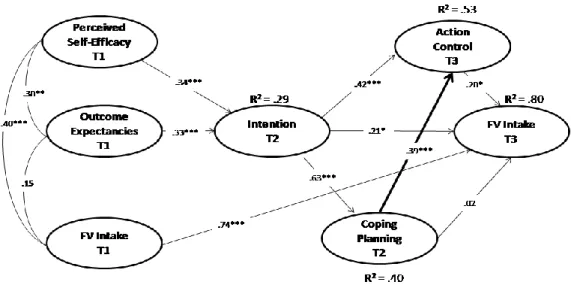
Model 2: Coping planning and action control as multiple mediators of the relationship between intention and fruit and vegetable intake... 79
Model 3: Coping planning and action control as sequential mediators of the relationship between intention and fruit and vegetable intake... 80
5. Discussion ... 81
6. References ... 84
Chapter 3. Formative research for health messages development: Target beliefs for audiences at different stages of change ... 89
1. Abstract ... 91
2. Introduction ... 92
Health Action Process Approach ... 93
Content selection under the theoretical constructs ... 94
Aims ... 95
3. Method ... 95
Identification of beliefs under the HAPA constructs (Focus Groups) ... 96
Prioritizing the identified beliefs (Questionnaire) ... 99
4. Results ...101
Focus Groups ... 101
Online questionnaire ... 106
5. Discussion ...111
Target beliefs for non-intenders ... 111
Target beliefs for intenders ... 112
Limitations ... 114
Conclusion ... 114
6. References ...115
Chapter 4. Promoting fruit and vegetable consumption at different stages of change: A complete match-mismatch design ... 121
1. Abstract ...123
2. Introduction ...124
Health Action Process Approach Stages ... 124
Matched and mismatched health messages promoting fruit and vegetable intake... 125
Aims and hypotheses ... 126
3. Method ...128
Participants ... 128
Materials... 129
Procedure and Design... 129
Measures ... 130
Data Analysis ... 132
4. Results ...134
Preliminary Analysis ... 134
Descriptive statistics ... 134
Intervention effects within stages ... 135
Match-mismatch effects on social cognitive determinants and FV intake... 135
Stage progression ... 139
Working mechanisms ... 141
5. Discussion ...143
6. References ...146
Chapter 5. Situational and individual moderators of framed messages to promote fruit and vegetable intake ... 151
1. Abstract ...153
2. Introduction ...154
A situational moderator: Perceived function of the health behaviour ... 154
A dispositional moderator: Motivational orientation ... 155
Exploring a new moderator: The role of behavioural intention ... 156
Outcome measures of framing effects... 157
Aims and hypotheses ... 157
3. Method ...158
Participants ... 158
xxi Materials... 159 Measures ... 160 Analytic Strategy ... 162 4. Results ...163 Manipulation checks ... 163
Dropout analyses, randomization check and descriptive statistics ... 163
Function of behaviour as a moderator of framing effects on intention and fruit and vegetable intake ... 164
Motivational orientation as a moderator of framing effects on intention and fruit and vegetable intake ... 167
Baseline intention as a moderator of framing effects on intention and fruit and vegetable intake ... 168
Three-way interaction among frame, motivational orientation and baseline intention predicting fruit and vegetable intake ... 170
5. Discussion ...170
6. References ...173
Chapter 6. Interactive effects of frame, motivational orientation and perceived message quality on fruit and vegetable consumption ... 179
1. Abstract ...181
2. Introduction ...182
Message quality and the congruency effect ... 183
Aims of the study ... 185
3. Method ...185 Participants ... 185 Procedure ... 186 Measures ... 186 Materials... 188 Analytic strategy ... 190 4. Results ...191
Manipulation and randomization check ... 191
Descriptive statistics and dropout analyses ... 191
Perceived Message Quality ... 192
Intention for fruit and vegetable intake after message exposure ... 193
Fruit and vegetable intake during the following week ... 195
Mediation analyses ... 197
5. Discussion ...198
6. References ...201
Chapter 7. GENERAL DISCUSSION ... 207
1. Summary of findings ...210
2. Discussion of the findings and major implications ...213
3. Limitations and future directions...226
4. Final Comments ...229
5. References ...231
APPENDICES ... 241
Appendix A. Health messages targeted at non-intenders, intenders and control (Chapter 3)...243
Appendix B. Outcomes presented in the gain and loss framed messages (Chapter 4) .247 Appendix C. Health messages (gain/ loss frame) promoting fruit and vegetable intake (Chapter 5)...248
xxiii Index of Tables
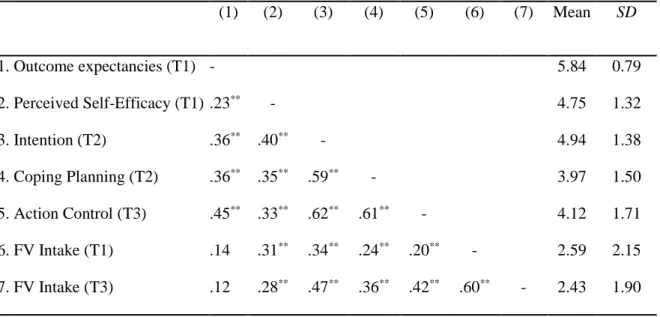
Table 1. Descriptive statistics and correlations of the latent variables ... 77 Table 2. Decomposition of the effect of intention on fruit and vegetable intake at
time 3, controlling for fruit and vegetable intake at time 1. ... 81 Table 3. Questioning guide under the topic “Social cognitive determinants for fruit
and vegetable consumption”. ... 98 Table 4. Estimated marginal means and standard deviations for outcome
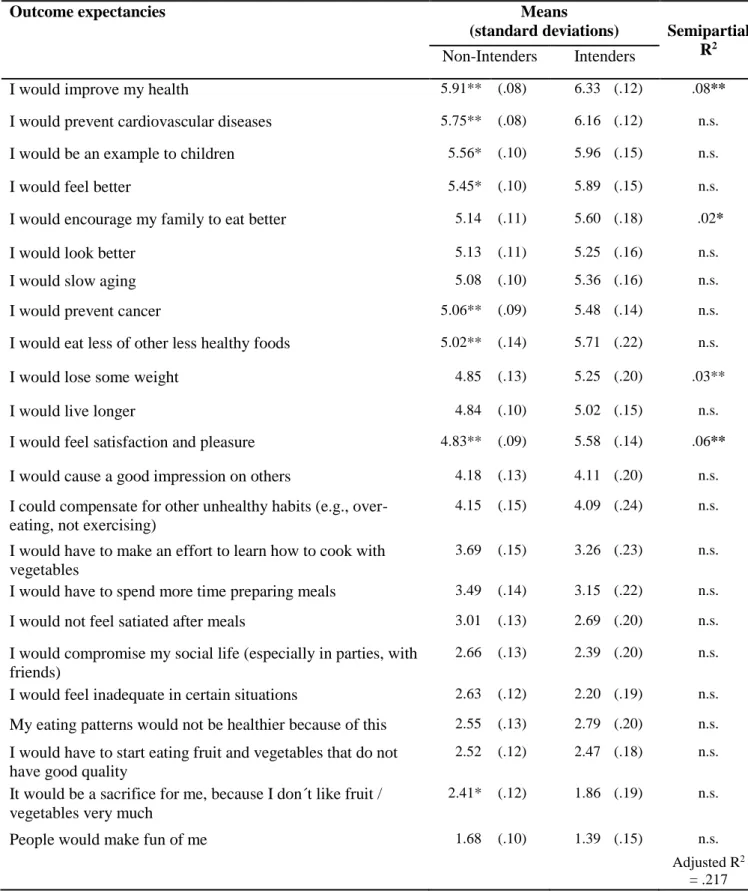
expectancies for non-intenders and intenders and semipartial correlation coefficient for intention among non-intenders. ... 108 Table 5. Estimated marginal means and standard deviations for barriers among
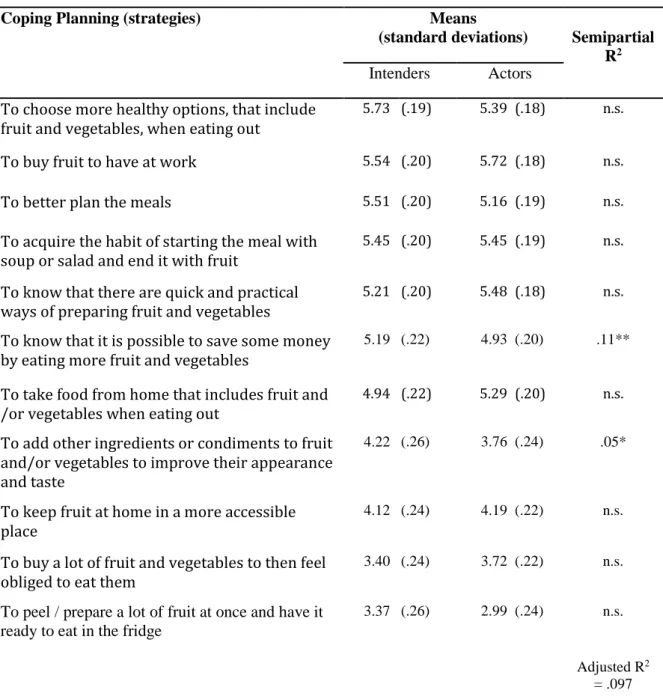
intenders and actors and semipartial correlation coefficient for behaviour among intenders. ... 109 Table 6. Estimated marginal means and standard deviations for strategies among
intenders and actors and semipartial correlation coefficient for behaviour among intenders. ... 110 Table 7. Predictions and variation from Time 1 in the mean level (and standard
deviation) of specific determinants in each message condition. ... 137 Table 8. Estimated marginal means and (standard errors) of the social cognitive
predictors and fruit and vegetable intake for each experimental condition, controlling for the baseline levels (T1) of each variable. ... 140 Table 9. Bivariate correlations between study variables and descriptive statistics by
message frame condition ... 165 Table 10. Message frame and motivational orientation (or baseline intention) as
predictors of intention (Time 2)and fruit and vegetable consumption (Time 3) ... 166 Table 11. Outcomes related to eating (or not) the recommended amount of FV
referred in each message frame type. ... 189 Table 12. Bivariate correlations between study variables and descriptive statistics. .... 192 Table 13. Hierarchical regressions of intention (Time 2 )and fruit and vegetable
consumption (Time 3) on message frame, motivational orientation and
xxv Index of Figures
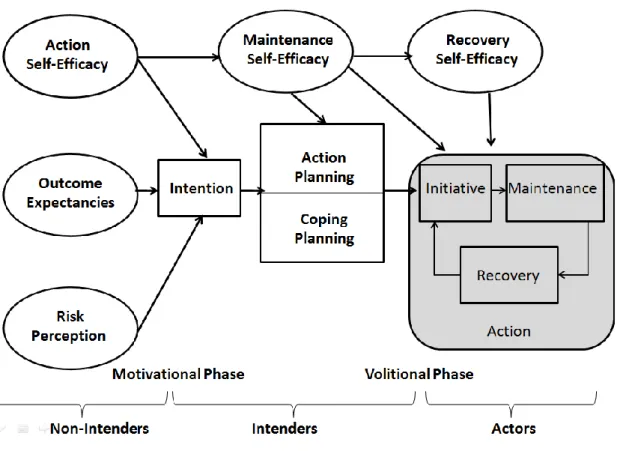
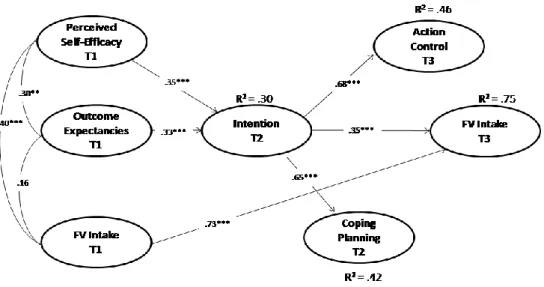
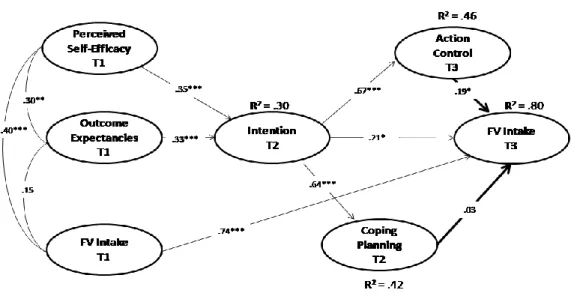
Figure 1. The Health Action Process Approach………... 25 Figure 2. Model 1 with standardized coefficient estimates………. 78 Figure 3. Model 2 with standardized coefficient estimates………. 79 Figure 4. Models 3 with standardized coefficient estimates………... 80 Figure 5. Stage of change allocation according to actual behaviour and intention………. 97 Figure 6. Flow diagram depicting information about participants at different phases of
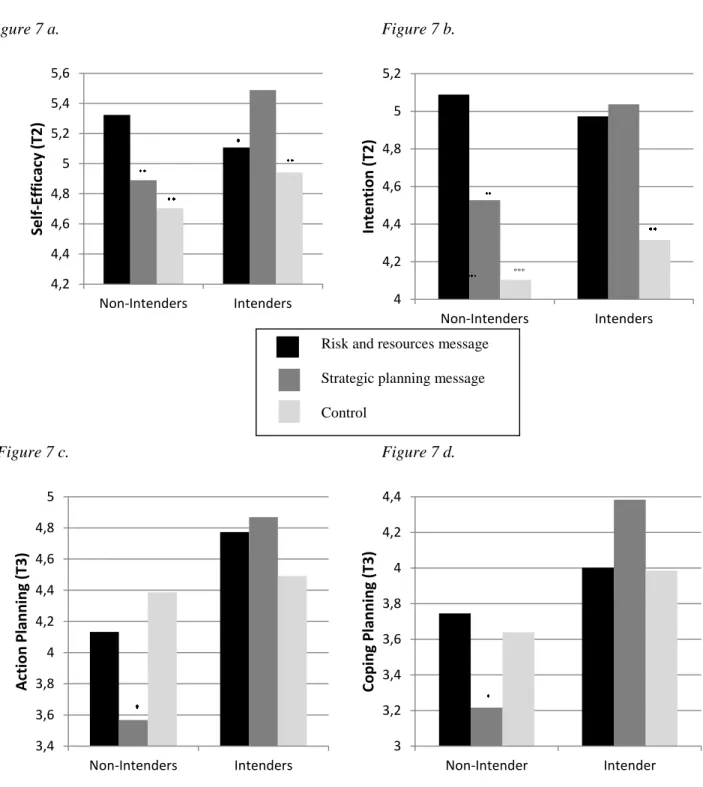
the study……….. 128 Figure 7. Self-efficacy (7a), intention (7b), action planning (7c), and coping planning
(7d) levels immediately after message exposure as a function of the baseline stage and message content conditions………. 138 Figure 8. Intervention effects model for non-intenders on intention via changes in risk
perception, outcome expectancies and self-efficacy, and on action planning and coping planning via intention………... 142 Figure 9. Regression of fruit and vegetable intake (T3) on motivational orientation
(MO) for participants in the loss- and gain-framed message conditions,
controlling for baseline fruit and vegetable intake……….. 167 Figure 10. Regression of intention to increase fruit and vegetable intake after message
exposure (T2) on baseline intention (BI) for participants in the loss- and gain-framed message conditions, controlling for baseline fruit and vegetable
intake………... 169 Figure 11. Regression of fruit and vegetable intake (T3) on baseline intention (BI) for
participants in the loss- and gain-framed message conditions, controlling for baseline fruit and vegetable intake……….. 169 Figure 12. Estimated means of intention as a function of congruency and perceived
message quality………... 195 Figure 13. Estimated means of fruit and vegetable intake as a function of congruency
and perceived message quality……… 196 Figure 14. Moderated mediation model of the effect of congruency on fruit and
vegetable intake through intention at high (values presented inside the figure) and low (values presented outside the figure) levels of perceived message
1
____________________________________________________________________________________Introduction
Nowadays, the existence of a link between dietary choices and health is unquestionable and the relevance of eating habits for the maintenance of good health is undeniable. Among other dietary aspects, the importance of a sufficient fruit and vegetable intake has been stressed on the basis of its preventive role regarding the major causes of death in developed countries (WHO, 2009), and its benefits for health and wellbeing (Hakkarainen et al., 2004; Sanchez et al., 2012). Clear recommendations for fruit and vegetable intake have been established (Lock, Pomerleau, Causer, & McKee, 2004), however data from different countries around the world converge in showing that only a small percentage of the population attain such intake levels (Hall, Moore, Harper, & Lynch, 2009).
Health campaigns are a widespread means for trying to persuade people to change their dietary habits, such as fruit and vegetable intake (Pomerleau, Lock, Knai, & McKee, 2005). They have the advantage of reaching a higher number of people at a relatively low cost per head (Wakefield, Loken, & Hornik, 2010). However, not all campaigns successfully attain their goals, arguably because some health messages are developed in the absence of a clear theoretical grounding or empirical evidence supporting content selection and framing.
The present dissertation will focus on two communication strategies that have been studied as a means of enhancing health messages´ effectiveness: tailoring / targeting and framing. We defend that psychological theories on health behavior change may help to refine such strategies and, thus, provide information on the development of effective health messages, thus contributing to increasing the odds of reaching the ultimate goal of such campaigns: successfully changing health behaviors, such as fruit and vegetable intake. Our main tenet is that different people have different needs in terms of information and skills, as well as different preferences towards the way in which such information is framed. These differences may arise from the specific barriers and challenges people face at a certain stage of their change process or from individual differences in dispositional characteristics. In each case, the central idea is that when health messages are adapted in a way that fit these situational or dispositional individual differences, they should lead to increased success in health behavior change processes.
This dissertation is organized in seven chapters. The present chapter presents the general background, an overview of different aspects related to fruit and vegetable intake, and the theoretical framework supporting our research questions. The following five chapters (Chapters
2, 3, 4, 5 and 6) are empirical chapters, based on published or submitted articles. Following the empirical chapters, Chapter 7 provides a summary and integrated discussion of the main findings, as well as their main contributions on both theoretical and applied levels, while drawing conclusions with regard to their implications and raising questions that have yet to be addressed.
In the following introduction, we will begin by outlining the general background of this research. In the first section, the myriad of influences over eating behaviors will be reviewed, stressing the importance of psychological factors for understanding food choices and as potential intervention targets. The need for intervention in this domain will then be reinforced by shedding light upon the link between food choices and health and its implications, such as premature death, quality of life and public spending, as well as other benefits that are relevant from a primary prevention perspective. Finally, the advantages of using health campaigns as a means to fostering changes in health behaviors, including the improvement of dietary habits will be presented, as well as evidence pertaining to campaign effects and effectiveness evaluations.
The second section will focus on presenting the health behavior of interest in the studies presented in this dissertation: fruit and vegetable intake. It begins with a definition of what "fruit and vegetables" actually are, and by reviewing the recommendations regarding their intake. Specific health benefits associated with fruit and vegetable intake are then presented, as well as available data on fruit and vegetable consumption in different countries, including Portugal, with a view to demonstrating the need for its promotion. Social-demographic, contextual and psychological factors accounting for differences in levels of consumption are then briefly reviewed, with special emphasis on the psychosocial factors, given that they are the primary targets of health communications that set out to directly influence behavior. Finally, a classification of different strategies to promote changes in fruit and vegetable intake is provided, situating health communication interventions within the broader set of possibilities.
In the third section, the theoretical underpinnings of our thesis will be presented. A brief historical overview of persuasion and attitude change models is provided, followed by a presentation of the most prominent social cognitive health behavior change models. A detailed description of the theoretical framework underlying the present research program, the Health Action Process Approach (Schwarzer, 2008a) is then given, and is followed by a review of the most relevant literature on the two communication strategies being addressed: message tailoring / targeting and message framing. Finally, the fourth section provides an outline of the
empirical chapters, describing the aims of the different studies, and how they seek to contribute to the current state of the literature on the motivational and volitional mechanisms involved in fruit and vegetable intake, on stage models of health behavior change and their implications for tailoring / targeting and on health message framing.
1. General background: From nutrition to health 1.1. Why do we eat what we eat?
Despite its apparent simplicity, the answer to the question of why we eat what we eat is rather complex, not only because of the number of factors involved, whether food or individual-related, but also due to the multiple contexts where eating takes place, which are embedded in a specific time and cultural matrix. Eating is a survival need, as well as being a source of pleasure, and throughout our lives, it evolves to become a source of meaning and a way of expressing our identity.
Food choices have, to some extent, a sensory and physiological basis. For example, the "natural" preference for sweet tastes, even in newborns, is well documented, as are the expulsion reactions that follow the exposure to bitter and sour tastes (Steiner, 1977). Moreover, sensory-specific satiety is a physiological mechanism that operates in the short-term regulation of intake, so that the greater the sensory and nutritional diversity of foods, the higher the overall intake (Rolls & Hetherington, 1989). Both the preference for sweet tastes and aversion towards the bitter or sour, plus the use of the sensorial aspects of food as a cue for variety make sense from an evolutionary point of view. As omnivores, human beings have the advantage of being able to live in almost every part of the Earth´s surface. However, without a clear genetic predisposition to stick to a specific kind of food, the likelihood of ingesting toxic foods or a nutritionally unbalanced diet is increased (Rozin, 1996). Thus, sensorial aspects of food are used as a vehicle for food selection, with sweet signaling energy-dense foods and bitter or sour tasting food pointing to a potentially inedible or toxic substance (Conner & Armitage, 2002). Furthermore, they act as a cue for variety, ensuring intake of the different necessary nutrients (Rolls & Hetherington, 1989).
Despite the existence of innate predispositions, different studies have confirmed that preferences are shaped, to a large extent, through experience and learning processes (Beauchamp & Moran, 1984; Bertino et al., 1982). This is how one may understand that some
food and beverages, despite having a sour or bitter taste, such as beer, may, nonetheless, be greatly appreciated in certain cultures. The life of each child begins with only one type of food, milk, but the variety of foods expands greatly even in the very early years. During this process, the mere exposure to foods (Birch & Marlin, 1982), the associative learning between the eating of certain foods and their social, emotional and even physical consequences (Birch, Zimmerman, & Hind, 1980; Rozin & Vollmecke, 1986) and the social learning experiences with the family (Pearson et al., 2009), peers (Birch, 1980) and through the media (Halford et al., 2004) are important socialization and learning experience vehicles that influence food choices and the development of dietary habits.
Whether preferences are innate or learned through experience, the liking for certain foods and dislike for others is an important choice determinant (Shepherd & Farleigh, 1989). Eating is a pleasurable experience and people do not eat just to satisfy their nutritional needs. However, there is no direct correspondence between liking and food choice, and sensation is not the sole factor involved in the choice of food (Armitage & Conner, 2002). Moreover, the physiological aspects related to food choice are often mediated by cognitive processes, as individuals establish associations between specific sensory characteristics of foods and their post-ingestive or post-absorptive effects, and learn to regulate them through their dietary choices (Booth, 1985).
Cultural traditions are also important in determining what we eat (Katz, 1989). It has been argued that, from the production of food to its preparation and ingestion, eating should be regarded as a predominantly cultural act (Montanari, 2004). Unlike other species, humans do not only eat what nature offers. Through agriculture and livestock, man actually produces what is eaten. Moreover, most of what is eaten is first transformed by the use of fire and other technologies that constitute what may be called a "cuisine", a cultural body of knowledge related to food selection and preparation that is handed down from generation to generation (Katz, 1989).
Throughout history, food has served as an element to express self-identity and to establish differences among social classes. Food choices have played a role in affirming social status, through how much is eaten and what is being eaten (Montanari, 2004). Standards of value have changed over time, especially since food industrialization, which has democratized access to food, both in terms of quantity and diversity. Standards of value may also change from one society to another, however all cultures differentiate between high and low status foods (Gelfand, 1971). There is little doubt that eating is a communicative act (Conner & Armitage,
2002); we form impressions of others based on their dietary choices (Basow & Kobrynowicz, 1993; Chaiken & Pliner, 1987) and self-presentation concerns may determine how much we eat in a specific social situation (Mori et al., 1987; Pliner & Chaiken, 1990). Therefore, in addition to biological predispositions, cultural and social contexts exert an important influence over dietary choices. Multiple other factors may also play a role in food choices, such as socio-economic factors (e.g., income, price of foods), educational factors and nutritional knowledge, religious practices, environment-related factors (e.g., food availability, advertisement), demographic factors (e.g., gender, age), to name but a few. Different models have been proposed (e.g., Conner & Armitage, 2002; Khan, 1981; Shepherd, 1985), presenting different selections of these (and other) factors, arranging them according to different inherent logics. All such models are, however, essentially descriptive and arguably none of them are totally comprehensive.
Despite the complex picture of factors influencing food choices, many of them exert their influence, at least partially, through individuals´ perceptions, beliefs and attitudes towards food (Conner & Armitage, 2002). In other words, their influence is often mediated by psychological (i.e., social-cognitive and emotional) aspects within the individual. Such factors are, therefore, crucial to understand an individual´s food choices and are the main focus of the present dissertation.
1.2. Dietary habits and health
The main causes of death have dramatically changed over the last hundred years or so. Data from the United States shows that in 1900 the main causes of mortality were infectious diseases, such as influenza and pneumonia, tuberculosis and gastrointestinal disorders, whereas in 2010, non-communicable diseases, such as cardiovascular disease and cancer, topped the list (Jones, Podolsky, & Greene, 2012). In Portugal, cardiovascular diseases were responsible for 37% of all deaths in 2010, cancer for 26%, and other non-communicable diseases and diabetes accounted for a further 13% and 6%, respectively (WHO, 2011).
Dietary habits have also undergone profound changes over the last century. Although many people in low- and middle-income countries still suffer from malnutrition, worldwide, overweight and obesity already cause more deaths than underweight (WHO, 2009). In developed countries we live in an affluent society nowadays. Some have even coined today´s food environment, where the access to a huge variety of ready to be consumed food products,
in which high sugar concentration is prevalent, as "toxic" or "obesogenic" (Swinburn, Egger, & Raza, 1999).
Five out of the ten major metabolic and behavioral risk factors linked to main causes of death in high-income countries are related to diet: high blood pressure, overweight and obesity, hyperglycemia, high cholesterol and low fruit and vegetable intake (WHO, 2009). In conjunction with physical inactivity, these factors account for 19% of deaths worldwide and 7% of disability-adjusted life years. Indeed, nutritionally poor diets contribute to huge expenditure, most of which is related to treating their consequences, such as medical appointments, in-patient and day-case admissions, out-patient attendances and drug costs (McCormick, & Stone, 2007). The financial burden of obesity and diabetes represented 1.2 % and 1.3 % of the GDP of the US in 2000 and 2002, respectively (Yach, Stuckler, & Brownell, 2006), and in the UK alone, more than 7 billion Euros were spent in connection with diet-related ill health in 2006-07 (Scarborough et al., 2011). In sum, the main causes of death nowadays may be attributed, to a large extent, to poor dietary habits. Besides premature death, these habits also contribute to reducing quality of life and to massive healthcare expenses, mainly in order to treat the consequences of such diet-related diseases. Given that dietary habits are amenable to change, both health and financial burdens could be prevented through interventions in this domain.
Promoting dietary habit change falls within the scope of a primary prevention approach, where efforts are geared towards the modification of risk factors and prevention of the onset of an initial episode of disease. This approach has great potential in overcoming secondary prevention, thus contributing towards improving the health of populations in a cost-effective manner, with virtually no side effects (Kaplan, 2000). In lieu of the biomedical model, primary prevention endorses a bio-psycho-social health model, focused on health promotion rather than on disease detection and treatment. In fact, besides reducing mortality and morbidity, other beneficial outcomes are related to a nutritionally balanced diet, such as increased vitality and quality of life (Sánchez et al., 2012), mental health and wellbeing (Hakkarainen et al., 2004; Rogers, 2001), better oral health (König, 2000), improved skin condition (Boelsma et al., 2003) and suitable weight (Swinburn, Caterson, Seidell, & James, 2004). All these benefits are worth considering when the aim is to go beyond the prevention of early death, to improve the lives and wellbeing of individuals.
1.3. How is this related to health communication?
Health campaigns play an important role in societal efforts aiming to foster healthful practices. Campaigns have been defined as an "organized communication activity, directed at a particular population for a particular period of time, to achieve a particular goal" (Snyder, 2007). Typically, the ultimate goal is to influence individuals´ health behaviors, but the chosen pathways may be direct or indirect (Wakefield et al., 2010). Campaigns aiming to have a direct impact on behavior normally seek to trigger emotional or cognitive responses that are relevant for individuals´ decision-making and/or behavioral enaction. Other ways of influencing behavior indirectly include setting an agenda for the discussion of the health topic, promoting a change in social norms, or initiating the public debate of a certain health issue, that may lead to or be used in support of a change in policy (Wakefield et al., 2010).
Despite their widespread use, the effectiveness of health campaigns may vary. Historically, three generations of research on campaign effects may be distinguished (Rogers & Storey, 1987). The first, or the "era of minimal effects" (Perloff, 2003), emerged with the first systematic evaluations of campaign effectiveness, that were rather disappointing. However, this pessimistic view started to change in the 1960s and gave rise to the "era of campaign success", which was grounded on a review entitled "Some reasons why information campaigns can succeed" (Mendelsohn, 1973). Some of the reasons behind the minimal effects perspective were clarified, such as the unrealistically high success expectations, a tendency to blame the audience for the lack of effects, the absence of sophisticated methods to detect subtle changes in attitudes and behavior, as well as referring to the period before television (Perloff, 2003). This second generation of studies, conducted during the period between the late 60s and early 80s pointed to the huge success of campaigns. However, this view was again overridden in the 80s, by what was denominated the "contemporary era of moderate effects" (Perloff, 2003). This perspective is grounded on the observation that some campaigns are successful, but others fail to achieve their objectives. In fact, several factors have an impact on campaign effectiveness, such as the type of outcome being considered (i.e., whether the focus is to influence knowledge, attitudes or behavior), the dose of information, degree of repetition, integration with interpersonal communication, and the concomitant use of other social change strategies, such as reinforcement or environmental changes (Salmon & Atkin, 2003). Another important aspect is whether the behavior is episodic, such as screening and vaccination, or ongoing, for example, dietary choices or exercise. In this regard, the available evidence points
to the relative success of campaigns in promoting episodic behaviors when compared to ongoing ones (Wakefield et al., 2010).
Moreover, a meta-analysis has revealed that the type of behavior being promoted is of paramount importance (Snyder, 2001; Snyder at al., 2004). For campaigns promoting the commencement of a new behavior, such as seat belt use, exercise, condom use, or fruit and vegetable intake, 12% more people in the campaign sites adopted the behavior, on average, than in the control communities. However, for campaigns promoting the cessation of acquired habits, such as smoking cessation and unprotected sex, only an average of 5% more people ceasing those practices was observed. Thus, campaigns seem to be more effective in the promotion of behaviors that may contribute to enhancing health, rather than instigating the cessation of health-impairing behaviors. Nevertheless, facts such as the behavior being addictive or not and the campaign having an enforcement component or not should also be taken into account (Snyder et al., 2004).
Campaigns have the potential of reaching high proportions of large populations. This is important, given that from an epidemiological point of view, effective prevention has been found to require changes in environmental or lifestyle factors which involve the population as a whole (Rose, 1992). Within the scope of a population, greater contribution to the total disease burden is conveyed by a higher number of people at the center of the risk factor distribution, than by those who are exposed to more of a risk, i.e., the lower number of people on the extreme end of the distribution (Rose, 1992). This is why a limited impact on the population may be expected from efforts to prevent disease based on targeting only those who are at a high-risk level (Rose, 1992).
Moreover, it has been estimated that even a small change in the distribution mean engenders considerable changes in the overall prevalence of disease (Emberson, Whincup, Morris, Walker, & Ebrahim, 2004), since the mean of a certain risk (or protective) factor has been found to predict the prevalence of cases in a given population. Thus, even if the overall effects of population-based approaches, such as health campaigns, might seem small in terms of reducing risk factors, these changes may give rise to significant changes in the total prevalence of disease.
Campaigns have the potential of being widely disseminated, at a fairly low cost per person. For example, a cost-effectiveness study of a campaign to promote fruit and vegetable intake concluded that the health benefits were obtained at a net cost saving (WHO, 2002). However, this potential is not always fully accomplished, and sometimes campaigns may even
backfire, as some are developed in the absence of a clear theoretical background or empirical support, and are not informed by health behavior change theories. Thus, we believe that campaigns have great potential as contributors to the population's health, but further research is necessary in order to increase the likelihood of campaigns being more successful in their endeavors and to avoid boomerang effects. Contrarily, a lot of money might be spent on efforts that fail to achieve their ultimate aim, namely to improve the health, quality of life and wellbeing of individuals.
2. Fruit and vegetable intake
2.1. Definition and recommendations
One of the crucial elements of a healthy diet is to eat an adequate amount of fruit and vegetables (WHO, 2002). Different definitions of what may be considered a "fruit" and a "vegetable" exist, depending on the criteria that is used. According to Agudo (2005), nutritional properties and health benefits related to their consumption should be the main criteria, and culinary definitions should be preferred over botanical ones, since they relate to individuals´ common understanding of foods and their cultural uses. In trying to establish a more consensual definition, vegetables have been defined as the edible parts of plants, and other food items that are used as such, for instance mushrooms or some fruits and sprouts, such as tomato, cucumber, pepper and eggplant, whether they are eaten fresh, canned, frozen or dried. Potatoes, tubers and dry pulses are normally excluded from the definition. Fruit include all sorts of fresh, canned and dried fruits, and may include nuts, although inclusion of the latter is more debated (Agudo, 2005). Fruit juices may also be considered, as long as they are totally natural, i.e., without any other added ingredient.
From a health promotion standpoint, establishing clear recommendations for the daily intake of fruit and vegetables is a step forward in terms of its monitoring and promotion. Guidelines from the World Health Organization recommend an average intake of at least 400 grams of fruit and vegetables a day (WHO, 2004), although some adjustments may have to be made according to individuals´ age, gender and physical activity level (Gidding et al., 2006; USDA, 2011). In order to help people understand what the amount of 400 grams of fruit and vegetables refers to, in some countries this quantity is communicated in servings / portions. Although some variability across countries exist, a minimum intake of five portions of fruit and
vegetables a day is the most common recommendation (Pomerleau et al., 2005). One serving/ portion is 80 grams, and is roughly equivalent to a cup of raw vegetables and half a cup of minced or cooked vegetables, one medium sized piece of fruit (e.g., orange, apple, banana), two small pieces of fruit (e.g., plums, kiwi), and half a cup of berries (e.g., strawberries, cherries) (Agudo, 2005). A recent study with a British representative sample has, however, drawn attention to the fact that there are possibly greater health benefits when the intake is above seven daily portions (Oyebode, Gordon-Dseagu, Walker, & Mindell, 2014). Nevertheless, further research is still required before an adjustment in the adopted recommendations can be made.
2.2. Health benefits associated with fruit and vegetable consumption
Nutritionally, fruit and vegetables are low-dense energy foods, constituting an important source of fiber, vitamins, minerals and phytochemical elements (OMS, 2006). Many of the phytochemicals present in fruit and vegetables work as important antioxidants, protecting the cells and the body tissues from free radicals and aging (Kaur & Kapoor, 2001), they interfere with inflammatory processes, whose inhibition is important, for example, to control cardiac diseases (Esposito & Giugliano, 2006) and inhibit the proliferation of cancer cells (Gescher, Pastorino, Plummer, & Manson, 1998).
Epidemiological studies have also corroborated the link between fruit and vegetable intake and a lower risk for cardiovascular diseases (Dauchet, Amouyel, Hercberg, & Dallongeville, 2006; He, Nowson, Lucas, & MacGregor, 2007), certain types of cancer (Boggs et al., 2010; Liu & Russel, 2008), type II diabetes (Carter, Gray, Troughton, Khunti, & Davies, 2010) and obesity (Ledoux, Hingle, & Baranowski, 2011). According to the World Health Report (2002), it is estimated that a low fruit and vegetable intake causes 2.7 million deaths a year worldwide. Thus, it comes as no surprise that an increase in fruit and vegetables has been defined as a major public health goal (PNS, 2012; WHO / FAO, 2005).
2.3. Adherence to the recommendations
Different methods exist to estimate fruit and vegetable intake levels, which range from using aggregate population data (e.g., measures of food supply, such as food balance sheets) to individual level data (e.g., self-report measures of fruit and vegetable intake) (Agudo, 2005). Furthermore, estimates of fruit and vegetable consumption may be requested for quantity (e.g., number of portions eaten in a regular day) or frequency (e.g., number of days per week that one
eats fruit), and the definitions of what may be considered fruit and/ or vegetables may also vary. Thus, results of different studies are not always readily comparable.
Data from 52 countries from four continents (Africa, America, Asia and Europe) taking part in the World Health Survey (2002-2003) revealed that more than 70% of individuals eat less than the recommended 400 grams of fruit and vegetables a day (Hall, et al., 2009). A recent report by the Organization for Economic Cooperation and Development (OECD), encompassing 24 countries, revealed that, on average, 57% of men and 69% of women consumed fruit every day, although there was great variability across countries, with only 20% of men in Finland eating fruit daily, whereas in Australia the percentage for men was 90% (OECD, 2013). For vegetable intake, 64% of men, on average, and 73% of women consumed vegetables on a daily basis. Again, levels varied greatly across countries, with only 30% of men eating vegetables every day in Germany, against almost 100% of men doing so in Korea (OECD, 2013).
In another study with more than 500,000 adults from ten different European countries, average fruit and vegetable intake, measured by means of a 24-hour recall measure, was below 400 grams (335 grams/day) (Boffetta et al., 2010). Some variability across countries was found once again, with the lowest level in Sweden (231 grams/day) and the highest in Spain (511 grams/day), and with generally higher levels of intake registered in southern rather than northern European countries (Boffetta et al., 2010). Another study conducted in several European countries with a sample of school-aged children showed that the fruit and vegetable intake of Portuguese children was one of the highest (264 grams/day), although still considerably low in comparison to the recommendations (Yngve et al., 2005). In the same study, Spain and Iceland registered the lowest intake levels (176 and 143 grams/day, respectively).
Very little updated data is available to estimate fruit and vegetable intake among the Portuguese adult population, since the only National Food Inquiry with a representative sample of the Portuguese population was conducted in 1980 (Ferreira, Cruz, Martins, Mano, & Dantas, 1985). Thus, available estimates stem, primarily, from measures of food supply, such as the Portuguese Food Balance Sheet (INE, 2010). By comparing the daily availability of fruit and vegetables for the period 2003-2008 with the recommendations for each food type, it was concluded that in order to attain the recommended intake levels, a 79% increase in vegetables and 48% in fruit consumption would be required (INE, 2010). However, measures of this nature
tend to overestimate the amount of food that is actually eaten, due to the fact that losses, resulting from waste and food processing, are generally not accounted for (Agudo, 2005).
On the basis of data from the National Health Inquiry (Inquérito Nacional de Saúde 2005/2006, INE /INSA, 2009) it is only possible to ascertain the percentage of individuals who say they eat fruit (80%) and salad / cooked vegetables (69%) as part of their main meals. Thus, these figures do not provide any information on the consumption frequency or quantity of such food items.
2.4. Factors associated with fruit and vegetable intake Social-demographic predictors
A common finding across different studies on fruit and vegetable intake, whether national or international, is that, on average, women eat more fruit and vegetables than men (Baker & Wardle, 2003; Boffetta et al., 2010; INE /INSA, 2009; OECD, 2013; Wardle et al., 2004). Gender differences in fruit and vegetable intake have been explained by the fact that women have better nutritional knowledge (Baker & Wardle, 2003), tend to consider fruit and vegetable intake as being more relevant to health (Wardle et al., 2004), attribute more importance to having a healthy diet (Miles & Eid, 1997), are more concerned with weight management and with eating low-calorie foods (Wardle et al., 2004) and express higher subjective norms related to fruit and vegetable intake (Backman, Haddad, Lee, Johnston, & Hodgkin, 2002).
Older people also tend to eat more fruit and vegetables than younger individuals (Ball, Crawford, & Mishra, 2006; Blanck, Gillespie, Kimmons, Seymour, & Serdula, 2008; OECD, 2013). However, to our knowledge, no study has specifically addressed the question of why older people eat more fruit and vegetables. A plausible explanation is that it is associated with the more generalized changes in dietary patterns (Casagrande, Wang, Anderson, & Gary, 2007; Daniel, Cross, Koebnick, & Sinha, 2010) and/or with changes in taste and flavor that accompany aging (Stevens & Cain, 1993).
Social-economic status is another frequently mentioned predictor of fruit and vegetable intake, with people from a higher status (i.e., higher education and/ or higher income) consuming more fruit and vegetables (De Irala-Estevez et al., 2000; Giskes, Turrell, Patterson, & Newman, 2002). This association might be explained by the higher nutritional knowledge and awareness of the importance of eating healthy foods among well-educated individuals
(Parmenter, Waller, & Wardle, 2000), with financial availability, considering that the cost is consistently referred to as a major barrier for fruit and vegetable intake (e.g., Cassady, Jetter, & Culp, 2007). The area of residence is also an important factor, given that more affluent neighborhoods tend to have easier access to fruit and vegetables (Dubowitz et al., 2008). Notwithstanding, in some cases, the association between higher social economic status and higher fruit and vegetable intake is negligible (e.g., for vegetable consumption in Belgium, Italy, Greece, Slovenia and the Slovak Republic) or may even be reversed (e.g., for fruit consumption in Greece and Spain) (see OECD, 2013), so any generalization should be made with care.
Other studies reveal a positive association between being married and a greater fruit and vegetable intake (Billson, Pryer, & Nichols, 1999; Devine, Wolfe, Frongillo, & Bisogni, 1999; Pollard, Greenwood, Kirk, & Cade, 2001). One possible explanation is that the husband/ wife may be a primary source of social support for the practice of different health behaviors, such as healthy eating habits (Umberson, 1992), but this association also lacks further grounding. The relationship between having children and fruit and vegetable intake is yet another unclear association, given that some studies point to a positive relationship, whereas others to the opposite (Kamphuis et al., 2006).
Although knowledge concerning the social-demographic factors associated with higher and lower levels of fruit and vegetable consumption may be relevant for the selection of specific audiences in greater need of intervention, we contend that it is important to bear in mind that these factors are distal and hardly likely to be direct causes of fruit and vegetable intake. Their effect is dependent upon contextual factors and is largely mediated by psychological factors, such as those presented in the following sections.
Contextual and lifestyle predictors
Fruit and vegetable availability, i.e., access to fruit and vegetables in a place and time, arranged in such a way that consumption is facilitated, is one of the most mentioned contextual predictors of fruit and vegetable intake (Cullen et al., 2003). Although the specific mechanisms are not yet well understood, reviews sustain that the availability of fruit and vegetables, at home and/or in the neighborhood, is associated with increased fruit and vegetable intake in children, adolescents and adults (Jago, Baranowski, & Baranowski, 2007).
Price is also generally referred to as an important barrier to fruit and vegetable consumption (Cassady et al., 2007; Mushi-Brunt, Haire-Joshu, & Elliott, 2007), and the consumption of pre-prepared food is also associated with lower fruit and vegetable intake (Kamphuis, van Lenthe, Giskes, Brug, & Mackenbach, 2007). Besides the individual social economic level, the social-economic status of the residency area has also been found to explain fruit and vegetable intake (Dubowitz et al., 2008). The latter explanation may reside in the quantity and quality of food stores and restaurants available in different residency areas that determine the access and cost of fresh produce. The possibility of growing one's own fruit and vegetables has also been referred to in some studies as being related to higher fruit and vegetable intake (Billson et al., 1999; Devine et al., 1999).
Besides factors related to the physical environment, some aspects of the social contexts are powerful motivators and have been shown to influence dietary behaviors (Pliner & Mann, 2004). Most of the studies relating social norms to food intake have analyzed their influence on the amount of food that is eaten (e.g., de Castro, 1997; Roth, Herman, Polivy, & Pliner, 2001). However, studies conducted on social judgment have confirmed that social factors also play an important role in food selection. Eating is a communicative act, and people use information about food choices to infer characteristics of others (Chaiken & Pliner, 1987), and sometimes also make their food choices for impression management (Mori et al., 1987). Several studies have shown that individuals are judged in a more positive light (i.e., as being more intelligent and attractive) when they choose healthier foods (Mooney & Lorenz, 1997; Steim & Nemeroff, 1995). Moreover, in the presence of strangers, individuals tend to choose and eat more apples rather than chips, when compared to situations where they are alone or in the presence of friends (Batista & Lima, 2013). Thus, it may not be solely the presence of others that influences food choices and fruit and vegetable intake; who those persons are and the nature of the social relationships may be at the root of this influence.
The co-occurrence of health behaviors is also a known fact. Studies have confirmed a general tendency towards an association between different health-promoting behaviors, such as healthy eating and exercise (Lippke, Nigg, & Maddock, 2012), as well as between different health-compromising behaviors, such as smoking and alcohol consumption (Wiefferink et al., 2006). Along these lines, other studies have revealed that higher intakes of fruit and vegetables is associated with physical activity, and with being a vegetarian or vegan (Pollard et al., 2001), whereas smoking is associated with low fruit and vegetable intake (Billson et al, 1999; Pollard et al., 2001).
Psychological predictors
Individuals have the ability to exert control over the environment and their own behaviors, i.e., they are able to self-regulate their behaviors. Self-regulation may be defined as a "systematic process involving conscious efforts to modulate thoughts, emotions and behaviors in order to achieve goals within a changing environment" (Cameron & Leventhal, 2003, p.1). It also encompasses both motivational processes that culminate in goal-setting, and volitional processes involved in the development and enaction of strategies for goal pursuit and on-going evaluation of discrepancies between goals and current states. The factors involved in motivation and/ or volitional processes are, therefore, important for the understanding of dietary behavior, including fruit and vegetable intake (Adriaanse, Gollwitzer, De Ridder, De Wit, & Kroese, 2011a), and have been detailed in different social cognitive models presented in section 3.2 of the present chapter. For now, we will focus on the factors relevant to fruit and vegetable intake gearing our review towards the motivational and volitional processes, rather than to the underlying models.
Perceived social influences, beliefs about consequences of behavior, and beliefs about capabilities are considered to have an important influence on the development of an intention to change one’s own fruit and vegetable consumption (Guillaumie, Godin, & Vézina-Im, 2010). However, changing dietary behaviors is a complex process and requires considerable self-regulatory efforts, besides the formulation of an intention to change. In a study where predictors of intention were targeted by an intervention, a significant change in intention failed to translate into an increase in overall fruit and vegetable intake (Kothe, Mullan, & Butow, 2012). Two systematic reviews on the psychosocial factors associated with fruit and vegetable intake have shown that, besides taste and some nutritional knowledge, self-efficacy (i.e., the belief that one will be able to change one’s own behavior), perceived social support (i.e., perception of support for the behavior from the individual's social network), and habit are important predictors of actual fruit and vegetable intake (Guillaumie et al., 2010; Shaikh, Yaroch, Nebeling, Yeh, & Resnicow, 2008).
The observation that people often fail to act upon their intentions has fueled research specifically aiming to bridge this so-called "intention-behavior gap" (Sheeran, 2002), by unveiling the psychological mechanisms that operate in the translation of an intention into action. One crucial identified process is planning. Planning may encompass both action planning, i.e., a mental simulation regarding when, where and how to implement the intention to increase fruit and vegetable intake and coping planning, i.e., the anticipation of possible
barriers that might hinder fulfillment of the action plans and the establishment of plans to overcome the identified barriers (Sniehotta, Schwarzer, Scholz, & Schüz, 2005).
Simple interventions that asked people to formulate action plans and then to jot them down, specifying when, where and how they would implement them proved to be more effective for the promotion of fruit and vegetable intake than simply providing nutritional information (e.g., Guillaumie, Godin, Manderscheid, Spitz, & Muller, 2012; Kreausukon, Gellert, Lippke, & Schwarzer, 2012; Stadler, Oettingen, & Gollwitzer, 2010). In another two studies, participants were asked to think about barriers that could prevent them from eating five portions of fruit and vegetables a day and then to write down some strategies that could be used to overcome those specific barriers. When compared to the control group, a significant increase in fruit and vegetable intake was obtained, both one month (Wiedemann, Lippke, Reuter, Ziegelmann, & Schwarzer, 2011) and three months later (Guillaumie et al., 2012), with the effects of the intervention being mediated by changes in coping planning.
Action control, i.e., the self-monitoring of behavior and the adjustment of subsequent behavior in order to attain the intended goals (Sniehotta, Scholz, & Schwarzer, 2005) is another process that has been analyzed as being determinant in the translation of intentions into action. To our knowledge, no prior studies have examined action control in the context of fruit and vegetable intake. A previous intervention study with action control was conducted in the oral health domain. Participants were asked to note every day in a simple calendar whether they had flossed their teeth on that particular day. This simple intervention targeting action control, proved to be effective in increasing the self-monitoring of flossing behavior and the behavior itself (Schüz, Sniehotta, & Schwarzer, 2007). Thus, exploring the role of action control for fruit and vegetable intake seems to be a promising avenue, and is one of the goals of the study presented in Chapter 2.
Distinct self-efficacy beliefs are also important in the volitional phase, such as maintenance self-efficacy, i.e., optimistic beliefs about one's own ability to deal with the barriers that might occur during the maintenance phase, and recovery self-efficacy, i.e., optimistic beliefs about one's own ability to get back to the previous behavioral pattern after a setback or failure (Schwarzer et al., 2007). Self-efficacy may be promoted through different strategies, such as mastery experience, observational learning, or through verbal persuasion (Bandura, 1997). One or a combination of these strategies was used in intervention studies to attest the relevance of self-efficacy for fruit and vegetable intake (Guillaumie et al., 2012; Kreausukon et al., 2012; Luszczynska, Tryburcy, & Schwarzer, 2007).