The goal of the development study is to identify the most critical phases of the project from the point of view of change management and to create tools and methods to overcome the challenges in these phases. Project management is considered to represent the technical side of change by ensuring that the change is designed, developed and implemented effectively.
Kemira Oyj
In this chapter, I will first introduce the sponsoring company Kemira Oyj, then describe the need, aim and scope of the study. I will conclude this chapter by presenting the research problems and describing the methodology and methods of this study.
Need, goal and scope of the study
The importance of this work development project was to create change management tools and combine them with the improved project model. In practice, this study aimed to combine elements of project management and change management in one model and thereby improve the level of high performance organization.
Methodology, methods and research problem
What are the phases in projects that are most critical in the change management perspective at Kemira. In this chapter, I will represent the theoretical background and definitions related to both main theories used in this study; project management and change management.
Project management
Change management
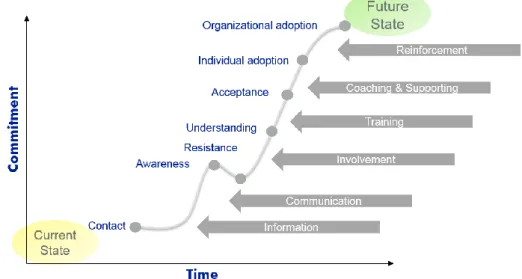
Change management is about helping the change leaders to successfully lead the people from the current state to the desired future state. The project management model is coupled with the change management model, due to the sponsoring company's desire to have these two coupled in the results.
Project Study
- Defining initial scope of project
- Analyzing the need of change
- Communicating the need of change
- Roles and responsibilities
- Tools and methods for project study
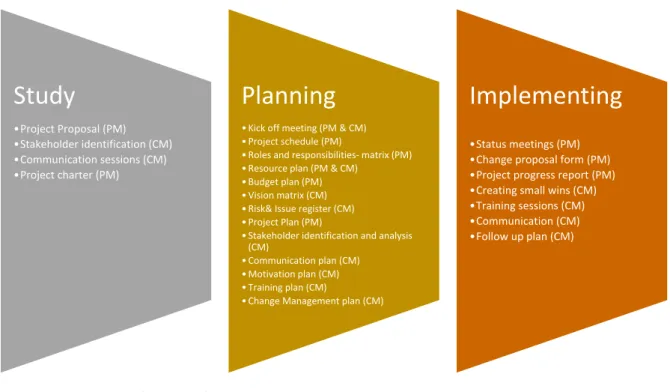
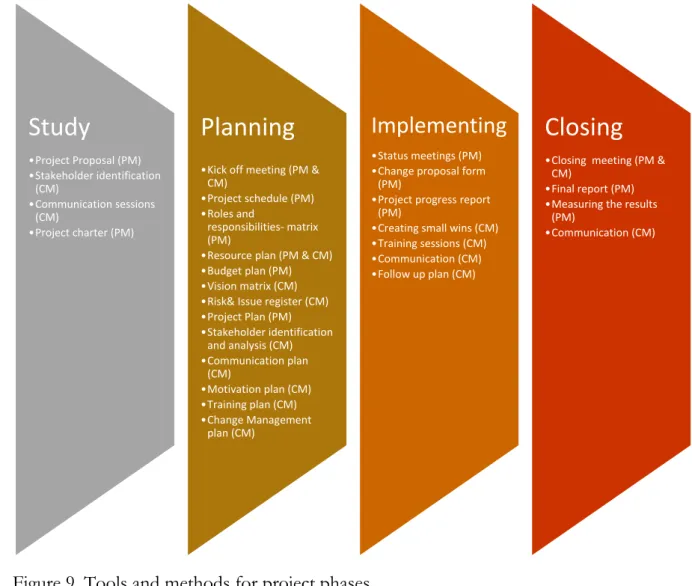
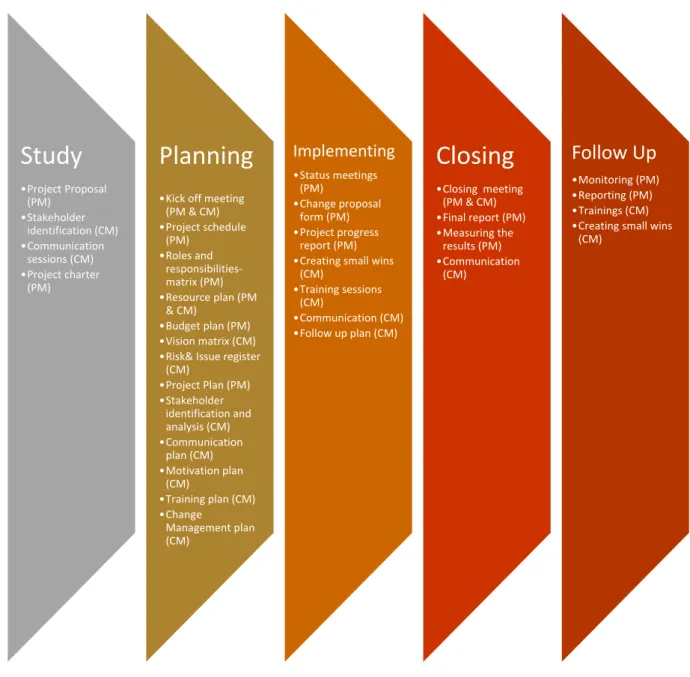
Lanning, Roiha and Salminen mention communication for the first time in the study stage of the project. Project charter is based on the project proposal and the outcome of the project study phase.
Project Planning
- Project team
- Project management plan
- Vision and goal of change
- Communicating the change
- Tools and methods for project planning
Risk identification and problem forecasting should be performed as part of project planning. The project plan is based on the project charter and is the result of the project planning phase.
Project Implementation
- Controlling project work
- Motivating and involving
- Changes in practice and trainings
- Tools and methods for project implementation
During the implementation phase, the size of the project team usually increases as the target group is exposed to the change. The trainings are carried out according to the training plan developed during the project planning phase.
Project closure
Closing the change project
For some reason, clear project closure is very often missing due to various reasons such as lack of time, people moving to new projects and lack of planning of project closure. To ensure that the project closure is carried out correctly, the requirements must be clearly defined in the project plan; documentation, project file, final report, measuring the results, handing over responsibility to the line. Measuring is the way to show that progress has been made and that the change has brought improvements.
Tools and methods for project closure
Project Follow up
Incorporating the changes in to the culture
Closing the project does not mean the end of change-related responsibilities for management and team leaders. Their role is to ensure that the changes take root and are stabilized as part of the work culture. The follow-up activities should be included in the project plan and resource plan.
Monitoring, measuring and rewarding the change
To ensure that the changes are and will be embedded in the culture, a specific follow-up plan should be made and the responsible person appointed to report the results. The old ways of doing things must be disabled and removed so that there is no way to go back to the old way. When changes and their benefits are included in daily or weekly meetings with employees, and positive and active participation in the change is rewarded, the change becomes part of the daily work and is not easily forgotten.
Tools and methods for project follow up
The project management and change management models must support the implementation of the business strategy. Project management and change management have been merged into one entity to support international projects. Change management is no longer part of project management, it is now an equal partner.
Action research
Action research is a participatory, democratic process concerned with the development of practical knowledge in the pursuit of worthy human purposes based on a. One of the biggest advantages of using action research is its nature, which combines theory and practice – its main purpose is to improve practice. Reason and Bradbury (2007) state that “action research is possible only with, for and by persons and communities, ideally involving all stakeholders in both the questioning and sense-making that guides the research and the action, which is the focus of the research.” (Koshy Reason & Bradbury 2007, 2).
Description of development study
Phases before the development study
It seeks to bring together action and thought, theory and practice, collaboration with others, finding practical solutions to issues of pressing human concern, and overall flourishing of individuals and their communities. The goal of the community was to go through and harmonize the high-level processes of a given process. As a result of this discussion, I got in touch with the project management community manager.
Progress of the development study
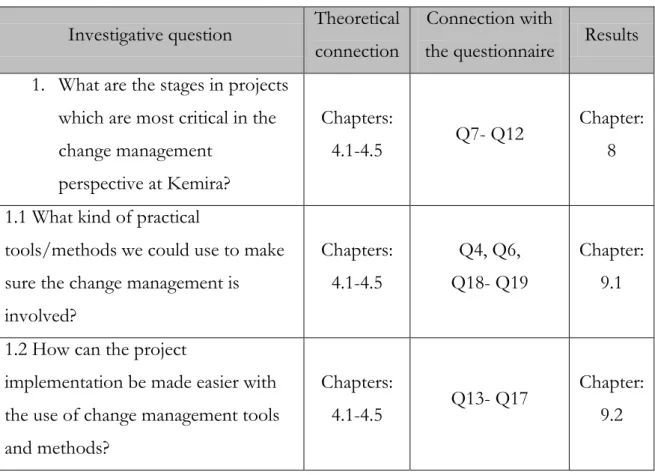
What are the stages in projects that are most important in the perspective of change management at Kemira, and what kind of practical tools/. In March 2014 I was busy analyzing the results of the survey and identifying the problematic areas regarding the change management within the project model. Within this mini group we were supposed to provide the suggestions for the change management tools and methods and go deeper with the communication.
Choosing the sample group
The questionnaire for the quantitative research was developed on the basis of research problems in cooperation with the company's mentors.
Questionnaire
Finally, questions 18-19 asked the respondent to recommend practical tools and methods for change management and to provide some other comments and suggestions for change management.
Collecting and analyzing data
Validity and reliability
The questionnaire was not sent to the HAAGA-HELIA tutor before it was sent to the respondents. The purpose of the questionnaire was to confirm the problem areas in change management and give the respondents the opportunity to influence the creation of the change management model. However, the terminology used in the questionnaire was based on different project management and change management models.
Ethical issues
I reported my analysis based on the results from Webropol and SPSS charts and tables. As the survey has been confidential and anonymous, I assume that the participants have answered the questions honestly and accurately. I spent enough time on the design of the questionnaire to make sure that the questions would provide answers to the research problems.
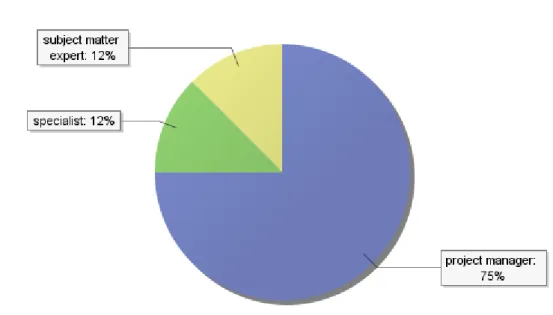
Typical role in the projects and project experience
Used change management elements and existence of change models
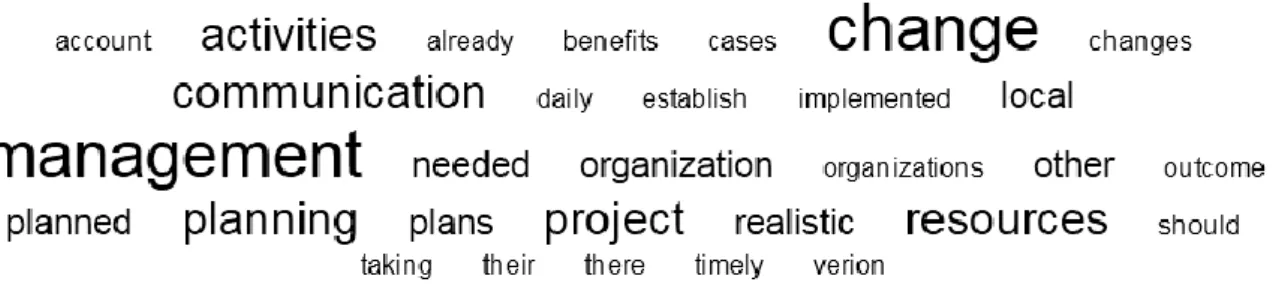
In project X, it is planned how the departing organization will be informed and involved in the change in the respective way.” The Webropol text mining analyzes the results with the top 50 words for the change management elements that we can see in figure 14. So no real theoretical 'change management' model has been used.” Descriptions of the models used were such as status, program approval from the regional production heads of the segment, site managers briefing, workshop with key site managers, training sessions, go live info telco, weekly review of post go live progress. Person C commented, “No specific model was used, but a dedicated Change Manager was used to focus and coordinate the change.
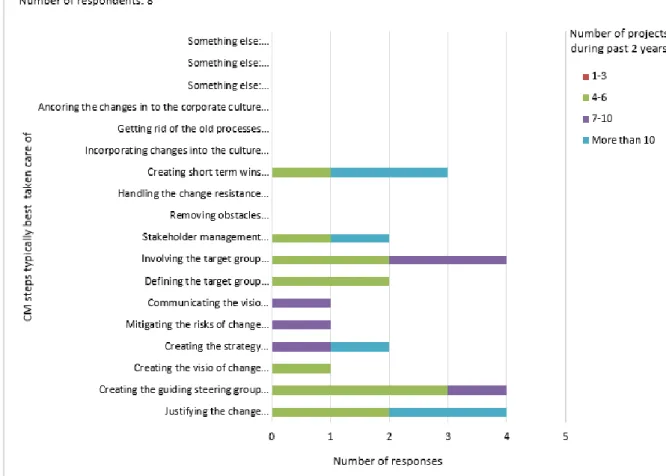
The most critical change management steps
Person E described Involvement of the target group: “They must be involved in the change process. Many of the respondents mentioned that the accompanying steering group exists and is easy to define. When the project experience of the respondents was compared with the selected options, there was a division between the answers of two most experienced groups (figure 15).
Biggest pitfalls per project phase and how those could be prevented
- Project Study phase
- Project planning phase
- Project implementing phase
- Project closure phase
- Project follow up phase
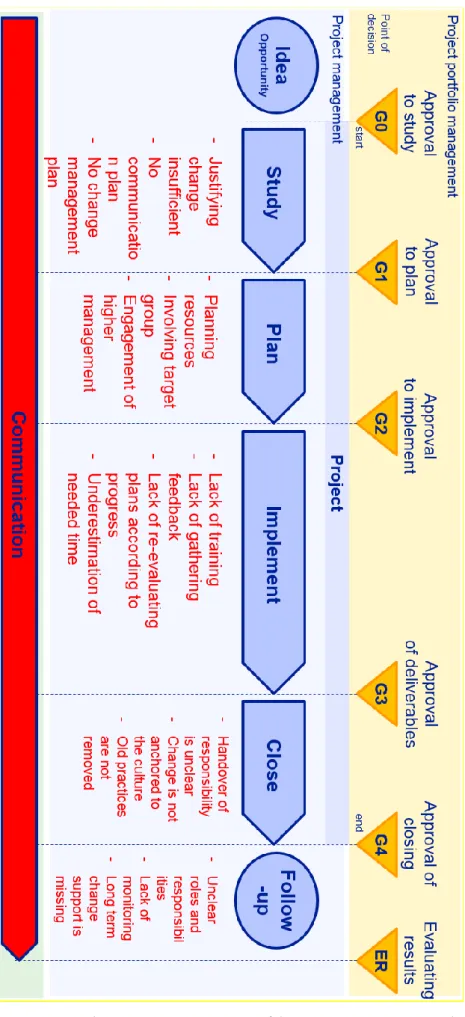
Person B said that "Change management aspect is one decision criteria before we proceed to the next phase". At the project planning stage, the biggest pitfalls from the change management perspective were: unrealistic plans, poor planning of change management activities (incomplete analysis of stakeholders, no communication plan, lack of internal communication in study stage), and planning made with minimum and overloaded resources. Main pitfalls related to the project implementation phase were identified as: lack of local support when needed, lack of communication and the change management activities and underestimation of time needed to carry out this stage.
Proposed practical tools to ensure change management involvement in
Other pitfalls identified were: lack of managing the new process instead of the old one, lack of resources to ensure follow-up on the implementation of the change, and unclear roles and responsibilities and change. The suggested solutions to avoid the mentioned pitfalls were: learning from the project and increasing the amount and importance of the follow-up phase in the .
Summary of the most critical project stages
To understand how the most critical change management steps are located in the project model, I identified the biggest pitfalls per project phase and placed them in the Kemira project model (Figure 17). Communication was repeated as a problem in almost every phase, so I marked it at the bottom of the project model that included all phases.
Change management model
Templates for change management
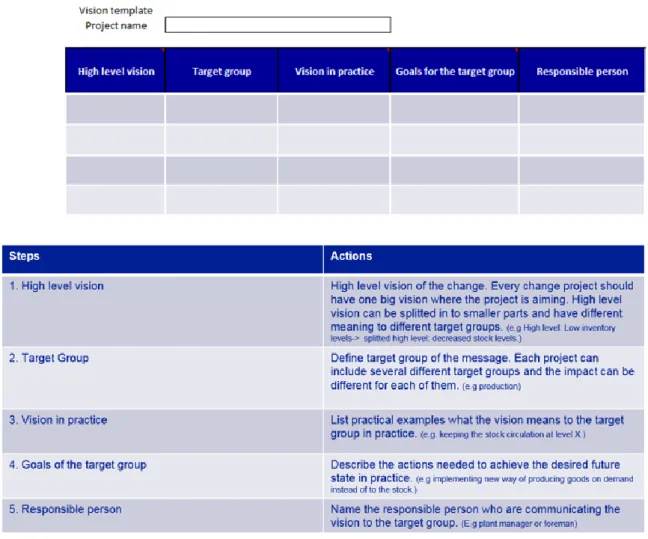
Vision template
The vision template can also be understood as one tool for the effective communication of change. The main purpose of the vision template is to ensure that the project manager is able to explain the vision of change to all the identified target groups in their own context. The vision template must support one of the identified problem areas within change management, namely "Incorporating changes into the culture".
Training plan
In this chapter I will evaluate the outcome of the developmental research and the benefits of the research for the sponsor company Kemira Oyj.
Reaching the targets of the development study
The selection of tools was taking into account the output from the work of other mini-groups within Project Management. The answers to the sub-questions were to be identified from the existing theories of change management and project management, with the support of the survey answers. The second goal of the survey was to involve the target group in creating tools for their use.
Feedback from the end- users of the change model
Next steps
The main objective of this study is to make change management elements part of the project model. In practice, it aims to combine the project management and change management elements in one model. What is the biggest pitfall from a change management perspective at the implementation stage of a project.
What is the biggest pitfall from a change management perspective in the project closeout phase? What is the biggest pitfall from a change management perspective in the continuation phase of the project?