We would also like to thank the main lecturer Esa Jauhola from Lapland University of Applied Sciences as the second reader of this dissertation. In addition, we would like to thank Dr. Pirjo Alatalo from the Lapland University of Applied Sciences for her valuable advice and support.
Introduction of the Commissioner
This dissertation research revealed the internationalization process of Chinese companies, which focuses on key aspects such as involvement in developed country industries, perceived location advantages, and the substantial role of the government of the People's Republic of China. The main lines of this thesis research were defined and agreed upon in a committee between Kemi and the researchers. but also people interested in entrepreneurship.
Background and Motivation
As agreed in the commission, this thesis research will build the framework for the China strategy for Chemistry. The framework for the China Strategy for Chemistry will be linked to the promotion of the Vitality Strategy.
Research Objectives and Research Questions
As requested by the commission, the framework of the Chinese strategy for Kemi must address cultural differences and the background of Chinese business strategies as broadly as possible. How do Kemi staff and management communicate with Chinese partners?
Qualitative Research and Research Methods
Collecting and Analysing Data
Her answers have been analyzed based on the parts of her expertise experiences and observations related to the interview questions. Morals and proper standards influence the researchers' work and the conduct of their exercises.
Structure of the Thesis
For example, the new geopolitical paradigm combines China's historical greatness in a New Silk Road project. Figure 1 describes different dimensions of China's globalization strategy with the forces of investment, trade and communication.
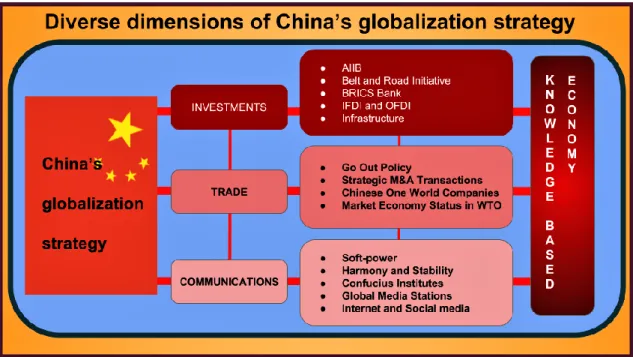
Belt and Road - B&R
Once completed, the Arctic Corridor will connect the Baltic Sea region with the Arctic Ocean and the Northern Sea Route. The Arctic Corridor will economically benefit European countries, including Finland, Norway and northwestern Russia.

Chinese Strategic Thinking – Framework of China's Business Culture 20
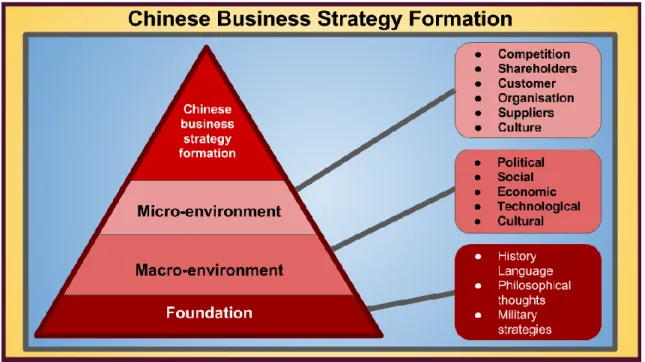
These non-profit institutes are affiliated with the Ministry of Education of the People's Republic of China and are an important means of promoting the Chinese soft-power initiative strategy. By studying the macro environment, it is clear that most of the Chinese business context, as well as the formation of Chinese corporate strategy, is influenced by political, economic and cultural factors.

Framework for Chinese Government Policy
Government vs. Business Motivation
In return, politicians should create a productive China with the help of companies, as well as increase the tax base. Many entrepreneurs fail in China as well as in global markets, but the survivors in both business environments are nimble, flexible and fierce competitors.
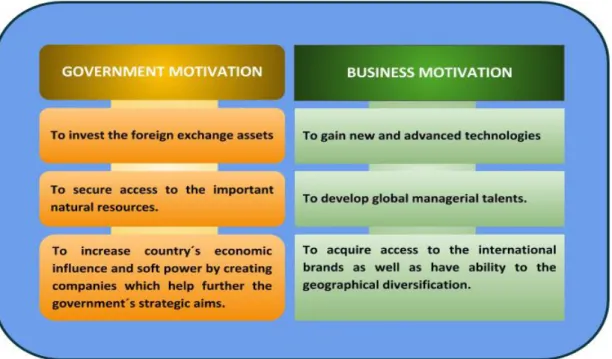
Key Drivers for Chinese Investors
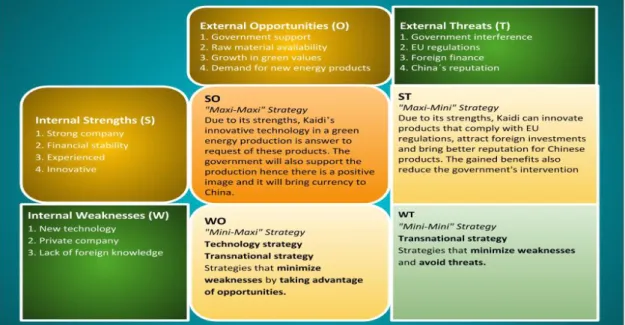
TOWS Strategic Alternatives Matrix
TOWS and SWOT are both abbreviations and modified interpretations of the words Strengths, Weaknesses, Opportunities, and Threats (Mindtools 2015). The multinational strategy aims to combine the critical advantages of the multi-domestic and global strategies, while minimizing the disadvantages.
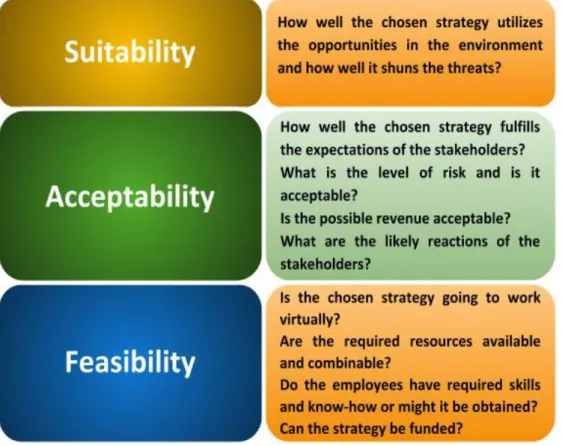
Kemi and B&R
Pull and Push Factors of Kemi
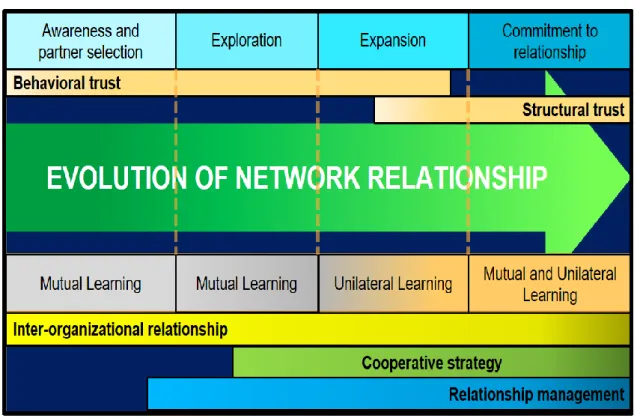
Therefore, the creation of cooperation strategies and relationship management, including inter-organizational relationship management, are important topics in practice. Moreover, if a large amount of organizations form inter-organizational relationship networks, it is called as diverse. The following sub-chapters discuss the creation of network relationships from an inter-organizational relationship management, collaboration strategy and relationship management perspective.
Co-operation and its Role in Strategy
The focus of the cooperative strategy is cooperation between organizations aimed at achieving cohesive success in coalitions. It points out that networks can be suitable sources of information for new opportunities for cooperation. The distinction between trust based on calculation, understanding and identification opens a window into how the evolution of trust is integrated into this dynamic process of evolving collaboration.
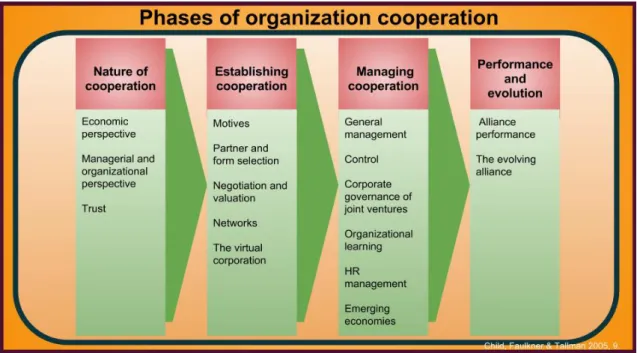
Establishing Co-operation
Motives of Co-operation
Analyzing the information collected from the various articles in Finnish newspapers, Sunshine Kaidi New Energy Group Ltd's motives for entering into a partnership with Kemi were the sum of coincidences. Kaidi and owner Mr. Chen were introduced to Mr. Koponen, the owner of China-based Finnish consultancy Spinverse. It was mainly the result of the networking of Mr. Koponen, but also because of the program of the Finnish state government that promotes the use of biofuels in Finland and its export.
Generating and Maintaining Co-operation
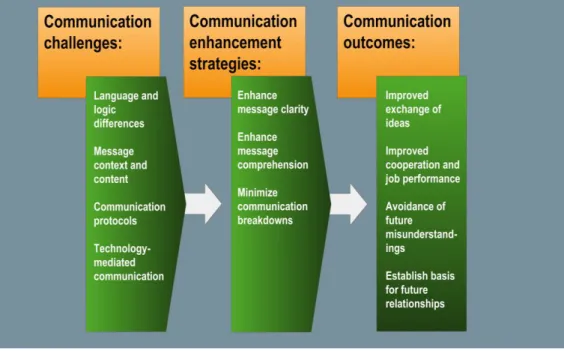
Research of cross-cultural interaction points to the difficulty of achieving effective and satisfactory communication between ethnolinguistic outgroups. Individuals may feel uncomfortable and anxious when interacting with other culturally different people due to communication barriers. Finally, repeated communication failures, emotionally charged cultural misunderstandings can provide rise to a negative evaluative view towards the culturally different.
Culture Defined
The Culture Iceberg
These are important aspects of culture and they too tend to be fluid and may change over time or generation. Therefore, the cultural components of the top 10% of the cultural iceberg are considered to have relatively low emotional value. These 10% are important, but they can be changed and modified without significantly contradicting the existence of culture or the identity of people.

Cultural Diversity
Therefore, these components have more emotional value, so the changes in these values threaten people's cultural identity. and views that influence them to behave in a way that we might consider nonsensical or even in direct contradiction. Even in China, where political and economic change is now rapid, the deeply established attitudes and beliefs will resist a sudden change of values when pressured by reformists, governments or multinational conglomerates.
Stereotyping
Quite often, stereotypes are seen and understood as harmful to intercultural interaction and cooperation, and the rejection of stereotypes is considered a condition for any fruitful intercultural exchange. Stereotypes are understood as harsh generalizations that members of society impose on others who do not know or understand them. As a result, stereotypes are not useful in intercultural interaction, as they do not accurately predict the behavior of both parties.
Cultural Differences Between Finland and China
Management
There seem to be aspects of controversy in how Chinese business managers deal with the people. Chinese employees mostly expect a harmonious leader-employee relationship, and superiors are expected to be authoritative, so in Finland employees prefer more participative leadership behavior. From the point of view of Kemi leaders, this means that they must learn to use a more context-dependent and indirect communication style in order to build and maintain a high-quality relationship with the Chinese subordinates.
Negotiations and Contracts
It is suggested that the interpreter must be familiar with both organisations, cultures, languages as well as knowledge of the vocabulary used in this field. Although the Chinese try not to show their emotions, anger or exit from the negotiator can sometimes occur if it is believed to improve the negotiation outcome. The Chinese are particularly helpful and polite, especially to foreigners;. therefore, the use of the word no is also complicated for them.
Wheel of Culture Map
In China, however, it is common sense to get on the bus before the others. These three factors continuously influence each other as well as the individuals or groups who are members of the specific culture. In order to understand people's decisions and actions, it is beneficial to understand the way in which the natural environment, as well as history, has shaped their values, views, behavior and social structures.

Communicating Across Cultures
It also indicates the needs or interest they wish to have met in the problem-solving outcome, i.e., sources of power and influence. Regardless of culture, it is essential to be understood when trying to communicate with others, and failing to do so can be incredibly frustrating and unproductive as well. Styles are influenced by people's cultural background, personal preferences, and the context of the communication episode.
Hosting Chinese Delegations
Alternatively, it at least gives us an indication of where communication problems may arise. member of the host's welcoming committee should be closely ranked to the senior member of the Chinese group. At home they should be treated the same as any valued guest would be treated. Some research on the company or organization by the guests should be done to come up with equally complimentary comments about it with reference to specific things.
Silence
Contracts with the Chinese require attention if they are to be technically reliable and reasonable in practice. Chinese guests will probably want to host a farewell dinner, but will usually be notified in advance. Lewis (2010, 8) warns many linguists to adhere to anthropologist Benjamin Whorf's hypothesis that the language we speak largely determines our way of thinking, as well as our behavior.
Guanxi - Chinese Networking
In China, guanxi plays a significantly more critical role than any connection in the West. According to Wong and Leung, transaction cost theory is one of the theories primarily used in management and economics. If the guanxi stress is only for material or financial advantage, it can be seen as bribery.
Face Concept
Someone familiar with and comfortable with the cultural subtleties of developing guanxi would be the best person to be responsible for developing the relationships. The PR representative for Kemi should meet the Chinese counterparts in both formal and informal settings with potential and current customers to develop healthy relationships. In this case, a native Chinese would be considered the best or obvious choice, but as Pietarinen (2014,36) reminds, it is also common for the Chinese PR person to abuse Kemi's position and name on his or her behalf and tries. to obtain their own financial advantage.
Tolerance
It is essential for the success of the research that the interviewees can openly share their opinion in the interview situation. In addition, the researcher must have prior knowledge of the studied processes and the phenomenon as a whole. However, the theme questions are a leading factor in the interview, focusing on the main topic and theoretical concepts.
Limitations of the Study
A characteristic of a thematic interview is that the interviewees have individual experiences of the subject or phenomenon under investigation. Based on this, the researcher already has a preliminary, existing understanding of the phenomenon, which then acts as the basis of the interviewing body, so the interview progresses within the framework defined by these topics. Vitality and change on the part of the interview as it progresses promotes positive interaction and motivates the debate to be transparent and the interviewees to share their experiences.
Research Results
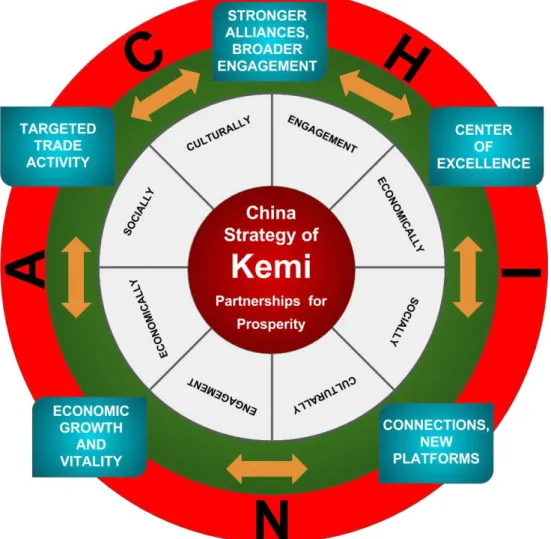
Communication between Kemi city organization and the international department of the city of Wuhan is quite frequent. In the same way, the hierarchical level of the communicator in the organization also affects the response rate. The framework for the China strategy for Kemi is the cooperation with Sunshine Kaidi New Energy Group Finland Ltd and the sister city's relationship with the city of Wuhan.
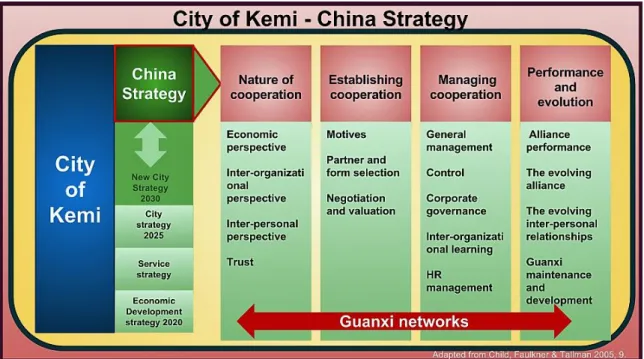
Kemi's China Strategy - Partnership for Prosperity
In the strategy formation phase, the effects of associated risks and obstacles to international cooperation should be taken into account. Cooperation with different authors and organizations as well as acting in different networks in China will boost economic growth in the Chemistry region by attracting more Chinese companies to the area. This kind of cooperation will increase the value as well as the visibility for China, which is essential for China's enormous research creation.
Suggestions for Further Research
Inc.http://www.businessinsider.com/the-most-misunderstood-business-concept-in-china-2011-2?r=US&IR=T&IR=T#ixzz3FjLg7Eu4. 2016 Towards China's Strategic Narrative. On the construction of the historical-cultural roots of China's national identity in the light of the Chinese debate on the emergence of traditional movements. Issued by the National Development and Reform Commission, the Ministry of Foreign Affairs and the Ministry of Commerce of the People's Republic of China, with the authorization of the State Council.