The purpose of the research is to determine the most suitable pricing technique for a suitable company. In the first chapter of the book, "Pricing Strategy and Tactics," the authors stated that in marketing, product, promotion, and distribution are a company's effort to create value, while pricing is an attempt to capture profit.
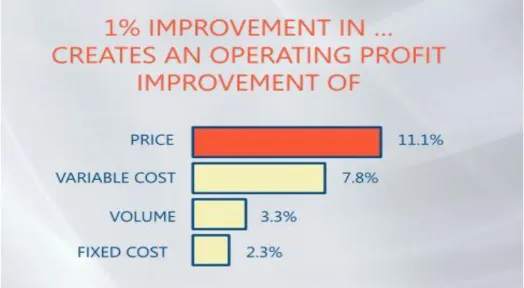
Pricing methods
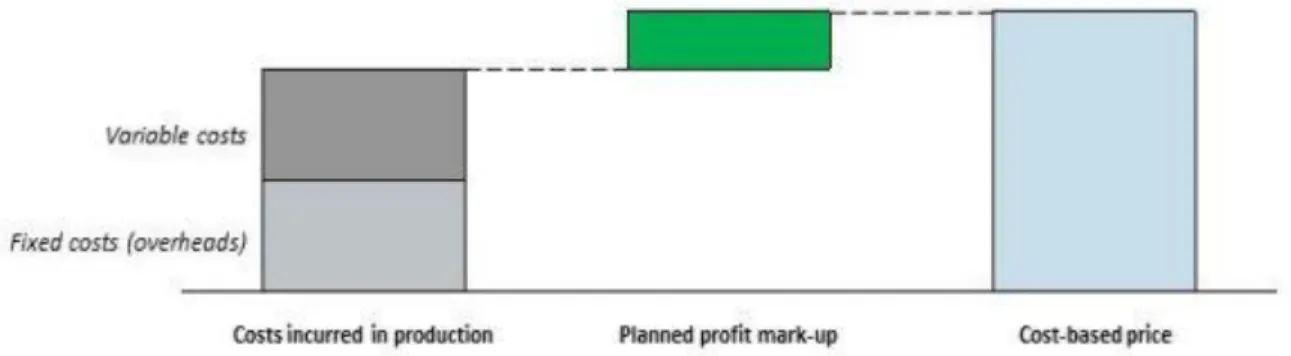
Cost-plus pricing
Overall, Kotler and Armstrong (2010) stated that in cost-plus pricing, companies must monitor their cost base thoroughly. But when the price is higher, sales continue to fall, increasing the cost per unit. unit even more.
Competition-based pricing
One mistake of competition-oriented pricing is that it does not consider the possibility of success of the price and assumes that more market share equals more profit. When price is the only criterion for differentiating a product in the market, it can easily start a price war.
Value-based pricing
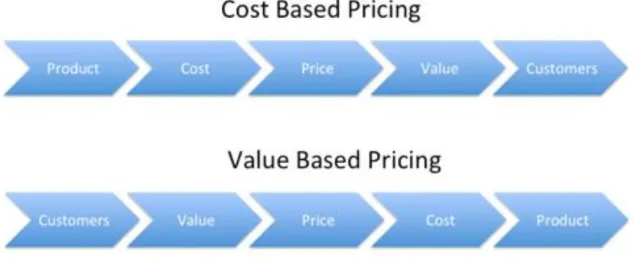
It even seems impossible for SMEs, and they are usually forced to revert to cost-based or competitive pricing. The target price is set before knowing the costs and based on estimation of value.
Key metrics
- Willingness-to-pay
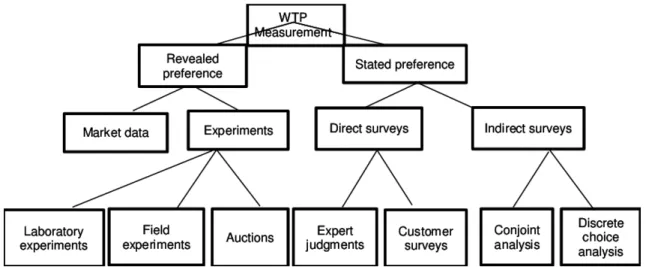
- Measuring methods of willingness to pay
- Price elasticity of demand
- Value propositions
- Average revenue per customer
The first missing piece of information is the number of customers who refuse to pay because of the high price. The highest bid wins, but the bidder only has to pay the price of the second highest bid. It gives them the incentive to reveal the actual valuation they believe the product is worth as it is always beneficial for them to bid with their real WTP rather than a higher or lower bid.
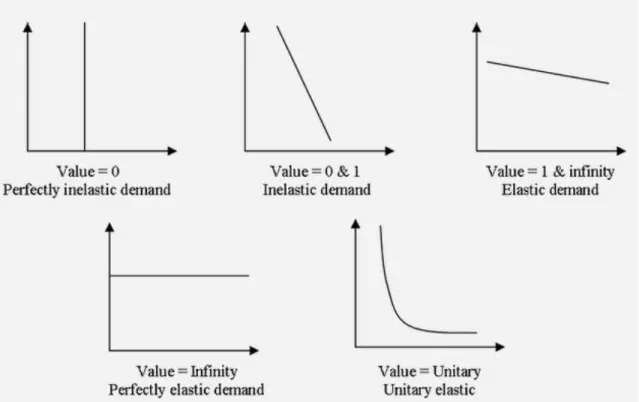
At what price would you say that you would not buy the product because you would start to suspect the quality?”. Conjoint analysis has a similar study design to discrete choice analysis, but instead of giving rankings, respondents choose the product most attractive to them and then answer whether or not they would actually buy the product in real life. When the elasticity of demand is greater than 1, meaning that the percentage change in quantity demanded is greater than the percentage change in price, the product is considered relatively elastic or sensitive to changes in price.
Availability of substitutes: when close substitutes of the product are available and easily accessible, demand elasticity is higher. Time horizon: if the product price only increases for a short time, consumer may not switch away from it quickly, but if the price remains high in the long run, buyers will start to change their behavior and find new substitute. This also means that the company is not extracting enough value from each buyer and given that their price must be increased to match the product value.
Reexamine current pricing approach
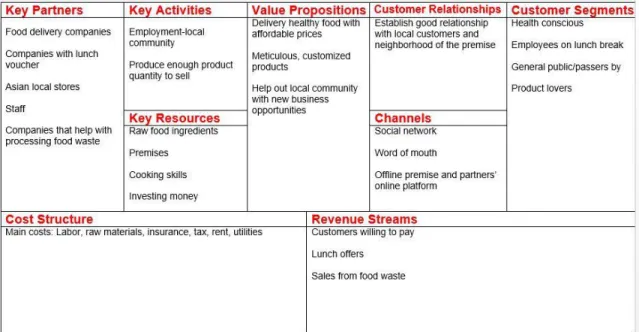
In this way we are able to reach the right customers and systematize our company.”. Before we changed the value proposition, the price did not match the value we offer. We only fulfilled 70% of the promises we made, that's why the prices were higher than the values.
We have changed the price twice again this year, once by a small percentage and finally by a larger scale on all our products.” The third is the pandemic, which has caused many offices in the neighborhood to close and our customers are now working from home. We charged more than our competitors because we saw that the quality of our products was at a higher level.
They set their price range higher than their direct competitor, which has an advantage of good reputation for a long period of time in the neighborhood. The implementation of competition-based pricing does not support ABC to gain their market position, especially when they enter the game much later than their competitors. It can be fixed by eliminating product 3 entirely so that the customer can focus only on product 1 and 2, or by lowering the price of product 3 so that product 1 and 2 become anchors that make product 3 more attractive.
Average revenue per user
Sales and revenue contribution by products
Business insights via survey
Finding top product utility
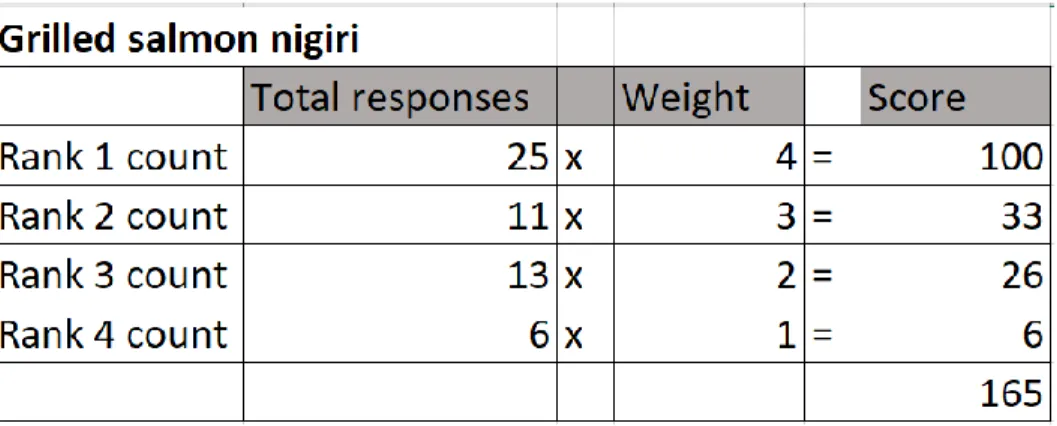
The variables are respectively Grilled salmon nigiri, Eel nigiri, Raw salmon cucumber maki and Shrimp avocado maki. For example, in this question there are 4 choices, rank 1 is weighted as 4 and the lower rank results in lower score. In the example of Fried salmon nigiri, the total score is 165, followed by Eel nigiri with 131 score, Raw salmon cucumber maki with 125 score and Shrimp avocado maki with 119 score.
Ingredient variability
Customer behavior towards price change
Willingness-to-pay
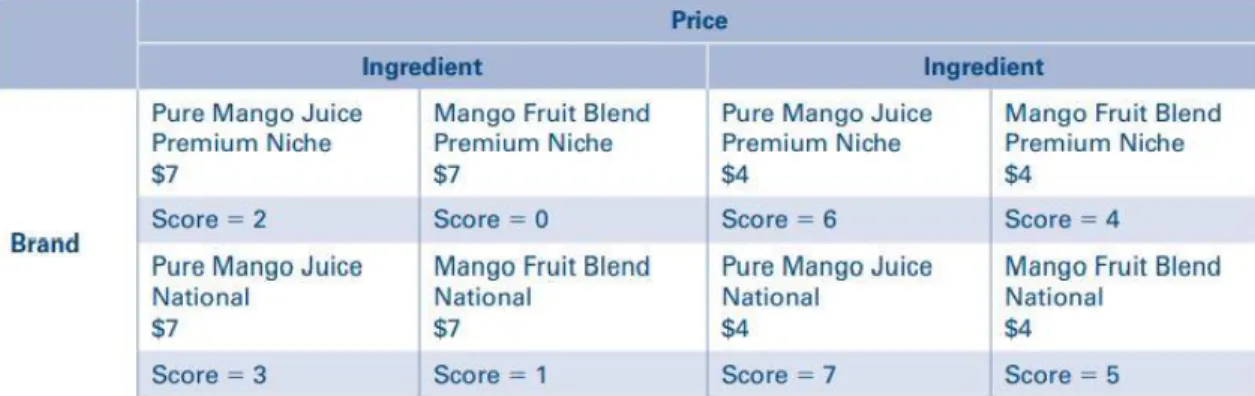
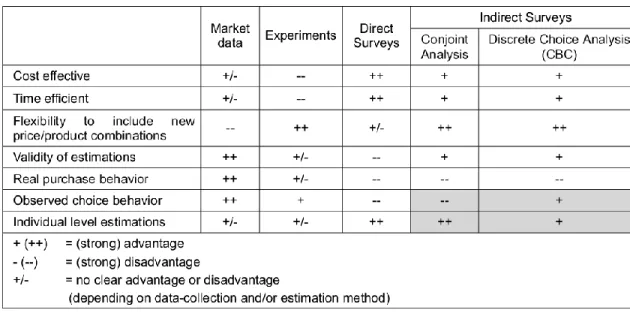
Willingness-to-pay measurements comparison (Breidert et al. 2006) In accordance with Smith's (2012) study design in mango juice example, a similar list of products is created to measure WTP under the form of discrete choice analysis. The ranking at the aggregate level is then processed into score like how it is done to find the top utility section. In theory, product with the highest usability is ranked first, therefore also has the highest score.
In the survey there are eight products, product A ranks first, so it gets the highest score, which is 8. Similarly, product B ranks second, so it scores a 7, and the same formula applies to the rest. Taking Grilled Salmon Nigiri as an example, product A, B, E, and G are the ones that include this attribute level, so by taking the average of that product's score, we get a partial value of Grilled Salmon Nigiri, which is 6, 25.
It is the highest among the ingredients in accordance with the results of the first survey question. Since price is also an attribute in the example, monetary value is placed on the utility units (Smith, 2012). This means that in the future, if the case company wants to promote a new product with Grilled salmon nigiri, competing with the existing salmon cucumber maki, which is priced at €10 (provided that the rest of the ingredients are the same in two products), ABC price the new product less than €11.67 to attract this customer group studied.
Price elasticity
This proves that the company has a great benefit by modifying their price to match the customer's perception of value. Reducing their price by a mere twenty percent results in a fifteen-fold increase in quantity demanded. It should be borne in mind that a high percentage increase in price can harm their sales.

Literature reflection
First, they only considered the nearest competitor's prices and no thorough research was done on the overall market. Second, they actually overlooked the fact that their competitor and the company itself have significant differences in background. Using only the competitors' prices, provided they have no relation to ABC's value proposition and customer segment, does nothing for their own sake.
This way helps them capture the right profit for the amount of value they have provided. As a consequence, value-based pricing appears to be the optimal, albeit challenging, solution for ABC. Under the same percentage price reduction, sales from each product also increase at different rates.
In terms of sales contribution, the products and customer groups play separate roles in generating ABC revenue. Therefore, it is reasonable for the firm to look at value-based pricing approach as their optimal strategy.
New strategy
In the process of designing a new product or modifying an old one, ABC must consider the fact that their customers do not need more and more complex components. In Table 3, in terms of price elasticity, products 2, 3, and 4 are examples of simple combinations with one or a few ingredients, but they are still on ABC's list of best-selling products. Considering the products that contribute insignificantly to the total revenue, ABC should either remove those products or compromise by reducing their profit margin to about 5-10%.
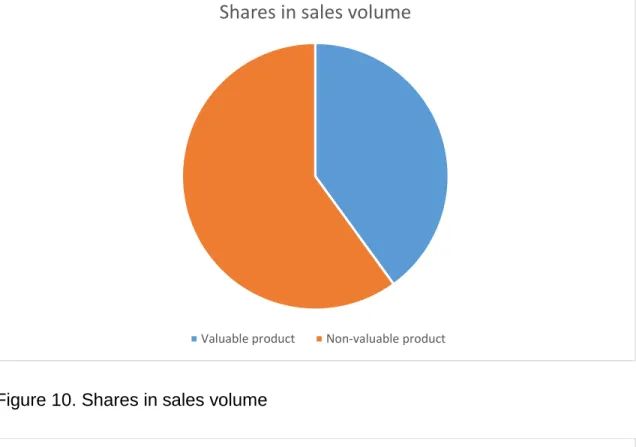
In contrast, the price of a valuable product group, which simultaneously has a larger sales volume and a higher profit margin, should remain the same or slightly increase in accordance with the willingness to pay and price elasticity of each product. It is optimal if ABC can increase prices within an acceptable limit, so that this does not affect the sales volume. Since they do not yield the same profit, ABC has every reason to calculate differently.
For example, the second group of consumers with 35.8% share in revenue contribution buys directly from ABC. The challenge may still remain in the fact that they have relatively small premises to be able to grow when the number of this group of consumers escalates. In this case, giving the customer some incentives, such as 10% off order with delivery, shouldn't hurt the company.
Potential challenges
Consistently executing the business according to the strategy is thus the prerequisite for a company's financial success. The results of the thesis have answered the research question: “Which pricing strategies generate the most profit for ABC?” The research evaluated the performance of various ABCs and discovered their pricing flaws. The average sales per customer, price elasticity, willingness to pay and other metrics were used to better understand the consumer characteristic.
Overall, ABC currently has three customer groups that bring in different proportions of income, buyer sensitivity to price changes is indeed high, and willingness to pay varies between their product utilities. Evidence from literature review and empirical research shows that ABC can maximize profit and evolve with drastic changes in the business environment by using a value-based pricing strategy. Certain strategic frameworks proposed by the researcher should define principles for the case company to make their pricing more logical and achieve better results.
During the implementation process, they may want to establish certain metrics to measure how well the pricing strategy is doing. Similarly, price elasticity can be observed in all the products instead of only the top 9. An in-depth experiment in price elasticity will be done in a longer period and in the other direction (increasing prices) to give comprehensive knowledge of purchases behavior.