With such substantial growth, service providers need to understand the needs and demands of these consumers to improve the destination experience, maintain steady growth, and receive repeat visits. According to the Embassy of Finland (2015) "Their main idea is that companies should organize memorable events for their customers, and that the memory itself becomes the product - the experience".
Defining Consumer Behaviour
Decision-Making Process
The decision is largely dependent on the perception of whether the purchase will satisfy the internal need. Based on the information gathered and the perceived benefits of the evaluated alternatives, the decision is made to either buy or not.

Factors Affecting Decision-Making
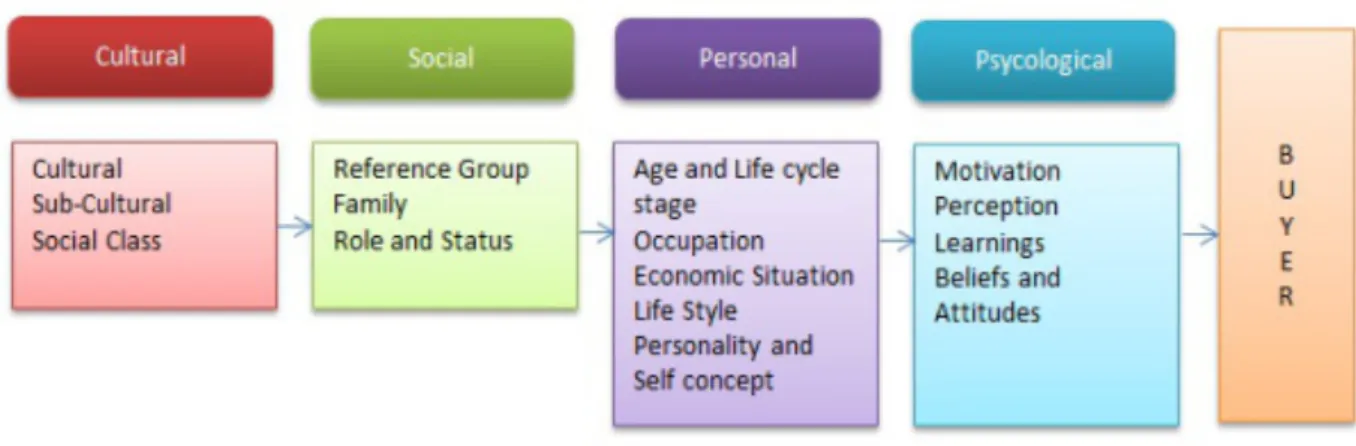
The experiences are often shared with others online or offline, which also influence the decision-making process of others. Finally, psychological factors influence the decision-making process through motivation, perception, learning, beliefs and attitudes.
Development of Chinese Travel Behaviour
He also adds that many of these travelers are able to communicate and get around in English, which is why they are traveling to smaller destinations like Finland.
Needs and Demands
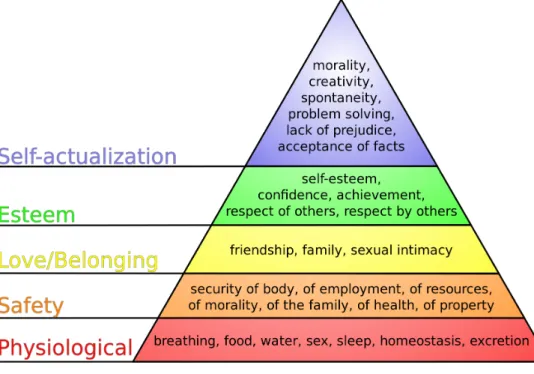
Similarly, the study by Tommasini and Zhou (2016) found that many of the Chinese tourists who had visited Rovaniemi did not recommend it to others as a tourist destination for reasons such as. These factors are based on consumer needs and as explained in the decision making process section; some of these needs were not met.
Travel Motivations
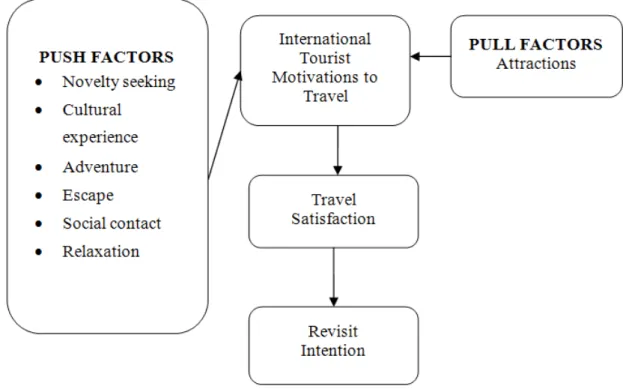
The pull factors indicate destination choice and the characteristics within that destination that attract them – the destination attributes. Tommasini and Zhou (2016) suggest that for the Chinese: "The desire to travel may indicate a desire to validate one's knowledge".
Travel Preferences
As has become apparent, status is an active motivator for Chinese travelers and includes exclusivity, fashion, getting a good deal and lavish spending opportunities. Giele (2009) explains, “Chinese people are much more likely to buy luxury goods to improve or maintain their face, even if they do not have enough money to pay for housing and buy enough food and clothing”. Zhou (2017) also illustrates that more than 80% of Chinese travelers between the ages of 18 and 25 prefer to travel independently, while this percentage is only around 38% between the ages of 36 and 55.
As a response, some travel agencies have responded to these changing requirements by offering tailored products and services to independent travelers, such as discounts on single bedrooms (Verot 2014). Next, Verot (2014) explains that the trend of seeking Chinese or Asian food during trips is likely to end, as the Chinese are more aware of local cultures and want to try food and local specialties. These changing behavioral patterns subsequently affect service providers, as the needs and demands of consumers can change drastically, affecting marketing strategies and the need for guided services.
Destination Choices
Rovaniemi for Chinese Tourists
Tourism Strategy
Key Facts and Figures
However, only about 48% of all Chinese were overnight visitors, with many traveling only through Helsinki-Vantaa International Airport. spent the night in Lapland, the second most favored destination after the Helsinki region, which attracted 73% of all visitors. While Helsinki remained the largest region in Finland for foreign overnight stays in 2016 with 4.2 million (42%), Lapland experienced the highest growth with a total of 1.3 million counts. As it is known as a winter destination, the greatest demand for services is naturally in winter and a significant drop occurs towards the summer season.
In the year 2015, 69% of Chinese overnight visitors traveled to Finland during the summer season, while the remaining 31% traveled during the winter. However, the percentage visiting Lapland remained highest during the winter, with 26% of all Chinese visitors traveling to Finland that year.
Accessibility
Most visitors spent two days in Finland, followed by travelers who spent more than six days (14%). Although Rovaniemi International Airport is only a large part of Helsinki Airport, it has nevertheless been referred to as "the commercial center of a vast region in the north" (City of Rovaniemi 2017). Finavia Director Sundelin (2016) explains “strong growth in domestic travel comes from passengers on international routes transiting Lapland.
Direct connections from Europe to Lapland have also raised accessibility and the number of passengers to a new level". Despite the obvious increase in the number of passengers, accessibility was persistently one of the limitations of the destination, as there were very few direct flights from Europe and the number of air carriers was limited. daily flights between to the main transit area of Helsinki In addition to access to air routes, Rovaniemi is accessible from other cities in Finland by rail and the E75 highway (City of Rovaniemi 2017).
Marketing Strategies
Targeted Marketing
Armstrong (2014) explains, the marketing concept asserts that achieving organizational goals depends on knowing and understanding the needs and wants of the target market and providing satisfaction better than competitors. They add that the process starts with a well-defined market; focuses on customer needs and integrates all marketing activities that affect customers. Alternatively, Rovaniemi has reached the Chinese market by creating a Weibo account for Santa Claus (DailyFinland 2017).
Similarly, Professor Arlt (2014) asserts that trips taken by Chinese celebrities generate attraction towards the visited destination among the rest of the population. He also adds that the Chinese are looking for something interesting to connect with, while referring to a photo of Chinese President Xi Jinping and Santa Claus in Rovaniemi as an example. These are just a few of the many ways in which target markets are reached, but the essential factor here is to understand the customer's needs and appeal to those needs through marketing.
Qualitative Methods
The sampling methods used to collect data for this assignment were partial purposive sampling and partial convenience sampling. Purposive sampling is “targeting a specific group of people” (Crane & Hannibal and the criteria by which the sample is selected is determined early on. Although the use of purposive sampling is useful for obtaining a sample quickly, it can result in a biased sample.
However, “if the sampling process is based on objective criteria, bias is limited” (Crane & Hannibal 2012, 349). On the other hand, convenience sampling focuses on selecting participants who are available and willing to participate in the research. In the case of this thesis, participants were recruited using online methods and face-to-face opportunities, selecting those available in the area.
Research Methodology
After testing the sophistication and effortlessness of completing the survey and adjusting the questions based on feedback from supervisors, the search began for different ways to reach Chinese tourists. Some Chinese travel agencies and local companies have also been contacted in the hopes of distributing the survey to their customers, but no response has been received from any of the companies. The results obtained through a paper version or Word document of the survey at the Arctic TreeHouse Hotel have been entered into the online platform for easier analysis of the results.
For ethical considerations of the research, all participants were informed that the results are anonymous and no personal information was asked that could make the respondent identifiable through their answers. The results presented in the next section are those collected through the survey, which demonstrates the travel behavior of Chinese tourists in Rovaniemi based on their own experiences. The results answer the first research question of the thesis, regarding perceived characteristics of travel behavior among Chinese tourists.
Demographics
In addition, the age groups between 21 and 30 and between 41 and 50, which represent the two largest groups of travelers, are more financially stable and can afford foreign holiday travel. The results showed that a majority of respondents came from cities with direct weekly or daily departures to and from Helsinki, namely Beijing (25%), Nanjing (25%) and Hong Kong (25%).
Travel Preferences
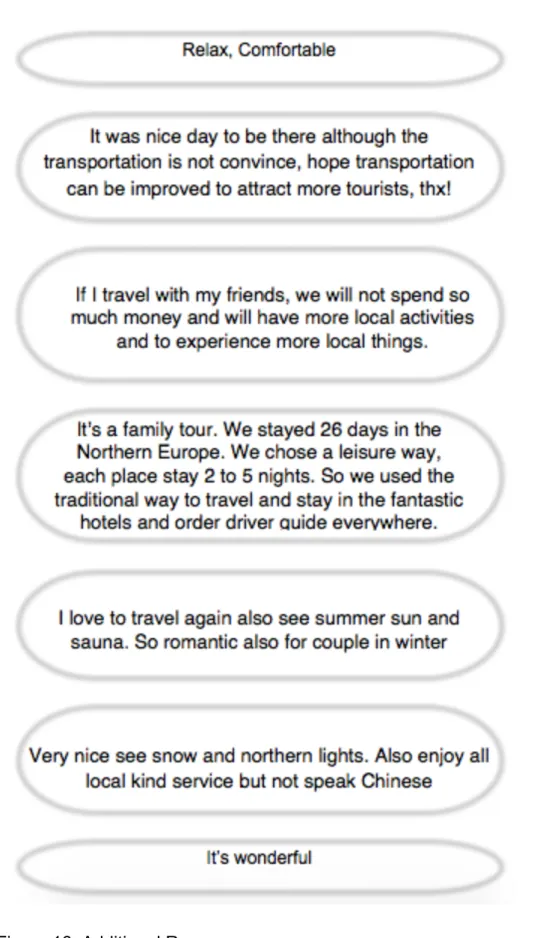
Being a very family oriented culture, it is typical for Chinese tourists to travel with their family or even extended family. Traveling with friends is also on the rise among young travelers and some respondents reported having different travel preferences when traveling with friends than when traveling with family. One respondent stated that "we depended on a travel agent as this is a family trip and my mother is used to relying on a travel agent to arrange everything for us", suggesting significant differences in travel preferences between generations and that this should be taken into account by service providers when creating experiences aimed at the Chinese.
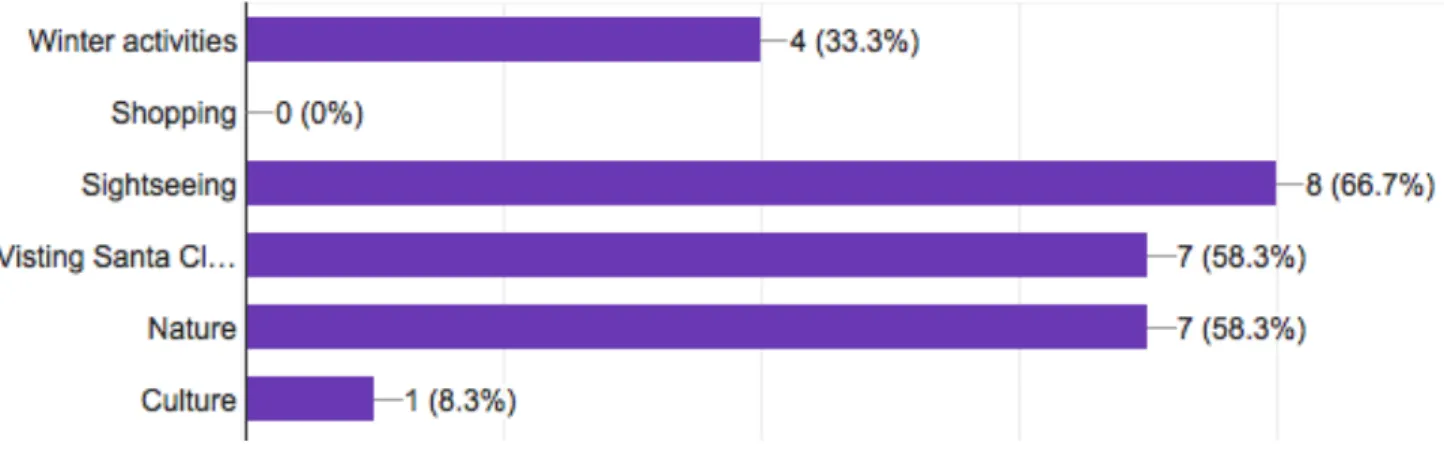
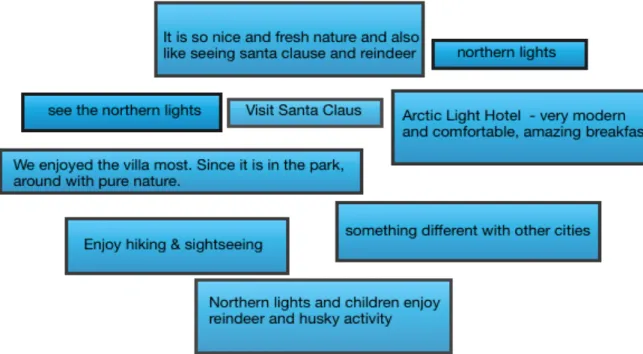
The purpose of the trip to Rovaniemi was for most respondents to see the Northern Lights. One respondent also mentioned that he traveled to different locations in Scandinavia during the same trip and chose Rovaniemi as one of the destinations "because it is very famous for Santa Claus". Two respondents reported visiting Rovaniemi on their wedding anniversary and other points of interest included winter activities, spending time with family, enjoying the scenery and nature, as well as visiting Santa Claus Village.

Information Retrieval and Booking Methods
Travel Time and Duration
Destination Preferences and Expenditure
When exploring the least pleasant features of the city of Rovaniemi, 20% were dissatisfied with the local transport system and similarly 20% were dissatisfied with the shopping opportunities. One respondent mentioned the lack of variety of food and was not happy with the options, another found the city too small and a third was disappointed with the weather. All respondents chose a hotel as their form of accommodation, which contradicts the theory of an increased exchange culture among Chinese tourists.
The most popular determinant for choosing a hotel as accommodation was the quality of the property (91.7%), followed by the location and reviews, both chosen by 66.7% of respondents. More than half (58.3%) of the respondents also considered the price of the accommodation and the least concern (41.7%) was about the ease of booking. On another note, the slightest concern about the ease of booking may indicate that the.
Post-Travel Experience and Additional Thoughts
This could imply that the results are not representative of the target group and that a larger sample size should be used to gain more credibility. Due to obvious language barriers, not all respondents understood every question and some questions were left blank. Most respondents spent 2-3 days at the destination and traveled in the fall or winter.
On the other hand, the generational differences between Chinese travelers should be noted, both in the marketing of the destination and within the services provided. The modern Chinese traveler is seeking knowledge and is increasingly intrigued by the local culture and lifestyle of the destination. The suggestions given are based on the empirical findings of the research as well as the existing theory examined.
Based on the research findings and identified limitations, the primary improvement for further research is survey design. To be able to gain a comprehensive understanding of the studied topic and avoid misinterpretations.