The results of this thesis project were a CRM tool that supported the sales and marketing processes in the best possible way. I started working at Merus Power Dynamics Oy (hereinafter referred to as Merus Power or case company) as an assistant at the beginning of the specialization process, which also facilitated the collection of information and enabled full support from the company during the process.
Background
This thesis is written for the Bachelor of Business Administration in International Business during the fourth year of study. Although I worked at the company during the writing process of the thesis, I did my best to remain as a neutral researcher, also because I was new to the company.
Company Introduction
Objectives and Research Problems
Methodology
The qualitative method was chosen because of the focus on finding the meaning and understanding the underlying issues. At the end of the graduation project, the quantitative research method is used to get feedback on the success of the development project with the training.
Scope
Thesis Structure
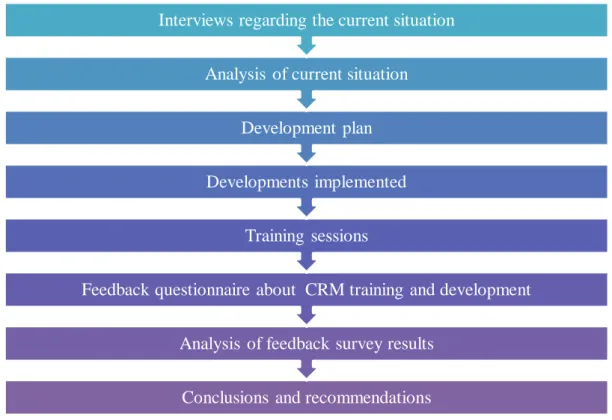
In cooperation with the Lean consultant Jukka Lehti, the changes will be implemented in the system. To continue with the project, a training session will be held to re-introduce the CRM tool as well as to teach the relevant staff how to use it.
Customer Concept
Companies should develop their own time frame, after which it is clear that there will be no more sales, or in which the customer makes a new purchase. After these questions, the company should be more clear about who the buyer is and who is not, believing that the financial impact is the most important proof that the company has succeeded in acquiring a buyer.
Value of Customers
This is a question that all salespeople should discuss together, as each one knows their customers better than others. They should discuss the criteria by which they will jointly rank customers according to importance.
Benefits of CRM
Challenges of CRM
However, as most companies strive for growth, the database collected from the very beginning is a valuable asset. From the company's point of view, employee turnover and the lack of a CRM database will not cause problems in the short term, but in the long term.
Critical Points in Successful Implementation
As the title says, a project manager in the company is responsible from the company's side to ensure that the process runs smoothly. Last of the top five was the system provider's know-how and experience with 81%.
Service Marketing
It can be stated as a fact that the implementation process can naturally be expected to run more smoothly when the system provider knows what they are doing.
CRM Aspects for Merus Power
To discuss is the introductory meeting held at the beginning of the process, the research decided upon and the structure of the research. All this will be followed by an analysis of the research findings and the findings that will create an outline for the development project.
Introductory Meetings
Structure of Questionnaire Form for Interviews
The question forms are done at the end and in English and can be found in appendices 1 and 2 of this thesis. The interview structure and questions were designed to find out the level of use of the CRM tool, whether everyone knows how to use it and what their opinions are about it. Furthermore, it is important to find out if they find it useful, both for themselves and for other users.
Furthermore, development ideas are asked to see what the user's needs are regarding the CRM tool. After this, the question form was divided in half to better adapt the questions to usage levels. The right side of the paper was for those who did not use CRM at all, and the left side for those who used it at some level.
Analysis of Results
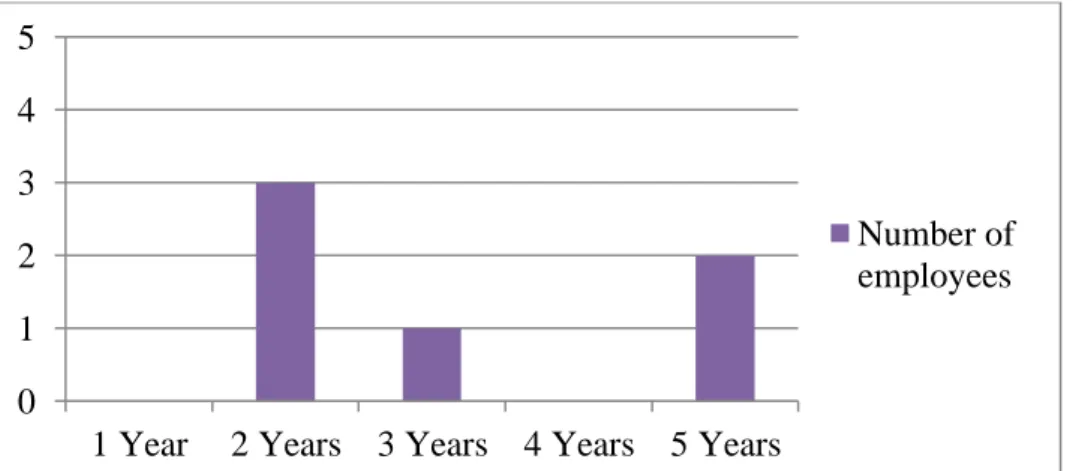
As discussed in the previous stages, the employees had not gone through any formal Lean training, and the training question informed that 5 out of 6 employees had received some kind of training either before or after joining Merus Power. Although the level of training has not been very high, it can be seen (figure 4) that 5 employees out of 6 were aware of the CRM tool, although one of them was aware because the thesis issue had been discussed in the case company. The quality and accuracy of information to improve, marketing events should be used.
From the given answers, it can be concluded that the employees have really useful development ideas, what kind of changes in the system they would like. Most importantly, possible development goals were identified in the interviews, and training was identified as the key to a higher user level. These two will be linked in section 5.2, but it is important to present them correctly to have a clear picture.
Lean System
Lean System General Applications
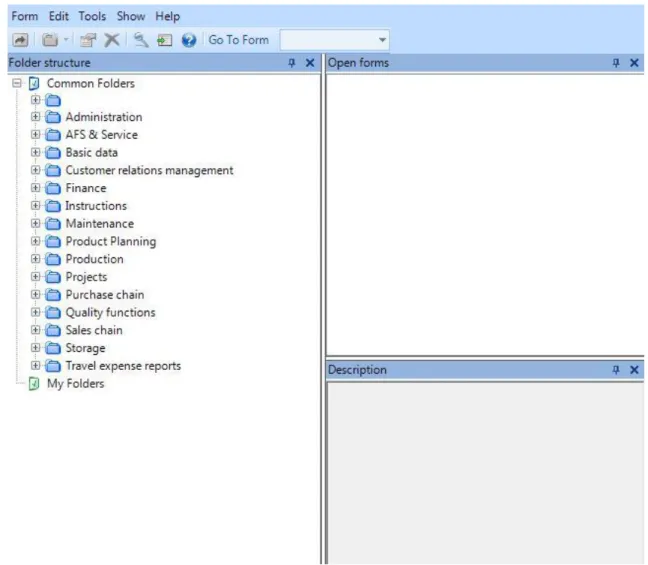
At the top of the window is a menu bar through which various settings can be accessed. The entire Lean system can be managed here, however, only a few have rights to this application, because some changes can also be made to other files. Projects: With the Projects application, all functions during the life cycle of projects can be managed, i.e.
The application does provide a forecast of which correct quantities of products can be ordered at the right time. The sales process is supported by the sales application, invoicing and delivery with which vital functions can be implemented. Storage: Inventory application where, simply put, the value of the stored amount of goods can be monitored.
Lean System CRM Applications
Therefore, a person can be added several times if they have a presence in many companies or different positions. There is a description field next to comments where the reasons for this action as well as the result can be written in detail. You can specify the nature and deadlines of the event and add participants either through category lists or here through manually.
Sales Leads: When there is a sales prospect who is not yet a customer in the sense that a deal has not been made, the details of this opportunity can be entered into Sales Leads. Sales Lead Products: After creating a sales lead, products that are included or offered in projects can be placed here for later reflection. This application can be used to see which products are currently being assembled.
Sales processes
Pre-Sales Process Flow Chart
Sales Process Flow Chart
The CRM tool at Lean is currently user-friendly and has many useful features that could be put to use. This development plan has been created and implemented for Merus Power for the re-introduction of CRM. In this context, a development project stands for figuring out how CRM can be leveraged, exploring how it can be improved by adding data fields, and figuring out how it can support the marketing and sales functions.
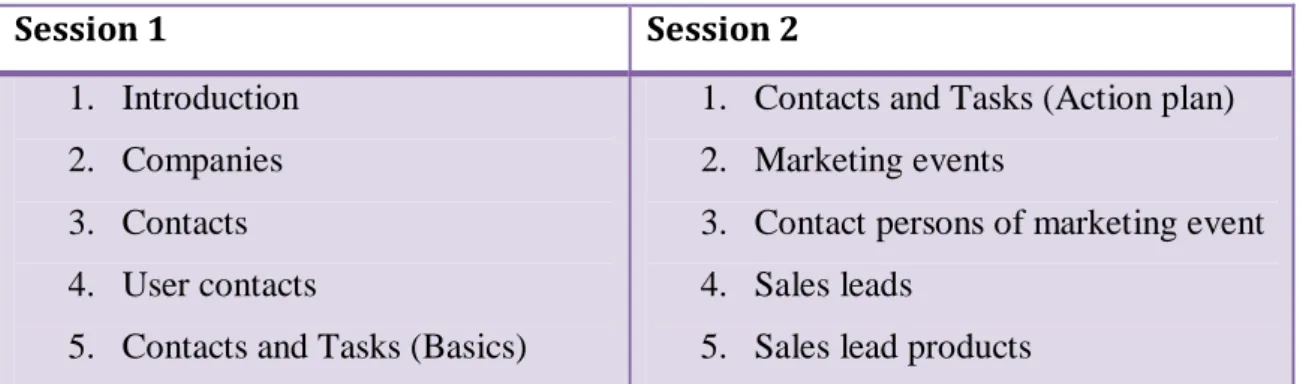
The development process will be divided into two separate parts: firstly developing the CRM and secondly creating a training plan. The applications must be taught in training and to ensure that no one is left to their own devices in the future. Therefore, those that were investigated will be explained and general changes will follow accordingly.
Targets of Development
Linking CRM Tool to Presales and Sales Processes
Training
Training Material
This will also support not only the training itself, but the fact that people are different when it comes to learning (Thorne & Mackey 2007, 37). His topics will be CRM, the importance of CRM and linking the tool to the sales process and articulating the benefits to participants. A CRM user guide will be produced, which will be used partly as a basis for training and also as additional support for staff after training.
It was thought that the training would go over the basic functions to ensure that everyone would be able to follow. The guide covers the basic functions that were part of the training program and gives ideas on how to best use them. At the end of the guide there is also a general section describing useful functions, such as searching for something.
Structure of Feedback Questionnaire
As mentioned, the questionnaire will focus on how the participants perceive the result of the training. The questions consist of the topics of how people feel about CRM and whether their knowledge has increased. Furthermore, it will be revealed whether the participants felt that the training was useful to them and contained features that will help them in their work.
It is important to find out if the training managed to express the desired information on CRM and its purpose, in general and at Merus Power. The next three questions, 4, 5 and 6 assess the results of the training in terms of improved skills, learning level and motivation. The first of these two asks if there is anything left after the training that respondents would like to learn.
Analysis of Feedback Questionnaire results
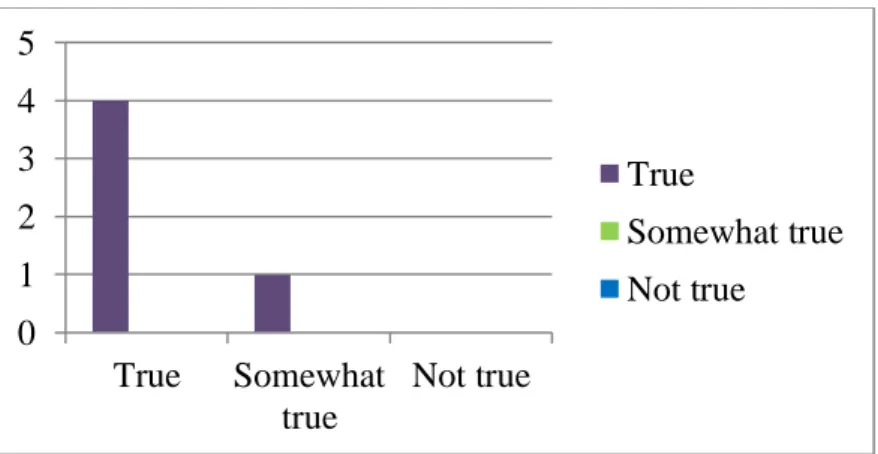
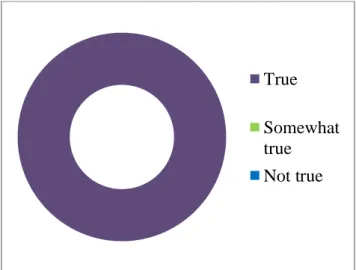
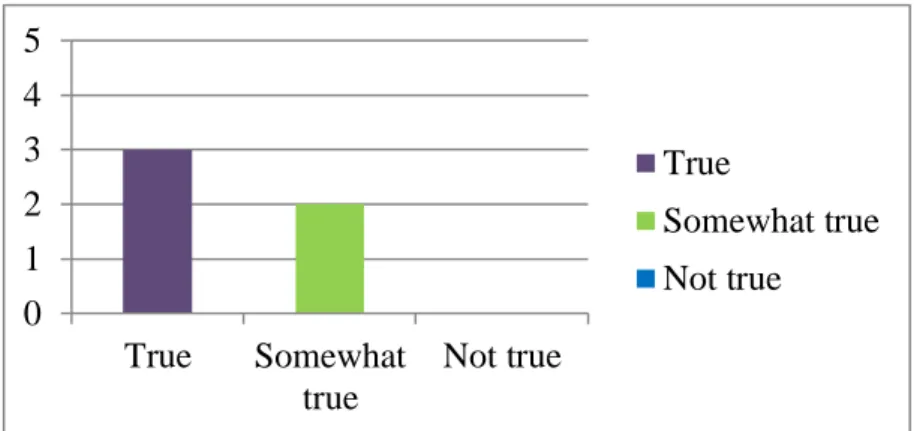
The usefulness of the training (Figure 14) and the content were found to be good by all respondents. The state of the CRM tool in the case company was not commendable at the time the thesis project was started. Detailed information about the customers was in the heads of the salespeople and on their computers.
Data for the outline of the development project was collected using qualitative methods from interviews. It can be said that the results of the thesis support the objectives set at the beginning and answers to the research problems have been found. These facts together create a good basis for the future success of the company in the field of CRM.
Recommendations
Finally, developing CRM is more of a process than a project in that a project has a clear end and a process does not. Recommendations for the future have been made to ensure the continuity of the success of the CRM process in Merus Power. If you know and use CRM, how often do you use it and how.
Even if you don't use the CRM tool, do you perceive any benefits it provides to the company. Do you have any development ideas for the CRM tool, which can increase your use of the system.
Questionnaire Form for Interviews in English
Questionnaire Form for Interviews in Finnish
Power Point Presentation for Training
CRM User Guide
Feedback survey