In this way, it strives to provide ideas for designing the best possible distance learning experience in higher education. The literature review also aims to provide ideas and perspectives to Edu-Tech developers, especially in the context of distance education.
Aim and rationale
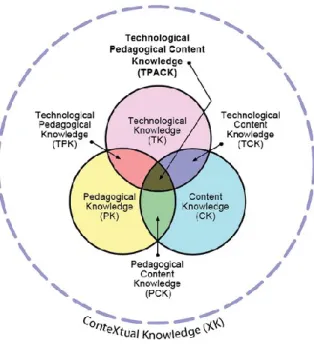
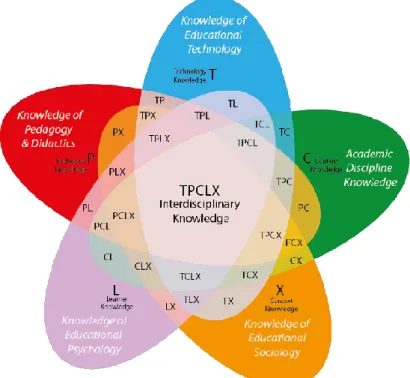
In addition to the literature review, this study also attempts to evaluate whether the TPACK framework developed by Mishra & Koehler (2006) could serve as a tool for designing educational technologies that support distance learning. Of particular interest to the model is that the TPACK framework has recently been updated by Mishra (2019) to better account for the importance of contextual knowledge of the teacher.
Structure of thesis
Research method – a literature review
Research questions
Hypotheses
Although teachers have had technological skills and knowledge prior to the outbreak of Covid, there have been gaps, particularly in their technological skills and contextual knowledge. Contextual knowledge, recently added to the TPACK model, is an integral but often ignored part of this framework.
Data selection
Limitations of the study
TPACK – Introduction to the framework to be evaluated
Introduction
Structure of the TPACK Framework
And how they would support learning and understanding of the subject being taught. situational awareness is needed to assess students' prior knowledge and needs. It also considers how "changes in technologies can fundamentally change the understanding of the subject" (Glowatz & O'Brien, 2017, p. 137).
How the TPACK Framework was evaluated in this study
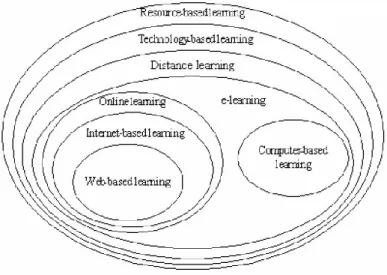
Distance learning – concept definition
For example, in the study conducted by Ahmed et al. 2020, p. 3) about the Covid situation, the concept of distance learning was chosen by most teachers and other participants because it equated learning through technologies and fit the situation that Covid brought. Yet even these concepts are seen to fall under the concept of distance education and function as the teacher's pedagogical methods when organizing distance education.
Intro
Context – Arrival of Covid
Because estimates of the persistence of conditions range from months to years, the uncertainty of the future makes it difficult to predict problems and plan studies. There are still examples of effective and exemplary transitions to distance learning in the time of Covid, especially given the scale and severity of the situation.
The importance of distance learning for universities
However, students in distance learning have always been in the minority compared to face-to-face teaching. However, during Covid, this situation has changed and the importance of distance learning has increased.
Main challenges with Covid
- Financial challenges of higher education institutions and society
- Teaching in disruption
- Teacher vs. student-centeredness
- Resistance
- Distance learning is not face-to-face learning
- Completing courses, gaining qualifications, and graduating
- Quality assurance and feedback
- Challenges faced by students
- Mental, physical, and social problems
- Inequality
- Challenges with technologies
The transition to distance learning has, for example, challenged different learning outcomes and a guarantee of sufficient teaching quality. Furthermore, it should be considered how each individual student's strengths could be considered in distance education (Ahmed et al., 2020, p. 2). It is no wonder that Ahmed et al. 2020, p. 1) have found how face-to-face teaching is better than distance learning in inspiring students and enabling meaningful encounters.
Hybrid model of distance learning
Breaking the hierarchies of education
As an example, in the pre-Covid context of higher education, teachers are often used to thinking that students in many learning activities do very well on their own, but over time, while with the pandemic, the situation has changed and teachers have even had to begin to take more responsibility for their students. This is evident in the way teachers have clearly shown more human traits about themselves through distance learning. Some students even felt their teachers concerned about them for the first time, which may have had a significant impact on student well-being.
Pivotal role of the teachers in distance learning during Covid
Teachers also play a central role in ensuring good, equal opportunities, especially when distance learning is enabled by technologies. This includes establishing a functional environment for distance learning and ensuring that teaching can be of the highest possible quality (Al-Hosan et al., 2020, p. Therefore, the use of teachers' capital, resources and professional networks is also essential in supporting students' distance learning ( Haaper & Brown, 2020, p. 349).
No specific time or space – The world is getting smaller and more accessible
With the advent of the "new normal", universities are increasingly looking for opportunities to implement distance learning so that people who live geographically far away or who are otherwise unable to participate in contact education can can be reached (Barros Silva et al., 2020, p. At the same time, distance education has also broken down many barriers to access to education and in many cases improved the participants' quality of life. It has been observed, for example, how participation in distance education from a workplace intended for learning alone helps students to maintain their quality of life (Barros Silva et al., 2020, p. 8).
Distance learning is here to stay – but not as the only option
Therefore, it can be useful to pay attention to the physical space where distance education takes place: the stimuli it provides, its tranquility and its practical application. If and when the transition from distance education back to extended contact education begins, teachers and students at risk and those otherwise concerned about the Covid situation must be considered. For the same reasons, flexible methods of distance education must be developed for both students and teachers.
Virtual communities, the possible fusion of universities and shared teaching content 43
These distances can be, for example, socio-economic, cultural, cognitive and psychological, and must be considered in order to achieve empowering, equal and best possible distance education. There are many possibilities to build more pleasant and sustainable distance learning environments that can support these aspects. However, the incorporation of these methods in distance education again requires more effort from universities and teachers.
Student attitudes
They must act responsibly, credibly and transparently and clearly communicate how they serve these common goals. This can be done, for example, by finding out which networks the students enter instead of everything that the campus normally has to offer. It is excellent practice to get to know the student support network, for example by making a map of them with them.
The increased importance of feedback and warning signs
In addition to taking feedback into account, teachers must learn to identify various indicators and warning signs that occur when organizing or evaluating distance learning, especially in situations where students do not stay involved in teaching. These warning signs include missed deadlines, decreased participation in synchronous learning, complaints about the technologies used, increased dissatisfaction with university staff, and declining grades. Especially students at risk of dropping out should be considered more closely when planning distance learning.
Clear guidelines
Other noteworthy indicators for the evaluation of distance learning are data on student completion, dropout, and decline in learning outcomes (Ahmed et al., 2020, p. These groups are particularly comprised of students who are disadvantaged, disabled, or struggling with mental health issues One one option could be learning management systems to help cater for these groups more systematically.
Co-developing quality technologies and content
It takes time and preparation, especially because new tools, techniques and rules related to distance learning must be carefully designed and implemented step by step. This work involves discovering technology issues, practicing new skills, and becoming more familiar with distance learning environments, even if teachers are familiar with the systems used. Real life situations can provide the best possible feedback to develop more interesting, engaging and practical distance learning tools and systems.
Other technological opportunities
Students use both computers and mobile devices to participate in distance learning classes (Barros Silva et al., 2020, p. 4). Nevertheless, mobile technologies provide, among other things, more accessible and flexible ways to participate in distance learning in terms of location and situations (Al-Taweel et al., 2020, p. 1296; Elfirdoussi et al., 2020, p. 12). A starting point could be, for example, how some private broadcasters participate in organizing distance learning studies by broadcasting learning/content programs at times specific to the current studies (Al-Hosan et al., 2020, p. 3).
First impressions
As the use of the text structuring framework seemed more and more challenging, its background and history were further studied by researching more information about its utility and previous use cases. As a result, it was found that many studies reached very similar conclusions regarding the usefulness of the framework.
Further findings on TPACK
Based on their observations, Angeli and Valanides (2009, p. 159) present an alternative ICT-TPCK model that attempts to address the problem areas of the TPACK framework. One of these was the TPACK-XL framework, which in turn was developed by Saad et al. Perhaps at least the main areas of knowledge in the TPACK-XL framework could also be evaluated in future studies.
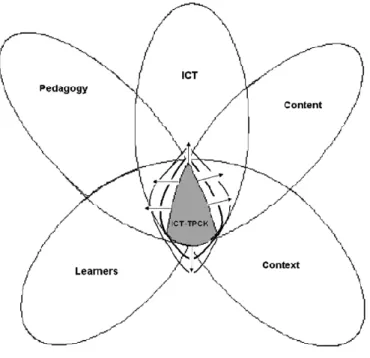
ICT-TPCK and Activity Theory – possible combination?
Future of TPACK Framework?
One must remember how the world of Edutech is changing exponentially faster along with new technological advancements. The idea is supported by Koh et al. 2015, p. 459) who mention, that "further theorization of the epistemic nature and processes involved in the creation of TPACK is needed". Thus, in defense of the TPACK framework, it should be mentioned that it was originally developed to address the lack of reference frameworks around educational technologies.
Towards new normal
Disruption and resistance as a germ cell of development
In the vision plan, it is possible to review how distance learning can look best when Covid is over. Dennis insightfully describes the vision plan as "thinking outside the box." Perhaps different modern methods such as design fiction or future research could contribute to this kind of development work. Still, providing education as widely as possible through distance learning could act as an opportunity to educate people to deal with important contemporary issues such as the circular economy, rapid population growth, climate change or phenomena such as Covid (Okanda & Sheeny, 2020), p. 1 ).
New kind of learning for new kind of learners
We could think of a discussion on whether it would be possible to carry out the teaching more quickly, so that the study could be completed even more flexibly and quickly. Another vexing question might be whether as many semesters will really be needed in the future as there have been in the past. Thus, one might wonder how much teachers with their old formulas know the common learning styles for these age groups, or more generally, how valuable and productive their use of technologies that seem to be futile can be.
Possible directions for technological development
Choosing mobile devices instead of computers as a platform for distance learning could work itself as an issue of equality. In addition to this, technologies such as artificial intelligence and cloud services could be leveraged to achieve more equal opportunities for distance education. The psychological level is used to reflect the transition from traditional education to distance education.
Final remarks on the TPACK Framework
In other words, this period can act as an opportunity for technology developers and various service providers involved to join forces with universities and teachers, to develop distance learning tools and content based on the best possible knowledge from the field of education.
More research is needed
2020) COVID-19 is revolutionizing higher education: An educator's perspective on challenges, strengths, and the way forward. The Covid-19 pandemic and university campus dissolution: Implications for student support practice. 2020) Student Enrollment Impact of COVID-19 on the Transition of Higher Education to Distance Learning in Poland.
List and describtion of the literature review material
2020) The Impact of the COVID-19 Pandemic on Field and Distance Learning Opportunities: Results from a Survey of Instructors. The article presents how Covid-19 has affected higher education in the business sector in Asia, Australia and the UK. 2020) COVID-19 is revolutionizing higher education: A teacher's perspective on challenges, strengths and the way forward.