Increasing levels of wood production, many political or commercial decisions and the fading wood resources led to the idea of sustainable development in Varkauden Puu Oy. Was used a lot of materials that had already been developed and executed in other companies and enterprises. This study includes the historical part of the company, business partners, wood processing in the company, logistical processes and.
The main topic of this thesis can be used not only in Varkauden Puu Oy, but also in other companies that want to progress and stay in the market.
Reasons for Choosing This Topic
Logistics
History of Logistics
However, according to another version, this term is known from the 9th century AD, from the time of the Byzantine emperor Leo VI. (866-912). In Byzantium, there were "logistics" at the emperor's court who were supposed to manage the taxes received and distribute them. He was a military specialist from the beginning of the 20th century who derived the following definition of logistics: "Logistics is the practical art of unit maneuvering." He felt that he had addressed some important issues such as planning, management and care in this regard.
There is evidence that even Napoleon Bonaparte himself used the principles of logistics in his army. Indeed, the effectiveness of military operations largely depends on the coordinated and rapid provision of all needs. Competently coordinated joint work of military production, transport services and logistics services made us think about the use of military logistics in a peaceful economy.
Product Development
Marking
Customers include construction wholesalers, factories and industrial paint shops, as well as products sold directly to the customer. The raw material used is wood that meets the PEFC (Program for the Endorsement of Forest Certification) standard. Sawdust is baled as a drying agent, and wood chips are sold as a heating agent.
Production
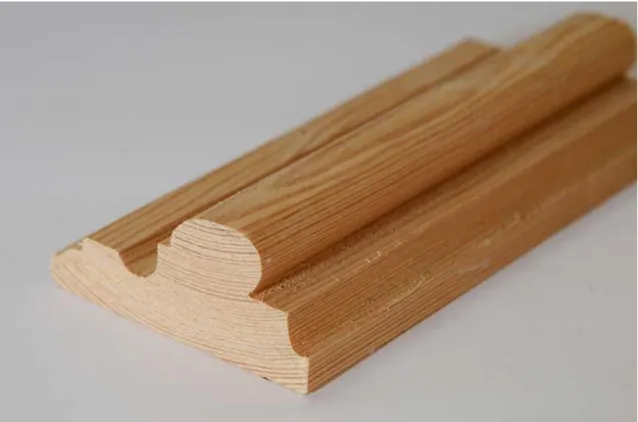
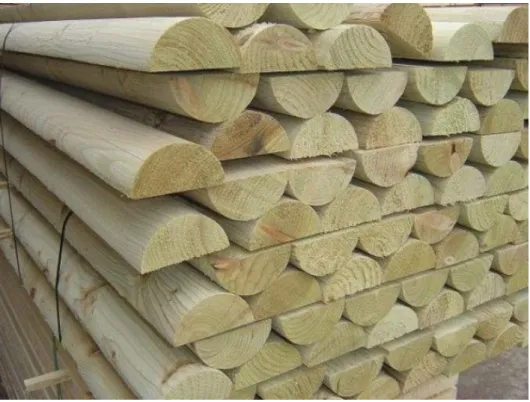
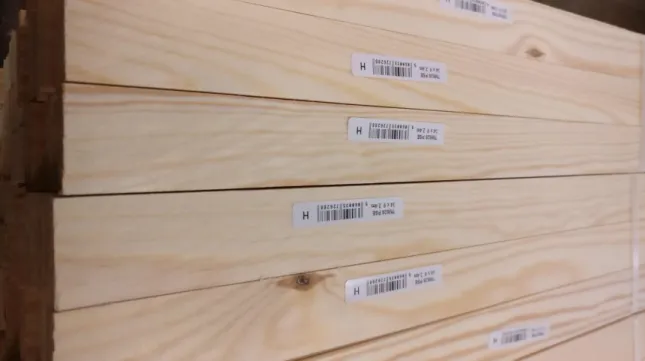
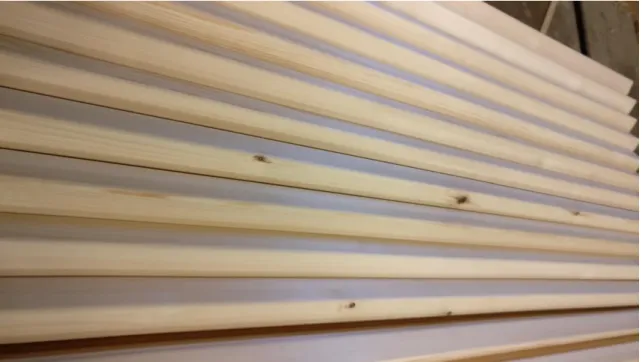
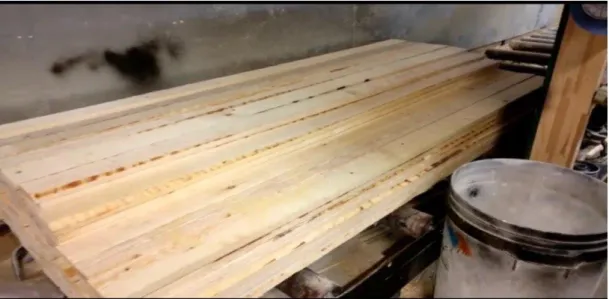
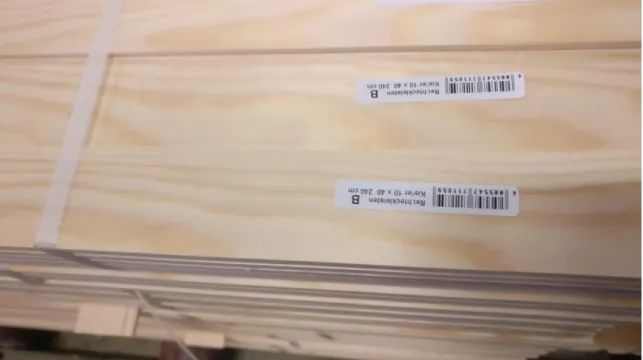
The given images help to understand what kind of products the company makes and what the excellent sorting system is initially needed for. Also, it is now possible to understand where and in what details the breakdown can be found.
Hardware and Specification
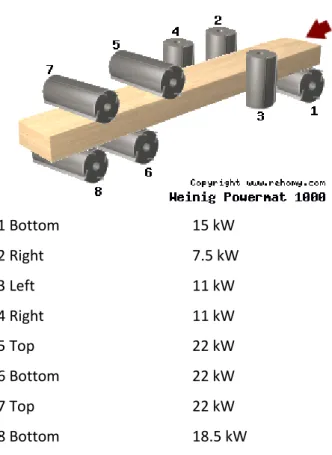
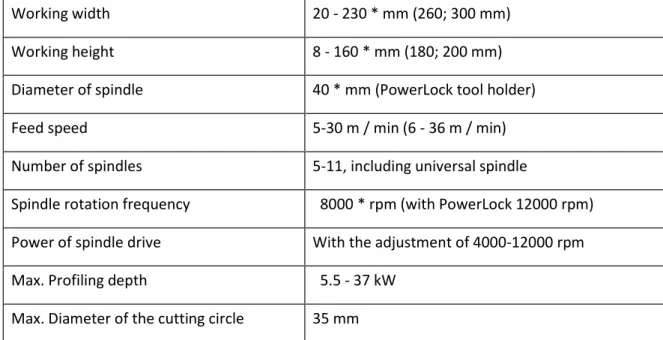
It embodies all the strengths of Vertex software and allows us to fully experience their technological flexibility. This model provides up to 11 tool seats, making it easily adaptable to a wide range of manufacturing tasks. The highlight of this "parade of quality" is the VARIO safety system, which controls the optimal position of the protective covers and clamps according to the diameter of the tool used[7].
Two pinch rollers in front of the left front axle - Drive the 50 mm wide rubberized roller on the output table. VARIO safety system: the position of the protective covers and clamps automatically adapts to the diameter of the tool used. Therefore, there can be different situations that can affect the business for the better, and vice versa for the worse.[8]
End Products
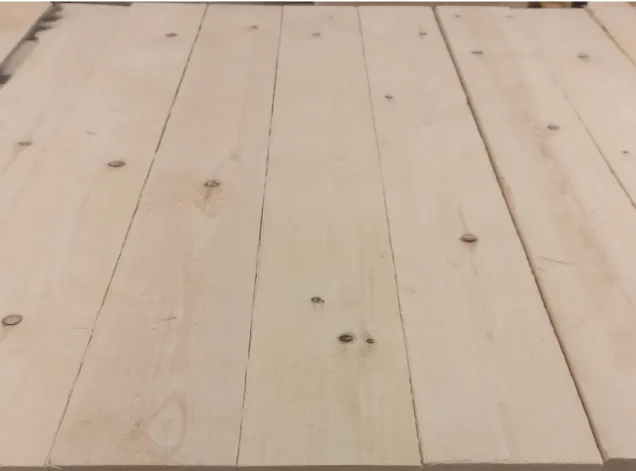
Reduced, without bark, the presence of knots, the size of the knot should not exceed five millimeters, the number of knots is not limited, but the less the better (Figure 7). Reduced, without bark, knots ranging in size from five to ten millimeters, perhaps the presence of a small amount of resin.
Versowood Oy
Stora Enso Oyj
Presentation and determination of the correct starting point and production is an important thing in every company. When the order is delivered, the raw materials are checked and an initial assessment is made. If the raw materials are not of good quality, the company that provided the raw materials returns the money and also pays the risk.
Often the end product goes directly from the machine and after the packaging process to the company that placed the order. The process of rejecting spoilage, as well as critical spoilage, is similar to the process of finished products. It is sent to the warehouse, marked in two types: bad for this order or even for processing for the needs of the enterprise.
Then pallets and wood are obtained from the processing, which is needed for the company's internal traffic. One of the world's beliefs is that with sustainable development we can reduce costs, spoilage in production and repeatedly use available resources for different purposes. But the question remains, what is wrong with the company and what is it striving for.
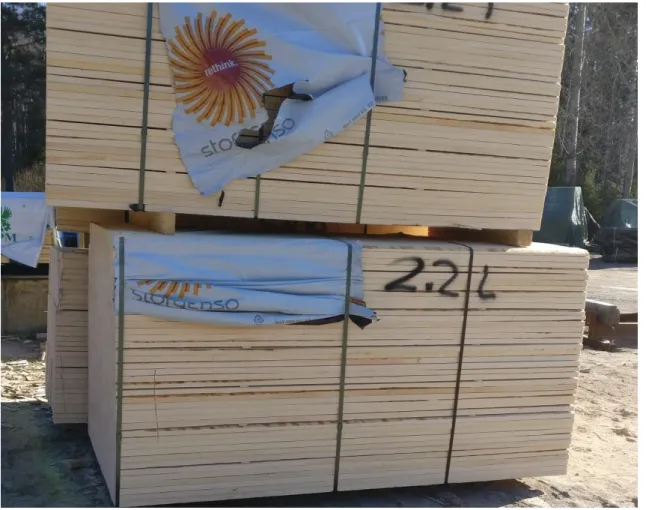
One of the companies places an order for a certain capacity of products that they need. While the order is being processed and confirmed, the company receives an order for the right amount of wood, taking into account any spoilage, both when receiving raw materials (Figure 9) and during manufacture. At this point, the order is finally formed and the production of the goods that the customer needs begins.
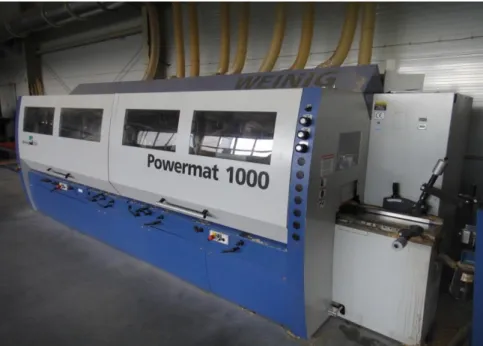
Boards are cut to the desired length, stored in one large pack and transported to the Weinig Powermat 1000 planing and milling machine. This is the main message of the thesis, to create a convenient mark for such packages, so that you can use them in the future without searching for packages. Initially, by considering and offering the ideal option, which does not take into account the cost of implementation, it gives a minimum of losses, both monetary and raw materials.
Ideal Marking and Sorting System
There are many such packages in production, and nobody knows exactly what kind of wood is there and why it didn't fit. For first class, but with many knobs - a basket with a board of good quality. But for the first class, it has too many knots of a large size (Figure 13).
The first class - a mix - is a basket with a quality table that will continue for further stripping in smaller orders. It has many joints and cannot be used for first class production (Figure 14). For the second grade, but with many knots, the wood is only for orders of the third grade.
For the second grade, (mix), the wood is only for orders of the third grade of a small size with a view to planing. Therefore, the example of marking can be considered as: «First degree, very bass, two meters». But the fact that workers can be people from different countries must be taken into account and they do not always understand refinements. The meter will be indicated with a number, if two meters - then two, if three meters twenty centimeters, then 3.2.
Together, we get that a discarded tree of the first class with an abundance of bark, cut to 2 meters, will be marked as "1B2". Also, we must not forget about the thickness and width, so apparently with ISO standards, all the markings will be like "1B30x150x2", where it is 30 - 30 millimeters thick and 150 - 150 millimeters wide. The main probability of spoilage depends on which side of the wood packaging the saw is on.
Wood sawing starts with the right size and here is the first opportunity for spoilage. The boards that come from the wide part of the trunk have fewer knots than at the point where the tree begins to taper. The second type is the type that has buttons and cannot be used in deliveries for companies of the first degree.
Considering the Percentage of Raw Material Spoilage of the Company
The third type is the type that has even more knots and is not suitable for second class orders.
Considering the Percentage of Spoilage of Raw Materials of the
Spoilage with Re-Use of Raw Materials
Spoilage of End Products
Feasibility
Effectiveness of Execution
The First Stage of the Changes
The Second Stage of the Changes
Change in Logistics
In general, it can be concluded that when changes are made and we understand that some of the raw materials were initially discarded and were not used anywhere further, it is possible to increase the efficiency of purchases of one or another type of raw materials up to sometimes. Taking into account the percentage of spoilage and the number of raw materials/blanks set aside, the average saving in purchases for the second and third grade is about 30-40 percent. Initially, this approach will increase the cost of production, but it will decrease the cost of procurement.
It should be understood that if the quality of the supply material increases or a new one of better quality appears, the percentage of rejections in the blanks as well as in the finished products will decrease, but the percentage of savings will decrease with the ranking of the materials. money / gaps. It is not known whether partners will use sustainable development and improve product quality, and whether new suppliers will appear offering more democratic prices or better quality products.