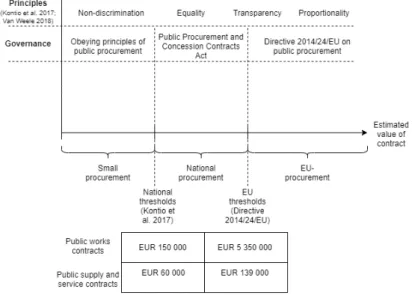
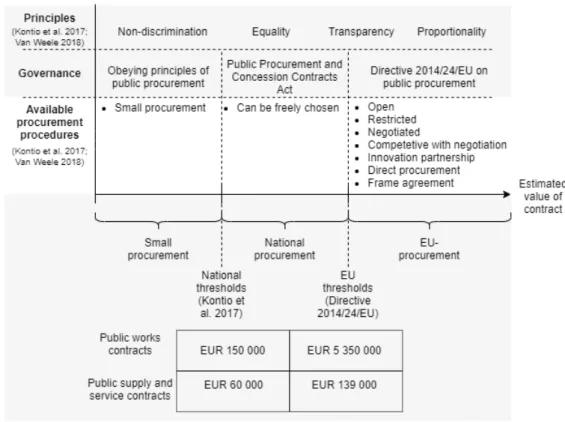
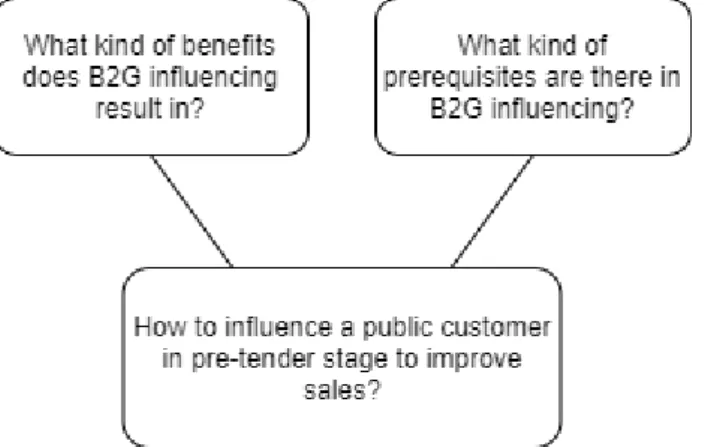
This research focused on fulfilling part of the gap in the literature by answering the following research questions:. The results of the study show impact as an integral part of B2G sales in the pre-tender phase.
INTRODUCTION
- Background
- Research questions and objectives
- Research process and methodology
- Structure of the thesis
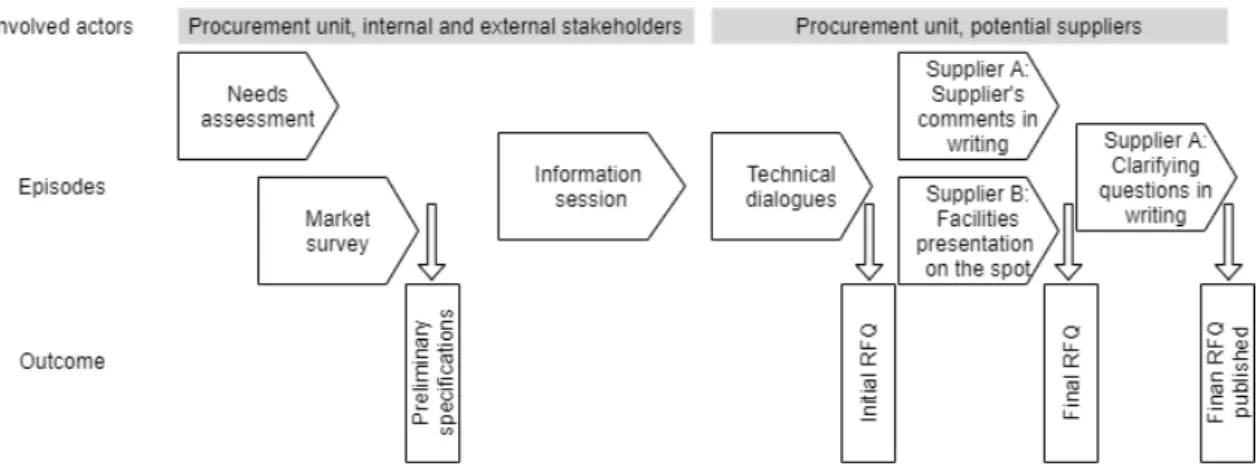
In technical dialogue, the focus is more on the content of the RFQ (Holma et al. 2020). The study by Singh et al. 2019) recognized that private suppliers try to influence the specification of the RFQ in the pre-tender phase to be awarded.
PUBLIC PROCUREMENT
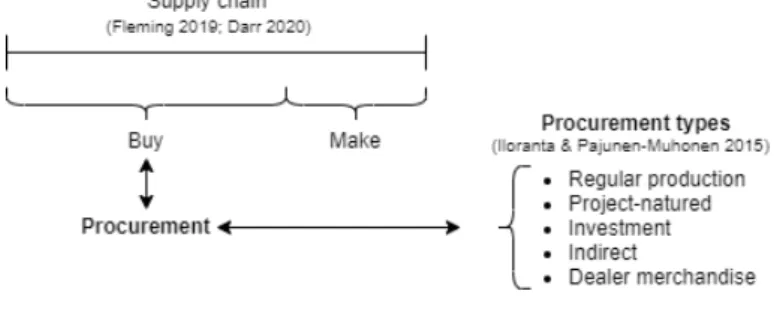
- Procurement
- Public procurement
- Public procurement regulation in Europe
- Process of public procurement
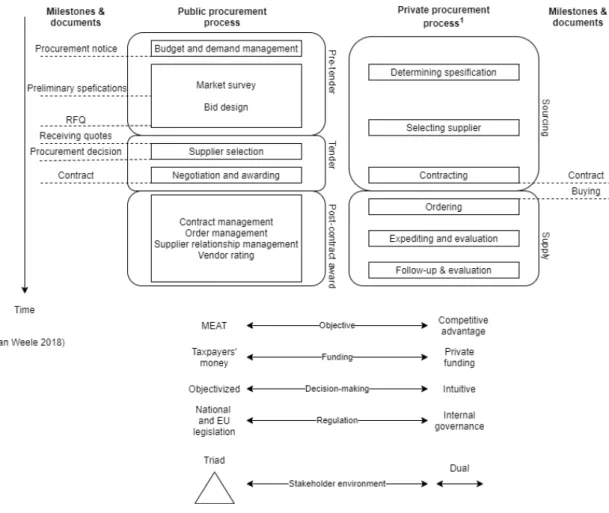
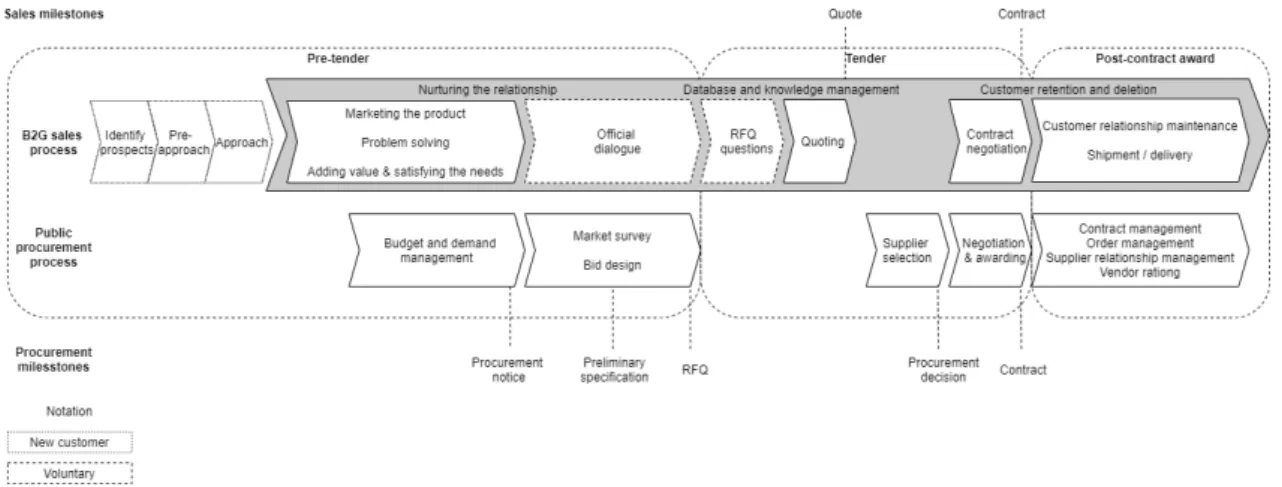
The public procurement activities of Patrucco et al. 2017) are missing essential activities and the order of the activities can be questioned. The public procurement process model below in Figure 12 is a combination of the activities presented in the literature review by Patrucco et al.
SELLING TO A PUBLIC CUSTOMER
B2B-sales and traditional sales process
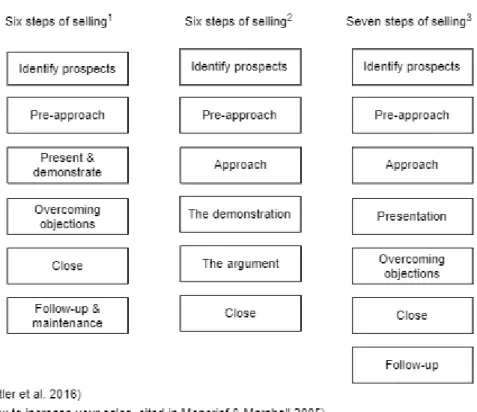
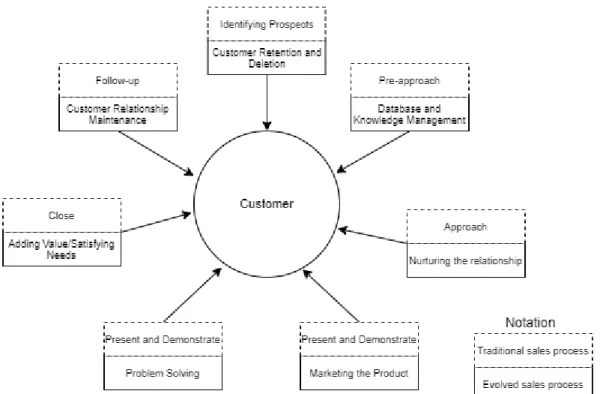
The traditional sales process, which is a combination of the processes of Dubinsky (1980) and Kotler et al. The order process after a successful closing step depends on the formality of the customer's purchasing process.
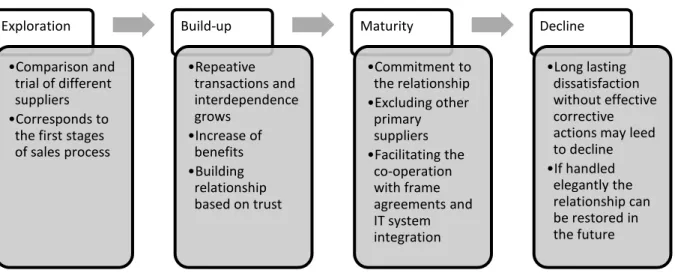
B2B buyer-supplier relationship
Four factors contribute to relationship quality: trust, commitment, satisfaction and service quality. Another finding of the study was that relationship loyalty is influenced by trust in the supplier, commitment to the supplier, satisfaction and perception of service quality. The authors explained that the first finding may be due to customer laziness, as even in the absence of customer value, they stick with a supplier, even if perceived switching costs are low.
Other conclusions of the study are that perceived switching costs and customer value are relevant factors for creating customer loyalty.
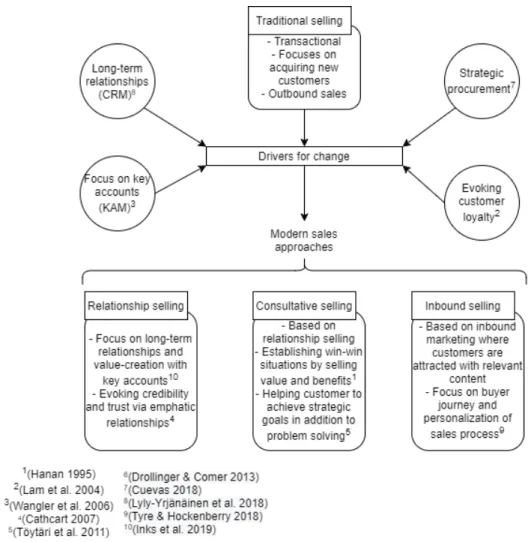
Sales approaches
Regardless, relationship selling emphasizes the relationship and interaction between the buyer and supplier involved in the sales activities. The author also emphasized the customer's constant emphasis and listening in interaction between buyer and supplier. Active and emphatic listening to the customer was also found to be a significant factor in building trust and improving relationship quality by Drollinger and Comer (2013).
Consultative selling is a proven approach; according to a study by Newell et al. 2011), the seller's advisory tasks positively correlate with the perception of the seller's expertise and loyalty to the relationship.
Evolved sales process
Third, relationship education - activity corresponds to the approach - activity in the traditional sales process. In the traditional sales process, the salesperson or salespeople would make a presentation to the customer (Lyly-Yrjänäinen et al. 2018, p. 61), in the evolved sales process, salespeople have become more engaged in marketing activities (Leigh & Marshall 2001). Fifth, the problem-solving activity corresponds to the demonstration part of the actual and demonstration activity in the traditional sales process.
Sixth, adding value and satisfying needs corresponds to the close activity of the traditional sales process.
Characteristics of business-to-government (B2G) sales
For the supplier, the study shows that high-quality delivery of a product or service can improve the building of end-customer trust, which is a key component in the long-term development of a customer-supplier relationship. However, Keränen's (2017) study included only one public procurement, which calls for further study on the development of a long-term buyer-supplier relationship in a B2G context. Nevertheless, the study by Mamavi et al. 2015) found that the amount of orders placed in an individual year is positively correlated with the orders placed in the following year.
In other words, the study implies that the performance of the supplier will still influence the long-term purchase intention, even though the legislation does not allow contracting on the basis of past performance.
B2G sales process
One task in the B2B advance approach was to check the prospect's solvency (Lyly-. Most importantly, the official dialogue also allows the sales organization to influence the minimum requirements, evaluation criteria and contractual and legal elements of the RFQ in sequence (Kontio et al. 2017, p. 98) Eight, submit questions activity is the first activity in the bidding phase (Kontio et al. 2017, p. 225).
The activities at the beginning of the tender phase depend on the procurement procedure used.
INFLUENCING A PUBLIC BUYER IN THE PRE-TENDER STAGE
Early supplier involvement
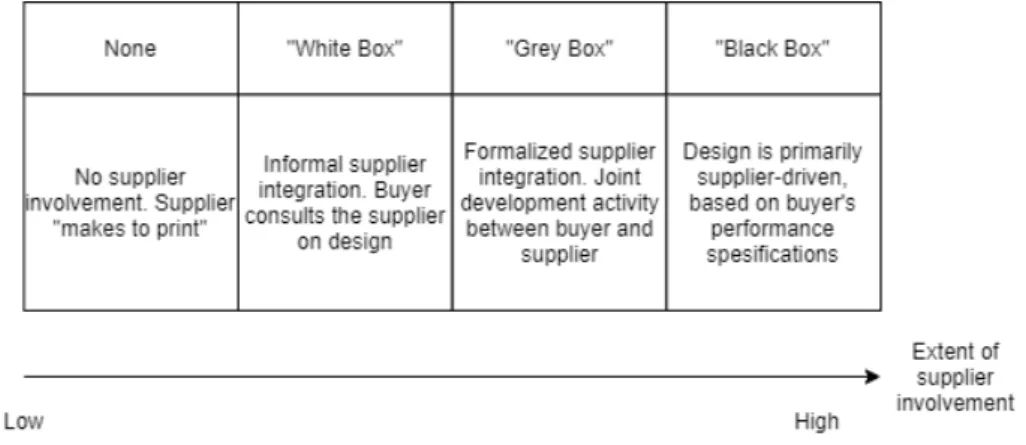
The supplier can reduce the buyer's perceived uncertainty through close interaction and knowledge building (Selviadiris et al. 2013). The role of supplier re-engineering is suited to situations where the buyer's perceived uncertainty and the buyer's specific experience of the supplier are limited. The role of supplier development is suited to situations where the buyer perceives uncertainty and the buyer's specific experience of the supplier is extensive, resulting in an information asymmetry in favor of the incumbent supplier (Selviaridis et al. 2013).
The supplier's matching role is appropriate for situations in which the uncertainty experienced by the buyer is limited and the customer-specific experience is high.
Early supplier involvement in the pre-tender stage
Another conclusion is that the greater the information asymmetry in favor of the supplier, the more power the supplier has in the service specification. McKevitt and Davis (2015) even state that involving suppliers in the pre-tender phase is a prerequisite for a successful tender. Building on the literature on ESI in service specification by Axelsson & Wynstra (2002) and Selviaridis et al. 2020) examined supplier involvement in the pre-tender phase of public procurement.
The study was one of the only studies the author found on ESI in the public context literature.
Preliminary framework
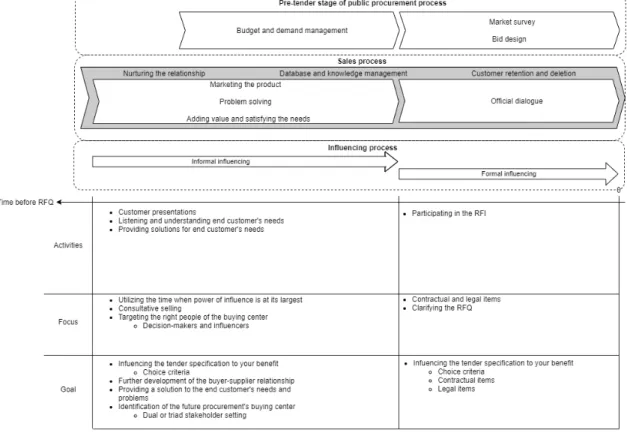
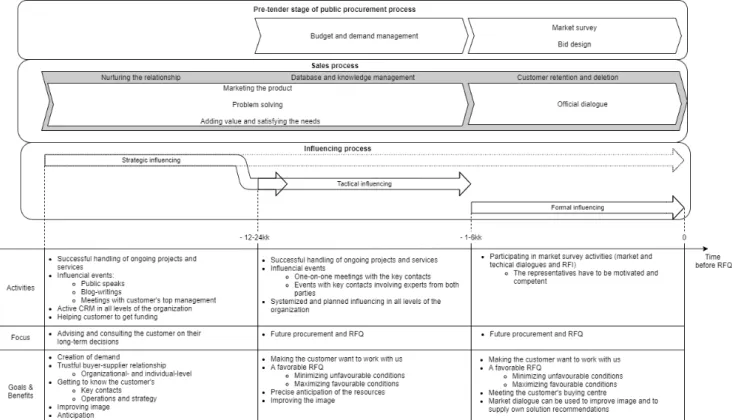
The first component of the influence process in Figure 28, informal influence, initiates some influence on the customer. It is important to be present when the customer determines their future procurement needs (Singh et al. 2013). The end customer is interested in meeting their operational needs through procurement, while a centralized purchasing unit is more concerned with legal and contractual elements (Holma et al. 2020).
Another important objective is to identify the customer's shopping center as decision makers and influencers to target in influencing the customer (Singh et al. 2013).
DATA
The case company
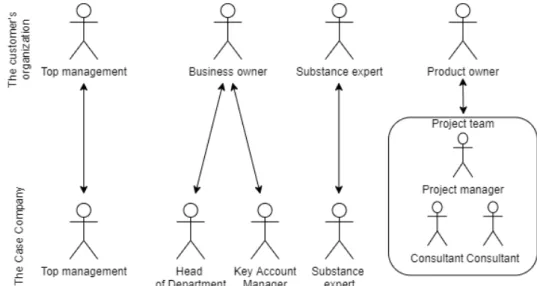
The employees in the organization chart in Figure 28 can be divided into management and experts. PP management consists of the PP manager, department heads and key customer administrators (KAM). Sub-BU experts consist of consultants of different levels (senior, director and vice president).
The sub-BU consists of four departments that each have their own central government clients, which are shared among departmental KAMs.
Data gathering
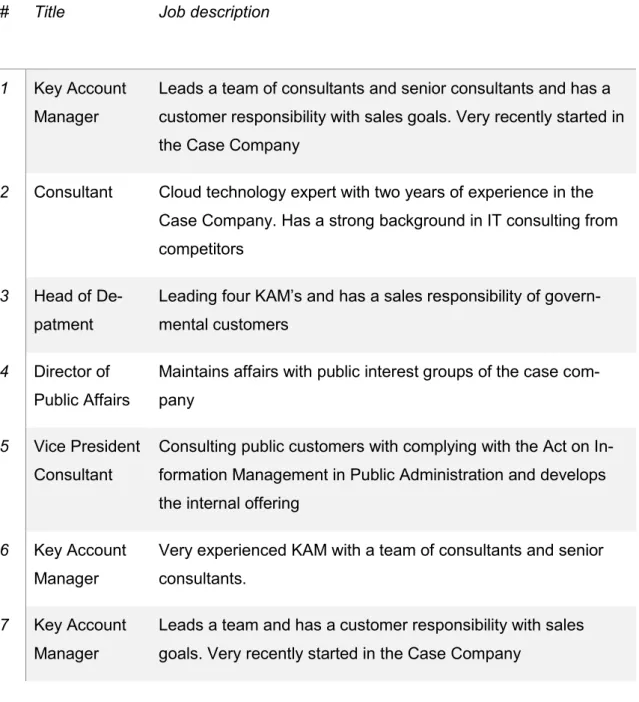
The objectivity of the tender can be questioned when there is a large emphasis on qualitative evaluation criteria, which can be interpreted subjectively. There were some additional guidelines in the selection of interviewees; firstly, central government sub-BU staff were the primary sampling population, and secondly, the intention was to interview people in versatile positions at all levels of the sub-BU. The notes were then sent to the interviewee for approval, and the interviewee had the opportunity to comment on the notes and tell if there was anything that could not be used as data for the thesis.
After all the notes were approved, the notes were printed and the analysis of the material started.
Perception of influencing
One consultant interviewed saw a connection between technological foresight and influence in addition to advising a client on current technologies; by anticipating the future, it is possible to influence the customer's path into the future. The goal (of influence) is to change the perception of a customer, a group of people or an organization about something. Influencing the customer is not giving orders, but rather advising the customer to act in a way that is primarily beneficial for him and also for the supplier.
As the department head interviewed concluded, there are usually multiple ways to reach the same goal and the supplier's goal is to influence the customer to choose the most favorable way.
Benefits of influencing
Sometimes the goal may be to get the customer to write down such evaluation criteria in the RFQ that the rivalry cannot meet. We (the case company) try to influence the customer not to put specific and rare combinations in the request for quotation. Therefore, an important goal of influencing work is to justify to the client not to award unlimited damages to the RFP.
Forecasting refers to anticipating future resource needs needed to meet customer demand.
Prerequisites for influencing
The head of the sub-BU claimed that the thorough understanding of the customer's Know the key. According to many of the interviewees, establishing a personal relationship with the customer made it possible to gain trust. A common comment from the interviewees was that it is good to know the client's top management.
We (The Case Company) must be able to teach the customer” – Key Account Manager (1. interview).
How to influence a public customer in the pre-tender stage to improve
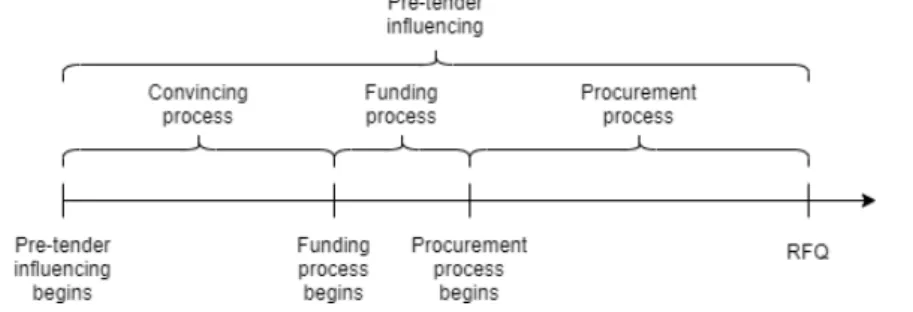
However, if the acquisition fits the current budget of the client, the process of demand generation can be shorter. The timing of the impact depends on the size of the acquisition and the customer relationship. When the client has visibility into the future procurement, the influencing should start as early as possible.
Enablers own key contacts and have the power to arrange meetings with the client.
Starting point for the analysis
However, the author's hypothesis is that the individual skills, competencies and qualities of the influencer form the prerequisites for successful influence. The analysis will provide insight into the importance of both levels of customer relationship in influencing. To address the main research question, the following analysis will consider how to influence the public customer in the pre-tender stage to improve sales.
The following analysis will discuss how the influencing process should be carried out before and during the initiation of the public procurement process.
Results of the study
Infrequent and infrequent CRM can send a message to the customer that they are not worth the supplier's time. The fourth condition for influence is knowing the most important contacts of the customer on whom the influence is aimed for the desired effect. Substance management refers to the customer's personnel responsible for the substance associated with the supplier's product or services.
For example, a recommendation not to specify unlimited damages in an RFQ does not require the presence of the customer's top management.

Framework of influencing a public customer
Strategic influence is an ongoing process, which turns into tactical influence as the customer procurement process begins. With the start of the client's public procurement process, the focus changes to the tactical impact in which the focus is on the future KPK. Thus, the necessary influencers and decision makers of the client can be influenced according to the purpose of the situation.
An interesting subject for academic research is to study the functionality of the framework for influencing the public client in the pre-tender phase.
Assessment of the study
CONCLUSIONS
The benefits of influencing the public customer in the pre-tender phase can result in direct and indirect sales benefits. The research also contributes to the literature on ESI in service specification in the pre-tender phase. As mentioned, the current literature has focused on public procurement and public purchasers' views, leaving room for research to study the supplier's role as a sales organization in the pre-bid phase before and after the initiation of the public purchaser's procurement. treat.
When should influence work be started in relation to the publication of the KPK or in relation to the procurement process of the public client.