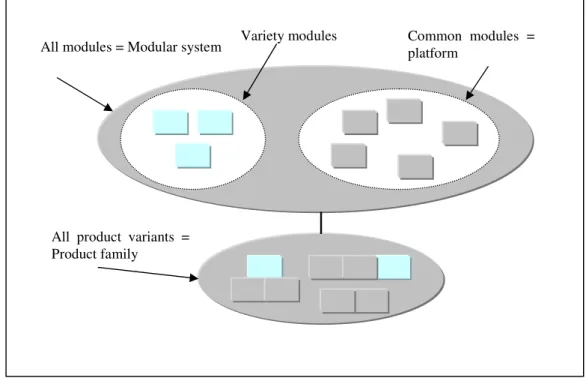
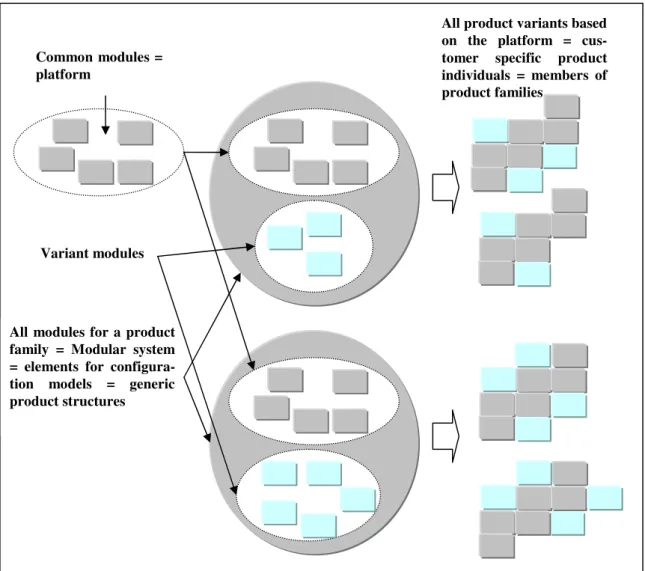
Based on the configuration matrices, a framework for configuration knowledge is established in the form of different types of tools that can be used to support the organization. Product family Collection of different product individuals established according to the configuration knowledge associated with configurable products.
INTRODUCTION
- Research problem
- Research questions
- Supporting hypotheses
- Research method
- Constructive research
- Design science
- Conclusions of the research method
- The scope of the research
- Contribution of the research
- Outline of the thesis
One of the goals of configurable products is to use the configurator during the order and delivery process. One of the main drivers for this research is the case of the company and its needs, ie.
STATE OF THE ART
Introduction
What is the role of configurability in deciding on modularity and modules for product structure. At what point should product structure begin to emerge during the product development process?
Product structures and modularity
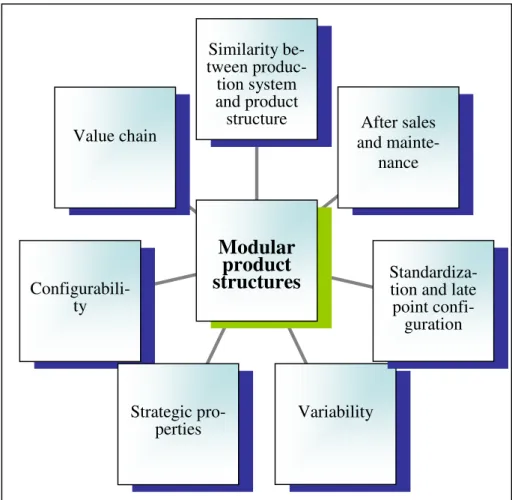
- Modular product structures and issues affecting modularity
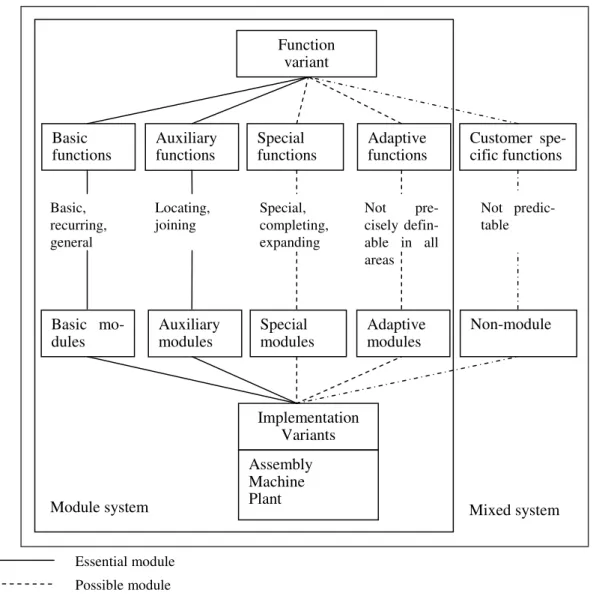
- Types of modularity and modules
- Product platforms in literature
- Modularization
- Closing product structure and modularity
According to Marshall and Leaney (1999), a good modular system will allow the flexibility created by product design to be used to meet customer requirements, manufacturing flexibility (module-based manufacturing system), concurrent manufacturing, and late product configuration. According to Sekolc et al. 2003), an essential element of the technical view is the product structure and modules.
Aspect of configuration
- Product configuration and configuration models
- Configuration models and generic product family structures
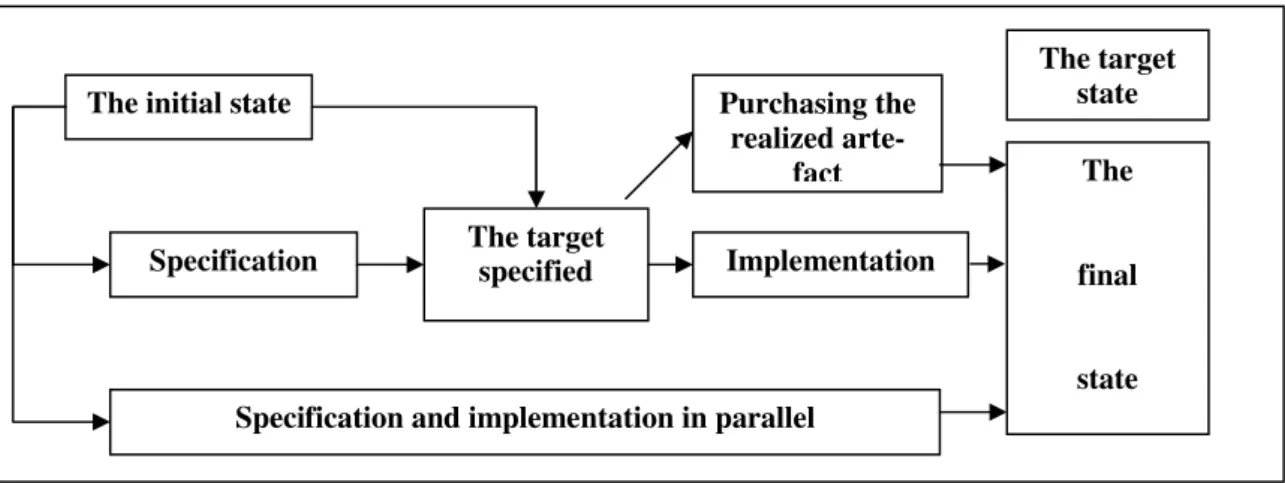
- Product architecture, configurability and sales-delivery process
- Impact of product configuration to the organization
- Closing aspects of configuration
Constraints of the configuration model are used to specify valid configurations from the product family structure (Peltonen et al. 1998). This means that the dependencies of the product structure are determined by the product development.
Matrix representations
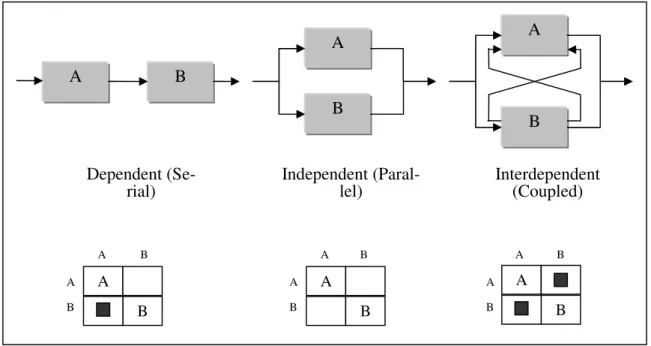
- DSM-approach
- Classification of matrix presentations
- K- and V-matrix Method
- Closing matrix presentations
Malmqvist (2002) defines the matrix-based product modeling method as a presentation of a particular representation of the product structure. The knowledge developed during the product realization process is collected to be used in subsequent stages of the product life cycle (Bongulielmi et al. 2001). The manual configuration of the product can be confusing in case of multiple matrices.
Their idea is that configuration knowledge should be generated during the detail design as part of the product design process. According to Bongulielmi et al. The product structure has been established and the general design of the modules has been completed. The overview of knowledge volume (number of rules and constraints) due to exceptions and suboptimal product family structure (V-matrix).
The combination of the K- and V-Matrix method with other matrix methods supports (Bongulielmi et al. 2002):
Producibility of the product family
- Closing producibility of the product family
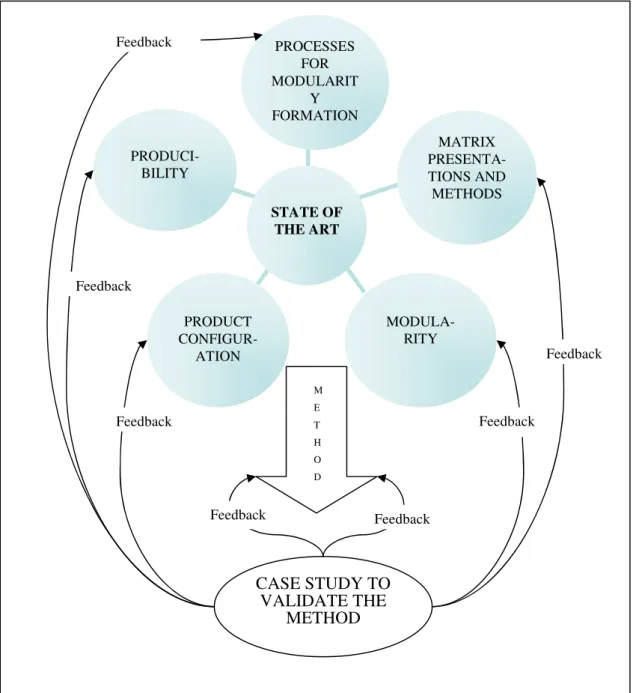
Figure 19 illustrates the idea that there must be enough similarity between the product structure and the manufacturing system while allowing for configurable products. When considering the evolutionary model presented by Lehtonen (2003), productivity can be seen in relation to configurability and modularity. 2004) see that poor productivity will increase system instability. Thus, the productivity of the product is offered, which ensures the minimum amount of deviations in the production system caused by the product itself.
Everything new requires a learning process that 'disrupts' the system…” Integration between manufacturing and product development becomes important. The concept of productivity and the model given by Torvinen et al. 2004) offers a comprehensive insight into this area. 2004) present the CSD (Collective System Design) model to provide a holistic view of the production system and the importance of the product to the production system at the same time. COMPOSITION OF THE MAIN PROCESS ON THE BASIS OF THE CELL. strongly considered by Torvinen et al. 2004) because the system needs predictable results and the products that can be produced provide those results. 2004) consider the product design and production system in such a way that the product design provides a product that supports the production system in such a way that stability is achieved. 2004) conclude: “Product design for productivity encompasses topics such as architectural design, detailed design (including DFMA (Design for Manufacturing and Assembly)), process and flow design, and operations design.
Configurability and similarity between the production system and the product structure usually represent different types of modularity, i.e.

CONFIGURATION MATRICES AND THE IMPLICATIONS TO
Introduction
The framework for configuration matrices
Different features of the configuration matrices
- The structure of the configuration matrices
- Configuration rules
- Configuration matrices: a general example
- Integration between the matrices and ERP / PDM systems
- Techniques used to present configuration matrices
The process of creating configuration matrices
- Process for generating configuration matrices during product design
- Process for generating configuration matrices for existing products . 86
The evolution of modularity and configuration matrices
Configuration process and matrices in changing environment
Configuration matrices as basis for a configurator
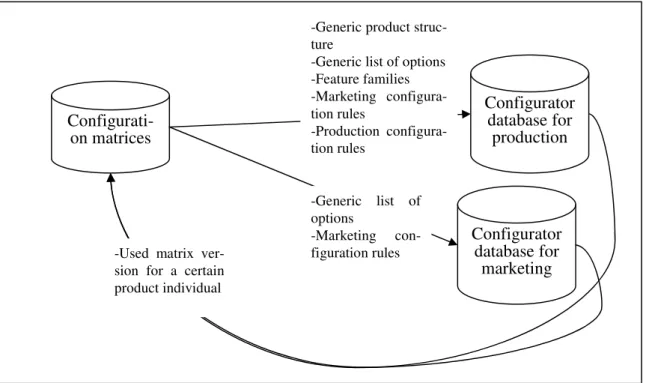
- Databases for matrix-based configurator
- Feature based pricing
- Revisioning configuration knowledge
- Algorithms to decide configuration knowledge validity for change
- Marketing configurator
- Production configurator
- Making changes to the customer specification
- The processes of making changes to configuration knowledge and to
Closing configuration matrices and the implications to organization
CASE STUDY
Analyses of the current state
- Ponsse Oyj
- Case products
- Modularity and product development process
- The current state of configuration process
Analyzes of the current situation include the presentation of the case of Ponsse Oyj and its products in subsections 4.1.1 and 4.1.2, respectively. Subsection 4.2.3 presents product modularity and the product development process, while Subsection 4.2.4 discusses the configuration process of a suitable enterprise. In addition to the mentioned machines, one of the most demanding product groups is harvesting heads.
The configuration task takes place at the functional level of the product structure for each main unit. The problem is the late formation of the modular structures to be used in production, and also the formation of the modular architectures in general. Email different parts of the organization to ensure all key stakeholders are aware of the situation.
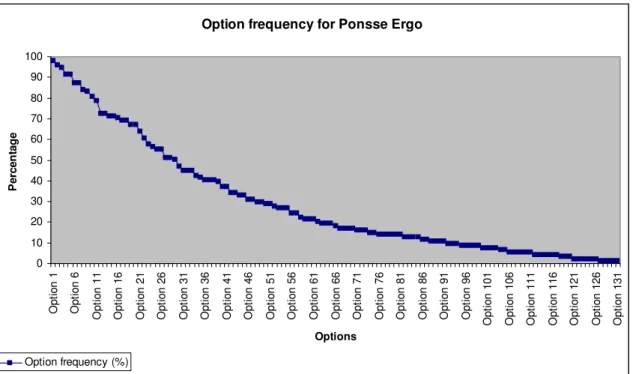
To get an idea of the process times, the following graph presented in Figure 47 was defined by analyzing incoming orders.

Configuration matrices and the base machine estimations
- Developed configuration matrices
- Base machine estimations to confirm platforms
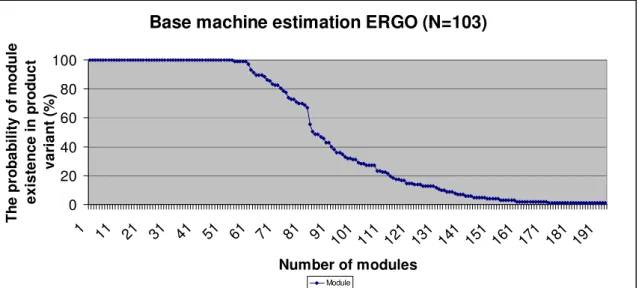
Nummela (2003) used the same configuration matrices for harvester heads and ERP databases to confirm the base machine represented by the matrices. The base machine presentation using ERP databases and sold customer variants over the life cycle of one modular system is presented in Figures 48 and 49. As in Figures 48 and 49, the base machine is formed when the frequency of module existence is equal to the number of product variants produced during a period (Nummela 2003).
To reveal the base machine and to make sure that the base machine presented by the matrix is valid, it was necessary to perform base machine analysis and iteration with the configuration experts. The results of base machine estimates for harvester heads and their relationship to matrix representations are shown in Table 8. Base machine estimation uses the number of base machine modules in customer variants produced in relation to the average amount of modules and the matrix-based base machine uses the same average amount of modules and the base machine defined by configuration matrices.
The base machine percentage represents the module standard for the products selected for analysis.
Results experience by the case company of using the configuration
- Types of tools based on configuration matrices
- Product structure evolution using matrix representation and
- Implications to product development process
- Disintegrating the cabin structure with configuration matrices
- Problems encountered when implementing automatic configuration
- Implications to the configuration and configuration knowledge
- Feedback from the case company
RESULTS
The role of configuration matrices
- The role of the matrices in product development
- The role of the matrices in production
- The role of the matrices in marketing
- The role of the matrices in configurator maintenance
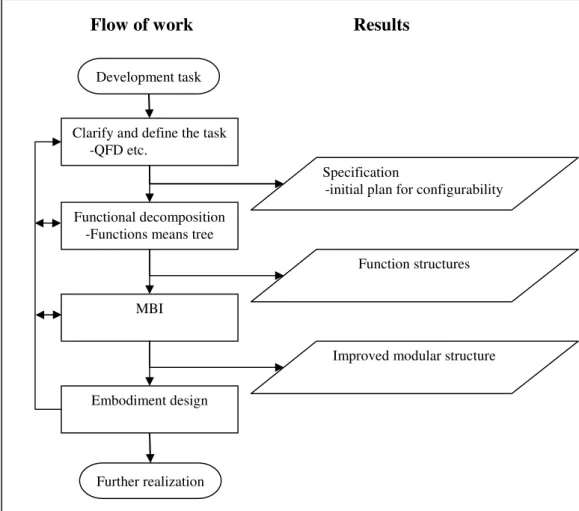
The main benefit to product development using configuration matrices is the systematic way to document configuration knowledge. When configuration matrices are integrated with a modularization method such as MBI, configuration knowledge can be documented during the product development process. After product development for a new product has been completed, configuration matrices and associated knowledge are maintained through configuration maintenance.
The configuration matrices can be used to document the modular product structures developed by product development. Configuration matrices can be created after breaking down the product structure and after module interfaces are defined. Next to the analysis presented above, configuration matrices contain valuable information about the state of modularity in different products.
While product structures and properties and their options change during the product life cycle, it would be very useful to integrate the configuration matrices with the configurator, i.e.
Producibility, modularity and configurability in the context of
DISCUSSION AND FURTHER RESEARCH
Discussion of results
- Contribution for scientific community and industry
- Verification of hypotheses
- Evidence of acceptance by feedback
- Generalizability of results
- Reliability of results
- Validity of results
An easy way to document the configuration knowledge is provided for the MBI method by the configuration matrices. This paper (Nummela 2004) gave an insight into the configuration matrices, taking into account the impact of the configuration knowledge on the organization. The modules are selected according to the features selected, so the configuration matrices can be used.
The configuration matrices were used to understand modularity and configurability of the case company to provide a deeper understanding of how these issues are related to manufacturability. While the functions are connected to the module level, the configuration matrices can be used to reveal the generic product structures. For the rest of the tools, the repeatability requirement is easily met using the configuration matrices presented.
This part is crucial to the approach, as the tools are built entirely on the data provided by the configuration matrices.
Limitations
As mentioned, frequent changes to configuration matrices provide an idea of the validity of the work done when establishing the configuration matrices. If the construction phase of the configuration matrices is not done precisely and according to the processes presented in this work, the tools created will not produce the desired results. Even if generic product structures are provided by configuration matrices and they are valid, the BOMs in the ERP or PDM databases must also be valid.
This can be considered as one of the prerequisites when considering the configuration or modularity of the product. Finally, configuration matrices provide no means of including dependencies between features. Using multiple configuration templates for an order limits the use of the configurator.
Providing this configurator to the sales force should include the use of multiple configuration matrices.
Further research
SUMMARY
Product structure visualization can be used to gain a deeper understanding of product modularity. There are still differences regarding information gathering during the establishment of configuration knowledge. According to him, configuration matrices gave the case company an understanding of the integrated nature of manufacturing and product development.
Thus, there must be a way to set the state of the configuration knowledge used in the configurator.
The case companies also get licenses for the CSD portal for use during and after the research.
Using the generic product structures, valid modules, parts and components can be defined (Figure 63). One of the first applications for the case company was the cell re-engineering tool (Nummela 2003). Invalid parts and components found from the ERP system and from the shelves of the company.
During the reorganization of the cell, all parts and components are analyzed and new information updated using the interface. In addition to the benefits mentioned above, the example above improved the quality of the information in the ERP system because all parts and components were considered using the analysis. By using ERP databases, it can be indicated that parts are in one of the production locations (power plant or production).
Thus, the validity of the parts and components in the assembly site can be evaluated.