The main funding sources of the program in 2006 are the State Nuclear Waste Management Fund (VYR) with 2.7 M€ and Technical Research Center of Finland (VTT) with 1.5 M€. KTM, VTT, Radiation and Nuclear Safety Authority (STUK), the power companies Teollisuuden Voima Oy (TVO) and Fortum Oyj (Fortum) together with National Technology Agency (Tekes) and Helsinki and Lappeenranta Universities of Technology (HUT and LUT) are represented in the steering group of the program. The research areas and focus of the program are defined in the framework proposal for the content and organization of SAFIR.
Division of the twelve major future security challenges into six SAFIR research areas [1]. The titles of the projects and their division into six research areas are shown in Table 2.1. Most of the projects were planned to continue throughout the four-year period of the SAFIR program [4, 5].
Concrete technological studies related to the construction, inspection and repair of nuclear power plant structures.
![Figure 1.1. Main themes of nuclear plant safety [1].](https://thumb-eu.123doks.com/thumbv2/9pdfco/19361062.0/5.892.158.727.413.786/figure-1-1-main-themes-nuclear-plant-safety.webp)
REACTOR CORE AND FUEL
Enhanced methods for reactor analysis (EMERALD)
It should be possible to follow the entire life cycle of nuclear fuel from the point of view of reactor physics until its final disposal. The same or similar models can often be used in both static and dynamic calculations. Cooperation with technical universities and other universities is necessary to encourage young students interested in this branch of science and thus ensure that nuclear power plants in Finland will be in the hands of competent people in the future as well.
The project assignments also provide excellent opportunities for university students to carry out work towards their academic degrees. The project has continued throughout the four years of the SAFIR program with new or updated objectives being specified from year to year.
High-burnup upgrades in fuel behaviour modelling (KORU)
REACTOR CIRCUIT AND STRUCTURAL SAFETY
Integrity and life time of reactor circuits (INTELI)
The main objective of the project is to ensure the structural integrity of the main components of the reactor circuit in the nuclear power plant and to study the typical aging mechanisms that affect the integrity of main components during the life of the reactor. To understand and model the aging mechanisms in the reactor pressure vessel, including nozzles and internals. The goal is to predict the progress of aging and estimate the effects of aging and the need for corrective actions and possible repairs.
To verify the transferability of the material data based on the Master Curve to the structural analysis of real components. To develop reliable methods for the assessment of bimetallic welds of nozzles and their loading conditions. For the reliable and fast analysis of defects and damage, new methodologies and tools will be developed based on multi-technical analysis software and expert networks.
Develop methods for measuring and predicting material properties of reactor internals during operation. Key elements of this work will be the modeling of failure mechanisms, the identification of loads affecting structures, and the technology associated with the use of miniature test specimens. Develop and use new, more realistic material models based on more accurate material data and a better understanding of the phenomena affecting the material.
Material models and realistic modeling of residual stresses and loads are necessary for the numerical simulation of the behavior of pipes. To increase the theoretical understanding and develop practical methods for optimizing water chemistry of nuclear power plant piping. The work is particularly focused on the alternative secondary side water chemistry of existing and new nuclear power plants.
LWR oxide model for improved understanding of activity build-up and
Concrete technological studies related to the construction, inspection and
CONTAINMENT AND PROCESS SAFETY FUNCTIONS
- The integration of thermal-hydraulics (CFD) and structural analyses (FEA)
- Validation of APROS containment model (TIFANY)
- Thermal hydraulic analysis of nuclear reactors (THEA)
- Archiving experiment data (KOETAR)
- Condensation pool experiments (POOLEX)
- Participation in Development of European Calculation Environment (ECE)
Some of the already planned improvements simplify the containment modeling and extend the validity of some models to other plant types such as VVER-440. The aim of the KOETAR project is to store, check and archive data and documents from the thermal-hydraulic experiments carried out with different facilities at Lappeenranta University of Technology during the last 30 years. Some of the data and documents are even on media that is no longer compatible with the hardware and software used today.
The main aim of the project is to increase the understanding of different phenomena in the condensation pool during steam injection. For example, to estimate the loads on the pool structures through condensation pressure oscillations, the frequency and the amplitude of the oscillations must be known. Furthermore, the stress of the pool wall must be measured at precisely defined locations for the verification of the structural analysis.
The end result of the project will be a database that can be used to test and develop computational methods for nuclear safety analysis. The goal of the ECE project is to participate in the process of development and validation of a new common European standard software platform for modeling, recording and recovery of computer data for simulations of next-generation nuclear reactors. A key activity of the project is also maintaining good relations and increasing the intensity of contacts with the European nuclear research community.
To select, evaluate and convert appropriate steam blowing experimental data from the condensing pool test series of the SAFIR/POOLEX project. The test results must be thoroughly examined to ensure the suitability, quality and accuracy of the results for validation purposes. The new simulation tools will be installed and tested for the SALOME platform in order to validate the CFD modelling.
- Wall response to soft impact (WARSI)
- Impact tests (IMPACT)
- Cavity phenomena and hydrogen burn (CAPHORN)
- Behaviour of fission products in air-atmosphere (FIKA)
Example of a still image taken by the high-speed camera in the tests of the IMPACT project in 2005. The main goal of the project is to develop and use methods for predicting the response of reinforced concrete structures to the impacts of deformable projectiles that may contain liquid fuels, such as jet fuel. Three specific goals of the project include firstly new data on the time-varying pressures that arise during such an impact.
Thirdly, data on the absence of debris and the spread of liquid (fuel) from disintegrated tanks due to impact are also required. Since the Institute for Radiation Protection and Nuclear Safety (IRSN) joined the project at the end of 2005, the specific goals described above were defined in more detail. The key goal of the CAPHORN project is the investigation of physical phenomena that occur in reactor cavities, i.e.
The second goal is to improve competence in the analytical assessment of hydrogen combustion. And finally, as part of the project, the follow-up and participation of major international research projects in the field of serious accidents will take place. The aim is to investigate the effect of steam partial pressure, temperature, flow rate and aerosol seed particles on ruthenium transport and speciation in the primary circuit.
Results of the ruthenium transport and speciation experiments will be discussed in the framework of SARNET and NKS networks. VTT will also participate in an international expert group on the potential future uses of the Phebus facility in nuclear safety research. In the Artist experimental program, fission product retention in the structures of a steam generator is studied in tube rupture scenarios.

AUTOMATION, CONTROL ROOM AND INFORMATION
Interaction approach to development of control rooms (IDEC)
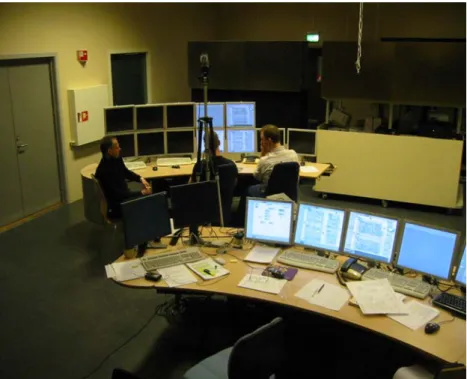
In 2005, the method was tested against previously collected basic data, and further testing of the method will take place in 2006 using it in validation and verification tasks and in special planning cases. The IDEC project collaborates with and partially funds the Halden Reactor project and collaborates with the University of Toronto and Electricité de France.
Software qualification – error types and error management in software life-
ORGANISATIONS AND SAFETY MANAGEMENT
- Organisational culture and management of change (CULMA)
- Disseminating tacit knowledge and expertise in organisations (TIMANTTI) .21
- Potential of fire spread (POTFIS)
- Principles and practices of risk-informed safety management (PPRISMA)
- Assesment smart device software (ASDES)
The main objective of the research project is to increase insight into the effects of organizational factors on nuclear safety. The project aims to acquire knowledge about the effects of organizational culture, organizational changes and different ways of organizing work on the safety of nuclear energy production. The overall objectives of the TIMANTTI project are to improve, develop and facilitate the sharing of tacit, experience-based knowledge between experienced experts and their less experienced followers and to develop methods for sharing tacit knowledge in the NPP context.
During the project, the nature and content of experiential knowledge will be modeled in the selected case units. New knowledge will be gained about the advantages, challenges and limitations of piloted methods for sharing tacit knowledge. Designing a cost-effective maintenance program that takes risk into account was one of the research topics of the PPRISMA project in 2005.
Exploration of the most important rooms from the point of view of fire risk in the current Finnish NPPs indicated that a lack of tools to predict fire spread on solids, especially on cables, is the biggest missing link of the models to close the problem. The approach will take into account specific features of the architecture of smart devices, of their development processes and their core applications. The results of the work will be discussed throughout the project and disseminated more widely with the stakeholders.
The figures indicate both the increase in the total volume of the program from 4.1 million € in 2003 to 5.4 million. € in 2006 and the increase in funding and volume in research areas 1-3. The information about the research carried out in SAFIR will be communicated formally via the annual quarterly progress reports, the program's annual report and the program's www pages. The measurement will be completed in February and will be used in the planning of the next research program.
Final seminar with presentations and seminar publications will be held at the end of the program, probably in January 2007. Nuclear power plant safety research A proposal for the content and organization of the new research program.

![Figure 1.2. Future safety challenges to be addressed at in the SAFIR programme [1].](https://thumb-eu.123doks.com/thumbv2/9pdfco/19361062.0/6.892.130.749.192.607/figure-1-future-safety-challenges-addressed-safir-programme.webp)