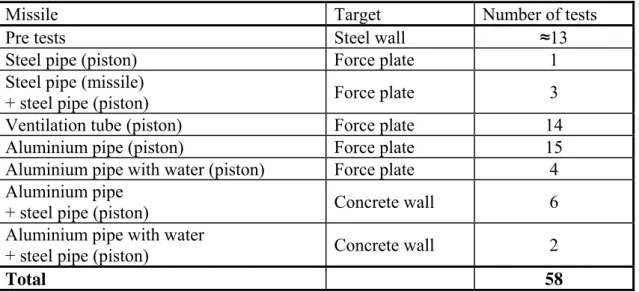
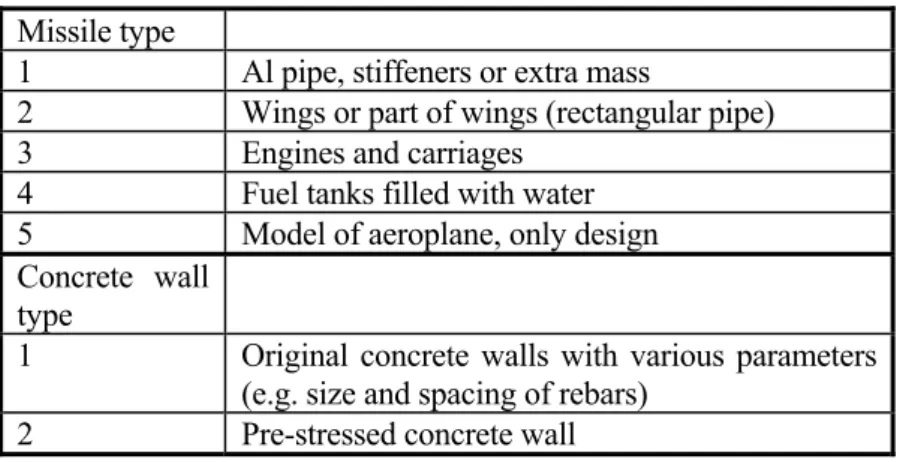
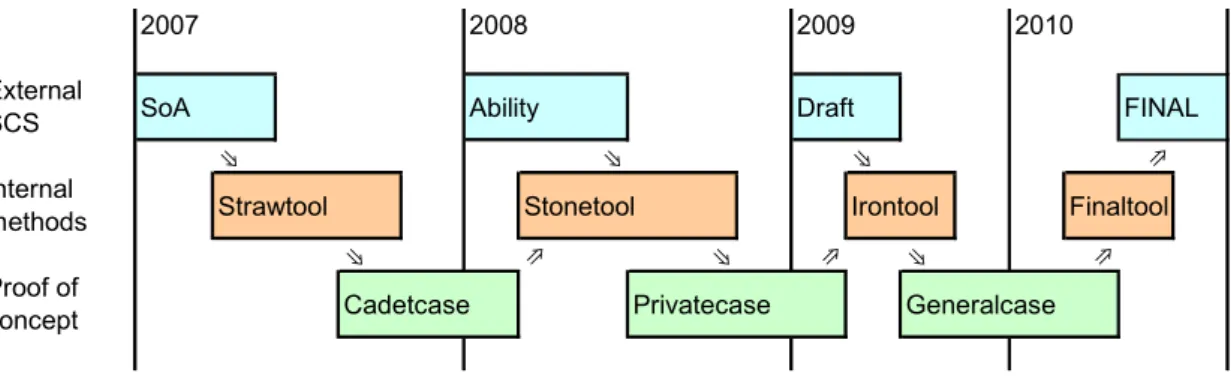
Cadet matter will be settled at the beginning of the year 2008 as shown in the following figure 1. The results of the project are used for the preparation of Licentiate or Doctoral thesis.
International Programmes
This subtask includes participation in project meetings and reporting of the project to Finnish organizations. The sub-task includes the annual remuneration of the OECD project and participation in project meetings. The practical goal of the project is to develop a useful method for coupling the computational fluid dynamics (CFD) and the finite element stress and strain analysis (FEA) codes.
The goal of the project for 2007 is the validation of the developed FSI-simulation method for LBLOCA analysis. However, MpCCI appears to be the more flexible of the two CFD-FEA coupling methods and will be used in further calculations with both CFD codes. However, due to the general joining method, the results of the project will be applicable in many types of industries.
New simulation tools will be installed and tested on the SALOME platform for CFD modeling validation purposes.
Calculations with new simulation tools (25 k€, EU)
Delivery of experiment data (25 k€, VYR)
Loads of the pool wall at precisely defined locations must be measured to verify the structural analysis (NUMPOOL project proposal). Pre- and post-test analysis of the loads on the pool structures and the structural analysis of the pool are necessary for the tests. The general behavior of the plant will be observed and compared with the previous POOLEX plant.
A CFD model of the new PPOOLEX test facility will be built and pre-test calculations performed for the discharge of non-condensable gas (air) to the dry well compartment and from there through a blowpipe to the condensation pool. The main focus will be on helping to plan experiments that simulate the early stage of a main steam line rupture. An additional benefit of the project will be the use of test results in the development and validation of CFD codes for nuclear safety analyses.
Interdisciplinary publications will be written, dealing with the phenomena observed in the experiments, as well as simulations of the experiments with CFD codes, which will be included in the three doctoral theses.
Preliminary SAFIR2010/CONDEX test matrix for 2007
PPOOLEX
ºC]
Pressure feedback effects will be observed and the results will be compared with those of corresponding open pool experiments. Experiments on the early stage of the MSL crack (VYR 95 k€, NKS 8 k€) Experiments on the discharge of non-condensable gas (air) into the dry well area and from there through one blowdown pipe into the condensation pool connected to the first seconds of the main steam line interruption within of the containment temple. The effects of pressure feedback on gas bubble dynamics will be examined and a comparison will be made with existing POOLEX gas release data.
Additional tools based on needs discovered during characterization experiments and on wishes expressed by end users and code modelers will be added to the testbed before proceeding with this series of experiments. The control systems necessary to properly simulate the air exhaust reduction will also be added before the experiment series. The pressure difference between the dry well and pressure pool compartments will be adjusted with the help of a control valve in the connection line according to the nominal opening value of the vacuum breakers in the reference plant.
PPOOLEX Test #
Experiments SLR-03 and SLR-04 concern the ejection of water from the downspout to the basin bottom at the beginning of the transient. Experiments SLR-07 and SLR-08 will continue until the system pressure is close to the maximum allowable pressure level of the plant.
Pre-test CFD analyses of experiments on the early phase of a MSL rupture
The production of organic iodides from painted surfaces (Funding: VYR, VTT)
The tests start with the adsorption of elemental iodine on painted surfaces in gas phase and in water. Work continues with studies to measure the rate of organic iodide formation from iodine (as I2) adsorbed from the gas phase on dry painted surfaces and compare these results with the rate of organic iodide formation from surfaces containing iodine adsorbed from the aqueous phase on painted surfaces. The scope of the work will be to determine the rate constants for the adsorption of iodine on selected painted surfaces for a given set of conditions in the gas phase (temperature, iodine concentration) or in the aqueous phase (temperature, pH and iodine concentration) using 131I as a radioactive tracer.
Based on these studies, samples of the different paint types will be exposed to iodine in the gas or water phase to obtain a predetermined surface charge (g/m2) of iodine, and then irradiated (in the gas phase) to measure organics. iodide formation. Measurements of the amount of organic iodides generated by irradiation of pre-charged samples will be measured using selective adsorbents.
OECD/BIP
The aim of the study is to quantify the transport phenomena observed in the experiments. The sampling system in the facility will be identical to that of the CHIP facility. Another objective is to investigate the behavior of the special concrete type used in the EPR.
The rate of concrete erosion will be measured with sets of thermocouples placed on the concrete floor and sidewalls. The results of the experiments will be analyzed and compared with MELCOR predictions. In the planning of the experiments, importance will be given to phenomena that are relevant to Finnish power plants.
The program will be distributed to OECD/MCCI-2 project participants during the first year of the project.
A seminar with representatives of Fortum, TVO, STUK, eventually also EDF, Areva, SKI, Vattenfall to review state of the art and research needs
Capability for strain controlled transient simulation in constant temperature
Laboratory notes on dislocation structures in selected fatigue samples
A pre-study on fatigue mechanism for stainless steels in PWR
Proposal of cyclic material model for ABAQUS code
The results will be used in the modeling to obtain estimates for the relevant parameters of the oxidation processes. This will be particularly important when evaluating the EPR Hot Functional Test (HFT) procedure (OL3). In the proposed project, a comparison will be made between alkaline solutions with different cations (Li vs. K).
In this subproject the effect of different water chemistries on the corrosion of fuel cladding material under relevant PWR conditions will be studied. In cooperation with the companies, the inspection items that will be simulated in the pilot monitoring system will be specified. Based on the experience gained in the SAFIR-INTELI project, the simulation of inspection items will continue and be implemented together with UT expertise.
The results of tasks 1.1 – 1.3 will be used in the design of the pilot monitoring system that will be built in the facilities of VTT.
Results of the work will be used in thermal fluid-structure interaction (FSI) calculations in the coming years. The detonation system will be improved by designing a new system to control the speed of the missile in the tests. Also the bolt tightening system of the plate will be improved by the installation of hydraulic tightening system.
4 Master's topic (Title: "Design and calculation of the simplified aircraft model used in impact tests"). A new goal of the project will be to simulate the spread of fuel after the collision. The feasibility of the risk monitoring concept to support the use of the Technical Specifications will be explored.
Other questions are how to link the model to reliability models of other I&C systems and user interfaces (control room) and how the architecture of I&C systems, e.g. affect the possibility of common cause failures. The work will be carried out in close collaboration with the staff involved in the safety and PSA work of the relevant NPP. The work will be carried out in close collaboration with the staff involved in the safety and PSA work of the relevant NPPs.

Sään ääri-ilmiöt ja ydinvoimalaitokset
- Background
- Introduction
- Previous activity of research team
- Objectives and methods
- Objectives of the research
- based on instrumental meteorological records available since early 1900 estimate frequency (return periods and probabilities), intensity, possible
- based on the climate model simulations estimate the occurrence of extreme weather events in the future
- estimate the probability of strike of tromb, down burst or low level jet on power plant area
- based on a 1000-year hindcast global climate simulation using a global climate model (COSMOS), estimate the joint occurrence of combinations of
- Data and research methods
- Time schedule and interim targets
- Performers of the research and resources
- Composition of research team and its division of labour and estimated costs The responsible leader of the project will be Ari Venäläinen. Most of the work in
- Links of the project with other research of the team
The primary objective of the research is to produce a comprehensive study of the frequency, intensity, spatial and temporal variations and impacts of the extreme weather events relevant to the safety of nuclear power plants. The previous analyzes of the occurrence of extreme weather events have mainly been based on measurements made after 1961. Scenarios for the future climate conditions are available, for example, via the European research projects for the applicant's participation.
We expect that the main focus will be on extremes related to temperature and precipitation, but the details of the research will be refined according to the needs of users identified during the analysis of the observed extremes and their impacts. Composition of the research team and division of labor and estimated costs The responsible project leader will be Ari Venäläinen. Most of the work in the Responsible project leader will be Ari Venäläinen.
Suurimman osan työstä äärimmäisten sääilmiöiden analysoinnissa tekevät Juhana Hyrkkanen, Seppo Saku sekä Jaakko Helminen ja Heikki Tuomenvirta.
COSMOS
Finnish and foreign co-operation within the project
The researchers have excellent expertise on the subject presented in the current study, as their daily work focuses on the investigation of Finnish climate (past, present and future scenarios) and the impact of climate and climate change on different sectors of society and natural environment.
Research environment and equipment
4 Results
Expected research results and their significance
Publication and other dissemination of research results
Trenberth K.E., 1999: Conceptual Framework for Changes in Hydrological Cycle Extremes with Climate Change Climate Change, Vol. The program manager, project coordinator and support staff oversee the program by ensuring planning, tracking, invoicing and necessary project communication activities according to the guidelines of the Ministry of Trade and Industry and the decisions of the program steering group. Project management prepares annual program reports and plans and organizes external outreach activities.
The program administration prepares the brochure of SAFIR2010 and performs other tasks assigned by the steering group. During the previous program SAFIR, the program management performed corresponding duties, including annual plans, annual reports, interim and final seminars with reports and www pages. Preparation of SAFIR2010 in 2006 was carried out in a separate project which included the production of framework plan for SAFIR and organization of selection process for research projects in 2007.