Long Range Planning 56 (2023) 102290
Available online 5 January 2023
0024-6301/© 2023 The Authors. Published by Elsevier Ltd. This is an open access article under the CC BY license (http://creativecommons.org/licenses/by/4.0/).
Recovering the divide: A review of the big data analytics — strategy relationship
Yassine Talaoui
a,*, Marko Kohtam ¨ aki
b, Mikko Ranta
c, Sotirios Paroutis
daUniversity of Vaasa, School of Management, PO Box 700, FI-65101, Vaasa, Finland
bUniversity of Vaasa, School of Management, University of South-Eastern Norway, USN Business School, Luleå University of Technology, Entrepreneurship and Innovation, PO Box 700, FI-65101, Vaasa, Finland
cUniversity of Vaasa, School of Accounting and Finance, PO Box 700, FI-65101, Vaasa, Finland
dWarwick Business School, The University of Warwick, Coventry, CV4 7AL, UK
A R T I C L E I N F O Keywords:
Review Big data analytics Strategy Practice Materiality Semiotics
A B S T R A C T
Research on big data analytics has been burgeoning in recent decades, yet its relationship with strategy continues to be overlooked. This paper reviews how big data analytics and strategy are portrayed across 228 articles, identifying two dominant discourses: an input-output discourse that views big data analytics as a computational capability supplementing prospective strategy formulation and an entanglement discourse that theorizes big data analytics as a socially con- structed agent that (re)shapes the emergent character of strategy formation. We deconstruct the inherent dichotomies of the input-output/entanglement divide and reveal how both discourses adopt disjointed positions vis-`a-vis relational causality and agency. We elaborate a semiotic view of big data analytics and strategy that transcends this standoff and provides a novel theoretical account for conjoined relationality between big data analytics and strategy.
1. Introduction
New digital applications increasingly conduct the policy, actions, and affairs of all aspects of our lives (Bailey et al., 2019). The byproduct of this digital revolution is a deluge of big data that carries a lucrative opportunity for Big Tech—Apple, Facebook, Microsoft, Google, and Amazon—to develop novel analytics to allow companies from all sectors to harness and leverage these vast troves of free-flowing data. A clear illustration of this interest is reflected in Big Tech, Big Pharma, policymakers, and health in- stitutions leaning together toward big data analytics to respond to the COVID-19 global pandemic and anticipate the next unforeseen
‘black swan’ event (Sheng et al., 2021; Ienca and Vayena, 2020; Wang et al., 2016). Another example of its centrality can be found in many studies showing how big data analytics has become indivisible from strategic decision-making (e.g., Fitzgerald et al., 2014;
Hanelt et al., 2020; Rogers, 2016), or in research going as far as enthroning it as sustenance for addressing emerging digital trends and new rules of value creation and capture (e.g., Constantinides et al., 2018; George et al., 2016; Hautz et al., 2017; Jacobides et al., 2018).
While scholars have lauded big data analytics as a dynamic capability that could innovate business models (e.g., Davenport and Barth, 2012; Davis, 2014; Holsapple et al., 2014) and enable data-driven strategic planning (e.g., Gupta et al., 2017; Müller and Jensen,
* Corresponding author.
E-mail addresses: [email protected] (Y. Talaoui), [email protected] (M. Kohtam¨aki), [email protected] (M. Ranta), Sotirios.
[email protected] (S. Paroutis).
Contents lists available at ScienceDirect
Long Range Planning
journal homepage: www.elsevier.com/locate/lrp
https://doi.org/10.1016/j.lrp.2022.102290
Received 1 March 2021; Received in revised form 4 December 2022; Accepted 14 December 2022
2017), there is a caveat that concerns the intelligent and emergent character of big data analytics, which carries a set of circumstances that make it possible to reshape strategy practices and processes (Volberda et al., 2021), challenge practitioners and academics dealing with theories and empirics of cognition and action (Van Knippenberg, Dahlander, Haas and George, 2015), and defy traditional conceptualizations of its status and place in strategy work and research (Bailey et al., 2022; von Krogh, 2018). Despite this proviso, there is still a paucity of work investigating the status of big data analytics in strategy work and the ways we construct the big data analytics—strategy relationship in our written scholarly work and how our writing reflects, produces and shapes our thinking about such a relationship (Bailey et al., 2019; Orlikowski and Scott, 2008; Volberda et al., 2018; Zammuto et al., 2007).
Against this backdrop, this paper pays particular attention to the ‘how’ of this relationship and does so by dismantling the con- ditions and assumptions that inform the work of scholars toward the body of knowledge that we have today on big data analytics and strategy (Orlikowski and Baroud, 1991). We do not exclude any scientific field to allow for a comprehensive and multidisciplinary bundle of 228 empirical and conceptual articles on big data analytics and strategy spanning 26 years (1995–2021) of research pub- lished in the 2021 Academic Journal Guide (AJG).
Our review deploys an exploratory transformative mixed methods design (Aranda et al., 2021; Brookes and McEnery, 2019;
Creswell, 2009; Creswell et al., 2003; Wodak and Meyer, 2016) because it carries a deconstructive purpose where it aims at fleshing out the workings of language and meaning to expose discursive components that form certain ideologies about the big data analy- tics—strategy couplet (Aranda et al., 2021).
For quantitative reliability, our mixed-methods design relies on Latent Dirichlet Allocation (LDA) to reduce the chunk of text to the two discourses holding disjointed views on the relationality of big data analytics and strategy. First, an input-output discourse sep- arates big data analytics from strategy actors and strategy processes and practices, and then juggles causality between big data an- alytics and the sphere of strategy work (Faraj and Pachidi, 2021; Feenberg, 1999; Kelly, 2010; Winner, 1977). The second is an entanglement discourse that joins big data analytics to the social context of strategizing to explore the affordances of big data analytics and how strategists can leverage them to convert workflow processes to an automatic operation (Braverman, 1974; Edwards, 1979;
Noble, 1977; Zuboff, 1988). For qualitative reflexivity, we avail ourselves of deconstructive discourse analysis to dismantle both discourses and expose their respective dichotomies, which foster tensions vis-`a-vis relational agency and causality.
Laying bare these points of rupture allows us to recover the discursive divide that disjoints the relationality of big data analytics and strategy. By so doing, this article contributes to the materiality turn in strategy as practice by focusing on the big data analy- tics—strategy relationship as a genre that significantly structures activities of managers and other organizational members (e.g., Lˆe and Spee, 2015; Levina and Orlikowski, 2009; Orlikowski and Yates, 1994; Peppard et al., 2014; Vaara and Whittington, 2012; Whit- tington, 2014), and attending to new ways big data analytics enables us to explore organizational phenomena such as strategizing (Bailey et al., 2019). We organize the rest of this article as follows. First, we summarize the theoretical understandings of the big data analytics—strategy relationship. Second, we introduce our explanatory transformative mixed methods design followed by a presen- tation of the input-output and entanglement discourses that motivate the treatment of the big data analytics—strategy relationship.
Third, we deconstruct the discursive divide to reveal contradictions and oppositions alimenting a disjointed relational causality and agency between big data analytics and strategy and close with a semiotic view toward their conjoined relationality.
2. Conceptual background
2.1. Understandings of the big data analytics—strategy relationship
Previous reviews on big data analytics bifurcate into two views (see Appendix 1): one that trusts it to innovate strategy making processes and upscale business models (e.g., Davenport and Barth, 2012; Davis, 2014; Holsapple et al., 2014; Kiron et al., 2014; McAfee and Brynjolfsson, 2012; Mikalef, van de Wetering and Krogstie, 2021), and another that emphasizes its analytical technologies toward enabling informed strategic planning and decision-making (e.g., Gupta et al., 2017; Müller and Jensen, 2017; Roden et al., 2017;
Sivarajah et al., 2017; Trieu, 2017; Wang et al., 2016). Such a treatment overlooks the status and nature of big data analytics and the ways it intrudes and shifts existing routines and practices of strategy work (e.g., Abbasi et al., 2016; Baˇci´c and Fadlalla, 2016; Kwon et al., 2014; Loebbecke and Picot, 2015; Mora et al., 2005; Moro et al., 2015) despite evidence suggesting that it is the interplay between big data analytics and the organizational social milieu that triggers social and technological processes to meet intended strategic goals (Baptista, 2009; Baptista et al., 2021; Beynon-Davies, 2011; Beynon-Davies et al., 2009; Constantiou and Kallinikos, 2014). For instance, if the intended affordances of big data analytics diverge from the expectations of strategy actors, conflicts erupt, then trigger the change of routines (Berente and Yoo, 2012; Hultin & M¨ahring, 2014) and eventually accord a different meaning and status to big data analytics.
New technologies such as big data analytics are intelligent insofar as they carry a disruption risk that extends beyond automating and feeding existing processes with data and arise because of their ability to be autonomous, learn, and operate in ways that increasingly seem intentional and able to replicate, if not exceed, human cognition (Bailey et al., 2019). As such, big data analytics challenges its conceptualization frameworks and prompts scholars to take its status seriously and rethink taken-for-granted as- sumptions about its role in the doings of strategy, not to mention its relationship with human and social dynamics (von Krogh, 2018).
As a consequence, scholars have called for new perspectives, such as the sociomaterial lens (Leonardi and Barley, 2010; Orlikowski and Scott, 2014), that involve theorizing beyond the functionalities and usage of big data analytics that permeate available research.
Despite these efforts to explore and devise linkages and synergies between big data analytics and strategy (Benbya et al., 2019), research still lacks a clear understanding of the nitty-gritty big data analytics mechanisms that give rise to strategy at a micro level (Baptista et al., 2021) or of the role of human actors in aligning big data analytics with strategy imperatives (Karpovsky and Galliers,
2015). To date, research still has not reconceptualized the role of big data analytics in the essential microprocesses of strategizing to enact strategic objectives (Arvidsson and Holmstrom, 2018; Arvidsson et al., 2014; Peppard et al., 2014; Whittington, 2014) and its influence on the day-to-day activities that constitute the mode of formation of the doings of strategizing and, by extension, realized strategy (Kouam´e and Langley, 2018).
Against this backdrop, it is worth problematizing big data analytics-based practices and whether their reconfiguring brings any value or significance to strategy work. Addressing this avenue requires diverging from traditional views that problematize big data analytics as an issue of execution or a local feedback issue toward reconceptualizing big data analytics—both its role in and signifi- cance to strategizing—in a way that transcends the immediate consequences of technological change or digitization. In this vein, we undertake a review of the literature on the big data analytics—strategy relationship to uncover the ways both concepts are portrayed and what implications we can derive from such portrayals. Our review, following Leidner’s (2018) typology, falls somewhere between an assessing review and a specific theorizing review. This positioning is due, on the one hand, to our inclination to provide a synthesis of the discourses identified within the literature on big data analytics and strategy, and to our focus on one gap in the literature, the big data analytics—strategy couplet, for which we seek to provide theoretical filling.
Our notion of big data analytics encompasses all the progress of big data analytics in the past two decades and covers all its associated terms. We follow Simsek et al. (2019)’s recommendation of adopting big data analytics as a comprehensive label that covers data collection, organizing, storage, retrieval, analysis and dissemination involving all kinds of data types and volumes, and ascribe to Lavalle et al. (2011), Chen et al. (2012), McAfee and Brynjolfsson (2012)’s views of big data as an extension of digitization, business intelligence and analytics. Our review starts from 1995 to account for what Chen et al. (2012) refer to as the 1.0 period, which witnessed the popularization of the analytical techniques of big data analytics.
3. A mixed methods approach: integrating deconstructive discourse analysis and Latent Dirichlet Allocation
Integrating quantitative and qualitative methodologies — such as human-based deconstructive discourse analysis and machine- based Latent Dirichlet Allocation (LDA) — carries an epistemological challenge. LDA follows an inductive and algorithmic process of topic and discourse generation that marginalizes human input, which can seem pointless and uninspiring for interpretivist scholars;
the emergent character of deconstructive discourse analysis involves human input and abductive reasoning in reading texts and subjectively interpreting its meanings, which can be questionable for positivist data scientists used to estimation-controlled methods (Aranda et al., 2021).
However, it is the subjective nature of interpretative work that can integrate the two diverging paradigms (Gioia and Pitre, 1990) because although LDA follows an automated estimation process, human interpretation occurs at different stages of it (Hannigan et al., 2019), which weaves together human agency with that of the LDA algorithm (Aranda et al., 2021). Akin to deconstructive discourse analysis, in LDA neither the human nor the algorithm conducts the analysis separately, but it is their mutually constitutive series of selections across ranges of possibilities that shape the results of topic and discourse estimation (Wodak and Meyer, 2016). This process of mutual constitution creates a dialogue between the human and the technique and circumvents their epistemological divergence (Hassard, 1988; Lewis and Grimes, 1999; Scherer, 1998), which lays down the foundation for engaging with their differences by
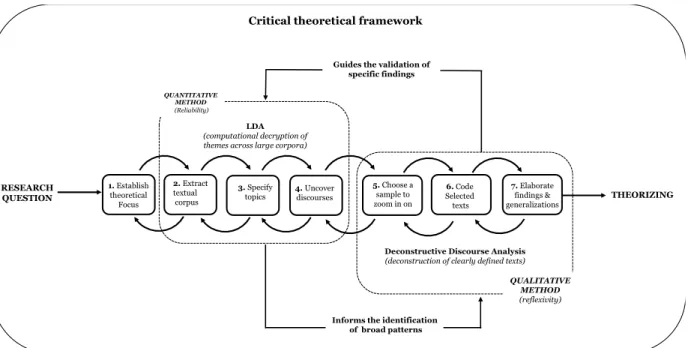
Fig. 1. Transformative exploratory mixed methods design (adapted from Aranda et al., 2021).
emphasizing the notion of complementarity between the two methods (Creswell, 2009; Creswell et al., 2003; Deetz, 1996). This complementarity is what our mixed methods design puts forward in a sequential and iterative process where LDA and deconstructive discourse analysis nurture a mutual relation (Creswell et al., 2003) in which interpretations guide LDA quantitatively derived topic estimates that inform deconstructive discourse analysis (Aranda et al., 2021).
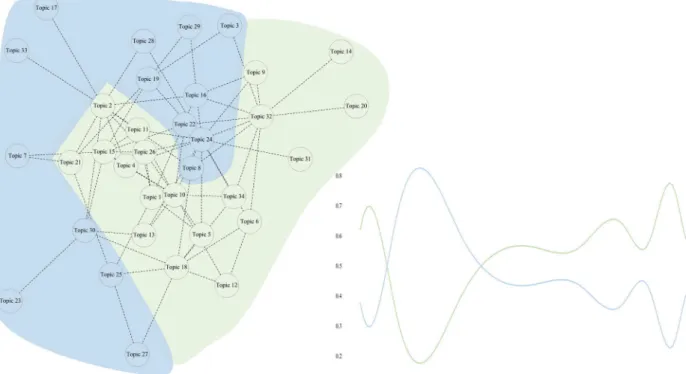
Fig. 1 illustrates how the textual corpus of 228 articles was examined to uncover 2 discourses based on “the automated identifi- cation of relations” among 34 different topics (Aranda et al., 2021, p. 202). A detailed account of the systematic literature review process we followed to retrieve the 228-article sample appears in Appendix 2. Each step of our mixed methods design is reported in Appendix 3 to showcase how LDA automatically generated the 34 topics and their aggregate 2 discourses via topic linkages.
Appendices 4 and 5 present the thematic meaning of both discourses. Fig. 2 portrays, on the left, the input-output discourse about big data analytics that mediates the descriptions of strategy context, and on the right, the entanglement discourse about the social con- sequences of big data analytics that mediates a reshaping of strategizing activities. Finally, Appendix 6 presents the coding strategies we followed to deconstruct both discourses into their dichotomies, which foster disjointed relational causality and agency between big data analytics and strategy.
4. Analysis and discussion
4.1. The input-output/entanglement divide 4.1.1. The input-output discourse
This discourse mirrors studies viewing big data analytics as a computational capability to grasp the strategy context and therefore draws from the prescriptive tradition of strategy research, which assumes that structured, quantitative, and intentionally collected data feed into strategy processes (Pfeffer and Sutton, 2006). The prescriptive undertone of this discourse represents the content and planning schools of strategy that conceive of strategy as planned and deliberate activity toward reaching outcomes in a Schumpeterian market. The dynamism and uncertainty inherent to that market force companies to collect and monitor intelligence on all the industry players to foresee any disequilibrium that would jeopardize their market positioning (Constantiou and Kallinikos, 2014; Priem et al., 2013).
Fig. 2. Topic relations and associated discourses.
The excessive focus on environmental contingencies and the influence of industrial organization economics (Bain, 1956; Mason, 1939; Porter, 1979) on these schools of strategy produce an outright focus on deductive mathematical and statistical algorithms and technologies of big data. These computational technologies follow models abstracted from the structure-conduct-performance-paradigm (S–C–P) (Bain, 1956, 1968; Mason, 1939), which assumes homogeneity among firms within the same industry (Hatten and Schendel, 1977). Therefore, the input-output discourse follows an outside-in sequence of industry analysis to determine the position of a firm vis-`a-vis its rivals, to investigate market structure (Hoskisson et al., 1999), and to model the influence of both strategy and structure on the firm’s performance (Hitt et al., 2021).
Conversely, internal proprietary research, rooted in organizational economics with its transaction costs emphasis (Williamson, 1975, 1985) and agency theory (Coase, 1937), creates a need for intelligence analytics capable of tracing and illustrating the inner structural logic and functioning of the firm and of defining key variables necessary to measure, evaluate, and understand the influence of the firm’s internal mechanisms on strategy and performance (Godfrey and Hill, 1995).
This shift to the firm results in a need to upgrade big data analytics to a computational capability to capture the organizational resources of the firm, anticipate reactions of competitors, as triggered by actions initiated by the focal firm (Bettis and Hitt, 1995), and to examine the development and accumulation of knowledge within a firm and its competition. As such, big data analytics prioritizes necessary input to strategy formulation through a systematic environmental analysis consorted with an appraisal of the firm’s internal distinctive competence (Selznick, 1957).
Unfortunately, swiftly constructing decisions relative to environmental changes is easier said than done, especially due to the combination of rigid inertial forces and the inability of managers to assess disruptions and decipher meaning from what might seem merely noise (Kaplan, 2008; Knight, 1965). Such a commotion shakes the management of organizations a great deal and poses a stiff challenge for strategy work, which behooves managers to match their interpretation of what is going on with making sound strategic choices (Bower, 1970). Alternatively, the discourse assumes that turbulence in the environment cannot be pictured as a set of easily identifiable indications and pinpoints managerial cognition as a major player to muddle through ambiguities (Walsh, 1995). The rationale is that managers’ frames of interpretation, which serve to interpret and translate signals into decisions, exert a major in- fluence on strategy work during upheavals (Barr, 1998; Tripsas and Gavetti., 2000).
4.1.2. The entanglement discourse
The second discourse veers off from the outside-in and inside-out views of the prescriptive schools of strategy to focus on the agential role of strategy actors and processes by which these actors deal with big data analytics (Constantiou and Kallinikos, 2014), along with practices that entangle them. Contrary to the input-output discourse, big data analytics is portrayed here as an agent that deals with unstructured data that are not collected intentionally but in a haphazard and heterogeneous modus operandi (Anderson, 2008). As such, big data analytics befits a different character of strategy that is enmeshed in the doings and sayings of people (Jar- zabkowski, 2005; Johnson et al., 2007). In this vein, the entanglement discourse adopts a sociological lens to explore strategy anew to catch interactions of actors as they incorporate big data analytics into strategic activities and investigate outcomes pegged to its usage in disseminating insights to actors engaged in the social practice of strategy work (Bakke and Bean, 2006; Garreau et al., 2015;
Jarzabkowski and Kaplan, 2015; Whittington, 2007).
As a result, this discourse finds in the strategy-as-practice (SAP) scholarship social grounds for the doings of strategy that help the proponents of this discourse theorize the big data analytics—strategy couplet as part of a social order, not as a structure or resources (Constantiou and Kallinikos, 2014). This implies the performativity of strategy doings that entwine the realities of both the strategist and big data analytics and afford different manifestations of strategizing activities (Cabantous et al., 2018). Therefore, the doings of strategy shift the traditional focus of big data analytics as a mediator of strategy context (first discourse) from epistemological inquiries (Wright, 2017) to ontological questions about the status and agency of big data analytics and strategists who shape the realities of strategy doings (Garud et al., 2018). These realities do not predate the practice of strategy but are continuously “constituted, deconstituted, and reconstituted” in situ, and therefore cannot be fathomed as a representation of a preexisting reality, but a reality that comes out from the performativity of strategy doings that could be captured by adopting a different stance (Cabantous et al., 2018, p. 412).
As a result, the materiality of big data analytics is paramount within the second discourse, which explores its mediating role in changing the social dynamics of strategizing activities because the affordances of big data analytics provide strategy workers with the ability to strategize in ways that they could not have known of previously (Leonardi and Barley, 2008). Within this discourse the big data analytics—strategy relationship is central to our normative understanding of who is a strategist and what strategizing is (Balogun et al., 2014; Callon and Law, 1997; Jarzabkowski et al., 2013). This is clear in the emphasis of this discourse on the entanglement of strategy actors and big data analytics in strategizing activities to the degree that strategists arise through their embodied interactions with big data analytics that make such an identification possible.
In this context, the second discourse conceptualizes strategizing processes and meaning-making as a materially mediated stream of activities in which strategists accomplish tasks using big data analytics. Meanwhile, it focuses on the affordances of big data analytics as a sociomaterial agent that shapes the strategy work being performed and stimulates organizational members engaged in its doings.
These studies show that big data analytics shapes strategizing activities by enabling or constraining practices of the agents involved in it and their meaning-making (Bakke and Bean, 2006; Garreau et al., 2015; Jarzabkowski and Kaplan, 2015).
4.2. Deconstructing the input-output/entanglement divide 4.2.1. The input-output discourse
The text carrying the input-output discourse interprets big data analytics as an imperative, whether in emergent or fully developed form. It thus enlists it to sustain an elusive competitive advantage but ignores how often it weaves into strategy doings (e.g., Boyton et al., 2015; Dahiya et al., 2021; Gaidelys and Dailydka, 2016; Gershon Richard A, 2000; Is¸ik et al., 2013). For this purpose, the text emphasizes the necessity of integrating technological disruptions into logical, structural, and positivist models and strategy tools (e.g., the strategy map, the balanced scorecard, Porter’s five forces, etc.) to accommodate its premise of big data analytics’ inexorable occurrence in strategic planning. It hence attempts to create an input-output model for strategic planning, which isolates the analytical facet of strategizing from the social dynamics that enact the strategizing activities.
This input-output model treats big data analytics as a computational capability with a crucial role in forming organizational structure (Lawrence and Lorsch, 1967; Thompson and of, 1967; Woodward, 1965), determining how inputs turn into outputs (Perrow, 1984), and reporting workflows (Scott and Davis, 2007). The text holds that big data analytics must be preserved, upgraded, and improved to ensure the continuity of its value (Faraj and Pachidi, 2021). For instance, this input-output view posits that the big data analytics that organizations possess differentiates their structures, and therefore they must safeguard it against adverse effects of the environment (Faraj and Pachidi, 2021; Thompson and of, 1967; Woodward, 1965). Accepting the input-output view leads designers to promote big data analytics’ information processing component, which shifts the focus toward carefully designing complex and logical architectures that shield its information processing capacity (Faraj and Pachidi, 2021). Second, rising uncertainty in the business environment shifts attention toward making processed information correspond in some essential respect to the needs of competitive dynamics (Galbraith, 1973; Nadler and Tushman, 1988).
To establish the input-output model of strategy work, the text deploys existing theoretical frameworks of the content school of strategy and pays particular attention to environmental uncertainty, not as an antecedent to strategic planning but as its core issue. In fact, the text takes up a ‘mirror perspective’ to presuppose that big data analytics in fact reflects a ‘factual world’ out there (Gephart, 1996; Rorty, 1979). By arguing for the need to move environmental uncertainty from the periphery to the center of theorizing, the text adopts an information-oriented view of strategy. That view entails big data analytics becoming a computational capability because it influences the organization’s demand for and capacity to process information and allows organizational stakeholders to transfer factual intelligence across organizational layers (Burton et al., 2011; Faraj and Pachidi, 2021). The text therefore elicits a conservative view (Jameson, 1991, p. xviii) of present and future organizations as “postindustrial” (Shrivastava, 1995, p. 119) rather than “post- modernist” societies (Gephart, 1996, p. 207). It excludes social processes from acting upon big data analytics and invokes a one-directional argument that considers big data analytics the only decisive factor in the outcome of organizational structures (Baldwin, 2019) and the sociocultural order (Heilbroner, 1967; Leonardi and Jackson, 2004; Marx and Smith, 1994).
In fact, the text depicts the success of big data analytics in capturing the strategy context as a fact that has been decided before those participating in strategizing activities hear about it, therefore leaving them with no choice but to adopt big data analytics in their practices as ‘a fait accompli’, as the text takes a firm confidence in the power of big data analytics to challenge the canons of our approaches to strategy (Constantiou and Kallinikos, 2014) and not only cause but transform the social practice of strategizing itself (e.
g., Cooper et al., 2000; Davenport, 2014). For instance, the text has a recurrent action of alluding to the ‘inexorable’ occurrence or advancement of big data analytics in strategic planning, processes, strategy workshops, and individual- or group-level decision-making (e.g., Rohrbeck, 2012; Tavana, 2002; Vilkkumaa et al., 2018). Similarly, the ability of big data analytics to intrude into strategizing practices and improve their flexibility, speed, and efficiency is reinforced through the text’s supportive rhetoric (e.g., Davis et al., 2008;
Ghasemaghaei and Calic, 2020; Liu et al., 2018).
The unavoidable agency of big data analytics in changing the nature of strategy work follows a top-down view of the firms that reduces the complex context of strategizing to a mere attending to the needs of executives while the other practitioners arise as a ‘silent audience’ (e.g., Constantiou et al., 2019; Merendino et al., 2018). This assumption is clear in affixing the word ‘powerful’ to the denomination of executives where ‘powerful’ insinuates the strong effect they have on their subordinates’ feelings and thoughts (e.g., Cooper et al., 2000; Pryor et al., 2019). Another clue is apparent in the description of the process whereby executives influence their context as a ‘black box’ to suggest the intangible psychological factors that govern their behavior, namely their understanding of their firms’ environments (e.g., Davenport et al., 2001; Gibbons and Prescott, 1996; Pryor et al., 2019; Voros, 2003).
Notwithstanding this deterministic view of big data analytics’ influence on strategizing practices, a scrutiny of the text hints to a different meaning. In lieu of devising systems of production for ensuring big data analytics input and social conduct output, we detect that the text’s instructions and directions in fact restrain the occurrence of big data analytics in strategizing practices by advancing two contradicting claims: one that promotes the relevant output of big data analytics (e.g., Dutta and Fourer, 2008; Hough and White, 2004) vs. another that highlights the intuitive judgments of strategists (e.g., Constantiou et al., 2019; McHardy, 1995). The premise of the first statement is that the intrusion of big data analytics in executives’ decisions is a result of its relevant output. However, this position seems doctrinal when executives’ intuitive judgments trump this same output.
Further evidence of these conflicting claims is rooted in the difficulty of modeling or anticipating the contextual acumen that makes up the intricacies of executives’ intuitive judgments. Similarly, the instrumentality of big data analytics no longer seems to entail a radical shift of the doings of strategizing but seems to emerge from these same doings. The text recommends implementing big data analytics in a logic of discovery for emergent ways of doings that could be tested and integrated into the system (e.g., Ding and Shi, 2021; Garcia-Nunes & da Silva, 2019; Schoemaker et al., 2013).
The unavoidable occurrence also seems to require ‘alignment’ with the social context of strategizing because the ‘maturity’ of big data analytics is time and context dependent and therefore necessitates that big data analytics holds a ‘strategic role’. The text notes
that big data analytics should enjoy long-term involvement in strategy work and be aligned with organizational objectives for it to reach the required maturity level for contributing to value creation (e.g., Analoui and Karami, 2002; Dutta et al., 2007; Van Groe- nendaal, 2003). Therefore, for big data analytics to unleash its full agency to transform a firm into an agile organization (e.g., Gaidelys and Dailydka, 2016; Pellissier and Kruger, 2011; Tjader et al., 2014), it must be upgraded from a mere executive decision support
‘resource’ to a dynamic capability diffused across organizational layers (Ilmola and Kuusi, 2006; Klatt et al., 2011; Nyuur et al., 2015).
However, the text’s unwavering obsession with executives’ dominance emerges when it considers the plan for aligning big data analytics with strategizing practices. The text roots this position of ‘fit’ between the two elements of the big data analytics—strategy pair in the leadership of executives. This suggests that big data analytics depends on executives’ vision and leadership and on a top- down approach that the top management devises, motivates and supervises (e.g., Boyton et al., 2015; March and Hevner, 2007). These accounts put the social dynamics of strategizing out of the realm of action and assign it a place of passivity, while granting big data analytics instrumentality and executive leadership a commanding position over action, although the text acknowledges the salience of big data analytics’ diffusion across organizational layers for it to be conducive to business value (e.g., Cavallo et al., 2021; Gibbons and Prescott, 1996; Heinrichs and Lim, 2003).
A closer look at the guidelines for big data analytics’ alignment across the social context reveals that data scientists arise as the new
‘powerful’ actors. The recommendation is that organizational barriers emanate because of big data analytics challenging the ‘status quo power’ rather than from social dynamics wherein other strategy participants may find discrepancies between their intended uses of big data analytics and their enactment of new unintended affordances, which might lead to their skepticism toward the enthusiasm spawned by executives over big data analytics. The text emphasizes the ability of big data analytics to reconfigure the relationship between the organization and its members insofar as it redefines lines of authority, influence, and organizational power (Davenport et al., 2001; Martinsons and Davison, 2007; Migliarese and Paolucci, 1995).
In these new power instances, the text puts forward data-savvy actors as being most suitable for the doings of strategy with big data analytics due to their expertise and knowledge of technological developments to drive business opportunities (e.g., Arnott et al., 2017;
Davenport, 2014; Urbinati et al., 2019). However, the text records no comments on how such adroitness conceives of existing social structures and routines and whether the new data culture meets the acceptance and expectations of the different social stakeholders. In addition, the text is ambivalent about the ‘non-data savvy’ strategists who also participate in strategizing activities. The text frequently insinuates that they should ramp up their data ‘adeptness’ to maintain their roles and may even emerge as more influential than before (e.g., Grover et al., 2018; Merendino et al., 2018). Sporadically, the text alludes to the human strategist as someone who will be supplanted when the automation of business processes reaches its full potential and radically alters strategy processes and activities and the way business is conducted (Lau et al., 2012; Orwig et al., 1997; Thorleuchter & Van den Poel, 2015; Thorleuchter et al., 2014).
4.2.2. The entanglement discourse
The text adopts a posthumanist treatment of big data analytics that grants it the status of a protean agent and reinstates its role in producing strategizing practices. For this purpose, the text imposes uniformity between strategy actors and big data analytics as equivalent agents in the coming through of the social practice of strategy (Schatzki, 2001) and therefore theorizes strategy work as an effect of all arrays and dispositions of big data analytics and participants in strategy work (Callon and Law, 1997). As such, the text focuses on the constitutive dynamics between big data analytics and strategy actors and how they create agency and have performative implications for the reconstitution of new strategizing activities and outcomes (e.g., Akter et al., 2016; Barton and Court, 2012; Elia et al., 2019; Wamba et al., 2017).
For this purpose, the text ousts mental and linguistic representations from the way we think about big data analytics and condition its status as a passive object (Barad, 2003, 2007; Lemke, 2015). Instead, it magnifies the resistance of big data analytics to our modes of representation that bind its meaning to its role within the human context (Barad, 2003; Bennet, 2010; Crossland and Bauer, 2017;
Harman, 2002; Latour, 2004b). The protean agent concept depicts big data analytics as something obdurate and in defiance of our interpretative frameworks (Rosiek, 2018) while also being constitutive of strategizing practices in the same way as strategy actors. As such, this discourse depicts big data analytics as vibrant and impulsive in seeking action and something that we discover as we inquire about it (Barad, 2007; Rosiek, 2018). Therefore, it is the entanglement between big data analytics and strategy actors in ongoing intra-activity that causes the emergence of the social practice and dynamics of strategizing.
Accordingly, big data analytics carries its meaning within its materiality and refutes our biased unitary view of it as a passive thing that awaits our cognitive or symbolic representation to reveal its being (Barad, 2007; Bennet, 2010; Rosiek, 2018). However, the text conceiving of big data analytics as a protean agent is an imperfect representation because, in certain passages, the text deprives humans of intentionality and “reconstitute(s) the ideal” (Grandy and Mills, 2004, p. 1161) by conferring agency on big data analytics (Latour, 1993, 2004a). Then, at other times, the text swings to embrace the Cartesian dualism between (knowers) strategy actors and (objects to know) big data analytics.
This shift contradicts the text’s uniformity premise that supposedly rejects the ‘big data analytics/strategy actors’ distinction in favor of their entanglement. In addition, it neglects to inquire about or revise the causality or significance of big data analytics beyond its mere existence as a byproduct of strategizing activities—produced by cognitive or symbolic structures that drive human action and interactions (Reckwitz, 2002a, 2002b)— which in turn begets an asymmetric view of big data analytics and strategy that conceives of big data analytics as an object of reference that does not exist of itself but as an object strategy practitioners know, interpret, or talk about (Reckwitz, 2002a).
This object of reference concept shifts attention toward humans and their symbolic orders (mind, discourse, communication), which give big data analytics its symbolic quality and make it visible (Reckwitz, 2002a; Schatzki, 2001, 2005). This view supplants big data analytics with the human symbolic orders that refer to it and makes its reality simpler to understand. It advances the idea that big
data analytics can be understood by humans through their mental or linguistic representations. Accordingly, the object of reference concept gains its symbolic quality at the level of cognitive (conscious/unconscious) structures that reside in the mind (Reckwitz, 2002a) and influence what can exist as an object of reference (e.g., Hasan and Gould, 2001; Heinrichs and Lim, 2003; Seddon et al., 2016; Shollo and Galliers, 2015; Thomassin Singh, 1998; Zamani, Griva, Spanaki, O’Raghallaigh and Sammon, 2021).
Similarly, symbolic orders outside the mind in extracognitive symbolic structures (discursive or textual) also can refer to big data analytics and therefore produce it (e.g., Neugarten, 2006; Pr¨ollochs and Feuerriegel, 2020; Roth, Schwede, Valentinov, P´erez-Valls, &
Kaivo-oja, 2019). Finally, symbolic orders in language-based social interactions (Reckwitz, 2002a, 2002b) can interpret big data analytics and constitute it in interactions to give it meaning (e.g., Aldea et al., 2018; Chen et al., 2015; Druckenmiller and Acar, 2009;
Elbashir et al., 2011; Gu et al., 2021; Popoviˇc et al., 2012). As such, the object of reference is a concept that gives humans primacy in handling big data analytics and thus in enacting big data analytics’ affordances to supplement the doings of strategy (Reckwitz, 2002b;
Schatzki, 2001, 2005).
Thus, big data analytics is objectified as a supplement to the social practice of strategizing, not a cause or a condition of its emergence (Derrida, 1976; Reckwitz, 2002a). Therefore, the systems of meaning (mind, discourse, communication) give big data analytics its symbolic quality and make it visible (Reckwitz, 2002a). This symbolic quality “bears no resemblance to reality” (Grandy and Mills, 2004, p. 1163) because it “displaces, colonizes, and thereby anticipate(s)” the real big data analytics (Baudrillard, 1994, p.
122; Gephart, 1996, p. 213); therefore it is no longer possible to “isolate the process” of big data analytics or to prove it (Baudrillard, 1983, p. 41). By so doing, the text contradicts its essential view of uniformity and entrenches the view of social practices as normative regularities, asymmetrical across its solid and stable constituents, and conditioned by habits and routines rather than by the social dynamics of strategy actors and big data analytics (Callon and Law, 1997).
In this view, only strategy actors hold the site of practical understanding and the capacity for action (Callon and Law, 1997), whereas big data analytics is restricted to practice, that is, it materializes within it; not outside it (Reckwitz, 2002b; Whitford and Zirpoli, 2014). Consequently, to explain the big data analytics and strategy relationship, the text necessitates tapping into humans’
variables and attributes rather than the struggles associated with big data analytics as they undertake strategy work along with strategy actors (Pickering and Schatzki T, 2001).
5. The way forward: from disjointed to conjoined relationality 5.1. Disjointed relationality between big data analytics and strategy 5.1.1. The input-output discourse
The production system like input-output discourse signals covert distinct themes or ‘double-entendres’ underlying the text.
Accordingly, the two active verbs ‘replace’ and ‘emerge’ entail two deviations from the literal sense of ordinary technical jargon to induce a rhetorical or vivid effect in the text as both verbs are ‘evolutionary’ metaphors.
First, ‘replace’ is a metaphor that pictures the non-data-savvy human as a substitutable element of the organization that cannot defeat the superiority of automation technologies. Second, the other direction of the ‘emerge’ metaphor entails the survival of the fittest or Darwin’s natural selection, whereby those who are better adapted to their new strategizing context will survive. Both verbs identify with painting the picture of non-data-savvy and data-savvy humans participating in an active, on-going, and inevitable process of evolutionary survival of the ‘fittest’, which in turn knocks down the overt meaning of organizational alignment that the text lays out.
As such, the text fails its single determinant logic when it adopts an equifinality argument (Baldwin, 2019) that focuses on how to incrementally innovate organizational routines to keep pace with big data analytics’ rapidly changing character and avoid a state of inertia that would require a radical alteration of the ingrained culture and routines (e.g., Merendino et al., 2018; Rohrbeck, 2012;
Vecchiato, 2015). By so doing, the text shifts to exploring the factors impacting the technological advancements brought by big data analytics and how organizations can harness constant technological innovation to integrate their routines, both to deliver sustainable competitive advantage and fully exploit big data analytics to reposition themselves in the competitive environment (Beal, 2000;
Cooper et al., 2000; Urbinati et al., 2019).
As a result, the text is silent on the relationship of big data analytics and strategizing and misses the underpinnings of this mutual influence. In fact, the way that big data analytics relates to structure is discontinued in favor of a race against time to derive better performance and value from its technological innovation (e.g., Dahiya et al., 2021; Ghasemaghaei and Calic, 2020; Guo et al., 2017).
However, rejecting or endorsing a single determinant logic hinders taking big data analytics seriously and restricts the theoretical challenge. That challenge reappears whenever the firm’s technological progress accelerates and has two poles: either big data analytics exerts an inexorable influence on organizations, or it holds ‘clay’ features that allow organizational actors to model and shape it as they see fit (Bodroˇzi´c and Adler, 2018; Davis, 2016; Faraj and Pachidi, 2021; Orlikowski, 1992).
In one respect, endorsing a single determinant logic highlights the following limitations. First, the importance of big data analytics as a determinant of structure dwindles when confronted with rhetoric that views organizational size and hierarchy as the only decisive factors in shaping structure (Donaldson, 2001), which necessarily replaces theoretical progress emphasizing big data analytics—“- which had virtually died out as a theme in the study of organizational form and function within the organization science literature” (Zammuto et al., 2007, p. 750, p. 750)—with theorizing that emphasizes subjects such as “power, institutions, human relations or transaction costs” (Faraj and Pachidi, 2021, p. 5). Second, there is a complication with containing big data analytics as part of existing theory arising from it being a construct conceptualized in different ways, which tends to relegate it to the background as a prop (Faraj and Pachidi, 2021). For example, when (Williamson, 1988, p. 375), the father of transaction cost economics, was asked about the place of technology in his theory, he responded: “technology thus serves to delimit the feasible set, choice within which mainly reflects
transaction cost economizing purposes.”
Similarly, the text draws from institutional theory to pay more attention to new institutional (re)orderings that are key for suc- cessful big data analytics transformations and investigate how these (re)orderings cultivate social acceptance (Hinings et al., 2018). As a result, the text finds it hard to deal with “the constitutive entanglement” of big data analytics and strategy, because its focus is toward epistemological standards whereby it infers to the “loveliest explanation, and so orient themselves to the explanation that provides theoretical elegance, confirmation of previous frames, or unified understanding”, and frequently rejects “the likeliest explanation for it may appear to be more trivial, direct, and less aligned with paradigmatic assumptions” and therefore “no matter how fast [big data analytics is] transforming society and organization, [the text does] not rise to the level of theoretical loveliness” (Faraj and Pachidi, 2021; Lipton, 2004).
Nevertheless, rejecting the single determinant logic leads the text to fall prey to the very same assumptions it dismisses as inap- propriate. First, establishing the belief that big data analytics is not what shapes structure denies it all agency and portrays it as a malleable artifact formed by the choices of managers (Faraj and Pachidi, 2021). This is despite the abundant evidence of the capacity of big data analytics to influence the social realm at the macro level and assist the social dynamics at the micro level (Misa, 1994). Second, a rejection of the single determinant argument instills a reluctance to value big data analytics because of its blurry ontological and epistemological position. This leads to questions around whether the focus should be on big data analytics as a computational capability or on big data analytics as an advanced sum of technologies, and whether to engage with big data analytics at the orga- nizational, business unit or boundary spanners-level (Goodman and Sproull, 1990).
Third, when the text rejects the influence of big data analytics on structure, it still has to decide how to go about approaching the notion of big data analytics. It might approach the concept as a structure to be ‘reciprocally engaged’ with, given its ability to shape
‘interaction patterns’(Barley, 1986; Orlikowski, 1992), or as something with the effect of a ‘pun’, capable of having more than one meaning, thus establishing entrenched ‘interaction patterns’ or unsettling them (Weick, 1990). Finally, the positivist epistemology of the input-output discourse embraces the pendulum movement of the text between single determinism and equifinality arguments. It also fails to add a new variable to strategy—the nature of the big data analytics—strategy relationship. All in all, the text maintains its silence about the big data analytics—strategy couplet by settling for big data analytics as an element that can influence strategy (Boudreau and Robey, 2005), and at the same time as subject to ‘managerial choice’, which models its usage to improve operational excellence and create and capture value (Daft, 2009, p. 20). As a corollary, the input-output discourse neglects to open up space for new theories or alternatives to its inherent positivism.
5.1.2. The entanglement discourse
Notwithstanding the text’s fervor in promoting and encouraging the alignment and integration of big data analytics into strate- gizing practices and activities, we surmise that the prescriptions laid down to ensure the ‘sociotechnical fit’ and the recommendations for ‘shared learning’ and ‘feedback loops’ between non-data-savvy strategists and data scientists on the one hand, and analytical culture and deep structure on the other hand are inconsistent and contradictory vis-`a-vis power distribution across these actors and regarding silent affordances enacted ‘in situ’ and the degree to which strategizing participants cause the shaping of these affordances and the social dynamics that orchestrate their encounters with big data analytics. The text suggests ‘diffusion’ of big data analytics across all layers of an organization to curb the potential inertia of the ‘deep’ social structure (Ardolino et al., 2018; Chen et al., 2015;
Ciampi et al., 2021; Druckenmiller and Acar, 2009; Elbashir et al., 2011; Mikalef et al., 2019).
This advocacy, nonetheless, finds rebuttal in its very same roadmaps for tweaking the ‘complex’ social milieu of the doings of strategizing activities, and the ‘training’ and ‘recruiting’ prescriptions put forward to reconstruct the modus operandi of strategizing actors in accordance with the technological advancements of big data analytics (Akter et al., 2016; Barton and Court, 2012; Davenport and Barth, 2012; Knabke and Olbrich, 2017; Seddon et al., 2016). As such, the text approaches the big data analytics—strategy relationship with a presumed dichotomic binary relationship between big data analytics and its obtuse dynamics, which in turn yields a discourse ambiguous in its feelings toward the arrangement of relations between the elements of strategy practice. For instance, non-data-savvy strategizing practitioners appear ‘so yesterday’ and are represented as ‘persona non grata’ possessing obsolete skills, expendable ‘gut feelings’, and the ability to disturb the course of change, while data scientists are portrayed as oracles acting as a medium between executives and the complex wilderness of unstructured data, and through whom advice is sought to reflect upon what happened and what is ahead, thanks to their impartial analytical judgment and their dexterity in writing codes and machine learning algorithms (e.g., Arefin et al., 2015; Brinch et al., 2020; Kiron et al., 2014; Mazzei and Noble, 2017; Surbakti et al., 2020).
The text’s rhetoric to encourage ‘diffusion’ of big data analytics into the doings of strategy relegates those involved in these ac- tivities to the background and brings to the fore the ‘dialogue’ between executives and data scientists who arise as ‘trustees’ that oversee strategy work. This inconsistent view of the control of the social dynamics of strategizing reflects an inherent uncertainty over the power relationships of data scientists and strategists in sharing duties and liabilities over strategizing activities. This opposition grants data scientists the untenable ‘driver’s seat’ to challenge the ‘deep’ structure of strategizing from the investment in big data analytics until the latter reaches maturity, i.e., full diffusion throughout the social dynamics of strategy work, while it pictures non- data-savvy strategists as a ‘standing reserve’ to unquestionably comply with the new social order and participate in its alignment with existing practices through constant feedback, learning new skills, and redefining their functions (e.g., McAfeeand Brynjolfsson, 2012;
Vidgen et al., 2017).
Our deconstructive analysis notes that this opposition reinscribes the same inertia it sets out to dissolve by enacting positions that foster an atmosphere of disputes and deadlocks where interactivity and collaboration fade away. The inexorable occurrence of big data analytics in the social practice of strategizing is based on having the players and the context of strategizing acquiescent and accli- matized to the progressive advancement of big data analytics. As such, the text proceeds with the portrayal of the social condition as a
foregone conclusion and draws from the classical ‘material/social’ dualism to nurture a strict binary relationship of the big data analytics—strategy couplet following two orthogonal opposites: data scientists vs. strategists and deep structure vs. new data culture.
In the preceding part, we have exposed how the ‘non-data-savvy’ strategists are dismissed in favor of the ‘data-savvy’ participants and ‘automated’ processes. The text is emphatic about reaffirming this dichotomy by causing the reader to think that it is incumbent upon the ‘non-data-savvy’ to update their skills to match the needs and demands of big data analytics, while it simultaneously maintains a silent tone regarding the need to upgrade the features of big data analytics to account for the affordances enacted during strategy work. In this context, the roles that define participation in strategy work will change as big data analytics experts take over thanks to their skills that perfectly match the needs of big data analytics, and IT departments shift from managing data to becoming active participants in strategic development processes (e.g., Audzeyeva and Hudson, 2015; Kunc and O’Brien, 2019; Lavalle et al., 2011).
In the meantime, the text notes that failure to reap the benefits of big data analytics also could be due to the lack of motivation and unawareness of the ‘non-data-savvy’ referred to this time as ‘staff’ to denote the ‘assistive’ nature of their new role and their lack of understanding of the ‘nitty-gritty’ nature of unstructured data which leads their organizations to become ‘analytically challenged’ (e.
g., Conboy, Dennehy, & O’Connor, 2020; Fosso Wamba, Akter and de Bourmont, 2019). In contrast, the text confers upon the data-savvy or data scientists the adjective ‘practitioner’ or ‘actor’ to signal their ‘active engagement’ in the strategizing activities, thanks to their polyvalent skills that span deploying and maintaining big data analytics infrastructure and understanding strategic issues and framing analytical solutions (e.g., Fink et al., 2016; Gupta et al., 2014). In addition, their ‘expertise’ also grants them leadership of these activities and the responsibility to ‘weave’ big data analytics into the ‘story’ of the organization (e.g., Conboy, Dennehy, & O’Connor, 2020; Fosso Wamba, Akter and de Bourmont, 2019).
Along with this responsibility, their new status demands the authority to oversee, recruit, and deploy talent to achieve the optimal synergy between the practice of strategizing and big data analytics toward value creation (e.g., Audzeyeva and Hudson, 2015; Pappas et al., 2018). However, the text frequently acknowledges the role of multigroup interactions in the integration of big data analytics across organization layers due to their support of dynamic alignment between big data analytics, its in-house or third-party providers, and its organizational users (e.g., Brinch et al., 2020; Shi and Wang, 2018). Paradoxically, the text implicitly foregrounds interaction in a sort of pledge of ‘leaving no one behind’ as a ‘second route’ to constructive deployment to ensure that those who ‘fail to use big data analytics don’t fall off the analytics’ wagon (Fink et al., 2016).
This imagery transfers the reader to John William Waterhouse’s painting “Consulting the Oracle” where the ‘non-data-savvy’ strategists seem like the seven women sitting in a ring opposite the standing lady, akin to the data scientist, who is giving them an account of the words of the deity or the oracle.
This sought-after devotion and attention of ‘non-data-savvy’ strategists to the new practices of big data analytics instill the dif- ference of meaning between data scientists and non-data-savvy strategists whose meaning is deferred to a later time as the nature of what they do and what characterizes their qualities and features is put off. On the other hand, the text records nothing on the reasons that may privilege data-savvy strategists in their encounters with big data analytics, which betrays a character of condescending superiority vis-`a-vis their role whose meaning is supplementary to that of data scientists.
This unexplained silence regarding their agency is baffling considering that they are the ones who, in contrast to data scientists, concentrate primarily on strategy work activities involving detailed and authoritative knowledge of their doings, routines and structures. Accordingly, the text maintains a supplementarity of meaning between data scientists and non-data-savvy participants to strip away the social practice of strategizing from its intricacies and relegate non-data-savvy participants to a supportive role.
Conversely, the text explicitly calls for interaction and alignment to curb its cautious distrust toward organizational structures, as captured with the word ‘deep’ to describe an arrangement that is both obliging and rigid against change.
The text also invokes the ‘house’ metaphor to refer to this ‘deep’ structure. Sometimes the text seems at odds with its passive narrative vis-`a-vis structure and occasionally depicts it as a challenge that big data analytics should and can adjust to over time and through feedback cycles that supposedly seek to decipher assumptions preadoption and postadoption of big data analytics (e.g., Audzeyeva and Hudson, 2015; Chen et al., 2015; Dokhanchi and Nazemi, 2015). Other times, the text hints at the unavoidable confrontation with the deep structure that might engender ‘silos’ that could hinder the maturity process of big data analytics (e.g., Brinch et al., 2021; Venkitachalam and Ambrosini, 2017). Similarly, the text glosses over the idea of authority and governance to diffuse the analytical culture across the organization to make it a ‘data-driven’ culture (e.g., Mikalef et al., 2019; Mikalef et al., 2020;
Mikalef et al., 2021).
5.2. Conjoined relationality between big data analytics and strategy 5.2.1. Semiotic agency
The ‘how’ of strategy is the question that drives the agency divide between big data analytics and strategizing activities and practices via two foci. Asymmetrical agency understands strategizing as starting from the realm of deliberate and intentional activity and moving to the sequence of occurrences (Van de Ven, 1992) and the experience of practitioners and processes (Burgelman et al., 2018; MacKay et al., 2021), which ultimately prevents firms from accomplishing their intended strategy (Sminia, 2009). Such pro- cesses are macrolevel and include any organizational phenomena including “characteristics, processes, and behaviors … such as organizational capabilities and strategies” and organizational outcomes “related to the achievement of organizational goals such as strategic change, competitive advantage, and performance” (Kouam´e and Langley, 2018, p. 561; see also Salvato and Rerup, 2011).
In contrast, symmetrical agency implies the performative aspect of strategy, that is, constituted and formed by the actors and big data analytics entanglement in the doings of strategy (Kornberger and Clegg, 2011; R. Whittington, 2006; Whittington et al., 2011).
Those doings are disclosed via the adoption and usage of big data analytics and represent the milieu where the symmetrical agency of big data analytics and strategy occurs and therefore tracing strategy to these doings emphasizes the constitutive role of microlevel processes (doings) in organizational objectives at the macro-level (realized strategy) (Baptista et al., 2021; Jarzabkowski, 2004;
Jarzabkowski et al., 2007; Jarzabkowski and Wilson, 2006; Whittington et al., 2006).
Therefore, recovering the agency divide between big data analytics and strategy faces the challenge of connecting the local-level processes and practices of ground-level teams and individuals to the broader business strategy, organizational capabilities, and per- formance outcomes (Johnson et al., 2007; Pettigrew et al., 2001; Szulanski et al., 2005). This exercise behooves us to circumvent
“perennial discussions of the relative priority of individual agency and social or cultural structures” (Rouse, 2006, pp. 645–646) through an alternative theorizing of relational agency between big data analytics and strategy as a matter of the underlying invisible patterned consistency immanent in the inadvertent propagation of data. It begins with the premise that the nature of reality follows semiotic relationality, and it is this view that reconceives of big data analytics and strategy as signs of “complex bundles of coordinated processes” (Rescher, 1996, p. 49) and accounts for the historicity and contingency of big data analytics without reducing it to the human context of discourse and linguistic representation or restricting it to a mediative role (Crossland and Bauer, 2017; Keane, 2003;
Queiroz and Merrell, 2006).
By so doing, this semiotic relationality is what dissolves the agency divide between strategy and big data analytics because it views agency and thought as semiotic (see Table 1) and therefore does not anchor the relationship of process and doings in micro and macro or process—doings dualistic logics, but rather demolishes these very same dualistic distinctions to uncover the way “local coping actions aggregate and congeal into broader sociocultural practices that then provide the patterned regularities facilitating the pos- sibility of strategy emergence and ultimately shaping organizational outcomes” (MacKay et al., 2021, pp. 1346–1347). Therefore, semiotic relationality does not divide the micro and the macro levels of strategizing, nor does it separate the strategist from big data analytics, and therefore, it does not distrust big data analytics and reduce it to its properties and affordances.
Instead, semiotic relationality surmounts these issues by forming the big data analytics—strategy relationship into a concept that is as “immanent in established” strategizing doings as “olive trees are imminent in olive seeds” (MacKay et al., 2021, p. 1351), which without interruption, moves strategy “toward its eventual condition” (Rescher, 1996, p. 11) of coming into view in the process of its realization as an olive tree.
Put differently, immanence is a predisposition, a modus operandi spread and promoted, without intention, via habitual and entrenched practices of individuals acting as a group. It is a certain nurtured sensitivity vis-`a-vis the local milieu, a method of con- necting with it, and a favored mechanism for becoming involved in and reacting to its nature—“what is or is not”, that is, its “patterns, structures or properties” (Goldstein, 1999), without recourse to “deliberate intention” or planning on the part of either notion of the big data analytics—strategy couplet (Chia and Holt, 2009).
5.2.2. Semiotic causality
Since Aristotle, philosophers have developed a pluralistic understanding of the concept of causality that comprises four kinds of causes whereby change occurs. By means of illustration, material cause is what defines the structure and process of big data analytics.
Second, efficient cause is every modification and upgrade of big data analytics technologies and affordances that designers and users deploy to create and develop its structure and process. Third, formal cause is the scheme followed in the aforementioned development process of big data analytics. Fourth is final cause, which is the purpose or intention of the process, that is, creating a system “for the sake of which” we understand what has happened, explain what is happening, and predict what is about to happen (Deacon, 2006).
To think of this intention as a future state that generates a present state, one needs to avoid approaching intention in terms of physical causality; otherwise, they will end up ‘pointing to an unopened black box’. The Chinese philosopher Lao Tzu hinted at this kind of cause in the eleventh verse of his classic text Tao Te Ching translated by Hohne (2009): “Thirty spokes share the hub of a wheel;
yet it is its center that makes it useful. You can mold clay into a vessel; yet it is its emptiness that makes it useful. Cut doors and windows from the walls of a house, but the ultimate use of the house will depend on that part where nothing exists. Therefore, something is shaped into what is; but its usefulness comes from what is not”. Accordingly, the empty space that makes the wheel’s hub is what creates the possibility for the thirty spokes to make up the wheel and cause its potential usage. Causality here is not related to the Aristotelian phrase “the whole is greater than the sum of the parts” but denotes “constitutive absence” that emerges from the unusual circular connectivity of restrictions and influences and allows “certain distributional and configurational regularities of constituents to reinforce one another iteratively throughout an entire system … it is the hole at the wheel’s hub” (Deacon, 2006, p.
124–146).
To understand the constitutive absence of the wheel’s hub, one needs to think of it in terms of semiosis or experience, a nonde- terministic inclination, a generative tendency toward an ideal form that connects agents (Rosiek, 2018), or as Latour (2014) puts it: the French word ‘sens’, not to be confused with the English ‘sense’, but can be understood through the word ‘inclination’. Suppose we were to reposition a vector that has a horizontal direction to the right (keeping the vector the same by not rotating it). In that case, the vector could have multiple directions but only two inclinations: above or below the horizontal direction to the right. This inclination is what Latour (2014) means by sens, which represents the universal connector between human and material entities of life (Kohn, 2013;
Latour, 2014; Rosiek, 2018). According to Peirce (1988), this inclination is a habit (human or material) that involves anticipation of future possibilities, that is, the Aristotelian ‘esse in futuro’ (see also Short, 2007; Rosiek and Snyder, 2018). Consequently, all elements of life (human and material) have an ideal (future) possibility, a habit, tendency, or purpose that shapes the becoming of their meaning (Short, 2007).
For instance, the tendency to write with a pen shapes its materiality; in the same way, the tendency to produce a palm tree shapes the material form of a palm tree seed (Rosiek and Snyder, 2018). An office space has a tendency to organize strategy practitioners into
the general form of a workshop, although the actual workshop will be a response to the interaction between the office space and the conditions imposed by the participants. Big data analytics has a tendency to organize data into a certain form of patterns, although the actual pattern data adopt will be an outcome of the interaction of data and the human-monitored analytical variables. An office space is as much about what is inside the walls as the absence they delimit. Accordingly, certain strategizing practices depend on what the office space is as much as all excluded absences that it is not.
This constitutive absence is not a material quality, it is a relation to a real that is not here as opposed to a real that is out there, which ignores the spontaneity of life, its tendency to emerge, not to mention its semiosis in which the human and material are nested (Bateson, 2000; Deacon, 2006). Limiting the real to what happens reinstigates the possibility of life in the mind, and does not account Table 1
A semiotic view of big data analytics and strategy for recovering the input-output/entanglement divide.
Disjointed relationality Conjoined relationality
Causality Agency Causality/Agency Potential research topics
Entanglment Intra-active causality Between:
1. Practices ’embodied in all configurations that produce big data analytics’
2. Phenomena ‘the relations of big data analytics produced’
Symmetric agency
Agency is a matter of an ongoing process of intra-activity and entanglement between:
1. A vibrant big data analytics that impels action.
2. Strategy actors who do not relate to big data analytics as an object of reference but via its performativity of the nature of practices.
Vs.
Semiotic causality It resides in a form constitutive in its absence.
Form is neither cognitive nor material but is an absential pattern that results from constraints on possibility.
•The ways big data analytics cause and alter strategy work’s activities and practices.
•The role of big data analytics materiality and embodiment in new virtual means of strategy work.
•The ways big data analytics reconfigure/transform strategy work’s boundaries.
•The ways big data analytics- strategy relationship can explain the enactment and change of strategy work.
•The different constraints on possibility in the doings of strategy with big data analytics.
•The interplay between big data analytics and strategists in outperforming one another in strategy work.
•The objectifying of strategy processes, practitioners, and big data analytics into indefinite relations.
•The interplay between power structure and big data analytics.
•The interdependencies between big data analytics and strategizing activities, praxies, and practices.
•How indefinite relations between big data analytics and strategy practitioners evolve over time and confront and reveal constraints on possible new and existing relations.
•The ways form patterns propagate through strategy practitioners & affects the logic of strategizing from within.
•The ways the forming patterns of strategizing practices emerge as effects of patterns of big data analytics.
Input-output Mechanistic causality It brackets the ends for which big data analytics exists, ascribing the ends out of which big data analytics comes to be following one of two directions:
1. The intervention of big data analytics into the social realm is one-directional and certain to occur.
2. The precedence of strategy actors over big data analytics in modeling its features and affordances &
conducting strategy work.
Asymmetric agency Separation between:
1. Strategy actors as the driver of social order and big data analytics is understood as gateways to their cognitive structures, discursive practices, and social interactions.
2. Big data analytics whose quality and purpose, following the course of technological advancements, can naturally determine and change the socio- organizational order.
Semiotic agency It resides in intentionality.
It is not connected through cause and effect but through a nondeterministic inclination that drives its folding direction toward an ideal form that connects agents.