The new estimated parameters can be set in the control algorithm of the drive system. In FE models, the solution of the internal field problem (distribution of current density and electric and magnetic fields inside the superconductor) is first obtained and a variety of other information, such as alternating current loss, temperature, voltage or quenching behavior, which is important for practical applications, is obtained derived accordingly [24,25].
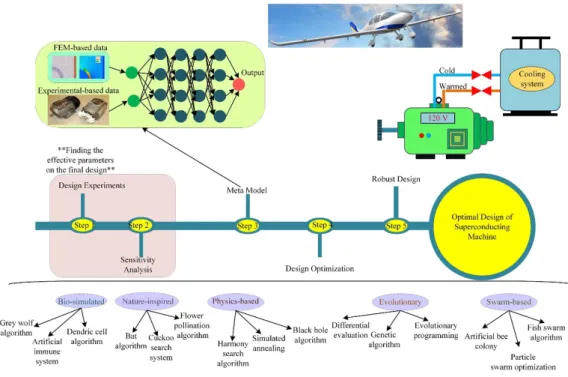
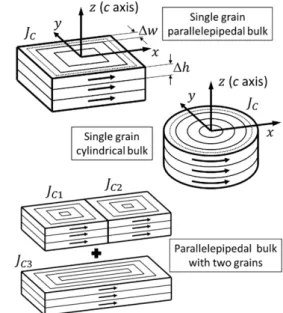
HTS bulk modelling supported by AI-based paradigms
Trapped field fluctuations and current density dependencies: the effect of the complex EM environment of the devices on trapping field mitigation, including its long-term operation and measures to mitigate it, needs more research [3]. Data availability: the amount of data needed to train DL networks depends on the complexity of the problem, i.e., the number of features to predict.
Surrogate modelling of superconducting materials and applications
AI-based surrogate models will contribute significantly to design improvements of large-scale superconducting applications [11]. AI-based surrogate models can dynamically estimate and optimize the control systems of superconducting devices.
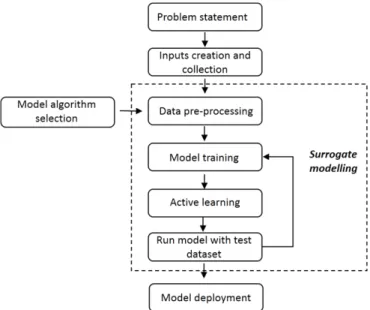
AI for magnet technology and MRI industry
Regression and prediction and modeling methods can assist in proper component design and minimization of subsystem interaction. Statistical analysis of manufacturing tolerances and environment, regression and forecasting, and classification methods may be used.
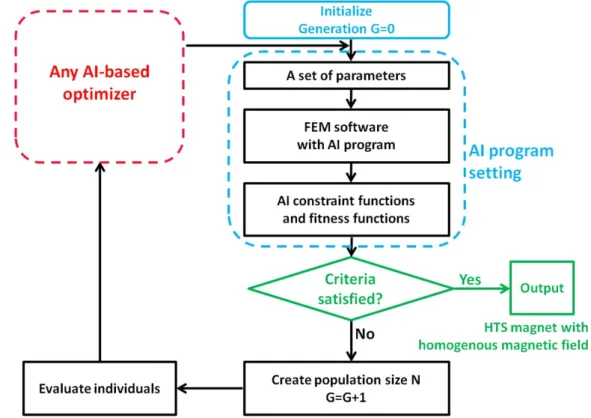
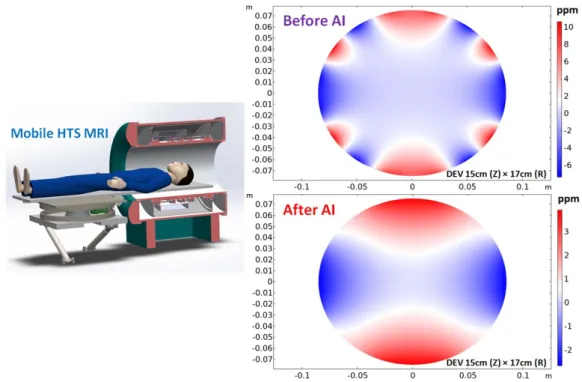
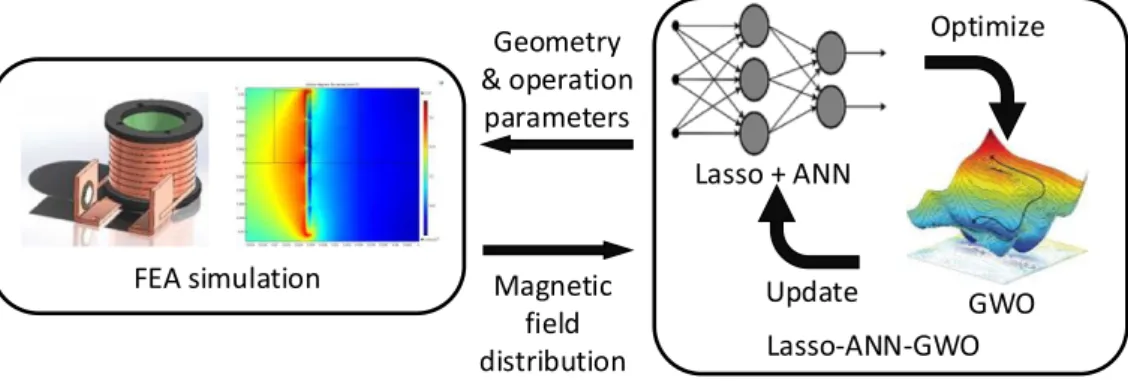
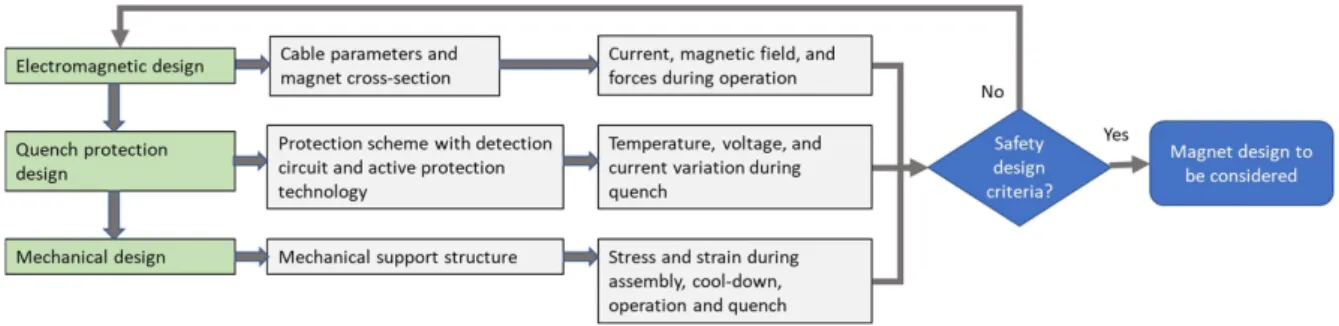
Integrated magnet design environment via surrogate modelling-based optimisation
At the same time, the knowledge and experience of the designers can be leading in generating new samples [62]. For example, rather than searching in a black-box design space, knowledge of cause and effect relationships and the use of Bayesian networks will provide insight by supporting the discovery of the most attractive areas of design. The second function of the MSY framework is to provide decomposition strategies to address the coupling between disciplines in system-level design.
By combining data mining methods (e.g. clustering, classification and rule learning) and the existing knowledge of the designers, a more detailed system-level model centered on functions and variables of the superconducting magnet design can be constructed instead of the traditional disciplinary-based model. However, the high computational costs of the simulations or the lack of methodologies capable of integrating different simulations and design areas can pose a major challenge for the successful design of the next generation of superconducting magnets.
Real-time hot spot detection of cryogenic fusion magnets using distributed optical fibre sensors
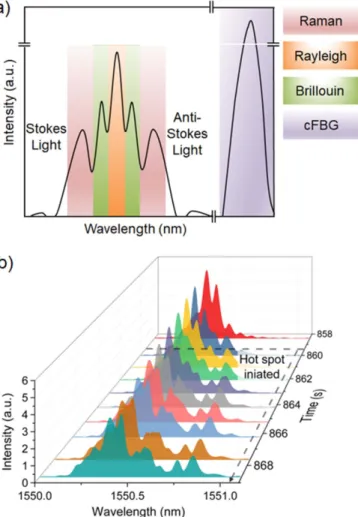
The measured disturbances are highly dependent on the exact conditions experienced by the optical fiber, including the size of the hot spot, the pre-existing voltage and temperature profiles, the local thermal transfer sensitivity, the signal-to-noise ratio, and signal processing capabilities. . Furthermore, in the extreme environment expected in fusion energy magnets, the long-term evolution of the OVS spectra, caused by the high radiation environment, will change the generic spectral response. Therefore, the evolution of the processing algorithm may be necessary to counteract signal attenuation.
Generating these databases can be difficult or even impossible before the implementation of the system. However, the complex evolution and inherent unpredictability of the spectral signal indicates that AI signal processing may be necessary.
![Figure 12. Representative responses for different OFS techniques when a short heat pulse is applied: (a) cFGB (unpublished data) and (b) Rayleigh backscattering [67]](https://thumb-eu.123doks.com/thumbv2/9pdfco/1890124.266290/24.892.460.822.123.542/figure-representative-responses-different-techniques-unpublished-rayleigh-backscattering.webp)
Detection of quench precursors in
Then, anomalies can be classified by grouping similar quench events based on the latent (hidden) information in the NNs. We are still only in the early exploration stage of what is possible with ML for magnet quench detection. For example, using the raw signal spectrum or data preprocessing in the frequency domain and constructing a deep NN architecture with convolutional layers have shown promising results for the detection of abnormal sounds [75].
The latter can be particularly relevant in the case of multi-modal input data from a variety of sensor data with different representations, time scales and geometries. We are convinced that in the next few years, the magnet community must make efforts to achieve this feat, which could be a game changer in quench detection techniques.
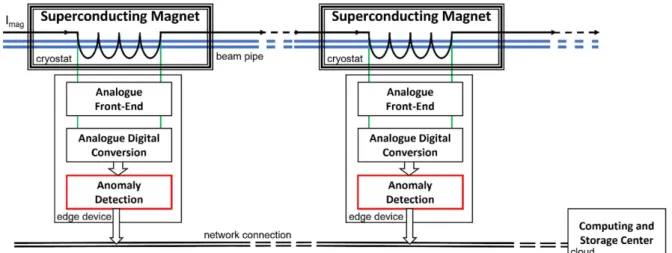
Development of a low-latency machine learning algorithm for electronic hardware for protection of
This system is similar to the Quench Detection System [84] currently operating in the LHC tunnel. This option is reasonable only in the case of large quantities of desired chips. Real-time low-latency response in systems based on ML algorithms is a major challenge that future research should address.
The beginning of modern AIMC analog computing opens a new horizon for low-latency training and inference. Therefore, special thanks go to Andrzej Siemek, Head of the Machine Protection and Electrical Integrity (MPE) Group at the Technology Department (TE) at CERN, and Reiner Denz, Head of the Protection Electronics Department. Section (EP) at MPE-TE in CERN.
AI and smart algorithms for the protection of SCs in modern power grids
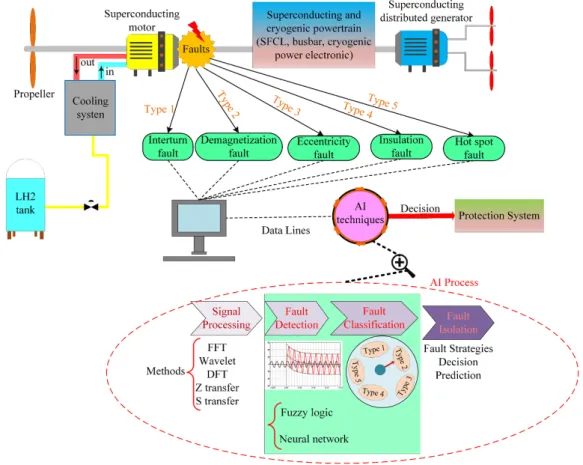
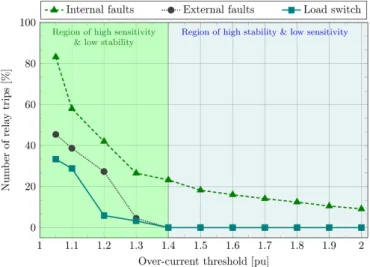
AI-based methods should be developed in a way to include the unique electrothermal properties and characteristics of the associated materials and relevant control systems of SCs. ANN can tackle the fault-related challenges imposed by the integration of SCs (i.e., fault detection and discrimination) due to their ability to incorporate dynamic changes in the power systems. This approach requires a high-fidelity model of SCs, which in this case is a multi-physics nonlinear model, to be input and tested at the time of commissioning.
In addition to the integration of converter-connected resources, the gradual deployment of SCs in multi-variable and multi-physics power systems is bringing additional challenges, with fault management being one of the most prominent. In the near future, the envisaged framework is expected to be instrumental towards the reliable and large-scale deployment of SCs.
AI techniques for design development,
On the other hand, a mains fault can be masked by activation of the limiter, preventing activation of protection and elimination of the fault. Such a method is based on representing the SFCL by a reluctance-like circuit whose characteristics depend on several parameters of the limiter. The GA then performs a parallel search among the domain of the multiple decision variables (eg, the number of turns of the AC coils and the cross-sectional area of the DC leg) to find the best solutions.
Still, FEM simulations are needed at several steps of the optimization process, and they do not capture all existing complex interactions and dynamics. Examples of such functions are the core volume, the length of the HTS tape for the DC coil, the value of the first peak of the limited current, or the thermal energy released (losses) during faults.
Intelligent superconducting transformers for power network and traction-transportation
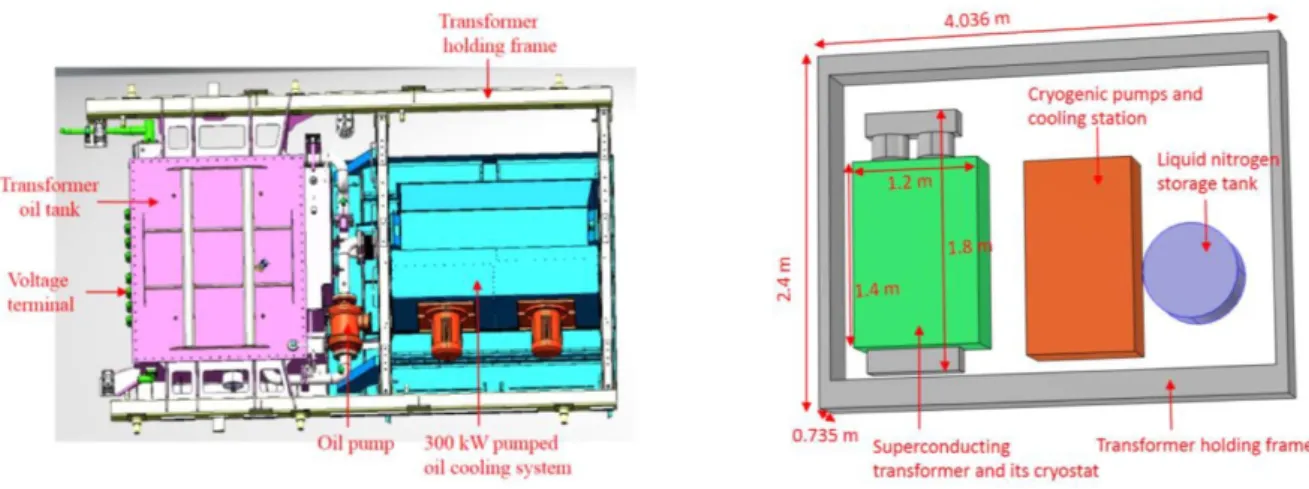
For such optimization problems, metaheuristic algorithms, evolutionary algorithms or bio-inspired techniques can be used. In addition, if real-time detection is desired, DL approaches using CNNs can be used as very efficient options. Intelligent simulation models of superconducting transformers can be established based on surrogate or meta-modeling methods.
Real-time intelligent quality monitoring of superconductor production lines can be designed to analyze the output data from the sensors. Many AI techniques, including those of heuristic and metaheuristic optimization algorithms, ANNs, deep NNs, etc., can be used to address the challenges mentioned above.
AI and BD for improvement of the manufacturing process of superconductors
Even with the help of simple methods of data analysis, such as regression analysis, correlations can be established between the quality parameters from the entire production chain. Even with the typically small variations of the influencing factors in production, important trends for quality improvement can be detected. As demonstrated in this article, development costs can be significantly reduced by harnessing the potential of sophisticated data analytics.
Often, development campaigns can be completely saved, as essential dependencies can be extracted from the data with high statistical significance. In this way, effective and cost-effective quality assurance can be established which ensures high yields in production.
AI applied to the development of superconducting wires with enhanced
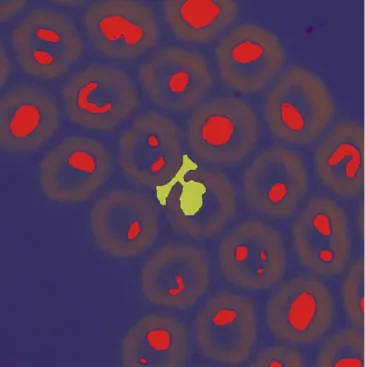
ML and CNN can detect and separate the voids from the other components, allowing the 3D reconstruction of the wire's internal structures (see figure. Barrier failures can generate Kirkendall gaps that cross the barrier, which a CNN can recognize to determine the improvement of the wire design (see figure 25) Bi2212 (Bi2Sr2Ca1Cu2Ox): it is the only HTS available in the form of round wire, which simplifies cabling and coil winding.
ML or ANN can map the filament bridges so that they can guide the optimization of the RHT conditions. In particular, AI can detect and separate the different wire components, which unlocks the possibility of using the actual geometry of the wire as input in the FE models.
Implementation of AI and BD techniques in future large scale 2G HTS tape production
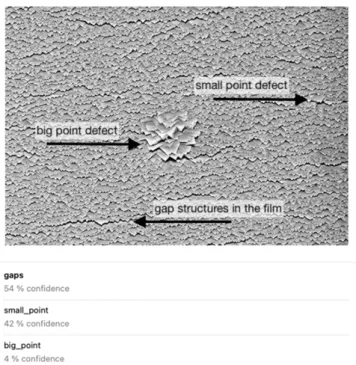
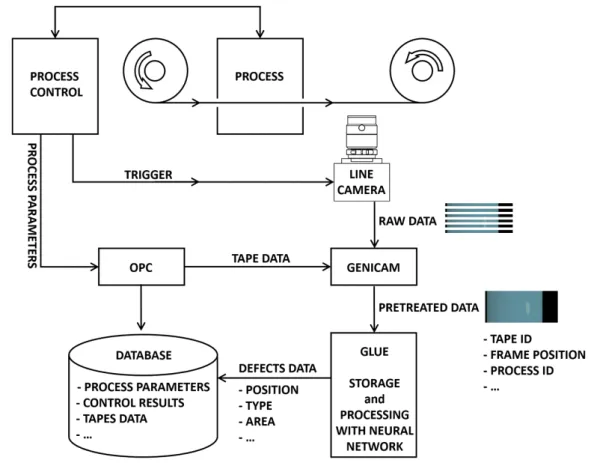
The schematic of an optical control system built for neural network analysis of the surface quality of HTS tape. Often a manufacturer has access to process parameters (pressure, temperature, growth rate, to name a few) and quality statistics (critical flow) of HTS tape as a function of its coordinate. First, all relevant process and quality parameters are collected in the database with assignment of HTS band coordinates over the length and/or width.
Today, this uncertainty gap limits HTS tape quality and yield, but AI techniques should help solve this problem effectively. From an HTS tape manufacturer's perspective, we rather look for new digital technologies to pave the way for cheaper and better HTS tapes.
Exploration of an extended Hubbard model for high-T c superconductivity in cuprates via ML
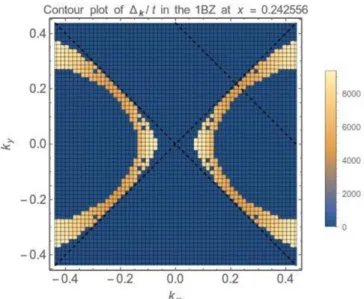
An example contour plot of the approximate gap function ∆kas predicted by EHM (a quantum many-body model) in 1BZ using a conventional numerical approach. The gap function and the extended terms embedded in the EHM in principle allow the specific prediction and appearance of the pseudogap phase [152]. Figure 28 shows an example contour plot of the approximate gap function as predicted by EHM in 1BZ using a conventional numerical approach.
It is technically possible to investigate quantum phases and their parameter-driven transitions in EHM using a similar ML technique [ 145 ]. A satisfactorily trained and reasonably accurate NN representation can then be used to systematically determine the phases embedded in the EHM.
Data-science enabled discovery of superconductors
Therefore, it is expected that the Eliashberg spectral function α2F(ω) (which is closely related to the phonon DOS) can be machine learned when a suitable DFT or experimental database is available. Materials generated from GS can also be used as seed structures in other CSP techniques. Together with the development of other DL algorithms such as graph and CNN [161], significant progress in large-scale material discovery with image-based tasks will be possible in the future.
Some phenomenological principles can also be summarized from the analysis of mass spectral measurement data. The resulting thin films can be fully characterized by various spectroscopic or thermodynamic measurements, providing experimental data that can be fed into data-driven predictions to improve new compound discovery.
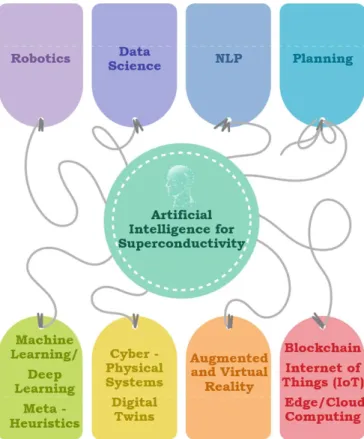
AI for superconductivity: challenges, and future trends
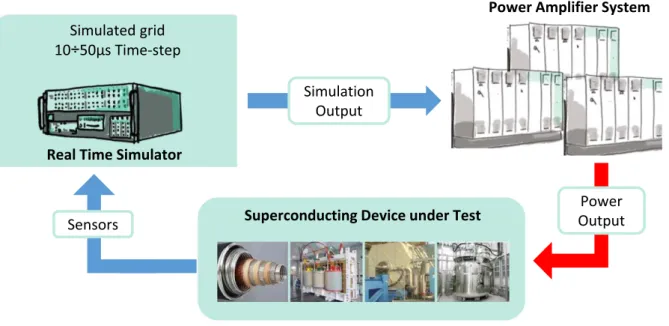
DT is defined as a virtual model characterized in a highly accurate way that receives data and then uses the data to model the characteristics of superconducting devices and make decisions about the performance, design, control, protection, manufacturing and even maintenance of the device. On the other hand, DT and CPS could be used in the design phase of superconducting devices, not only in terms of initial constraints, but also according to requirements that may be different for each application or customer. Using DTs for real-time modeling, monitoring, fault detection and design of superconducting devices.
17] Yazdani-Asrami M, Taghipour-Gorjikolaie M, Song W, Zhang M and Yuan W 2020 Prediction of nonsinusoidal AC loss of superconducting tapes using artificial intelligence-based models IEEE Access Bose B K 2020 Artificial intelligence techniques: how can . 54] Yazdani-Asrami M, Sadeghi A and Song W 2023 Ultra-fast surrogate model for magnetic field calculation of a superconducting magnet using multi-layer artificial neural networksJ.