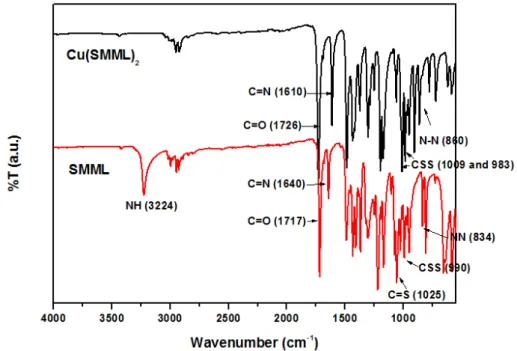
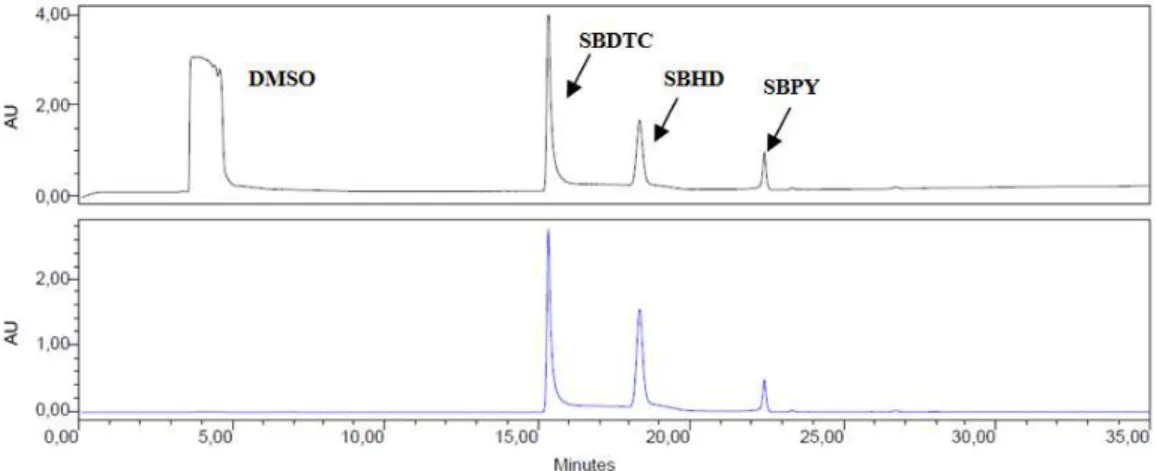
D6 FT-IR spectrum of SBML D7 FT-IR spectrum of Cu(SBML)2 D8 FT-IR spectrum of SBLA D9 FT-IR spectrum of Cu(SBLA)2 D10 FT-IR spectrum of SBEL. D17 FT-IR spectrum of Zn(SBCM)2 F1 RP-HPLC chromatogram of SMHD F2 RP-HPLC chromatogram of CuSMHD F3 RP-HPLC chromatogram of SBPY F4 RP-HPLC chromatogram of SMDTC F5 RP-HPLC chromatogram from SBDTC.
UV-VIS 3.3.3.3 EPR
MALDI-TOF-MS/ESI-MS
UV-VIS 4.3.3.2 LC-MS
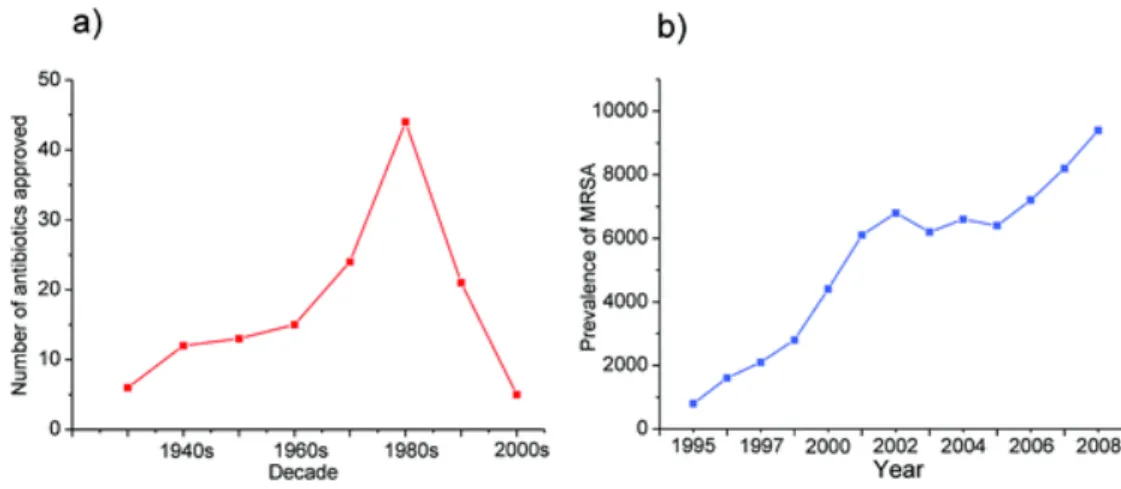
The rationale behind these studies is that metal centers other than platinum may open new avenues in the development of clinically useful drugs (Ronconi et al., 2006). Yang et al., 2013; Ronconi and Fregona, 2009). a) Approval of new antibiotics after a decade and (b) prevalence of MRSA (Source: Patra et al., 2012b).
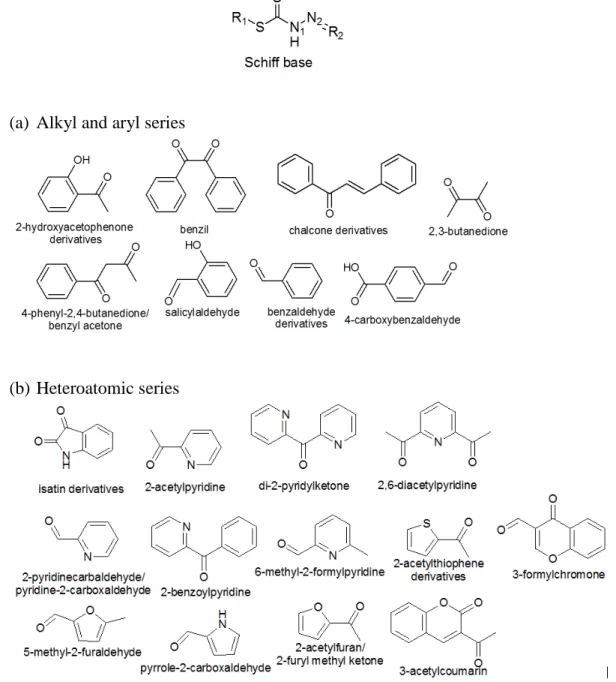
S-substituted dithiocarbazate
Schiff bases and metal complexes
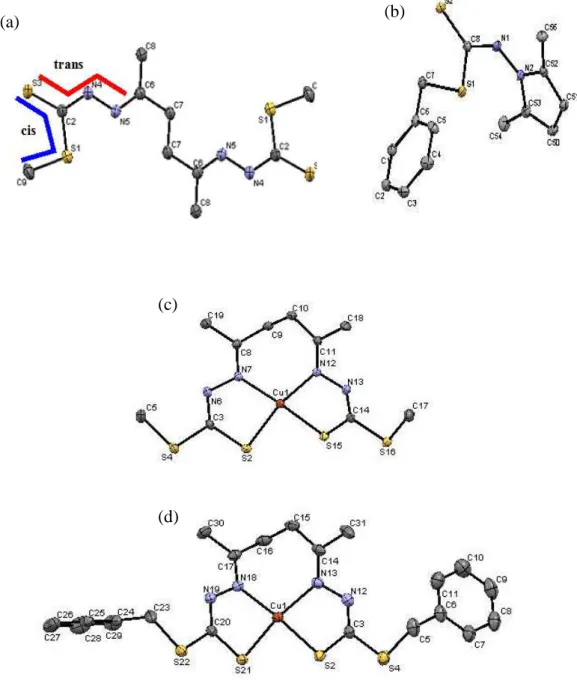
8 Structural determination suggests that these dithiocarbazate-related compounds could exist differently either as E or Z diastereoisomers with respect to the azomethine C=N bond or as cis-cis, cis-trans, trans-cis and trans-trans conformations around the C-N and C-S bonds (Figure 2.4) (Lanfredi et al., 1977). Conversion of the C=S double bond to a C–S single bond is also expected due to “tautomerism of the dithiocarbazate ligand to its iminothiolate form” (Ravoof et al., 2007, p. 1163).
Biological activity
- Anticancer activity
- Antibacterial and antifungal activity
- Iron chelators
- Antituberculosis activity
- Antiamoebic activity
The Cd(II) complexes of SMDTC with 2-furyl methyl ketone and 5-methyl-2-furaldehyde and the Co(II) complex of SMDTC-2-furyl methyl ketone were found to be highly active against CEM-SS and cervical cancer cells ( HELA) with IC50 values between 1.8 and 3.6 !g/mL (Chew et al., 2004). Mixed ligand Pt(II) and Pd(II) complexes with Schiff base (derived from SBDTC and 2-hydroxyacetophenone) and phosphine ligands (Source: . Maia et al., 2010).

Introduction .1 Ligand systems
Potentially bidentate NS or tridentate ONS ligands with an acid or ester functionality
Further findings show that the coumarin derivatives strongly interact with DNA and can induce DNA cleavage (Phaniband et al., 2011; Kulkarni et al., 2009). For example, the CuN2S2 chromophore is present in blue copper proteins such as plastocyanin (Donnelly, 2011; Sarkar et al., 2009). Both are important because their complexes are diamagnetic and this facilitates complementary detection methods for EPR spectroscopy for the Cu(II) complex through the use of nuclear magnetic resonance (NMR) spectroscopy for Zn(II) and Re(I) species (Kirin et al. al., 2005).
Zn(II) complexes of the analogous bis(thiosemicarbazone) were also found to be weakly fluorescent due to intraligand excitation and this fluorescence was used to track the uptake and intracellular distribution of Zn(II) complexes in various cancer cell lines (Lim et al., 2010 ). Understanding the intracellular distribution of these complexes is important for the design of compounds that are selective for specific tissues and organelles (Holland et al., 2007).
Methodology .1 Materials
Instrumentation
The H atoms were initially refined with soft constraints on the bond lengths and angles to regularize their geometry, after which the positions became refined row constraints. The structures were solved using the direct Altomore et al., 1994), which included all unlocalized . Least squares refinement of the matrix was performed using CRYSTALS Betteridge et al., 2003). The H atoms were initially refined with soft constraints on the bond lengths and angles to regularize their geometry, after which the positions were refined.
The H atoms were initially refined by soft constraints on bond lengths and angles to fix their geometry, and then the positions were refined by. Hydrogen atoms were located on a different Fourier map and included in the calculations as a riding model with isotropic thermal parameters.
Synthesis
- Macroacyclic Cu(II) system with tetradentate NNSS ligands
- Open chain Cu(II) system with bidentate NS ligands with acid or ester functionality
- Open chain Cu(II) system with bidentate NS ligands with natural ketone moiety
An equimolar amount (1.22 mL, 0.01 mol, 1 equiv.) of methyl levulinate was added dropwise to the solution of the dithiocarbamate, heated and stirred for one. An equimolar amount (0.50 mL, 0.005 mol, 1 eq.) of levulinic acid was added dropwise to the solution of the dithiocarbazate, heated and stirred for one to two hours until the volume was reduced to yield 0.357 g of product (Yield 33. ' An equimolar amount (0.61 mL, 0.005 mol, 1 equiv.) of methyl levulinate was added dropwise to the solution of the dithiocarbazate, heated and stirred for one to two hours until the volume was reduced to yield 0.911 g of product (Yield 59.
An equimolar amount (1 mL, 0.01 mol, 1 eq.) of levulinic acid was added dropwise to the dithiocarbazate solution, heated and stirred for one to two hours until the volume decreased to give 1.595 g of product (yield 54. An an equimolar amount (0.61 mL, 0.005 mol, 1 eq.) of levulinic acid was added dropwise to the dithiocarbazate solution, heated and stirred for one to two hours until the volume decreased to give 0.327 g of product.
Synthesis
Six bidentate Schiff base ligands with acid or ester functionality were prepared by a condensation reaction between the corresponding S-substituted dithiocarbazates and carbonyl compounds in an equimolar amount (Scheme 3.1: a,b,e-f). Reactions with methyllevulinate were performed in ethanolic solution at 79 °C, while reactions involving both levulinic acid and 4-carboxybenzaldehyde containing an acid-COOH functionality were performed in hot acetonitrile solution. The purity and stability of ligands and their corresponding complexes at physiological pH are important prerequisites for the assessment of their biological activity. The chromatograms of the pure ligands of the tetradentate series showed 3 peaks that could correspond to the hydrolyzed hydrazone, the expected ligand and the pyrrole side product (Figure 3.1), while the complexes showed only one peak.
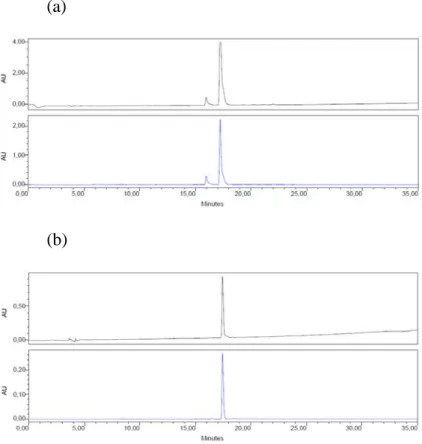
For the aliphatic Schiff bases (SMML, SMLA, SBML, SBLA, SBEL), the chromatograms of the ligands showed two peaks corresponding to the starting S-substituted dithiocarbazate and the expected ligand, while the complexes mainly showed a single peak corresponding with the copper complexes. . Similarly, the chromatograms of SBCM and its complexes mainly showed a single peak, highlighting the stability of the aromatic coumarin derivatives.
Characterization of metal complexes in solid state .1 FT-IR
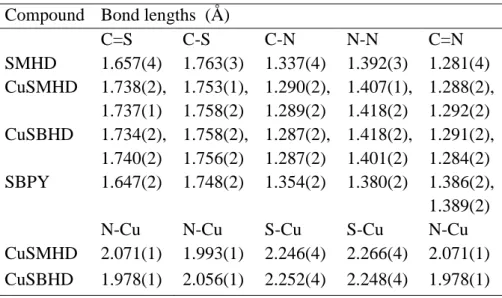
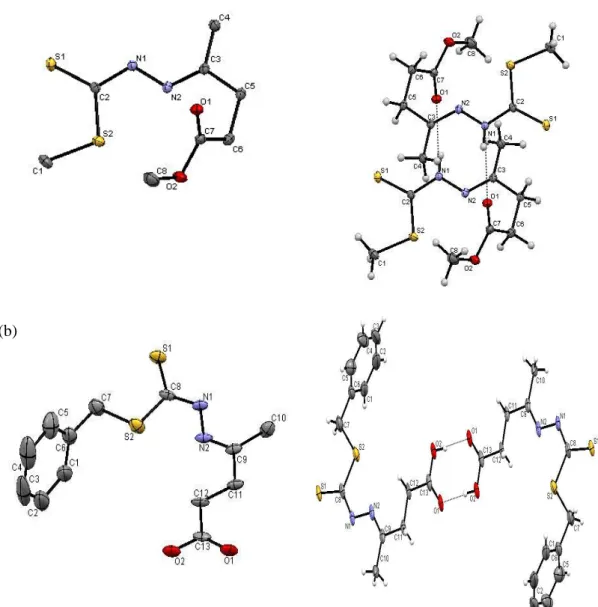
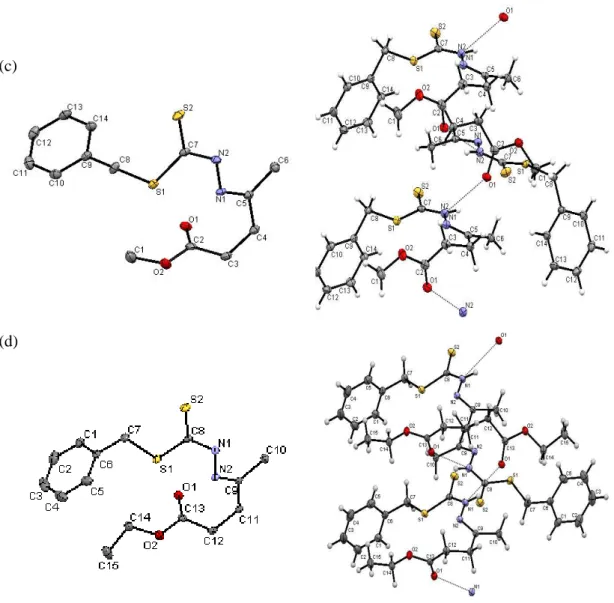
The disappearance of +(C=S) and splitting of the asymmetric +(CSS) band into two peaks in the spectra of all metal complexes was strong evidence for coordination via thiolate sulfur atoms (Crouse et al., 2004; Akbar Ali and Tarafdar, 1977). Such a shift can be interpreted as the cause of C=O vibrational coupling in the solid H-bonded structure (Ferrari et al., 2000). ORTEP diagrams of compounds in the tetradentate series SBPY, SMHD, CuSMHD, and CuSBHD with atomic numbering schemes are shown in Figure 3.8.
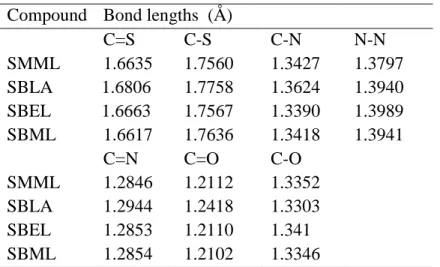
A comparison of the selected bond lengths and bond angles with SMHD shows that the molecule also crystallized in trans-cis configuration around the S(NH)C=S group, similar to the Schiff bases, with an intermediate bond length indicative of extensive conjugation and ,-delocalization across the molecules and other intermolecular interactions. The perpendicularity of the benzyl ring to the dithiocarbazaate plane can be ordered as SBLA > SBEL > SBML.

Electrochemistry
The redox properties of the ligands were also investigated but found to be innocuous. Changing the terminal S-substituent (from methyl to benzyl) results in a weak effect on Cu redox potentials, which could be rationalized by a stronger electron-donating effect of the methyl group (Basha et al., 2012). Cyclic voltammograms of Cu complexes at 1.7 mM in anhydrous deoxygenated DMF containing 0.1 M tetrabutylammonium hexafluorophosphate as the supporting electrolyte.
Cyclic voltammograms of Cu(SMML)2 at 1.7 mM in anhydrous deoxygenated DMF containing 0.1 M tetrabutylammonium perchlorate as the supporting electrolyte. Plot of anodic (Ipa) and cathodic (Ipc) current versus square root of scan rate for Cu(SMML)2.

Conclusion
The 1H, 13C NMR and FTIR spectra of the Schiff bases indicated that the ligands retained the thione form in both the solid state and solution. RP-HPLC analysis of the free ligands showed that the aromatic ligands were more stable than the aliphatic ligands. Electronic and EPR spectra showed that most of the paramagnetic Cu(II) complexes had distorted square planar geometries with the exception of Cu(SB4CB)2, Cu(SM4CB)2 and Cu(SBCM)2 as shown by their empirical factor f (= g||/0||).
There were also differences between the macroacyclic and open Cu(II) complexes with respect to their electrochem. In addition, the introduction of carboxylic acid functionalities opens up the possibility of conjugating these complexes with vectors.
Introduction
- Key drawbacks of metallodrugs
- Conjugated metal complexes
- Schiff base conjugate
- Cell penetrating peptide as cell delivery vectors
- Design of the metal complex-peptide conjugates
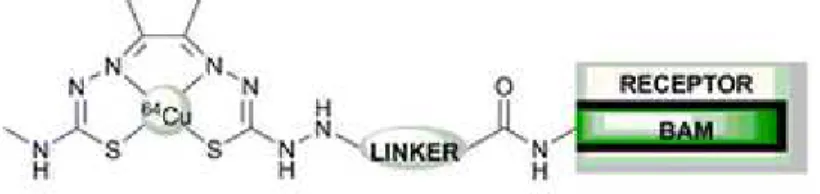
Therefore, compounds that are highly soluble in water are preferred for biological applications as they enable the preclinical development of a drug candidate without the use of solvents (Bacher et al., 2013). Schematic diagram of a functionalized bis(thiosemicarbazone) conjugated to a biologically active molecule (BAM) (Source: Hueting et al., 2010). Recently, salicaldehyde tridentate thiosemicarbazone (STSC) and 2-formylpyridine thiosemicarbazone (FTSC) conjugates coupled to a single L- or D-proline amino acid (Pro) with good chelating properties and improved water solubility have been reported ( Milunovic et al.). 2012; Bacher et al., 2013).
These limitations greatly prevent them from achieving their desired goal in cellulo and result in a reduction in their therapeutic efficacy (Stewart et al., 2008). Others, such as polynucleic acids (PNAs), would not be able to penetrate cells due to the presence of their high negative charge (Walrant et al., 2011).
Strategies to prepare metal comple
The second is the binding of metal complexes in solution after completion of peptide synthesis on the resin, cleavage and purification (Scheme 4.1c). The second and third options after marking are final. option b) or ligands (option c) that are sensitive to SPPS conditions two strategies prevent demetalation and decomposition of metal complexes.
Strategies to prepare metal complex conjugated with peptides
Synthesis
We purified the crude peptide material with system C: gradient elution from 5 to 100 % B v A for 10 minutes. We purified the crude peptide material with system C: gradient elution from 0 to 30 % B v A for 10 minutes. We purified the crude peptide material with system C: gradient elution from 0 to 30 % B v A for 10 minutes.
The crude peptide material was purified with System B: gradient elution of 0 to 30% B in A over 30 min. The crude peptide material was purified with System B: gradient elution of 5 to 100% B in A over 30 min.
Results and discussion .1 Synthesis
- Characterization of ligands conjugates .1 NMR
- UV-Vis
After Fmoc deprotection, Schiff base coupling was performed using HATU and HOAt. However, standard SPPS was unsuccessful, resulting in complete hydrolysis of the Schiff base moiety. The presence of the Schiff base is immediately evident from the NMR spectra of the bioconjugates.
The concentration was thus determined with reference to the extinction coefficient of the Schiff base chromophore absorbing at 340 nm. These data strongly support the formation of the expected ML2 complexes in accordance with the UV-Vis titrations: Cu2+ + 2(L).
Conclusion
Furthermore, only two different substituents on the S-dithiocarbazate moiety (a methyl and a benzyl) were investigated in this work, but many others could be introduced in the same way, which would potentially give access to a more extensive library. large complex. All the compounds presented here were further evaluated for their potential antimicrobial activity, which will be discussed in the next chapter.
Introduction
- Mechanism of action of antimicrobial agents and multi-drug resistance Bacteria could be broadly classified into Gram-positive and Gram-negative groups
- Antimicrobials peptides
- Antimicrobial testing (MIC determination) .1 Bacterial strains, culture media and chemicals
148 bacteria while others such as ampicillin inhibit a wide range of Gram-negative and Gram-positive bacteria” (Coates et al., 2002, p. 898). For example, sulfamethoxazole and trimethoprim (also known as co-trimoxazole) are synergistic in inhibiting folic acid metabolism by acting at different sites (Masters et al., 2003). They adopted the strategy of delivering the drug inhibitor via a metal clip (Alimi et al., 2012).
The mechanism of action involves the dissociation of the metallodrugs within the bacterium that promotes the release of the drug to its target (Artaud et al., 2014). Example of a metallodrug consisting of hydroxamic acid and an auxiliary ligand (Alimi et al., 2012).