This report attempts to unbundle the diverse practices of corruption to identify and compare different patterns of the problem in transition countries. Governments in the region have prioritized strengthening enforcement mechanisms over tackling the structural roots of the problem. Because the BEEPS survey measures only some of the various forms of state capture and administrative corruption, it undoubtedly underestimates the extent of both problems in the region.
The term “medium” was chosen to recall that both administrative corruption and state capture remain serious problems in every country in the region. Because state capture is by definition a function of the concentration of economic power, there are differences in the structure of the economy. Reducing the state's ability to extort bribes from the private sector requires deregulation.
Administrative corruption thrives in such an environment and often reaches the highest levels of the political system. Perhaps one of the most serious problems in this group of countries is the looming threat of higher levels of state capture. State capture can be seen as a suppression of the advantages that these countries have in terms of state capacity and the strength of public administration.

The Level and Pattern of Corruption in the Transition Countries
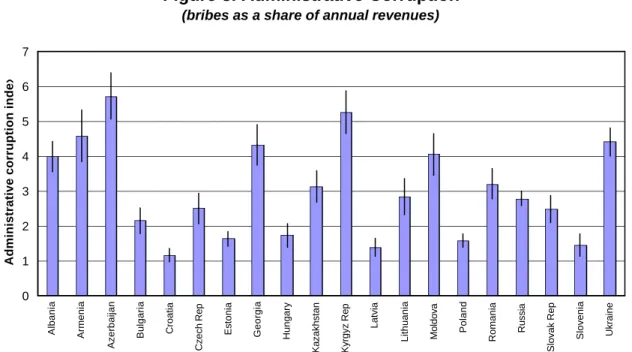
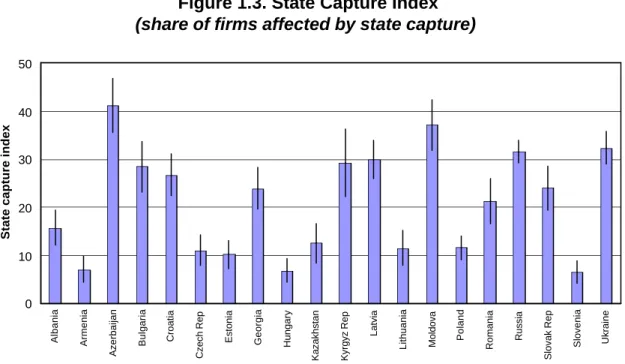
Chapter Two examines the effects and costs of different forms of corruption on economic performance, poverty and inequality, and the credibility of the state. The BEEPS survey unbundles corruption to examine state capture and administrative corruption separately to provide an empirical foundation for a more complex analysis of the pattern of corruption in each country. Based on the BEEPS data, indicators of the level of administrative corruption can be compiled and compared across countries.
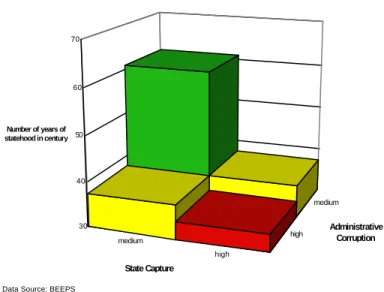
Second, the dynamics of state capture can be very different depending on the size and nature of the private sector in each country. A typology can be developed based on the interaction of the two measures of corruption. The typology is a static snapshot made at the time of the BEEPS survey (mid-1999) of countries involved in a dynamic process of evolution both in the development of state capture and in administrative corruption.
See also Narayan et al. (2000) for the impact of corruption on the poor in the words of the poor themselves. Part of the answer is rooted in the various institutional and structural legacies with which countries entered the transition. Unfortunately, the condition coverage index used in this report does not measure such forms of the problem.
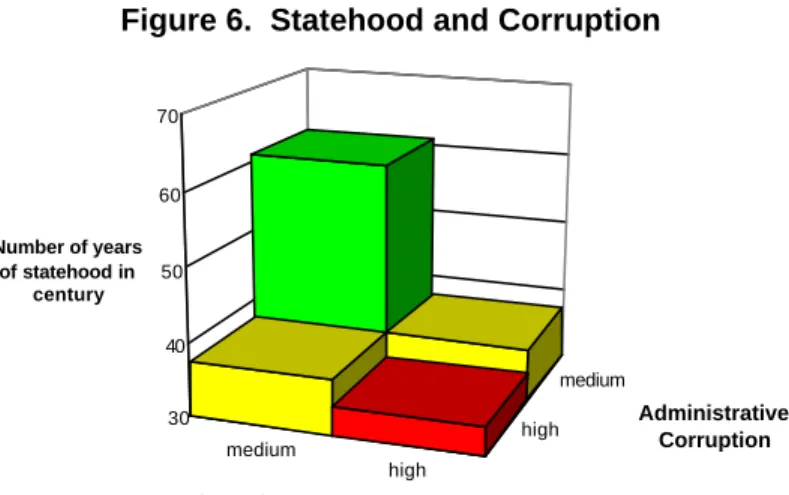
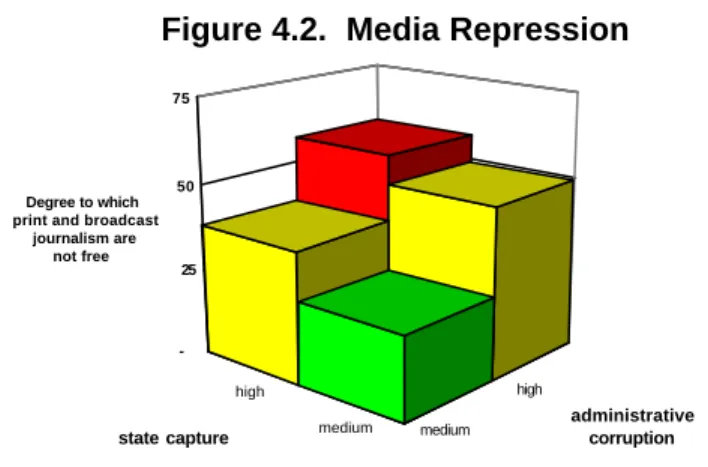
The progress of both political and economic reforms is itself partly a function of the statehood of a given country. In the context of corruption, one of the crucial differences between CEE and CIS countries concerns the differences in administrative procedures. Media freedom is highest in countries with the lowest levels of administrative corruption and state capture.
Most of the state assets yet to be privatized are large and many are in the natural resource or infrastructure sectors. Moreover, in the transition countries the legacy of communism, the underdevelopment of public administration and the political constraints holding back reform increase the scale of the challenges. Albania was one of the most isolated countries in the world and certainly within Europe during the communist period.
The third challenge is to develop a detailed diagnosis of the nature and extent of corruption in each country. Qualitative Assessment of the Standard of Living of the Armenian Population, October 1994–March 1995. World Bank. The estimated standard error of the state coverage index should therefore be interpreted as an upper bound on the true standard error.
The Economic and Social Consequences of Corruption in Transition Countries
The Origins of Corruption in Transition Countries
Therefore, it is impossible to provide definitive evidence of the effect of the transition on corruption. Institutional legacies and other initial conditions strongly influence the 'first steps' of the transition process, such as choices about the structure of political institutions and the pace and comprehensiveness of economic reforms. The nature of the institutional legacy at the beginning of the transition varied considerably across the region, despite the apparent monolithic nature of communism.
One of the key legacies of communism was a "culture of policy-making" in which the state played the dominant role in mediating economic relations. One important consequence of this mutually reinforcing legacy of stronger public administration and a reduced role of the state is less administrative corruption. Incentives rooted in the structure of the economy also appear to have played a crucial role in explaining the variation in the level and pattern of corruption across the region.
In many Central and Eastern European countries, the transition was initiated and thoroughly shaped by broad coalitions within civil society in the early stages. In contrast, in the CIS, the transition mostly started from the top down, and in some countries it even came as a fait accompli after the collapse of the Soviet Union. In Poland, at the beginning of the transition, 10 million people - one in two adults - were members of Solidarity.
The nature and extent of the break with the old regime have set in motion the main drivers of alternative transition paths, namely the pace and comprehensiveness of political and economic reforms and personal freedoms. In addition to the simultaneous processes of creating new political and economic institutions, a key feature of the transition was the massive redistribution of assets from social ownership to private ownership. 7 Countries that were formerly part of the Russian, Prussian or Ottoman Empire, on the other hand, do not share this heritage.
19 This section draws on Hellman, Jones and Kaufmann (2000a), which includes a full econometric treatment of the relationship between political and economic liberalization and statehood. See Hellman, Jones and Kaufmann (2000b) for a full characterization of the relationship between FDI and different forms of corruption.
A Multi-pronged Strategy for Combating Corruption
Accountability is largely based on the effectiveness of sanctions and the capacity of responsible institutions to monitor the actions, decisions and private interests of public officials. Institutional arrangements governing the distribution of legislative, executive and judicial power differ across Central Europe and the CIS. In principle, the transfer of authority from the central to the sub-national level of the state could also contribute to institutional limitations.
In many countries in the region, corruption at the sub-national level has become a particularly serious problem. A condition for their effectiveness is the prior establishment of a core of strong, independent and credible professionals in the state's judicial, prosecutorial and police forces. Council Directive on preventing the use of the financial system for money laundering.
Partly due to the legacy of nomenclature, the practice of political patronage in public administration continues to be an important source of corruption in transition economies. 14 As determined by the latest EBRD Business Environment and Enterprise Performance Survey, Hungary has one of the most active governments, ranking third (out of 20 countries) in the State Intervention Index. They serve as a tool to assess the credibility of the government's commitment to fight corruption.
In light of the political constraints, a potentially greater impact could come from reducing the profits the state imposes on captors. One of the most difficult problems in developing an anti-corruption strategy is figuring out where to start. In the United States, urban reforms gained momentum when the conversion level rose from 10 to 30 percent of the value of contracts.
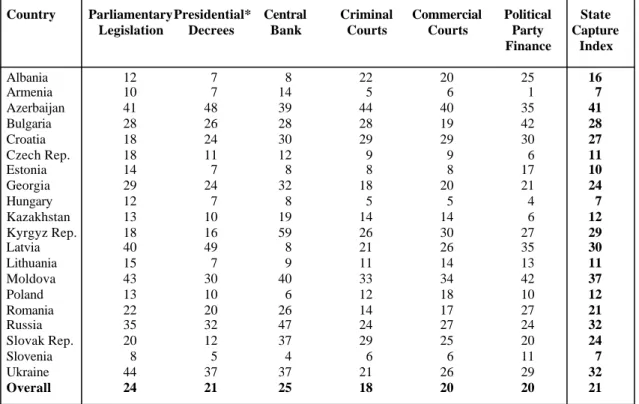
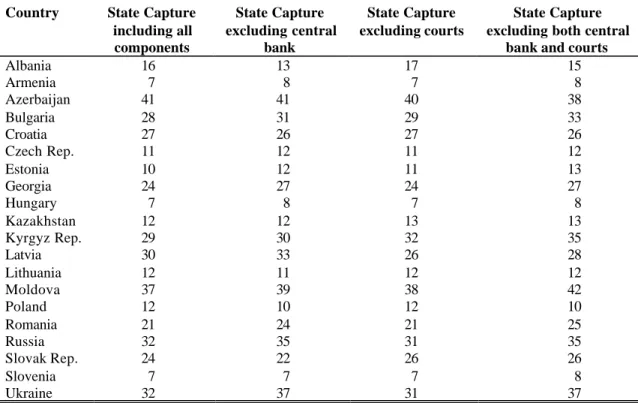
The standard error of the aggregate state capture index is calculated under the conservative assumption that the component errors are perfectly correlated. All countries in Figure 1.4 are included in Figure 2.2, with the exception of the Slovak Republic. For these reasons, the analysis of the origins of corruption in transition countries could benefit from a multivariate framework.
Pairwise t-tests of the levels of administrative corruption and state capture for these sets of countries are presented in Table A.6 below.
Designing Effective Anticorruption Strategies
Conclusion
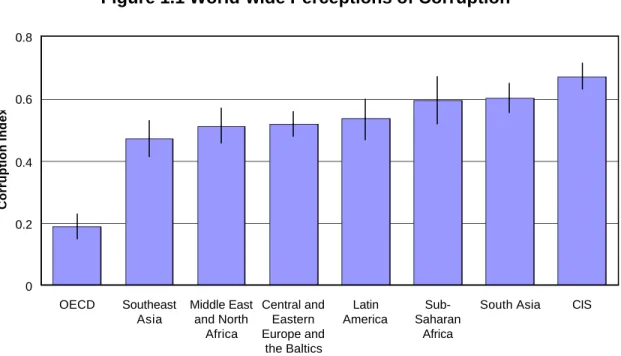
Dryzek, J. and Leslie J. Holmes), "The Real World of Civic Republicanism: Making Democracy Work in Poland and the Czech Republic" mimeo. The level and pattern of corruption in transition countries Figure 1.1: Global perceptions of corruption. In an attempt to mitigate this bias, the error bars in Figure 1.1 are calculated on the conservative assumption that the errors are perfectly correlated, which tends to bias the error estimates in the opposite direction.
The measure of administrative corruption in Figure 1.2 differs from the “bribery tax” presented in EBRD (1999), although both were based on BEEPS. For analysis in the subsequent chapters, the countries in Figure 1.4 have been divided into four groups based on thresholds for administrative corruption and state capture. All countries in Figure 1.4 are included in Figure 2.3, except Azerbaijan, the Slovak Republic and Ukraine.
All countries in Figure 1.4 are included in Figure 2.4, except Albania, Armenia, Croatia, the Kyrgyz Republic and Slovenia. All countries in Figure 1.4 are included in Figure 2.7. See Table A.4 for an indication of simple statistical significance. The resource-rich countries, for the purposes of Figure 3.4, are Azerbaijan, Romania, Russia and Kazakhstan.
Data in Figure 3.7 is based on BEEPS and draws on Hellman, Jones and Kaufmann (2000b). Data in Figure 3.8 is based on BEEPS and draws on Hellman, Jones and Kaufmann (2000b). For both charts in Figure 3.8, active capture and administrative corruption are most prevalent among firms with foreign direct investment and domestic headquarters, but only in high capture countries.
Methodological Annex for Figures in the Text